

Why are antidepressants so popular in Iceland?

Mindset travels to Iceland to explore why it has the highest rate of antidepressant use in Europe. Iceland is known for its stunning landscapes, sparse population, long winters – and high use of antidepressants. Pills are about seven times cheaper than therapy and easier to access, contributing to the country having Europe’s highest rate of antidepressant use. But locals say medication isn’t a panacea, with deeper issues within Iceland’s society and mental health system remaining unresolved. In this special series on mental health approaches around the world, Mindset meets Icelanders to understand the impact of antidepressants and those turning to community, self-enrichment, and old traditions in search of relief. Adblock test (Why?)
Global pro-Palestinian protests call for Gaza ceasefire

NewsFeed Hundreds of thousands of protesters marched in major world cities to demand a ceasefire in Gaza. Rallies were held the day after Israel defended its 100-day war against genocide charges at the ICJ. Published On 14 Jan 202414 Jan 2024 Adblock test (Why?)
Who is Taiwan’s President-elect Lai Ching-te?

William Lai Ching-te from the governing Democratic Progressive Party (DPP), who is seen as a “dangerous separatist” by China, has won Taiwan’s presidential election. Lai, the current vice president, who has asserted the self-ruled island’s sovereignty, beat his nearest rival Hou Yu-ih of the conservative Kuomintang (KMT) by more than 900,000 votes in Saturday’s elections. With Lai’s win, the DPP secured an unprecedented third consecutive term in power, signifying that the majority of Taiwanese stand behind the party’s values of preserving democracy. The DPP does not represent the mainstream public opinion on the island, Beijing said after Lai was named the winner of Saturday’s vote, adding that the vote “will not impede the inevitable trend of China’s reunification”. In his victory speech, the 64-year-old Lai congratulated voters for refusing to be swayed by “external forces” trying to influence the election in an apparent reference to China, which claims Taiwan as its own territory. He said he wanted to cooperate with China – Taiwan’s biggest trade partner – and maintain peace and stability, but pledged not to be “intimidated” by Beijing. Here’s more about the president-elect that China has vocally opposed: Steering Taiwan as vice president In his most recent role as vice president, Lai helped promote Taiwan’s interests internationally. Last August, he made a diplomatic mission to Paraguay, a move criticised by Beijing. The Latin American country is one of a dozen that still maintains formal diplomatic relations with Taiwan. Taiwan, however, has trade ties with countries around the world. Lai has also drawn a line between Taiwan and Ukraine and the rise of authoritarianism globally, saying the phenomenon has “awakened the international community to the fragility of democracy”. During his and outgoing President Tsai Ing-wen’s tenure, Taiwan increased arms acquisitions from the United States, which is bound by law to provide the island with weapons needed to protect itself. Washington does not have formal diplomatic ties with Taiwan in line with its “one China” policy. As such, during his run as VP, Lai talked about the need to build up Taiwan’s military deterrence capabilities, strengthen its economic security, and forge partnerships with democracies worldwide. “We are telling the international community that between democracy and authoritarianism, we will stand on the side of democracy,” Lai told his supporters on Saturday night. Relations with China China has been vocal about its opposition to Lai, calling him a dangerous separatist. Beijing had, in fact, called the poll a choice between war and peace. The new president-elect, however, has repeatedly said during the campaign that he wanted to keep the status quo with China and has on numerous occasions offered to talk to Beijing. Lai once said the head of state he would most like to have dinner with is Chinese President Xi Jinping, whom he said needs to “chill out a little”. With the leader now elected, what is at stake is peace, social stability and prosperity on the island, as Beijing builds up military activity around the island, which it has said could be retaken by force if necessary. Taiwan is home to the world’s leading semiconductor industry, producing tiny chips used in everything from Bluetooth headphones to missile systems. These silicon wafers are the lifeblood of the modern global economy, placing great responsibility on Lai to maintain a careful balance on tensions as the United States and China tussle over technology exports. In running for president, Lai advocated for domestic issues such as reviving the sluggish economy and housing affordability. From humble origins to Harvard-educated Lai grew up in northern Taiwan and hails from a humble background as the son of a coal miner who died when the president-elect was a small child. He left his medical career as a physician specialising in spinal cord injuries to pursue politics. Before becoming president-elect, Lai held several prominent jobs including vice president, premier, legislator and mayor of the southern city of Tainan. The new leader of Taiwan has a master’s degree in public health from Harvard University in the US. Adblock test (Why?)
A ‘cultural genocide’: Which of Gaza’s heritage sites have been destroyed?

An ancient harbour dating back to 800 BC, a mosque that was home to rare manuscripts and one of the world’s oldest Christian monasteries are just a few of at least 195 heritage sites that have been destroyed or damaged since Israel’s war on Gaza began on October 7, according to an NGO documenting war damage on cultural sites. Wiping out the cultural heritage of a people is one of the many war crimes South Africa alleges against Israel in a lawsuit that was heard this past week at the International Court of Justice. It states: “Israel has damaged and destroyed numerous centres of Palestinian learning and culture”, including libraries, religious sites and places of ancient historical importance. Gaza, one of the world’s longest inhabited areas, has been home to a pastiche of people since at least the 15th century BC, according to historians. Empires – including the ancient Egyptians, Assyrians and Romans – have come and gone, at times dominating the land of the Canaanites, the ancestors of the Palestinians, leaving relics of their own cultural heritage behind. Greeks, Jews, Persians and Nabateans have also lived along this stretch of coast over the centuries. Strategically located on the Mediterranean’s eastern shores, Gaza was always in a prime position on the trade routes from Eurasia to Africa. Its ports made it a regional hub for commerce and culture. Since at least 1300 BC, the Via Maris – a route running from Heliopolis in ancient Egypt, cutting across Gaza’s western coastline and then crossing into Syrian lands – was the main route that travellers would take on their journeys to Damascus. “The crime of targeting and destroying archaeological sites should spur the world and UNESCO into action to preserve this great civilisational and cultural heritage,” Gaza’s Ministry of Tourism and Antiquities said after Gaza’s Great Omari Mosque was destroyed in an Israeli air strike on December 8. As a result of that particular strike, an ancient collection of manuscripts kept at the mosque may be forever lost. “The manuscript collections remained in the vicinity of the mosque and are currently inaccessible because of the continuing conflict,” Columba Stewart, the CEO of the Hill Museum and Manuscript Library (HMML), told Al Jazeera soon after the strike. The 1954 Hague Convention, agreed to by both Palestinians and Israelis, is supposed to safeguard landmarks from the ravages of war. Isber Sabrine, president of an international NGO that documents cultural heritage, explained that crimes affecting cultural heritage are part of the “collateral damage of genocide”. “Libraries serve as cultural repositories, and attacking them is an attack on cultural heritage. What is happening now is a war crime. It goes against the first Hague convention,” Sabrine said. “Israel is trying to erase the connection of the people with their land. It’s very clear and intentional. Gaza’s heritage is part of its people, it’s history and their connection.” While cultural genocide erases tangible heritage like museums, churches and mosques, intangible heritage includes customs, culture and artefacts. These, too, have been damaged, including the Union of Palestinian artists on Jalaa Street in Gaza City and the well-known clay pots once baked in the city’s al-Fawakhir district. In a statement to Al Jazeera, UNESCO said: “While priority is rightly given to the humanitarian situation, the protection of cultural heritage in all its forms must also be taken into account. In accordance with its mandate, UNESCO calls on all actors involved to strictly respect international law. Cultural property should not be targeted or used for military purposes, as it is considered to be civilian infrastructure.” Here’s a closer look at some of the sites that have been destroyed or damaged: Museums There are four museums in Gaza, and two have been levelled, the International Council of Museums-Arab (ICOM-Arab) confirmed to Al Jazeera. Al Qarara Museum in Khan Younis was once filled with pieces of ancient history, said to date back to the Canaanite era [File: Khalil Hamra/AP Photo] The Rafah Museum had completed a 30-year project to curate a collection of ancient coins, copper plates and jewellery, making it Gaza’s main museum of Palestinian heritage. It was an early victim in the war, destroyed in an air strike on October 11. Farther east and once sitting on a hilltop, Al Qarara Museum (also known as the Khan Younis Museum) was opened in 2016 by Mohamed and Najla Abu Lahia, a husband and wife team who said they wished to preserve a history of Gaza’s lands and heritage for generations to come. Its collection consisted of about 3,000 artefacts dating back to the Canaanites, the Bronze Age civilisation that lived in Gaza and across much of the Levant in the second century BC. All that remains of the museum now are shards of pottery and smashed glass that has been blown out of the widows during an October air strike. Al Qarara Museum was once filled with 3,000 artefacts dating back to the Canaanite era [File: Abdelhakim Abu Riash/AJE] ICOM-Arab told Al Jazeera this museum was given advanced warning by Israeli forces to empty its contents and evacuate to the south of Gaza. The Mathaf al-Funduq, a small museum opened in 2008 and housed in the Mathaf Hotel in northern Gaza, was damaged by shelling on November 3. The 13th century Qasr Al-Basha in Gaza City was hit by Israeli air strikes last month [File: Emmanuel Donald/AFP] In Gaza City, the 13th-century Qasr Al-Basha, or Pasha’s Palace, was turned into a museum in 2010 by the Palestinian Ministry of Tourism, and a collection of artefacts from different periods of Gaza’s history was on display. The site was hit by Israeli air strikes on December 11, damaging its walls, courtyard and gardens. Like many of the heritage sites in Gaza, this building has changed ownership and functions several times over its history. The two-storey fort, built by Mamluk ruler Sultan Zahir Baybars in the mid-13th century, was once a seat of power, constructed as a defence against the Crusaders and Mongol armies.
Namibia condemns Germany for defending Israel in ICJ genocide case
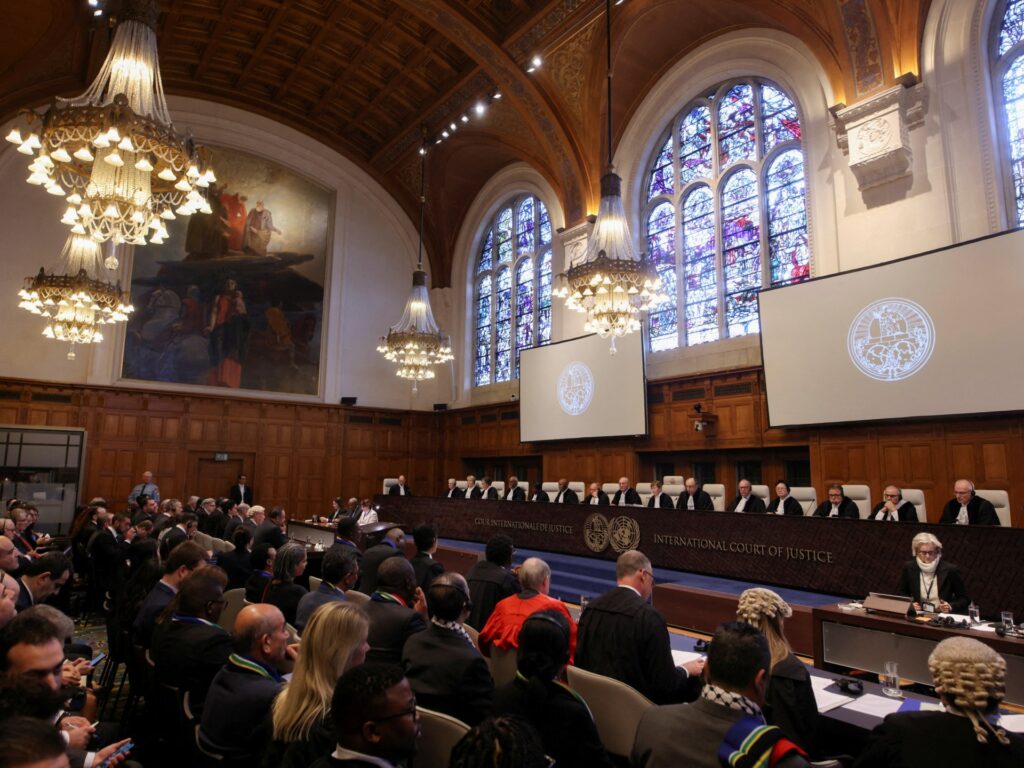
The Namibia presidency slams Germany for failing to draw lessons from its own genocide against Namibia people in the early 20th century. Namibia has criticised Germany’s “shocking decision” to support Israel in the genocide case at the International Court of Justice (ICJ) brought by South Africa, as Israel’s war on Gaza entered its 100th day. “Germany has chosen to defend in the ICJ the genocidal and gruesome acts of the Israeli government against innocent civilians in Gaza and the occupied Palestinian Territories,” the president of Namibia, Hage Geingob, said in a statement on X on Saturday. A two-day public hearing in the case at the World Court – the highest legal body of the United Nations – took place on Thursday and Friday during which South Africa and Israel presented their arguments. South Africa told the court on Thursday that Israel’s aerial and ground offensive – which has laid waste to much of the enclave and killed almost 24,000 people, according to Gaza health authorities – aimed to bring about “the destruction of the population” of Gaza. Israel accused South Africa of presenting a “distorted” view of the hostilities, denying that its military operation in Gaza is a state-led genocide campaign against Palestinians. The statement by the Namibian presidency added that Berlin was ignoring Israel’s killing of nearly 24,000 Palestinians in Gaza and various United Nations reports disturbingly highlighting the internal displacement of 85 percent of the besieged enclave’s 2.3 million people amid acute shortages of food and essential services. The Namibian president expressed “deep concern” over “the shocking decision” communicated by the government of Germany on Friday, in which “it rejected the morally upright indictment” brought forward by South Africa. “No peace-loving human being can ignore the carnage waged against Palestinians in Gaza,” it said. The statement claimed that Germany committed the first genocide of the 20th century in Namibia between 1904 and 1908, in which tens of thousands of innocent Namibians died in the most inhumane and brutal conditions. “Germany cannot morally express commitment to the United Nations Convention against genocide, including atonement for the genocide in Namibia, whilst supporting the equivalent of a holocaust and genocide in Gaza,” the presidency said. “President Geingob appeals to the German government to reconsider its untimely decision to intervene as a third-party in defence and support of the genocidal acts of Israel before the ICJ.” Atrocities in Namibia German colonial forces carried out atrocities in Namibia against the Indigenous Herero and Nama peoples between 1904 and 1908. The killings were part of a German campaign of collective punishment between 1904 and 1908 that is today recognised as the 20th century’s first genocide. The ICJ is likely to present a provisional measure in the coming days but a final verdict will take years. South Africa has urged the court to order an immediate halt to Israel’s devastating military offensive in Gaza. The 1948 Genocide Convention, enacted in the wake of the mass murder of Jews in the Nazi Holocaust, defines genocide as “acts committed with intent to destroy, in whole or in part, a national, ethnical, racial or religious group”. South Africa filed the ICJ case on December 19, accusing Israel of genocidal acts in Gaza. Several countries and international organisations have backed South Africa in its case, while Israel has received the backing of the United States, its main weapons supplier and close ally. Several global entities, including Human Rights Watch, have determined that Israel is engaging in war crimes in Gaza. Adblock test (Why?)
The dark underbelly of Pakistan’s male body image revolution
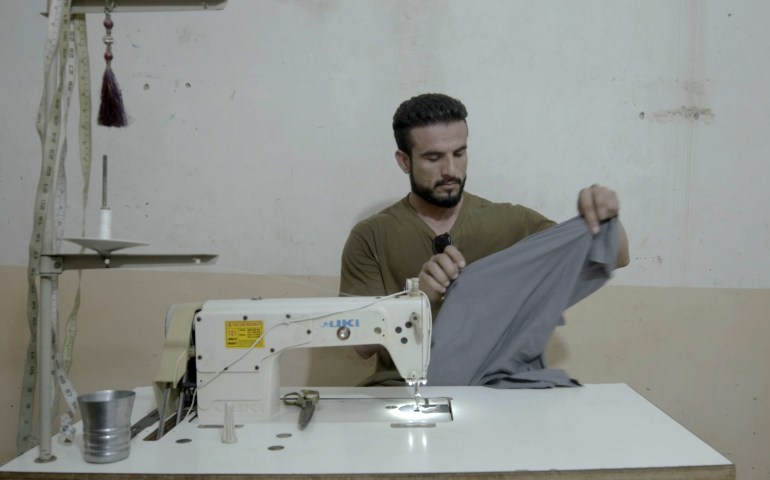
Karachi, Pakistan – In a small room in his modest family home, Asad Naqib Khan threads a sewing machine needle. As the rhythmic hum of the machine fills the air, the tailor’s gaze occasionally drifts over to the screen of his mobile phone in the hand of his oldest child. The father and son are watching bodybuilding videos on YouTube. Twenty-eight-year-old Asad is a father of five children aged 10 and younger. He is not just a tailor struggling to make ends meet — he is also an aspiring bodybuilder. “For as long as I can remember, I have wanted to become a bodybuilder,” he explains while hemming a shirt that morning in early 2022. “I used to watch older guys in my neighbourhood go to the gym and spend time building their strength and muscles.” As a teenager, he fantasised about doing the same. “Once, I went to watch a bodybuilding competition and wanted to become just like the men I saw on the stage,” he recalls. Asad grew up with eight siblings and remembers how his father, a daily wage labourer, would struggle to find regular work to support his family. As the eldest son, Asad felt compelled to share his father’s financial responsibilities as soon as he became a teenager. Leaving middle school meant he had limited options, but instead of opting to become a labourer like most men from his neighbourhood, he decided to apprentice with a tailor. When he was 18, he branched out on his own. Over the years, however, he yearned for the one thing he believed would bring purpose and happiness to his life – to become a professional bodybuilder. “One of my biggest dreams is to make Pakistan proud by competing internationally and winning for the country,” he explains. But it wasn’t until 2019, when he met Zahir Shah, a former bodybuilding champion in his 40s who owns a gym in a busy Karachi neighbourhood, that Asad began on this path. Asad finishes sewing the shirt and hands it to his son to fold. He says that his children, particularly the two boys, take delight in watching his workout videos. “They urge me to work out harder so I win first place. God willing, I will make them proud.” He envisions introducing his sons to bodybuilding, and also has aspirations to open his own gym, like Zahir, which his boys can one day help him run “so I don’t have to work as a tailor any more.” Asad Naqib Khan, 28, works as a tailor by day to support his family and his bodybuilding ambitions [Saad Zuberi/Al Jazeera] A hidden world The world of Pakistani bodybuilding is one that few outsiders ever get to see. With no state funding, national structure, or regulation, the sport thrives in the shadows, haphazardly managed by about a dozen independent federations scattered across the country. The growing global interest in fitness and bodybuilding culture has fuelled local interest in the sport with a surge in Pakistanis flocking to their local neighbourhood gyms. Young men train tirelessly to showcase their physiques for competition judging panels through a series of poses to highlight muscle definition, size and symmetry. Since Pakistan’s first championship was held in 1952, bodybuilding has remained largely a working-class pursuit – it is often referred to as a “poor man’s sport” within the community – and confined to small-scale regional and national competitions. But the sport has undergone a profound transformation in recent years owing to international exposure through social media, gaining wider attention and affording its star bodybuilders unprecedented opportunities. The prospect of participating in international championships, fame, cash prizes, travel, and potential modelling contracts has attracted thousands of men from Karachi to Peshawar and beyond. Aspiring bodybuilders with limited means spend their evenings after school or work fervently lifting weights beneath the glare of fluorescent gym lights and their coaches’ watchful eyes. Many see bodybuilding as the first step out of poverty and dead-end jobs. Some are drawn to the allure of social media stardom as they post photos of their chiselled bodies online, while others dream of breaking into the modelling industry. Through interviews with bodybuilders and other industry insiders over reporting carried out between September 2021 and January 2024, we learn how men navigating the intersection of bodybuilding and modelling are exposed to worlds that both celebrate, and exploit, physical appearance. Coach Zahir, second from the left, gives Asad, left, and others a motivational talk at 1am before calling it a day [Saad Zuberi/Al Jazeera] The cost of bodybuilding It is almost midnight, and the abandoned streets of a quiet residential colony lined with weathered concrete homes are lit with the dim glow of flickering streetlights. On the second floor of a small building, the lights of Zahir’s gym still burn brightly. Despite the late hour, the gym is packed and buzzing with energy, and old Bollywood songs blare from the speakers at each end of the stuffy room. Asad, and about two dozen other young men, are busy lifting weights. Their dedication to their training, according to Zahir, is often driven by the urge to conform to the archetypical male beauty standard set by global celebrities and influencers. “Having big muscles has become a status of attractiveness because of what we see in movies from Hollywood and Bollywood … and these young boys also want to look like that,” he explains. “For most of these boys, looking good is far more important than just being healthy.” For many, it is a costly pursuit. “Building a body that stands out costs more than most of these men earn,” Zahir explains. The average monthly salary in Pakistan in 2023 was 81,925 rupees ($291) and most men entering the sport – either new graduates or unskilled workers – make significantly less. Balancing the responsibility of supporting their families amid Pakistan’s economic crisis with the financial demands of bodybuilding such as gym memberships, specialised diets, protein supplements, and professional coaching, is a huge challenge.
UN says all peacekeepers will leave DR Congo by end of 2024
In first phase of the withdrawal, about 2,000 UN troops will leave the restive eastern areas by the end of April. The United Nations peacekeeping mission in the Democratic Republic of the Congo, which has helped in the fight against rebels for more than two decades, will completely withdraw from the country by December. “After 25 years of presence, MONUSCO will definitively leave the DRC no later than the end of 2024,” Bintou Keita, head of the mission known as MONUSCO said at a media briefing in the Congolese capital Kinshasa on Saturday. The announcement comes after the Congolese government – which was just re-elected in a disputed vote – called for the UN mission to leave the country, saying it had failed to protect civilians from armed groups. Numerous armed groups, including the Allied Democratic Forces (ADF) and M23, are active in restive eastern areas such as North Kivu, South Kivu and Ituri provinces, where civilians face violence and displacement. The withdrawal will take place in three phases. In the first phase, about 2,000 UN troops will leave South Kivu by the end of April, taking the currently 13,500-strong MONUSCO force to 11,500, Keita said. Fourteen UN bases in the province will be taken over by Congolese security forces, she explained. After that, forces in North Kivu and Ituri will also leave. Not the ‘end of the fight’ Congolese Foreign Minister Christophe Lutundula confirmed to a news conference in Kinshasa that the remaining UN forces are expected to be out of the country by December 31. “The withdrawal of MONUSCO does not necessarily mean the end of the fight we are undertaking to protect the territorial interests of our country, we must continue to struggle,” Lutundula said. MONUSCO took over from an earlier UN operation in 2010 to help quell insecurity in the east of the Central African country, where armed groups fight over territory and resources. But in recent years, its presence has become increasingly unpopular. In December, the UN’s Security Council voted unanimously in favour of gradually phasing out its peacekeeping operations. Keita said on Saturday that the end of the mission will not be “the end of the United Nations” in the country. The Congolese government has also directed an East African regional force, deployed last year to help end the fighting, to leave the country for similar reasons as the UN peacekeeping mission. More than seven million people have been displaced due to conflicts in DRC, mostly in the three eastern provinces where a myriad of armed groups continue to operate. Adblock test (Why?)
Dozens killed in Colombia landslide, including children
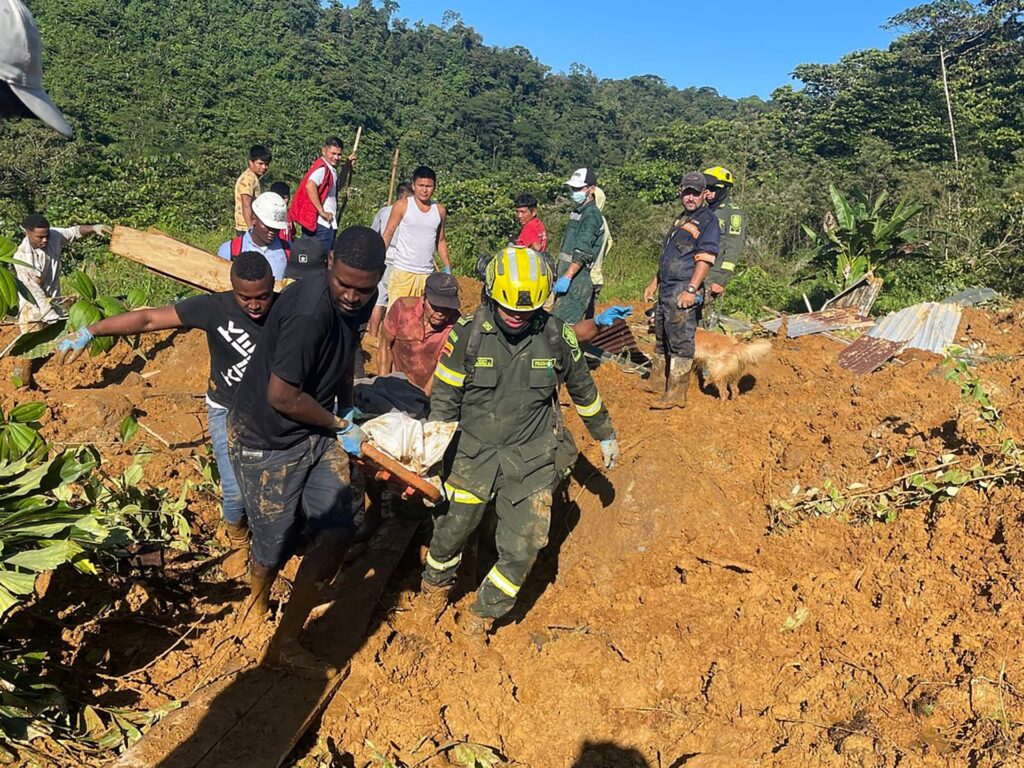
Officials say at least 33 people have died in mudslides brought on by heavy rains in the province of Choco. At least 33 people have been killed in a landslide brought on by heavy rains in northwestern Colombia, officials have said. “I deeply regret the death of 33 people in this tragedy, mostly children, according to preliminary reports from the territory,” Vice President Francia Marquez wrote on the social media platform X on Saturday. “At this time, search and rescue actions continue for the people who remain trapped,” she said. The mudslide, which happened on Friday afternoon, covered a roadway that connects the cities of Quibdo and Medellin in the Pacific province of Choco, authorities said. En estos momentos continúan las acciones de búsqueda y rescate de las personas que permanecen atrapadas bajo el deslizamiento de tierra en la vía Quibdó-Medellín, en Carmen del Atrato. Lamento profundamente el fallecimiento de 33 personas en esta tragedia, en su mayoría niñas y… — Francia Márquez Mina (@FranciaMarquezM) January 13, 2024 Dozens were also injured on a busy highway, and some people were missing after mud engulfed several cars on the road. A specialised rescue group from the Colombian police rescued survivors and retrieved bodies on Saturday. Authorities in Medellin said that, as of early Saturday, 17 bodies had been transported there and that forensic examiners had identified three of them, the AFP news agency reported. No names were released. With several road closures, rescue crews and firefighters struggled to reach the hardest-hit area. “Since last night, we have been working hand-in-hand with emergency and relief organisations on the Quibdo-Medellin road,” the police said. “We deployed all our capabilities to rescue and help those affected.” About 50 soldiers also arrived to assist, and images released by the army showed mud-covered men struggling through swampy terrain. “All the help available [is being sent] to Choco in this horrible tragedy,” President Gustavo Petro said on social media on Friday. The landslide in Choco, which lies on the Pacific Ocean and is home to a vast tropical forest, followed more than 24 hours of intense rain. Images on social media showed the moment a large piece of land dislodged from a mountain and fell on top of several cars that were moving along the flooded road below. The road has been closed by Colombia’s National Unit for Disaster Risk Management (UNGRD). A landslide in the same part of Colombia in December 2022 killed at least 27 people, trapping people in a bus and other vehicles. While much of Colombia is suffering a period of drought, the Institute of Hydrology, Meteorology and Environmental Studies has warned of the risk of heavy rains in the Amazon and in several departments bordering the Pacific. Adblock test (Why?)
World reacts to Taiwan election as China says reunification ‘inevitable’
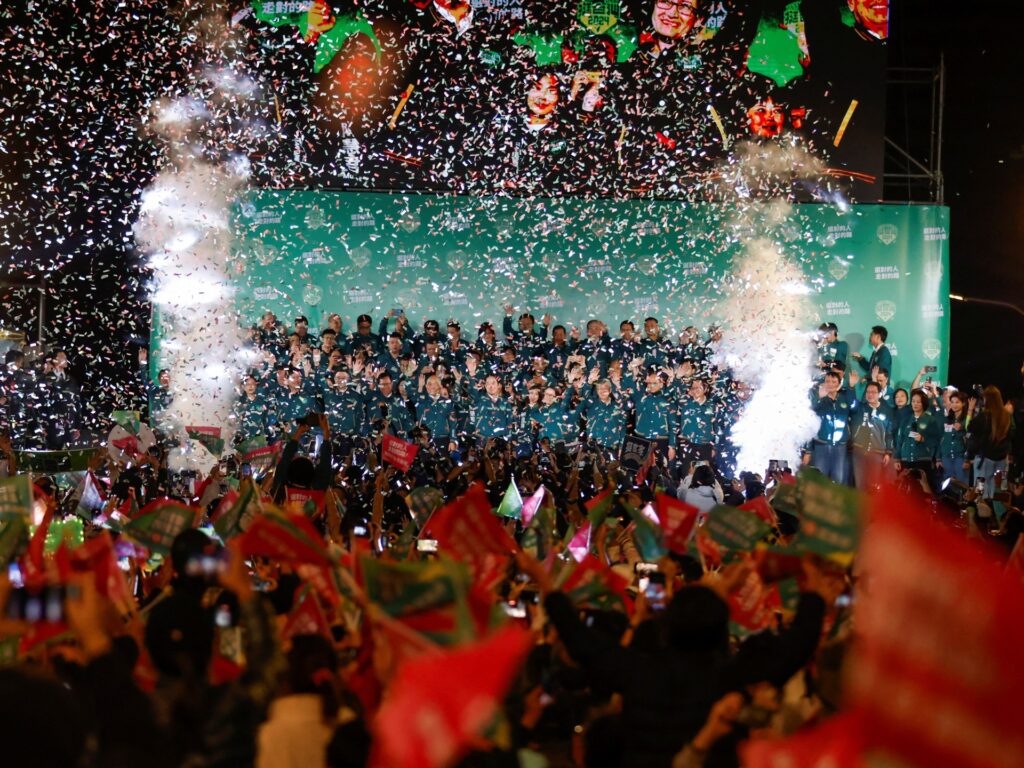
Beijing says its stance on ‘national reunification’ remains unchanged as world leaders congratulate William Lai Ching-te. China said “reunification” with Taiwan was still “inevitable” after president-elect William Lai Ching-te won Saturday’s pivotal election on the self-ruled island that Beijing claims as its own. Lai, from the governing Democratic Progressive Party (DPP), won despite warnings from China not to vote for him. He took 40.2 percent of votes cast, according to results from the Central Election Commission. “I want to thank the Taiwanese people for writing a new chapter in our democracy,” Lai said in his victory speech. “We are telling the international community that between democracy and authoritarianism, we will stand on the side of democracy.” In the run-up to the polls, China denounced Lai as a dangerous separatist, said he would be a threat to peace in the region if he won, and called the elections a choice between “peace and war”. Here are some of the reactions to the pivotal vote: China “Taiwan is China’s Taiwan,” Beijing’s Taiwan Affairs Office spokesperson Chen Binhua said in a statement carried by state news agency Xinhua, adding that the DPP “cannot represent the mainstream public opinion on the island”. But he added that the vote “will not impede the inevitable trend of China’s reunification”. While Taiwan has been self-governed since the 1940s, China still claims the island and its outlying territories. The vote “will not change the basic landscape and development trend of cross-Strait relations,” Binhua said. Beijing’s stance on “realising national reunification remains consistent, and our determination is as firm as rock.” China “firmly oppose[s] the separatist activities aimed at ‘Taiwan independence’ as well as foreign interference”, he added. United States The United States does “not support” the independence of Taiwan, President Joe Biden said, after being asked by reporters for Washington’s position on Taiwan’s presidential vote. The Biden administration has feared that the election, transition and new administration would escalate conflict with Beijing. In a statement, US Secretary of State Antony Blinken saluted Lai on his victory and hailed the “robust democratic system and electoral process” of the self-ruled island. Blinken added that Washington is “committed to maintaining cross-Strait peace and stability, and the peaceful resolution of differences, free from coercion and pressure.” Russia Russian Foreign Ministry spokeswoman Maria Zakharova said in a statement that Moscow continued to view Taiwan as an integral part of China. Moscow has repeatedly shown its support of Beijing’s “One China” policy on the issue of Taiwan. European Union The EU “welcomed” Taiwan’s presidential election and congratulated all the voters who “participated in this democratic exercise”, a statement said, without mentioning president-elect Lai. “The EU remains concerned about growing tensions in the Taiwan Strait and opposes any unilateral attempt to change the status quo,” said the statement by a spokesperson for EU diplomatic chief Josep Borrell. “The European Union underlines that peace and stability across the Taiwan Strait are key to regional and global security and prosperity.” United Kingdom British Foreign Minister David Cameron congratulated Lai and said he hoped Taiwan and China would renew efforts to resolve their differences peacefully. “The elections today are testament to Taiwan’s vibrant democracy,” Cameron said in a statement. “I hope that the two sides of the Taiwan Strait will renew efforts to resolve differences peacefully through constructive dialogue, without the threat or use of force or coercion.” Japan Japan congratulated the smooth implementation of the democratic election and Lai on his victory. “We expect that the issue surrounding Taiwan will be resolved peacefully through dialogue, thereby contributing to the peace and stability in the region,” it said in a statement, adding that Taiwan was an “extremely crucial partner” with whom Tokyo aimed to “deepen cooperation.” Adblock test (Why?)
Hundreds of thousands rally globally for Gaza on eve of 100 days of war
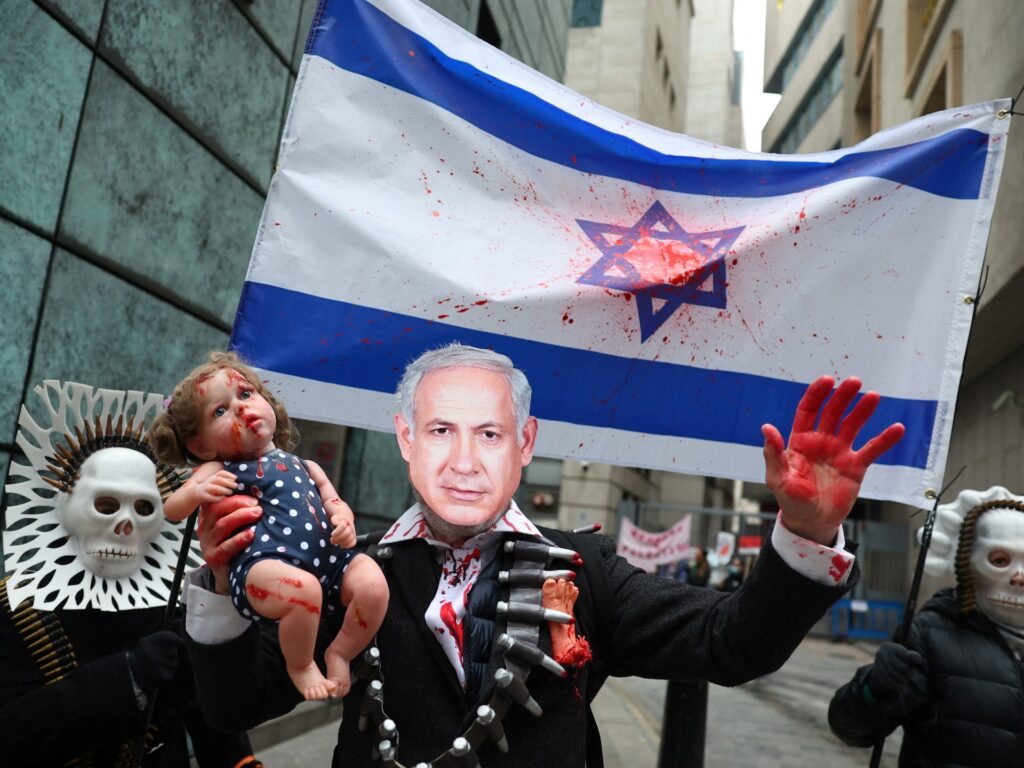
Hundreds of thousands of people are taking to the streets across the world to protest against Israel’s war in Gaza, as it nears the 100-day mark on Sunday. People gathered at rallies in Malaysia, South Africa, the United Kingdom and Indonesia on Saturday, as well as at other protests in Japan, Italy, Greece and Pakistan. The demonstrations are part of a “global day of action for Palestine” and to call for an end to the bloodshed that has killed 23,843 people and wounded more than 60,317, according to Palestinian health officials. In Kuala Lumpur, people gathered outside the United States embassy to send a message to Israel’s staunch ally, that has vetoed several United Nations resolutions calling for a ceasefire. “We’ve spoken to people here who say they’ve come to show solidarity with Palestinians. People are holding up placards that read: ‘Stop the genocide’, as well as ‘Bombing children is not self-defence’,” said Al Jazeera’s Florence Looi, reporting from Kuala Lumpur. Thousands of people also gathered outside the US embassy in Jakarta, waving Indonesian and Palestinian flags and holding signs that read “Boycott Israel” and “Ceasefire Now”. In Johannesburg, demonstrators gathered outside the US consulate for a protest bolstered by South Africa’s case of genocide against Israel at the International Court of Justice this week. Al Jazeera’s Fahmida Miller said many in the crowd accused the US, which has supplied Israel with thousands of tonnes of military equipment since the war started, of “complicity in the bombardment of the Palestinian people”. Thousands of people gathered in central London. Jeanine Hourani, a member of the Palestine Youth Movement attending the march, said protesters are angry over the injustice in Gaza. “We have been taking to the streets every week since October 7,” she told Al Jazeera, saying the British public largely supports a ceasefire but UK politicians “have continued to fund and support the genocide”. “We are going to continue taking to the streets, continue applying pressure, until Palestine is free,” she said. Later on Saturday, more rallies are expected to in Washington, DC and other American cities. Adblock test (Why?)