

Gaza daily deaths exceed all other major conflicts in 21st century: Oxfam

The killing of civilians in Gaza is at a scale unprecedented in recent history, monitoring groups have said, as Israel continues to pound the besieged coastal enclave more than three months into the war. Britain-based charity Oxfam said on Thursday that the daily death toll of Palestinians in Israel’s war on Gaza surpasses that of any other major conflict in the 21st century, while survivors remain at high risk due to hunger, diseases and cold, as well as ongoing Israeli bombardments. “Israel’s military is killing Palestinians at an average rate of 250 people a day, which massively exceeds the daily death toll of any other major conflict of recent years,” Oxfam said in a statement. For comparison, the charity provided a list of average deaths per day in other conflicts since the turn of the century: 96.5 in Syria, 51.6 in Sudan, 50.8 in Iraq, 43.9 in Ukraine, 23.8 in Afghanistan, and 15.8 in Yemen. Oxfam said the crisis is further compounded by Israel’s restrictions on the entry of aid into Gaza, where only 10 percent of weekly food aid that is needed gets in. This poses a serious risk of starvation for those who survive the relentless bombardment, it said. Also on Thursday, United States-based rights group Human Rights Watch (HRW) released its World Report 2024, which said civilians in Gaza have been “targeted, attacked, abused, and killed over the past year at a scale unprecedented in the recent history of Israel and Palestine”. ‘War crimes’ At least 23,469 Palestinians have been killed and 59,604 injured in Israeli strikes on Gaza since October 7, according to Gaza’s Ministry of Health. In the most recent 24-hour reporting period, Israeli forces carried out 10 mass killings in the Gaza Strip, causing 112 deaths and 194 injuries, the ministry added. About 7,000 people remain missing under the rubble and are presumed dead. “The heinous crimes carried out by Israeli forces and Palestinian armed groups since October 7 are the abhorrent legacy of decades-long impunity for unlawful attacks and Israel’s systematic repression of Palestinians,” said Omar Shakir, Israel and Palestine director at HRW. “How many more civilians must suffer or be killed as a result of war crimes before countries supplying weapons pull the plug and otherwise take action to end these atrocities?” he asked. This comes as South Africa on Thursday presented its case against Israel at the International Court of Justice in The Hague, accusing the country of committing “genocide” against Palestinians in Gaza, a charge that Israel’s Prime Minister Benjamin Netanyahu rejected as “hypocrisy and lies”. In its report, HRW noted that Israel’s war on Gaza has included “acts of collective punishment that amount to war crimes and include the use of starvation as a method of warfare”, including cutting off essential services such as water and electricity and blocking the entry of most critical humanitarian aid. Meanwhile, in the occupied West Bank, HRW said during the first eight months of 2023, incidents of settler violence against Palestinians and their property reached the highest daily average since the United Nations started recording this data in 2006. At least 3,291 Palestinians were held in administrative detention without charge or trial, according to Israel Prison Service figures. “Israeli authorities’ repression of Palestinians, undertaken as part of a policy to maintain the domination of Jewish Israelis over Palestinians, amount to the crimes against humanity of apartheid and persecution,” HRW said. ‘Gaza is different from space’ Experts in mapping damage during wartime have also found that the war in Gaza now sits among the deadliest and most destructive in recent history. According to an analysis of Copernicus Sentinel-1 satellite data by the CUNY Graduate Center and Oregon State University, the war has killed more civilians than the US-led coalition did in its three-year campaign against ISIL (ISIS). The offensive has wreaked more destruction than the razing of Syria’s Aleppo between 2012 and 2016, Ukraine’s Mariupol or, proportionally, the Allied bombing of Germany in World War II, researchers found, according to a report by The Associated Press. Israel’s offensive has likely either damaged or destroyed more than two-thirds of all structures in northern Gaza and a quarter of buildings in the southern area of Khan Younis, according to satellite data collected by the research group. That includes tens of thousands of homes as well as schools, hospitals, mosques and stores. UN monitors have said that about 70 percent of school buildings across Gaza have been damaged. “Gaza is now a different colour from space. It’s a different texture,” said Corey Scher of the CUNY Graduate Center, who has worked to map destruction across several war zones. Adblock test (Why?)
IMF unlocks $4.7bn for Argentina amid economic crisis, Milei austerity cuts

Inflation has crossed 160 percent in Latin America’s third-biggest economy, with 40 percent of population living in poverty. Argentina and the International Monetary Fund (IMF) have finalised an agreement to release $4.7bn as part of a debt restructuring plan for the troubled South American nation. Latin America’s third-biggest economy is facing dire economic challenges after decades of debt and financial mismanagement, with inflation surpassing 160 percent year-on-year and 40 percent of Argentinians living in poverty. “Understandings were reached on a strengthened set of policies to restore macroeconomic stability and bring the current program back on track,” the IMF said in a statement on Wednesday. With this deal, Argentina’s new President Javier Milei, who took power in December and inherited a deep social, economic and financial crisis, puts back on track a $44bn bailout package with the IMF that dates back to 2018. “The new administration is already implementing an ambitious stabilization plan, anchored on a large upfront fiscal consolidation, along with actions to rebuild reserves, correct relative price misalignments, strengthen the central bank’s balance sheet, and create a simpler, rules-based, and market-oriented economy,” the IMF said. The agreement is to be approved by the global lender’s executive board “in the coming weeks”, it said. The previous administration of President Alberto Fernandez renegotiated the loan, but the COVID-19-induced recession and a severe drought this year created challenges for Argentina to meet the targets agreed to with the IMF. Economy Minister Luis Caputo, commenting on the deal, clarified that it was not a new agreement, emphasising that the IMF had expressed willingness to explore a new debt programme and additional funding. Libertarian Milei has taken several steps to cut public spending and overhaul the economy. He recently presented a legislative package to Congress, seeking to privatise more than 40 public companies and impose restrictions on the right to assembly and demonstration. In December, the government said it would slash the value of its currency, the peso, by more than 50 percent against the US dollar and announced a raft of other austerity measures, including sweeping subsidy cuts, cancellation of tenders for public works projects, and plans to axe nine government ministries. While the planned measures drew praise from the IMF, they sparked harsh criticism from some progressive activists. A self-described “anarcho-capitalist”, Milei has argued that harsh austerity is needed to put Argentina back on the path to prosperity and that there is no time for a gradualist approach. Adblock test (Why?)
Sudan should avoid the mistakes that kept Angola in conflict for 27 years

When General Mohamed Hamdan Dagalo, the leader of Sudan’s paramilitary Rapid Support Forces (RSF) and former deputy chairman of the Transitional Sovereignty Council of Sudan, landed in Gauteng, South Africa on January 4 for talks with President Cyril Ramaphosa, he looked civil and dapper in a navy blue suit. His calm, confident and businesslike demeanour implied he was on a mission to rescue Sudan from the violent excesses of his obstinate adversaries in the Sudanese Armed Forces (SAF), led by Abdel Fattah al-Burhan. Thus, as Dagalo, known widely as “Hemedti”, posed for pictures with a smiling Ramaphosa, he did not look like a rogue military commander who is alleged to have overseen horrendous war crimes – torture, extrajudicial killings and mass rape among others – in Darfur in 2014 and 2015. Standing proudly next to the president of Africa’s second wealthiest nation, acting like a dignified and magnanimous statesman, he did not look like a vicious, power-hungry military operative who had just nine months ago launched a devastating civil conflict that already killed 12,000 people and displaced over seven million others. Hemedti’s recent rebranding as a mainstream political leader and a rightful representative of the Sudanese people – achieved through well-advertised performances of camaraderie not only by Ramaphosa but also the leaders of Uganda, Kenya, and Rwanda among others – is of course nothing but a charade. Since the beginning of Sudan’s latest civil war, Amnesty International says, fighters from both Hemedti’s RSF and al-Burhan’s SAF have committed egregious human rights violations and war crimes including deliberate attacks on civilians, attacks on civilian infrastructure like churches and hospitals, mass rape and other sexual violence. The RSF has also been accused of driving the Masalit people out of Sudan’s volatile West Darfur region through an ethnically targeted campaign of violence, sparking fears of a new genocide in the region. At best, Hemedti, who has acquired a dubious fortune by seizing gold mines and selling gold, is a political reincarnation of his former boss, ousted Sudanese President Omar al-Bashir, who ruled with an iron fist, rigged general elections, stifled dissent through systemic violence, and only paid lip service to constitutional freedoms for 30 years. At worst, he is a rebel without a cause, palpable ideology, or moral compass who appears determined to exploit the Sudanese people’s genuine struggle for democratic change for his own political ends. After he met with Uganda’s President Yoweri Museveni on December 27, Hemedti said unnamed figures from al-Bashir’s old regime and the “misguided leadership of the Sudanese Armed Forces” seek to impede the peace process and prolong the war. And he claimed he was engaged in a military effort to “rebuild the Sudanese state based on new, just foundations”. Then, on January 2-3, Hemedti held talks with the leader of the Coordination of Civilian Democratic Forces (Taqaddum), Sudan’s former Prime Minister Abdalla Hamdok, in Addis Ababa, Ethiopia. These discussions concluded with the two leaders signing the Addis Ababa Declaration, supposedly a comprehensive blueprint for peace talks and civilian rule. However, Malik Agar, the deputy chairman of Sudan’s ruling Sovereign Council, dismissed the plan as “an agreement between partners, as Taqaddum and the RSF are essentially one body with two faces”, adding “there is nothing new or groundbreaking here”. That Hemedti appears to have developed a newfound appetite for civilian rule at a time when the RSF has been scoring significant military victories against its rivals, including the capture of Wad Madani, the country’s second city, comes as no surprise. All along, Hemedti’s goal has been to defeat his adversaries militarily and use these victories to proclaim himself as the legitimate leader of his country. Like many other former rebels who have needlessly pushed their people into armed conflict while pretending to be working for peace, because continuous fighting helped them obtain or maintain political power, Hemedti shows newfound but questionable commitment to advance an unimpeded constitutional order and avoid a return to war sometime in the future. As a rebel leader whose primary motivation for fighting appears to be accumulating personal power rather than improving the living conditions of his people, Hemedti is more similar to Jonas Savimbi, the founder of the National Union for the Total Independence of Angola (UNITA), than any other political figure in Africa. Following a power struggle that broke out soon after Angola gained independence from Portugal in November 1975, Savimbi waged a 27-year intermittent civil war against the ruling People’s Movement for the Liberation of Angola (MPLA). The cold-war conflict, in which Russia supported the MPLA and the US, alongside apartheid South Africa, backed UNITA, killed one million people and made four million others homeless. For 27 years, Savimbi foiled several peace initiatives from the United Nations and the Organisation for African Unity – the predecessor to the African Union (AU). Despite the leading role he played in the continuation of the devastating conflict, however, he was accepted as a legitimate political player who should have a say over the country’s future. He was treated as a mainstream political figure, and even an anti-colonial hero, by many African leaders and was also hosted by then US President Ronald Reagan at the White House in 1986. In November 1994, amid growing pressure from both the UN and AU, UNITA finally signed the Lusaka Protocol, which called for a permanent ceasefire, demobilisation of UNITA’s troops, and the integration of UNITA’s military and political wings into government departments. The protocol, however, was never fully implemented, largely due to Savimbi’s desire to continue the conflict that was the primary source of his power and political relevance. With MPLA similarly not interested in ending the conflict, for four long years the two parties continued to purchase arms and provoke each other while supposedly negotiating for a permanent end to hostilities. Ultimately, in 1998, UNITA’s refusal to demobilise its soldiers and submit UNITA-controlled areas to a civilian authority led to the complete breakdown of the Lusaka Protocol. After the demise of Lusaka, UNITA and the MPLA continued to
Qatar at AFC Asian Cup 2023: Hosts, defending champions but not favourites

Lusail Stadium, which played host as Lionel Messi’s Argentina lifted their third FIFA World Cup crown, will light up in gold once again as Qatar begin their AFC Asian Cup title defence in the tournament’s opening match against Lebanon on Friday evening. The Al Annabi (the Maroons) may enjoy the support of a partisan crowd as they step on the pitch as defending champions, but their journey from lifting the trophy in 2019 to hosting the current edition has been turbulent. Qatar go into the tournament on the back of big wins in the 2026 World Cup qualifiers, but their outings against higher-ranked teams have resulted in heavy losses in recent months. Paired with the sacking of the vastly experienced former Portugal and Real Madrid manager Carlos Queiroz a month before the Asian Cup and only 10 months into the job, they have left question marks over Qatar’s preparations. Queiroz took over from Felix Sanchez – a popular Spanish coach who worked his way up in Qatar’s football setup and led Qatar to the Asian Cup triumph in the United Arab Emirates four years ago. However, Sanchez’s contract was not renewed at the end of 2022, as he saw Qatar lose all three of their group stage matches as hosts of the 2022 World Cup. Another Spanish coach, Marquez Lopez, who was previously in charge of Qatar Stars League club Al Wakrah, was quickly appointed Quieroz’s successor. It is far from the preparations and build-up the team that shocked Japan in the final four years ago would have liked. The first match for #AlAnnabi 🇶🇦 in #AsianCup2023 🏆:⚽ Qatar 🆚 Lebanon 🗓️ Friday, January 12, 2024🎬 Opening Ceremony: 17:00⏰ Kick-off: 19:00🏟️ Lusail Stadium#LetsWin 💪 pic.twitter.com/aD7cujUBLX — Qatar Football Association (@QFA_EN) January 10, 2024 Qatar to use pressure ‘in a positive way’ Nonetheless, Qatar are expected to make a strong defence of a trophy they fought so hard to lift for the first time and defender Tarek Salman says the pressure is not the same as it was going into the World Cup. “Normally you have pressure,” he said, insisting that being the current Asian champions would affect the team “in a positive way, not in a negative way”. The 26-year-old, who plays for Qatari club Al Sadd, did admit that the change of management meant the players have been required to adapt to a Spanish style. Publicly the players have welcomed the appointment and Salman says it is a late change of direction that he believes the team can navigate. “I think it’s going to fit us and we hope to achieve good things with the coach,” he added. Former national team player Raed Yaqoub, who represented his country between 1993 and 2001, says that despite the upheaval, Qatar should easily get out of a group that also contains China and Tajikistan, and that the semifinals should be possible. The 49-year-old player-turned-pundit, who made 23 appearances for the national team, has sympathy for the task the lies before Lopez after the events of December. “I think that holding him responsible only a month before the tournament is a mistake,” he said, adding that he sees Japan, as the strongest team, while also fancying Roberto Mancini’s Saudi Arabia. Japan ‘looking for revenge’ Another former Qatar international, Mohamed Mubarak al-Mohannadi said the switch so close to the Asian Cup would make it difficult “for any coach to make the required transformation within a month’s period”. Al-Mohannadi, who played 17 times in midfield for his nation in the 1980s, warned that Qatar will have a target on their backs as holders, particularly in the eyes of Japan, who he said would be “looking for revenge”. “Japan is a developed team and its level has risen greatly since then,” he said, “unlike the Qatari team, whose level has declined significantly.” Qatar won plaudits for its organisation of the World Cup in 2022 but the team lost to Netherlands, Senegal and Ecuador to exit at the group stage. It was the worst performance by any World Cup host. 🇳🇱 Netherlands 2 – 0 Qatar 🇶🇦 FULL-TIME: With the final blow of the whistle, Qatar’s World Cup run comes to an end as the Netherlands win 2-0 at Al Bayt Stadium. ⚽ LIVE #NEDQAT match blog: https://t.co/BS6R9iDxMR pic.twitter.com/nQOOGqF1Qi — AJE Sport (@AJE_Sport) November 29, 2022 The Asian Cup, transferred to Qatar from China due to the latter’s “zero-COVID” policy, was hoped to be a fresh start. Quieroz won five, lost five and drew two matches in his aborted four-year contract while Lopez’s first game in charge, at the end of December, was a 3-0 win over Cambodia, a team which failed to qualify for the regional championship. Lopez, who played for Espanyol in his native Spain, said it was “important” that he knew Qatari football, having managed Al-Wakrah for six years. “I know the players, I know my mentality and I know … my idea for playing,” he said, explaining he was not “arriving new”. The 62-year-old said following his appointment that “in football, there is pressure all the time,” and downplayed the idea that his side was under pressure to make up for their World Cup disappointment. “More important for the players is enjoying the match,” he said. Ultimately when the words stop and the whistle blows at the 88,000-capacity Lusail Stadium, the expectation will be that the time has come for the performance of the defending champions to match the occasion. [embedded content] Adblock test (Why?)
China, Maldives upgrade ties with infrastructure deals in pivot from India

Maldives’ new president makes first state visit to Beijing as China and India vie for influence in Indian Ocean nation. China and the Maldives have upgraded their relationship during newly elected President Mohamed Muizzu’s first state visit to Beijing, following a campaign in which he cast China’s regional rival India as a threat to its sovereignty. The Maldives signed several new agreements with China – its largest external creditor – on Wednesday, including ones on climate, agriculture and infrastructure, Muizzu’s office said on Thursday. No details about the value of the deals were shared by either side. Chinese President Xi Jinping, speaking at the Great Hall of the People, called Muizzu “an old friend” as the Asian giant set the stage for further investment in the Indian Ocean archipelago by agreeing to a “comprehensive strategic cooperative partnership”. In talks with Xi, Muizzu “expressed gratitude for China’s significant role in the Maldives’ economic success … and infrastructure development,” read a statement from his office. “Under the new circumstances, China-Maldives relations face a historic opportunity to build on past achievements and forge ahead,” Xi told Muizzu, according to China’s state news agency Xinhua. Maldives’ President Mohamed Muizzu (2nd L), his wife Sajidha Mohamed (L), Chinese President Xi Jinping (2nd R) and his wife Peng Liyuan at a welcome ceremony in the Great Hall of the People in Beijing, China, on January 10, 2024 [CNS via AFP] The Chinese president said he “respects and supports the Maldives in exploring a development path suited to its national conditions”, it said. But the World Bank, in a report in October, warned further cosying up to China could spell trouble in the Maldives, since the $1.37bn it already owes Beijing represents about 20 percent of its public debt. China is the Maldives’ biggest bilateral creditor, ahead of Saudi Arabia and India, to which it owes $124m and $123m, respectively. India’s relations with the Maldives have been strained, especially since Muizzu, who campaigned on an “India Out” platform, took office. He promised to remove a unit of Indian security personnel, deployed to operate three aircraft gifted to the Maldives to patrol its vast maritime territory. Sri Lanka, another neighbour of India, has also been gravitating towards China. India and China’s relations soured in 2020 after clashes between soldiers in the western Himalayas resulted in the deaths of 20 Indian soldiers and four Chinese troops. Last month, Muizzu said he had secured the withdrawal of Indian soldiers, but did not give a timeframe. He has denied seeking to redraw the regional balance by bringing in Chinese forces instead. Tensions between the two nations continued to flare last week, following disparaging social media posts made by three of Muizzu’s junior ministers, who reportedly called Indian Prime Minister Narendra Modi a “clown”, ” a terrorist” and “puppet of Israel”, in response to a video of him promoting tourism in Lakshadweep, an Indian territory in the Arabian Sea. The posts on X have since been deleted. In the Maldives, some viewed Modi’s visit as trying to draw tourists away from the globally popular destination, whose 1,192 islands in the Indian Ocean are dotted with luxury resorts. Adblock test (Why?)
A quick guide to South Africa’s ICJ case against Israel

The two-day public hearing in South Africa’s genocide case against Israel at the International Court of Justice (ICJ) begins on Thursday. The South African government brought the case against Israel on December 29, accusing it of “genocidal acts” in its assaults on Gaza. Palestinians and pro-Palestine campaigners around the world are hoping the ICJ might halt Israel’s devastating military campaign in Gaza, which has seen more than 23,000 people killed – nearly 10,000 of them children. Here’s the ICJ case, simplified: What is the International Court of Justice? The ICJ, also called the World Court, is the highest United Nations legal body that can adjudicate on issues between member states. It is separate from the International Criminal Court (ICC), which tries individuals in criminal cases. The ICJ comprises 15 judges appointed for nine-year terms through elections at the UN General Assembly (UNGA) and the Security Council (UNSC). The court’s rulings are binding and cannot be appealed by member states, but it depends on the UNSC to enforce the decisions. What are South Africa’s accusations against Israel? South Africa has accused Israel of committing the crime of genocide in Gaza in violation of the 1948 Genocide Convention, which both countries are party to. The killing of Palestinians in Gaza in large numbers, especially children; destruction of their homes; their expulsion and displacement; blockade on food, water and medical assistance to the strip; the imposition of measures preventing Palestinian births by destroying essential health services crucial for the survival of pregnant women and babies, are all listed as genocidal actions in the suit. South Africa is requesting that the ICJ move urgently to prevent Israel from committing further crimes in the strip using “provisional measures” – essentially an emergency order that can be applied even before the main case begins. It argues that provisional measures are necessary “to protect against further, severe and irreparable harm to the rights of the Palestinian people under the Genocide Convention, which continue to be violated with impunity”. What has Israel said? Israel, which has lambasted South Africa for bringing the case, has promised to defend itself at the court. Senior Israeli officials, including President Isaac Herzog, have called the case “preposterous” and say it constitutes a “blood libel”. Israel is likely to argue that its killing of more than 23,000 people in Gaza is in self-defence. Herzog, speaking to visiting US Secretary of State Antony Blinken on Tuesday, said Israel “will present proudly our case of using self-defense under our most inherent right under international humanitarian law”. How long will the trial go on? The initial proceedings will likely last only a few weeks, so we should expect a sentencing from the court, in favour of or against South Africa’s urgent request, in a few weeks. The main case though, could take much longer – years. The ICJ’s deliberations are a painstaking process, involving detailed written submissions followed by oral arguments and counter-arguments by the team of top legal counsels representing each state. Experts say a sentence in this case could take three to four years. How does the ICJ decide cases? After the initial proceedings this week on provisional measures, and later on in the main case, ICJ judges will take a vote to decide on a sentence. Judges ought to be impartial but in the past, some have voted in line with their countries’ politics. When the bench voted in favour of a decision to provisionally order Russia out of Ukraine in March 2022, judges from Russia and China voted against the decision. Several countries and organisations have backed South Africa’s suit. Malaysia, Turkey, Jordan, Bolivia, the Maldives, Namibia, Pakistan, Columbia, and members of the Organisation of Islamic Countries (OIC) are among them. The European Union has been silent, but Israel has seen support from its number one backer and weapons supplier, the United States. Department of State spokesperson Matt Miller said in a statement the “allegations that Israel is committing genocide are unfounded”, but he added that Israel must “prevent civilian harm” and investigate allegations of humanitarian crimes. A Palestinian man sits near the rubble of a house destroyed in an Israeli strike in Rafah on January 9, 2024. [Mohammed Salem/Reuters] Adblock test (Why?)
Taiwan hits back at China for ‘repeated interference’ in upcoming elections

Taipei responds to Beijing calling frontrunner candidate Lai ‘dangerous’ and towards ‘evil path’ of independence. Taiwan has condemned China for what it called intimidation of its citizenry and attempts to influence the island’s elections on Saturday. On Thursday, Taiwan’s Foreign Minister Joseph Wu criticised China’s “repeated interference” in the upcoming polls, lambasting Beijing for “once again blatantly intimidating the Taiwanese people and the international community”. The elections “are in the international spotlight & PRC’s repeated interference steals the focus. Frankly, Beijing should stop messing with other countries’ elections & hold their own,” he posted on X, using the acronym for China’s official name. #Taiwan’s upcoming elections are in the international spotlight & the #PRC’s repeated interference steals the focus. Frankly, #Beijing should stop messing with other countries’ elections & hold their own. Let the #Chinese people freely choose their leaders. JW https://t.co/Wcamt885QM pic.twitter.com/TdTghS82sr — 外交部 Ministry of Foreign Affairs, ROC (Taiwan) 🇹🇼 (@MOFA_Taiwan) January 11, 2024 The statement was in response to China and Taiwan’s largest opposition party warning that Vice President and presidential hopeful Lai Ching-te, from the governing Democratic Progressive Party (DPP), would be a threat to peace in the region if he wins. “I sincerely hope the majority of Taiwan compatriots recognise the extreme harm of the DPP’s ‘Taiwan independence’ line and the extreme danger of Lai Ching-te’s triggering of cross-Strait confrontation and conflict, and to make the right choice at the crossroads of cross-Strait relations,” said China’s Taiwan Affairs Office in a statement. If elected, Lai would further promote separatist activities towards the “evil path” of independence, the statement said. The China-friendly Kuomintang (KMT) opposition party also denounced Lai for his independence stance. The KMT’s vice presidential candidate, Jaw Shaw-kong, said if Lai wins, then tensions would surge before May 20, when President Tsai Ing-wen hands over power. “Tsai Ing-wen is more low key, not shouting every day about ‘I’m for Taiwan independence’ and the Taiwan Strait is already so tense. If Lai Ching-te wins, do you think the cross-strait situation will be better than it is now,” said Jaw. Taiwan is holding presidential and parliamentary elections on Saturday, an event that is being closely watched globally due to geopolitical tensions. China has not publicly referred to a preferred candidate but has called the election a choice between war and peace. It has long claimed Taiwan as its own territory, viewing the island as a renegade province. It has not given up on the idea of using force to take Taiwan, ramping up military activity around the island in recent years. On Thursday, China called on the United States to “refrain from intervening” in the elections, saying it “firmly opposed” official visits between the island and the US after Washington said it would send a delegation there following this week’s polls. This would serve to cause “serious damage to China-US relations”, said China’s Ministry of Foreign Affairs spokesperson Mao Ning. Lai has said he is committed to peace in the region and open to conditional engagement with Beijing. The frontrunner said on Tuesday that he has no intention of changing Taiwan’s formal name, the Republic of China, which was established in 1949 after a civil war involving Mao Zedong’s Communists, who established the People’s Republic of China. The DPP has portrayed the KMT and its presidential candidate, Hou Yu-ih, as pro-Beijing. Hou, however, has rejected the allegation that he is “pro-China and a sell-out of Taiwan”. He said he would not touch the issue of “unification” if elected. Instead, he would encourage communication with China. He has also said he is opposed to the “one country, two systems” autonomy model Beijing has offered to Taiwan. Lai has also opposed China’s autonomy model. “We cannot have illusions about peace. Accepting China’s ‘one-China’ principle is not true peace,” he said. Adblock test (Why?)
Who is Israeli MP Ofer Cassif, why is he backing South Africa at the ICJ?
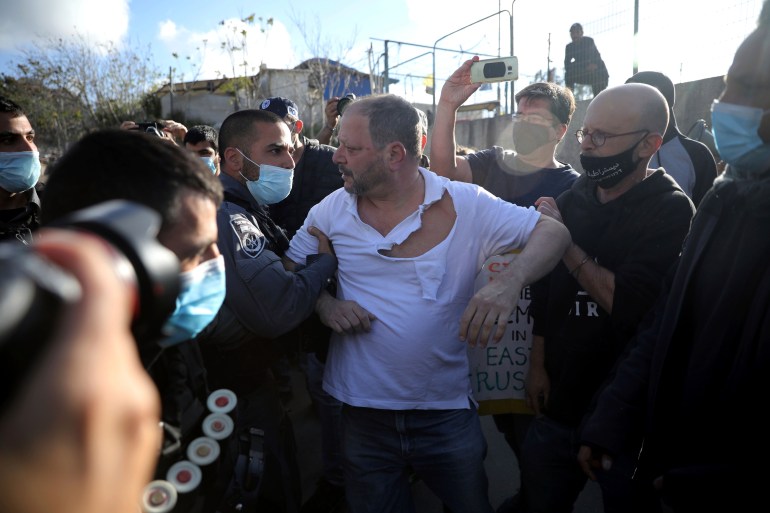
A firebrand Israeli parliamentarian provoked a political and social media storm earlier this week when he signed a petition supporting South Africa’s case of genocide against Israel, which is to be heard at the International Court of Justice (ICJ) in The Hague. Ofer Cassif, who declared his backing for South Africa on social media, will support the country’s legal bid when it comes before the ICJ on Thursday and Friday this week. “My constitutional duty is to Israeli society and all its residents,” he wrote on X on January 7. “Not to a government whose members and its coalition are calling for ethnic cleansing and even actual genocide. They are the ones who harm the country and the people, they are the ones who led to South Africa’s appeal to The Hague, not me and my friends.” The Palestinian death toll from Israel’s near-100-day bombardment of the Gaza Strip has crossed 23,000 people, including nearly 10,000 children. Who is Ofer Cassif? Cassif is a politician from the left-wing, Arab-majority Hadash-Ta’al party, Hadash being the Hebrew acronym for the Democratic Front for Peace and Equality. Born in Rishon LeZion near Tel Aviv in 1964, he has been a member of the Israeli parliament for nearly five years. Cassif has a doctorate in political philosophy from the London School of Economics and he was an academic at the Hebrew University of Jerusalem before he entered parliament. His penchant for going against the grain of Israeli society is not new. In the late 1980s, the pro-Palestinian Israeli, who is also a proud communist, spent time in jail for refusing to serve as a soldier in the occupied territories. In 2021, he claimed police beat him while he participated in a protest against an illegal Jewish settlement in Israeli-occupied East Jerusalem. Police scuffle with Ofer Cassif, the only Jewish member of the Joint List, an alliance of Arab parties in Israel’s Knesset, during a protest against planned evictions in East Jerusalem, April 9, 2021 [Mahmoud Illean/AP] His pre-parliamentarian attacks on the Israeli state – for instance, calling one-time Justice Minister Ayelet Shaked “neo-Nazi scum” – led the Central Elections Committee to keep him off the ballot for the 2019 elections. That decision was overturned by the Supreme Court, however, and he was elected that year, with Hadash-Ta’al receiving just below 4.5 percent of the national vote and six seats in the Knesset. This compares with more than 26 percent of the vote and 35 seats for each of Benjamin Netanyahu’s Likud party and Kahol Lavan, the opposition political alliance led by former Defence Minister Benny Gantz, who is also a member of Netanyahu’s war cabinet. Yossi Mekelberg, an associate fellow with the Middle East and North Africa Programme at Chatham House, called Cassif “an anomaly in Israeli politics”. “The vast majority of Israeli members of the Knesset are serving in Zionist parties – and this is not the case with Cassif,” said Mekelberg of the anti-Zionist politician. He angered some by refusing to take a supportive stance towards Ukraine in its war with Russia. When Ukrainian President Volodymyr Zelenskyy addressed the Knesset via Zoom in March 2022, a month after the Russian invasion, Cassif declined to attend. “I don’t take sides in a needless war that harms innocent civilians, strengthens people in power and enriches the lords of war,” said Cassif in a tweet. “I do not support nationalists and persecutors of the communists in Ukraine, and no, neither do I support Putin and the Russian communist-hating nationalists. No to war – yes to peace.” What is his vision for Palestine? Cassif is a staunch supporter of a two-state solution for Israel and Palestine. In December 2023, during a conversation which was transcribed on the website of the Communist Party of Israel, he said, “The Palestinians, as a people, are entitled to have their own independent state. “The compromise is by dividing the land alongside the state of Israel, an independent, sovereign, Palestinian state, which would exist in the old territories that Israel occupied in June ’67. That means the Gaza Strip, East Jerusalem, and the West Bank. There is no other way.” He is strongly opposed to Israeli settlements in the Palestinian territories and has protested against them. In February 2022, he joined protesters in the Sheikh Jarrah neighbourhood of East Jerusalem, where families were being evicted from their homes so that settlers could be moved in. Cassif speaks to reporters during a demonstration in support of Palestinians in the Sheikh Jarrah neighbourhood in Jerusalem on February 18, 2022 [Enes Canli/Anadolu Agency via Getty Images] How has Cassif’s stance gone down with the Israeli people? Not well. Cassif is one of just 400 Israelis, in a population of nearly 9.5 million, to sign a petition supporting South Africa’s lawsuit against Israel. As a member of the Knesset, his public act of defiance has gone down like a red rag to a bull. In the wake of the Hamas attack on southern Israel on October 7, which prompted the country to unleash its campaign of aerial bombardments against Gaza, Cassif was suspended from the Knesset for 45 days for criticising the war. Fellow Israeli parliamentarian Oded Forer called Cassif’s decision to stand against the country of his birth “treasonous”, adding that his “words can no longer be heard while the blood of our soldiers and citizens screams from the ground”. Forer is currently collecting lawmakers’ signatures in a bid to have Cassif thrown out of the Knesset. Under Knesset rules, Forer needs to convince 70 members of parliament to support his bid and then gain approval from the Knesset House Committee, before parliament can vote on Cassif’s expulsion. But Cassif appears to enjoy the rough and tumble of Israel’s volatile political scene. “He is, in many ways, more of an activist than a parliamentarian,” said Mekelberg of Cassif. “And what you see is what you get.” Cassif lost friends in the Hamas assault, which killed some 1,139 people. Indeed, in an October 19,
Top 10 players to watch at the Africa Cup of Nations 2023 in Ivory Coast

The CAF Africa Cup of Nations kicks off in Ivory Coast when the hosts face Guinea-Bissau on January 13 at the Alassane Ouattara Stadium in Abidjan. Senegal are the defending champions as they beat Egypt on penalties at the last edition in Cameroon. Here’s a look at our top 10 players whose performances are likely to be decisive if their side is to lift the trophy on February 11: 1. Mohamed Salah: Egypt The hopes and dreams of a nation rest on one man’s shoulders. If Egypt are to add to their record seven continental titles, then Mohamed Salah will have to bear the brunt of the work for the Pharaohs. Egypt have not won an AFCON title since 2010, and Salah has been left on the losing side in the final in both 2017 and 2021. This edition of AFCON may not be the 31-year-old’s last, but it will be the last one where Egypt can truly boast that the king is still at the peak of his powers. How many international goals Salah will add to the 53 he has already netted, in only 93 appearances, is likely to be the decisive stat for Egypt’s hopes for erasing the memory of defeat in the final of the last AFCON by Senegal. The last 🔟 #TotalEnergiesAFCON Player of the Tournament winners. 🏅 Who wins the next one in Côte d’Ivoire? 🤔#TotalEnergiesAFCON2023 pic.twitter.com/Zgll6qWAab — CAF (@CAF_Online) January 7, 2024 2. Sadio Mane: Senegal Although not set to be as defining a role in the Senegal team as his former Liverpool teammate Salah is to Egypt, Sadio Mane is still the main man for his nation. His loss to the Senegal team at the Qatar 2022 World Cup cannot be overstated. As reigning AFCON champions, the Lions of Teranga were thought to be the African team that could break through to the semifinal stage in the global event for the first time. Without Mane, the Lions lost their bite and could not repeat their previous best of a quarterfinal appearance as they were well beaten in the group by the Netherlands and in the round of 16 by England. The 31-year-old’s 39 goals in 100 appearances for his country simply could not be replicated. It’s hard to see how Senegal defend their crown if Mane fails to fire. 3. Victor Osimhen: Nigeria Victor Osimhen became the hottest property in world football last season when he finished as leading scorer in Serie A, helping Napoli to their first league title since 1990. Denied a crack at the 2022 Qatar World Cup by Nigeria’s playoff defeat by Ghana, AFCON 2023 marks Osimhen’s first chance to shine on the international stage. If Nigeria are to lift their fourth crown, and only their second in 30 years, then it is likely that Osimhen will be very close to securing the tournament’s leading scorer accolade. The 25-year-old already has 20 goals in 27 appearances. There is no shortage of riches for Nigeria in their attacking options, but the 2023 African Player of the Year will need to carry either the goalscoring for his team or the workload to keep the focus of the defences on him and, in doing so, free up space for others. pic.twitter.com/trkhIRb8RT — Victor Osimhen (@victorosimhen9) December 17, 2023 4. Mohammed Kudus: Ghana Kudus has taken the Premier League by storm with West Ham this season – something a player transferring to England rarely does in their first year. The midfielder is 12th on the list in the English top flight for goals per minute – not bad for a midfielder in a team where even the strikers are demanded to work back first and foremost. The 23-year-old, who has scored 10 goals in 24 matches in all competitions for the Hammers, first caught the attention of European clubs when Danish side FC Nordsjaelland brought him from Ghana at the age of 17 – a relative latecomer in the modern football world. His rise from there has known no bounds as, two years later, he was snapped up by Ajax where he impressed greatly in his three seasons in Amsterdam, as well as at the 2022 World Cup. Ghana will relish the impact he could have in providing extra quality behind a forward line of the Ayew brothers and Inaki Williams. 5. Youssef En-Nesyri: Morocco On a far different note to that of Salah, Mane and Osimhen, Youssef En-Nesyri’s performance in front of goal is likely to hold the key to Morocco’s ambitions. The historic achievement of reaching the World Cup semifinal in Qatar left their manager Walid Regragui with a clear mission ahead: to win the 2023 AFCON. To do so, Morocco need to find goals. Their defence is their rock and is securely guarded by Sofyan Amrabat, but their attack needs to find the net more regularly and criticism has been planted at the feet of En-Nesyri. The 26-year-old’s return of 17 goals in 61 matches is not exactly an embarrassment at the international level and Regragui has highlighted the Seville striker’s work rate for the team as a key element of their success. France famously won the 1998 World Cup without a recognised goalscorer, so perhaps Morocco do not need to panic. There are, however, some incredible goal scorers at the tournament who might just pinch a tight game for their side and leave the Atlas Lions licking their wounds. The Atlas Lions are practicing their celebrations already 😉🇲🇦@EnMaroc | #TotalEnergiesAFCON2023 pic.twitter.com/rk1UDarPng — CAF (@CAF_Online) January 10, 2024 6. Andre Onana: Cameroon Onana’s return from international retirement in goal for Cameroon could be as problematic for the coach as it is, no doubt, welcome for the fans and his teammates. His dismissal from the World Cup squad during the tournament and subsequent retirement appeared to spell the end of this international career – at least while Rigobert Song was in charge of the team anyway. The 27-year-old’s recall to the squad in September for the AFCON qualifiers was
Ecuador ‘in state of war’ against drug cartels’ terror campaign

With city streets largely deserted apart from a massive military deployment, Ecuador found itself in a “state of war” as drug cartels waged a brutal campaign of kidnappings and attacks in response to a government crackdown. Hundreds of soldiers patrolled the capital, Quito, where residents were gripped by fear over a surge in violence that has also prompted alarm abroad. The small South American country has been plunged into crisis after years of increasing control by transnational cartels that use its ports to ship cocaine to the United States and Europe. The latest outburst of violence was sparked by the discovery on Sunday of the prison escape of one of the country’s most powerful narco bosses, Jose Adolfo Macias, known by the alias “Fito”. On Monday, President Daniel Noboa imposed a state of emergency and nighttime curfew, but the gangs hit back with a declaration of “war” – threatening to execute civilians and security forces. They also instigated numerous prison riots, set off explosions in public places and waged attacks in which at least 14 people have been killed. More than 100 prison guards and administrative staff have been taken hostage, the prisons authority said. In the port city of Guayaquil, attackers wearing balaclavas stormed a state-owned TV station on Tuesday, briefly taking several journalists and staff members hostage and firing shots in dramatic scenes broadcast live before police arrived. Local media reported some of the attackers were as young as 16. This attack, in particular, spread panic among the general population, many of whom left work and closed shops to return to the safety of their homes. “Today we are not safe, anything can happen,” said Luis Chiligano, a 53-year-old security guard in Quito who explained he was opting to hide rather than confront “the criminals, who are better armed”. Noboa said on Wednesday that the country was now in a “state of war,” as he promised not to yield to the gangs. Adblock test (Why?)