

US and UK launch air strikes against Yemen’s Houthis
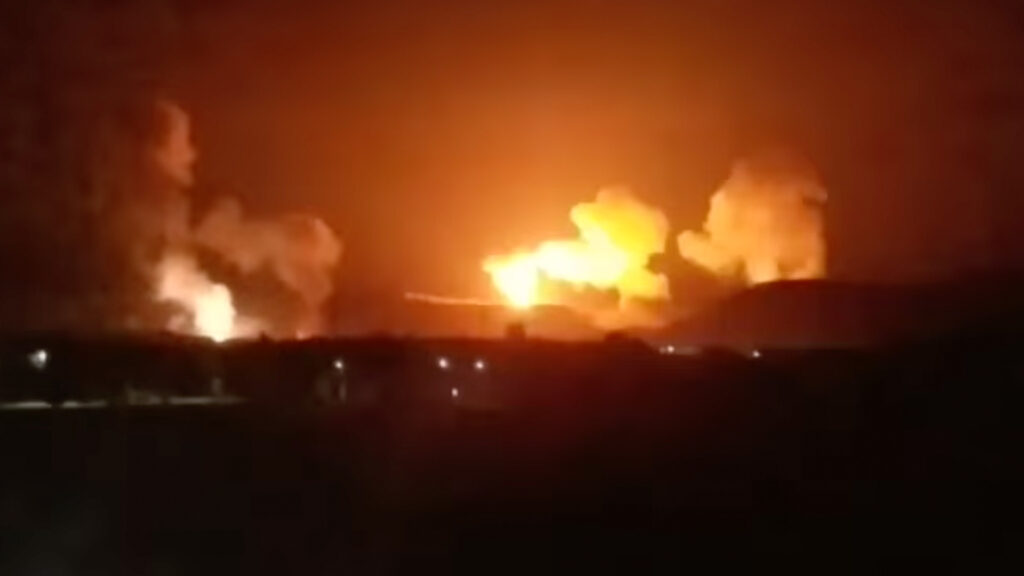
NewsFeed US and UK forces have launched air, ship and submarine strikes against Yemen’s Houthis in response to the group’s attacks on Red Sea shipping over Israel’s war in Gaza. Published On 12 Jan 202412 Jan 2024 Adblock test (Why?)
ICJ genocide case: South Africa’s five-point argument against Israel
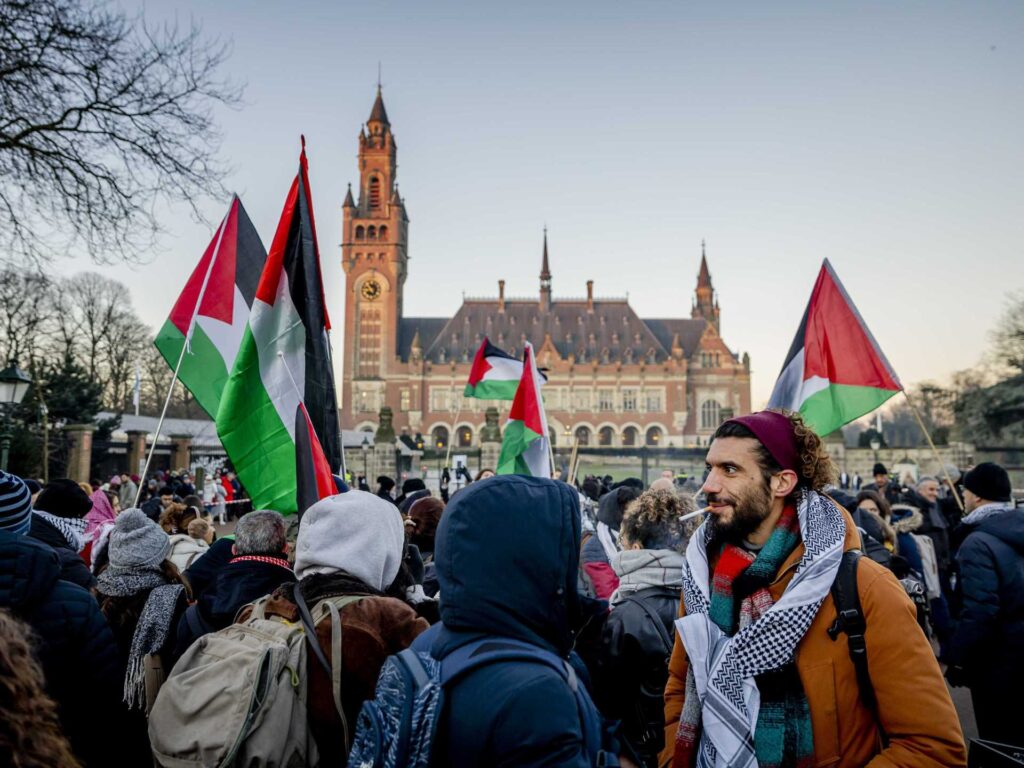
South Africa’s landmark case against Israel for its war on Gaza began on Thursday at the International Court of Justice (ICJ), the World Court based in The Hague. Pretoria is accusing Israel of committing the crime of genocide in breach of the 1948 Genocide Convention. More than 23,000 people have been killed in Gaza since October 7, according to the enclave’s health ministry. That includes nearly 10,000 children. In its three-hour long presentation to ICJ judges, the South African team, led by international law academic and barrister, John Dugard, articulated the harrowing plight of Palestinians in Gaza who are trapped under siege, bombarded by continuous Israeli air strikes and attacked by a deadly Israeli military ground invasion. It could take years for the ICJ to reach a final judgement. But this week’s initial proceedings are focused on South Africa’s specific request for an emergency order against the continuing killings and destruction in the Gaza Strip. Experts say an interim sentence could be out in weeks. Adila Hassim, one of the advocates representing South Africa, said that it’s not necessary for the court to come to a final sentence on the genocide allegations now, but that it could conclude that at least some of Israel’s actions fall within the definition of the convention, and thus, intervene. Here are the five main “genocidal acts” that Hassim accused Israel of having perpetrated during the war: Mass killings of Palestinians The “first genocidal act is the mass killing of Palestinians in Gaza”, Hassim said, showing the court pictures of mass graves where bodies were buried, “often unidentified”. She said Israel has deployed highly destructive 2000-pound bombs in parts of Gaza that it has itself declared safe. More than 1,800 families have lost multiple family members, while some families do not have any survivors left, Hassim said. No one has been spared, not babies, and especially not children, she added. Bodily and mental harm The second genocidal act, Hassim said, “is Israel’s infliction of serious mental and bodily harm,” on the people in Gaza. Close to 60,000 people have been wounded and maimed, most of them women and children, in a place where the health system has collapsed, she added. Hassim cited the arrest of large numbers of Palestinians, including children, who were undressed and loaded onto trucks going to unknown locations. “The suffering of the Palestinian people, physical and mental, is undeniable,” she said. Forced displacement and food blockade Hassim said Israel has deliberately imposed conditions that cannot sustain life and that are calculated to bring about the destruction of Gaza through its forced displacement of most of the population. Hassim said thousands of families have been displaced multiple times, with half a million now having no homes to return to. She cited how Israel gave entire hospitals orders to evacuate within 24 hours with no assistance in moving the injured or in moving medical supplies. It did the same with large parts of northern Gaza, where more than one million people were asked to move at short notice. “The order itself was genocidal,” Hassim said. The lawyer said Israel has also blockaded food and water from the Strip, causing widespread hunger and that it has removed the ability to distribute what is available by restricting the movement of aid workers. Hassim played a clip that showed hundreds of Palestinians running after a truck carrying aid into Gaza. Israel, Hassim added, has also deliberately imposed conditions denying Palestinians in Gaza adequate shelter, clothes, bedding and other critical non-food items. She said there’s no safe water to drink, clean and cook, and that disease cases, including diarrhoea, are soaring. She said more Palestinians may die from hunger and disease, yet the siege continues. Destruction of the healthcare system The fourth genocidal action, Hassim said, is Israel’s military assault on Gaza’s healthcare system that renders life there unsustainable. Gaza’s healthcare was already crippled by years of attack by Israel, she said, and now, it is simply unable to cope with the sheer number of injured people who need life-saving treatment. Preventing Palestinian births Lastly, Hassim added, Israel is blocking life-saving treatment needed to deliver babies. This, she added, amounts to preventing births in Gaza, and is an act of genocide. Hassim also cited Reem Alsalem, UN special rapporteur on violence against women and girls, who had earlier warned that the “reproductive violence inflicted by Israel on Palestinian women, newborn babies infants and children … could be qualified as acts of genocide”. What next? Israel will present its oral argument on Friday and British Lawyer Malcolm Shaw will lead its presentation. Legal experts say Tel Aviv is likely to argue that its actions are in self-defence, following Hamas’s October 7 attacks that killed 1,139 and saw more than 200 people taken hostage, according to Israeli authorities. Israeli officials have railed against the South Africa suit. Prime Minister Benjamin Netanyahu on Thursday said South Africa presented hypocrisy and lies at the court. “We are fighting terrorists, we are fighting lies,” Netanyahu said. “Today we saw an upside-down world. Israel is accused of genocide while it is fighting against genocide.” To drive its arguments home, the South African legal team needs not only to prove that the indiscriminate mass killings it calls a genocide are indeed happening, but that there is an intent to commit these acts by Tel Aviv. “Genocides are never declared in advance,” Hassim, the advocate said in her presentation, adding that all the Israeli actions she detailed were enough proof of genocidal intent. Tembeka Ngcukaitobi, a second lawyer, cited Israeli officials’ statements as further proof of intent. In particular, he recalled Netanyahu’s comments on October 28 when the prime minister urged troops preparing to enter Gaza to “remember what Amalek has done to you,” – a biblical command from God to entirely destroy a group. “The destruction of Palestinian life is articulated state policy,” Ngcukaitobi added. Several countries and international organisations have rallied behind South Africa in its case. Malaysia, Bolivia and Turkey are among
Myanmar’s military, ethnic armed groups agree to China-mediated truce
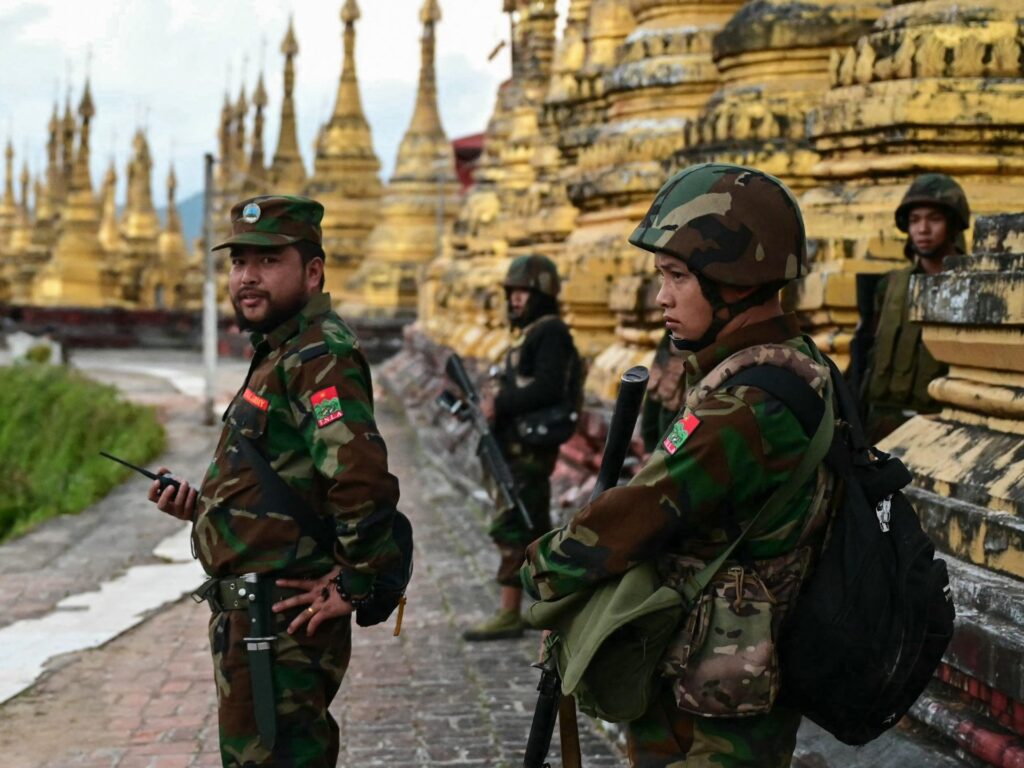
Both sides agree to cease fighting and not harm residents along Myanmar’s northern border with China. Myanmar’s military government and an alliance of ethnic armed groups have agreed to an immediate ceasefire following peace talks brokered by China. “China hopes the relevant parties in Myanmar can conscientiously implement the agreement, exercise maximum restraint toward each other and solve the issues through dialogue and consultations,” China’s foreign ministry spokesperson Mao Ning said on Friday. Both sides held talks on Wednesday and Thursday in Kunming, a Chinese provincial capital about 400km (250 miles) from the border with Myanmar, Mao said, adding that they also pledged not to harm residents at the Chinese border. Myanmar’s military, which overthrew an elected government almost three years ago, has been battling an alliance of ethnic minority armies fighting to end its control of their regions since late October, with intense violence along the northern border with China. A leader of one of the rebel groups, the Ta’ang National Liberation Army (TNLA), also confirmed that a ceasefire had been reached, adding that the talks involved an envoy from China. The clashes in northern Shan state posed the biggest battlefield challenge to the military since the coup and caused concern in China about the prospect of border trade disruptions and a refugee influx. In talks facilitated by Chinese envoy Deng Xi Jin, the Three Brotherhood Alliance – which launched the Operation 1027 offensive against the military – agreed to “cease fire without advancing further,” the TNLA leader, who declined to be named due to the sensitivity of the talks, told the Reuters news agency. “From the (alliance) side, the agreement is to refrain from offensive attacks on enemy camps or towns. From the military side, the agreement is not to engage in attacks through air strikes, bombardment, or heavy weapons.” Myanmar’s military, and the two other groups in the alliance – the Myanmar National Democratic Alliance Army (MNDAA) and the Arakan Army (AA) – have yet to comment on the development. Beijing had also said last month the parties had agreed on a temporary truce and to maintain dialogue. However fighting continued in northern Shan state and other regions in the country, with the rebels taking control of a key commercial town, Laukkai, on the Chinese border last week. The United Nations says it fears thousands of people have been displaced by the fighting with some fleeing across the border into China. Myanmar has been plunged into crisis after the military removed the government of elected leader Aung San Suu Kyi in February 2021. Within months, the military’s lethal crackdown on nonviolent protests had sparked an armed uprising that has since grown to an unprecedented scale. According to the Assistance Association for Political Prisoners (AAPP), which has been monitoring the crackdown, more than 25,730 people have been arrested for opposing the coup, and almost 20,000 are still in detention. Adblock test (Why?)
AFC Asian Cup 2023: Will India, the ‘sleeping giant’ of football, wake up?
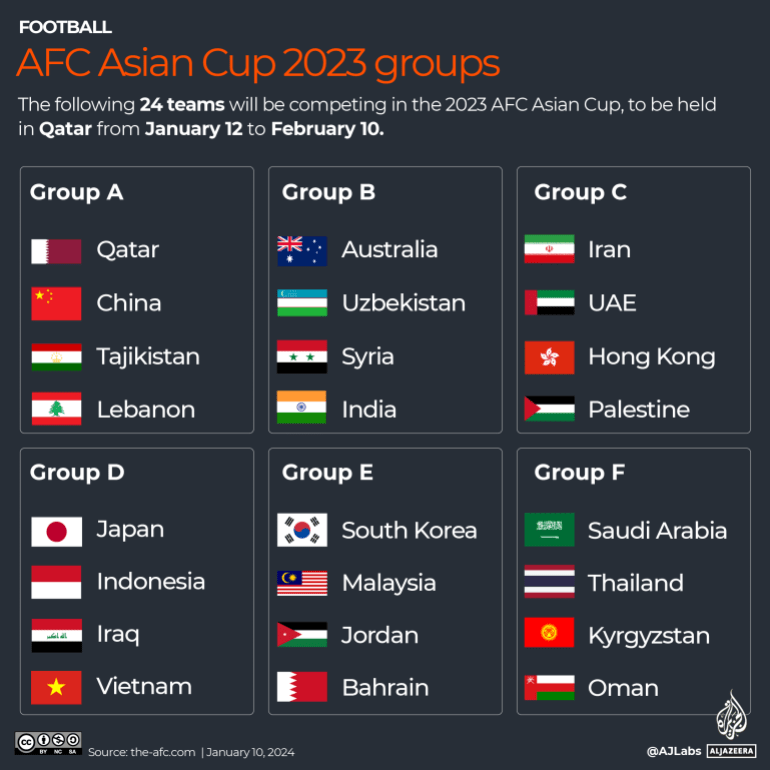
Mumbai, India – For decades, India has lived with the label of being the “sleeping giant” of football. With a population of 1.4 billion, highest in the world, there is a prevailing sentiment that India is underrepresented in international football. Compared to its dominance in cricket, the country lags far behind in football and is yet to qualify for a FIFA World Cup. While former FIFA president Sepp Blatter optimistically declared in 2012 that the “sleeping giant is starting to wake up,” the reality in 2024 paints a different picture. Currently placed 102nd in the FIFA rankings and not even among the top 10 sides in Asia, India is still in the midst of its football awakening and struggling to emerge from its slumber, experts argue. “India is not a giant in football because they haven’t done anything on the international front for years,” Stephen Constantine, former head coach of the Indian men’s football team, told Al Jazeera. Indian football basked in glory in the 1950s and 1960s, clinching gold at the 1951 and 1962 Asian Games and securing a commendable fourth-place finish at the 1956 Summer Olympics. However, since that illustrious period, India’s performance on the continental stage has been lacklustre, with the team failing to progress past the group stage at the Asian Cup in 1984, 2011 and 2019. During their last campaign in 2019, the team raised fans’ expectations with a 4-1 win over Thailand in the opening game, but losses against the United Arab Emirates (UAE) and Bahrain meant India missed qualifying for the next round once again. Now under coach Igor Stimac, India faces a tricky campaign at the Asian Cup, where the men in blue are grouped with teams ranked above them: Australia, Syria and Uzbekistan. The team’s fearless approach under Stimac has impressed fans, but the coach sparked controversy in November when he said “I don’t consider the Asian Cup as such an important tournament”. Constantine, who took charge of India in 2002-05 and 2015-19, was surprised at Stimac’s remarks. “It’s the biggest tournament that India is going to play. What is more important than that?” Constantine said. Two sleeps away.. 🇮🇳#AsianCup2023 🏆 #BlueTigers 🐯 #IndianFootball ⚽ pic.twitter.com/190vDWk52z — Indian Football Team (@IndianFootball) January 11, 2024 ‘Damage limitation against Australia’ India’s 26-member squad for the Asian Cup is led by the country’s highest goal-scorer, Sunil Chhetri, and includes the same core group of players that Stimac has worked with since taking over. All squad members play for clubs in the Indian Super League (ISL), the country’s top division. Pradhyum Reddy, an Indian football coach, expects fans to have high hopes for Stimac’s side at the Asian Cup, but says the road to results will not be easy. India’s campaign opener is against Australia, which reached the round of 16 at the Qatar World Cup 2022 before being knocked out by eventual champions Argentina. “Australia are seasoned opponents who have got their core group playing in Europe,” Reddy told Al Jazeera. “But the difference is that under Stimac, India plays on the front foot, so players will try and press Australia and make life difficult for them – maybe even cause them a few problems, but I don’t think we will get any joy out of that game. “It should be about damage limitation against Australia. Don’t lose by more than what the others did,” added Reddy. Former India player Darren Caldeira believes his country’s best chance of earning points will be against 91st-ranked Syria, as Uzbekistan (ranked 68th) could present tougher challenges. “No one is talking too much about Uzbekistan, but they are a rising powerhouse in central Asia,” Caldeira told Al Jazeera. “They have some really good players, especially, Abdukodir Khusanov,” he added, referring to the 19-year-old Uzbek defender who plays for Ligue 1 club Lens in France. (Al Jazeera) The gulf is getting bigger In the lead-up to the Asian Cup, India won three tournaments in 2023, including the SAFF Championship in July, which featured eight teams from South Asia. Apart from Kyrgyzstan, all opponents that India faced across the three tournaments are ranked below it. This highlights India’s tendency to play against weaker-ranked opponents – a longstanding concern in Indian football. “We need to play more games against better-ranked nations,” said former midfielder Caldeira, who is now the director of football at top-tier Indian club Bengaluru FC. “Maybe there has been an apprehension in the past, fearing the result, but for us to improve we must take risks and challenge ourselves against quality opponents,” he added. Reddy, CEO of third-tier Indian club Dempo, said the team’s Asian Cup qualification and other achievements mask the issues plaguing the sport at home. “We’ve improved significantly in the last decade … But comparatively, I don’t think we’ve improved as much as other regional teams including Uzbekistan, Thailand and Vietnam,” Reddy said. “And certainly not as much as Japan or South Korea – the gulf has got bigger.” Japan is currently the top-ranked Asian side followed by Iran and South Korea in second and third respectively, while Australia and Saudi Arabia make up the top five. India is 18th on the list. Former India coach Constantine blamed India’s slow progress on a lack of player development. “When I came to India in 2002, I realised that there is talent but we weren’t looking for it in the right places. And when we did, we weren’t developing them. This is why India has not gone to the heights we imagined,” said Constantine, the current Pakistan coach. “At the moment, when you look at the big picture, we don’t dominate in the region. So, if you are not dominating in the region, how do you expect to dominate elsewhere?” (Al Jazeera) Poor quality of coaching at various levels, absence of a robust league and a lack of game time for players have hampered the progress of domestic football. Constantine, an UEFA Pro Licence holder and FIFA instructor, emphasised the impact of poor coaching on India’s
‘A country but not a country’: Taiwan prepares to vote in China’s shadow
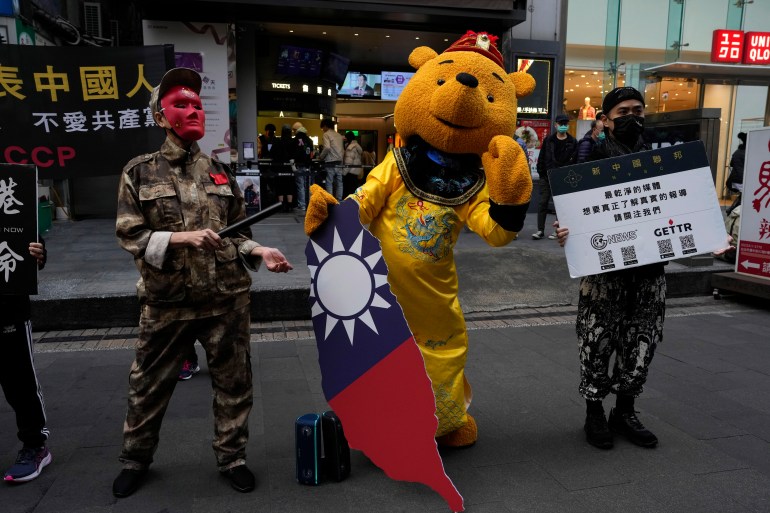
Taipei, Taiwan – Taiwan’s more than 19 million eligible voters will cast their ballots on Saturday for the island’s next leaders and lawmakers amid domestic economic challenges and China’s continued threats against the self-ruled island. There are three candidates in the running for the top job: William Lai Ching-te, Taiwan’s current vice president who represents the ruling Beijing-sceptic Democratic Progressive Party (DPP); New Taipei mayor Hou Yu-ih of the Beijing-friendly Kuomintang (KMT); and ex-Taipei mayor Ko Wen-je of the newer Taiwan People’s Party (TPP). Many in Taiwan face skyrocketing housing prices and stagnating wages, but beyond the economic issues that are key to elections everywhere, people on the island must also contend with a more existential question – that the Chinese Communist Party (CCP) wants to take control of the island, by force if necessary. In the run-up to the polls, it has sent military aircraft and balloons around the island while its officials have urged voters to make the “right choice”. Brian Hioe, founding editor of Taiwan-focused magazine New Bloom, notes that while not the only factor, “the largest issue in Taiwanese presidential elections traditionally is the decision between independence and unification”. Protesters in Taiwan dress up to depict authoritarian China, which has tried to influence the outcome of Saturday’s election with military threats, diplomatic pressure, fake news and financial inducements [Ng Han Guan/AP Photo] Beijing insists Taiwan is part of China, but in recent years, the people of Taiwan, many of whom have grown up in one of Asia’s most vibrant democracies and known nothing else, have become increasingly assertive about their own sense of identity. According to National Chengchi University’s Election Study Center, 62.8 percent of people identified as Taiwanese as of June 2023, while 30.5 percent said they were both Taiwanese and Chinese, and only 2.5 percent identified as Chinese. ‘Our identity is being eradicated’ Aurora Chang, now 24, long questioned her identity and sense of belonging because “I knew that I was Taiwanese but also felt that I wasn’t solely just Taiwanese – but didn’t know what the other things were”. At the end of her first year as an undergraduate, however, she came to a decision. “Being Taiwanese was really a conscious choice that I made,” she told Al Jazeera, referring to her epiphany. “I wanted to connect more to my roots and to understand what it meant and to feel my connection with the land and my family and my history,” she said. “Our identity is actively being eradicated by a power much larger and much more international influence than us,” she added. According to Taiwan’s Central Election Commission, more than 30 percent of voters are aged between 20 and 39. Hioe, who is also a non-resident fellow at the University of Nottingham’s Taiwan studies programme, notes that “identity concerns are certainly part of what sets Taiwanese young people apart from other Asian youths – in that most youth do not face an existential threat to their national identity”. Chen Yi An, a 27-year-old medical worker from Taipei, is also proud to call herself Taiwanese. “Taiwan is the place I grew up, the land that raised me. I am Taiwanese,” she said, adding that the way she defines where is from “should not be controversial”. But not all young Taiwanese are so rooted in their sense of identity, and some do see themselves as Chinese. Ting-yi Zheng, a 27-year-old student from Tainan, Taiwan’s historical city, has lived in China for seven years and is currently studying for a doctoral degree in Beijing. China has increased political, military and economic pressure on Taiwan since Tsai Ing-wen was first elected president in 2016. She cannot run for a third term [Yasuyoshi Chiba/AFP] He told Al Jazeera he had no plan to return home to vote. Last time around he backed KMT candidate Han Kuo-yu, but now he worries about the state of Taipei’s ties with Beijing and the effect on the island’s economy. China has raised political, economic and military pressure on Taiwan ever since Tsai Ing-wen was first elected president in 2016, despite her early offer of talks. Zheng says he does not want the island to go to war with Beijing. “I hope the two sides of the Taiwan Strait can be peacefully unified,” he told Al Jazeera, adding that both peoples needed to know each other more. Liz Li, now 27, says she learned at school that Taiwan was an “independent country” but says she came to have doubts after doing more of her own reading. “The older you get, the more news and history you see, and you will think to yourself: Are we really a country?” Li said, referring to the international community’s understanding of Taiwan’s state as “a country but not a country”. Whatever her thoughts on identity, however, it will not be what motivates her decision at the ballot box. Values to live by Li dreams of buying her own home on the island, but prices are so high she is thinking of working overseas – getting a job as a UX designer in Japan or the United States – so she can earn and save enough money to make it a reality. She thinks that as Taiwan grapples with economic issues such as affordable housing, it needs new ideas and an alternative to the two parties – the DPP and KMT – that have dominated politics since democratisation. Li plans to vote for the TPP’s Ko for the sake of “who will give us a better and more stable life.” Ko has attracted support from many similarly disillusioned young people who are attracted by his outsider status, and for whom economic issues are more of a concern than the rumbling from across the Taiwan Strait. “The thing about China is that it is an existing problem for us,” she said, explaining that she did not think it was an issue where ordinary people could have much impact, unlike the economy. Chiaoning Su, associate professor in the Department of Communication, Journalism and Public Relations
Fears simmer in Essequibo region as Venezuela eyes the disputed territory
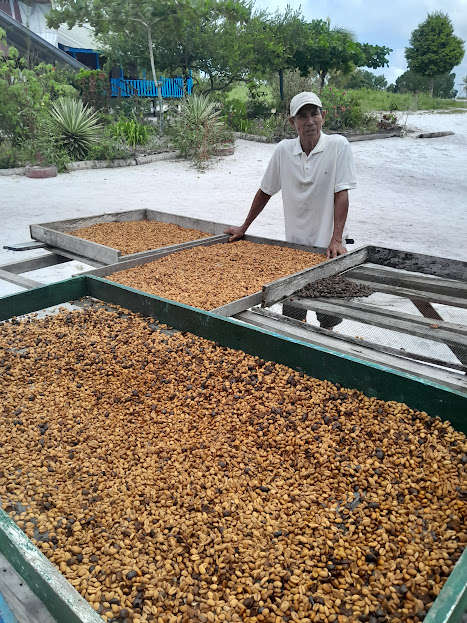
Wakapoa, Guyana – The threat had always been there, ever since Lloyd Perreira was a young child: that one day his ancestral home could be absorbed into the neighbouring country of Venezuela. A member of the Lokono Indigenous people, Perreira considers his home Essequibo, a vast territory on the western flank of Guyana. He grew up in Wakapoa, a village composed of 16 islands on the Pomeroon River, nestled in the heart of the region. “Even as a small boy, I remember hearing Venezuela saying Essequibo is theirs,” Perreira said. “But I also know I live in Essequibo, and as an Indigenous person, Essequibo is ours.” Perreira is now the toshoa, or chief, of Wakapoa. But his childhood fears returned when Venezuelan President Nicolas Maduro recently held a referendum to claim Essequibo as his country’s own. “We were very scared when we saw the referendum,” Perreira said, as he picked a harvest of rare liberica coffee beans. Lloyd Perreira, the toshao or chief of Wakapoa, stands in front of his harvest of liberica coffee beans [Nazima Raghubir/Al Jazeera] Though tensions have subsided since the December 3 referendum, the ongoing question of whether Essequibo could be annexed to Venezuela has sparked anxiety among those who call the territory home. Nearly two-thirds of what is considered Guyana lies in Essequibo, a 159,500-square-kilometre (62,000sq mile) area lush with jungles and farms. Along the Pomeroon River, coconuts are cultivated to make oil. Coffee shrubs blossom from riverbanks. And Indigenous groups like the Lokono harvest cassava for bread and cassareep, a syrup used to preserve food. But the discovery of large oil deposits off its shores in 2015 reignited a decades-long territorial dispute over Essequibo. Experts estimate that more than 11 billion barrels of oil and natural gas could sit within its territory. In recent months, Maduro has framed Venezuela’s claims on the land as a “historic battle against one of the most brutal dispossessions known in the country”. The referendum his administration put before voters consisted of five questions, asking them to reject 19th-century arbitration that awarded Essequibo to Guyana and instead support the creation of a Venezuelan state. That the referendum passed with 98 percent support fueled fears in Guyana that a Venezuelan takeover may be imminent. “Guyana has never been in any war,” taxi driver Eon Smith told Al Jazeera in the town of Charity, southeast of Wakapoa. “We are not prepared for war. What will we do?” Those concerns have also translated into lower attendance at Wakapoa’s local boarding school. Students who usually travelled for miles to attend instead stayed home in the lead-up to the referendum, their dormitory beds sitting empty. “We have one boy in the dormitory,” teacher Veneitia Smith said, pointing to a flat concrete dwelling. “Everyone else stayed away since we heard about the Venezuela referendum.” Guyana’s President Mohamed Irfaan Ali has sought to quell those fears, though. “Guyana will intensify precautionary measures to protect its territory,” Ali said in December. Guyana’s President Irfaan Ali has sought to reassure the public that his country’s territory is safe [Lucanus D Ollivierre/AP Photo] But since the referendum, Maduro has proceeded to declare Essequibo “a province” of Venezuela. He also directed Venezuela’s state-owned companies to “immediately” begin exploration for oil, gas and minerals in the region. Some Guyanese residents, however, have organised activities to protest the referendum. Those demonstrations ranged from prayer meetings to school performances of patriotic songs and chants. Indigenous leaders like Jean La Rose, the executive director of the Amerindian Peoples Association (APA), also called on residents to stay in their villages — and resist any urge to leave preemptively. La Rose herself returned to her home in Santa Rosa, a village in the Moruca subregion of northwest Essequibo. In a message posted on social media, she urged Indigenous peoples “to remain in their homes and guard them” in case of annexation. “I want to encourage other people: Stay in your homes, that is what you own. Stay on your lands, that is what you own,” she said. “That is the patrimony of your forefathers, your ancestors. Stay, guard it.” A boy in Caracas drives a motorcycle past a mural depicting Essequibo as part of Venezuela, following a referendum over the disputed region [Matias Delacroix/AP Photo] Cross-border relations have remained taut, despite a December 14 agreement between Guyana and Venezuela “not to threaten or use force” to settle claims over Essequibo. Known as the Argyle Agreement, the deal included assurances from presidents Maduro and Ali to “remain committed to peaceful coexistence” and to resolve the dispute in accordance with international law. The International Court of Justice continues to weigh a 2018 case brought by Guyana over the territorial dispute. But despite talk of peace, the spectre of military tensions lingers. Late last month, the United Kingdom sent a warship to Guyana for joint training exercises, prompting Venezuela to respond with “defensive” exercises of its own. Maduro called the ship’s presence a provocation, saying it was “practically a military threat”. Guyana’s Foreign Minister Hugh Todd acknowledged in an interview with Al Jazeera that he has heard “concerns” over Venezuelan “aggression”. Still, Todd said, the threat is not so great that businesses are “not willing to invest” in Guyana. He pointed to the energy producer ExxonMobil, which announced in December that it would continue to offshore oil extraction despite the tensions. “They made it clear that Exxon is not going anywhere and they will continue to do their work here in Guyana,” Todd said. Wakapoa, a community composed of multiple islands, is part of the disputed territory of Essequibo [Nazima Raghubir/Al Jazeera] Essequibo’s oil production is one of the primary drivers behind Guyana’s economy. The World Bank has named Guyana one of the “fastest-growing economies” in the world, with double-digit growth of its gross domestic product (GDP) expected to continue in 2024. When asked about potential risks for oil companies from the tensions, Todd maintained that Guyana’s investments are “well protected”. “There is no reason to not want
What plans does Washington have for Gaza?

In yet another Middle East visit, the US secretary of state has been rallying support from regional players. The US secretary of state has wrapped up his latest visit to the Middle East, with Cairo as his final stop. It’s Antony Blinken’s fourth time in the region since Israel began its assault on Gaza more than three months ago. He says the conflict needs to end soon and he has called on regional leaders to help build a stable post-war order. But why isn’t the administration of US President Joe Biden first trying to reach a ceasefire? Presenter: Adrian Finighan Guests: Said Sadek – political sociologist at the Egypt-Japan University Chris Hedges – former Middle East bureau chief for the New York Times and a Pulitzer Prize winner and author Mouin Rabbani – co-editor of Jadaliyya, an online magazine of the Arab Studies Institute Adblock test (Why?)
Photos: Greek students protest government plan for private universities

Thousands of Greek students rallied in Athens and other cities on Thursday to protest against planned education reforms that would allow the introduction of private universities in the country. The conservative government of Prime Minister Kyriakos Mitsotakis, who won a second term last year, is expected to submit a bill to parliament this month that would permit private universities to operate inside Greece. The government has said the schools will operate as branches of foreign universities. Many believe the move will devalue degrees from Greece’s public universities and that the private system will exclude those who cannot afford it. The change will “tear apart the public university as we knew it”, said student Christina Iliopoulou, who joined the protest in Athens. “It will destroy our daily life in terms of how we will be able to find a job after we graduate.” The protests were largely peaceful, but there was a brief clash in Athens between protesters and police, who fired tear gas. Universities in Greece are government-funded institutions where attendance has been free for decades. But Greece has implemented a series of education reforms in the past despite fierce opposition from students and staff. The government, which enjoys a parliamentary majority, has argued that the reform would bolster the economy by luring back some of around 40,000 students now studying overseas and reverse a brain drain of academics prompted by the 2010-2018 debt crisis. The private universities’ curriculum would follow very strict academic standards, the government said last week, adding that the reform would also free public universities of bureaucracy and boost their self-governance. Adblock test (Why?)
Trump accuses New York attorney general of bias in court closing arguments

Trump’s remarks come on final day of a trial over allegations that he habitually exaggerated his wealth. Former US President Donald Trump has used closing arguments in his civil fraud trial to attack New York Attorney General Letitia James. Trump had sought to deliver Thursday’s full closing arguments, but permission was denied when he failed to sign off on restrictions stopping him from using the courtroom as an electioneering platform. The former president is the current frontrunner for the Republican nomination to go against the current president, Joe Biden, in the November election. Judge Arthur Engoron, who is ruling on what penalties to impose on Trump after an earlier decision that he and his company had manipulated property values fraudulently, allowed Trump to make brief additional comments after his lawyer had spoken. Trump quickly took the chance to attack the New York state attorney general, saying, “They want to make sure I never win again. The [attorney general] hates Trump … and if I can’t talk about that it’s a disservice.” Former US President Donald Trump attends the closing arguments in the Trump Organisation civil fraud trial at New York State Supreme Court in the Manhattan borough of New York City [Shannon Stapleton/Reuters] James brought the case and is looking for a nearly $370m ruling and a lifetime ban on Trump from the state’s real estate industry. “We have a situation where I am an innocent man,” Trump said, adding, “I’m being persecuted by someone running for office and I think you have to go outside the bounds.” But Engoron attempted to interrupt Trump with a warning to wrap up his comments, to which the former president responded, “You have your own agenda, you can’t listen for more than one minute”. The judge told Trump’s lawyer, Christopher Kise, to “control your client” in response to Trump’s statement. The trial is one of multiple criminal and civil cases Trump faces as he seeks to return to the White House, ranging from a rape allegation to conspiracy to overturn the 2020 election. On the final day of the trial, Engoron was sceptical of Kise’s argument that Trump should not be penalised for allegedly manipulating the value of his properties because lenders and insurance still turned a profit. Engoron said there does not have to be any “evidence of harm”. Throughout the trial, the state’s lawyers have looked to prove that Trump consistently overvalued many of the towers, golf clubs, and other assets that he had before he entered politics. In November last year, Trump admitted to providing inaccurate property valuations. “The myriad deceptive schemes they employed to inflate asset values and conceal facts were so outrageous that they belie innocent explanation,” James’s office said in a filing. In one example heard at the court, James’s team argued that Trump valued his Mar-a-Lago Florida club by “asking prices” rather than actual sales prices. “From 2011-2015 defendants added a 30 percent premium because the property was a ‘completed [commercial] facility,’” the filing said. But Trump’s lawyer, Kise, argued that while there could be errors in Trump’s corporate financial statements, they do not “lead to the conclusion there was fraud”. Trump is also scheduled to go on trial in Washington in March for conspiring to overturn the 2020 elections and in May for taking troves of highly classified documents in his belongings after he left the presidency. Adblock test (Why?)
South Africa presents case to the ICJ accusing Israel of genocide in Gaza

NewsFeed South Africa presented their case against Israel at the International Court of Justice in The Hague, accusing Israel of committing genocide against the people of Gaza. Published On 11 Jan 202411 Jan 2024 Adblock test (Why?)