

The Great British Post Office scandal, explained

Public fury over a scandal which has ruined the lives of hundreds of British postal workers has reignited after a TV drama based on the affair was broadcast in the United Kingdom at the beginning of the new year. Faulty computer software resulted in some 230 post office workers being imprisoned on false charges of theft and fraud. Thousands of others were accused of similar misdeeds. Mr Bates vs the Post Office: The Real Story chronicled sub-postmaster Alan Bates’s legal battle against the Post Office, which had falsely accused him and some 3,500 others of defrauding the UK’s postal service. Following the airing of the four-part mini-series, the number of signatures on a long-running petition calling for an official honour to be stripped from former Post Office chief executive Paula Vennells rocketed to more than one million. It had the desired effect. On Tuesday, Vennells bowed to pressure and pledged to “return my CBE with immediate effect”. British Prime Minister Rishi Sunak has also weighed in, promising that the 700-plus postal workers who were prosecuted for crimes they never committed would “get the redress that they deserve”. What happened? Between 1999 and 2015, 736 Post Office branch managers were prosecuted and convicted of financial misconduct based on information generated by the organisation’s computing software. Horizon, the computer software which is still used by the Post Office today, wrongly indicated that sub-postmasters and sub-postmistresses (the official titles given to post office managers) had been involved in a campaign of theft and false accounting, leading many to serve jail time. The miscarriage of justice came to light in 2019 when the High Court ruled that the Horizon software was to blame and the government ordered an inquiry into the affair in 2020. But, so far, only 93 people have had their convictions quashed after it was revealed that Horizon was riddled with faults. In 2021, the UK Court of Appeal overturned 39 of those convictions in a single ruling. The rest of the cases are still being evaluated, but the recent TV drama has triggered calls for the process to be expedited. What mistakes did the computer software make? The Post Office began the British rollout of Horizon computing software – manufactured by the Japanese company Fujitsu – in 1999. It was introduced to manage financial transactions in the UK’s Post Office branches. But staff soon began to report that Horizon was falsely indicating cash shortfalls and complained that the system was not fit for purpose. Their complaints to Post Office management that there were errors in the system went unheeded, and these financial irregularities continued to appear on branch accounts countrywide. Faced with these discrepancies and lacking support from management, some sub-postmasters and sub-postmistresses attempted to plug the “financial holes” with their own money. But Post Office chiefs, convinced that they were being defrauded and refusing to admit to Horizon’s shortcomings, began to launch private prosecutions against employees in 2000. Some workers served prison sentences after being found guilty of theft. Many faced financial ruin after they were instructed to refund the money they were accused of stealing, and the breakdown of relationships, and several deaths by suicide have been linked to what was described by British barrister Jason Beer as “the worst miscarriage of justice in recent British legal history”. What impact has this had on the accused postal workers? Beer, who is counsel to the continuing public inquiry into the scandal, hearings for which officially began in February 2022, said that “reputations were destroyed, not least because the crimes of which the men and women were convicted all involved acting dishonestly.” He added, “People who were important, respected and integral parts of the local communities that they served were in some cases shunned. A number of men and women sadly died before the state publicly recognised that they were wrongly convicted.” Parmod Kalia was one of those wrongly imprisoned. Falsely accused of pocketing more than 20,000 pounds ($25,500 at the current rate), Kalia was given a six-month jail sentence in 2001. The southeast London postmaster had even been driven to borrow money from his mother to fill the supposed cash shortfall. But, convinced by the Horizon data, the Post Office pursued its prosecution against him. It wasn’t until 2021 that his conviction was overturned. Seema Misra was another. The English postal worker was eight weeks pregnant when she was given a 15-month prison sentence for fraud in 2010 after she was blamed for a cash discrepancy of 74,000 pounds ($94,000 at current rate). “I’d been warned there was a chance I could be jailed,” she recounted of her ordeal to a UK newspaper. “But I honestly just couldn’t see for a second how I could be punished like that for something I hadn’t done. I had faith in the justice system, at that point. When the judge said I’d been sentenced to 15 months’ imprisonment, I passed out. If I hadn’t been pregnant, I would have taken my own life. I was at rock bottom.” Like Kalia, her conviction wasn’t quashed until 2021. What will happen next? Amid continuing political accusations that Post Office compensation payments to affected workers have been slow in coming, the TV dramatisation of the scandal has sparked new public outrage over the fact that most of those falsely accused have yet to receive justice. The UK government is now under huge public pressure to speed up the ongoing legal process of reviewing the convictions. The government is considering a number of options, including introducing legislation to quash all convictions of postal workers caught up in the scandal. The next stage of the public inquiry will be a disclosure hearing in London next week, with the full timeline for the inquiry expected to stretch into the middle of this year. Prime Minister Rishi Sunak, who was interviewed on Sunday about the affair, called the convictions an “appalling miscarriage of justice”. Asked by the BBC’s Laura Kuenssberg whether the Post Office, which is owned by
‘They’re targeting us’: Sudan’s army cracks down on democracy activists

When the paramilitary Rapid Support Forces captured Sudan’s second-largest city, Wad Madani, tens of thousands of people fled and sought safety in regions still under the army’s control. Mohamad Osman* was among them, but military intelligence arrested him as he was trying to flee on December 27. He was taken to a secret detention centre – commonly referred to as a “ghost house” in Sudan – where the army quickly found out that he was a member of the Kalakla resistance committee, one of many neighbourhood groups that spearheaded the pro-democracy movement before the war. For five days, Osman was electrocuted and forced to look at seven corpses rotting on the cold concrete floor. He was going to be number eight. Luckily, a friend in the military bailed him out. Osman is one of dozens of Sudanese activists who have been arrested and tortured in ghost houses by military intelligence in recent weeks, even as the Rapid Support Forces (RSF) threatens to defeat the army and capture all of Sudan. “The first thing they asked him was if he was a member of the resistance committees,” said Somaya Noon*, a spokesperson for the Kalakla resistance committee. “We know they’re targeting us.” Many of those being detained are members of the resistance committees, which played an instrumental role in organising mass protests to bring down Sudan’s autocratic former President Omar al-Bashir in April 2019. People displaced by the conflict get on top of a truck in Wad Madani on December 16, 2023 [AFP] Four years later, the RSF and army – former bedfellows and relics of al-Bashir’s regime – ignited a devastating civil war by turning on each other. The former has been accused of grave crimes including ethnically motivated killings and sexual violence against women and girls. The army, which is suspected of harbouring Bashir-era loyalists tied to Sudan’s Islamist movement, is also accused of failing to protect civilians and settling scores against pro-democracy activists, according to several resistance committee members. “What is happening is the political revenge by cadres of the former regime who are in the security forces,” said Hassan al-Tayb*, a resistance committee member in Port Sudan, the army’s stronghold and Sudan’s de facto administrative capital since the war. ‘Sleeper cells’ The army frequently accuses resistance committee members of being RSF sleeper cells, but activists believe this is a pretext to punish them for their role in bringing down al-Bashir. “There are some people in the army that say volunteers and activists cooperate with the RSF. But this is not correct,” said Yousif Omer*, a resistance committee member in the city. “I believe these are political arrests. Many of the activists being taken were active during the revolution [that brought down al-Bashir]. Now, they are facing baseless accusations,” Omer told Al Jazeera. Sudanese Armed Forces General Abdel Fattah al-Burhan speaks in Khartoum, Sudan [File: Marwan Ali/AP Photo] Al Jazeera sent messages to army spokesman Nabil Abdallah asking him for comment about the arrests of activists, but received no response by the time of publication. Meanwhile, Sudanese activists accuse the army of devoting more efforts to crack down on them than to fight the RSF. Many pointed to the army’s rapid withdrawal from Wad Madani in mid-December, which allowed the paramilitary to capture the city. Wad Madani was a safe haven for hundreds of thousands of people displaced from the capital Khartoum and surrounding cities earlier in the war, many of whom just had to flee again when the RSF attacked. Some activists went to nearby Sennar state, where they were arrested by military intelligence. “Many friends were detained … there isn’t just one case but quite a few. We just hope they will be released soon,” Omer told Al Jazeera. Threat to legitimacy? Since the war erupted in April 2023, resistance committees have mobilised to evacuate civilians from neighbourhoods caught in the crossfire, power hospitals and distribute food and medicine to those in need. But activists are now pausing their initiatives for fear of arrest. “Right now, I stopped all my work,” Omer said. “To be honest, we’re scared of military intelligence. We just don’t feel like we can move freely to do our work.” Other activists said the army has imposed heavy security measures and set up checkpoints that restrict the movement of civilians and hampered the delivery of aid. River Nile State issues order disbanding neighbourhood service committees. They have been crucial since 2019 in securing basics for their neighbourhoods. This could be a major blow for the local emergency rescue committees in River Nile State. It is a blow to grassroots activism. https://t.co/ZmY6dVcYqZ — Mohanad Hashim (@moehash1) January 8, 2024 In River Nile state, the governor even issued an order to disband resistance committees and reform them according to strict guidelines set by the governor, who also barred members of old committees from joining the new ones. Hamid Khalafallah, a Sudanese expert and an active member of the resistance committees before he fled the country in May, told Al Jazeera that the army is restricting and impeding international aid. “There is a bit of a shift by international aid agencies, who now wish to work with local groups because they have seen that [working through the army] has resulted in very little aid reaching people,” Khalafallah told Al Jazeera from Manchester, United Kingdom. He added that because the army feels that resistance committees threaten its legitimacy and tries to disrupt them, vulnerable communities will face more hardship if local relief is stamped out or scaled back. “I imagine the military is not very happy about possibly losing an opportunity to exploit or divert aid,” he added. Crushing civil space Resistance committees have also drawn ire for calling for an end to the war, for the RSF to dissolve and for the army to surrender to a civilian government, according to al-Tayb from Port Sudan. “The [army] is against any activist that does not support the war or the return of the former regime,”
Former US President Donald Trump attends court for immunity hearing

The presidential candidate is accused of plotting to overturn the results of the 2020 election, which he lost to Joe Biden. Former US President Donald Trump has arrived at a Washington court for an appeals hearing as he seeks to be declared immune from prosecution on charges that he plotted to overturn the results of the 2020 election, which he lost. The outcome of the arguments heard in the court will not only have ramifications for the criminal case against Trump but also for the broader and legally untested question of whether an ex-president can be prosecuted for acts committed while in the White House. Special counsel Jack Smith, who brought the case against Trump, is eager to get the case to trial before November’s election, in which Trump is running again. The case has been put on hold for the appeal. Trump’s lawyers are not only seeking to dismiss the case but are also hoping to benefit from a protracted appeals process that could delay the trial past its scheduled March 4 start date, even potentially after the election. Trump is not required to attend Tuesday’s arguments, especially as the Republican presidential caucuses in the state of Iowa are one week away, but his appearance signals how important this case is for his re-election campaign. “Of course I was entitled, as President of the United States and Commander in Chief, to immunity,” Trump wrote on social media. “I was looking for voter fraud, and finding it which is my obligation to do, and otherwise running our Country.” While former presidents have enjoyed broad immunity, no former leader before Trump has ever been indicted, so courts have never addressed whether that protection extends to criminal prosecution. Trump’s lawyers argue that it does, that his prosecution would represent a departure from more than two centuries of American history and would open the door to future “politically motivated” cases. But Smith’s team argues that presidents are not entitled to absolute immunity and the acts that Trump is alleged to have carried out in the indictment – including scheming to get supporters as fake electors in battleground states and pressing his vice president, Mike Pence, to reject the count in favour of now-President Joe Biden – fall outside a president’s job. “Immunity from criminal prosecution would be particularly dangerous where, as here, the former President is alleged to have engaged in criminal conduct aimed at overturning the results of a Presidential election to remain in office beyond the allotted term,” Smith’s team wrote in a brief. “A President who unlawfully seeks to retain power through criminal means unchecked by potential criminal prosecution could jeopardise both the Presidency itself and the very foundations of our democratic system of governance,” it added. A federal judge overseeing the case against Trump had sided with Smith. Now judges on the US Court of Appeals will decide. It’s not clear how quickly they will rule on the appeal, but the court has signalled they intend to work quickly. Adblock test (Why?)
Has Pakistan’s top court cleared former PM Sharif’s way back to power?

Islamabad, Pakistan — Former Pakistani Prime Minister Nawaz Sharif appears poised to compete in the country’s February 8 legislative elections that could see him return to power, after the nation’s Supreme Court reversed its six-year-old verdict disqualifying politicians found to not be “honest and righteous”. But while some analysts said that the top court’s Monday verdict helps balance the power scales between the political class and Pakistan’s dominant military establishment, others questioned its timing. The majority 6-1 decision by a bench led by Chief Justice Qazi Faez Isa overturned the Supreme Court’s own earlier judgment banning people from political participation for life if they are found guilty of a constitutional provision that demands that lawmakers have an upright moral character. The earlier judgment, the court said this week, “abridges the fundamental right of citizens to contest elections and vote for a candidate of their choice”. Raza Ahmad Rumi, a political analyst, journalist and author, said that the verdict was “not only a reversal of miscarriage of justice, but more importantly, it is a clear acknowledgement of the mistake that was made in the past under the pressure of the then-military establishment leadership.” Rumi, who is also the director at the Park Center for Independent Media (PCIM) at Ithaca College in the United States, added that the decision should not be only seen in the context of Sharif getting relief. “This is a welcome development for the entire political class,” he told Al Jazeera. “Historically, we have seen that disqualification of politicians is used as a cudgel by Pakistan’s civil and military bureaucracy since the inception of this country in 1947, and it is one of the easiest methods to eliminate them from the political arena via misuse of disqualification laws,” he said. Usama Khawar, a Lahore-based constitutional lawyer, also said that the Monday ruling would “remove the sword of Damocles” hanging over politicians who fall out of favour with the military establishment. Yet the biggest immediate beneficiary is Sharif. The then-prime minister was disqualified from office in July 2017 for violating the constitutional requirement for parliamentarians to be “honest and righteous”, after he was shown to have hidden his assets. Subsequently, in April 2018, a five-member bench of the Supreme Court led by then-Chief Justice Saqib Nisar ruled in a separate case that disqualifications like the one imposed on Sharif stand for life. Sharif, who served as prime minister twice in the 1990s, and was in the midst of a third term starting in 2013 when he was disqualified, was arrested and sent to jail days before the 2018 elections. His archrival Imran Khan, who led multiple demonstrations against Sharif on allegations of corruption, emerged victorious in those elections. Khan’s critics said the victory was made possible by help from the country’s powerful military establishment, which allegedly worked towards removing Sharif. Now those roles — and the allegations — have been reversed. Sharif’s critics say he is the beneficiary of the military’s support. No Pakistani PM has ever managed to complete their tenure, while the military has directly ruled the country for more than three decades. Khan, the former cricketer-turned-politician, was himself ousted in April 2022 through a parliamentary vote of no confidence. He is currently imprisoned on charges of corruption and leaking official state secrets. Khan blames a US-led conspiracy, in collusion with the Pakistani military, for his ouster and legal troubles. Meanwhile, Sharif, who was in jail till November 2019 before he was allowed to fly to the United Kingdom on account of his ill health, stayed there for four years, before returning in November last year. Aasiya Riaz, joint director of the independent political think-tank the Pakistan Institute of Legislative Development and Transparency (PILDAT), said that it did appear that Sharif’s return was conditioned on a commitment from the military that legal cases against him would be dropped — as has happened. But she pointed out that Sharif himself had been the victim of the army’s ire previously. Asad Rahim Khan, a constitutional lawyer, said the judgement would have been “the reversal of a historical wrong if an empowered parliament had amended the Constitution.” The country’s political history, she said, showed that Pakistani politicians needed to band together in order to truly strengthen the country’s democracy. “The right to an opposition, the centrality of parliament, and the need for governments serving out their complete, five-year tenures are points to unite on,” the Lahore-based lawyer said. “If they don’t, they will continue being picked off one by one via the deep state.” Adblock test (Why?)
How did India’s Supreme Court send Bilkis Bano’s rapists back to jail?
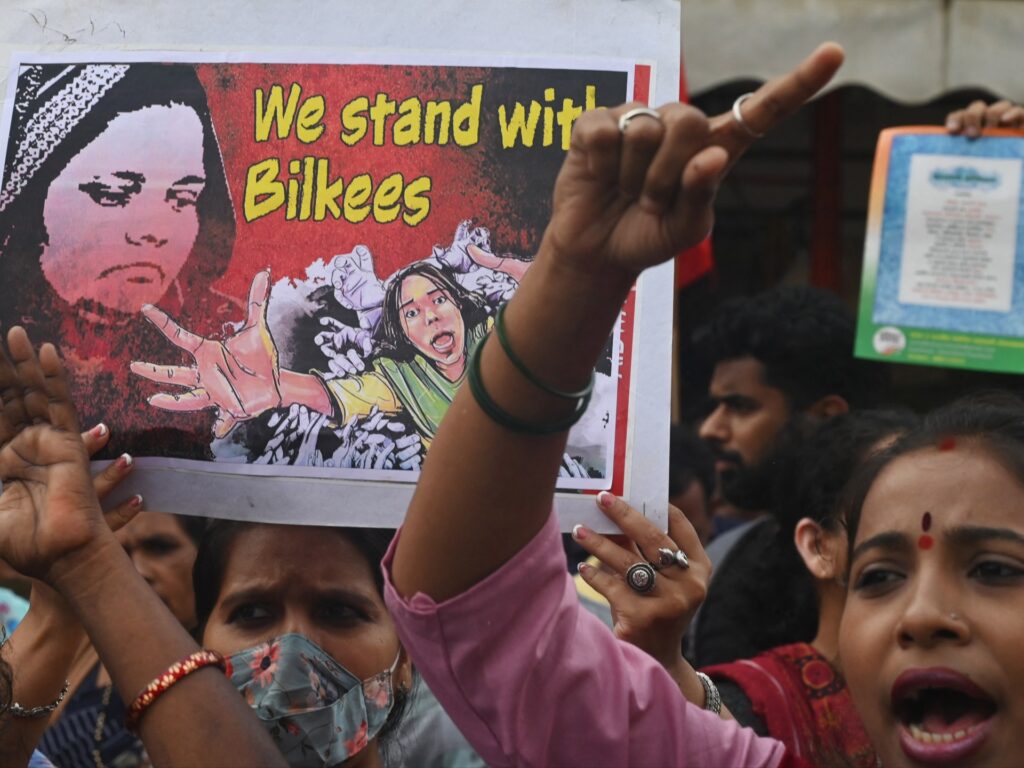
India’s Supreme Court on Monday restored life prison sentences for 11 men who had raped a Muslim woman, Bilkis Bano, during the communal riots in Gujarat in 2002. The decision came after Bano and other petitioners challenged a decision by the Gujarat government, backed by Prime Minister Narendra Modi’s government, to set the convicted rapists free two years ago. Bano’s fight for justice over more than two decades had, for many Indians, become emblematic of the struggle of survivors of the 2002 violence to ensure that the guilty are punished. Yet, when a Supreme Court bench gathered on Monday to declare its verdict in the case, it was unclear to the wider nation what it had decided — and what its rationale would be, months before India’s national elections in which religious polarisation is expected to play a central part. So how did India’s top court decide to send the convicts back to jail? It starts with a woman’s struggle that has played out before all of India, through multiple twists and turns since a day of horror in the spring of 2002. Who is Bilkis Bano? Bano, now in her 40s, was five months pregnant in March 2002 when she fled her Randhikpur village in eastern Gujarat, alongside her relatives and other Muslims, as violence against the community broke out across the state. Bano and her family had reached a district in the west of the state when a mob of several men attacked their group. She was gang-raped during the violence. Seven of her family members were killed, including her three-year-old daughter, whose head was smashed on the ground by the perpetrators in Gujarat’s Dahod district. During the killings in Gujarat, nearly 2000 people, mostly Muslims were murdered. Modi was the chief minister of Gujarat during this time and has faced allegations since then that his government facilitated the violence. Modi has repeatedly denied having any role and the Supreme Court has said it found no evidence to prosecute him. In December 2003, the Indian Supreme Court ordered a federal investigation into the Bilkis Bano rape case by the Central Bureau of Investigation (CBI). In 2004, the accused were arrested as the Supreme Court ordered the trial to be transferred from Gujarat to the neighbouring state of Maharashtra after Bano alleged death threats from the accused. A court convicted 11 accused in 2008, sentencing them to life imprisonment on the charge of gang rape and murder. In 2019, after a 17-year legal battle, it seemed like Bano had finally secured justice when the Supreme Court directed the Gujarat government to pay $71,000 to Bano as compensation, along with a job and accommodation of her choice. But only three years later, on India’s Independence Day, the government approved the release of the 11 men who were arrested. When they were freed, they were garlanded. Why were the convicts released? The convicts were released as ordered by Gujarat’s state government on the basis of its remission policy that has existed since 1992. At the time of their release, officials in Gujarat, where Modi’s Bharatiya Janata Party (BJP) holds power, had said the convicts were granted remission because they had completed over 14 years in jail. Lawyer Vrinda Grover told Al Jazeera that a new policy that came into effect in 2014 prohibits the remission of those convicted for certain crimes, including rape and murder. This policy “looking into the gravity of certain offences makes convicts ineligible for remission”, she said. More specifically, “it specifies that persons convicted for the murder of two or more persons, or murder with gang rape were ineligible for grant of remission”, said Grover. However, Grover said, because the 11 men were convicted in 2008, the 1992 policy would apply rather than the 2014 one because the latter had not come into effect during the time of their conviction. The decision shook Bano’s faith in justice. “How can justice for a woman end like this? I trusted the highest courts in our land,” she said in a statement in 2022, adding that no authorities reached out to her before making the decision. “Please undo this harm. Give me back my right to live without fear and in peace.” Indeed, the Supreme Court found that authorities had violated another rule in setting the convicts free in its January 8 order, in which it ordered them to surrender to prison officials in Gujarat within two weeks. Why did the Supreme Court rule against the convicts’ freedom? Grover explained that the remission was overruled because the Indian top court had transferred the case from the state of Gujarat to Maharashtra. Section 432 of India’s Code of Criminal Procedure empowers the “appropriate government” — which is the government of the state where the convicts were sentenced — “to remit the sentence by passing well-reasoned and speaking orders”. Because the conviction happened in Maharashtra, the government of Gujarat acted beyond its powers in setting the men free. In theory, that also means that the state government of Maharashtra — also ruled by the BJP — could release the convicts. But for now, Bano and her family are relieved. Bano’s uncle and a witness in her case, Abdul Razzak Mansuri, told Al Jazeera the top court quashing the remission was a step towards justice for her. “We are glad,” he said. “The Gujarat government released them [convicts] and it was very hurtful for us.” Adblock test (Why?)
Niger military tribunal grants son of deposed president provisional release
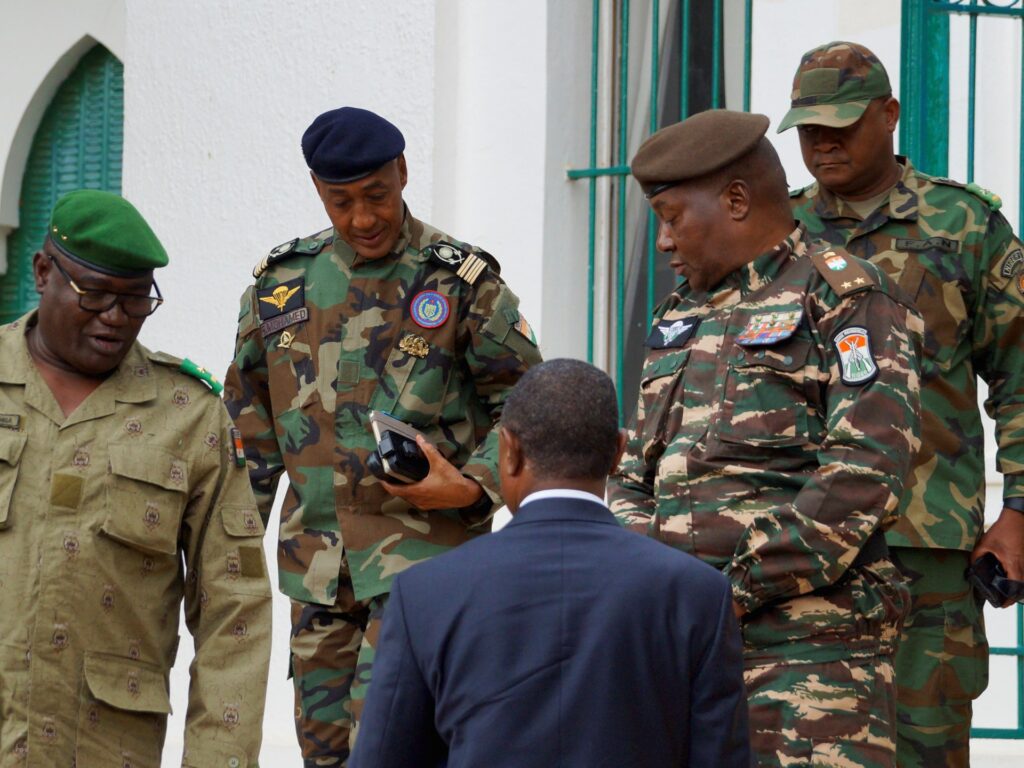
Salem Bazoum had been in detention at the presidential residence with his parents since the coup in Niger in July 2023. Salem Bazoum, the son of Niger President Mohamed Bazoum who was toppled in a coup last year, was provisionally released on Monday, according to a statement by the Niamey military tribunal. The 22-year-old had been in detention at the presidential residence with his parents since the coup in July. The tribunal did not provide details on the fate of Salem’s parents. The coup, one of eight in West and Central Africa since 2020, was widely condemned, led to sanctions from the Economic Community of West Africa States (ECOWAS), and prompted widespread calls for Bazoum’s release and a return to democratic rule. Niger has been ruled by military leaders since the overthrow of elected president Bazoum, which prompted international condemnation. Military ruler General Abdourahamane Tchiani has said his regime wants up to three years for a transition back to a civilian government. A source close to the removed president told the AFP news agency that Salem Bazoum had left Niamey for Lome, the capital of Togo, where he arrived on Monday evening. A statement by the Togolese government confirmed a deal for the younger Bazoum’s release after mediation from Togo and Sierra Leone, but gave no details about his whereabouts. Niger is currently suspended from the ECOWAS, which has said the release of Bazoum and his return to power are among the conditions for easing sanctions. But Togo is among several West African states that have been involved in mediation with the Nigerien military regime after the bloc softened its stance on a possible forceful intervention. On Monday, Togo’s Foreign Minister Robert Dussey was in Niamey, where he met with Niger’s military-appointed prime minister, according to Nigerien public television. This followed a trip by Dussey in mid-December when he said he had reached an agreement “on the content and timing of the transition” with the prime minister. The new military government has distanced itself from Niger’s hitherto close European partners – notably France – and has drawn closer to two of its neighbours, Mali and Burkina Faso, which after recent coups are also run by militaries. The last French troops withdrew from Niger in December. Like Burkina Faso and Mali, Niger has faced persistent rebel violence, particularly in the so-called tri-border area where the three Sahel countries meet. Adblock test (Why?)
South Korea takes dog meat off the menu
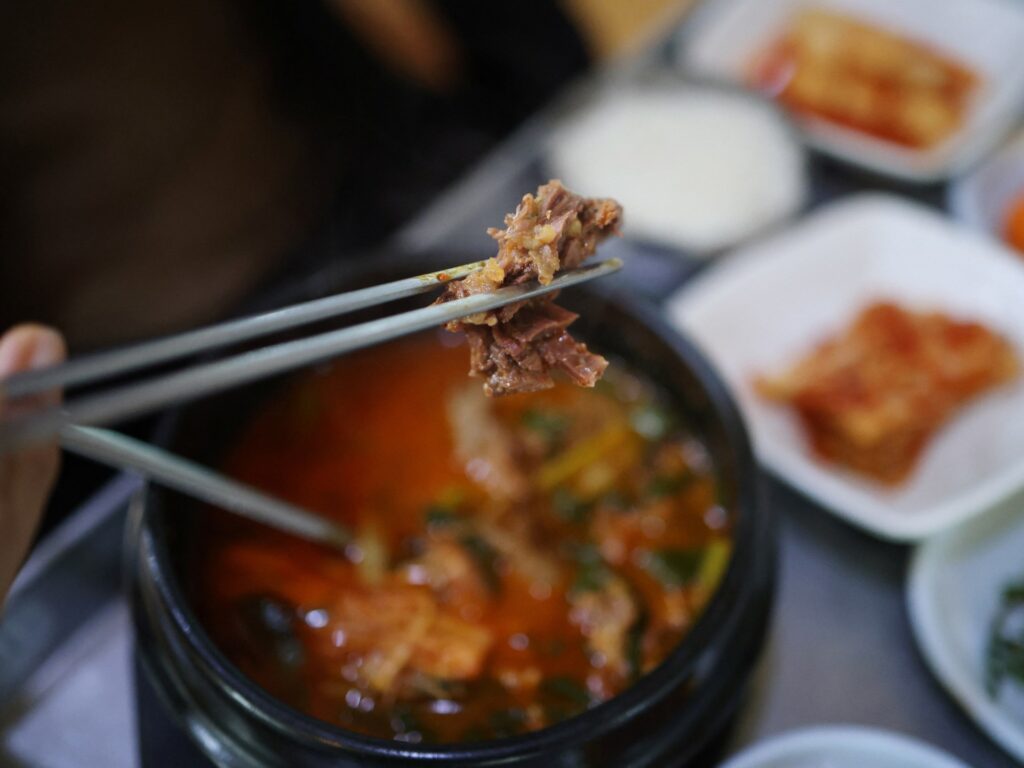
The bill will provide compensation so that businesses can move out of the trade, though its dog meat consumption is now rare. South Korea’s parliament has passed a bill to outlaw the trade in dog meat. The bill, passed on Tuesday, aims to shutter a centuries-old practice. In recent years, Koreans have shunned the meat as concern over animal rights has grown. The bill was passed in a near-unanimous vote. Overall, there were 208 votes in favour and just two abstentions in the vote in the single-chamber parliament, which came after the bipartisan agriculture committee had approved it on Monday. The legislation, which will ban the breeding, selling and slaughtering of dogs for their meat from 2027, will go into effect once endorsed by the Cabinet Council and signed by President Yoon Suk-yeol, moves that are considered formalities. Following the three-year grace period, the breeding and slaughtering of dogs to produce meat for human consumption will be punishable by up to three years in prison or up to 30 million won ($22,800) in fines. The bill does not stipulate any penalties for consuming dog meat. Falling consumption The bill reflects a sharp drop in consumption amid changing trends in South Korea, although representatives of the trade have sought for years to block a ban. Animal welfare activists say dogs are electrocuted or hanged when slaughtered, though breeders and traders say slaughtering has become more humane in recent years. “We have reached a pivotal point to spare millions of dogs from this cruel industry,” said Borami Seo of Humane Society International Korea, an animal protection group. Support for the ban has blossomed under President Yoon, who has adopted six dogs and eight cats, and been public about his opposition to dog meat consumption. First lady Kim Keon-hee has also been a vocal critic. While dog meat was once viewed as a way to improve stamina in the humid Korean summer, it has grown increasingly rare and is now mostly just eaten by older people. In a survey released Monday by Animal Welfare Awareness, Research and Education (AWARE), a Seoul-based think tank, 94 percent of respondents said they had not eaten dog meat for the past year and 93 percent said they do not plan to in the future. Still, past attempts to pass such legislation have failed due to industry protests. The Korean Association of Edible Dogs, a coalition of breeders and sellers, said the ban will affect 3,500 farms raising 1.5 million dogs, as well as 3,000 restaurants. The bill, therefore, seeks to provide compensation so that businesses can move out of the trade. According to the Ministry of Agriculture, Food and Rural Affairs, as of April 2022, some 1,100 farms were breeding 570,000 dogs to be served at around 1,600 restaurants. Adblock test (Why?)
Farmers stage tractor blockades across Germany

Furious farmers, opposed to Berlin’s plans to cut tax breaks for agriculture, used tractors to block roads across Germany on Monday, kicking off a series of crippling strikes that are set to plunge the country deeper into a winter of discontent. In Berlin, dozens of tractors and lorries stationed in the city centre blasted their horns to signal anger at the start of a planned week of action. Workers in sectors across Germany, from metallurgy and transport to education, have turned to industrial action in recent weeks. Wage negotiations have taken a bitter turn as Europe’s biggest economy struggles with weak growth and households contend with sharply increased prices. Rail workers will be next to walk out as they launch a three-day strike on Wednesday. Unions seek a pay rise to compensate for months of painfully high inflation. Farmers began gathering on Sunday evening at the Brandenburg Gate in the heart of the government quarter in Berlin. The agricultural sector is up in arms over government plans to withdraw tax breaks. Farm vehicles blocked the centres of cities including Berlin, Hamburg, Cologne and Bremen, with up to 2,000 tractors registered for each protest. Outside cities, demonstrators targeted motorway access ramps, snarling traffic in a coordinated nationwide show of discontent. The protest also caused disruption at Germany’s borders with France, Poland and the Czech Republic, backing up traffic at crossing points. Thousands of protestors had already descended on Berlin to protest against the planned subsidy cuts in December, blocking roads and dumping manure on the street. The rallies prompted the government to partially walk back the reductions on January 4. A discount on vehicle tax for agriculture is now planned to remain in place, while a diesel subsidy would be phased out over several years instead of being abolished immediately, the government said. The farmers, however, have said that the move does not go far enough and urged Berlin to completely reverse the plans, which were announced after a shock court ruling forced the government to find savings in the budget for 2024. Adblock test (Why?)
Protesters heckle Biden with calls for ceasefire in Gaza

NewsFeed Watch the moment protesters calling for a ceasefire in Gaza heckled US President Joe Biden during a speech in South Carolina, as he begins to ramp up his re-election campaign for 2024. Published On 9 Jan 20249 Jan 2024 Adblock test (Why?)
United, Alaska find ‘loose hardware’ in checks of Boeing 737 Max 9 planes

Airlines are inspecting the controversial aircraft after a midair blowout forced an Alaska jet to make an emergency landing. United Airlines and Alaska Airlines have said they found loose parts on multiple grounded Boeing 737 Max 9 aircraft, raising new concerns among industry experts about the manufacturing process for the passenger planes. The Federal Aviation Administration (FAA), which regulates the industry in the United States, grounded 171 Max 9 planes worldwide after a cabin panel blew off an Alaska-operated plane in midair on Friday, forcing the pilots to make an emergency landing. United said on Monday that it “found bolts that needed additional tightening,” in its initial inspections. Alaska said early reports from its technicians indicated some “loose hardware” was visible on some aircraft when it conducted checks of its fleet. The carriers are focusing on an area known as the door plug, a cover panel used to fill an unneeded emergency exit in aircraft that have been configured with fewer seats. The panel that blew out on Friday’s Alaskan flight was a door plug and the FAA ordered operators to ground all aircraft with the same configuration. With 79 Max 9 planes, United has the largest fleet of the aircraft in question. Alaska has 65 of the planes, while the remainder are operated by Turkish Airlines, Panama’s Copa Airlines and Aeromexico. The midair incident has raised concerns about the production process and quality control for the Max 9. The model is used by relatively few airlines but the 737 Max family of aircraft has been dogged by controversy since the entire global fleet was grounded in March 2019 after two crashes in the space of six months killed 346 people. Boeing said it was staying in close contact with Max 9 operators and would help customers address any findings during the latest inspections. “We are committed to ensuring every Boeing airplane meets design specifications and the highest safety and quality standards,” the US plane maker said. “We regret the impact this has had on our customers and their passengers.” On Monday, the FAA announced that it approved a roadmap for carriers to complete inspections that include both left and right door plugs, components and fasteners. It said planes would remain grounded until operators complete the “enhanced inspections”. US investigators are continuing to investigate Friday’s incident. None of the 174 passengers or six crew on the aircraft suffered serious injuries in the incident even as oxygen masks were deployed and personal items were sucked out of the plane in the sudden depressurisation. The panel was recovered on Sunday by a Portland teacher who found it in his backyard, National Transportation Safety Board Chair Jennifer Homendy said. The NTSB said the recovery of the fuselage would enable them to determine whether the plug was properly bolted in place or whether the bolts existed. Adblock test (Why?)