

Japan probes deadly Tokyo runway collision for negligence

Reports suggest that one of the planes may not have had permission to be on the runway. Japanese police are investigating the deadly collision of two planes at Tokyo’s Haneda airport for possible professional negligence. The incident saw a Japan Airlines (JAL) Airbus A350 engulfed in flames after hitting a turboprop aircraft crewed by six members of the coastguard. All 379 people on board A350 were safely evacuated, but only one survived from the smaller aircraft, which was headed to aid in the rescue of victims of Monday’s earthquake. Tokyo’s Metropolitan Police Department said on Wednesday that it will investigate the possibility that professional negligence led to the deaths and injuries, news outlets including Kyodo news agency, Nikkei Asia and Nippon TV reported. A police spokesperson said a special investigation unit had set up at the airport and was investigating the runway and planning to interview people involved but declined to comment on whether they were looking into possible professional negligence. Japan Airlines said in a statement on Tuesday that the aircraft had recognised and repeated the landing permission from air traffic control before approaching and touching down. According to air traffic control recordings available at LiveATC.net, the JAL plane was cleared to land at 17:45 local time (08:45 GMT), minutes before authorities say the collision occurred. The reason for the coastguard plane’s presence on the runway remained unclear. Broadcaster NHK reported that the control tower had instructed the turboprop aircraft to hold short of the runway. Second investigation In a separate development, the Japan Safety Transport Board (JTSB) says it is also conducting its own inquiry into the crash. The investigation involves collaboration with French and British authorities, as the Airbus aircraft was constructed in France, and its Rolls-Royce engines were manufactured in Britain. Airbus is also dispatching technical advisers to support the investigation. According to the Kyodo news agency, the JTSB has successfully retrieved flight and voice recorders from the coastguard aircraft involved in the collision. Japan has not experienced a significant aviation incident since 1985, when a JAL jumbo jet crashed in the central Gunma region while en route from Tokyo to Osaka, resulting in the tragic loss of 520 passengers and crew; an incident that ranks among the deadliest plane crashes globally. Adblock test (Why?)
Can South Africa’s ICJ case against Israel stop war in Gaza?
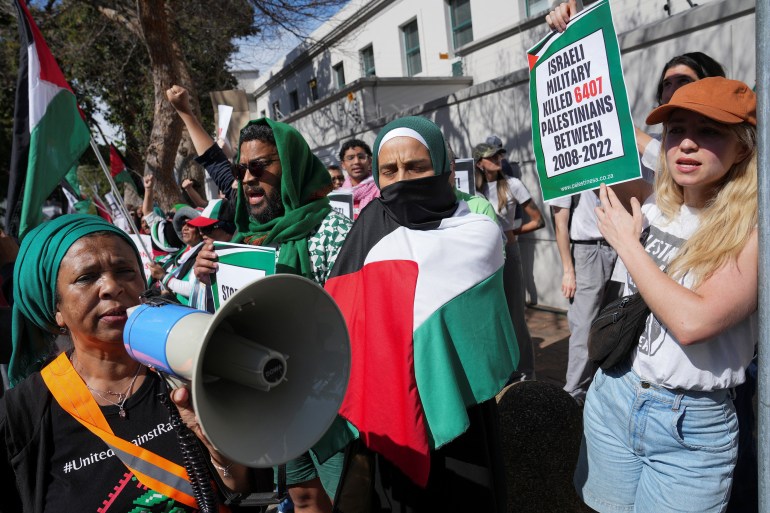
Last week, South Africa became the first country to file a suit against Israel at the International Court of Justice (ICJ) in The Hague, ramping up international pressure on Tel Aviv to stop the deadly and relentless bombardment of the Gaza Strip that it launched on October 7, 2023, and which has killed more than 22,000 civilians, a significant number of them children. In the 84-page suit which South Africa filed with the court on December 29, it details evidence of brutality being perpetrated in Gaza and asks the Court – the United Nations body for resolving interstate disputes – to urgently declare that Israel has breached its responsibilities under international law since October 7. The move is the latest in a long list of actions that Pretoria has taken since the start of the war on Gaza, including loudly and persistently condemning Israel’s attacks on Gaza and the West Bank, recalling the South African ambassador from Israel, referring the suffering of Palestinians to the International Criminal Court (ICC) and calling for an extraordinary meeting of BRICS countries to deliberate the conflict. The ICC takes on cases of alleged crimes committed by individuals, not states. Here’s a breakdown of the ICJ case: What are South Africa’s allegations against Israel? South Africa has accused Israel of committing genocide in Gaza, in violation of the 1948 Genocide Convention which defines genocide as “acts committed with intent to destroy, in whole or in part, a national, ethnical, racial or religious group”. Genocidal actions listed in the suit include the killing of Palestinians in Gaza in large numbers, especially children; the destruction of their homes; their expulsion and displacement; as well as enforcing a blockade on food, water and medical assistance to the strip. They also include the imposition of measures preventing Palestinian births by destroying essential health services crucial for the survival of pregnant women and babies. All these actions, the suit reads, are “intended to bring about their [Palestinians] destruction as a group”. Pretoria further blames Israel for failing to prevent and prosecute incitement to genocide, with specific reference to statements coming from Israeli officials throughout the war that have sought to justify the killings and destruction in Gaza. South Africa has also specially requested that the ICJ move urgently to prevent Israel from committing further crimes in the strip – likely by issuing an order for Tel Aviv to halt its invasion. That request will be prioritised, the ICJ said in a statement, but did not specify a timeline. South Africa’s documentation is particularly needed amid heightened disinformation around the war, and for other, wide-reaching purposes, said Mai El-Sadany, a human rights lawyer and director of The Tahrir Institute for Middle East Policy. “The proceedings are important in slowing the normalisation of any mass atrocities committed by Israel; they send a message that if a country commits mass atrocities, as Israel is doing, it must expect to be brought before an international court, for its record to be critiqued against international norms, and for its reputation on the international stage to take a hit,” she said. Members of the Palestine Solidarity Campaign protest outside the Israeli consular office in Cape Town, South Africa, October 11, 2023 [Nic Bothma/Reuters] What evidence has South Africa cited? South Africa asserts that statements made by Israeli officials, including Prime Minister Benjamin Netanyahu, have demonstrated “genocidal intent”. For example, the suit cites Netanyahu’s comparison of Palestinians to the Amalek, a biblical nation that God instructed the Israelites to destroy. The biblical verse states: “Now go and smite Amalek … kill both man and woman, infant.” Furthermore, in his December 26 statement, Netanyahu said that despite the extensive destruction of Gaza and the killing of thousands, “we are deepening the fighting in the coming days, and this will be a long battle”. Several other statements, including ones in which Israeli officials have portrayed the people of Gaza as a force of “darkness” and Israel as a force of “light”, have also been cited in the suit. South Africa adds that the “scope of the Israeli military’s operations – its indiscriminate bombings and executions of civilians, as well as Israel’s blockade of food, water, medicine, fuel, shelter and other humanitarian assistance”, are proof of its claims. Those actions have pushed the strip to the “brink of famine”, the suit claims. Besides genocide, South Africa claims that Israel is committing other violations of international law in the Gaza Strip, including launching an assault on Palestinian culture by attacking sites of “religion, education, art, science, historic monuments, hospitals and places where the sick and wounded are collected”. Have similar cases been filed before? Yes. Under the Genocide Convention, nation-states may file charges of genocide against other countries whether or not they are directly involved in the conflict. In 2019, The Gambia, on behalf of the Organisation of Islamic Cooperation, petitioned the court against Myanmar over its atrocities against the Rohingya people. Israel and South Africa are both parties to the ICJ, meaning its rulings are binding on both of them. But while the ICJ has more weight than the UN Security Council where Israel is tightly shielded by the US, the court lacks enforcement power. In fact, the ICJ’s orders have been ignored in some cases with no serious consequences. In March 2022, for example, one month after Russia invaded Ukraine, Kyiv filed a case against Russia at the Court. In that case, Ukraine also asked the ICJ to lay down emergency measures to stop Russia’s aggression. The court did indeed order Moscow to halt military operations shortly after, stating that it was “profoundly concerned” by the assault on Ukraine. Nevertheless, more than a year later, the war in Europe continues. What happens next? South African authorities confirmed Tuesday that the ICJ has fixed a hearing for January 11-12. “Our lawyers are currently preparing for this,” Clayson Monyela, spokesperson for South Africa’s Department of International Relations and Cooperation, posted on X, formerly Twitter. Just to be clear. The ICJ has
Israel’s war on Gaza: List of key events, day 89

EXPLAINER A drone strike in Lebanon killed senior Hamas official Saleh al-Arouri – here are the latest updates. Here’s how things stand on Wednesday, January 3, 2024: Latest updates: The Israeli army has launched attacks on Syria and Lebanon. It announced on X on Tuesday that it attacked Syrian military infrastructure and Hezbollah “terrorist infrastructure”. A drone strike hit a Hamas office in Beirut’s Hezbollah stronghold Dahiyeh, killing six people including senior Hamas official Saleh al-Arouri on Tuesday, Lebanon’s state news agency reported. The United States Central Command (CENTCOM) posted on X that on Tuesday night, “Iranian-backed Houthis fired two anti-ship ballistic missiles from Houthi-controlled areas in Yemen into the Southern Red Sea.” While multiple commercial ships reported their impact on surrounding waters, none reported damage. The United Nations Security Council will hold an emergency meeting to discuss peace and security regarding the Houthi attacks in the Red Sea at 3pm New York time [20:00 GMT] on Wednesday. #FrPrez | The Security Council will hold a meeting on the maintenance of international peace and security, in particular on the Houthi attacks in the Red Sea. 🗓️ Wednesday, 3 January – 3PM📺 UNWebTV https://t.co/Lv2W6r5o1w pic.twitter.com/cxZeSZraco — La France à l’ONU 🇫🇷🇺🇳 (@franceonu) January 2, 2024 Human impact and fighting: The number of Palestinians in Gaza killed since the outbreak of violence on October 7 is now 22,185, said Gaza’s health ministry on Tuesday. At least 57, 000 have been injured. UN humanitarian affairs agency OCHA reported more demolitions of Palestinian structures. The latest destruction took place on Tuesday in the At-Tur neighbourhood in occupied East Jerusalem. Demolition reported today in At Tur, #EastJerusalem, #WestBank, occupied #Palestinian territory Statistics on demolition and displacement: https://t.co/hG9VUlAUXf pic.twitter.com/9pIrgzbmi3 — OCHA oPt (Palestine) (@ochaopt) January 2, 2024 Diplomacy: Israel has not officially responded to the killing of al-Arouri but Netanyahu’s adviser Mark Regev, told the US outlet MSNBC that Israel does not take responsibility for this attack. He added, “Whoever did it, it must be clear: this was not an attack on the Lebanese state.” “We need to avoid conflict between Israel and Lebanon,” Nicolas de Riviere, the current UN Security Council president and French UN envoy, has told Al Jazeera. US State Department spokesperson Matthew Miller rejected statements from Israeli ministers Bezalel Smotrich and Itamar Ben-Gvir about the resettlement of Palestinians outside of Gaza. “Gaza is Palestinian land and will remain Palestinian land,” said a statement published on Tuesday. Israel is not “another star on the American flag”, said Israeli National Security Minister Ben-Gvir after the US State Department issued the statement. Gaza team leader of the UN humanitarian agency OCHA, Gemma Connell, condemned the Israeli attack on the Red Crescent-run El Amal City Hospital in Khan Younis, which killed at least five people, including a five-day-old child. She said that “there is no safe space in Gaza, and the world should be ashamed”. WHO chief Tedros Adhanom Ghebreyesus echoed Connell’s sentiments about the bombing. “Today’s bombings are unconscionable,” he said. In a statement released on Tuesday, Malaysia endorsed South Africa’s appeal to the International Court of Justice against Israel. The court hearings are scheduled for January 11 and 12 at The Hague. Raids in the West Bank Israel continues its raids in several areas of the occupied West Bank. Israeli military vehicles are infiltrating the Nur Shams refugee camp in Tulkarem and bulldozers are destroying infrastructure, Al Jazeera’s Hamdah Salhut reported from occupied East Jerusalem. They are also surrounding the Tulkarem governorate hospital and preventing the team at Al Jazeera Arabic from covering the raid. There is another Israeli raid on Nablus, where fierce clashes have been reported. In Qalqilya, the army is arresting multiple Palestinians, Salhut reported. Since October 7, 324 Palestinians have been killed in the occupied West Bank, Salhut reported. Adblock test (Why?)
Japan quake toll rises to 62 as rescuers struggle to reach cut-off villages

Heavy rain is forecast into Thursday raising the risk of landslides and further complicating relief efforts. Japanese rescuers continue to search for survivors from Monday’s earthquake in Ishikawa prefecture as authorities warned heavy rain, landslides and repeated aftershocks could hamper relief efforts. The regional government said on Wednesday that 62 people had been confirmed dead and more than 300 injured, 20 of them seriously. It warned the death toll was likely to climb further. The magnitude-7.6 quake struck on Monday afternoon off the Noto Peninsula, flattening houses in Suzu on its northern coast and triggering fires that ravaged parts of nearby Wajima City. It also ripped up roads, adding to the challenge of search and rescue. More than 31,800 people were in shelters, the government said. “More than 40 hours have passed since the disaster. We have received a lot of information about people in need of rescue and there are people waiting for help,” Prime Minister Fumio Kishida said after an emergency task force meeting. “Rescue efforts are being made by the local authorities, police, firefighters and other operational units, while the number of personnel and rescue dogs is enhanced.” People evacuated from their homes in Wajima take shelter in a greenhouse [Kim Kyung-Hoon/Reuters] Fires swept through parts of Wajima, one of the worst-affected places in the Noto Peninsula [Kyodo via Reuters] Kishida said the central government was trying to bring help to the worst-affected parts of the Noto Peninsula by ship because roads had been left almost impassable. Japan’s Self-Defence Forces was also using helicopters to reach cut-off villages, the Kyodo news agency reported. Complicating the relief effort, the Japan Meteorological Agency (JMA) said heavy rain was expected, which could increase the risk of landslides. 90 percent gone In Suzu, Mayor Masuhiro Izumiya said there were “almost no houses standing”. “About 90 percent of the houses [in the town] are completely or almost completely destroyed… the situation is really catastrophic,” he said, according to broadcaster TBS. Nearly 34,000 households remained without power in Ishikawa prefecture, the local utility said. Many cities were without running water. The US Geological Survey measured the quake at a magnitude of 7.5, while the JMA put it at 7.6 and issued a major tsunami warning, which was later lifted. Monday’s quake was one of more than 400 to shake the region up until Wednesday morning, according to the JMA. Some 1,000 soldiers from the Japanese Self-Defence Force have been deployed to help in the rescue effort [Joint Staff Office of the Defence Ministry of Japan via Reuters] Four of the world’s tectonic plates meet in Japan making the country particularly prone to earthquakes. It experiences hundreds every year, but most cause little to no damage. Although casualty numbers from Monday’s quake have continued to climb, the prompt public warnings, relayed on broadcasts and phones, and the quick response from the general public and officials appeared to have limited some of the impact. Toshitaka Katada, a University of Tokyo professor specialising in disasters, said people were prepared, with evacuation plans worked out and emergency supplies in stock. “There are probably no people on Earth who are as disaster-ready as the Japanese,” he told The Associated Press news agency. The number of earthquakes in the Noto Peninsula region has been steadily increasing since 2018, a Japanese government report said last year. In 2011, Japan’s northeast was hit by one of the most powerful earthquakes ever recorded. The 9.0 magnitude undersea quake triggered a massive tsunami that wiped out entire communities and brought disaster to the Fukushima nuclear plant. At least 18,500 people were killed. Adblock test (Why?)
Photos: Aftermath of devastating earthquake in Japan

Japanese rescuers battled the clock and powerful aftershocks on Tuesday as they searched for survivors of a New Year’s Day earthquake that killed dozens and caused widespread destruction. The magnitude 7.5 earthquake that rattled Ishikawa prefecture on the main island of Honshu triggered tsunami waves more than a metre high, caused a major fire and tore apart roads. On the Noto peninsula, the destruction included buildings damaged by fire, houses flattened, fishing boats sunk or washed ashore, and highways hit by landslides. “I’m amazed the house is this broken and everyone in my family managed to come out of it unscathed,” said Akiko, standing outside her parents’ tilting home in the badly hit city of Wajima. The way 2024 started “will be etched into my memory forever,” she said following the “long and violent” earthquake. “It was such a powerful jolt,” Tsugumasa Mihara, 73, said as he queued with hundreds of others for water in the nearby town of Shika. Local authorities have put the death toll at 48, but the number is expected to rise as rescuers comb the rubble. “Very extensive damage has been confirmed, including numerous casualties, building collapses and fires,” Prime Minister Fumio Kishida said, after a disaster response meeting. “We have to race against time to search for and rescue victims of the disaster.” Adblock test (Why?)
China targets friendly media, diplomats to ‘tell story of Xinjiang’

Albanian-Canadian historian and journalist Olsi Jazexhi believed in early 2019 that reports about human rights violations in the Xinjiang Uighur Autonomous Region (Xinjiang) of Western China were lies. Accounts from people who had fled the area as well as reports from human rights organisations were painting a picture of human rights abuses being perpetrated on a massive scale. Muslim minorities in Xinjiang – the majority of whom are Turkic-speaking Uighurs – were reportedly being deprived of basic freedoms, their cultural and religious heritage was being destroyed and at least 1 million of them had been interned in a vast network of detention camps. The international community had taken notice and the United Nations had raised its concerns. But Jazexhi was unconvinced. “I was certain that the stories were a scheme constructed by the US and the West to discredit China and divert attention away from their own human rights records regarding Muslims,” he told Al Jazeera. The Chinese government itself vehemently rejected the allegations, acknowledging the existence of the camps but describing them as vocational skills training centres necessary to combat alleged extremism. Human Rights Watch uncovered evidence of people being detained in political education camps in Xinjiang through social media posts in 2017 by the Xinjiang Bureau of Justice [Human Rights Watch] To see the truth for himself, Jazexhi contacted the Chinese embassy in Tirana about visiting Xinjiang. He was soon invited to join a media tour for foreign journalists mostly from Muslim countries and in early August 2019, he was on a plane bound for China. “I went to defend the Chinese government,” he recalled. But he quickly found that defending the Chinese narrative was a far more difficult task than he had anticipated. In the first few days in Xinjiang, he and other foreign journalists had to sit through a series of lectures given by Chinese officials about the history of the region and its people. “They were portraying the indigenous people of Xinjiang as immigrants and Islam as a religion that was foreign to the region,” Jazexhi said. “It was incorrect.” His disillusion only continued when he and other journalists were taken by their Chinese hosts to one of the so-called vocational training centres outside the regional capital of Urumqi. “They said it was like a school but it was clearly a high-security site in the middle in the desert,” Jazexhi said. “They also told us that the people staying there were not allowed to leave so it was obviously not a school but a prison and the people there were not students but prisoners.” Once they entered the site, Jazexhi had a chance to interact with several Uighurs and it quickly became clear they were not the “terrorists” or “extremists” Beijing had claimed. Ethnic Uighurs outside China have campaigned for international action on China’s alleged abuses in Xinjiang [Leah Millis/Reuters] “I was talking to people that had been taken there for simply practising Islam by, for example, entering a religious marriage, praying in public or wearing a headscarf,” he said. “One of them told me that she was no longer Muslim and that she now believed in science and in Chinese President Xi Jinping.” Jazexhi confronted the accompanying Chinese officials. “I told them that what they were doing was very wrong,” Jazexhi said. The interactions led to a quarrel between Jazexhi and some of the Chinese hosts. When he finally left Xinjiang, he was deeply shocked. He had thought he was going to expose Western lies but he had instead witnessed oppression on a massive scale. “What I saw was an attempt to eradicate Islam from Xinjiang,” he said. ‘Agenda of the West’ Since Jazexhi’s visit, the UN Human Rights Council has found that Chinese restrictions and deprivations in Xinjiang may constitute crimes against humanity. The US government as well as lawmakers in Australia, Canada, France and the United Kingdom have labelled the Chinese treatment of Uighurs and other Turkic-speaking Muslims in the region a genocide. Meanwhile, several countries have imposed economic restrictions on goods from Xinjiang in response to evidence of forced labour in the region. Amid the criticism, Beijing has continued to arrange visits – primarily for diplomats and journalists from Muslim countries – to Xinjiang. Chinese media have reported about at least five such media tours taking place in 2023, with Xinjiang visits also arranged for foreign diplomats and Islamic scholars. Moiz Farooq, who is the executive editor of Daily Ittehad Media Group and Pakistan Economic Net, visited Xinjiang in the middle of December as part of a delegation of media representatives from Pakistan. Much like Jazexhi in 2019, Farooq went to Xinjiang with the intent to observe for himself that the stories he had heard were not true. “There is a lot of propaganda about Xinjiang out there and I wanted to witness it with my own eyes,” Farooq told Al Jazeera. Unlike Jazexhi, Farooq left Xinjiang impressed by the region’s level of development and assured that the local Muslims were largely living a free and content life. “I was able to talk to as many different people as I wanted at bazaars and restaurants about their standard of living and I, along with the rest of the delegation, were totally unrestricted,” he said. “I saw Muslims there who were free to enjoy and practise their religion.” Farooq does not believe that accounts and reports from human rights organisations and UN organs detailing human rights abuses in Xinjiang are correct. “It is the agenda of the West to show the worst of Xinjiang and I now know that the stories are not true because I have seen how happily they [Muslims in Xinjiang] are living,” he said. Naz Parveen is the director of the China Window Institute in Peshawar, Pakistan, and she was on the same tour as Farooq. She too was impressed by the prosperity she observed in Xinjiang. Echoing Beijing’s characterisation of the situation, Parveen believes that what have been termed human rights violations in Xinjiang can be
Who was Saleh al-Arouri, the Hamas leader killed in Beirut?

A drone strike in Beirut’s southern suburbs of Dahiyeh, a Hezbollah stronghold, killed senior Hamas official Saleh al-Arouri on Tuesday. The drone hit a Hamas office, leaving six people dead, Lebanon’s state news agency reported. Hamas confirmed the death of al-Arouri and called it a “cowardly assassination” by Israel, adding that attacks on Palestinians “inside and outside Palestine will not succeed in breaking the will and steadfastness of our people, or undermining the continuation of their valiant resistance”. “It proves once again the abject failure of this enemy to achieve any of its aggressive goals in the Gaza Strip,” the group said. Following the news of the death of al-Arouri, mosques in Arura, the occupied West Bank town of north Ramallah, are mourning his death and a general strike has been called in Ramallah for Wednesday. Here is what to know about the Hamas official killed in Lebanon. People gather near a damaged site following an explosion, in what security sources say is an Israeli drone strike, at the Beirut suburb of Dahiyeh, Lebanon [Mohamed Azakir/Reuters] Who was Saleh al-Arouri? Al-Arouri, 57, was the deputy chief of Hamas’s political bureau and one of the founders of the group’s armed wing, the Qassam Brigades. He had been living in exile in Lebanon after spending 15 years in an Israeli jail. Before the war began on October 7, Israeli Prime Minister Benjamin Netanyahu had threatened to kill him. In recent weeks, al-Arouri took on the role of spokesperson for the group and told Al Jazeera last month that Hamas would not discuss an exchange deal for the captives the group is holding before the war ends in Gaza. The United States labelled al-Arouri as a “global terrorist” in 2015 and issued a $5m reward for any information on him. What has Israel said about al-Arouri’s death? While there has been no official response from Israel about the death of the Hamas official, Mark Regev, an adviser to Netanyahu, told the US outlet MSNBC that Israel does not take responsibility for this attack. But, added, “Whoever did it, it must be clear: this was not an attack on the Lebanese state.” “Whoever did this did a surgical strike against the Hamas leadership,” he said. However, Danny Danon, a former Israeli envoy to the United Nations, hailed the attack and congratulated the Israeli army, Shin Bet, the security service and Mossad, Israel’s intelligence agency, for killing al-Arouri. “Anyone who was involved in the 7/10 massacre should know that we will reach out to them and close an account with them,” he said on X in Hebrew, referring to the October 7 Hamas attack on southern Israel that killed nearly 1,200 people. Israel’s relentless bombing and artillery shelling of Gaza since then has killed more than 22,000 Palestinians, including more than 8,000 children. According to Israeli media, the government has ordered cabinet ministers not to give any interviews about al-Arouri’s death after Danon’s tweet. Palestinians take part in a protest against the killing of a senior Hamas official, Saleh al-Arouri, in Ramallah in the Israeli-occupied West Bank [Ali Sawafta/Reuters] What has been the response from Lebanon? Lebanon’s caretaker Prime Minister Najib Mikati condemned the attack on the Beruit suburb and said it was a “new Israeli crime” as well as an attempt to pull Lebanon into the war. Mikati also warned against the “Israeli political upper echelon resorting to exporting its failures in Gaza to the southern border to impose new facts on the ground and change the rules of engagement”. Hezbollah said that the attack on Lebanon’s capital “will not pass without punishment”. Adblock test (Why?)
Russia-Ukraine war: List of key events, day 679

As the war enters its 679th day, these are the main developments. Here is the situation on Wednesday, January 3, 2024. Fighting Russia targeted Ukraine’s biggest cities with a barrage of drones, rockets and missiles, killing at least four people in Kyiv and one in Kharkiv. The State Emergency Service said 119 people have been injured. The bombardment, which also disrupted water and power supplies, came after Russian President Vladimir Putin said he would intensify attacks on Ukraine. Valerii Zaluzhnyi, the commander-in-chief of the Ukrainian military, said air defences shot down all 10 of the Kinzhal hypersonic missiles fired at Ukraine by Russia. The consequences of the weapons hitting their targets would have been “catastrophic”, he added. Ukrainian Defence Minister Rustem Umerov accused Russia of “deliberately targeting critical infrastructure and residential neighbourhoods” in its attacks on Tuesday. The Russian defence ministry claimed the raids hit Ukrainian military-industrial facilities, as well as weapons storage facilities. “The goal of the strike has been achieved, all the targets have been hit,” it said. Poland mobilised two pairs of F-16 fighter jets and an air tanker to safeguard its airspace during Russia’s assault on Ukraine. Polish military authorities last week said a Russian missile briefly flew through the country’s airspace, prompting concern. Firefighters evacuate a disabled man from an apartment block damaged in the Russian attack. At least four people were killed in Kyiv and more than 100 injured [Anatolii Stepanov/AFP] Moscow said its air defences destroyed 17 Ukrainian Olkha rockets over Russia’s Belgorod, not far from the Ukrainian border. Vyacheslav Gladkov, the regional governor of Belgorod, said that one person was killed and five injured in the raids. Russia opened an investigation after one of its missiles accidentally hit the Russian border village of Petropavlovka, 40km (87 miles) from northeastern Ukraine, damaging several homes. No one was injured. Politics and diplomacy The Russian attacks drew condemnation from across Europe. Charles Michel, the president of the European Council, reiterated the European Union’s support for Ukraine, saying Russia’s air attacks showed Moscow was not interested in peace talks. Latvian President Edgars Rinkevics, meanwhile, said the attacks were “Russian terrorism” and called on the West to provide more help to Ukraine. Germany’s Foreign Minister Annalena Baerbock promised Berlin’s continuing support, saying the latest attacks showed Moscow wanted to “annihilate” Ukraine. United Nations human rights chief Volker Turk called for the immediate de-escalation of fighting, measures to protect civilians and respect for international law following the recent “alarming escalation of hostilities”. Ukraine’s foreign minister urged Western allies to step up sanctions on Russia and deliver more advanced weaponry, including air defence systems and ammunition, combat drones and long-range missiles. In the US, a proposed $60bn aid package for Kyiv is being held up by Republicans in Congress, while Hungary has blocked $55bn in EU assistance for Ukraine. Mariana Katzarova, the UN’s special rapporteur for human rights in the Russian Federation, called on Moscow to immediately release two poets jailed for reading work criticising the war in Ukraine. A Moscow court last week sentenced Artyom Kamardin to seven years in prison and Yegor Shtovba to five-and-a-half years after they participated in a public poetry reading in Moscow in September 2022. Weapons Turkey said it would block two Royal Navy minehunter ships promised to Ukraine from travelling through its waters on their way to the Black Sea because it would breach an international pact that regulates maritime traffic through the straits that connect the Mediterranean to the Black Sea. Norway said it would allow the direct sale of weapons to Ukraine. “In the extraordinary security situation resulting from Russia’s war of aggression, it is crucial that we continue to support Ukraine,” Norway’s Foreign Minister Espen Barth Eide said in a press statement. Adblock test (Why?)
Harvard president resigns amid controversy over anti-Semitisim hearing

Claudine Gay came under fire last month for her answers to a question on anti-Semitism on campus. The president of Harvard University, Claudine Gay, has resigned amid plagiarism accusations and criticism over a congressional hearing during which she was unable to say whether calls for the genocide of Jews on campus would violate the school’s conduct policy. In a statement announcing her departure on Tuesday, Gay wrote, “It is with a heavy heart but a deep love for Harvard that I write to share that I will be stepping down as president.” “It has been distressing to have doubt cast on my commitments to confronting hate and to upholding scholarly rigor … and frightening to be subjected to personal attacks and threats fueled by racial animus,” she added. In July 2023, Gay became the first Black president of Harvard in 387 years. But last month, Gay, along with the president of the Massachusetts Institute of Technology and the University of Pennsylvania, came under fire for their lawyerly responses to a line of questioning from New York Republican representative Elise Stefanik, who asked whether “calling for the genocide of Jews” would violate the college’s code of conduct. The three presidents had been called before the Republican-led House Committee on Education and the Workforce to answer accusations that universities were failing to protect Jewish students in light of the rise in anti-Semitism following Israel’s assault on Gaza and the rising Palestinian death toll. In response to the question, Gay said that it depended on the context and that when “speech crosses into conduct, that violates our policies”. Harvard University President Claudine Gay watches a video being played during a House Education and The Workforce Committee hearing, December 5, 2023 [File: Ken Cedeno/Reuters] But her answer met intense backlash from both Republicans and Democrats. More than 70 lawmakers, including two Democrats, called for her resignation, while several high-profile Harvard alumni and donors called for her departure. But, more than 700 Harvard faculty members signed a letter supporting Gay. Gay later apologised to the Harvard Crimson for her comments and said that she was caught up in the heated exchange and failed to condemn threats of violence towards Jewish students properly. “What I should have had the presence of mind to do in that moment was return to my guiding truth, which is that calls for violence against our Jewish community – threats to our Jewish students – have no place at Harvard, and will never go unchallenged,” said Gay. But the incident marred Gay’s early tenure at Harvard and sowed discord on campus. Last week, Rabbi David Wolpe resigned from an anti-Semitism committee created by Gay. He said on X that the “events on campus and the painfully inadequate testimony reinforced the idea that I cannot make the sort of difference I had hoped”. Following the congressional hearing, Gay’s academic career came under intense scrutiny by conservative activists who unearthed several instances of alleged plagiarism in her 1997 doctoral dissertation. Harvard’s governing board initially rallied behind Gay, saying a review of her scholarly work turned up “a few instances of inadequate citation” but no evidence of research misconduct. Days later, the Harvard Corporation revealed that it found two additional examples of “duplicative language without appropriate attribution.” The board said Gay would update her dissertation and request corrections. The Harvard Corporation said the resignation came “with great sadness” and thanked Gay for her “deep and unwavering commitment to Harvard and to the pursuit of academic excellence.” Adblock test (Why?)
Biden under pressure to act amid new fears of ‘ethnic cleansing’ in Gaza

Rights advocates in the United States are urging President Joe Biden to end his administration’s “complicity” in Israeli rights abuses after key members of Israel’s government backed the idea of pushing Palestinians out of Gaza. Far-right Israeli ministers Itamar Ben-Gvir and Bezalel Smotrich said this week that Israel should “encourage emigration” from the coastal enclave, home to an estimated 2.3 million Palestinians. Israel has been carrying out a military offensive in Gaza since October 7, resulting in an estimated 1.9 million Palestinians being internally displaced, according to the United Nations. “If there are 100,000 or 200,000 Arabs in Gaza and not two million Arabs, the entire discussion on the day after [the war ends] will be totally different,” Smotrich said on Sunday, calling for the “voluntary migration” of Palestinians. A day later, Ben-Gvir, who oversees national security, made a similar appeal, saying it was “a correct, just, moral and humane solution”, Israeli media outlets reported. Their remarks are the latest by Israeli officials alluding to the prospect of resettling Palestinians outside of Gaza. Human rights and legal experts have warned that forced displacement constitutes a war crime under international law and could lead to ethnic cleansing. “It’s not really ‘voluntary’ when you’re bombing homes and starving the entire population,” said Rasha Mubarak, a Palestinian American organiser. Mubarak told Al Jazeera that the Biden administration has not only failed to condemn Israeli officials’ push to get Palestinians out of Gaza, but it has also contributed to the war by providing Israel with continued military aid and diplomatic support. “They have played an immense part in this genocide and ethnic cleansing of the Palestinian people,” she said. Biden ‘an aider and abetter’ Over the past several weeks, as Israel pressed on with its bombing campaign, senior US officials have said they do not support efforts to force Palestinians out of the enclave. “The United States remains firmly opposed to any forced or enduring displacement of Palestinians from Gaza,” a State Department spokesperson told Al Jazeera in an email on Monday evening, without commenting specifically on the Israeli ministers’ most recent remarks. But rights advocates say the US’s unwavering support for Israel’s war, which has killed more than 22,000 Palestinians in Gaza to date, is leaving the door open to further atrocities and violations of international law. Under the Fourth Geneva Convention, civilians cannot be deported or forcibly transferred from a territory unless such a move is required for “the security of civilians involved or imperative military reasons”. The International Criminal Court (ICC) also states that the forcible displacement of civilians is a war crime unless justified by “military necessity” or civilian safety. Kenneth Roth, a former head of Human Rights Watch, told Al Jazeera in a television interview on Monday that the “idea of massive ethnic cleansing — the war crime of forced displacement — is still very much an idea” within Prime Minister Benjamin Netanyahu’s government. Critics fear, however, that there is growing pressure to make that idea a reality in Gaza. Ben-Gvir’s and Smotrich’s comments are only the latest in a string of comments that have prompted concern since the war began. In late October, for instance, the news outlet +972 Magazine reported that the Israeli Ministry of Intelligence had recommended the forcible transfer of Gaza’s population to Egypt’s Sinai Peninsula. Intelligence Minister Gila Gamliel, a member of Netanyahu’s Likud Party, also wrote in The Jerusalem Post in November that the international community should be “helping the people of Gaza build new lives” elsewhere. Danny Danon, Israel’s former ambassador to the UN and another Likud lawmaker, also has promoted the “voluntary migration” idea. In a Wall Street Journal opinion column in November, Danon and Yesh Atid party legislator Ram Ben-Barak urged “a handful of the world’s nations to share the responsibility of hosting Gazan residents”. Yet while the US has pressed Israeli leaders to avoid civilian casualties and allow more humanitarian aid into Gaza, Roth said that “Biden so far refuses to use the leverage he has” to pressure Israel. The country receives $3.8bn in US military aid annually. In addition, late last week, the Biden administration bypassed Congress to authorise the transfer of about $147m in artillery ammunition, saying that “an emergency exists that requires the immediate sale” of the weapons to Israel. “It would have been very simple to say, ‘You want these weapons? Let in the aid. You want these weapons? Stop killing so many civilians.’ [Biden] didn’t do that,” Roth said. “He left it completely unconditional, giving up the leverage he had and, in a sense, making him complicit in what’s going on — actually, an aider and abetter of those war crimes.” Zaha Hassan, a human rights lawyer and fellow at the Carnegie Endowment for International Peace, also told Al Jazeera that the Biden administration could be doing more to discourage any attempts at forced displacement. Israel’s military offensive, she explained, has “made Gaza not just unlivable but has put at risk the lives of the 2.3 million Palestinians that are there”. Israel — as an occupying power — has an obligation to ensure the basic needs of Gaza’s Palestinians are met, Hassan said. But instead, the ongoing Israeli bombardment has destroyed critical infrastructure in Gaza, and its siege is severely limiting access to food, water and other much-needed supplies. “So to come now and say that Palestinians in Gaza, if they so chose to leave, would be welcome to do so by Israel is a really cynical understanding of their obligations. They haven’t really created choice at this point for Palestinians. They’re trying to, it appears, force them to flee and force them to seek safety and survival elsewhere,” she said. Hassan also called Netanyahu’s comments about taking control of the Egypt-Gaza border zone — an area known as the Philadelphi corridor — deeply concerning. “This would enable them to execute on any plans they have to push Palestinians out of Gaza under this guise of it being voluntary.” Voluntary migration? No matter how