

Pro-Palestine campaigners call for Gaza ceasefire on New Year’s Eve
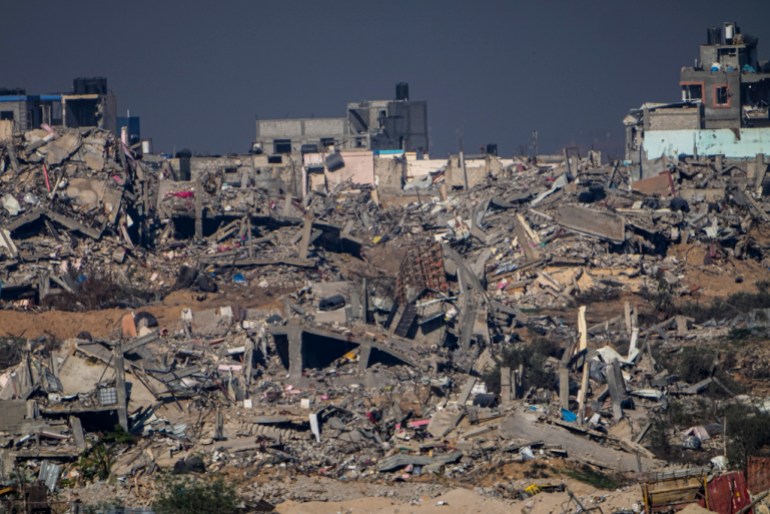
Activists are asking people to turn the New Year’s countdown in their countries into a countdown for a ceasefire in Gaza. Activists have launched a global campaign asking people to turn the New Year’s countdown in their countries into a countdown for a ceasefire in Gaza, which has been under devastating Israeli bombardment since October 7. “New Year’s Eve is a moment of celebration worldwide, and an opportunity to create resolutions for a brighter future. With nearly 30,000 civilians killed, including over 10,000 children, our only New Year’s resolution is to call for a permanent ceasefire,” Countdown2Ceasefire, a London-based grassroots campaign, said in a statement on Thursday. “Our aim is to morph the traditional New Year’s countdown into an influential and resounding countdown for a permanent ceasefire in Gaza.” So far the campaign has successfully been embraced by activists in over 30 countries, including Switzerland, Turkiye, Malaysia, Australia, Tanzania, Mexico and Germany, according to the organisers. While ringing in the new year, these local events calling for a ceasefire will be livestreamed across Countdown2ceasefire’s social media platforms. Israeli bombings have destroyed more than 70 percent of Gaza homes [File: Ariel Schalit/AP Photo] “A permanent ceasefire is the first step in ending the current deplorable situation and a tangible move towards a future where traumatised communities can rebuild and recover,” Bushra Mohammad, a campaign spokeswoman, said in a statement. Israel’s brutal military offensive in Gaza has killed more than 21,500 people and wounded more than 55,000 others triggering a global outrage, with protesters across the world rallying to call for a ceasefire. Many have also expressed their disappointment towards politicians and countries who vetoed or abstained from voting for a ceasefire at the United Nations. Rights organisations including Human Rights Watch, Amnesty International and Doctors Without Borders also condemned countries vetoing a ceasefire, warning that this would result in a humanitarian disaster. On Saturday, the World Food Programme warned that it’s in a race against time to avert starvation for millions in Gaza. “Only a long-term ceasefire and unhindered humanitarian access can end this,” the UN agency posted on X. Israel has refused to stop the bombing that has destroyed more than 70 percent of Gaza homes and displaced more than 90 percent of the enclave’s 2.3 million people. Countdown2Ceasefire pointed out how people power can make a difference. “As we enter 2024, we look forward to it being the year that our New Year’s resolution, of a permanent ceasefire in Gaza, is fulfilled.” Adblock test (Why?)
Israel-Hamas war: List of key events, day 86
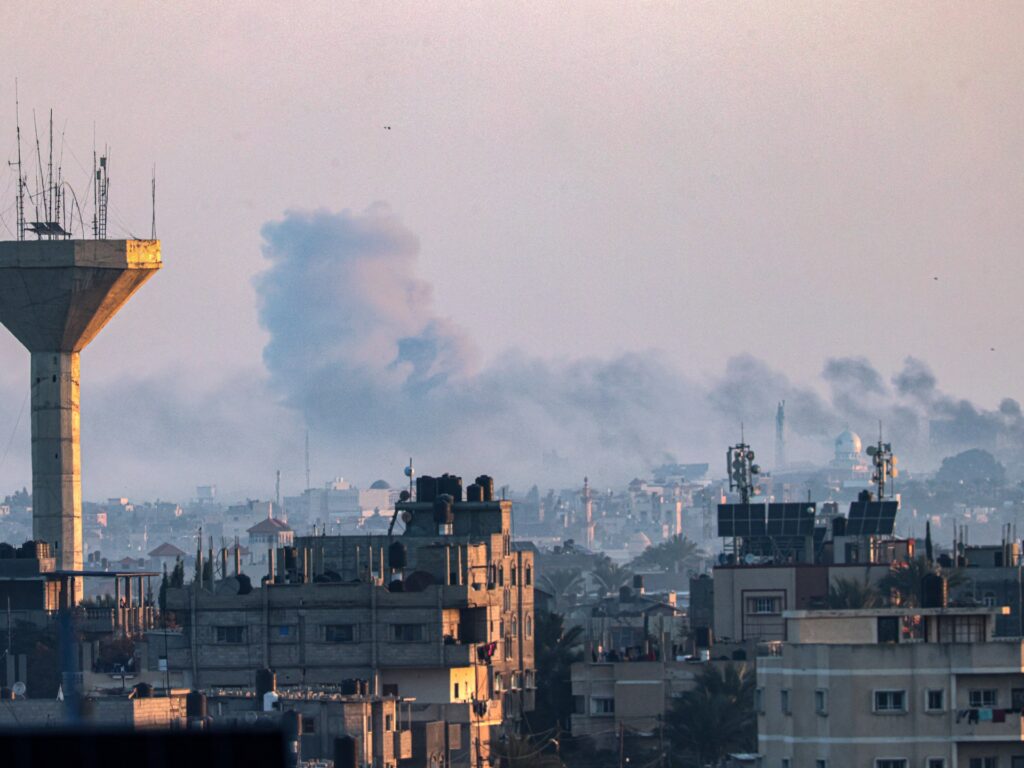
At least 100 killed in central Gaza, while night-time raids injure 17 in occupied West Bank – here is the latest. Here’s how things stand on Sunday, December 31, 2023: Latest updates and human impact: Israeli military attacks on homes in central Gaza have killed at least 100 people and wounded 286 in less than 24 hours, according to Gaza’s Ministry of Health. The continuing Israeli bombardment has now destroyed more than 70 percent of Gaza’s homes, the Government Media Office says. The occupied West Bank saw another night of raids and drone attacks as at least 17 Palestinians were wounded in Tulkarem and Nur Shams refugee camps. There is a growing exodus of displaced Palestinians into the far southern town of Rafah, with some 100,000 fleeing there in just a few days, according to the United Nations. Prime Minister Benjamin Netanyahu has said Israel should control the border zone between the Gaza Strip and Egypt. Egypt has rejected the prospect of ceding this territory to Israel. Twenty-three Syrian fighters have been killed by air raids believed to be waged by Israeli forces, according to the Syrian Observatory for Human Rights, as hostilities build between Israel and Iran-aligned groups in the region. Israel also traded strikes with Hezbollah. The Lebanese group claimed four attacks on Israeli territory over the past day, while Israeli strikes killed at least one Hezbollah fighter. The Palestine Public Broadcasting Corporation strongly condemned Israel for reportedly hacking a local radio station and broadcasting “threatening messages” to Gaza residents already traumatised by war. In Gaza, at least 21,822 people have been killed and 56,451 injured in Israeli attacks since October 7. The revised death toll from Hamas’s attack on Israel stands at 1,139. Diplomacy: The Organisation of Islamic Cooperation welcomed South Africa’s decision to file a genocide case against Israel at the International Court of Justice (ICJ), saying that the charge is warranted because of Israel’s “indiscriminate targeting of the civilian population”. Several genocide experts also welcomed the move, with British war crimes prosecutor Geoffrey Nice telling Al Jazeera it is a “courageous” step. Israeli Prime Minister Benjamin Netanyahu thanked the administration of US President Joe Biden for its continued backing during the war, including approval of a new emergency weapons sale, the second this month. Foreign Minister Eli Cohen told Israeli media that the government bears some responsibility for failing to prevent Hamas’s attack on October 7. He called for an investigation committee to be formed to hold those who were “negligent” accountable. Israel is prepared to let ships deliver aid to Gaza “immediately” through a proposed sea corridor from Cyprus, according to Cohen. Commercial vessels targeted in the Red Sea: Yemen’s Houthi rebels waged multiple attacks on a container ship owned by global shipping giant Maersk, according to the US military, prompting the firm to suspend operations in the Red Sea for 48 hours. In the last alleged Houthi attack on the Maersk ship, US helicopters responded to and fired at attacking Houthi boats, sinking three of them and killing several crew, according to the United States Central Command. Britain’s Foreign Secretary David Cameron said he conveyed to Iran’s foreign minister that Tehran shares “shares responsibility for preventing these attacks, given their longstanding support to the Houthis”. I spoke to @Amirabdolahian today about Houthi attacks in the Red Sea, which threaten innocent lives and the global economy. I made clear that Iran shares responsibility for preventing these attacks given their long-standing support to the Houthis. — David Cameron (@David_Cameron) December 31, 2023 Adblock test (Why?)
Israeli bombardment destroyed over 70% of Gaza homes: Media office
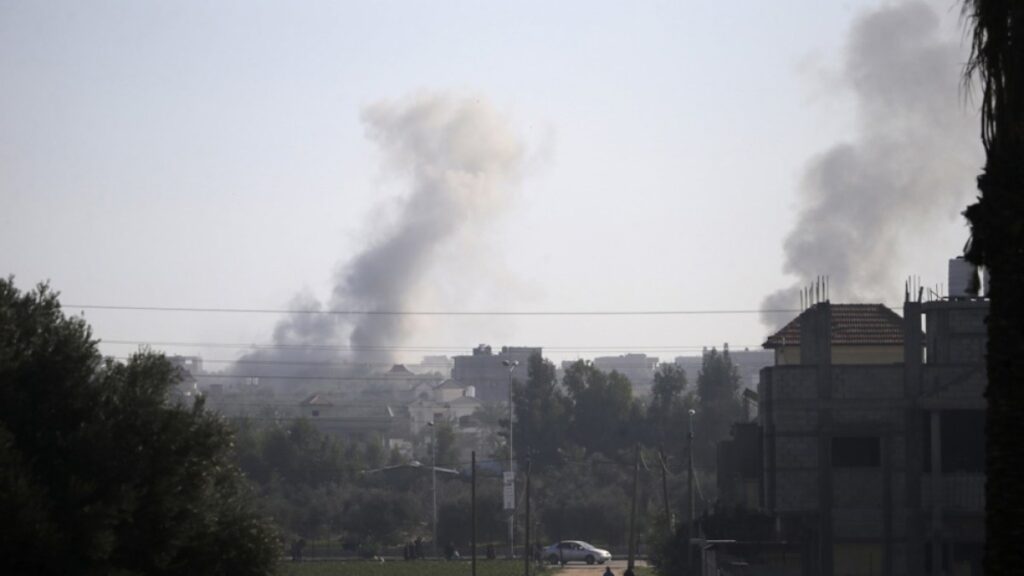
Israel’s relentless bombardment of Gaza for nearly three months has destroyed 70 percent of the homes in the besieged Palestinian enclave, according to the Government Media Office. No further details were provided but an earlier report said more than 200 heritage and archaeological sites were destroyed in the Israeli bombardment considered the most destructive in modern history. About 300,000 out of 439,000 homes have been destroyed in Israeli attacks, a Wall Street Journal report said. Analysing satellite imagery, the report added that the 29,000 bombs dropped on the strip have targeted residential areas, Byzantine churches, hospitals and shopping malls and all civilian infrastructure has been damaged to an extent that they cannot be repaired. “The word ‘Gaza’ is going to go down in history along with Dresden [Germany] and other famous cities that have been bombed,” Robert Pape, a political scientist at the University of Chicago who has written about the history of aerial bombing, told WSJ. In nearly two months, the offensive has wreaked more destruction than the razing of Syria’s Aleppo between 2012 and 2016, Ukraine’s Mariupol, or, proportionally, the Allied bombing of Germany in World War II. It has killed more civilians than the United States-led coalition did in its three-year campaign against the ISIL (ISIS) group. Between 1942 and 1945, the Allies attacked 51 major German cities and towns, destroying about 40-50 percent of their urban areas, Pape told The Associated Press news agency. “Gaza is one of the most intense civilian punishment campaigns in history,” said Pape. “It now sits comfortably in the top quartile of the most devastating bombing campaigns ever.” Corey Scher of the CUNY Graduate Center and Jamon Van Den Hoek of Oregon State University told the AP, “Gaza is now a different colour from space. It’s a different texture.” Deadliest in recent history The Israeli military campaign in Gaza, experts say, also now sits among the deadliest in recent history, killing more than 21,500 people and wounding 55,000. More than 1,000 children had their limbs amputated in the Israeli attacks since October 7. The Israeli army claims it has been targeting Hamas fighters, who carried out a deadly attack inside Israel on October 7. Some 1,200 people were killed in that attack which triggered the current phase of the conflict. Hamas says its attack was in response to continued Israeli blockade of Gaza and expansion of settlement in the occupied West Bank and East Jerusalem. Palestinians see the Israeli settlements – which are considered illegal under international law – to be the biggest hurdle in the realisation of their future state. The level of destruction is so high because “Hamas is very entrenched within the civilian population”, Efraim Inbar, head of the Jerusalem Institute for Strategy and Security, a think tank, told the AP. But experts have criticised Israel for bombing Gaza – which is one of the most densely populated areas in the world housing 2.3 million people on 365sq km (141sq miles) of land. Media reports and rights groups say an overwhelming majority of those killed are civilians – more than 70 percent of them children, women and elderly. More than 90 percent of the enclave’s population is now displaced, with aid groups warning of hunger and outbreaks of disease. Delivery of aid has been restricted by Israel worsening the crisis. Meanwhile, the Israeli military has said little about what kinds of bombs and artillery it is using in Gaza. From blast fragments found on-site and analyses of strike footage, experts are confident that the vast majority of bombs dropped on the besieged enclave are US-made. They say the weapons include 2,000-pound (900kg) “bunker-busters” that have killed hundreds in densely populated areas. US news network CNN reported on December 14 that about half of all the Israeli munitions dropped on Gaza were imprecise “dumb” bombs, which pose a greater threat to civilians. Earlier this week, an Israeli military official admitted that the high death toll from a Christmas Eve attack on a refugee camp in central Gaza was the result of the use of improper munitions, highlighting military tactics that have created high numbers of civilian casualties. The Israeli news outlet +972 also previously reported that the Israeli military has loosened its standards regarding acceptable civilian harm from attacks, resulting in a higher portion of civilians killed than in previous rounds of military assaults. Human Rights Watch has accused Israel of using banned white phosphorous. Israel has denied the claims. The Israeli army has reiterated that every strike is cleared by legal advisers to make sure it complies with international law. “We choose the right munition for each target – so it doesn’t cause unnecessary damage,” said the army’s chief spokesman, Rear Admiral Daniel Hagari. Adblock test (Why?)
‘He never hesitated’: Samer Abudaqa – father, friend, fearless photographer
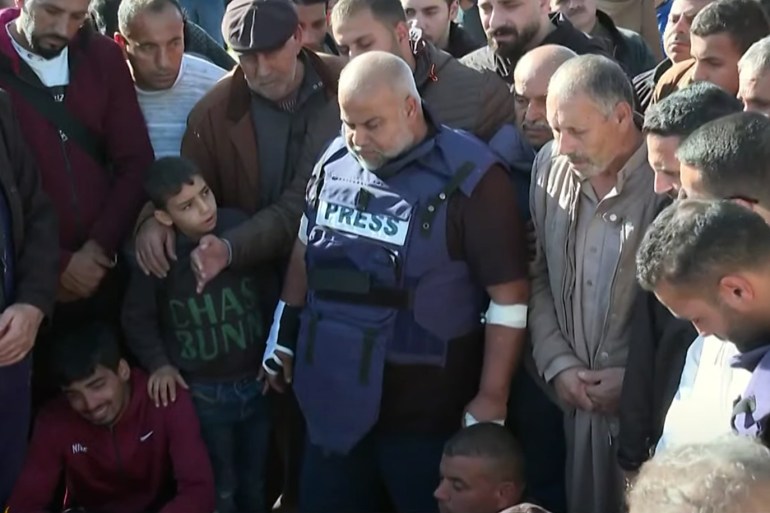
Gaza – When 15-year-old Zain Abudaqa spoke to his father by telephone on December 15, he had no idea it was the last time he would ever hear his voice. “He told me to nurture my talents and never to give up on my dreams. He told me to be a good son,” Zain said. “I cannot believe he is gone and left us alone like this.” Samer Abudaqa was 46 when he was killed in an Israeli air raid on Khan Younis in Gaza on December 15. A photojournalist and cameraman who was born and raised in the town of Abasan al-Kabira, east of Khan Younis, he joined Al Jazeera Arabic in 2002. Abudaqa sent his wife and four children to live in Belgium three years ago and managed to visit them there only twice – most recently three months ago when he brought roses home, his favourite way to express his love for his family. He had hoped to bring them back to Gaza to live together again once it was safe enough to do so. Zain, who is Abudaqa’s middle son, has a particular talent for singing and was being encouraged by his father to develop it – part of the reason his father was so eager for the family to move to Belgium where Zain would have more opportunity to do so. “For three years, we have been in Belgium, away from my father,” Zain said. “We were waiting for him to come back to us again during the war. We asked him to leave Gaza during the war because we were so afraid for him.” Zain was at school when he received the news that his father had been injured alongside his colleague, Wael Dahdouh, Al Jazeera’s Gaza bureau chief, who lost several members of his family, including his wife, two of his children and one grandson, to the Israeli bombardment in November. “I asked [school] to allow me to return home so that I could be with my mother, sister and brothers. [For] six hours straight, we waited for news about my father despite the internet and communication blackouts in Gaza. I had hope that he would live.” That hope was ultimately dashed when, later that night, it was confirmed that Abudaqa had bled to death from his injuries following Israel’s attack while he and Dahdouh were reporting at Farhana school in Khan Younis. Medical teams were able to reach Dahdouh and take him to hospital, but they were blocked from Abudaqa’s location. When they finally reached him, hours later, it was already too late. Wael Dahdouh, Al Jazeera Arabic’s bureau chief in Gaza who was also injured in the Israeli air raid that killed Samer Abudaqa, attends his funeral alongside dozens of mourners in Gaza’s southern city of Khan Younis on December 16 [Screengrab/Al Jazeera] Despite the danger, ‘he never hesitated’ Even though his family was safely overseas, Abudaqa insisted on staying in Gaza to cover the war. In the more than 20 years he worked for Al Jazeera, he never stopped for a moment, his friends and colleagues said, with some describing him as working “like a bee”. Dahdouh, who worked alongside Abudaqa since joining the Gaza office in 2004, remembered his colleague as a journalist who was always brave enough to seek out the most important stories. “We encouraged each other to produce distinctive stories without thinking too much about the effects those stories might have on us,” he said. “We really loved each other’s work. Samer was one of those photographers who had a sense of images and produced images that speak. “He would go into the field and paint the picture he needed there, then come back with a complete story.” Abudaqa visited his family in Belgium just three months before he died. He brought them his signature gift of roses [Screengrab/Al Jazeera] On the day he died, Abudaqa went with Dahdouh to film a report at the Farhana school east of Khan Younis. Despite the area being known to be particularly dangerous, Abudaqa did not hesitate, said Dahdouh. “Samer was a very spontaneous and generous person who loved his work very much. He always gave priority to his work – sometimes over his family. “He woke up early and prepared the equipment to go out with me to film despite my hesitation about this task due to the seriousness of the situation there.” Accompanied by a Palestinian Civil Defence unit, the pair spent two and a half hours filming at the site before they began preparing to leave. “The mission was over,” said Dahdouh. “But when we left, we were directly targeted with a reconnaissance missile. It killed three members of the Civil Defence, and I was injured.” Dahdouh was knocked unconscious while Abudaqa was struck in the stomach and abdomen so severely he was unable to move the lower part of his body. “I tried to be strong and was able to move with difficulty,” Dahouh recalled. “I could not hear well. I tried to take cover from any more missiles, which I expected would fall, and when I saw my hand was bleeding a lot, I tried to crawl. “I headed towards the ambulance, which was a few hundred metres away from us, and when I reached them with difficulty, I asked them to return to save Samer. They told me that it was difficult because of the debris [blocking the path], and they said that they would tend to me and then return to Samer.” It took hours of coordination with different parties for them to be able to do that, however. The Red Crescent ambulance crew had to request a Red Cross vehicle to help so that they would not be targeted by Israeli soldiers. When they finally reached Abudaqa, it became clear that his press jacket had come off him in the blast. He had tried to crawl away but had been injured again while doing so. Dahdouh said he was not
North Korea to launch 3 new satellites in 2024, as Kim warns war inevitable
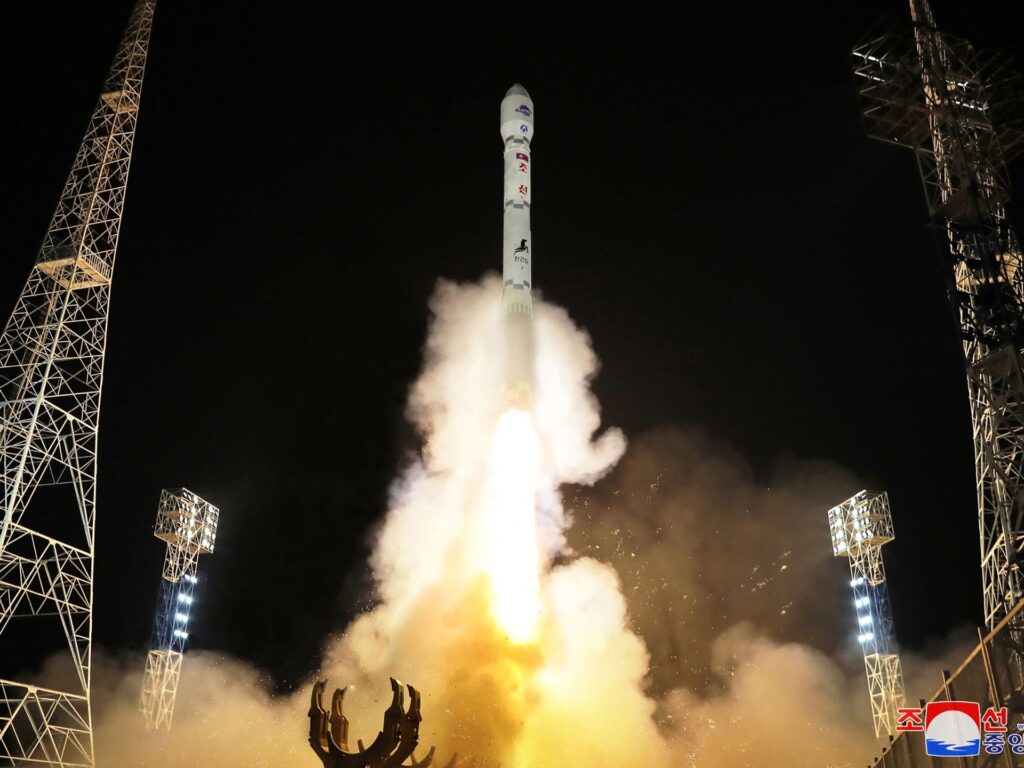
North Korea has said it will launch three more military spy satellites, build military drones and boost its nuclear arsenal in 2024, continuing a military modernisation programme that saw a record number of weapons tests this year. Pyongyang put a spy satellite into orbit in November at its third attempt and this month, again launched its most powerful intercontinental ballistic missile (ICBM), which is seen as having the range to deliver a nuclear warhead to anywhere in the United States. “The task of launching three additional reconnaissance satellites in 2024 was declared” as one of the key policy decisions for 2024 at the end of a five-day party meeting chaired by leader Kim Jong Un, the official Korean Central News Agency (KCNA) reported. Kim wrapped up the meeting on Saturday, lashing out at the US, which he blamed for making war inevitable. “Because of reckless moves by the enemies to invade us, it is a fait accompli that a war can break out at any time on the Korean Peninsula,” Kim said, according to KCNA. He ordered the military to prepare to “pacify the entire territory of South Korea”, including with nuclear bombs if necessary, in response to any attack. Experts say North Korea aims to continue its policy of military pressure to try and increase any leverage around November’s presidential elections in the US, where former President Donald Trump is bidding to return to power. When Trump was last in office, he held two summits with Kim and met him at the demilitarised zone that divides the two Koreas, but while the events made lots of headlines, they failed to make any breakthrough. US President Joe Biden’s administration has deepened political and military ties with South Korea and imposed new sanctions as Pyongyang has tested more weapons. Washington has also deployed nuclear-powered submarines in South Korea as well as flown its long-range bombers in drills with Seoul and Tokyo. “Pyongyang might be waiting out the US presidential election to see what its provocations can buy it with the next administration,” Leif-Eric Easley, a professor of international studies at Ewha Womans University in Seoul, wrote in an email. Kim said he could not ignore such US deployments, claiming such weapons had completely transformed South Korea into a “forward military base and nuclear arsenal” of the US. “If we look closely at the confrontational military actions by the enemy forces… the word ‘war’ has become a realistic reality and not an abstract concept,” Kim said. Kim said he has no choice but to press forward with his nuclear ambitions and develop deeper relations with other countries that oppose the US. North Korea has deep ties with both China and Russia. South Koreans will also go to the polls in April for a parliamentary election that could affect the domestic and foreign agenda of President Yoon Suk-yeol, a conservative who has maintained a hawkish stance towards Pyongyang. South Korea’s National Intelligence Service (NIS) warned on Thursday that there was a “high possibility that North Korea could unexpectedly conduct military provocations or stage a cyberattack in 2024, when fluid political situations are expected with the elections”. Speaking at the end of the party meeting, Kim said he would no longer seek reconciliation and reunification with South Korea, noting the “persisting uncontrollable crisis situation”. Relations between the two Koreas have deteriorated sharply this year, with Pyongyang’s spy satellite launch prompting Seoul to partially suspend a 2018 military agreement that was supposed to help reduce tensions on the peninsula. In response, North Korea said it would move more troops and military equipment to the border and would not be constrained by the 2018 pact. “I believe that it is a mistake that we should no longer make to consider the people who declare us as the ‘main enemy’… as a counterpart for reconciliation and unification,” KCNA cited Kim as saying. ‘Can’t match’ South Korea Pyongyang declared itself an “irreversible” nuclear power last year and has repeatedly said it will never give up its nuclear programme, which it views as essential for its survival. The United Nations Security Council has adopted many resolutions calling on North Korea to halt its nuclear and ballistic missile programmes since it first conducted a nuclear test in 2006. The last test was in 2017. Kim promised to strengthen nuclear and missile forces, build unmanned drones, expand the submarine fleet and develop its capabilities in electronic warfare in 2024, but Easley said that even with such developments, it would remain far behind Seoul. “The Kim regime may believe it can violate UN sanctions on its weapons programs with impunity, but even with the support of Moscow and Beijing, Pyongyang can’t match South Korea’s sophisticated defence acquisitions and training coordinated with the United States and Japan,” he said. “Seoul is pushing ahead both in outer space and with aerial drones, so despite North Korea’s cyber hacking and efforts at launching spy satellites, it will likely fall further behind on military technology and intelligence in the New Year.” North Korea’s successful launch of a spy satellite followed two high-profile failures and came a couple of months after Kim visited Russia for a summit with Russian President Vladimir Putin who promised to help North Korea build satellites. South Korean officials have said Russian assistance probably contributed to the success of the third mission. Seoul and Washington are also concerned that Pyongyang has been selling weapons to Russia in exchange for such technological know-how. Adblock test (Why?)
Nepal court finds former cricket captain Sandeep Lamichhane guilty of rape

Court in Nepal finds Lamichhane guilty of raping an 18-year-old woman at a Kathmandu hotel in 2022. A court in Nepal has found the country’s highest profile cricketer Sandeep Lamichhane guilty of raping an 18-year-old woman and has fixed January 10 for his sentencing. The judgement was announced after a repeatedly delayed trial that had left him free to continue his sporting career. The 23-year-old has been the face of cricket in Nepal and was the only player from the country to take part in prominent Twenty20 leagues across the world. He was suspended as Nepal’s captain last year and taken into custody after police issued an arrest warrant for him over the assault in 2022. He was later released on bail. Lamichhane could face up to 10 years in jail. His lawyers said he would appeal the verdict to a higher court. “We did not expect this judgement … we are frustrated,” lawyer Sabita Bhandari Baral told the Reuters news agency about Friday’s verdict by the Kathmandu District Court. “We’ll definitely appeal,” she said. District Court official Ramu Sharma confirmed the verdict to the AFP news agency. “The event was not consensual,” he said. The former captain’s on-field success has boosted the sport’s profile in the Himalayan nation over the past few years. When authorities issued an arrest warrant, Lamichhane initially failed to return from Jamaica, where he was playing in the Caribbean Premier League. He was dismissed as national captain and arrested last year, but Nepal lifted his playing ban after he was freed on bail. This allowed him to remain in the national team, including for the World Cup qualifiers and September’s Asia Cup. Lamichhane has consistently denied the charge against him and enjoyed strong public support despite the accusations. Hundreds of cheering cricket fans welcomed him when he returned to the field in February. But his continued playing career has also sparked anger and caused numerous Nepalis to disavow the team. Scotland’s cricketers refused to shake hands with him after their matches during an international tournament in Dubai. The case took more than a year to conclude after repeated delays on procedural grounds. Cricket has been growing in popularity in Nepal and the country was given one-day international status by the world governing body in 2018. Lamichhane has been a major part of this rise as the most sought-after Nepali cricketer in lucrative leagues around the world. The leg spinner’s big break came when he was snapped up for the lucrative Indian Premier League, the world’s richest cricket tournament, in 2018. Adblock test (Why?)
Heat and fire, rains and drought: How 2023 broke climate records

The year 2023 has been the hottest on record, according to scientists. According to observers, sizzling heatwaves, devastating floods, and storms have all contributed to global weather records being smashed this year. “[Year] 2023 has now had six record-breaking months and two record-breaking seasons,” Samantha Burgess, deputy director of Copernicus Climate Change Service (C3S), said in a statement this month. The world has experienced the highest mean temperature on record for the first 11 months of the year, 1.46 degrees Celsius (2.63 degrees Fahrenheit) above the pre-industrial average. From January to November, the 11-month average was 0.13C (0.234F) higher than 2016, which was previously the warmest calendar year on record. In June, scientists announced the arrival of the El Nino climate pattern. Emerging in the central and eastern Pacific near the equator, El Nino is responsible for the warming and cooling of large areas of the ocean, which significantly influences where and how much it rains and changes in global temperature. The strong weather pattern, responsible for higher global temperatures, has contributed to the catastrophic extremes seen in 2023. Here is a timeline of how the climate record-breaking unfolded: Scientists say the record-breaking extremes of 2023 serve as a sobering warning of what is to come if society does not curtail its use of coal, oil and gas. “As long as greenhouse gas concentrations keep rising, we can’t expect different outcomes from those seen this year,” C3S director Carlo Buontempo said. “The temperature will keep rising and so will the impacts of heatwaves and droughts. Reaching net zero as soon as possible is an effective way to manage our climate risks.” The warm temperatures experienced so far throughout the year show no signs of letting up. The last month once again was the warmest November ever recorded. On November 17 and 18, the Earth’s global average surface temperature was more than 2C (3.6F) higher than pre-industrial levels — the first time scientists have ever recorded such a reading. With El Nino set to reach its full strength in the Northern Hemisphere winter, more extreme weather events are likely to be unleashed around the world in 2024. Adblock test (Why?)
US appeals court allows California to ban guns in most public places

A federal appeals court put on hold a judge’s ruling that declared the law, set to take effect in 2024, unconstitutional. A federal appeals court in the United States has cleared the way for a law passed by the state of California that bans carrying guns in most public places. The 9th US Circuit Court of Appeals on Saturday suspended a December 20 injunction issued by a judge who concluded the Democratic-led state’s law violated the right of citizens to keep and bear arms under the US Constitution’s Second Amendment. The law is set to take effect at the start of 2024. The three-judge panel issued an administrative stay that put the injunction on hold until a different 9th Circuit panel can consider whether to issue an even longer pause while the litigation plays out. The measure, which was set to take effect on January 1 after being signed into law in September by California’s Democratic Governor Gavin Newsom, was enacted after a landmark ruling in June 2022 by the conservative-majority US Supreme Court that expanded gun rights nationwide. The Supreme Court in that case struck down New York’s strict gun permit regime, offering a broad interpretation of the Second Amendment, the basis for gun rights in the US. Series of court challenges The ruling, New York State Rifle & Pistol Association v Bruen, limited legislators’ ability to restrict firearm possession in public. It also led to a series of court challenges. California, which has some of the strictest gun control laws in the US, was among a group of states with similar laws as New York and following the Supreme Court’s decision, moved to revamp its firearms regulations. Under California’s new law, people could not carry concealed guns in 26 categories of “sensitive places” including hospitals, playgrounds, stadiums, zoos and places of worship, regardless of whether they had permits to carry concealed weapons. The law, Senate Bill 2, also barred people from having concealed guns at privately owned commercial establishments that are open to the public, unless the business’s operator posts a sign allowing license holders to carry guns on their property. A group of concealed carry permit holders and gun rights groups including the Second Amendment Foundation, Gun Owners of America and the California Rifle & Pistol Association sued, arguing the new law was unconstitutional. US District Judge Cormac Carney, an appointee of the former Republican President George W Bush, on December 20 agreed and blocked the law pending the outcome of the case. The law “turns nearly every public place in California into a ‘sensitive place’, effectively abolishing the Second Amendment rights of law-abiding and exceptionally qualified citizens to be armed and to defend themselves in public,” Carney wrote. California Attorney General Rob Bonta quickly asked the 9th Circuit to put that injunction on hold pending an appeal, saying that leaving the law blocked would mean that “tens of millions of Californians will face a heightened risk of gun violence”. Similar laws adopted by other states have faced litigation as well. A federal appeals court on December 8 ruled that New York state could bar gun owners from carrying weapons in many “sensitive locations” including parks, zoos, bars and theatres. Adblock test (Why?)
Netanyahu says Gaza-Egypt border zone should be under Israeli control
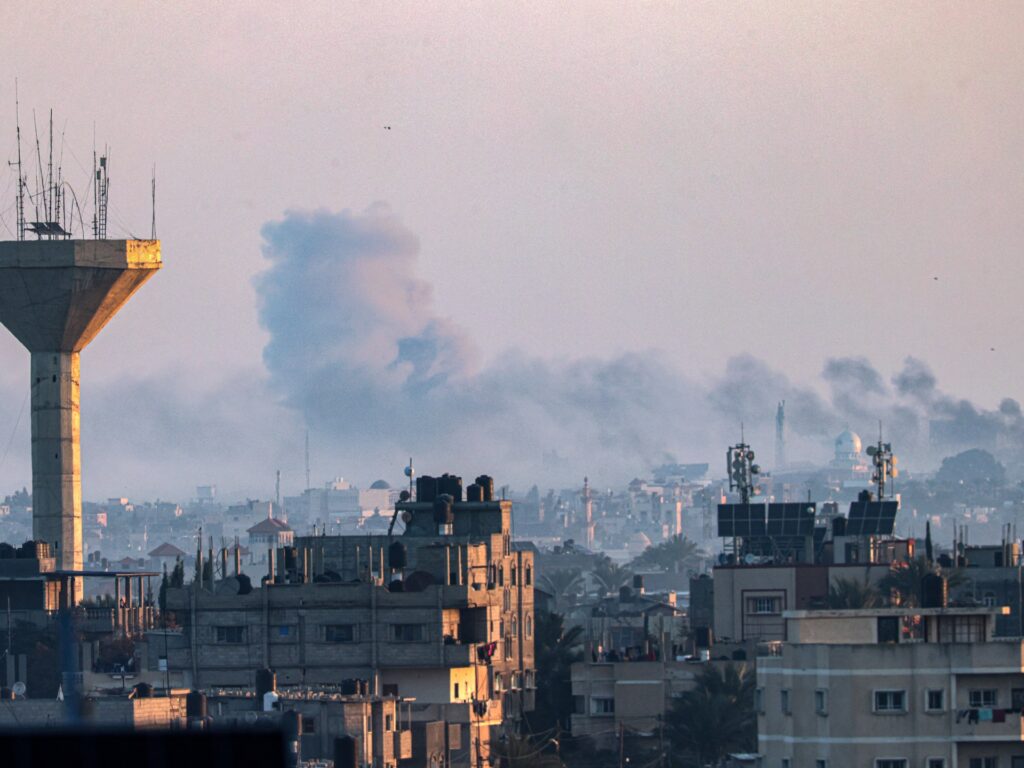
BREAKINGBREAKING, The Israeli prime minister also predicts the war in Gaza and on other regional fronts would last many months. The border zone between the Gaza Strip and Egypt should be under Israel’s control, Israeli Prime Minister Benjamin Netanyahu has said, as he predicted the war in the Palestinian enclave and on other regional fronts would last many months. As Israel entered the 13th week of its war in Gaza on Saturday, Netanyahu held a news conference where he renewed his promise to eliminate Hamas and bring home all Israelis held captive in Gaza. “The Philadelphi Corridor – or to put it more correctly, the southern stoppage point [of Gaza] – must be in our hands. It must be shut. It is clear that any other arrangement would not ensure the demilitarisation that we seek,” he said. Israel has said it intends to destroy Hamas in Gaza and demilitarise the territory to prevent any repeat of the October 7 cross-border killing and kidnapping spree by the armed group. “The war is at its height. We are fighting on all of the fronts. Achieving victory will require time. As the [Israeli army] chief of staff has said, the war will continue for many more months,” Netanyahu said. He also added a rare threat to attack Iran directly over the near-daily exchanges of fire across the Israel-Lebanon border. “If [the Iran-backed Lebanese armed group] Hezbollah expands the warfare, it will suffer blows that it has not dreamed of – and so too Iran,” Netanyahu said without elaborating. The war has triggered fears of a regional conflagration amid rising tensions with other Iranian-aligned groups in Lebanon, Syria, Iraq and Yemen. Israel’s relentless bombing and ground offensive on Gaza since October 7 has killed at least 21,672 people, most of them women and children, with thousands of others buried under the rubble. The military operation has also displaced almost the entire 2.3 million population of the besieged territory. About 1,140 people were killed by Hamas in Israel in the October 7 attacks. Adblock test (Why?)
How an impasse in the South China Sea drove the Philippines, US closer
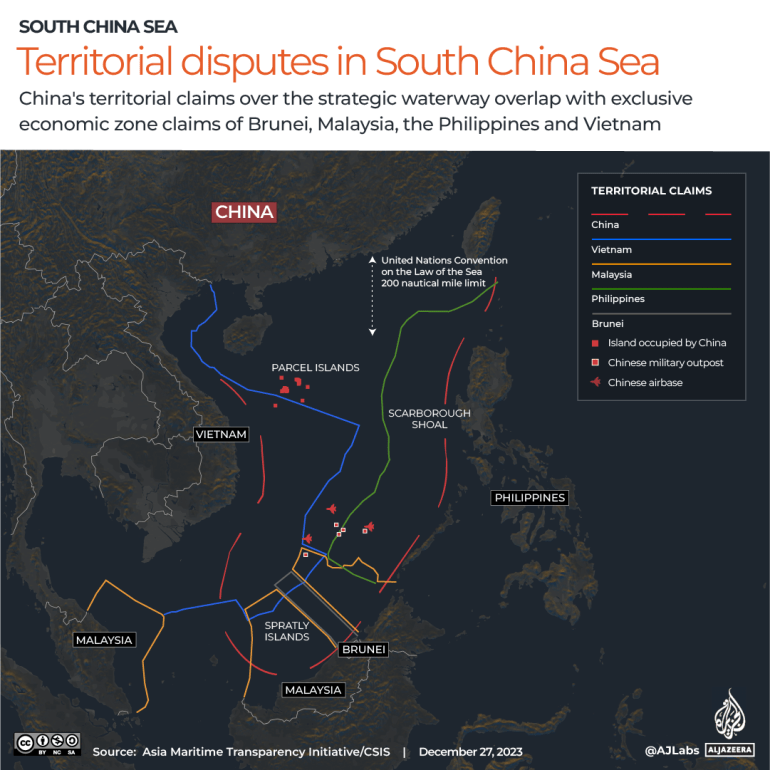
Manila, Philippines – On February 2, 1995, just over two years after the last American soldiers had left the Philippines, a Filipino navy patrol boat found a newly built structure on stilts flying a Chinese flag on a submerged reef, some 240 kilometres (149 miles) off the Philippine island of Palawan. The sailors had gone to Mischief Reef in the South China Sea after a Filipino fisherman reported being taken captive by Chinese soldiers in the area. Beijing, which claims nearly all of the South China Sea, dismissed the allegations and insisted that the octagonal structure on the reef – which was equipped with a satellite dish for communications with the Chinese mainland – was merely a shelter for its fishermen. Today, Mischief Reef is a fully fledged Chinese military outpost, with a 3,000-metre airfield runway, radar systems and warehouses probably housing surface-to-air missile systems on land reclaimed from the sea. Chinese navy and coastguard vessels patrol the area, harassing Filipino troops, including by using military-grade lasers and water cannon, and blocking Filipino fishermen from the rich fishing grounds in the waterway by ramming their boats and seizing their catches. The reef, which is submerged at high tide and part of the Spratly Islands, is nearly 1,000km (620 miles) from China’s Hainan Island. Beijing has now fully militarised a total of three islands in the Spratlys, according to officials in the United States, and maintains seven military outposts in the area. Across the top military brass in the Philippines, the view is that China would not have taken over Mischief Reef had US forces stayed in the country. “If in 1992, the US didn’t leave, I don’t think that we will be losing Mischief Reef,” said Jay Tarriela, spokesman for the Philippine Coast Guard. “The Philippine government – during the time that we have enjoyed the security umbrella of the United States – have tremendously strengthened the military deterrence of the Philippine government. So supposing that those bases are still here, I am 100 percent sure that none of all this maritime features will be taken away from us.” (Al Jazeera) Now, three decades after the Philippines ended a vast US military presence that began with the capture of the archipelago from Spain in 1898, American troops are again returning. Philippines President Ferdinand Marcos Jr, who took office last year, has pivoted to Washington, in a reversal of his predecessor’s policy, expanding the US’s military footprint in the country under their Mutual Defense Treaty of 1951 and a pact called the Enhanced Defense Cooperation Agreement (EDCA). He has now authorised the Pentagon to pre-position equipment and rotate forces through a total of nine sites in the Philippines. Some are in Palawan, near the disputed Spratlys, and some face north towards Taiwan, the self-governed island that Beijing claims as its own territory. Marcos has also extracted a promise from US President Joe Biden that American troops will come to the Philippines’ defence in the event of an attack on the Southeast Asian nation’s armed forces in the South China Sea, something Washington had been reluctant to commit to earlier. “It is only natural for the Philippines to look to its sole treaty partner in the world to strengthen and to redefine the relationship that we have and the roles that we play in the face of those rising tensions that we see now around the South China, Asia Pacific and Indo-Pacific region,” Marcos told Biden during a summit in Washington, DC, in May. While Marcos Jr’s decisions have largely been driven by the South China Sea territorial dispute, he has also shared concerns about the impact of a possible Chinese invasion of Taiwan, saying that “it’s very hard to imagine a scenario where the Philippines will not somehow get involved”. Beijing, however, has hit back at the expansion of EDCA, saying the move will “seriously harm Philippine national interests and endanger regional peace and stability”. The decision would “drag the Philippines into the abyss of geopolitical strife”, it claimed. China’s ambassador to Manila, Huang Xilian, also advised the Philippines in April to “unequivocally oppose ‘Taiwan independence’ rather than stoking the fire by offering the US access to the military bases near the Taiwan Strait”. Analysts say the Philippines is a prime example of how China’s actions have driven its neighbours closer to Washington, which has been strengthening an arc of alliances in the Asia Pacific to deter China. These include allies such as Japan, which has protested over Chinese incursions near the disputed Senkaku or Diaoyu islands, and non-aligned India, which fought a bloody border battle with Chinese troops in the Galwan Valley in the Himalayas in 2020. These territorial disputes “alienate other regional countries with whom [China] often has very close economic ties” said Joshua Kurlantzick, senior fellow for Southeast Asia at the Council on Foreign Relations, a US-based think tank. “And so in some ways it hurts China’s image in the region and its soft power and perhaps in some ways its influence,” he said. ‘Problems remain’ Marcos’s pushback against China in the South China Sea marks a reversal from the policy of his predecessor, Rodrigo Duterte. Duterte took office in 2016, shortly before a United Nations-backed tribunal ruled that China’s “Nine Dash Line” claims to the South China Sea – which overlap with the Exclusive Economic Zone claims of the Philippines, Vietnam, Taiwan, Brunei and Malaysia – had no legal basis. But Duterte downplayed the ruling, shelving talks on the issue after declaring a “separation” from the US and pivoting towards China. He then threatened to terminate the US-Philippine Visiting Forces Agreement, which serves as the legal foundation for Washington’s bilateral military cooperation in the Philippines, suspended joint military exercises and froze US access to Philippine bases under the EDCA. Instead, he turned to China, seeking financing for infrastructure projects throughout the country as part of his “Build Build Build” programme. That year, China pledged $6bn in official development assistance, $3bn in loans, and $24bn in investments