

Israeli air raids target Syrian city of Aleppo as regional tensions rise
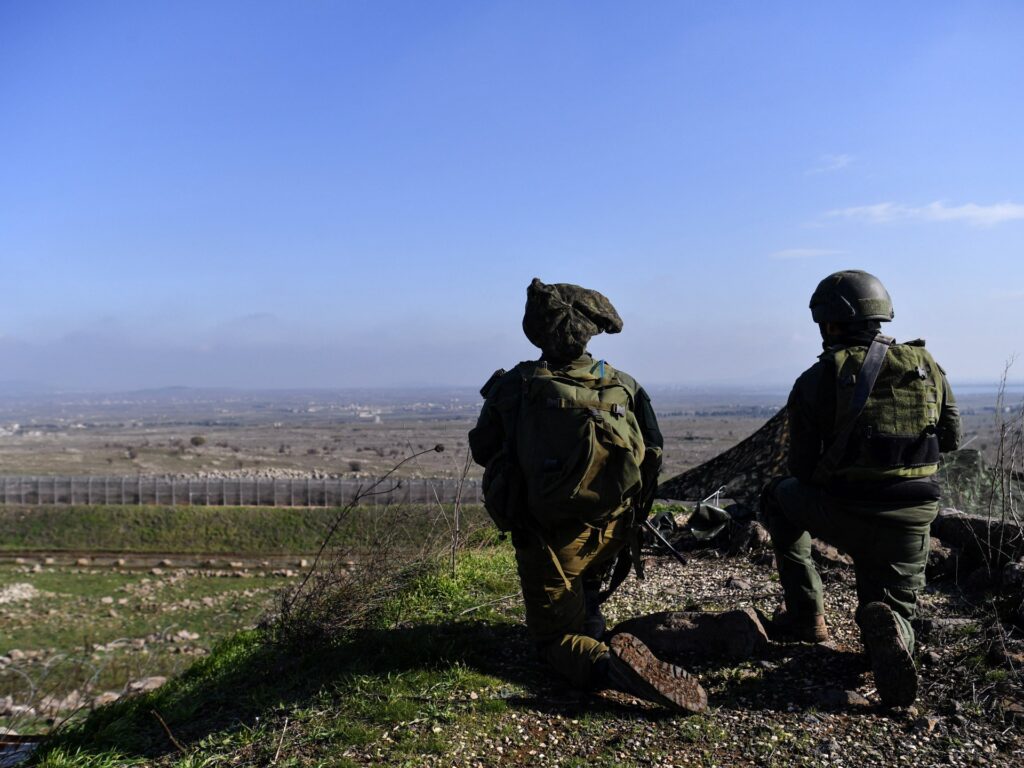
Syrian defence ministry says the ‘aerial aggression’ came from the Mediterranean and hit a number of places. Israel has targeted Iranian military positions in Syria’s Aleppo with an air raid, causing some material damage, according to the Syrian Ministry of Defence. “Israel carried out an aerial aggression from the direction of the Mediterranean Sea, west of Latakia, targeting a number of points south of the city of Aleppo,” the statement said on Saturday. The Syrian state media, citing a military source, said “the Israeli enemy carried out an air attack… targeting a number of points south of the city of Aleppo” at about 5:20pm (14:20 GMT) on Saturday. Pro-government radio station Sham FM said the attacks were near Aleppo’s airport, but did not damage it. “It seems these attacks in Aleppo were conducted from the sea,” Al Jazeera’s Ali Hashem reported from Naqoura in southern Lebanon. “Warplanes were situated over the Mediterranean when they launched the missiles towards several targets in the city of Aleppo.” During more than a decade of war in Syria, Israel has launched hundreds of air raids on its territory, primarily targeting Iran-backed forces including Lebanese Hezbollah fighters, as well as Syrian army positions. But Israel intensified its attacks since its military operation in Gaza began on October 7, causing tensions across the Middle East. Hashem said the Aleppo attack was “not unprecedented”. “On several occasions, there were attacks on Aleppo, on Damascus, and yesterday [Friday] there was an attack on Albu Kamal, an area on the border between Syria and Iraq,” he said. “It seems this is part of a pattern, because the group that was linked to Albu Kamal was linked to the Iranian IRGC commander who was killed in Damascus just days ago,” he added. On Monday, an Israeli air raid outside the Syrian capital Damascus killed a senior adviser in Iran’s Revolutionary Guard Corps (IRGC). Sayyed Razi Mousavi was responsible for coordinating the military alliance between Syria and Iran. Tit-for-tat on Israel-Lebanon border The attack on Aleppo came after another Israeli air raid on a border town in southern Lebanon earlier on Saturday. The attack followed Iran-backed group Hezbollah claiming responsibility for three attacks on Israeli military bases on the border, Al Jazeera’s Hashem reported. “There were several Israeli air raids mainly on the town of Bint Jbeil … According to reports, there are no casualties,” he said. “Another town closer to the border of Israel was also hit by an Israeli attack in a residential area. This raises the risk of civilian casualties on a daily basis,” he said. Israel and Hezbollah, along with a handful of smaller armed groups that operate in southern Lebanon, have settled into a steady rhythm of tit-for-tat exchanges since the Gaza assault began. At least 21,672 Palestinians, most of them women and children, have been killed in Gaza in nearly three months of Israeli operation, which has also displaced nearly the strip’s entire 2.3 million population. The attacks in Syria and Lebanon also come amid fears that Israel’s war in Gaza could expand into a wider regional conflict. Adblock test (Why?)
Photos: Romania’s annual Dancing Bears Festival to ‘ward off evil spirits’
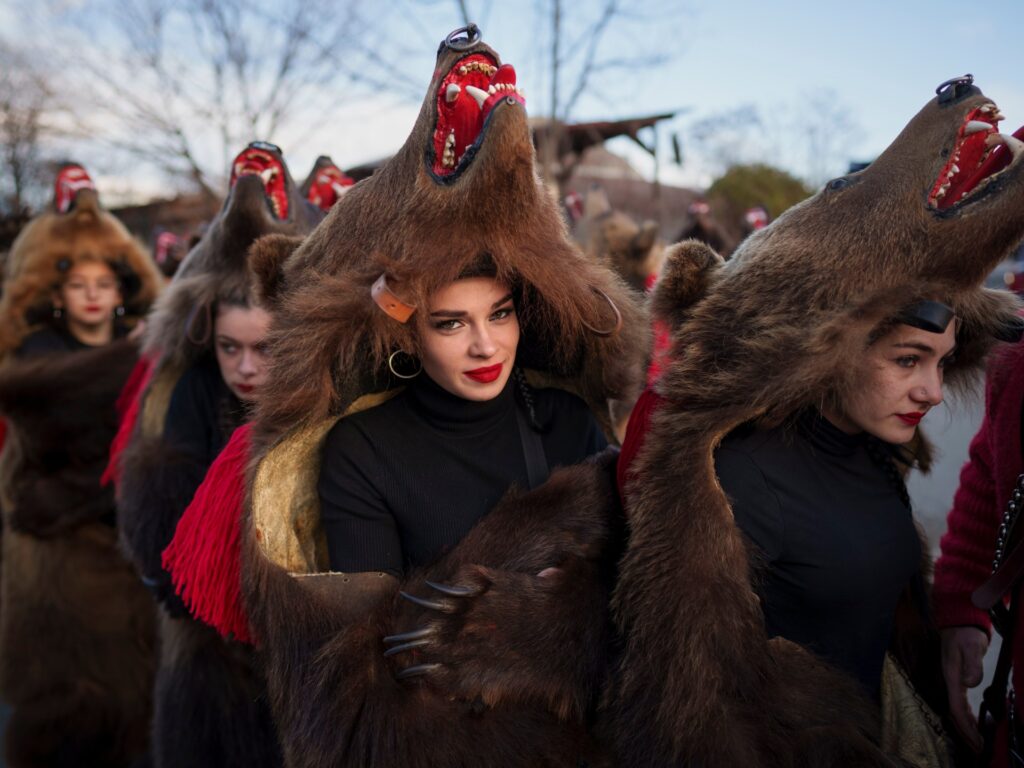
Centuries ago, people in what is now northeastern Romania donned bear skins and danced to fend off evil spirits. That custom is today known as the Dancing Bears Festival, drawing crowds of tourists every December. Hundreds of people of all ages, clad in bear costumes, dance every year around Christmas to the deafening beat of drums and roam villages and towns. The highlight of this year’s festival was on Saturday, with bear-clad dancers descending on the town of Comanesti in eastern Romania for the finale. Visitors come from as far as Japan to see the spectacle, featuring lines of people in costumes with gaping bear jaws and claws marching and dancing. Giant red pompom decorations are usually added to the furs. Some of the “bears” jokingly growl or pretend to attack the spectators. Locals say the custom dates back to the pre-Christianity era when people believed that wild animals staved off misfortune or danger. Dancing “bears” visited people’s homes and knocked on their doors to wish them good luck and a Happy New Year. “The bear runs through our veins, it is the spirit animal for those in our area,” said Costel Dascalu, who started taking part in the festival when he was eight. At the time, Romania was still under communist rule and the festival was relatively low-key. “I want to keep the tradition alive,” the 46-year-old added. When the holiday season approaches, he joked, “our breath smells like bears, and we get goosebumps when we hear the sound of drums”. Residents are happy the tradition has lived on after many Romanians left the region in the 1990s to look for better jobs in Western Europe. Brown bears are widely present in Romania’s traditions and culture, and the animals can often be seen by mountain roads and in forests. Excessive bear hunting prompted the authorities to issue a ban in 2016. Participants in the festival say most of the bear skins they use as costumes have been preserved for generations and treated with great care. Wearing a full-sized bear fur is not easy: including the head and claws, the costume could weigh up to 50kg (110 pounds). The most expensive bear skins can cost some 2,000 euros ($2,200), according to local media. Adblock test (Why?)
How do Palestinians factor into Israel’s vision for the Middle East?
David Frum, writer for The Atlantic magazine and pro-Israel commentator, says Palestinian statehood is not the solution. David Frum, staff writer for The Atlantic magazine and a pro-Israel supporter, tells host Steve Clemons that Israel and the United States should “avoid solution-ism” for the Palestinians and focus on day-to-day necessities, like food and water. The way Israel has responded to the Hamas attack of October 7 was “inevitable”, Frum says, adding that “Israel has never been allowed this much scope to act”, by the US, United Kingdom and European Union. Join this wide-ranging conversation on the internal debates within Israeli society, and how Israel envisions the future of the region, including rapprochement with Saudi Arabia. Adblock test (Why?)
Analysis: Has Israel weakened Hamas enough to win the war on Gaza?
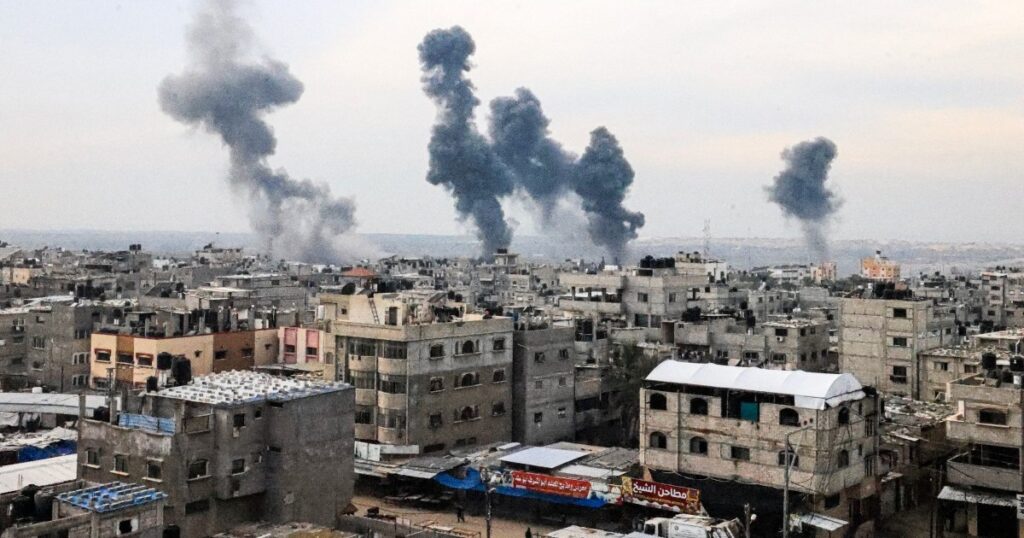
Almost 23,000 people – the vast majority Palestinian – have been killed since the unprecedented Hamas attacks in southern Israel on October 7, which launched the Israeli assault on Gaza. As the end of 2023 approaches, the Israeli offensive is showing no signs of any let-up and the death toll is certain to rise on both sides as fighting continues. Political attempts at peace have failed. Israel has stated from the outset that its objective is to eliminate Hamas’s military and governing capabilities. To this end, it has continued the aerial bombardment and ground invasion of the Gaza Strip almost without pause, since October 7. While Israel admits it has failed in this mission so far, it claims it is just a question of time before it achieves this goal. But does the situation on the ground support that claim? The answer is a cautious no. A detailed and impartial analysis of various aspects of its performance leads to the conclusion that so far, Hamas has experienced more successes than failures – for the following reasons. Hamas continues to exist The organisation is still very much alive and kicking. Politically, it is still recognised – de facto if not de jure – as the only entity exercising control over what remains of the heavily damaged civilian structures in the Gaza Strip. It is party to indirect negotiations that have already managed to produce a one-week-long pause in the assault on Gaza and a limited exchange of Israeli and Palestinian captives and hostages. As long as it holds on to its remaining hostages, Hamas will continue to be an inevitable “other side” without which no release of those captives will be possible. Israel has repeatedly stated that there is “no place” for Hamas in the post-war civilian structures of Gaza but has never produced any semblance of a concrete, alternative plan. Various vague, unfocused suggestions that the future of Gaza would be better without Hamas have been floated but nobody has produced any coherent suggestion of how to remove Hamas and what to replace it with. The US, some Arab states and various international organisations have suggested that a post-war Gaza should be run by Fatah or a pan-Arab force, but have presented no tangible plans for how to achieve that. For now, this remains wishful thinking. For the predictable future, therefore, Hamas is here to stay. Hamas remains an effective military force The military wing of Hamas, the Qassam Brigades, has never publicly disclosed information about its structure, organisation or numbers. Some experts, using open sources and leaked intelligence from Israeli, US, Arab and Russian sources, estimate the Qassam Brigades’ strength at between 30,000 and 45,000 fighters. Even the most cautious of analysts believe that before the war, the force could count at least 18,000 well-trained, disciplined and ideologically highly motivated first-line soldiers in its ranks, with everything above that number being the second echelon. Various Israeli claims of having killed as many as 10,000 Hamas fighters are almost certainly exaggerated. The Qassam Brigades have been taking heavy losses but most of its battalions remain effective combat units. Institute for the Study of War, an influential and well-informed US think tank estimates that out of 26 to 30 battalions of fighters, which were believed to exist on October 7 – each having 400 to 1,000 men, only three have been rendered inoperable – or, in civilian parlance, destroyed. Of the remainder, four or five have been “degraded”, meaning that their strength is reduced but they continue to fight, either alone or by joining other units. In one aspect, the Hamas military wing has proved exceptionally effective: all units whose commanders have been killed have nevertheless continued fighting under their deputies. Relying on its excellent field intelligence, Israel has managed to kill at least five battalion commanders in targeted air raids, with at least six more dying in battle, including the commander of the Northern Brigade. Yet none of those units was rendered “headless” and collapsed, confirming Hamas’s clear ability to plan and train competent deputies. Israel has been destroying or blocking tunnel entrances wherever it can find them but there are clear signs that Hamas still maintains enough underground facilities to move forces between front lines and often successfully flank and surprise the enemy. Hamas has support from other armed factions Reports from Gaza sometimes make it appear that the Hamas armed wing, the Qassam Brigades, is doing all the fighting. In fact, there are no fewer than 12 different armed groups, affiliated with different political and ideological blocs. The second-best known is Islamic Jihad, but others include the Popular Resistance Committee and two Fronts for the Liberation of Palestine of almost the same name – one calling itself “Popular” while the other is “Democratic”. Probably the most unlikely to be associated with Hamas is the Al-Aqsa Martyr Brigades, the armed wing of its rival, Fatah. Political differences aside, however, it fights in coordination with and largely under the general command of the Qassam Brigades. Putting all these groups under the Hamas umbrella is a pragmatic solution born out of necessity, but it seems to work to the satisfaction of all involved, with no visible tensions or cracks so far. There have been no reliable claims of any of this plethora of smaller units caving in under pressure from Israeli armed forces, disbanding, deserting or collaborating with the enemy. Furthermore, it cannot be ruled out that some of them may merge, at least temporarily, into the Qassam Brigades. The continued co-existence of these armed factions while they face the same threat is without doubt a success for Hamas. Hamas has gained popularity in the West Bank Contrary to the predominant Israeli and Western image of Hamas as unacceptable terrorists and murderers of innocent civilians – a view particularly reinforced after reports of indiscriminate slaughter on October 7 – many Palestinians see it in a different light. Those who see themselves as victims of Israeli oppression, unequal treatment, lawlessness and
Nicole Jenes and Rathbone: Social media influencers a new lens on Gaza war

Exploring how Instagram and TikTok influencers shape narratives in Israel’s war on Gaza. Social media has revolutionised our understanding and perception of wars and conflicts. Platforms like Instagram, Snapchat and TikTok, with their real-time, unfiltered content, offer a new perspective that’s immediate and often raw. These platforms enable users worldwide to witness conflicts like the war on Gaza as they unfold, offering a variety of viewpoints that traditional media may not cover. This shift has led to a more multifaceted and grassroots-level narrative, one which we will explore as influencers Nicole Jenes and Rathbone talk to Al Jazeera. Adblock test (Why?)
Year of the underdog: How ‘outsiders’ upended Latin America’s elections

Buenos Aires, Argentina – Poverty through the roof. Out-of-control inflation. Overwhelming debt. Javier Milei painted the grimmest of pictures when he delivered his inaugural address as president of Argentina earlier this month. “There is no money,” he said in a grave voice. “There is no alternative to tightening our belt. There is no alternative to a shock.” It was not the sort of message you would expect to elicit cheers from a society battered by economic recession. But the roar from the crowd demonstrated the extent to which Milei – a relative newcomer to the world of politics – had succeeded in tapping into voters’ discontent with the status quo. Milei, a 53-year-old libertarian economist known for his shaggy hair and cloned dogs, was part of a wave of political outsiders who surged into leadership positions in Latin America this year. Countries across the region saw dark-horse candidates sweep into the presidency in 2023, delivering a rebuke to the political establishment. In Ecuador, for instance, Daniel Noboa stunned the nation by defeating political veteran Luisa González in an October run-off vote. Like Milei, Noboa, the heir to a banana industry fortune, had only served a single term in public office before his ascent to the presidency. Guatemala, meanwhile, saw progressive congressman Bernardo Arevalo come from behind to win a landslide in his country’s presidential elections, defeating former First Lady Sandra Torres. Arevalo had been seen as a long-shot candidate, polling with less than 3 percent support in the lead-up to the first vote. But he sailed to victory on a wave of popular frustration he characterised as a “democratic spring”. President Daniel Noboa became Ecuador’s youngest-ever elected president when he was sworn in on November 23 [Carlos Noriega/AP] Even in Paraguay, another long-shot, Paraguayo Cubas, made a surprisingly strong showing in the country’s presidential race. Describing himself as an “anti-system” candidate, the far-right leader landed in third place in the final vote. But Pablo Touzon, an Argentinian political scientist, said “anti-system” might not be the right term for this trend of political outsiders. “It’s not that they are anti-system. They are the new system,” he said of the slate of new leaders, who span the political spectrum, from left to right. Touzon traces this crop of political outsiders to a global shift that has been brewing for more than a decade. He explained that the global economic crash of 2008 and the rise of social media empowered new voices to rail against the status quo, rocking political establishments from Europe to North America to the Middle East. This period of upheaval in the early 2000s coincided with a commodities boom in Latin America: The price of raw materials and other exports rose, fuelled by demand from countries like China. That lowered regional inequality slightly, but Touzon warned that Latin America has “yet to find its economic model” – one that will ensure the region’s stability. Instead, economic uncertainty has created the conditions for the current “political rupture”. “The new system might be more unstable, more variable, with a power that is easier to obtain and easier to lose,” Touzon said. President-elect Bernardo Arévalo has faced legal challenges since winning Guatemala’s presidential election with a dark-horse campaign [Moises Castillo/AP] The economy was a leading issue in several of the countries that saw upstart candidates take power. Argentina’s dismal economic outlook dominated its election cycle, with inflation soaring past 160 percent and its currency tanking. More than 40 percent of the population sits below the poverty line. Likewise, Ecuador’s economy has struggled to rebound after the COVID-19 pandemic. Experts have warned that high youth unemployment could provide “easy recruits” for criminal gangs, another top concern in this year’s election. Corruption was also a mobilising issue. In Ecuador, outgoing President Guillermo Lasso faced impeachment hearings until he dissolved the legislature and called for new elections. In Argentina, meanwhile, the previous administration hit a speed bump when a federal court found then-Vice President Cristina Fernández de Kirchner guilty of corruption last December. And in Guatemala, a litany of government scandals drove voters to back the Movimiento Semilla or Seed Movement, an anticorruption party led by Arevalo. “My candidacy and our party channelled the frustration with an intolerable situation of corruption,” Arevalo said in an interview with the BBC in November. Even so, government prosecutors and rival politicians have mounted repeated efforts to question the legitimacy of Arevalo’s victory, spurring international observers to warn of election interference. Supporters reach out towards Argentina’s newly inaugurated President Javier Milei, bottom right, on December 10 [Natacha Pisarenko/AP] Distrust in government institutions has been a uniting theme throughout the 2023 elections, according to commentators like Pulitzer Prize-winning columnist Andrés Oppenheimer. In an appearance on Mexico’s Imagen Radio, Oppenheimer credited the clamour for change to longstanding frustrations. “The wave of outsider presidents that they are electing in Latin America – from Chile, Peru, Colombia, Argentina, all the anti-systemic leaders are appearing ahead in the polls – all of that is part of the same thing,” Oppenheimer said. “There’s a wave of unhappiness in the world.” In some cases, when faced with major obstacles like economic turmoil or corruption, voters turn to politicians they come to view as “messiahs”, said Romina Del Pla, a left-leaning member of Argentina’s Chamber of Deputies. “It’s the expression of the magnitude of the crisis that we have been living through in Argentina for many years,” Del Pla said of her country’s recent election. She added that the thirst for “messiah” figures extends beyond Argentina, pointing to the success of populists like Donald Trump in the United States or Jair Bolsonaro in Brazil. “We’ve seen that this phenomenon is international in nature, with Trump, with Bolsonaro, with others, that are the people who have managed to channel that huge frustration,” she said. Protesters demonstrate against President Javier Milei’s slate of reforms outside the National Congress in Buenos Aires, Argentina, on December 21 [Rodrigo Abd/AP] Del Pla observed that, during this year’s presidential race, there was
Pakistan poll body rejects ex-PM Imran Khan’s nomination for 2024 elections

The jailed leader’s bid to overturn his disqualification in the wake of conviction in a corruption case rejected by election body. Pakistan’s election body has rejected former Prime Minister Imran Khan’s nomination to contest the 2024 parliamentary elections, with Khan’s Pakistan Tahreek-e Insaf (PTI) party accusing authorities of stopping most of its candidates from participating in the elections due in February. The 71-year-old former cricket star, who is serving a three-year prison sentence for corruption, was barred from politics for five years by the Election Commission of Pakistan (ECP). But he still filed nomination papers on Friday. Election officials disallowed Khan’s candidacy because of his conviction and what they said was his disqualification under the Constitution, according to documents seen by the AP. They also rejected the candidacies of former members of his cabinet. The ECP released a list of rejected nominees from Lahore on Saturday, which also contained Khan’s name. It said the former prime minister could not become a nominee because he is not a registered voter of the constituency and due to him being “convicted by the court of law”. The cricketer-turned-politician’s nomination bid was also rejected in his hometown of Mianwali in Punjab province, according to his media team. Khan has not been seen publicly since his incarceration in August in the corruption case in which he was accused of unlawfully selling state gifts while in office. Last week, the Supreme Court granted him bail in a case alleging he leaked state secrets, but he is continuing to fight a barrage of legal cases that have dogged him since being removed from office last year. Most popular leader Khan, who is widely seen as the country’s most popular leader, has alleged that Pakistan’s powerful military is colluding with traditional parties to destroy his political party and prevent him from running for office again. The military has historically played a major role in the country’s politics and has directly ruled for decades since independence in 1947 from British rule. The 71-year-old leader has also alleged that the Pakistani military and the United States government conspired to topple his administration after he visited Moscow just before Russia invaded Ukraine. Washington and Pakistan’s military have denied the accusations. However, the US-based news site The Intercept published in August what it claims to be the details of a secret diplomatic cable that suggested the US administration wanted to remove Khan from power. The ECP had previously ruled that Khan’s PTI party cannot contest general elections using its cricket bat logo, but the High Court in the northwestern city of Peshawar earlier this week handed his team a legal victory by suspending the order. In addition to the 71-year-old Khan, the election commission has also rejected nomination papers submitted by other senior members of his party, including vice chairman Shah Mahmood Qureshi. The commission, however, has accepted a nomination bid from former Prime Minister Nawaz Sharif from two constituencies, weeks after a court overturned two corruption convictions. But Sharif, who also has been facing legal challenges for years and returned home in October to end a four-year self-imposed exile in the United Kingdom, still needs to remove a life ban on holding public office, a hearing for which will be held in January. The PTI has accused the Pakistani authorities of rejecting 90 percent of nominations from its party candidates while allowing nomination papers from other parties, including Sharif’s Muslim League-Nawaz (PML-N). [embedded content] Adblock test (Why?)
Deadly snake halts play at Australia tennis tournament

Austrian Dominic Thiem’s match suspended for 40 minutes after reptile slithered its way courtside. He won the qualifier. Former US Open champion Dominic Thiem had to face a tough battle during his qualifying tennis match at the Brisbane International – and also one of Australia’s most venomous snakes. Thiem’s match against Australian James McCabe was suspended for 40 minutes on Saturday after a snake slithered courtside. It was spotted by fans near the courtside electrical wires, prompting officials to call in security staff and stop play, as McCabe had just wrapped up the first set 6-2 against the 2020 US Open champion. A professional snake catcher was summoned to snare the 50cm (20-inch) reptile and tease it into a bag. It was identified as an eastern brown snake and one of Australia’s most deadly reptiles. “I really love animals, especially exotic ones,” Thiem said. “But they said it was a really poisonous snake and it was close to the ball kids, so it was a really dangerous situation.” The former world number three told reporters after the match: “It’s something that has never happened to me and is something I’ll definitely never forget.” Thiem, currently ranked no 98 after several years grappling with a wrist injury, was not yet out of danger when play resumed. He had to save three match points before winning the second set tiebreak. The 30-year-old then went on to clinch the deciding set for a 2-6, 7-6 (4), 6-4 win. Thiem reached the final of the Australian Open in 2020 when he pushed the Serbian champion Novak Djokovic to five sets, and won the US Open later that year. The Brisbane International is a tune-up event to the year’s first Grand Slam, the Australian Open, which begins on January 14 in Melbourne. Former world number one Rafael Nadal will return to tennis – after almost a year on the sidelines because of a lingering hip injury – in Brisbane on Sunday when he plays a doubles match alongside Marc Lopez, whom he partnered with in 2016 to claim an Olympic gold medal. Nadal, a 22-time Grand Slam champion, drew a qualifier in the singles draw as he gears up for the first stop of what could be his farewell tour. The 37-year-old Spaniard, who has won the French Open a record 14 times, had to pull out of that event in May because of his injury. Adblock test (Why?)
US prosecutors opt out of second trial for crypto tycoon Sam Bankman-Fried

Prosecutors cite ‘strong public interest’ for resolving major case against disgraced crypto exchange founder. United States prosecutors have chosen not to pursue a second trial for FTX cryptocurrency exchange founder Sam Bankman-Fried, who has already been found guilty of fraud and money laundering, and proceed instead to sentencing. Prosecutors said in a letter filed in a New York court on Friday that pursuing a second trial for the disgraced tycoon would only serve to delay the case against him, which is already strong enough. “Given that practical reality, and the strong public interest in a prompt resolution of this matter, the Government intends to proceed to sentencing on the counts for which the defendant was convicted at trial,” prosecutors said in the letter to Judge Lewis Kaplan, who presided over Bankman-Fried’s first criminal trial last year. In November, a jury found Bankman-Fried guilty of seven counts of fraud, embezzlement and criminal conspiracy, among other charges. The 31-year-old was accused of using billions of dollars from customer deposits on FTX to cover losses at his hedge fund, pay off loans and buy luxury real estate, among other large personal expenses. At the trial, he had admitted to making “mistakes” that ended up hurting people, but pleaded not guilty to the charges as he claimed he never meant to steal. Billions of dollars were lost after Bankman-Fried’s crimes came to light in 2022, something that also contributed to deepening a crypto market downturn that had started earlier that year. Federal prosecutors have previously described the case as “one of the biggest financial frauds in American history”. Bankman-Fried is slated to be sentenced on March 28, when he could face up to 110 years in prison. Prosecutors argued that much of the evidence that could be offered at a second trial was already presented at the first trial, and that a second trial would not affect how much time he could face in prison. They also said victims would not benefit from forfeiture or restitution orders if sentencing is delayed. Bankman-Fried is expected to file an appeal against his conviction. He was previously extradited from the Bahamas, where his companies were based. The US and the Bahamas have since been clashing over which country’s prosecutors have the legal jurisdiction and right to prosecute him. US prosecutors on Friday wrote that the US government “does not have a timeline for when the Bahamas may respond to its request”. Bankman-Fried, a graduate of the Massachusetts Institute of Technology (MIT), has been in jail since August, and had his bail revoked after a judge concluded that he had likely tampered with prospective trial witnesses. Adblock test (Why?)
Brazil urges calm as Venezuela-Guyana border tension rises over Essequibo
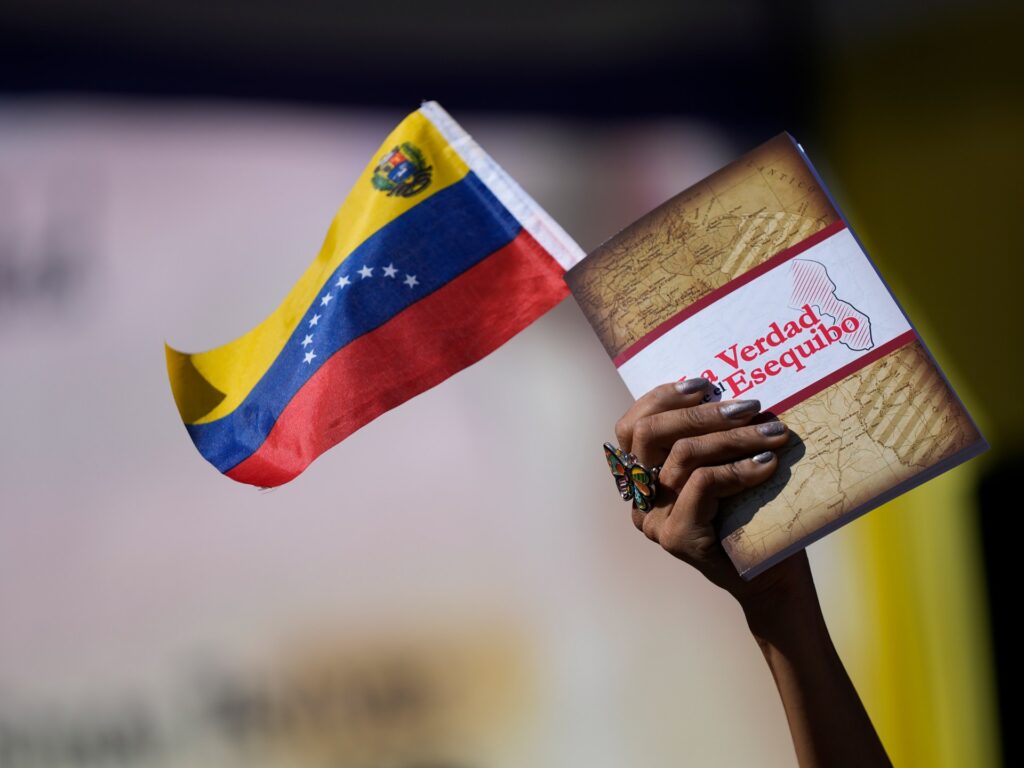
A British warship arrives for defence exercises with Guyana as Venezuela launches war games near contested region. Brazil has called for “restraint” as tensions flared in a territorial dispute between Venezuela and Guyana, with Caracas launching a major military exercise near the contested, oil-rich Essequibo region. “The Brazilian government is following the latest developments in the dispute surrounding the Essequibo region with concern,” said a statement from the foreign ministry on Friday. “The Brazilian government believes military demonstrations of support to either party should be avoided so that the ongoing dialogue process can produce results.” A British warship, the HMS Trent, also arrived in Guyana on Friday afternoon amid rising tensions, for open sea defence exercises in its former colony. The UK’s defence ministry has said that the ship is visiting Guyana as part of a series of engagements in the region and that the vessel will conduct training exercises with Guyana’s military. On its X account, the ship posted photos of sailors welcoming Britain’s ambassador to Guyana and the chief of staff of Guyana’s Defence Force, Brigadier General Omar Khan. They were also hosted at a formal lunch and provided with a tour of the ship’s capabilities. Today we were privileged to welcome onboard the Chief Of Defence Staff for Guyana, Brigadier Omar Khan, the British High Commissioner to Guyana, Mrs Jane Miller OBE, and a number of other dignitaries. @RoyalNavy @Janemiller37 #TeamTrent #FwdDeployed pic.twitter.com/jWE5jGK8Dp — HMS Trent (@HMSTrent) December 29, 2023 The HMS Trent’s visit, however, led Venezuela to begin military exercises a day earlier in the eastern Caribbean near its border with Guyana as the Venezuelan government presses its claim to a huge swath of its smaller neighbour. Venezuela has for decades laid claim to Essequibo, claiming that the Essequibo river to the region’s east forms a natural border and has historically been recognised as such. President Nicolas Maduro’s government also held a controversial referendum on December 3 in which 95 percent of voters, according to officials, supported declaring Venezuela the rightful owner of Essequibo. He has since started legal manoeuvres to create a Venezuelan province in Essequibo and ordered the state oil company to issue licences for extracting crude in the region. The rising tensions have raised fears in the region of a potential conflict over the remote area of 160,000 square kilometres (62,000 square miles). However, Guyana, of which Essequibo makes up more than two-thirds and hosts 125,000 of its 800,000 citizens, has administered the territory since the frontiers were determined by an arbitration panel in 1899. Brazil’s President Luiz Inacio Lula da Silva has emerged as a peace broker of sorts, determined to prevent the current war of words over the disputed Essequibo region from escalating into something deadlier. “If there’s one thing we don’t want, it’s a war in South America,” he said earlier this month. The Brazilian statement called for both parties to respect an agreement reached after Maduro and Guyana President Irfaan Ali met in the Caribbean, where they promised not to resort to force to settle the dispute. Adblock test (Why?)