

‘They ordered me to undress’: From Nigeria to Italy, surviving rape
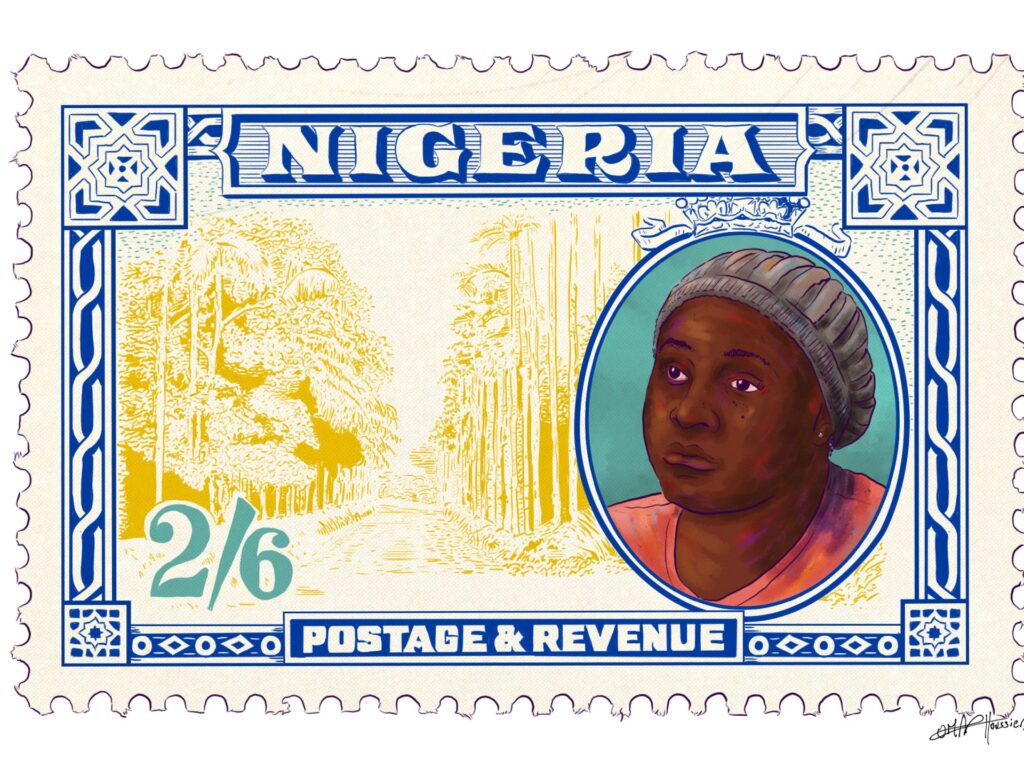
Twenty-five-year-old Naomi Iwelu is now settled, living in a room in the centre of Catania, Sicily. Here she recounts the robberies, betrayals and rape she experienced on her journey from Benin, Nigeria. It was her mother’s death, four years after her father’s, that prompted Naomi to quit school and leave Benin in 2018. As the eldest of six children, all now orphans, continuing her education beyond secondary school was an impossibility. “We couldn’t afford the expenses to continue my studies,” Naomi tells Al Jazeera, “so I started working in bars, restaurants and cleaning.” However, the family’s living conditions deteriorated. Leaving Nigeria to start a new life in Europe became an ever more considered option. “I got in touch with a friend who was living in Libya at the time,” she says. “We had attended the same school, but we had lost contact with each other. I found her contact on Facebook. She was the one who convinced me to leave Nigeria and said that she would help me to do so.” Naomi was told the trip would cost about 4,000 euros ($4,370), far more than she could raise. “I asked my boyfriend at the time for money to help my sister. I lied to him,” she says. “That’s how I sent the money to my friend in Libya, and that’s how the journey started.” She set out as part of a group organised by the contact her friend had provided. Today, she struggles to remember the number of people, only that there were “a lot”. “We spent two weeks in the desert,” she recalls. “There was barely any water for us, and many things happened.” Prompted for details, Naomi becomes silent, speaking volumes. Eventually, she arrived in Tripoli, Libya’s capital, where she stayed for six months, finding cleaning work in a local man’s house. One day on returning home, Naomi found two local men waiting for her. “They were holding a knife. They threatened me and asked for money. But I did not speak Arabic well. I did not understand. Then they ordered me to undress. That’s how they both raped me,” she says. Despite the experience, Naomi had no option but to continue her work, eventually raising the money for her passage to Europe. “The journey was extremely hard. There were many of us in a rubber dinghy,” she says, describing how she had been sick throughout the crossing. After reaching Lampedusa, the Italian doctors who examined her told her she was pregnant. “I didn’t know I was pregnant. It was so painful for me,” she says. “I wanted to study, and for that, I had to get [an] abortion. I didn’t want the baby.” Naomi was eventually able to secure an abortion, and now, having graduated from an Italian school, she works in a restaurant a few steps away from Via Etnea, Catania’s central street. She remains in regular contact with her family in Nigeria and sends them what money she can. “I miss them a lot, but I don’t want them to make the same journey as me and experience what I experienced,” she says. This article is the fifth of a five-part series of portraits of refugees from different countries, with diverse backgrounds, bound by shared fears and hopes as they enter 2024. Read the first, second, third and fourth parts here. Adblock test (Why?)
Russia-Ukraine war: List of key events, day 675
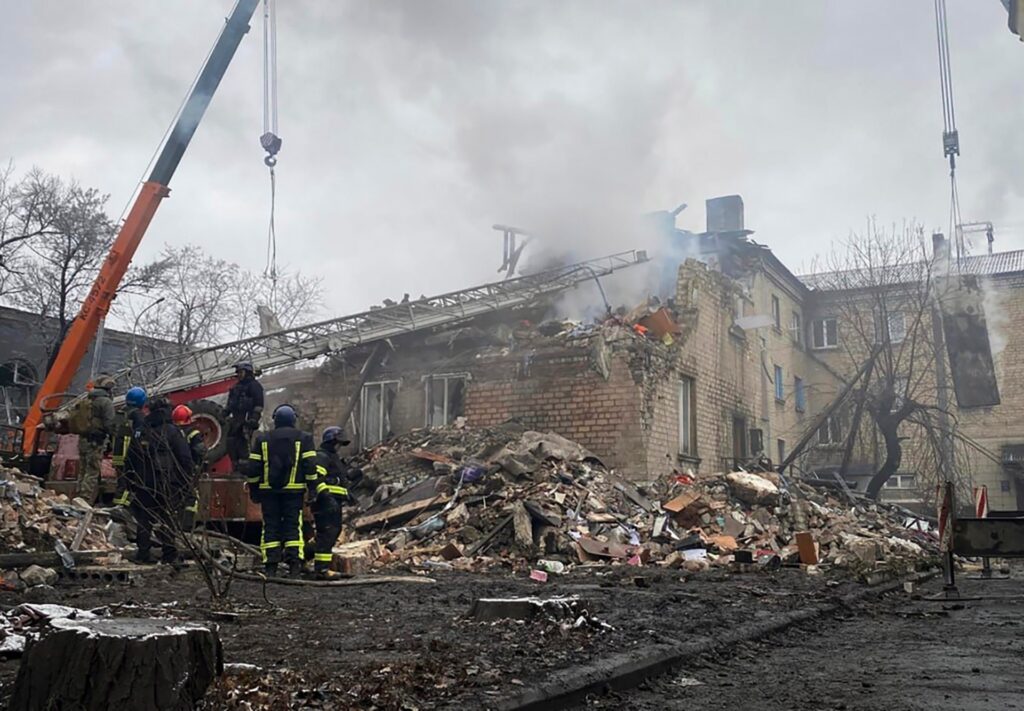
As the war enters its 675th day, these are the main developments. Here is the situation on Saturday, December 30, 2023. Fighting and human impact Ukrainian officials have said that at least 30 people have been killed and more than 140 wounded after Russia targeted cities across the war-torn country with a massive salvo of missiles and drones in one of the largest aerial assaults of the war. Russia’s defence ministry has said its forces downed 32 Ukrainian drones over the Bryansk, Oryol, Kursk and Moscow regions overnight. Polish military authorities have said that a Russian missile briefly passed through the country’s airspace on Friday, prompting concern from the country that borders Ukraine. Diplomacy The United Nations Security Council has criticised Russia for carrying out a massive air assault on Ukraine at a meeting on Friday. But Russia’s ambassador to the UN, Vasily Nebenzya, said that Moscow had “exclusively only targeted military infrastructure in Ukraine”. The Polish Foreign Ministry has summoned Russian charge d’affaires Andrei Ordasz after a Russian missile entered Polish airspace during the morning attack against Ukraine. Adblock test (Why?)
Turkey Super Cup final in Saudi Arabia called off amid Ataturk T-shirt row
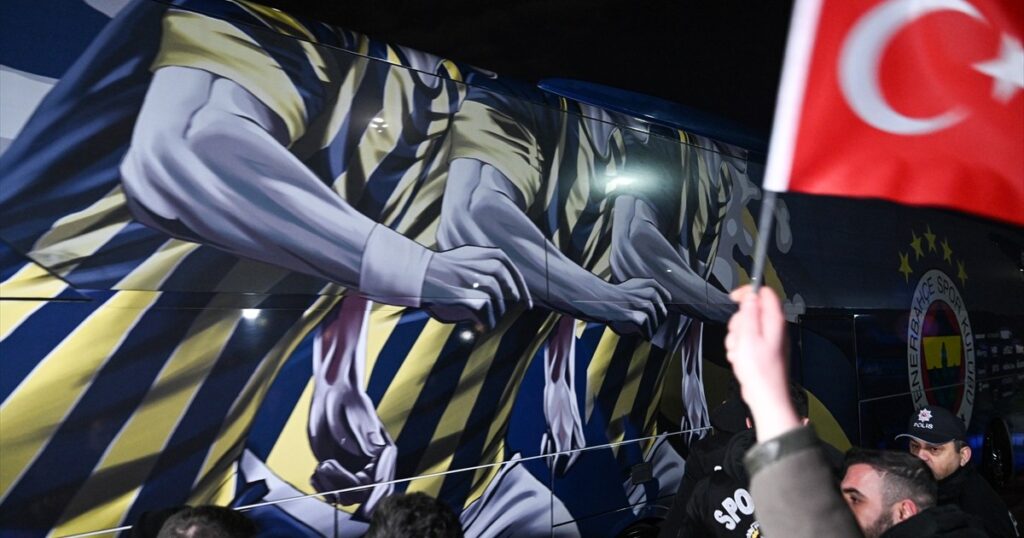
Istanbul rival teams Galatasaray and Fenerbahce were scheduled to play in Riyadh on Friday. The Turkish Super Cup final between Galatasaray and Fenerbahce scheduled to be played in Saudi Arabia’s capital Riyadh was called off over an apparent disagreement about the players’ jerseys. The Turkish Football Federation (TFF) and the two teams – who returned to Istanbul on Saturday after Friday’s postponed match – said the decision was made because of “some problems” in the event’s organisation. Haberturk television and other Turkish media said players from both Istanbul football teams wanted to wear T-shirts that featured an image of Mustafa Kemal Ataturk, the revered founder of the modern Turkish republic, during a prematch warm-up, but were not authorised to do so by Saudi organisers. Turkish media also reported that Saudi authorities did not allow banners featuring political slogans and Ataturk T-shirts to be displayed ahead of the match, including those with Ataturk’s “peace at home, peace in the world” slogan. The clubs refused to play in the final at the King Saud University venue, which is also known as Al-Awwal Park stadium. Saudi state TV cited a statement by organisers saying that the cancellation was the result of the teams not adhering to match regulations. “We were looking forward to holding the match on time in accordance with the international soccer rules and regulations that require the sport to be presented without any slogans outside its scope, especially since this was discussed with the Turkish [Football] Federation in the framework of the preparatory meetings for the match,” the statement said. “Despite this agreement, it was unfortunate that the two teams did not adhere to what had been agreed upon, which led to the match not being held,” it added. There has been no announcement yet on where or when the final will be held. A joint statement by the TFF and the clubs posted on X said: “The 2023 Super Cup … has been postponed to a later date as a result of a joint decision we made with our clubs, due to some problems in its organisation.” It also expressed “gratitude to the football federation of the host country and the relevant institutions for their efforts in organising” the event. Many fans had wanted the annual match to be played in Turkey, which this year commemorated its 100-year anniversary as a republic. Turkish TV in the stadium, but there won’t be a game tonight in Riyadh. The Turkish Super Cup is peak Middle Eastern football drama. So much is involved! 😱🇹🇷🇸🇦 pic.twitter.com/KwoYNiEmFv — BabaGol (@BabaGol_) December 29, 2023 The cancellation of Friday’s final, which some football fans on X have called “peak Middle Eastern football drama”, has added to what has been a controversy-filled month for Turkish football. The president of club Ankaragucu, Faruk Koca, was arrested this month for punching a referee in the face at the end of his team’s Super Lig home match against Rizespor, which also led to the suspension of the Turkish league. On Saturday, photographs and video footage showed hundreds of Galatasaray and Fenerbahce fans cheering, waving Turkish flags and carrying pictures of Ataturk at the Istanbul and Sabiha Gokcen airports. There has been a recent warming of relations between Turkey and Saudi Arabia. Turkish President Recep Tayyip Erdogan visited Saudi Arabia in July amid efforts to repair ties that were ruptured after the murder of Saudi journalist Jamal Khashoggi in Istanbul in 2018. Adblock test (Why?)
Genocide in Gaza: The coverage of Israel’s war
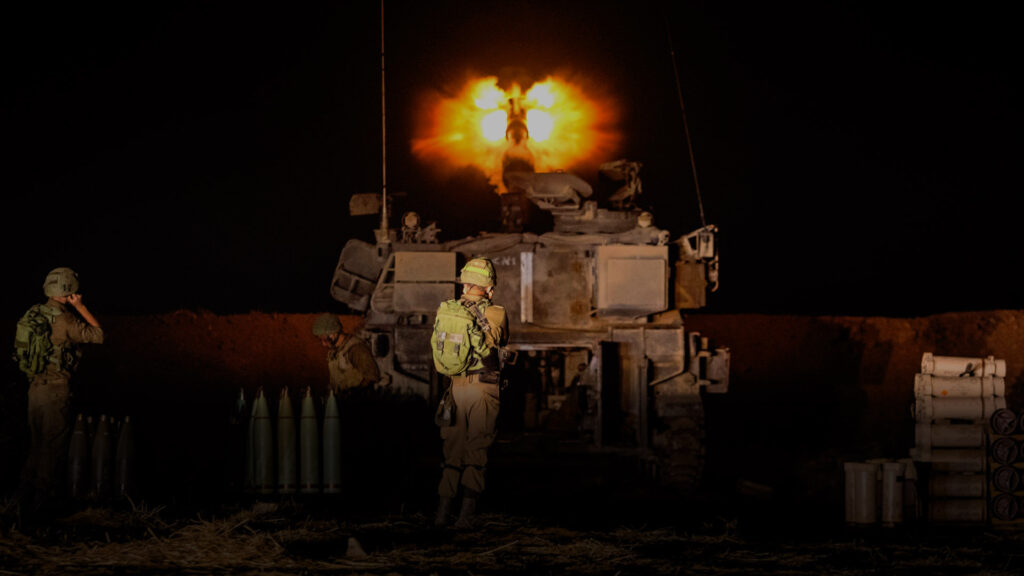
In this special edition, we compile our reporting on Israel’s war on Gaza – documenting the information war as it has played out since October 7. In 17 years of The Listening Post, we have never seen a story anything like Israel’s war on Gaza. It has been a turning point for the world order as we know it and its media ecosystem – which is why, since October 7, we have covered nothing else. In this special edition, we compiled our reporting on the Gaza war over the past 12 weeks. The extent of the brutality, a genocide unfolding in plain sight; the sheer volume of disinformation, designed to defend the indefensible; and the complicity of so many Western news outlets – repeatedly exposed for failing to question Israeli propaganda, then spreading it. Contributors:Ariella Aïsha Azoulay – Professor of Modern Culture & Media, Brown UniversityAzad Essa – Author, Hostile HomelandsDaniel Levy – President, US/Middle East ProjectOrly Noy – Journalist, Human Rights AdvocateOmar Al-Ghazzi – Associate Professor of Media & Communications, London School of EconomicsRami Younis – Journalist; Former host On the Other Hand, Makan 33Ramzy Baroud – Editor-in-Chief, Palestine ChronicleSarah Leah Whitson – Executive Director, DAWNSwasti Rao – Manohar Parrikar Institute for Defence Studies & AnalysesYara Eid – Palestinian Journalist in GazaYumna Patel – Palestine News Director, Mondoweiss Adblock test (Why?)
Veiled rebellion: Female medical students go underground in Afghanistan
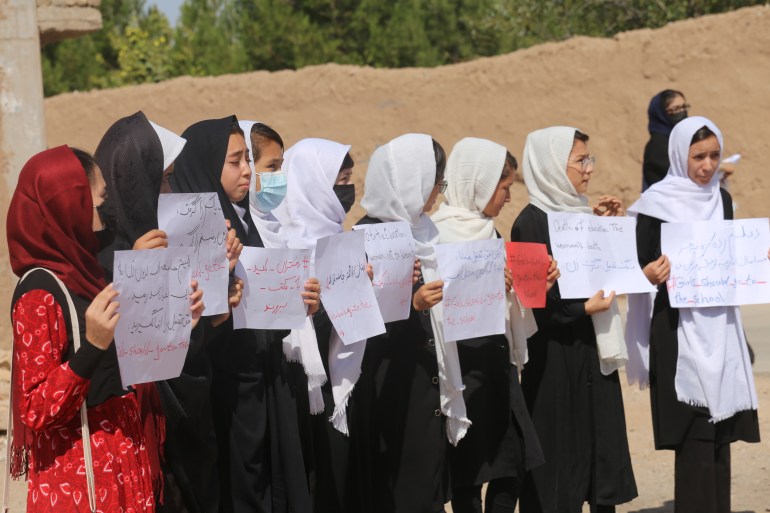
Lima stayed home the last time the Taliban inspected the hospital where she secretly trains as a nurse. After five years of medical training, Lima, 28, should be one year into her residency as a doctor, perfecting her diagnostic skills. Instead, she takes temperatures and administers injections, tasks she has been doing at an emergency room in Kabul for three months now. While this is not the work she expected to be doing at this point in her career, she’s happy to at least be doing this. “Being at the hospital means I can stay close to my field. It helps me to stay connected to it,” Lima told Al Jazeera over the course of several telephone calls. She is identified by her first name only for safety reasons. Lima was just weeks away from graduating from a medical school in Kabul when the Taliban banned higher education for women last December, interrupting her studies and that of thousands of other women. Women already qualified as doctors, nurses and other medical workers are permitted to continue in their jobs, but no new women may enter the field or undertake training. More than 3,000 women who had already graduated from medical schools before the ban were barred from taking the board exams required to practise, depriving the country – already struggling from a dire shortage of female medical workers – of a desperately needed infusion of new doctors. For Lima, medicine has been a lifelong dream. She longs to become a surgeon, partially because she knows there is a shortage of them. “My biggest hope is to help people,” she said. Her family moved home to Afghanistan from Pakistan so she could attend university in Kabul where she thrived – she did well in her classes and was appointed her class’s “leader”, handling administrative tasks. On the day they heard about the new ban on women completing medical studies, Lima and her classmates were having lunch together. They cried together because of what this would mean for their future and because they were worried they would not be able to see each other again. The Taliban’s strict ban on women leaving their homes without a male chaperone makes meeting friends near-impossible. After the news broke, Lima called one of her professors and persuaded him to let her and her classmates take one of the exams they were scheduled to take that week. It was not for an official grade but just for them to know they could do it. The professor agreed, but when Lima and her classmates arrived at the university to take the test, the Taliban, armed with guns, were already guarding the doors. It was no longer safe, the professor told Lima. Girls in Herat gather to stage a demonstration demanding the right to continue their education in schools and universities, on September 20, 2021, in Herat, Afghanistan [Anadolu Agency via Getty Images] A secret internship Almost a year later, many women have refused to give up on their chosen path and have continued studying on their own or online, hoping that they will one day be allowed to study officially at university and medical school again. Some women have managed to work around the restrictions, finding secret internships and residency opportunities. “It’s like a refreshment for my studies, for my knowledge. This is the best way for me to do something for my goals,” says Noor*, whose name has been changed to ensure her anonymity. Like Lima, she was just about to graduate from medical school when the Taliban’s ban brought her studies to an abrupt halt. The order hit her hard. She spent months studying solo, holding on to medicine as “the only goal” she ever had in her life. She reviewed her notes, read thick medical books in English and took online courses, focusing on what she believed to be any gaps in her knowledge. But working alone for weeks on end, she says she fell into a depression and had to listen to motivational speakers for an hour per day just to muster the will to keep going. In September, nine months after the ban, Noor lost hope that the university would reopen and called the hospital that had offered her a two-month internship back in 2020. They agreed to let her come in to complete it. Everyone treats it as a secret. When the two months were up, the hospital allowed her to stay on to continue observing surgeries for as long as she wished. Noor says she is too afraid to even think about what would happen if the Taliban discovered her studying there. It is unclear what would happen if she was discovered, but women found studying medicine or undertaking internships would likely be removed from hospitals and banned from returning, if not worse. There have already been arrests of activists who tried to defy the ban on girls’ education. Whatever the risks, however, women refuse to stop trying to defy the ban on higher education completely. “Never in the history of Afghanistan have we had so many educated, well-aware-of-the-world and well-aware-of-their-duties-and-rights women. It’s impossible to silence them, it’s impossible to push them aside,” says Fatima Gailani, a London-based women’s rights activist and former president of the Afghan Red Crescent Society, in an interview over WhatsApp. Afghan nurses wait to receive their salaries at the Indira Gandhi Children’s Hospital in Kabul, Afghanistan, on February 24, 2022 [Hussein Malla/AP Photo] Women’s healthcare at stake Despite the Taliban’s initial promise to take a moderate approach towards women’s rights after it seized power in August 2021, the ban on higher education is just one of many steps that the armed group has taken to further segregate the country and limit women’s role in society. In the immediate aftermath of August 2021, the Taliban banned girls from going to school beyond the sixth grade and imposed strict rules requiring women to wear hijabs and to travel only with a male chaperone. They closed down
South Africa files case at ICJ accusing Israel of ‘genocidal acts’ in Gaza
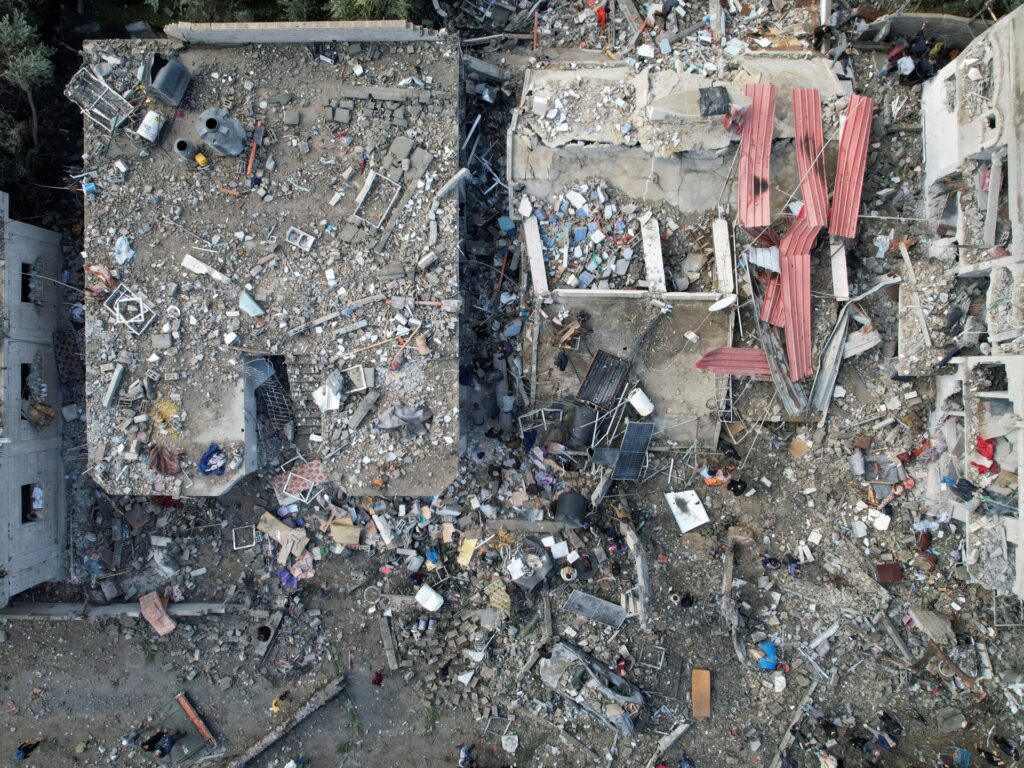
South Africa has filed a case against Israel at the International Court of Justice (ICJ), accusing it of crimes of genocide against Palestinians in Gaza after nearly three months of relentless Israeli bombardment has killed more than 21,500 people and caused widespread destruction in the besieged enclave. In an application to the court on Friday, South Africa described Israel’s actions in Gaza as “genocidal in character because they are intended to bring about the destruction of a substantial part of the Palestinian national, racial and ethnical group”. “The acts in question include killing Palestinians in Gaza, causing them serious bodily and mental harm, and inflicting on them conditions of life calculated to bring about their physical destruction,” the application said. The ICJ, also called the World Court, is a UN civil court that adjudicates disputes between countries. It is distinct from the International Criminal Court (ICC), which prosecutes individuals for war crimes. As members of the UN, both South Africa and Israel are bound by the court. South African President Cyril Ramaphosa has compared Israel’s policies in Gaza and the occupied West Bank with his country’s past apartheid regime of racial segregation imposed by the white-minority rule that ended in 1994. Several human rights organisations have said that Israeli policies towards Palestinians amount to apartheid. PRESS RELEASE: #SouthAfrica institutes proceedings against #Israel and asks the #ICJ to indicate provisional measures https://t.co/WedDXvtBD4 pic.twitter.com/VCCDyORrLy — CIJ_ICJ (@CIJ_ICJ) December 29, 2023 Global condemnation South Africa said Israel’s conduct, particularly since the war began on October 7, violates the UN’s Genocide Convention, and called for an expedited hearing. The application also requests the court to indicate provisional measures to “protect against further, severe and irreparable harm to the rights of the Palestinian people” under the Convention. “South Africa is gravely concerned with the plight of civilians caught in the present Israeli attacks on the Gaza Strip due to the indiscriminate use of force and forcible removal of inhabitants,” a statement from South Africa’s Department of International Relations and Cooperation (DIRCO) said, adding that the country has “repeatedly stated that it condemns all violence and attacks against all civilians, including Israelis.” “South Africa has continuously called for an immediate and permanent ceasefire and the resumption of talks that will end the violence arising from the continued belligerent occupation of Palestine,” the statement added. Israel has rejected global calls for a ceasefire saying the war would not stop until the Hamas group, whose October 7 attack triggered the current phase of the conflict, was destroyed. Some 1,200 people were killed in the Hamas attack in Israel. The Palestinian group has said its attack was against Israel’s 16-year-old blockade of Gaza and expansion of settlements in the occupied Palestinian territories. Settlement expansions pose the biggest hurdle in the realisation of a future Palestinian state comprising Gaza, occupied West Banka and East Jerusalem. In the latest development in Israel’s war on Gaza, tens of thousands of newly displaced Palestinians in the centre of the Palestinian enclave on Friday were forced to flee further south as Israel expanded its ground and air offensive in the centre of the enclave. Israel has faced global condemnation for the mounting toll and destruction and is accused of meting out collective punishment on the Palestinian people. ‘A very important step’ The court application is the latest move by South Africa, a vociferous critic of Israel’s war, to ratchet up pressure after its lawmakers last month voted in favour of closing down the Israeli embassy in Pretoria and suspending all diplomatic relations until a ceasefire was agreed. Al Jazeera’s Gabriel Elizondo, reporting from the United Nations headquarters in New York, said the move was “clearly a very important step to try to hold some accountability to Israel.” “Now that South Africa is pushing this to the ICJ, it will be on [the UN’s] agenda to try to make a ruling on this very important question,” he added. On November 16, a group of 36 UN experts called on the international community to “prevent genocide against the Palestinian people”, calling Israel’s actions since October 7 a “genocide in the making”. “We are deeply disturbed by the failure of governments to heed our call and to achieve an immediate ceasefire. We are also profoundly concerned about the support of certain governments for Israel’s strategy of warfare against the besieged population of Gaza, and the failure of the international system to mobilise to prevent genocide,” the experts said in a statement. Israel rejects South Africa’s accusations Israel has rejected South Africa’s move as “baseless”, calling it “blood libel.” “South Africa’s claim lacks both a factual and a legal basis, and constitutes despicable and contemptuous exploitation of the Court,” Israel’s minister of foreign affairs, Lior Haiat, said in a statement posted on X. “Israel has made it clear that the residents of the Gaza Strip are not the enemy, and is making every effort to limit harm to the non-involved and to allow humanitarian aid to enter the Gaza Strip,” the statement added. “It does rally public opinion to the reality of what’s going on in Palestine, not just in Gaza but also in the West Bank,” said Al Jazeera’s senior political analyst Marwan Bishara. According to Article 2 of the Genocide Convention, genocide involves acts committed with the “intent to destroy, either in whole or in part, a national, ethnic, racial, or religious group.” “Where the disagreement lies is whether there is intent or no intent,” Bishara said. “The three leading Israeli officials have declared the intent, starting with Israeli President Herzog when he said there are ‘no innocents’ in Gaza, the defence minister who said Israel will impose collective punishment on the people of Gaza because they are ‘human animals’,” Bishara said, adding that prime minister Netanyahu also used a biblical analogy in a statement widely interpreted as a genocidal call. Adblock test (Why?)
What’s behind recent coups in Africa?
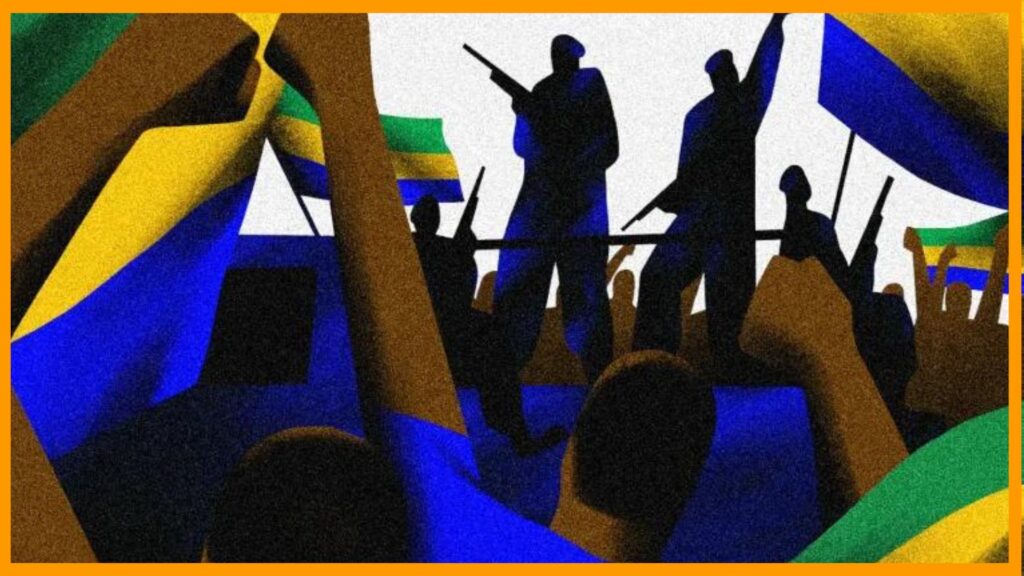
Overthrow of leaders in Niger and Gabon has been met by international condemnation but celebrations at home. Two more coups in Africa during the past year. That brings to nine, the number of governments deposed on the continent since 2020. Are there common factors, or are these takeovers isolated? And what could we see in the coming year? Presenter: Laura Kyle Guests: Alexis Akwagyiram – Managing editor at the news website, Semafor Africa In Abuja is Kabir Adamu – Managing director at Beacon Consulting, a security risk management and intelligence provider in Nigeria and the Sahel region And in Bamako, Mali is Moussa Kondo – Executive director of the Sahel Institute and formerly special adviser to the current interim president of Mali, Assimi Goita Adblock test (Why?)
Argentina announces that it will not join BRICS bloc

The move is the latest shift in economic and foreign policy by newly elected hard-right President Javier Milei. Argentina has announced that it will not join the BRICS bloc of developing economies, fulfilling a campaign promise by newly elected far-right President Javier Milei who has pledged to pursue closer ties with the West. In a letter dated December 22 but released on Friday, Milei told the leaders of Brazil, Russia, India, China and South Africa that the timing for Argentina’s membership in the bloc was not opportune. Milei said in his letter that his approach to foreign affairs “differs in many aspects from that of the previous government. In this sense, some decisions made by the previous administration will be reviewed.” Argentina’s new president, a self-described anarcho-libertarian who has pushed forward a series of radical economic reforms since taking office in December, has said that he will pursue a foreign policy that aligns with Western countries, moving away from the previous administration’s efforts to build ties with other developing countries. Former centre-left President Alberto Fernandez had promoted Argentina’s inclusion in BRICS as a way to foster economic relations with the bloc, whose members account for about 25 percent of world GDP. Argentina had been set to join on January 1, 2024. Reporting from the capital city of Buenos Aires, Al Jazeera correspondent Monica Yanakiew said that Milei has already issued sweeping changes during his three weeks in office. “He has already made dramatic changes in all walks of life, from expediting divorce procedures to deregulating prices to eliminating subsidies, everything is changing here now,” she said. During his campaign, Milei railed against countries ruled “by communism” such as China and neighbouring economic power Brazil and said he would pursue greater alignment with “free nations of the West” such as Israel and the US in his economic and foreign policy. However, in his letter to the BRICS leaders, Milei said that Argentina would seek to “intensify bilateral ties” in order to increase “trade and investment flows” without joining the group. Domestically, Milei is also facing substantial pushback from the country’s powerful organised labour groups as he embarks on a programme of economic “shock therapy” and deregulation as Argentina reels from sky-high inflation. Adblock test (Why?)
Palestinians perform Friday prayers at Al-Aqsa amid tight Israeli curbs
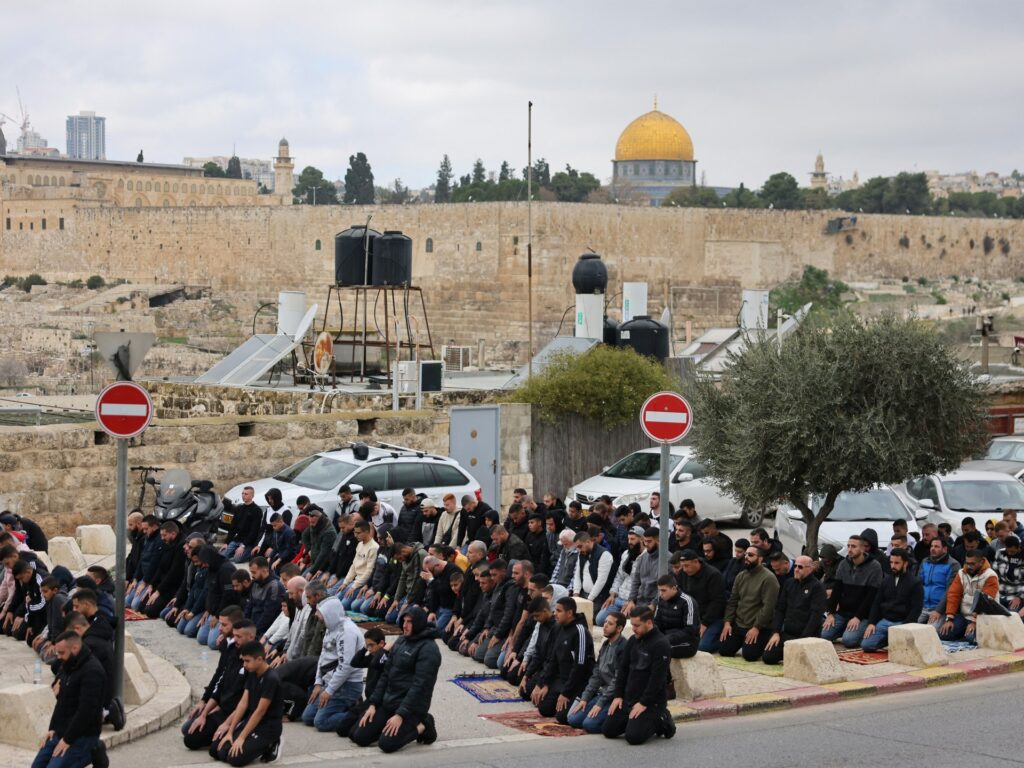
Israeli authorities barred Palestinians from entering the Al-Aqsa Mosque in occupied East Jerusalem for the 12th consecutive Friday. According to Anadolu Agency, the Israeli police set up barriers at the entrances to the Old City and allowed only the elderly to reach Al-Aqsa Mosque. The Israeli police also set up checkpoints at the outer gates of Al-Aqsa Mosque compound – Islam’s third holiest site. Hundreds of people performed Friday prayers in the streets near the Old City, after they were prevented from reaching the mosque. A large number of Israeli forces were also deployed in the Wadi al-Joz neighbourhood near the Old City, and prevented worshipers from reaching the mosque, witnesses added. Israeli forces sprayed “skunk water” and used tear gas canisters against worshippers, the Wafa news agency reported. Adblock test (Why?)
Tens of thousands forced to flee again as Israel expands Gaza offensive
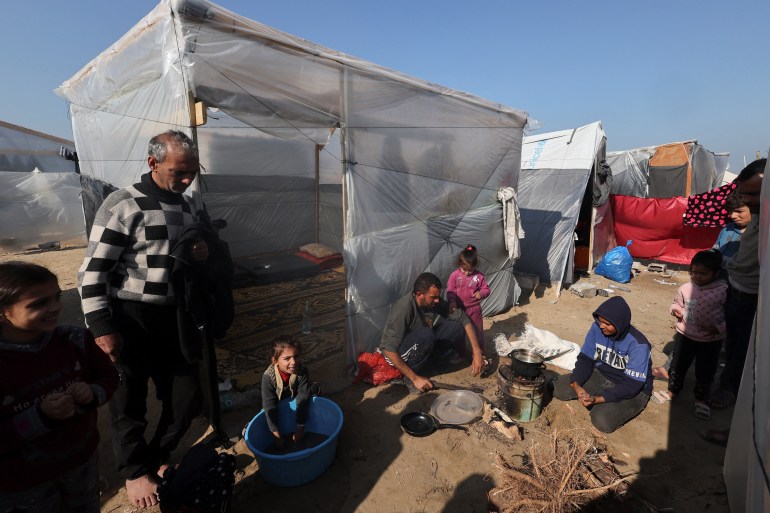
Tens of thousands of displaced Palestinians in Gaza have been forced to flee again towards the south after Israel intensified assaults in the centre of the besieged enclave killing more than 180 people in the past 24 hours. The Israeli army on Friday said in a post on X that it was “expanding the operation in the Khan Younis area” of Gaza, previously sheltering hundreds of thousands of people displaced from the north – initially the focus of Israel’s ground assault. Israeli shelling near El Amal hospital in Khan Younis killed 41 people over the past two days, the Palestinian Red Crescent Society (PRCS) said on Thursday, adding that the casualties in repeated Israeli attacks near the facility include “displaced persons seeking shelter”. The UN humanitarian office said an estimated 100,000 more displaced people had arrived in the already-teeming southern border city of Rafah in recent days following the intensification of fighting around both Deir el-Balah in central Gaza and Khan Younis to its south. Earlier this week, Israeli forces ordered Palestinians out of the crowded central districts of Bureij, Maghazi and Nuseirat, as tanks advanced from the north and east. Attacks on those areas have intensified in recent days, with many residents fleeing to the already-crowded Deir el-Balah, pitching makeshift tents made from sheets of plastic on whatever open ground they could find. “We suffered a lot. We had the whole night without shelter, under rain and it was cold, we were with our kids and elderly women,” Um Hamdi, a woman cooking porridge over an open woodfire, surrounded by children, told the news agency Reuters. Nearby, grey-bearded Abdel Nasser Awadallah stood inside a wooden frame set up to be wrapped in plastic to make a tent, and spoke of the family he had lost. “I buried my children, a child 16-year-old, another one aged 18. Something I really can’t believe, I buried my children at 6:00am while their bodies were still warm. Also my nephew was two years old, I buried him, I buried my wife,” he said. ‘Death or displacement’ Addressing the UN Security Council on Friday, the Palestinian UN envoy Majed Bamya said the widescale destruction of Gaza by Israeli operations has made it clear their sole goal is forced displacement. “They want to make sure that Palestinians in Gaza have no homes to return to,” he said. “They want to make sure they have no life to return.” “They want to make sure that life in Gaza is no longer possible, with one aim, what they call ‘voluntary migration’ … the codename for forced displacement. These are the options for Palestinians: Destruction or displacement, death or displacement,” he said. On Christmas Eve, the Maghazi refugee camp witnessed one of the deadliest attacks since Israel launched its military offensive on October 7. While the official number of those who were killed stands at 90, residents of the camp near Deir el-Balah told Al Jazeera that in reality, the figure is much higher as entire residential blocks were wiped out. Israel issued a rare apology on Thursday for killing civilians in the massive air raid that triggered one of the biggest exoduses of the war so far, saying the munitions used were not appropriate for a packed refugee camp and that the high death toll “could have been avoided”. Displaced Palestinians, who fled their homes due to Israeli attacks, shelter in a tent camp, amid the ongoing conflict between Israel and the Palestinian group Hamas, in Rafah, southern Gaza Strip, December 29, 2023. [Ibraheem Abu Mustafa/Reuters] Rafah hit ahead of Egypt talks The UN says more than 90 percent of Gaza’s 2.3 million people have been displaced, and many are now fleeing for the third or fourth time. Many now live in cramped shelters in the 365sq km (141sq miles) of land or in makeshift tents around the southern city of Rafah, on the border with Egypt – which has also not been immune from Israeli attacks. Rafah was hit by new air raids on Friday as Egypt prepared to host a high-level Hamas delegation for talks to try and end the nearly 12-week war that has devastated the besieged Palestinian territory. Reuters journalists at the scene of one air raid that obliterated a building in Rafah saw the head of a buried toddler sticking out of the rubble. The child screamed as a rescue worker shielded his head with a hand, while another swung a sledgehammer at a chisel, trying to break up a slab of concrete to free him. Neighbour Sanad Abu Tabet said the two-storey house had been crowded with displaced people. After morning broke, relatives came to collect the dead wrapped up in white shrouds. Israel’s relentless aerial bombardment and ground invasion in Gaza have killed at least 21,507 people, mostly women and children, according to Gaza’s health ministry. Egypt has taken more of a leading role in pushing for a ceasefire, including introducing a plan to end the fighting. It includes captive and prisoner exchanges between Israel and Hamas. Egypt’s State Information Services chief Dia Rashwan said the plan was “intended to bring together the views of all parties concerned, with the aim of ending the shedding of Palestinian blood”. Senior Hamas official Osama Hamdan said on Thursday that the group will not release more Israeli captives without a “complete and full ceasing of aggressive activities against our people through negotiations that are aligned with our people’s interest”. #Gaza – Israeli soldiers fired at an aid convoy as it returned from Northern Gaza along a route designated by the Israeli Army – our international convoy leader and his team were not injured but one vehicle sustained damage – aid workers should never be a target.@UNRWA — Thomas White (@TomWhiteGaza) December 29, 2023 UN convoy comes under fire The director of the UN agency for Palestinian refugees in Gaza (UNRWA), Thomas White, said on Friday that a UN aid convoy had come under fire by the Israeli military on Thursday. While there