

ICC slammed for blocking Australian cricketer’s show of support for Gaza
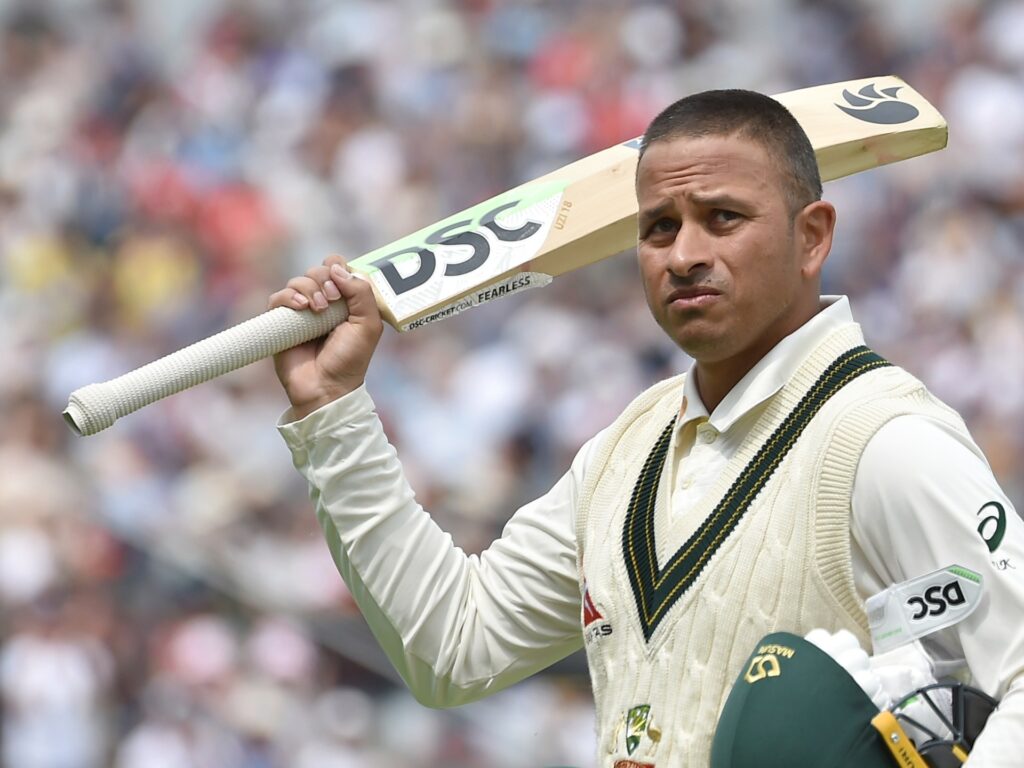
Khawaja’s attempt to have message of support and peace sign on his boots was blocked by cricket’s world governing body. The International Cricket Council (ICC) has been slammed for showing a “lack of moral standing” after it refused to allow an Australian cricketer to show on-field support for Gaza where more than 20,000 Palestinians have been killed by Israeli attacks. Australia’s Usman Khawaja had “Freedom is a human right” and “All lives are equal” written on his boots in the colours of the Palestinian flag in a training session ahead of the first match against Pakistan earlier this month. In an emotional post on X, Khawaja later said the ICC “told me I can’t wear my shoes on the field because they believe it’s a political statement under their guidelines”. He was also reprimanded by the ICC for sporting a black armband, which the batter said was for a personal bereavement. The ICC. May have moved to Dubai but its disgraceful sanctioning of Usman Khawaja for daring to proclaim “ all lives matter” smacks of the haughty out of touch 19 th century views of the Long Room at Lords. — Paul Bongiorno (@PaulBongiorno) December 22, 2023 His next attempt – printing a dove and an olive branch on his bat and shoes – was also blocked by the ICC with a spokesperson for cricket’s world governing body being quoted by ESPNCricinfo as saying that “personal messages of this nature are not allowed as per Clause F of the Clothing and Equipment Regulations”. “The ICC is supportive of players using their platforms outside of the playing arena to promote human rights, peace and equality and would encourage him to continue to use alternative platforms,” the ICC spokesperson added. Khawaja said the logo, a reference to Article 1 of the Universal Declaration of Human Rights, was approved by Cricket Australia and the Australian Cricketers’ Association. “I respect the ICC and the rules and regulations they have. I will be asking them and contesting they make it fair and equitable for everyone and they have consistency in how they officiate,” Khawaja said on Friday. “That consistency hasn’t been done yet. I was very open and honest with that. I’ll deal with that with the ICC.” Simply ridiculous.https://t.co/WcKeU2sBEJ The ICC has denied Usman Khawaja’s latest attempt to raise awareness of the humanitarian crisis in Gaza by knocking back his application to display the image of a dove and an olive branch on his bat and shoes. — Sushant Singh (@SushantSin) December 24, 2023 In 2014, England all-rounder Moeen Ali was banned by the ICC from wearing wristbands featuring the slogans “Save Gaza” and “Free Palestine”. However, in 2019, Indian cricketers wore army camouflage-style caps in a match against Australia in solidarity with Indian paramilitary police killed in an attack in Indian-administered Kashmir. The ICC also allowed players to “take the knee” before international matches in support of the Black Lives Matter movement in 2020 and 2021. Usman Khawaja charged by ICC for wearing a simple black armband in support of children in Gaza but the whole Indian team wearing army caps apparently had nothing to do with political/personal messages. ICC is the most spineless, coward, incompetent sports body in the world. pic.twitter.com/lwKU3kZOv1 — Hassan (@Gotoxytop2) December 21, 2023 “I have been following the Khawaja fiasco and I cannot say I’m surprised by the ICC’s stance,” said former West Indies fast bowler Michael Holding. “If it had been most other organisations that showed some semblance of consistency with their attitude and behaviour on issues I could claim surprise, but not them. Once again, they show their hypocrisy and lack of moral standing as an organisation.” “The ICC regulations say re messaging ‘approval shall not be granted for messages which relate to political, religious or racial activities or causes’, so how were people allowed to take the knee for BLM and stumps were covered with LGBTQ colours?” Whether you support Usman Khawaja’s stance or not the inconsistencies of the ICC are hard to fathom Marnus Labuschagne has an eagle & bible verse on his bat WI’s Nicholas Pooran has a cross and the word ‘believe’ on his bat Seems a scatter gun approach re what’s allowed https://t.co/h0shoJ4yke — Glenn Mitchell (@MitchellGlenn) December 24, 2023 Australian captain Pat Cummins also backed Khawaja’s stance and show of support while questioning the ICC’s lack of clarity over rules that allow players to show support for such causes. “I think he’s standing up for what he believes and I think he’s doing it really respectfully. All lives are equal and I don’t think that’s very offensive, and I’d say the same about the dove,” said Cummins. Israel launched an all-out attack on Gaza after the October 7 attack by Hamas. In addition to the 20,000 people killed in the besieged enclave, more than 54,000 have been wounded and hundreds are still reported to be buried under the rubble. Adblock test (Why?)
Sri Lanka frees more than 1,000 prisoners in Christmas amnesty
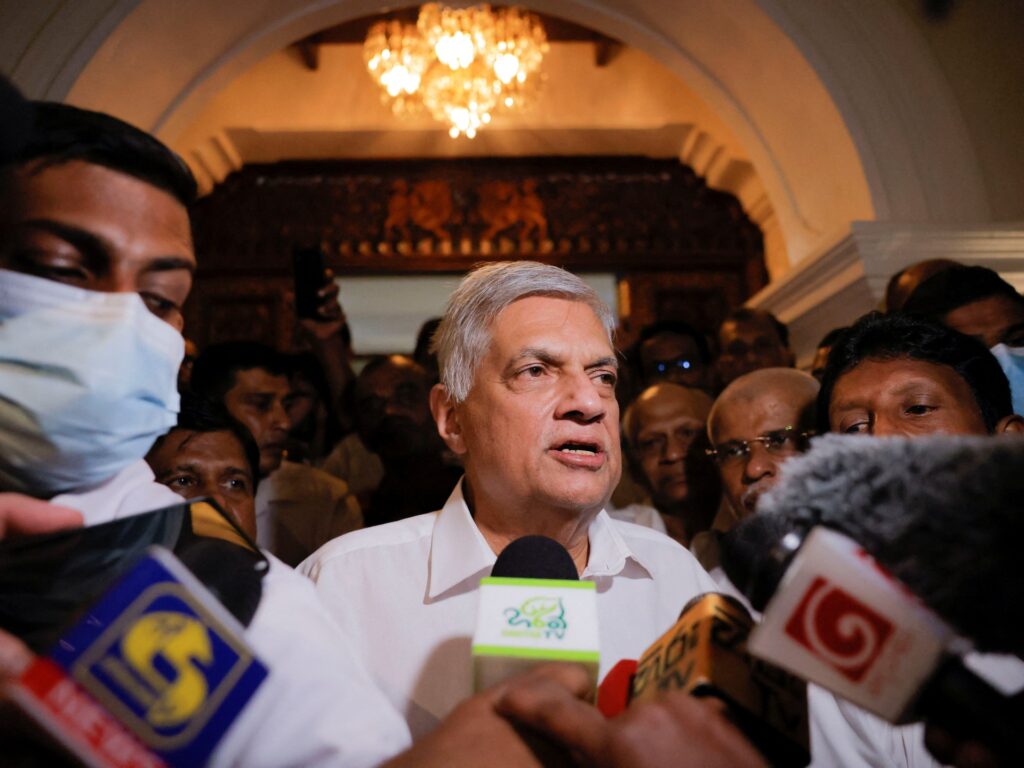
President Ranil Wickremesinghe’s amnesty includes Sri Lankans jailed for not paying fines, official says. Sri Lankan President Ranil Wickremesinghe has granted an amnesty to more than 1,000 convicts and released them from jails across the country to mark Christmas, an official has said. Among the 1,004 freed on Monday were Sri Lankans jailed for not being able to pay outstanding fines, Prison Commissioner Gamini Dissanayake said. Sri Lanka is majority Buddhist, and a similar number of convicts were freed in May to mark the holiday of Vesak, which celebrates the Buddha’s birth, enlightenment and death. The latest pardon came after police arrested nearly 15,000 people during a weeklong military-backed anti-narcotics drive that was halted on the eve of Christmas. A police statement said 13,666 suspects were arrested while nearly 1,100 addicts were detained and sent for compulsory rehabilitation at a military-run facility. The island nation’s jails are chronically overcrowded. As of Friday, there were nearly 30,000 inmates in facilities designed to hold 11,000, according to official data. Adblock test (Why?)
Israel-Hamas war: List of key events, day 80
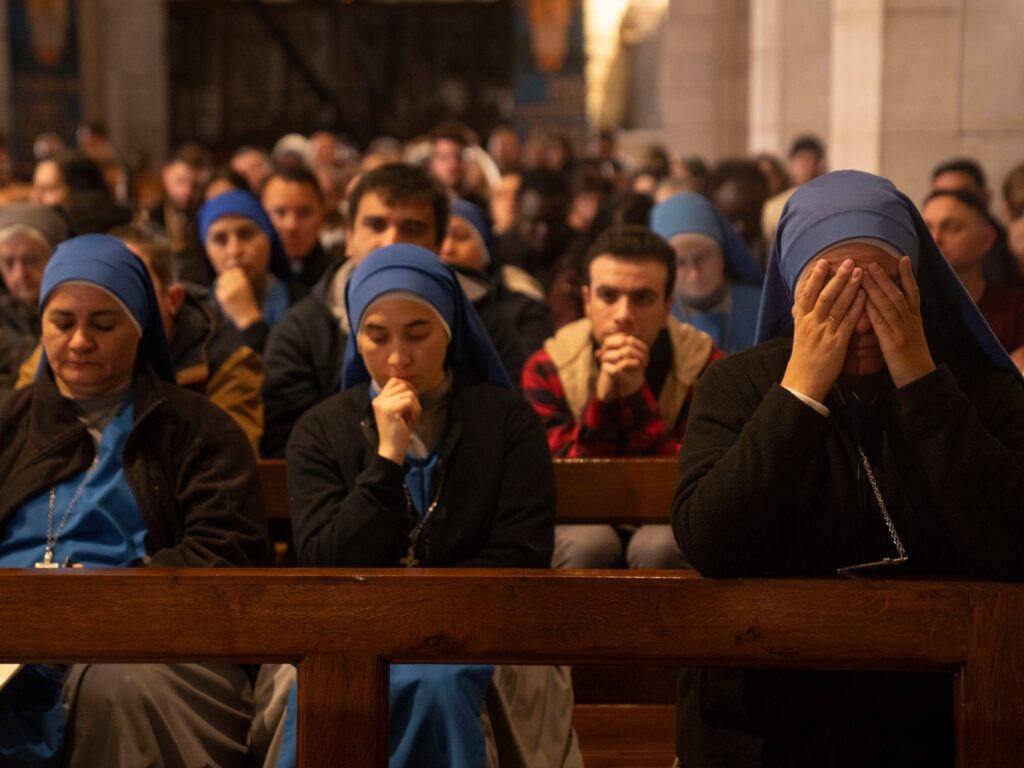
EXPLAINER A Christmas of bloodshed in Gaza amid raids in the occupied West Bank – here the are major updates. Here’s how things stand on Monday, December 25, 2023: Latest developments An air raid on central Gaza’s Maghazi refugee camp on Sunday killed at least 70 people, according to the Palestinian Ministry of Health. Several homes in the area were also flattened. United States-led maritime coalition will help stabilise shipping in the Red Sea despite Houthi attacks, but Egypt will “lose 30 percent of its hard currency assets from Suez Canal transit fees as long as this is closed”, David Des Roches, from the National Defense University in Washington, DC, told Al Jazeera on Monday. Demonstrators in Rabat, Morocco, mobilised one of the largest pro-Palestine marches on Sunday, demanding an end to Morocco’s diplomatic ties with Israel, reported Reuters news agency. Human impact and fighting An Israeli military official told The Wall Street Journal on Sunday that the army’s battle to take control of Khan Younis could take months because of Hamas’s guerrilla tactics. United Nations special rapporteur on the occupied Palestinian territories, Francesca Albanese, said on Sunday that “genocide is a process, not a single act”, which the world is allowing in Gaza. Overnight raids across the occupied West Bank continued, including in Bethlehem, Jenin and Nablus, according to Al Jazeera correspondent Hamdah Salhut. In Jenin, there were also heavy exchanges of fire between Israeli troops and Palestinian resistance fighters. In a statement released on Sunday, Abu Obeida, the spokesperson for Hamas’s military wing, the Qassam Brigades, claimed it killed at least 48 Israeli soldiers over the last four days. Israel’s military claimed on Sunday that it recovered the bodies of five captives from an underground tunnel network in northern Gaza. Diplomacy Pope Francis decried the “futile logic of war” in a Christmas message posted to X on Sunday. Prime Minister Benjamin Netanyahu dismissed reports that the United States had convinced Israel not to expand its military activity during a weekly cabinet meeting on Sunday, reported Reuters. Iran denied on Saturday US accusations that it was involved in planning attacks by Yemen’s Tehran-aligned Houthi movement on commercial vessels in the Red Sea, the semiofficial Mehr news agency reported. Adblock test (Why?)
Amid uptick in kidnappings, Colombian family receives ‘biggest gift of all’
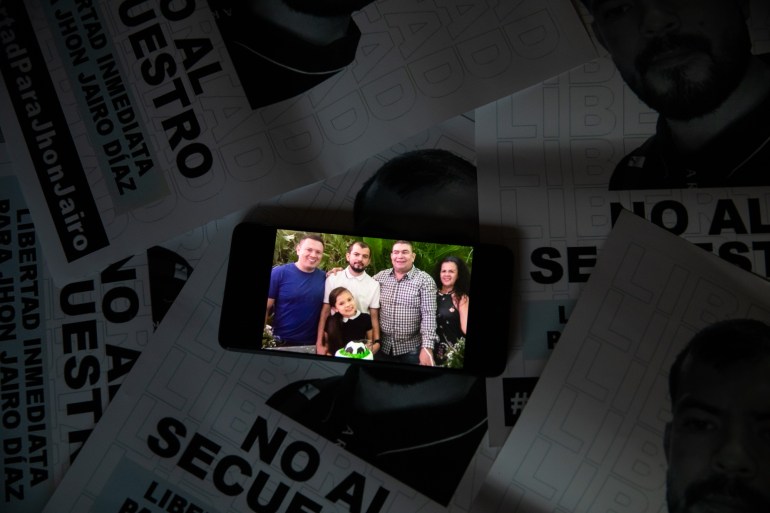
Chia, Colombia – Decnis Diaz was at home in Chia, Colombia, on November 18 when she received a call from her siblings: Her beloved younger brother, Jhon Jairo Diaz, had been kidnapped. A 34-year-old store manager, Jhon Jairo was ending his shift at a meat market in Cucuta, a border town near Venezuela, when four masked men held him at gunpoint and dragged him inside a black sedan. Security cameras captured the vehicle speeding away. “I couldn’t believe it. It always seemed to me that kidnappings were a terrible crime, but I never thought that our family would be a victim of it,” said Diaz. Jhon Jairo was the latest victim in an unexpected crime trend: The number of kidnappings has shot up recently in Colombia. Between January and October, a total of 287 people were abducted, a 73-percent increase over the same period the previous year, according to the Defence Ministry. Once a widespread tactic in Colombia’s decades-long internal conflict, kidnapping has long been a source of income for the country’s armed groups, who charge an extortion fee in exchange for the hostage’s safe return. The ransom, in some cases, can amount to hundreds of thousands of dollars. But the rate of kidnapping had plunged following a 2016 peace deal between the government and the Revolutionary Armed Forces of Colombia (FARC), the country’s largest rebel group at the time. The practice is once again on the rise, though. The number of abductions this year — expected to be the highest since 2016 — has shocked many Colombians, some of whom believed the crime had all but died out. “We thought that kidnappings were something from our parents’ generation,” said Ana de la Peña, whose husband Fabián Arias was kidnapped on October 2 outside his mother’s house in Ocaña. “But the dark past that we didn’t want to remember has returned.” A cellphone, perched atop a pile of missing persons posters, displays a photo of Jhon Jairo Diaz, dressed in white, together with family members [Christina Noriega/Al Jazeera] A dip and a rise in cases For decades, the FARC had been the primary perpetrator of kidnappings in Colombia, responsible for an estimated 40 percent of the abductions between 1990 and 2018. But the 2016 peace deal resulted in the FARC disbanding as an armed force. Immediately afterwards, kidnappings started to dip, reaching a low of 92 in 2019. That downward trend, however, reversed as Colombia experienced renewed violence. Rival armed groups and criminal networks rushed to fill the power vacuum the FARC had left behind, capitalising on the opportunity to take over its illegal drug and mining ventures. Kidnapping, experts say, became an important tool to finance their growing ranks. Critics have also blamed the increase on President Gustavo Petro, who took office in 2022 as Colombia’s first left-wing leader. A former rebel fighter himself, Petro pledged to improve security through peace talks, a strategy he calls “Total Peace”. To participate, armed groups had to agree not to murder, torture or “disappear” civilians during the negotiations. But the agreement does not explicitly ban kidnapping — a loophole that critics say groups may be exploiting to maintain control over populations and turf. “What we’ve seen in a lot of cases is that [armed groups] have traded that overt, visible violence for much more silent and invisible social control,” said Elizabeth Dickinson, a senior analyst for the think tank Crisis Group. Kidnappings are “extremely powerful in silencing the population because you create an atmosphere of fear and of compliance”, she added. Many abductions unfold without much public pushback because they are often kept out of the news, said Tatiana Prada, a researcher at the Ideas for Peace Foundation. Relatives are usually afraid to speak out, for fear their words could endanger the hostage’s life. The mother of Liverpool football star Luis Diaz, Cilenis Marulanda, protests on November 5 for the release of her kidnapped husband, Luis Manuel Diaz [Ivan Valencia/AP Photo] Lobbying for a loved one’s freedom But one high-profile case catapulted the issue to national attention. In late October, the National Liberation Army (ELN) — Colombia’s largest remaining rebel group — kidnapped the parents of Liverpool FC striker Luis Diaz, a popular Colombian football player. While his mother was found within hours, his father remained missing for 12 days, sparking a nationwide manhunt. Public outrage reached such a fever pitch that the ELN released Diaz’s father, calling the abduction a mistake. “It brought to light what was already the reality, which is that kidnappings had continued unabated despite negotiations,” said Dickinson. “The question that comes up is: ‘Why are we negotiating with these groups if they’re not changing their behaviour?’” Fearing government inaction, families have since taken it upon themselves to organise grassroots campaigns to bring their loved ones home. Diaz, for instance, spoke about her brother Jhon Jairo on the Senate floor, calling on politicians to act faster to save her brother. If public pressure could help secure the release of a football player’s father, she figured it could work for her brother, too. “With all my heart and tears in my eyes, I beg you to help me,” Diaz told a room full of senators. “Do not leave us alone.” Jhon Jairo’s family and friends also hosted a vigil in his hometown Cucuta, using hundreds of candles to spell a message: “Liberate him.” The local priest even held a mass in his name. De la Peña, whose husband Arias was kidnapped, likewise launched a campaign to push for her spouse’s freedom. On the social media platform X, de la Peña shared photos of their five-month-old daughter wearing a white onesie stamped with a picture of Arias and a message: “Free my dad. We want him home.” The Office of the High Commissioner for Peace confirmed in November that Arias was being held by the ELN — the same group that kidnapped the football player’s parents. Antonio Garcia, a leader in the National Liberation Army (ELN), has said his
Egypt sets out ambitious Israel-Gaza ceasefire plan
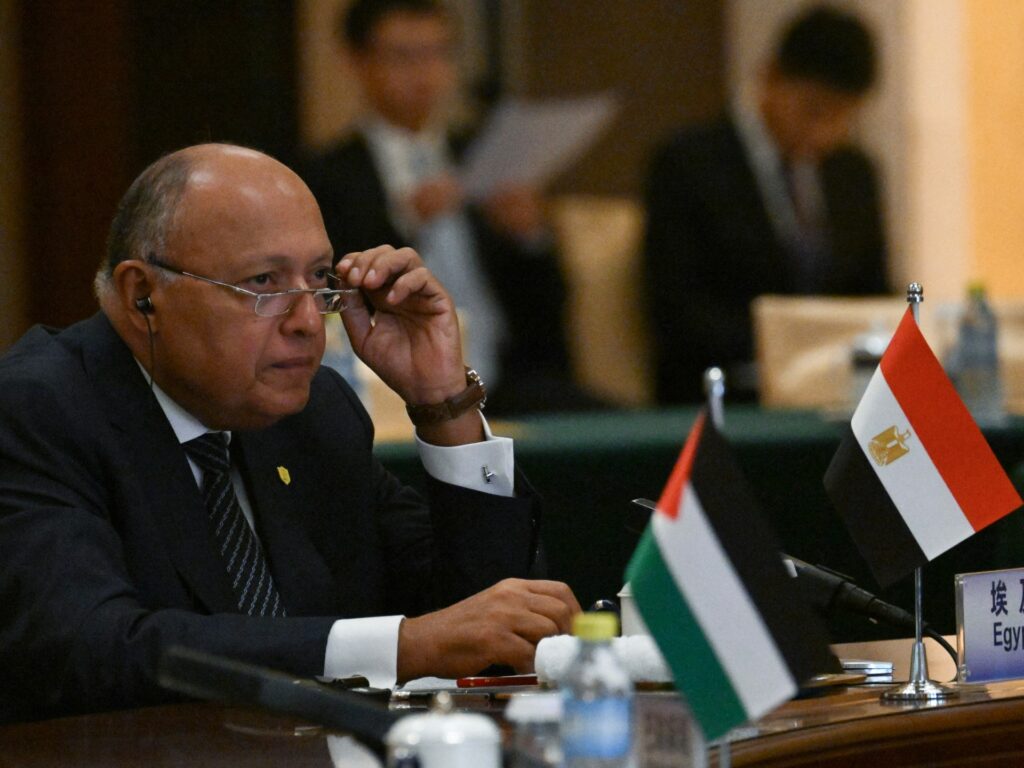
Israel’s divided war cabinet to discuss proposal. Hamas reported to reject suggestion of sharing power in Gaza. Egypt has presented what is described as an ambitious plan to end the war in Gaza with a ceasefire. The proposal, which was presented to Israel, Hamas, the United States and European governments on Monday would see Israel fully withdraw from the Gaza Strip, all captives held by Hamas, and many Palestinian prisoners, freed, and a united technocratic Palestinian government installed in the enclave. The proposal, developed with the Gulf state of Qatar, includes several rounds of captive and prisoner exchanges, reports Al Jazeera’s Bernard Smith from Tel Aviv. In the first phase, Hamas would free all civilian captives in return for the release of Palestinian prisoners over a truce of 7-10 days. During the second stage, Hamas would release all female Israeli soldiers in return for more Palestinian prisoners, taking place during another weeklong truce. In the final phase, the warring parties would engage in “a month of negotiations to discuss the release of all military personnel held by Hamas in exchange for a lot more [Palestinian] prisoners and Israel pulling back to Gaza’s borders”, said Smith. Close to 8,000 Palestinians are held by Israel on security-related charges or convictions, according to Palestinian figures. Throughout the ceasefire, Egypt would also lead talks to reunite Palestinian factions Hamas and the Palestinian Authority, who would then jointly appoint a government of experts to run the West Bank and Gaza, ahead of future elections, reports The Times of Israel. Traction The plan appears to be preliminary, and there are already suggestions that it could struggle to gain traction with either side. Israel’s war cabinet was due to discuss the proposal on Monday, even as its military continued pounding Gaza over the Christmas holiday, killing at least 100 Palestinians within 12 hours. Experts noted that the cabinet, which has been under intense pressure to bring home the remaining captives, is divided and may struggle to accept some of the deal’s terms. “One challenge is a ceasefire versus a truce,” Mohammed Cherkaoui, a professor of conflict resolution at George Mason University, told Al Jazeera. “Palestinians are talking about a full-fledged ceasefire. The Israelis are hearing a ‘truce,’ a pause.” Cherkaoui added that Israeli Prime Minister Benjamin Netanyahu would also have to pull back from its stated mission of eradicating Hamas. “On the one hand [Netanyahu] is still negotiating with Hamas indirectly, but at the same time his main dream is to eradicate Hamas.” “He lives in two separate worlds and he needs to unify them,” said Cherkaoui. A Western diplomat, speaking on condition of anonymity, told the Associated Press that Netanyahu and his hawkish government were unlikely to accept the full proposal. Meanwhile, Reuters reported that Hamas and the allied Islamic Jihad have rejected the proposal that they relinquish power in the Gaza Strip, quoting Egyptian security sources. Israel is entering its 12th week of a devastating air and ground campaign in Gaza that has killed more than 20,400 Palestinians, including 8,200 children. Air strikes have wrecked much of the besieged enclave, taking out entire blocks and neighbourhoods, and displaced 1.9 million Palestinians who now live in “catastrophic” conditions with little food, water and medicine, the United Nations warns. There are still 129 captives thought to remain captive in Gaza following Hamas’s October 7 attack on Israeli territory, which also killed nearly 1,200. Adblock test (Why?)
Ukraine secures desperately needed funds from World Bank
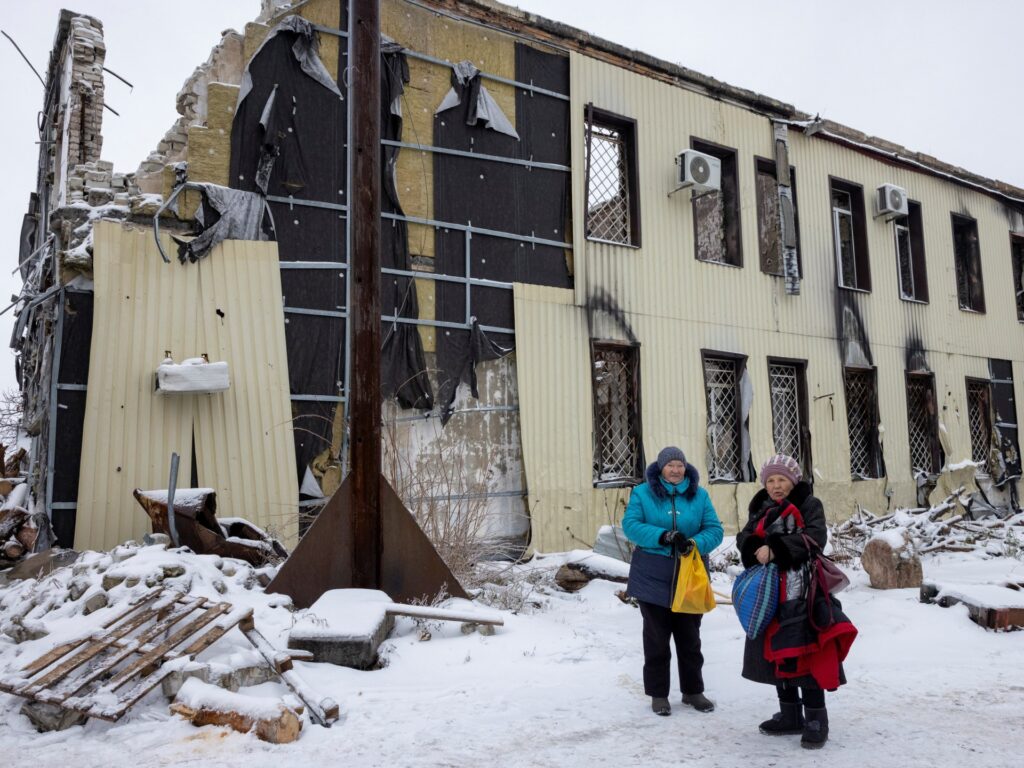
Ukraine has received a vital $1.34bn in funds from the World Bank. The funding has been paid out to support non-security related financial and economic stability, Ukraine’s Ministry of Finance said on Monday. The cash boost will be welcomed by Kyiv, which warns that its ability to defend against the Russian invasion could soon be impacted by delays in funding from the United States and the European Union. In a statement, the ministry noted that the financing, which is the Sixth Additional Financing under its Public Expenditures for Administrative Capacity Endurance in Ukraine (PEACE) project, consisted of a $1.086bn loan from the World Bank, a $190m grant from Norway, a $50m grant from the United States and a $20m grant from Switzerland. The funds are expected to be used to partially compensate for non-security and defence-related expenditures of the Ukrainian state budget, including old-age social payments and payments to employees of the state emergency service, the ministry added. “International financial assistance is a significant contribution to maintaining Ukraine’s financial and economic stability and allows us to provide priority social expenditures during the war,” said Ukrainian Finance Minister Serhiy Marchenko. “Since the beginning of the full-scale invasion, the governments of Japan, the United States, Norway and Switzerland have repeatedly demonstrated their unwavering support and solidarity for Ukraine. I am grateful to our partners for their willingness to cooperate and help us at a crucial time for Ukraine.” Funding difficulties for Ukraine It has been nearly two years since Russia invaded Ukraine, and as the war continues to rage uncertainty is growing over Western backing for Ukraine. Earlier this month, the White House warned the United States Congress that funds designated for providing aid to Ukraine would run out by the end of the year, amid Russia’s intensifying campaign to knock out the country’s energy infrastructure. The US, Ukraine’s biggest single-country donor, has sent more than $40bn in aid since Russia’s invasion in February 2022. But right-wing congressional Republicans have expressed increasing scepticism towards approving more funds for Ukraine. The United States Senate has said they will vote on an aid package for Ukraine in 2024. But Congress could continue to hold up the money. The impasse over US aid to Kyiv is mirrored in the European Union, where Hungary is blocking a 50 billion euro ($55bn) aid package. The bloc is due to revisit the issue in January. The difficulties in securing the funds in Washington and Brussels have raised concerns in Kyiv that Western backers are experiencing “fatigue” with the drawn-out battle, as fighting on the front line becomes bogged down. Ukrainian President Volodymyr Zelenskyy has noted that Kyiv’s “foreign policy will be active” with many international activities in January. “We make every effort to strengthen Ukraine and ensure that everyone is confident about the coming year, about military aid, macro-financial assistance, and political support,” he said. We continue to work with partners in order to maintain unity in support for Ukraine. With those in Europe, America, and around the world who support us, our state, and international law. Our foreign policy will be active in the coming weeks, and we are already planning… pic.twitter.com/YmNta6e5gV — Volodymyr Zelenskyy / Володимир Зеленський (@ZelenskyyUa) December 15, 2023 Drone attacks continue Russian attacks against Ukraine continued over Christmas. On Monday, the Ukrainian military said that Russia launched 31 drones and two missiles from the annexed Crimean Peninsula overnight. The military said the attack mostly targeted the south of Ukraine. Kyiv’s air defences “destroyed 28 Shahed attack drones in Odesa, Kherson, Mykolaiv, Donetsk, Kirovohrad and Khmelnytskyi regions” and also destroyed the missiles, it said. Meanwhile, Russian-installed authorities reported one person killed in Ukrainian shelling of the Russian-occupied eastern town of Horlivka. [embedded content] The latest assaults come as Ukraine marks Christmas on December 25 for the first time, after President Volodymyr Zelenskyy signed a law moving the celebration from the January 7 date observed by the Russian Orthodox Church. In an address to mark Christmas Eve, Zelenskyy assured Ukrainians fighting against Russia that “step by step, day by day, the darkness is losing”. “Today, this is our common goal, our common dream. And this is precisely what our common prayer is for today. For our freedom. For our victory. For our Ukraine.” Adblock test (Why?)
Pope decries ‘appalling harvest’ of civilian deaths in Gaza
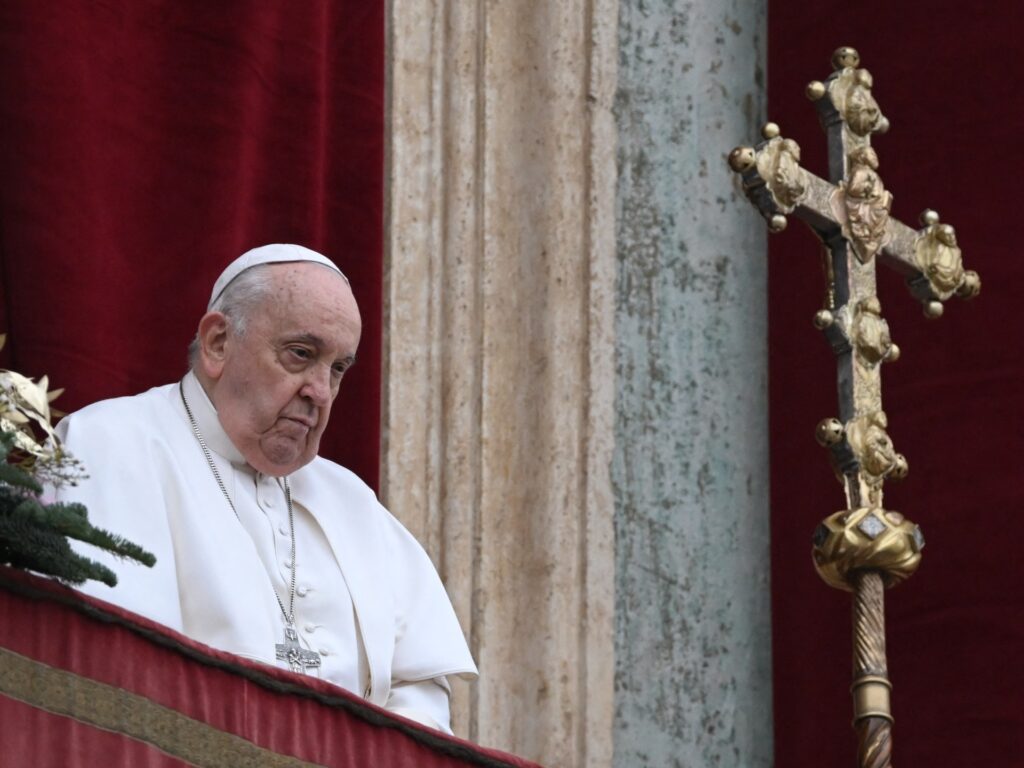
In Christmas message, Pope Francis says Israeli strikes are reaping an ‘appalling harvest’ of innocent civilians. Israel’s bombardment of Gaza is reaping an “appalling harvest” of innocent civilians, Pope Francis said in his Christmas message. In his Christmas Day “Urbi et Orbi” (to the city and world) address on Monday, the head of the Catholic Church also called the October 7 attack on Israel by Hamas “abominable” and again appealed for the release of about 100 hostages still being held in Gaza, as he appealed for an end to hostilities. Speaking from the central balcony of St Peter’s Basilica to thousands of people in the square below, the 87-year-old Francis called for an end to conflicts, political, social or military, in places including Ukraine, Syria, Yemen, Lebanon, Armenia and Azerbaijan, and he defended the rights of migrants around the world. “How, many innocents are being slaughtered in our world! In their mothers’ wombs, in odysseys undertaken in desperation and in search of hope, in the lives of all those little ones whose childhood has been devastated by war. They are the little Jesuses of today,” he said. He gave particular attention to the Holy Land, including Gaza. Overnight on Christmas Eve, Israeli air raids killed at least 78 people in one of the besieged enclave’s deadliest nights of Israel’s 11-week-old battle with Hamas, according to Palestinian health officials. “May it [peace] come in Israel and Palestine, where war is devastating the lives of those peoples. I embrace them all, particularly the Christian communities of Gaza and the entire Holy Land,” Francis said. ‘Puppet strings of war’ “I plead for an end to the military operations with their appalling harvest of innocent civilian victims, and call for a solution to the desperate humanitarian situation by an opening to the provision of humanitarian aid,” he said. Last week, a United Nations-backed body said in a report that the entire 2.3 million population of Gaza was facing crisis levels of hunger and that the risk of famine was increasing every day. The Vatican, which has diplomatic relations with both Israel and the Palestinian Authority, believes a two-state solution is the only answer to the long-running conflict. Francis called for “persevering dialogue between the parties, sustained by strong political will and the support of the international community”. Dedicating an entire paragraph of his message to the weapons trade, Francis said: “And how can we even speak of peace, when arms production, sales and trade are on the rise?” He called for more investigation of the armaments trade. “It should be talked about and written about, so as to bring to light the interests and the profits that move the puppet strings of war,” he said. Israel has pounded the Gaza Strip since the cross-border attack by Hamas on October 7, killing at least 20,424 Palestinians, mostly women and children, and injuring 54,036 others, according to local health authorities. About 1,140 people were killed in Israel in the Hamas attack. The Israeli onslaught has left Gaza in ruins, with half of the coastal territory’s housing damaged or destroyed and nearly two million people displaced within the densely populated enclave amid shortages of food, clean water and medicines. Adblock test (Why?)
Israeli bombardment devastates Maghazi refugee camp
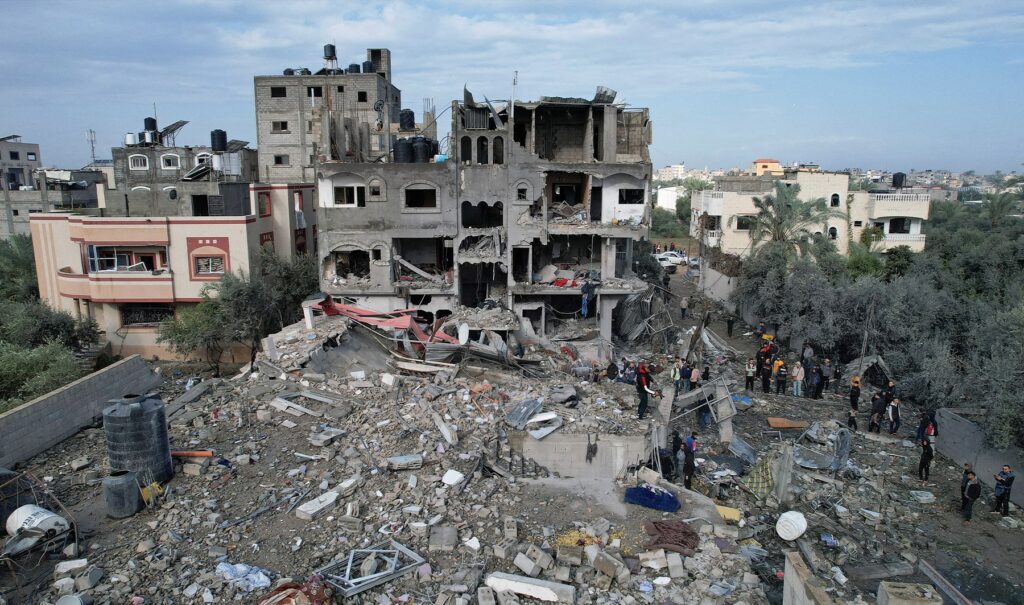
NewsFeed Israeli air strikes have killed at least 70 people, including a two-week-old baby, as they hit housing in the Maghazi refugee camp, in one of the deadliest attacks in Gaza since the start of the war on October 7. Published On 25 Dec 202325 Dec 2023 Adblock test (Why?)
Plane carrying Indian passengers to leave France after trafficking probe
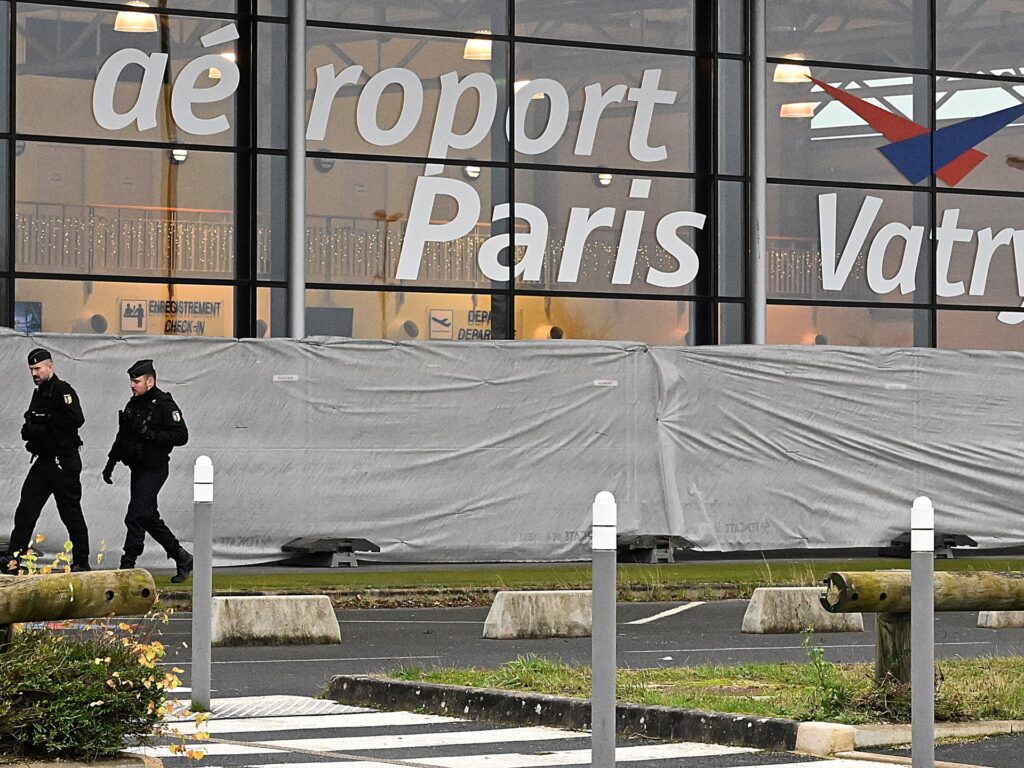
Airbus A340 is expected to leave airport on Monday after French Civil Aviation Authority secures approval. A plane carrying more than 300 Indian passengers that has been detained at an airport in France since Thursday has been cleared to leave after a probe into human trafficking claims, French authorities have said. French prosecutors on Sunday gave the green light for the plane to leave Vatry airport, located 150km (95 miles) east of Paris, after questioning passengers for two days about allegations they may be victims of human trafficking. The Airbus A340 is expected to leave on Monday after the French Civil Aviation Authority secures final approval for departure, with a lawyer for Romania-based Legend Airlines saying most of the stranded passengers would be returning to India. Two passengers have been detained since Friday as authorities investigate whether they travelled with a different purpose than the other passengers and “under what conditions and with what objectives”. Several other passengers have requested asylum in France, according to the local government. The Nicaragua-bound plane was held after stopping to refuel at Vatry en route from Fujairah Airport in the United Arab Emirates, after authorities received an anonymous tip that it may be carrying trafficking victims. The passengers of the flight, including a 21-month-old child, have since then been confined at the airport, where local government authorities said beds, toilets and showers were installed for their stay. After police grounded the aircraft, authorities turned the airport into a makeshift courtroom as judges, lawyers and translators filled the terminal to conduct emergency hearings to determine whether the passengers could be held any longer. The Indian Embassy in Paris posted on X on Saturday that consular staff were working with French authorities for an “early resolution of the situation”. Francois Procureur, the head of the Châlons-en-Champagne Bar Association, told local television that the hearings were “unprecedented”. “I’m surprised at how things unfolded in the waiting area,” Procureur told BFM television. “People should have been informed of their rights and, clearly, that was not the case.” Adblock test (Why?)
Analysis: Has the US-led Red Sea force calmed shippers amid Houthi attacks?
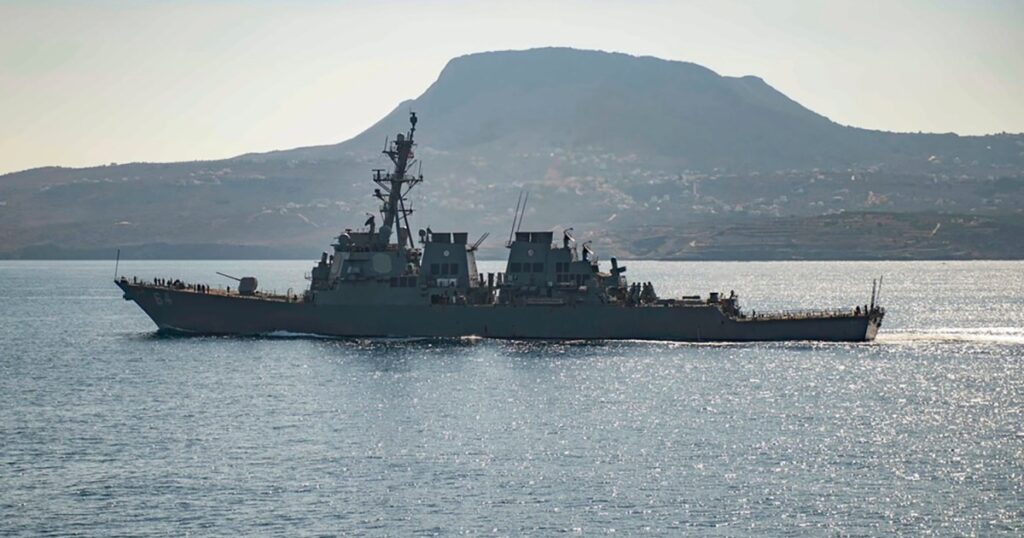
The United States-led multinational naval force that was to protect and secure maritime traffic through the Red Sea from attacks by Yemeni Houthi rebels appears significantly weakened – even if not quite dead in the water – before it ever sailed together. Less than a week after the announcement of Operation Prosperity Guardian (OPG), France, Italy and Spain have pulled out of the nearly fully-created force touted to include warships from more than 10 nations. The decision to cobble together what is essentially an anti-Houthi coalition was almost forced on Washington. In early November, a US destroyer shot down several missiles fired from Yemen but the US tried to maintain a business-as-usual pose and not advertise that it was engaging the Yemeni group. As long as the combative Houthis tried, unsuccessfully, to lob missiles at Israel, a country attacking Yemeni’s Arab and Muslim brethren, the US could maintain that the whole affair was not a serious regional escalation. But when their repeated attacks on ships headed to and from the Suez Canal threatened the security of international maritime routes, the US was forced to act. The US Navy already has a huge number of ships in the region, so why would it need to ask friendly nations to contribute more? One reason is that even with such a large force, the US cannot spare many ships for the task. The other is political unwillingness to be the only nation attacking Yemen as it would likely be interpreted, especially in the Middle East, as direct military action in aid of Israel. US political and military dilemmas are largely conditioned by geography and Yemen’s control of the strategically important choke point where the Indian Ocean funnels into the Red Sea. The Bab el-Mandeb passage is only 29km (16 nautical miles) wide at its narrowest point. Its approaches are bristling with warships: More than 35 from at least 12 nations that do not border the Red Sea are now in positions from which they could reach the strait in less than 24 hours. Nations along its African and Arabian shores have at least as many in their harbours. Many of these ships were already in the region before 7 October. The northwestern parts of the Indian Ocean leading into the Gulf of Aden and the Bab el-Mandeb are probably the most notorious pirate-infested waters of the 21st century. The civil war and breakdown of Somalia’s central government created maritime piracy on an unprecedented scale. Somali pirates venture out to sea in fast small boats, armed with machine guns and rocket-propelled grenades and intercept commercial shipping heading towards and from Bab el-Mandeb in three directions: from the Far East, passing south of India; from the Gulf, sailing around the Arabian Peninsula; and north to south along African shores. Shipping companies demanded protection and the international community, aware of the need to keep shipping lanes open and secure, provided it. Every month, 200 ships cross the Suez in each direction carrying no less than 3 million containers. Since 1990, the Combined Task Force 150 (CTF-150) had been engaged in anti-piracy missions. More than 30 nations, mostly Western but also including Saudi Arabia, Pakistan, Thailand, Singapore and Turkey, took part and usually kept at least four warships on station, rotating every three to four months. In 2022, a new force, the CTF-153, took over. When the latest war in Gaza started, the force was comprised of US destroyers USN Carney and USN Mason, Japanese destroyer JDS Akebono and a South Korean one, ROKS Yang Man Chun. In anticipation of the arrival of stronger assets, the US ships immediately moved into the Red Sea, and both have on several occasions intercepted Houthi missiles and drones. The US Navy hurriedly deployed two aircraft carrier task groups – which include anti-aircraft and anti-submarine cruisers and destroyers, helicopter carriers, assault ships and other offensive and defensive assets – to the wider region. It is almost certain that the White House did not immediately have a concrete action plan for involvement in the Gaza conflict, but the decision to deploy to the region naval and air power capable of taking on all potential adversaries was militarily prudent. Meanwhile, the White House also engaged in diplomacy. The US and Iran exchanged indirect statements, assuring each other they did not seek confrontation. Iran announced that it had not been informed of the October 7 Hamas attacks on Israel, and the US did everything to avoid alienating Iran. In return, Tehran nudged the Lebanese armed group Hezbollah into refraining from a full-scale offensive. The de-escalation seemed to be working. But then the Houthis, considered to be an Iranian proxy in much the same way as Hezbollah, decided to attack in the Red Sea, demanding Israel end its war on Gaza. They launched long-range missiles at Israel and naval missiles at US Navy destroyers that had entered the Red Sea. Both operations failed, with all missiles and drones being on several occasions intercepted and shot down. The US Navy was convinced that its two destroyers could handle the situation, possibly being reinforced in time by a couple more. But when tankers and container ships in the Red Sea started taking hits almost daily, the escalation was undeniable. Many of the world’s biggest shipping companies shifted from going through the Suez Canal to the longer and more expensive route around Africa. Commercial carriers now introduced a $700 surcharge on each container sailing the longer route. Counting just those laden with Asian manufactured goods heading to Europe, the additional cost is a staggering $2bn per month. That increase gets passed on to the final customers – leading to inflation. In addition, the longer travel will soon cause distribution delays, shortages and general disruption of the economy, which every nation will feel. The markets demanded action and the US optimistically believed it could assemble a robust force of up to 20 participating nations to carry out Operation Prosperity Guardian. Within days, high hopes were drowned in refusals.