

Bethlehem’s bombed-out nativity sculpture sends a powerful message
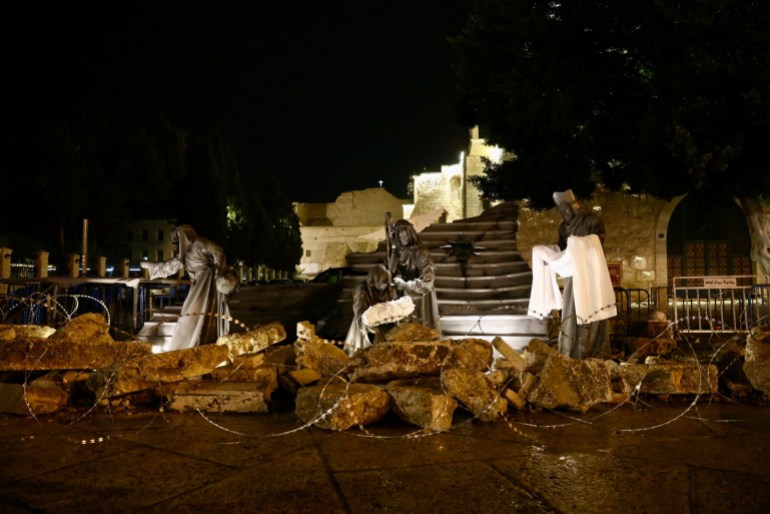
The scene of a devastated nativity cave symbolises the plight of Christ’s family — and Palestinians now. Bethlehem, occupied West Bank — This year, Bethlehem is sombre and quiet. There is no Christmas tree and there are no holiday lights or tourists to see them. Instead, the city of Jesus’s birth – which is in the middle of a war zone – is marking Christmas with a powerful and poignant message: solidarity with Palestine. The Holy Family Cave is a sculpture that depicts a harrowing tableau: a bombed-out version of the traditional nativity cave, which many Christians traditionally believe is where Jesus was born in Bethlehem. It is the site now of the Church of the Nativity in Bethlehem. The new mural draws a comparison with the journey of Christ and his family, when they had to flee Bethlehem under an oppressive ruler to Egypt, before returning to Nazareth two millennia ago. The bombed-out nativity scene is surrounded by rubble and barbed wire [Monjed Jadou/Al Jazeera] Surrounded by rubble and barbed wire, the Virgin Mary embraces the baby Jesus, while Joseph embraces her, offering solace. On one side of the family, the Magi holds out a white shroud. On the other side, the fourth shepherd carries a bag, a symbol of Palestinian displacement. Angels, suspended around the rubble, represent the souls of children who have been victims of massacres on Palestinian land throughout history: the murder of children in Bethlehem by Herod at the birth of Jesus; various colonial attacks against the Palestinian people and their ancestors; and current massacres by Israel in Gaza. Around the scene, multilingual panels call for a ceasefire and an end to the massacre against the Palestinian people. Hana Hanania, the mayor of Bethlehem, said the sculpture aims to showcase Palestinian suffering everywhere. Churches, clergy and civilians in Gaza are being bombarded, and a blockade is enforced in the West Bank, particularly in Bethlehem. The fourth shepherd carries a bag, symbolising Palestinian displacement [Monjed Jadou/Al Jazeera] The sculpture, with its political, religious, and national symbolism, draws a comparison between what happened more than 2,000 years ago and what is happening today, she said. Just as Christ was tortured and children were killed by King Herod then, today, children and women are being slaughtered in a clear act of genocide. The cave’s roof is a geographical map of Gaza. Its shape, together with a depiction of an explosion, form a star, inspired by the Star of Bethlehem that led the Magi to Jesus’s birth. This conveys a message of hope. The artist, Tarek Salsaa, explained that the scene cannot fully express the immense destruction and systematic genocide against the Palestinian people by the Israeli occupation. What Palestine is going through today is reminiscent of the years of colonialism, with all its allies throughout the ages and various historical epochs, he added. “Christmas approaches this year, and we find ourselves living in the most challenging and difficult circumstances, a result of what our people in the besieged Gaza Strip and in all cities, villages, and camps of the West Bank and Jerusalem are enduring due to the Israeli continuous aggression against our people, said Rula Maayaa, the Palestinian Authority’s minister of tourism and antiquities. “As we launch this symbolic initiative in Bethlehem … our people are confident that the message of Christmas, sent by the messenger of peace, will triumph over injustice and tyranny,” Maayaa said. People light candles near the installation [Monjed Jadou/Al Jazeera] We are in a constant state of mourning, especially during the days of mourning for the martyrs, said Father Ibrahim Feltz, the deputy custodian of the Holy Lands. “We have not witnessed such a scene in the square, and we have not seen the city in this condition. Bethlehem has never been sad like this before.” Adblock test (Why?)
The dark world of illegal loan apps in India
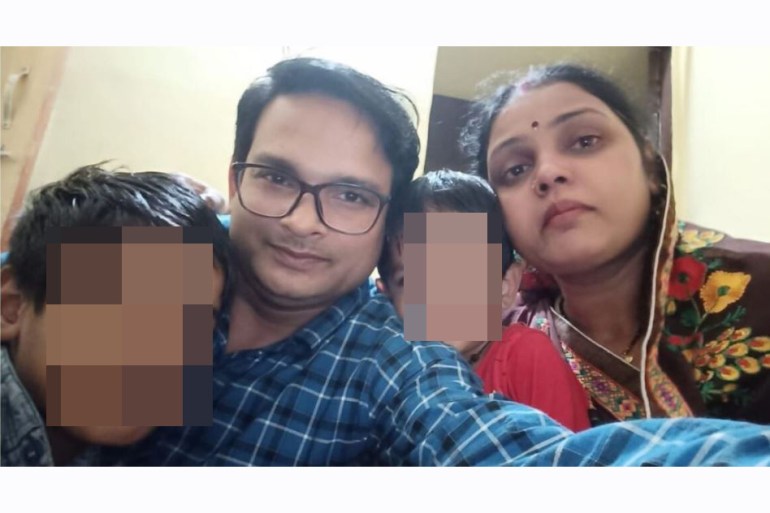
On August 12, a family in the central Indian city of Bhopal took a selfie in their home. After the photo, the father, Bhupendra Vishwakarma, gave his two sons, eight and three years old, a poisoned drink, and he and his wife took their lives by hanging themselves. In his four-page suicide note, Vishwakarma, 35, who worked in an insurance firm, wrote that he was trapped in a cycle of debt from loan apps. Recovery agents had been tormenting him for months and the last message he received from them tipped him over the edge. It said, “Tell him to repay the loan; otherwise, today I will strip him naked and upload it on social media.” In his suicide note, Vishwakarma said, “Today, the situation has reached the point of losing my job as well. I can’t see a future for myself and my family. I am no longer worthy of showing my face to anyone. How will I face my family?” Police have arrested five people involved in the scam so far even as the investigation continues. Vishwakarma’s story is not unique. Shivani Rawat, a 23-year-old college receptionist in Delhi, faced her own ordeal. In June 2023, she applied for a 4,000 rupee ($48) loan through an app called “Kreditbe”, since her salary was delayed. Her loan request remained pending, with no funds received. Yet, within a week, she began receiving 10-15 calls demanding 9,000 rupees ($108) for repayment. Rawat said she told the recovery agents that she hadn’t received any money in her account, “but they started using abusive language. When I stopped answering their calls, they began sending me abusive texts.” In August, her colleagues received manipulated explicit photos of her and her family that had been sent by representatives of Kreditbe. She tried to explain the situation to her coworkers, but the next day, her manager asked her to resign because her presence made others uncomfortable. “After losing my job, I became so depressed that I even had thoughts of ending my life,” Rawat admitted. Al Jazeera tried reaching out to Kreditbe for a comment but there was no information available on the firm and none of the representatives who had been in touch with Rawat were available any more. Bhupendra Vishwakarma took a selfie with his family before he died by suicide [Anil Kumar Tyagi/Al Jazeera] Kreditbe’s name is a rip-off of a legitimate loan app called KreditBee, a common modus operandi for these illegal loan apps which often choose names similar to reputable brands to create a sense of authenticity. Both Vishwakarma and Rawat had borrowed money from lending apps, which offer loans to users in a convenient, few clicks and without the extensive documentation that a traditional bank loan requires. The money is credited to the borrower’s account within a few minutes, unlike the five to seven days that a bank loan takes for borrowers who meet the high eligibility bar. These apps saw a rise in use during the pandemic as with many businesses shut or scaled back, a significant number of people were unemployed and in financial difficulties. The average loan tickets in these apps range between 10,000 rupees to 25,000 rupees ($120 to $300) with monthly interest rates of 20 percent to 30 percent and a processing fee that can be as much as 15 percent. Loan app representatives typically begin the recovery process 15 days after approving the loan. However, in many cases, they have been known to start harassing people just four to six days after disbursing the loan, and in Tiwari’s case, it was even before she actually received the loan. As per Akshay Bajpai, an independent cybersecurity expert in Bhopal, currently, more than 700 loan apps are operating in the country, some of which are Indian but the majority of which are Chinese-owned and hire Indians to run them. While some of them are outright frauds and use the promise of quick money to get fees from desperate loan seekers before disappearing in the night, others are in a grey area not just because of the malicious methods they employ to extort money from innocent people but also because they don’t follow the central bank rules on online lending including on the annual interest rate, various charges. The Reserve Bank of India (RBI) has also clearly said that no lending institution can store customer details except some minimal data such as the name, address and contact details of the customer. However, illegal apps access contact lists and pictures, edit them and use manipulated images to blackmail borrowers to recover money. According to a study conducted by CloudSek, a cybersecurity software company, between July 22, 2023, and September 18, 2023, their experts monitored 55 fraudulent loan apps that targeted individuals. Additionally, they identified more than 15 obscure payment gateways operated by individuals of Chinese origin who undertook those steps to evade detection. The Chinese loan apps also employ this modus operandi in Southeast Asia and some African nations, as well. In countries where people are less aware of cybersecurity and fraud, people become easy targets for such malicious activities. Creating fear Loan apps representatives harass borrowers with threatening and abusive messages and calls like these that Shivani Rawat received [Courtesy Shivani Rawat] “Scammers instil fear in the minds of their victims by employing various tactics. Initially, they may threaten to access the victim’s contact list and make calls. If the victim resists, they may infiltrate the victim’s photo gallery, manipulate images, and send them back,” explained Pravin Kalaiselvan, founder of SaveThem India, an NGO that spreads awareness about cybercrime. “This induces panic among the victims, ultimately leading them to comply with the scammers’ demands for money,” he added. In the last three years, Loan Consumer Association (LCA), a group of advocates and social workers focused on combating unethical recovery practices by banks and apps, has helped almost 1,800 people stuck in these illegal loan app traps both with counselling and help them file complaints with the
Serbia police fire tear gas as opposition backers demand election annulled

President Aleksandar Vucic condemns ‘attempted violent takeover’ amid protests over alleged election fraud. Riot police in Serbia have fired tear gas and pepper spray at opposition supporters demanding the annulment of elections marred by claims of widespread fraud. Hundreds of protesters attempted to storm Belgrade City Hall on Sunday evening during demonstrations against the results of parliamentary and local elections on December 17, which international observers say were marred by vote buying, ballot stuffing and the improper influence of President Aleksandar Vucic. Opposition supporters, some chanting, “Vucic thief” and “Vucic is Putin”, used flagpoles and rocks to break windows as they tried to break into the capital’s administrative building but were repelled by riot police. Vucic’s ruling Serbian Progressive Party (SNS) were returned to power with a parliamentary majority after winning nearly 47 percent of the votes, according to preliminary results announced by electoral authorities. The centre-left opposition alliance Serbia Against Violence received 23.56 percent of the vote, followed by the Socialist Party of Serbia with 6.56 percent, according to electoral authorities. Serbia Against Violence has claimed it was the rightful winner, especially in Belgrade, where there were reports of non-residents being recruited to vote. In a letter earlier this week, Serbia Against Violence told European Union institutions, officials and member nations that it would not recognise the outcome and called on the bloc to do the same as well as to initiate an investigation. “Police are everywhere, also on the roofs. It is obvious that they do not want to recognise [the] election results,” said Serbia Against Violence leader Nebojsa Zelenovic. “We will continue with our fight.” Vucic has rejected opposition calls to rerun the vote, blasting claims of irregularities as blatant “lies”. In an address aired by pro-government Pink TV on Sunday, Vucic said the protests were “not a revolution” and those seeking to destabilise the state would not succeed. “This was an attempted violent takeover of the state institutions of the Republic of Serbia,” Vucic said, while claiming there was evidence that “everything was prepared in advance” with assistance from abroad. The Serbian leader said more than 35 people were arrested and more would follow. “Nobody has the right to destroy our house, to destroy the property of our country and our citizens, not to mention causing serious injuries to our police officers,” Vucic said. Vucic and his party were rattled by antigovernment protests in May, which began as demonstrations against back-to-back mass shootings that killed 18 people, including nine children, before morphing into a broader antigovernment movement taking aim at issues such as rising inflation and perceived government corruption. Adblock test (Why?)
‘Our hearts in Bethlehem’, says Pope in Christmas Eve mass, shadowed by war
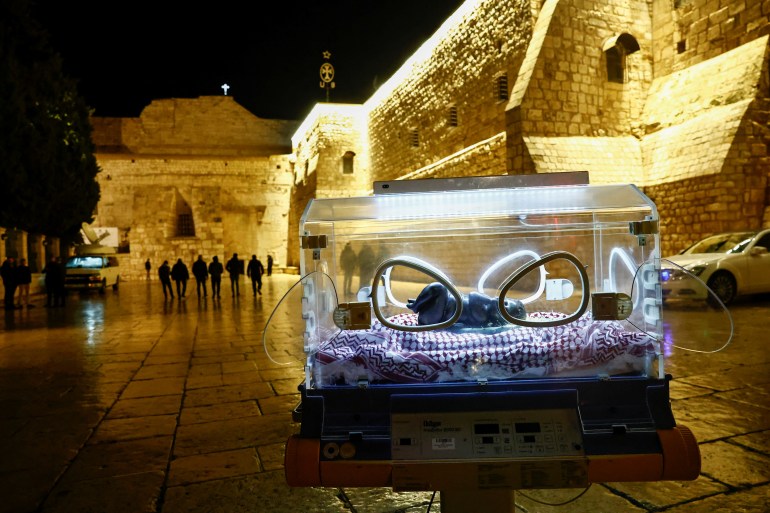
Pope Francis has kicked off global Christmas celebrations with a lament – that Jesus’s message of peace is being drowned out by the “futile logic of war” in the very land he was born. Israel’s deadliest-ever war on Gaza cast a shadow as the pontiff presided over the evening Mass on Sunday, attended by 6,500 people at St Peter’s Basilica at the Vatican. “Tonight, our hearts are in Bethlehem, where the Prince of Peace is once more rejected by the futile logic of war, by the clash of arms that even today prevents him from finding room in the world,” said the Catholic leader. The 87-year-old pontiff said the real message of Christmas is peace and love, urging people not to be obsessed with worldly success and the “idolatry of consumerism”. He spoke of “the all-too-human thread that runs through history: the quest for worldly power and might, fame and glory, which measures everything in terms of success, results, numbers and figures, a world obsessed with achievement”. “Tonight, love changes history,” he said, draped in white robes. Bethlehem, the biblical city in the occupied West Bank where Christians believe Jesus Christ was born in a manger more than 2,000 years ago, effectively cancelled the annual Christmas celebrations that normally draw thousands of tourists. An installation by Rana Bishara shows a figure of baby Jesus, made by Sana Fara Bishara, inside an incubator in front of the Church of the Nativity in Bethlehem [Clodagh Kilcoyne/Reuters] The town did away with its giant Christmas tree, marching bands and flamboyant nativity scene this year, settling for just a few festive lights. In the centre of town, a huge Palestinian flag has been unfolded with a banner declaring, “The bells of Bethlehem ring for a ceasefire in Gaza.” “A lot of people are dying for this land,” said Nicole Najjar, an 18-year-old student. “It’s really hard to celebrate while our people are dying.” Francis spoke hours after Israeli Prime Minister Benjamin Netanyahu pledged to fight deeper into the Palestinian enclave of Gaza after his troops endured one of the worst days of losses of their ground war. The Health Ministry in Gaza said an Israeli attack late on Sunday killed at least 70 people in the Maghazi refugee camp in central Gaza and destroyed several houses. A total of at least 20,424 people, most of them women and children, have been killed in the enclave since the war began, according to the territory’s Health Ministry. Scouts hold a sign in solidarity with Palestinians in Gaza, on the day of a visit by the Latin Patriarch of Jerusalem, Pierbattista Pizzaballa, to the Old City of Bethlehem [Mussa Issa Qawasma/Reuters] “Bethlehem is celebrating Christmas with sadness and sorrow because of what’s happening in Gaza and in all the West Bank, all Palestinian territories,” said Palestinian Minister of Tourism Rula Maayah. The Latin patriarch of Jerusalem, Pierbattista Pizzaballa, arrived on Sunday at the Church of the Nativity, clad in a traditional black and white keffiyeh. “Our heart goes to Gaza, to all people in Gaza but a special attention to our Christian community in Gaza who is suffering,” he said. “We are here to pray and to ask not only for a ceasefire, a ceasefire is not enough… violence generates only violence.” People light candles next to a nativity scene to honour the victims in Gaza and ask for peace, in Manger Square, adjacent to the Church of the Nativity in Bethlehem [Mahmoud Illean/AP] Francis has made numerous appeals for a ceasefire in the conflict raging in Gaza and has called for the release of all captives. When the Christmas Eve Mass ended, the pope, pushed in a wheelchair, moved down the basilica with the life-sized statue of baby Jesus on his lap and flanked by children carrying bouquets. The statue was placed in a manger in a nativity scene in the basilica. At noon (11:00 GMT) on Monday, Francis will deliver his Christmas Day “Urbi et Orbi” (to the city and the world) message and blessing. Adblock test (Why?)
How can aid get to Palestinians as Israel bombs Gaza?
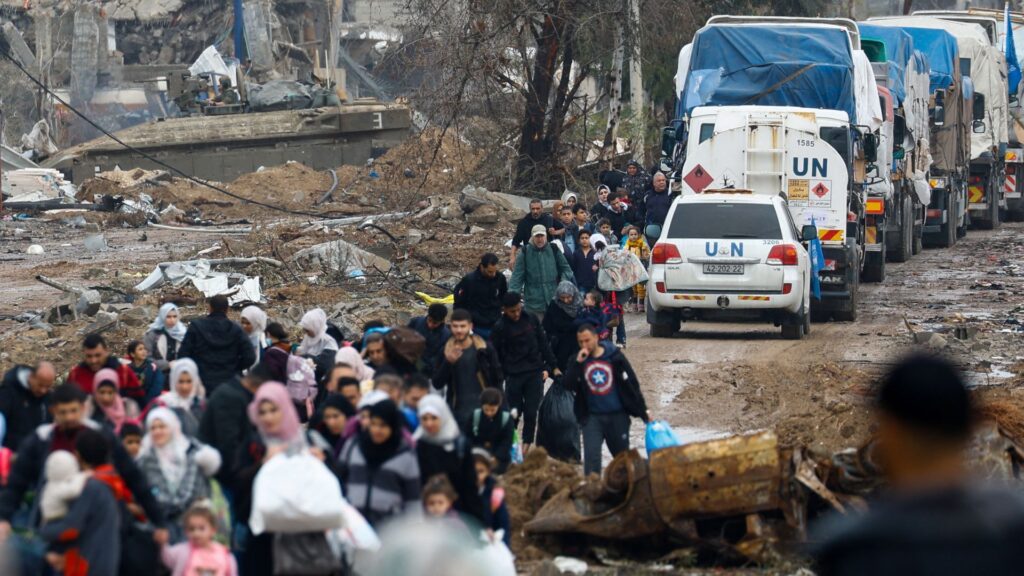
UN Security Council votes to allow more supplies, but Israel’s bombardment and ground offensive go on. Hundreds more have been killed in Gaza since Friday’s UN Security Council vote for more aid. What practical impact will the resolution have? And how can aid get to 2.3 million people living under constant attack among destroyed infrastructure – in a live battle zone? Presenter: Dareen Abughaida Guests: Mansour Shouman – Resident of Gaza and a human rights advocate Ahmed Bayram – Regional Media and Communications Adviser at the Norwegian Refugee Council Lex Takkenberg – Senior adviser with Arab Renaissance for Democracy and Development, and former Chief of Ethics at UNRWA Adblock test (Why?)
Israeli forces ‘massacre’ at least 70 in Gaza’s al-Maghazi refugee camp
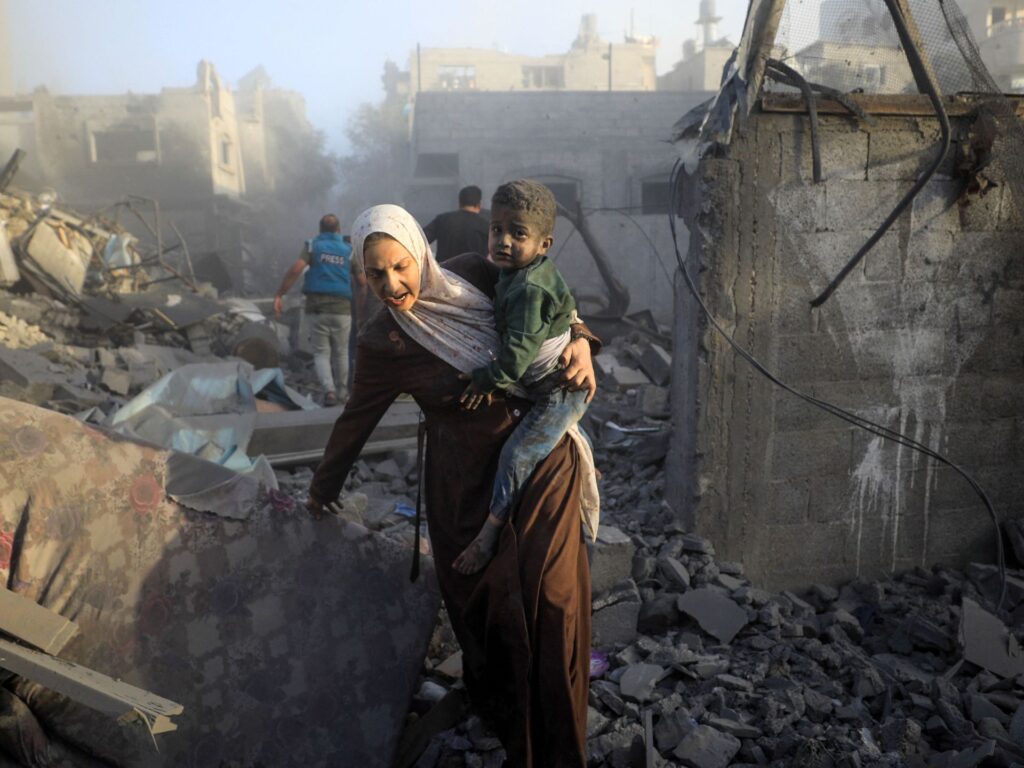
The attack is one of the deadliest of the nearly three-month-long war. At least 70 people have been killed in an Israeli air attack in central Gaza’s al-Maghazi refugee camp, according to the Palestinian Health Ministry. The ministry’s spokesman, Ashraf al-Qudra, late on Sunday said the toll is likely to rise. “What is happening at the al-Maghazi camp is a massacre that is being committed on a crowded residential square,” he said. Dozens more are reported to be injured and several houses have been destroyed in the attack as families dig through the rubble in an attempt to find survivors. “We were all targeted,” said Ahmad Turokmani, who lost several family members including his daughter and grandson. “There is no safe place in Gaza anyway.” Al Jazeera’s Tareq Abu Azzoum, reporting from Rafah in southern Gaza, said the al-Magahzi refugee camp is one of the most densely-populated areas in the middle of the Gaza Strip. He said it was one of the places the Israeli military had previously told the Palestinians in Gaza to evacuate to. Now the camp has been “completely flattened”, he said. “The vast majority of the casualties right now have been among civilians, including [a] two weeks [old] baby that has been killed in cold blood in this genocide,” said Azzoum. He compared the attack with one on the Jabalia refugee camp in northern Gaza last week, in which at least 90 people were killed. The al-Maghazi camp was attacked last month as well when at least 50 Palestinians were killed. Azzoum said the camp’s surrounding areas had been subjected to intense Israeli shelling in the last couple of days. The nearest hospital to the camp is the Al-Aqsa Hospital but health facilities have been rendered non-functional across Gaza as Israel continues to bombard the territory for a third month, killing more than 20,400 Palestinians since October 7 and displacing more than 80 percent of the 2.3 million people who live there. “The entire medical care system in Gaza Strip is deteriorating and [is] on the edge of collapse,” said Azzoum. Hamas called the air attack on the al-Maghazi camp “a horrific massacre” and said it was “a new war crime”. Israel’s military spokesperson’s office said it was looking into reports of the attack. Adblock test (Why?)
‘They can kill us’: Fear and Sikh resilience in Canada city amid India spat
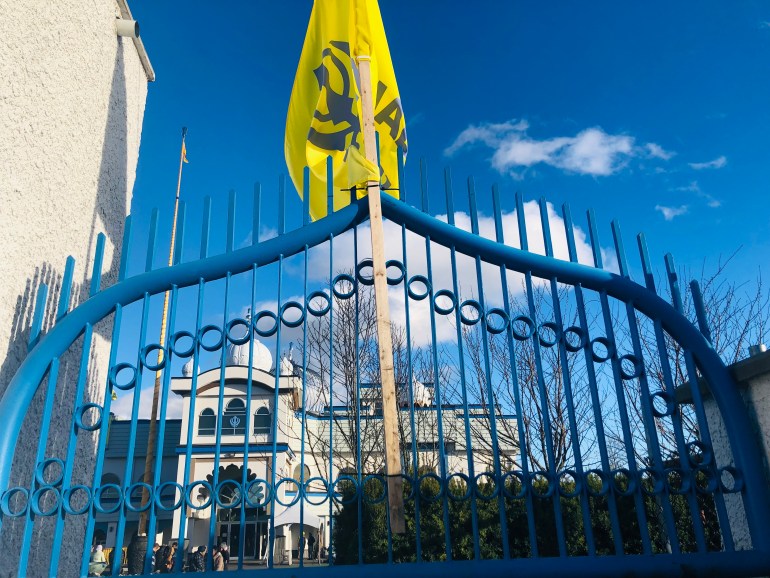
Surrey, British Columbia – On a Saturday afternoon in a Sikh temple in Surrey, Canada, boys and men with determined faces wield swords and sticks at each other in an ancient martial art called gatka. “We are a rebellious community,” Gurkeerat Singh, a farmer, electrician, photographer and spokesperson for the Guru Nanak Sikh Gurdwara Temple, tells me. Surrey is about a 45-minute train ride outside of Vancouver. The city of half a million people is home to the second-largest Sikh population in the country. Today, as the first snow of the season melts in puddles outside the building, there’s a small but encouraging crowd watching the gatka tournament inside. “From a young age, we teach our children to be armed and learn how to defend themselves,” says Gurkeerat. That need for the community to defend itself no longer feels like a hypothetical scenario in this fast-paced suburban city, which has the slogan: “The future lives here”. Not since the assassination of Sikh separatist Hardeep Singh Nijjar in Surrey in June. “The game has completely changed,” says 42-year-old Moninder Singh, a spokesperson for the British Columbia Gurdwaras Council. “Now, it’s no longer, you live to fight another day but you don’t know if you’ll live, the way they’re operating. Hardeep’s assassination, although not a surprise, was still unprecedented.” “They” refers to the Indian government and “you” to the Sikh community in Surrey, which is at the eye of a major diplomatic and political storm that has engulfed relations between Ottawa and New Delhi relations. The gates of Guru Nanak Sikh Gurdwara [Amy Fallon/Al Jazeera] Nijjar, the Guru Nanak Sikh Gurudwara president who came to Canada as a refugee in 1997 from Punjab in northwest India, was driving out of the temple’s parking lot in his pick-up when he was shot dead by two masked assailants on June 18 – Father’s Day. Many in the community believe the killers were local gangsters, hired by the Indian state. They felt vindicated when Canadian Prime Minister Justin Trudeau announced to Parliament in September that there was credible evidence that India had a hand in the killing of Nijjar. It set off a diplomatic war: Each country expelled diplomats from the other, trade talks stalled and even visa services were temporarily affected. At the heart of the accusation against India lies its effort to crush a separatist Sikh movement that Nijjar advocated for vocally. For the past four decades, many Sikhs in communities around the world have been demanding that an independent Sikh state, known as Khalistan, be carved out for them in Punjab. India designated Nijjar and other pro-Khalistan leaders of the Sikh diaspora, such as New York-based Gurpatwant Singh Pannun, as “terrorists” – a charge they and their supporters deny. And in November, federal prosecutors in the United States indicted an Indian hitman on charges of working with Indian government intelligence in a bid to kill Pannun, lending further credence to concerns that New Delhi was deploying kill squads for targeted assassinations abroad. The Indian government has insisted that such acts are not a part of its policy and said it is investigating the US allegations regarding the plot against Pannun. Six months after the murder of 45-year-old Nijjar, a married plumber and father of two, several Sikh leaders in Surrey say they have received threats on social media. Some have been alerted to threats by Canadian officials. But many in the community say that whatever happens, they will not be silenced or defeated. A banner with the image of Sikh leader Hardeep Singh Nijjar at the Guru Nanak Sikh Gurdwara Temple, the site of his June 2023 killing, in Surrey, British Columbia, Canada September 20, 2023 [Chris Helgren/Reuters] ‘Blown up in their face’ Today, Surrey is home to about 154,000 followers of the Sikh faith, 170,000 Christians and about 30,000 Hindus. A hub for students, immigrants and others looking for cheaper housing, it is a city of shopping complexes, with many boasting Indian restaurants with names like Happy Singh Sweet Treats. Further down the highway in Delta, a city that borders Surrey, there is a plaza called Little India. Unveiled as a cultural precinct for the South Asian community in 2016, it features boutiques like The Turban Villa, which sells stitched turbans and accessories and provides services “for any type of turban tying for marriages, parties” as well as bridal shops such as Sleek Bazar. There are also insurance and immigration agents, fabric stores and chai sellers. The area is a microcosm of the Sikh community’s growing stature in Canada’s public life. There are about 770,000 Sikhs in the country – the largest population outside of India – making up 2.1 percent of the population. Many families moved to Canada in the 1980s amid a harsh crackdown by Indian security agencies in Punjab against perceived supporters of the Khalistan movement, which international rights groups condemned at the time. The Punjab police were accused by activists, and even the US Department of State, of carrying out extrajudicial killings. In June 1984, the Indian Army raided the Golden Temple in the Punjab city of Amritsar with tanks to drive out armed separatists, killing hundreds of people, including pilgrims. Four months later, then-Indian Prime Minister Indira Gandhi was killed by two of her bodyguards. An anti-Sikh massacre followed in the streets of New Delhi and other parts of the country. Thousands of Sikhs were killed. Today, many see shades of a repeat of those attacks on Sikhs by Indian authorities – only this time, in Canada. “They’re very desperate right now to shut us out – and they’re willing to kill for it,” says Moninder, whose parents were born in India. “But it’s kind of blown up in their face. That’s the same tactic they used in Punjab, where they would kill and strike fear into villages and families … ‘Your child is next.’ “It didn’t really have the intended effect and I think that was apparent a week after Hardeep’s assassination, when about 30,000
Anger in Kashmir after Indian army accused of killing civilians in custody
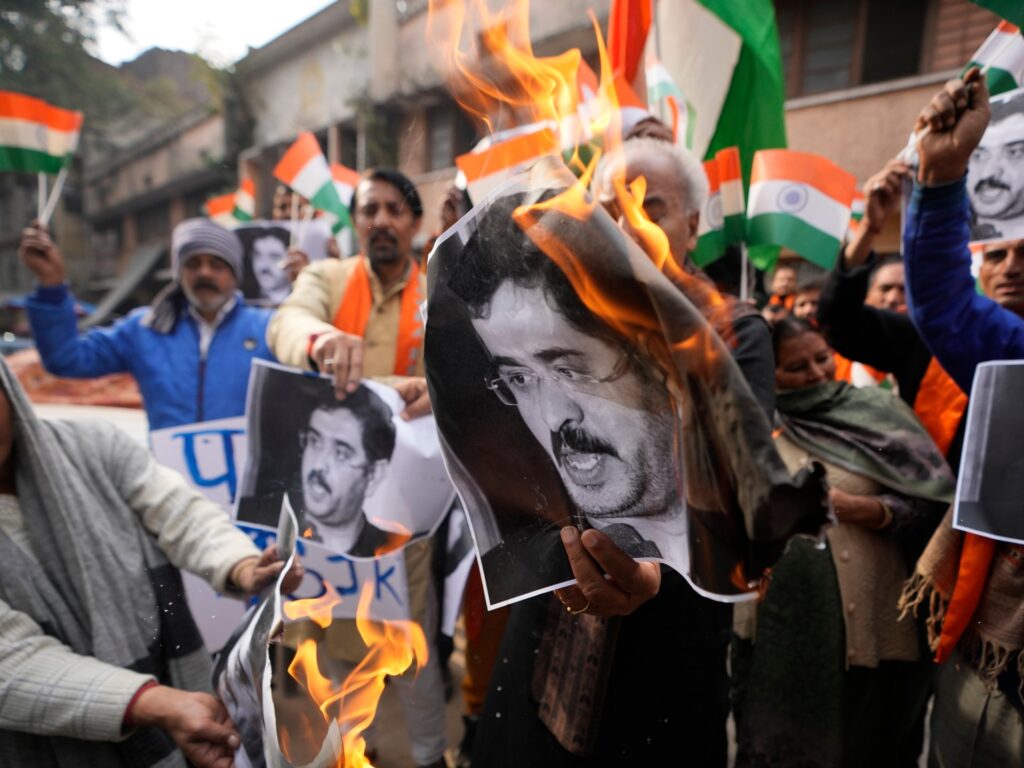
The deaths of three Kashmir civilians after they were picked up by the Indian army in the wake of a deadly rebel attack in the disputed Himalayan region have caused anger among people and led to calls for an investigation into alleged custodial killings. According to the families, the three men – Mohammad Showkat, 22, Safeer Hussain, 45, and Shabir Ahmad, 32 – were detained by the army at the hilly Topa Pir village in Poonch district on Friday morning, a day after suspected rebels ambushed military vehicles and killed four Indian army soldiers near the village. The families say they were shocked after the police called them on Friday to take back the bodies of their relatives. “There were torture marks on his body. What kind of justice is this? He died of excessive torture,” Noor Ahmad, brother of Safer Hussain, told Al Jazeera. Ahmad says the army took his brother Safeer away in front of his wife and parents. “The government has announced jobs and compensation for us. But we want justice, those who killed these innocent people should be punished. My brother has four children. “I cannot express in words how much grief we feel, no money in the world can fill that. The government will give us everything but our wounds will not heal,” he said by phone. “I have served in the Indian army for 32 years, is this what we get in return,” Ahmad, who works with Border Security Forces (BSF) in the northern state of Rajasthan, said in a broken voice. All three victims belong to a tribal community known as Gujjar, who traditionally lead a pastoral life in the mountain areas of Kashmir. ‘Investigation under way’ The Indian army on Saturday said an investigation was under way into the incident. It did not give any details about the detention and death. “Reports have been received regarding three civilian deaths in the area. The matter is under investigation. Indian Army stands committed to extending full support and cooperation in the conduct of investigations,” the Indian army said in a statement on X, formerly known as Twitter. The Information and Public Relations Department of the regional authority, which is directly run from New Delhi, said that legal action had been initiated in the matter. It, however, did not specify what action was taken and against whom. It also did not make public what were the outcomes of the medical and legal formalities. “The death of three civilians was reported yesterday in Bafliaz of Poonch district. The medical legal formalities were conducted and legal action in this matter has been initiated by the appropriate authority. The government has announced compensation for each of the deceased. Further, the government has also announced compassionate appointments to the next of kin of each deceased,” it posted on X on Saturday. The families of the victims have told Al Jazeera that the government’s offer of jobs and compensation points to the potential role of the army in the killing of the three Kashmiri men. “Had they not died in army custody, the government would not have announced compensation and jobs. They want to cover it up,” another relative of the deceased civilian said on the conditions of anonymity. Kashmir has been without an elected local government since 2019 when India stripped the Muslim-majority region of its special status and bifurcated the region into two centrally-administered regions – Jammu and Kashmir and Ladakh. Since then hundreds of rights activists, politicians and journalists have been detained, many of them freed after months-long incarceration as the Hindu nationalist government of Prime Minister Narendra Modi imposed curbs on free speech, civil liberties and media freedoms. Earlier this month, India’s Supreme Court upheld the government’s decision to revoke Article 370 of India’s constitution that granted limited autonomy to the region. India has justified the hardline measures saying it was fighting an armed rebellion backed by its Western neighbour Pakistan – a charge Islamabad has denied, though Pakistan backs Kashmir’s struggle for self-determination. More than 60,000 people have been killed since the armed rebellion erupted in the late 1980s. India and Pakistan claim Kashmir in its entirety but control only parts of it. They have fought two of their three wars over the Himalayan region, where anti-India sentiment runs high. There’s been an uptick in rebel attacks in the southern districts of Poonch and Rajouri this year. At least 34 soldiers have been killed in suspected rebel attacks since 2021. ‘Tortured in custody’ The villagers said that eight civilians were detained for questioning by the army, while three are dead, five are admitted to a hospital in Rajouri where they are being treated for physical injuries. “The government wants us to compromise but we will not compromise,” a teenage daughter of one of the injured civilians told Al Jazeera. “They were given electric shocks and chilli powder was inserted in their private parts, no questions were asked to them” she claimed. A video of army men sprinkling chilli powder on the private parts of civilians lying on the floor has surfaced on social media. They were identified by the villagers as the men who were detained by the army. Al Jazeera, however, could not independently confirm the veracity of the video. Al Jazeera reached out to the concerned officials in Jammu, southern Kashmir’s main city, for the comment but received no response until the time of publication. Fearing the spread of anger, the authorities cut off internet services and imposed restrictions in the area. But nearly 200km (120 miles) to the north, the mainstream Kashmiri political parties and their workers staged protests and demanded justice for the victims in the main city of Srinagar. In 2020, the Indian army extrajudicially killed three civilians from Rajouri. They were portrayed as rebels but investigations revealed that the army was behind the killing. The Indian army’s internal court admitted wrongdoing and sentenced an officer to life imprisonment for the killings. But last month, the military tribunal suspended the officer’s
300 Indians stuck in French airport for fourth day amid trafficking probe
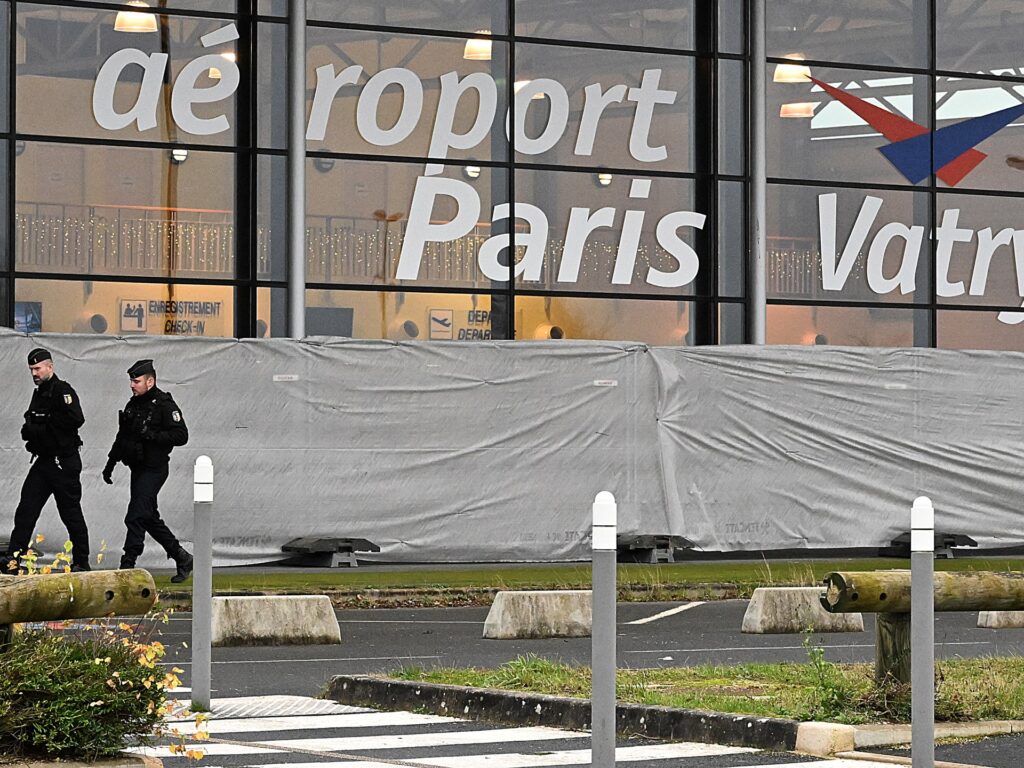
Ten of the passengers apply for French asylum, as judges probe whether a criminal group is linked to trafficking. Hundreds of Indian nationals sequestered in a French airport are being questioned by authorities over concerns they could be victims of human trafficking. Four French judges are rushing to speak to the group of over 300 Indians who have been grounded at the Vatry airport, 150km (93 miles) east of Paris, since Thursday. Their charter plane, destined for the Central American nation of Nicaragua, was stopped at Vatry airport where it had landed to refuel after authorities received an anonymous tip that trafficking victims may be aboard. It had taken off from the United Arab Emirates’ Fujairah airport and was run by the Romania-based Legend Airlines. ‘Situation is urgent’ The sequestered passengers are to appear on Sunday before French judges, who will decide whether to keep them in the airport longer or send them on their way, according to the administration for the Marne region. “I don’t know if this has ever been done before in France,” Francois Procureur, lawyer and head of the Chalons-en-Champagne Bar Association, told local media on Saturday. The situation is urgent because “we cannot keep foreigners in a waiting area for more than 96 hours. Beyond that, it is the liberty and custody judge who must rule on their fate,” he said. If necessary, a specialised judge could prolong the passengers’ detention to eight days, followed by another eight days in exceptional circumstances. After initially being kept on the airport’s tarmac, passengers were moved into an airport waiting area terminal, where beds were installed for them to sleep in, France’s BFM TV broadcaster reported. Staff were also available to provide medical assistance to those in need, the media reported. Among the group are many children and 11 unaccompanied minors. Ten of the passengers have requested asylum, news agency Agence France-Presse (AFP) reported, quoting a source close to the case. Patrick Jaloux, the head of civil protection in the Marne region, said the passengers were understandably “frustrated” after spending three nights in the airport. The Indian embassy in Paris said on Saturday that it was working for “a rapid resolution of the situation”, posting on X that “consular officials are on site”. Airline denies trafficking role Several of the detained travellers are suspected of having a different “role” in the journey than the other passengers. Two in particular are being looked into as part of a special investigation into suspected human trafficking by a criminal group, said the Paris prosecutor’s office The 15 crew members of the Legend Airlines charter flight were questioned and released, according to the airline lawyer, who denied the company had any possible role in trafficking. The airline has “has not committed any infraction”, said lawyer Liliana Bakayoko. Bakayoko added a “partner” company, which she did not name, was responsible for verifying the identification documents of each passenger. Nicaragua, where the flight was headed, has been designated by the US government as one of several countries deemed as failing to meet minimum standards for eliminating human trafficking. Nicaragua has also been used as a base by people fleeing poverty or conflict in the Caribbean as well as far-flung countries in Africa or Asia, because of relaxed or visa-free entry requirements for some countries. From there, the migrants travel north by bus with the help of smugglers. The influx of Indian migrants through Mexico has increased from fewer than 3,000 in 2022 to more than 11,000 from January to November this year, according to the Mexican immigration agency. Indian citizens were arrested 41,770 times entering the US illegally from Mexico in the US government’s budget year that ended September 30, more than double from 18,308 the previous year. Adblock test (Why?)
Gaza, US universities and the reproduction of power

On the morning of December 10, I awoke to two messages. The first was from my father. He was asking me to write to the US Department of State to request the evacuation of my uncle and his family from Rafah, in southern Gaza, where they are “without any food, shelter or water and very terrified from the bombing all the time”. My aunt, my uncle’s wife, was killed by the Israelis in Gaza in 2014. Now, he and his children face the real possibility of joining her in death. The second was an email from a friend in a senior leadership role at one of the large, multilateral organisations. We attended the University of Pennsylvania together and she was dismayed by the capitulation of its current president, Liz Magill, to the right wing. But she felt, justifiably, that she was unable to speak out because of the oppressive environment at work, and in America in general. If Magill, a moderate who stood for very little, could not stand up to a clutch of rusty pitchforks, what hope was there for a woman of colour with Middle Eastern roots? Those two messages, coming so close together, neatly captured the various fronts of the war on Palestinian lives. ‘We believed what we wanted to believe’ I graduated from the University of Pennsylvania in 2006 with a BA in political science. My experience of the school was mixed. Having resources – which Penn does – is a nice thing for lots of reasons. But having money may also indicate an excessive orientation around, and to, it. Back then, securing a well-paying job after college was the main thrum of undergraduate life. The internships with consulting and banking firms were highly prized and expected to lead to rich offers from those same firms in New York or London. Things don’t appear to have changed much: Penn ranked first, ahead of Princeton, Columbia, MIT and Harvard, in the 2024 Wall Street Journal/College Pulse Salary Impact study. Or, as the headline in the WSJ frames it, the school is first among “The Top US Colleges That Make Their Graduates Richer”. Which isn’t to say that Penn was an apolitical place; the accumulation of large amounts of money cannot possibly be apolitical. I recall an early conversation with a young woman who, upon learning I was from Palestine, responded with “there’s no such thing”. Separately, I remember being raged at by another undergraduate, in the context of my student activism, “if you don’t like it here you can go home, terrorist”. While I suspect that Penn’s focus on money may have been a major contributor to Magill’s ultimate undoing – her testimony at Congress has been cited as a reason for the withdrawal of a $100m donation – that is not the full story. My experience of Penn was representative of elite America’s pinched disdain for anything which threatens its conception of itself as meritocratic, deserving of exalted status and morally beyond reproach. It’s an essentially conservative posture, one that resists growth and defies all efforts at meaningful social education. I observed that posture later in life, as a graduate student at Harvard’s Kennedy School of Government. There, I met some of the high-achieving minds behind President George W Bush’s catastrophe in Iraq. I remember one conversation I had with a senior State Department official who now serves as ambassador to a large country in Asia. “Hans Blix,” I said, referring to the former head of the United Nations Monitoring, Verification and Inspection Commission, “told you there were no weapons of mass destruction. Why did you go to war?” He explained, disarmingly, that “we believed what we wanted to believe”. In seven words, he captured the essence of a system that insulates its people from accountability, which today partially explains why my family in Gaza are left to die along with the rest of the Palestinians there. It explains President Joe Biden’s priggishness and the egg on his National Security Advisor’s long face. Reproducing power When I first learned of the hunt for large quarry at Penn and Harvard I shrugged. I regarded the topic as a sideshow; false moralism in an alternate universe meant to distract from the ongoing atrocities in Palestine. But now I think I was probably too dismissive of what was happening, and how it related in a direct, if multifaceted, way to the Israeli genocide in Gaza. The relationship between Capitol Hill, University City, where Penn rests, expansively, Cambridge and Rafah is correctly understood through the prism of power. The main role of elite higher education institutions in America is to reproduce power and the infrastructure which attends it. If society is an organism, the university is the clonal petri dish. But in nature, nothing is reproduced perfectly; evolution is an essential feature of every biological system. And evolution within the university leads to a divergence from the staunchly guarded power structures that define our existing political order. The grotesque threshing by the right wing, on television, in newspapers and through congressional inquiries, is animated by the awareness that young, educated people invariably think differently across generations. The assault on US universities is part of a larger effort to direct and control the evolution of thought in this society. In this context, values are relative and speech is only valuable insofar as it isn’t performed and lies dormant in the realm of abstract ideas, like “freedom” or “the arc of the moral universe”. Now Magill stands, unwillingly in all likelihood, as the lamb on the altar. Collateral damage in so many words. The people who demanded her resignation may not have been able to articulate their whole reason for wanting her ouster. But they demonstrate an innate understanding of the stakes: the capacity of the organism to reproduce itself is embedded within the university, more than anywhere else. What they fail to understand, however, is that like Daniel Dennett’s theory of the mind, independent thinking arises everywhere at once. Nothing