

‘Did not ask for ceasefire’ in Gaza: Biden after phone call with Netanyahu
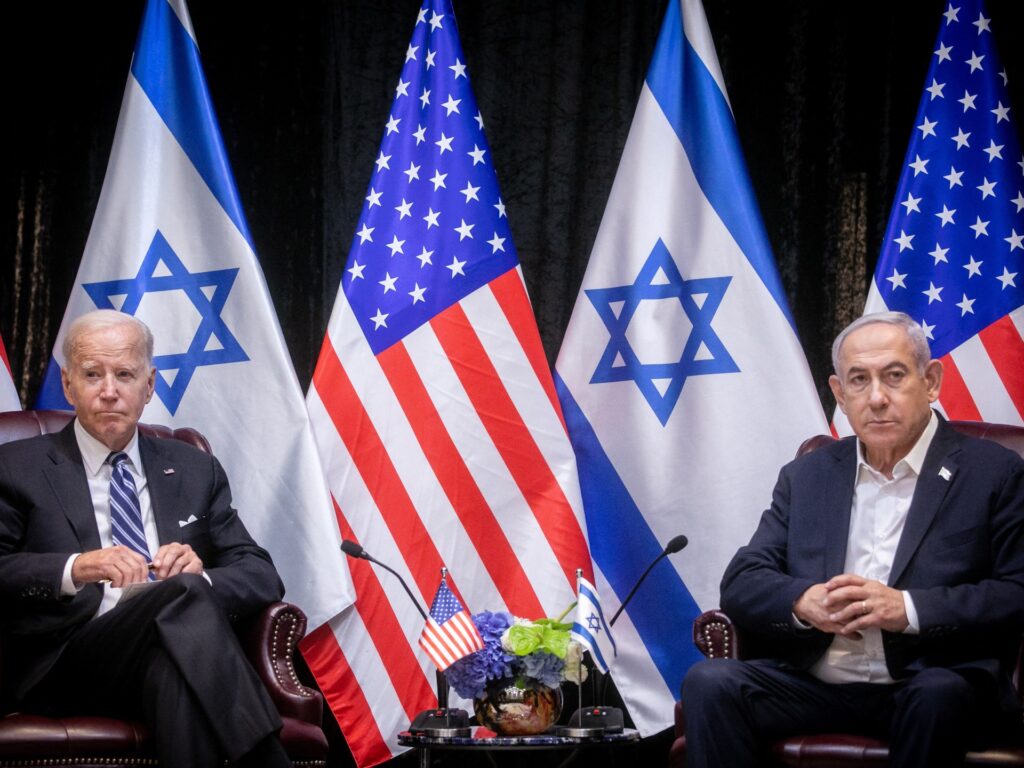
White House says the two leaders discussed Israel’s military campaign in Gaza, including its ‘objectives and phasing’. United States President Joe Biden says he did not ask Israeli Prime Minister Benjamin Netanyahu for a ceasefire in the war between Israel and Hamas in Gaza in a telephone call between the two leaders. “I had a long talk with Netanyahu today [Saturday] and it was a private conversation,” Biden told reporters on Saturday. “I did not ask for a ceasefire,” he said, in response to a shouted question. In a statement later, the White House said Biden and Netanyahu discussed Israel’s military campaign in Gaza, including its “objectives and phasing”. Biden “emphasised the critical need to protect the civilian population including those supporting the humanitarian aid operation, and the importance of allowing civilians to move safely away from areas of ongoing fighting,” said the statement. “The leaders discussed the importance of securing the release of all remaining hostages.” The call between the two leaders came a day after the United Nations Security Council (UNSC) passed a resolution calling for the scaling up of aid for Gaza but fell short of calling for a ceasefire or a pause in weeks-long fighting. The resolution, which demanded “immediate, safe and unhindered” deliveries of life-saving aid to Gaza “at scale”, was passed after UNSC members wrangled for days over its wording and toned down some provisions at Washington’s insistence. The US and Russia abstained from the vote, whose impact on the ground, aid groups fear, will be close to nil. “This resolution has been watered down to the point that its impact on the lives of civilians in Gaza will be nearly meaningless,” Avril Benoit, the executive director of Doctors Without Borders, said in a statement. “The way Israel is prosecuting this war, with US support, is causing massive death and suffering among Palestinian civilians and is inconsistent with international norms and laws,” Benoit added. The US also opposed the demand to create a UN monitoring mechanism for aid, assuring Israel would continue to have a role in inspecting deliveries. Netanyahu on Saturday “expressed his appreciation” for the stance taken by the US at the UN, his office said. He also “made it clear that Israel will continue the war until all its goals are completed”. More than 200 killed in 24 hours Israel has continued to bomb Gaza for nearly 80 days, with more than 200 people killed in the past 24 hours. Gaza’s Health Ministry said the death toll since the start of the attacks rose to 20,258 on Saturday, most of them being women and children. According to UN estimates, the war has displaced 1.9 million of Gaza’s 2.3 million population. The UN has described the situation in Gaza as “beyond catastrophic”, with residents struggling to find food, fuel and water, while living in crowded shelters or tents. In a post on X, the UN relief agency for Palestinian refugees (UNRWA) said it “cannot deliver meaningful aid” while the Israeli bombardment of Gaza continues. “It is extremely tragic that politics stand in the way of 2.2 million people’s survival in Gaza,” UNRWA spokesperson Tamara al-Rifai said at a news conference on Saturday. Adblock test (Why?)
Gaza media office says 100 journalists killed since Israeli attacks began
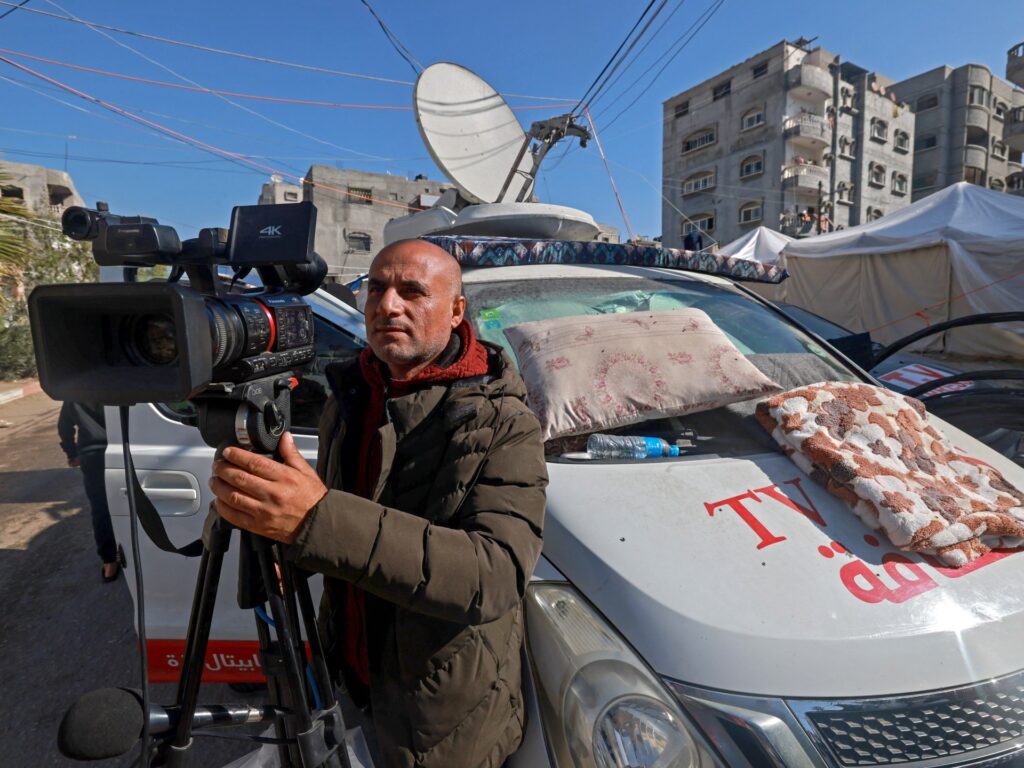
Palestinian journalist Muhammed Abu Hweidy latest to be killed in Israeli attack on his home in the east of Gaza City. At least 100 journalists have been killed since Israel’s war on Gaza began on October 7, according to new figures released by the government media office in Gaza. Palestinian journalist Muhammed Abu Hweidy was the latest to be killed in an Israeli air raid on his home in the east of Gaza City on Saturday, the media office said. “The number of journalists killed has risen to 100, men and women, since the start of the brutal war on the Gaza Strip, after the martyrdom of journalist Mohammed Abu Hweidy in an Israeli airstrike in the Shujaiya neighborhood,” the office said on Telegram social media. Palestinian officials in Gaza say the number could be much higher. However, according to a tally by the Committee to Protect Journalists, at least 69 journalists have been killed in the conflict, including Al Jazeera Arabic’s cameraman Samer Abudaqa. More than 50 media premises or offices in Gaza have been completely or partially destroyed by Israeli attacks. Hundreds of Palestinian journalists and their families have been forcibly displaced to the south. The media workers were also forced to abandon their reporting equipment in offices in the north to live and report under difficult conditions amid frequent communication blackouts. Journalists working in areas of armed conflict are protected under international humanitarian laws, which Israel is accused of violating repeatedly. Palestinian journalists have said Israel is deliberately targeting them to silence their stories. Tim Dawson, deputy general secretary at the International Federation of Journalists, told Al Jazeera it is becoming “impossible to ignore such a terribly, terribly high toll” of journalists. “I don’t think we have seen a death toll of journalists to this concentration in any conflict that I can think of. There were about 1,000 journalists in Gaza at the beginning of this conflict. And while there are slightly different counts of precisely how many have died, if between seven-and-a-half and 10 percent have died, that is an extraordinarily high number,” he said. Dawson said the journalists in Gaza “only have cameras, microphones and notebooks and continue doing their work despite this absolutely mind-blowing death toll”. When asked by Al Jazeera if Israel is targeting journalists, he said some Palestinian journalists have told him they “received threatening calls from people” purporting to be from the Israeli military, “warning them that they are going to be targeted or that their families are going to be targeted in the coming days”. Adblock test (Why?)
Will motion passed by UN Security Council on Gaza have any impact?
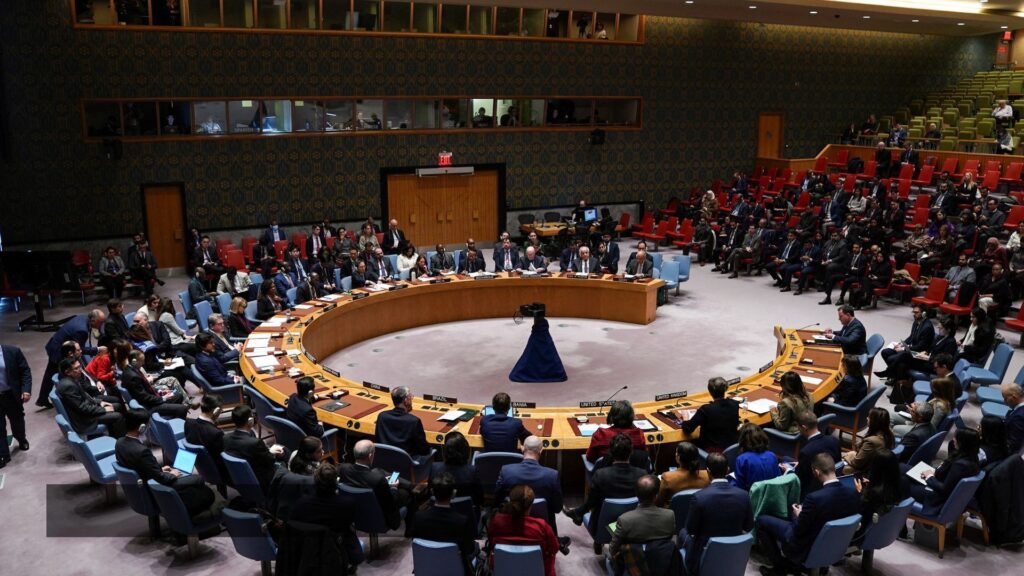
Resolution on aid has been watered down to avoid a US veto and omits call for an end to hostilities. The United Nations Security Council has passed a motion on the war on Gaza. It comes after two months of Israeli attacks that have killed more than 20,000 Palestinians. The resolution – weakened by pressure from the United States – calls for more aid but not for Israel to stop its bombardment. So, will it have any impact? Presenter: Dareen Abughaida Guests: Scott Lucas – professor of US and international relations at University College Dublin and founder and editor of online news site EA Worldview Dmitry Babich – political analyst at the InoSMI internet media project in Moscow Maleeha Lodhi – former Pakistan permanent representative and ambassador to the UN Adblock test (Why?)
Rebel attack in western Burundi kills at least 20
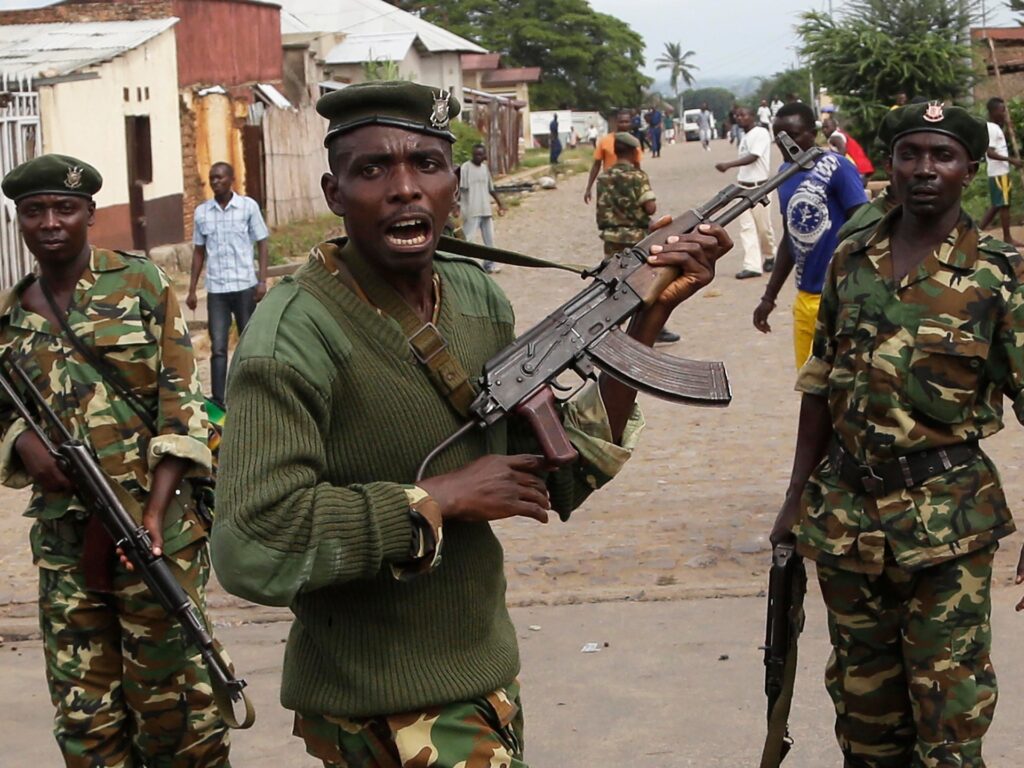
It is the second attack in two weeks by the RED-Tabara rebels, who have been largely inactive inside Burundi since 2021. Gunmen have killed at least 20 people and wounded nine others near Burundi’s western border with the Democratic Republic of the Congo (DRC), an official has told reporters. Those killed in the Friday evening raid on the town of Vugizo included 12 children, two pregnant women and a police officer, government spokesperson Jérôme Niyonzima said on Saturday. The attack was claimed by the RED-Tabara rebel group, considered a “terrorist” group by the Burundian authorities. The attack targeted nine homes in the town, close to the Lake Tanganyika border with the DRC. At least nine others wounded in the attack have been hospitalised. The RED-Tabara rebel group, which has been battling Burundi’s government from bases in the eastern DRC since 2015, claimed on the social media platform X to have killed nine soldiers and one police officer. The group denied having targeted civilians. Local residents said they heard sounds of gunfire and explosions during the attack. Witnesses who spoke to the Associated Press said the rebels appeared to be wearing Burundian Army uniforms and civilians were “left to their own devices” after the military and police fled. “We realised they were attackers when they attacked the police position guarding the border,” said Priscille Kanyange, a farmer. “Many people here were injured by bullets [as they were] trying to flee.” Another farmer, Innocent Hajayandi, who witnessed the attack, said security forces fled, “leaving the residents to their own devices”. André Kabura, a grocery shop owner who was wounded in both legs in the gunfire, said the military and police were slow to regroup and fend off the attackers. Two military and security sources told the AFP news agency the attack targeted “a military position”. “The civilians were caught in the crossfire and were killed, and then the assailants retreated to DRC,” a senior military official told the AFP on condition of anonymity, confirming the toll of 20. The attack was the second in as many weeks inside Burundi by the rebels, who have not been active inside the country since September 2021, when they carried out a series of attacks, including on the Bujumbura airport. Since then, their activities have been taking place in the DRC’s South Kivu province. But on December 11, they exchanged fire with the military in northwestern Burundi. On Friday, Burundian President Évariste Ndayishimiye told army, police and intelligence officers to remain vigilant, warning that “the enemy never sleeps even if we have security”. Adblock test (Why?)
China considers revising gaming rules after tech giants lose billions

Draft document outlining restrictions caused major stir as tech stocks tumbled, sent investors into a panic. Chinese authorities have said they may revise newly drafted online gaming rules shortly after the planned restrictions caused major tech companies to lose billions of dollars. State broadcaster CCTV reported on Saturday that the authorities have heard the “concerns and opinions raised by all parties”, adding that “the State Press and Publication Administration will study them carefully and further revise and improve them”, referring to the media regulator. The authorities released a draft on Friday with a wide range of rules and regulations aimed at curbing online spending and rewards in video games. Its impact was immediate, dealing a massive blow to the world’s biggest games market. Investors went into a tailspin, leading to as much as $80bn in market value being wiped off from China’s two biggest companies, industry leader Tencent Holdings and Netease. According to the new rules, online games would be banned from giving players rewards if they log in every day, if they spend on a game for the first time, or if they spend several times on a game consecutively. All are common incentive mechanisms in online games. CCTV reported that regulators may now change the wording of sections of the draft rules that limit the ability to encourage daily logins and wallet top-ups. China has become increasingly tough on video games over the years. Its first major move against the gaming sector came in 2021, when Beijing set strict playtime limits for under-18s and suspended approvals of new video games for about eight months, citing gaming addiction concerns. As a result of the crackdown, 2021 and 2022 were the most difficult years on record for the Chinese gaming industry as total revenue shrank for the first time. China revised its position last year and started approving new games again, but regulators have continued to set their sights on curbing the time children play in-game and the amount of money they spend. As part of Friday’s draft, which signifies the strictest limits yet, games are also banned from offering probability-based draw features to minors, and from enabling the auction of virtual gaming items. The new rules reflected Beijing’s concerns about user data, requiring game publishers to store their servers within China. The draft comes as China’s video game market has returned to growth this year as domestic revenue rose 13 percent to 303 billion yuan ($42.6bn), according to the industry association CGIGC. Due to the sheer size and impact of Chinese gaming giants, the global video games market could also be affected in the long run. Several United States and European video games developers saw shares take a hit after Friday’s announcement, but the losses were small when compared with Tencent’s 16 percent tumble. Friday’s news wiped about $54bn off the company’s share value, according to Bloomberg News. The administration is seeking public comment on the rules by January 22. [embedded content] Adblock test (Why?)
The US is no country for old men

Shortly prior to his death from prostate cancer in August of this year at the age of 72, my father emerged from a state of muteness to recite, with a burst of energy, the 1927 poem, Sailing to Byzantium, by William Butler Yeats, which begins: “That is no country for old men.” My mother, my uncle, and I were present for the impromptu performance, which took place in my father’s bed in Washington, DC, where he had commenced in-home hospice care after the chemotherapy treatments that had been forced upon him by profit-oriented doctors had accelerated his demise. This was but one of many poems my father had memorised as a young man intent on honing his intellectual credentials; my mother and uncle – who in their youth had also fallen under the influence of my dad’s cerebral pursuits – joined in on the lines they remembered. Having completed his vehement recitation, my father resumed his generally mute state, which was thereafter punctuated only by intermittent outbursts about wanting to die. I have no way of knowing what was going through my dad’s mind during that final poetic eruption, but the first line of the Yeats poem did seem to be a fitting commentary on the country in which we found ourselves – the one where we had all been born and the one my parents and I had spent years avoiding. My mom and dad had only relatively recently returned to reside in the homeland after nearly eight years in Barcelona; I had flown into Washington in August from Turkey, which was one of my regular stops in a 20-year self-imposed exile. Indeed, my father’s final months had merely confirmed that the US is “no country for old men”. Counterproductive chemotherapy treatments were but one of the ways he had been milked for all he was worth, before being turned over as prey to the lucrative realm of funeral and cremation services. For example, for a one-month prescription of the prostate cancer drug Xtandi, a medication developed with none other than US taxpayer money, my father had been charged $14,579.01 – ie, more than many people in the United States earn in several months. For folks lacking the means to pursue healthcare and other basic needs, US capitalism can be deadly, too. And while US society specialises in oppressing a wide range of demographics – minus, of course, the elite minority that thrives on acute inequality – the treatment of the elderly is particularly cynical. Having outlived their labour-based exploitability as cogs in the capitalist machine, older people become decaying objects from which profit must continue to be extracted until the very last minute. According to the results of a West Health-Gallup survey published in 2022, approximately one in four Americans aged 65 and older and three in 10 Americans between the ages of 50 and 64 said they had sacrificed basic needs, such as food, to pay for healthcare. The study found that older women and Black Americans were disproportionately affected and that punitive health care costs constituted a significant source of stress in the daily lives of older Americans, with stress naturally only exacerbating existing medical issues. Add vampire-like insurance companies to the mix, and the panorama becomes ever more morbid. The prohibitive fees associated with many programmes – coupled with insurance outfits’ frequent refusal to cover lifesaving treatments – means that life itself continues to be a privilege and not a right in the United States. Then there’s the $34bn assisted-living industry, which a recent Washington Post investigation revealed to be plagued by wanton neglect despite charging an average of $6,000 a month per resident. Since 2018, the Post reported, more than 2,000 residents have wandered off unnoticed from such facilities, and nearly 100 of them have died after doing so. So much for “assisted living”. To be sure, the loneliness and isolation that so often attends old age in the US does nothing to increase life expectancy; nor does the unique stigma that US “culture” attaches to ageing. As the American Psychological Association (APA) has noted, institutionalised ageism in the United States entails a “host of negative effects, for people’s physical and mental wellbeing and society as a whole”. Granted, loneliness and isolation are often lifelong afflictions for inhabitants of the so-called “land of the free”, where the collective mental wellbeing is hardly helped by a dog-eat-dog insistence on individual success at the expense of communal and family bonds and the conversion of human beings into consumerist automatons. And the cutthroat, transactional nature of existence in the US culminates, appropriately, with elderly bodies being put up for grabs by pharmaceutical companies, nursing homes, and the corporate racket known as the US healthcare system. That said, the US is, in fact, a fine country for some old men – such as former warmongering diplomat Henry Kissinger, who perished at home in Connecticut in November at the ripe old age of 100 after spending a good part of his life causing the deaths of countless people worldwide. Not long after my father’s death in August, I fell into conversation with a Bolivian man in his 50s who had resided in Washington for more than two decades and who expanded on the “no country” theme. He planned to stick it out for another 10 to 15 years before returning to his home city of Cochabamba, he told me, because he couldn’t afford to be old in the US. And while the US may be “no country for old men”, it’s not much of a country for anyone else, either. The views expressed in this article are the author’s own and do not necessarily reflect Al Jazeera’s editorial stance. Adblock test (Why?)
Yemen warring parties commit to ceasefire, UN-led peace process, says envoy
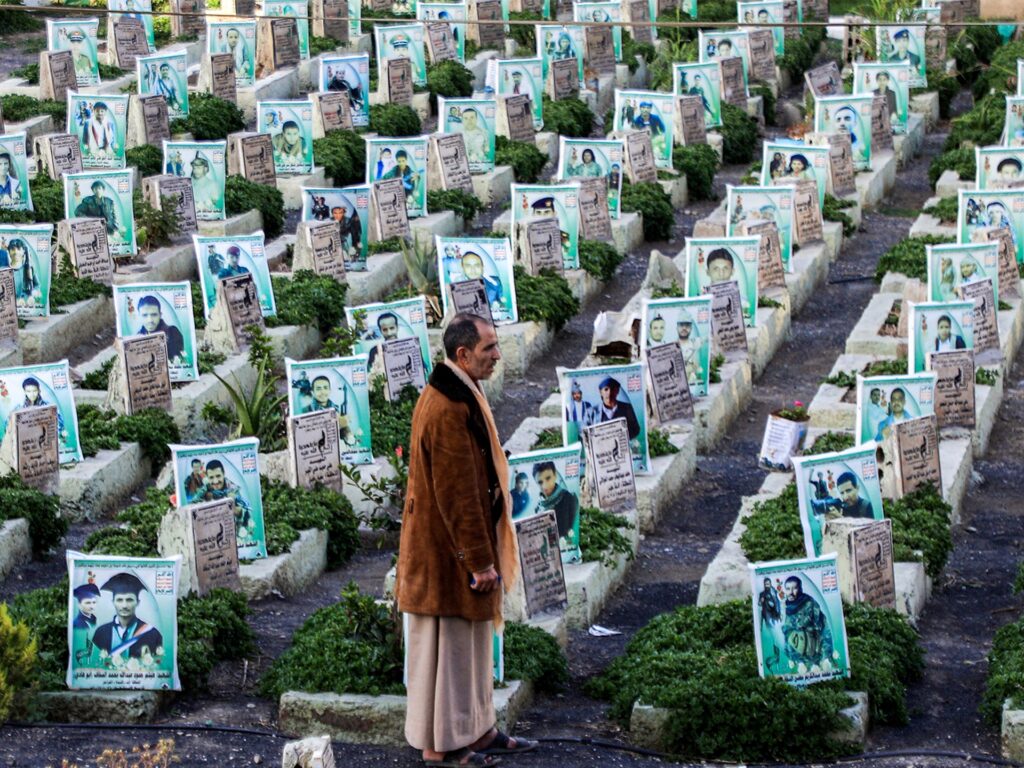
Rival groups commit to new ceasefire and engage in UN-led peace process to end the nine-year war, says UN special envoy for Yemen. The warring sides in the long-running conflict in Yemen have committed to steps towards a ceasefire and engage in a United Nations-led peace process, according to the UN special envoy for Yemen. The announcement by Hans Grundberg on Saturday marks the latest step to end a nine-year war that has killed hundreds of thousands of people and triggered one of the world’s worst humanitarian crises. Following a series of meetings between the Saudi-backed Yemeni government and Iran-aligned Houthis in Saudi Arabia and Oman, a statement by Grundberg’s office said he “welcomes the parties’ commitment to a set of measures to implement a nationwide ceasefire, improve living conditions in Yemen, and engage in preparations for the resumption of an inclusive political process”. The envoy “will now engage with the parties to establish a roadmap under UN auspices that includes these commitments and supports their implementation”, the statement said. The plan, along with a ceasefire, will also include the two sides’ commitment to resume oil exports, pay all public sector salaries, open roads in Taiz and other parts of Yemen, and “further ease restrictions on Sanaa Airport and the Hodeidah port”, it added. Yemen has been gripped with conflict since the Houthis took control of capital Sanaa in 2014, triggering a Saudi-led military intervention in support of the government forces the following year. A UN-brokered ceasefire that took effect in April 2022 brought a sharp reduction in hostilities in the country of 30 million people. The truce expired in October last year, though fighting largely remains on hold. In September, Houthi officials visited Riyadh for the first time since the war broke out. That followed a first round of Omani-mediated consultations between Riyadh and Sanaa. The peace initiatives gained momentum after regional rivals Saudi Arabia and Iran agreed to re-establish ties in a deal brokered by China. The UN envoy’s announcement also came amid a flurry of Houthi attacks on key shipping lanes in the Red Sea in solidarity with the Palestinians under attack in the Gaza Strip for more than two months. Adblock test (Why?)
Taiwan spots Chinese warships, aircraft near island ahead of elections
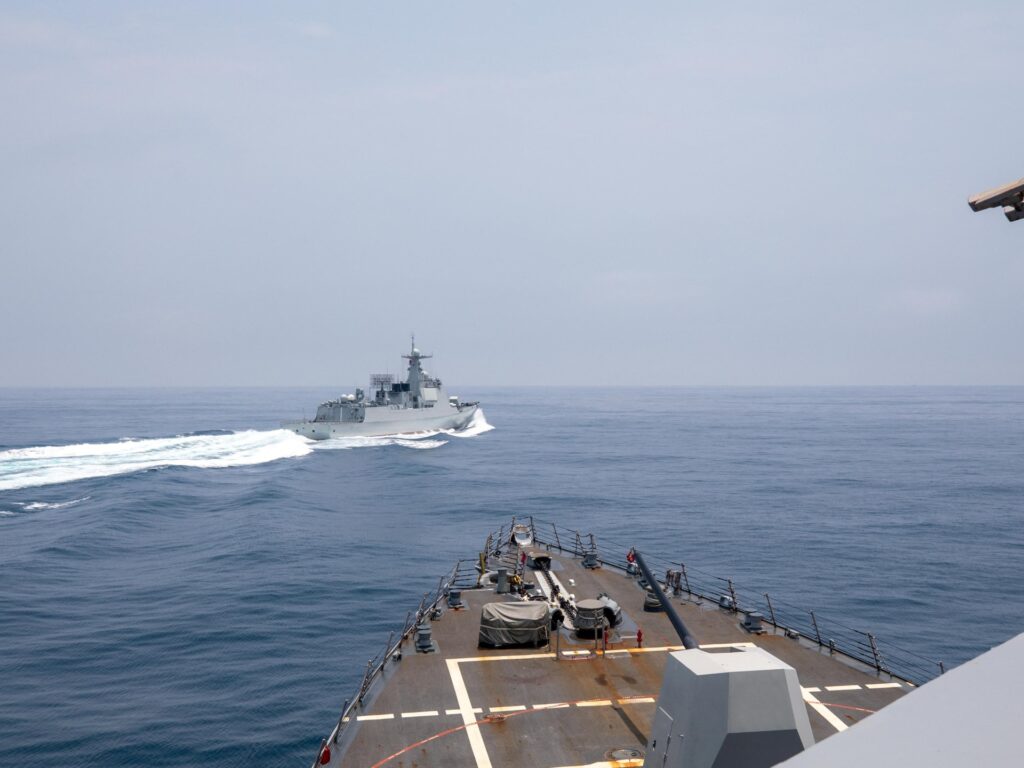
Increased activity along Taiwan Strait comes ahead of January 13 polls. Taiwan has reported spotting Chinese warships around the island and aircraft crossing the Taiwan Strait’s sensitive median line weeks before elections in the democratically governed nation. On Saturday, the Ministry of Defence said in a post on X that since 1:30pm (05:30 GMT) it had detected J-10, J-11 and J-16 fighters as well as early warning Chinese aircraft operating in the airspace to the north, middle and southwest of Taiwan. Ten aircraft crossed the Taiwan Strait, or areas close by, working with Chinese warships to carry out “joint combat readiness patrols”, the ministry said, adding that its armed forces have taken steps to respond. From 1330(UTC+8) today, we have detected PLA aircraft (including J-10, J-11, J-16, Y-8, KJ-500, etc.), 10 of which crossed the median line and entered our North, Central, SW ADIZ. In addition, the aircraft also conducted joint combat patrol with PLAN vessels. — 國防部 Ministry of National Defense, R.O.C. 🇹🇼 (@MoNDefense) December 23, 2023 The uptick in Chinese military activity in the Taiwan Strait comes just weeks before Taipei heads to the polls. Earlier this month, the defence ministry also spotted warships and a balloon near the island at night. While Beijing has been sending warplanes and vessels around Taiwan on a near-daily basis, nighttime activity by Chinese aircraft and the appearance of a balloon are rare. Democratically governed Taiwan, which China claims as its own territory, has complained for years of regular Chinese military patrols and drills near the island. Beijing has not yet commented on the recent military activities near Taiwan. But it has previously described them as aimed at preventing “collusion” between Taiwan separatists and the United States, and protecting China’s territorial integrity. Tensions before elections Ahead of presidential and parliamentary polls on January 13, analysts say China is running a multi-pronged campaign to try to keep the ruling Democratic Progressive Party (DPP) from re-election. Beijing wants the opposition Kuomintang (KMT) party to win as it seeks friendlier relations with China. Polls, however, show Vice President Lai Ching-te and running mate Hsiao Bi-khim from the DPP in the lead. China has refused to engage in dialogue with the DPP, which the ruling Chinese Communist Party (CCP) claims is “separatist”. The DPP rejects such accusations and says it is up to the people of Taiwan to choose their leaders and their future. Beijing has also targeted individuals and public figures in Taiwan through online campaigns and tax probes, seeking to influence how they vote. Ai-Men Lau, a research analyst at the Taiwan-based organisation, Doublethink Lab, which tracks malign Chinese influence operations and disinformation campaigns as well as their impact, told Al Jazeera that while it can be difficult to trace much of the content directly to China, there are often signs pointing in that direction. “We are seeing the PRC increasingly using Taiwanese voices such as journalists, local proxies and social media influencers to get their message across,” she added, using the acronym for the People’s Republic of China. Meanwhile, government authorities in Taiwan have put the region on high alert for Chinese activities, military and political, ahead of the elections. While campaigning has kicked into high gear, how the next government handles relations with China remains a major point of contention. Adblock test (Why?)
‘Our lives are still fractured’: Northern Ireland’s ‘peace babies’

Belfast, Northern Ireland — The political leaders caught up in the 30-year Troubles of Northern Ireland were so consumed with fighting over “land, soil, territory”, that they completely neglected the environmental welfare of that very same land, soil and territory, say young people born since the Good Friday Agreement (GFA) 25 years ago. This is just one of the dismal legacies of the Troubles that young people born at about the time of the 1998 GFA – also known as “peace babies” – say they have been left to clean up. At the One Young World 2023 Summit for young people held in October, marine life researcher Heidi McIlvenny said much of Northern Ireland’s most precious natural resources – including its marine and freshwater ecosystems that sustain life itself – have been badly neglected and mismanaged. “Twelve percent of all species on this island are threatened with extinction,” she said. The Good Friday Agreement, which brought more than three decades of conflict in Northern Ireland to an end, marked its 25th anniversary in April this year. But the occasion was overshadowed by a sixth shutdown of the region’s devolved government which was created by the GFA, but which has been lying dormant for more than 40 percent of the time since 1998 due to disagreements between leading political parties. Political leaders were so consumed with fighting over ‘land, soil, territory’, they neglected the welfare of that land, said Heidi McIlvenny at the One Young World 2023 summit, 25 years after the Good Friday Agreement which brought the Troubles to an end [Courtesy of One Young World 2023 Belfast Summit] ‘Holding us to ransom’ Jacinta Hamley, 27, a climate campaigner who ran as a candidate for the Green Party in this year’s local elections, told Al Jazeera that much of Northern Ireland’s political “stagnation” derives from power-sharing arrangements that allow the biggest Nationalist and Unionist parties to hold devolved government to “ransom”. “Whenever I look at the last 25 years in politics here, what I think we’ve seen is a failing system,” she said. The power-sharing institutions created under the 1998 peace accord require governing agreements between the biggest parties of Nationalists (those who want a united Ireland) and Unionists (those who want to remain part of the UK). However, the region’s devolved Assembly and decision-making Executive at the Stormont Estate collapsed under the largest Unionist formation, the Democratic Unionist Party, last year due to a prolonged row over post-Brexit customs arrangements in the Irish Sea. While these institutions are not functioning, governance is passed to civil servants. This severely limits the actions of the government and often raises questions about overreach by unelected officials. Talks to restore devolved government stalled once again this week, with an Executive now unlikely to be formed until 2024 at the earliest. A religious mural is pictured among houses in the Nationalist Ardoyne area of north Belfast, one of Northern Ireland’s communities rocked during the Troubles and which remains poor [Paul Faith/AFP] Falling between the cracks In the meantime, vulnerable groups are slipping between the cracks of this political dysfunction, youth leaders say. Those who live in areas which bore the brunt of the Troubles – often those which were divided by huge concrete barriers – report seeing higher levels of deprivation than they did during the bitter 30-year conflict that killed more than 3,500 people. Members of communities like the Nationalist Ardoyne enclave and the Unionist Woodvale area, both in north Belfast, say deprivation levels are worse now than they were 25 years ago. At the time of the agreement, such areas were promised a “peace dividend” in the form of economic prosperity which many feel has failed to materialise. “The fact remains that the effects of the Troubles continue to fracture lives,” University of Ulster student Caitlin Ball told delegates on the final day of the summit. “Communities across the North continue to operate under the grip of paramilitary control. And trauma – whether it be from our own lived experience or intergenerational trauma that has filtered down from the conflict – remains rife and unresolved.” Loyalist supporters attempt to march past Nationalist Ardoyne shops in north Belfast, Northern Ireland on July 13, 2015, but are prevented by police [Paul Faith/AFP] Ball also called for Northern Ireland to face down growing xenophobic sentiment in an era of diversifying social shifts. Around 4 percent of people in Northern Ireland are now from a Black, Asian and Minority Ethnic background, according to the 2021 census, while it is thought to be home to about 150,000 migrants. This is double the 2011 figure of 1.8 percent (32,400 people) and more than four times the 2001 figure of 0.8 percent (14,300). Ball highlighted “a rise in racially motivated attacks and intimidation”, with race hate crimes in some parts of Belfast having doubled in the past five years. She argued that anger towards these groups was “misdirected” and that it should instead be aimed at political leaders and institutions that she said had failed many within Northern Ireland. There has been a tendency to overlook the experiences of those left behind during 25 years of relative peace, she said. Ball added it was essential to address the needs of “those who are homeless, who suffer from substance abuse, those who can’t hold down a job because of poor mental health issues, the Irish Traveller community, asylum seekers. “We can’t stand here and talk about peace and reconciliation if that same peace can’t now be extended to the growing communities of people that now call Ireland home.” A mental health epidemic A number of young people, including some who gave speeches at the summit’s “What Next for Northern Ireland?” panel event, highlighted the region’s growing mental health epidemic. In the 20 years immediately following the Good Friday Agreement, suicides in the region outstripped the number of lives lost during the 30 years of the Troubles by nearly 1,000, according to figures presented by a coalition of healthcare professionals
Israel says Gaza war is like WWII. Experts say it’s ‘justifying brutality’
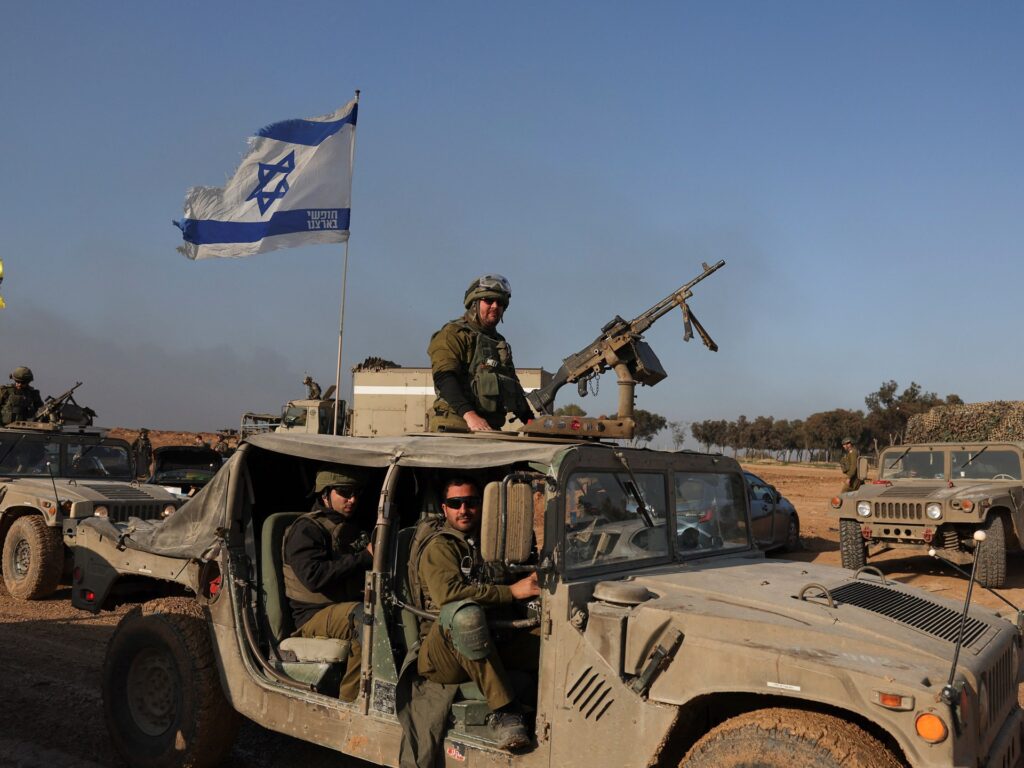
Israel’s campaign of relentless bombardment against the Gaza Strip had been raging for three weeks when the country’s Prime Minister Benjamin Netanyahu was asked to address the heavy civilian death toll in the Palestinian enclave. Netanyahu, who had earlier evoked the 9/11 attacks on New York’s Twin Towers and the Pentagon in 2001 to describe the deadly Hamas assault on southern Israel on October 7, looked to the second world war for validation, on this occasion. The hawkish Israeli premier referred to the time in 1945 – he mistakenly mentioned 1944 – when a British air raid, which had been targeting a Gestapo site, erroneously hit a school in Copenhagen killing 86 children. “That is not a war crime,” he told reporters. “That is not something you blame Britain for doing. That was a legitimate act of war with tragic consequences that accompany such legitimate actions.” Since then, the Allied campaign against Nazi Germany and Japan during World War II has become something of an historical precedent for an Israeli state seeking to justify the large-scale killings of the people of Gaza as it ostensibly pursues Hamas fighters. Israel’s ambassador to the United Kingdom, Tzipi Hotovely, has compared Israel’s campaign with the devastating Allied bombing of Dresden, which, conducted over three nights in 1945, was intended to force the Nazis into surrender, and led to the deaths of some 25,000-35,000 Germans. Non-state affiliated advocates of Israel have also drawn similar comparisons. Yet, these attempts erase the roots of the Israel-Palestine conflict in the expulsion of 750,000 Palestinians from their land during the creation of Israel in 1948, the destruction of 500 towns and villages at the time, and the subsequent illegal occupation of Palestinian territory. They also ignore how World War II led to a new international law regime, and serve to dehumanise Palestinians while justifying Israel’s decades-long violence and discrimination — described by many international rights groups as akin to apartheid — against Palestinians, say historians and analysts. Israeli historian and socialist activist Ilan Pappé told Al Jazeera that these efforts by Israel are aimed “as a justification for its brutal policies towards” Palestinians and that they represent an old playbook used by the country. He cited the instance when former Israeli Prime Minister Menachem Begin compared the then-leader of the Palestine Liberation Organization (PLO), Yasser Arafat, to Hitler, and war-torn Beirut to Berlin, following Israel’s invasion of Lebanon in 1982. “I feel as a prime minister empowered to instruct a valiant army facing ‘Berlin’ where, amongst innocent civilians, Hitler and his henchmen hide in a bunker deep beneath the surface,” Begin said in a telegram to then-United States President Ronald Reagan in early August 1982. But Begin’s words prompted criticism from many in his own country, with Israeli novelist Amos Oz writing that “the urge to revive Hitler, only to kill him again and again, is the result of pain that poets can permit themselves to use, but not statesmen”. Reaching into the past to legitimise modern-day conflicts can also be ahistorical. Scott Lucas, a specialist in US and British foreign policy at the University of Birmingham, said the relentless use of World War II by Israel and its supporters to mitigate criticism of its bloody war on Gaza suggests that Israel wants to “wish away the post-1945 pledge – by lawyers, NGOs, activists and politicians – to say we need a better system so civilians do not suffer needlessly in war zones”. He added that Israel’s decision to opt out of membership of the International Criminal Court (ICC) and its attempts to “actively … undermine [the authority] of the United Nations”, founded after the horrors of World War II and the Holocaust, make its claims to be part of an Allied-like struggle disingenuous. Israel has repeatedly accused the UN’s agencies and its officials, including Secretary-General Antonio Guterres, of bias because they have called for a ceasefire. Meanwhile, Israeli bombs have killed more UN staff members in Gaza since October 7 than in any conflict in the history of the organisation. “Civilians will be killed in wartime,” Lucas acknowledged, but added that Israel appeared to be breaching the international law requirement of proportionality. In essence, a military whose war leads to civilian deaths, including through attacks on hospitals, schools and shelters – targets Israel has repeatedly struck during this war – must be able to show proportionate military gains through those strikes. That’s a bar Israel hasn’t met, according to many experts. “You are currently having an excessive number of civilians who are being killed because there are not adequate protections that are being applied by the power that is carrying out the attack,” Lucas said. “And that’s what the Israelis should be judged by. Bringing in World War II and other narratives is [just] peripheral.” Israel’s supporters continue to argue that the parallel with World War II holds. Jake Wallis Simons, editor of the London-based Jewish Chronicle, said that there were “two points of similarity” between the conflicts. “The first is a sense of existential threat both during World War II and in the attacks by Hamas upon Israel,” claimed Wallis Simons. “The other is the nature of the aggressor.” He described Hamas’s actions as “barbarism”. But UN experts, international human rights groups and many nations around the world have warned that it is Israel’s actions since October 7 – more than 20,000 Palestinians have been killed in Gaza, and almost the entire population of 2.3 million people has been displaced – that could constitute modern-day genocide. Earlier this week, Human Rights Watch accused Israel of using food as a weapon of war. Israel has maintained a blockade on Gaza since 2007, and since the start of the current war, has made it even more difficult for aid to enter the Strip. Right at the start of the current war, Israel also imposed a strict block on the entry of fuel and water – a restriction it has largely kept in place. Against that backdrop, it’s