

Israel orders ‘death corridor’ evacuation for Palestinians in central Gaza
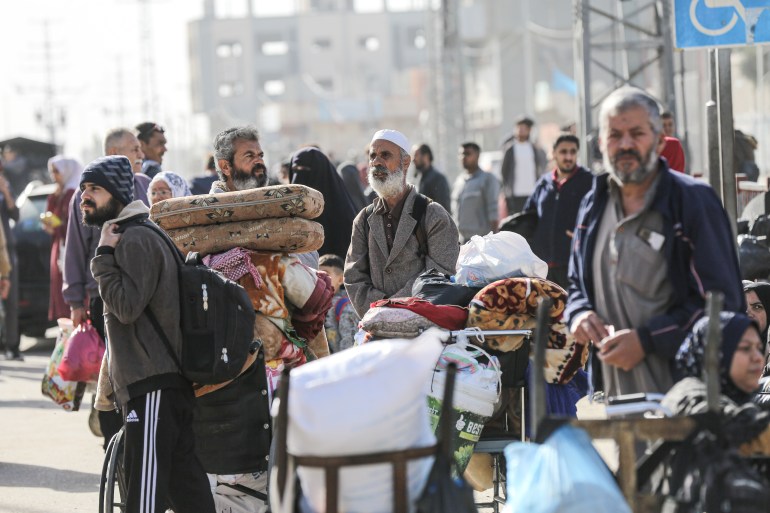
Central Gaza Strip — Israel has ordered Palestinians to evacuate from parts of central Gaza, its latest such directive as it pushes more of the besieged enclave’s 2.3 million-strong population into a smaller area while widening its bombardment of the Gaza Strip. The Israeli military on Friday ordered families to flee for their “safety” to shelters in southern Gaza’s Deir el-Balah, from Bureij and areas of Nuseirat in central Gaza. The announcement has incensed the region’s weary and exhausted residents, many of whom have already been internally displaced several times since October 7. Scenes of mass displacement once again filled Salah al-Din Street that is linked to the entrance of the Bureij refugee camp. Salah al-Din, a road stretching across the length of Gaza, has been dubbed the “death corridor” by many in the Strip. In previous evacuations, Palestinians fleeing parts of northern Gaza have been arrested, shot at and even killed – despite it being declared as a safe route by the Israeli army. Scenes of mass displacement once again filled Salah al-Din Street [Abdelhakim Abu Riash/Al Jazeera] On Friday, hundreds of people carrying what is left of their personal belongings poured onto the street on foot. Others loaded pick-up trucks and donkey carts with mattresses, blankets, plastic chairs and whatever else they could grab. Some could barely move after sustaining injuries from previous attacks, yet found themselves with no choice but to escape once again. This was the case for Walaa al-Nuzeini, who was fleeing Bureij in a wheelchair and for the third time since the beginning of the assault. Al-Nuzeini lived in the Shujayea neighbourhood of Gaza City when an Israeli air strike targeted her home on November 7. “I lost my daughter, she died in my arms,” al-Nuzeini told Al Jazeera. “We stayed under the rubble for three hours before they got us out,” she said, adding that the entire area is now “destroyed”. Al-Nuzeini was badly hurt. She suffers from wounds in her leg, and said the nerve is affected which has been causing her “extreme pain”. She was taken to al-Shifa Hospital for treatment, but three days later Israeli soldiers raided the facility, Gaza’s largest hospital that is now no longer operating. Walaa al-Nuzeini lost her daughter in an Israeli attack on their home in Gaza City’s Shujayea [Abdelhakim Abu Riash/Al Jazeera] “We left running out of fear and had to walk all the way to Nuseirat,” she recalled. At the time, Israeli soldiers ordered doctors, patients and displaced people at the hospital to evacuate the medical compound, forcing some to leave at gunpoint, according to testimonies by doctors and Palestinian officials. More than 7,000 people, including patients in a critical condition and newborn babies, were sheltering inside al-Shifa Hospital. Humanitarian circumstances have become “very difficult”, al-Nuzeini said. She is now heading to Khan Younis, where her other children have set up a tent. “This is not a life. We have no water, no food, no freedom of movement.” ‘We’re exhausted’ Two months ago, the Israeli military called on Palestinians in northern Gaza to flee to the south, but has continued to target and bomb civilians even there. Khan Younis is now a focus of Israeli attacks. “There is no place that’s safe,” Salem al-Sheikh told Al Jazeera. The elderly man said he was forcibly displaced from his home in Nassr neighbourhood in the west of Gaza City. “They [the Israeli army] told us to leave, so I fled to al-Shifa Hospital, where I stayed for a month and a half. I then left to Nuseirat,” al-Sheikh said. He was among the thousands who sought refuge in al-Shifa Hospital before it was attacked by Israeli forces. Salem al-Sheikh has been forcibly displaced three times since October 7 [Abdelhakim Abu Riash/Al Jazeera] Now, for a third time, he is being displaced from Nuseirat. The latest call for evacuation comes as Israeli ground troops continue to battle Palestinian fighters in southern and central Gaza. In the last 48 hours alone, at least 390 people have been killed as the enclave plunged into digital darkness for the sixth time amid a communications blackout, Gaza’s health ministry said. The United Nations says nearly 1.9 million people have now been displaced – more than 80 percent of the Gaza Strip’s pre-war population. Many are crammed inside the Rafah governorate in southern Gaza, where al-Sheikh is heading. The health ministry has warned that disease there is flourishing amid a lack of supplies, medicine, clean water and much-needed fuel. Meanwhile, UN-run schools have largely become overcrowded shelters for thousands of displaced Palestinians. “It’s been extremely difficult,” al-Sheikh said. “We walked from al-Shifa on foot … we passed Israeli army tanks until we made it to a school,” he said, referring to the second time he was displaced. The schools, however, “are full,” he said. “There is no space.” The United Nations says nearly 1.9 million Palestinians have been internally displaced in Gaza [Abdelhakim Abu Riash/Al Jazeera] Many believe that the UN designation of these buildings will keep them safe from the constant Israeli bombardment. However, several of the schools have been targeted or sustained damage from Israeli air raids in their vicinities. According to the UN agency for Palestinian refugees (UNRWA), some 1.4 million Palestinians are trapped in overcrowded and unprotected shelters run by the body that are now uninhabitable. The poor conditions in the makeshift accommodations have already led to an outbreak of scabies and smallpox, among other infections. Al-Sheikh said he just wants to return home. “We’re exhausted, moving from one place to the next. They need to let us get back to our homes.” Some 60 percent of all residential units in the Strip have been damaged, or 254,000 homes. More than 20,000 Palestinians have been killed since the beginning of the latest offensive, including at least 8,000 children. Rights groups have warned of the consequences of mass displacement, with organisations including Human Rights Watch labelling it a “war crime”. Israeli Prime Minister Benjamin Netanyahu needs to
How to pay for genocide: Namibian victims of German colonialism want a say
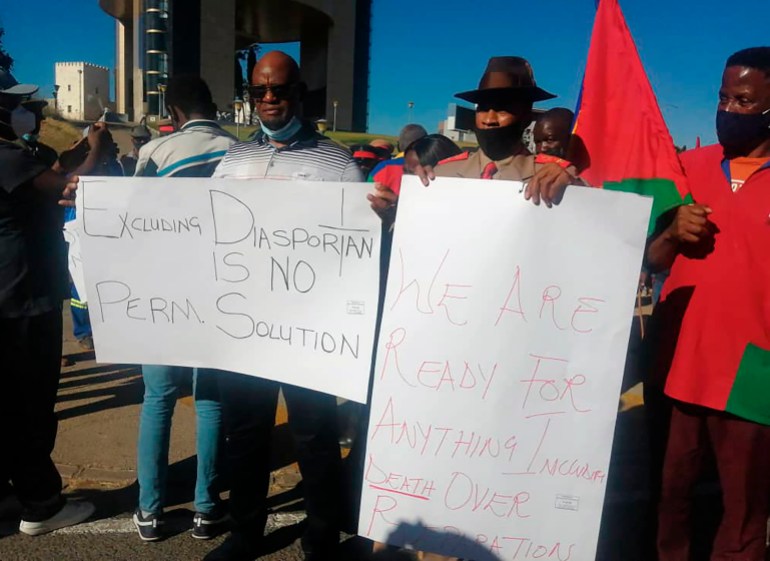
Berlin, Germany – South of Berlin, the expansive Treptower Park stretches out alongside the Spree river – an oasis of tranquillity in an otherwise restless city. On a recent Saturday, small groups of people strolled along the paths, and on the river, a boat fitted with a jacuzzi floated lazily by. Towering trees, a combination of rust browns, greens and yellows against a grey sky, shook off tired leaves that carpeted the ground. The park, idyllic now, belies a dark past. Some 127 years ago, dozens of people pried away from their homes, were displayed in ethnological expositions or “human zoos” here and in other parts of the city to signal Germany’s entry into the colonial venture. Some of those exhibited were from colonies in South, East, and West Africa where violence was crucial to keeping the occupation in place. In southwest Africa, German settlers were pushing Indigenous people off their lands. When two ethnic groups rebelled and fought back, the Schutztruppe – or colonial guards – responded with such brute force that they almost wiped them out entirely. The massacre of the Nama and Herero peoples between 1904-1908, now in present-day Namibia, is widely recognised as an intentional extermination attempt. In May 2021, three years after the German government formally apologised for the massacres, the country announced a framework to address the tragedy. The scheme would see Namibia get 1.1 billion euros ($1.2bn) in “development aid”, with 50 million euros ($54m) set aside for research, remembrance and reconciliation projects, with the rest marked for the development of affected descendants’ communities. “Germany asks for forgiveness for the sins of their forefathers,” the Joint Declaration issued by the German and Namibian authorities read, and “the Namibian Government and people accept Germany’s apology.” The agreement was supposed to be a win-win. Germany would atone for its bloody crimes and Namibia would get needed funding. But for the surviving communities, it was a betrayal. Protests broke out in the Namibian capital, Windhoek, as people vehemently opposed the agreement, saying it was dictated by Germany. “I think the first response of the community was just total shock – so violent, so cruel, that what it (the declaration) did was re-traumatise us again,” says Sima Luipert, an adviser to the Nama Traditional Leaders Association (NTLA). Luipert, like many in the affected communities, says recognised members of the Nama and Herero were not present at the table and that the two governments were forcing the agreement upon them. “This was not a trilateral process. It was a bilateral process, so the document defeats its purpose and it lacks legitimacy because the legitimate people are not at the table,” Luipert says. The case underscores the challenges of righting historical injustices in ways that are acceptable to, and inclusive of the very people who were wronged. In January, lawyers representing the survivor communities sued Namibian authorities at the high court in Windhoek, urging the court to declare the agreement unlawful and thus, invalid. The suit is one of the rare cases globally – perhaps the only one – in which a court in a former colony passes judgement on the colonial power that ruled it. Although directly binding only on Namibia, the top court’s judgement could derail Germany’s attempts to rid itself of decades of colonial guilt by forbidding Windhoek from receiving those funds. Almost a year after it was filed though, the suit is frozen in “Status Hearing” – legal speak for a case suspended so the prosecuting party can gather more documents and draw a road map for its arguments. There have been no trials or seatings and Germany has so far disregarded the suit, promising instead to press on with its plans. Patrick Kauta, the lawyer who filed the suit, did not respond to Al Jazeera’s requests for comment. People hold banners as they stage a protest in Windhoek, Namibia, over colonial-era reparations on Friday, May 28, 2021 [File: Sonja Smith/AP Photo]. Carrying a painful history The arid southwest African region was home first to the San, then later, to the cattle-farming Herero and Nama people as far back as the 16th century. This was some 400 years before German missionaries came and before German settlers started acquiring land from Indigenous chiefs there. Following the partition of Africa by European powers in the 1885 Berlin Conference, Germany officially laid claim to the area. As settlers and colonists continued to descend on the region, enthralled by the prospects of diamonds they would later discover, they restricted the Indigenous nations to “reserves”, confiscating their land and cattle despite their resistance. In January 1904, the Herero staged a stunning revolt and invaded Okahandja – one of the biggest German settlements and the heart of Hereroland. Mounted on horses, they killed dozens of settlers and torched their homes, according to one account. The war raged for months, spreading to other cities. The Nama also joined the battle alongside the Herero, despite previous rivalry. Although the war favoured them at first, the revolters ultimately faced defeat. People died in their thousands, some driven into British territory in present-day Botswana and South Africa. Yet, when they signalled peace by heeding calls to assemble in certain locations from the well-trusted German missionaries who arrived way ahead of the colonialists, the German soldiers would not let up. On October 2, 1904, German military commander General Lothar von Trotha issued a chilling call to his troops: “…every Herero, with or without a gun, with or without cattle, will be shot. I will no longer accept women and children, I will drive them back to their people or I will let them be shot at.” German troops – numbering about 1,500 under the command of von Trotha – encircled the weakened fighters and forced them into the desert, the waterless Omaheke region, trapping them, Herero descendant Laidlaw Peringanda, who heads the Namibian Genocide Association (NGA), says. When those fleeing dug wells, the Germans snuck up and poisoned the water. Survivors of the thirst and slaughter –
Gaza’s journalists: ‘Targets’ or ‘casualties’ of Israel’s war?
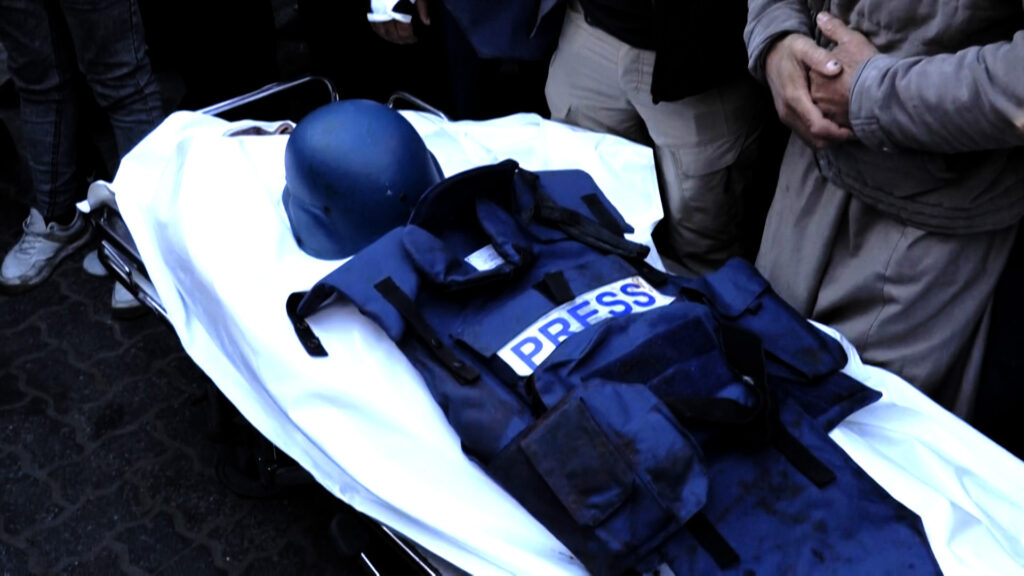
Gaza’s journalists are being killed at an unprecedented rate. Plus, Israel’s most powerful allies in the US – Christian Zionist broadcasters. According to Gaza’s government media office, Israel’s military has now killed 97 journalists in the Strip. Israel has barred international media from entering Gaza, firsthand reporting on the onslaught there has been left to Palestinians already locked into the occupied territory – documenting their own genocide. Contributors:Amahl Bishara – Professor of anthropology, Tufts UniversityArwa Damon – Former senior international correspondent, CNNSari Bashi – Program director, Human Rights WatchWael Dahdouh – Gaza bureau chief, Al Jazeera Arabic On our radar: The settler movement – which has placed 700,000 Israelis on the West Bank in complete contravention of international law – now has its eyes on Gaza. Producer Flo Phillips on Israeli developers’ plans in post-war Gaza. The war in Gaza & the end times – the Christian Zionist view Evangelicals in the United States – many of whom call themselves Christian Zionists – are some of the biggest supporters of Israel in the US, and they broadcast their support on TV and radio networks that have huge audiences. Contributors:Chrissy Stroop – Senior correspondent, Religion DispatchesMelani McAlister – Author of The Kingdom of God Has No BordersSarah Posner – Journalist, author of Unholy Adblock test (Why?)
Indonesian leader’s son brushes off ‘nepo baby’ tag in feted debate showing
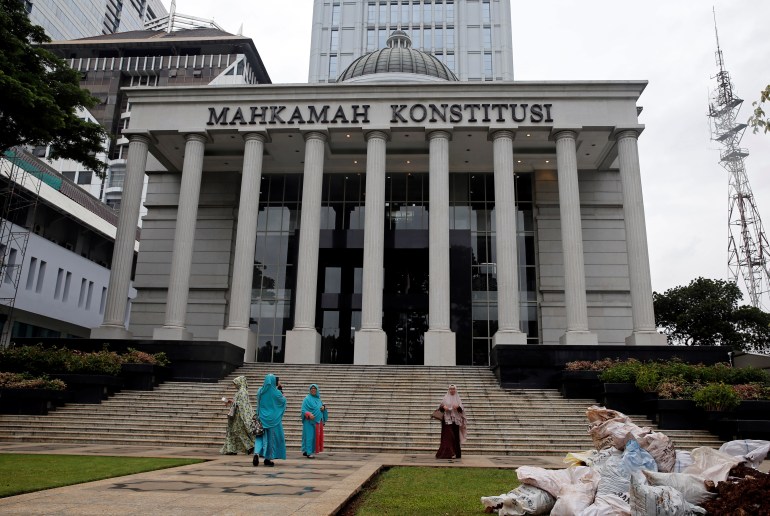
Medan, Indonesia – As the vice presidential candidates took to the stage for Indonesia’s second televised presidential debate on Friday, all eyes were on Gibran Rakabuming Raka – perhaps the most controversial vice presidential candidate in Indonesia’s history. Batting away charges of inexperience and nepotism, Gibran, the 36-year-old son of current Indonesian president Joko “Jokowi’ Widodo, dominated the stage despite being up against more experienced candidates. The verdict among observers generally was that Gibran’s performance far exceeded expectations. “My overall impression was that any doubters who thought Gibran was a clueless lightweight have been proven completely wrong,” Alexander Arifianto, a research fellow at the S Rajaratnam School of International Studies in Singapore (RSIS), told Al Jazeera. “He was well-prepped for the debate and showed he has an excellent grasp on economic issues. Much better than his two opponents.” Since he announced his candidacy in October, Gibran has faced a storm of controversy, including accusations of being a “nepo baby” and a continuation of the dynastic politics that have long plagued Indonesia’s politics. With no political experience apart from a two-year stint as the mayor of the city of Surakarta in Central Java, Gibran has been accused of riding on his father’s coattails – Widodo also served as mayor of Surakarta – and lacking the bona fides of rival candidates Abdul Muhaimin Iskandar, the deputy speaker of parliament, and Mahfud MD, a minister responsible for coordinating political, legal and security affairs. Gibran’s candidacy was facilitated by a controversial ruling by the Constitutional Court of Indonesia in October that loosened the minimum age requirement for presidential and vice presidential candidates. While the court upheld the minimum age threshold of 40 in principle, the judges carved out an exception allowing officials who are at least 35 to run if they have been previously elected to office – allowing Gibran to become Defence Minister Prabowo Subianto’s running mate ahead of the February 14 election. The ruling was particularly contentious as the then-head of the Constitutional Court, Anwar Usman, was Widodo’s brother-in-law. Usman was removed from his position after the Constitutional Court ethics committee found him at fault for not recusing himself from the decision, although the ruling on the age requirement was allowed to stand. A ruling by the Constitutional Court of Indonesia in October changed the minimum age requirements to run for president or vice president [File: Beawiharta/Reuters] With questions swirling about the legitimacy of Gibran’s candidacy and his suitability for office, his debut on the debate stage on Friday evening had been hotly anticipated. “Straight away: This debate was won by Gibran. So far, expectations for Gibran have been very low. Basically, Gibran has never been tested. In the first presidential debate, he looked like an oddity: a high school student surrounded by seasoned politicians and governors,” Yohanes Sulaiman, a lecturer at Universitas Jenderal Achmad Yani in West Java, told Al Jazeera. “In this debate, his performance was much better than the two people I had expected to eat him for lunch, namely Mahfud MD and Muhaimin. It was clear that he was prepared, confident, and had mastered the material, perhaps having been thoroughly trained by his debate preparation team.” The second of five televised debates, and the first to feature the vice presidential candidates, was focused on the economy, including issues such as taxes, trade, management of the state budget, infrastructure and urban planning. Dandy Rafitrandi, an economist with the think tank the Centre for Strategic and International Studies, said the questions set by a panel of experts were quite specific and required each candidate to understand economic topics. The candidates’ weak grasp of economics was noticeable at times, Rafitrandi said, including when the questions turned to funding government projects and programmes. “Gibran explained several programmes, for example, a free lunch programme [for civil servants] worth 400 trillion Indonesian Rupiah [$25.8bn], but did not explain the source of the funding,” Rafitrandi told Al Jazeera. At another point during the debate, Muhaimin said that he and presidential candidate Anies Baswedan, the former governor of Jakarta, wanted to build 40 new cities across Indonesia to rival Jakarta – without explaining how these would be paid for. The main flashpoint of the evening came when the candidates sparred over Nusantara, Indonesia’s new capital city, which is currently being built in the jungles of Kalimantan. The plan, which was spearheaded by Widodo, involves moving Jakarta, which is crowded, choked with smog and sinking due to illegal groundwater extraction, at a projected cost of $1.3bn. The project has struggled to secure foreign investment, which was envisaged to cover the majority of its hefty price tag, and has only attracted local investors, something which Mahfud questioned Gibran about given his support for the plan. Gibran replied that Mahfud could “Google” who was investing in the project and attacked Muhaimin for being “inconsistent” after previously backing the scheme. Groundbreaking for Indonesia’s new capital Nusantara took place last year [File: Bagus Saragih/AFP] Mahfud also previously supported Nusantara, and only Anies and Muhaimin have said that they would cancel the project if elected, arguing the money could be better spent elsewhere in Kalimantan and other parts of the country. Nusantara is not expected to be a deciding factor in the election, with some recent polls showing that Prabowo and Gibran have a 20-point lead over Ganjar Pranowo, the former governor of Central Java, and Mahfud MD. “Gibran was the clear winner of tonight’s debate. It has set the bar high and it will be tougher for both Anies’s and Ganjar’s teams to catch up with them, especially when it comes to economy and investment issues,” RSIS’s Arifianto said. “Sadly, both Mahfud and Muhaimin are single-issue candidates who are good only for their issues [law and religious issues respectively] but not so good in others.” However, not everyone was impressed with Gibran’s dynamic performance, saying that it placed style above substance. “He was better rehearsed compared to the other two candidates, which will likely impress some voters. However, his responses
DR Congo’s provisional election results show lead for President Tshisekedi
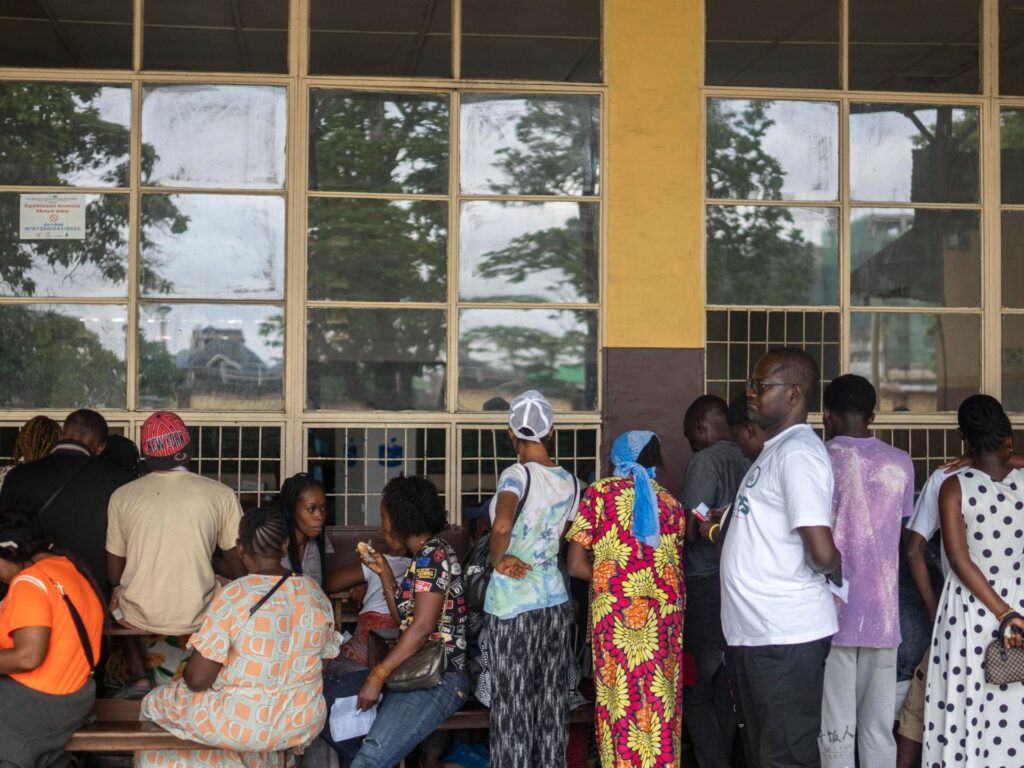
Electoral authorities announce results of voting by diaspora in the US, Canada, South Africa, Belgium and France. Democratic Republic of the Congo has begun to announce the results of general elections marred by chaotic organisation and credibility concerns. Electoral authorities on Friday announced the results of voting by diaspora Congolese in South Africa, the United States, Canada, Belgium and France ahead of the release of the full outcome on Saturday. The votes, which represent a small proportion of the electorate, showed President Felix Tshisekedi with a sizable lead over his opposition rivals. Voters also cast their ballots to choose the next crop of national and regional lawmakers, and local councillors. The provisional results come after voting in the mineral-rich Central African nation was extended into Thursday after some polling stations failed to open to the public and some voters could not find their names on registers. The unscheduled extension prompted fierce pushback from opposition candidates, some of whom labelled the move unconstitutional and called for a new election. Tshisekedi was considered the frontrunner going into the election, in which he faced a divided opposition that included Nobel Peace Prize laureate Denis Mukwege and business magnate and former provincial governor Moise Katumbi. Despite the electoral commission announcing that polling stations were not authorised to open beyond Thursday, voting continued in some places, especially remote areas, into Friday. Independent observers have raised concerns about the vote, with the US-based Carter Center describing “serious irregularities” at 21 out of 109 polling stations it visited and noting “a lack of confidence in the process”. Denis Kadima, the head of the country’s electoral commission, on Friday rejected criticism that the extended vote lacked credibility. The DRC, which is one of the world’s poorest countries despite holding vast reserves of copper, cobalt and gold, has a history of disputed elections that can turn violent. Tshisekedi’s election as president in 2018 win was marred by accusations of vote-rigging and fraud. At least 34 people were killed and 59 others wounded in protests against the outcome, according to the United Nations. Adblock test (Why?)
US accuses Iran of being ‘deeply involved’ in Houthi attacks in Red Sea
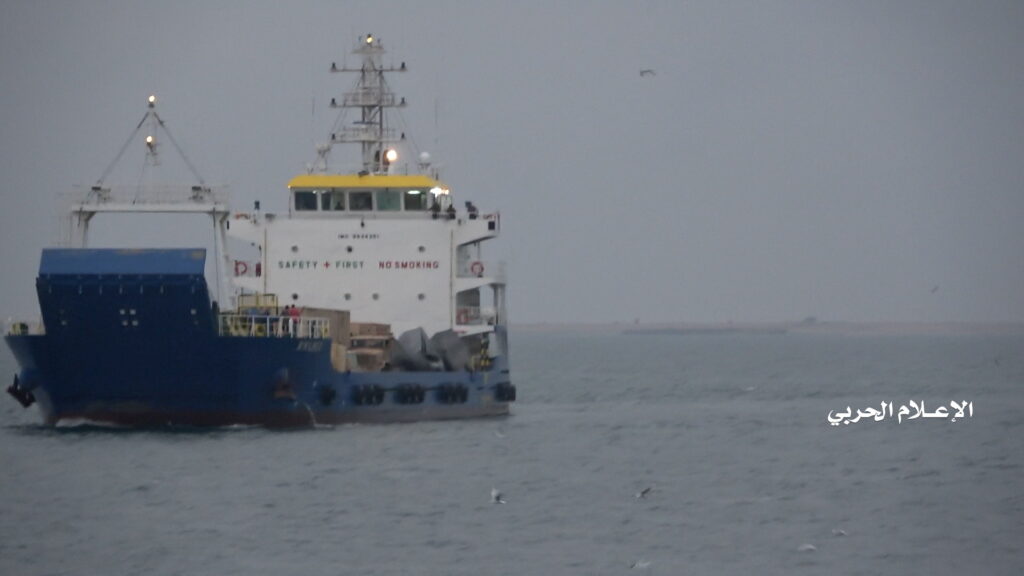
White House says Tehran is providing Yemeni rebel group with weapons and tactical intelligence. The United States has accused Iran of being “deeply involved” in attacks by Houthi rebels on commercial ships in the Red Sea. Tehran’s support for the Yemeni rebel group includes both weapons and tactical intelligence, the White House said on Friday as it presented newly declassified intelligence purporting to show Iranian involvement in the attacks. “We know that Iran was deeply involved in planning the operations against commercial vessels in the Red Sea,” White House national security spokeswoman Adrienne Watson said in a statement. “This is consistent with Iran’s long-term material support and encouragement of the Houthis’ destabilising actions in the region.” “This is an international challenge that demands collective action,” Watson said. The White House said that visual analysis showed nearly identical features between Iran’s KAS-04 drones and the unmanned vehicles used by the Houthis, as well as consistent features between Iranian and Houthi missiles. Al Jazeera could not independently verify the White House’s claims. The Houthis, who control large parts of Yemen including the capital Sanaa, have launched dozens of drone and missile attacks on commercial shipping in the Red Sea in what the group has described as a show of support for Palestinians facing Israeli bombardment in Gaza. The attacks have effectively rerouted a large portion of global trade by forcing freight companies to sail around Africa, imposing higher costs and delays to deliveries of energy, food and consumer goods. More than a dozen shipping companies, including the Italian-Swiss giant Mediterranean Shipping Company, France’s CMA CGM and Denmark’s AP Moller-Maersk, have suspended transit through the Red Sea due to the attacks. Washington earlier this week announced the launch of a multinational force, involving more than 20 countries, to protect vessels transiting the Red Sea. Last week, a US guided-missile destroyer shot down 14 attack drones believed to have been fired from Houthi-controlled regions of Yemen. The Houthi leadership has warned that they will strike back at “American battleships” and “American interests” if they are attacked. Tehran has said it supports the Houthis politically but denies sending the group weapons. Iran’s Ministry of Foreign Affairs last month rejected Israeli accusations that the Houthis were acting with its guidance when they seized an Israeli-owned ship and denied responsibility for a drone shot down by a US guided-missile destroyer. The Houthis, which have effectively maintained a United Nations-brokered truce with the Saudi-backed government since last year, rose up against the Yemeni government in 2014, triggering a devastating civil war. Adblock test (Why?)
Who might be the next US president?
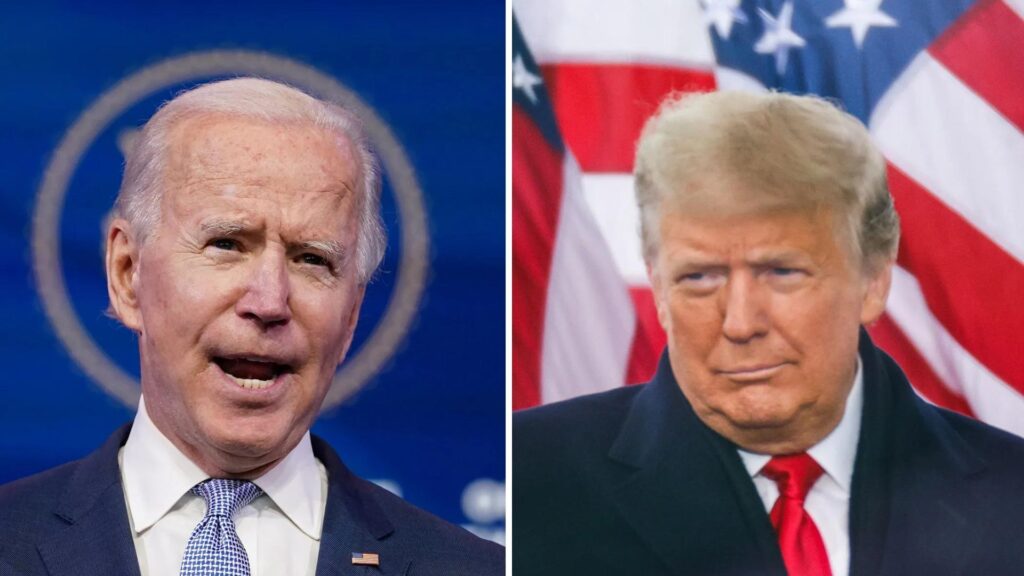
Biden and Trump are frontrunners in an uncertain contest. Next year’s US presidential election is predicted to be a contest between Joe Biden and Donald Trump. But not even that is certain in the most uncertain of election campaigns. So who else might be in the mix? And what are the important issues? Presenter: Dareen Abughaida Guests: Tim Constantine – Senior vice president of diplomacy and external affairs at Washington Times and host of The Capitol Hill Show Thomas Gift – Director of the Centre on US Politics at University College London Arshad Hasan – Democratic political strategist Adblock test (Why?)
RSF files second war crimes complaint with ICC over Gaza journalists killed
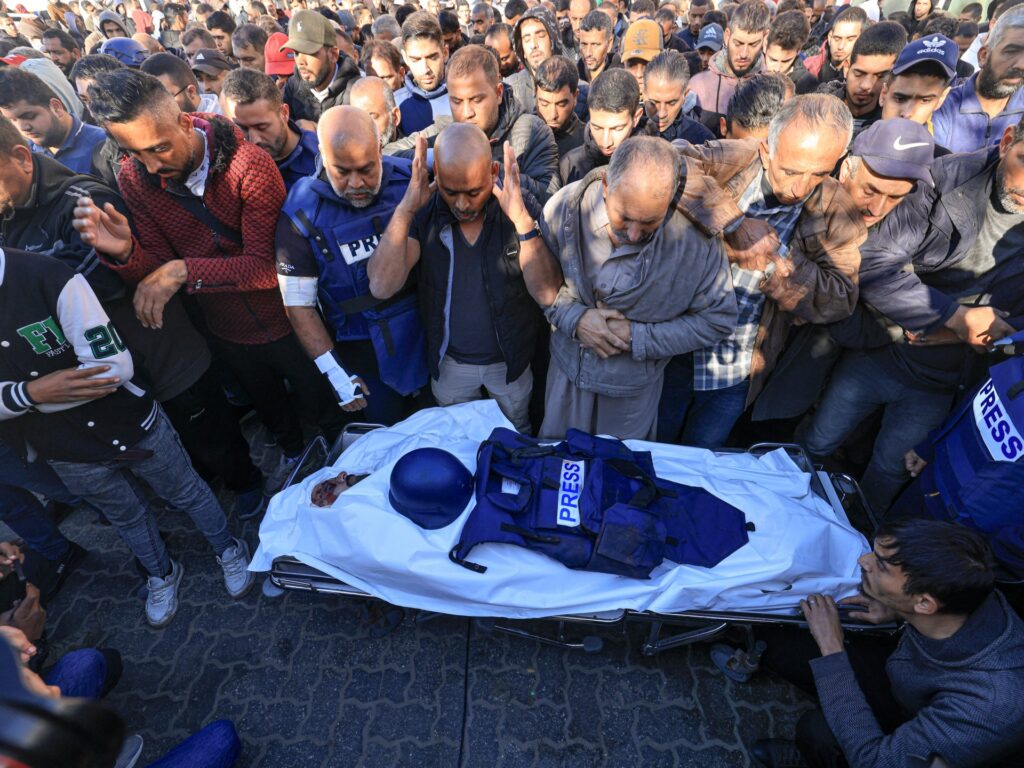
Latest complaint by Paris-based press freedom group asks the court in the Hague to probe the deaths of seven Palestinian journalists. Reporters Without Borders (RSF) has filed its second complaint with the International Criminal Court (ICC) for alleged war crimes committed by the Israeli army against Palestinian journalists in Gaza. The latest complaint by the Paris-based press freedom group filed on Friday asks the court in the Hague to investigate the deaths of seven Palestinian journalists killed in the besieged enclave from October 22 to December 15. The list of journalists includes last week’s killing of Al Jazeera Arabic cameraman, Samer Abudaqa. “RSF has reasonable grounds to believe that the journalists named in this complaint were the victims of attacks amounting to war crimes,” a statement issued by the group said. “According to the information collected by RSF, these journalists may have been deliberately targeted as journalists. It is for this reason that RSF is describing these deaths as intentional homicides of civilians.” The RSF filed its first ICC complaint since the war began on October 31 over the death of seven other journalists. The group says it has confirmed the deaths of 66 Palestinian journalists since October 7 when the Israeli assault began. More than 20,000 Palestinians have been killed since. The other journalists named in the RSF complaint are Asem Al-Barsh, a radio journalist for Al Najah who was killed by sniper fire, and his colleague Bilal Jadallah of the Palestinian Press House, who fell victim to a direct missile attack on his car. Montaser Al-Sawaf, a cameraman for the Turkish Anadolu Agency, and photojournalist Rushdi Al Siraj were also killed in Israeli air raids on their homes. Hassouna Salim of the Quds News agency was killed by a missile after receiving death threats, and photojournalist Sari Mansour died in the same attack, according to RSF. Al Jazeera’s Abudaqa “appears to have been killed by a precision shot fired from a drone”, the RSF said. The incident, which the Al Jazeera Media Network has also decided to refer to the ICC, took place on December 15, when Abudaqa and Al Jazeera correspondent Wael Dahdouh were reporting on the bombing of a school used as a shelter for displaced people in Khan Younis in the southern Gaza Strip. Dahdouh – who lost his wife, son, daughter and grandson in a previous Israeli bombing – was wounded in the attack but managed to reach a hospital, where he was treated for minor injuries. Rescue teams were unable to immediately reach Abudaqa and others at the site as they needed approval from Israeli forces to bulldoze through the debris to get to the location. By the time first responders arrived five hours later, the journalist had bled to death. The RSF said it also supported the complaint filed by Al Jazeera Media Network about the fatal shooting of Palestinian journalist Shireen Abu Akleh in Jenin in the north of the Occupied West Bank on May 11, 2022. Targeting journalists is a war crime under Article 8 of the Rome Statute. “In view of the massacre of journalists in Gaza and the targeting to which they seem to be subjected, we call on ICC prosecutor Karim Khan to clearly state that he is making it a priority to elucidate the crimes committed against journalists in Gaza and to prosecute those responsible,” RSF Secretary-General Christophe Deloire said in the statement. Adblock test (Why?)
US Supreme Court declines to speed up ruling on Trump immunity claim
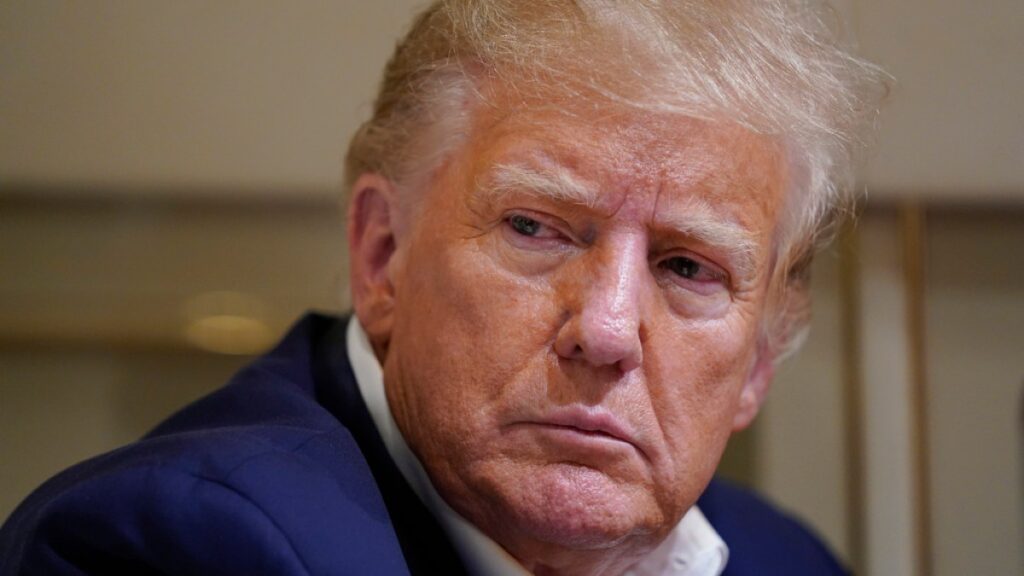
Decision by the nation’s top court turns down a request by prosecutor Jack Smith to expedite review of immunity plea. The top court in the United States has declined to rule on whether former President Donald Trump can claim immunity for his efforts to overturn the 2020 election, rejecting efforts by prosecutors to expedite review of the question. The Supreme Court rebuffed the request from US Special Counsel Jack Smith on Friday, kicking it back to a lower court for continued review. The decision came as Trump faces a slew of legal troubles, some of them related to his efforts to seize office after the 2020 election despite his loss to current President Joe Biden. Earlier this week, a top court in the state of Colorado ruled that Trump’s role in the January 6, 2021 assault on the US Capitol by his supporters, in an effort to halt the certification of his election loss, disqualified him from appearing on the state’s ballot in the 2024 election. Trump has said that he should be immune from charges relating to efforts to overturn the 2020 election on the grounds that former presidents cannot face charges for actions related to their official responsibilities. Prosecutor Jack Smith has alleged that Trump worked to obstruct Congress and defraud the US government through a wide-ranging effort to reject the will of the voters. A Congressional panel investigating the January 6 riot concluded that Trump knew that his persistent claims that the election had been stolen through massive fraud were devoid of evidence, but pushed to nullify the election results anyway. Those findings have done little to change Trump’s popularity within the Republican Party, and he remains the conservative party’s clear frontrunner to challenge Biden in the 2024 presidential election. On December 1, US District Judge Tanya Chutkan ruled that Trump was not immune from prosecution relating to his efforts to overturn the election. Trump quickly appealed that decision, and his trial is paused until the appeal is sorted out. Special Counselor Smith then petitioned the Supreme Court on December 11 to review the case, asking the highest court to leapfrog the lower court in order to speed up the trial, currently scheduled to begin in March. The court declined that request on Friday, sending it back to the US Court of Appeals for the District of Columbia Circuit, which has signalled that it will move quickly to resolve the matter. Adblock test (Why?)
UN Security Council passes resolution on increased Gaza aid delivery
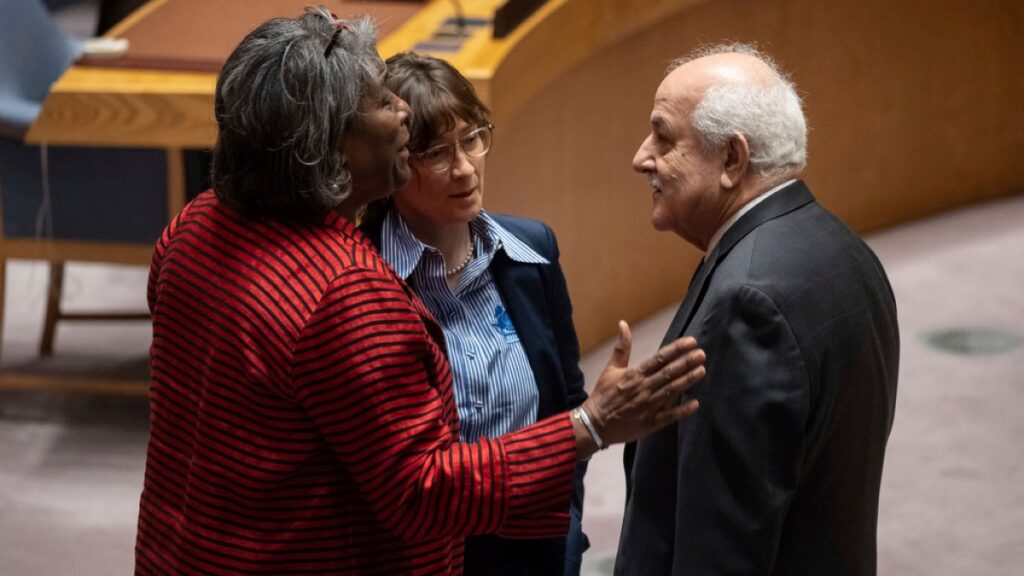
BREAKINGBREAKING, The US abstains on resolution that it lobbied to weaken over the course of several days, allowing it to pass. The United Nations Security Council has passed a resolution to boost humanitarian aid to Gaza, following several delays over the last week as the United States lobbied to weaken the language regarding calls for a ceasefire. The resolution, which calls for steps “to create the conditions for a sustainable cessation of hostilities”, passed on Friday with 13 votes in favour, none against, and the US and Russia abstaining. The vote comes amid international calls to bring the months-long conflict to an end, as Israeli forces pummel Gaza with one of the most destructive campaigns in modern history and humanitarian conditions in the besieged strip reach critical levels. More to follow. Adblock test (Why?)