

Marianne Williamson on her US presidential campaign, the economy and Gaza

Washington, DC – Marianne Williamson says she is not merely running a protest campaign. A spiritual author who is challenging President Joe Biden for the Democratic nomination in the 2024 presidential race, Williamson believes someone needs to stand up to the growing corporate influences in the United States government. “And I’m not the kind of woman who keeps my mouth shut,” Williamson told Al Jazeera from her apartment in Washington, DC, earlier this month. Only once in US history has an elected president not received his party’s nomination for a second term. That makes Williamson’s campaign a long shot. But she remains undeterred. Her campaign is one of two Democratic challenges seeking to thwart Biden’s nomination, amid drooping poll numbers for the incumbent president. While the other Democratic contender, Dean Phillips, is running from a centrist platform, Williamson hopes to rally progressives, a growing force in the party. With her voice rising at times in indignation, Williamson decried how corporate greed was shifting the country — and the Democratic Party — away from their long-held ideals. “We are at a point now where short-term profit maximisation for huge corporate entities has become America’s bottom line,” she said. “And that corporatist perspective supersedes democratic values, humanitarian values and the safety and the health and the wellbeing of the American people.” A progressive challenger Her 2024 platform echoes many of the Democratic priorities articulated by Senator Bernie Sanders, one of the country’s most recognisable progressive voices. He ran for president twice, in the 2016 and 2020 races, facing Williamson herself in the latter. She eventually dropped out, endorsing Sanders instead. Williamson rose to fame in the early 1990s with her best-selling book A Return to Love and appearances on a TV talk show hosted by Oprah Winfrey. Later, in 2014, she unsuccessfully ran for Congress as an independent in California. But with her presidential platform, she hopes to push further than Sanders did on several policy issues. For example, Williamson backs a universal healthcare system, but her plan emphasises the need for healthier food, water and air and a less stressful lifestyle, saying that the current economic system increases “the probability of sickness”. The candidate also wants to create a Department of Peace to suppress violence and address its root causes domestically and internationally. Williamson’s almost holistic policy approach is underscored by her soft-spoken, guru-like persona. The author’s spirituality has led some to dismiss her candidacy as unserious. She went viral, for example, after saying in a 2019 primary debate that she would “harness love” to beat then-President Donald Trump and his campaign of “fear”. Williamson is not unaware of that reputation. She acknowledges that she made “silly” statements at the debate that she credits to being “nervous”. However, Williamson said there was a deliberate push to cast her aside in the 2020 race — a campaign that she said has intensified this time around. “This time, it’s a full-on assault: mischaracterisation of my personality, of what I’ve done with my life for the last 40 years. This is strategised. This is purposeful,” she told Al Jazeera. Shortly after Williamson announced her candidacy in March, Politico published an article citing anonymous former staffers who described the candidate as “abusive”. She dismissed the story at the time as a “hit piece” and refuted its details. And on Wednesday, Williamson’s campaign faced another setback when the Massachusetts Democratic Party submitted only Biden’s name for the state’s primary ballot, effectively excluding her from the list of Democratic candidates. Democratic presidential candidate and author Marianne Williamson speaks after filing to put her name on the ballot for the primary election in New Hampshire on October 12 [File: Brian Snyder/Reuters] ‘There is no wiggle room’ Still, Williamson has drawn some, albeit limited, momentum. A Quinnipiac University poll last month showed her polling at 12 percent, far behind Biden at 74 percent. The progressive monthly The Nation, however, noted last month that the polling gap between Williamson and Biden is similar to the margin between Republican rivals Trump and Nikki Haley — though less attention is being paid to the Democratic race. While the gap is nevertheless huge, Williamson argues that she deserves more media attention, especially with some polls showing Biden trailing Trump in the general elections. For his part, Biden has waved aside the polling data. “Everybody running for reelection in this time has been in the same position. There’s nothing new about that,” he said when asked about his low approval ratings earlier this year. Instead, Biden and his allies have hoped to redirect attention to the US economy, which is showing faster-than-expected growth, low unemployment and inflation slowly coming under control. But Williamson said the oft-cited economic data does not tell the whole story. For example, she pointed to a recent study showing that 62 percent of Americans live paycheck to paycheck. She also stressed the high cost of living many Americans face, which she said is due to cyclical inflation as well as corporate price-gouging. “For millions of people, it could be the difference whether or not you keep your apartment,” Williamson said. “So for the majority of Americans, there is no wiggle room.” On Gaza Democratic voters are also split over the Biden administration’s support for the war in Gaza. Biden has expressed “unwavering support” to Israel, promising to provide it with billions of dollars of additional aid despite humanitarian concerns over its military campaign. The Israeli offensive has killed more than 20,000 Palestinians, and Israel’s leaders have pledged to continue the war until Hamas is eliminated. The Palestinian group had attacked Israel on October 7, killing 1,200 Israelis and taking hundreds more captive. The White House and Pentagon have said repeatedly that they are not drawing any “red lines” to limit what Israel can do with US aid. Biden, meanwhile, continues to dismiss growing calls for a ceasefire. For her part, Williamson has called for an end to the fighting, the release of the Israeli captives and an international push for
UK police probe alleged abduction of teen found in France after six years

Alex Batty disappeared while on holiday with his mother and grandfather, living an off-grid life before he was found last week. Police in the United Kingdom have launched a criminal investigation into the alleged abduction of a British teen found in France after going missing abroad for six years. Greater Manchester Police said on Friday that the force has opened the inquiry after interviewing 17-year-old Alex Batty following his return to the UK last week. Batty disappeared in October 2017 while on a holiday in Spain with his mother and grandfather. He resurfaced in a mountainous area of southern France last week. The two-week family holiday turned out to be a six-year odyssey through Morocco, Spain and southwest France as he and his mother lived an off-the-grid life. The teenager told French investigators he had spent the past two years living in “spiritual communities” in France with his mother, never staying more than several months in the same place. An undated picture of Alex Batty [File: Greater Manchester Police/Handout via Reuters] The teenager says he decided to return to Britain because he wanted a better future. Batty told the Sun tabloid in an interview published on Friday that he had grown tired of drifting around Europe. “I realised it wasn’t a great way to live for my future,” said the teenager, who is back under the legal guardianship of his maternal grandmother in Oldham, northern England. “Moving around, no friends, no social life, working, working, work and not studying – that’s the life I imagined I would be leading if I were to stay with my mum.” Batty was found walking near Toulouse by a delivery driver last week. He was in good health. “She’s a great person, and I love her, but she’s just not a great mum,” Batty told the Sun, referring to his mother, Melanie Batty. He added that she was “anti-government, anti-vax” and her catchphrase was “becoming a slave to the system”. “I had an argument with my mum, and I just thought I’m gonna leave because I can’t live with her,” Batty said. He told the newspaper that his grandfather David Batty was still alive after French investigators reported that he had died six months ago. Batty also said he had been walking for two days when he was found, not the four that he had told French police. He said he lied to investigators to try to protect his grandfather and mother, who he believes is planning to go to Finland. Batty added that he was going to be “busy studying and catching up” and that he hopes to eventually work in the technology sector. Adblock test (Why?)
Watching the watchdogs: Why the West misinterprets Middle East power shifts
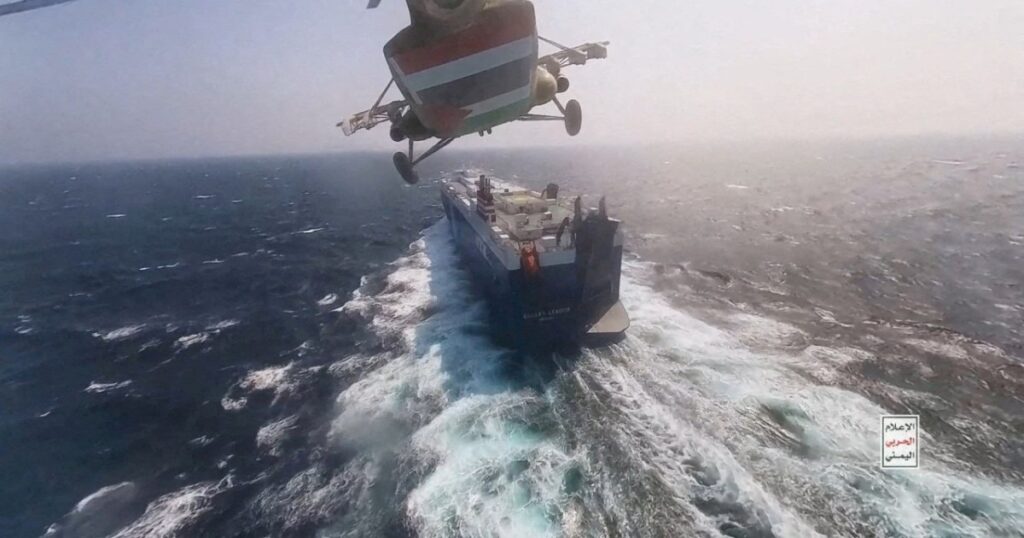
“In Yemen, there is wisdom,” goes the medieval Arab saying. Remember that, if you’re trying to sort out how the Israel-Palestine confrontation in Gaza rattles the Middle East – because ongoing Yemeni attacks against Israel-linked ships in the Red Sea clarify one of the region’s most important political dynamics of recent times. The rocket and drone attacks on Israeli-owned or -bound ships in recent weeks are a show of support for besieged Palestinians in Gaza by Ansar Allah (Houthis), who control most of northern Yemen. Ansar Allah say they would stop these attacks only when Israel ends its genocidal siege and bombardment of the Palestinian enclave. These attacks are part of a coordinated military reaction by the three core Arab members of the Iran-led anti-Israel (and anti-West) “Axis of Resistance”, Hezbollah, Hamas and Ansar Allah, to Israel’s latest assault on the Palestinians. At one point last week, Israel and the United States simultaneously exchanged direct fire with Axis of Resistance forces in both Gaza and the West Bank in Palestine, in Lebanon, Syria, Iraq and also Yemen – which can also be seen as a peculiar low-intensity, indirect military engagement with Iran. Any assessment of how the region has evolved since October 7, and what likely lies ahead, must acknowledge three critical points relating to the Axis of Resistance’s regional network, military capabilities and trajectory. The mainstream US media and political elite tend to ignore all three points, which are: Groups within the axis can coordinate across the region and face Israel as a united front The widespread fear in the West that this latest Israel-Hamas confrontation would spark a full-fledged regional war between the US-Israel and half a dozen Arab-Iranian forces has not materialised. However, neither has the confrontation remained confined to Gaza – it has sparked the first serious coordinated battlefield action by the Axis of Resistance across the region. This reflects Hezbollah’s talk all year of the “unity of fronts”, ie, Axis members now coordinate and assist one another in battle, or between battles, in times of preparation. Ansar Allah can challenge Israel/the US militarily to deter or secure concessions from them, just like Hezbollah and Hamas For decades, Hezbollah and Hamas were the only two Arab powers that faced down Israel militarily, and forced it into ceasefires, prisoner exchanges and other concessions. Ansar Allah’s ongoing drone and missile attacks on Red Sea shipping routes will likely similarly challenge Israel. These attacks may eventually provide the Yemeni group with important leverage against its Western adversaries, especially if, as expected, the US and Israel do not send ground troops into Yemen, but rely solely on air power in their efforts to protect trade routes. All three leading Arab members of the Axis of Resistance have significantly improved their military capabilities in the past two decades Hezbollah was the first Axis member to prove its military prowess against Israel. The impasse between the Lebanon-based group and Israel in the 2006 war led to an informal truce based on mutual deterrence. Both parties realised that a fully-fledged war would inflict severe damage to national assets and result in unacceptable numbers of civilian casualties on both sides; they have since confined their confrontations to limited tit-for-tat attacks that result in limited casualties. On October 7, by attacking Israel at an unprecedented scale and then managing to defend its assets to date, Hamas has also proved that it has built significant military prowess. Ansar Allah’s capabilities are also improving – after forcing Saudi Arabia and the United Arab Emirates into ending their war on Yemen, in the past month it attacked at least 100 vessels in the Red Sea with high efficiency. A senior US military official called this a “very significant breadth of attacks” not seen in at least “two generations.” We cannot yet predict what this means for the future, but this much is clear: Hamas’s new prowess in attacking Israel and defending its own assets brings it close to Hezbollah’s qualitative capabilities; and Ansar Allah’s proven competence in drone and missile attacks against Saudi Arabia, the UAE and Red Sea shipping heightens its military proficiency. The emerging reality is that the Axis of Resistance that unites Iran with half a dozen big and small Arab non-state, armed actors is growing stronger, and will likely continue to do so if the issues that drive the partnership remain unresolved – especially the Palestine conflict, and Israeli-American aggression, threats or sanctions against Arab parties. Former American diplomat in Yemen Dr Nabeel Khoury, now a senior fellow at the Arab Center Washington, also explained to me in an interview that after the end of the war in Yemen, Ansar Allah now seem ready to act on a regional level. Yet you would be ignorant of this if your knowledge about the region comes from the mainstream US media. For the American media largely follow the American political elite, and both tend to ignore Middle East realities that do not comply with Western preconceptions of “weak” Arabs who only respond to the use of force by “righteous” Israeli-American armies” – despite the recent events in Palestine, Lebanon, and Yemen that have shattered such racist visions for good. The increasing power, integration, and influence of the Axis of Resistance rank among the most significant geo-strategic developments in the Middle East in the last half century. The combination of state-anchored Arab militancy by Hezbollah (Lebanon), Hamas (Palestine) and Ansar Allah (Yemen) alongside Iran’s resistance to American and Israeli provocations are best understood through their common underlying values of “resistance” and “defiance”. The American media and political class, and most of the West, still refuse to see or acknowledge this, because Israel, the US and their Arab allies are the ones being resisted and defied. They prefer to assess developments in the region through their imagined prism of Islamist extremism that is blindly anti-American and anti-Israeli. And they assume they can handle any Middle Eastern challenge through Israeli-American military attacks, sanctions or threats. Not surprisingly, scholars routinely
Why Palestinians in East Jerusalem are losing their homes | Start Here

The space for Palestinians in occupied East Jerusalem is shrinking. It’s happening through a process of evictions and demolitions. Sandra Gathmann went to East Jerusalem for #AJStartHere to explain what’s happening and why. This film was shot in August 2023, before the war on Gaza. Adblock test (Why?)
Last set of French troops exit Niger as Sahel sheds Parisian influence
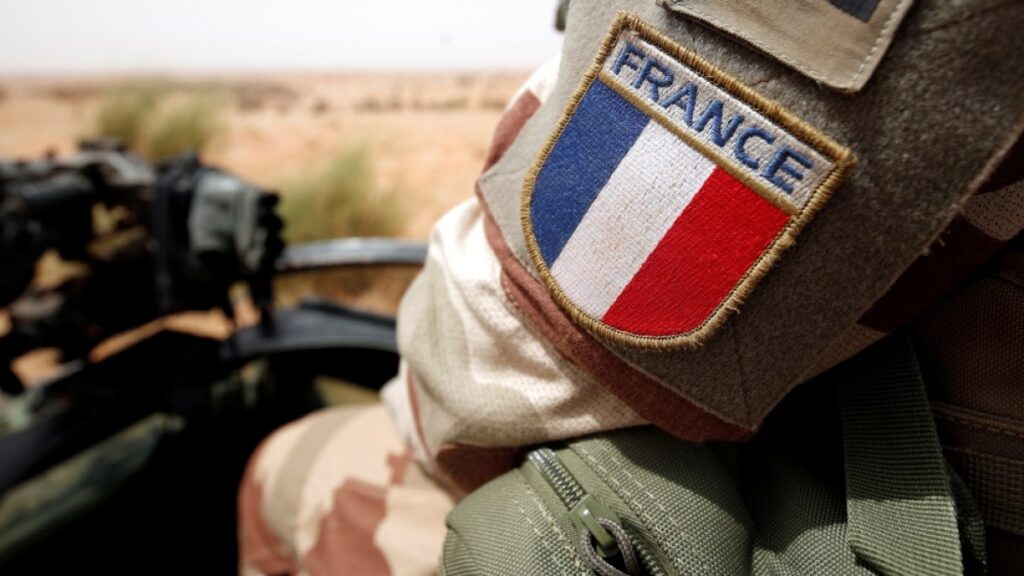
The exit is the third time in 18 months that French troops have been sent packing from a country in the Sahel. The last French troops in Niger have withdrawn, marking an end to more than a decade of French operations to fight armed groups in West Africa’s Sahel region. “Today’s date … marks the end of the disengagement process of French forces in the Sahel,” Niger army Lieutenant Salim Ibrahim said on Friday. France said it would pull out its roughly 1,500 soldiers and pilots from its former colony after Niger’s military government demanded they depart after a coup on July 26. It was the third time in less than 18 months that French troops have been sent packing from a country in the Sahel. They were forced to leave fellow former colonies Mali last year and Burkina Faso earlier this year after recent military takeovers in those countries too. All three nations are battling rebel violence that erupted in northern Mali in 2012, later spreading to Niger and Burkina Faso. But a string of coups in the region since 2020 – and consequent rise in anti-French sentiments among the people – have seen relations nosedive with France and pivot towards greater rapprochement with Russia. The French exit from Niger leaves hundreds of United States military personnel and a number of Italian and German soldiers remaining in the country. Military leaders in Niamey this month said they would also end two European Union security and defence missions in the country. France’s withdrawal from Mali left a bitter aftertaste when the bases it once occupied in Menaka, Gossi and Timbuktu were rapidly taken over by Russia’s Wagner paramilitary group. In September, French President Emmanuel Macron announced the withdrawal of all French troops from Niger by the end of the year. The first contingent left in October. Most French soldiers in Niger were at an air base in Niamey. Smaller groups were deployed alongside Nigerien soldiers at the border with Mali and Burkina Faso, where armed groups linked to ISIL (ISIS) and al-Qaeda are believed to operate. The withdrawal was a complex operation with convoys having to drive up to 1,700km (1,000 miles) on sometimes perilous desert routes to the French centre for Sahel operations in neighbouring Chad. The first French convoy of troops withdrawing from Niger arrived in Chad’s capital, N’Djamena, after 10 days on the road. From Chad, French troops can leave by air with their most sensitive equipment although most of the rest has to be moved by land and sea. A source told the Agence France-Presse news agency on the condition of anonymity that some of the French containers carrying equipment were to be driven from Chad to the port of Douala in Cameroon before they sailed to France. France’s former ally in Niger, overthrown President Mohamed Bazoum, remains under house arrest. A US official said in October that Washington was keeping about 1,000 military personnel in Niger but was no longer actively training or assisting Niger forces. The US said this month that it was ready to resume cooperation with Niger on the condition its military government committed to a rapid transition to civilian rule. Niger’s rulers want up to three years for a transition back to a civilian government. [embedded content] Adblock test (Why?)
Four Indian soldiers killed in Kashmir amid uptick in attacks on troops
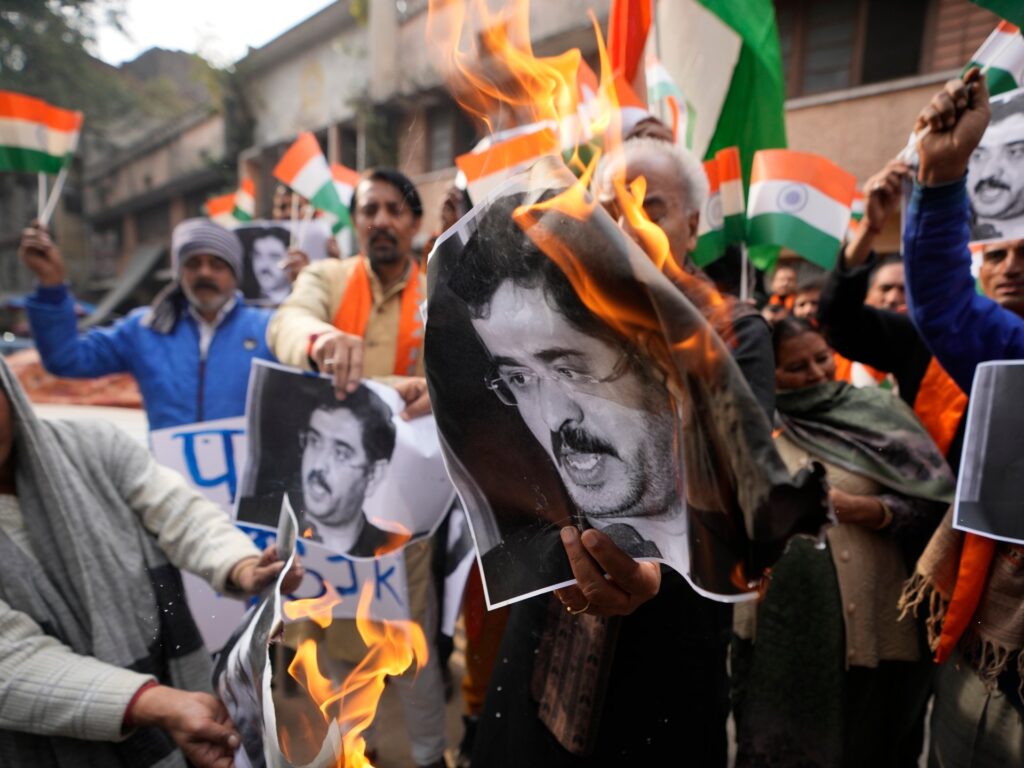
Thursday’s attack is the latest in a series of incidents in which armed fighters have killed Indian soldiers. Four Indian soldiers were killed, and three others were wounded after suspected rebels ambushed Indian military vehicles in the southernmost border district of Rajouri in Indian-administered Kashmir, officials said on Friday. An Indian army official told Al Jazeera that the attack took place on Thursday afternoon when two army vehicles – a mini-truck and a gypsy – carrying nine soldiers were moving to a site where a search operation was under way to find the suspected rebels in Rajouri. In a statement on Thursday evening, the Indian army said that their “troops immediately retaliated”. Following the attack, the Indian army launched a major operation in the area to nab the attackers who are believed to be hiding in the dense forest area. Nearby areas were also cordoned off. So far, however, the army has not declared any casualties among the armed rebels. Rajouri and Poonch districts are the hilly areas close to the Line of Control (LoC), a demarcation line between the Indian and Pakistan-administered parts of Kashmir. The armed rebellion in Kashmir, which is claimed in full by both India and Pakistan, but ruled in parts by the two neighbours, has been continuing since the 1990s against Indian rule. India accuses Pakistan of financing and arming the rebellion. New Delhi has struggled for decades to completely suppress anti-India sentiments in Kashmir. In August 2019, Prime Minister Narendra Modi’s government stripped the region of its semi-autonomous status, guaranteed under the Indian constitution when the former king of Kashmir acceded to the Indian Union in 1948. Earlier this week, the Indian Supreme Court upheld the Modi government’s decision. India has also divided what was a full-fledged state into two federally ruled territories — Jammu and Kashmir, and Ladakh. While the Kashmir region has been a hotbed for dissent for decades, since 2021 districts like Rajouri and Poonch in the Jammu region have witnessed an uptick in the rebel attacks against Indian soldiers, and 2023 has been particularly deadly for Indian soldiers. In all, 34 Indian soldiers have been killed in Kashmir since 2021,19 since April. A little-known rebel outfit, Peoples Anti-Fascist Front, which officials have said is the proxy of Pakistan-based armed group Jaish-e-Muhammad, has claimed responsibility for the attacks, including the latest one. The renewed attacks, observers said, have become a new challenge to the government in New Delhi which has claimed that its controversial policies have improved the security landscape in the region. In November, five soldiers including two army captains were killed in an operation in the same district in Kalakote, Rajouri. In September, four army personnel were killed in a gunfight in the forests of Kokernag near Anantnag district. In April and May this year, 10 soldiers were killed in the two districts. ‘Safe haven’ A senior security official in the southern city of Jammu, who was not authorised to speak to the media, told Al Jazeera that the tough terrain of southern Kashmir is a safe haven for armed fighters to launch such kind of attacks. “Forests give enemies anonymity, space to operate and conceal themselves to outfox the security dragnet,” he said. Ajai Sahni, the executive director of the Institute for Conflict Management in Delhi, told Al Jazeera, that most of the recent killings of army soldiers had occurred in army-initiated operations. “This seems the pattern that has been followed by most of the recent incidents in which security forces have lost their lives,” Sahni said. When asked about the claims of the government about normalcy in Kashmir amid the uptick in attacks on the soldiers, Sahni said “I don’t believe that normalcy has returned after Article 370 abrogation,” referring to the Constitutional provision that gave Jammu and Kashmir greater autonomy than other states. “What is normalcy? This [Kashmir] is a theatre which has seen up to 4000 deaths in a single year in 2001,” Sahni said. “So, to expect no incidents to occur, it’s unrealistic. The government has made extremely unrealistic projections and claims about the situation in Jammu and Kashmir. “ Adblock test (Why?)
What’s the latest UN Gaza resolution that the US has agreed to?
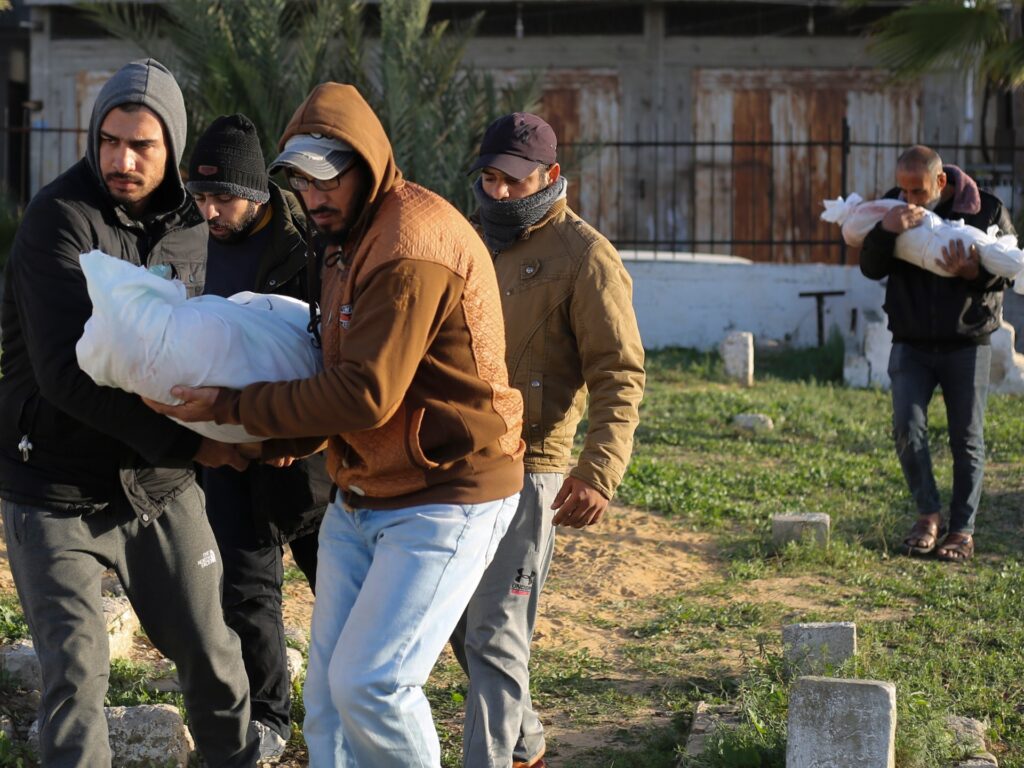
After a week of diplomatic back and forth, the United States has signalled that it is ready to support a United Nations Security Council resolution. Here is what we know about the draft resolution. Why did the US want the draft resolution watered down? The original draft was put forth by the United Arab Emirates mission to the UN on December 15 and it called for a cessation of hostilities and unhindered flow of aid into the Gaza Strip. It also said that the UN would exclusively monitor aid that enters Gaza through routes from outside states. Additionally, it called for an “immediate and unconditional release of all hostages”. Initially, the US did not want the word “cessation” in the resolution. As a result, the language was substituted with “suspension of hostilities”. However, Washington was unconvinced despite the first round of revisions and voting was delayed. Now, the problem was with the UN monitoring of aid entering Gaza. PassBlue, an independent organisation that monitors the UN, posted on X that US diplomats were reportedly in agreement with the UN monitoring of aid until Israel saw the draft resolution. The USUN diplos were apparently OK with this para in the Gaza draft text, until #Israel saw it. Israel wants to keep full control of humanitarian aid getting into Gaza https://t.co/gzJpxQBq4G — PassBlue (@pass_blue) December 20, 2023 Before Thursday, Arab and the Organisation of Islamic Cooperation (OIC) members proposed new language to the US pertaining to the clause that talks about the UN monitoring aid entering Gaza, Al Jazeera’s Rami Ayari posted on X. It’s late and I’ll be going to sleep shortly but here’s the state of play on negotiations regarding the #UNSC draft reso on #Gaza aid scale-up. Following Blinken’s calls with his Egyptian and Emirati counterparts, ambassadors of the three countries have been trying to resolve the… https://t.co/kBGqf2Aex4 — Rami Ayari (@Raminho) December 21, 2023 By then, a vote on the draft resolution had already been postponed seven times in three days, Al Jazeera’s Gabriel Elizondo reported. However, the voting did not take place as scheduled for Thursday either – and was delayed to Friday. What changes did the US make to the resolution? With the help of Arab states, the US amended the draft. US ambassador to the UN, Linda Thomas-Greenfield said: “We’re ready to vote on it. And it’s a resolution that will bring humanitarian assistance to those in need.” The original draft, which mentioned a “cessation of hostilities”, was changed to call for an “urgent suspension of hostilities to allow safe and unhindered humanitarian access and for urgent steps towards a sustainable cessation of hostilities”. But the US-amended draft drops all references to a pause in fighting. Instead, it calls for “urgent steps to immediately allow safe and unhindered humanitarian access, and also for creating the conditions for a sustainable cessation of hostilities”. The original draft also said the UN will “exclusively monitor all humanitarian relief consignments to Gaza provided through land, sea and air routes” from countries not party to the war. Instead, the amended draft resolution asks UN Secretary-General Antonio Guterres to appoint a senior humanitarian and reconstruction coordinator to, in turn, establish a mechanism for accelerating aid to Gaza through states that are not party to the conflict. The coordinator would also have responsibility “for facilitating, coordinating, monitoring, and verifying in Gaza, as appropriate, the humanitarian nature” of all the aid. The initial draft resolution had demanded that Israel and Hamas allow and facilitate “the use of all land, sea and air routes to and throughout the entire Gaza” for aid deliveries. That was changed to “all available routes,” which some diplomats said allows Israel to retain control over access to all aid deliveries to all 2.3 million people in Gaza. Israel monitors the limited aid deliveries to Gaza via the Rafah crossing with Egypt and the Israel-controlled Karem Abu Salem (Kerem Shalom) crossing. Will the resolution pass? To pass, the resolution needs at least nine votes in favour out of the 15 member states, and no vetoes by the US, France, China, the United Kingdom or Russia — the five permanent members of the UN Security Council. While Thomas-Greenfield told reporters that the draft is now “a resolution we can support”, she declined to specify whether the US will vote in favour or abstain. The vote, however, was delayed until Friday after Russia – also a veto power – and some other council members complained during closed-door talks about the amendments made to appease Washington, diplomats said. Russia’s UN ambassador Vassily Nebenzya declined to speak to reporters after the meeting. Now that the language that initially called for a “cessation of hostilities” has been diluted significantly, there is no guarantee that permanent members Russia and China will be on board. Russia and China previously vetoed a US-led resolution on October 25, which called for a “humanitarian pause” instead of a “ceasefire”. If it passes, will it make a difference? Gaza urgently needs food as its entire population is experiencing a hunger crisis, a UN-backed report says. A significantly large proportion of households is experiencing food insecurity and the threat of famine is rising. While the clause of unhindered aid access sounds promising in theory, the delivery of food and other assistance lagged Gaza’s needs even before the war. More than two months of fighting have created a further backlog of assistance requirements. Meanwhile, Israel has so far not lived up to the aid commitments it has made. Earlier, a humanitarian pause was brokered between Israel and Hamas to allow for a prisoner and captive exchange, alongside allowing for more humanitarian aid to enter Gaza. But even during the pause, about 200 aid trucks entered Gaza every day, compared with the 500 trucks that would enter daily before the outbreak of violence on October 7. The UN said the flow of aid during the truce was no match to the needs of Gaza’s civilians. Hunger in the enclave has only worsened since,
‘The Fat One’ sings: Spain’s Christmas lottery rolls out millions in prizes

Known as ‘El Gordo’, the world’s richest lottery is set to pay out close to $3bn in prizes. People across Spain have been tuning in to watch the televised draw of the Christmas lottery known as “El Gordo” (‘The Fat One’), as pupils from Madrid’s San Ildefonso school began singing out the prize-winning numbers. A total of 2.6 billion euros ($2.86bn) in prizes will be distributed this year, most in small amounts, as Friday’s announcements were sung out, as is the tradition. Most people buy fractions of full tickets, with the most common purchase a 20-euro ($22) share, offering a top prize of 400,000 euros ($440,000). The two-centuries-old tradition kicks off the festive season and is televised from Madrid’s Teatro Real opera house, with tens of thousands of people tuning in to radio stations and watching online. Purchasing and sharing tickets in the run-up to Christmas is a much-loved tradition among families and friends, and is celebrated in bars, sports clubs and on the streets. Children at the school in the Spanish capital pick the numbers from among 100,000 small wooden balls drawn from two large golden rolling drums, showing the ticket numbers and their corresponding prizes. They sing out both figures, that cadence well-known across the country. The event lasts approximately three and half hours as ticket holders wait in anticipation for the jackpot known as “El Gordo” to be called out. People in costumes wait before the start of the draw of Spain’s traditional Christmas lottery ‘El Gordo’, at Teatro Real, Madrid, Spain, on December 22, 2023 [Susana Vera/ Reuters] While other lotteries may have bigger individual top prizes, El Gordo, held each year on December 22, is ranked as the world’s richest for the total prize money involved. Spain established its national lottery as a charity in 1763 during the reign of King Carlos III. Its objective later became to shore up state coffers. The December 22 lottery began in 1812 and children have been singing the prizes since the beginning. Adblock test (Why?)
Turkey carries out mass detention of ISIL suspects
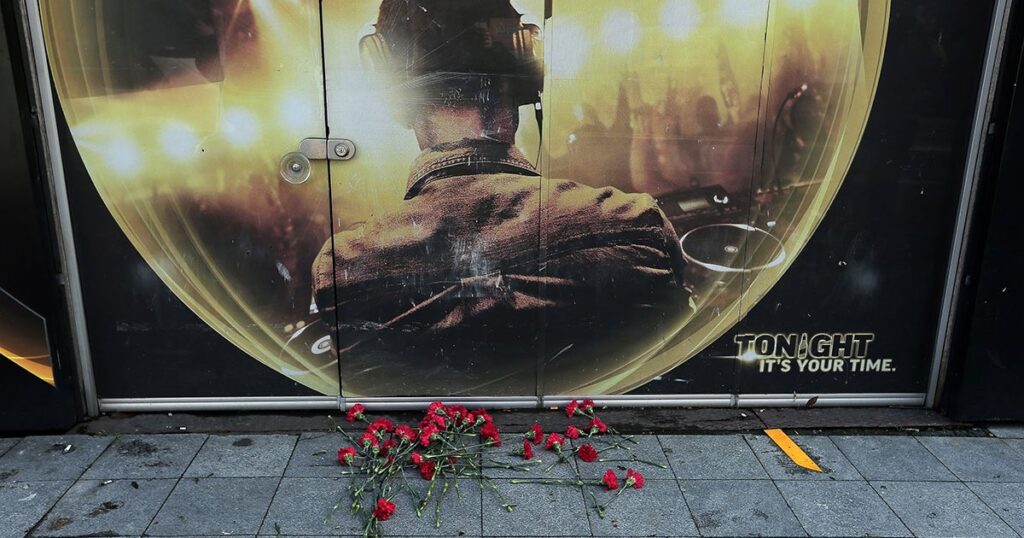
Ankara has stepped up operations against armed groups since early October. Turkey has arrested hundreds of people suspected of having links to ISIS (ISIL). The roundup was carried out in operations across 32 provinces, Interior Minister Ali Yerlikaya said on Friday. Ankara has ramped up operations against the armed group and Kurdish groups during the war in Gaza and after a bomb exploded near government buildings at the start of October. The majority of the suspects were arrested in Ankara, Istanbul and Izmir, the country’s three biggest cities, Yerlikaya said on the social messaging platform X. The nationalities of the detainees have not been revealed. The operation was carried out simultaneously across the country, said the minister, who shared footage that showed police entering apartments and buildings and dragging suspects into vehicles. 32 İlde DEAŞ Terör Örgütüne yönelik eş zamanlı olarak düzenlenen “KAHRAMANLAR-34” Operasyonlarında 3⃣0⃣4⃣ şahıs yakalandı❗ Aziz Milletimizin huzuru, birlik ve beraberliği için teröristlerin hiçbirine göz açtırmayacağız. Güvenlik güçlerimizin üstün gayretleriyle mücadelemize… pic.twitter.com/WKlpZVGMeN — Ali Yerlikaya (@AliYerlikaya) December 22, 2023 ISIL originated in the aftermath of the US invasion of Iraq in 2003. It was forged from an alliance between an al-Qaeda offshoot and elements of Iraq’s defeated Baath Party. At its peak in 2014, its fighters controlled one-third of Iraq and Syria. But the group lost its grip on the territory after campaigns by US-backed forces in Syria and Iraq as well as Syrian forces backed by Iran, Russia and various paramilitaries. Although beaten back, some ISIL fighters remain in hiding, mostly in remote areas of Syria and Iraq, from which they continue to carry out attacks. Turkey continues to be targeted and has been hit by a string of deadly bombings since 2015. One attack in Istanbul on January 1, 2017, killed 39 people in a nightclub. Ankara has ramped up its crackdown against people in the country with possible links to ISIL ever since. It is assumed that the latest detentions may have been made with one eye on the coming New Year’s celebrations. In May, President Recep Tayyip Erdogan announced that the country’s intelligence forces had killed the suspected leader of ISIL, Abu al-Hussein al-Husseini al-Qurashi. “This individual was neutralised as part of an operation by the Turkish national intelligence organisation in Syria,” Erdogan said. “We will continue our struggle with terrorist organisations without any discrimination.” In recent weeks, Turkish authorities have also carried out operations against the outlawed Kurdistan Worker’s Party, or PKK, which Ankara considers a terrorist organisation. The Kurdish fighters claimed responsibility for detonating a bomb near Turkish government buildings in Ankara on October 1. “For the peace and unity of our people, we will not allow any terrorists to open their eyes,” Yerlikaya said on Friday. “We will continue our battle with the intense efforts of our security forces.” Adblock test (Why?)
Feted abroad, ignored at home: The story of Mami Wata’s voyage to Oscars

Lagos, Nigeria – On October 15, when C J Obasi heard that his film Mami Wata had been officially selected as Nigeria’s entry for the 2024 Oscars, he was elated. “It felt great. I think we definitely deserve it, and everyone worked so hard on this film and bled so much for it,” Obasi told Al Jazeera. “It’s always a big deal when you get what you deserve here. I never take it for granted just because I deserve it. I’m super grateful to the Nigerian Oscar selection committee.” Mami Wata, Obasi’s third feature-length film, is a black-and-white fantasy thriller inspired by the rich folklore of coastal West Africa. Shot in 2021 and released in January, it has a running time of 107 minutes. The title is a Nigerian pidgin reference to the mermaid or all-powerful water goddess believed to provide healing, wealth and protection to her worshippers. The film is also in Nigerian pidgin. Set in the fictional village of Iyi and shot in the Republic of Benin, Mami Wata is a truly West African affair. It is the story of two sisters, Prisca (played by Ivorian actress Evelyne Ily) and Zinwe (played by Nigerian actress Uzoamaka Aniunoh) who try to bring harmony back to their seaside village which is split between two groups: one that believes in their current leader, a messenger for the water goddess, and another that wants to establish a new system without the deity. Obasi says he began writing Mami Wata in March 2016 and over the next five years, wrote the story across 10 drafts. On the international scene, Mami Wata has already been a hit, screening in at least 15 festivals globally. In 2021, it made the final cut in the 78th Venice International Film Festival in 2021. In January 2023, Mami Wata had its world premiere at the Sundance Film Festival and won the Special Jury Prize for Cinematography. The release has also come with critical acclaim internationally. Variety Magazine called the film “a stark black-and-white Oscar entry that weaves a bewitching fable with haunting images”. “This visually beautiful and charismatically acted film is a fierce expressionist reverie or parable of power, shot in a lustrous, high-contrast black and white,” wrote The Guardian in its review. Eventually, Mami Wata was submitted by Nigeria for the Academy Award for Best International Feature Film – the country’s third-ever entry. The road to the Oscars Lagos-based film critic Oris Aigbokhaevbolo says Mami Wata was the only choice for the 2024 Oscars. “It already has international exposure,” he said. “So part of the hard work has been done. Again, no other film in non-English from Nigeria fits the dimensions demanded by the Oscars. Mami Wata is just more thoughtfully done than its peers.” But the road to its selection as Nigeria’s entry for the Oscars was blighted by a lukewarm reception at home. On September 8, Mami Wata made its debut in Nigeria. According to What Kept Me Up, a Nigerian film blog, the premiere came at a time when there were no major competing films. However, during the opening weekend, it was difficult to watch the film due to inconsistency in showtimes at cinemas. Esther Nwajiaku, a Lagos-based content creator, said it took two trips to the cinema before she could watch the film. “The film showed for only two weeks, and with mostly ridiculous time slots,” she told Al Jazeera. “The best chance I got to see it was by 12pm on a Sunday at the FilmHouse cinema in Surulere. The first time I went with friends to see the film at the same cinema in Surulere, it didn’t show.” The average length of time that films spend in Nigerian cinemas is between four to six weeks, though some films stay up to eight weeks. But Mami Wata was reportedly pulled from cinemas after less than three weeks. Industry insiders say even before and during the short run, its local distributor, FilmOne, reportedly did very little marketing to promote the film. The typical rollout of press screenings, premiere, and other digital marketing push were visibly absent. “Right now, you find that the UK is doing a much better job in pushing the film than what played out back home,” said Jerry Chiemeke, a London-based lawyer and film critic who described the promotion as abysmally poor. “How do you put such a highly anticipated film in tight morning slots where viewership will be low, and even with those slots, people tried seeing the film and they were told that it’s “simply not showing”? he asked. FilmOne did not respond to Al Jazeera’s request for comment. Obasi declined to speak on screening issues the film encountered in Nigeria, saying he would do so at a later date when he is ready. “For now, I’m just enjoying the theatrical run across several territories around the world,” he says. A poster for Mami Wata [Courtesy of: Fiery Film Company] Nollywood’s genre dynamics Some critics say the case of Mami Wata’s botched showings in Nigeria reaffirms the popular notion that commercial films in Nollywood tend to overshadow the diversity offered by niche or arthouse filmmakers because the volume of promotion and distribution for the former vastly outstrips that for the latter. For Aigbokhaevbolo, arthouse films don’t stand a chance in Nigeria. “The care and thoughtful promotion they get in other climes are absent in Nigeria. The audience isn’t as developed,” he said. The data seems to support this: the highest-grossing films at the Nigerian box office are comedies. They are also often widely publicised and have an extended time in cinemas. Based on data from the Cinema Exhibitors Association of Nigeria (CEAN), five of the top earning Nigerian films of all time include Battle on Buka Street (2022), a comedy-drama that earned N655 million ($524,000), Omo Ghetto: The Saga (2020) earned N636 million ($508,800), The Wedding Party (2016) earned N452 million ($361,600), The Wedding Party 2 (2017) earned N433 million ($346,400), and Chief Daddy earned N387 million