

Forget Australia’s referendum. Indigenous people make strides on their own
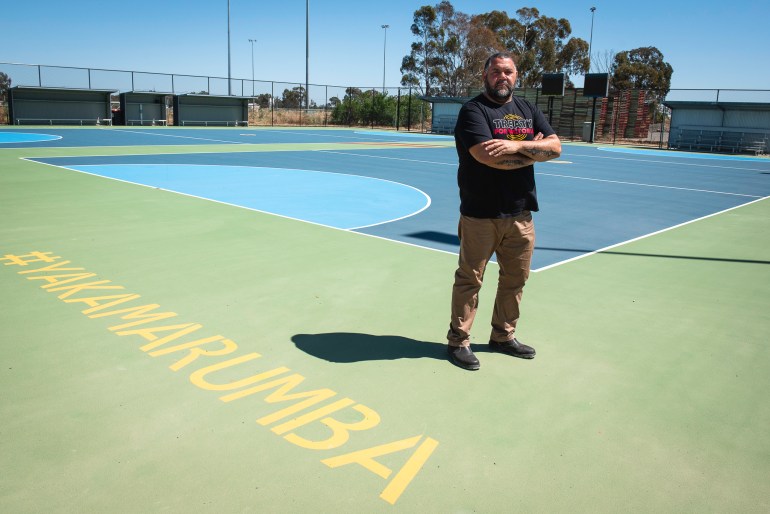
Shepparton, Australia – Brad Boon gestures towards the towering mural, one of many that dot the small rural town of Shepparton in Australia’s southeastern state of Victoria. The faces of Indigenous heroes William Cooper and Sir Douglas Nicholls stare defiantly across the smattering of shops under the glare of the midday Australian sun. Despite the onslaught of British colonisation and discrimination, Sir Douglas became the first Aboriginal person to be knighted and was made the governor of South Australia; he was also a talented Australian Rules football player. Cooper, meanwhile, long campaigned for Aboriginal rights and is also recognised for protesting against the Nazi regime, seeing correlations between Indigenous peoples’ treatment in Australia and that of the Jewish people under Nazi Germany. Both Cooper and Nicholls came from the Indigenous Yorta Yorta nation – the traditional area surrounding Shepparton. That their faces – along with other Indigenous heroes – are emblazoned on the walls around the town are testament not only to the Yorta Yorta peoples’ survival and resistance to brutal colonisation but also to their enduring legacy. Despite their long history of resistance and activism, however, the Yorta Yorta people are still fighting for their rights in 2023. Brad Boon has lived in Shepparton for 17 years and is proud of the success the local community has had, including the new netball courts at the Indigenous-run Rumbalara Football and Netball Club [Ali MC/Al Jazeera] In October, Australia held a referendum to decide whether to establish a constitutionally enshrined Indigenous “Voice to Parliament“. The proposal was to establish an advisory council in the federal government to advise on matters concerning Indigenous peoples and address the continued inequalities they face in Australia. Despite fierce advocacy from its supporters, the proposal was rejected. In Shepparton, the no vote resounded even louder. More than 76.2 percent of the population voted against the voice – far higher than the national average of 60.62 percent. It was a disappointment to many of the Yorta Yorta who make up one of the largest populations of Indigenous peoples in the state. While living in Shepparton for 17 years, Boon is originally from the Kurnai nation in southeast Victoria. However, he has a Yorta Yorta partner, has worked in the town’s Indigenous legal services and is a former player and now volunteer in the local Indigenous-run Rumbalara Football and Netball Club. The referendum was notable not only for the resounding defeat but also for the racism and negativity that typified the debate. Inside a replica of the houses built for the Yorta Yorta to replace the tin and hessian huts they’d been forced to live in on the Mooroopna Flats. On the table is a historical advertisement urging voters to ‘Keep Australia White’ [Ali MC /Al Jazeera] Well-known local Indigenous rapper Briggs – Brad Boon’s brother-in-law – was a strong advocate of the Voice to Parliament, even holding a free concert in Shepparton to gain more voter support. Despite the loss, Boon says there are many positive Indigenous-led outcomes in small towns like Shepparton that are rarely touted in the media or recognised in politics. “At the minute we’re just seeing bad stuff – domestic violence, sexual abuse, all the stuff that they want to get people up in arms about,” he said. “But they’re not talking about the good that’s happening around the state. And that’s what I think we need to do more of.” Pushed into slums Shepparton is a small town nestled in a riverine floodplain, just two hours north of Melbourne. Surrounded by fragrant gum trees, undulating native bush and once-flourishing river systems, the region has been home to the Yorta Yorta for tens of thousands of years and maintains a rich cultural history still present in the local community. Early colonialists established sheep farming in the region, forcing the Yorta Yorta first into a settlement called Cummeragunja in the 1880s and then into slum housing on the banks of the Goulburn River in 1939. Bushland around the Rumbalara Aboriginal Co-operative [Ali MC/Al Jazeera] The Yorta Yorta lived in huts made from tin and hessian sacks in an area subject to flooding, which was known as the Mooroopna Flats. Leaders – including Cooper and Nicholls – campaigned for better conditions at a time when Indigenous people across the nation were denied equal wages and were subject to punitive legislation that allowed for the removal of their children into white institutions, known as the Stolen Generations. In Victoria, the effects of colonisation were even more severe than in the rest of the country. At least 50 massacres are estimated to have occurred, with some killing up to 200 Indigenous peoples in what is often referred to by Indigenous scholars as a genocide. It is a history that underpins both the struggle and success the community has made since the days of Cooper and Nicholls, but racism still runs deep in the small town. Heidi Knowles says she regularly experiences racism, especially if she wears a T-shirt featuring an Aboriginal flag. She says shopkeepers assume she is going to steal something, perpetuating a stereotype of Indigenous people as criminals. “I might get followed around the supermarket and it makes me feel uncomfortable. Don’t get me wrong,” she said. “But I’ve got nothing to hide.” Knowles is proud of being an Indigenous woman. “I wear my Koori [Indigenous] top with pride and you will see me [in it] every single day,” she told Al Jazeera. Heidi Knowles is a Yorta Yorta woman who is the manager of operations and student success at the local Academy of Sport, Health and Education [Ali MC] The 39-year-old mother works as the manager of operations and student success at the local Academy of Sport, Health and Education (ASHE), a high achievement centre for predominantly Indigenous young people. She says that such a centre is vital for Indigenous students who may experience racism and discrimination at their local school or who simply do not fit into the mainstream education system. “Our
Over 100 killed and hundreds injured in China earthquake
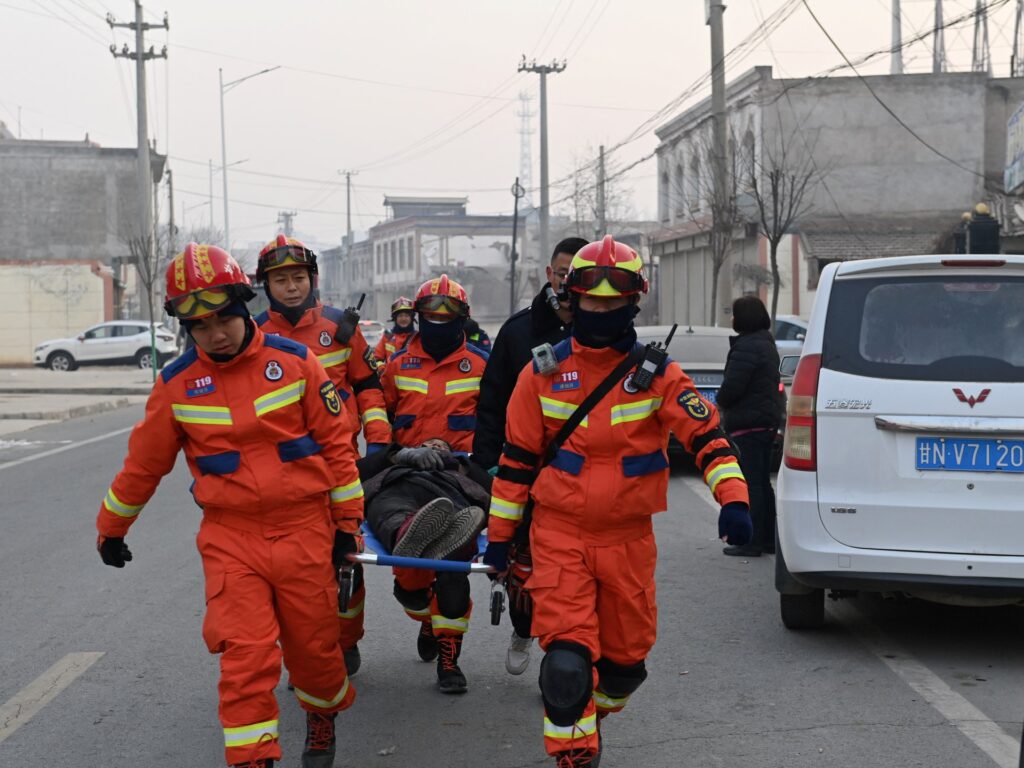
NewsFeed An earthquake in northwest China has killed at least 118 people and left hundreds of others injured. Published On 19 Dec 202319 Dec 2023 Adblock test (Why?)
UN Security Council agrees to early withdrawal of DR Congo peacekeepers
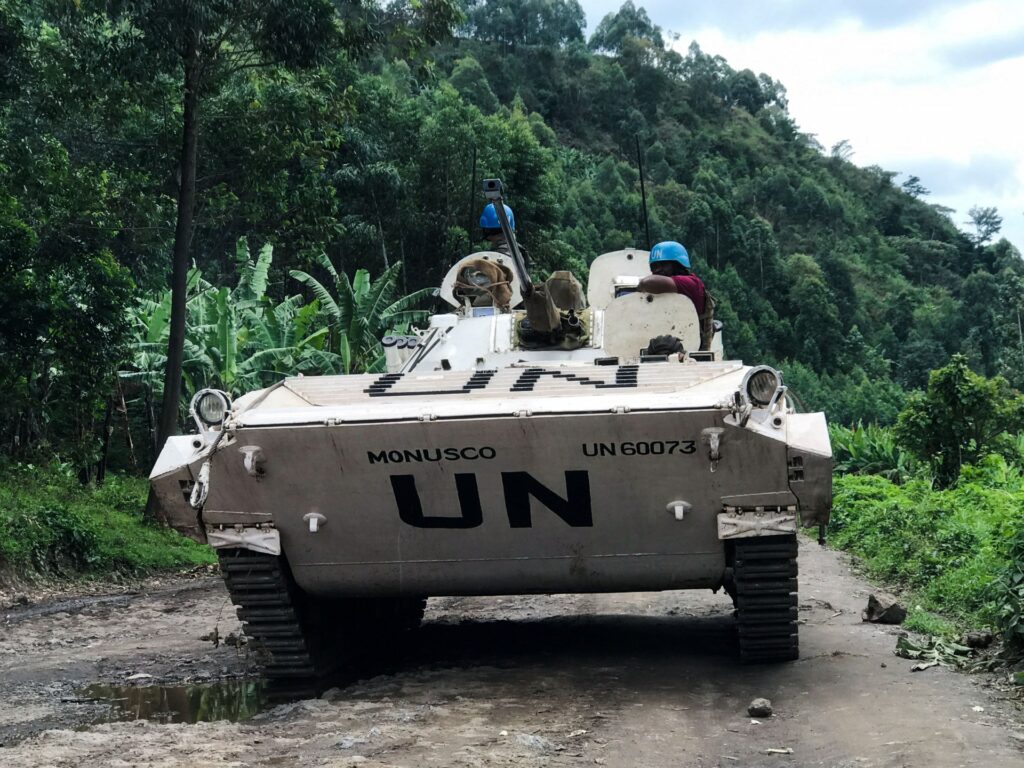
Congolese authorities have long accused UN forces of failing to protect civilians from armed groups in the eastern DRC. The United Nations Security Council has voted unanimously in favour of gradually phasing out its peacekeeping operations known as MONUSCO in the Democratic Republic of the Congo. The 15-member body voted on Tuesday to draw down peacekeeping forces in the Central African nation about a year earlier than originally scheduled despite continued concerns over violence. The decision was made as the DRC prepares for presidential and parliamentary elections on Wednesday, in which poverty and widespread insecurity are expected to be key issues for voters. Numerous armed groups, including the Allied Democratic Forces (ADF) and M23, are active in provinces such as North Kivu, South Kivu and Ituri in the eastern DRC, where civilians face violence and displacement. Despite concerns over security, Congolese authorities have persistently called for the UN to scale down its presence in the country, saying it has failed to protect civilians from armed groups. DRC President Felix Tshisekedi, who is running for re-election, said in remarks at the UN General Assembly in September that he had called on his government to accelerate the withdrawal of MONUSCO’s 14,000 soldiers so it would commence by the end of the year. UN forces operating in other African nations have faced similar criticism. In June, the UN voted to end a decade-old peacekeeping mission in Mali after calls to do so from the country’s military government. Wednesday’s elections are seen as a crucial test for democracy in the DRC, where only one peaceful transition of power has occurred in 63 years. Tshisekedi won the December 2018 presidential election, which was tainted by allegations of voting irregularities, and voters have expressed concerns that Wednesday’s vote could face similar issues or even an outbreak of violence. Adblock test (Why?)
AJ+ wins prestigious Emmy Award in Los Angeles

Eat This with Yara has been named Outstanding Lifestyle Program at the 50th Annual Daytime Emmy Awards. Los Angeles – The AJ+ show, Eat This with Yara, has won “Outstanding Lifestyle Program” at the 50th Annual Daytime Emmy Awards in Los Angeles. Launched in 2018 by senior producer and host Yara Elmjouie, Eat This with Yara is a short documentary programme exploring the intersection of food and society. The winning episode from the series is called, The Awful Truth About ‘No Trespassing’ Signs. With the help of TikTok star and expert forager Alexis Nikole Nelson – also known as “The Black Forager” – it tells the story of trespass laws which spread rapidly through the US following the abolition of slavery, in order to target newly freed Black Americans. It is the first AJ+ programme to win a national Emmy Award and was up against competition from Netflix, NBC and Magnolia Network at the ceremony on Saturday, December 16. Elmjouie accepted the award alongside his former co-producer Adrienne Blaine, who has since left AJ+, and executive producer Shadi Rahimi. In his acceptance speech, Elmjouie called for the world’s attention to focus on the humanitarian catastrophe unfolding in Gaza, on which Israel launched a war on October 7, and condemned the killing of his colleague, Al Jazeera Arabic cameraman Samer Abudaqa, who died during an Israeli drone attack on December 14, two days before the awards ceremony. Elmjouie also mentioned Al Jazeera Arabic’s Gaza bureau chief, Wael Dahdouh, who was injured in the same Israeli attack, as well as the late Al Jazeera Arabic correspondent, Shireen Abu Akleh, who was killed by Israeli snipers in 2022. Yara Elmjouie holds his award after the Los Angeles Emmy Awards ceremony on December 16 [Al Jazeera] While on stage, executive producer Shadi Rahimi displayed a henna tattoo on her palms that read “Save Gaza”. She also briefly held up a sign near the end of Elmjouie’s speech which read: “Killing Journalists Is A War Crime.” Following the ceremony, clips of Elmjouie’s speech have been shared widely on TikTok and Instagram. The winning episode of Eat This with Yara can be viewed on YouTube, Instagram and Facebook, but short viral clips of it have also been published on X, TikTok and Instagram Reels. In past years, Eat This with Yara has won a James Beard Award, two Webby Awards, and an award from the American Association for the Advancement of Science (AAAS). Adblock test (Why?)
Israel signals readiness for new temporary truce in Gaza as pressure mounts
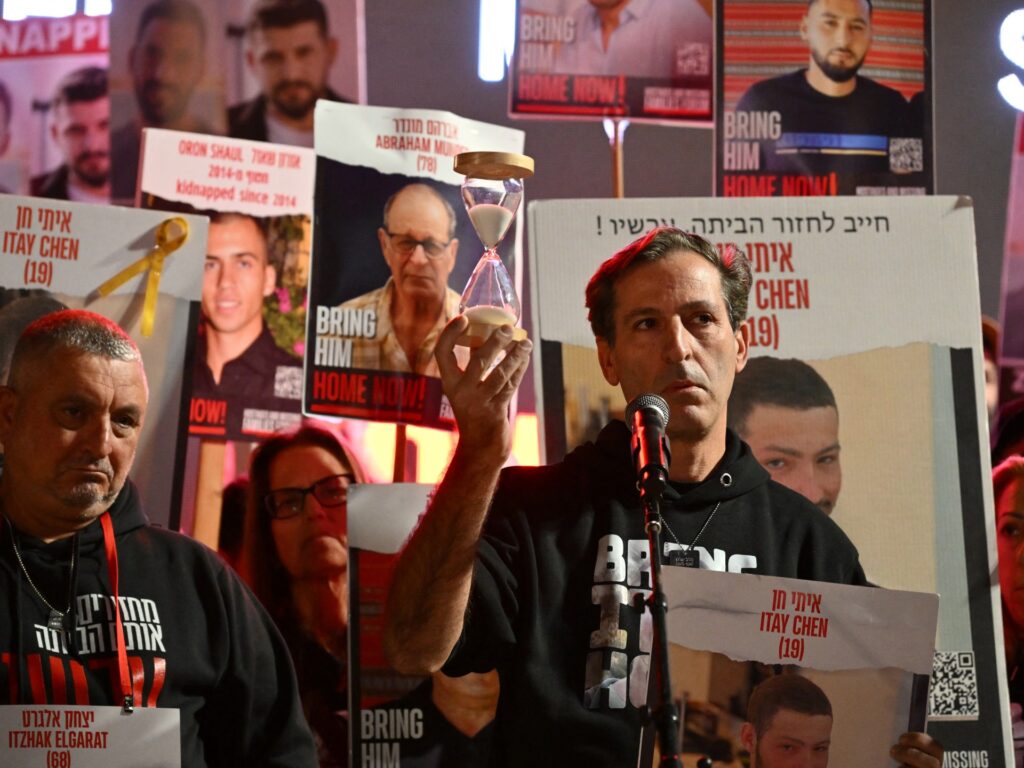
Hamas says it will not enter negotations over releasing captives until Israel ends its war on Gaza. Israeli President Isaac Herzog has said his country is willing to agree a new temporary truce with Hamas in Gaza to secure the release of more captives held by the Palestinian group. “Israel is ready for another humanitarian pause and additional humanitarian aid in order to enable the release of hostages,” Herzog told a gathering of ambassadors on Tuesday. The comments come amid growing international pressure on Israel to pause its assault on Gaza and to allow more humanitarian aid into the besieged territory. A previous Israel-Hamas agreement mediated by Qatar and Egypt led to a week-long truce at the end of November during which Hamas released 86 women and children it was holding in exchange for 240 Palestinian women and teenagers held in Israeli jails. Hamas also released 24 foreign nationals during the pause in fighting. Qatar’s Prime Minister Mohammed bin Abdulrahman Al Thani, who also serves as the Gulf state’s foreign minister, Mossad Director David Barnea and CIA Director Bill Burns held talks in Poland on Monday to discuss a potential new deal to secure the release of hostages in exchange for Palestinians in Israeli prisons and a humanitarian pause in the fighting. “The talks were positive with negotiators exploring and discussing different proposals in an attempt to progress on negotiations,” a source briefed on the diplomatic efforts told the Reuters news agency. “An agreement is not expected imminently, however.” Hamas said in a statement on Tuesday that it rejects any forms of negotiations about prisoner exchanges “under the continuing Israeli genocidal war.” The Palestinian group said it is open to any initiative that contributes to “ending the aggression” and opening border crossings “to bring in aid and provide relief to the Palestinian people.” Al Jazeera’s Bernard Smith said the statements from Herzog and Hamas on Tuesday indicate some progression towards a potential truce. “The question will be whether it is just that, a pause – a humanitarian pause – as the Israelis would call it, or a full ceasefire,” Smith said, reporting from Tel Aviv. The war has flattened large parts of northern Gaza and driven most of the population to the southern part of the besieged territory, where many are in crowded shelters and tent camps. Some 1.9 million Palestinians – about 90 percent of Gaza’s population – have fled their homes. At least 19,667 people, mostly women and children, have been killed in the Israeli assault on Gaza since, according to Palestinian health authorities. Israel launched the assault on Gaza after Hamas fighters from the territory stormed into southern Israel on October 7, killing about 1,200 people and taking about 240 others hostage, according to Israeli officials. Israel is facing growing international pressure to scale back its offensive as the civilian death toll in Gaza continues to soar. France, the United Kingdom and Germany on Sunday added their voices to calls for a ceasefire, while US President Joe Biden last week called the bombing “indiscriminate”. The United Nations Security Council (UNSC) is expected to vote later on Tuesday on a resolution calling for a halt to the fighting in Gaza. Earlier, the head of the International Committee of the Red Cross (ICRC) said the war in Gaza is a “moral failure” of the international community, calling on Israel and Hamas to reach a new truce to halt the fighting. “I have been speaking of moral failure because every day this continues is a day more where the international community hasn’t proven capable of ending such high levels of suffering and this will have an impact on generations not only in Gaza,” ICRC president Mirjana Spoljaric told journalists in Geneva following trips to the Gaza Strip and Israel. Adblock test (Why?)
Can the US-led maritime force stop Yemen’s Houthi attacks during Gaza war?
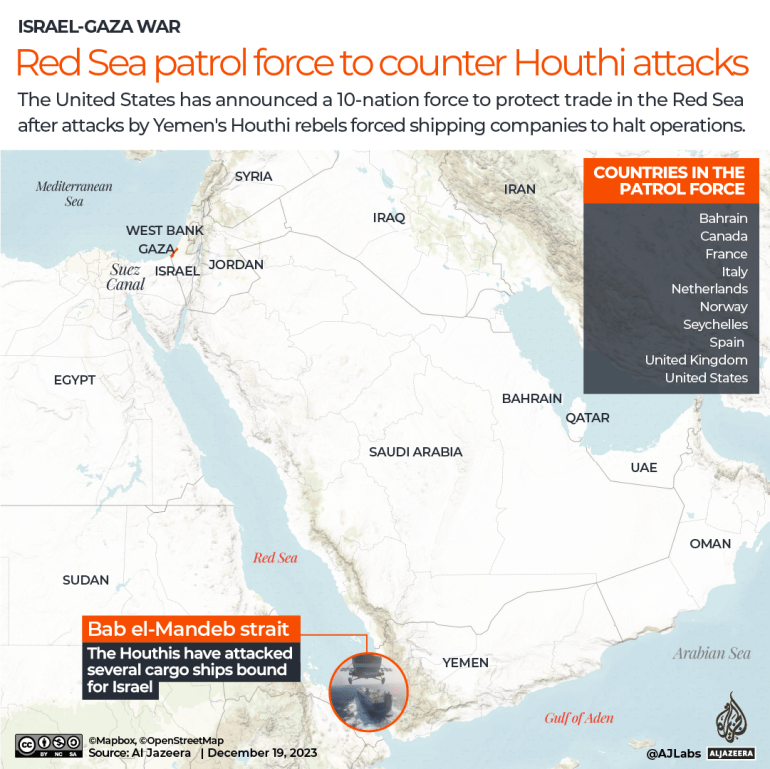
The United States has announced the establishment of a new multinational maritime security force in response to attacks on ships launched by Iran-aligned Houthi rebels in Yemen. The initiative is aimed at ensuring ships can pass through busy waterways near Yemen safely as the Houthis have been targeting vessels in protest of Israel’s war on Gaza, which has killed more than 19,000 Palestinians. But what will the task force do, how will it work and how effective could it be? What is the new force? US Defense Secretary Lloyd Austin announced the establishment of a 10-country force on Tuesday in Bahrain. In addition to the Arab nation, the United Kingdom, Canada, France, Italy, the Netherlands, Norway, the Seychelles and Spain have agreed to join Washington in the new mission. Some of the countries are expected to conduct joint patrols in the southern parts of the Red Sea, the Bab al-Mandab Strait and the Gulf of Aden while others will support the force by providing intelligence. The mission will be coordinated by Combined Task Force 153 (CTF 153), an existing force under a US-led joint effort established in April 2022 with the aim of improving maritime security in the area. The existing framework has 39 member nations, and there are reports that other countries could join or have already agreed to join the newly formed 10-member maritime effort but don’t want it publicised. The Houthis have promised to stand up to any US-led efforts and only stop their attacks once Israel stops its war in Gaza. They have signalled they are open to talks, but diplomacy has so far failed to stop their attacks. For its part, Iran has warned Washington that its joint maritime effort will face “extraordinary problems”. [embedded content] How disruptive are the Houthi attacks? The Houthi group, also known as Ansarallah, started its operations against Israel by launching missiles and drones on the southern parts of Israel, including the port and tourist city of Eilat, in October soon after the war started. Most of the projectiles were intercepted by Israeli and US defences or fell short due to the roughly 2,000km (1,240-mile) distance between the two countries. So the Houthis changed tactics, instead focusing on ships near their shores. They have since been firing missiles and launching attack drones at commercial ships that they claim are linked to Israel and seized a vessel last month that they are still holding in a Yemeni port. Their attacks have stopped many ships from making their way to Israel. At least 12 shipping companies have suspended transit through the Red Sea due to these safety concerns. They include some of the largest in the world: Denmark’s AP Moller-Maersk, Germany’s Hapag-Lloyd, the Italian-Swiss Mediterranean Shipping Company and France’s CMA CGM. Is a new oil crisis brewing? Markets, including the oil and gas market, have increasingly reacted to the attacks, especially considering the volume of cargo being redirected. For instance, Maersk and Hapag-Lloyd together operate almost a quarter of the world’s shipping fleet. Bab al-Mandab, the narrow waterway that separates Eritrea and Djibouti on the Horn of Africa from Yemen on the Arabian Peninsula, is where 10 percent of the world’s seaborne crude oil travels. More than 17,000 ships pass through it each year. It is less than 20km (12 miles) wide, far narrower than the more than 200km (124 miles) of the northern parts of the Red Sea. The direct impact on oil prices has been relatively limited so far, but experts have warned that things could significantly escalate if the attacks continue and security remains an issue. Insurance premiums and prices of oil and gas products are expected to rise if the conflict is not resolved. How will the task force provide protection to ships? Some of the member nations of the task force have warships in the Red Sea. Two US navy destroyers, the USS Carney and USS Mason, are sailing through the Bab al-Mandab Strait. The idea is for the warships to serve as a deterrent to Houthi attacks and to stop them when possible. The naval ships won’t necessarily escort commercial vessels through the Red Sea but will be on standby to respond to attacks. Will the task force be able to stop Houthi attacks? It’s complicated. Houthi fighters landed a helicopter on a ship last month to capture it. The presence of task force military vessels nearby could make a repeat of such a move harder. The task force’s warships could also strike down incoming missiles from Yemen, just as they have intercepted rockets headed towards Israel. But even Israel’s much-touted Iron Dome missile defence system doesn’t have a 100 percent track record of stopping incoming rockets. So far, the US has not fired back at Yemen. At this point, the markets appear unconvinced that the task force will be able to protect shipments through the Red Sea. On Tuesday, Maersk said it was rerouting its ships around Africa to avoid sending them through the Bab al-Mandab Strait. [embedded content] Adblock test (Why?)
‘We have a duty’: US doctor says ceasefire an ‘ethical imperative’ in Gaza
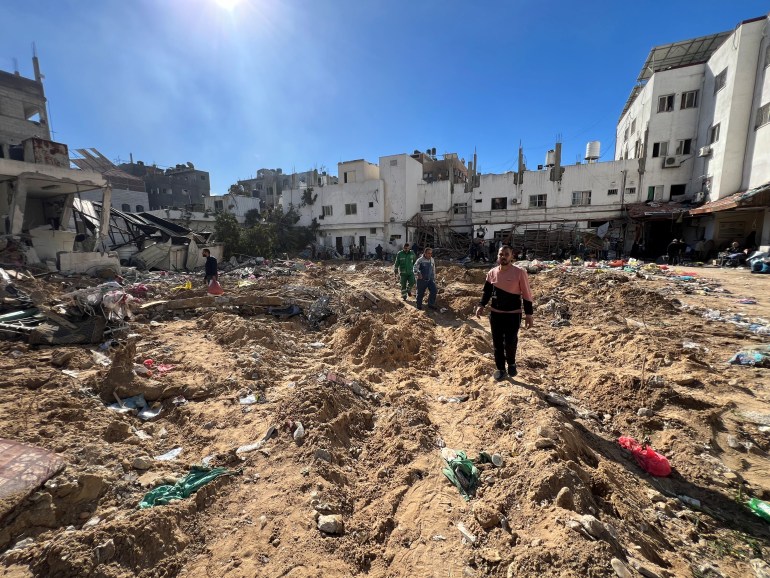
Of all the doctors and medical personnel killed in Gaza this year, Dr Osaid Alser estimates he knew half personally. Alser, a researcher and resident at the Texas Tech University Health Sciences Center in the United States, grew up in Gaza City, Palestine’s largest city. He started his medical career there, starting as a student and eventually becoming a teacher himself. But since the start of the war in Gaza on October 7, Alser has watched as Israeli bombs have rained down on his hometown and military forces have stormed into medical centres. The result has been the near collapse of Gaza’s healthcare system. Only 11 hospitals — a third of those in the enclave — remain operational, with dwindling amounts of fuel and medical supplies. Faced with the death and destruction in Gaza, Alser felt compelled to speak up. “We have a duty to say: Stop the war and ceasefire now,” he told Al Jazeera. To him, calling for a ceasefire was an ethical imperative, not a political statement. But not all healthcare providers feel the same way. Many feel an obligation to avoid commenting on conflicts, as part of a tradition that views medical workers as above the fray. However, the intensity of the war — and its particular toll on Gaza’s health system — have spurred some to ask: When do medical professionals have a responsibility to speak out? Palestinians inspect the damage following an Israeli raid at the Kamal Adwan Hospital in the northern Gaza Strip [Fadi Alwhidifa/Reuters] Debating ‘medical neutrality’ The debate erupted last month with a meeting of the American Medical Association (AMA), the largest professional organisation for physicians in the US. Its House of Delegates, which sets the organisation’s policies, declined to debate a resolution that would have called for a ceasefire in Gaza. According to the publication MedPage Today, some of the delegates felt the resolution would force them to decide whether the conflict in Gaza was a “’just war’ or ‘unjust war’”. That, they said, was not their role. The concept of so-called “medical neutrality” stretches back to a history of civilian involvement in battlefield medical care, with some volunteer nurses tending to the sick and wounded on both sides of a conflict. International law has since developed to protect the roles healthcare workers have in warfare, making it a war crime to intentionally attack medical personnel. But “medical neutrality” does not necessarily mean impartiality. And some medical ethicists point out that the scale of the Gaza conflict has raised dire questions. “The concern that a lot of people are having is that this is not business as usual,” Harold Braswell, an associate professor of healthcare ethics at Saint Louis University, told Al Jazeera. “Israel has dropped an enormous amount of bombs on a highly condensed civilian area in a very, very short period of time. And that has created a very, very urgent situation.” A unique circumstance Gaza, a narrow strip only 11km (7 miles) wide and 40km (25 miles) long, is home to 2.3 million people. Palestinian health authorities estimate that at least 19,453 people have been killed, two-thirds of them women and children. A further 1.9 million have been displaced, with tens of thousands living in the streets of Rafah after Israel ordered civilians to flee south. Humanitarian organisations have warned of healthcare workers being killed, as bombs drop on hospitals and ambulance convoys. Alser, the doctor in Texas, has taken it upon himself to sketch out the scale of the impact. He and his brother, also a doctor, launched an initiative last month to track the number of healthcare workers killed. So far, they have documented 278 killed since the start of the war. That includes 104 physicians, 87 nurses and 87 others working in various medical roles. “That includes a lot of my friends, my mentors, even my own medical students that I taught back in 2017, who went on to become doctors and have been killed,” Alser said. 6.12.2023 Update: IOF murdered 278 healthcare workers and kidnapped 41 just in the past 60 days.#NotATarget #Palestine #Gaza #Gaza_Genocide #WarCrimes #CeasefireNOW #WestBank #freedom #freepalestine #Palestine_Genocide #Gaza_Holocaust pic.twitter.com/kykaAaK6SX — Healthcare Workers Watch – Palestine (@HCWWatch) December 7, 2023 “We’ve been documenting the names of course, because they’re not just numbers, and we’re posting their stories from people we know and trust on the ground.” In addition, Israel has detained more than 40 health workers, including Dr Muhammad Abu Salmiya — the director of Gaza’s largest hospital, al-Shifa — and Alser’s former student, Dr Saleh Eleiwa. The rising numbers left Alser feeling no choice but to speak out. “I just felt like we absolutely have to talk about this,” he said. “So that’s really the motivation: Seeing our colleagues, friends, family being killed — doctors, professionals who just work in medicine [and] go home after they work for many, many hours and they get killed.” Rising calls for a ceasefire Alser is not alone. The American Public Health Association (APHA), the largest professional body for public health workers in the US, issued an appeal last month for an immediate ceasefire, amid pressure from its members. Healthcare labour unions and advocacy groups have likewise called for a ceasefire. And more than 100 faculty members at public health and medical schools signed a letter this month urging the US government to support a ceasefire. US President Joe Biden has thus far avoided pressing for a ceasefire, citing Israel’s right to “defend itself” after the Hamas attack on October 7. But members of the medical community are divided over how much pressure to place on Israel and whether its acts of war have reached a threshold that demands a unified ethical stance. Much of that division has centred on whether the attacks on healthcare centres in Gaza amount to war crimes. In a widely circulated opinion piece published in the Journal of the American Medical Association, Dr Matthew Wynia argued that health professionals do indeed have a responsibility to speak out
Why 141 India opposition MPs suspended from parliament?
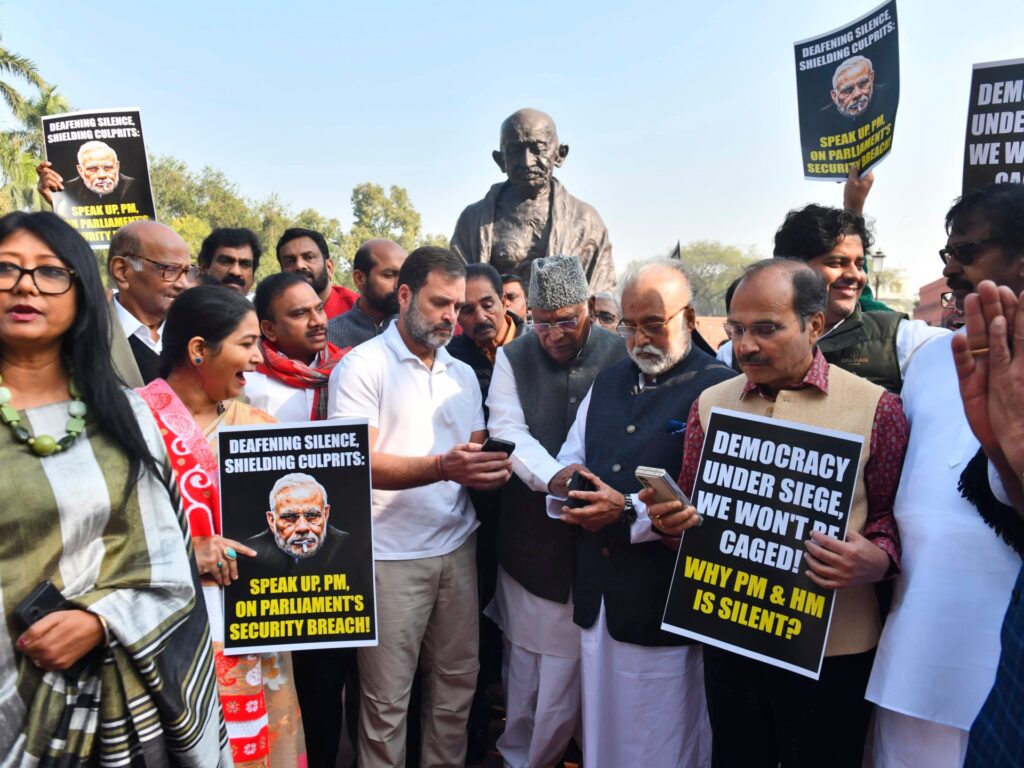
Forty-nine Indian opposition lawmakers, who have been demanding a debate on a December 13 parliament security breach, were suspended from the legislature on Tuesday for allegedly disrupting House proceedings. Tuesday’s government action came a day after 78 opposition members of parliament were suspended from the remainder of the crucial Winter Session of the parliament. In total 141 lawmakers – 95 from the lower house (Lok Sabha) and 46 from the upper chamber (Rajya Sabha) – have been suspended since December 14. The opposition has dubbed the government move a “mockery of democracy”, as important legislation will be passed without any debate undermining parliamentary democracy. The opposition has been demanding a debate on the security breach on December 13, when two men had jumped into the chamber of the lower house from the visitors’ gallery and opened gas canisters. Their visitor’s pass was provided by a legislator from the governing Bharatiya Janata Party (BJP). “A complete purge is being executed so that draconian Bills are passed without any meaningful debate, and so that the BJP MP who facilitated the entry of the two intruders into the Lok Sabha on December 13th goes scot-free,” Congress Member of Parliament Jairam Ramesh posted on X, formerly known as Twitter. Prime Minister Narendra Modi has promised to investigate the matter but rebuked the opposition for demanding the debate. Here is what to know: Why did India suspend 141 lawmakers? Presiding officers of the upper and lower house suspended the opposition lawmakers for disrupting proceedings after the legislators demanded a discussion and a statement from Home Minister Amit Shah regarding last week’s security breach during which two men opened gas canisters inside the lower house chamber while a man and woman opened smoke canisters outside the parliament in the capital New Delhi. Police filed charges against five individuals in connection with the breach that has triggered a political row, with the opposition accusing the government of failing to provide security on the 22nd anniversary of a deadly attack on the parliament. The speaker of the lower house, Om Birla, has said that security is his responsibility and is conducting a review. He has blamed the MPs for breaking the rules of the House. The federal home ministry is also investigating the breach. Political analysts have questioned the suspensions. “MPs have all the right to seek answers and hold the government accountable to the parliament,” academic and author, Apoorvanand, told Al Jazeera. He said that the government justified the move saying that the opposition was suspended for creating a ruckus and being unruly, hindering the functioning of the parliament. The government plans to introduce contentious bills to replace the existing criminal laws in parliament without two-thirds of the opposition members present in the House. Apoorvanand, the academic, said that the prime minister’s refusal to interact with the opposition undermines democracy which is “the dialogue between majority and minority”. Was the move politically motivated? The suspension essentially emptied the parliament of the opposition, with analysts saying the mass suspensions are unprecedented and in line with Modi’s authoritarian style of functioning. Critics have said the current government has misused investigating agencies and other institutions to target opposition leaders. “Is it only the opposition that is involved in corrupt practices?” Apoorvanand asked. “There have been numerous cases where [investigation agencies] ED [Enforcement Directorate] or CBI [Central Bureau of Investigation] start an investigation against certain politicians who then join the BJP and the investigation stops.” A firebrand opposition legislator Mahua Moitra, who is known for her sharp questions in parliament, was expelled over an allegation of misconduct. She has deemed her expulsion politically motivated. She has approached the country’s top court against her removal. Main opposition leader Rahul Gandhi’s parliamentary membership was cancelled after he was convicted in a defamation case by a local court in Gujarat state – Modi’s home state. Gandhi returned to the parliament after his conviction was overturned by the Supreme Court in August. The governing party has justified the government’s actions saying the opposition is corrupt and power hungry. The lawmakers are gone, how will the parliament function? Parliamentary processes can carry on, following the suspension of the opposition lawmakers, as the quorum of 10 percent will be met by the governing party and its allies with an overwhelming majority. While bills are typically passed following a discussion in parliament, they have been passed without any discussion numerous times in the past. “Using the power of numbers to throttle all other voices is contrary to democratic principles,” academic Apoorvand said. What did the Indian government say? Modi, in an interview with a Hindi-language newspaper, said what had happened was very serious and there should be a detailed investigation into it, but “there was no need to debate this”. What has the opposition said? Opposition lawmakers reacted by saying the government was being dictatorial. They continue to protest “against the murder of democracy and violation of the dignity of Parliament” through silent demonstrations, Mallikarjun Kharge, president of the main opposition Congress party, on Tuesday posted on X. Took part in a protest along with INDIA MPs at New Parliament gate against historic suspension of almost all the Opposition MPs from both houses–Lok Sabha and Rajya Sabha. pic.twitter.com/Fo4W9FaVzM — Samirul Islam (@Samirul65556476) December 19, 2023 “First, intruders attacked Parliament. Then Modi govt is attacking parliament & democracy,” Kharge, on Monday, said on X. “With an opposition-less parliament, the Modi govt can now bulldoze important pending legislations, crush any dissent, without any debate.” First, intruders attacked Parliament.Then Modi Govt attacking Parliament & Democracy All Democratic norms are being thrown into the dustbin by an autocratic Modi Govt by suspending 47 MPs. We have two simple and genuine demands – 1. The Union Home Minister should make a… — Mallikarjun Kharge (@kharge) December 18, 2023 Rajya Sabha member Manoj Jha also condemned the government, deeming the suspension a badge of honour. “Congratulations to Modi ji on an opposition-mukt [opposition-less] Parliament,” Jha said. Adblock test (Why?)
Yemen’s Houthis ‘will not stop’ Red Sea attacks until Israel ends Gaza war
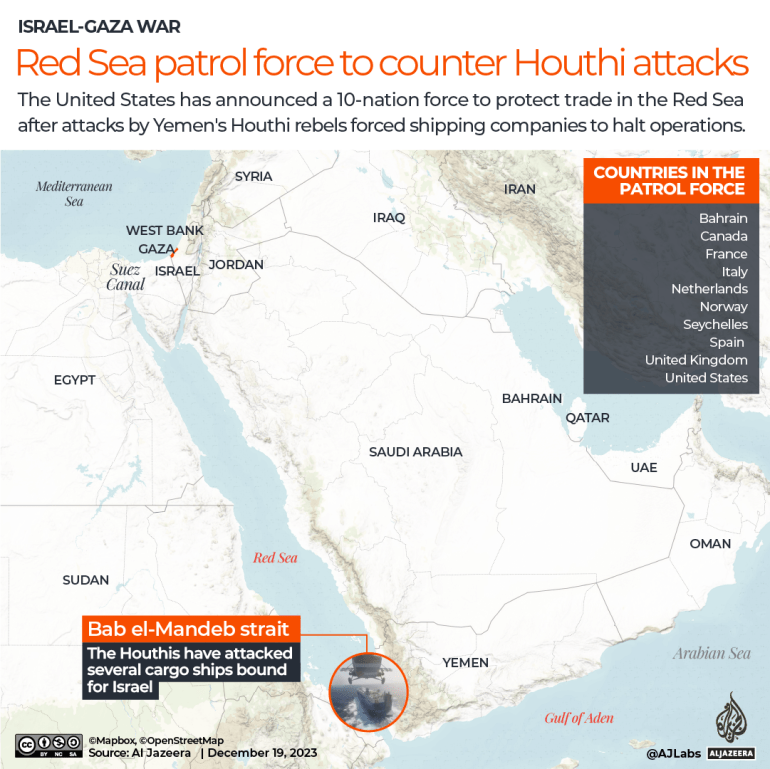
US launches maritime coalition to counter attacks the rebel group says are a response to Israeli ‘crimes’ in Gaza Strip. Yemen’s Houthis will not halt attacks on ships linked to Israel in the Red Sea, despite the United States announcing a new maritime protection force to counter them, a spokesperson for the rebel group said. “Even if America succeeds in mobilising the entire world, our military operations will not stop … no matter the sacrifices it costs us,” Mohammed al-Bukhaiti, a senior Houthi official, said in a post on X on Tuesday. The Houthis would only halt their attacks if Israel’s “crimes in Gaza stop and food, medicines and fuel are allowed to reach its besieged population”, al-Bukhaiti said. He spoke after US Defense Secretary Lloyd Austin announced a coalition on Monday to protect trade in the Red Sea after the attacks forced shipping lines to suspend operations. The Iran-linked Houthis have waged attacks on more than a dozen commercial ships in an attempt to pressure Israel to end its bombardment of the Gaza Strip. “These reckless Houthi attacks are a serious international problem and they demand a firm international response,” Austin said about the new 10-nation coalition. He said the force would operate “with the goal of ensuring freedom of navigation for all countries and bolstering regional security and prosperity”. After the US announcement, Houthi Major General Yusuf al-Madani said in a statement: “Any escalation in Gaza is an escalation in the Red Sea … Any country or party that comes between us and Palestine, we will confront it.” Spokesperson al-Bukhaiti told Al Jazeera on Monday that the group would confront any US-led coalition in the Red Sea. Not an act of ‘defiance’ “You have the military establishment in Yemen, in the areas controlled by the Houthis, warning that they will continue to target ships cruising through the Bab el-Mandeb strait and the Red Sea and they insist they are doing this to protect people in Gaza, in particular,” Al Jazeera’s Hashem Ahelbarra said, reporting from Doha on Tuesday. “A top Houthi official, Mohammed Abdulsalam, who is also a senior negotiator, said the attacks by the Houthis are not an act of defiance but if this new coalition is adamant on launching attacks, then they will have to bear the consequences of what he described as a broader conflict in the region. “But he said at the same time that the Houthis are still adamant on the need for the Israelis to stop the war if they want the Houthis to stop the attacks,” our correspondent added. On Tuesday, Abdulsalam told Reuters news agency that the US-led naval patrol mission is “essentially unnecessary” – as all waters near Yemen are still safe, except for Israel-linked ships or vessels travelling to Israel. The US and British navies said over the weekend that their destroyers had shot down a total of 15 drones in the waterway. In the latest incident on Tuesday, the United Kingdom Maritime Trade Operations, said four small boats, each carrying four to five people, approached a vessel off the coast of Djibouti in a “suspicious” manoeuvre – but that no weapons were seen during the incident. At least 12 shipping companies, including the Italian-Swiss giant Mediterranean Shipping Company, France’s CMA CGM and Denmark’s AP Moller-Maersk, have suspended transit through the Red Sea due to safety concerns. UK oil giant BP on Monday became the latest firm to announce it would avoid the waters. Houthi attacks have effectively rerouted a significant portion of global trade by forcing freight companies to sail around Africa, imposing higher costs and delays for energy, food and consumer goods deliveries. About 12 percent of global trade passes through the Red Sea, which connects to the Mediterranean Sea via the Suez Canal, including 30 percent of container traffic. [embedded content] Adblock test (Why?)
China’s Gansu earthquake kills 118 people: What to know
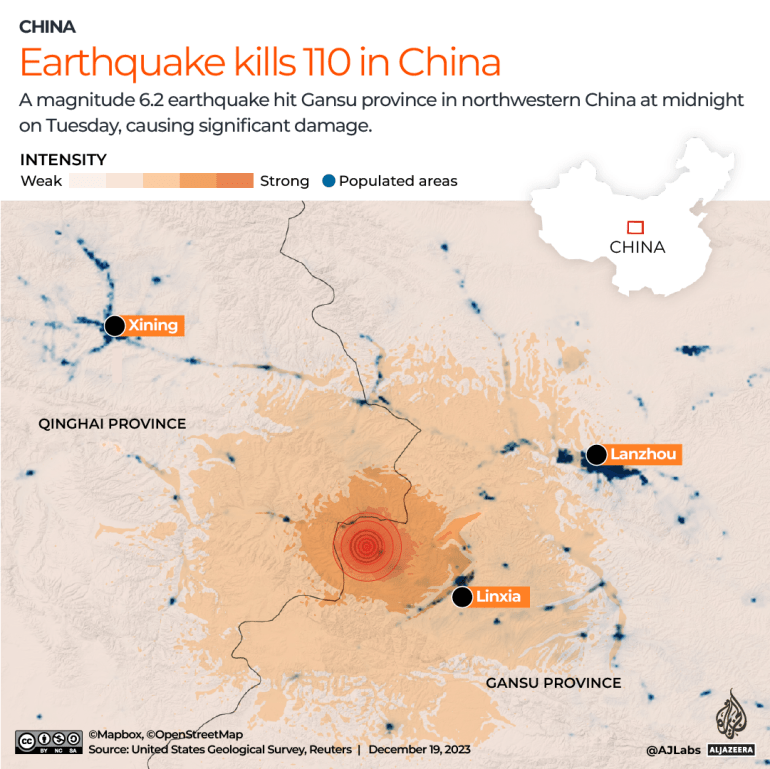
A powerful magnitude 6.2 earthquake hit remote China’s Gansu province, killing 118 people. A powerful magnitude 6.2 earthquake struck China’s remote Gansu province at midnight on Monday, killing at least 118 and injuring more than 500 people. Relief and rescue teams have been facing challenges as roads and public infrastructures have been damaged, with such subzero temperatures further adding to the problem. Here’s what to know about the event and current situation on the ground: When did the quake strike and where? At 23:59pm (15:59 GMT) on Monday, the earthquake hit Jishishan in the northwestern Gansu province, causing people to rush out of their homes out in the cold weather. Initial tremors lasted around 20 seconds. Its tremors were felt as far away as 570km (354 miles) in Xi’an, northern Shaanxi province, while casualties also occurred in Haidong city of neighbouring Qinghai province, some 115km (71 miles) away. The epicentre of the quake Jishishan County and neighbouring areas are still reeling from the aftereffects of the quake. Emergency teams worked through the night to rescue people from the rubble but their efforts were hampered by several aftershocks, Al Jazeera correspondent Katrina Yu, reporting from Beijing, said. Nearly 5,000 houses have been damaged to “varying degrees” while power and water supplies were also disrupted in some villages, according to state media. The magnitude of the quake was 5.9 according to the United States Geological Survey, while the the European Mediterranean Seismological Centre (EMSC) said it was 6.1. But Chinese authorities put it at 6.2. It occurred at a depth of 35km (22 miles). What do we know about the region hit by the earthquake? The earthquake hit the mountainous border region between Gansu and Qinghai provinces, which lies on the east of the Qinghai-Tibetan plateau, a tectonically active area, making earthquakes common in the region. Gansu has a population of about 26 million and in 2022, it ranked 27th out of 31 Chinese provinces and municipalities in terms of GDP size. The rural Jishishan is almost 90km (56 miles) southwest of Gansu’s capital, Lanzhou. What do we know about casualties so far? A total of 105 people were confirmed dead and 397 injured in Jishishan in Gansu province, according to local authorities. An additional 13 people died in Haidong City, about 100km (68 miles) northwest of Jishishan in the neighbouring Qinghai province. More than 180 people were injured and 20 missing remain, according to state broadcaster CCTV. Is Gansu safe now? What is the latest on rescue operations? Rescue efforts are still under way and people have been advised against going to affected areas to prevent traffic jams. Subzero temperatures and roads that are either damaged by the quake or inundated with snow have made it difficult to carry out rescue operations. Overnight temperature on Tuesday dropped to as low as -13 degrees Celsius (8.7 degrees Fahrenheit), according to the China Meteorological Administration. The quake has also wrecked infrastructure and triggered landslides in the mountainous region. People in affected areas have been given essential supplies such as drinking water, blankets, tents, stoves and instant noodles. What are the challenges facing rescue efforts? Emergency vehicles with rescue workers have been driving along snow-lined highways to carry out relief efforts while satellites are monitoring affected areas. Approximately 1,500 firefighters were deployed while another 1,500 are on standby, according to state media. Additionally, 300 officers and soldiers were mobilised for disaster relief. China’s ministries of finance and emergency management have allocated 200 million RMB in emergency relief funds, according to state media. The ministries of finance and emergency management have allocated 200 million yuan ($28m) in emergency relief funds, according to state media. Almost 14,700 students and teachers from all 15 boarding schools in Jishishan County have been evacuated, Chinese state media reported on Tuesday. Reactions Chinese President Xi Jinping called for “all-out efforts” in search and rescue. The country’s arch-foe, Taiwan, expressed condolences and also offered help. “We pray that all those affected receive the aid they need, and we hope for a swift recovery. Taiwan stands ready to offer assistance in the disaster response effort,” said Taiwan President Tsai Ing-wen. The interim prime minister of Pakistan, a Chinese ally, also said he was “deeply saddened” to hear of the quake in a post to X on Tuesday. Deeply saddened to learn about the loss of precious lives due to the earthquake in Gansu province in China. Our sympathies are with our Chinese brothers and sisters in this hour of grief. — Anwaar ul Haq Kakar (@anwaar_kakar) December 19, 2023 Adblock test (Why?)