

US official and Saudi’s MBS discuss sustainable Israel-Palestine peace
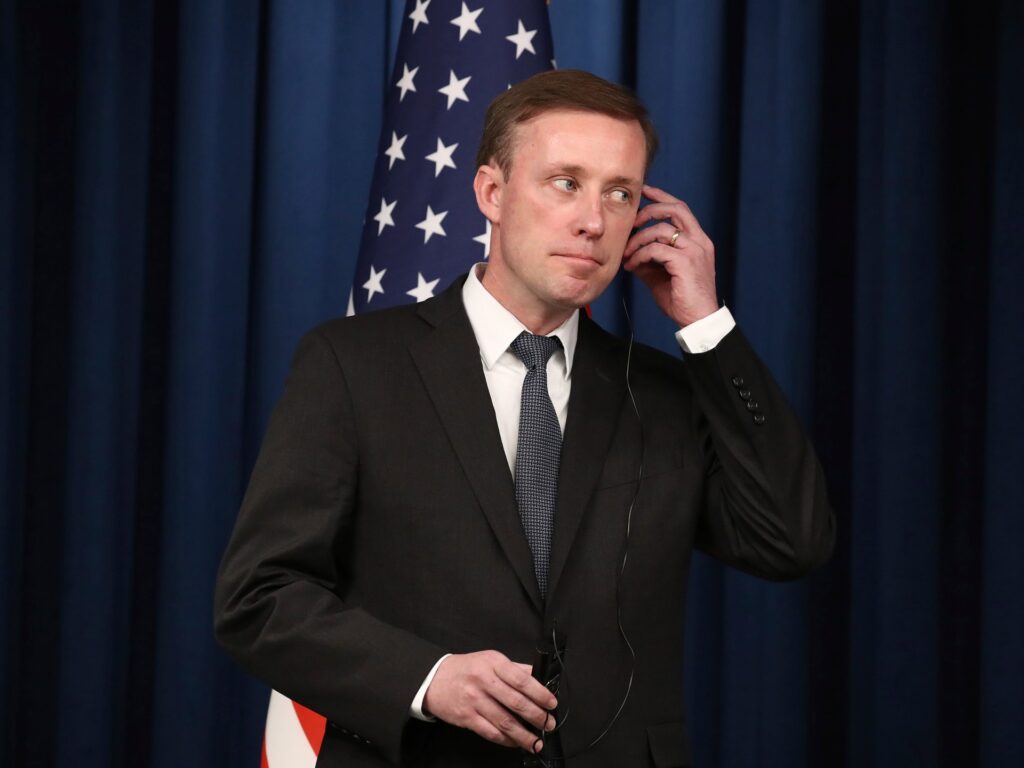
White House national security adviser tours Middle East after Biden warned Israel about ‘indiscriminate’ bombing of Gaza. White House national security adviser, Jake Sullivan, has met the crown prince of Saudi Arabia to discuss the war in Gaza and efforts towards creating sustainable peace between Israel and Palestine. Crown Prince Mohammed bin Salman (MBS) hosted Sullivan on Wednesday during his tour of the Middle East to bolster the United States’s influence in the region. The US official will travel to Israel next to hold talks with Prime Minister Benjamin Netanyahu and members of the war cabinet on Thursday and Friday as President Joe Biden has warned that Israel risks losing international support over its “indiscriminate bombing” of civilians in Gaza. Sullivan and MBS discussed “a number of bilateral and regional matters, including ongoing efforts to create new conditions for an enduring and sustainable peace between Israelis and Palestinians”, a White House statement said. They also discussed the humanitarian response in Gaza, including how to increase the flow of critical aid to the besieged enclave, it added. Earlier, US officials said Sullivan would also discuss with the Saudis efforts to deter ongoing Houthi attacks against international commercial vessels in the Red Sea. Officials from the two countries also revisited the possibility of normalising relations between Israel and Saudi Arabia, which was interrupted by the October 7 Hamas attack and subsequent Israeli offensive. All sides have said they want to resurrect the deal when the time is right. Sullivan and MBS also discussed areas of deepening bilateral cooperation in the fields of security, commerce, space exploration, and advanced technologies, including open radio access (O-Ran) networks, the White House said. [embedded content] US-Israel relations Sullivan’s visit to Israel on Thursday comes after the sharp comments Biden made on Tuesday about Israel’s “indiscriminate” bombing of civilians in Gaza. “[Israel] has most of the world supporting them,” Biden told donors during a political fundraiser in the US. “[But] they’re starting to lose that support by indiscriminate bombing that takes place.” He also said Israel “can’t say no” to a Palestinian state, which Israeli hardliners, including in Netanyahu’s government, have opposed. Washington has been calling for weeks for Israel to take more care to avoid civilian casualties in Gaza, saying too many Palestinian people have been killed. Sullivan will discuss with the Israelis the need to be more precise with their strikes against Hamas targets, spokesperson John Kirby told reporters. More than 18,000 Palestinians have been killed and nearly 50,000 others wounded in the Israeli assault on Gaza since October 7. Israel launched its onslaught in response to a raid by Hamas fighters from Gaza who killed about 1,100 people in southern Israel. [embedded content] Adblock test (Why?)
Pakistan extends deadline for Afghans awaiting third-country resettlement
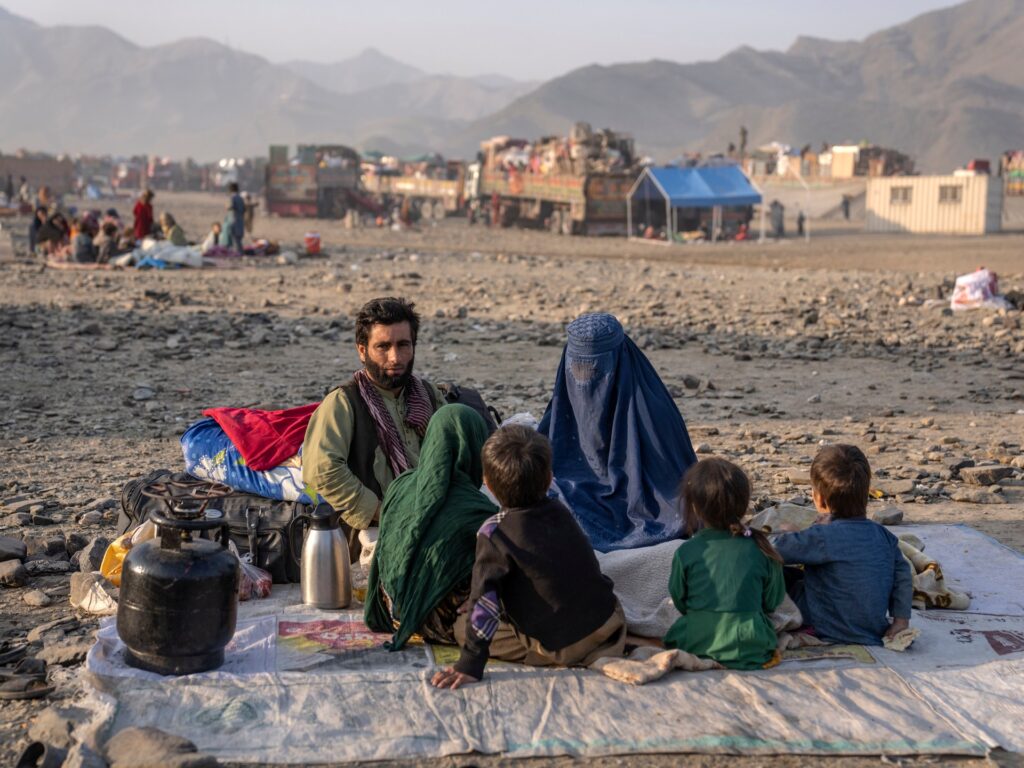
More than 450,000 Afghans have left the country since Pakistani authorities launched a deportation drive in October. Islamabad, Pakistan – The Pakistani government has announced that undocumented Afghans awaiting paperwork to resettle to a third country will be allowed to stay in Pakistan for two more months. The extension of the deadline on Wednesday from the end of this year to February 29 comes amid Pakistan’s drive to expel more than one million foreigners living in the country without paperwork. According to the United Nations refugee agency (UNHCR), more than 450,000 people have returned to neighbouring Afghanistan since the deportation campaign began in early October. Ninety percent of them did so “voluntarily”, according to the Pakistani government, but the UNHCR says they cited fear of arrest as the primary reason for their decision to leave. Announcing the extension, interim information minister Murtaza Solangi said anybody overstaying the new deadline would be fined $100 monthly, with a cap set at $800. “These measures were aimed at encouraging the Afghans residing illegally in Pakistan to obtain legal documents or finalise evacuation agreements as soon as possible in a third country,” Solangi added. The announcement followed a visit to Pakistan by US State Department officials to discuss the issue of Afghan refugees. It is estimated that nearly 25,000 Afghans require paperwork for resettlement in the United States. Pakistan estimates that more than 1.7 million Afghan nationals have long lived in the country without documents, with the majority arriving in different waves since the Soviet invasion in 1979. The last such major influx of an estimated 600,000 to 800,000 people took place two years ago after the Taliban took control of Afghanistan. Pakistani authorities have cited a dramatic surge in violence this year – there have been more than 600 attacks in the first 11 months of 2023 – for the deportation drive. Interim Interior Minister Sarfraz Bugti said in October that 14 out of 24 suicide attacks in the country over that period were carried out by Afghan nationals. He did not provide any evidence. The Taliban has denied any accusations of providing shelter to fighters, maintaining their position that Afghanistan’s soil is not being used for cross-border violence. Adblock test (Why?)
Ministers quit as Japan’s PM Kishida battles for trust amid fraud scandal
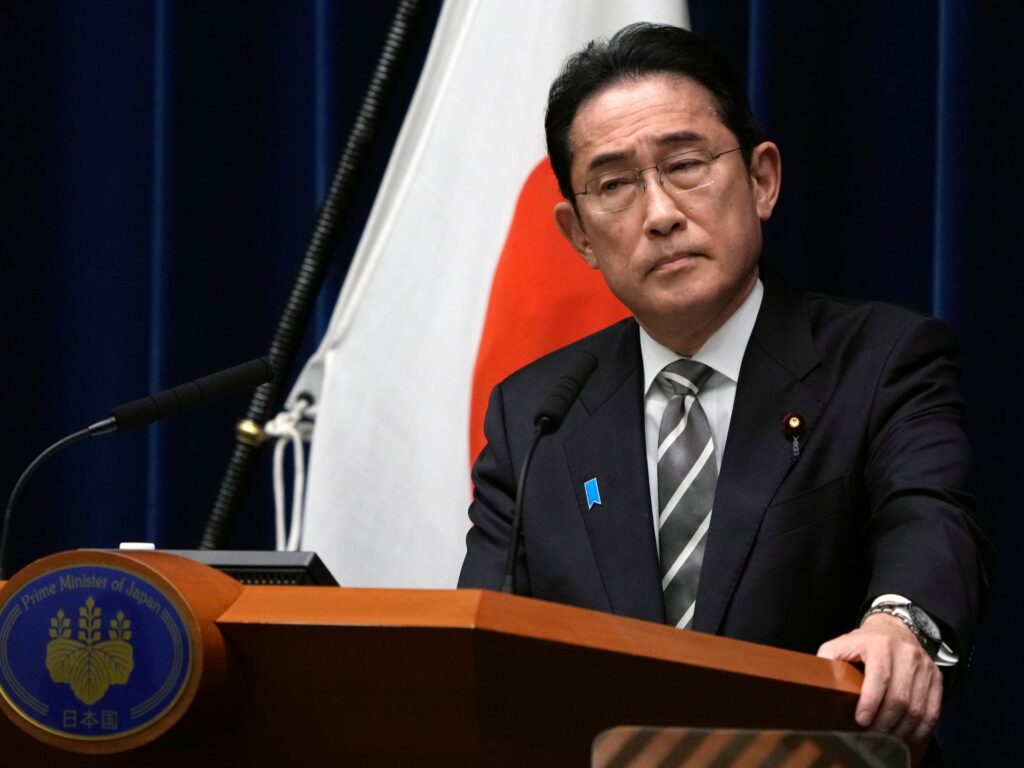
Escalating scandal involving allegations of unreported kickbacks from ruling party fundraising claims key ministers. Japanese Prime Minister Fumio Kishida is revamping his government as a major corruption scandal in the ruling party has forced the resignations of several ministers including close ally and government spokesman Hirokazu Matsuno. Matsuno, whose official title is Chief Cabinet Secretary, announced his resignation on Thursday after Economy and Industry Minister Yasutoshi Nishimura also quit. Jiji Press and other Japanese media said Internal Affairs Minister Junji Suzuki and Agriculture Minister Ichiro Miyashita were also stepping down and that five deputy ministers would be let go. The ministers all come from the so-called Abe faction, which is named after the assassinated former Prime Minister Shinzo Abe and is the biggest and most powerful faction in the ruling Liberal Democratic Party (LDP). Japanese prosecutors have begun a criminal investigation into the faction over allegations of receiving about 500 million yen ($3.5m) in fundraising proceeds missing from party accounts, news outlets reported. “In light of the various allegations made regarding political funds, which have shaken the public trust in politics, and the various allegations made regarding my own political funds, I have submitted my resignation,” Matsuno said at a press conference. He will be replaced by Yoshimasa Hayashi, who was the foreign minister until September. Kishida announced late on Wednesday that he would revamp his government as he battles to control the fallout from the scandal in the party, which has led Japan almost uninterrupted since the end of World War II. He said he regretted that the scandal had deepened political distrust and insisted he would take urgent steps to tackle it. “We will tackle the various issues surrounding political funds head-on… I will make efforts like a ball of fire and lead the LDP to restore the public’s trust,” he told reporters. Investigators are expected to start searching lawmakers’ offices for evidence as early as next week, according to broadcaster NTV, and to examine whether other LDP factions – including one led by Kishida until last week – are involved, according to the reports. Nishimura was quoted as telling reporters on Thursday: “The public’s doubts are around me over political funds, which is leading to distrust in the government. As an investigation is going on, I thought I wanted to set things right.” Since news of the latest scandal broke a few weeks ago, Kishida has seen his public support drop to about 23 percent, the lowest since he came into office in October 2021, according to a recent poll by national broadcaster NHK. Support for the LDP has also slumped. The prime minister, who has already reshuffled his cabinet twice, does not need to hold an election until October 2025, and a fractured and weak opposition has historically struggled to make sustained inroads against the LDP. Opposition groups led by the Constitutional Democratic Party (CDPJ) of Japan led an unsuccessful no-confidence motion against Kishida on Wednesday. “The LDP has no self-cleansing ability,” CDPJ leader Kenta Izumi said. “It is questionable if they can choose anyone who is not involved in slush funds.” Japanese Communist Party leader Kazuo Shii called the scandal “a bottomless, serious problem”. Matsuno allegedly diverted more than 10 million yen ($70,600) over the past five years from money he raised from faction fundraising events to a slush fund, while Nishimura allegedly kept 1 million yen ($7,000), according to media reports. While most senior figures mentioned in the media remained mum, Vice Defence Minister Hiroyuki Miyazawa said on Wednesday that he was told by the Abe faction that “it’s OK to not enter” his first kickbacks in 2020-2022 in the funds’ records and that he assumed it was a practice that had been going on for years and was legal. Miyazawa also said that while he had been ordered to keep quiet, he felt compelled to speak out. The amount he accepted was reportedly just 1.4 million yen ($9,800). Collecting proceeds from party events and paying kickbacks to lawmakers are not illegal in Japan if recorded appropriately under the political funds law. Not reporting such payments carries a penalty of as many as five years in prison but prosecution is difficult because it needs proof of a specific instruction to an accountant to not report the transfer. Adblock test (Why?)
Russia-Ukraine war: List of key events, day 659
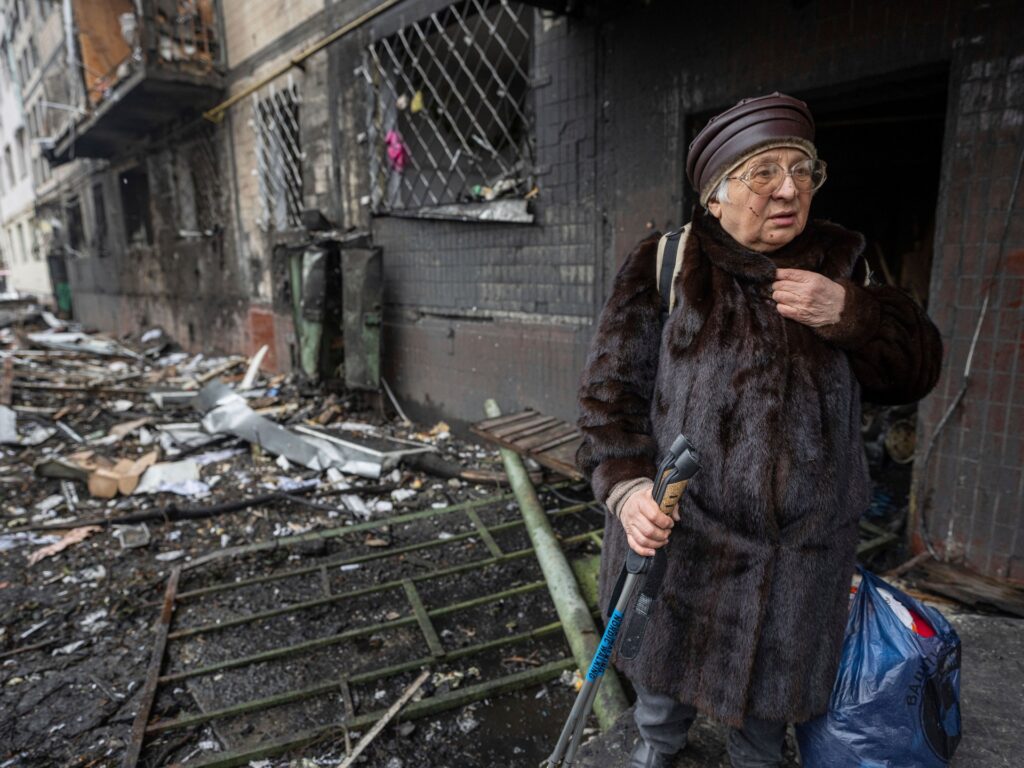
As the war enters its 659th day, these are the main developments. Here is the situation on Thursday, December 14, 2023. Fighting At least 53 people, including six children, were injured after Russia launched a missile attack on Kyiv, the second in a week. The city’s air defences shot down the missiles – Iskander-M and S-400s – but the falling debris blew out windows of apartment blocks as well as a children’s hospital and destroyed parked cars. Of the injured, 18 were taken to hospital. A group of hackers called Solntsepyok claimed responsibility for the cyberattack on Kyivstar, Ukraine’s biggest mobile phone network, after millions of people were left without phone access or air raid alerts. Kyiv believes the group is affiliated with Russian military intelligence. Kyivstar began restoring voice services to some people on Wednesday. Politics and diplomacy With European Union leaders due to meet on Thursday to decide whether to formally open Ukraine membership talks, Ukrainian President Volodymyr Zelenskyy, who was on a visit to Norway after returning to Europe from the United States, said that Hungarian Prime Minister Viktor Orban had no reason to block Kyiv’s membership of the 27-member grouping. Zelenskyy said he had been “very direct” when he had a brief chat with Orban in Argentina on Sunday. Orban, a conservative nationalist who is Russian President Vladimir Putin’s closest ally in the EU and is blocking 50 billion euros in financial aid for Kyiv, appeared unmoved. “Our stance is clear. We do not support Ukraine’s quick EU entry,” Orban wrote in a post on Facebook, claiming Ukrainian membership would not serve the interests of Hungary or the EU. Norway, Sweden, Denmark, Finland and Iceland, meanwhile, promised Zelenskyy they would “stand with Ukraine for as long as it takes”. The five countries have provided Ukraine with aid worth some 11 billion euros since Russia began its full-scale invasion in February 2022 and said they were ready to continue giving extensive military, economic and humanitarian support. “Russia must end its aggression and withdraw its forces immediately and unconditionally from the territory of Ukraine within its internationally recognised borders,” they said in a joint statement. Other EU leaders, including EU Commission President Ursula von der Leyen, German Chancellor Olaf Scholz and French President Emmanuel Macron, reiterated their support for Ukraine, with Scholz suggesting the EU take enlargement decisions by majority vote rather than unanimity. Newly-elected Polish Prime Minister Donald Tusk said he would try to persuade Orban to change course. “Apathy on Ukraine is unacceptable,” Tusk said, adding that he will try to convince “some member states”. A German court heard that Russia paid Carsten Linke, a former soldier working for Germany’s foreign intelligence agency (BND), at least 450,000 euros in return for information about weaponry with which the West was arming Ukraine. Linke and his accomplice, a Russian-born German diamond trader named Arthur Eller, are charged with high treason. Weapons Germany’s Scholz stressed that the aim of the West’s continuing military support for Ukraine was to strengthen Kyiv’s defence to such an extent that Russia would “never again dare to attack”. Adblock test (Why?)
No evidence but US Republicans approve Biden impeachment inquiry
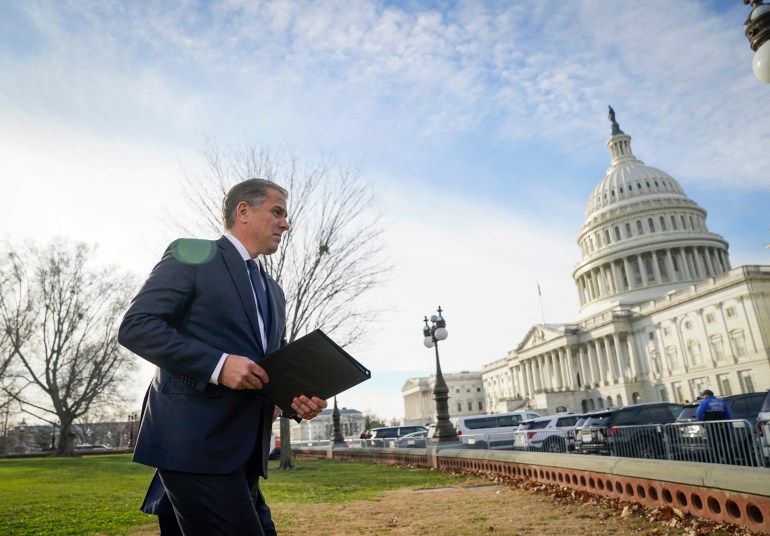
Vote means investigation is likely to extend well into 2024 when Biden will be running for reelection, probably against Donald Trump. The United States House of Representatives has voted to launch a formal impeachment inquiry into President Joe Biden, despite an ongoing investigation finding no evidence of wrongdoing by the Democrat. The Republican-controlled House voted 221-212 on Wednesday to approve the investigation, which is examining whether Biden improperly benefitted from his 53-year-old son Hunter Biden’s foreign business dealings. The vote came hours after the younger Biden refused a call to testify behind closed doors and three months after Republicans informally began the probe. “We do not take this responsibility lightly and will not prejudge the investigation’s outcome,” Speaker Mike Johnson and his team said in a statement after the vote. “But the evidentiary record is impossible to ignore.” Authorising the inquiry ensures that the impeachment investigation extends well into 2024 when Biden will be running for reelection and seems likely to be squaring off against former President Donald Trump who was twice impeached during his time in the White House, including for inciting the January 2021 assault on the Capitol. Trump, who also faces four criminal trials, has pushed his allies in Congress to move swiftly on impeaching Biden, part of his broader calls for retribution against his political enemies. The White House has dismissed the initiative as unsubstantiated by facts and politically motivated. Biden swiftly condemned the vote. “Instead of doing their job on the urgent work that needs to be done, they [Republicans] are choosing to waste time on this baseless political stunt that even Republicans in Congress admit is not supported by facts,” Biden said in a statement following the vote. Hunter Biden offered to testify publicly to the Republican-led House Oversight Committee rather than in a closed-door session [Jack Gruber/USA Today Network via Reuters] The decision to hold a vote came as Johnson and his team faced growing pressure to show progress in their investigation, which has raised ethical questions but uncovered no evidence that Biden acted corruptly or accepted bribes either in his current role or when he was vice president between 2009 and 2017. Congressional investigators have obtained nearly 40,000 pages of subpoenaed bank records and dozens of hours of testimony from key witnesses, including several high-ranking Justice Department officials currently investigating the president’s son, Hunter Biden, on firearms and tax charges. The effort will almost certainly fail to remove Biden from office. Even if the House backs impeachment, the Senate would then have to vote to convict him on the charges by a two-thirds vote – a near-impossibility in a chamber where Biden’s fellow Democrats hold a 51-49 majority. “By endorsing this impeachment inquiry, the Republican Conference is signing up for another year of a ‘Do Nothing’ Congress: No substantive legislation or policy progress, all political fantasy and conspiracy theory,” Jamie Raskin, a Democrat, said in a statement after the vote. Adblock test (Why?)
‘Fighting is all around’: Myanmar faces deepening humanitarian crisis
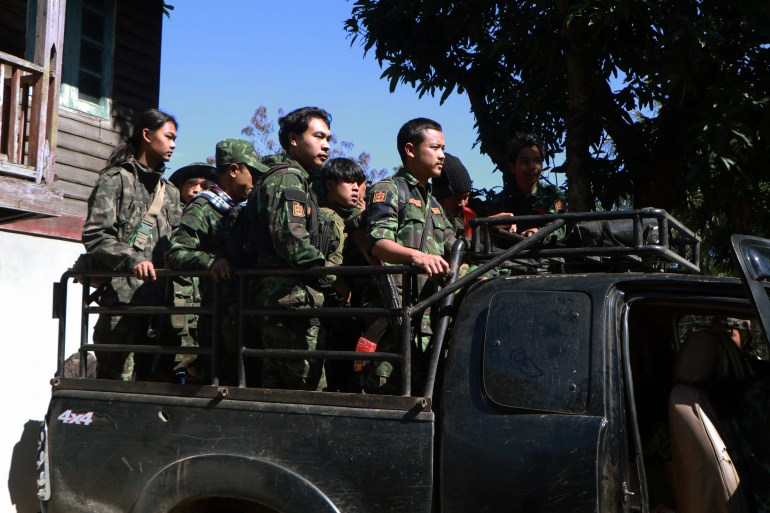
In late October, Sai Lam had an uneasy feeling. The Myanmar National Democratic Alliance Army (MNDAA), an ethnic armed organisation operating in Myanmar’s northern Shan State, was massing forces near his village on the Chinese border and he sensed that fighting was imminent. So the 27-year-old, who had already secured a job in the construction sector in China’s Yunnan province in order to support his family, decided to expedite his plan. He travelled from his village near the town of Mong Ko up to the border gate of Muse, and then crossed into China province using a temporary border pass. His wife and mother, meanwhile, stayed behind to look after their farmland and newborn baby. Days later, the MNDAA, together with its allies the Ta’ang National Liberation Army and the Arakan Army, launched Operation 1027, a joint offensive on military outposts in northern Shan State. Sai Lam’s family were forced to flee at dawn on October 27. They returned 10 days later, after the MNDAA had declared control over Mong Ko and the surrounding villages. Although the situation around Mong Ko has calmed, the military has relentlessly attacked other areas where it has lost ground, including the nearby town of Namkham, which it bombed on December 1 and again a week later. Worrying that the military could also attack Mong Ko, Sai Lam wants to bring his family to China, but they are unable to flee, because the roads out are now inaccessible due to the fighting. “They are still very scared and alert at all times because the military often fires heavy artillery and bombs from jets,” he said. Despite the challenges his family has endured, Sai Lam continues to support the ongoing resistance to the military, which seized power from the elected government in February 2021. “We are being oppressed, so we don’t want the military to win,” he said. “We expect that if the military loses and local resistance forces gain control, we may have more freedom and opportunities.” The Loikaw Local People’s Defence Force (PDF) preparing to go to the front line in Myanmar’s east [File: AFP] He and others interviewed for this report have been given pseudonyms due to the risk of military retaliation. Since the start of Operation 1027, Myanmar has seen the most significant escalation in hostilities across the country since the coup, which sparked a widespread armed uprising. Resistance forces have in recent weeks managed to overtake hundreds of military outposts, including strategic border crossings with China and India. They are also closing in on Loikaw, the Karenni State capital, as well as Laukkai, an enclave notorious for transnational human trafficking and online scams. Analysts now say that the military is at its weakest since the coup, with some even suggesting its imminent collapse. But alongside resistance gains, there has been a serious humanitarian cost. From October 26 to December 8, more than 578,000 people were newly displaced on top of nearly 2 million who were already displaced before the surge in fighting according to the United Nations, which said 363 civilians had been killed and 461 injured since late October. And at a time when UN agencies and international nongovernmental organisations have struggled to reach affected populations, it is community-based organisations, charity groups and local volunteers who are taking life-threatening risks to help civilians. “We all know that doing this kind of work is very dangerous, but if we don’t do it, there’s no one,” said Nway Thitsar, who works with a Christian faith-based organisation operating in northern Shan State to deliver food aid. “I can hear the sounds of bombing and gunfire all the time,” she added. “[But] I’m still safe enough that I can help people facing danger.” No refuge Even before the start of Operation 1027, Myanmar was experiencing unprecedented levels of armed conflict and a humanitarian crisis. Within months of the coup, autonomy-seeking ethnic armed organisations had joined forces with newly-formed groups, commonly known as people’s defence forces, to drive the military from power and establish a federal democracy. In response, the military scaled up its use of “four cuts,” a strategy it has long employed against ethnic minorities in the country’s border areas and which seeks to starve resistance groups of food, funds, intelligence and recruits by going after their civilian support base. Since the coup, it has bombed schools, hospitals and displacement camps across the country, burned tens of thousands of homes, and committed widespread atrocities including torture and mass executions, according to the UN. In March this year, its human rights office found that the military’s use of four cuts was driving a “perpetual human rights crisis” across Myanmar. The crisis has only worsened in recent weeks. In Shan State, some of the most intense fighting has been near Laukkai, one of several criminal hubs along Myanmar’s eastern border run by Chinese gangs. Capitalising on China’s desire to crack down on the industry, which also involves the large-scale trafficking of Chinese nationals, resistance groups have declared combating cybercrime as one of their goals. As they close in on Laukkai, the city has seen a mass exodus, but those fleeing face a perilous journey. On November 11 and 22, shelling killed multiple civilians as they attempted to leave by car. There are also few places of refuge. About 40,000 people have taken shelter in an autonomous region run by the United Wa State Army, Myanmar’s most powerful ethnic armed organisation, but most displaced people are stranded. About 50,000 are camping under tarpaulin sheets at the border, where China built an electrified metal fence topped with razor wire during the pandemic. On November 25, Chinese authorities fired tear gas to disperse the displaced, but most have nowhere else to go. Some people also remain trapped in Laukkai, where many are squatting in unfinished construction sites, according to Nway Thitsar, whose organisation is working to send them food in spite of roadblocks, checkpoints, telecommunications outages and active conflict. Their funds are also being syphoned off on inflated fuel costs. “If
What to know about Turkey’s football crisis after attack on referee
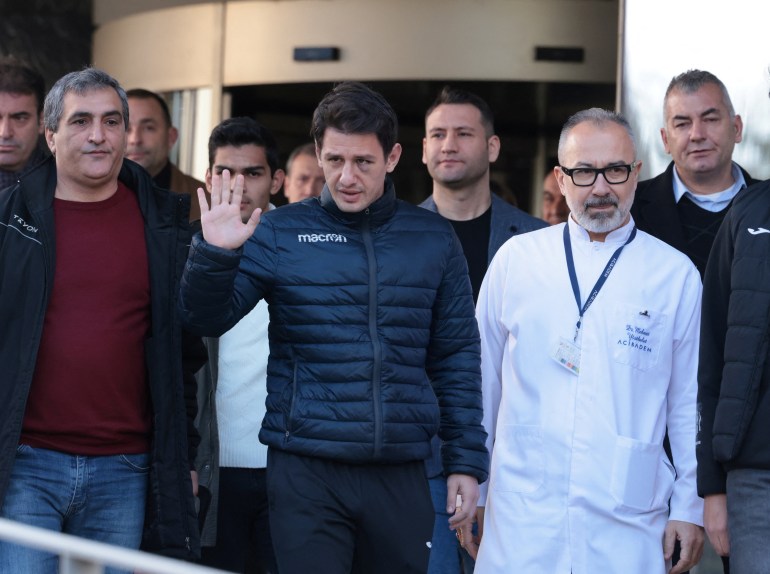
Turkey is set to resume its league football on Tuesday, ending a brief suspension in the domestic competition caused by an attack on a referee by a club’s president who was later arrested by local authorities. Turkish football’s “night of shame” has caused the country’s most popular sport to spiral into a crisis and has raised questions about on-pitch violence towards match officials. Here’s a look at the events that unfolded since the violent incident in Ankara: What happened during and after the match? The Turkish Super Lig match between MKA Ankaragucu and Caykur Rizespor ended in a 1-1 draw on Monday after the visitors equalised in the last minute of added time. After the full-time whistle was blown, Ankaragucu President Faruk Koca rushed onto the pitch with a group of men and knocked out referee Halil Umut Meler with a blow to the left side of his face. Meler was kicked several times in the ensuing melee, which occurred when fans invaded the pitch. The 37-year-old match official was shown standing minutes later with a black eye that had swelled up the left part of his face. He eventually made it to the dressing room with the help of the police. Why was the referee attacked? Koca appeared to be incensed at Meler for sending off one of his players and then awarding a stoppage-time goal that allowed Rizespor to leave Ankara with a draw. Meler released a statement on Tuesday saying Koca had threatened his life. “Faruk Koca punched me under my left eye, and I fell to the ground. While I was on the ground, they kicked my face and other parts of my body many times,” Meler said. “[He] told me and my fellow referees: ‘I will finish you.’ Addressing me in particular, he said: ‘I will kill you.’” Meler was released from hospital in Ankara on Wednesday after undergoing observation and receiving a phone call from President Recep Tayyip Erdogan. Meler, a respected referee with accreditation to officiate international matches, is expected to recover and join the refereeing crew of the Euro 2024 championship, to be held from June to July in Germany. Halil Umut Meler leaves the hospital in Ankara on December 13, 2023 [Cagla Gurdogan/Reuters] Who is Faruk Koca? MKE Ankaragucu’s Koca is a politician, former parliamentarian, aspiring Ankara mayor and member of Erdogan’s AK Party. “If I am entrusted with the task of being the metropolitan municipality mayor, I will do what is necessary,” Koca said this year. However, the ruling party has initiated procedures to expel Koca. Since the incident, Koca has resigned as club president – a role he took up in 2021 – but insists that his team was cheated by the referee. “No matter how great an injustice or how wrong [the officiating] was, nothing can legitimise or explain the violence that I perpetrated,” Koca said in a club statement. “I apologise to the Turkish refereeing community, the sports public and our nation,” he added. Turkish Football Federation (TFF) chief Mehmet Buyukeksi said the sport’s governing body will announce penalties for the altercation. Justice Minister Yilmaz Tunc said Koca and two others were formally arrested for “injuring a public official” after prosecutors took statements from them. “The investigation is continuing meticulously,” he said on the social media platform X. Turkey’s president was also quick to condemn the incident. “Sports means peace and brotherhood. The sport is incompatible with violence. We will never allow violence to take place in Turkish sports,” Erdogan wrote on X. What has FIFA said? FIFA President Gianni Infantino said the events after the match were “totally unacceptable and have no place in our sport or society”. “Without match officials, there is no football,” he added. European football’s governing body, UEFA, also condemned the incident. “We urge the authorities and the responsible disciplinary bodies to take decisive and necessary action against anyone involved in acts of abuse and violence against referees,” UEFA said. Statement from FIFA President Gianni Infantino: 🔗 https://t.co/mBhi38Nf40 pic.twitter.com/YqJ3KqeWqy — FIFA Media (@fifamedia) December 12, 2023 Matches were suspended indefinitely hours after the incident, but on Wednesday, the TFF said action will resume next week. Is there a history of violent attacks on referees and match officials? Violence in football is commonplace in Turkey despite efforts to clamp down on it although direct attacks on top-level referees are rare. Still, Buyukeksi blamed the attack on a culture of contempt towards referees. “Everyone who has targeted referees and encouraged them to commit crimes is complicit in this despicable attack,” he said. “The irresponsible statements of club presidents, managers, coaches and television commentators targeting referees have opened the way for this attack.” Pierluigi Collina, chairman of FIFA’s referees committee, said the incident was horrific. “Neither the referee nor the man deserved to live the experience he lived yesterday in Ankara. He was doing his job when he was assaulted on the field of play at the end of a match he just officiated,” Collina said on Tuesday. Hugh Dallas, Turkish Super Lig’s head of referee education, was in the stadium when the incident happened and has called for governments to take action. Referees in Turkey are often criticised by club managers and presidents for their decisions. “I think a lot of club presidents, media and others will take a look at themselves today and realise when you whip up that type of mass hysteria regarding refereeing, this is the result,” he told the BBC. “There has to be legislation and punishments put in place for clubs, players, owners or whoever when they behave in such a manner because it definitely can’t continue.” Adblock test (Why?)
Tesla recalls nearly all US vehicles over autopilot system defects
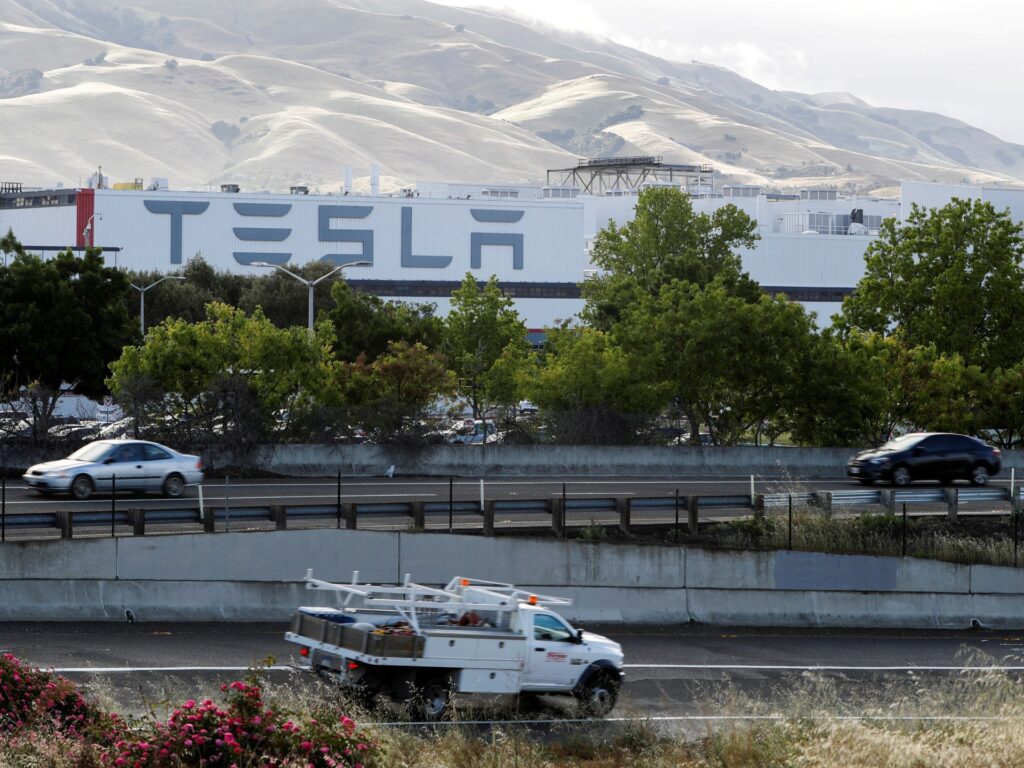
The firm’s largest-ever recall comes after a two-year investigation by federal safety regulator focused on autopilot function. Tesla is recalling more than two million cars in the United States, nearly all of its vehicles sold there, after a federal regulator said defects with the autopilot system pose a safety hazard. In a recall filing on Wednesday, the carmaker said autopilot software system controls “may not be sufficient to prevent driver misuse”. “Automated technology holds great promise for improving safety but only when it is deployed responsibly,” said a spokesperson for the National Highway Traffic Safety Administration (NHTSA), which has been investigating the autopilot function for more than two years. “Today’s action is an example of improving automated systems by prioritizing safety.” The decision marks the largest-ever recall for Tesla, as autonomous vehicle development in the US hits a series of snags over safety concerns. The company has said that it will install new safeguards and fix current defects. The recall covers models Y, S, 3 and X produced between October 5, 2012, and December 7, 2023. Speaking before the US House of Representatives on Wednesday, acting NHTSA Administrator Ann Carlson said she was happy Tesla had agreed to a recall. She said that the agency first started investigating Tesla’s autopilot function in August 2021 after hearing about several fatal crashes that occurred when the autopilot was on. “One of the things we determined is that drivers are not always paying attention when that system is on,” she said. Documents posted on Wednesday by the agency said the current autopilot design can lead to “foreseeable misuse of the system,” and that the changes to be instituted will “further encourage the driver to adhere to their continuous driving responsibility”. Some experts have raised questions over whether such steps go far enough. “The compromise is disappointing,” Phil Koopman, a professor of electrical and computer engineering at Carnegie Mellon University who studies autonomous vehicle safety, told The Associated Press. “Because it does not fix the problem that the older cars do not have adequate hardware for driver monitoring.” Driverless cars, exalted by supporters as an exciting technological advancement, have faced a series of setbacks in recent months. In October, California suspended testing by the self-driving car firm Cruise, after California’s Department of Motor Vehicles (DMV) raised questions about safety concerns. Adblock test (Why?)
Letter accuses US security agency of turning ‘blind eye’ to Gaza suffering
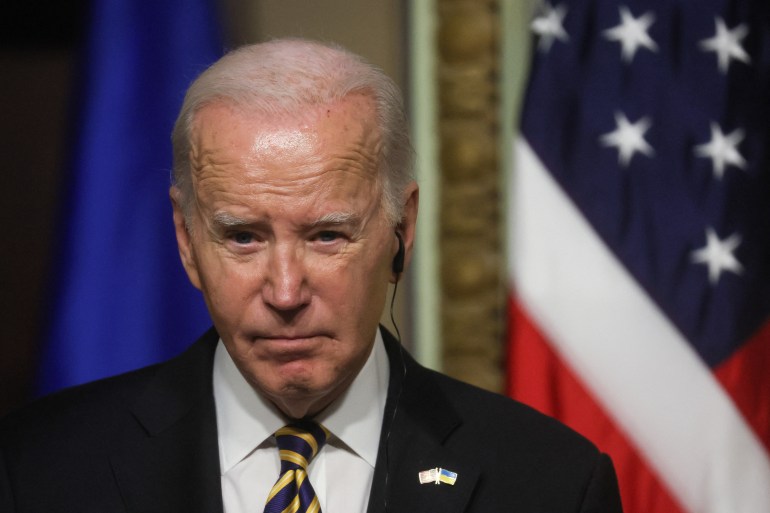
Washington, DC – More than a hundred staff members from the United States Department of Homeland Security (DHS) have signed an open letter to Secretary Alejandro Mayorkas denouncing the department’s handling of the war in Gaza. The letter, exclusively obtained by Al Jazeera, expresses frustration with the “palpable, glaring absence in the Department’s messaging” of “recognition, support, and mourning” for the more than 18,000 Palestinians killed in Gaza since the start of the war on October 7. “The grave humanitarian crisis in Gaza and the conditions in the West Bank are circumstances that the Department would generally respond to in various ways,” the letter, dated November 22, said. “Yet DHS leadership has seemingly turned a blind eye to the bombing of refugee camps, hospitals, ambulances, and civilians.” The letter’s signatories include 139 staff members from DHS and the agencies it manages, like Customs and Border Protection (CBP), the Federal Emergency Management Agency (FEMA), Immigration and Customs Enforcement (ICE) and US Citizenship and Immigration Services (USCIS). But some staff members “elected to sign this letter anonymously” for fear of backlash, the document explained. It called for DHS to “provide a fair and balanced representation of the situation, and allow for respectful expression without the fear of professional repercussions”. DHS did not respond to Al Jazeera’s request for comment by the time of publication. The letter is the latest indication of fractures within the administration of President Joe Biden, who has faced internal criticism for his government’s stance on the Gaza war. Last month, more than 500 officials from 40 government agencies issued an anonymous letter pushing Biden to call for an immediate ceasefire in Gaza. Another letter, signed by 1,000 employees from the US Agency for International Development (USAID), expressed a similar appeal. But Biden has been reluctant to criticise Israel’s ongoing military offensive in Gaza, instead pledging his “rock solid and unwavering” support for the longtime US ally. In an internal message on November 2, Mayorkas echoed Biden’s stance. He denounced the “horrific terrorist attacks in Israel on October 7”, perpetrated by the Palestinian group Hamas, but made no mention of the humanitarian crisis in Gaza. “The impacts [of October 7] continue to sweep through Jewish, Arab American, Muslim and other communities everywhere,” Mayorkas wrote. “I am heartened knowing that our Department is on the front lines of protecting our communities from antisemitism, Islamophobia, and other forms of bigotry and hate.” US President Joe Biden has expressed ‘unwavering’ support for Israel as it conducts a months-long military offensive in Gaza [Leah Millis/Reuters] But two DHS staff members who spoke to Al Jazeera on the condition of anonymity felt that department leadership should be going further to address the mounting death toll in Gaza, where civilians remain under Israeli siege. United Nations experts have already warned of a “grave risk of genocide” in the territory, as supplies run low and bombs continue to fall. “I’ve been very dedicated to the federal government,” one anonymous DHS official said. “I’ve served in different capacities. I very much believed in our mission. “And then, after October 7, I feel like there has just been a drastic shift in this expectation of what we’re supposed to do when there’s a humanitarian crisis and what we’re actually doing when there’s politics involved, and that has a very, very scary, chilling impact.” The staff’s open letter calls for DHS to take actions in Gaza “commensurate with past responses to humanitarian tragedies”, including through the creation of a humanitarian parole programme for Palestinians in the territory. That would allow them to temporarily enter the US “based on urgent humanitarian or significant public benefit reasons”. The letter also pushed DHS to designate residents of the Palestinian territories eligible for “temporary protected status” or TPS. That would permit Palestinians already in the US to remain in the country and qualify for employment authorisation. Such programmes have been put in place for other conflicts, including for Ukrainians facing full-scale invasion from Russia. Last month, 106 members of Congress — including Senator Dick Durbin and Representatives Pramila Jayapal and Jerry Nadler — even sent a letter to Biden, urging a TPS designation for the Palestinian territories. Biden has been criticised for offering temporary protected status for Ukrainians but not for Palestinians in Gaza [Evan Vucci/AP Photo] But one of the anonymous DHS officials who spoke with Al Jazeera said that, although there has been discussion about a possible TPS designation, action seems unlikely. “There have been a lot of serious systemic and programmatic obstacles driven purely by politics,” she said. Part of the challenge is that the US does not recognise Palestine as a foreign state, putting its eligibility for TPS in doubt. “We don’t recognise Palestine as a state. We don’t code them with that,” the DHS official explained. “And that’s something across Customs and Border Protection, ICE and USCIS. There have just been obstacles raised at the highest levels of those agencies.” The official suspects she knows why. “They’re worried about their own operations in terms of removing or deporting people to Gaza and the West Bank, if they were to change these codes.” But that inaction has levied a steep toll on employees’ mental health, according to the DHS officials Al Jazeera spoke to. One described how colleagues with family in Gaza had received no support from DHS leadership as they tried to bring their relatives to safety. The other, a senior staff member who has spent more than a decade working for the federal government, described having nightmares of losing his own children. He said he wakes up “with the knowledge that we’re not actually doing all that we can to provide programmes and relief for the Palestinians”. “It’s definitely distressing and dispiriting to feel like, for political considerations, we’re not addressing [the conflict] in the same way that we would other previous, recent humanitarian crises, for instance, like Ukraine.” Houses are left in ruin after an Israeli air strike in Rafah, part of the southern Gaza
Australia cricketer Khawaja will ‘fight’ to wear Palestine solidarity shoes
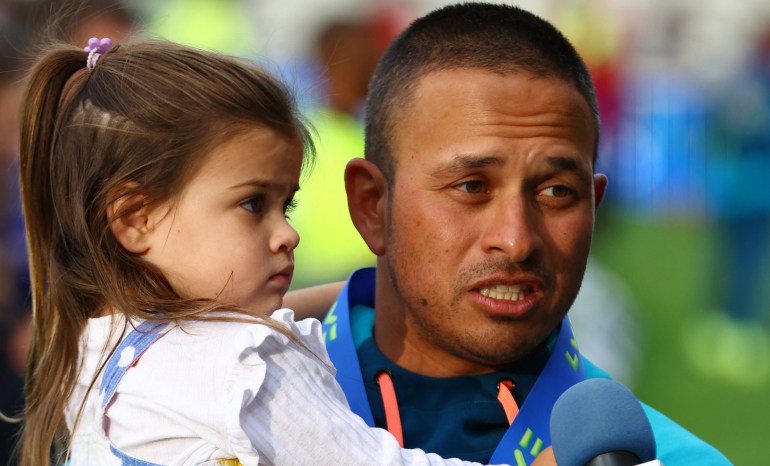
Australian cricket player Usman Khawaja has promised to “fight” a ruling by the sport’s governing body that he says has stopped him from displaying messages in support of “those who don’t have a voice”. In an emotional video posted on his social media, Khawaja clarified that his message was “not political” and that the “bigger problem” was people calling him up to berate him for his stance. The opening batter was seen wearing cricket boots with “all lives are equal” and “freedom is a human right” written on them in the colours of the Palestinian flag during Australia’s training session prior to their Test series against Pakistan. The International Cricket Council’s (ICC) rules do not allow players to display “non-compliant” wording or logos on clothing or equipment worn during international matches. It means that the batter will not be able to wear the boots during Australia’s first Test match against Pakistan, starting on Thursday, December 14. “I will respect their view and decision, but I will fight it and seek to gain approval,” Khawaja said. “I’m just speaking up for those who don’t have a voice.” The ICC has declined Al Jazeera’s request for a comment. All Lives are Equal. Freedom is a Human right. I’m raising my voice for human rights. For a humanitarian appeal. If you see it any other way. That’s on you… pic.twitter.com/8eaPnBfUEb — Usman Khawaja (@Uz_Khawaja) December 13, 2023 ‘I imagine my two girls – what if it were them’ Khawaja said he was speaking up for the thousands of children that are being killed [in Gaza] “without any repercussions or remorse” and that his message was not “political” as seen by the ICC. At least 7,700 children have been killed in Gaza since the war began in October, according to government and health officials in the besieged strip. “This is close to my heart,” he said in the video with a quivering voice. “When I see thousands of children dying without any repercussions or remorse, I imagine my two girls – what if this was them?” Khawaja has two daughters, Aisha and Ayla, with his Australian-born wife Rachel whom he married in 2018. “No one chooses where they are born, and then I see the world turning their backs on them, my heart can’t take it,” he went on to say in the video. The 36-year-old, who was born in Pakistan’s capital Islamabad before moving to Australia as a child. He has often spoken of his experience and the problems he has faced moving through the Australian cricket circuit. “I already felt my life wasn’t equal to others when I was growing up,” he said. “But luckily for me, I have never lived in a world where the lack of inequality was life or death.” Usman Khawaja gives an on-field interview holding his daughter Aisha [File: Paul Childs/Action Images via Reuters] Khawaja questions backlash Khawaja, who has represented Australia in 115 international matches in a 12-year career, said he wanted to ask those people who got offended by his act of solidarity, “Is freedom not for everyone?” “To me, personally, it doesn’t matter what race, religion or culture you are – but if me saying ‘all lives are equal’ has offended people to the point of – these people obviously don’t believe in what I have written.” “What I have written is not political, I’m not taking sides. Human life to me is equal. One Muslim life is equal to one Jewish life, is equal to one Hindu life, and so on.” Despite Khawaja’s revelation about a shocking number of people calling him up to tell him off, he has found support from Australia’s Sport Minister Anika Wells. “Usman Khawaja is a great athlete and a great Australian,” Anika Wells told local media. “He should have every right to speak up on matters that are important to him. He has done so in a peaceful and respectful way.” Meanwhile, Australia captain Pat Cummins said he spoke with Khawaja and confirmed that the batter won’t display the messages despite them “not being divisive.” “On his shoes he had ‘all lives are equal’. I think that’s not very divisive. I don’t think anyone can really have too many complaints about that,” he told reporters in his pre-match news conference. “I don’t think his intention is to make too big of a fuss, but we support him,” Cummins said. ‘Political messaging makes regulatory bodies nervous’ Experts believe how the ICC reacts to Khawaja’s appeal will set a precedent for the handling of such issues by sport bodies. “I think many eyes in the sporting world will look at how this matter is resolved,” Ian Bayley, a senior lecturer in media and public relations at the University of Staffordshire, told Al Jazeera. When asked if Khawaja had approached them to seek approval to wear the messaging on his boots, they had “no comment, nothing has happened.” “The ICC code of conduct on this issue is quite explicit,” Bayley said. “But Khawaja’s counter-argument that his messages are not political but are, in fact, humanitarian is an interesting one. The academic said, “Sport has always offered a strong and powerful platform for political messaging.” “But it is a fact that, rightly or wrongly, political messaging tends to make regulatory bodies nervous. “Setting aside the arguments about free speech, it is not surprising that many [sports bodies] have rules in place which effectively limit, or even ban, competitors from displaying political messages.” Former England cricketer Moeen Ali has also been at the receiving end of the ICC’s warning for showing support for Palestinians. In the middle of the 2014 war in Gaza, Ali was asked to stop wearing wristbands showing support for Gaza during a Test match against India. More recently, Pakistan wicketkeeper Muhammad Rizwan dedicated his country’s win against Sri Lanka at the Cricket World Cup in India to the people of Gaza but did not face any sanctions as the comments were made after the match. ‘Double standards’ Cricket