

Iranian film, It was Just an Accident, wins Palme D’Or at Cannes festival
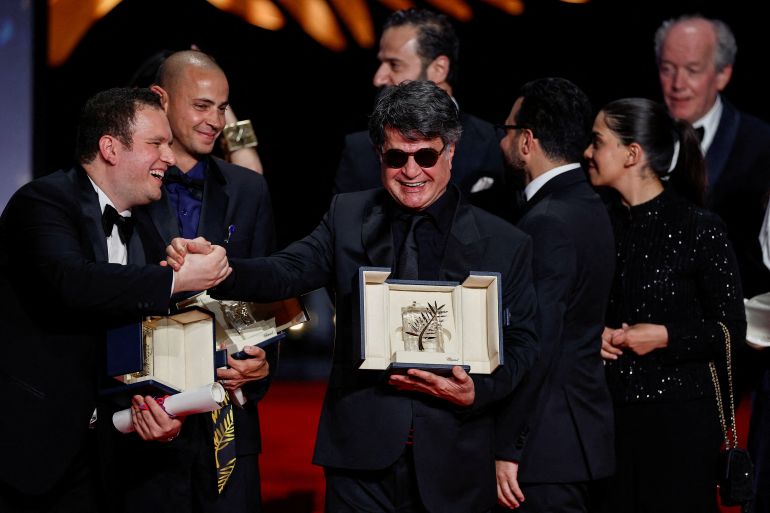
The film is inspired by dissident director Jafar Panahi’s own experience in jail. An Iranian thriller film that explores corruption and state violence in the country has won the the Palme d’Or, the coveted top prize at the Cannes Film Festival. It Was Just an Accident, directed by dissident Iranian filmmaker Jafar Panahi, was crowned at the world-famous festival on Saturday, hours after a power outage briefly threw the event off course. The festival’s crowd burst into a roaring standing ovation for Panahi, who has endured years of travel bans and prison terms in Iran due to his provocative cinema, often produced in secret. He had been banned from leaving Iran for more than 15 years. “Art mobilises the creative energy of the most precious, most alive part of us. A force that transforms darkness into forgiveness, hope and new life,” said jury president Juliette Binoche when announcing the award. On stage, Panahi said what mattered most was the future of his country. “Let us join forces,” Panahi said. “No one should tell us what kind of clothes we should wear, or what we should or shouldn’t do.” Director Jafar Panahi, Palme d’Or award winner, shakes hands with director Hasan Hadi, Camera d’Or award winner for the film, The President’s Cake, on stage during the closing ceremony of the 78th Cannes Film Festival in Cannes, France, May 24 [Benoit Tessier/Reuters] Partly inspired by Panahi’s own experience in jail, It Was Just An Accident follows a man named Vahid (played by Vahid Mobasseri), who kidnaps a man with a false leg who looks just like the one who tortured him in prison and ruined his life. Advertisement Vahid sets out to verify with other prison survivors that it is indeed their torturer, and then decide what to do with him. Critics have praised the film as a clever, symbolic exploration of justice that blends dark humour with its intense themes. Iraqi film “The President’s Cake” wins Best First Film The festival’s Grand Prix, or second prize, was awarded to Joachim Trier’s Norwegian family drama, Sentimental Value, his lauded follow-up to The Worst Person in the World. Kleber Mendonca Filho’s Brazilian political thriller, The Secret Agent, won two big awards: best director for Fihlo and best actor for Wagner Moura. The jury prize was split between two films: Oliver Laxe’s desert road trip, Sirat and Mascha Schilinski’s German, generation-spanning drama, Sound of Falling.” Best actress went to Nadia Melliti for The Little Sister, Hafsia Herzi’s French coming-of-age drama. Cannes also honoured Hasan Hadi’s The President’s Cake with a best first film award, marking the first time an Iraqi film has won an award at the festival. Director Hasan Hadi, Camera d’Or award winner for the film, The President’s Cake, and Alice Rohrwacher, president of the Camera d’Or Jury, pose after the closing ceremony of the 78th Cannes Film Festival in Cannes, France, May 24 [Sarah Meyssonnier/Reuters] The Cannes closing ceremony took place after a major power outage struck southeastern France on Saturday, knocking out traffic lights and forcing businesses to close along the main shopping street in the Alpes-Maritimes holiday region. Police suspect arson as the cause. Advertisement Geopolitical tensions were also a constant backdrop at the festival, with Russia’s invasion of Ukraine, the genocide in Gaza and US President Donald Trump’s proposal of tariffs on foreign-made films fuelling discussion. More than 900 actors and filmmakers signed an open letter denouncing the genocide in Gaza, according to the organisers. Adblock test (Why?)
Arson attack probed as Cannes and parts of southern France suffer power cut
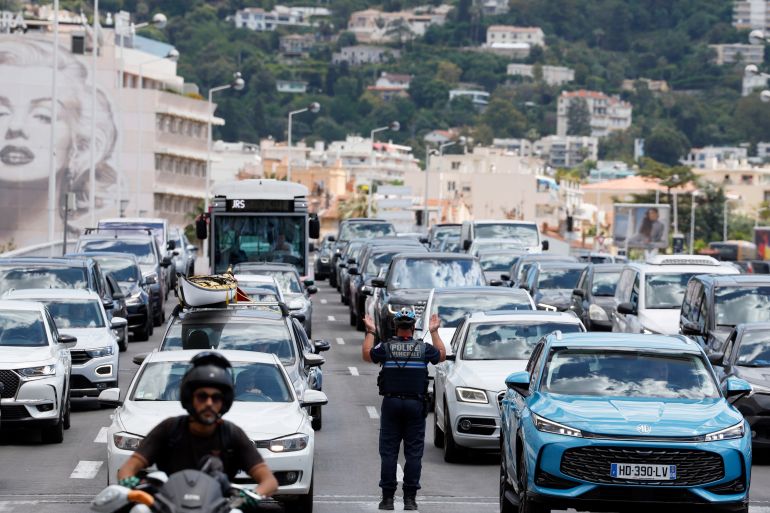
Major power outage hits the prominent film festival on its closing day and impacts 160,000 homes in the area. French police were investigating a possible arson attack as being the main cause for a power outage which hit the Alpes-Maritimes region in southern France, including Cannes which is hosting its world-famous annual film festival. “We are looking into the likelihood of a fire being started deliberately,” a spokesperson for the French national gendarmerie said on Saturday, adding that no arrests had been made at this stage. The local authority for the Alpes-Maritimes region had said earlier on Saturday that the western part of the area, which includes Cannes, was suffering from a major electricity outage and that grid operator RTE France was working on restoring power. The outage, which affected 160,000 homes, according to RTE and regional officials, started shortly after 10am local time (08:00 GMT) on Saturday. Police sources said the outage was caused by an overnight fire, probably an arson attack, at a high-voltage substation in the village of Tanneron. Traffic lights were knocked out and businesses closed on the main shopping street of the Alpes-Maritimes holiday destination. A policeman directs traffic following a power outage in southern France, May 24, 2025 [Guillaume Horcajuelo/EPA] Separate power outages swept across the Iberian Peninsula and parts of southern France on Monday, disrupting critical infrastructure and airport operations. Officials denied foul play. Advertisement While Spain and Portugal suffered blackouts last month, the French Basque Country saw brief power outages with interruptions lasting only a few minutes, according to the French electricity transmission network. The latest outage came just hours before the 78th Cannes Film Festival is due to close on Saturday evening with an award ceremony at the Palais des Festivals. Despite the power cut, festival organisers said switching to an alternative electricity power supply enabled them to “maintain the events and screenings planned for today in normal conditions, including the closing ceremony”. After a politically charged two weeks, a jury led by French actor Juliette Binoche is expected to announce the winners among 22 films competing for the Palme d’Or for best film. This year, Russia’s invasion of Ukraine, the genocide in Gaza and United States President Donald Trump were the biggest talking points at the festival. More than 900 actors and filmmakers signed an open letter denouncing the genocide in Gaza, according to the organisers. Adblock test (Why?)
Cristiano Ronaldo could play at FIFA Club World Cup: Infantino
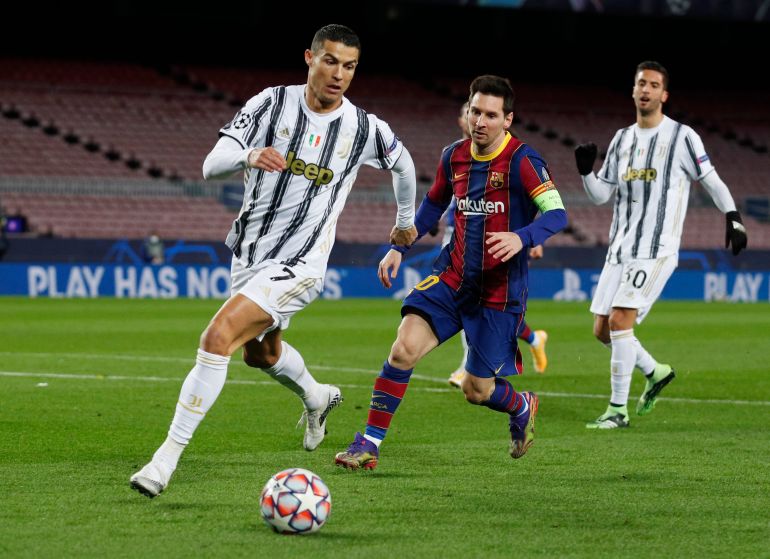
Cristiano Ronaldo is in discussions to play at FIFA’s Club World Cup in June, according to FIFA president Gianni Infantino. Cristiano Ronaldo is in “discussions” to play at FIFA’s inaugural Club World Cup this summer, according to the president of the sport’s global governing body. Gianni Infantino says the former Manchester United and Real Madrid forward might play in the tournament, which is being staged in the United States in June, because of a unique transfer window. Ronaldo’s Saudi Arabian club Al Nassr did not qualify for the tournament, but Infantino suggested that the Portugal star could switch to one of the 32 teams participating in the tournament. “Cristiano Ronaldo might play in the Club World Cup,” Infantino told online streamer IShowSpeed, whose YouTube channel has more than 39 million subscribers. “There are discussions with some clubs, so if any club is watching and is interested in hiring Ronaldo for the Club World Cup, who knows? Still a few weeks’ time, will be fun.” Barcelona’s Lionel Messi in action with Cristiano Ronaldo of Juventus during a Champions League match in 2020 [File: Albert Gea/Reuters] FIFA confirmed on Wednesday that last-minute transfer signings are open to all teams going to the tournament, which fuelled more speculation that one of them will try to sign the 40-year-old Ronaldo on a short-term deal, potentially a loan. Advertisement Such a move would be unprecedented in modern football, though it could appeal to FIFA by boosting the profile and ticket sales of an inaugural tournament being played in 11 US cities. A transfer for Ronaldo would also reunite him and Lionel Messi in the same competition for the first time since the 2022 World Cup in Qatar. Last October, FIFA invited Messi’s Inter Miami to enter the tournament in the slot that was expected to be reserved for the host nation’s champions. Inter Miami were eliminated in the MLS Cup playoffs. Speculative reports have linked Ronaldo to the one Saudi club that qualified, Al Hilal, the Brazilian club Palmeiras and Wydad of Morocco, even though that club is currently banned by FIFA from registering new signings. Transfers can be made from June 1-10 and again from June 27 to July 3, according to exceptional rules FIFA approved in October. “The objective is to encourage clubs and players whose contracts are expiring to find an appropriate solution to facilitate the players’ participation,” FIFA said in Wednesday’s statement. Adblock test (Why?)
South Lebanon votes in municipal election seen as test of Hezbollah support
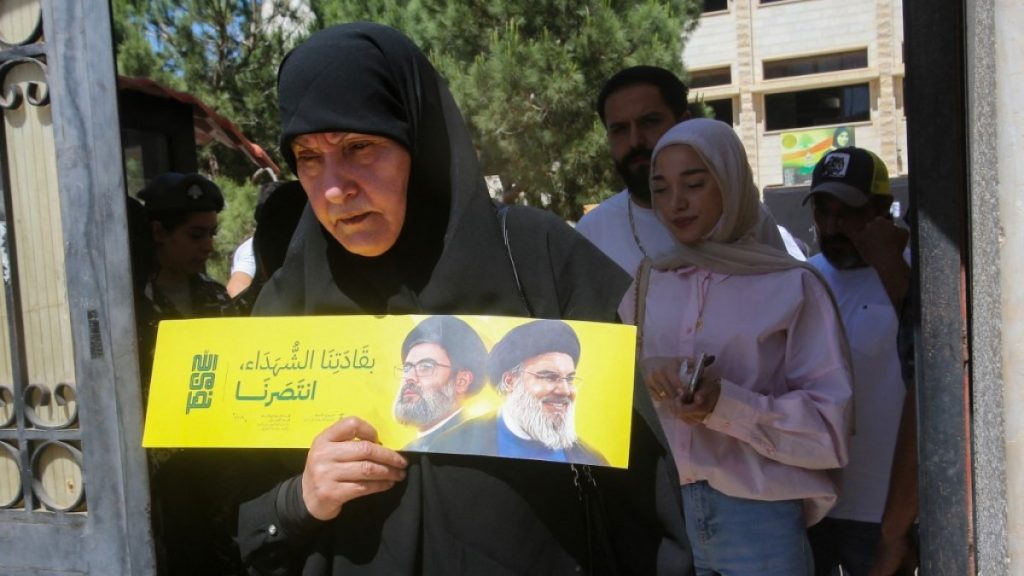
Despite war losses, Hezbollah is using the vote as an opportunity to show it still has political influence. Voters in southern Lebanon are casting their ballots in municipal elections seen as a test of support for Hezbollah, a Shia Muslim political and armed group. The vote on Saturday in the mostly Shia area, where Hezbollah is allied with Amal – the party led by Parliament Speaker Nabih Berri – marks the final phase of Lebanon’s staggered local elections. It comes after a November 2024 ceasefire between the group and Israel was supposed to end months of attacks. lsrael, however, has continued sporadic strikes as recently as on Thursday, when air raids hit multiple locations in the south. Both Hezbollah and Amal are widely expected to dominate the municipal races, having already secured control of numerous councils unopposed. Turnout was high in border villages ravaged by last year’s conflict, with residents of Kfar Kila – a town nearly levelled by Israeli attacks – voting in nearby Nabatieh. Others from surrounding areas cast ballots in Tyre. “The will of life is stronger than death and the will of construction is stronger than destruction,” Lebanese President Joseph Aoun told reporters on Saturday, as he made a tour of the country’s south. He said he voted for the first time in 40 years in his hometown of Aaichiyeh. Advertisement Among those heading to the polls were Hezbollah members still recovering from a series of Israeli attacks in September 2024, when thousands of pagers exploded nearly simultaneously, killing more than a dozen people and wounding nearly 3,000. “Southerners are proving again that they are with the choice of resistance,” Hezbollah legislator Ali Fayyad, who represents border villages, said in Nabatieh. Hezbollah still holding political influence The vote comes at a critical time for Hezbollah. While the group emerged from the conflict with reduced military capabilities and diminished political leverage, the elections offer a platform to reaffirm its influence in the region. “Lebanon has still not fully recovered from last year’s war between Hezbollah and Israel. In fact, Israel continues to target Hezbollah despite a ceasefire,” said Al Jazeera’s Zeina Khodr, reporting from Nabatieh. “Hezbollah, no doubt was militarily weakened during the conflict; it lost a lot of its military power but it is using these elections as an opportunity to show that it still has political influence,” Khodr added. Many feel Hezbollah failed to shield them during the war, yet fears of isolation persist, she said. “They feel vulnerable … not just towards Israel, but also in a deeply divided country and they feel that opponents of Hezbollah are also marginalising the community as a whole.” Lebanon’s new government has pledged to create a state monopoly on arms, raising pressure on Hezbollah to disarm as required under the United States-brokered truce with Israel. Advertisement Lebanon now faces the massive task of rebuilding after 14 months of war, with the World Bank estimating its reconstruction needs at more than $11bn. In October 2023, Hezbollah launched a rocket campaign on Israel in support of Palestinians in the Gaza Strip, which was being bombarded by Israel following a surprise attack led by Palestinian group Hamas. Israel responded with shelling and air attacks on Lebanon that escalated into a full-blown war before the ceasefire went into effect in late November. Adblock test (Why?)
‘Farcical’: Venezuelan opposition denounces arrest before weekend vote
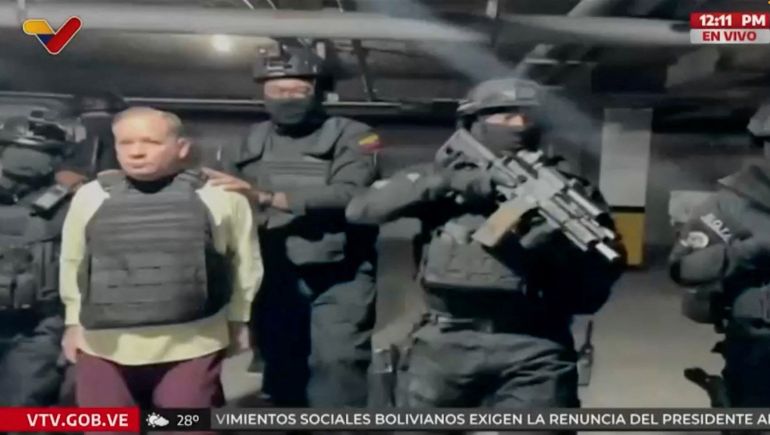
A top figure in Venezuela’s opposition has been arrested on charges of “terrorism” before parliamentary elections scheduled for the weekend. On Friday, a social media account for Juan Pablo Guanipa, a close associate of Maria Corina Machado, considered the leader of the opposition coalition, announced he had been detained. State television also carried images of his arrest, as he was escorted away by armed guards. In a prewritten message online, Guanipa denounced Venezuelan President Nicolas Maduro for human rights abuses, including stifling political dissent and false imprisonment. “Brothers and sisters, if you are reading this, it is because I have been kidnapped by the forces of Nicolas Maduro’s regime,” Guanipa wrote. “For months, I, like many Venezuelans, have been in hiding for my safety. Unfortunately, my time in hiding has come to an end. As of today, I am part of the list of Venezuelans kidnapped by the dictatorship.” Since Venezuela held a hotly contested presidential election in July 2024, Guanipa, along with several other opposition figures, has been in hiding, for fear of being arrested. Advertisement That presidential election culminated in a disputed outcome and widespread protests. On the night of the vote, Venezuela’s election authorities declared Maduro the winner, awarding him a third successive six-year term, but it failed to publish the polling tallies to substantiate that result. Meanwhile, the opposition coalition published tallies from voting stations that it said proved its candidate, Edmundo Gonzalez, had prevailed in a landslide. International watchdogs also criticised the election for its lack of transparency. Maduro’s government responded to the election-related protests with a police crackdown that led to nearly 2,000 arrests and 25 people killed. It also issued arrest warrants against opposition leaders, accusing them of charges ranging from conspiracy to falsifying records. Maduro has long accused political dissidents of conspiring with foreign forces to topple his government. Venezuelan state television shows Juan Pablo Guanipa’s detention on May 23 [Venezuelan government TV/Reuters handout] Gonzalez himself was among those for whom a warrant was signed. He fled to exile in Spain. Others have gone into hiding, avoiding the public eye. Until recently, a group of five opposition members had sought shelter in the Argentinian embassy in Caracas, until they were reportedly smuggled out of the country earlier this month. Opposition members and their supporters have dismissed the charges against them as spurious and further evidence of the Maduro government’s repressive tactics. Advertisement “This is pure and simple STATE TERRORISM,” Machado, the opposition leader, wrote on social media in the wake of Guanipa’s arrest. Machado and others have said that Guanipa was one of several people arrested in the lead-up to this weekend’s regional elections, which will see members of the National Assembly and state-level positions on the ballot. Several prominent members of the opposition have pledged to boycott the vote, arguing it is a means for Maduro to consolidate power. “Just hours before a farcical election with no guarantees of any kind, the regime has reactivated an operation of political repression,” Gonzalez wrote on social media, in reaction to the recent spate of arrests. He argued that the detention of Guanipa and others was a means of ensuring “nothing will go off script” during Sunday’s vote. “They harass political, social, and community leaders. They persecute those who influence public opinion. They intend to shut down all alternative information spaces and ensure a narrative monopoly,” Gonzalez wrote. “To the international community: This is not an election. It’s an authoritarian device to shield the power they’ve usurped.” Adblock test (Why?)
DRC’s ex-president Kabila slams justice system after losing immunity
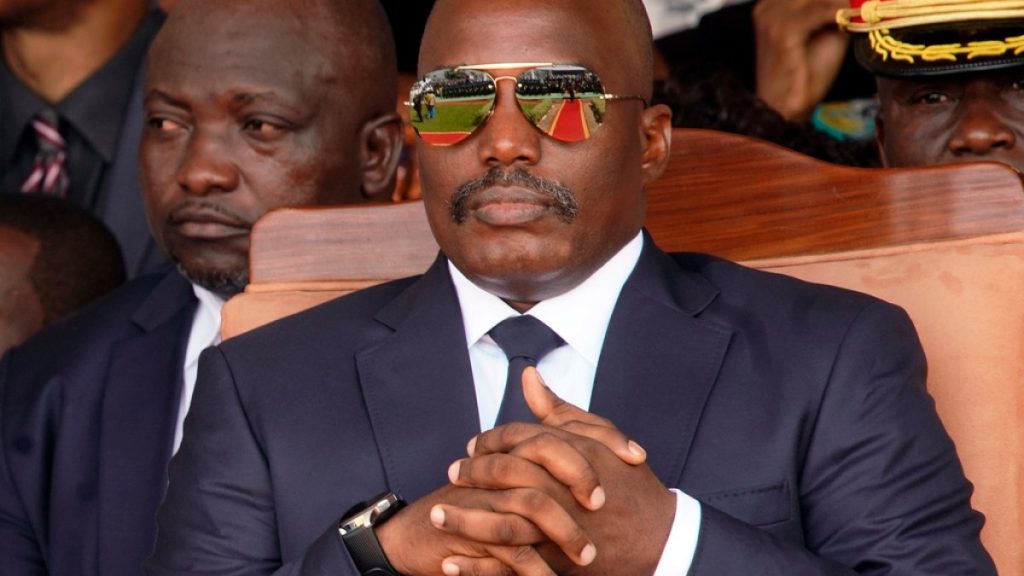
Kabila, accused of ‘treason’ and ‘war crimes’, denies government accusations of links to M23 rebel group. Joseph Kabila, former president of the Democratic Republic of the Congo (DRC), has attacked the country’s justice system after the Senate voted to lift his immunity, paving the way for him to be prosecuted for alleged treason and war crimes. Kabila gave a livestreamed speech from an undisclosed location on Friday, a day after losing his immunity over alleged links to the M23 rebel group, saying that the justice system was “an instrument of oppression for a dictatorship desperately trying to survive”. The 53-year-old, who denies supporting the Rwanda-backed rebels who have seized two major cities in the country’s conflict-battered east, has been in self-imposed exile since 2023. The former president, who has repeatedly said he was returning from exile to help find a solution to the crisis, accused Kinshasa of taking “arbitrary decisions with disconcerting levity”. Congo’s Senate voted overwhelmingly on Thursday to grant the government’s request to lift the lifetime immunity Kabila – leader of the country from 2001 to 2019 – had enjoyed because of his honorific title as “senator for life”. Advertisement Justice Minister Constant Mutamba said Kabila’s alleged crimes included “treason, war crimes, crimes against humanity and participation in an insurrectional movement” in the country’s east. On Friday, Kabila said the DRC’s sovereignty and territorial integrity were non-negotiable. “As a soldier, I swore to defend my country to the supreme sacrifice … I remain more faithful than ever to this oath,” he said. Kabila’s return to the DRC could complicate the bid to end the rebellion in the east, which contains vast supplies of critical minerals that United States President Donald Trump’s administration is eager to access. Washington is pushing for a peace agreement to be signed between the DRC and Rwanda this summer, accompanied by minerals deals aimed at bringing billions of dollars of Western investment to the region, according to Massad Boulos, Trump’s senior adviser for Africa, cited by news agency Reuters. Adblock test (Why?)
US Steel shares soar on Trump’s apparent blessing for deal with Nippon
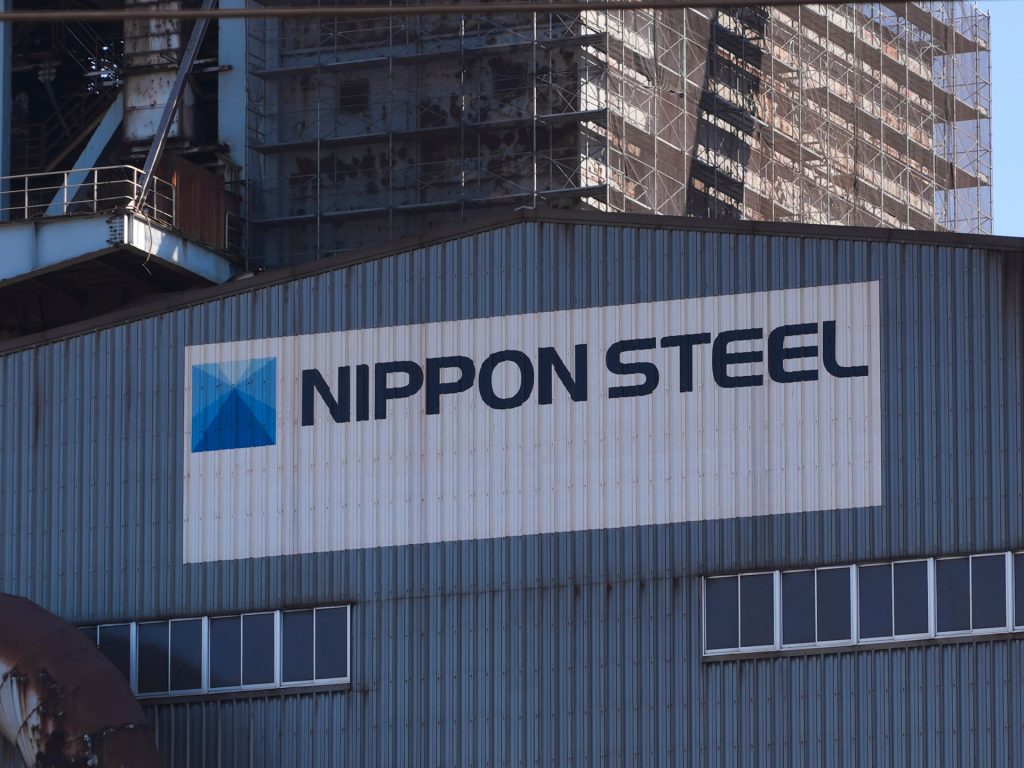
Investors interpreted Trump’s comments to mean Nippon Steel had received his approval for its takeover of US Steel. United States President Donald Trump has expressed support for Nippon Steel’s $14.9bn bid for US Steel, saying their “planned partnership” would create jobs and help the US economy. Shares of US Steel soared 21 percent on Friday after Trump’s comments as investors interpreted the president’s post on Truth Social to mean Nippon Steel had received his approval for its long-planned takeover, the last major hurdle for the deal. “This will be a planned partnership between United States Steel and Nippon Steel, which will create at least 70,000 jobs, and add $14 Billion Dollars to the US Economy,” Trump said in a post on Truth Social on Friday. This week, the Reuters news agency reported that Nippon Steel has said if the merger is approved, it would invest $14bn into US Steel’s operations, including up to $4bn in a new steel mill. Trump added that the bulk of that investment would occur in the next 14 months and said he would hold a rally at US Steel in Pittsburgh next Friday. Nippon Steel said it applauded Trump’s decision to approve the “partnership”. The White House did not immediately reply to questions about the announcement. Advertisement US Steel share price kept rising after hours and reached $54, just shy of Nippon Steel’s $55-per-share offer price made in late 2023. While no details were released, investors expressed confidence that terms will be similar to those agreed in 2023. Investors said that eventually US Steel will no longer be publicly traded and they will receive a cash payout for their shares. Politically controversial The deal has been one of the most highly anticipated on Wall Street after it morphed into the political arena with fears that foreign ownership would mean job losses in Pennsylvania, where US Steel is based. It factored into last year’s election that saw Trump return to the White House. Pennsylvania Senator Dave McCormick, who also called the deal a “partnership”, on Friday said it was a “huge victory for America and the US Steel Corporation”, that will protect more than 11,000 Pennsylvania jobs and support the creation of at least 14,000 more. The last pieces of the deal came together surprisingly fast. The Committee on Foreign Investment in the US (CFIUS), which reviews deals for national security risks, told the White House this week that the security risks can be addressed, Reuters reported, moving the final decision to Trump’s desk. Following an earlier CFIUS-led review, former President Joe Biden blocked the deal in January on national security grounds. The companies sued, arguing they did not receive a fair review process. The Biden White House rejected that view. The companies argued Biden opposed the deal when he was running for re-election to win support from the United Steelworkers union in the battleground state of Pennsylvania. The Biden administration had defended the review as essential to protecting security, infrastructure and supply chains. Advertisement Trump also initially opposed the deal, arguing the company must be owned and operated in the US. The United Steelworkers were against the deal as recently as Thursday when they urged Trump to block the deal despite the $14bn investment pledge from Trump. For investors, including prominent hedge funds, the news spells relief after more than a year of waiting for a resolution. “There were huge high-fives all around today,” one recent investor said, adding, “We understood Donald Trump’s psyche and we played it to our advantage here.” Investors said Trump appears to have won ground after the pledge for new investments was increased. “This deal ensures that steelmaking will live on in Pittsburgh for generations,” another investor said. Adblock test (Why?)
Is AI reshaping the creative landscape?
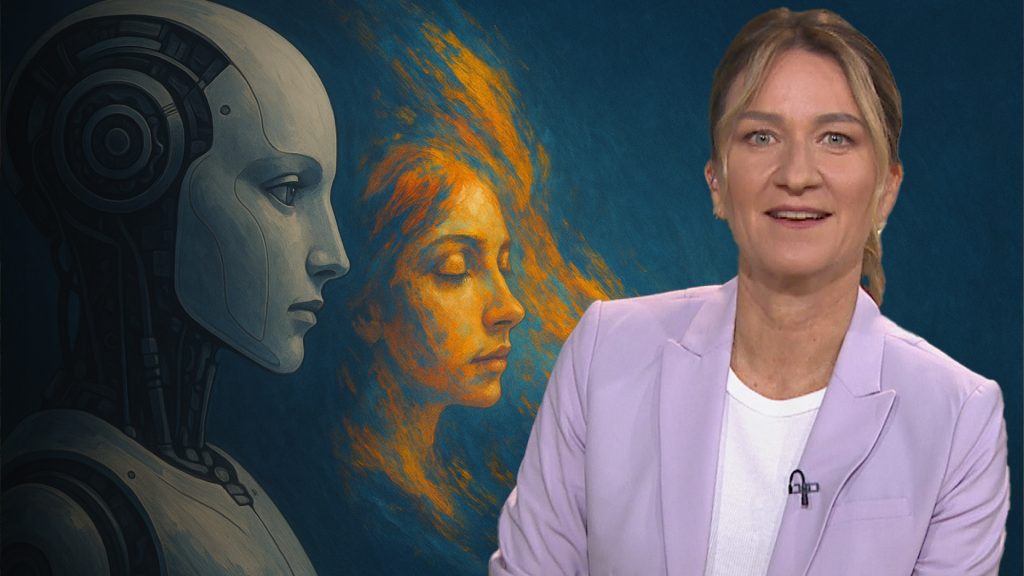
Today on The Stream: We paint a picture of how AI is reshaping the creative landscape. Is it still art if it wasn’t made by a human? And if art is truly about creative expression, who gets to decide what counts? From text-to-image generators to AI-composed art, these technologies are being embraced, critiqued, and sometimes feared. We hear from creators and critics grappling with the rapidly changing landscape. Presenter: Stefanie Dekker Guests:Molly Crabapple – Artist and writerHassan Ragab – Designer and artistSofia Crespo – Visual artist Adblock test (Why?)
DR Congo strips ex-President Kabila of immunity
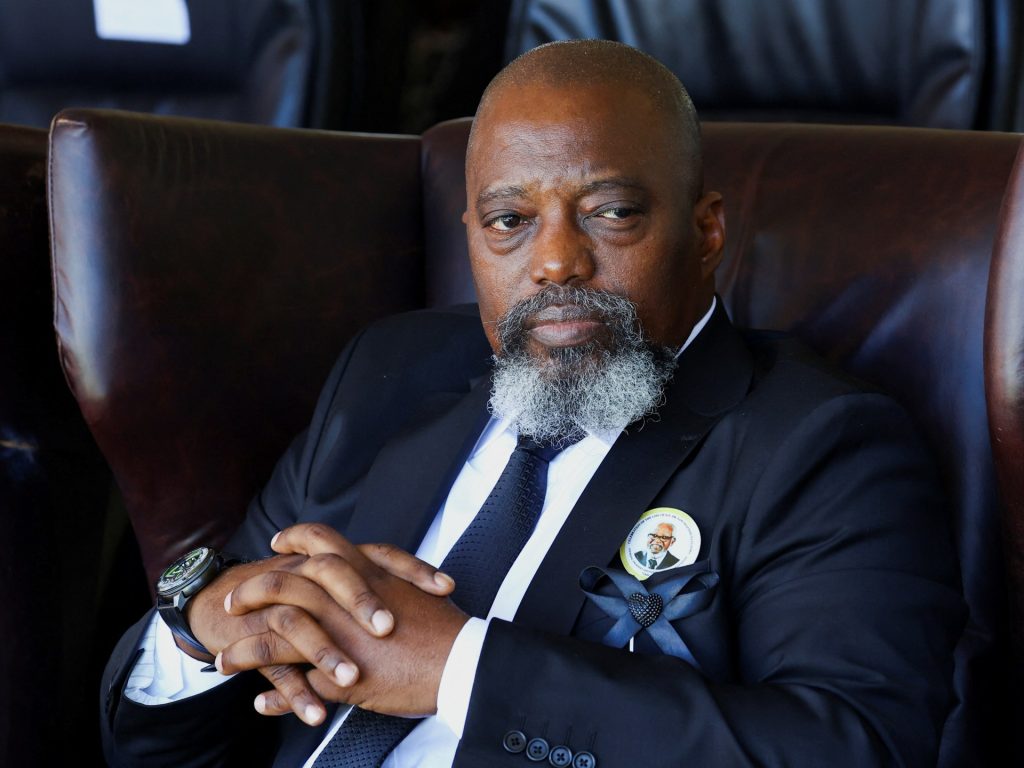
Former leader accused of ‘treason, war crimes, [and] crimes against humanity’ for his support of M23 rebels in east. The Senate in the Democratic Republic of the Congo (DRC) has voted overwhelmingly in favour of lifting the immunity of ex-President Joseph Kabila. In a secret ballot on Thursday night, the parliament voted by 88 votes to five to make Kabila liable for prosecution. The former head of state has been accused of treason for alleged links to the M23 armed group, which has taken control of swaths of territory in eastern DRC with the backing of Rwanda. Authorities said earlier this month that Kinshasa had amassed clear evidence implicating him in “treason, war crimes, crimes against humanity and participation in an insurrectionary movement”. Kabila, who denies any ties to the rebel group, stepped down after almost 20 years in power in 2018, yielding to protests. However, he enjoyed immunity from prosecution thanks to an honorific title as senator for life. Earlier this month, the attorney general of the Congolese army demanded that honour be lifted. “The Senate authorises the prosecution and lifting of Joseph Kabila’s immunity,” Senate speaker Jean-Michel Sama Lukonde said after the vote. Advertisement Complications Kabila has not commented on his immunity being lifted. Last year he denied allegations from his successor President Felix Tshisekedi that he was supporting the rebels and “preparing an insurrection” in eastern DRC. Tshisekedi has in the meantime suspended Kabila’s People’s Party for Reconstruction and Democracy (PPRD) and security forces have raided several of the former leader’s properties. PPRD Deputy Secretary-General Ferdinand Kambere told the AFP news agency that Kabila’s prosecution is pure “theatre” to distract the Congolese people from debates on the conflict and corruption in the country. The former president has been outside the Central African country since late 2023, mostly in South Africa. However, he has threatened to return to help the country resolve the continuing fighting in eastern areas, as well as making increasingly vocal criticism of Tshisekedi. A return to the country by Kabila could complicate the bid to end the rebellion. Reports in April that he was in the east have not been confirmed. Despite DRC’s army and M23 agreeing to work towards a truce earlier this month, fighting continues in the eastern province of South Kivu. The long-running tensions in eastern DRC flared into conflict in January when M23 captured the city of Goma, followed by the seizure of Bukavu in February. The group is seeking control of the vast mineral wealth in the eastern areas and has ambitions to take power in Kinshasa. Amid the ongoing fighting, the army and armed groups announced peace talks in the Qatari capital, Doha, in early May. Advertisement Adblock test (Why?)
Borders and ballots: Why Essequibo is controversial in Venezuela’s election
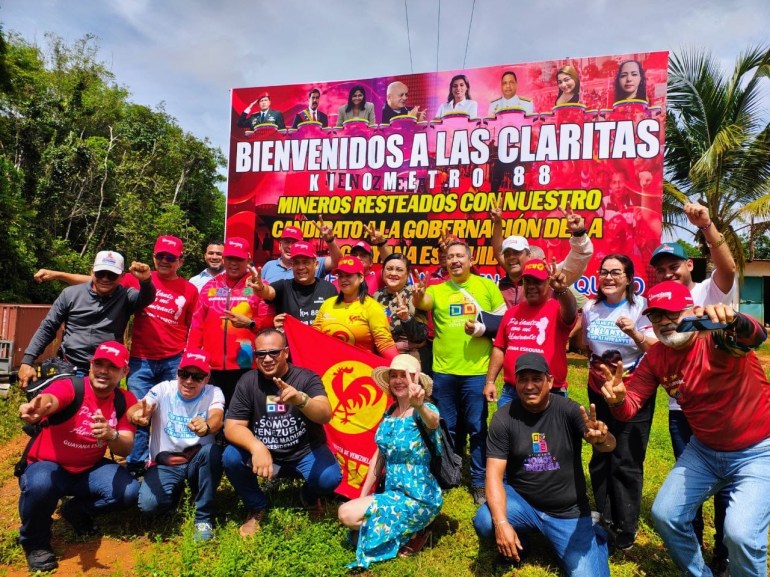
However, the case has been slowly winding its way through the international court since 2018. And the Maduro government views the UN body as a tool of foreign interference, particularly for his rivals in the US. Maduro’s supporters point to the fact that, in 2015, the US oil giant ExxonMobil discovered vast offshore fields near Essequibo. The company has continued to explore the contested waters in search of more oil and gas deposits. For Rivas, the 2015 discovery “rang alarm bells”, leading him to fear further US incursions into the disputed territory. “It’s absolutely terrible because, behind this, there’s an aspiration to control mineral wealth, oil, sources of fossil energy and even the water wealth that exists in all of that territory,” Rivas told Al Jazeera. To him, sovereignty over Essequibo is paramount, and the Venezuelan flag is a symbolic reminder of its importance. Since 1863, the yellow, blue and red banner has featured stars to represent the seven provinces that fought for independence from Spain. But in 2006, a new star joined the flag — one to symbolise Essequibo. Oliver Rivas, in green with his arm in a sling, is a candidate to represent Essequibo in Venezuela’s elections [Courtesy of Oliver Rivas] Experts, however, say Venezuela faces the possibility of backlash for using tools like the regional elections to assert control over Essequibo. Sadio Garavini di Turno, a Venezuelan political analyst, used to serve as the country’s ambassador to Guyana from 1980 to 1984. He considers Maduro’s actions as not only “frivolous” but irresponsible, given the ongoing proceedings before the International Court of Justice. “We’re in a bad light with the court and the magistrates,” the ex-diplomat said. He also questions Maduro’s sabre-rattling in the region. While Venezuela’s military dwarfs that of Guyana, the former British colony has powerful allies, including the UK and the US. Any full-fledged military takeover, Garavini di Turno argued, “would be a huge stupidity”. “If they take forceful action, they would have the international community, starting with the United States, against them,” he said of Maduro and his allies. “It would give the community, particularly the United States, an excuse to intervene.” Already, in March, US Secretary of State Marco Rubio warned Venezuela it would face “consequences for aggressive actions”. The impact of the upcoming vote on Essequibo is so far unclear. Fernandez, the political analyst, said even details about who can even vote have been hazy. “It’s deliberately opaque,” Fernandez said. “Opacity is going to be the norm in the upcoming electoral processes.” Adblock test (Why?)