

Boeing failed to provide training to prevent MAX 9 midair emergency: NTSB

The US agency harshly criticised Boeing’s safety culture as well as ineffective oversight by the FAA. Boeing failed to provide adequate training, guidance and oversight to prevent a midair cabin panel blowout of a new 737 MAX 9 flight in January 2024, which spun the planemaker into a major crisis, the United States National Transportation Safety Board has said. The board on Tuesday harshly criticised Boeing’s safety culture and its failure to install four key bolts in a new Alaska Airlines MAX 9 during production, as well as the ineffective oversight by the Federal Aviation Administration (FAA). NTSB chair Jennifer Homendy said at a board meeting that the incident was entirely avoidable because the planemaker should have addressed the unauthorised production that was identified in numerous Boeing internal audits, reports and other forums for at least 10 years. “The safety deficiencies that led to this accident should have been evident to Boeing and to the FAA,” Homendy said. “It’s nothing short of a miracle that no one died or sustained serious physical injuries.” Boeing’s on-the-job training was lacking, the NTSB said, adding that the planemaker is working on a design enhancement that will ensure the door plug cannot be closed until it is firmly secured. The accident prompted the US Department of Justice to open a criminal investigation and declare that Boeing was not in compliance with a 2021 deferred prosecution agreement. CEO Dave Calhoun announced he would step down within a few months of the midair panel blowout. Homendy praised new Boeing CEO Kelly Ortberg, but said, “He has his work cut out for him, a lot of challenges to address, and that’s going to take time.” Advertisement Boeing said it regretted the accident and was continuing to work on strengthening safety and quality across its operations. The FAA said on Tuesday that it has “fundamentally changed how it oversees Boeing since the Alaska Airlines door-plug accident and we will continue this aggressive oversight to ensure Boeing fixes its systemic production-quality issues”. Damaged reputation The incident badly damaged Boeing’s reputation and led to a grounding of the MAX 9 for two weeks as well as a production cap of 38 planes per month by the FAA, which still remains in place. “While Boeing is making progress, we will not lift the 737 monthly production cap until we are confident the company can maintain safety and quality while making more aircraft,” the FAA added. Boeing created no paperwork for the removal of the 737 MAX 9 door plug – a piece of metal shaped like a door covering an unused emergency exit – or its re-installation during production, and still does not know which employees were involved, the NTSB said on Tuesday. Then-FAA administrator Michael Whitaker said in June 2024 that the agency was “too hands off” in Boeing oversight and has boosted the number of inspectors at Boeing and the MAX fuselage manufacturer’s, Spirit AeroSystems, factories. Boeing agreed last July to plead guilty to a criminal fraud conspiracy charge after two fatal 737 MAX crashes in Indonesia and Ethiopia. But it last month struck a deal with the US Justice Department to avoid a guilty plea. The Justice Department has asked a judge to approve the deal, which will allow Boeing to avoid pleading guilty or facing oversight by an outside monitor. Earlier this month, Boeing’s problems resurfaced when an Air India flight crashed soon after takeoff from the western Indian city of Ahmedabad, killing all but one on board. The aircraft being flown was a nearly 12-year-old Dreamliner. Investigations behind that crash are currently under way. Adblock test (Why?)
US sanctions alleged leader of Venezuelan gang Tren de Aragua
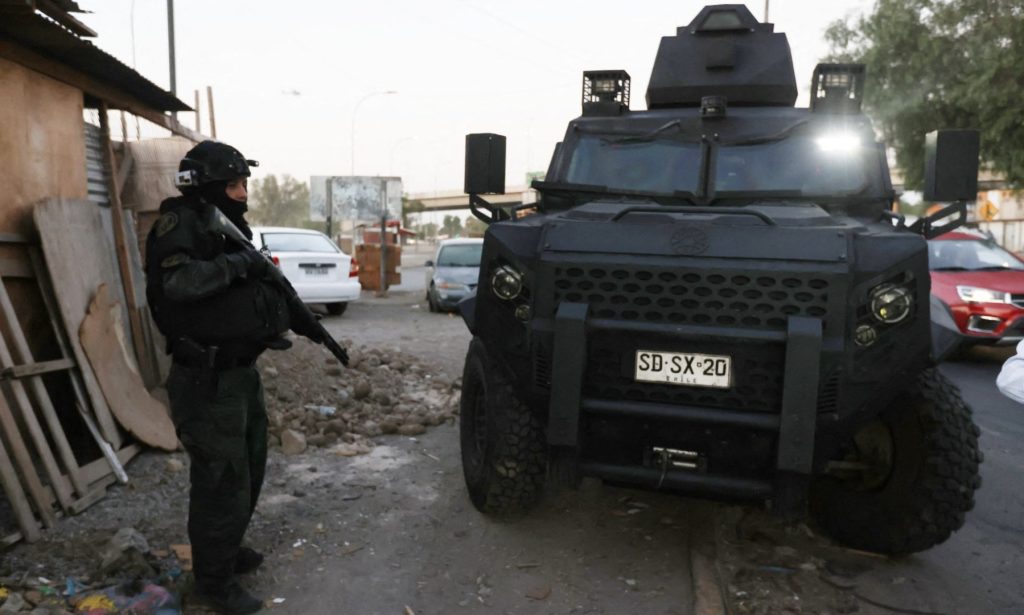
The State Department has offered up to $3m for information leading to the arrest of Giovanni Vicente Mosquera Serrano. The United States Treasury Department has sanctioned the alleged leader of Tren de Aragua (TDA), a Venezuelan gang that the administration of President Donald Trump has used as justification for its immigration crackdown. In a statement released on Tuesday, the Treasury’s Office of Foreign Assets Control said Giovanni Vicente Mosquera Serrano was not only sanctioned but also indicted by the Department of Justice. According to unsealed court documents, Mosquera Serrano faces charges related to drug trafficking and terrorism. He was also added to the FBI’s Ten Most Wanted list, with a $3m reward offered for information leading to his arrest or conviction. In the statement, Treasury Secretary Scott Bessent accused Tren de Aragua, under Mosquera Serrano’s leadership, of “terrorizing our communities and facilitating the flow of illicit narcotics into our country”. It was the latest effort in the Trump administration’s campaign to crack down on criminal activity that it claims is tied to the proliferation of foreign gangs and criminal networks in the US. Earlier this year, the Trump administration designated Tren de Aragua and other Latin American gangs as “foreign terrorist organisations”, a category more commonly used to describe international groups with violent political aims. But Trump has used the threat of criminal networks based abroad to justify the use of emergency powers during his second term. For instance, the Trump administration has claimed that Tren de Aragua is coordinating its US activities with the government of Venezuelan President Nicolas Maduro. That allegation was then used to justify the use of a rare wartime law: the Alien Enemies Act of 1798. Advertisement Claiming that the presence of groups like Tren de Aragua constituted a foreign “invasion” on US soil, Trump leveraged the Alien Enemies Act as the legal basis for pursuing the expedited deportations of alleged gang members. More than 200 people were sent to a maximum-security prison in El Salvador, where many of them remain to this day. Those deportations have drawn widespread criticism, along with a slew of legal challenges. Critics have said that the expedited deportations violated the immigrants’ rights to due process. They also pointed out that many of the deported men did not have criminal records. Lawyers for some of the men have argued that they appear to have been imprisoned based on their tattoos and wardrobe choices. The Department of Homeland Security, however, has disputed that allegation. At least one top US official has acknowledged that Maduro’s government may not direct Tren de Aragua. An April memo from the Office of the Director of National Intelligence, obtained by news outlets like NPR and The New York Times, likewise cast doubt on the idea that Venezuela was controlling the gang’s movements in the US. Rather, the memo said that the Maduro government likely sees Tren de Aragua as a threat. “While Venezuela’s permissive environment enables TDA to operate, the Maduro regime probably does not have a policy of cooperating with TDA and is not directing TDA movement to and operations in the United States,” the memo reads. Last July, the US and Colombia offered joint multimillion-dollar rewards for information leading to the arrest of Mosquera Serrano and two other men believed to lead Tren de Aragua. The group was also sanctioned in the same month as a transnational criminal organisation for “engaging in diverse criminal activities, such as human smuggling and trafficking, gender-based violence, money laundering, and illicit drug trafficking”, according to a Treasury Department statement. Numerous countries in Latin America have struggled with the gang’s rapid growth, which has been linked to political assassinations and widespread human trafficking, though experts say there is little to suggest the gang has infiltrated the US. Adblock test (Why?)
‘It’s not peace – it’s a pause’: Iranians sceptical ceasefire will hold
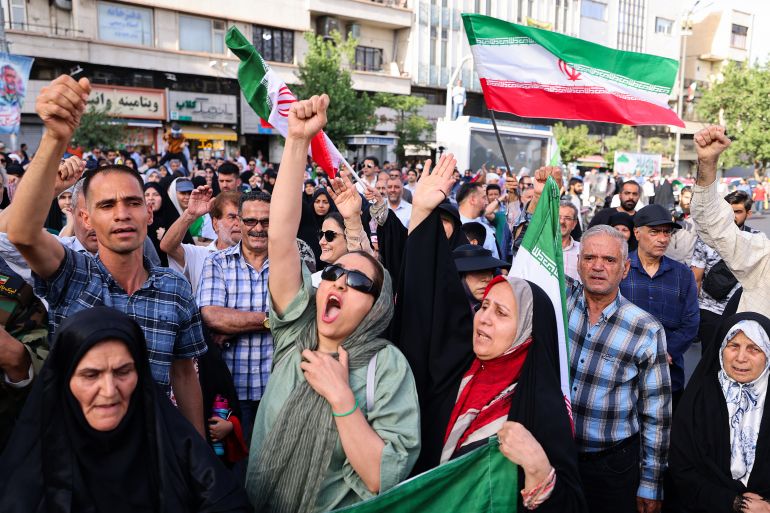
In the Iranian capital Tehran, after a night of heavy bombardment and then the beginning of a fragile ceasefire between Israel and Iran following nearly two weeks of intense air strikes, confusion, uncertainty and distrust have gripped households. Some families displaced during the conflict rushed home; others have been more cautious. For Samaneh, a 37-year-old reporter who, like other Iranians interviewed in this article, only wanted to give her first name, the intensity of Monday evening’s bombardment left her feeling shaken. “The last night of the bombing was the worst. I truly thought I’d never see my loved ones again,” she said, fearing for family and friends elsewhere in the Iranian capital. The ceasefire, which began on Tuesday, brought only minimal relief to those, like Sameneh, who doubt it will last, particularly amid claims of violations and promises of retaliation. “I know this ceasefire is temporary,” Samaneh explained, adding that when United States President Donald Trump first announced it on Monday, she “thought it was just another psychological game … [he] was playing with us”. “I couldn’t believe they’d [Israel and Iran] agree to it. I keep expecting someone to sabotage the whole thing,” said the Tehran-based woman. “It wasn’t until [Foreign Affairs Minister Abbas] Araghchi posted on Telegram confirming [the ceasefire in] a formal message from Oman that I felt relief – along with sadness, anger and fear,” she added. “I’m deeply discouraged. But at least after 12 nights, I hope I can finally get to sleep again,” she said. “My heart aches for the people of Gaza, Palestine, Lebanon – those who’ve endured this kind of suffering for years.” Advertisement The conflict started on June 13 when Israel launched strikes on Iranian nuclear and military sites but also residential areas in Tehran, killing dozens of civilians, a number of military commanders and scientists. Iran retaliated by launching ballistic missiles and drone attacks on Israeli cities. Iran says at least 610 people have been killed, while 4,746 have been wounded. In Israel, at least 28 people have been killed while hundreds have been injured. Iranians lift flags and chant during a rally protesting the US attack on Iran in Enghelab Square on June 22, 2025 [Atta Kenare/AFP] ‘Us who pay’ In Karaj, part of the greater Tehran region, 41-year-old history teacher Raha, who had been abroad but insisted on returning home when Israel attacked to ensure her family were safe, expressed indignation. “It’s not peace – it’s a pause. How can we trust those who talk of regime change and peace in the same breath?” she asked. Trump has spoken of Iran accepting “peace” – essentially accepting US terms for a surrender of its nuclear programme. At the same time, the US president has called for regime change, writing on social media on Sunday, “If the current Iranian Regime is unable to MAKE IRAN GREAT AGAIN, why wouldn’t there be a Regime change??? MIGA!!!” She added: “I fear it’s just a short break – a chance for Israel’s military to regroup before launching another round of air strikes, just like they’ve done in Palestine and Lebanon.” “The US and Israel erased our agency,” Raha continued. “They’re deciding our future without us. They talk about women, life and freedoms … yet they attacked my land. They violated the skies and borders of my country. They killed innocent people. And within hours, billions of dollars – money that could have gone towards rebuilding Iran – were obliterated by American bombs. Our nuclear programme turned into craters and black holes.” Israel and the US have for years accused Iran of developing nuclear weapons, while Iran has maintained that its nuclear programme is peaceful and for civilian uses. Hadi, a 42-year-old civil engineer from the southwestern city of Ahwaz, backs the government’s position on its nuclear programme, pointing out that it had agreed to a previous nuclear deal in 2015 that Trump had unilaterally withdrawn from three years later. “As a country, we repeatedly said we were not pursuing nuclear weapons,” Hadi said. “It was Donald Trump’s withdrawal from the nuclear deal that dragged Iran into the abyss of war.” But Hadi still welcomed the ceasefire, and is happy the Iranian government accepted it. Advertisement “We’ve lost so many martyrs. I hope this brings the people of my country closer together – and that the government softens its stances on things like the hijab,” he said. “We need to rebuild, and we need unity.” Raha, meanwhile, is worried about the domestic blowback and dreads what is yet to come for Iranians, given the deaths and scale of damage caused by Israeli bombardment, which she believes the government may see as a defeat. “I’m afraid the regime will now try to take revenge for its defeat against Israel by turning its repression inward, especially against women. More arrests. More crackdowns. It’s always us who pay,” she said. Iran has arrested dozens of people since the outbreak of the conflict with Israel, mainly on suspicion of spying for Israel. Iran has previously cracked down on supporters of antigovernment protests in 2022, and some human rights activists fear that more people will be arrested after the fighting with Israel for expressing opinions critical of the government. Iranians walk along a street on Enghelab Square, on June 24, 2025, after Iran and Israel agreed to a ceasefire [Atta Kenare/AFP] ‘I don’t trust it will last’ In the central Iranian city of Yazd, Mohammad, a 28-year-old nurse, has spent the night shift on high alert, after Israeli missiles a day before struck two military sites in the central province, killing nine security personnel. He returned home early Tuesday morning to the news of the ceasefire being confirmed by Iranian authorities. “Honestly, my brain isn’t working properly after a night shift. But I’m still in shock,” he said. “Contrary to what many of us expected – a drawn-out war – the regime agreed to a ceasefire almost suddenly. It was so unexpected that even many of its critics
Palestinians in Gaza are calling for their own ceasefire
[unable to retrieve full-text content] As Iran and Israel talk peace, Palestinians in Gaza feel left behind. Israel killed more than 70 Palestinians on Tuesday
Travel disruptions still hit Middle East in wake of US-Israel-Iran conflict
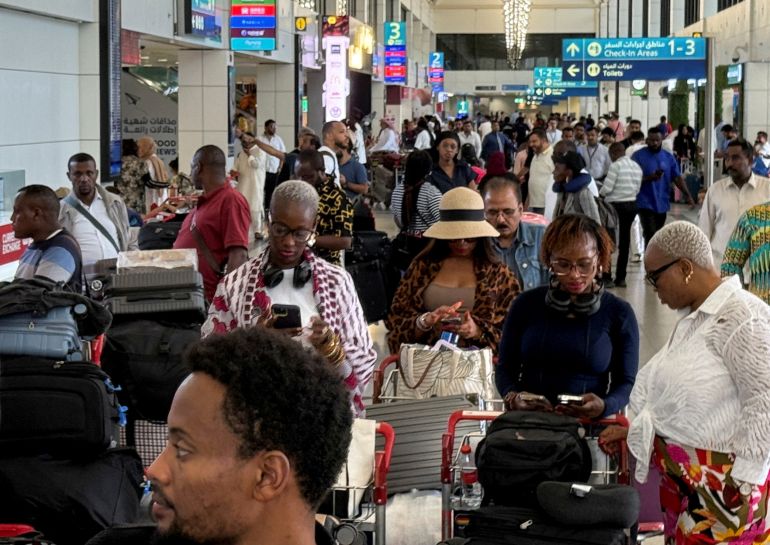
Airlines are forced to reroute or cancel flights, affecting major hubs like Doha and Dubai, despite a ceasefire announced between Iran and Israel. The Israel-Iran conflict, together with the military intervention of the United States and Tehran’s retaliation, has continued to heavily disrupt global travel despite some Middle East nations saying their airspaces were now open again. The delays, suspensions and cancellations by multiple airlines continued on Tuesday after Iran launched a limited missile attack on US forces at Qatar’s Al Udeid Air Base on Monday in retaliation for US strikes on Sunday at three Iranian nuclear sites. Qatar temporarily closed its airspace just hours earlier, forcing state-owned Qatar Airways to announce that its flights were suspended because of the closure. Airports throughout the region have been on edge since Israel began the deadly conflict on June 13 – with a surprise barrage of attacks on Iran, which retaliated with its own missile and drone strikes. Passengers queue at Dubai International Airport, following Iran’s Monday attack on a US military base, in Dubai, United Arab Emirates, June 24, 2025 [Reuters] In the days following the US strikes, more and more carriers cancelled flights, particularly in Qatar and the United Arab Emirates, which sit just across the Persian Gulf from Iran. While US President Donald Trump announced a truce between Tehran and Tel Aviv late on Monday night, many airlines have halted select routes through the middle of the week, citing safety concerns. Middle East carriers severely affected Dubai-based Emirates suspended all flights to Iran and Iraq, including those serving Baghdad and Basra, through June 30. An unspecified number of other Emirates flights were rerouted but continuing to operate as scheduled, using flight paths well distanced from conflict areas, according to the airline, which added that some flights may be delayed. Advertisement Gulf Air, the carrier of the Kingdom of Bahrain, extended the cancellation of scheduled flights to Jordan until June 27. Air tracking data from FlightAware showed 382 cancellations worldwide just after 10:30am ET (14:30 GMT) Tuesday, following 834 cancellations seen on Monday. Airports in the Middle East are some of the busiest in the world, covering an area stretching from Iran and Iraq to the Mediterranean and serving as a connecting hub for flights between Europe and Asia. However, in an early sign of normalcy returning to the region, Iraqi airspace reopened and flights were now transiting it, flight-tracking website Flightradar24 wrote on X on Tuesday. It’s unclear whether Iranian airspace is now also open to international arrivals and departures to and from Tehran. In the meantime, the Israel Airports Authority says Ben Gurion Airport near Tel Aviv is returning to full operation. Meanwhile, Singapore Airlines cancelled some flights to and from Dubai starting Sunday and through Wednesday, citing “a security assessment of the geopolitical situation in the Middle East”. And British Airways said it had suspended flights to and from Doha through Wednesday, adding that it “will keep the situation under review”. Adblock test (Why?)
Israel-Iran ceasefire off to rocky start, drawing Trump’s ire after fanfare
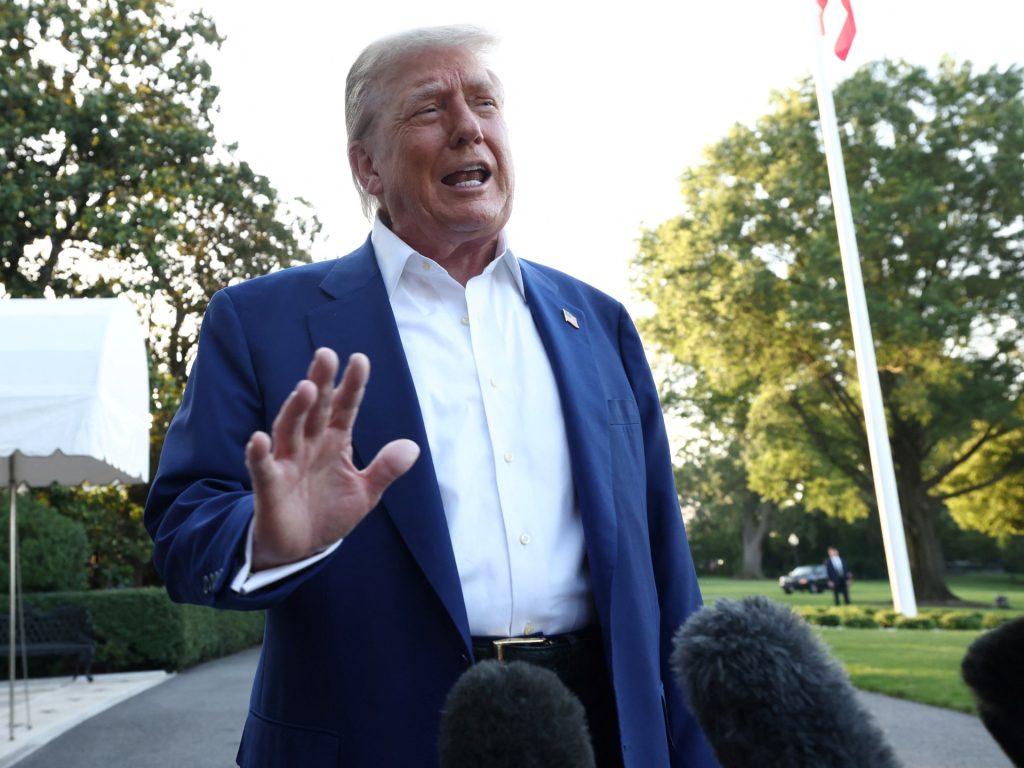
The ceasefire between Israel and Iran is already showing signs of strain – and has triggered frustration, and a televised expletive, from United States President Donald Trump, who accused Israel of undermining the deal just hours after its announcement. The ceasefire, brokered by the US and Qatar, came into effect late Monday following days of intensive missile barrages between the two foes. Israel’s last wave of strikes targeted Iranian military infrastructure near Isfahan, prompting retaliatory drone launches by Tehran. Iran violated the ceasefire, “but Israel violated it too”, Trump told reporters on the White House’s South Lawn on Tuesday as he departed for the NATO summit. “So I’m not happy with them. I’m not happy with Iran either. But I’m really unhappy if Israel is going out this morning.” “I’ve got to get Israel to calm down,” he said. “Israel, as soon as we made the deal, they came out and dropped a load of bombs, the likes of which I’ve never seen before.” As he prepared to head to a NATO summit in The Hague in the Netherlands, Trump’s anger flared on the White House Lawn: “We have two countries that have been fighting so long and so hard that they don’t know what the f*** they’re doing.” A day earlier, Trump boasted on his Truth Social app that “the Ceasefire is in effect!” “ISRAEL is not going to attack Iran. All planes will turn around and head home, while doing a friendly ‘Plane Wave’ to Iran. Nobody will be hurt,” Trump wrote. Trump’s unusually public display of anger at Israel saw the US leader apparently trying to force his ally to call off warplanes in real time on Tuesday. Advertisement Earlier the same morning, he had posted on Truth Social: “ISRAEL. DO NOT DROP THOSE BOMBS” – without it being clear which bombs he was referring to. “IF YOU DO IT IS A MAJOR VIOLATION. BRING YOUR PILOTS HOME, NOW!” Israeli Prime Minister Benjamin Netanyahu seemed to quickly accede, with his office saying in a statement on Tuesday that Israel still carried out one more attack near Tehran after Trump’s appeal, but is refraining from “further strikes”. Israeli Defence Minister Israel Katz had said earlier on Tuesday that he had ordered the military to mount new strikes on targets in Tehran in response to what he claimed were Iranian missiles fired in a “blatant violation” of the ceasefire. Iran denied launching any missiles and said Israel’s attacks had continued for an hour and a half beyond the time the ceasefire was meant to start. For his part, Iranian Foreign Minister Abbas Araghchi said that his country would not fire at Israel if it was not fired upon, but that a “final decision on the cessation of our military operations will be made later”. Despite the rocky start, Trump voiced support for the ceasefire itself, clarifying he is not seeking regime change in Iran, after some mixed messaging in recent days, and insisting that the ceasefire remains in effect. If it holds, the truce would be a big political win for Trump in the wake of his risky gamble to send US bombers over the weekend to attack three nuclear facilities in Iran that Israel and the United States claim were being used to build an atomic bomb in secret. US intelligence and the United Nations’ nuclear watchdog had previously recorded no indication Iran was developing a nuclear weapon. Reporting from Tehran, Al Jazeera’s Ali Hashem said Iranian officials appeared to welcome Trump’s remarks, viewing them as a potential opening for diplomatic engagement. “It might give the impression that Trump is serious about this ceasefire,” Hashem said. In Washington, Al Jazeera’s Phil Lavelle, said Trump is feeling “quite annoyed” at and perhaps “betrayed” by Netanyahu violating the ceasefire. “He was angry with both Israel and Iran. But you could really tell some of the extra anger there, the extra fury was aimed at Israel,” Lavelle said. The US leader had said the truce would be a phased 24-hour process beginning at about 04:00 GMT Tuesday, with Iran unilaterally halting all operations first. He said Israel would follow suit 12 hours later. Israel has been bombing Iran in an offensive that began June 13. The US joined the attack with a mission starting overnight Friday to Saturday against the deeply-buried and hard-to-access Fordow complex and two other sites. Advertisement Iranian officials say more than 400 people have been killed in air strikes. Retaliatory missile strikes have killed 28 people in Israel, the first time large numbers of Iranian missiles have penetrated – and on a daily basis – its much vaunted air defence systems, which mainly the US has provided. Adblock test (Why?)
Under Trump, US strikes on Somalia have doubled since last year. Why?
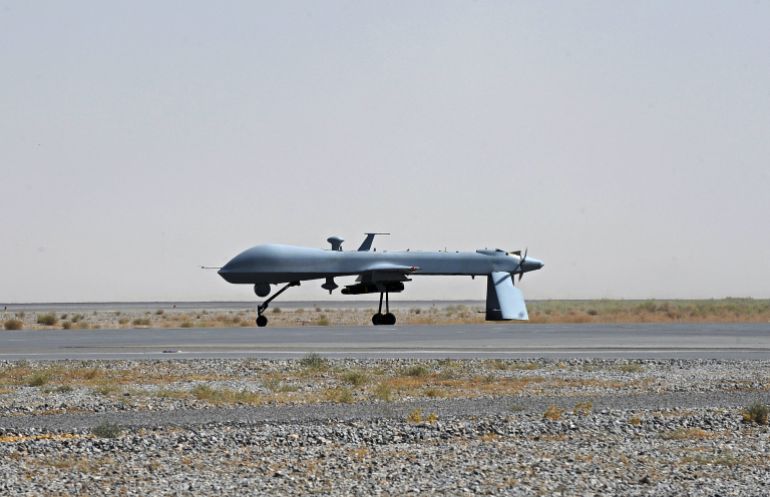
Mogadishu, Somalia – Ending the United States’ “forever wars” was a major slogan of Donald Trump’s 2024 election campaign, during which he and many of his supporters spoke out against American resources and lives being put to waste in conflicts across the globe. But on February 1, a mere 10 days after being inaugurated for a second time, President Trump announced that the US had carried out air strikes targeting senior leadership of ISIL (ISIS) in Somalia. “These killers, who we found hiding in caves, threatened the United States,” his post on X read. This marked Trump’s first military action overseas, but it wouldn’t be his last. In the time since, the US has provided weapons and support to Israel in its wars in Gaza and across the Middle East; it has launched strikes on Yemen; and even attacked Iran’s nuclear facilities. At the same time, in the Horn of Africa, US strikes have more than “doubled” since last year, according to US Africa Command (AFRICOM). AFRICOM, which oversees US military operations on the continent, has carried out at least 43 air strikes in Somalia in 2025, according to think tank New America, which tracks strikes using AFRICOM data. More than half of those, which are conducted in coordination with Somalia’s federal government, targeted IS-Somalia, the ISIL affiliate in northeast Puntland state, while the remainder targeted al-Shabab. The uptick in US air strikes targeting IS-Somalia appears to be linked to growing concerns that the group has become a hub for regional and global ISIL affiliates in terms of financing and attacks, according to US officials. Advertisement At the same time, experts also note the recent worrying gains being made by al-Shabab in Somalia. But why is this a war the “Make America Great Again” Trump administration has an increasing hand in – especially given that decades of US policy in Somalia have been marred by controversy, disaster and failure? A June 2010 file photo shows a US Predator unmanned drone armed with a missile that has been used against targets from Afghanistan to Somalia [File: Massoud Hossaini/AP Photo] American intervention in Somalia: A failure since the start? “Ever since Black Hawk Down, Somalia was a no-go zone for the US,” said Abukar Arman, a Somali analyst and former special envoy to the US, referring to the failed 1993 US military intervention in Somalia during which 18 US troops and thousands of Somali civilians were killed. “That changed after 9/11 when Somalia became one of the key theatres of so-called GWOT [global war on terror]. That political facade has three objectives: It justifies US sustained lethal drone attacks in the public psyche; it enables the US to guard its geopolitical interests in the Horn of Africa; [and] it enables American predatory capitalists to engage in economic exploitation,” Arman told Al Jazeera. In 2007, Somalia became the first country on the African continent to fall victim to a US air strike in the post 9/11 era as part of its so-called “war on terror”. In the decades that followed, US aerial bombardment of the country has not only persisted but intensified. During the combined 16 years under former presidents George W Bush and Barack Obama, there were more than 50 US air strikes on Somalia, while Trump’s first term alone saw a staggering 219 strikes, according to New America. With dozens more strikes just five months into his second term, analysts say if it continues at this rate, Trump is sure to surpass the 51 strikes the Biden administration conducted during its entire four years in office. Jethro Norman, a senior researcher with the Danish Institute for International Studies, suggests that in Somalia, Trump has made an ideal stage on which to remotely project US power capabilities – as it combines high firepower, low oversight and little US domestic political risk. “By loosening Obama-era restrictions, he enabled a surge in preemptive strikes with minimal vetting or accountability. The logic wasn’t just strategic; it was theatrical: a way to perform toughness, signal contrast with previous administrations, and claim counterterrorism ‘wins’ without entanglement,” Norman told Al Jazeera. Advertisement “So, what you see now is a spike in drone activity, but without any corresponding investment in long-term peacebuilding or governance support,” he explained. Norman also highlighted how infighting within the Trump White House on policy direction in Somalia played a role in the massive uptick in US strikes. “There were also competing camps within his [Trump’s] administration. Some pushed hard for kinetic engagement in Somalia and Yemen, while others argued that counterterrorism was a distraction from great-power rivalry with China. “That policy push and pull [between spectacle and strategy] helps explain why air strikes surged even as Trump talked about ending forever wars,” he said. A man sits beside the wreckages of burned military supply vehicles used by suspected ISIL fighters in Cal Miskaad mountain range in Bari, Puntland region, Somalia, in January 2025 [File: Feisal Omar/Reuters] Al-Shabab gains Some analysts suggest that another reason for the uptick in US strikes could be al-Shabab’s unprecedented counteroffensive this year. In it, the armed group reversed most of the Somali government’s territorial gains and seized dozens of towns and villages in the Middle Shabelle region of the semi-autonomous Hirshabelle state – the home base of President Hassan Sheikh Mohamud. Complicating matters further is that during this counteroffensive, al-Shabab was able to advance on the capital and set up checkpoints on main roads leading in and out of Mogadishu. This shows not only the deep structural weakness within the Somali security forces but also the resilience of the armed group as they inched closer to the seat of power in Mogadishu, experts say. “These [recent US strikes] appear to relate more closely to conditions on the battlefield – and in particular, the perceived threat from an al-Shabab offensive that has reversed some of the gains of prior Somali government offensives,” said David Sterman, the deputy director of the Future Security programme at New America. “There may also be other
How Israel failed in Iran
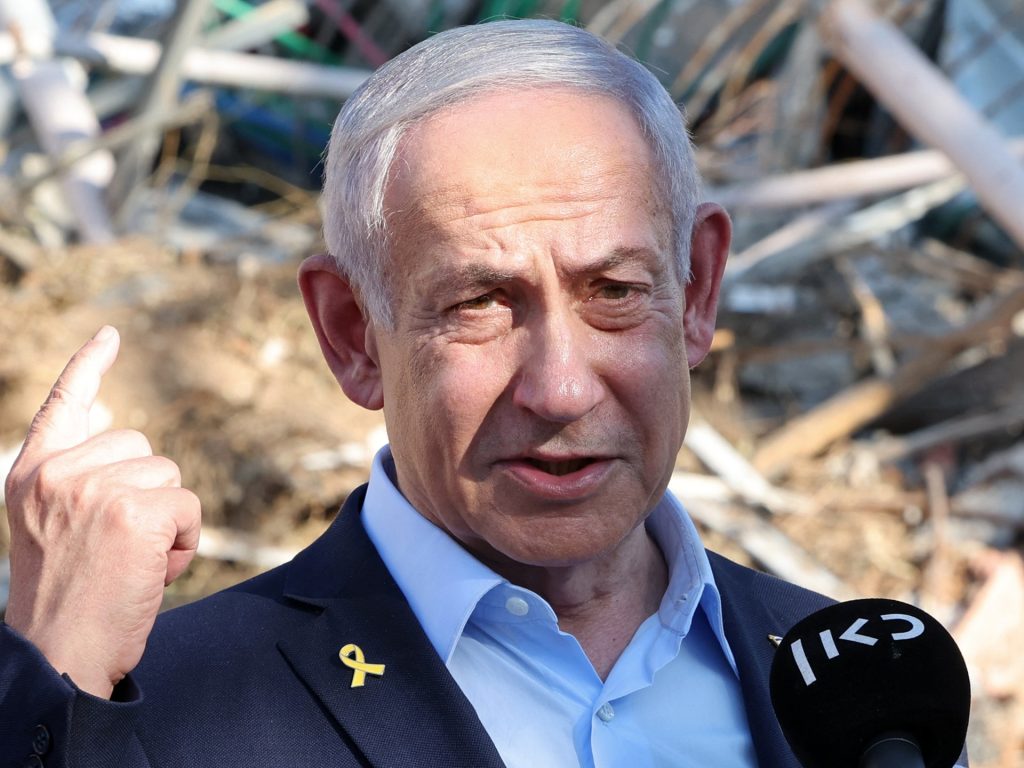
What did Israel accomplish in Iran after 11 days of incessant bombing? Prime Minister Benjamin Netanyahu claimed in his statement acknowledging the ceasefire that the Israeli goals have been achieved. Such an assertion seems problematic, to say the least. At the start of the short-lived war, he declared two goals: “decapitating the nuclear programme” and “regime change”. Was the nuclear programme decapitated? The answer is likely negative. It seems that Iran transported fissionable material out of the Fordow facility attacked by the United States. This stockpile is the most important part of the nuclear programme, so “decapitation” seems to have failed. What damage, if any, did Israel inflict on the Iranian nuclear programme? That is also unclear. Israel managed to persuade the US to attack Iranian nuclear facilities using bunker-busting bombs, Massive Ordnance Penetrators (MOPs), but the US did little else to help the Israeli offensive. The extent of destruction would be hard to evaluate since Iran is unlikely to grant outside access. Has Israel generated “regime change” in Iran? The brief answer is that it has very much achieved the opposite. Israel attempted to trigger an uprising against the regime by killing military leaders of Iran’s various security structures. This strategy is based on the firm Israeli belief that the best way to destabilise an enemy is through assassinations of senior leaders. This has never worked. The only possible exception was the effect Hassan Nasrallah’s death had on Hezbollah in Lebanon, but that had a great deal to do with internal Lebanese political dynamics. In all other cases, Israeli assassinations have failed to create any major political change. Advertisement In the case of Iran, the assassinations rallied the people around the government. Israel assassinated the senior commanders of the Iranian Revolutionary Guard Corps (IRGC), perhaps the most powerful element in current Iranian politics, but also one of the most hated by the Iranian public. Regardless, many Iranians who consider themselves staunch opponents of the Islamic Republic and especially of the IRGC found themselves supporting it. Iranians saw Iran in its entirety under attack and not just “the regime”. Israel’s attempts to bomb “regime symbols” only made the situation worse. It attempted to spin its air strikes on Evin Prison, infamous for the torture of political prisoners, as a contribution to the struggle of the Iranian people against the repression of the Islamic Republic. But Israel’s bombs effectively worsened the situation of the prisoners, as the authorities moved many of them to unknown locations. Bombing the “Israel doomsday clock”, which Israelis often employ as a demonstration of Iran’s commitment to Israel’s destruction, was simply pathetic. Israel’s bombing of the Iranian state broadcaster IRIB was also absurd. Israel claimed it was curtailing the regime’s attempt to spread propaganda. As many Israelis pointed out, this bombing gave the Iranians the vindication they needed to threaten Israeli television stations as well. If Israel did not manage to achieve its stated war goals, did it at least manage to rally the world behind it, to make the public forget about Gaza and recast Israel again as fighting the good fight? That seems dubitable at best. True, President Donald Trump and the US did strike Iranian nuclear facilities. By doing so, they violated several major rules of international law. This is likely to have long-term implications. However, Trump did not join the war alongside Israel. Immediately after the strike, the strategic bombers returned to the US. Before and after carrying out the bombing, Trump iterated and reiterated his desire for a deal between the US and Iran, one that may also include Israel. It seems likely that the US president assisted Israel to serve his own interests as well as those of his allies in the Gulf. While several world leaders, most notably German Chancellor Friedrich Merz, were quick to support the US strikes and “Israel’s right to defend itself”, no one adopted Israel’s stringent list of demands, which included that Iran should not be able to enrich uranium at all. The world returned to the formula of “no nuclear weapon”, with which Iran had already announced it was willing to comply. Advertisement When it comes to the operational development of the Middle East, the world appears to find Iran a legitimate partner for doing business. This is a loss for Israel and a victory for Iran. The very real damage to the Israeli heartland should also be considered. Israel achieved aerial dominance over Iran very quickly and struck almost at will. Iranian missiles, however, repeatedly managed to penetrate the famed Israeli air defence system, strike at the heart of Israel and across the entire country, and bring it to a standstill while inflicting an unprecedented number of casualties as well as massive destruction. Israel was running low on interceptor missiles without hopes of immediate replenishment. The Israeli economy was quickly grinding to a halt. This was another triumph for Iran. Iran emerged from the war bruised and bombed, suffering hundreds of casualties and real damage from incessant bombing around the country. But the Islamic Republic did not crumble, even when facing a massive Israeli force. Iranian missiles hit home, Iran’s image was not tarnished (it was seen by most of the world as a victim of an Israeli attack), and Iran’s options for response were not severely constrained. Iran successfully de-escalated by warning in advance about its “retaliation” for the US strike on its military base in Qatar. Iran was powerful enough to convince Trump to warn Israel not to attack after the ceasefire appeared to have been violated. Iran emerged as it prefers to emerge – still standing, and with potential for the future. The views expressed in this article are the author’s own and do not necessarily reflect Al Jazeera’s editorial stance. Adblock test (Why?)
Trump delivers angry outburst at Israel-Iran ceasefire breaches
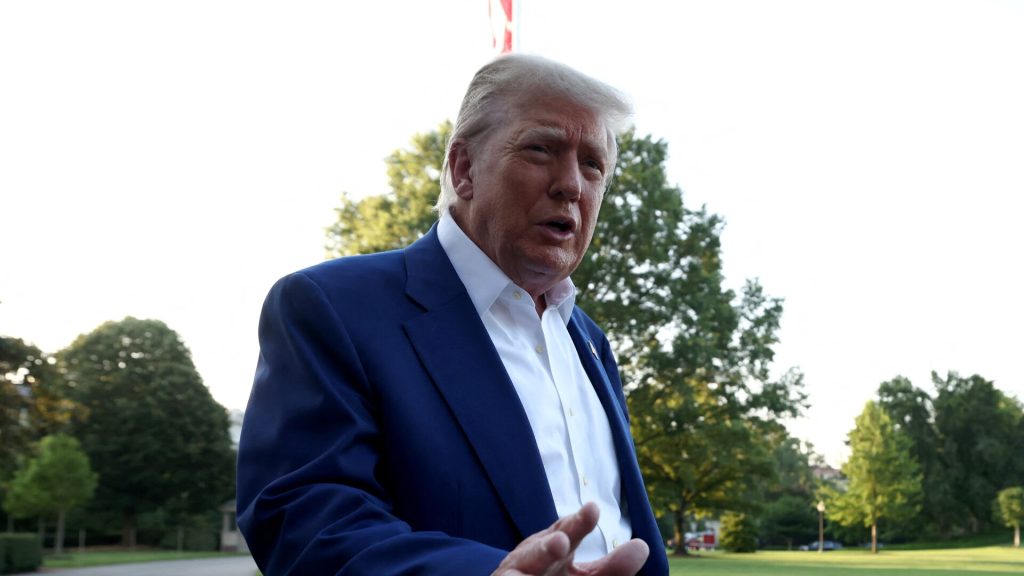
NewsFeed “They don’t know what the f*** they’re doing.” US President Donald Trump delivered an extraordinary four-letter outburst as he criticised breaches of the Israel-Iran ceasefire. Trump aimed the bulk of his anger at Israel, saying he would try to avert further planned attacks. Published On 24 Jun 202524 Jun 2025 Adblock test (Why?)
What’s with Iran’s Death to America chant?
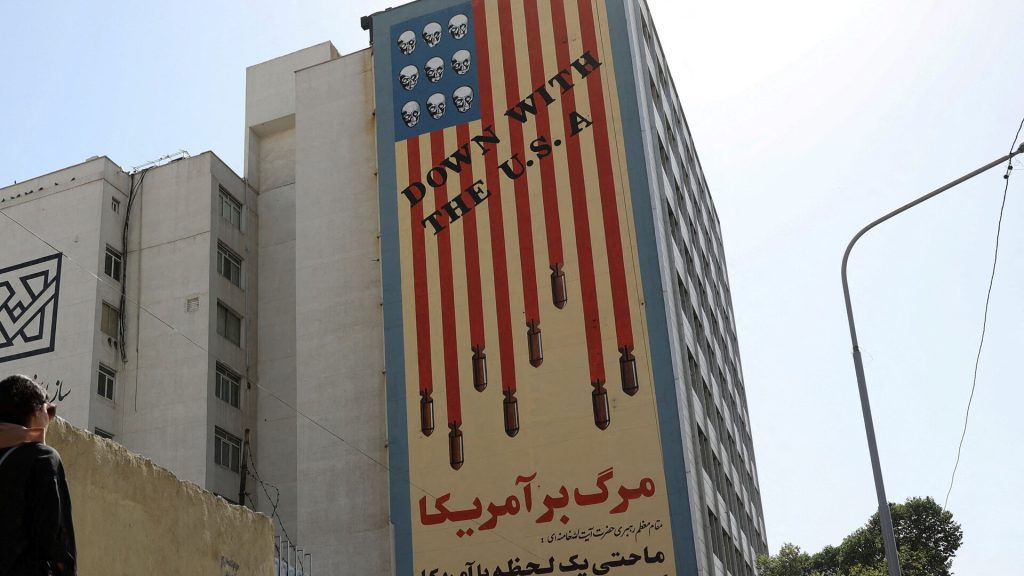
NewsFeed Donald Trump has painted Iran as a hateful nation, saying people even chant ‘death to America’. But are Iranians really lusting for American tragedy, or does it mean something else? Soraya Lennie breaks it down. Published On 24 Jun 202524 Jun 2025 Adblock test (Why?)