

Trump says Fed Chair Powell’s exit ‘can’t come soon enough’
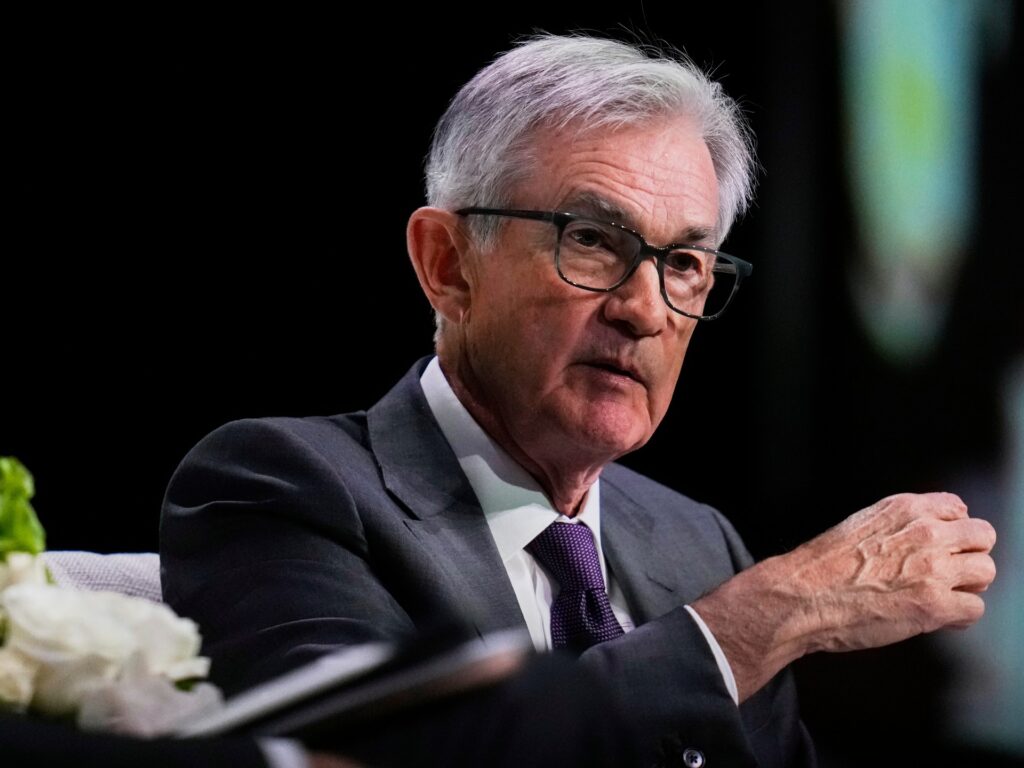
United States President Donald Trump has hinted at firing Federal Reserve chairman Jerome Powell amid the president’s frustration that the central bank will not aggressively cut interest rates. On Thursday, Trump said that Powell’s “termination cannot come fast enough”. Powell’s term does not expire until May 2026. The president does not have the authority to remove Powell from the central bank. Trump’s attacks on Powell come after the Fed chair’s speech at the Economic Club of Chicago on Wednesday. Powell said the Fed would base its decisions solely on what is best for all Americans. “That’s the only thing we’re ever going to do,” Powell said. “We’re never going to be influenced by any political pressure. People can say whatever they want. That’s fine, that’s not a problem. But we will do what we do strictly without consideration of political or any other extraneous factors. “Our independence is a matter of law,” Powell continued. “We’re not removable except for cause. We serve very long terms, seemingly endless terms.” Advertisement The Republican president’s broadside comes a day after Powell signalled that the Fed would keep its key interest rate unchanged, while it seeks “greater clarity” on the effect of policy changes in areas such as immigration, taxation, regulation and tariffs. Powell also reiterated that Trump’s tariffs would likely raise inflation and slow the economy, which could make it harder for the Fed to cut rates anytime soon. The Fed chair suggested that the central bank would focus on fighting inflation in the wake of the tariffs, even if the duties did weaken the economy. Powell’s comments contributed to a drop in stock prices on Wednesday. Trump pushes back Pushing back on Powell, Trump in a social media post said, “Oil prices are down, groceries (even eggs!) are down, and the USA is getting RICH ON TARIFFS.” On the contrary, oil prices have risen 2 percent in the last two weeks. Grocery prices have actually increased under Trump, according to the most recent consumer price index report in April, and egg prices hit record highs last month as per the same report. Last week, the president falsely claimed the US brought in $2bn a day thanks to tariffs – it was $200m a day. Referring to the European Central Bank (ECB), Trump added that Powell “should have lowered Interest Rates, like the ECB, long ago, but he should certainly lower them now. Powell’s termination cannot come fast enough!” The ECB on Thursday lowered its key interest rate from 2.5 percent to 2.25 percent. Powell was initially nominated by Trump in 2017 and was appointed to another four-year term by former President Joe Biden in 2022. At a November news conference, Powell indicated he would not step down if Trump asked him to resign, pointing out that removal or demotion of top Fed officials was “not permitted under the law”. Advertisement Trump’s comments come with the backdrop of a legal case at the Supreme Court that could determine whether presidents can fire the heads of independent agencies such as the Fed. The case stems from Trump’s firings of officials from two independent agencies. The Supreme Court last week let the firings stand while it considers the case. It could issue a broader ruling this summer that would enable the president to fire Fed officials, including the chair. Powell said the Fed is watching the case closely, adding it might not apply to the Fed. Lawyers for the Trump administration have argued that allowing the president to fire the two officials wouldn’t erode the Fed’s independence. “It is difficult to overstate the consequences at this stressed moment of a Court ruling that found that President Trump … does have the authority to dismiss the heads of independent agencies and did not establish a clear carve-out for the Fed,” Krishna Guha, an analyst at investment bank Evercore ISI, wrote on Thursday. “If you liked the tariff debacle in markets, you’d love the loss-of-Fed-independence trade.” Tariff mayhem Powell started Trump’s second term in a relatively secure spot with a low unemployment rate and inflation progressing closer to the Fed’s 2 percent target, conditions that could have spared the US central banker from the president’s vitriol. But Trump’s aggressive and haphazard tariffs have raised the threat of a recession with both higher inflationary pressures and slower growth, a tough spot for Powell, whose mandate is to stabilise prices and maximise employment. With the economy weakening because of Trump’s choices, the president appears to be looking to pin the blame on Powell. Advertisement Trump has unleashed a rash of tariffs that have put the US economy and the Fed in an increasingly perilous spot. On April 2, the president rolled out aggressive tariff hikes based on US trade deficits with other nations, causing a financial market backlash that almost immediately led him to announce a 90-day pause in which most countries would be charged a baseline 10 percent tariff while negotiations go forward. But Trump increased his tariff hikes on China to a rate of 145 percent in addition to his existing tariffs on Canada, Mexico, autos and steel and aluminium. Wall Street banks such as Goldman Sachs have raised their odds that a recession could start. Consumers are increasingly pessimistic in surveys about their job prospects and fearful that inflation would shoot up as the cost of the import taxes get passed along to them. The risk of stagflation – stagnant growth and high inflation – would make it harder for the Fed to respond with the same playbook as recent downturns. The Budget Lab at Yale University estimated that the increased inflationary pressures from the tariffs would be equal to the loss of $4,900 in an average US household. Adblock test (Why?)
Haiti in ‘free fall’ as violence escalates, rights group warns
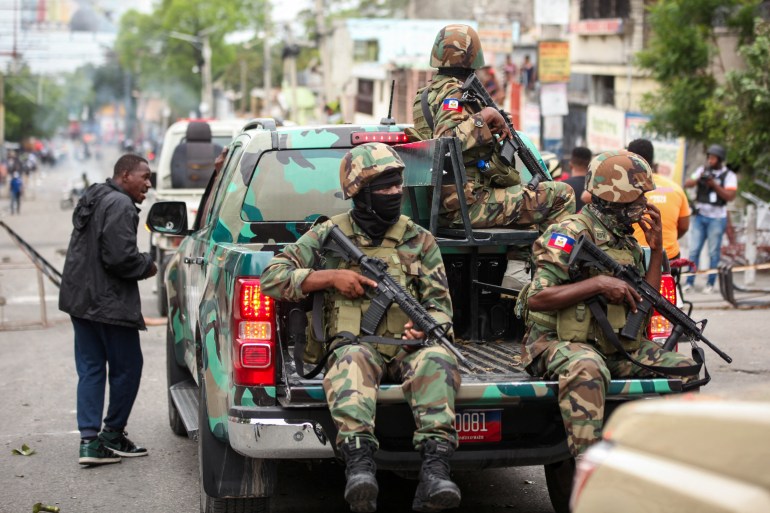
The security situation in Haiti is in “free fall”, Human Rights Watch (HRW) has warned, as armed groups continue to unleash deadly violence in the capital and other areas across the Caribbean nation. In a statement on Thursday, HRW said criminal gangs have escalated their attacks in Port-au-Prince since late last year, and only 10 percent of the city remains under government control. “Haiti’s security situation is in a free fall and Haitians are suffering horrific abuses,” said Nathalye Cotrino, the rights group’s senior Americas researcher. The country has reeled from years of violence as powerful armed groups, often with ties to the country’s political and business leaders, have vied for influence and control of territory. But the situation worsened dramatically after the July 2021 assassination of Haitian President Jovenel Moise, which created a power vacuum. Haitian security forces patrol during a protest against insecurity in Port-au-Prince on April 16, 2025 [Fildor Pq Egeder/Reuters] In 2024, the gangs launched attacks on prisons and other state institutions across Port-au-Prince, fuelling a renewed political crisis. Advertisement The campaign of violence led to the resignation of Haiti’s unelected prime minister, the creation of a transitional presidential council, and the deployment of a United Nations-backed, multinational police mission. That Kenya-led police force – formally known as the Multinational Security Support Mission (MSS) – has failed to take control back from the gangs, however. Observers say the mission has been underfunded and ill-equipped. Recently, so-called “self-defence” groups have formed in response to the armed gangs, leading to more deadly violence. Protests have also broken out in Port-au-Prince against the country’s transitional presidential council, which has been unable to restore security. On April 7, the authorities declared a new, one-month state of emergency amid the violence. “Declaring emergencies without equipping police with necessary resources, like effective armored vehicles, will not solve the insecurity crisis,” the National Human Rights Defense Network, a leading Haitian rights group, said in a recent report. “The absence of state response has turned the police into firefighters—constantly reacting without strategic direction—while towns fall one after another,” the group said. People walk past a burning barricade during a protest against insecurity in Port-au-Prince on April 16, 2025 [Fildor Pq Egeder/Reuters] ‘Why is no one helping us?’ According to UN figures, at least 1,518 people were killed and another 572 were injured between January 1 and March 27 in gang attacks, security force operations, and acts of violence committed by the “self-defence” groups and others. Advertisement Speaking to HRW, an aid worker in Haiti said people “no longer have a safe place” to go. “Women … seeking help have not only lost loved ones, but have also been raped, displaced and left on the streets, starving and struggling to survive. We don’t know how much longer they can endure such suffering,” the aid worker said. “All [victims] ask is for the violence to stop. With no support from the police or government, they feel abandoned. They ask, ‘Why is no one helping us? Why do Haitian lives not matter if we are human too?’” The UN also says more than 1 million Haitians have been displaced by the violence, while half of the country – some 5.5 million people – face acute food insecurity. In early April, Save the Children reported that more than 40,000 children were among those displaced in the first three months of 2025. “Children in Haiti are trapped in a nightmare,” the group’s Haiti country director, Chantal Sylvie Imbeault, said in a statement. “They are living in deadly areas controlled by armed groups, being robbed of a normal childhood, and at constant risk of recruitment—while humanitarian aid struggles to reach them,” she said. “As displacement continues to soar, shelters are becoming completely overcrowded, leaving children vulnerable to disease, exploitation, and sexual violence.” Adblock test (Why?)
Israel’s water war
[unable to retrieve full-text content] Pinch Point looks at how Israel uses water as a strategic aim and a weapon of war.
Could Trump invoke Insurrection Act – and what powers would that give him?
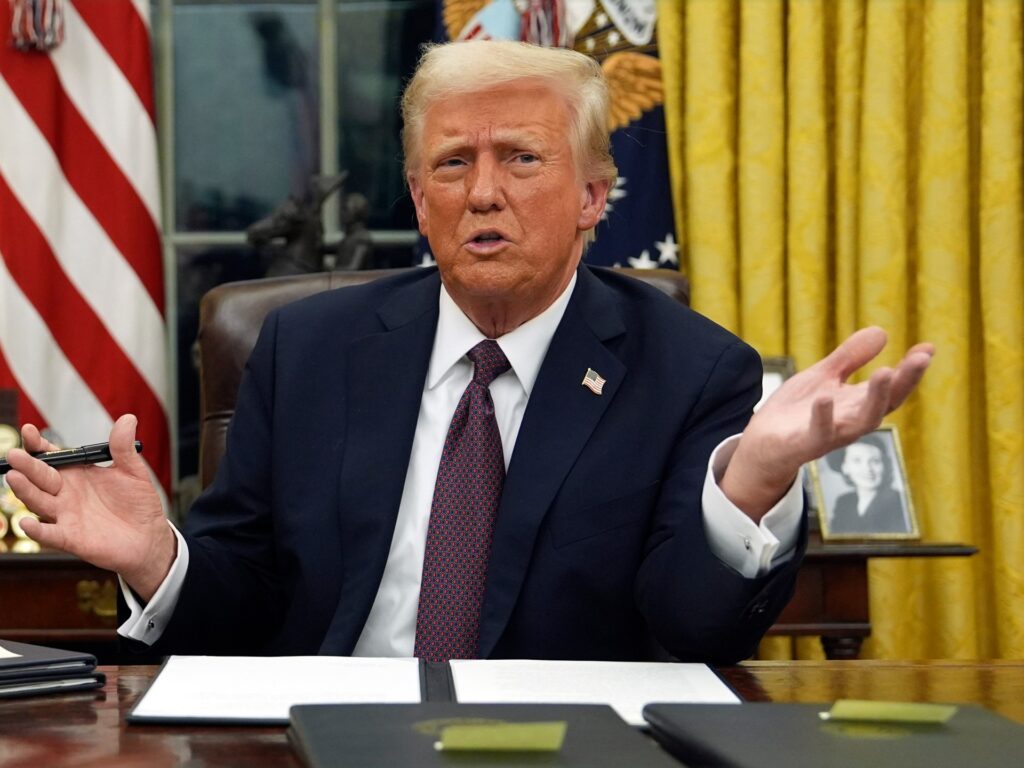
Social media posts have warned for more than a month that President Donald Trump would declare martial law on April 20, which typically means suspending civil law while the military takes control of civilian functions such as courts. But many of the posts appeared to conflate martial law with the potential invocation of the Insurrection Act of 1807, which was mentioned in a recent executive order. “I just learned about this executive order (section 6-b) which says Trump will invoke the Insurrection Act of 1807 on April 20th which will (amount) to declaring martial law,” a Reddit user posted on March 19. “That’s the end of the USA.” The narrative spread beyond Reddit to Facebook posts and videos shared on TikTok, X and Threads. Trump’s January 20 executive order declared a national emergency at the US southern border and required the defence and homeland security secretaries to submit a report on border conditions within 90 days. The report should include “any recommendations regarding additional actions that may be necessary to obtain complete operational control of the southern border, including whether to invoke the Insurrection Act of 1807”, the executive order said. Advertisement April 20 is the 90-day deadline. Invoking the Insurrection Act would allow Trump to direct federal military personnel to enforce federal law at the US southern border. But legal experts told PolitiFact it would not amount to martial law. They said they do not see a clear path for Trump to lawfully implement martial law in the way it’s commonly understood. Trump, on his part, has not publicly discussed martial law. In a statement to PolitiFact, the Defense Department said the agency is working with the Homeland Security Department to develop the requested report on the southern border conditions. PolitiFact contacted the Homeland Security Department and the White House and received no response. What would the Insurrection Act invocation allow? Invoking the Insurrection Act temporarily suspends another US law that forbids federal troops from conducting civilian law enforcement. A president can invoke the law after determining that “unlawful obstructions, combinations, or assemblages, or rebellion” against the federal government make it “impracticable to enforce” US law “by the ordinary course of judicial proceedings”. In those cases, the Insurrection Act would allow the president to direct federal troops “as he considers necessary to enforce those laws or to suppress the rebellion”. The Insurrection Act is broadly written and does not define terms such as “insurrection” or “rebellion”. In 1827, the US Supreme Court ruled that the authority to decide whether a situation represents an acceptable reason to invoke the Insurrection Act “belongs exclusively to the President”. Advertisement Chris Edelson, an American University assistant professor of government, said the law provides a “limited authority for the president to use the military to respond to genuine emergencies – a breakdown in regular operational law when things are really falling apart”. The act was invoked when southern governors refused to integrate schools and during the 1992 Los Angeles riots, after four white police officers were acquitted in the roadside beating of a Black man, Rodney King. Experts expressed doubt that the situation at the US southern border constitutes a breakdown or obstruction of federal law that would necessitate the use of the Insurrection Act the way the law was intended. Tung Yin, a Lewis and Clark Law School professor, said it’s hard to see how immigrants coming into the country illegally were obstructing state or federal laws. Obstruction is “more like an invading army or maybe such severe riots that the government has lost control”, he said. Martial law, on the other hand, typically refers to imposing military law on civilians. Edelson said the Insurrection Act “does not allow the president to completely replace regular authorities with military authority”. Chris Mirasola, University of Houston Law Center assistant professor, said military law is more stringent and has fewer protections for people than civilian law. US constitutional protections would not disappear if the Insurrection Act were invoked, Mirasola said. Yin said that when a president uses the Insurrection Act to call on the military to enforce civilian law, “that might seem like ‘martial law’ to a layperson. But it’s not a military government, which might be what people generally think of.” Advertisement Can Trump impose martial law at the southern border? In a 1946 ruling, the US Supreme Court wrote that the term martial law “carries no precise meaning” and said it wasn’t defined in the Constitution or an act of Congress. Edelson said because of this, “At the federal level, it’s not clear that presidents can declare martial law at all.” Mirasola said some other countries’ constitutions include provisions that outline when a president can declare martial law, but the US Constitution lacks such detail. Still, martial law has been declared before. The US imposed martial law in Hawaii for three years after the 1941 Japanese attack on Pearl Harbor. President Abraham Lincoln also declared martial law in certain parts of the US during the Civil War. President Andrew Johnson restored civilian law. At that time, the Supreme Court “more or less found that martial law could only be declared in an active war zone”, Mirasola said, citing an 1866 Supreme Court ruling that held that martial law cannot be imposed unless civilian courts aren’t open and functioning. For that reason, Mirasola said he could see no legal or constitutional basis for Trump to declare martial law to control the southern border, which “is not an area of active hostilities, notwithstanding how the administration continues to talk about the actions of cartels”. “The circumstances within which presidents have invoked martial law and that the Supreme Court has understood martial law are incredibly narrow,” he said. “It would require an active hostility on US territory that prevents civilian legal proceedings from occurring.” Advertisement Experts said Trump’s suggestions about using military powers could be one reason for the martial law speculation: In October, Trump said “radical left lunatics” in the US “should be very easily handled by, if necessary, by National Guard, or if really necessary, by the military”. In June
Russia’s Putin, Qatar’s emir discuss Syria and Gaza at Moscow talks
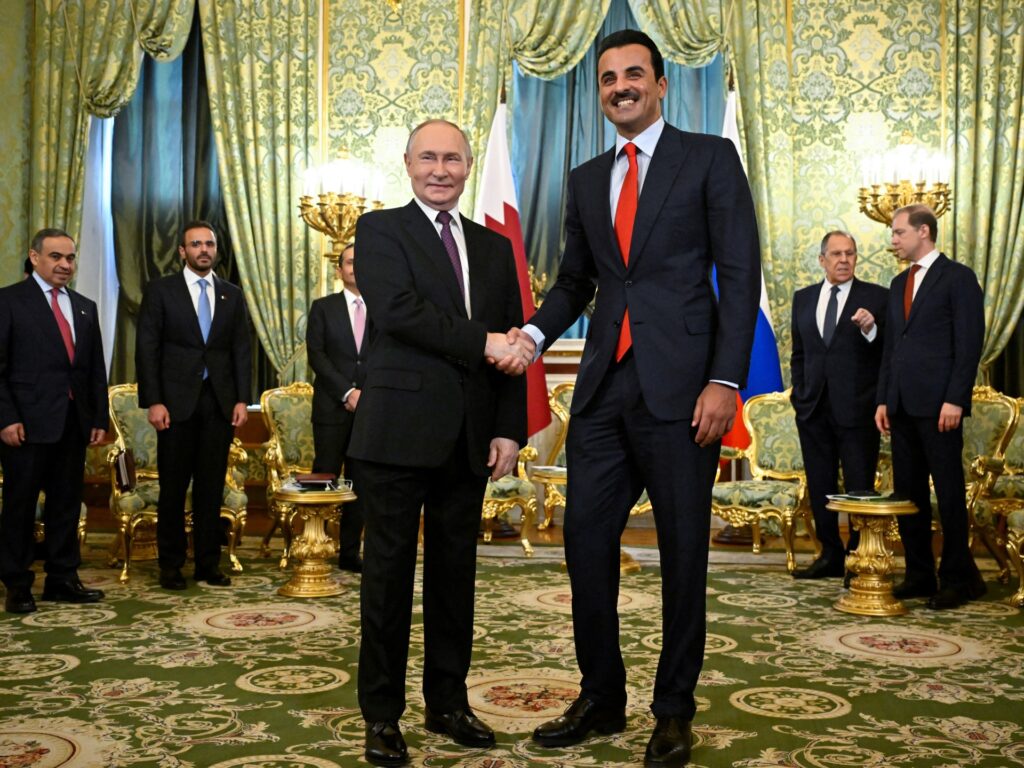
Ahmed al-Sharaa, Syria’s new leader, would like better relations with Moscow, Qatar said. Qatar’s Emir Sheikh Tamim bin Hamad Al Thani has told Russian President Vladimir Putin that Syria’s new leader is keen to build ties with Moscow. At talks in the Russian capital on Thursday, Al Thani assured the Russian leader that interim president Ahmed al-Sharaa was seeking to build relations with Russia, after the removal of former President Bashar al-Assad, who was a close ally of Moscow. “As for Syria, a few days ago President al-Sharaa was in Qatar, and we spoke with him about the historical and strategic relationship between Syria and Russia,” Al Thani told Putin. The talks come as Putin attempts to retain Russia’s use of two military bases in Syria to maintain its influence in the region after al-Assad fled the country in December as opposition fighters led by Ahmed al-Sharaa closed in on the capital. Putin said Syria’s situation, rocked by sectarian violence in recent weeks, was of serious importance. “We would like to do everything to ensure that Syria, firstly, remains a sovereign, independent and territorially integral state, and we would like to discuss with you the possibility of providing assistance to the Syrian people, including humanitarian assistance,” the Kremlin leader told the emir. Advertisement The two men also discussed the situation in Gaza, where Qatar played a key role in brokering a January ceasefire deal between Israel and Hamas for a three-phase ceasefire. Israel restarted its offensive in the besieged enclave in March, and talks to try to restore the ceasefire have so far failed to achieve a breakthrough. “We reached an agreement regarding Gaza a few months back, but Israel has not adhered to the agreement,” Al Thani said. “Qatar, in its role as a mediator, will strive to bridge differing perspectives in an effort to reach an agreement to end the suffering of the Palestinian people.” Putin told the emir, “We know that Qatar is making very serious efforts to resolve the Israeli-Palestinian conflict. Unfortunately, the initiatives put forward, including by you, have not been implemented. Peaceful people continue to die in Palestine, which is an absolute tragedy of today.” Interfax quoted Kremlin spokesperson Dmitry Peskov as saying there was no substantive discussion of the war in Ukraine, but Putin expressed thanks for Qatar’s involvement in arranging the return of children from both countries who were separated from their parents during the war. Adblock test (Why?)
Vietnam: 50 Years of Forgetting

The granddaughter of a Vietnamese hero explores the enduring legacy of the Vietnam War on her family and country. The 50-minute documentary 50 Years of Forgetting explores the enduring impact of the Vietnam War on the lives of contemporary Vietnamese. Prompted by a letter from an American veteran, filmmaker Mai Huyen Chi embarks on a personal and national investigation. Chi’s quest begins by unravelling the story of her war hero grandfather who fought for the winning North, a figure shrouded in family silence. As that soon meets its dissatisfying end, she embarks on a journey across Vietnam and meets people whose lives were shaped by some of the most traumatic events of the war: the Battle of Hue in 1968, the Christmas bombing in 1972 and the fall of Saigon in 1975. Their experiences, filled with both resilience and loss, force Chi to confront her own family’s buried truths. She discovers the story of her aunt married to a pilot on the losing Southern side who fled, highlighting the war’s fracturing impact on Vietnamese families across generations. The exploration becomes deeply personal. Chi confronts a harsh reality: Her own cousin suffers from the debilitating effects of Agent Orange, a cruel consequence of the war that continues to inflict pain on countless Vietnamese. By weaving these diverse narratives together, 50 Years of Forgetting transcends the Vietnam War to explore universal themes of conflict and its enduring legacies. Will past lessons be forgotten? Can Vietnam build a collective memory that honours the sacrifices of millions of people when those who endured years of brutality during the Vietnam War are trying so hard to forget? Advertisement Adblock test (Why?)
Israel kills children in attacks on tents including Gaza’s “safe zone”
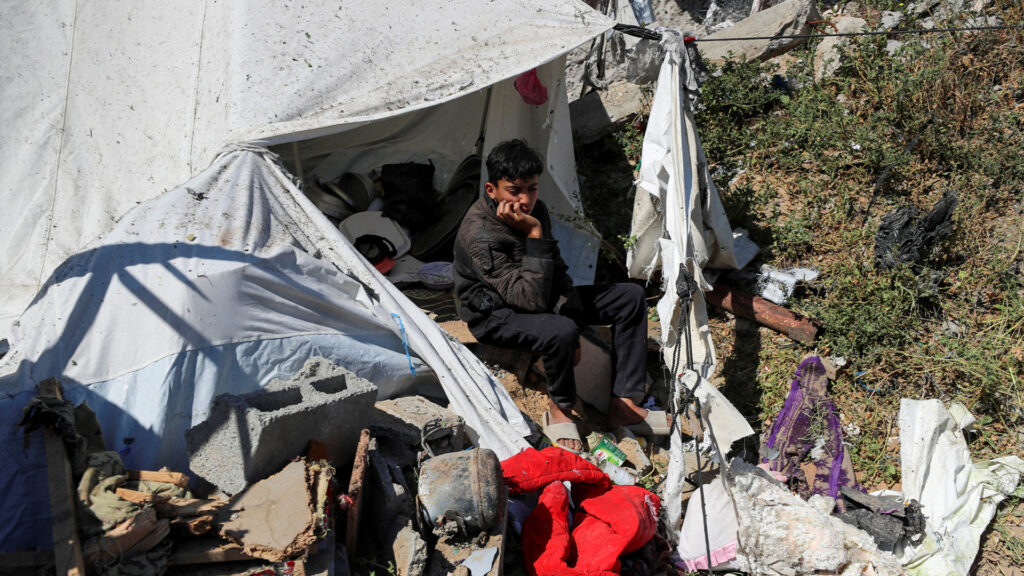
NewsFeed Israeli air attacks on tents in Gaza have killed at least 35 Palestinians in the past 24 hours. A strike on a camp sheltering forcibly displaced Palestinians in the al-Mawasi ‘safe zone’ burned several people alive. Published On 17 Apr 202517 Apr 2025 Adblock test (Why?)
Video: Easter overshadowed by war for Christians in Palestine
[unable to retrieve full-text content] Palestinian Christians in the occupied West Bank and Gaza find little joy beset by war and conflict.
Russia-Ukraine war: List of key events, day 1,148
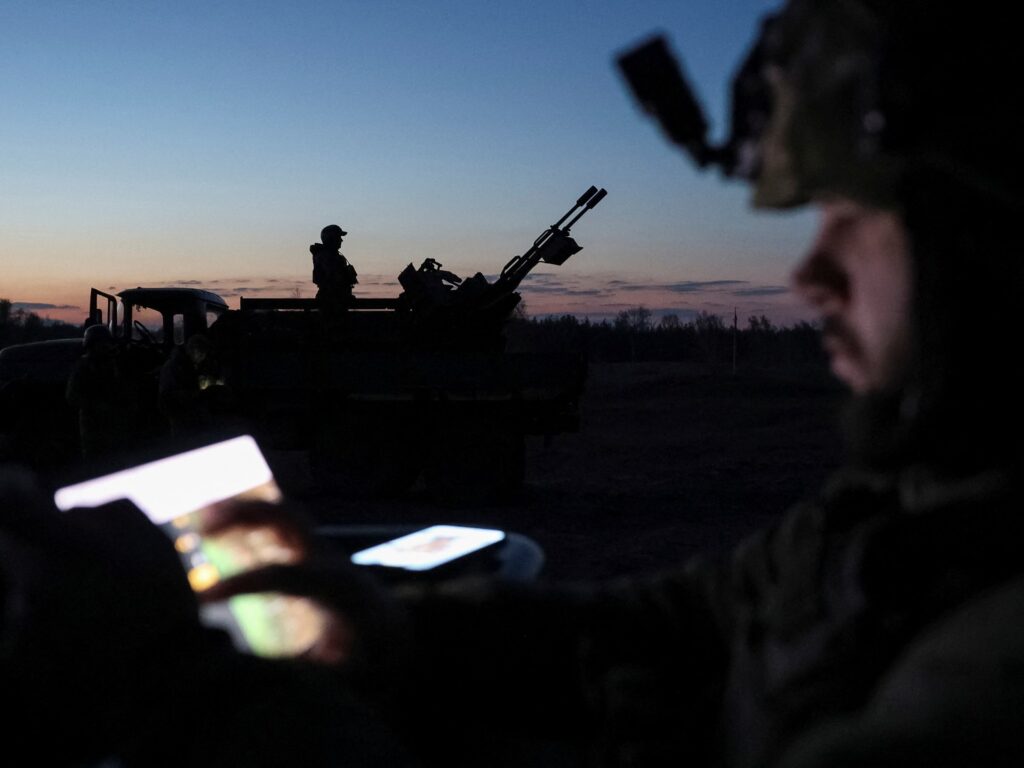
These are the key events on day 1,148 of Russia’s war on Ukraine. Here is where things stand on Thursday, 17 April: Fighting A Russian drone attack on the Black Sea port city of Odesa overnight injured three people, sparked fires and damaged homes and civilian infrastructure, regional governor Oleh Kiper said. Russia’s Ministry of Defence said its units destroyed 26 Ukrainian drones overnight. Nine of the drones were shot down over the southern Voronezh region, while eight were taken down over the border region of Belgorod. The remaining drones were downed over the Kursk, Lipetsk and Moscow regions, as well as over the Russian-annexed Crimean peninsula, the ministry said. The Defence Ministry also said Russia has taken control of Kalynove village in Ukraine’s eastern Donetsk region. Moscow’s military further reported that it repelled seven Ukrainian drones over Russia’s Ivanovo region, the location of one of two Russian missile units that Kyiv accuses of launching a deadly attack on the city of Sumy which caused dozens of casualties last weekend. Kyiv’s air force said Russia launched almost 100 drones in overnight attacks on Ukraine, of which 57 were shot down and another 34 failed to reach their targets, likely due to electronic warfare measures. Advertisement Russian glide bombs and artillery struck the city of Kherson in southern Ukraine on Wednesday, killing one person and wounding nine others, in what Ukrainian officials described as a timed “double-tap strike”. The region’s head, Oleksandr Prokudin, said it was a “deliberate tactic by Russia” to prevent rescuing victims and to harm medics, rescuers and police officers who rushed to the scene of the first attack only to then be caught in the second strike. A Russian mass drone attack killed two people and injured 16 in the southeastern Ukrainian city of Dnipro, regional governor Serhiy Lysak said. Five of the injured were hospitalised. The Security Service of Ukraine (SBU) said it detained nine people, including five teenagers, with more than 30kg (66 pounds) of explosives on suspicion of preparing sabotage attacks on behalf of Russia. Attacks on energy facilities Russia’s Defence Ministry said Ukraine carried out six attacks on Kremlin energy infrastructure despite a mutually agreed 30-day moratorium on energy strikes. Ukraine’s Ministry of Foreign Affairs spokesperson, Heorhii Tykhyi, told a news briefing that Russia carried out more than 30 attacks on its energy infrastructure since the two sides agreed in March to pause strikes on such targets. Kremlin spokesperson Dmitry Peskov said Russia would announce when the US-brokered moratorium on energy strikes would end. Politics and diplomacy United States President Donald Trump’s administration has reduced its estimate for the cost of US assistance provided to Kyiv since the start of Russia’s invasion to about $100bn from $300bn, Bloomberg news reports, citing people familiar with the matter. The US and Ukraine have made “substantial progress” in their talks on a minerals deal and will soon sign a memorandum, which would give Washington access to Ukraine’s rare earth deposits, Kyiv’s first deputy prime minister Yulia Svyrydenko said. Advertisement Kyiv’s parliament voted to extend martial law in Ukraine until 6 August. The decision was supported by an overwhelming 357 deputies, while one politician voted against the bill. Russian President Vladimir Putin and Qatar’s Emir Sheikh Tamim bin Hamad Al Thani will discuss Ukraine among other issues during the emir’s visit to Moscow on Thursday, Kremlin spokesman Peskov said. The former governor of Russia’s Kursk region, Alexei Smirnov, was detained on Wednesday on suspicion of fraud, Russian state news agency TASS reported. Adblock test (Why?)
Trump touts ‘progress’ in Japan trade talks, as uncertainty roils stocks
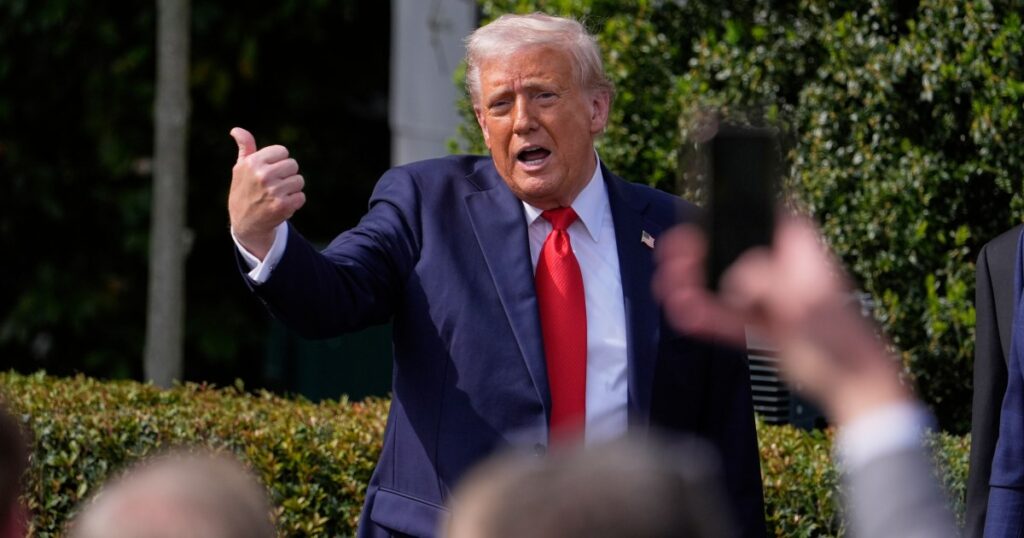
Wall Street closes sharply lower as US Federal Reserve chair warns tariffs could lead to slower growth, higher inflation. United States President Donald Trump has touted “big progress” in trade talks with Japan after making an unexpected intervention in the negotiations, as uncertainty caused by his sweeping tariffs continues to roil stock markets. Trump made his comments on Wednesday after making the surprise decision to sit in on negotiations between his administration and Japanese officials in Washington, DC. “A Great Honor to have just met with the Japanese Delegation on Trade. Big Progress!” Trump wrote on Truth Social after the talks, which included US Treasury Secretary Scott Bessent, US Commerce Secretary Howard Lutnick and Economic Revitalization Minister Ryosei Akazawa. Akazawa said after the meeting that Trump wanted to reach a deal before the end of his 90-day pause on his “reciprocal” tariffs, with the Japanese hoping to see the agreement sealed “as soon as possible.” Japanese Prime Minister Shigeru Ishiba said the negotiations would not be easy, but the initial rounds of talks had “created a foundation for the next steps”. Advertisement Like dozens of other US trade partners, Japan has been hit with a 10 percent baseline tariff in addition to duties of 25 percent on cars, steel and aluminium, which rank among the East Asian country’s top exports. Japan, a top US security ally and its fourth-largest trade partner, is also facing a targeted 24 percent “reciprocal” tariff under Trump’s “liberation day” trade measures, nearly all of which have been paused until July 9. “Japan’s industry is so closely integrated in the US economy that everyone is very concerned about the trade talks,” Martin Schulz, chief policy economist at Fujitsu in Tokyo, told Al Jazeera. “Although there cannot be winners in a trade war, we are also quite optimistic that agreeable results can be achieved. Japan is the largest investor in the US and interested in investing more.” “If both economies can be kept on a growth track, higher imports from the US become possible,” Schulz added. The US-Japanese talks came as Wall Street racked up further heavy losses amid continuing uncertainty over Trump’s trade salvoes. The benchmark S&P 500 closed 2.24 percent lower on Wednesday, while the tech-heavy Nasdaq Composite fell 3.07 percent. The losses followed a warning by US Federal Reserve Chair Jerome Powell that Trump’s steep tariffs could leave the US economy grappling with weak growth, rising unemployment and higher inflation all at once. “We may find ourselves in the challenging scenario in which our dual-mandate goals are in tension,” Powell said in a speech to the Economic Club of Chicago on Wednesday, referring to the US central bank’s twin goals of maximum employment and stable prices. Advertisement “If that were to occur, we would consider how far the economy is from each goal, and the potentially different time horizons over which those respective gaps would be anticipated to close.” US stocks have been on a rollercoaster ride since Trump’s inauguration in January, alternating between sharp dips and big jumps amid his back-and-forth tariff announcements. Financial markets and businesses have been on tenterhooks waiting for signs that the US president is open to watering down or scrapping many of his tariffs in exchange for concessions from US trading partners. Trump administration officials have said that more than 75 countries have reached out to begin negotiations on trade. After the latest losses on Wall Street, the S&P 500 and Nasdaq are down about 10 percent and 15 percent, respectively, since the start of the year. Asian stock markets got off to a better start on Thursday, with Japan’s benchmark Nikkei 225, South Korea’s KOSPI and Hong Kong’s Hang Seng Index each rising more than 0.5 percent in early trading. Adblock test (Why?)