

Durant traded to Houston Rockets for Green, Brooks, picks: Report
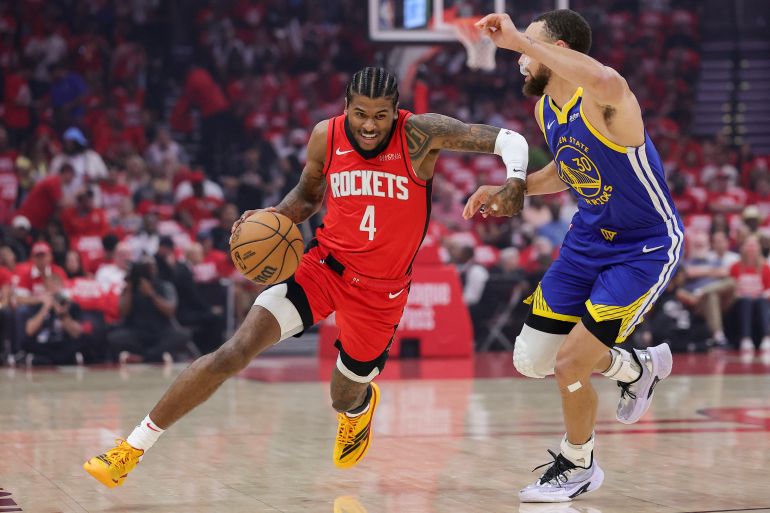
Phoenix Suns All-Star forward Kevin Durant will join his fifth NBA team after being traded to the Houston Rockets. The Houston Rockets are acquiring 15-time All-Star forward Kevin Durant from the Phoenix Suns in exchange for guard Jalen Green and forward Dillon Brooks as well as the number 10 overall pick in the 2025 NBA Draft and five second-round picks, ESPN reported on Sunday. The trade can be completed when the new league year for the US National Basketball Association (NBA) begins on July 6. At that point, Durant will be eligible to sign a two-year extension worth up to $122m. Durant has one season left on his current deal and is set to earn $54.7m in 2025-26. Durant will join a Rockets team that finished the regular season as the second seed in the Western Conference. The star forward will join All-Star Alperen Sengun, Amen Thompson and Fred VanVleet, among others, in Houston. Durant, who turns 37 in September, played in 62 games with the Suns in 2024-25. He averaged 26.6 points, 6.0 rebounds, 4.2 assists and 1.2 blocks, not far off of his career averages. He also shot 43.0 percent from three-point range. Selected to the All-NBA first team six times, Durant has appeared in 1,123 games with the Seattle SuperSonics/Oklahoma City Thunder (2007-16), Golden State Warriors (2016-19), Brooklyn Nets (2020-23) and Suns. He has career averages of 27.2 points, 7.0 rebounds. 4.4 assists and 1.1 blocks, shooting 39 percent from long distance. Green, 23, averaged 21.0 points, 4.6 rebounds and 3.4 assists while starting in all 82 games this season. He now ventures to Phoenix to join All-Star Devin Booker in a potent backcourt. Advertisement He has contributed 20.1 points, 4.3 boards and 3.4 assists in 307 games since being selected by the Rockets with the second overall pick of the 2021 NBA Draft. Brooks, 29, averaged 14.0 points, 3.7 rebounds and 1.7 assists in 75 games this season. He has contributed 14.2 points, 3.2 boards and 2.0 assists in 492 games with the Memphis Grizzlies (2017-23) and Rockets. He was selected by Houston in the second round of the 2017 NBA Draft. Jalen Green of the Houston Rockets, left, is the centrepiece of the trade going back to the Phoenix Suns in the Kevin Durant trade [File: Alex Slitz /Getty Images via AFP] Adblock test (Why?)
Key players tangle at UNSC at ‘perilous turn’ of US-Israel-Iran conflict
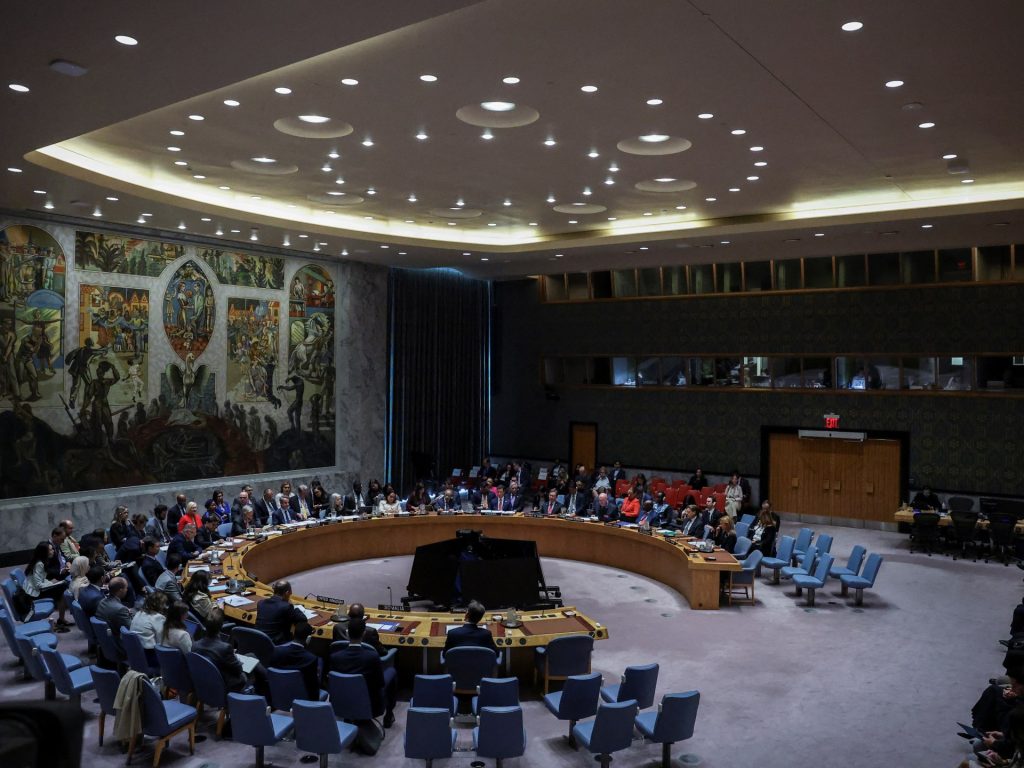
Tensions soar at the UN as Iran and its allies condemn US military actions, while the US and Israel reject censure. The United Nations Security Council (UNSC) has convened an emergency session after the US-led strikes on Iranian nuclear sites, prompting sharp rebukes from several member states and renewed calls for a ceasefire in the Middle East, while allies Israel and the US lauded the attack. Russia, China and Pakistan have proposed a resolution demanding an “immediate and unconditional ceasefire”, according to diplomats familiar with the draft circulated on Sunday. While the proposal does not explicitly name the United States or Israel, it condemns the attacks on Iranian nuclear facilities. A vote has not yet been scheduled. To pass, the resolution requires the backing of at least nine members and no vetoes from the five permanent members – China, France, Russia, the United Kingdom and the US. This makes it a non-starter since the US will not censure itself. Speaking to the UNSC, UN Secretary-General Antonio Guterres warned that the region was standing “on the brink of a deadly downward spiral”. “The bombing of Iranian nuclear facilities by the United States marks a perilous turn in a region that is already reeling,” Guterres said. “We now risk descending into a rathole of retaliation after retaliation. We must act – immediately and decisively – to halt the fighting and return to serious, sustained negotiations on the Iran nuclear programme.” Acting US Ambassador Dorothy Shea defended the military action, saying that Washington had moved to dismantle Iran’s enrichment capacity to protect both US citizens and allies. Advertisement “The time finally came for the United States, in defence of its ally and our own interests, to act decisively,” Shea told the chamber. “Iran should not escalate… Any Iranian attack, direct or indirect, against Americans or American bases will be met with devastating retaliation.” Iran’s ambassador, Ali Bahreini, said the Israeli and US attacks on Iran did not come about “in a vacuum” and were the result of “politically motivated actions” of the US and its European partners. He said the US “decided to destroy diplomacy”. He pointedly made it clear that the Iranian military will decide on the “timing, nature and scale” of its response. Meanwhile, Israel’s UN envoy, Danny Danon, said the attacks had made the world “a safer place”, rejecting calls for condemnation. When asked whether Israel supported regime change in Tehran, he said, “That’s for the Iranian people to decide, not for us.” China’s ambassador, Fu Cong, condemned the US strikes and urged restraint. “We call for an immediate ceasefire,” he said. “China is deeply concerned about the risk of the situation getting out of control.” Russia’s UN envoy, Vasily Nebenzya, described the attacks as yet another sign of Washington’s disregard for global norms. “The US has opened a Pandora’s box,” he said. “No one knows what catastrophe or suffering will follow.” Pakistan’s ambassador, Asim Iftikhar Ahmad, also condemned the US bombing as deeply troubling. “The sharp rise in tensions and violence as a result of Israeli aggression and unlawful actions is profoundly disturbing,” he said. “Pakistan stands in solidarity with the government and brotherly people of Iran during this challenging time.” This comment comes a day after Pakistan suggested that US President Donald Trump be nominated for the Nobel Peace Prize. Trump’s announcement that US forces had “obliterated” Iran’s key nuclear sites marked the most significant Western military action against Tehran since the 1979 revolution. The head of the International Atomic Energy Agency (IAEA), Rafael Grossi, told the UNSC that while the scale of underground damage remained unclear, impact craters were visible at the Fordow enrichment site. The entrances to tunnels at the Isfahan site appeared to have been struck, while Natanz – long a target of Israeli sabotage – had been hit again. Iran has castigated Grossi for being complicit in paving the way for Israel and the US to attack it. The IAEA’s Board of Governors approved a resolution declaring Iran was not complying with its commitment to international nuclear safeguards the day before Israel launched its initial attack on June 13. Advertisement Adblock test (Why?)
By bombing Iran, the US continues to make the world safe for war
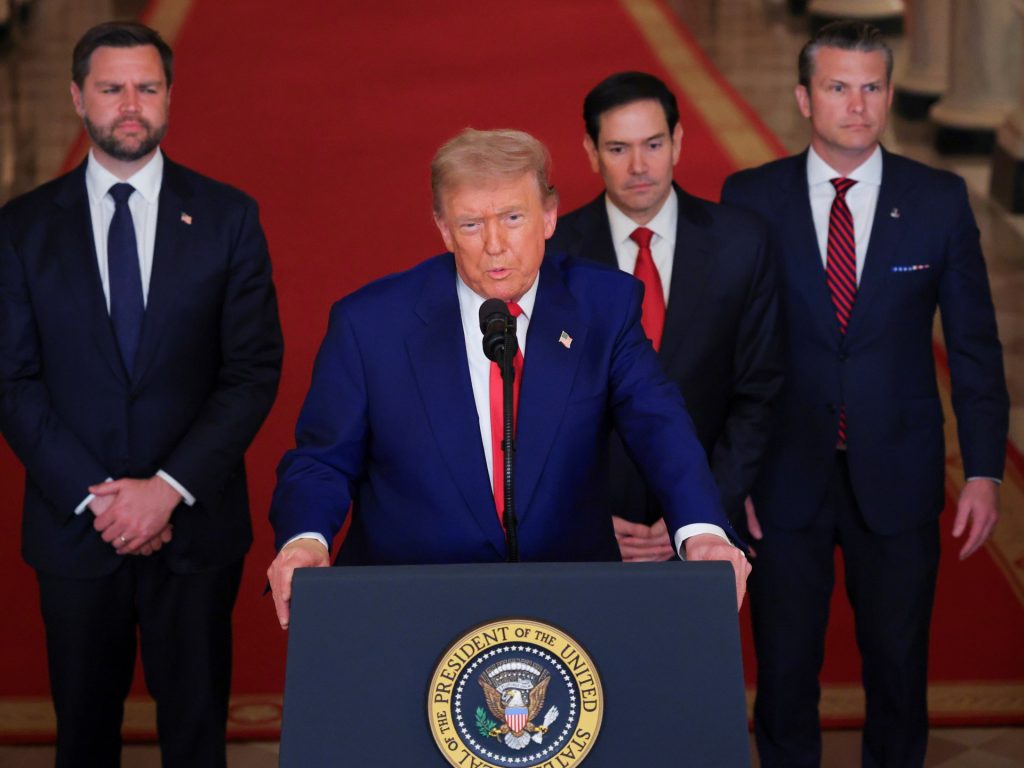
It seems like just yesterday that United States President Donald Trump was pushing a “diplomatic resolution” to the Iranian nuclear issue. Now, the US has joined Israel’s illegal assault on Iran, striking three Iranian nuclear sites on Saturday in what Trump has boasted was a “very successful attack”. As CNN dramatically put it, “a midsummer night in June 2025 could come to be remembered as the moment the Middle East changed forever; when the fear of nuclear annihilation was lifted from Israel; when Iran’s power was neutered and America’s soared”. Of course, a “fear of nuclear annihilation” has nothing to do with Israel’s current strikes on Iran, which have been dutifully portrayed in the US media as targeting military and nuclear facilities but have somehow managed to slaughter hundreds of civilians. The victims include 23-year-old poet Parnia Abbasi, killed along with her family as they slept in their Tehran apartment building. As is clear as day to anyone not in the business of defending Israeli depredations, the attacks on Iran are simply a war of convenience for Israeli Prime Minister Benjamin Netanyahu, who is killing all sorts of birds with one stone in his campaign against Iranian nuclear facilities. In addition to distracting the world from Israel’s ongoing genocide in the Gaza Strip, where starving Palestinians continue to be massacred on a daily basis as they seek food and other aid, Netanyahu has also managed to divert attention from his own embroilment in numerous corruption charges at home. Advertisement Plus, the war on Iran is wildly popular among Israelis, which translates into big points for a prime minister who has faced significant domestic opposition. Trump’s initial insistence on diplomacy with Iran naturally got Netanyahu’s panties into a giant bunch – but the situation has now been rectified by the midsummer night’s bombing, which, according to the president, has “obliterated” Iran’s nuclear sites. To be sure, Iran has long occupied US crosshairs, with many an establishment figure salivating at the prospect of bombing the country to smithereens. Some have salivated more openly than others, as in the case of John Bolton – a former US ambassador to the United Nations and briefly the national security adviser in the first Trump administration – who in 2015 took to the opinion pages of The New York Times with the following advice: “To Stop Iran’s Bomb, Bomb Iran.” That the editors of the US newspaper of record did not bat an eye in publishing such a blatant call for the violation of international law is indicative of the extent to which Iran has been thoroughly demonised in US society and media. Recall that in 2002, then-US President George W Bush appointed the nation to his infamous “axis of evil” along with Iraq and North Korea. And yet, aside from being a persistent thorn in the side of US imperialism, Iran’s behaviour has been rather less apparently, um, “evil” than certain other international actors – like the US itself. For instance, Iran is not the one currently funding a straight-up genocide to the tune of tens of billions of dollars. Nor is Iran the one that has spent the past several decades bombing and otherwise antagonising folks in every corner of the world – from backing right-wing state terror in Latin America to conducting mass slaughter in Vietnam. Furthermore, the sole clandestine nuclear weapons power in the Middle East is not Iran but Israel, which has refused to sign the Nuclear Non-Proliferation Treaty (NPT) and has never allowed UN safeguards on its facilities. Those who applaud the strikes on Iran citing the “oppressive” nature of the Iranian government would, meanwhile, do well to revisit the US track record of fuelling oppression in the country. In 1953, the CIA orchestrated a coup d’etat against Iran’s democratically elected leader, Mohammad Mossadegh, which paved the way for the extended reign of the torture-happy shah. Historian Ervand Abrahamian notes in his book A History of Modern Iran: “Arms dealers joked that the shah devoured their manuals in much the same way as other men read Playboy.” Indeed, the shah’s obsessive acquisition of US weaponry did much to enable his rule by terror, which was put to an end by the Iranian Revolution of 1979. And the Iranian nuclear programme that Trump has now bombed? It was started by that very same shah. Advertisement Now, arms dealers are presumably not too upset over the midsummer night’s events and the general escalation of the crisis in the Middle East. For his part, Netanyahu has gone out of his way to thank Trump for his “bold decision” to go after Iran “with the awesome and righteous might of the United States”. In Netanyahu’s words, Trump’s action will “change history” – as though making the world safe for more war is anything new. And as the US media scramble to justify illegal attacks on a sovereign nation, the sinister hypocrisy of two heavily nuclear-armed nations undertaking to police nuclear “threats” cannot be overstated. It is anyone’s guess what Trump, who prides himself on spontaneous and manic behaviour, will do next. But rest assured that, whatever happens, the arms industry won’t be going hungry any time soon. The views expressed in this article are the author’s own and do not necessarily reflect Al Jazeera’s editorial stance. Adblock test (Why?)
Iran condemns US attack on nuclear sites as ‘grave violation’ of UN Charter
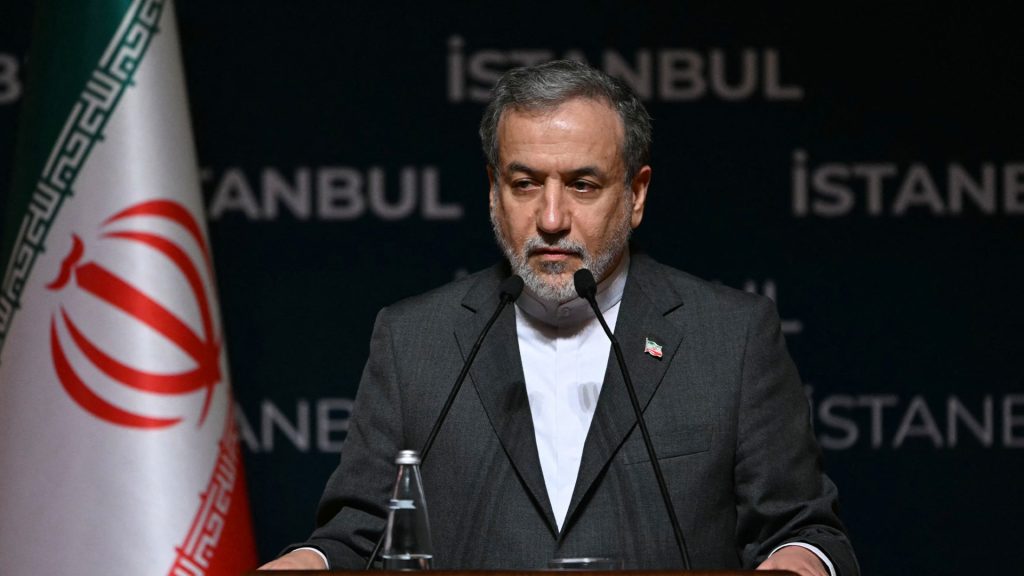
NewsFeed Iran’s Foreign Minister Abbas Araghchi has condemned the US military attack on Iran’s nuclear facilities, calling it an ‘outrageous, grave and unprecedented violation’ of international law. He accused the Trump administration of colluding with Israel to breach Iran’s sovereignty, and vowed Tehran would defend its territory ‘by all means necessary.’ Published On 22 Jun 202522 Jun 2025 Adblock test (Why?)
Freed Mahmoud Khalil vows to keep speaking up for Palestine after release
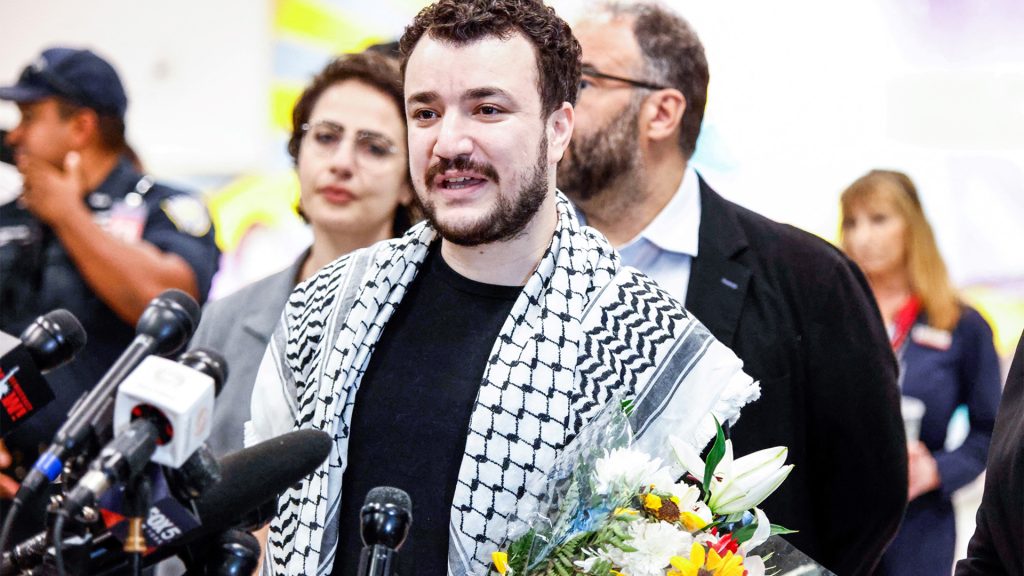
NewsFeed See the moment former Columbia University student Mahmoud Khalil, who was held for 100 days in a US detention centre, was greeted by supporters after his release from custody. Khalil vowed to continue protesting US complicity in Israel’s genocide against Palestinians in Gaza. Published On 22 Jun 202522 Jun 2025 Adblock test (Why?)
Mahmoud Khalil vows to continue to ‘speak up for Palestine’ after release
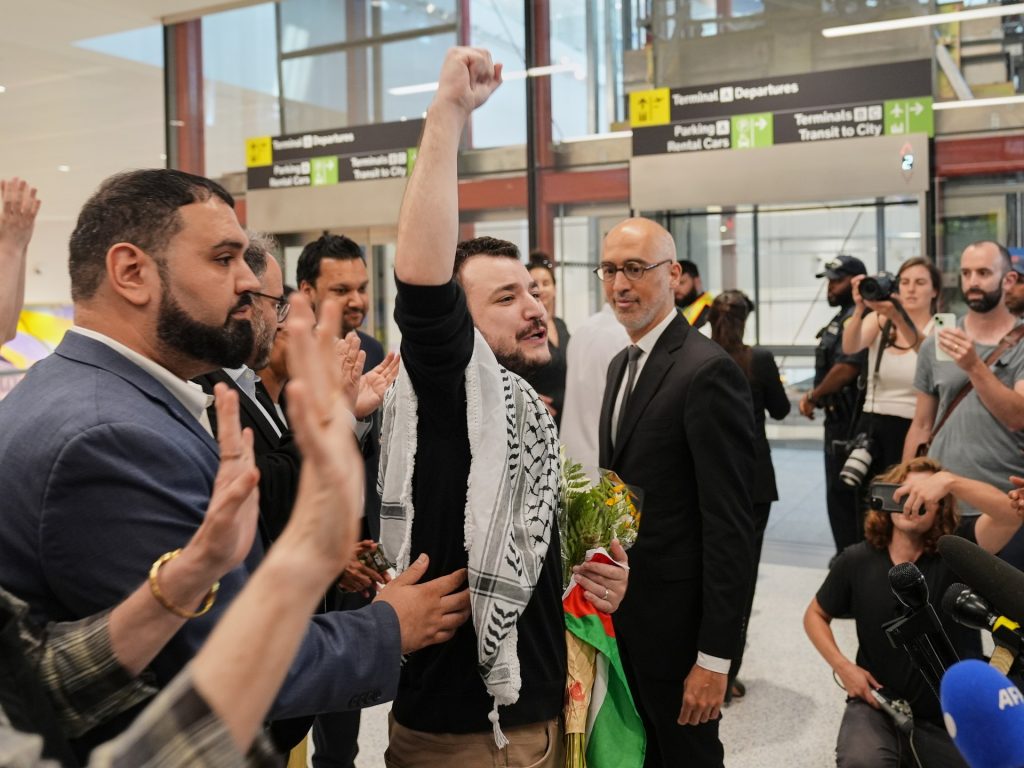
Former Columbia University student was released from a detention centre on Friday after being held for more than three months. Former Columbia University student Mahmoud Khalil has pledged to continue protesting Israel’s war on Gaza, as well as the United States’s support for Israel’s military operations. Khalil, who was released on Friday night after being detained for more than three months at a detention centre, told reporters at New Jersey’s Newark International Airport on Saturday that the government was funding “this [Gaza] genocide, and Columbia University is investing in this genocide”. “This is why I will continue to protest with every one of you. Not only if they threaten me with detention. Even if they would kill me, I would still speak up for Palestine,” he said. “Whether you are a citizen, an immigrant, anyone in this land, you’re not illegal. That doesn’t make you less of a human.” Born in Syria to Palestinian parents, Khalil, 30, was arrested by immigration agents at his university residence in March and swiftly became the image for President Donald Trump’s harsh crackdown on pro-Palestine student protesters and their possible deportation in the name of alleged anti-Semitism. The government has claimed that the grounds to detain and deport Khalil, a legal US citizen, were that there were inaccuracies in his application for permanent residency. But District Judge Michael Farbiarz said it was “highly, highly unusual” for the government to continue detaining a legal US resident who was unlikely to flee and had not been accused of any violence. Under the terms of his release, Khalil is not allowed to leave the country except for “self-deportation” and faces restrictions on where he can go in the US. Advertisement The government condemned the decision to release Khalil and filed a notice that it was appealing the decision. Adblock test (Why?)
What is the cost of the war between Israel and Iran?
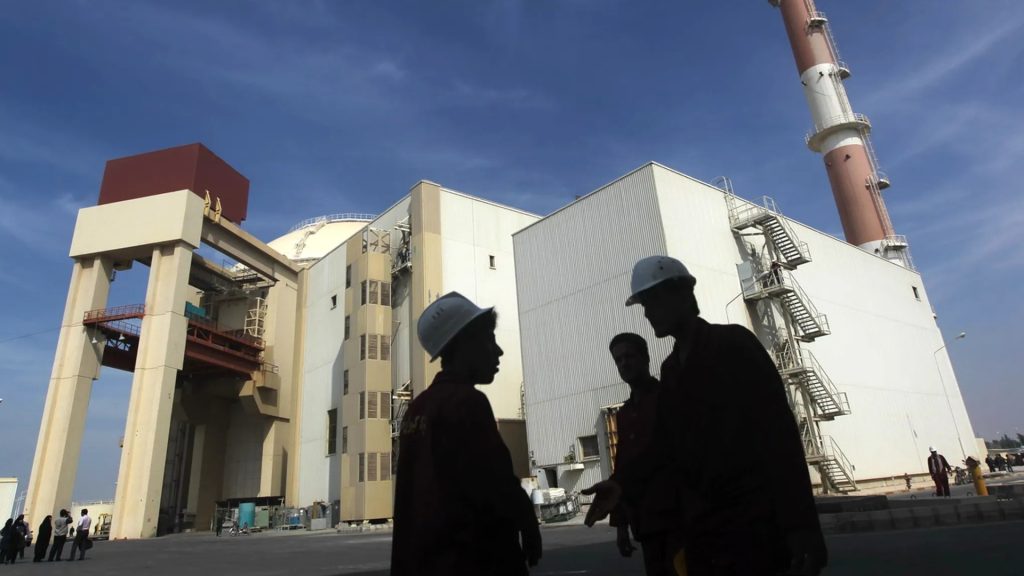
Continuing strikes from both countries are draining their economies. Israel and Iran are in the second week of the conflict. As well as inflicting damage, both countries are putting their economies under strain. Israel has spent billions of dollars on its war on Gaza and has upped its spending considerably with its largely air-based attacks on Iran. Iran was already struggling with the years of sanctions and now its oil and gas facilities are being hit. So can the two nations sustain the conflict? Which is likely to be worst affected? And will the conflict eventually damage the global economy? Presenter: Neave Barker Guests: Aly-Khan Satchu – Geoeconomic analyst and investor Eyal Winter – Professor of economics at the Hebrew University and Lancaster University Nader Habibi – Professor of practice in the economics of the Middle East at Brandeis University Adblock test (Why?)
The Netherlands returns 119 stolen sculptures to Nigeria
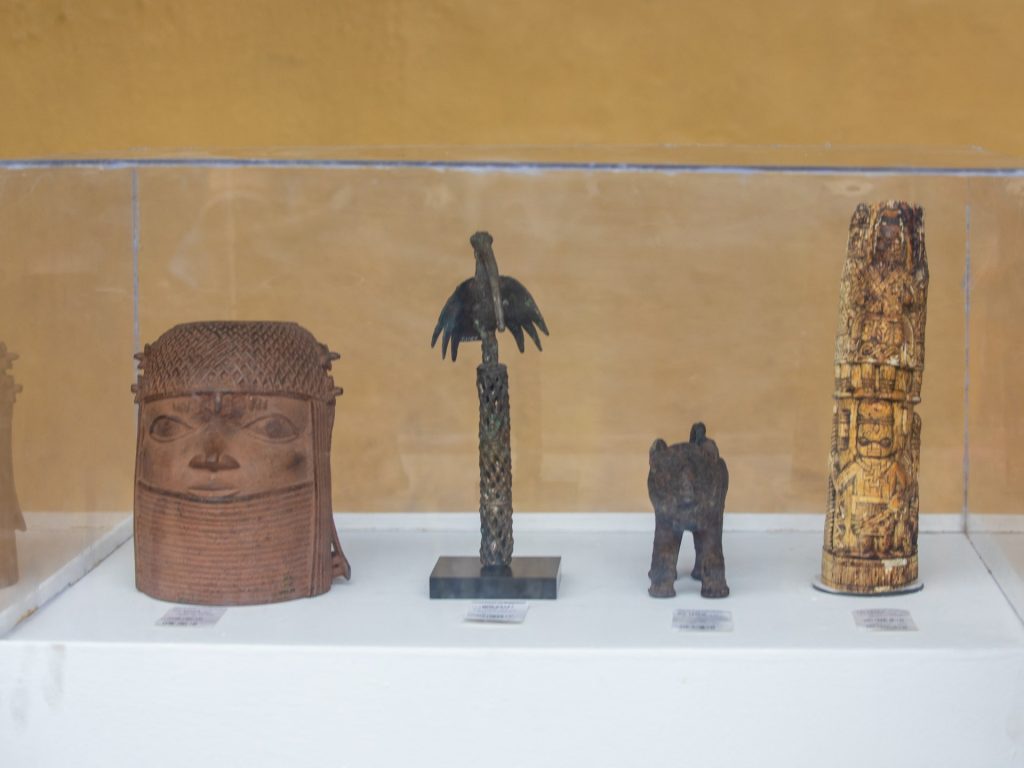
The Benin Bronzes were artefacts stolen during the UK’s imperial plunder of Benin, modern-day southern Nigeria. The Netherlands has officially handed back 119 ancient sculptures stolen from the former Nigerian kingdom of Benin more than 120 years ago during the colonial era. Olugbile Holloway, director-general of Nigeria’s National Commission for Museums and Monuments, said on Saturday that the artefacts were the “embodiments of the spirit and identity of the people from which they were taken from”. “All we ask of the world is to treat us with fairness, dignity and respect,” he said at a ceremony held at the National Museum in Lagos. Holloway added that Germany had also agreed to return more than 1,000 additional pieces. The artefacts, known as the Benin Bronzes, are the latest return of precious history to Africa as pressure increases on Western governments to return items taken during imperialism. Four of the artefacts are on display in the museum’s courtyard and will remain in the museum’s permanent collection, while the others will be returned to the Oba of Benin, Ewuare II – the traditional ruler of the Kingdom of Benin in southern Nigeria. The Benin Bronzes include metal and ivory sculptures dating back to the 16th to 18th centuries. The items were stolen in 1897 when British forces, under the command of Sir Henry Rawson, ransacked the Benin kingdom – modern-day southern Nigeria – and forced Ovonramwen Nogbaisi, the monarch at the time, into a six-month exile. In 2022, Nigeria formally requested the return of hundreds of objects from museums worldwide. In the same year, about 72 objects were returned from a museum in London, and 31 were returned from Rhode Island in the United States. Advertisement Adblock test (Why?)
The woman raising 98 children with disabilities in Uganda
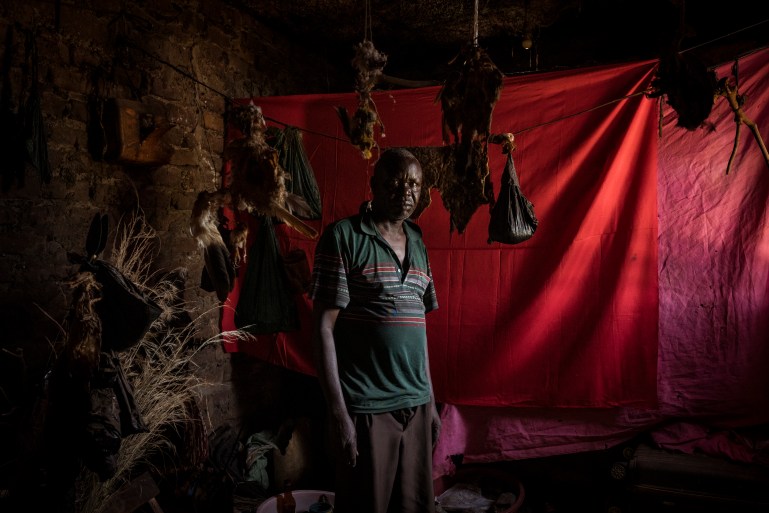
On a humid, late afternoon in November, Edith sits giggling loudly and bantering with two older members of her team during a lull between heavy rain showers. They watch as younger staff members dodge puddles and sweat through a daily aerobics routine in the muddy courtyard. As energetic pop music blares across the compound made up of three single- and double-storey buildings, seven-year-old Diego, who has cerebral palsy, heads up a concrete ramp towards a therapy room. His wrists twisted, he crawls forward slowly until Edith spots him. “Diego, my boy!” the 49-year-old calls out with a wide grin. She runs over to him, her loose dress billowing as she scoops him up and swings him quickly onto her hip. He gives her a high five, and the two laugh before turning their attention to the workout. The warmth and affection between Edith and her staff and the children at the orphanage make the place feel like it belongs to a very large family. Edith’s own journey as a disability rights figure in Uganda began in 2000 with the birth of her first child, Derrick, in Jinja. When Derrick was two days old, he turned yellow and cried excessively. So Edith and her husband, Richard, took him to a hospital where he was misdiagnosed with malaria. For two weeks, their son suffered convulsions, and upon seeing another doctor, he was found to have complications with his spinal cord after contracting meningitis. Witch doctors like Robert Apedu in Soroti District provide 77 percent of health services in rural areas. They offer a more convenient alternative to health facilities and medicines found in cities [Christopher Hopkins/Al Jazeera] “When he made three months, this is when I realised that my son was not growing as a normal child. He had poor head control. He had a curved spinal cord. He was very floppy,” Edith recalls while sitting in her office. Its walls are adorned with certificates of appreciation and merit, and a portrait of President Yoweri Museveni hangs above the door. As she looks out a window onto a playground full of children, Edith recalls how she and Richard struggled to get information about their son’s condition and were ostracised by their friends and family who were fearful of them and Derrick. “We started coming into the hospital, in and out. Home, hospital, home, hospital. And with his situation, especially with convulsions, people were like, ‘He has got epilepsy. He has demons.’ And this is where I was rejected by the community,” she says. “They were like, ‘She gave birth to a demon-possessed child.’” In the village of Omalera, Robert rubs a paste of plant matter and water onto the skin of Noah Oyara, 17, who has no use of his legs and also lives with hydrocephalus. Due to negative connotations surrounding his profession, Robert refers to himself as a ‘traditional healer’ or ‘herbalist’ [Christopher Hopkins/Al Jazeera] Historically and until today, education about disabilities has not been promoted through government-run schools or local clinics, leading many Ugandans to resort to traditional healing. Without a diagnosis and feeling helpless, Edith succumbed to social pressure and took her son to traditional healers. “I tried to take him to different witch doctors. They were cutting him all over the body, smearing him with their herbs, washing him with blood of the chicken, the blood of the goat. They could take us in at night to shower us with the blood of the chicken, but still, Derrick didn’t change,” she recalls. “It was just worsening.” But then an elderly couple at her church encouraged her to return to the hospital and supported her family. So Edith returned with Derrick to the hospital. After 12 months, he was diagnosed with permanent disability. The prolonged lack of treatment for meningitis had led to severe brain damage and cerebral palsy, leaving him nonverbal and unable to walk or feed himself for the rest of his life. Adblock test (Why?)
Russia-Ukraine war: List of key events, day 1,213

Here are the key events on day 1,213 of Russia’s war on Ukraine. Here is how things stand on Saturday, June 21: Fighting Drones and missiles launched by Russia overnight have damaged energy infrastructure in central Ukraine’s Kremenchuk district in Poltava, said local military authorities. One person was injured in the attack, according to Volodymyr Kohut, the region’s military governor, who did not provide further details on the extent of the damage. Russia had targeted the district’s refinery, according to a report by online news outlet Strana.ua. Politics and diplomacy Ukraine and Russia exchange more prisoners of war, officials from both countries said, the second swap in two days under an agreement struck in Turkiye earlier this month. All the captured soldiers were wounded, ill or under 25 years old. Neither side said how many soldiers had been freed. At Russia’s flagship economic forum in Saint Petersburg, President Vladimir Putin said he did not “rule out” his forces taking control of Ukraine’s northeastern city of Sumy as part of efforts to create a buffer zone along the border. The Sumy region is not one of the regions Moscow has formally annexed, although Russian forces have recently made inroads there for the first time in three years, with Putin claiming his troops had advanced up to 12km (7 miles) in the region. In a string of hawkish remarks, Putin also appeared to repeat his denial of Ukrainian statehood. Ukraine said Putin’s comments showed “disdain” for the peace process. The German military considers Russia to be an “existential risk” to the country and Europe, according to a Spiegel news magazine report that cites a new Bundeswehr strategy paper. Russia is verifiably preparing for a conflict with NATO, particularly by strengthening forces in western Russia “at the borders with NATO,” the report cites the strategy paper as saying. Germany can only counter this threat “with a consistent development of military and society-wide capabilities,” the document concludes. Putin has reaffirmed Moscow’s opposition to the spread of weapons of mass destruction, including any potential acquisition by Iran. Putin told Sky News Arabia that Russia supports Iran’s right to develop nuclear energy for peaceful purposes, emphasising that the International Atomic Energy Agency (IAEA) has found no evidence suggesting Tehran seeks to build nuclear weapons. Putin also stated that Russia is prepared to assist Iran in the development of its civilian nuclear programme. Advertisement Economy At the economic forum in St Petersburg, Putin also urged officials not to let Russia fall into recession “under any circumstances”, as some in his own government warned of a hit to economic growth. Economists have warned for months of a slowdown in the Russian economy, with the country posting just 1.4 percent year-on-year growth in the first quarter of 2025, the weakest pace in two years. A decision by the OPEC+ group of leading global oil producers to speed up production now looks far-sighted and justified amid the Middle East conflict, said Igor Sechin, head of Russia’s largest oil producer Rosneft, at the forum. Sechin also said that there will be no oil glut in the long term despite the production rise, and that the European Union seeks to reduce Russia’s oil cap to $45 to improve the profitability of its purchases, not to cut Russia’s budget revenues. Adblock test (Why?)