

As Trump threatens tariffs, Vietnam scrambles to avert economic disaster
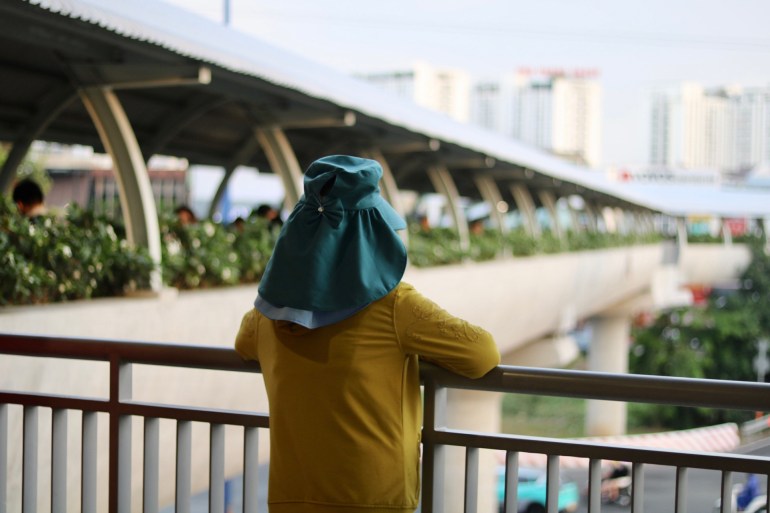
Ho Chi Minh City, Vietnam – Kieu Quoc Thanh, the CEO of cashew export business SVC Group, says that everyone in his industry has been “feeling crazy” for the past two weeks. Since United States President Donald Trump announced his since-paused “reciprocal” tariffs on April 2, Thanh has witnessed mass confusion among Vietnamese exporters. Many businesses reliant on the US market are checking online hourly for updates on the tariffs, Thanh says, while he has a shipping container full of cashews bound for the US market currently sitting in limbo. Since Trump announced a 90-day pause on Vietnam’s 46 percent tariff and duties on dozens of other countries, the US has imposed a baseline 10 percent levy on imports from all countries, including Vietnam. But Thanh’s customers in the US and customs officers alike are uncertain how much to tax his products, he says. “No one knows what’s happening,” Thanh told Al Jazeera at his Ho Chi Minh City office last week. A man stands outside Phuc Long Port in Ho Chi Minh City, Vietnam, on April 10, 2025 [Govi Snell/Al Jazeera] While businesses such as Thanh’s navigate the disruption, Hanoi and Washington are in discussions about a trade deal after agreeing to begin negotiations on April 10. Advertisement For Vietnam, one of the world’s most export-reliant economies, the stakes could scarcely be higher. The US is the Southeast Asian country’s biggest export market, with shipments to it alone last year accounting for 30 percent of gross domestic product (GDP). While Trump’s tariff pause led to some hope in Vietnam, the country is on tenterhooks about what might happen next, said Tyler Manh Dung Nguyen, chief market strategist at equity firm Ho Chi Minh City Securities Corporation. “We are having a period of extreme uncertainty, not only for the financial market, but also for businesses,” Nguyen told Al Jazeera. “It’s like a reality show,” Nguyen added. “Everything changes every day.” Trump’s trade salvoes have drawn sharp contrast with the decades-long process of warming relations between Washington and Hanoi, culminating in the former enemies upgrading their ties to a “Comprehensive Strategic Partnership” in 2023. For Eddie Thai, a Vietnamese American who co-founded the Ho Chi Minh City-based venture capital firm Ascend Vietnam Ventures, it has been disheartening to see relations come under strain, particularly ahead of the upcoming 50th anniversary of the end of the Vietnam War on April 30. “I don’t think it has thrown us back 50 years, I wouldn’t say that far, but it is burning a lot of goodwill that a lot of people on both sides of the ocean have been trying to build since the 90s,” Thai told Al Jazeera, calling Trump’s dealing with Vietnam destructive and personally “disappointing as an American”. Chinese President Xi Jinping waves as he boards his plane at Noi Bai International Airport in Hanoi on April 15, 2025 [Athit Perawongmetha/ Pool via AFP] With the US and Vietnam looking towards a trade deal, China, Hanoi’s biggest source of imports and its second-largest export destination, has loomed large over the negotiations. Advertisement On Monday, Chinese President Xi Jinping visited Hanoi as part of a five-day tour of Southeast Asia, a trip widely seen as an effort to cast China as a more reliable trading partner for the region than the US. Upon his arrival, Xi was greeted at the airport by Vietnamese President Luong Cuong, and later received a 21-gun salute at Hanoi’s Presidential Palace. Reacting to the warm reception for the Chinese leader, Trump suggested the countries would use their talks to scheme against the US. “That’s a lovely meeting. Meeting like, trying to figure out, ‘How do we screw the United States of America?’” Trump told reporters at the White House. According to Chinese state news outlet Xinhua, Xi urged Vietnam to resist “unilateral bullying” and stated that “China’s mega market is always open to Vietnam”. During Xi’s visit, the countries signed 45 agreements, Chinese and Vietnamese media reported, without providing details of the deals. With the US and China slapping each other’s goods with tariffs exceeding 100 percent, Vietnam has become the “diplomatic guy in the middle,” said Nguyen, the strategist at Ho Chi Minh City Securities Corporation. “[Hanoi] always tries to be neutral in every situation,” Nguyen said. “We do not side with one country to fight another country.” US trade deficit Trump’s tariffs have also raised the ire of foreign businesses based in Vietnam. It would be an impossible task for Vietnam to erase its trade deficit with the US – the third-highest in 2024 at $123.5bn – given the differences between the two economies, said Bruno Jaspaert, general director of DEEP C Industrial Zones in the northern port town of Haiphong. Advertisement “Any country like Vietnam, in reality, has no leverage against the States,” Jaspaert, who is also head of EuroCham Vietnam, told Al Jazeera. “That stupid formula of theirs can never ever be balanced because it will take decades before Vietnam can buy enough,” Jaspaert said, referring to the controversial calculations used by the Trump administration to come up with its “reciprocal” tariff rates. Facing the threat of a huge economic blow, Hanoi has put considerable effort into getting into the good graces of the Trump administration. The government has pledged to buy more Boeing planes and liquefied natural gas, and opened talks on purchasing C-130 cargo planes from Lockheed Martin. Last month, officials agreed to allow Elon Musk’s Starlink satellite internet service to operate in the country on a trial basis. Vietnam has also signed deals with the Trump Organization. Shortly before Trump’s re-election, his holding company agreed to invest $1.5bn in a golf course and hotel project in Communist Party chief To Lam’s home province of Hung Yen. Commuters sit in traffic in Ho Chi Minh City, Vietnam [Govi Snell/Al Jazeera] “I believe that the leadership in Hanoi – they have done a lot to secure a more lenient approach,” Nguyen Khac Giang, visiting fellow at Singapore’s ISEAS-Yusof Ishak Institute, told
US envoy says fighting in Gaza would ‘end immediately’ if captives released
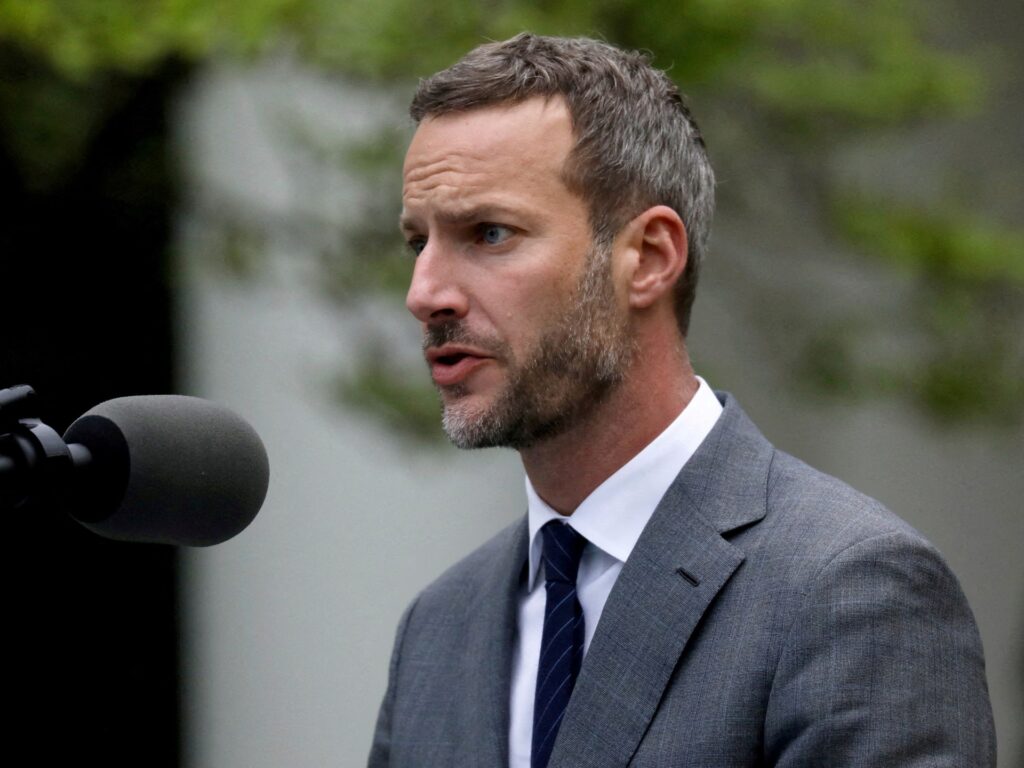
Adam Boehler tells Al Jazeera ‘nothing goes forward’ on ceasefire deal until release, as Israel’s assault continues. Washington, DC – Israeli attacks on Gaza will end if Hamas releases all remaining captives, US President Donald Trump’s top hostage envoy said in an interview with Al Jazeera. “I can tell you that the fighting would end immediately, immediately if hostages are released,” said Adam Boehler, US special envoy for hostage response. “The day that those hostages are released, the fighting will end.” Boehler’s comments on Wednesday came as the death toll from Israel’s offensive in Gaza reached 51,025, with at least 1,652 Palestinians killed since Israel’s attacks resumed after an earlier ceasefire brokered by Trump’s administration ended in March. Despite Israel’s ongoing assault on the enclave, Boehler said the ball was in Hamas’s court. “They can reach out any time,” he said from the White House lawn. “Hamas can end this.” Boehler added that Trump has been clear that “nothing goes forward until all hostages are released”. “Step one is all hostages released,” Boehler said. “Step two is, let’s figure out this day after.” Advertisement He did not elaborate on what that “day after” would look like, only referring briefly to Trump’s suggestion of mass displacing Palestinians from Gaza to neighbouring countries. Hamas has said it will only release more captives if a new agreement to end the fighting is reached first. Such an agreement would need to include guarantees that have so far proven non-starters, including a full withdrawal of Israeli forces from Gaza. Under the previous six-week ceasefire agreement, Hamas released a total of 33 captives held in Gaza in exchange for an increase in humanitarian aid into the enclave and the release of Palestinian prisoners held by Israel. A second phase, agreed to in principle, was meant to see the release of all remaining captives held in Gaza in exchange for a permanent end to fighting. A third phase was meant to see the release of all the bodies of captives and the implementation of a reconstruction plan. But negotiations broke down following the completion of the first phase of the agreement, with Israel immediately renewing attacks. Beyond those killed, the United Nations has said at least 500,000 Palestinians have been newly displaced in the latest round of fighting. Earlier this week, Israeli Defence Minister Israel Katz said the military had completed creating a “security zone” between the southern cities of Rafah and Khan Younis. He added that the Israeli military would “vigorously” expand its operation in Gaza. Israel has estimated that 24 living captives remain in Gaza, all believed to be male soldiers. The bodies of 35 other captives are also believed to still be in the Palestinian enclave. Advertisement Edan Alexander Boehler, who held direct talks with Hamas officials in March, spoke to Al Jazeera after Hamas rejected a new Israeli ceasefire proposal calling for the group to fully disarm the day before. Hamas also claimed on Tuesday that it had lost contact with the group holding Israeli-American captive Edan Alexander after “direct Israeli bombardment” targeted the area where he was being held. Boehler dismissed the claim, saying he was certain Alexander was in a safe place and that Hamas would be “stupid” to harm him. If anything were to happen to Alexander, it’s “not going to be pretty”, he added, without elaborating. Adblock test (Why?)
Fifty years after fall of Phnom Penh, history weighs on Cambodian politics
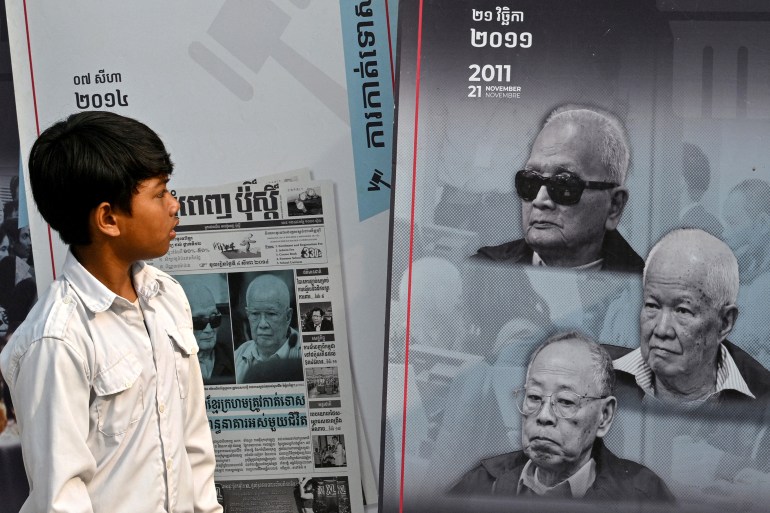
Fifty years after the fall of Phnom Penh to the Khmer Rouge rebel army, the events of April 17, 1975 continue to cast a long shadow over Cambodia and its political system. Emerging from the bloodshed and chaos of the spreading war in neighbouring Vietnam, Pol Pot’s radical peasant movement rose up and defeated the United States-backed regime of General Lon Nol. The war culminated five decades ago on Thursday, with Pol Pot’s forces sweeping into Cambodia’s capital and ordering the city’s more than two million people into the countryside with little more than the belongings they could carry. With Cambodia’s urban centres abandoned, the Khmer Rouge embarked on rebuilding the country from “Year Zero”, transforming it into an agrarian, classless society. In less than four years under Pol Pot’s rule, between 1.5 and three million people were dead. They would also almost wipe out Cambodia’s rich cultural history and religion. Many Cambodians were brutally killed in the Khmer Rouge’s “killing fields”, but far more died of starvation, disease and exhaustion labouring on collective farms to build the Communist regime’s rural utopia. Advertisement In late December 1978, Vietnam invaded alongside Cambodian defectors, toppling the Khmer Rouge from power on January 7, 1979. It is from this point onwards that popular knowledge of Cambodia’s contemporary tragic history typically ends, picking up in the mid-2000s with the start of the United Nations-backed war crimes tribunal in Phnom Penh, where former regime leaders were put on trial. For many Cambodians, however, rather than being relegated to history books, the 1975 fall of Phnom Penh and the toppling of the Khmer Rouge in 1979 remain alive and well, embedded in the Cambodian political system. That tumultuous Khmer Rouge period is still used to justify the long-running rule of the Cambodian People’s Party (CPP) under varying forms since 1979, and the personal rule of CPP leader Hun Sen and his family since 1985, according to analysts. It was the now ageing senior leadership of the CPP who joined with Vietnamese forces to oust Pol Pot in 1979. While memories of those times are fading, the CPP’s grip on power is as firm as ever in the decades since the late 1970s. ‘The making of a political system’ The ruling CPP see “themselves as the saviour and the guardian of the country”, said Aun Chhengpor, a policy researcher at the Future Forum think tank in Phnom Penh. “It explains the making of a political system as it is today,” he said, noting that the CPP has long done what it required to “ensure that they are still there at the helm … at any cost”. Most Cambodians have now accepted a system where peace and stability matter above all else. Advertisement “There seems to be an unwritten social contract between the ruling establishment and the population that, as long as the CPP provides relative peace and a stable economy, the population will leave governance and politics to the CPP,” Aun Chhengpor said. “The bigger picture is how the CPP perceives itself and its historic role in modern Cambodia. It’s not that different from how the palace-military establishment in Thailand or the Communist Party in Vietnam see their roles in their respective countries,” he said. A Cambodian student looks at a poster of former Khmer Rouge leaders during an educational outreach programme [File: Tang Chhin Sothy/AFP] The CPP headed a Vietnamese-backed regime for a decade, from 1979 to 1989, bringing relative order back to Cambodia after the Khmer Rouge, even as fighting persisted in many parts of the country as Pol Pot’s fighters tried to reassert control. With support dwindling from the Soviet Union in the last days of the Cold War and an economically and militarily exhausted Vietnam withdrawing from Cambodia, Hun Sen, by then the leader of the country, agreed to hold elections as part of a settlement to end his country’s civil war. From 1991 to 1993, Cambodia was administered by the UN Transitional Authority in Cambodia (UNTAC). The Cambodian monarchy was formally re-established, and elections were held for the first time in decades in 1993. The last Khmer Rouge soldiers surrendered in 1999, symbolically closing a chapter on one of the 20th century’s bloodiest conflicts. Advertisement Despite a bumpy road forward, there were initial hopes for Cambodian democracy. The royalist National United Front for an Independent, Neutral, Peaceful and Cooperative Cambodia Party – better known by its acronym FUNCINPEC – won the UN-administered elections in 1993. Faced with defeat, the CPP refused to cede power. The late King Norodom Sihanouk stepped in to broker an agreement between both sides that preserved the hard-won peace and made the election a relative success. The international community breathed a sigh of relief as the UNTAC mission in Cambodia had been the largest and costliest at that time for the world body, and UN member states were desperate to declare their investment in nation rebuilding a success. Ruling jointly under a power-sharing agreement with CPP and FUNCINPEC co-prime ministers, the unsteady alliance of former enemies held for four years until ending in a swift and bloody coup by Hun Sen in 1997. Mu Sochua, an exiled opposition leader who now heads the nonprofit Khmer Movement for Democracy, told Al Jazeera that the CPP’s resistance to a democratic transfer of power in 1993 continues to reverberate throughout Cambodia today. “The failure of the transfer of power in 1993 and the deal the King made at the time … was a bad deal. And the UN went along because the UN wanted to close shop,” she told Al Jazeera from the US, where she lives in exile after being forced to flee the CPP’s intensifying authoritarianism at home. “The transitional period, the transfer of power … which was the will of the people, never happened,” Mu Sochua said. Advertisement End of warfare does not mean the beginning of peace Following the coup in 1997, the CPP did not come close to losing power again until 2013, when they
Iran confirms next round of nuclear talks with US set for Rome on Saturday
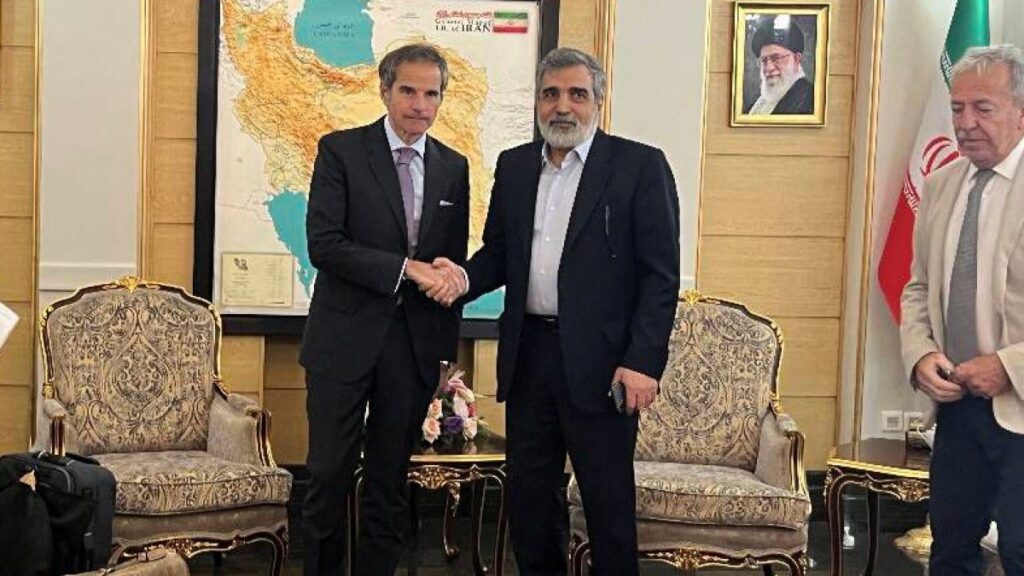
The announcement comes as chief of nuclear watchdog IAEA arrives in Tehran for talks that may revolve around accessibility for inspectors. Iran has confirmed that its next round of nuclear talks with the United States this weekend will be held in Rome after earlier confusion over where the negotiations would be conducted. Wednesday’s announcement on Iranian state television came as Iran’s President Masoud Pezeshkian formally approved the resignation of one of his vice presidents, who had served as Tehran’s key negotiator in its 2015 nuclear deal with world powers. The head of the United Nations nuclear watchdog, Rafael Grossi, also arrived in Tehran on Wednesday for talks that could include negotiations over what access his International Atomic Energy Agency (IAEA) inspectors can get under any proposed deal. The state TV announcement said Oman will again mediate the talks on Saturday in Rome. Oman’s foreign minister served as an interlocutor between the two sides during negotiations last weekend in Muscat, the Omani capital. On Monday, some officials initially identified Rome as hosting the negotiations, only for Iran to insist early on Tuesday that its team would return to Oman. US officials so far have not said publicly where the talks will be held, though US President Donald Trump did call Oman’s Sultan Haitham bin Tariq on Tuesday while the ruler was on a trip to the Netherlands. Advertisement The negotiations come amid soaring tensions between the US and Iran over the latter’s nuclear development. Trump repeatedly has threatened to unleash air strikes targeting Iran’s nuclear programme if a deal isn’t reached. Iranian officials increasingly have warned that they could pursue a nuclear weapon with their stockpile of uranium enriched to near weapons-grade levels. ‘Like a puzzle’ Grossi arrived in Tehran for meetings with Pezeshkian and others, which will likely be held on Thursday. Shortly before his arrival, Grossi warned that Iran was “not far” from possessing a nuclear bomb. “It’s like a puzzle. They have the pieces, and one day they could eventually put them together,” Grossi told French newspaper Le Monde in an interview published on Wednesday. “There’s still a way to go before they get there. But they’re not far off, that has to be acknowledged,” he said. Since the nuclear deal’s collapse in 2018 with Trump’s unilateral withdrawal of the US from the accord, Iran has abandoned all limits on its programme, and enriches uranium to up to 60 percent purity – near weapons-grade levels of 90 percent. Surveillance cameras installed by the IAEA have been disrupted, while Iran has barred some of the Vienna-based agency’s most experienced inspectors. Iranian officials have also increasingly threatened that they could pursue atomic weapons, something that Western countries and the IAEA have been worried about for years. Any possible deal between Iran and the US likely would need to rely on the IAEA’s expertise to ensure Tehran’s compliance. And despite tensions between Iran and the agency, its access has not been entirely revoked. Advertisement ‘Non-negotiable’ Iran’s Foreign Minister Abbas Araghchi on Wednesday warned the US about taking contradictory stances in the talks. His remarks came after comments from US Middle East envoy Steve Witkoff, who this week initially suggested a deal could see Iran go back to 3.67 percent uranium enrichment – like in the 2015 deal reached by the administration of former US President Barack Obama. Witkoff then followed up by saying, “A deal with Iran will only be completed if it is a Trump deal.” “Iran must stop and eliminate its nuclear enrichment and weaponisation program,” Witkoff wrote on the social platform X. “It is imperative for the world that we create a tough, fair deal that will endure, and that is what President Trump has asked me to do.” In response, Araghchi issued a warning to the US. “Enrichment is a real and accepted issue, and we are ready for trust-building about possible concerns,” Araghchi noted. But losing the right to enrich at all “is non-negotiable”, he said. Adblock test (Why?)
Israel says its troops will remain in Gaza, Lebanon and Syria indefinitely
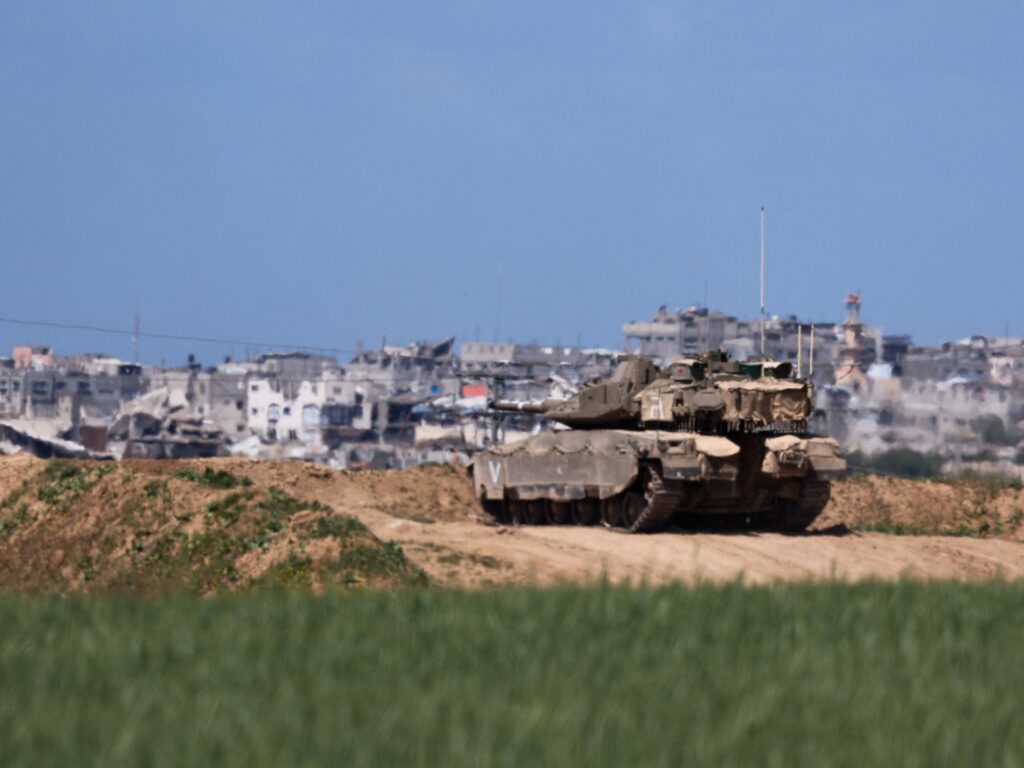
Israel’s defence minister says that Israeli troops will remain in Gaza, Lebanon and Syria indefinitely, as the military tightens its grip on several occupied territories. “Unlike in the past, the [Israeli military] is not evacuating areas that have been cleared and seized,” Israel Katz said in a statement on Wednesday. The army “will remain in the security zones as a buffer between the enemy and [Israeli] communities in any temporary or permanent situation in Gaza – as in Lebanon and Syria”, said the statement. The military said that it had turned 30 percent of Gaza into a “security” buffer zone and struck around 1,200 “terror targets” since resuming its offensive on March 18, following a nearly two-month truce in Gaza with the Palestinian group Hamas. Israeli Prime Minister Benjamin Netanyahu has vowed to annihilate Hamas and return 59 captives being held by armed groups in Gaza, including 24 who Israel believes are alive. Hamas has said it will not agree to release the captives without a complete Israeli withdrawal from Gaza and a lasting ceasefire. Advertisement The Palestinian Islamic Jihad group on Wednesday released a video of captive Rom Braslavski. He appeared to be under duress, said he was covered in sores, and pleaded with Netanyahu to stop the war. The main organisation representing captives’ families accused the Israeli government in a statement of “choosing to seize territory before the hostages”. Israel says it must maintain control of what it calls “security zones” to prevent a repeat of Hamas’s October 7, 2023 attack in which some 1,139 people were killed and 250 others were abducted – includng captives who have already been released by Hamas, and those still being held by the group. Netanyahu also has said that Israel will implement US President Donald Trump’s proposal for the resettlement of much of Gaza’s population in other countries through what Netanyahu refers to as “voluntary emigration”. Lebanese President Joseph Aoun said that Israel’s continued presence in some areas of southern Lebanon was “hindering” the Lebanese army’s full deployment as required by the ceasefire between Hezbollah and Israel. According to the deal signed in November, which ended more than a year of war, both parties agreed to withdraw from southern Lebanon and leave the area to be controlled by the Lebanese army. However, Israel only partially pulled out its troops from the country’s south, leaving soldiers in at least five locations. Lebanon’s Health Ministry said two Israeli drone strikes in southern Lebanon killed two people on Wednesday. Israeli strikes in Lebanon have killed more than 70 civilians since the ceasefire took effect in November. Advertisement Israel also established several military posts inside Syrian territory, including on the summit of Mount Hermon, after warplanes launched hundreds of strikes in the aftermath of the ousting of former Syrian President Bashar al-Assad. The Israeli government immediately revealed its position towards the new Syrian government led by the former opposition group Hayat Tahrir al-Sham (HTS), calling it “a terror group from Idlib that took Damascus by force”, and has since refused to withdraw from the territories it seized. ‘No humanitarian aid’ to enter Gaza Katz said in a statement on X that Israel’s policy was “clear”. “No humanitarian aid will be allowed into Gaza,” the defence minister said on Wednesday. Preventing humanitarian aid from entering the Gaza Strip “is one of the main pressure tools that stops Hamas from using this means against the population,” he added. “In the current reality, no one is going to allow any humanitarian aid into Gaza, and no preparations are being made to allow any aid of this kind.” Israeli Culture Minister Miki Zohar echoed this position, saying, “the despicable murderers in Gaza deserve no humanitarian assistance from any civilian or military mechanism.” “Only hellfire should be poured on the makers of terrorism until the last hostage returns from Gaza,” Zohar said on X. Israeli authorities have blocked all aid from entering Gaza for more than six weeks, worsening the already catastrophic humanitarian situation in Gaza. The United Nations on Wednesday rejected a new authorisation mechanism that purported to introduce greater control over aid delivery in Gaza by Israeli forces, stating that aid organisations already had a mechanism in place to ensure that aid is not diverted to Hamas. Advertisement “Aid delivery into Gaza has for too long been obstructed,” the UN said, adding its teams were “ready to deliver assistance to those most in need based on humanitarian principles”. Meanwhile, Israeli air raids continued on Wednesday, with at least 25 people killed in attacks across Gaza. Palestinian journalist Fatima Hassouneh and 10 members of her family were killed in an Israeli air strike that targeted their home in Gaza City. Adblock test (Why?)
‘Die-in’ held in Paris to protest killing of Palestinian journalists
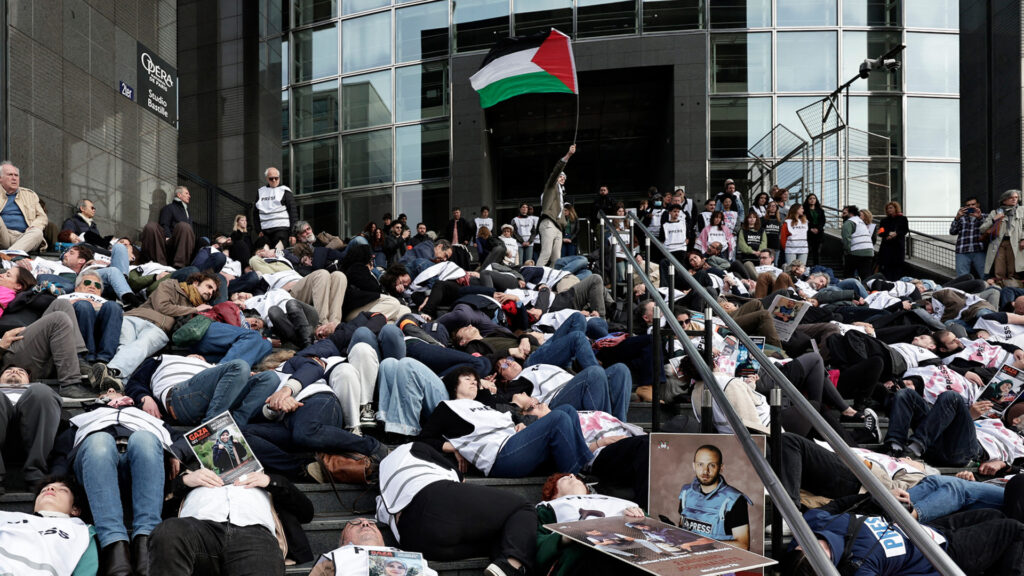
NewsFeed One hundred journalists staged a ‘die-in’ on the steps of the Opéra Bastille in central Paris to protest the killing of nearly 200 Palestinian journalists in Gaza since the war began. They laid on the steps in bloody press vests as the names of some of the journalists killed were read out. Published On 16 Apr 202516 Apr 2025 Adblock test (Why?)
Russia jails journalists for alleged ties to Navalny
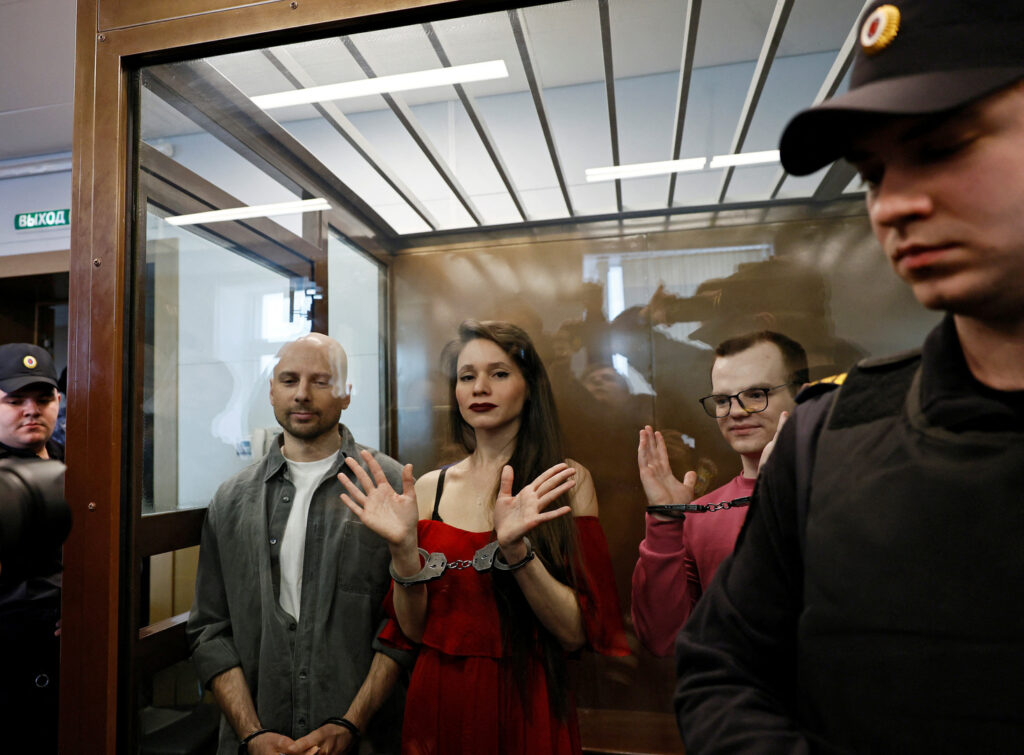
NewsFeed Four Russian journalists have been sentenced to over 5 years in prison for alleged ties to late opposition leader Alexey Navalny. All four reject the charges and supporters say they are being punished simply for doing their jobs. Published On 16 Apr 202516 Apr 2025 Adblock test (Why?)
UK’s top court rules legal definition of ‘woman’ refers to ‘biological sex’
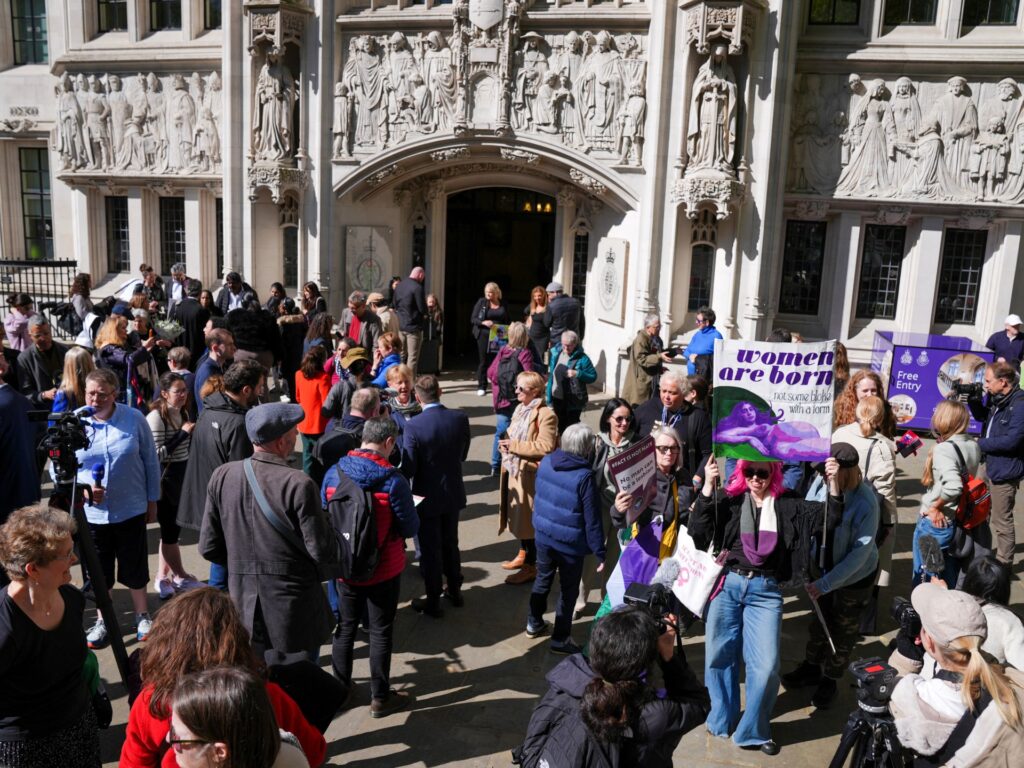
The decision was welcomed by some activists, but transgender campaigners warned it could lead to discrimination. The United Kingdom’s highest court has ruled that the terms “woman” and “sex” refer to a “biological woman and biological sex” under British equality laws, a landmark decision greeted with concern by supporters of transgender rights but welcomed by the government as bringing clarity. The highly anticipated ruling on Wednesday centred on whether a trans woman with a gender recognition certificate (GRC), a formal document giving legal recognition of someone’s new gender, is protected from discrimination as a woman under Britain’s Equality Act. The decision confirms that single-sex services for women such as refuges, hospital wards and sports can exclude trans women, clearing up legal ambiguity. Transgender campaigners said the decision could lead to discrimination, especially over employment issues. “The unanimous decision of this court is that the terms ‘women’ and ‘sex’ in the Equality Act 2010 refer to a biological woman and biological sex,” said Deputy President of the Supreme Court Patrick Hodge. Advertisement “But we counsel against reading this judgement as a triumph for one or more groups in our society at the expense of another – it is not.” Transgender rights have become a polarising political issue in the UK and other parts of the world. Some critics say the conservative right has weaponised identity politics to attack minority groups, while others argue that support for transgender people has infringed on the rights of biological women. In the United States, legal challenges are under way after US President Donald Trump issued executive orders that include barring transgender people from military service. The judgement in Britain followed legal action by a campaign group, For Women Scotland (FWS), against guidance issued by the devolved Scottish government that accompanied a 2018 law designed to increase the proportion of women on public-sector boards. The guidance said a trans woman with a gender recognition certificate was legally a woman. FWS, which was backed by lesbian rights groups, lost its case in the Scottish courts, but the Supreme Court ruled in its favour. “Today the judges have said what we always believed to be the case: that women are protected by their biological sex, that sex is real and that women can now feel safe that services and spaces designated for women are for women,” Susan Smith, co-director of FWS, told cheering supporters outside court. ‘Deeply concerned’ Britain’s Labour government said the Supreme Court’s decision would bring clarity for hospitals, refuges and sports clubs. Advertisement “Single-sex spaces are protected in law and will always be protected by this government,” a government spokesperson said. In an example of the ruling’s potential impact, a Scottish health organisation that is being sued by a nurse it suspended over her response to a trans woman using a female changing room said it had noted the judgement. “We will now take time to carefully consider the judgement and its implications,” a spokesperson for NHS Fife said. The Supreme Court said trans people – whether trans women or men – would not be disadvantaged by its decision, as the Equality Act afforded them protection against discrimination or harassment. Trans rights campaigners said the ruling had worrying implications. “Today is a challenging day, and we are deeply concerned at the widespread, harmful implications of today’s Supreme Court ruling,” a consortium of LGBT+ organisations, including the prominent group Stonewall, said in a statement. “We need to take the time to digest the full implications of the ruling and to understand what this will mean on both legal and practical levels … it is important to be reminded that the Supreme Court reaffirmed that the Equality Act protects trans people against discrimination.” Trans woman and campaigner Ellie Gomersall said the ruling was “another attack on the rights of trans people to live our lives in peace”. Legal experts said the ruling showed equality legislation might need to be urgently updated to ensure trans people were protected. Advertisement Adblock test (Why?)
As US and China escalate trade war, the world asks, ‘Who will blink first?’
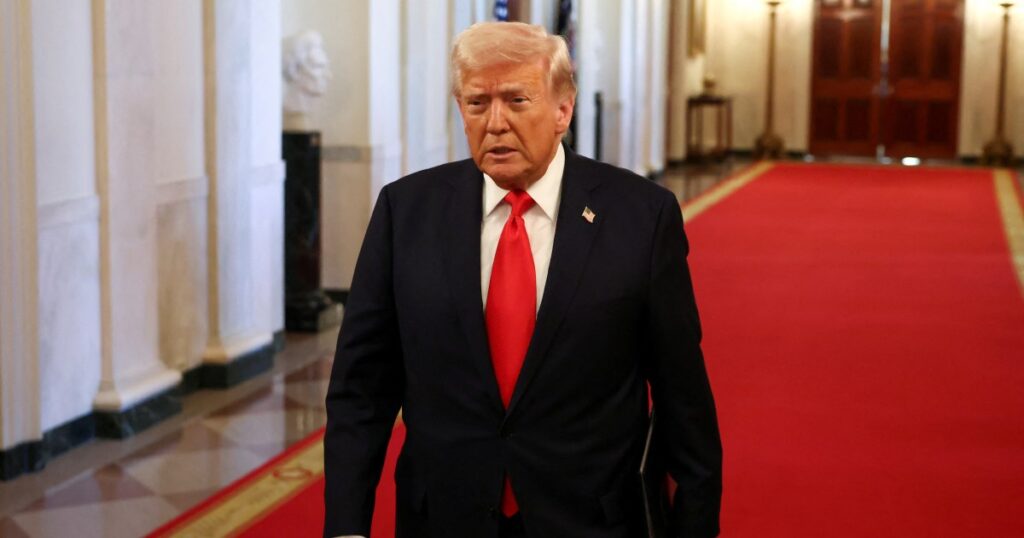
As United States President Donald Trump and Chinese President Xi Jinping face off in an escalating trade war that has roiled global markets and businesses big and small, the question on countless minds is who will blink first. Trump has pummelled China with a 145-percent tariff. Beijing has retaliated with a duty of 125 percent. On Tuesday, Trump ramped up his trade salvoes by ordering a national security review of imports of critical minerals, most of which come from China. Earlier, Bloomberg News reported that China had ordered its airlines not to take deliveries of Boeing jets and halt purchases of aircraft-related equipment and parts from US companies, while Hong Kong’s postal service announced it would no longer handle US-bound mail. “A 145-percent tariff will make it impossible for China to sell to the US – the costs on both economies will be exceptionally high,” Vina Nadjibulla, vice president of research and strategy at the Asia Pacific Foundation of Canada, told Al Jazeera. “A complete decoupling is almost impossible to contemplate.” Advertisement “Who will blink first depends on who can stand more pain and who is better prepared,” she added. While Trump has long accused China of ripping off the US on trade, analysts have questioned whether his administration has a clear goal of what it wants to achieve with its tariffs. Harry Broadman, a former US assistant trade representative and one of the chief negotiators of the WTO, said it is not clear whether Trump wants to close the trade deficit with China or end business with the country outright. “How does Trump deal with US firms that need their goods from China for their factories to work? It’s not black and white,” Broadman told Al Jazeera. “Markets are layered through the different stages of production, you’ve got components coming from all over the world. The global economy is finely chopped up vertically, so it’s not obvious who the winners and losers are.” Broadman said Trump’s approach to trade has been simplistic and unrealistic. “He’s obviously a deals guy in real estate, but not international markets … How he thinks is, ‘How can I win and how can I make the opponent lose?’” he said. “It’s not more sophisticated than that. He’s not interested in splitting the spoils. But you don’t get very far with that.” Miscalculations Trump has made it clear that he believes it is up to China to come to the negotiating table. In a statement on Tuesday, White House press secretary Karoline Leavitt quoted Trump as saying that “the ball is in China’s court.” “China needs to make a deal with us, we don’t have to make a deal with them,” Leavitt told a media briefing in remarks that she said came directly from Trump. Advertisement While the US economy entered the trade war in a relatively strong position compared with China – which is facing headwinds including high unemployment and low domestic demand – Beijing has been preparing for a trade war since at least since Trump’s first term, according to analysts. “The Trump administration has miscalculated that China would quickly come to the negotiating table and would respond to threats,” Dexter Tiff Roberts, a nonresident senior fellow at the Atlantic Council’s Global China Hub, told Al Jazeera. Last week, the People’s Daily, a mouthpiece of China’s Communist Party, said the country was prepared for the tariffs after accumulating “rich experience” during the past eight years of trade tensions with the US. “For China, this is an almost existential struggle both on trade and security,” Roberts said, referring to repeated statements from Xi that the East is on the rise while the West is in decline. China has been diversifying its trade away from the US for years, including by reducing its dependence on US agricultural products such as soya beans, which it now mostly sources from Brazil. In 2024, 14.7 percent of China’s exports went to the US, down from 19.2 percent in 2018. On Monday, Xi began a five-day tour of Southeast Asia aimed at buttressing China’s self-styled image as a champion of free trade and a more reliable partner to the region than the US. There are also political considerations for China. Xi has built an image of a strong man and capitulating to the US quickly would damage this image, something he cannot risk both domestically and in China’s dealings with other countries, Roberts said. Advertisement “It is likely they’ll find some MO where both sides declare victory, otherwise it’s like going nuclear and it will shut down entire trade between US and China and I don’t even understand how that works and it will have shocking global implications,” Roberts said. ‘Misguided obsession’ Robert Rogowsky, a professor of trade and economic diplomacy at the Middlebury Institute of International Studies in Monterey, California, said he expects Trump to blink first. “There’s so much blinking going on in Washington that it’s almost hard to believe there won’t be more,” Rogowsky told Al Jazeera. “Trump has this misguided obsession with tariffs and he blinks because he comes under pressure from special interests – the wealthy class that has been losing huge amounts of wealth in stock and bond markets,” Rogowsky said, adding that recent turmoil in the financial markets had damaged his support base. On Friday, the Trump administration announced it would exempt technology imports from the 145-percent levy on China, although later White House officials said that was a temporary reprieve and sectoral tariffs were in the pipeline. Trump on Monday suggested he was also considering exemptions from his 25-percent auto tariffs. “Every public policy negotiation has layers of negotiation: the negotiation with those across the table and the many with those behind you [who helped you] to get to the table,” Rogowsky said, adding that in this case, Trump had “negotiated” with special interests in the tech and auto sectors and “given in right away”. Advertisement It is possible Trump was driven by fear of losing the support of industry
Al-Shabab fighters attack strategic town in central Somalia
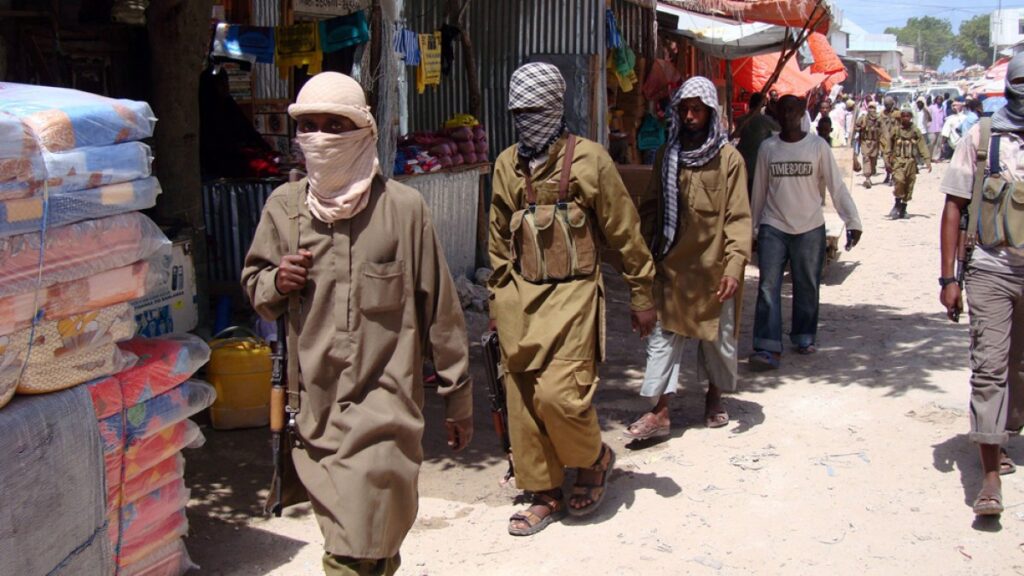
The armed group claims to have seized control of Adan Yabaal town, but the Somali army disputes the battle outcome. The al-Shabab armed group has claimed to have seized control of Adan Yabaal, a town in central Somalia and a logistical hub for the government forces, about 220 kilometres (130 miles) north of the capital, Mogadishu. The fighters launched the raids before dawn on Wednesday, forcing the army to retreat after fierce battles, according to a security officer quoted by the Anadolu news agency. However, the report was disputed by the army. Captain Hussein Olow, a military officer in Adan Yabaal, told the Reuters news agency that government troops had pushed the group back. “The terrorist militants launched a desperate attack on the Somali army positions in the Adan Yabaal district this morning,” Somali captain Mohamed Ali told the AFP news agency from a nearby town. “There was heavy fighting still going on in some parts of the town,” he said. There were no reports of casualties. ‘Deafening explosion’ Al-Shabab has been fighting the Somali government for more than 16 years and frequently targets government officials and military personnel. Advertisement Adan Yabaal has strategic military significance and serves as a critical logistical hub connecting Hirshabelle state to the neighbouring central state of Galmudug. It was recaptured from al-Shabab in 2022. “After early morning prayers, we heard a deafening explosion, then gunfire,” Fatuma Nur, a mother of four, told Reuters by phone from Adan Yabaal. “Al-Shabab attacked us from two directions,” she added. President Hassan Sheikh Mohamud, who is from the area, visited the town in March to meet with military commanders there. A new African Union peacekeeping mission replaced a larger force at the start of the year, but its funding is uncertain, with the United States opposed to a plan to transition to a United Nations financing model. Adblock test (Why?)