

Barcelona and PSG reach Champions League semifinals; Dortmund and Villa out
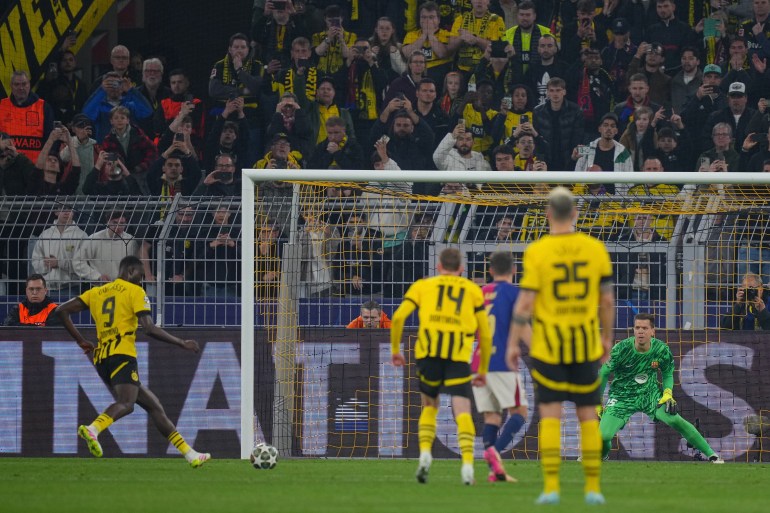
Barcelona and Paris-Saint Germain have booked their places in the semifinals of the Champions League but were heavily tested by Borussia Dortmund and Aston Villa, respectively, in the quarterfinal second legs. Barca went through with a 5-3 aggregate win, despite losing 3-1 at Borussia Dortmund on Tuesday, with Serhou Guirassy hitting a hat-trick. Holding a 4-0 lead after a dominant performance in Catalonia, the visitors were made to sweat as Dortmund, and Guirassy nearly pulled off a stunning turnaround. Guirassy put Dortmund in front with a panenka from the spot, with 11 minutes gone, and headed them two goals clear early in the second half. Dortmund sensed a sensation but Barcelona hit back, with Fermin Lopez forcing Ramy Bensebaini into an own goal with just more than half an hour remaining. Guirassy reignited Dortmund’s belief with a third on the 76th-minute mark, and the final stages may have been different had Julian Brandt not been offside before scoring with 11 minutes remaining. Advertisement Despite losing their first competitive game in 2025, Barcelona are through to the semis, keeping their dream of a remarkable treble alive, 10 years after last completing the feat by winning the Champions League in Berlin. Dortmund’s Guinean forward, Serhou Guirassy, left, scores the opening goal from the penalty spot past Barcelona’s Polish goalkeeper, Wojciech Szczesny [Pau Barrena/AFP] Barcelona, considered the title favourites, will face either Inter Milan or Bayern Munich in the final four. Clearly outclassed in the first leg, Dortmund will take inspiration from Tuesday’s performance, not least the goalscoring form of Guirassy. The 29-year-old Guinean, who has spent most of his career bouncing between the first and second divisions in Germany and France, now has 13 Champions League goals this season, more than any other player. “I’m proud of what we were able to do. Barcelona are a strong team but we fought until the death. We showed what we can do,” Guirassy told Amazon Prime. Despite a big first-leg lead, coach Hansi Flick made good on his pre-match pledge to continue attacking, opting against resting any of his attacking trident of Robert Lewandowski, Lamine Yamal or Raphinha. With coach Niko Kovac admitting that Dortmund needed a “miracle” to reach the semis after the debacle in Catalonia, the hosts’ task got a little harder when captain and centre-back Emre Can was ruled out with injury just before the match. But Dortmund raced out of the blocks, with Guirassy and strike partner Maximilian Beier going close inside the opening 10 minutes before Pascal Gross was the victim of a clumsy foul in the box by Wojciech Szczesny. Advertisement Guirassy stepped up to the spot and was nerveless, calmly unleashing a panenka to get the hosts under way. Dortmund sliced Barcelona open repeatedly without reward until half-time but made it count four minutes into the second half, with Guirassy heading in a Ramy Bensebaini assist from a corner. With Dortmund’s 81,355-strong Westfalenstadion smelling blood, Barcelona’s familiar response was to send their attack down the right, and the move paid off almost immediately. After Yamal’s cross was half-cleared, Fermin Lopez found himself in the teenager’s channel, whipping a pass towards Lewandowski, which Bensebaini hit into his own net. With Barcelona content to control possession as the clock wound down, Guirassy relit the hosts’ hopes when he scored his third in the final quarter of an hour, blasting in from close range after some delightful dribbling from teenage winger Julian Duranville. The home fans erupted when Brandt scored three minutes later, but the midfielder was offside, allowing Barcelona a breather. Barcelona managed to hold on, despite waves of energetic Dortmund attacks in the final stages, to remain on track for the treble. PSG made to sweat by Aston Villa PSG kept alive their dream of a first Champions League title by squeezing past Aston Villa 5-4 on aggregate after a thrilling second leg of their quarterfinal, which the English side won 3-2. Ahead 3-1 from the first leg, PSG appeared to have sealed the contest within the first half-hour as their marauding fullbacks, Achraf Hakimi and Nuno Mendes, scored from two flowing counterattacks to stun the Villa Park crowd. Advertisement But Youri Tielemans revived hope with a 34th-minute deflected goal before Villa stunned the visitors early in the second half, with two goals in two minutes from John McGinn and Ezri Konsa. Villa poured forward, drawing a string of outstanding saves from PSG goalkeeper Gianluigi Donnarumma to preserve the aggregate win and enable his side to move into a semifinal against either Real Madrid or Arsenal. PSG were hot favourites to win the quarterfinal, given their first-leg advantage and recent form, including sealing a fourth straight Ligue 1 title and reaching the final of the French Cup. But Villa were not lacking belief themselves, especially at home where they were on a 17-match unbeaten run in all competitions. The hosts came out flying, nearly taking the lead from a corner in an early flurry of attacks. Ezri Konsa of Aston Villa misses a header as the home side presses for the equaliser [Dan Istitene/Getty Images] However, PSG struck first blood in the 11th minute when Hakimi stroked the ball in after Villa’s usually ultra-reliable goalkeeper, Emiliano Martinez, pushed it into his path. Sixteen minutes later, Mendes curled in Villa’s second goal off the post at the end of another fast-flowing counterattack. Tielemans’s first-half goal appeared unlikely to swing the tie but it inspired Villa to storm out in the second half, with McGinn letting fly from outside the box to score in the 55th minute, helped by a small deflection. Then Konza struck Villa’s third on the night after being set up with a brilliant dribble from Marcus Rashford. Advertisement One more goal would have put Villa level on aggregate but Donnarumma defied Rashford, Tielemans and then substitute Marco Asensio during a nerve-racking finale. “Very proud of the boys, of what we’ve done tonight,” said Konza. “Obviously, the two goals at the start killed us. But we
What is the regional impact of the war in Sudan?
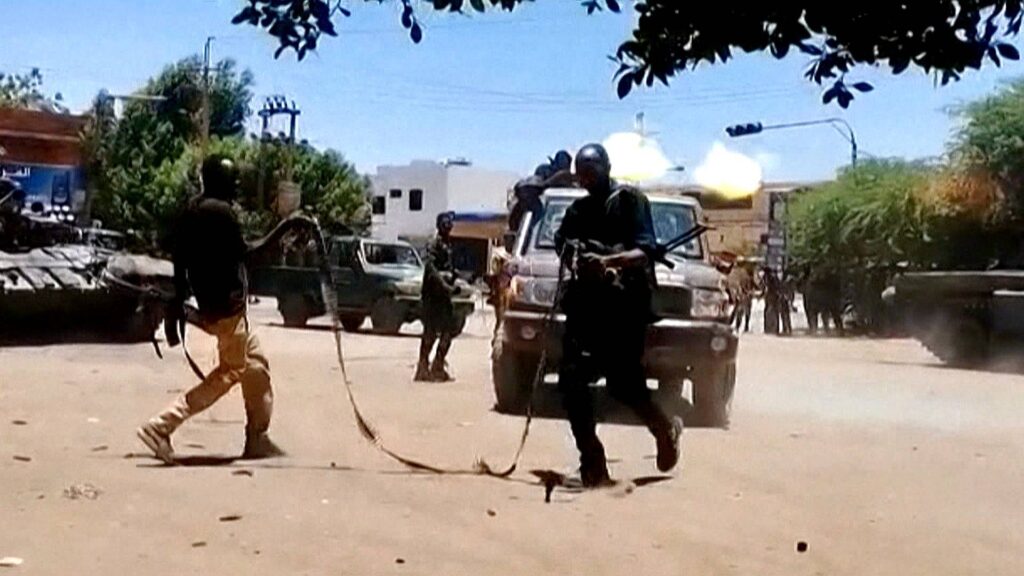
Foreign powers back different sides, while fears grow that violence could spread. Sudan has been at war for two years. The military has been fighting the paramilitary Rapid Support Forces and has made gains in recent weeks. Regional countries have been supporting different sides. What’s the impact on neighbouring countries? And is there a risk this conflict can spread? Presenter: Adrian Finighan Guests: Justin Lynch – Managing director of the Conflict Insights Group Mohy Omer – Served as senior Sudan policy adviser to the administration of former US President Joe Biden Elbashir Idris – Independent Sudan analyst Adblock test (Why?)
‘Ant Gang’ smugglers plead guilty to trafficking wildlife in Kenya

NewsFeed Four wildlife traffickers face sentencing in Kenya after being caught smuggling 5,000 rare queen ants. The species, native to Kenya, sells for over $130 each due to their size, bold colour, and demand in exotic pet colonies. Published On 15 Apr 202515 Apr 2025 Adblock test (Why?)
Hamas ‘lost contact’ with group holding Gaza captive after Israeli attack
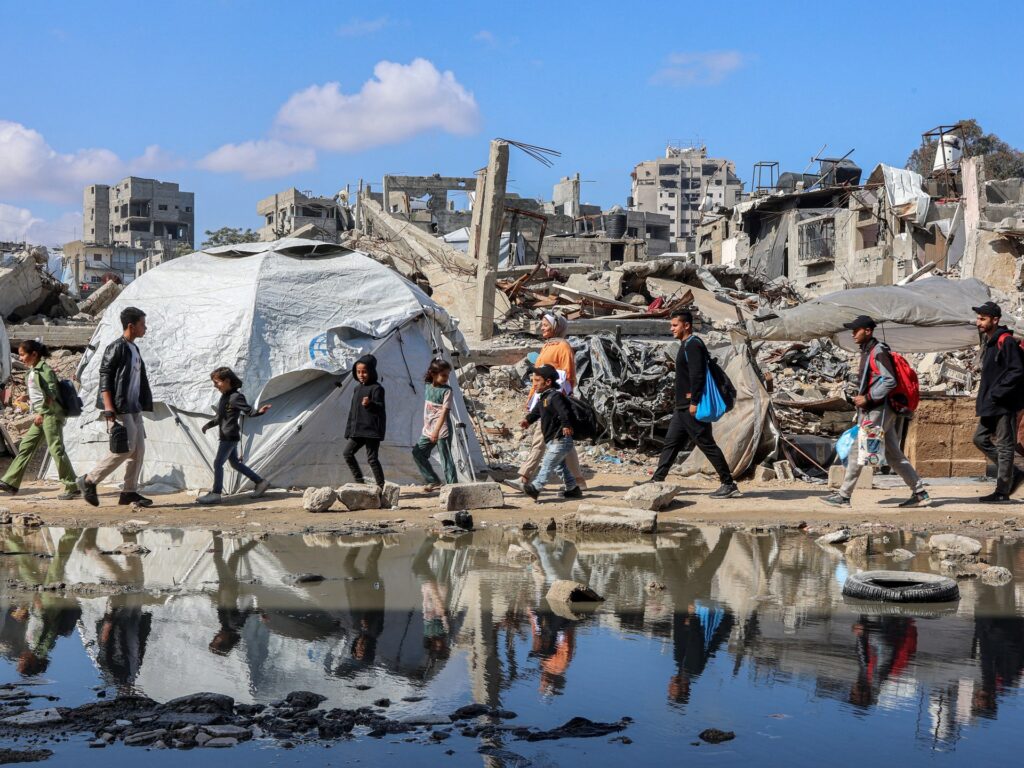
The armed wing of the Palestinian group Hamas says it has lost contact with a group holding Israeli-US captive Edan Alexander in the Gaza Strip after “direct Israeli bombardment” targeted the area where he was being held. “It seems that the occupation army is deliberately trying to kill him and hence relieve themselves from the pressure caused by the dual-citizen prisoners in order to continue its genocide against our people,” Abu Obeida, spokesman for the Qassam Brigades, said on Tuesday. On Saturday, Hamas had released a video showing Alexander – a New Jersey native and a 21-year-old soldier in the Israeli army – alive. Alexander appeared to be under duress in the video and appealed to US President Donald Trump to get him out of Gaza and urged the US president not to believe “lies” told by Israeli Prime Minister Benjamin Netanyahu. In his latest statement, Abu Obeida did not say where Alexander was being held in Gaza. The group’s armed wing later released a video warning families of the captives that their “children will return in black coffins with their bodies torn apart from shrapnel from your army”. Advertisement Al Jazeera’s Hani Mahmoud, reporting from Gaza City, said Palestinians across the enclave believe that the US “has an interest” in securing Alexander’s release in a negotiated deal. “They believe this will increase pressure on the Israeli government to speed up the process and come to an agreement,” Mahmoud said. “If it is confirmed that Alexander has been killed, then the Palestinian groups will lose what they hoped would be a lever of pressure against the Netanyahu government to get him to sign a ceasefire agreement.” Hamas has previously blamed Israel for the deaths of captives held in Gaza, including as a direct result of bombardment, while also acknowledging on at least one occasion that a captive was killed by a guard. It said the guard had acted against instructions. Trump’s special envoy Steve Witkoff told reporters at the White House in March that securing the release of Alexander, believed to be the last living US hostage held by Hamas in Gaza, was a “top priority for us”. The potential release of Alexander was at the centre of earlier talks held between Hamas leaders and US negotiator Adam Boehler last month. Humanitarian situation at its ‘worst’ The announcement comes as Netanyahu said Israel would press on with its military offensive in Gaza to secure the release of captives and praised troops during a visit to the devastated north of the territory. “They are striking the enemy and Hamas will continue to suffer blow after blow. We insist that they release our hostages, and we insist on achieving all of our war objectives,” Netanyahu told soldiers in Gaza, according to a statement from his office. Advertisement In a phone call with Netanyahu, France’s President Emmanuel Macron said he told Israel’s leader that the suffering of the people in Gaza “must end”, and that only a ceasefire could free the remaining Israeli captives. Hamas released 38 captives under the last truce agreement that began on January 19. In mid-March, Israel’s military resumed its ground and aerial offensive on Gaza, abandoning the ceasefire and reimposing a total blockade of Gaza. Hamas decried the ongoing blockade, saying Israel has been preventing the entry of “all essential items necessary for life, including food supplies, medicine and fuel”. The United Nations has also warned that Gaza’s humanitarian crisis is spiralling out of control. “The humanitarian situation is now likely the worst it has been in the 18 months since the outbreak of hostilities,” said the UN Office for the Coordination of Humanitarian Affairs (OCHA). Israeli forces continued to bombard areas across Gaza on Tuesday, killing at least 21 people, according to Gaza’s civil defence. Since Israel’s assault began in October 2023, more than 51,000 Palestinians have been killed, mostly women and children, according to the Gaza Health Ministry. Israeli officials say that the offensive will continue until the remaining 59 captives are freed and until Hamas is demilitarised. Hamas insists it will free hostages only as part of a deal to end the war permanently, and has repeatedly rejected demands to lay down its arms. Israel issued a truce proposal to Egyptian and Qatari mediators on Monday, offering a 45-day temporary ceasefire in exchange for Hamas disarming and releasing 11 Israeli captives still held in Gaza. Advertisement Hamas said in a statement it was “studying” the proposal, but senior Hamas official Sami Abu Zuhri told Al Jazeera prior to the release of the official statement that Hamas would not accept any demand to disarm. Adblock test (Why?)
Iran ‘must stop and eliminate’ nuclear enrichment, says US envoy Witkoff
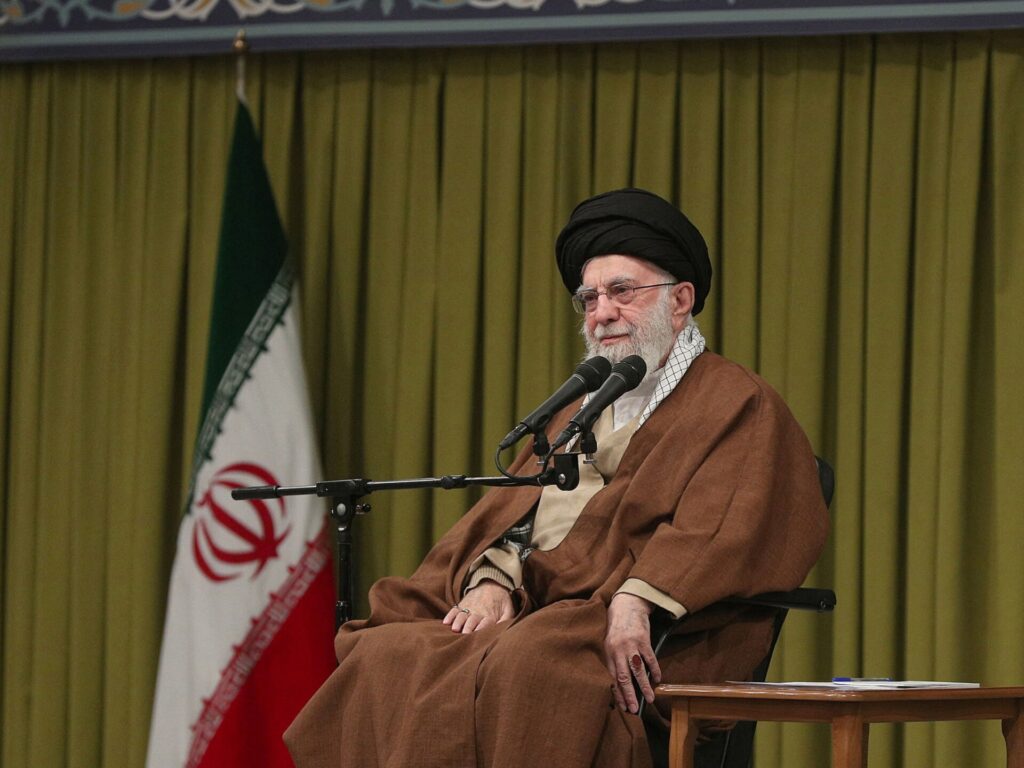
Washington, DC – United States special envoy Steve Witkoff has said that Tehran “must stop and eliminate” its nuclear enrichment programme to reach a deal with Washington, seemingly raising the bar of US demands ahead of another round of talks with Iranian officials. Witkoff’s remarks on Tuesday appear to contradict his suggestion a day earlier that the US would be satisfied with Iran enriching uranium at a low level to produce energy. “Any final arrangement must set a framework for peace, stability, and prosperity in the Middle East – meaning that Iran must stop and eliminate its nuclear enrichment and weaponization program,” Witkoff said in a statement on Tuesday. “It is imperative for the world that we create a tough, fair deal that will endure, and that is what President Trump has asked me to do.” Witkoff’s official title is special envoy to the Middle East, but US President Donald Trump has given him several high-stakes responsibilities beyond the region, including spearheading talks with Russia as well as Iran. Advertisement The US envoy held a round of negotiations with Iranian officials and was in direct contact with Iran’s Foreign Minister Abbas Araghchi in Oman on Saturday. Further talks are scheduled for April 19. Later on Tuesday, the State Department also said that the US is seeking to “eliminate” Iran’s uranium enrichment. Moreover, the White House said Trump spoke to Omani Sultan Haitham bin Tariq Al Said and stressed “the need for Iran to end its nuclear programme through negotiations”. ‘They do not need to enrich past 3.67 percent’ Speaking to Fox News on Monday, Witkoff suggested that the US wants Iran to cap its uranium enrichment, a process of changing the atomic composition of uranium to produce nuclear fuel. When enriched at 90 percent, uranium can be used for weapons. “They do not need to enrich past 3.67 percent,” Witkoff said. “In some circumstances, they’re at 60 percent. In other circumstances, 20 percent. That cannot be. And you do not need to run — as they claim — a civil nuclear programme where you’re enriching past 3.67 percent, so this is going to be much about verification on the enrichment programme.” That assertion garnered criticism from conservative hawks who have been calling for abolishing the Iranian enrichment programme altogether. Tehran and Washington have gone through talks and tensions over the nuclear programme for decades. Successive US administration have said that preventing Iran from acquiring a nuclear weapon is one of their top foreign policy priorities. Advertisement In 2015, the US was a key party in the Joint Comprehensive Plan of Action (JCPOA), a deal that saw Iran scale back its uranium enrichment to 3.67 percent in exchange for the lifting of international sanctions against its economy. The US administration of then-President Barack Obama, a Democrat, hailed that deal as a means of preventing Iran from acquiring nuclear weapons. But Trump, a Republican, nixed the deal in 2018 during his first term. Since then, the US has been piling sanctions on Iran, and Tehran has escalated its nuclear programme in response. After returning to the White House for a second term this year, Trump re-launched his so-called maximum pressure campaign against Iran, with the aim of choking off Iranian oil exports, particularly to China. During his interview with Fox, Witkoff implied that the Trump administration is seeking concessions from Iran beyond the JCPOA, particularly over its missile programme. He said Washington is seeking “verification on weaponisation” from Iran, including “the type of missiles that they have stockpiled there”. However, his statement on Tuesday seems to indicate the US would like to see all uranium enrichment in Iran cease. While Iranian officials have been saying for decades that the country is not seeking a nuclear bomb, they have also stressed that their country has a right to use and create nuclear energy. Tensions between the two countries have been particularly high over the last month. In mid-March, Trump threatened to retaliate against Iran should one of its regional allies, the Houthi group in Yemen, continue its attacks on shipping vessels in the Red Sea. Advertisement “Every shot fired by the Houthis will be looked upon, from this point forward, as being a shot fired from the weapons and leadership of IRAN, and IRAN will be held responsible, and suffer the consequences, and those consequences will be dire!” Trump wrote on his platform Truth Social. Trump also indicated US could consider military action if the current round of nuclear talks falls through. “If the talks aren’t successful with Iran, I think Iran is going to be in great danger,” he said last week. Still, the US president has also stressed that he prefers a diplomatic deal to ensure that Tehran never acquires a nuclear weapon. ‘Negotiations may or may not yield results’ On Monday, Trump called for speedy negotiations to resolve the issue and again threatened to take “harsh” action against Tehran. With the talks under way, foreign policy hawks have cautioned Trump against drawn-out negotiations or entering a deal that resembles the JCPOA. Last week, nine Republican Congress members — including Claudia Tenney of New York and Barry Loudermilk of Georgia — penned a letter to Trump calling for “permanently stripping Tehran of the ability to enrich uranium”. “The regime in Tehran has mastered the art of delay and deception, using diplomatic negotiations as a shield while advancing its nuclear ambitions,” the lawmakers wrote. “We cannot afford another failed agreement that enables Iran to play for time. Nor can we repeat the mistakes of the past by permitting Iran to enrich uranium or maintain the capability to ever reconstitute its nuclear program.” Advertisement Israel — the US’s top ally in the region — is widely believed to have an undeclared nuclear arsenal. Iranian officials have also expressed doubt about a new deal, noting that Tehran lived up to its commitments under the JCPOA while the US abandoned the agreement. “The negotiations may or may not yield results,” Iran’s Ayatollah Ali Khamenei
France expels 12 Algerian officials as tensions escalate
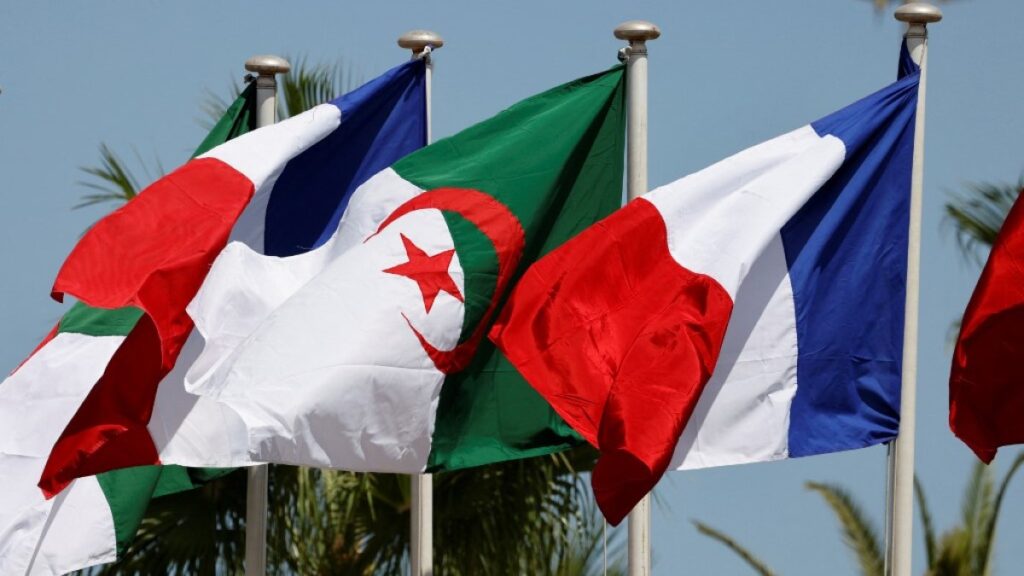
Move comes after Algeria expelled French diplomats, following France’s arrest of an Algerian consular official linked to an alleged kidnap. France says it will expel 12 Algerian diplomatic and consular staff members and has recalled its ambassador from Algiers, deepening a crisis that threatens to unravel months of attempted reconciliation between the two countries. The announcement on Tuesday comes a day after Algeria ordered 12 French diplomats to leave within 48 hours. Algiers announced the expulsions after French prosecutors indicted three Algerian nationals, including a consular official, over the alleged kidnapping of a prominent government critic in Paris last year. The activist, Amir Boukhors – better known to his more than one million TikTok followers as “Amir DZ” – was granted asylum in France in 2023. He was abducted in a Paris suburb in April last year and released the next day. French authorities said the three suspects are also facing charges of “terrorist” conspiracy. Strained relations It is the first time France has detained an employee of the Algerian consulate, marking a sharp escalation in tensions between Paris and the former French colony. Advertisement French Foreign Minister Jean-Noel Barrot said on Monday that the expulsions were directly linked to the arrests. The French Ministry for Europe and Foreign Affairs noted that Algeria’s move, if carried out, would mark the first expulsion of French diplomats from the country since its independence in 1962. Algeria, which has issued nine international arrest warrants for Boukhors on charges including fraud and “terrorism”, is demanding his extradition. The escalation comes despite recent overtures between the two countries. Just a week earlier, Barrot met with Algerian President Abdelmadjid Tebboune and declared bilateral relations had returned to normal after a period of simmering tensions. French President Emmanuel Macron’s backing of Morocco’s autonomy plan for the disputed region of Western Sahara last year sparked outrage in Algiers. The jailing of French-Algerian writer Boualem Sansal by an Algerian court last month only added to the strain with Macron calling for his release. Adblock test (Why?)
Does Trump want a Gaza ceasefire before his Middle East trip?
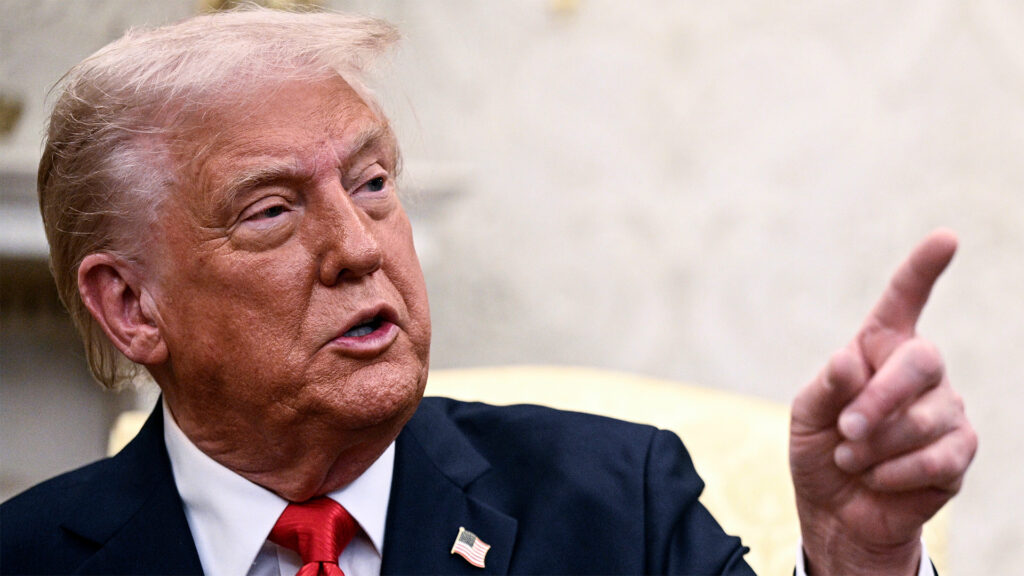
Parsing through Donald Trump’s Middle East agenda with Steven Cook from the Council on Foreign Relations. US President Donald Trump and his predecessor Barack Obama want the same things in the Middle East, argues Steven Cook, senior fellow at the Council on Foreign Relations: “disentangling the US from its foreign adventures”. Cook tells host Steve Clemons that Trump wants a deal with Iran, and may be pressuring Israel to end its war on Gaza before his proposed trip to the Gulf region next month. There is a “trust deficit” between Trump and Israeli leader Benjamin Netanyahu, adds Cook, and this explains why Trump told Netanyahu to “be reasonable” regarding Syria and Turkiye’s President Recep Tayyip Erdogan. Adblock test (Why?)
Mark Zuckerberg back in US court amid push to break up Meta

The last time the US Federal Trade Commission (FTC) was able to break up a major corporation was more than four decades ago, with the split-up of AT&T. The blockbuster antitrust case against Meta — the parent company of Facebook, Instagram, and WhatsApp — has kicked off in Washington, DC, the United States. Founder and CEO Mark Zuckerberg takes the stand for the second straight day today. The landmark case accuses Meta of taking over Instagram and WhatsApp before they could become competitors. The suit is the culmination of a nearly six-year investigation into whether the social media giant broke US competition laws in acquiring Instagram and WhatsApp. At stake is the future of Meta’s $1.4 trillion advertising business and the prospect of having to spin off its hugely popular services into separate companies. Zuckerberg takes political strategy The federal court trial in Washington has dashed Zuckerberg’s hopes that the return of US President Donald Trump to the White House would see the government let up on the enforcement of antitrust law against Big Tech. Zuckerberg, the world’s third-richest person, has made repeated visits to the White House as he tried to persuade the president to choose settlement instead of fighting the trial. Advertisement As part of his lobbying efforts, Zuckerberg contributed to Trump’s inauguration fund and overhauled content moderation policies. He also purchased a $23m mansion in Washington in what was seen as a bid to spend more time close to the centre of political power. But the US Federal Trade Commission (FTC) has shown no interest in letting up its push against Meta. Trump-appointed FTC Chairman Andrew Ferguson said in an interview on Fox Business that the agency would not let a Meta-like monopoly arise again. Ferguson’s push is not a far cry from the previous FTC Chairwoman, Lina Khan, who under former US President Joe Biden was known to be tough on Big Tech. The case could see the Facebook owner forced to divest Instagram and WhatsApp, which have grown into global powerhouses since their buyouts. The suit was originally filed in December 2020, during the first Trump administration, and all eyes were on whether the Republican president, on his return to the White House, would ask the FTC to stand down. More than a decade of acquisitions Central to the case is Facebook’s 2012 $1bn purchase of Instagram — then a small but promising photo-sharing app that now boasts two billion active users. An email from Zuckerberg cited by the FTC showed him depicting Instagram’s emergence as “really scary” and adding that this was “why we might want to consider paying a lot of money for this”. Boxes of documents pertaining to Meta’s acquisitions arrive on the first day of a historic antitrust trial in Washington, DC, Monday, April 14, 2025 [Nathan Howard /AP Photo] In his first day of testimony on Monday, Zuckerberg downplayed those exchanges as early talk before plans for Instagram came together. Advertisement But the FTC argues that Meta’s $19bn WhatsApp acquisition in 2014 followed the same pattern, with Zuckerberg fearing the messaging app could either transform into a social network or be purchased by a competitor. Meta’s defence attorneys counter that substantial investments transformed these acquisitions into the blockbusters they are today. They also highlight that Meta’s apps are free for users and face fierce competition. FTC attorney Daniel Matheson said in opening remarks on Monday that “they decided that competition is too hard and it would be easier to buy out their rivals than to compete with them.” Meta pushes back Meta attorney Mark Hansen countered in his first salvo that “acquisitions to improve and grow an acquired firm” are not unlawful in the US, saying that is what Facebook did. A key part of the courtroom battle will be how the FTC defines Meta’s market. The US government argues that Facebook and Instagram are dominant players in apps that provide a way to connect with family and friends, a category that does not include TikTok and YouTube. But Meta disagrees. “The evidence at trial will show what every 17-year-old in the world knows: Instagram, Facebook and WhatsApp compete with Chinese-owned TikTok, YouTube, X, iMessage and many others,” a spokesperson told the news agency Reuters. If the FTC is ultimately successful in its efforts to break up Meta, it would be the first time in 40 years that the agency would have forced a corporate breakup. In the early 1980s, the FTC forced telecommunications company AT&T to split apart. Advertisement Adblock test (Why?)
Syria’s al-Sharaa meets with Qatar’s Emir in Doha
[unable to retrieve full-text content] Syria’s President Ahmad al-Sharaa met with Qatar’s Emir Sheikh Tamim al-Thani on his first official visit to Doha.
The human cost of two years of war in Sudan
[unable to retrieve full-text content] After two years of war in Sudan, millions of people are on the brink of starvation.