

Musk vs Navarro: Is the Trump team divided on tariffs?

United States President Donald Trump has doubled down on his tariffs plan, even as markets crash around the world. However, signs of divisions among Trump’s aides are emerging with key ally Elon Musk publicly clashing with trade adviser Peter Navarro on Saturday. Others have also presented diverging narratives. Here is more about what has happened: What happened between Musk and Navarro? On Wednesday, Trump announced sweeping tariffs impacting most of America’s trading partners. This marked a major break from decades of US trade policy and sparked criticism and concern from economists and countries targeted by Trump’s tariffs. In the aftermath, the three major stock indices in the US – the Dow Jones Industrial Average, S&P 500 and Nasdaq – dropped by more than 5 percent over the past week. This marked the biggest stock market drop in the US since 2020 during the COVID-19 pandemic. Longtime Trump aide and the administration’s senior counsellor for trade and manufacturing, Peter Navarro, defended the tariffs in an interview with CNN on Thursday. Advertisement “The market will find a bottom. It will be soon, and from there, we’re going to have a bullish boom, and the Dow is going to hit 50,000 during Trump’s term,” Navarro said. As of Monday, the Dow Jones stood at 38,314 before the start of trading. After an X user posted a clip of Navarro speaking to CNN and alluded to the adviser’s doctorate from Harvard University, Musk hit back on the platform, which he owns. “A PhD in Econ from Harvard is a bad thing, not a good thing,” Musk posted. The first phase of the new tariffs – 10 percent levies on countries including the United Kingdom, Australia, Argentina and Saudi Arabia – came into effect on Saturday. Higher levies that Trump calls reciprocal tariffs are scheduled to come into effect on Wednesday against countries including China and India. What did Musk say about tariffs on Europe? The hit against Navarro hasn’t been Musk’s only comment on tariffs in recent days. On Saturday, Musk – who oversees the Department of Government Efficiency (DOGE), tasked by Trump to slash government spending – joined a conversation by videolink with Italian Deputy Prime Minister Matteo Salvini, the leader of the far-right League party. During this conversation, Musk voiced hopes for “a zero-tariff situation” between the US and Europe, even as Trump has imposed 20 percent tariffs on the European Union. “I hope it is agreed that both Europe and the United States should move ideally, in my view, to a zero-tariff situation, effectively creating a free-trade zone between Europe and North America,” Musk said. Advertisement Musk – the world’s richest man, who is CEO of SpaceX and Tesla and the largest shareholder of both firms – has seen his firms face setbacks in recent weeks. In Europe alone, Tesla’s sales have plunged by 49 percent in January and February when compared with the same months in 2024, according to a March 25 report published by the European Automobile Manufacturers’ Association. Tesla’s share price has also stumbled. It’s about half of what it was in December. How has Navarro responded? In a Fox News interview on Sunday, Navarro responded to Musk’s comments about the tariffs in Europe. “It was interesting to hear Elon Musk talk about a zero-tariff zone with Europe. He doesn’t understand that,” Navarro said. “The thing that I think is important about Elon to understand is he sells cars. That’s what he does,” Navarro added, suggesting that Musk’s comments on tariffs were linked to his business interests. What had Musk said earlier about tariffs? Last month, Tesla warned the US government that tariffs could harm electric vehicle companies when Trump’s tariff targets impose their own levies on American products. In an unsigned letter to US Trade Representative Jamieson Greer, Tesla said: “US exporters are inherently exposed to disproportionate impacts when other countries respond to US trade actions.” The company added: “Past trade actions by the United States have resulted in immediate reactions by the targeted countries, including increased tariffs on electric vehicles imported into those countries.” Advertisement On March 26, Trump imposed 25 percent tariffs on car imports and certain automobile parts. In response to this, Musk wrote on X: “Important to note that Tesla is NOT unscathed here. The tariff impact on Tesla is still significant.” Are there other signs of splits within Team Trump? Commerce Secretary Howard Lutnick told CBS News on Sunday that the 10 percent baseline tariffs will “stay in place for days and weeks” and the higher reciprocal tariffs would also take effect. However, on the same day, Treasury Secretary Scott Bessent told NBC’s Meet The Press that more than 50 countries had reached out to Washington for negotiations to cut the levies. “The market consistently underestimates Donald Trump,” he said in response to the market crashes. Also on Sunday, CNN anchor Jake Tapper asked Agriculture Secretary Brooke Rollins whether the tariffs are here to stay like Trump and Lutnick have said. Rollins did not directly answer this question. Adblock test (Why?)
Palestinian-US teen killed by Israeli settler in the occupied West Bank
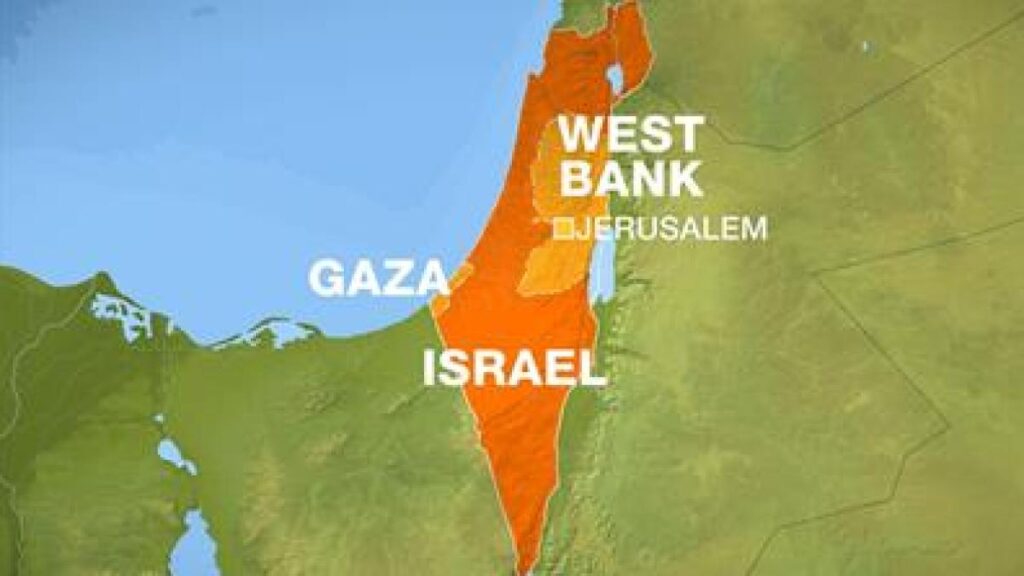
Palestinian officials identified the 14-year-old US citizen as Omar Mohammed Rabea. A Palestinian-American teenager has been shot and killed by an Israeli Jewish settler in the occupied West Bank, Palestinian authorities have said. Palestinian officials identified the 14-year-old as Omar Mohammed Rabea and said he was near a settlement in Turmus Aya when the settler opened fire. There have been sharp rises in settler violence, incursions, attacks and arson against Palestinians and their property in the territory since Israel’s war in Gaza began. The Israeli army has also been carrying out a sustained assault on the territory in various cities and towns. Rabea was shot along with two other teenagers by the settler, said the town’s Mayor Adeeb Lafi. Palestinian officials condemned the shooting. “This is yet another example of the ongoing Israeli settler violence against Palestinians, with impunity,” one official said. The victim’s family has not yet made a public statement, but they have expressed their grief over their loss. International criticism of Israeli settlement expansion and Jewish settler violence has been mounting, drawing condemnation from human rights groups worldwide. Advertisement Israeli forces have opened an investigation into the killing, but there has been no immediate comment from authorities. The Israeli military and settlers operate for the most part without fear of judicial repercussions in Palestinian areas. There have been several cases of US citizens being killed by Israelis in the occupied West Bank. In 2024, Aysenur Ezgi Eygi, a 26-year-old Turkish-American activist, was shot in the head by an Israeli soldier while protesting against illegal Israeli settlements, according to witnesses. Shireen Abu Akleh, a Palestinian-American journalist for Al Jazeera, was also killed by the Israeli military in 2022 while reporting in the occupied West Bank, despite being clearly identified as a member of the press. Adblock test (Why?)
Will anyone face justice for the Rafah ambulance convoy attack?
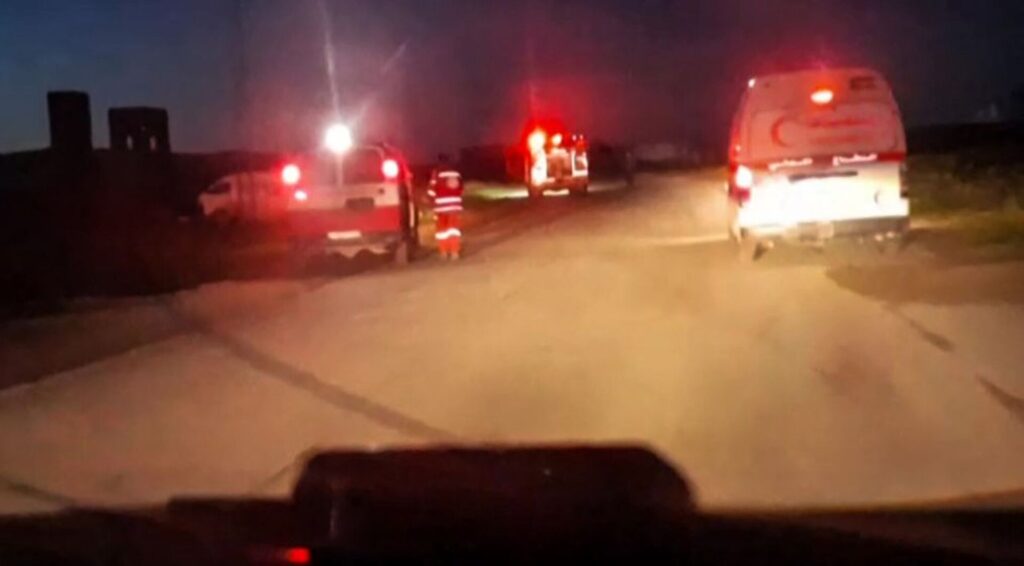
Recovered mobile phone video shows official Israeli account is false. Video from a dead victim’s phone shows how Israeli forces attacked an ambulance convoy in Gaza last month, killing 15 Palestinian emergency workers. It also shows that Israeli statements about the attack were false. Will anyone face justice? Presenter: Adrian Finighan Guests: William Schabas – professor of international law at Middlesex University Toby Cadman – international human rights lawyer Michael Mansfield – international human rights lawyer Adblock test (Why?)
Yemen’s Houthis say latest US air strikes kill at least four in Sanaa
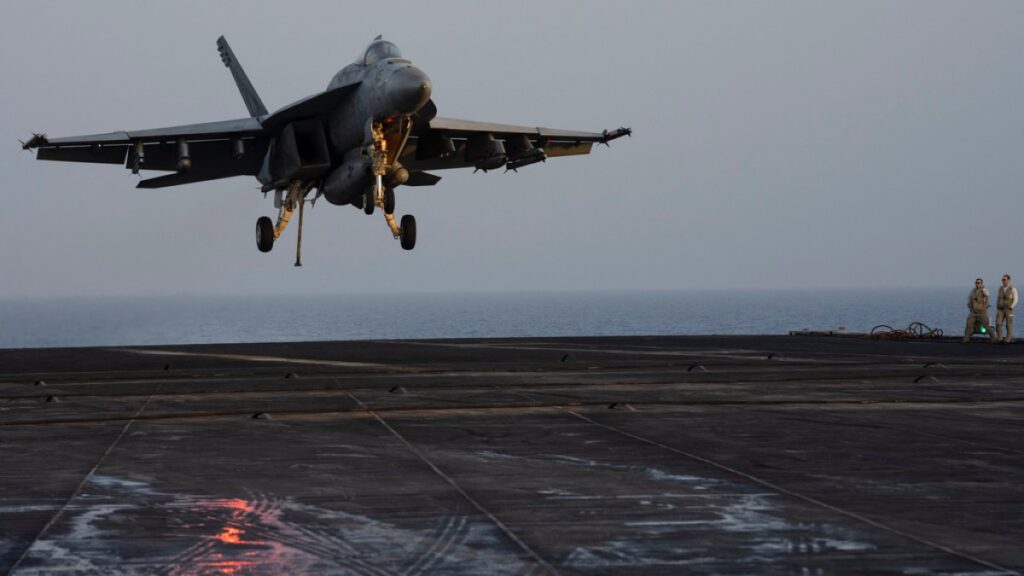
The strikes targeting the capital hit a home and wound more than 20 other people, according to Houthi authorities. United States air strikes have killed at least four people in Yemen’s Sanaa, according to the Ministry of Health. The attacks on the capital on Sunday hit a home and wounded more than 20 other people, including four women and children, according to local sources. US warplanes launched three other air strikes on the Al Jabal al Aswad area in the Bani Matar district, west of the capital. No details were available regarding casualties. Earlier, the Houthis said US air strikes killed at least two people overnight in a Houthi stronghold, Saada, and wounded nine. Footage aired by the Houthis’ Al Masirah satellite news channel showed a strike collapsing what appeared to be a two-storey building. The intense campaign of air strikes in Yemen under US President Donald Trump has targeted the Iranian-aligned group over Houthi attacks on shipping in the Red Sea. The Yemeni group has been carrying out attacks in solidarity with Palestinians during Israel’s war in Gaza. Dozens of people in Yemen have been killed in the latest US strikes since Trump ordered them to resume last month. Civilians have been targeted, families wiped out, military sites destroyed and soldiers killed. Advertisement The White House said there have been more than 200 strikes so far. The US attacks started after the Houthis said they planned to resume targeting Israeli-linked ships over Israel blocking aid entering the Gaza Strip and its subsequent resumption of the war, which ended a six-week ceasefire on March 18. The Houthis targeted more than 100 merchant vessels with missiles and drones from November 2023 until January this year. They also launched attacks targeting US warships. Adblock test (Why?)
Over 50 countries seek US trade talks after tariffs: Trump officials
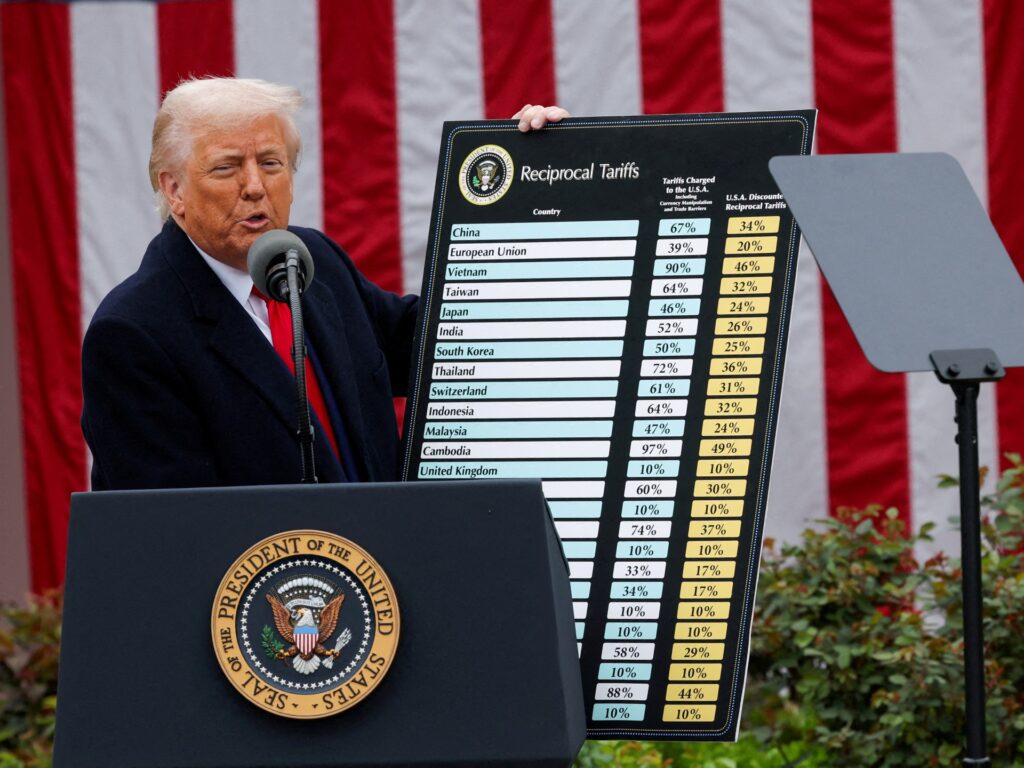
The tariffs have been widely criticised around the world for threatening to push the global economy into a recession. More than 50 countries have directly contacted the White House to initiate trade talks following US President Donald Trump’s imposition of wide-ranging punitive tariffs, administration officials have said. The tariffs, which caused a nearly $6 trillion drop in US stock values last week and battered global markets, have drawn worldwide attention and sparked fears of a potential economic downturn. But the Trump administration has downplayed that and potential further catastrophic economic fallout. In the meantime, investors nervously awaited the open of US trading after Wall Street’s selloff last week, anticipating another week of turbulence as other nations react. Asian markets will open in the coming hours and expect a rocky day. In a series of Sunday-morning talk show interviews, Trump’s top economic advisers defended the tariffs, describing them as a strategic move to strengthen the US position in global trade. Treasury Secretary Scott Bessent revealed that more than 50 nations had begun negotiations with the US since the tariffs were announced on Wednesday, but did not disclose the countries involved. Advertisement Bessent claimed the tariffs gave Trump “maximum leverage,” though their impact on the US economy remains uncertain. He dismissed concerns about a recession, citing unexpectedly strong job growth in the US. Trump’s wide-ranging tariffs came into effect on Saturday. The initial 10 percent “baseline” tariff took effect at US seaports, airports and customs warehouses, ushering in Trump’s full rejection of the post-World War II system of mutually agreed tariff rates. A decline in US GDP Despite this, economists have warned that the tariffs could lead to a decline in US gross domestic product (GDP), with JPMorgan economists revising their growth forecast from a 1.3 percent increase to a 0.3 percent decrease. The tariffs, aimed at pressuring foreign governments to make concessions, have also triggered retaliatory levies, including hefty ones from China, raising fears of a global trade war. US allies like Taiwan, Israel, India, and Italy have already expressed interest in negotiating with the US to avoid the tariffs. Taiwanese leader Lai Ching-te offered zero tariffs as the basis for talks, while Israeli Prime Minister Benjamin Netanyahu sought relief from the 17 percent tariff on Israeli goods. Meanwhile, the US continues to implement tariffs, with higher “reciprocal” duties expected to take effect on Wednesday. Critics have raised concerns over the method used to determine the tariffs, especially after they were applied to some remote, uninhabited territories. Commerce Secretary Howard Lutnick defended the strategy, claiming that it aimed to prevent countries from circumventing the tariffs with loopholes. Advertisement Adblock test (Why?)
Russia bombs Kyiv after missile strikes in Ukraine’s south

Ukraine’s president slams US for ‘weak’ response after Russia’s previous deadly attack on his hometown, Kryvyi Rih. At least one person has been killed and several others wounded in Russian air raids on Kyiv as well as the south of Ukraine after President Volodymyr Zelenskyy criticised the United States for a “weak” reaction to the attack on his hometown that killed 18 people, including nine children. Kyiv Mayor Vitali Klitschko said the air attacks on the capital early on Sunday caused fires in nonresidential buildings in three districts and left at least one man killed and three other people injured. Separately, Vitaliy Kim, governor of the southern Mykolaiv region, said Russia launched a missile attack at about 10pm (19:00 GMT) on Saturday, damaging several houses and injuring four people. Reporting from Kyiv, Al Jazeera’s Zein Basravi said: “Russia is sending a very clear signal. Here is the war at your doorstep. And this is something that is meant to sow fear in the population.” Standing outside a multi-storey building with a smashed roof and blown out windows in a business park in the capital, Basravi said that Kyiv had not seen an attack on this scale for some time, with much of the damage to “civilian infrastructure” caused by blast waves from powerful munitions. Advertisement The entire country was under air alert from 02:00 GMT after the country’s air force warned of an attack, including on regions bordering Poland, forcing the NATO member to scramble aircraft to ensure air safety. Poland’s military said it and allied forces had taken to the skies “due to the intensive activity of long-range aviation of the Russian Federation” across the border in western Ukraine, with ground-based air defence systems on high alert. “The steps taken are aimed at ensuring security in the areas bordering the threatened areas.” Ukraine’s air defence units shot down 13 of 23 missiles and 40 of 109 drones launched by Russia in an overnight attack, the air force said on Sunday. It said 53 drones were lost, in reference to the Ukrainian military using electronic warfare to redirect them. The Russian Ministry of Defence said 11 Ukrainian drones were intercepted and destroyed overnight over the Kursk, Belgorod and Rostov regions. Attack on Kryvyi Rih On Friday, a Russian attack on Kryvyi Rih killed at least 18 people, including children as young as three. The Russian missile struck a residential area near a playground in the central Ukrainian city. In an emotional statement on social media, Zelenskyy named each of the nine children killed in the attack on his birthplace, slamming the US embassy for what he called a “weak” statement. US Ambassador Bridget Brink had posted a message on X on Friday, saying she was “horrified” by the attack, without naming Russia as the aggressor. Advertisement “Unfortunately, the reaction of the American embassy is unpleasantly surprising: such a strong country, such a strong people – and such a weak reaction,” Zelenskyy wrote. Al Jazeera’s Basravi said Zelenskyy was “ratcheting up the rhetoric”, criticising Russia for “continuing to violate ceasefire agreements, continuing to not want want to negotiate”. “He says that they want the war to carry on,” said Basravi. Oleksandr Vilkul, the head of Kryvyi Rih’s military administration, said three days of mourning had been declared starting April 7. The attacks came as US President Donald Trump has been pushing for a partial ceasefire between Russia and Ukraine, more than three years into Moscow’s full-scale invasion. Zelenskyy said the assault on Kryvyi Rih showed Russia had no interest in peace. Adblock test (Why?)
US revokes all visas held by South Sudanese passport holders
The decision comes as political tensions mount in South Sudan, causing fears of a renewed civil war. Secretary of State Marco Rubio says Washington is revoking all visas held by South Sudanese passport holders, accusing the African nation’s government of not accepting the repatriation of its nationals and “taking advantage of the United States”. “Every country must accept the return of its citizens in a timely manner when another country, including the United States, seeks to remove them,” Rubio said in a statement on Saturday. “South Sudan’s transitional government has failed to fully respect this principle.” Rubio added the US would also “prevent further issuance to prevent entry into the United States by South Sudanese passport holders”. It was the first such measure singling out all passport holders from a particular country since President Donald Trump returned to the White House on January 20, having campaigned on an anti-immigration platform. South Sudanese nationals had been granted “temporary protected status” (TPS) by the administration of Trump’s predecessor Joe Biden, with the designation set to expire on May 3 this year. Advertisement The US grants TPS, which shields people against deportation, to foreign citizens who cannot safely return home because of war, natural disasters or other “extraordinary” conditions. Washington “will be prepared to review these actions when South Sudan is in full cooperation”, Rubio said. South Sudan violence Recent violence between government troops and armed opposition groups has escalated tensions in South Sudan. Some observers fear a renewal of the civil war that killed 400,000 people between 2013 and 2018. United Nations Secretary-General Antonio Guterres last week urged regional and international leaders to prevent South Sudan from falling “over the abyss” into another civil war. Guterres warned that the world’s newest and one of its poorest countries is facing “a security emergency” with intensifying clashes and a “political upheaval”. Rising tensions between President Salva Kiir and Vice President Riek Machar culminated in the latter’s arrest last month. His party said the arrest collapsed a power-sharing 2018 peace deal that ended years of fighting. The UN reported clashes between forces loyal to Kiir and Machar outside the capital, Juba. Adblock test (Why?)
Rains add to misery in quake-hit Myanmar as death toll rises to 3,471
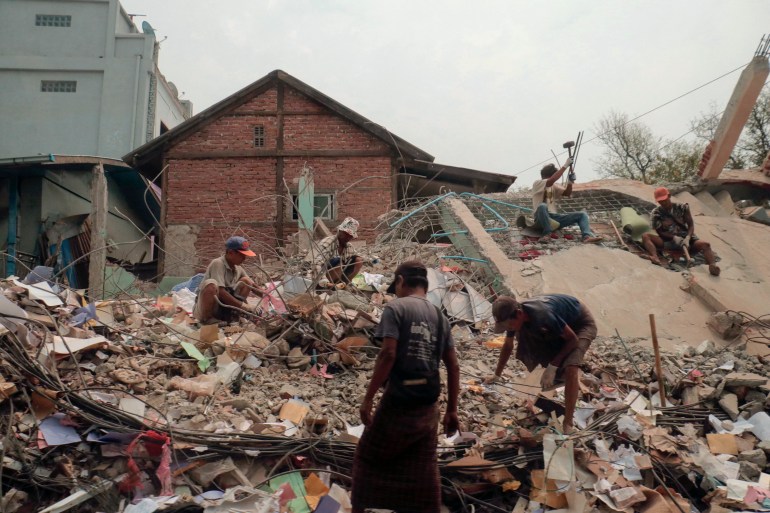
Heavy rains have lashed parts of earthquake-hit Myanmar, complicating relief efforts and raising the risk of disease as the death toll from the powerful quakes that struck the country on March 28 rose to at least 3,471. Aid workers in the hard-hit city of Mandalay, near the epicentre of the earthquake, said on Sunday that rains and winds hit tent camps in the area overnight and in the morning, soaking survivors and their belongings. More bouts of rain were expected later in the day, while temperatures were also forecast to climb to 37 degrees Celsius (98 degrees Fahrenheit). “The weather is very extreme,” Tun Tun, a specialist with the United Nations Development Programme, told the AFP news agency. Aid agencies have warned the combination of unseasonable rains and extreme heat could cause outbreaks of disease, including cholera, among quake survivors, who are camping in the open. Rainfall hits Sagaing on April 6 Rain poured down again in Sagaing at around 6 am on April 6. On the evening of April 5, unseasonal rain fell in Sagaing, Mandalay and Kyaukse towns, causing further difficulties for earthquake victims on the roads. pic.twitter.com/0ErqYjwJih — Eleven Myanmar (@ElevenMyanmar) April 6, 2025 Advertisement The magnitude 7.7 earthquake hit a wide swath of Myanmar, home to 50 million people, causing significant damage to six regions and states, including the capital, Naypyidaw. It left many areas without power, telephone or mobile phone connections, and damaged roads and bridges, making the full extent of the devastation hard to assess. It also worsened an already dire humanitarian crisis triggered by the country’s civil war that has internally displaced more than three million people and left nearly 20 million in need, according to the UN. State media in the military-led country now say the earthquake has caused 3,471 deaths and injured 4,671 people, while 214 remain missing. It has damaged some 5,223 buildings, 1,824 schools, 4,817 pagodas and temples, 167 hospitals and clinics, 169 bridges, 198 dams and 184 sections of the country’s main highway. People sort through the rubble of a collapsed building in Mandalay on April 5, 2025, following the earthquake [Zaw Htun/AFP] ‘Traumatised and fearful’ Damage has been particularly severe in the city of Sagaing near the epicentre, as well as in Mandalay, Myanmar’s second-largest city. UN aid chief Tom Fletcher, who is in Mandalay, described the scale of the damage as “epic” and said survivors, who are “traumatised and fearful”, need food, water, shelter and electricity urgently. In a video posted to X, Fletcher noted the quake had brought devastation to communities that were already in crisis. “It’s a compounding crisis,” he said. “It’s earthquake, on top of conflict, on top of huge existing need.” Advertisement He noted that aftershocks continued in the region more than a week after the earthquake. The United States Geological Survey said a magnitude 4.7 quake struck south of Mandalay late on Friday. A week after Mandalay earthquake, with devastating damage and aftershocks strong, this is a traumatised and fearful community. We are determined to save survivors and help them rebuild: we need the world to share that commitment. pic.twitter.com/jDSfvGVMDd — Tom Fletcher (@UNReliefChief) April 6, 2025 Though Myanmar’s military government, led by Senior General Min Aung Hlaing, who seized power in a coup in February 2021 overthrowing the civilian government of Aung San Suu Kyi, declared a temporary ceasefire on Wednesday, the UN Office of the High Commissioner for Human Rights said on Friday that the army was restricting aid in areas that did not back its rule. The UN agency also said it was investigating reported military attacks against opponents, including after the ceasefire. Free Burma Rangers, a relief group, told the Reuters news agency on Saturday that the military had dropped bombs in Karenni and Shan states on Thursday and Friday despite the ceasefire announcement, killing at least five people. The victims included civilians, according to the group’s founder, David Eubank, who said there had been at least seven such military attacks since the ceasefire. There was no immediate comment from the military on the allegations. US aid team fired Myanmar’s neighbours, such as China, India and Southeast Asian nations, have dispatched relief supplies and rescuers over the past week to the country, while the US – which was until recently the world’s top humanitarian donor – has pledged at least $9m to support earthquake-affected communities. Advertisement Current and former US officials say the dismantling of the country’s foreign aid programme has affected its response. Three US Agency for International Development workers who had travelled to Myanmar after the quake were told they were being let go, Marcia Wong, a former senior USAID official, told Reuters. “This team is working incredibly hard, focused on getting humanitarian aid to those in need. To get news of your imminent termination – how can that not be demoralising?” Wong said. The three USAID workers have been sleeping on the streets in the earthquake zone, Wong said, adding that their terminations would take effect in a few months. In neighbouring Thailand, meanwhile, authorities said the country’s death toll from the quake had risen to 24. Of those, 17 died at the site of an under-construction skyscraper in the capital, Bangkok. Another 77 are still missing. Search operations continue into the night as Thai authorities look for survivors trapped in the wreckage of a collapsed building in Bangkok, Thailand, on April 5, 2025 [Daniel Ceng/Anadolu] Adblock test (Why?)
Iran rejects ‘meaningless’ direct talks with US
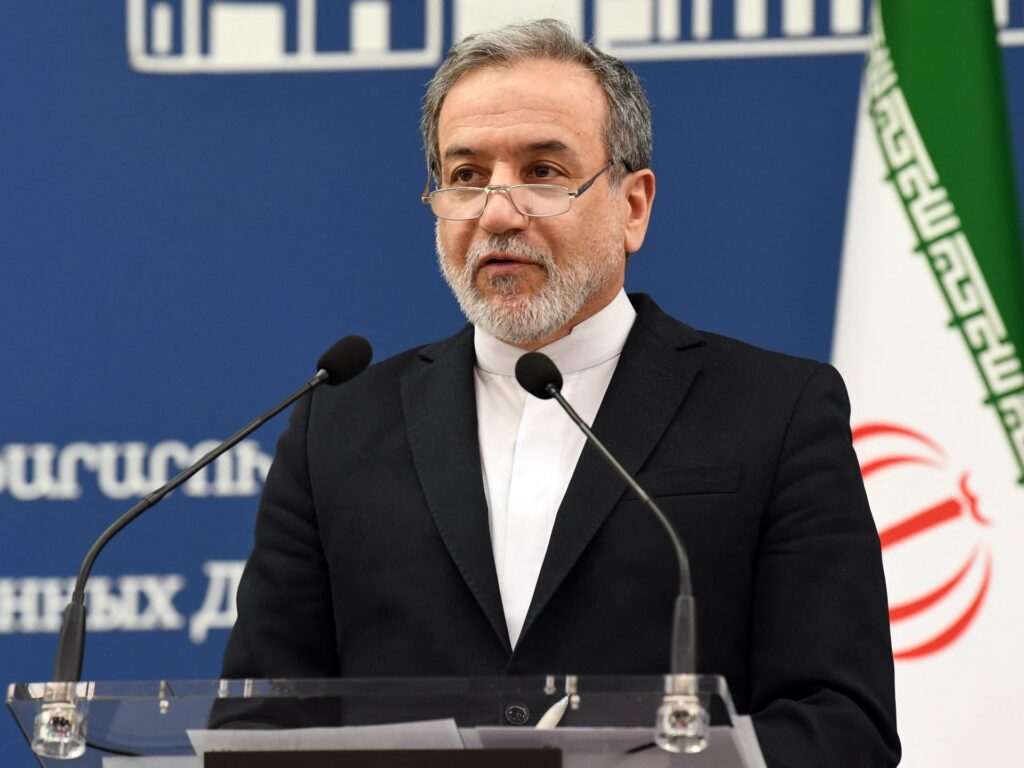
As war of words over nuclear weapons deal escalates, FM Araghchi says he wants talks on ‘equal footing’. Iranian Foreign Minister Abbas Araghchi has described the prospect of direct negotiations on its nuclear programme with the United States as “meaningless” amid mounting tensions between the two countries. Araghchi’s remarks came in a statement on Sunday, after Trump said last month in a letter sent to Iran’s Supreme Leader Ayatollah Ali Khamenei that he hoped there would be a negotiation between their countries aimed at preventing Tehran from acquiring nuclear weapons. Trump upped the ante last week, saying: “If they don’t make a deal, there will be bombing.” Araghchi questioned Washington’s sincerity in calling for negotiations, saying on Sunday, “If you want negotiations, then what is the point of threatening?” Tehran, which maintains that it is not seeking a nuclear weapon, has so far rejected Washington’s overtures, but has said it is open to indirect diplomacy – a stance repeated by Araghchi in Sunday’s statement. Araghchi said Iran wanted to negotiate on an “equal footing” with the US, describing it as “a party that constantly threatens to resort to force in violation of the UN Charter and that expresses contradictory positions from its various officials”. Advertisement Upping the ante Western countries, led by the US, have for decades accused Tehran of seeking to acquire nuclear weapons. In 2018, during his first term as president, Trump nixed the Joint Comprehensive Plan of Action, a deal between Iran and the permanent members of the United Nations Security Council that gave Iran sanctions relief in exchange for curbs on its nuclear programme. Iran has since rolled back on its commitments under the agreement, amassing enough fissile material for multiple bombs, according to the International Atomic Energy Agency, which carries out inspections of Iranian nuclear sites. Responding to Trump’s threat of war, Hossein Salami, the head of the Islamic Revolutionary Guard Corps, said on Saturday that the country was “ready” for war. “We are not worried about war at all. We will not be the initiators of war, but we are ready for any war,” the official IRNA news agency quoted Salami as saying. But Tehran’s position in the region appears to have weakened amid the ongoing war in Gaza and beyond, with Israel’s decimation of Hezbollah’s leadership in Lebanon, and the toppling of another key partner, Syrian President Bashar al-Assad, last year. Iran says its nuclear activities are solely for civilian purposes. Israel, the top US ally in the region, is widely believed to have an undeclared nuclear arsenal. Adblock test (Why?)
Israel’s Netanyahu set for talks with Trump in Washington, DC
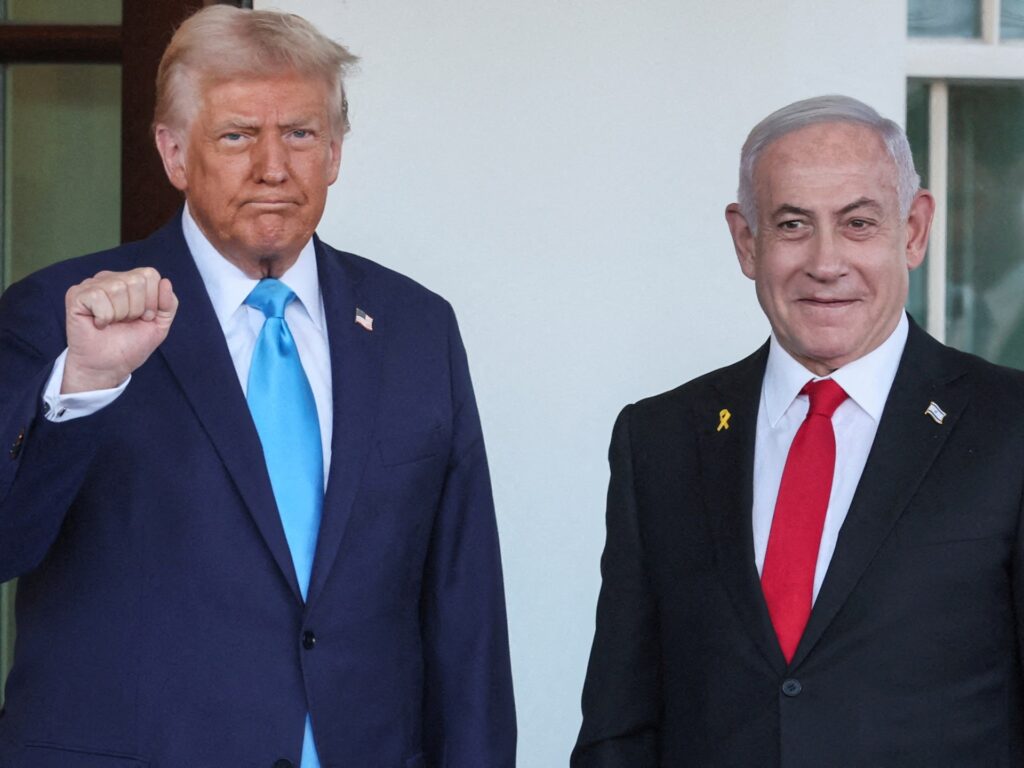
US media reports citing unnamed US and Israeli officials say the meeting would take place at the White House on Monday. Israeli Prime Minister Benjamin Netanyahu will travel to Washington, DC for talks with US President Donald Trump on a range of issues, including tariffs and Iran, Netanyahu’s office announced. The agenda for the trip will include Turkiye-Israel relations, “the Iranian threat”, Israel’s ongoing war on Gaza, tariffs and the “fight against the International Criminal Court,” the Israeli prime minister’s office said on Saturday. US media reports citing unnamed US and Israeli officials said the meeting would take place at the White House on Monday. Trump’s invitation came after a phone call on Thursday between the two leaders. Netanyahu raised the issue of tariffs during the conversation. Israel faces a 17-percent tariff under Trump’s so-called “reciprocal tariffs”. Israel recently moved to cancel remaining tariffs on US imports. The two countries’ free trade agreement, signed four decades ago, ensures that about 98 percent of US goods enter Israel tax-free. Netanyahu is currently visiting Hungary on his first trip to Europe since 2023 in defiance of the International Criminal Court’s (ICC) arrest warrant against him for alleged war crimes in Gaza. Advertisement Hungary’s government announced its withdrawal from the ICC just before Prime Minister Viktor Orban welcomed his Israeli counterpart. The United States is not a member of the court. Also on the agenda will be stalled efforts to reach a new agreement on a Gaza ceasefire deal and the return of Israeli captives held by Palestinian groups there. Israel renewed its attacks on Gaza last month, shattering a short-lived truce with the Palestinian group Hamas. Trump also has pressed Iran to enter talks on a new deal regarding its nuclear programme. Iran has said it would be willing to hold indirect talks. Western countries, led by the US, have, for decades, accused Tehran of seeking nuclear weapons. Iran rejects these allegations and maintains that its nuclear activities exist solely for civilian purposes. Adblock test (Why?)