

Russia-Ukraine war: List of key events, day 1,137
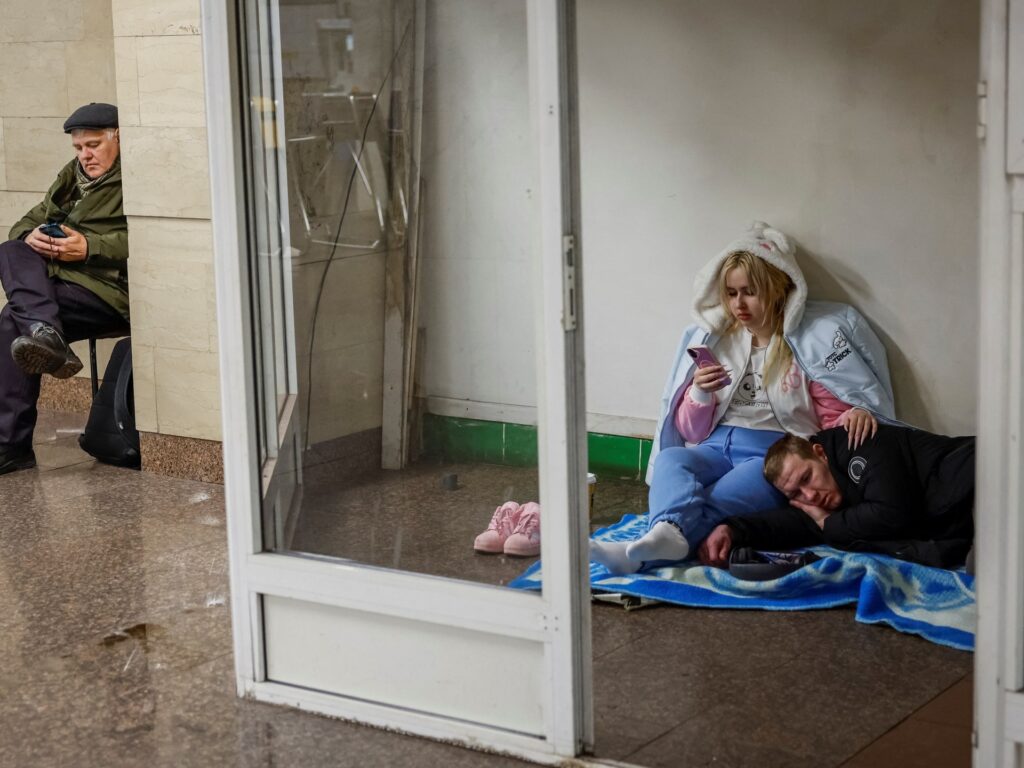
Here’s where things stand on Sunday, April 6: Fighting Three women were wounded and several fires broke out in a Russian air attack on the southern Ukrainian region of Mykolaiv, according to Ukrainian officials. The attack also damaged several houses, Mykolaiv Governor Vitaliy Kim posted on the Telegram messaging app. Russia also launched air attacks on the Ukrainian capital, Kyiv, overnight, with the city’s air defence forces trying to repel the attack, according to officials. The latest strikes come a day after the Ukrainian Air Force reported shooting down 51 of 92 drones launched at the country by Russian forces overnight on Saturday. Russia’s Ministry of Defence has accused Ukraine of increasing its attacks on Russian energy infrastructure, including in the regions of Bryansk, Belgorod, Smolensk, Lipetsk and Voronezh, despite a United States-brokered moratorium. Ukraine dismissed the claims as “fake”. Ukrainian drones struck an explosive production facility in Russia’s Samara region, causing multiple explosions and fires, the Reuters news agency reported, citing a source in Ukraine’s security service. Advertisement Politics and diplomacy Ukrainian President Volodymyr Zelenskyy has expressed disappointment in the US Embassy’s “weak reaction” to a Russian missile strike that killed 18 people, including nine children, in his hometown of Kryvyi Rih. He noted that the US condemnation of the attack made no reference to Russia. Zelenskyy hailed “tangible progress” after meeting with British and French military chiefs in Kyiv to discuss the potential deployment of a multinational peacekeeping force to Ukraine. Adblock test (Why?)
Will Israel’s starvation policy work in Gaza?
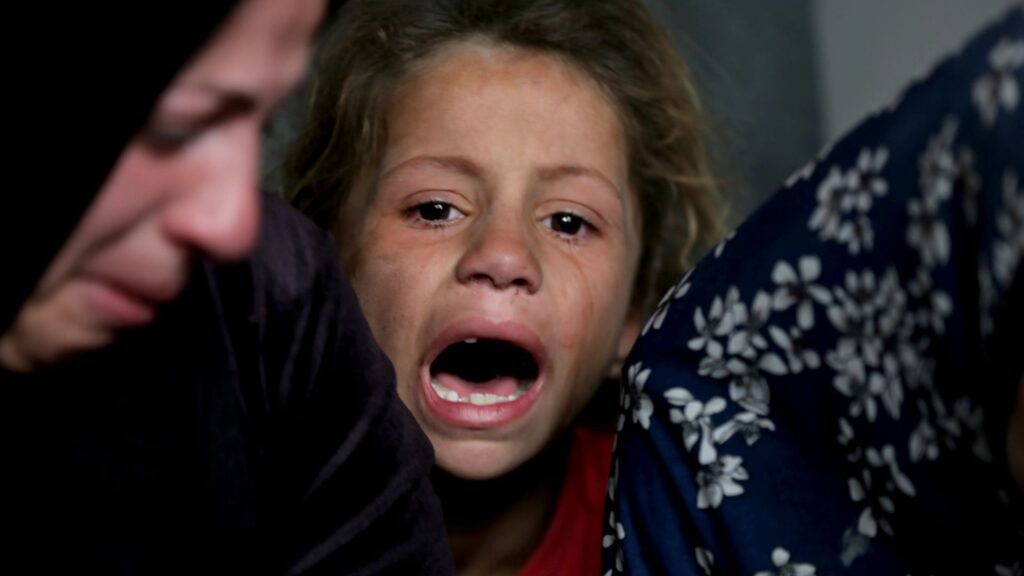
There are growing warnings that food supplies in Gaza will soon run out. The humanitarian crisis in Gaza is getting worse by the day. The United Nations World Food Programme has warned it only has food stocks to last a few days. With limited supplies and no fuel, all bakeries have already closed across the Strip. That’s left Palestinians with no food, no home, and no sense of security. Israel has been blocking humanitarian aid from entering the Strip for more than a month. So, is famine now inevitable? Presenter: Adrian Finighan Guests: Ahmad al-Najjar – Resident in Gaza who’s been reporting on the war Sam Rose – Acting director of the UN Relief and Works Agency for Palestinian Refugees in Gaza Martin Griffiths – Director of Mediation Group International Firas El Echi – Journalist, host of the Here’s Why podcast Adblock test (Why?)
Israeli attacks on Gaza kill at least 30 as ground assault expands
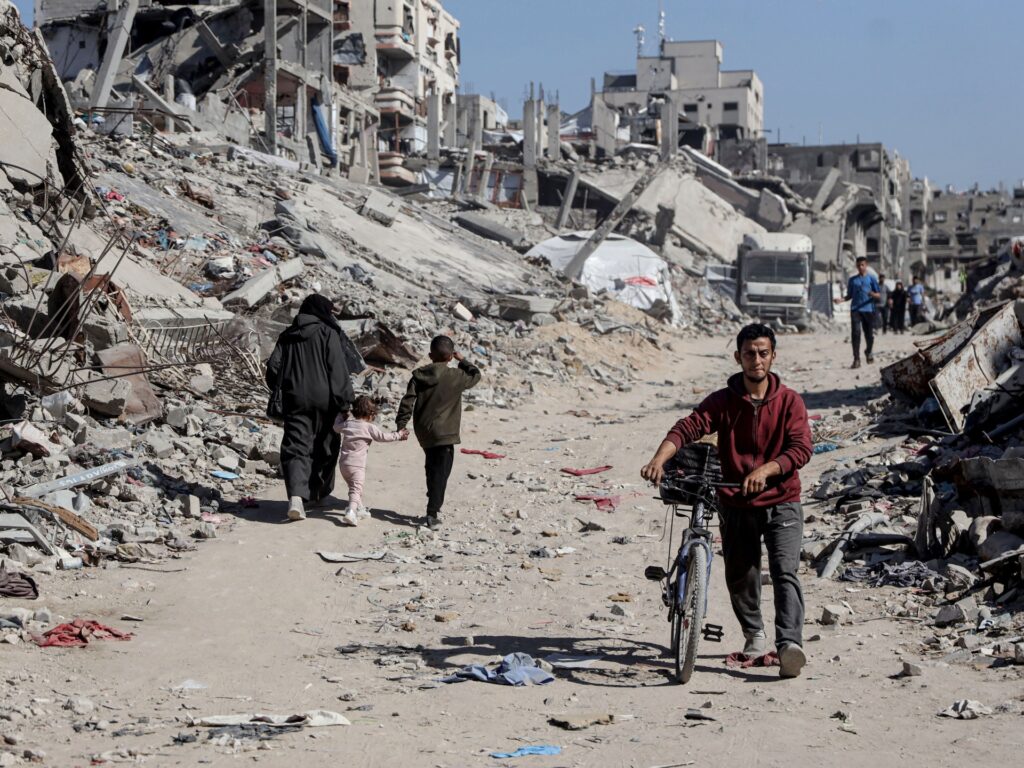
Medical sources say six killed in an Israeli air strike on Khan Younis and six others in a raid on Beit Hanoon. At least 30 Palestinians have been killed in Israeli attacks across Gaza, according to medical sources, as the Israeli military said it deployed ground troops to a so-called “security corridor” in the south of the territory. At least six people were killed in an air strike on Khan Younis in southern Gaza and six others in a raid on Beit Hanoon in the north, medical sources told Al Jazeera. Israel has pushed to seize more territory in Gaza since it shattered a weeks-long truce in its war with Hamas in mid-March and resumed its bombardment of the devastated territory. Israel has intensified its attacks since then, saying that it will continue to escalate until the Palestinian group Hamas frees Israeli captives that were seized during the October 7, 2023, attack on southern Israel. Israeli troops deployed to a newly established security corridor across southern Gaza, the military said on Saturday. Prime Minister Benjamin Netanyahu earlier this week announced the new “Morag Corridor” and suggested it would cut off the southern city of Rafah, which Israel had ordered forcibly evacuated, from the rest of Gaza. Advertisement It was not immediately clear how many forces were deployed, or where exactly the new corridor was located. Morag is the name of a Jewish settlement that once stood between Rafah and Khan Younis, and Netanyahu had suggested it would run between the cities. Maps published by Israeli media showed the corridor running the width of the narrow coastal strip from east to west. Earlier on Saturday, Hamas’s armed wing published a video showing two Israeli captives alive in Gaza, speaking to the camera and describing how they had survived an alleged Israeli strike. Israeli campaign group, the Hostages and Missing Families Forum, issued a statement confirming that the family of Maxim Herkin had identified him as one of the two captives featured in the video. Herkin’s family urged the media not to publish the video. Israeli media named the second captive as Israeli soldier Bar Kuperstein. The two men were taken from the Nova music festival and transported to Gaza during the Hamas-led October 7 attack on Israel that killed at least 1,139 people, according to an Al Jazeera tally based on Israeli statistics. Fifty-eight captives remain in Gaza, including 34 whom the Israeli military says are dead. During the six-week ceasefire that ended with Israel’s resumption of air strikes on Gaza on March 18, fighters handed over 33 captives, eight of them dead. Israel’s military response to the October 7 attack has killed at least 50,669 people in Gaza, the majority of them civilians, according to figures from the territory’s Health Ministry that the United Nations considers reliable. Advertisement The United Nations said that at least 100 children have been killed or injured every day in Gaza since the strikes resumed. “Nothing justifies the killing of children,” Philippe Lazzarini, chief of the UN agency for Palestinian refugees (UNRWA), posted on X on Saturday. Trilateral meeting As part of the diplomatic efforts for a truce in Gaza, French President Emmanuel Macron on Saturday said he would hold a trilateral summit on the situation in Gaza with Egyptian President Abdel Fattah al-Sisi and Jordan’s King Abdullah II. “In response to the Gaza emergency and during my visit to Egypt at President al-Sisi’s invitation, we will hold a trilateral summit with the Egyptian president and the King of Jordan,” Macron wrote on X ahead of his trip. The French president is expected in Cairo on Sunday evening, where he will hold talks with his Egyptian counterpart on Monday morning. The trilateral summit will be held the same day in the Egyptian capital, according to Macron’s office. On Tuesday, Macron will also visit the Egyptian port of El-Arish, 50km (30 miles) west of Gaza, to meet humanitarian and security workers and demonstrate his “constant mobilisation in favour of a ceasefire”. El-Arish is a transit point for international aid intended for Gaza. Adblock test (Why?)
‘Hands Off’ protesters rally across US to oppose Trump’s policies
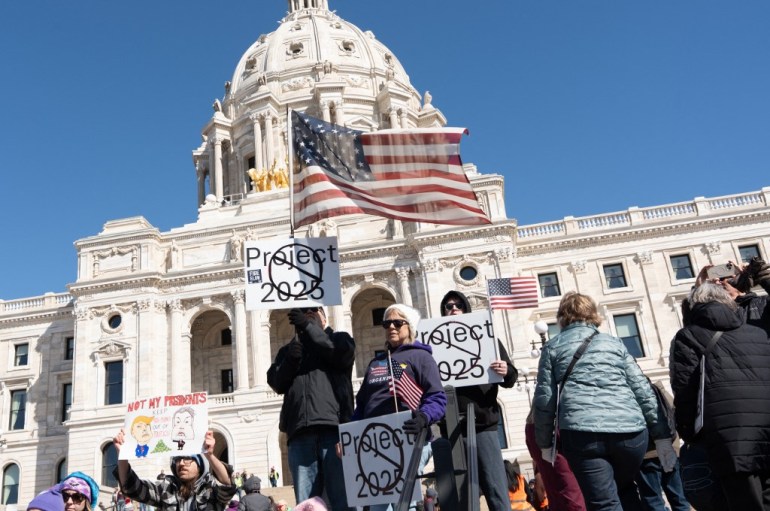
Opponents of US President Donald Trump and his adviser, billionaire Elon Musk, have joined rallies across the United States to protest against the administration’s actions to overhaul the government and expand presidential authority. More than 1,200 “Hands Off” rallies were expected on Saturday, with organisers anticipating the largest single-day mobilisation opposing the administration’s recent initiatives. Protest sites included the National Mall in Washington, DC, where organisers expected more than 20,000 people to attend, and locations in all 50 US states. Reporting from Washington, DC, Al Jazeera’s Mike Hanna said the crowd voiced their discontent over the administration’s sweeping executive actions and the restructuring led by Musk’s Department of Government Efficiency (DOGE). The reforms have resulted in the elimination of more than 200,000 federal positions and significant reductions in benefits, particularly within the Internal Revenue Service and Social Security Administration. Advertisement “This is one of the biggest demonstrations we’ve seen since Trump began his second term, and it’s perhaps indicative of the rising frustration among Americans,” said Hanna, who also noted the diverse composition of the protesters, spanning various age groups. “Protest organisers have been saying this is not going to lead to immediate change, but it’s an important moment to show that many Americans oppose what Donald Trump stands for,” said Hanna. In Chicago, thousands of demonstrators rallied in the downtown area. Reporting from the protest site, Al Jazeera’s John Hendren said it was “largely a union crowd”. “These people are concerned about their jobs … These people are mostly citizens, they are Chicagoans and their message to the Trump administration and Elon Musk is ‘hands off’”, he said. International protests Around the world, American expatriates and local supporters assembled in cities including Berlin, Frankfurt, Paris, and London. In Paris, approximately 200 demonstrators, predominantly Americans, gathered at Place de la Republique, displaying banners with messages like “Resist Tyrant,” “Rule of Law,” and “Feminists for Freedom not Fascism.” Timothy Kautz, a spokesperson for Democrats Abroad, emphasised the importance of global solidarity. “We have to show solidarity with all the demonstrations in a thousand cities today in the USA,” he told Reuters. Protesters gather outside the Minnesota State Capitol during the nationwide “Hands Off!” protest against US President Donald Trump and his adviser, Tesla CEO Elon Musk, in St. Paul, Minnesota, on April 5, 2025 [Tim Evans/AFP] Ezra Levin, co-founder of Indivisible, one of the organising groups, speaking to Reuters said, “This is an enormous demonstration that is sending a very clear message to Musk and Trump and congressional Republicans and all the goose-stepping allies of MAGA that we don’t want their hands on our democracy, on our communities, on our schools and our friends and our neighbours.” Advertisement The White House has defended the administration’s actions. Assistant press secretary Liz Huston stated, “President Trump’s position is clear: He will always protect Social Security, Medicare, and Medicaid for eligible beneficiaries. Meanwhile, the Democrats’ stance is giving Social Security, Medicaid, and Medicare benefits to illegal aliens, which will bankrupt these programs and crush American seniors.” Pro-Palestinian groups also participated in the Washington demonstrations, protesting against the US administration’s support for Israel’s renewed military actions in Gaza and the crackdown on campus protests. Adblock test (Why?)
Fraud case a “hard blow” for Le Pen’s presidential bid
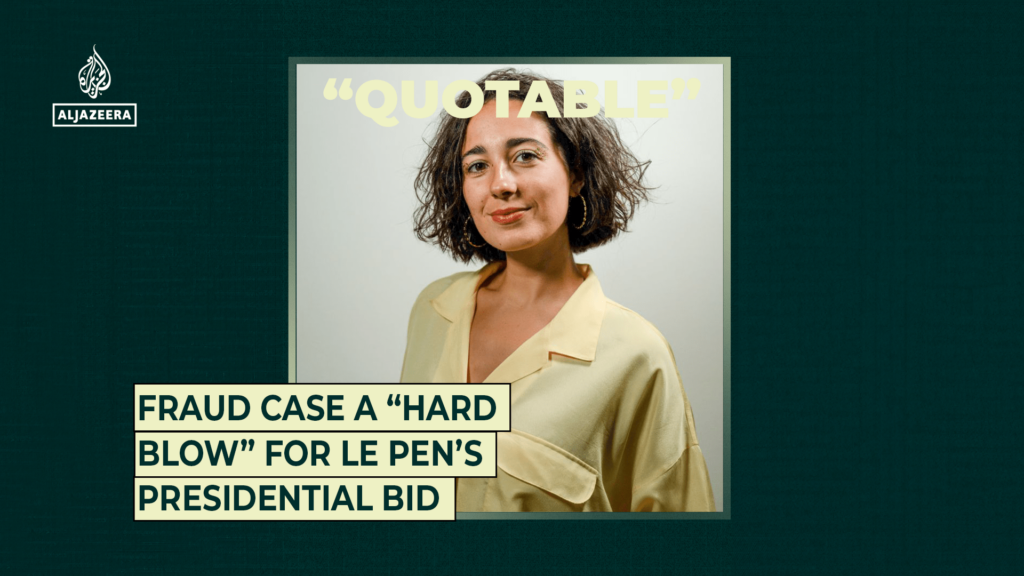
Journalist Diane de Vignemont breaks down Marine Le Pen’s fraud conviction, her appeal and what it means for her future. Diane de Vignemont, an independent journalist specialising in French politics and history, analyses Marine Le Pen’s fraud conviction and her presidential ambitions. She may appeal, but what comes next? Adblock test (Why?)
Elon Musk backs ‘free trade zone’ between US and Europe
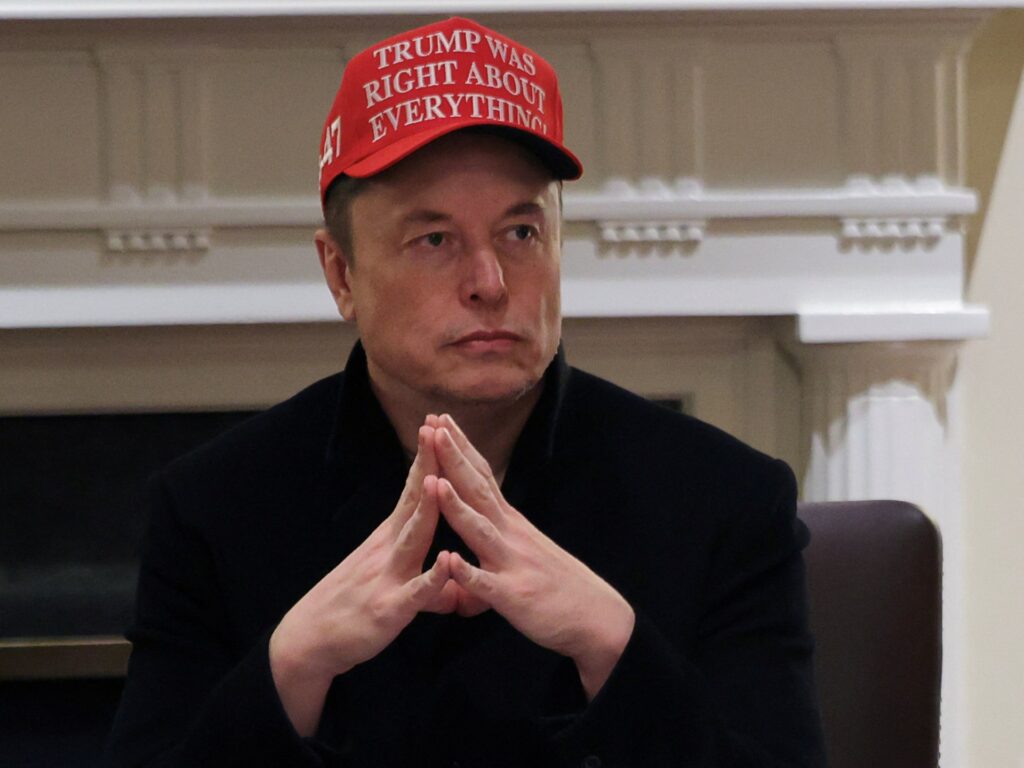
Elon Musk calls for a US-Europe free-trade zone with zero tariffs while EU plans a response to US import duties. Tech billionaire Elon Musk has called for unrestricted trade between the United States and Europe, advocating for a tariff-free economic zone. The adviser to US President Donald Trump said he supported eliminating trade barriers during a video appearance at a conference hosted by Italy’s far-right League party in Florence on Saturday. His comments came days after Trump announced an array of tariffs on imports to the US, including plans to impose 20-percent tariffs on imports from EU members, including Italy, which has a significant trade surplus with the US. “Ideally, both Europe and the United States should move to a zero-tariff situation, effectively creating a free trade zone between Europe and North America,” he said. Speaking to League leader Matteo Salvini, Musk also endorsed greater freedom of movement between the two regions. “If people wish to work in Europe or wish to work in North America, they should be allowed to do so in my view,” he said, noting that he had shared this stance with Trump. Advertisement Musk has previously voiced support for right-wing European parties, including Salvini’s League and Italian Prime Minister Giorgia Meloni’s Brothers of Italy and the Alternative for Germany (AfD). Earlier on Saturday, Italy’s Economy Minister Giancarlo Giorgetti, a League member, urged de-escalation with Washington over the tariffs, cautioning against retaliatory measures. The European Union has pledged to respond “in a calm, carefully phased, unified way” to US tariffs on its goods, EU Trade Chief Maros Sefcovic said. Trump has described the latest tariffs as an “economic revolution” and claimed that the measures would bring industry and jobs back to the United States. In the wake of the tariff announcement, US stock markets recorded their worst two-day stretch since COVID pandemic, and international markets were also routed. Several nations have said they would retaliate, raising the risk of a global trade war marked by tit-for-tat tariffs. Adblock test (Why?)
AI and doxxing sites: Trump vs antiwar activists

Over the past month, hundreds of international students in the US have either been detained, deported, or stripped of their visas for protesting Israel’s war on Gaza. The Trump administration’s crackdown is being described as an assault on political dissent – one that has been enabled by mainstream news outlets and pro-Zionist pressure groups. This story is about more than just visas. It’s about who gets to speak in Trump’s America. Contributors:Adolfo Franco – Republican strategist and lawyerEric Lee – Immigration lawyerYumna Patel – Editor-in-chief, MondoweissPrem Thakker – Reporter, Zeteo News On our radar: The German government is attempting to deport four foreign students – none of whom have been charged with a crime – over their pro-Palestinian activism. Ryan Kohls reports. For the past five months, Serbia has been in the grip of historic protests against President Aleksandar Vucic’s government. Young people have led the way, demanding political reform. But in doing so they’ve faced a powerful adversary – not only in government, but in its collection of loyalists in the media. Meenakshi Ravi reports from Belgrade on the narrative they have been spinning and the pushback they are getting from Serbian citizens. Advertisement Featuring:Snjezana Milivojevic – Professor, University of BelgradeVesna Radojevic – Reporter, KRIKSuzana Vasiljevic – Media adviser to the president of Serbia Adblock test (Why?)
Iran currency falls to record low against dollar as tensions with US mount
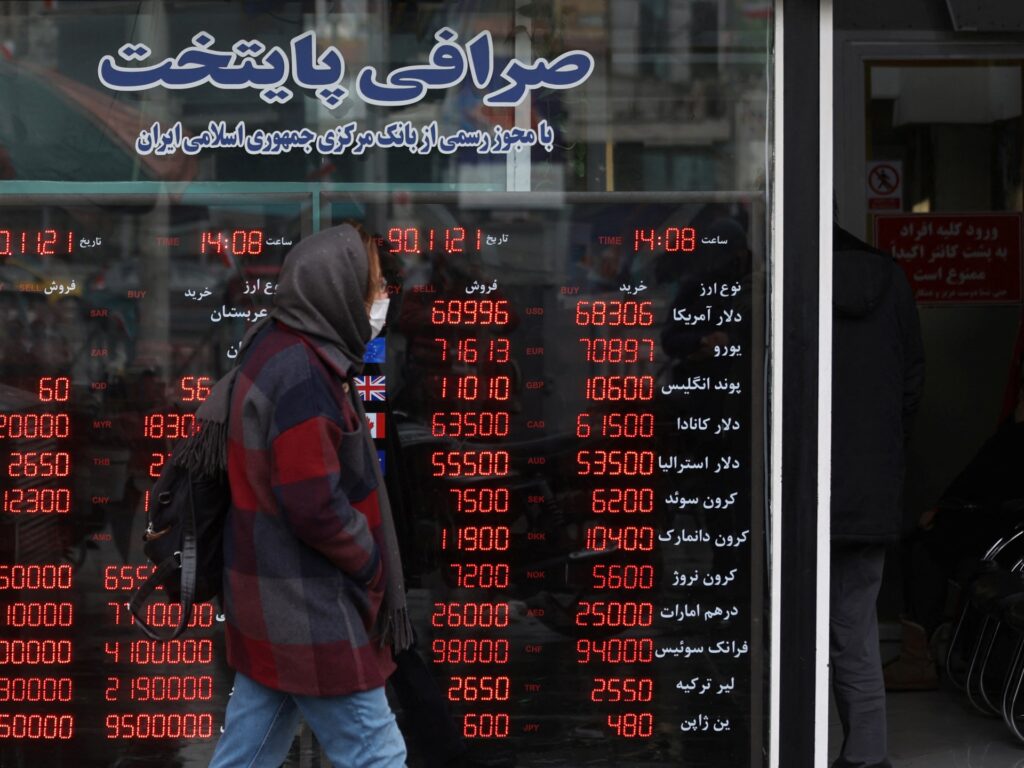
As traders opened on Saturday, the exchange rate fell to 1,043,000 rials to the dollar. Iran’s rial currency has hit a record low against the US dollar amid growing tensions between Tehran and Washington over Iran’s nuclear programme. The exchange rate had plunged to more than 1 million rials during festivities for Persian New Year, Nowruz, as currency shops closed and only informal trading took place on the streets, creating additional pressure on the market. As traders resumed work Saturday, the rate fell even further to 1,043,000 to the dollar. Some traders in Tehran even switched off electronic signs showing the going rate as uncertainty loomed over how much further the rial could drop. Iran’s economy has been severely affected by international sanctions, particularly after President Donald Trump unilaterally withdrew the US from Tehran’s nuclear deal with world powers in 2018. After Trump returned to the White House for his second term in January, he restarted his so-called “maximum pressure” campaign targeting Tehran with sanctions and again went after firms trading Iranian crude oil, including those selling at a discount in China. Advertisement Trump wrote to Iran’s Supreme Leader Ayatollah Ali Khamenei trying to jumpstart direct talks between Tehran and Washington. So far, Iran has maintained it is willing to hold indirect talks. Iranian President Masoud Pezeshkian on Saturday said his country was willing to engage in dialogue with the US as equals, without clarifying whether Tehran would participate in direct talks. “Today, America is not only humiliating Iran, but also the world,” Pezeshkian added, in an apparent reference to recent policies adopted by Trump, including imposing tariffs on imported goods. “If you want negotiations, then what is the point of threatening?” he said. Western countries, led by the US, have for decades accused Tehran of seeking nuclear weapons. Iran rejects these allegations and maintains that its nuclear activities exist solely for civilian purposes. In 2015, the country reached a landmark deal with the permanent members of the UN Security Council, namely the US, France, China, Russia, and the United Kingdom, as well as Germany, to regulate its nuclear activities. In 2018, during Trump’s first term in office, Washington withdrew from the agreement and reinstated sanctions. In response, Iran rolled back on its commitments under the agreement and accelerated its nuclear programme. On Monday, Ali Larijani, a close adviser to the supreme leader, warned that while Iran was not seeking nuclear weapons, it would “have no choice but to do so” in the event of an attack against the country. Advertisement Adblock test (Why?)
Demonstrators rally across Spain to protest against housing crisis
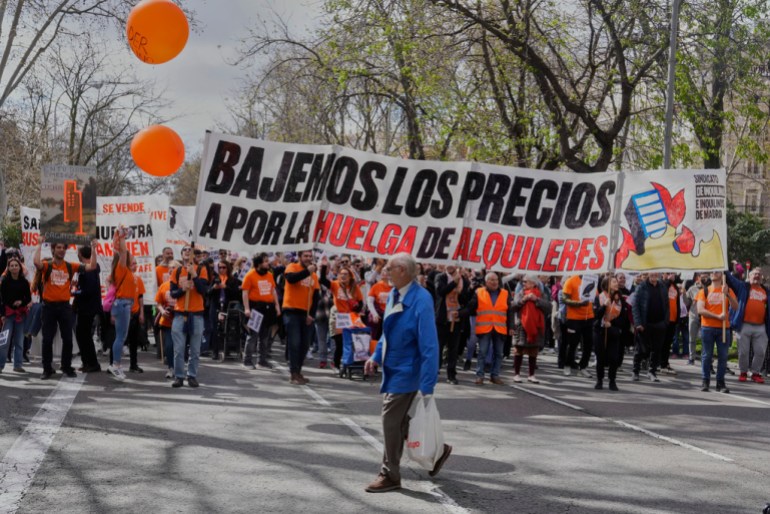
Demonstrators have returned to the streets in anger over high housing costs with no relief in sight. Hundreds of thousands of people have marched in cities across Spain to protest against soaring rents and a lack of affordable homes in a country that enjoys Europe’s fastest economic growth and yet suffers from a housing shortage exacerbated by a tourism boom. The housing crisis across Europe has hit particularly hard in Spain, where there is a strong tradition of home ownership and scant public housing for rent. Spain’s centre-left government has struggled to find a balance between attracting tourists and keeping rents affordable for average citizens, as short-term rentals have mushroomed in major cities and coastal destinations. “No matter who governs, we must defend housing rights,” activists shouted on Saturday as they rattled keychains in Madrid, where tens of thousands of protesters marched through the capital’s centre, according to the local tenants’ union. Average Spanish rents have doubled and house prices swelled by 44 percent over the past decade, data from property website Idealista showed, far outpacing salary growth. Advertisement Meanwhile, the supply of rentals has halved since the 2020 pandemic. A man crosses the street amid the demonstration against high housing costs in Madrid [Paul White/AP] Influx of tourists Spain does not have the public housing that other European nations have invested in to cushion struggling renters from a market that is pricing them out. Spain is near the bottom end of Organization for Economic Co-operation and Development countries, with public housing for rent making up under 2 percent of all available housing. The OECD average is 7 percent. In France, it is 14 percent, the UK is 16 percent and the Netherlands is at 34 percent. “They’re kicking all of us out to make tourist flats,” Margarita Aizpuru, a 65-year-old resident of the popular Lavapies neighbourhood, told the Reuters news agency. Nearly 100 families living in her block were told by the building’s owners that their rental contracts would not be renewed, she said. Homeowners associations and experts say that current regulations discourage long-term rentals, and landlords find that renting to tourists or foreigners for days or a couple of months is more profitable and safer. Spain received a record 94 million tourists in 2024, making it the second most-visited country in the world. According to official data, only about 120,000 new homes are built in Spain every year – a sixth of the level before the 2008 financial crisis, worsening the already acute supply shortage. Adblock test (Why?)
Trump’s 10 percent tariff takes effect, raising fears of global trade war
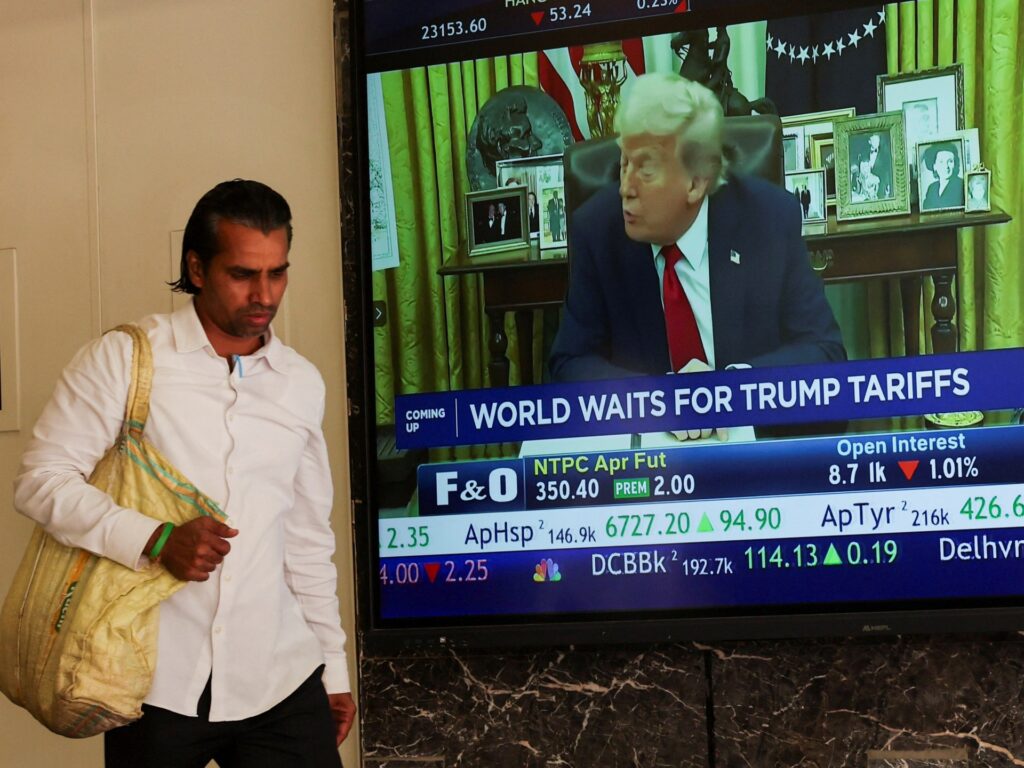
US President Donald Trump’s widest-ranging tariffs to date have come into effect – a move that may trigger retaliation and escalate trade tensions, upsetting the global economy. The initial 10 percent “baseline” tariff took effect at United States seaports, airports and customs warehouses at 12:01am ET (04:01am GMT) on Saturday, ushering in Trump’s full rejection of the post-World War II system of mutually agreed tariff rates. Among countries first hit with the 10 percent tariff are Australia, Britain, Colombia, Argentina, Egypt and Saudi Arabia. The trade gaps, said the White House, were driven by an “absence of reciprocity” in relationships and other policies like “exorbitant value-added taxes.” A US Customs and Border Protection bulletin to shippers indicates no grace period for cargoes on the water at midnight on Saturday. But a US Customs and Border Protection bulletin did provide a 51-day grace period for cargoes loaded onto vessels or planes and in transit to the US before 12:01am ET on Saturday. These cargoes need to arrive by 12:01 am ET (4:01am GMT) on May 27 to avoid the 10 percent duty. Advertisement Moreover, on April 9, Trump’s higher “reciprocal” tariff rates of 11 percent to 50 percent are due to take effect. European Union imports will be hit with a 20 percent tariff, while Chinese goods will be hit with a 34 percent tariff, bringing Trump’s total new levies on China to 54 percent. Vietnam, which benefitted from the shift of US supply chains away from China after Trump’s first-term trade war with Beijing, will be hit with a 46 percent tariff. The country, however, agreed on Friday to discuss a deal with Trump. Canada and Mexico are both exempt from Trump’s latest duties because they are still subject to a 25 percent tariff related to the US fentanyl crisis for goods that do not comply with the US-Mexico-Canada rules of origin. ‘Pretty seismic’ Michael Strain, director of Economic Policy Studies at the American Enterprise Institute, told Al Jazeera that the US tariffs have been greeted quite poorly by the investors. “This would have a really bad effect on the economic outcome of workers and households and businesses,” he said, adding that the move “would constitute a tax increase of 400-500 billion dollars this year on American households and on businesses”. “The combination of big increase in taxes and the tariffs would increase the prices of these imported goods that households face [and] would mean that households would very likely see negative income growth… That alone would risk a recession in the US,” he said. On Friday, China announced that it will impose its own 34 percent tariff on US products from April 10. Beijing also said it would sue the US at the World Trade Organization (WTO) and restrict exports of rare earth elements used in high-end medical and electronics technology. Advertisement Trump warned on Friday on social media that “China played it wrong,” saying this was something “they cannot afford to do”. Other major trading partners have held back as they continue to digest the unfolding international standoff and fears of a recession. Trump’s Wednesday tariff announcement shook global stock markets to their core, wiping out $5 trillion in stock market value for S&P 500 companies by Friday’s close, a record two-day decline. Prices for oil and commodities plunged, while investors fled to the safety of government bonds. Economists have also warned that the tariffs could dampen growth and fuel inflation. Kelly Ann Shaw, a trade lawyer at Hogan Lovells and former White House trade adviser during Trump’s first term told a Brookings Institution event on Thursday that she expected the tariffs to evolve over time as countries seek to negotiate lower rates. “This is the single biggest trade action of our lifetime,” she said. “But this is huge. This is a pretty seismic and significant shift in the way that we trade with every country on earth.” Trump said on his Truth Social platform that his “policies will never change”. However, his latest tariffs have notable exclusions. They do not stack on recently imposed 25 percent tariffs hitting imports of steel, aluminium and automobiles. Also temporarily spared are copper, pharmaceuticals, semiconductors and lumber, alongside “certain critical minerals” and energy products, the White House said. But Trump has ordered investigations into copper and lumber, which could lead to further duties soon. Advertisement He has threatened to hit other industries like pharmaceuticals and semiconductors as well, meaning any reprieve might be limited. Adblock test (Why?)