

Istanbul elects Aslan interim mayor amid ongoing protests over Imamoglu
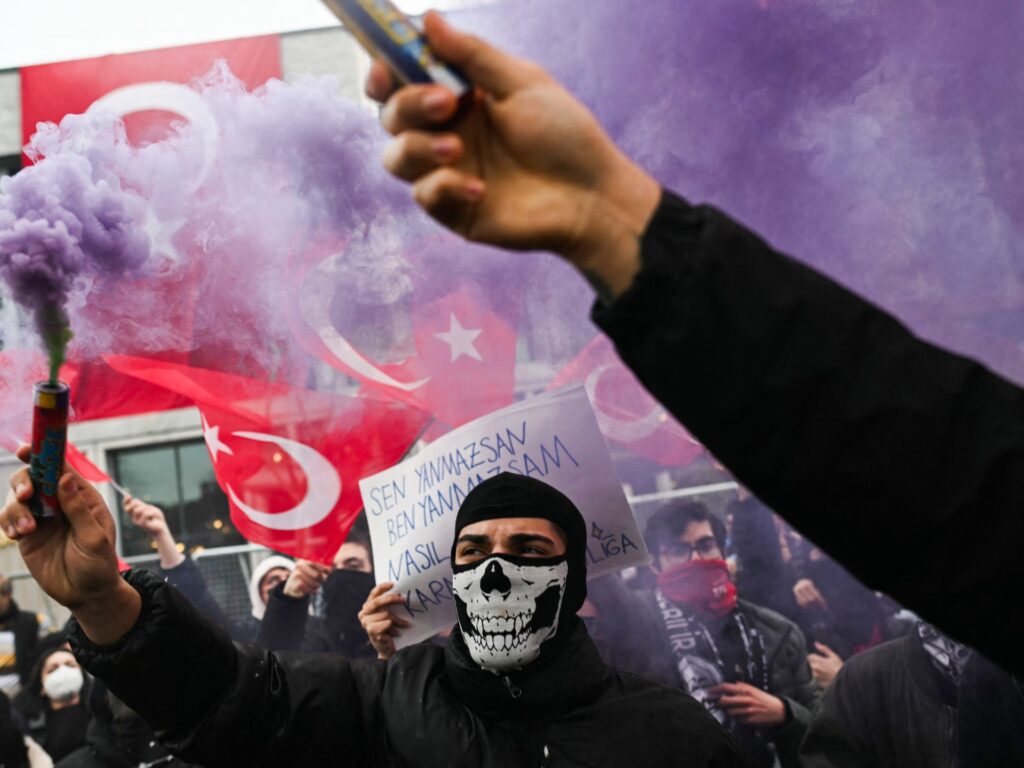
The city council has chosen a temporary mayor to take over from Ekrem Imamoglu, who was jailed last week. Istanbul’s municipal government has elected Nuri Aslan as interim mayor to replace Ekrem Imamoglu, who has been imprisoned on corruption charges. Local broadcaster NTV and Turkish news outlet Anadolu reported on Wednesday that Aslan, from Imamoglu’s Republican People’s Party (CHP), was chosen to run the city for the remainder of Imamoglu’s term, as he awaits trial. In the first round of voting, Aslan won 173 votes, while President Recep Tayyip Erdogan’s Justice and Development Party (AK Party) candidate, Zeynel Abidin Okul, won 123. In the second round of the election, Aslan received 177 votes, while Okul received 125. As both candidates were unable to win the two-thirds majority required to win the vote, a third round of voting began. In that vote, where candidates would need a simple majority to win, Aslan received 177 votes, Okul received 125 votes, securing Aslan’s election. Speaking at the Istanbul Municipality building in Sarachane, CHP chairman Ozgur Ozel said the interim mayoral election had blocked Erdogan’s push to appoint a trustee at the municipality. Advertisement “The struggle will expand to all of Turkiye from now on, but one leg will always be in Istanbul and one hand will always be on Sarachane,” Ozel said, adding that resistance from the public had thwarted what the opposition calls a “coup attempt” against it. Aslan, speaking alongside Ozel, reiterated his new position was temporary. “Our mayor, elected with the votes of Istanbul, will come back as soon as possible. We, along with our chairman, will take care of what he entrusted us with and give it back to him,” he said. This comes as demonstrations have been held daily across the country after Imamoglu was detained a week ago. His supporters say they will continue protesting despite authorities cracking down on gatherings and arresting hundreds of people, including journalists. By Tuesday afternoon, police had detained 1,418 people, Interior Minister Ali Yerlikaya said. Among them were 11 Turkish journalists covering the protests, seven of whom were remanded in custody. ‘Street terror’ Erdogan said on Wednesday that his government would not get worked up over what he described as “provocations” by the main opposition. Erdogan has remained defiant a week into the protests, denouncing the rallies as “street terror”. “Those who spread terror in the streets and want to set fire to this country have nowhere to go. The path they have taken is a dead end,” he has said. Government officials have rejected accusations that the legal action against the opposition figure is politically motivated and insisted that Turkiye’s courts operate independently. Advertisement Protests erupted on March 19 after Imamoglu’s arrest in a graft and “terrorism” probe which his supporters have denounced as a “coup”. The “terrorism” charge has been dismissed by the court for the time being. Vast crowds have participated in street demonstrations since then, defying protest bans in Istanbul, the capital Ankara and Izmir with the unrest spreading across the country. In a possible shift in tactics, the main opposition Republican People’s (CHP) party said it was not calling for another nightly protest on Wednesday outside the Istanbul mayor’s office. Most nights, some of the protests have turned into running battles with riot police, whose tough crackdown has alarmed rights groups. Adblock test (Why?)
How the discovery of a mass grave sparked uproar over the missing in Mexico
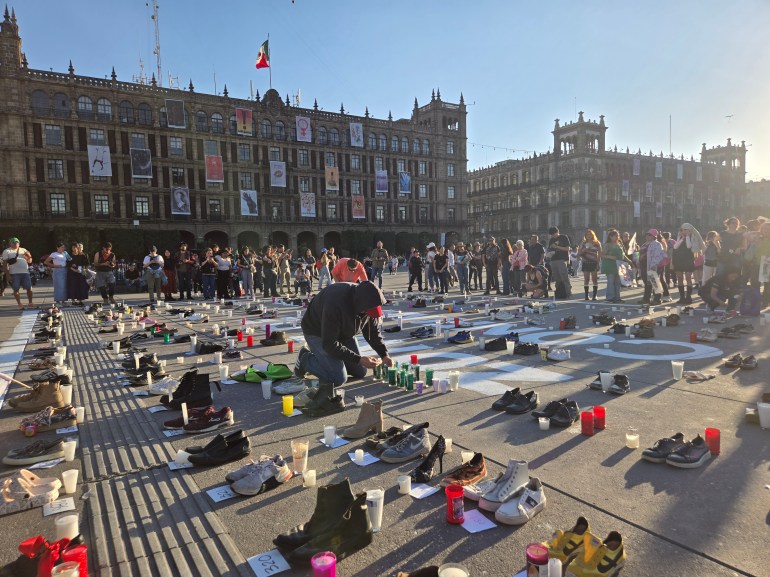
Since the March 5 revelation, Mexican media have published a wave of testimonies from those who claim to have survived or escaped Rancho Izaguirre. Many of those who came forward chose to remain anonymous. They identified as impoverished youths from Guadalajara and explained they were lured to the ranch by false promises of work in online advertisements — or simply kidnapped. One young man said the ranch was described as “hitman school”. Those who complained, questioned the cartel leader’s orders or failed to pass the brutal tests were executed. Indira Navarro, the head of the Warrior Searchers of Jalisco, said in a radio interview that one survivor dubbed it “a little school of terror”. A protester lights a candle next to shoes representing Mexico’s missing on March 15 [Jared Olson/Al Jazeera] Other documents have emerged suggesting that local authorities may have known about the site but failed to act. On March 12, the advocacy group Mexicans Against Corruption and Impunity published a report showing that National Guard members discovered burned bodies in the same area in August 2019. It also found that a local police commissioner sent the National Guard a message in March 2020, disclosing an act of attempted bribery. According to the internal document, an anonymous female caller said that National Guard personnel “would be given a sum of money” in exchange “for reducing the intensity of the operations” in the area. Jalisco has the highest official rate of forced disappearances in Mexico. Since the government began collecting statistics on disappearances in the 1950s, more than 15,000 people have been reported missing in the state alone. In the wake of the recent uproar, the state attorney general, Salvador Gonzalez de los Santos, said heavy machinery had been deployed to the Teuchitlán site but that the area was too big to search in its entirety. That has led the federal government to point the finger at local authorities for not investigating thoroughly enough. “They failed to track down the evidence or identify anything found abandoned at that location,” Mexico Attorney General Alejandro Gertz Manero said at a March 19 news conference. “A full examination of the site was not conducted, nor were fingerprints taken.” A protester in Mexico City holds up a sign denouncing ‘mass graves, extermination centres and slavery’ [Jared Olson/Al Jazeera] A day later, on March 20, federal and state authorities organised a tour of the site for journalists, officials and members of the search brigades. More than 12 buses arrived, some carrying social media influencers. But the visit was widely criticised, not least for letting the public access an ongoing crime scene. Family members of the disappeared also questioned why the influencers were reportedly allowed to access the ranch before they were. Some of the influencers later published accounts online denying the existence of crematoriums on the site. President Sheinbaum, meanwhile, has assigned federal prosecutors — led by Gertz Manero — to take up the case. “The first thing we need to do is investigate, because the images are painful, and the first thing we need to know is what happened there, before anything else,” she said. Some critics, however, fear the federal authorities cannot be trusted to helm the investigation. The National Guard, after all, was created in 2019 under former President Andrés Manuel López Obrador, Sheinbaum’s mentor. Still, on Monday, federal authorities announced progress in their investigation. They confirmed that they had detained a recruiter for the Cartel Jalisco Nueva Generación in a low-income neighbourhood in Mexico City, where he allegedly sought out youths to be brought to the “extermination site”. Two former police officers from a village near Teuchitlán were also arrested in relation to the ranch. But academics and investigative journalists have suggested that the ranch in Teuchitlán is part of a vast archipelago of training centres in the hills to the west of Guadalajara. Nor is the problem limited to one state: On March 12, a separate search brigade said it had discovered another “extermination site”, this time in Reynosa, Tamaulipas. Police stand guard around the National Palace in Mexico City, as protests unfold on March 15 [Jared Olson/Al Jazeera] At the recent protest at the Zócalo, tensions started to boil over as evening fell. Some demonstrators broke through barricades and brawled with the police holding riot shields in front of the National Palace. “Mercenaries! Killers!” they shouted towards the palace, the official residence of Mexico’s president. Sebastián Arenas, a journalism student from the National Autonomous University of México, explained that many of his fellow protesters saw Teuchitlán as indicative of a federal security strategy that has allowed mass murder. “In the press, it’s said that things have changed in Mexico, that there aren’t disappearances, or that they’re going down, that the judicial reform is going to bring justice,” he told Al Jazeera. “But here are the results: a clandestine grave, an extermination camp that looks like Auschwitz.” Adblock test (Why?)
Ukraine, Russia trade accusations in wake US-brokered deal
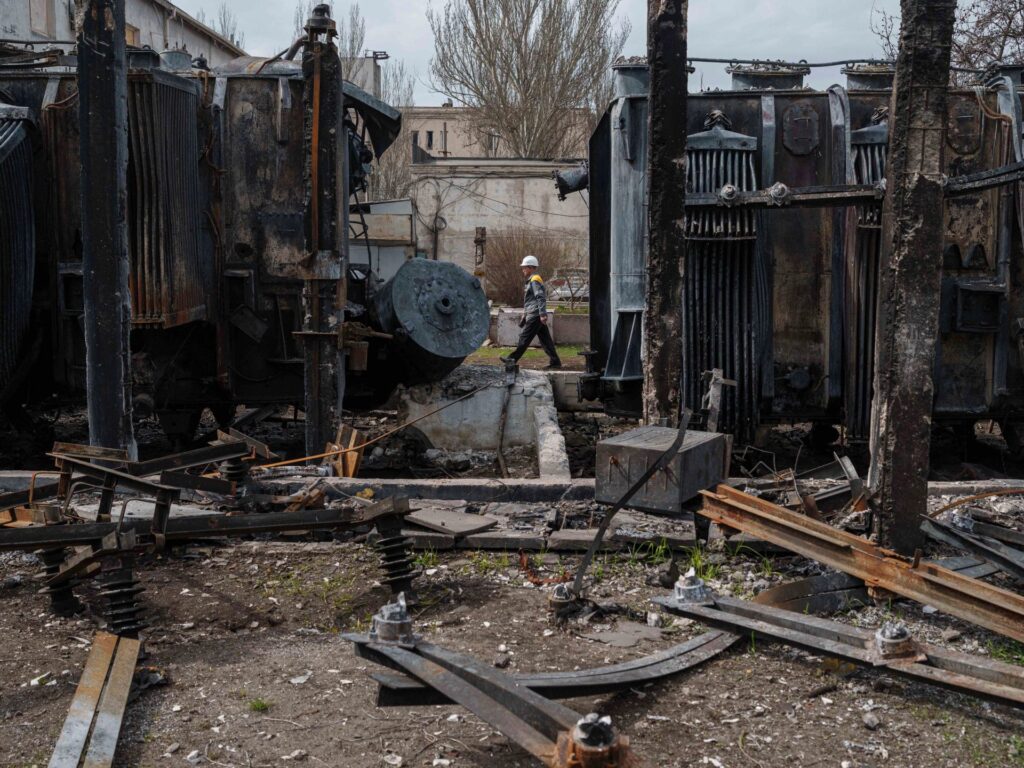
Ukraine and Russia have accused each other of not being serious about peace talks as both sides traded blame for attacks on infrastructure. The renewed accusations on Wednesday came a day after the United States said Ukraine and Russia had agreed to halt military strikes on vessels in the Black Sea following separate negotiations in Saudi Arabia. The Ukrainian air force said 117 drones were launched from Russia during an overnight attack. At least 56 of the drones were downed, 48 were lost due to electronic warfare and no damage was caused, it added. However, the mayor of Mykolaiv said there were power outages due to the drones. In the city of Kryvyi Rih, a Russian attack caused fires and damaged buildings, but no casualties were reported. Buildings were also reportedly damaged in the border region of Sumy, which has come under heavy attack in recent days. The head of the military administration in Kryvyi Rih, Oleksandr Vilkul, described the drone attack as the most significant on the city, adding, “Apparently, this is how the occupiers ‘want peace’”. Advertisement Ukrainian President Volodymyr Zelenskyy condemned the overnight barrage of attacks and said it was a “clear signal to the whole world that Moscow is not going to pursue real peace”. “Since March 11, there has been a US proposal for a total ceasefire, a complete halt to strikes. And literally every night, through its attacks, Russia keeps saying ‘no’ to our partners’ peace proposal,” Zelenskyy wrote on X. Zelenskyy will meet French President Emmanuel Macron in Paris on Wednesday before a gathering of world leaders on Thursday that has been billed as a “coalition of the willing”, which plans to set out security guarantees for Ukraine in any peace deal. Last night, there were another 117 proofs in our skies of how Russia continues to drag out this war – 117 strike drones, most of them Shaheds. A significant number were shot down by our air defenders. Dnipro, Sumy, Cherkasy, and other regions came under Russian attack. There… pic.twitter.com/q4WTj87IHG — Volodymyr Zelenskyy / Володимир Зеленський (@ZelenskyyUa) March 26, 2025 For its part, the Russian Ministry of Defence said Ukraine carried out a drone attack on a gas storage facility on the Crimean Peninsula and a power installation in the Bryansk region, which sits on the border with Ukraine and its Sumy region. “The Kyiv regime, while continuing to damage Russia’s civilian energy infrastructure, is actually doing everything it can to disrupt the Russian-American agreements,” it wrote. Ukraine denied that it had targeted Russian energy infrastructure in the two regions. Advertisement Reporting from Moscow, Al Jazeera’s Dorsa Jabbari said further negotiations will be “difficult” as both sides continue to trade allegations. “Accusations back and forth illustrate how difficult and fragile the situation is between both sides in this conflict and how difficult the task the American officials have ahead of them,” Jabbari explained. In the meantime, NATO Secretary-General Mark Rutte warned in Warsaw on Wednesday that the Western defence alliance would respond with a “devastating” blow to any attack by Russia on Poland or another ally. On Tuesday, the US reached separate truce agreements with Ukraine and Russia in talks in Riyadh, Saudi Arabia. US negotiators met separately with the Ukrainian and Russian delegations, both of which agreed to cease their attacks at sea. The two sides also agreed “to develop measures” for implementing an agreement to ban strikes against energy facilities, the White House said. The US also agreed to push for lifting some Western sanctions on Russian food, fertiliser and shipping in the Black Sea. The Kremlin said “a number of conditions” must be met before the Black Sea deal can be implemented, including restoring links between some Russian banks and the international financial system. However, a spokesperson for the European Union said on Wednesday that one of the main conditions to lift or amend Russian sanctions would be “the end of the Russian unprovoked and unjustified aggression in Ukraine and unconditional withdrawal of all Russian military forces”. Advertisement Separately on Wednesday, a court in the Russian city of Rostov-on-Don convicted 23 Ukrainians on “terrorism” charges in a trial that Kyiv denounced as a sham and a violation of international law. The defendants include 12 captured members of Ukraine’s elite Azov Brigade, which led the defence of the city of Mariupol in the early months of Russia’s war. Adblock test (Why?)
Netanyahu accuses Israel’s opposition of fuelling ‘anarchy’
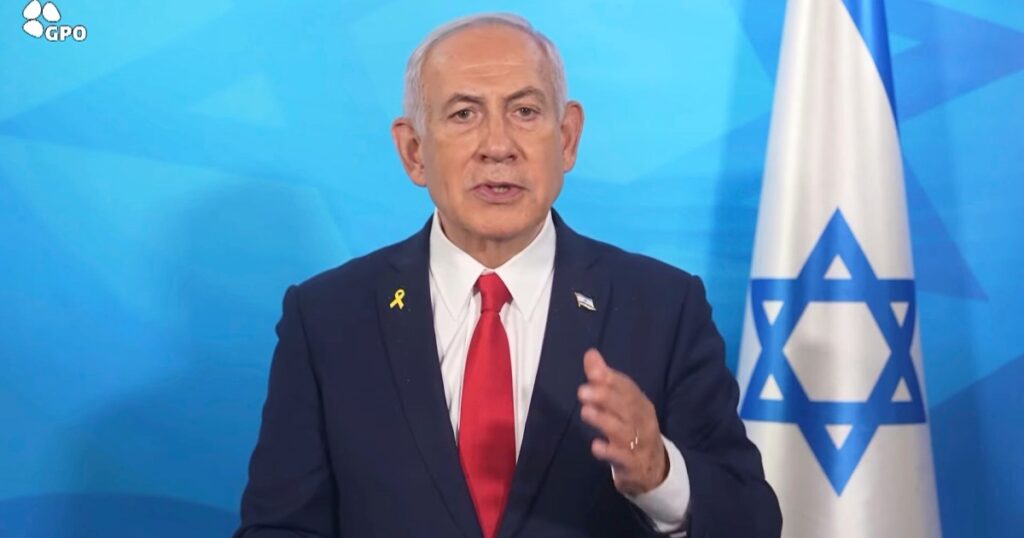
Thousands of Israelis have taken part in antigovernment protests after Netanyahu resumed strikes in Gaza. Prime Minister Benjamin Netanyahu has accused the opposition of fuelling “anarchy” in Israel, after mass antigovernment protests in recent days, while the opposition leader Yair Lapid has called for a “revolt” if the government refuses to accept verdicts issued by the country’s Supreme Court. Addressing the opposition during a speech in parliament on Wednesday, Netanyahu said, “You recycle the same worn-out and ridiculous slogans about ‘the end of democracy’. Well, once and for all: Democracy is not in danger, it is the power of the bureaucrats that is in danger.” “Perhaps you could stop putting spanners in the works of the government in the middle of a war? Perhaps you could stop fuelling the sedition, hatred and anarchy in the streets?” he added. Thousands of Israelis have taken part in several days of antigovernment protests, accusing Netanyahu of undermining democracy by removing Ronen Bar, the head of the Shin Bet internal security agency and resuming strikes in Gaza without any regard for captives held in the besieged enclave. Advertisement Netanyahu is locked in a battle with the Shin Bet chief, who is running a bribery investigation into the prime minister’s office, citing a lack of “trust”. The two men have been at loggerheads, fuelled by bitter recriminations over the failure to prevent the Hamas-led October 7, 2023, attacks on southern Israel. The demonstrations, which erupted last week, have been organised by a broad coalition of anti-Netanyahu groups who say the Israeli leader is trying to stay in power at any cost. The Supreme Court froze Bar’s dismissal after several appeals were filed, including by opposition leader Yair Lapid’s centre-right Yesh Atid party. The opposition’s appeal highlighted what critics see as the two main reasons Netanyahu moved against Bar. The first was his criticism of the government over the security failure that allowed Hamas’s October 7, 2023, attack on Israel, the deadliest day in the country’s history. The second was what the opposition appeal said was a Shin Bet investigation into Netanyahu’s close associates on suspicion of receiving money linked to Qatar. Netanyahu’s office has dismissed the accusations as “fake news”. Calling for a ‘revolt’ Israeli opposition leader Yair Lapid called for a “revolt” against the government of Netanyahu if it refused to accept verdicts issued by the country’s Supreme Court. “A government that doesn’t obey the court is a criminal government that should not be obeyed,” Lapid told local radio 103FM. “If the government does not comply with the Supreme Court, we must shut down the country, and that would be the end of everything.” Advertisement Israel’s cabinet also passed a vote of no confidence on Sunday against the country’s attorney general, Baharav-Miara, the first step in a process to dismiss her. Netanyahu’s office pointed to “significant and prolonged differences between the government and the government’s legal adviser,” a key part of the attorney general’s job. Following the Supreme Court’s initial ruling in the Bar case, Baharav-Miara said Netanyahu could not name a new internal security chief and was “prohibited to take any action that harms” his position. Adblock test (Why?)
Russian cargo plane crash lands in Siberia
[unable to retrieve full-text content] A Russian cargo plane crash landed at an airstrip in Novy Urengoy, Siberia on Wednesday due to a landing gear failure.
The Atlantic publishes Yemen ‘attack plans shared by Trump aides’ on Signal
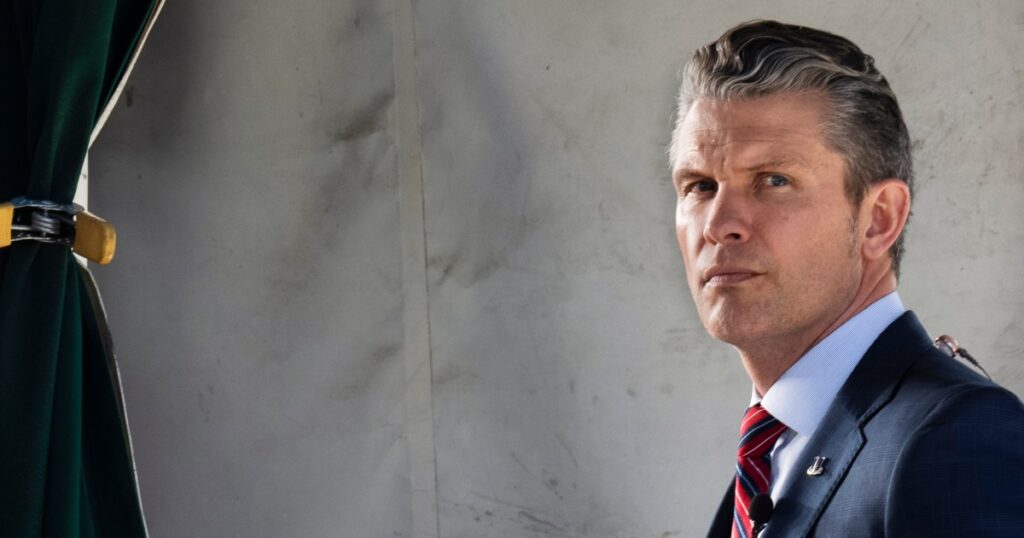
DEVELOPING STORYDEVELOPING STORY, Details released by media outlet include the times of US strikes and the types of aircraft being used against the Houthis. The Atlantic has published what it said were “attack plans” against Yemen’s Houthi rebels that top United States government officials shared in a group chat that inadvertently included the media outlet’s editor-in-chief. The release on Wednesday came after the administration of US President Donald Trump sought to downplay the significance of the texts shared on the Signal messaging app, according to The Atlantic. The most import of the newly published messages appear to have been sent on March 15 by an account seeming to belong to Secretary of Defense Pete Hegseth. They include the times of strikes and the types of aircraft being used, as well as early reports about how effective the attacks against the Houthis were. In the group chat, the Hegseth account posted: “1215et: F-18s LAUNCH (1st strike package)” “1345: ‘Trigger Based’ F-18 1st Strike Window Starts (Target Terrorist is @ his Known Location so SHOULD BE ON TIME – also, Strike Drones Launch (MQ-9s)” “1410: More F-18s LAUNCH (2nd strike package)” “1415: Strike Drones on Target (THIS IS WHEN THE FIRST BOMBS WILL DEFINITELY DROP, pending earlier ‘Trigger Based’ targets)” “1536 F-18 2nd Strike Starts – also, first sea-based Tomahawks launched.” “MORE TO FOLLOW (per timeline)” “We are currently clean on OPSEC” [operational security]. “Godspeed to our Warriors.” Advertisement Later, US National Security Advisor Mike Waltz sent a text containing real-time intelligence about conditions at an attack site that is believed to be in Yemen’s capita, Sanaa, according to The Atlantic: “VP. Building collapsed. Had multiple positive ID. Pete, Kurilla, the IC, amazing job,” the message read, in an apparent reference to Hegseth; General Michael E. Kurilla, the commander of Central Command; and the intelligence community, or IC. An account seeming to belong to US Vice President JD Vance, apparently confused, wrote “What?”, to which the Waltz account responded: “Typing too fast. The first target – their top missile guy – we had positive ID of him walking into his girlfriend’s building and it’s now collapsed.” ‘Massive breach’ The publication of the texts’ transcript comes two days after The Atlantic published an article from editor-in-chief Jeffrey Goldberg, in which he detailed how he had been added to a group chat where high-level government officials were discussing military actions against the Houthis. Monday’s report offered a broad-strokes description of what transpired in the chat. “The information contained in them, if they had been read by an adversary of the United States, could conceivably have been used to harm American military and intelligence personnel,” Goldberg wrote. But on Tuesday, US officials sought to wave the scandal aside, repeatedly denying that any classified information had been included in the chat. “There was no classified information, as I understand it,” Trump said at a meeting of US ambassadors. “ We’ve pretty much looked into it. It’s pretty simple, to be honest. It’s just something that can happen.” Advertisement White House Press Secretary Karoline Leavitt, who on Tuesday insisted “no classified material was sent to the thread”, slammed The Atlantic for its latest report. “This entire story was another hoax written by a Trump-hater who is well-known for his sensationalist spin,” she wrote on X on Wednesday. Democrats, however, renewed their calls for Hegseth and other top Trump administration officials to resign over the leaked chat. “The Signal incident is what happens when you have the most unqualified Secretary of Defense we’ve ever seen,” Senator Mark Kelly wrote on social media. “We’re lucky it didn’t cost any servicemembers their lives, but for the safety of our military and our country, Secretary Hegseth needs to resign.” Congressman Maxwell Alejandro Frost said the latest report from The Atlantic makes “clear that this was a massive breach of our national security”. “Had this very specific plan gotten in the wrong hands, Americans would be dead right now, Waltz and Hegseth must be fired immediately,” he wrote on X. In an interview on Fox on Tuesday, Waltz said he took “full responsibility”, admitting that he “built the group”. “We made a mistake. We’re moving forward,” he added. Adblock test (Why?)
What Palestinians in Gaza say about Israel’s ‘Migration Directorate’
[unable to retrieve full-text content] Israel plans to establish a government agency to oversee the “voluntary departure” of Palestinians from Gaza.
UN official backs call for FIFA action on gender oppression in Afghanistan

The UN special rapporteur on Afghanistan urges ‘strong stand’ from FIFA for nation’s women to make return to international football. Afghanistan’s national women’s football team have received support from a United Nations special rapporteur as they urge athletes worldwide to stand in solidarity as they fight their exclusion from World Cup qualifying competitions since the Taliban takeover in 2021. Many players from the team fled the country at the time because they feared persecution. The women’s team has since been unable to compete internationally because FIFA rules require recognition by a national federation, and the Taliban-controlled Afghan Football Federation bans women from playing. The Taliban says it respects women’s rights in accordance with its interpretation of Islamic law and local customs and that internal matters should be addressed locally. At a news briefing hosted by the Sports & Rights Alliance on Tuesday, Afghan national team captain Mursal Sadat highlighted the importance of global unity in the fight for gender equality in sport. “If there is one thing that I would request from the athletes all around the world, it would be it is time that we unite together. And it’s time that women support other women,” she said. Advertisement “It would give us a lot of inspiration and support because you guys have a voice to use and that platform is there to be used.” Sadat added that even a short video posted by athletes on social media would be a sign of solidarity against gender-based violence taking place in Afghanistan. Richard Bennett, the UN special rapporteur on Afghanistan, said on Wednesday that he stood with Afghan women footballers in their call for FIFA to take action. “I support the call by Sports & Rights Alliance for FIFA to take a strong stand against systematic gender oppression and ensure that Afghan women footballers in exile, who are barred from playing in Afghanistan, can return to international competition,” Bennett wrote on X. National team founder and former captain Khalida Popal said the players are not fighting against global football’s governing body but rather seeking collaboration. “Our platform is sport – together with everyone, with the media, with individuals, with organisations and with governing bodies and including FIFA because we are not fighting against FIFA or any other organisation,” Popal said. “We want to work together to find the best solutions as using Afghanistan as an example to make sure the other countries, the other nations don’t face what we have faced.” In 2020, Afghanistan had 25 contracted women football players, most of whom now live in Australia. Adblock test (Why?)
Thailand prime minister survives vote of no-confidence
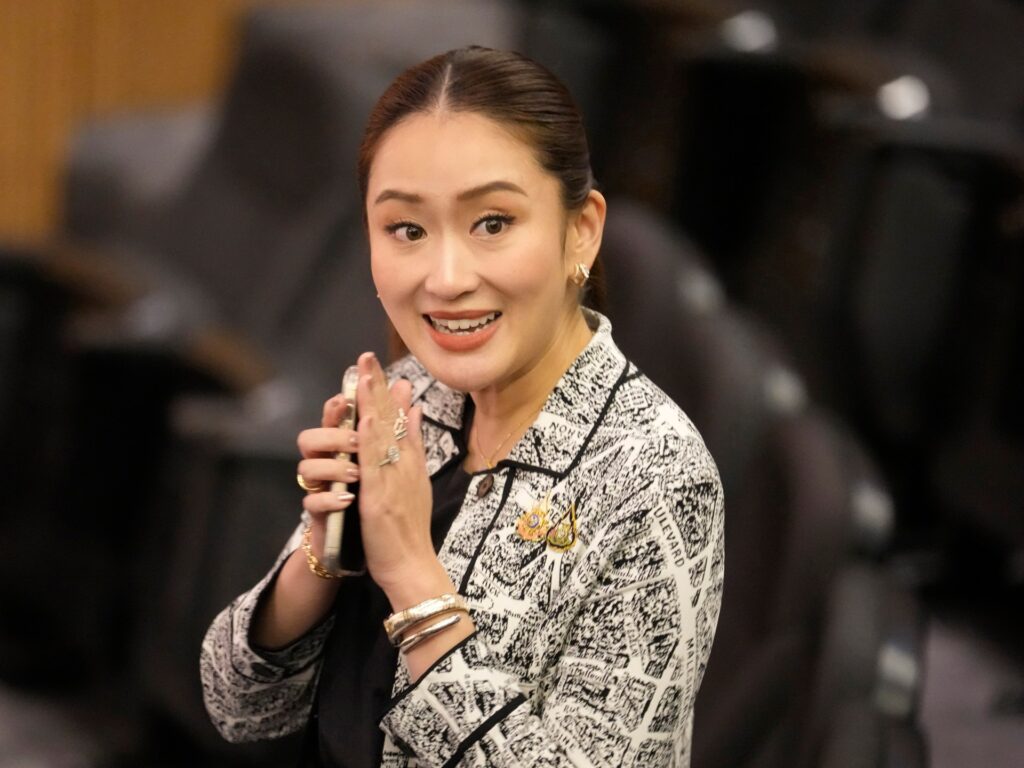
Prime Minister Paetongtarn Shinawatra, daughter of ex-premier Thaksin, won the backing of 319 of 488 Thai lawmakers. Thailand’s Prime Minister Paetongtarn Shinawatra has survived a no-confidence vote in parliament, defeating a challenge from opposition parties which accused her of being a puppet of her father, billionaire ex-premier Thaksin Shinawatra. After a two-day debate in which the opposition attacked 38-year-old Paetongtarn’s management of the economy and national security, as well as her inexperience, MPs voted down the no-confidence motion by 319 votes to 162 on Wednesday, with seven abstentions. Paetongtarn thanked her supporters after winning the vote. “All votes, both for and against, will be a force driving me and the cabinet to carry on working hard for the people,” she wrote on Facebook. The motion comes at a bad time for Paetongtarn. Public confidence in her coalition government’s ability to resolve national problems is low, at only 38.55 percent. Her father, Thaksin, was the most influential and controversial politician in modern Thai history. He returned to the kingdom in 2023 after 15 years of self-exile. Advertisement Thaksin served a few months of an eight-year jail sentence for historic corruption and abuse of power charges in a police hospital before being pardoned by the king, fuelling rumours of a backroom deal to treat him leniently. The 75-year-old remains popular among millions of poorer Thais who prospered under his 2001 to 2006 rule, but he is despised by the kingdom’s conservative elite, who regard him as corrupt and manipulative. Paetongtarn became prime minister last year at the head of a coalition government led by the Pheu Thai Party, the latest incarnation of the political movement founded by Thaksin, after the incumbent Srettha Thavisin was thrown out by a court order. As well as being the youngest person to take the leadership, Paetongtarn is Thailand’s second-ever female prime minister after her aunt, who was removed in a coup in 2014. Thaksin’s shadow looms large During the censure debate, Rangsiman Rome, an outspoken lawmaker with the main opposition People’s Party, accused Paetongtarn of engineering preferential treatment for her father. “You made a deal, a demon deal, to get your father better conditions than other prisoners,” he said in parliament. “The condition was your father will not be in jail for a single day.” Paetongtarn denied the allegation, pointing out that she became prime minister several months after her father’s royal pardon. Thaksin has since spoken openly about government policy but has repeatedly said he only offers his daughter advice. Advertisement Opposition MPs also accused Paetongtarn of avoiding tax and of mishandling the case of 40 Uighurs sent back to China late last month. The repatriation of the Uighurs prompted international condemnation and led to the United States imposing visa bans on some Thai officials. Adblock test (Why?)
US consumer confidence plunges to four-year low

Consumer confidence in the United States has continued its sharp 2025 decline as Americans’ views about their financial futures slumped to a 12-year low, driven by rising anxiety over tariffs and inflation. The Conference Board reported on Tuesday that its consumer confidence index fell 7.2 points in March to 92.9, the fourth straight monthly decline and its lowest reading since January of 2021. The reading was short of analysts’ expectations for a reading of 94.5, according to a survey by FactSet. The business group found that the measure of Americans’ short-term expectations for income, business and the job market fell 9.6 points to 65.2. That’s the lowest reading in 12 years and well below the threshold of 80, which The Conference Board says can signal a potential recession in the near future. The proportion of US consumers anticipating a recession remains at a nine-month high, the board reported. “Consumers’ optimism about future income — which had held up quite strongly in the past few months — largely vanished, suggesting worries about the economy and labour market have started to spread into consumers’ assessments of their personal situations,” said Stephanie Guichard, senior economist at The Conference Board. Advertisement US President Donald Trump’s on-and-off-again tariffs have been panned by economists for sowing confusion and uncertainty that they said was making it challenging for businesses to plan ahead, to the detriment of the economy. Trump on Monday indicated that not all of his threatened duties would be imposed on April 2 and some countries may get breaks, but at the same time said tariffs on imported automobiles were coming soon. “Consumers are rattled,” said Carl Weinberg, chief economist at High Frequency Economics. “At great personal risk, we will opine that the chaos in Washington has something to do with this. The decline in consumer sentiment since the November election can no longer be written off as a coincidence.” The fourth straight monthly decline in confidence mirrored a similar deterioration earlier this month in the University of Michigan’s consumer sentiment measure, which has also erased all the gains notched in the aftermath of Trump’s election victory in November. ‘Meaningful pressure’ on profits The Trump administration has largely played down the souring mood among Americans, saying it doesn’t necessarily reflect what’s happening in the actual economy. This argument is similar to what officials in former US President Joe Biden’s administration said as high inflation suppressed consumer confidence without undermining growth. Yet some of the nation’s biggest retailers, who have noted a shift in consumer behaviour, are telling a different story. Walmart has thrived with Americans trying to offset higher prices by seeking bargains. Late last month, however, the nation’s largest retailer slashed its profit forecast for this year. Its sales outlook was also conservative and the company does not include the potential impact of tariffs in its expectations for 2025. Advertisement Target’s sales and profit slipped during the crucial holiday quarter, and the company predicted that there would be “meaningful pressure” on its profits to start the year in part because of tariffs on Mexico, Canada and China. Macy’s, Best Buy, Abercrombie & Fitch, Dollar General and others also have grown cautious about their expectations for 2025, with many citing “economic uncertainty”. The Conference Board’s survey showed that purchasing plans for both homes and cars declined. However, in somewhat of a surprise given respondents’ anxiety about the future, intentions to buy big-ticket items like appliances increased. The board said that could reflect a desire to buy before the tariffs kick in and price increases. While inflation has retreated from its highs during the post-pandemic rebound, it has remained above the Federal Reserve’s two percent target. Those still-elevated prices, combined with the announced tariffs on many imported goods, have Americans feeling sour about spending as concerns about the economy mount. Consumers had appeared increasingly confident heading into the year-end holidays, and spent generously at the end of 2024. One month later, however, in January 2025, US retail sales fell sharply, though cold weather shared some of the blame. Earlier this month, the government reported that Americans stepped up their spending in February after the sharp early-year pullback, but only tepidly. The board reported Tuesday that consumers’ view of current conditions decreased 3.6 points to 134.5. Advertisement The consumer confidence index measures both Americans’ assessment of current economic conditions and their outlook for the next six months. Consumer spending accounts for about two-thirds of US economic activity and is closely watched by economists for signs about how the American consumer is feeling. Adblock test (Why?)