

Bucks’ Damian Lillard injured with blood clot in calf, out indefinitely
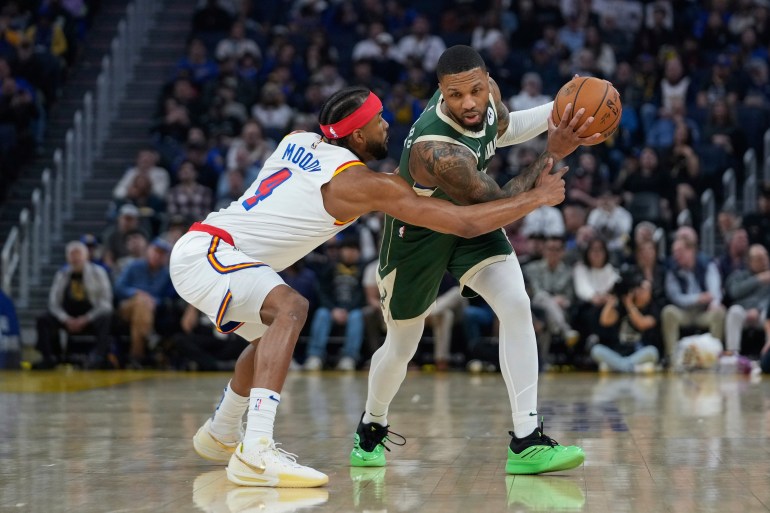
Milwaukee Bucks’ championship aspirations are in jeopardy, with star Damian Lillard diagnosed with deep vein thrombosis. Milwaukee Bucks All-Star guard Damian Lillard has deep vein thrombosis in his right calf, the team announced. According to the Bucks, Lillard is on a blood-thinning medication that has stabilised his condition, and he will continue to undergo testing. The team did not provide a timetable for Lillard’s return on Tuesday, only saying updates would be provided as appropriate. “Damian’s health is our No. 1 priority,” Bucks general manager Jon Horst said in a statement. “We will support him as he moves through his weekly process of strict criteria to ensure that it is safe for him to return to play. Doctors have indicated that his situation is very unlikely to occur again. We are thankful that this was identified and medicated quickly, which helps with the recovery.” Lillard, 34, last played on March 18 at the Golden State Warriors before sitting out the Bucks’ last three games with what was described as a calf injury. Lillard is averaging 24.9 points, 7.1 assists, 4.7 rebounds and 1.2 steals per game in 58 games (all starts) in his second season with Milwaukee. He has career averages of 25.1 points, 6.7 assists and 4.3 rebounds per game in 900 games with the Portland Trail Blazers (2012-23) and Bucks. Advertisement The Bucks (40-31) have 11 games remaining in the regular season. They currently hold fifth place in the Eastern Conference standings and are down a pair of big men in Jericho Sims (thumb) and Bobby Portis Jr (suspension). Injured Milwaukee Bucks guard Damian Lillard last played in an NBA game on March 18, 2025, against Golden State Warriors in San Francisco, US [File: Godofredo A Vasquez/AP] Adblock test (Why?)
Why are users of 23andMe being urged to delete their data?
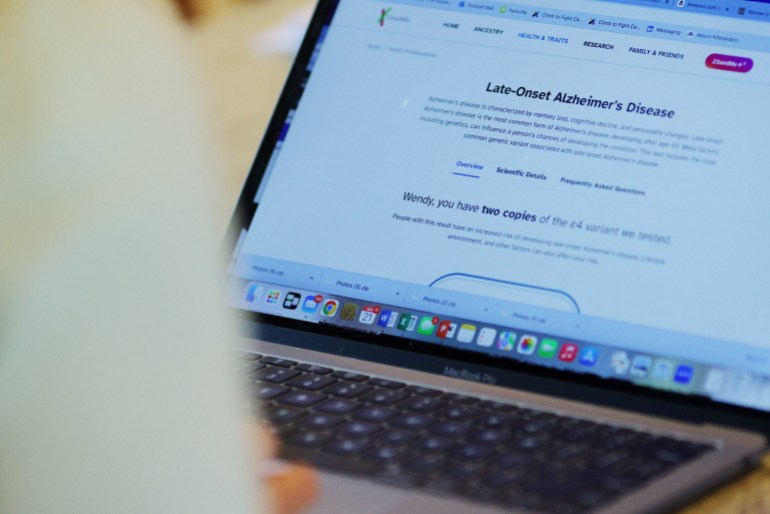
Users of 23andMe, a direct-to-consumer genetic testing site, are being urged to delete their personal data from the website following the company’s bankruptcy filing in the United States on March 23. Here’s why it matters. What happened to 23andMe? If 23andMe’s bankruptcy goes through, it will soon be up for sale after years of financial troubles. Since its founding in 2006, the company has amassed the genetic information of about 15 million users – a dataset that is now potentially up for sale to the highest bidder. 23andMe offered services related to family ancestry and genetic traits, gradually expanding into tests for genetic predispositions to cancer and other diseases. More recently, the company sought to pivot into drug research. In 2021, the company went public with a $3.5bn valuation, partly to raise funds for this new direction. However, tough economic conditions and declining sales left the company financially unstable. In October, it laid off 40 percent of its workforce and now faces delisting from the NASDAQ after its stock price fell below $1 this week. A US user of 23andMe looks at test results revealing that she carries two APOE4 gene variants, indicating an increased risk of Alzheimer’s disease, on March 21, 2023 [Brian Snyder/Reuters] What are the current risks to users? In an open letter to its customers, 23andMe insisted that the bankruptcy “does not change how we store, manage, or protect customer data”, adding that any potential buyer would be “required to comply with applicable law with respect to the treatment of customer data”. Advertisement Despite this promise, the attorneys general of New York and California have urged residents to log onto the site and delete their data. Arthur Caplan, the head of the Division of Medical Ethics at the NYU Grossman School of Medicine, expressed scepticism about 23andMe’s promises. “If 23andMe really goes bankrupt and someone buys its assets, then what’s going to happen is their promises of confidentiality go out the window. The buyer isn’t bound to follow what 23andMe said,” Caplan told Al Jazeera. “They can share data, and given the fact that DNA analysis is even better now than it was 10 years ago when all this collection started, they might be able to identify people.” Is 23andME data protected by US law? Unlike the European Union, the US lacks a comprehensive federal data privacy law. Instead, data protection relies on a patchwork of state laws and industry-specific regulations. Like other DNA home-testing companies, 23andMe is not covered by the main piece of legislation governing the privacy of health records, the US Health Insurance Portability and Accountability Act – better known as HIPAA – because it is not classified as a medical company. Data from companies like 23andMe can also be obtained by law enforcement under a warrant or subpoena. In one of the most high-profile cases involving a home-testing service and the authorities, California investigators in 2017 used an unnamed genealogy website to identify Joseph James DeAngelo as the “Golden State Killer,” a prolific serial murderer who was active between the mid-1970s and mid-1980s. Melanie Barbeaux holds a photo of the victims of the Golden State Killer at the arraignment of Joseph James DeAngelo in California on April 27, 2018 [Sacramento Bee/Randy Pench via Reuters] Why Is 23andMe controversial? Even before its bankruptcy, 23andMe faced criticism for its data security practices. Advertisement In 2023, hackers broke into the company’s systems and accessed the information of nearly 7 million users. The company was later forced to pay $30m in a class action lawsuit over the breach. The company’s scientific claims have also been questioned. Caplan said 23andMe’s claim that it can reveal meaningful information about ethnic heritage is misleading because DNA can only provide a limited window into someone’s ancestry. “It didn’t make sense to me that you could find out your ancestry from a genetic test because much of the information needed, including where your ancestors were living and what groups they were mingling with 200 years ago, we just don’t know,” Caplan said. “Genes do not sort out by cultural categories like Lithuanian or Panamanian. There’s no Costa Rican gene.” “I always thought the company was collecting the DNA because it wanted to sell it for research,” Caplan added. “The whole idea of ancestry testing and finding out about your past was almost a bait and switch: ‘We’ll give you this cool information if you give us your DNA.’” This March 2019 image shows part of the health advice option in a 23andMe genetic test [AP] Who might buy 23andMe? As part of its bankruptcy proceedings, 23andMe has announced a 45-day bidding period for its assets. Former CEO and co-founder Anne Wojcicki has resigned from her position to submit her own bid for the company. “We’ve had many successes, but I equally take accountability for the challenges we face today,” Wojcicki said in a post on X on Monday. Advertisement “There is no doubt that the challenges faced by 23andMe through an evolving business model have been real, but my belief in the company and its future is unwavering.” Since last year, Wojcicki has submitted several offers to a special committee of independent directors to take the company private, but those were rejected over share-price concerns. How can users delete their data? If you’re concerned about your data, here’s how you can delete it: Log into your 23andMe account Go to “Settings” Select “23andMe Data” Click “View” Scroll to the option “Delete Data”. Click on “Permanently Delete Data”. Approve the request. Adblock test (Why?)
Yuki Tsunoda to replace Liam Lawson at F1 Red Bull team: Reports

Yuki Tsunoda will be elevated to the Red Bull team to partner Max Verstappen at the upcoming Japanese GP, according to Dutch media reports. Speculation about Liam Lawson’s Red Bull future picked up speed with media reports suggesting the Formula One team had decided to replace the New Zealander with Japanese driver Yuki Tsunoda. Dutch newspapers De Telegraaf and De Limburger reported on Tuesday that Honda-backed Tsunoda would swap seats with Lawson as Max Verstappen’s teammate from next week’s Japanese Grand Prix after a Red Bull meeting in Dubai. They said an official announcement was expected later in the week. There was no immediate comment from Red Bull. The New Zealand Herald newspaper said Lawson’s representatives were “unaware if what’s been reported has been finalised by Red Bull”. Lawson was promoted from Racing Bulls, Red Bull’s 2025 feeder F1 team, to replace Mexican Sergio Perez alongside four-time world champion Verstappen this season but has struggled in his first two race weekends in Australia and China. The 23-year-old Kiwi was at Red Bull’s 2024 F1 feeder team – Visa Cash App RB – with Tsunoda for six races last season, after being drafted in as a replacement for Australia’s Daniel Ricciardo, and was then preferred for the Red Bull seat. Advertisement While Verstappen is second in the 2025 driver standings, eight points behind McLaren’s Lando Norris after a second and fourth place as well as a sprint third in China, Lawson has yet to score a point. Tsunoda, meanwhile, has made a strong start and scored three points when he finished sixth in the Shanghai sprint last Saturday. Red Bull team boss Christian Horner said after the Chinese Grand Prix that Lawson was struggling but the team would support him as best they could. Red Bull have a history of swapping out Verstappen’s teammates, with the Dutch driver the clear number one at a British-based team that lost the constructors’ title to McLaren last year. Verstappen has acknowledged the current car is difficult to drive, with Lawson saying in Shanghai that he was struggling to get performance out of it. Dutch media reports claim Yuki Tsunoda, left, will replace Liam Lawson, right, before the next F1 Grand Prix in Japan, beginning April 4 [File: Mark Thompson/Getty Images] Adblock test (Why?)
US vice president’s visit to Greenland ‘unacceptable pressure’: Danish PM

JD Vance’s visit to Greenland comes amid US President Trump saying he wants to take over the Arctic territory. Denmark’s Prime Minister Mette Frederiksen has accused the United States of exerting “unacceptable pressure” on Greenland in advance of a provocative high-level visit to the Arctic territory led by US Vice President JD Vance. Vance, who has become the attack dog of US President Donald Trump’s foreign policy, will travel with his wife, Usha, and other senior officials to the US’s Pituffik Space Base in Greenland on Friday, “to receive a briefing on Arctic security issues and meet with US servicemembers”, his office said in a statement. “I have to say that it is unacceptable pressure being placed on Greenland and Denmark in this situation. And it is pressure that we will resist,” Frederiksen told Danish broadcasters DR and TV2 on Tuesday. “This is clearly not a visit that is about what Greenland needs or wants,” Frederiksen said of Washington’s focus on the Danish autonomous overseas territory. “President Trump is serious. He wants Greenland. Therefore, [this visit] cannot be seen independently of anything else,” she said. Advertisement Greenland’s acting head of government, Mute Egede, has labelled the uninvited visit by US officials a “provocation”, as it coincided with government coalition talks in the territory and municipal elections scheduled for the following week. The outgoing Greenlandic government posted on Facebook that it had not “extended any invitations for any visits, neither private nor official”. “The present government is a caretaker government awaiting the formation of a new government coalition and we have kindly requested all countries to respect this process,” it wrote. pic.twitter.com/wP2TNFfzEN — Greenland in USA&CDA🇬🇱 (@GreenlandRepDC) March 24, 2025 Since returning to power in January, Trump has insisted he wants to take over Greenland for national security purposes, refusing to rule out the use of military force to do so. “We’re going to check out how things are going there,” Vance said of his Greenland visit in a video shared on social media on Tuesday. “Speaking for President Trump, we want to reinvigorate the security of the people of Greenland because we think it’s important to protecting the security of the entire world,” he said. Along with Vance and his wife, the visit to the US military base in Greenland will include White House National Security Adviser Mike Waltz and US Secretary of Energy Chris Wright. By visiting the base, Vance has removed some of the risk of violating potential diplomatic taboos by sending a delegation to another country without an official invite. Vance has already alienated some of the US’s longstanding European allies, publicly accusing them of relying on US military support and being unwilling to devote their own resources to international security. Advertisement Denmark and other European countries have also bristled at Trump’s suggestion that the US should take over Greenland – a mineral-rich territory and nautical gateway to the Arctic and North Atlantic approaches to North America. Greenland has broader strategic value for the US as both China and Russia are also seeking access to its waterways and the nearby natural resources in the Arctic. “This is a charm offensive without the charm,” Noa Redington, an analyst and former adviser to previous Danish Prime Minister Helle Thorning-Schmidt, told the Reuters news agency. “And everyone is upset because it’s so obvious that this is about intimidating the Greenlandic people and provoking Denmark,” he said. Adblock test (Why?)
US judge blocks deportation of another pro-Palestinian student activist
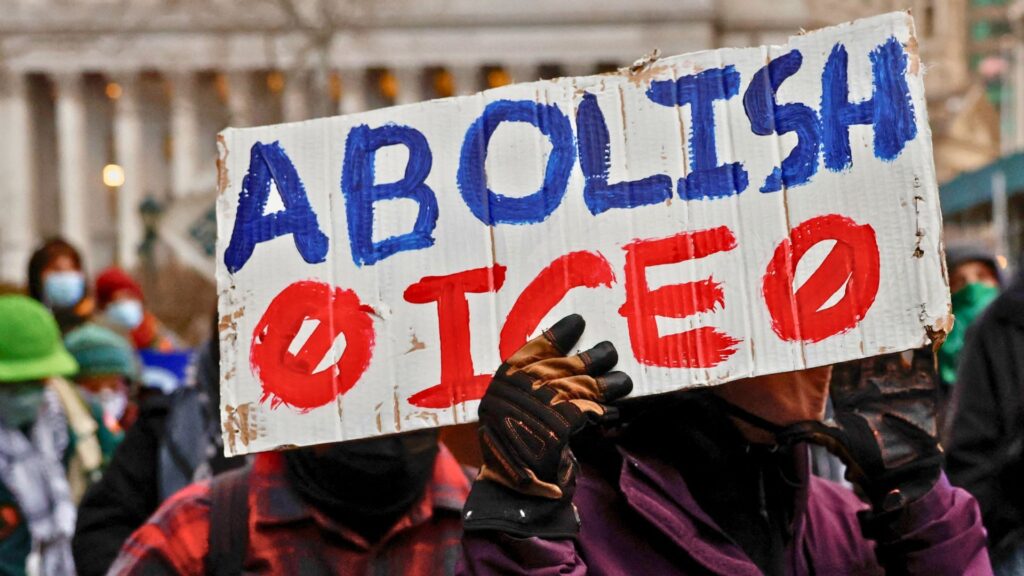
Korean American Yunseo Chung, 21, is among several students challenging the Trump administration’s efforts to deport them over their pro-Palestinian activism. A judge has ruled that Yunseo Chung, a 21-year-old Korean American student at Columbia University who is being sought for deportation by the administration of President Donald Trump, cannot be detained as she fights attempts to remove her from the United States over her pro-Palestinian views. “As of today, Yunseo Chung no longer has to fear and live in fear of ICE [Immigration and Customs Enforcement] coming to her doorstep and abducting her in the night,” Chung’s lawyer Ramzi Kassem said after the court ruling on Tuesday. US District Judge Naomi Reice Buchwald said government lawyers had not yet laid out enough facts about their claims that they needed to detain the student while her case against deportation plays out in court. “Nor was it clear why Ms Chung would pose potentially serious adverse foreign policy consequences,” the judge said, citing a rationale that the Trump administration has invoked in Chung’s case and those of other student protesters it is seeking to throw out of the country over their pro-Palestinian activism. Advertisement “What is the issue with permitting her to stay in the community and not be subjected to ICE detention while the parties participate in rational, orderly briefing?” the judge said, using a legal term for fleshing out arguments in court filings. The ruling for Chung, who has lived in the US since she was 7 years old and holds permanent residency, was a small win in a larger lawsuit in which she is seeking to block the US government from deporting non-citizens who participated in university campus protests against Israel’s war on Gaza. Chung was not at the hearing while about a dozen supporters watched quietly from the court audience. According to a spokesperson at the Department of Homeland Security, Chung is “being sought for removal proceedings under the immigration laws” for engaging in “concerning conduct”, including being arrested at a protest. Chung said in her lawsuit that ICE agents were looking to deport her after her arrest on March 5 while protesting Columbia University’s disciplinary actions against student protesters. Her legal team was also informed earlier this month that her permanent residence status in the US had been revoked. Such actions form part of a “larger pattern of attempted US government repression of constitutionally protected activity and other forms of speech”, Chung’s lawsuit states and cites the Trump administration’s attempt to deport other international students in the country. One such case is Mahmoud Khalil, a recent graduate from Columbia University. His attempted deportation over his role in pro-Palestinian protests at Columbia is one of the most high-profile among several students targeted by Trump. Held in detention, Khalil has described himself as a political prisoner detained for exercising his free speech. Advertisement Khalil is also challenging the Trump administration’s efforts to remove him from the country, and on March 10, a New York district court prohibited his deportation and extended it two days later. Another student up for deportation is Cornell University’s Momodou Taal, who is also suing the US government for attempting to deport him. Badar Khan Suri, an Indian student at Georgetown University, faces a similar situation, as he remains detained by the government. However, a federal judge has barred his deportation for now. Adblock test (Why?)
How did Yemen become a humanitarian disaster?
[unable to retrieve full-text content] A decade of conflict has torn Yemen apart. Now millions face hunger, displacement, and the collapse of basic services.
Trump signs executive order calling for proof of US citizenship to vote
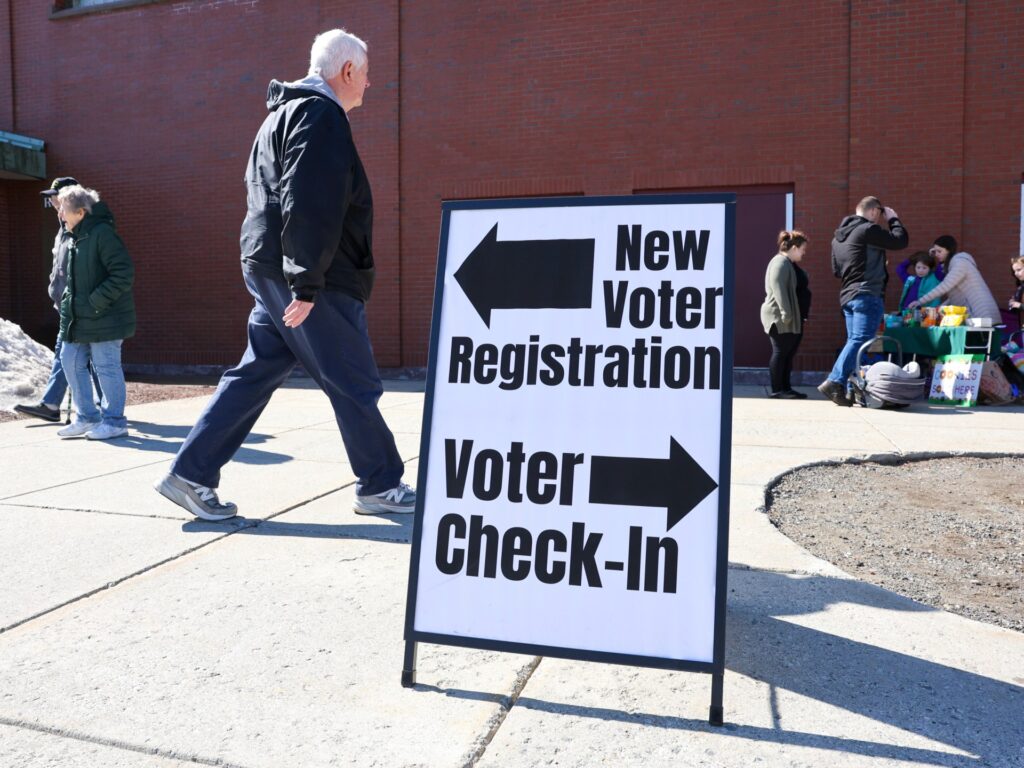
Progressive groups denounce move as effort to suppress millions of voters who do not have ready access to government ID. United States President Donald Trump has signed an executive order requiring Americans to provide proof of citizenship to vote, claiming the move is necessary to “straighten out” election fraud. Trump’s order signed on Tuesday calls on the Election Assistance Commission to require prospective voters to produce a US passport or other valid government ID when registering for federal elections. The order also directs US states to receive all votes by election day and not count mail-in ballots that arrive after the polls have closed. Trump said his order would “hopefully” end election fraud, while repeating his false claim that he won the 2020 presidential election in a “landslide”. “At least this will go a long way toward ending it, there are other steps that we will be taking in the coming weeks, and we think we will be able to end up getting fair elections,” Trump said as he signed the order at the White House. “We’ve got to straighten out our election,” Trump added. “This country is so sick because of the election, the fake elections, and the bad elections, And we’re going to straighten it out, one way or the other.” Advertisement Trump’s order continues his long history of railing against alleged election fraud, including voting by non-citizens, which is illegal and shown in studies to be extremely rare. Trump has often questioned the outcomes of elections that have not gone his way, including his 2020 defeat to former US President Joe Biden, which he falsely attributed to widespread voting irregularities. Democrats and progressive groups have long opposed Republican-led efforts to require voters to produce ID on the grounds that poor and older voters may not have easy access to documents such as passports and birth certificates. Lisa Gilbert, co-president of Public Citizen, a progressive advocacy group, described Trump’s order as a “blatant attack on democracy” and “an authoritarian power grab”. “Donald Trump’s executive order would compromise our election systems, suppress the votes of millions of Americans, especially voters of colour, and pave the way for still more Trumpian false claims of election fraud,” Gilbert said in a statement. Richard Hasen, a law professor at the University of California who runs Election Law Blog, also denounced the move, saying it would disenfranchise potentially millions of voters. “This would prevent only a tiny amount of noncitizen voter registration but stop millions of eligible voters, who do not have easy access to documents such as passports from registering to vote,” Hasen said on his blog. “The aim here is voter suppression pure and simple,” he added. Adblock test (Why?)
Track and field to be first Olympic event to require DNA tests to prove sex

World Athletics chief say rules will uphold the integrity of women’s sport amid debate over inclusion of trans athletes. Track and field is set to become the first Olympic sport to require participants in women’s events to undergo DNA testing to prove their biological sex following a decision by World Athletics. Sebastian Coe, the president of World Athletics, said on Wednesday that track and field’s governing body had agreed to introduce the testing to keep the “absolute focus on the integrity of competition”. “It’s important to do it because it maintains everything that we’ve been talking about, and particularly recently, about not just talking about the integrity of female women’s sport, but actually guaranteeing it,” Coe told reporters on Tuesday after a two-day meeting of the governing body’s council in Nanjing, China. “And this, we feel, is a really important way of providing confidence and maintaining that absolute focus on the integrity of competition.” Coe, a former Olympic medal-winning middle-distance runner, said the body had made the decision following an “exhaustive review” and consultations with more than 70 sporting and advocacy groups. Advertisement “Overwhelmingly, the view has come back that this is absolutely the way to go,” Coe said. Coe, who earlier this month mounted an unsuccessful bid to lead the International Olympic Committee, said competitors would be subject to non-invasive cheek swabs and dry blood-spot tests and would only be checked once in their career. “We will doggedly protect the female category and we will do whatever is necessary to do it, and we’re not just talking about it,” he said. The decision is the latest turn in the heated debate over the participation of transgender women and gender non-conforming athletes in women’s sport. World Athletics in 2023 announced a ban on transgender women who had gone through male puberty, pending a review into the eligibility requirements for participants in female competition. The move overturned previous rules that allowed transgender women to compete if they maintained a blood testosterone level of no more than 5nmol/L for the preceding 12 months. While broadly aimed at athletes who have changed their gender, World Athletics’s testing requirements would also affect small numbers of competitors who were born with atypical sex chromosomes. World Athletics’s decision also comes on the heels of similar moves by several major sporting bodies, including World Aquatics and the National Collegiate Athletic Association, the main governing body for college sport in the United States. The International Olympic Committee, which will oversee the running of the 2028 Games in Los Angeles, has allowed transgender athletes to compete since 2004 but ultimately defers to the eligibility rules set by individual sporting bodies. Advertisement Beyond the world of sport, the issue has become a lightning rod in the broader culture wars taking place in the US and other Western countries. Last month, US President Donald Trump signed an executive order to deny federal government funding to educational institutes that allow trans girls and women to participate in female sport and use female changing rooms. In a New York Times/Ipsos poll published in January, 79 percent of Americans said that trans women should not be allowed to participate in female sports, up from 62 percent in 2021. Adblock test (Why?)
At least 18 dead as ‘unprecedented’ wildfires rage across South Korea
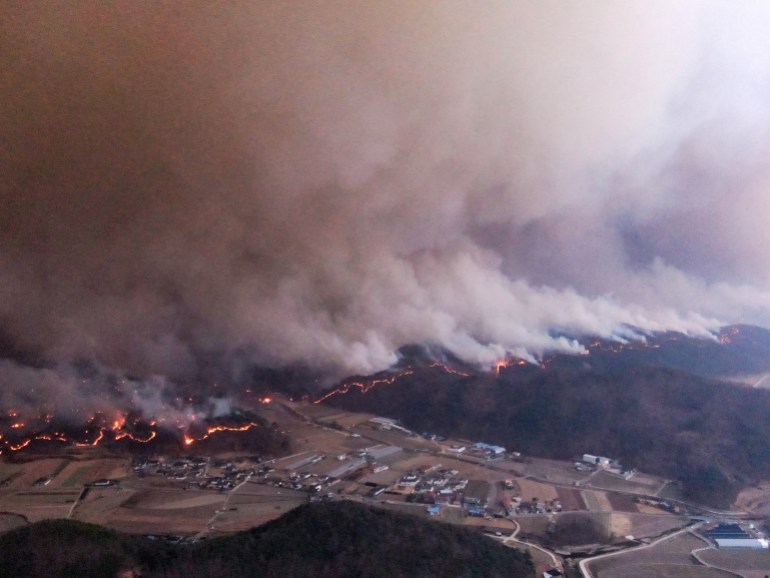
South Korea’s forest service said thousands of fighters are tackling at least five active wildfires across the country. At least 18 people have been killed and almost 20 injured as wildfires rage in multiple areas across South Korea’s southeastern region where thousands of firefighters and soldiers are struggling to control rapidly expanding blazes, officials said. South Korea’s official Yonhap news agency said the death toll had reached 18 on Wednesday, the sixth day of the fires, which are being fuelled by strong and dry winds. According to Yonhap, four victims burned to death after they tried to escape the fires but their car overturned. They were found dead on a road late on Tuesday night. The Korea Forest Service said firefighters are fighting at least five active wildfires nationwide as of Wednesday morning. Smoke rises from a wildfire that has devastated areas in Andong county, South Korea, on March 25, 2025 [Yonhap via Reuters] The wildfires began late on Friday in Sancheong county in Northern Gyeongsang province before spreading to neighbouring Uiseong county – located about 180km (111 miles) southeast of the capital Seoul – and have advanced into Andong, Cheongsong, Yeongyang, and Yeongdeok counties. Advertisement Officials in Andong and other southeastern cities and towns have ordered residents to evacuate as firefighters struggle to contain the fires, which have burned more than 17,000 hectares (42,000 acres) of forest and destroyed hundreds of structures, including the more than 1,000-year-old Gounsa temple in Uiseong. National treasures stored at the Buddhist temple, which was built in 681, were moved to safety in other areas of the country, Yonhap said. Authorities also issued an emergency alert for Hahoe Folk Village – a UNESCO-listed World Heritage Site popular with tourists in Andong county – as the blaze drew closer. “The wildfire is currently about 8km (4.9 miles) from Hahoe Village,” an official at the Korea Heritage Service said, adding that fire trucks and dozens of firefighters are on standby and spraying water around the premise to prevent the fire from spreading. A man sprays water on a thatched roof amid the approaching wildfire in Andong’s Hahoe Folk Village, South Korea, on Tuesday [Yasuyoshi Chiba/AFP] Lee Byung-doo, a forest disaster expert at the country’s National Institute of Forest Science, said the fire in Uiseong exhibited “unimaginable” scale and speed. South Korea’s acting President Han Duck-soo said the raging fires had exceeded all prediction models for such a disaster. “Wildfires burning for a fifth consecutive day in Ulsan and the Gyeongsang region are causing unprecedented damage,” Han said. The fires are “developing in a way that is exceeding both existing prediction models and earlier expectations”, he said. Advertisement According to Yonhap, the South Korean military has deployed an estimated 5,000 service members and sent 146 helicopters to help fight the fires alongside thousands of firefighters. Approximately 500 inmates at a prison have also been transferred to other facilities outside the fire danger zone. Helicopters extinguish wildfires by dropping water on a mountain in Ulsan, southeast of Seoul, South Korea on Tuesday [Yonhap/EPA] Adblock test (Why?)
‘Sloppy’: Trump downplays shock over leaked Signal chat about Houthi attack
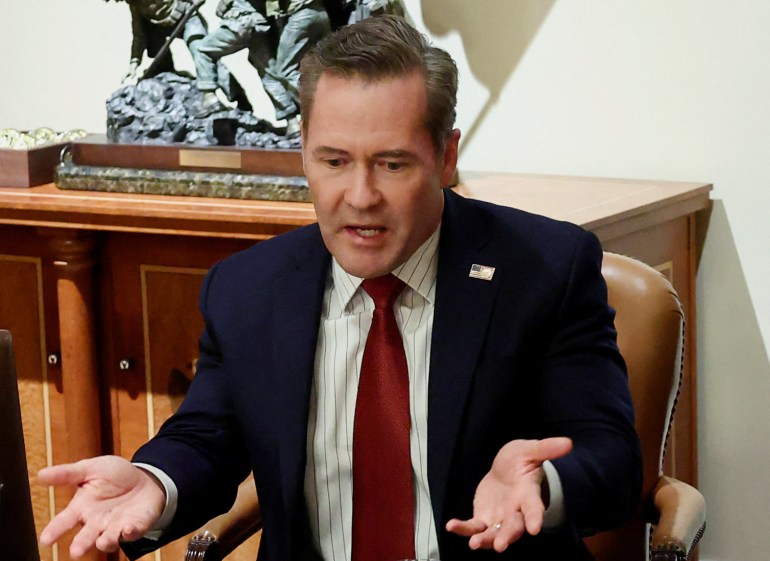
The administration of United States President Donald Trump has continued to face fallout from an article in The Atlantic that revealed editor-in-chief Jeffrey Goldberg was added to a group chat where top-level government officials discussed plans for bombing Yemen. The White House remained in damage control mode on Tuesday, seeking to dismiss allegations that government secrets were at risk. “There was no classified information, as I understand it,” Trump said at a meeting of US ambassadors, waving the scandal aside. “ We’ve pretty much looked into it. It’s pretty simple, to be honest. It’s just something that can happen.” He told reporters he had no intention of seeking punishments, barring the use of the social media app Signal or asking for an apology from those involved. Trump’s comments come in response to Goldberg’s article, published a day prior, wherein the editor explains how he received an invitation on the messaging platform Signal from a user identified as White House National Security Advisor Michael Waltz. Advertisement Goldberg accepted the invitation. He quickly found himself in the midst of a conversation about the merits of bombing Houthi fighters in Yemen. While Goldberg declined to quote specific military information from the chat, he did share in his published article interactions between officials at the highest level of government, including Vice President JD Vance and Secretary of Defense Pete Hegseth. Vance, Hegseth and Homeland Security Advisor Stephen Miller, for instance, were quoted as debating the timing of the attacks and whether economic gain could be “extracted” from Europe in exchange for the bombings. The vice president, in particular, expressed concern that the bombings would do more to benefit European trade in the Red Sea, where the Houthis are known to strike naval and shipping vessels. The article created a splash in Washington, DC, almost as soon as it was published. Questions were raised about why sensitive information was discussed on a non-government platform and whether the text messages would be preserved, as required by federal records laws. Some of those questions were put directly to two of the participants in the Signal chat, CIA Director John Ratcliffe and Director of National Intelligence Tulsi Gabbard. Both Ratcliffe and Gabbard testified at a Senate Intelligence Committee hearing on Tuesday, facing a grilling from Democrats. “ This was not only sloppy. It not only violated all procedures, but if this information had gotten out, American lives could have been lost. If the Houthis had this information, they could reposition their defensive systems,” said Senator Mark Warner, the top Democrat on the committee. Advertisement “ It’s also just mind-boggling to me that all these senior folks were on this line, and nobody bothered to even check Security Hygiene 101.” Senator Ron Wyden, another Democrat at the hearing, called the Signal chat “ obviously reckless, obviously dangerous”. “Both the mishandling of classified information and the deliberate destruction of federal records are potential crimes that ought to be investigated immediately,” Wyden said. “And I want to make clear that I’m of the view that there ought to be resignation, starting with the national security advisor and the secretary of defence.” National Security Advisor Mike Waltz speaks at a meeting of US ambassador nominees at the White House on March 25 [Evelyn Hockstein/Reuters] Questions of classified information The position of the White House, however, has been that no classified information was released over the Signal chat. In his article, Goldberg is clear that top-secret information was included in the group chat’s messages. “The information contained in them, if they had been read by an adversary of the United States, could conceivably have been used to harm American military and intelligence personnel,” Goldberg wrote. Had Goldberg repeated that information in his publication, he could have opened himself up to legal repercussions. Instead, Goldberg offered a broad-strokes description of what transpired in the chat. “What I will say, in order to illustrate the shocking recklessness of this Signal conversation, is that the Hegseth post contained operational details of forthcoming strikes on Yemen, including information about targets, weapons the U.S. would be deploying, and attack sequencing,” he wrote. Advertisement But on Tuesday, the Trump administration contested that assessment, saying no secrets were revealed in the Signal chat. “Jeffrey Goldberg is well-known for his sensationalist spin,” White House Press Secretary Karoline Leavitt wrote on social media. “Here are the facts about his latest story: 1. No ‘war plans’ were discussed. 2. No classified material was sent to the thread.” Ratcliffe and Gabbard repeated similar remarks at the hearing at Capitol Hill, denying ever sharing top-secret information on Signal, whether on that chat or another. “ To be clear, I haven’t participated in any Signal group messaging that relates to any classified information at all,” Ratcliffe said. “ I have the same answer,” Gabbard echoed. Unlike Ratcliffe, Gabbard declined to even acknowledge whether she was a participant in the chat, as reported in Goldberg’s article. Their position led to a heated confrontation with Senator Warner, who argued that — if the chat did not contain classified information — its contents should be released immediately for review. “Why are you not going to get into the specifics? Is it because it’s all classified?” Warner asked. “Because this is currently under review by the national security —,” Gabbard began to respond, as Warner interjected: “Because it’s all classified? If it’s not classified, share the text now.” At the meeting with the US ambassadors, meanwhile, Trump denied there was any national security breach. “ Our national security now is stronger than it’s ever been,” Trump told reporters. Instead, he blamed technology — and the Signal app specifically — for allowing Goldberg to access the private chat. “ It’s not a perfect technology. There is no perfect technology. The really good ones are very cumbersome, very hard to access,” he said. Demonstrator Gary Rush holds a sign showing a picture of Secretary of Defense Pete Hegseth in the aftermath of the Signal app scandal on March 25 [Kevin Lamarque/Reuters] Trump reignites rivalry with The Atlantic The scandal