

Russia-Ukraine war: List of key events, day 1,126
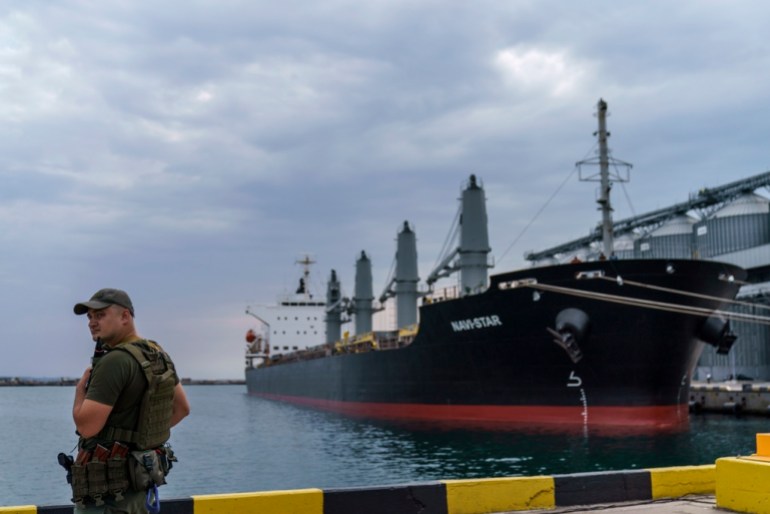
These are the key developments on day 1,126 of Russia’s war on Ukraine. Here is the roundup of key events on Wednesday, March 26. Fighting A mass attack by Russian drones caused “major destruction” in the central Ukrainian city of Kryvyi Rih, the head of the city’s military administration, Oleksandr Vilkul, said early on Wednesday. Vilkul reported at least 15 explosions in Kryvyi Rih, Ukrainian President Volodymyr Zelenskyy’s home town and a frequent target of Russian attacks. There were no initial reports of casualties. A Ukrainian drone attack on Russia’s Belgorod region has left one civilian injured and damaged an apartment building, the region’s governor said. A Russian court in Rostov-on-Don is expected to soon give a verdict in a trial of Ukrainian military personnel, most of them belonging to the former Azov regiment that defended the port city of Mariupol in the months-long fierce battle against Russian forces in February and April 2022. The 24 Ukrainian soldiers, including nine women, are accused of terrorist activity and participation in a terrorist organisation, and could face up to 20 years in jail. Advertisement Ceasefire The United States said it has made separate agreements with Ukraine and Russia to ensure safe navigation in the Black Sea and to implement a ban on strikes against energy facilities in the two countries. Washington also agreed to push to lift some sanctions against Moscow as the first steps towards a wider ceasefire. “We’re in deep discussions with Russia and Ukraine. And I would say it’s going well,” US President Donald Trump told reporters. Oil refineries, oil and gas pipelines and nuclear power stations are among the targets on which Russia and Ukraine agreed to temporarily suspend strikes, the Kremlin said. A list appearing on the Kremlin’s Telegram channel also included fuel storage facilities, pumping stations, electricity generation and transmission infrastructure, such as power plants, substations, transformers, distributors and hydroelectric dams. The Kremlin statement said the list had been “agreed between the Russian and American sides”. According to the statement, the temporary moratorium on strikes on energy infrastructure starts on March 18 and is valid for 30 days, but it could be extended by mutual agreement. If the agreement is breached by one party, the other party is also released from compliance, the Kremlin added. In a parallel statement, the White House said that Russia and Ukraine “agreed to ensure safe navigation, eliminate the use of force and prevent the use of commercial vessels for military purposes in the Black Sea.” The US said it would also look for ways to enforce a ban on strikes on energy infrastructure in the two countries. The Kremlin warned in a statement that the Black Sea deal could only be implemented after sanctions against the Russian Agricultural Bank and other financial organisations involved in food and fertiliser trade are lifted and their access to the SWIFT system of international banking payments is ensured. The agreement is also conditional on lifting sanctions against Russian food and fertiliser exporters and ships carrying Russian food exports, and removing restrictions on exports of agricultural equipment to Russia, the Kremlin said. Ukrainian President Volodymyr Zelenskyy welcomed the US-brokered agreements but criticised Washington for agreeing to ease sanctions on Russia, saying that doing so “would weaken our position”. Zelenskyy said there was no requirement of sanctions relief for the agreed deals with Russia and Ukraine to come into force, and accused Moscow of manipulating the agreement. “Unfortunately, even now, even today, on the very day of negotiations, we see how the Russians have already begun to manipulate,” Zelenskyy said in his nightly video address. A security officer in a port in Odesa, Ukraine, in July 2022 [David Goldman/AP] Russia’s foreign minister, Sergey Lavrov, said in remarks published late on Tuesday that the Black Sea deal aims to bring Moscow back to predictable grain and fertiliser markets that would allow for profit and ensure global food safety. The United Kingdom government said it was “hopeful of the progress” following the Black Sea announcement but it was unclear whether the UK would follow US efforts to ease some sanctions on Russia as part of the deal. Russia’s Ministry of Foreign Affairs said Ukraine’s Zaporizhzhia nuclear plant was now a Russian facility and transferring control of it back to Ukraine or any other country was impossible. Russian forces seized the nuclear power station – Europe’s largest with six reactors – early in the war. Advertisement Regional security The US intelligence community’s Annual Threat Assessment report said Russia, along with Iran, North Korea and China are seeking to challenge the US through deliberate campaigns to gain an advantage and that Beijing also seeks to displace the US as the top AI power by 2030. NATO commanders said they were drawing on lessons learned in the drone war over Ukraine to conduct Europe’s largest air defence exercise, which ends in the Netherlands on Wednesday. The United Nations International Telecommunication Union, its International Civil Aviation Organization (ICAO) and the International Maritime Organization jointly voiced “grave concern” at growing disruptions of so-called Global Navigation Satellite Systems amid a marked increase in efforts to interfere with satellite navigation systems – such as GPS – that are critical for aviation and maritime safety since the start of Russia’s war in Ukraine, as well as amid war in the Middle East. The European Union is pushing for every household in the 27-country bloc to have a three-day survival kit ready in case crisis strikes – be it a conflict or natural disaster. The EU’s crisis management commissioner, Hadja Lahbib, told the AFP news agency that Brussels would like every citizen to be equipped for 72 hours of self-sufficiency, which was in line with a key report last year on strengthening Europe’s civilian and military preparedness. Politics and diplomacy Estonian Foreign Minister Margus Tsahkna and his counterparts from Latvia and Lithuania met jointly in Washington, DC, with US Secretary of State Marco Rubio as the Baltic nations – all NATO members – lead concerns over
Brazilian Supreme Court considers trial for Bolsonaro over coup allegations
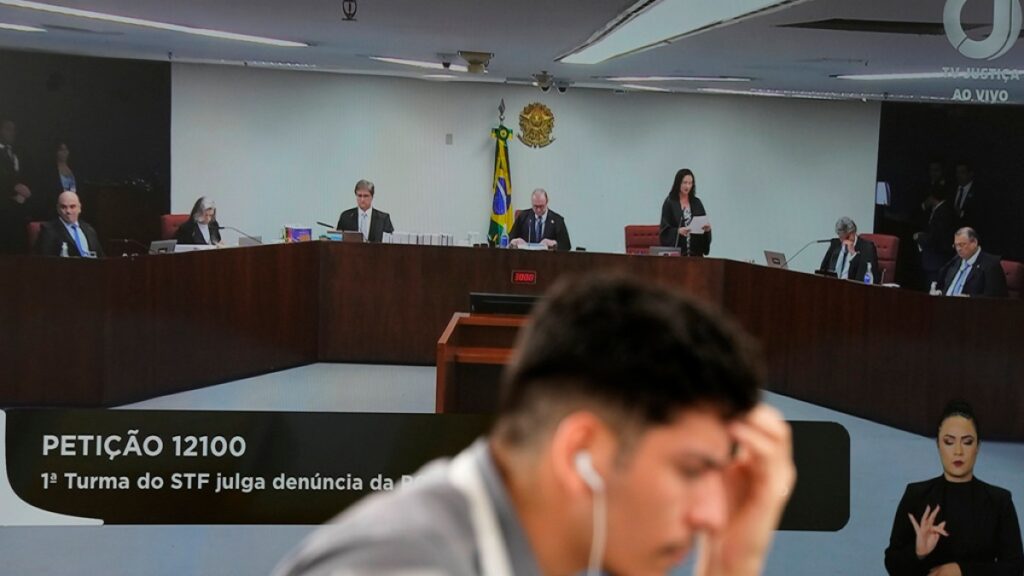
Five justices from Brazil’s Supreme Court have concluded the first day of proceedings as they weigh whether former President Jair Bolsonaro will stand trial for an alleged coup attempt following his loss in the 2022 election. Prosecutor-General Paulo Gonet argued on Tuesday that Bolsonaro oversaw a conspiracy to overthrow the government, including alleged plans to poison his election rival, President Luiz Inacio Lula da Silva, and kill Supreme Court Justice Alexandre de Moraes. Gonet told the five-member panel that Bolsonaro had used criminal means to try and remain in office “regardless of the outcome of 2022 elections”. For a criminal trial to proceed, a majority of the five justices must vote in favour. They are expected to render a decision by Wednesday. De Moraes is among the judges considering the case. Tuesday’s hearing is the result of Gonet’s decision to file formal charges against Bolsonaro and 33 allies on February 18. Gonet told the justices that there was a preponderance of evidence against the defendants. Advertisement “The criminal organisation documented its project, and during the investigations, manuscripts, digital files, spreadsheets and exchanges of messages were found,” Gonet said. Bolsonaro faces five counts, including “attempted violent abolition of the democratic state of law” and damaging government property. Federal police initially indicted him in an 884-page report in November. The far-right Bolsonaro and his allies have decried the charges as part of an elaborate conspiracy by their political rivals to prevent him from running for president again. Already, in 2023, a panel of judges decided to ban Bolsonaro from holding public office until 2030, on the basis that he used his power as president to sow doubt about the country’s voting system. But Bolsonaro has denied any wrongdoing. He faces an array of investigations and probes, some related to his actions during the 2022 election and others pertaining to accusations of money laundering and other crimes. “I am innocent,” Bolsonaro said in a podcast on Monday. “I have no doubt that, in 30 days at the most, they will kill me.” He did not specify who had threatened him. Speaking to reporters the next day at Brasilia’s airport, Bolsonaro nevertheless expressed hope that the justice system would exonerate him. “I’m fine. I always hope for justice. Nothing is substantiated in the accusations, made in a biased way, by the federal police,” Bolsonaro said. The accusations centre on the lead-up and aftermath of the 2022 elections. Even before the first vote was cast, Bolsonaro spread false rumours that Brazil’s electronic voting system could not be trusted. Advertisement The race between Bolsonaro, the incumbent, and the left-leaning Lula was tight. But in a run-off election on October 30, 2022, Lula prevailed by narrow margins, earning 50.9 percent of the vote. Bolsonaro, however, did not publicly acknowledge defeat. Instead, he and his allies sought to challenge his loss with a legal complaint, which was ultimately tossed for lack of evidence. His supporters, meanwhile, flooded the streets, with truckers blocking major roadways. The police headquarters in the capital, Brasilia, was attacked, and a bomb threat was allegedly uncovered in the lead-up to Lula’s inauguration. But tensions reached a peak on January 8, 2023, just days after Lula was sworn in. On that day, thousands of Bolsonaro’s supporters stormed the Three Powers Plaza in Brasilia, breaking into buildings representing the country’s Congress, presidency and Supreme Court. Congress was not in session at the time, nor was Lula in residence. Brazil’s federal police have since accused Bolsonaro and his allies of attempting to trigger a “state of siege” that would allow the military to topple the government. Both allies and critics have compared Bolsonaro with United States President Donald Trump, who likewise rejected a past election defeat as fraudulent – without proof. For Trump, that loss came in 2020, when he was bested by Democrat Joe Biden. Trump has since returned to office after winning the 2024 race. Bolsonaro’s allies have indicated they hope that Trump, now serving a second term, could use the US’s influence to push Brazilian authorities to drop the case and clear the way for Bolsonaro to make another presidential bid. Advertisement Bolsonaro has expressed a strong affinity for Brazil’s military dictatorship, which ruled the country from 1964 through 1985. Crowds of his supporters gathered in front of military barracks after the 2022 election, calling for the armed forces to intervene and stop Lula from taking power. Adblock test (Why?)
US issues demands to new Syrian government in exchange for sanctions relief
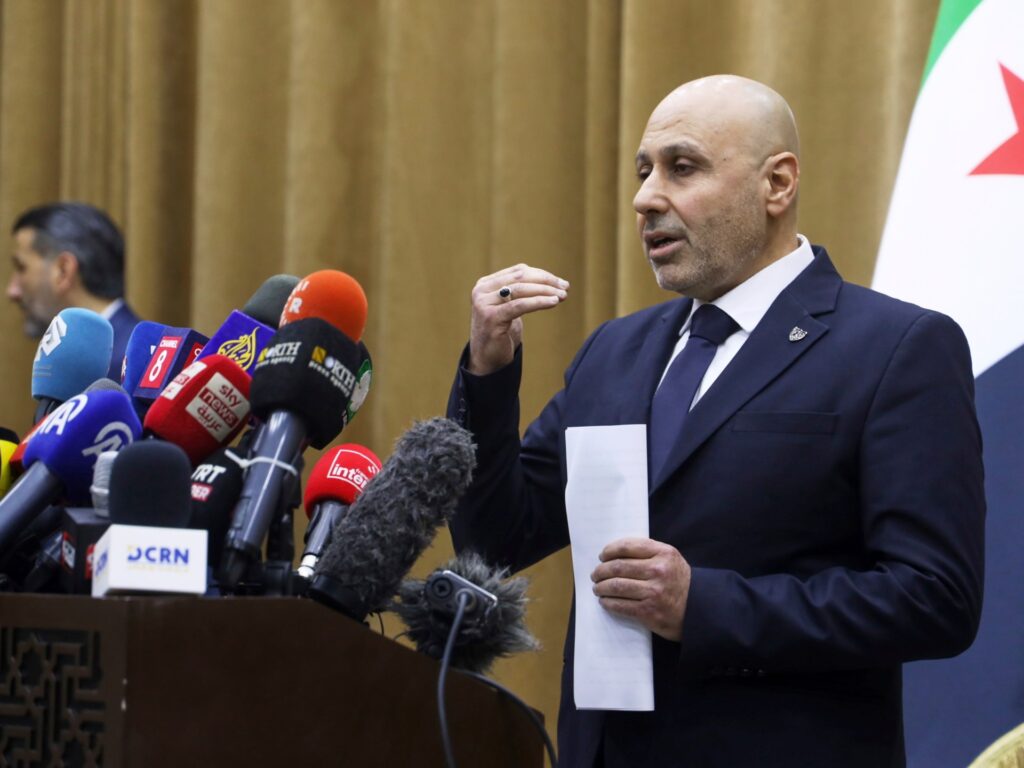
The United States has handed Syria a list of conditions that it wants Damascus to fulfil in exchange for partial sanctions relief, including ensuring foreigners are not in senior governing roles, six people familiar with the matter told Reuters. US Deputy Assistant Secretary for the Levant and Syria Natasha Franceschi gave the list of demands to Syrian Foreign Minister Asaad al-Shibani at an in-person meeting on the sidelines of a Syria donor conference in Brussels on March 18, according to two of the people: a US official and a Syrian source familiar with the matter. Neither the list nor the in-person meeting — the first high-level direct contact between Damascus and Washington since US President Donald Trump took office on January 20 — has been previously reported. Reuters spoke to six sources for this story, including two US officials, a Syrian source, a regional diplomat and two sources in Washington familiar with the matter. They all requested anonymity to discuss the high-level diplomacy. Advertisement Among the conditions placed by the United States are Syria’s destruction of any remaining chemical weapons stores and cooperation on “counterterrorism”, the two US officials, the Syrian source and both sources in Washington said. Another demand was making sure foreign fighters are not installed in senior roles in Syria’s governing structure, the US officials and one of the sources in Washington said. Syria has already appointed some foreign ex-rebels, including Uyghurs, a Jordanian and a Turk, to its defence ministry — a move that alarmed foreign governments. Washington also asked Syria to appoint a liaison to assist US efforts to find Austin Tice, the US journalist who went missing in Syria more than a decade ago, according to the two US officials and both sources in Washington. In return for fulfilling all the demands, Washington would provide some sanctions relief, all six sources said. The sources did not specify what relief would be offered, and said Washington did not provide a specific timeline for the conditions to be fulfilled. Syria’s Ministry of Foreign Affairs and the US Department of State did not respond to requests for comment. Syria is in desperate need of sanctions relief to kick-start an economy collapsed by nearly 14 years of war, during which the US, the United Kingdom and Europe placed tough sanctions on people, businesses and whole sectors of Syria’s economy in a bid to squeeze now-ousted leader Bashar al-Assad. Some of those sanctions have been temporarily suspended, with limited effect. The US issued a six-month general licence in January to ease the flow of humanitarian aid, but the move was not considered enough to allow Qatar to pay for public sector salaries through Syria’s central bank. Advertisement Syrian officials, including al-Shaibani and interim President Ahmed al-Sharaa, have called for sanctions to be fully lifted, saying it is unjust to keep them in place following al-Assad’s toppling by a lightning rebel offensive in December. A policy in progress The delivery of the demands is the clearest signal yet of the Trump administration’s policy on Syria. US statements have focused on support for minorities and condemnations of “Islamist extremism”, but they have otherwise said little, leaving uncertainty over the future of sanctions and whether US forces will remain deployed in the northeast. That is in part due to differing views in Washington on how to approach Syria. Some White House officials have been eager to take a more hardline stance, pointing to the new Syrian leadership’s former ties to al-Qaeda as reason to keep engagement to a minimum, according to diplomats and US sources familiar with the policymaking process. The State Department has sought a more nuanced approach to Syria, including possible areas of engagement, the sources added. The differences led earlier this month to a heated deliberation between the White House and State Department on US Secretary of State Marco Rubio’s statement denouncing violence in western Syria, where hundreds of civilians from the Alawite minority — al-Assad’s sect — were killed after an ambush on new security forces by armed loyalists to the former regime. Rubio condemned “radical Islamist terrorists, including foreign jihadis” who carried out the violence, and called for Syria’s interim authorities to hold perpetrators accountable. Advertisement The White House sought a more harshly worded statement while the State Department pushed back to add more balance, sources familiar with the process said. Reuters reported last month that Israel was lobbying the United States to keep Syria weak and decentralised. The administration is still not fully subscribing to Israel’s effort to discourage US engagement with Syria’s new rulers, sources said, but some of the Israeli concerns are gaining more traction with some US officials. Adblock test (Why?)
‘On a journey’: Family mourns Hossam Shabat, journalist killed by Israel
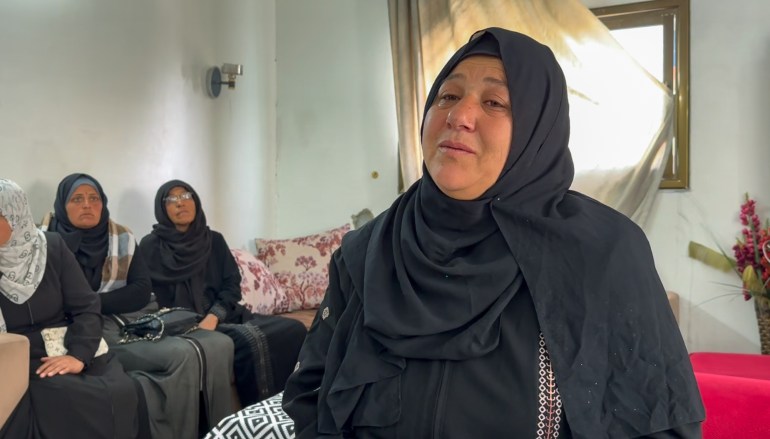
Amal Shabat is delirious with pain. She is weeping, still unable to grasp that her 23-year-old son has been killed by Israel, exactly as he always said he would die – a “martyr” who sacrificed himself to make sure the world knew what was happening in Gaza. She tries the words haltingly: “My son is a martyr, Hossam… My son is a hero.” Hossam Shabat, Al Jazeera Mubasher journalist, was killed by Israel in a targeted strike on his vehicle on Monday. A mother’s pain Amal is in Hossam’s “Dar Azaa” (house of condolences), a space opened for people to come pay their respects to the family. Sitting among female relatives, she breaks down and lowers her head on a shoulder to cry. The women do their best to comfort her, telling her Hossam died a hero, loved by everyone. In addition to his journalistic work, Hossam used his movements and connections to bring humanitarian assistance to people in need who could not access it, his family says. “He’s appeared in people’s dreams,” Amal’s sister tells her. “He was radiant, like a bridegroom.” Advertisement In moments of great pain, turning to such omens is believed to bring some relief to the bereaved. ‘My son is a hero,’ Amal says of her son, Hossam Shabat [Screengrab/Al Jazeera Mubasher] Refusing to leave the north Amal and Mahmoud, Hossam’s 28-year-old brother, speak to Al Jazeera Mubasher, alternating between resignation and tears. Amal tries to paint a picture of the son she returned to the north of Gaza to be near, only to lose him to an Israeli attack. “When we were displaced to the south, he walked with us part way, but didn’t want to leave here. The whole time we were in Nuseirat [in central Gaza], I would call and beg him to come, but he refused.” Mahmoud says Hossam was determined to document Israel’s attacks in the north of Gaza, because he knew that without coverage, the violence would be brushed under the carpet. And that was why Hossam stayed in the north, he says. Eventually, after a ceasefire was declared in late January, the family was able to return to Gaza City to reunite with Hossam. But, Amal says, even then it was hard to spend time with him and she found herself going to wherever he was working. “‘What’re you doing here, Mother?’ he’d ask me when I went to find him,” she says. “I’d answer that I was just there to see him, to spend a bit of time with him.” Mahmoud Shabat, Hossam’s brother, broke down in tears as he spoke about his brother [Screengrab/Al Jazeera Mubasher] Knowing he would die Early on in the war, Hossam had started to tell his family that he knew Israel would kill him, but that he felt it was his duty to keep doing what he was doing. Advertisement “He knew, he knew that to be a journalist in Gaza, to tell the truth, meant that he would be killed,” Mahmoud says, adding that Hossam had been threatened before and had already escaped being killed once. Watching her son rush towards danger wasn’t easy for Amal, she says. “Whenever someone called him, whenever someone said something happened somewhere, he would fly, he was like a bird. “Wherever there was destruction, wherever there was death, he would head there. I was scared, I would tell him to stay back, to stay away from the danger. “But he replied: ‘Mother, it is written, even if I were at home, if you hid me in your arms, they would kill me.’ “‘I’m a martyr, I know it,’ he’d say to me. Just think of me as being away on a journey.” And so she would wait for him, she says, waiting to hear every morning whether he was all right or if he had been killed. She soon feared the sound of phones ringing, worrying they would bring bad news. A huge outpouring of grief accompanied Hossam as he was taken to his final resting place on March 24, 2025, in Beit Hanoon, Gaza [Ahmed Al-Arini/Anadolu Agency] The heart of a child Hossam’s colleagues spoke to Al Jazeera’s Arabic site about a larger-than-life character, full of love, joy, and always willing to help. “Hossam touched people’s pain, with his camera and his voice. The people in the shelters and tents, he was completely in tune with their suffering and they loved and followed him,” Al Jazeera’s Mohamed Quraiqaa said. “He was always there – during displacements, under Israeli bombardment, and in the face of death.” Advertisement So much so, his journalist friend Youssef Fares said, that even other journalists would urge him to take it easy, to be more careful as he continued to push right ahead. “Hossam was very innocent, he had the heart … of a large child. But he was so impulsive that it went too far. “We would retreat when the bombing got too much, but he would go closer, to cover it. We were scared for him often.” ‘Hossam touched people’s pain, with his camera and his voice,’ Mohamed Quraiqaa said [Screengrab/Al Jazeera Mubasher] ‘At least I could bury him’ When Mahmoud starts talking, his eyes are red and his voice is subdued. “Hossam wanted to tell the whole truth. He wanted to transmit that to the world,” he says. “He would always, always say: ‘The coverage will continue. It will continue even if the price is death.’” Mahmoud breaks down, his words choked as he looks to the side, trying not to cry. “If a massacre happens and nobody documents it, it is as if it never happened,” he says haltingly, his lips trembling. “Someone had to do it, and Hossam was that hero. No matter how many times we told him he’d done enough, he kept telling us he couldn’t stop and even if he did, the [Israeli] occupation would never forgive him for having been a journalist.” The family worried often about something happening
At least six people killed in Israeli attacks on southern Syria
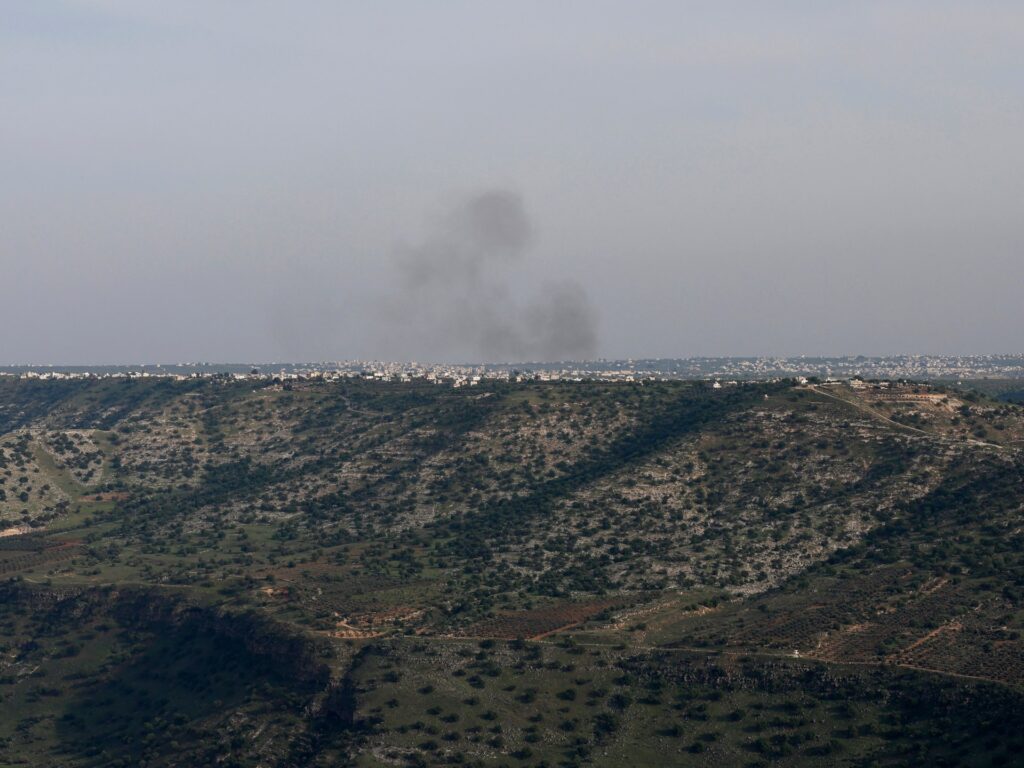
The violence in the border area marks increased friction between Israel and Syria. At least six people have been killed in an Israeli attack on Koya in southern Syria, the country’s foreign ministry says. The Israeli military said the attack on Tuesday took place after armed fighters opened fire towards Israeli troops, without specifying whether the Israeli forces were located within Syrian territory when they were targeted. It said its troops returned fire and that an Israeli warplane struck the fighters. It gave no details on casualties but said “hits were identified”. Syria’s Ministry of Foreign Affairs condemned “the continued Israeli aggression on Syrian territory, which saw a dangerous escalation in the village of Kuwayya” in the southern Deraa province. It called for an international investigation into the Israeli attacks on its territory, describing them as a “blatant violation of its sovereignty”. The Palestinian group Hamas condemned the attack on Koya “in the strongest terms”. “This fascist aggression represents a serious escalation of Zionist violations against the Syrian Arab Republic and its brotherly people, and a new war crime,” it said on Telegram on Tuesday. Advertisement The violence in the border area comes at a time of rising tensions between Israel and Syria, where a new interim government led by President Ahmad al-Sharaa has been installed after opposition fighters toppled former leader Bashar al-Assad last December. In the wake of al-Assad’s removal, Israel has launched hundreds of air strikes on military sites in Syria and sent its troops across the border into a UN-patrolled buffer zone, saying they will thwart any threats. Syria’s leadership has said it does not intend to open a front against Israel. Earlier, the Israeli military said it had “struck military capabilities that remained at the Syrian military bases of Tadmur and T4”, referring to bases in Palmyra and another 50 kilometres (30 miles) west of the city. On Friday, the military carried out strikes on the same bases. The European Union’s foreign policy chief Kaja Kallas warned on Tuesday that Israel’s strikes on Syria “risk further escalation”. Speaking at a joint news conference with Israel’s Foreign Minister Gideon Saar, Kallas said the pair had discussed Israel’s actions. “And we [the EU] feel that these things are unnecessary, because Syria is right now not attacking Israel,” Kallas said. The foreign ministry in Jordan also condemned Tuesday’s incursion and bombardment as “a dangerous escalation” that risked fuelling “further conflict and tension in the region”. Israeli Prime Minister Benjamin Netanyahu has demanded the demilitarisation of southern Syria, which borders the Israeli-annexed Golan Heights. Advertisement United Nations Special Envoy for Syria Geir Pedersen told the Security Council on Tuesday that he was “concerned by Israeli statements on the intention to stay in Syria” and demands for the full demilitarisation of the south. At an Arab summit in Cairo in early March, Syria’s al-Sharaa also called on the international community to pressure Israel to “immediately” withdraw its troops from southern Syria, calling their presence a “direct threat” to peace in the region. Adblock test (Why?)
Oscar-winning Palestinian director Hamdan Ballal released from detention

Hamdan Ballal, the Palestinian co-director of the Oscar-winning documentary No Other Land who was detained by the Israeli army after being attacked by settlers, has been released. In a post on social media platform X on Tuesday, his fellow co-director Yuval Abraham said: “After being handcuffed all night and beaten in a military base, Hamdan Ballal is now free and is about to go home to his family.” The Associated Press news agency said its journalists had also seen Ballal and two other Palestinian people leaving the police station where they were being held in the Israeli settlement of Kiryat Arba in the occupied West Bank. Ballal had bruises on his face and blood on his clothes, the AP reported. Ballal said he was held at an army base and forced to sleep under a freezing air conditioner. “I was blindfolded for 24 hours,” he told AP. “All the night I was freezing. It was a room, I couldn’t see anything … I heard the voice of soldiers laughing about me.” Lea Tsemel, the attorney representing the three men, said that they received only minimal care for their injuries from the attack and that she had no access to them for several hours after their arrest. She had earlier said they were accused of throwing stones at a young settler, allegations they deny. Advertisement Ballal and the other directors of No Other Land, which explores the struggles of living under Israeli occupation, had mounted the stage at the 97th Academy Awards in Los Angeles earlier this month when the film won the Oscar award for Best Documentary Feature. On Monday, around two dozen settlers — some masked, some carrying guns and some in military uniforms — attacked the occupied West Bank village of Susiya in the evening as residents were breaking their fast during the Muslim holy month of Ramadan. Soldiers who arrived pointed their guns at the Palestinians, while settlers continued throwing stones, residents told the AP. Lamia Ballal, the director’s wife, said she heard her husband being beaten outside their home as she huddled inside with their three children. She heard him screaming, “I’m dying!” and calling for an ambulance. When she looked out the window, she saw three men in uniform beating Ballal with the butts of their rifles and another person in civilian clothes who appeared to be filming the violence. “Of course, after the Oscar, they have come to attack us more,” Lamia said. “I felt afraid.” Human rights group Amnesty International called for accountability for the attack. “Hamdan Billal was forcibly disappeared by Israeli soldiers after having been assaulted by Israeli settlers attacking Palestinians … He has now been released, but those who carried out the attacks must be held accountable,” it said in a post on X. Ballal said he was attacked by a well-known settler who had threatened him in the past. Advertisement The settler can be seen with other masked men in a widely circulated video from August in which they threaten Ballal. “This is my land, I was given it by God,” the settler says in the video, in which he also uses profanity and tries to get Ballal to fight him. “Next time it won’t be nice,” the settler says in the video. On Tuesday, a small bloodstain could be seen outside Ballal’s family home, and the car’s windshield and windows were shattered. Neighbours pointed to a nearby water tank with a hole in the side that they said had been punched by the settlers. Basel Adra – another of the film’s co-directors, who is a prominent Palestinian activist in the area – said there has been a massive upswing in attacks by settlers and Israeli forces since the Oscar win. “Nobody can do anything to stop the pogroms, and soldiers are only there to facilitate and help the attacks,” he said. “We’re living in dark days here, in Gaza, and all of the West Bank … Nobody’s stopping this.” The Israeli military said on Monday that it had detained three Palestinians suspected of hurling rocks at forces and one Israeli civilian involved in what it described as a violent confrontation. Adblock test (Why?)
Indonesia beat Bahrain in crucial World Cup qualifier

Indonesia move clear in fourth spot in Group C of the 2026 World Cup qualifiers in Asia with 1-0 win against Bahrain. Indonesia secured a crucial 1-0 win in their Group C qualifier against Bahrain in Jakarta to increase their hopes of reaching the 2026 World Cup. It was head coach Patrick Kluivert’s first win in charge after the former Netherlands international lost his opening game 5-1 to Australia last Thursday. Ole Romeny scored the only goal of the game in the 24th minute as he latched onto Marselino Ferdinan’s pass before beating the keeper. The win moves fourth-placed Indonesia three points clear of their opponents and China, who are bottom of the six-team group with both the fifth- and sixth-placed teams holding six points. Ole Romeny, centre, of Indonesia celebrates with teammate Ragnar Oratmangoen, right, after scoring the only goal of the game [Robertus Pudyanto/Getty Images] Japan, who have already secured their qualification for next year’s tournament, were held to a 0-0 draw by third-placed Saudi Arabia. Australia comfortably won 2-0 in China to consolidate second spot, where they are three points clear of Saudi Arabia but still seven behind Japan. The top two teams qualify automatically, while third and fourth head to playoffs and fifth and sixth are eliminated from the qualification process. Second-half Indonesian substitute Tijjani Reijnders blazed a chance high and wide, which would have eased the pressure the home side felt after a much-improved second-half display from Bahrain. Advertisement It was Romeny’s cool first-time finish, after a cross from the right, that handed Indonesia the points as they bid to reach only their second World Cup finals. Their only previous appearance in global football’s showpiece event came in 1938 when they were known as the Dutch East Indies, seven years prior to their independence from the Netherlands. Adblock test (Why?)
A timeline of Israel’s weaponisation of aid to Gaza
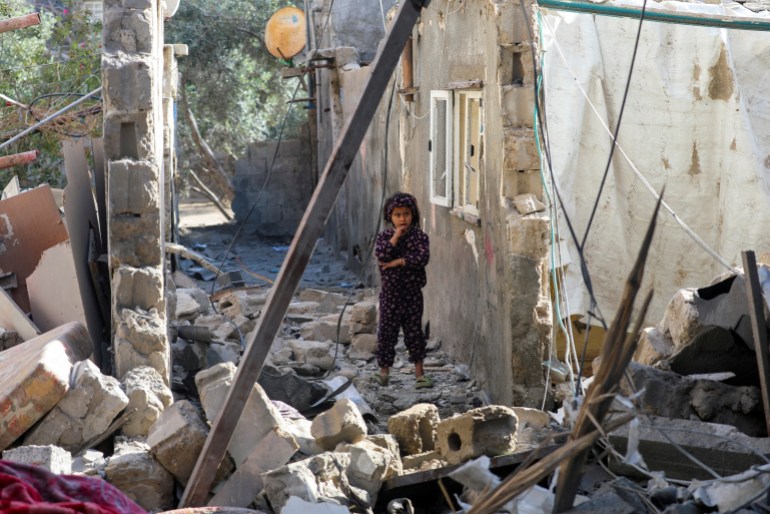
Israel is again starving Palestinians in Gaza as its renewed bombardment kills hundreds, many of them children. Israel has repeatedly used food and international humanitarian aid as a tool of collective pressure against Palestinians over 17 months of its devastating war on the Gaza Strip. Civilians in the enclave have been subjected to extreme food shortages and famine-like conditions throughout the war. Dozens of children have died of starvation, and countless others have succumbed to wounds or preventable illnesses during a deteriorating man-made humanitarian disaster. Israeli authorities continue to starve Palestinians in the besieged enclave, which is home to 2.3 million people, after having blocked the entry of desperately needed humanitarian aid once again in early March. And on March 18, Israel unilaterally broke a ceasefire that had held since January, relaunching attacks across Gaza, and killing hundreds more Palestinians. The combination of the bombs and debilitating humanitarian situation is rapidly worsening conditions for the people of Gaza, but it has been a constant since the beginning of the war in October 2023. Here’s a closer look at how Israel has used aid to punish Gaza: Advertisement October 2023 October 9: Israel announces a “total blockade” on the Gaza Strip, halting the entry of all food, water, medicine, fuel and electricity. Then-Defence Minister Yoav Gallant promises action against “human animals”, and orders a “complete siege”. Thirteen months later, the International Criminal Court (ICC) issues an arrest warrant against Gallant and Prime Minister Benjamin Netanyahu on charges that include the “war crime of starvation as a method of warfare”. October 21: The first aid truck enters Gaza via a land route from Egypt as the Israeli military carries on with two weeks of deadly bombing. The Israeli military eventually allows an extremely limited number of aid trucks to enter the enclave after international pressure. November 2023 November 24: A temporary truce is reached between Israel and Hamas, allowing a slight increase in the humanitarian aid entering Gaza. The United Nations and international aid agencies report that the amount of aid entering Gaza is highly inadequate to meet the needs of the population, most of whom are children. The temporary cessation of attacks enables several limited exchanges of captives held in Gaza and Palestinian prisoners held by Israel, but there is no promise for an end to the war or for the return of Palestinians forced out of their homes as a result of the fighting. A Palestinian girl inspects damage at the site of an Israeli strike on a house in Deir el-Balah in the central Gaza Strip on March 25, 2025 [Ramadan Abed/Reuters] The Gaza truce then ends a week after it started, and relentless Israeli attacks restart, killing more civilians, journalists, aid workers and doctors along with Hamas figures. Advertisement February 2024 February 29: Israel kills at least 112 Palestinians and wounds more than 750 when it opens fire on Palestinians waiting for food aid southwest of Gaza City in what is called the “flour massacre”. The Israeli military carries out numerous similar attacks on life-saving aid convoys, often saying “terrorists” are being targeted but without providing evidence. The UN and other international agencies and aid workers repeatedly report that the Israeli authorities intentionally block many aid trucks meant to enter the enclave. Israeli attacks along with blocked aid and dire conditions created by Israeli ground offensives and destruction across Gaza also lead to aid convoys being attacked and looted. Far-right Israelis also on numerous occasions either attack aid convoys or try to stop them from entering Gaza. April 2024 April 1: Israeli drone strikes target an aid convoy with the World Central Kitchen (WCK), killing six international aid workers and a Palestinian driver. The WCK is forced to halt its humanitarian operations, similar to many other international aid organisations that temporarily or permanently stop their assistance to Palestinians. An investigation by Al Jazeera’s Sanad verification agency finds that the three WCK vehicles were intentionally hit, adding to a record death toll of hundreds of mostly Palestinian aid workers killed since the start of Israel’s war on Gaza. October 2024 October 6: The Israeli military commences a massive siege on northern Gaza, designating the entire area a combat zone and issuing forced evacuation orders to hundreds of thousands of Palestinians. Advertisement The siege on the north, which is accompanied by Israeli attacks across other parts of Gaza, lasts until a ceasefire with Hamas comes into effect on January 19, 2025. The entry of humanitarian aid into Gaza is heavily restricted by Israel throughout the winter amid low temperatures. Far-right Israeli government ministers, chief among them Finance Minister Bezalel Smotrich and National Security Minister Itamar Ben-Gvir, call for the blockage of all humanitarian aid and for a military occupation of Gaza, preferring this to the option of a ceasefire. Ben-Gvir, left,, leader of the far-right Jewish Power party, and Smotrich, leader of the far-right Religious Zionist Party, have been against all ceasefire efforts and say Israeli settlements should be built in Gaza [File: Gil Cohen-Magen/AFP] January 2025 January 19: The implementation of the ceasefire allows a surge of humanitarian aid into Gaza, something relief organisations say would need to persist for a long time before life could return to any semblance of normality. Israel allows more trucks to enter Gaza in the days after the truce comes into effect, but the volume of aid is much less than what had been agreed upon in the ceasefire. As babies die from the cold, the Israeli government prevents the entry of thousands of mobile homes meant to shelter displaced Palestinians along with heavy equipment required to clear the rubble of destroyed homes and infrastructure. March 2025 March 2: For the second time since the start of the war, Israel halts the entry of all humanitarian aid into Gaza, an order that currently remains in effect. March 10: Philippe Lazzarini, the head of the UN’s agency for Palestinian refugees (UNRWA), warns that another hunger crisis looms in Gaza and accuses Israel of
Russia and Ukraine agree to halt Black Sea strikes, US says

Ukraine defence minister says Kyiv will view movement of Russian military vessels beyond eastern Black Sea as violation. Russia and Ukraine have agreed separately to avoid military strikes on vessels in the Black Sea, the United States has announced after talks in Saudi Arabia. In parallel statements, the White House said on Tuesday that each country “agreed to ensure safe navigation, eliminate the use of force and prevent the use of commercial vessels for military purposes in the Black Sea”. Ukrainian Defence Minister Rustem Umerov, who was a member of his country’s delegation in Riyadh, confirmed Kyiv had agreed to the partial ceasefire, specifying that it included attacks on Black Sea shipping and energy infrastructure. He warned in a Facebook post that Kyiv would view any movements of Russian warships “outside the eastern part” of the Black Sea as a violation of the agreement to stop the “use of force”. In such an instance, Ukraine would have the “full right to exercise right to self-defence”, he said. Umerov also called for “additional technical consultations” as soon as possible to agree on “all the details and technical aspects of the implementation, monitoring and control of the arrangements”. Advertisement There was no immediate comment from Russia. The announcement came after US negotiators held separate talks with Russian and Ukrainian teams that were primarily focused on ending attacks on Black Sea shipping with a view to usher in a broader ceasefire in the more than three-year Russia-Ukraine war. During a 12-hour session on Monday, US and Russian officials discussed the possible resumption of the 2022 Black Sea Grain Initiative, an agreement that was supposed to allow Ukraine to ship millions of tonnes of grain and other food exports from its ports. Moscow pulled out of the initiative, brokered by Turkiye and the United Nations, in 2023, accusing the West of failing to uphold its commitments to ease sanctions on Russia’s own exports of farm products and fertilisers. The US said on Tuesday that it would support the resumption of Russian fertiliser exports. “The United States will help restore Russia’s access to the world market for agricultural and fertilizer exports, lower maritime insurance costs and enhance access to ports and payment systems for such transactions,” a White House statement said. Adblock test (Why?)
Renewed fighting in DR Congo as regional powers step up ceasefire efforts
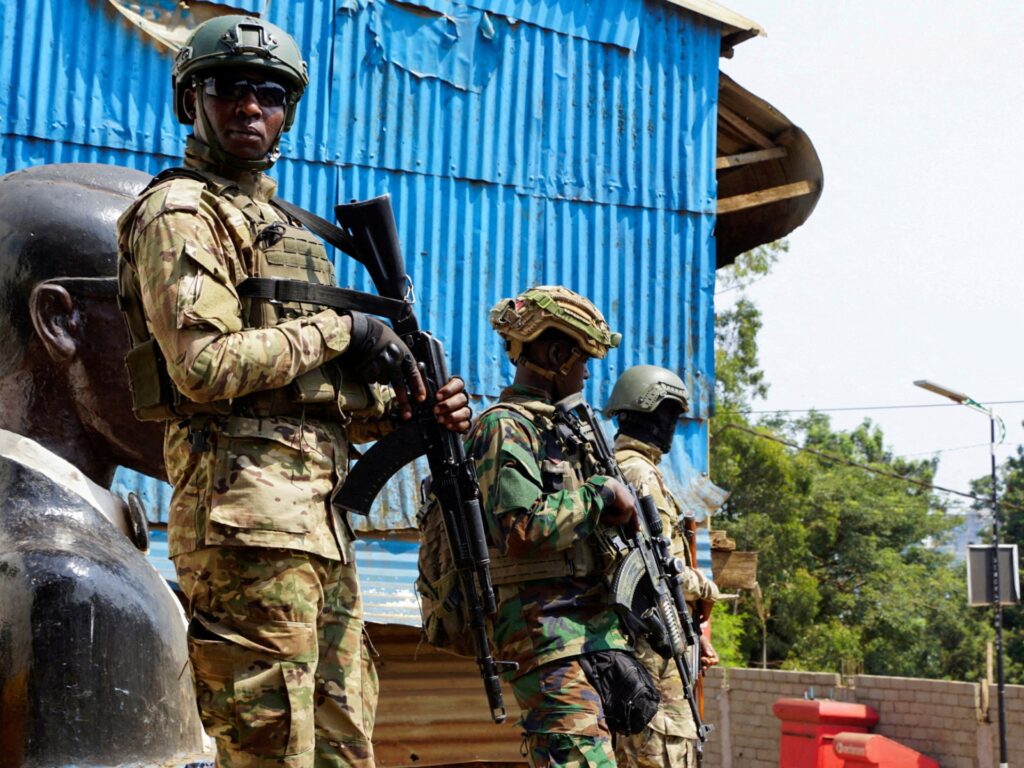
Rwanda-backed M23 rebels battle pro-government fighters in North Kivu and South Kivu province after regional mediators hold truce talks. Rwanda-backed M23 rebels and pro-government fighters have clashed in eastern Democratic Republic of Congo despite pressure from regional mediators to halt the fighting. The rebels battled pro-government fighters known as Wazalendo on Tuesday in North Kivu and South Kivu provinces, a day after 24 members of two regional blocs – the East African Community and the Southern African Development Community – held virtual talks aimed at reviving faltering ceasefire initiatives. The M23’s swift advance since January has seen it take eastern Congo’s two largest cities – Goma and Bukavu – resulting in thousands of deaths and forcing hundreds of thousands more from their homes. On Monday, the conflict flared up again, with rebels reneging on a pledge to withdraw from the strategic town of Walikale in North Kivu province. Muhindo Tafuteni, a local civil society activist, told the news agency Reuters that clashes in North Kivu were taking place on Tuesday near the banks of Lake Edward, which straddles the border between Congo and Uganda. Advertisement In South Kivu, fighting reportedly took place in several towns north of the provincial capital, Bukavu, which M23 captured in February. Corneille Nangaa, leader of the Congo River Alliance of rebel groups that includes the M23, pledged to continue fighting “like people who got nothing to lose in order to secure the future of our country”. The rebel leader also rejected the outcome of last week’s meeting between Congolese and Rwandan leaders in Qatar, saying any moves to achieve peace without his group’s involvement would fail. “Anything regarding us which are done without us, it’s against us,” Nangaa told The Associated Press news agency. Regional peacemakers Leaders from the EAC and the SADC met on Monday to advance a ceasefire plan aimed at ending the conflict, which is rooted in the long fallout from the 1994 genocide in Rwanda and competition for control of mineral riches. Congo’s mineral resources are estimated to be worth $24 trillion and are critical to much of the world’s technology. In a statement afterwards, they said they had appointed five former heads of state to facilitate the peace process. The appointees are Nigeria’s Olusegun Obasanjo, South Africa’s Kgalema Motlanthe, Ethiopia’s Sahle-Work Zewde, Kenya’s Uhuru Kenyatta and Central African Republic’s Catherine Samba Panza. Congo’s presidency said the new panel would name a mediator to replace Angolan President Joao Lourenco, who withdrew from the role on Monday following years of efforts to ease tensions between Rwanda and the DRC. Advertisement A meeting had previously been scheduled in Angola after Congolese President Felix Tshisekedi dropped his longstanding refusal to negotiate with M23, but the rebels withdrew in protest at new European Union sanctions. Tensions with Burundi As fighting continues in DRC, President Evariste Ndayishimiye of Burundi, whose troops have fought in support of DRC’s army against M23, alleged that Rwanda had a plan to attack Burundi. Burundi says it believes Rwanda is supporting the resurgent Red Tabara rebel group, claiming that it is aimed at destabilising the country in the same way M23 has sown mayhem in the DRC. “They would say it’s an internal problem when it’s Rwanda [who is] the problem,” Ndayishimiye said in an interview with the BBC. “Burundians will not accept to be killed as Congolese are being killed. Burundian people are fighters.” Rwanda’s government spokesperson Yolande Makolo expressed surprise at Ndayishimiye’s comments, saying that “Rwandan and Burundian defence and security institutions” had been meeting “to discuss how to secure our common borders”. Adblock test (Why?)