

Flavours of the Arab Golden Age – EP 3: Aleppo and the Silk Road

Chef Fadi and historian Kotoz learn about Silk Road merchants who brought exotic spices to Europe and the Arab world. A historian and a chef go on a culinary journey through history to discover the roots of Arab cuisine and its influence on the food and flavours of today. Kotoz Ahmed, a researcher in Arabian food history, and Fadi Kattan, a renowned Palestinian chef, travel Europe in search of recipe manuscripts from the days of the old Arab dynasties and empires. In this final episode, they learn how Cairo became an influential cultural hub, as the Silk Road connected Egypt to China, Russia, India, Iraq and the Levantine merchants, controlling the spice trade during the Mamluk era. Aleppo was also an important melting pot, at the crossroads of several trade routes – one of its 13th-century books introduced the idea of food as pleasure, bringing perfumes, fragrances and medicinal oils into cookery, an innovation at the time. Kotoz finishes by cooking al Mashoka, meaning “The Adored”, using exotic ingredients from Arabia, Aleppo and spices from the Far East. Adblock test (Why?)
Can reconstruction ever begin in Gaza?

Israel has resumed its assault on Gaza, shattering the ceasefire with Hamas. Hundreds of people were killed in the first week of renewed attacks and Palestinians have once again been given evacuation orders. As destruction mounts the hope of rebuilding Gaza is fading fast. This week on Now You Know, we talk to Ms. Paula Gaviria, UN Special Rapporteur for the human rights of internally displaced people. We talk about the challenges involved in planning for the rebuilding of Gaza and ask, Will it ever become a reality? Adblock test (Why?)
Trends, trash and truth: Fast fashion phenomena

Fast fashion has made clothing more affordable, but behind the low prices lie exploitative labour practices and environmental destruction. Workers in the Global South receive low salaries and often work in unsafe conditions while textile waste pollutes ecosystems. As consumers push for ethical alternatives, slow fashion promotes sustainability and fair wages – but is it accessible for everyone? Can consumer choices drive real change, or does the industry need systemic reform? We explore the high cost of cheap clothes. Guests: Venetia La Manna – fair fashion campaigner Walden Lam – president and co-founder, Unspun Katia Osei – lead researcher and bioengineer, Or Foundation Joy Buchanan – associate professor, Samford University Presenter: Anelise Borges Adblock test (Why?)
UN says it will ‘reduce footprint in Gaza’ amid renewed Israeli assault

NewsFeed The United Nations says it will reduce its footprint in Gaza amid Israel’s renewed assault on the strip, with one-third of its international staff of 100 leaving. A spokesperson added that the organisation had determined an Israeli tank was behind an attack on a UN facility last week that killed one staff member and injured six others. Published On 24 Mar 202524 Mar 2025 Adblock test (Why?)
Thousands rally in Serbia against Trump son-in-law’s real estate project
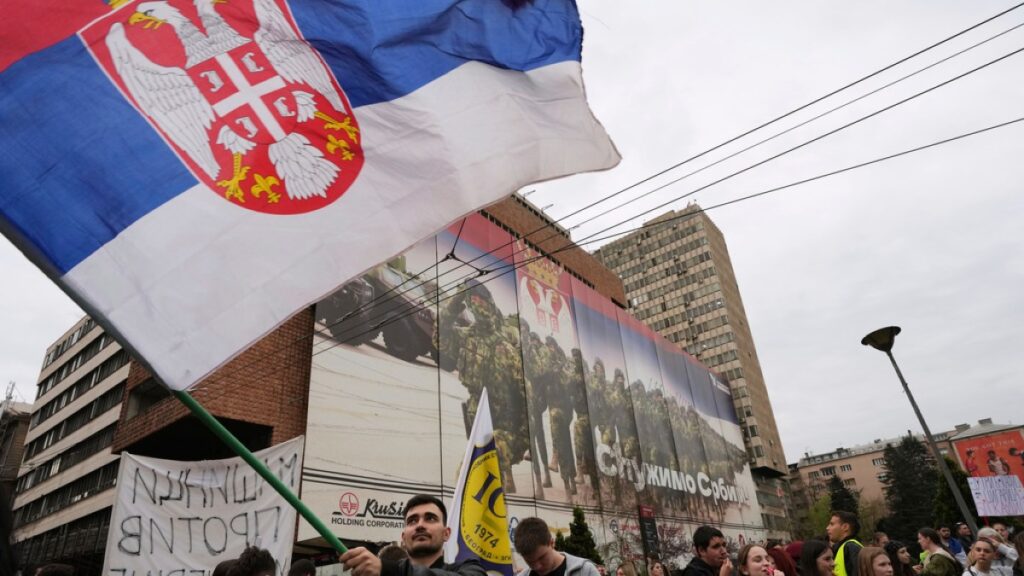
Demonstrators protest Jared Kushner’s plans to transform former army HQ bombed by NATO into luxury hotel and shopping site. Thousands of people have taken to the streets in Serbia’s capital Belgrade to voice discontent over a luxury real estate project spearheaded by Jared Kushner, the son-in-law of United States President Donald Trump. The protests took place on Monday in front of the country’s former army headquarters, which were destroyed in a US-led NATO bombing campaign in 1999 as part of the Kosovo war, and are now being leased by the Serbian authorities to Kushner’s Affinity Partners investment firm, so they can be transformed into a high-end compound. “It is the 26th anniversary of the NATO bombing. And we protest because this building has been given to someone to make profit,” said Ognjen Pjevac, a 20-year-old University of Belgrade student. “But it should remain here as it is a testimony to NATO aggression.” Protesters demanded that the site, comprised of two buildings designed by Serbian architect Nikola Dobrovic that were damaged by NATO’s bombing of what was then Yugoslavia, be reinstated as a heritage site and that plans for the development project be scrapped. Advertisement Serbia’s architects, engineers and opposition parties have opposed the government’s multimillion-dollar contract with Kushner, which includes a 99-year lease on the prime land in the heart of Belgrade. The demonstration was the latest in a series of massive protests against the government of President Aleksandar Vucic, who has been in power for 12 years as prime minister or president and is accused by critics of corruption and democratic backsliding. Last November’s collapse of a roof at a train station in Serbia’s second-biggest city of Novi Sad, a disaster that claimed the lives of 15 people, became a lightning rod for dissatisfaction with Vucic’s administration, bringing thousands onto the streets in sustained demonstrations. Critics blamed the crash on government corruption, negligence and disrespect for construction safety rules during renovation. Earlier in 2024, there were also mass protests against the government’s greenlighting of plans for a controversial lithium mine set to serve as a vital power source in Europe’s green energy transition, which opponents say will pollute water sources and endanger public health. Serbia maintains a balancing act between its historical ties with the European Union and Russia. But has leaned closely to Moscow for decades now. Earlier this month, Vucic posted on Instagram that Russian President Vladimir Putin had expressed his support for Serbia’s authorities amid what he called the “coloured revolution”, a reference to popular uprisings experienced by former Soviet states. Advertisement Monday also marked Remembrance Day for the victims of NATO’s 78-day bombing campaign that started on March 24, 1999. The US-led NATO air war, launched to stop Belgrade’s crackdown against separatist ethnic Albanians in Kosovo, still provokes strong emotions in Serbia. Kosovo became an independent state in 2008 but some in Serbia still call for its reintegration. The bombed-out former army compound had become a symbol of Serb resistance. If transformed by Kushner, it would feature a Trump hotel, luxury apartments, office spaces and shops, along with a memorial for the victims of the bombing. Adblock test (Why?)
How serious is Israel’s latest political crisis for its leader?
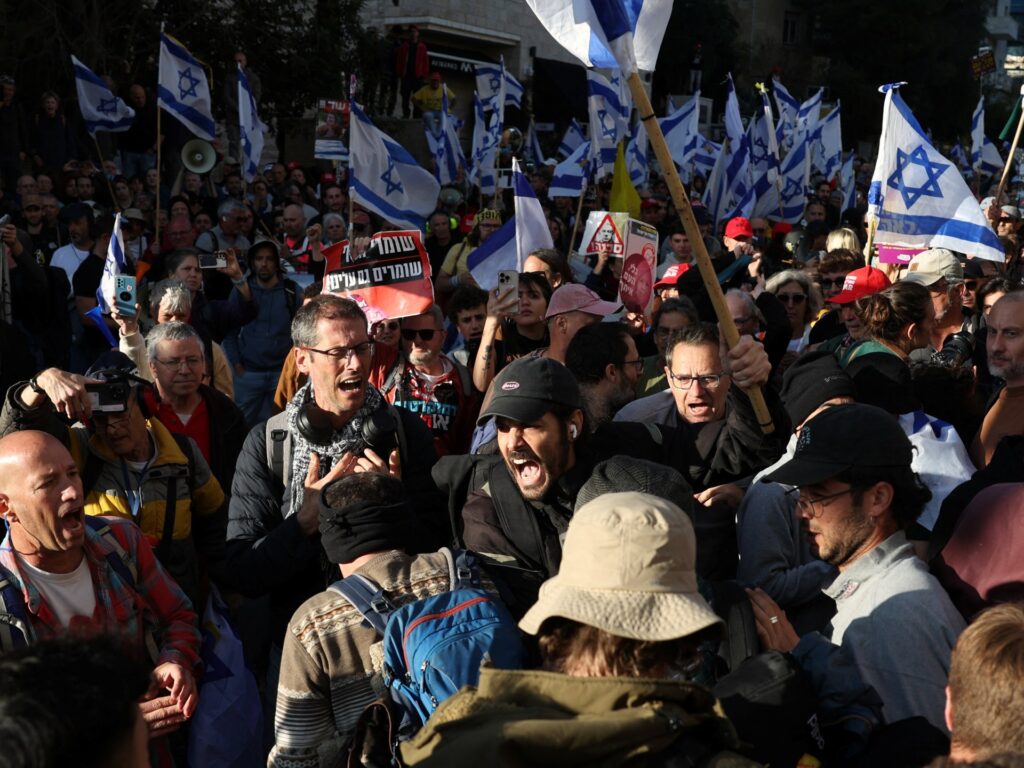
Protests are held over Benjamin Netanyahu’s plan to sack the Shin Bet chief and the attorney general. Major protests are being held in Israel against Prime Minister Benjamin Netanyahu. His firing of the internal security service chief is blocked by the Supreme Court – for now. But the opposition is calling for a general strike. How serious is this political crisis for Netanyahu? Presenter: Nick Clark Guests: Yariv Oppenheimer – Board member of the advocacy group Peace Now and member of the Democrats political party in Israel Neve Gordon – Israeli political scientist and professor of international law at Queen Mary University of London Yoni Ben Menachem – Israeli political commentator and a senior Middle East analyst for the Jerusalem Center Adblock test (Why?)
Cain Velasquez: Former UFC champion sentenced to prison for 2022 shooting

The retired heavyweight athlete has been sentenced to five years in prison after pleading no contest to attempted murder. Former Ultimate Fighting Championship (UFC) champion Cain Velasquez has been sentenced to five years in prison for a shooting in 2022 when he chased after the man accused of molesting his son. Velasquez was sentenced in Santa Clara County, California, on Monday after he pleaded no contest to attempted murder, felony assault and other related gun charges last August for what the District Attorney’s Office called a “vigilante shooting spree”. He will receive credit for time served. On February 28, 2022, the two-time UFC heavyweight champion fired a gun multiple times at a truck carrying three people, including 46-year-old Harry Goularte, who is facing felony child molestation charges, according to the District Attorney’s Office. His defence lawyer, Renee Hessling, called the result “bittersweet” as they had hoped to keep Velasquez out of prison. “Throughout it all, Cain has shown courage and strength of character,” Hessling said in a statement. “He has taken responsibility for his actions and has been held accountable. The sentence handed down today reflects the complexities of the situation and acknowledges the man behind the headlines.” Advertisement Less than a week before the shooting, Goularte was arrested in connection with the sexual assault of a four-year-old at the daycare owned by his family. He was released without bail a few days later. Officials said he was released under house arrest and was on his way to retrieve an electronic monitoring bracelet when Velasquez attacked. Velasquez shot at Goularte’s truck in a car chase that continued for 17.7km (11 miles), the District Attorney’s Office said. Goularte was uninjured but his stepfather, who was driving, was hit twice. On his former teammate Kyle Kingsbury’s podcast, Velasquez said his handling of the situation was “not the way to do it”. “We cannot put the law in our own hands,” Velasquez said. “I know what I did, and I know what I did was very dangerous to other people, you know? Not just to people involved, but innocent people. I understand what I did and I’m willing to do everything I have to, to pay that back.” Velasquez also said it was important to have open and honest conversations with your kids about what kind of behaviour is acceptable and listen to what they say. “One man’s decision to take the law into his own hands left an innocent man wounded and endangered schoolchildren, teachers, and many others in our community,” District Attorney Jeff Rosen said in a statement. “If you want to do justice in Santa Clara County, please apply for a badge.” Velasquez became the UFC heavyweight champion on October 23, 2010, when he defeated then-champion Brock Lesnar at UFC 121. The retired athlete’s last professional fight was against Francis Ngannou on February 18, 2019. Cain Velasquez, left, fights Travis Browne during their heavyweight mixed martial arts bout at UFC 200, Saturday, July 9, 2016, in Las Vegas [John Locher/AP] Adblock test (Why?)
Lakers lose to Magic despite combined 56 points from LeBron, Doncic

The LA Lakers’ chances of securing a top-two Western Conference playoff spot took another hit with a loss in Orlando. The Los Angeles Lakers suffered another setback in their NBA playoff push, falling 118-106 to the Orlando Magic, who notched their first home victory since February. Despite 32 points from Luka Doncic and 24 from LeBron James, the Lakers dropped their third straight game on Monday, and at 43-28 are now tied with the Memphis Grizzlies in the battle for fourth place in the Western Conference. Franz Wagner scored 32 points and Paolo Banchero added 30 for the Magic, who out-scored the Lakers 34-18 in the third quarter to seize control of the contest. The defeat follows the Lakers’ blowout loss to the Chicago Bulls in James’s first game back after missing seven games with a groin injury. The Lakers had hoped James, Doncic and a newly healthy Rui Hachimura would fuel a strong stretch run in the West. The Oklahoma City Thunder is assured of the top seed, but the Denver Nuggets, Lakers and Grizzlies are all within two and a half games of the second-placed Houston Rockets. Lakers coach JJ Redick said his players are lacking the defensive intensity they displayed in an eight-game winning streak that had briefly pushed them to second in the standings. Advertisement “We can get back there,” Redick said, adding that the injury-enforced lineup changes may have taken a toll. “We look tired,” he said. “I don’t know what contributes to that … we weren’t able to sustain our level of intensity that we started the game out with.” The Lakers did cut a 17-point fourth-quarter deficit to seven with 5:39 remaining, but the Magic – eighth in the Eastern Conference – swiftly pulled away again. Redick said the Lakers could also use some practice time to get recently returned players reintegrated. “We’ve got to get back into the flow and the rhythm,” he said. “It’s not just [the returning players] getting back into the flow, but it’s the group and how the group functions.” Paolo Banchero, right, of the Orlando Magic dribbles the ball to the basket against LeBron James #23 of the Los Angeles Lakers in the second half of a game at Kia Center on March 24, 2025, in Orlando, Florida, US [Julio Aguilar/Getty Images via AFP] Adblock test (Why?)
China’s missed emissions target poses challenge to global climate efforts
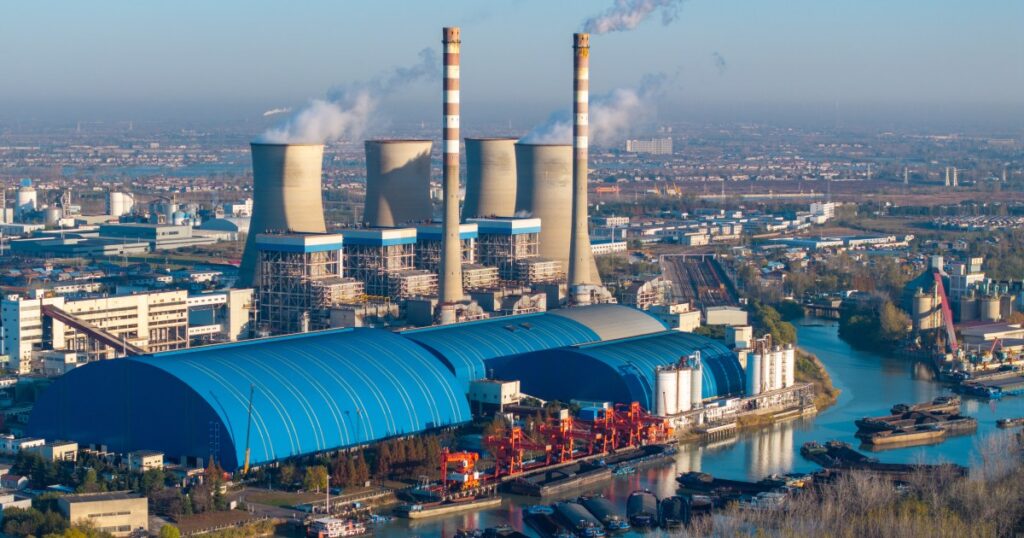
Taipei, Taiwan – China’s failure to meet a key carbon emissions target has raised concerns about its ability to achieve carbon neutrality, a potentially decisive factor in global efforts to avert the worst effects of climate change. China’s carbon intensity – a measurement of carbon emissions per unit of gross domestic product (GDP) – fell 3.4 percent in 2024, missing Beijing’s official target of 3.9 percent, according to the National Bureau of Statistics. China is also behind its longer-term goal of slashing carbon intensity by 18 percent between 2020 and 2025, as set by the Chinese Communist Party (CCP) in its most recent five-year plan. Under China’s “dual targets”, President Xi Jinping has pledged to reach peak emissions before the end of the decade and carbon neutrality by 2060. China’s progress is being closely watched around the world due to its paradoxical position as the world’s top polluter – responsible for about 30 percent of global emissions – and the world’s leader in renewable energy investment. Advertisement The country’s success or failure to meet its emissions targets will have major implications for the international community’s efforts to keep average temperatures from rising more than 1.5 degrees Celsius (2.7 degrees Fahrenheit) above pre-industrial levels, a benchmark set by the United Nations to avert “catastrophic” effects of climate change. The chances of the planet being able to keep below the 1.5C threshold over the long-term are already in doubt, after 2024 became the first calendar year in history where temperatures breached the limit. Although carbon intensity is just one of the benchmarks used by Beijing, it provides important insights into how decarbonisation is playing out across the economy, said Muyi Yang, a senior energy analyst at Ember, a global energy think tank based in the United Kingdom. “Even though the economy continued to grow, the reduction in emissions relative to that growth wasn’t as rapid as intended,” Muyi told Al Jazeera. The world’s second-largest economy relied heavily on industrial growth to power itself out of the economic slump caused by the COVID-19 pandemic, but this in turn has led to a recent surge in energy demand, Muyi said. While China’s economy officially grew 5 percent in 2024, electricity demand grew 6.8 percent year-on-year, according to government data. Carbon emissions grew 0.8 percent year-on-year. Record heatwaves have posed a further challenge to emission reduction efforts by disrupting energy production at hydropower dams, forcing authorities to make up the shortfall with coal power. Advertisement Despite the setbacks, Beijing has made remarkable achievements in renewable energy, according to Eric Fishman, a senior manager at the Lantau Group, an energy consultancy firm in Hong Kong. China last year met 14.5 percent of its total energy demand with wind and solar power and another 13.4 percent with hydropower, according to government data. The country also met about 75 percent of its incremental growth in energy demand – 500 out of 610 terawatt hours – with renewable energy, Fishman said, based on an analysis of government data. The figure represents “massive amounts of clean energy” roughly equivalent to Germany’s annual energy consumption, Fishman told Al Jazeera. Much of this growth has been driven by government support, including from the highest levels of the CCP. Xi Jinping Thought, Xi’s governing ideology enshrined in the Chinese constitution, states that China must strive towards an “ecological civilisation”. In 2021, Xi announced that “high energy consumption and high-emission projects that don’t meet requirements should be resolutely taken down”. The same year, China launched its Emissions Trading Scheme, the world’s largest carbon trading market, under which firms that produce less emissions than their designated allowance can sell their unused allowances to polluters exceeding their limits. More recently, Xi has called for China to focus on “new quality productive forces” and transition to more high-end and innovation-driven manufacturing, said Anika Patel, a China analyst at Carbon Brief. Advertisement “[China] has historically been seen as the ‘factory of the world’ but with a focus on the so-called ‘old three’, which are all lower-value products – appliances, clothing and toys. Now it wants to shift towards green growth and the ‘new three’, which is solar panels, electric vehicles and lithium-ion batteries,” Patel told Al Jazeera. The CCP will release its newest round of carbon emissions targets for 2026 to 2030 alongside its next five-year plan later this year, Patel said, which will impact the direction of both public and private sectors. Yao Zhe, a global policy adviser for Greenpeace East Asia, said while China is on track to reach peak carbon before 2030, whether it can leave coal fully behind in the long term is less certain. “Achieving carbon neutrality will require many more structural changes in China’s energy sector and economy as a whole. And those changes need to start soon after peak,” Yao told Al Jazeera. “While Chinese policymakers are good at supporting the cleantech industry, they tend to defer these structural reforms to a later timeframe – possibly later than 2035 – and this is a real concern.” Adblock test (Why?)
Al Jazeera condemns Israel’s killing of journalist Hossam Shabat in Gaza

Media network condemns ‘assassination’ of Gaza correspondent by Israeli forces. Below is Al Jazeera Media Network’s statement on the killing of Hossam Shabat. Al Jazeera Media Network strongly condemns the Israeli Occupation Forces’ assassination of Hossam Shabat, Al Jazeera Mubasher correspondent, who was brutally killed today, in an air strike targeting his car in Jabalia. Hossam joined the Network’s journalists and correspondents killed during the ongoing war on Gaza, including Samer Abudaqa, Hamza Al-Dahdouh, Ismail Al-Ghoul, and Ahmed Al-Louh. Al Jazeera affirms its commitment to pursue all legal measures to prosecute the perpetrators of these crimes against journalists. And stands in unwavering solidarity with all journalists in Gaza and reaffirms its commitment to achieving justice and prosecuting the killers of more than 200 journalists in Gaza since October 2023. The Network extends its condolences to Hossam’s family, and calls on all human rights and media organisations to condemn the Israeli occupation’s systematic killing of journalists, the evasion of responsibilities under international humanitarian law, and to bring the perpetrators of this heinous crime to justice. Advertisement Al Jazeera renews its firm commitment to covering events in the Gaza Strip, despite the ongoing targeting and harassment faced by its correspondents and journalists. Adblock test (Why?)