

French actor Depardieu goes on trial in Paris on sexual assault charges
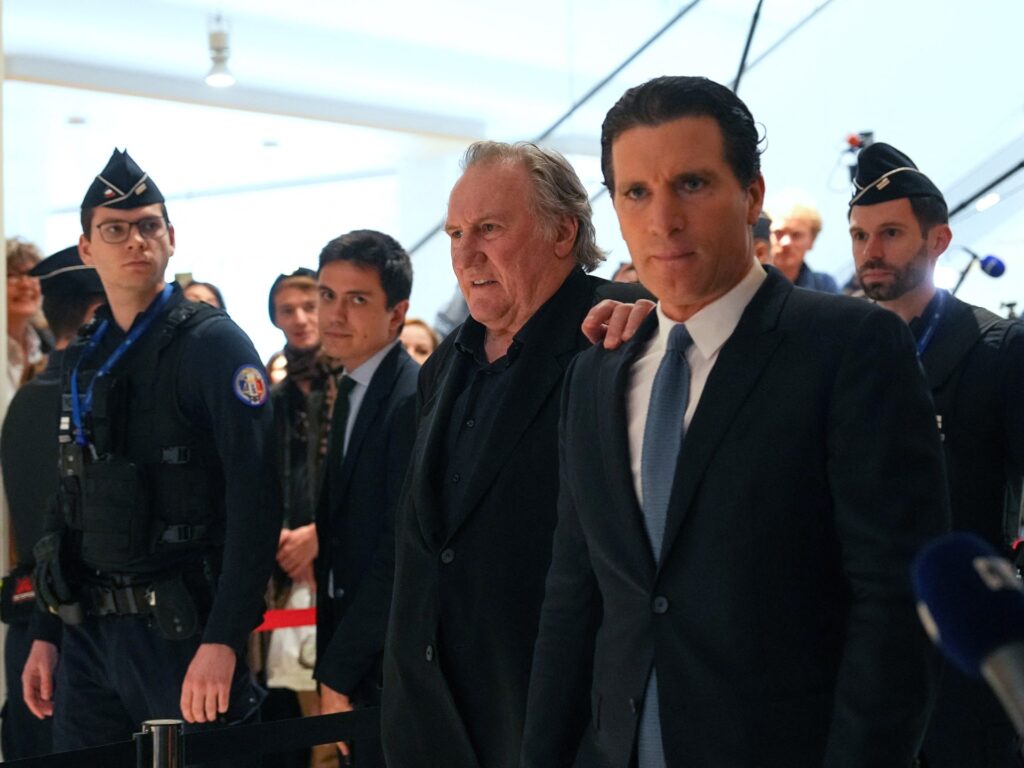
The trial of French actor Gerard Depardieu, who has been charged with sexually assaulting two women during a film shoot in 2021, has begun in a Paris court. It is thought to be a pivotal moment in France’s #MeToo movement. On Monday, Depardieu, 76, sat on a seat opposite the judge while the two plaintiffs were also present in the courtroom. Prosecutors alleged the assaults against the women, whose full identities have not been revealed, took place during the filming of Les Volets Verts (The Green Shutters). They accuse Depardieu of groping one of the women on the film set, pulling her towards him and trapping her with his legs before touching her waist, hips and breasts while saying obscene words. Three people witnessed the scene, prosecutors said. They said the second woman was groped by Depardieu on set and in the street. Before the trial began, Depardieu, his hand on his lawyer’s shoulder, walked calmly past reporters, looking straight at the cameras without saying a word, before entering the courtroom and chatting with a couple of actors there. Advertisement His lawyer, Jeremie Assous, told reporters that the accusations were false and based on lies. “Truth is on our side,” he said. ‘Fear because he is a cinema giant’ A towering figure of French cinema, Depardieu has faced a growing number of sexual assault allegations in recent years. Overall, about 20 women have accused Depardieu of improper behaviour, but several cases have been dropped due to the statute of limitations. French actor Charlotte Arnould was the first woman to file a criminal complaint against Depardieu in 2018. He has consistently denied any wrongdoing, and Monday’s case is the first in which he will stand trial. A lawyer for one of the women told the Reuters news agency before the proceedings that her client had been scared to come forward against Depardieu. “There’s a fear because he’s a cinema giant,” Carine Durrieu-Diebolt said. “It’s a struggle between David and Goliath, and they are afraid of retaliation as they all work in cinema but at a much lower level than Depardieu.” The second plaintiff, an assistant director, also alleged sexual violence. “What my client wants is for the trial to take place, but I am also worried about how Mr Depardieu’s defence will treat the civil parties at the hearing,” lawyer Claude Vincent told the AFP news agency. Important development for #MeToo in France On Monday, dozens of protesters stood outside the court, chanting, “We believe you,” to show their support for the two plaintiffs. If found guilty, Depardieu could face up to five years in jail and a 75,000-euro ($81,000) fine. Advertisement Depardieu’s trial is the highest profile #MeToo case in the media industry to come before the courts in France, a country where the protest movement over sexual violence has struggled to gain the same traction as in the United States. Recently, however, there have been signs of a change. Last year, Gisele Pelicot became a global feminist icon after she waived her right to anonymity during the trial of her former husband, who was convicted of drugging her and inviting dozens of men to their home to sexually abuse her over the course of nearly a decade. Last month, a French court found film director Christophe Ruggia guilty of sexually abusing actress Adele Haenel when she was underage. Adblock test (Why?)
Al Jazeera journalist killed in Israeli strikes in northern Gaza
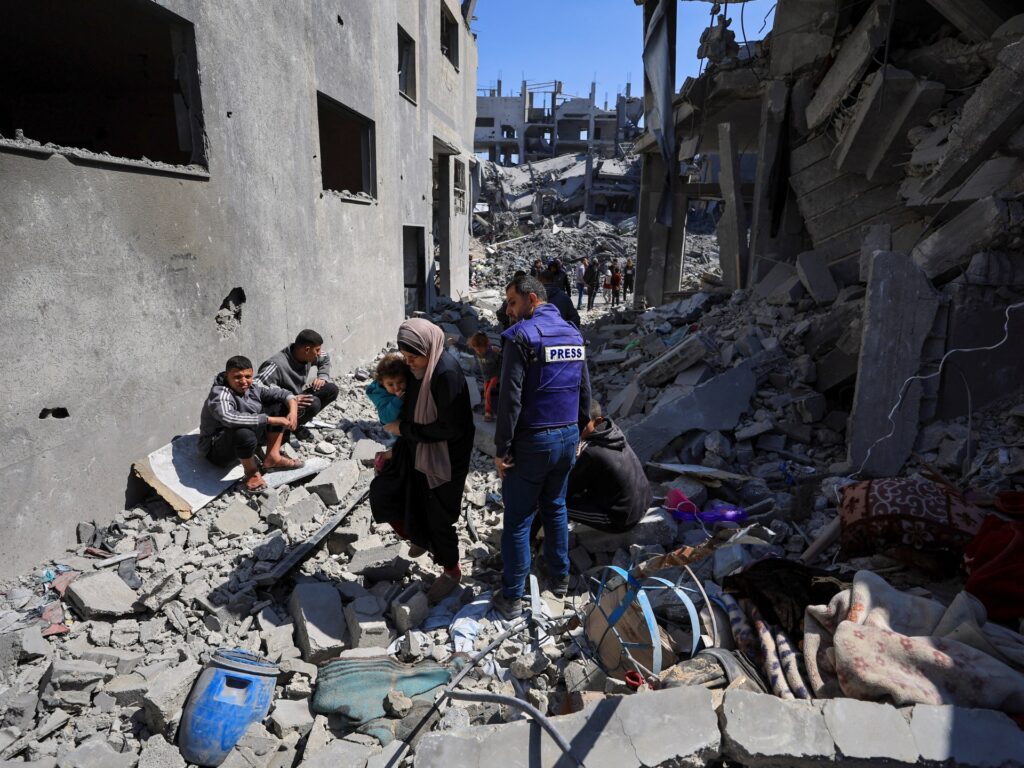
DEVELOPING STORYDEVELOPING STORY, Hossam Shabat is one of two media workers killed in Israeli attacks on Monday. An Al Jazeera journalist has been killed in Israeli strikes on the Gaza Strip, one of two media workers killed in attacks. Hossam Shabat, a journalist for the Al Jazeera Mubasher channel, was killed in northern Gaza on Monday. Witnesses told the network that his car was targeted in the eastern part of Beit Lahiya. Earlier, the Israeli army killed journalist Mohammad Mansour, who worked for Palestine Today, in Khan Younis in southern Gaza. At least 208 journalists have been killed in Israeli attacks since October 2023, according to the Government Media Office in Gaza. This is a developing story. Adblock test (Why?)
Russia-Ukraine war: List of key events, day 1,124
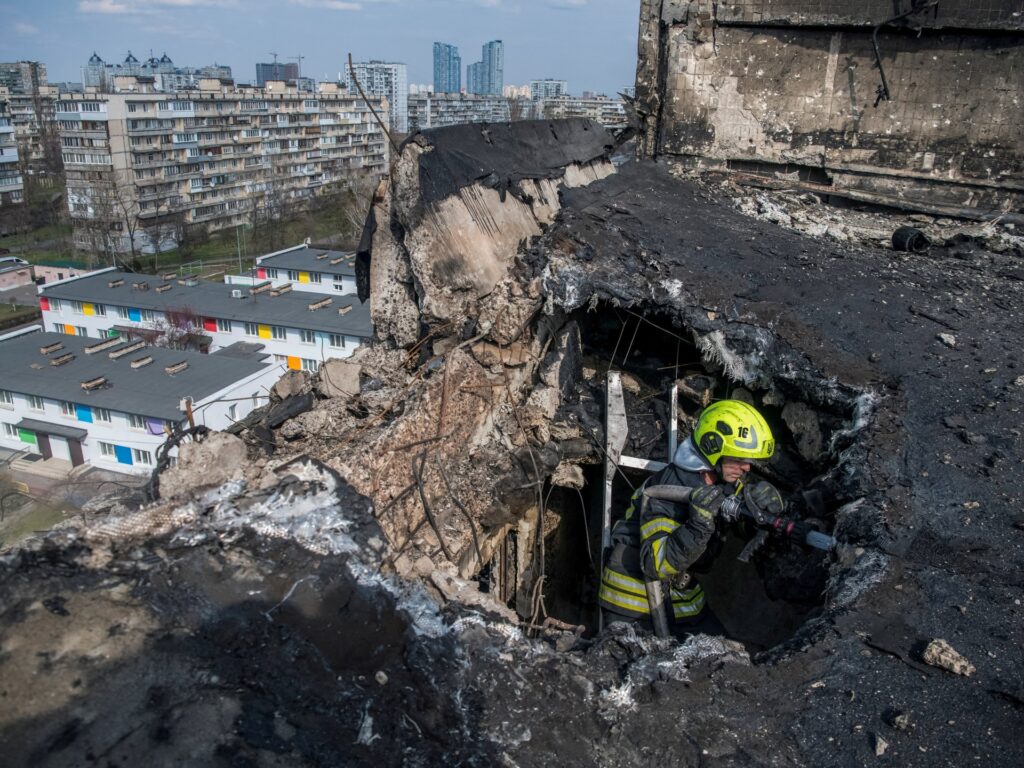
These are the key developments on day 1,124 of Russia’s war on Ukraine. Here is the roundup of key events on Monday, March 24. Fighting Ukraine’s Air Force said it destroyed 97 of 147 Russian drones in an overnight attack on multiple Ukrainian regions. A further 25 drones were reportedly “lost” due to electronic warfare. Russian news agency Interfax reported Russia’s Defence Ministry as saying its forces captured the village of Sribne in Ukraine’s eastern Donetsk region. Russian attacks on the Donetsk region killed four people, including three who were killed in a strike on Dobropillia, a town on the front lines of the war. At least one person was killed and several injured in an explosion at a police station in the Odesa region, southern Ukraine, local media reported. Witness statements cited in the reports said the explosion was caused by a woman who walked into the building with an explosive device in a plastic bag. Russia launched its third consecutive overnight attack on Kyiv, wounding a 37-year-old man and damaging several houses, Kyiv’s regional Governor Mykola Kalashnyk said. The man sustained injuries to his upper body and head from shrapnel and was later hospitalised, Kalashnyk added. In a separate attack in the southeastern Zaporizhzhia region, a 54-year-old woman was injured and several multistorey buildings were damaged, the region’s administration said. Advertisement Politics and diplomacy Steve Witkoff, United States President Donald Trump’s special envoy for the Middle East, told Fox News that he does not believe Russian President Vladimir Putin intends to invade Europe. “I just don’t see that he wants to take all of Europe. I take him at his word in this sense,” Witkoff said. Zelenskyy said Putin should be pressured to end his three-year invasion of Ukraine. “No matter what we talk about with our partners, we need to push Putin to give a real order to stop the strikes: The one who brought this war must take it away,” he said in a social media post. Ukrainian and US officials met in Saudi Arabia to discuss a partial ceasefire amid warnings by Moscow that negotiations would be “difficult” despite Washington’s hopes for “real progress”. Ukraine’s Defence Minister Rustem Umerov said the delegations were “working through a number of complex technical issues” but described the negotiations as “productive and focused”. He also said the discussions included proposals to protect Ukraine’s energy facilities and critical infrastructure. “We addressed key points including energy,” Umerov wrote on X, reiterating that the goal was a “just and lasting peace”. The Reuters news agency reported that the US delegation plans to seek progress towards a Black Sea ceasefire and a broader halt to violence when Washington sits down with Moscow in Saudi Arabia on Monday. Adblock test (Why?)
Israeli strike on Gaza hospital kills Hamas leader, teen, officials say
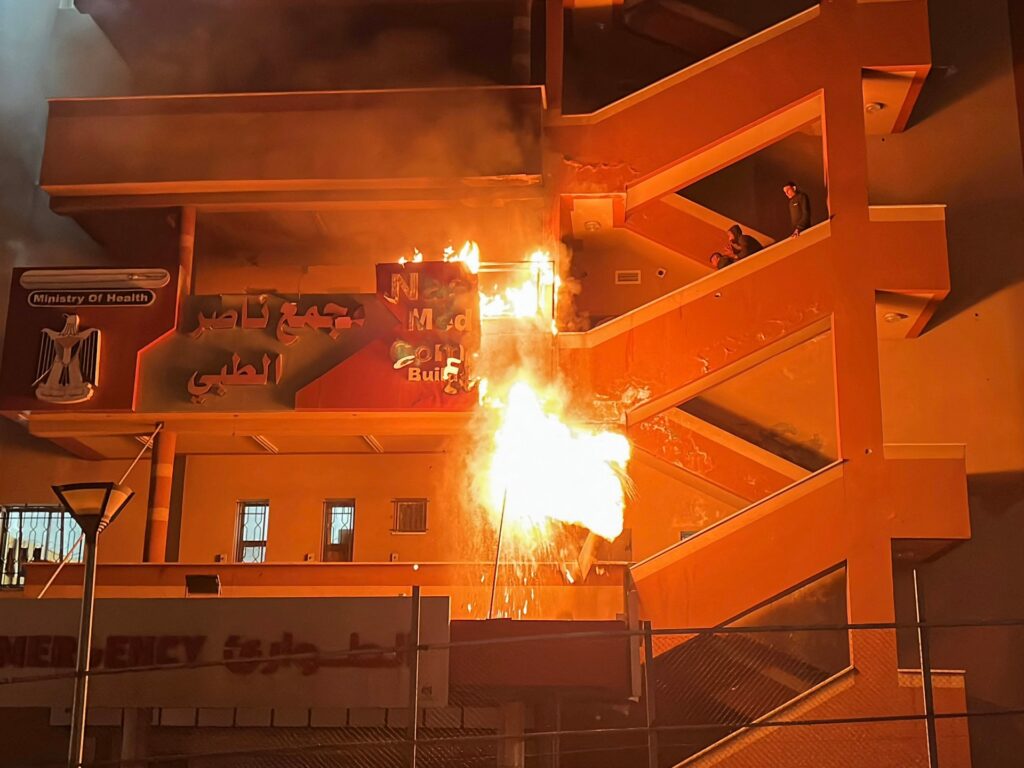
An Israeli air strike on a hospital in southern Gaza has killed at least two people, including a senior Hamas official and a 16-year-old boy, Hamas and health officials have said. Ismail Barhoum, a member of Hamas’s political bureau, was killed while undergoing treatment at Nasser Hospital in Khan Younis late on Sunday, Hamas said in a statement. “We condemn this latest crime, which adds to the occupation’s long record of terrorism, violating sanctities, lives and medical facilities,” the Palestinian armed group said in a statement. “It reaffirms its disregard for all international laws and conventions and its continued policy of systematic killing against our people and leadership.” Israeli Defence Minister Israel Katz confirmed that Barhoum had been the target of the attack. Israel’s military said the attack had been carried out with “precise munitions in order to mitigate harm”, following an “extensive intelligence-gathering process”. “Hamas exploits civilian infrastructure while brutally endangering the Gazan population – cynically using an active hospital as a shelter for planning and executing murderous terrorist attacks in a direct violation of international law,” the military said in a statement. Advertisement Barhoum’s assassination came just hours after Hamas said Israeli forces had killed Salah al-Bardawil, another member of the group’s political bureau, along with his wife, in a strike on a tent shelter in Khan Younis. Israel has killed four members of Hamas’s political bureau since Tuesday, when its forces resumed major military operations in the enclave following a weeks-long impasse over the next stage of its ceasefire with Hamas. Footage from outside Nasser Hospital showed a fireball exploding from the building’s upper floors as an Al Jazeera Arabic correspondent Rami Abu Taima was preparing to do a live broadcast at the scene. Reporting from Gaza’s Deir el-Balah, Al Jazeera’s Hind Khoudary said at least eight other Palestinians were wounded in the attack, all of whom had been receiving treatment for previous injuries. Khoudary said doctors at the hospital reported spending hours putting out fires in the department targeted in the attack. “Hospitals across the Gaza Strip are overwhelmed. There are no medical supplies or medicine as the Israeli forces continue to close the border crossing for 21 days now,” Khoudary said. “The situation is also escalating in different parts of the Gaza Strip, especially Beit Layhia in the north and Rafah in the southern parts of the Gaza Strip.” Feroze Sidhwa, a trauma surgeon volunteering at Nasser Hospital, said the 16-year-old boy killed in the attack was one of his patients. “I operated on him. I believe on March 18, I did an abdominal operation. He probably would have gone home tomorrow, but now he’s dead,” Sidhwa told Al Jazeera. Advertisement Sidhwa said the surgical ward for male patients had been destroyed and would need to be completely rebuilt. “The whole hospital smells like smoke now,” he said. “The [ward’s] entire electrical system was destroyed. Every door was blown off its hinges. Most of the windows were shattered. The ceiling has collapsed. It’s completely unusable. It’s going to have to be torn out and redone.” Sidhwa criticised Israeli forces for targeting the hospital. “Benjamin Netanyahu has been ill recently. Well, he stands accused of genocide. Nobody thinks Hamas can bomb a hospital because Benjamin Netanyahu happens to go there. That’s crazy,” Sidhwa said. “That’s completely insane. You don’t bomb hospitals. Everybody knows that.” Israeli forces have killed more than 600 people since resuming their assault on the enclave, including dozens within the last 24 hours, according to Palestinian health officials. On Sunday, the official death toll in Gaza since the start of the war topped 50,000, according to Gaza’s Health Ministry, a figure that many experts believe is likely an undercount of the true number. Adblock test (Why?)
South Korean court reinstates impeached prime minister as acting president
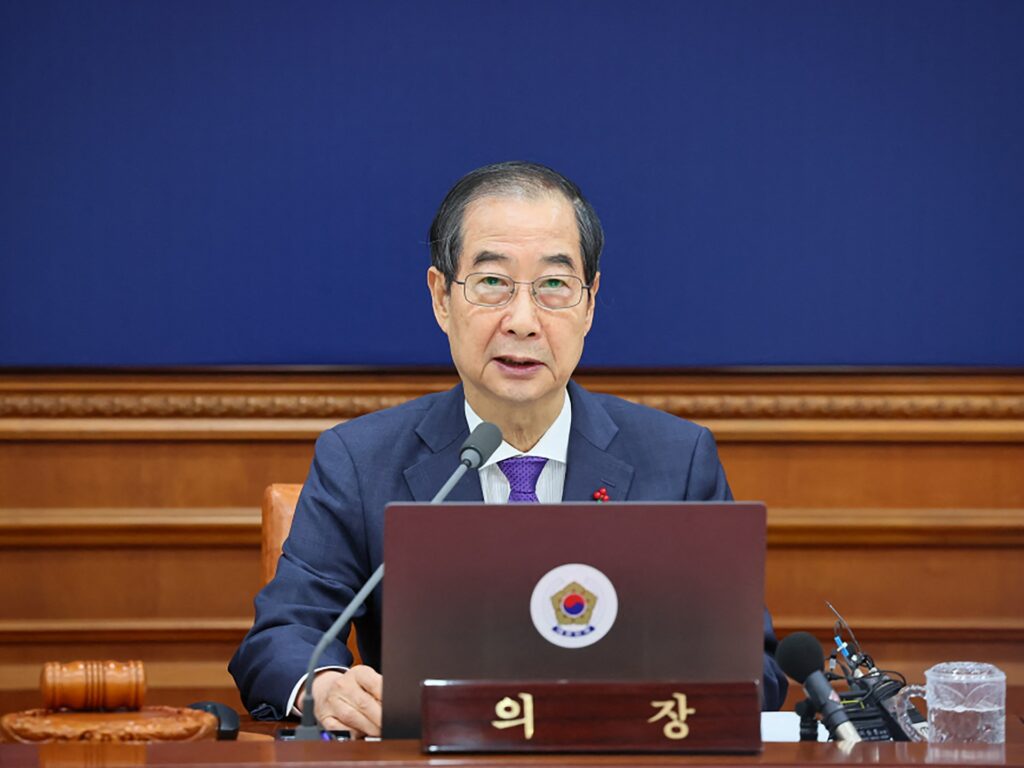
Judges overturn impeachment of Han Duck-soo in latest twist in saga set off by Yoon Suk-yeol’s martial law decree. South Korea’s Constitutional Court has reinstated impeached Prime Minister Han Duck-soo as acting president, the latest twist in the meandering political saga set off by the impeachment of President Yoon Suk-yeol. The Constitutional Court of Korea ruled that Han’s impeachment should be dismissed in a 7-1 vote on Monday, restoring him to the country’s highest office, while the eight justices separately consider the fate of Yoon, who was suspended from office after briefly imposing martial law on December 3. Five of the court’s judges found that there were not sufficient grounds to impeach Han, 75, though the impeachment motion against him was valid. Two justices ruled that the legislature’s impeachment motion lacked legitimacy from the start as it had been only backed by 192 of 300 lawmakers, instead of a two-thirds majority. After being appointed acting president following Yoon’s impeachment on December 14, Han was himself suspended from his duties less than two weeks later over his refusal to appoint three more justices to the Constitutional Court. Advertisement In a televised address after the ruling, Han expressed gratitude to the court for its “wise decision” and pledged to focus on navigating the geopolitical challenges facing his country. “I believe that all citizens are clearly speaking out against the highly polarised political sphere. I think there is no place for division now. Our country’s priority is to move forward,” Han said. The decision comes as the Constitutional Court is yet to rule on whether to confirm Yoon’s impeachment or restore his presidential powers. The court has been deliberating Yoon’s fate since mid-December and a decision is widely anticipated to arrive within days. At least six of eight justices must uphold Yoon’s impeachment to permanently remove him from office. If Yoon is stripped of the presidency, an election to choose his successor must be held within 60 days. Yoon is separately facing criminal charges, including insurrection, in connection with his short-lived martial law decree. He faces a maximum penalty of life imprisonment or the death penalty if convicted. Adblock test (Why?)
Could Israeli violence ignite a wider conflict in the Middle East?
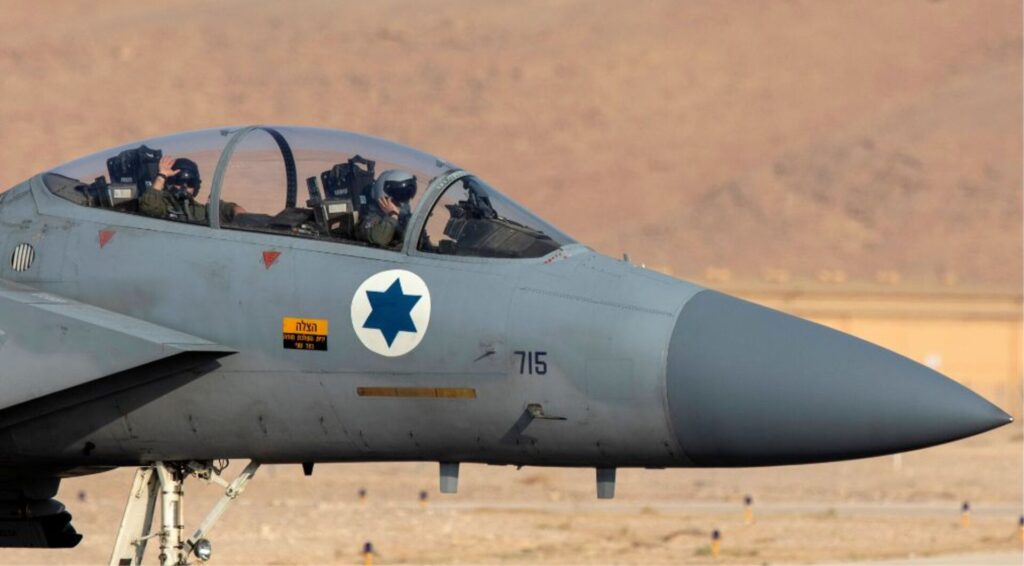
Gaza and Lebanon are under attack while the US bombs Yemen. Violence intensifies in the Middle East. Israel bombs Lebanon again as the United States carries out fresh attacks on Yemen’s Houthis – all while Israel resumes its genocide in Gaza. With previous fragile ceasefires now shattered, what’s the danger of a wider regional conflict? Presenter: Nick Clark Guests: Alon Pinkas – Former Israeli consul general in New York Randa Slim – Project director of the Middle East Track II Dialogues Initiative at the Wilson Center Nicholas Noe – Editor-in-chief of the Beirut-based news service Mideastwire.com Adblock test (Why?)
Portugal defeat Denmark in extra time to reach Nations League semifinals
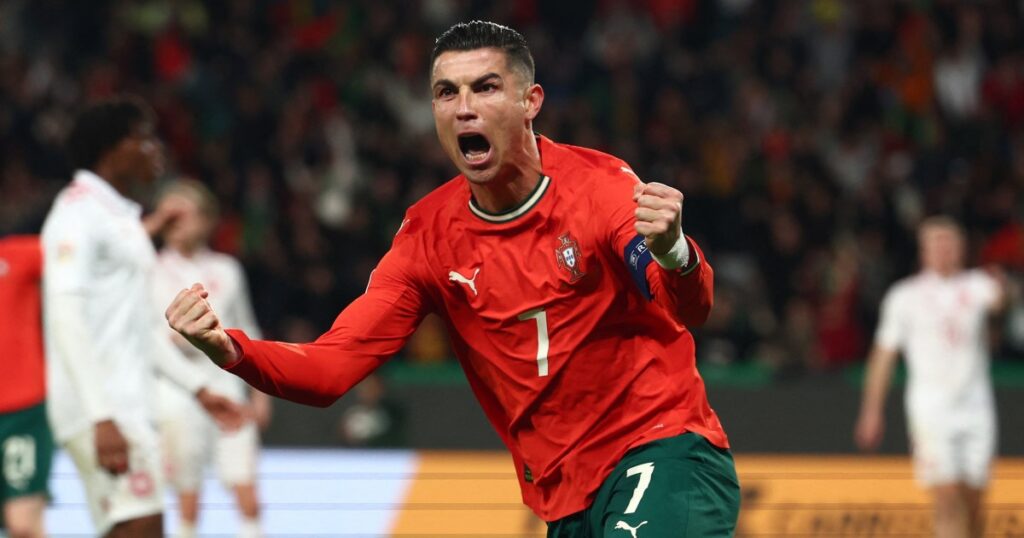
Portugal overturn a 1-0 first-leg deficit to beat Denmark 5-2 after extra time, setting up a semifinal with Germany. Portugal’s Francisco Trincao came off the bench to score twice and Cristiano Ronaldo also netted as they beat Denmark 5-2 after extra time for a 5-3 aggregate win that set up a Nations League semifinal against Germany. Ronaldo bounced back from missing an early penalty to play a crucial role in his team’s recovery on Sunday, and though he had to watch extra time from the bench, he continued to drive the crowd on as Portugal finally found a way to end Denmark’s resistance. With the Danes leading the tie 1-0 thanks to Rasmus Hojlund’s goal in Thursday’s first leg in Copenhagen, and fullback Joakim Maehle having left the camp to attend the birth of his child, his replacement, Patrick Dorgu, handed Portugal an early gift, bundling over Ronaldo to concede a penalty in the third minute. Ronaldo stepped up to take the spot kick himself, but Denmark keeper Kasper Schmeichel won the battle of nerves and got down smartly to his left to deny the Portuguese captain. Ronaldo almost made amends in the 17th minute, ghosting in at the far post to head a ball from Nuno Mendes at goal but again Schmeichel got the better of him. Advertisement Portugal eventually took the lead on the night in the 38th minute, thanks to an own goal from Danish defender Joachim Andersen, who headed a corner won by Ronaldo into his own net. That goal was cancelled out by a Rasmus Kristensen header from a corner of their own in the 56th minute, and though Ronaldo gave the home side the lead again with a finish from a tight angle, Christian Eriksen put Denmark back in front on aggregate in the 76th minute. Trincao then took over, scoring in the 86th minute to make it 3-3 on aggregate and force extra time before netting again with a superb clipped finish in the 91st to put his side in the driving seat. Denmark defended heroically but ran out of steam after Trincao’s second goal, and substitute Goncalo Ramos added the coup de grace with Portugal’s fifth to send them through to the last four. Portugal’s semifinal opponents, Germany, survived a spirited second-half fightback from Italy, letting a three-goal lead slip to draw 3-3 in Dortmund on Sunday, before reaching the last four 5-4 on aggregate. The result not only secured Germany a first-ever Nations League semifinal spot, but it means the remainder of the tournament will be held on German soil, in Stuttgart and Munich in June. Nations League holders Spain reached the final four with a 5-4 win on penalties against the Netherlands, after a thrilling 3-3 quarterfinal second-leg draw on Sunday (5-5 on aggregate). In sudden death, Donyell Malen missed and Barcelona’s Pedri slotted home to settle a gripping match in which the Netherlands came from behind three times to force the shootout. Advertisement France beat Croatia 5-4 in a penalty shootout on Sunday to seal a place in the final four after their quarterfinal tie had ended 2-2 on aggregate. Les Bleus won 2-0 on the night at Stade de France to wipe out their first-leg deficit, with Michael Olise and Ousmane Dembele scoring their goals in normal time. Dayot Upamecano converted their winning penalty in the shootout to set up a semifinal in June against Spain. Adblock test (Why?)
Israeli cabinet casts no-confidence vote against attorney general
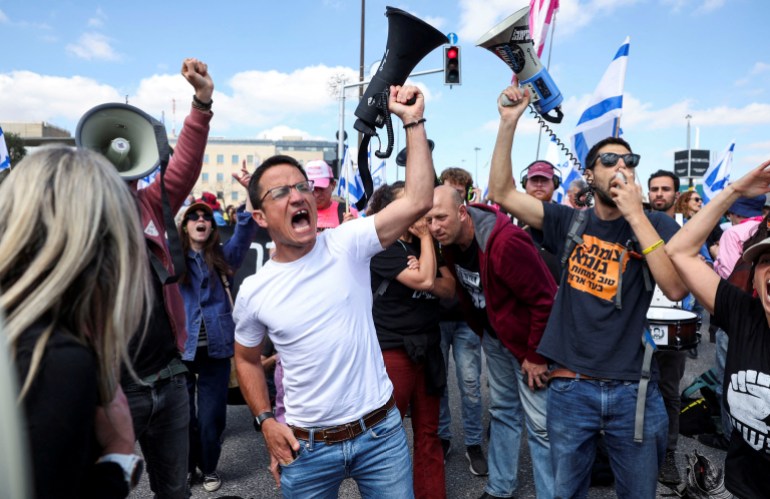
Critics see the no-confidence vote as part of broader moves to weaken judicial checks on Netanyahu’s government. Israel’s cabinet has passed a vote of no confidence against Attorney General Gali Baharav-Miara, the country’s justice minister has said, in a first step in the removal of yet another vocal critic of Prime Minister Benjamin Netanyahu and his far-right government. The vote on Sunday comes just two days after the government dismissed Ronen Bar, the head of Shin Bet, the country’s internal security agency – a decision later frozen by the Supreme Court. Baharav-Miara, the country’s most senior legal official, is accused of “inappropriate behaviour” and of “ongoing substantial differences of opinion between the government and the attorney general, which prevents effective collaboration”, according to the prime minister’s office. The attorney general, who did not attend the cabinet meeting, refuted the claims and accused the government of trying to operate above the law. The vote of no confidence aimed at gaining “limitless power, as part of a wider move to weaken the judicial branch” and to “promote loyalty to the government”, she said in a letter sent to the cabinet ahead of the vote. Advertisement The vote does not translate into her dismissal yet. A committee will review the arguments and hold a hearing to consider the case. Should the committee fail to support her removal, the Supreme Court could still block it. People protest against moves by the Israeli government to fire Attorney General Gali Baharav-Miara and the dismissal of Shin Bet chief, Ronen Bar, as a cabinet meeting is taking place, in Jerusalem [Ronen Zvulun/Reuters] The attempted dismissal of both the Shin Bet chief and the attorney general has attracted thousands of protesters who say the unprecedented moves are a threat to democracy and part of a crackdown on the few remaining voices critical of Netanyahu. The prime minister, meanwhile, has cited an “ongoing lack of trust” in Bar, who is expected to testify on April 8. Netanyahu has insisted it is up to the government to decide who will head Shin Bet. Critics say the prime minister moved against Bar due to his criticism of the government over the security failure that allowed Hamas’s October 7, 2023 attack on Israel, the deadliest day in the country’s history. They also allege that Netanyahu’s ongoing bribery trial is at play. Shin Bet has investigated Netanyahu’s close associates on suspicion of receiving money linked to Qatar. Bar said in a letter that his ouster was motivated by a desire to halt the “pursuit of truth” about the events leading up to October 7. Shin Bet this month released a report that acknowledged it should have thwarted the Hamas-led assault while criticising Netanyahu for helping to create the conditions for the attacks. Advertisement Netanyahu’s office has dismissed such accusations as “fake news”. Adblock test (Why?)
Ronaldo has ‘no problem’ with Hojlund’s ‘Siu’ celebration in Nations League
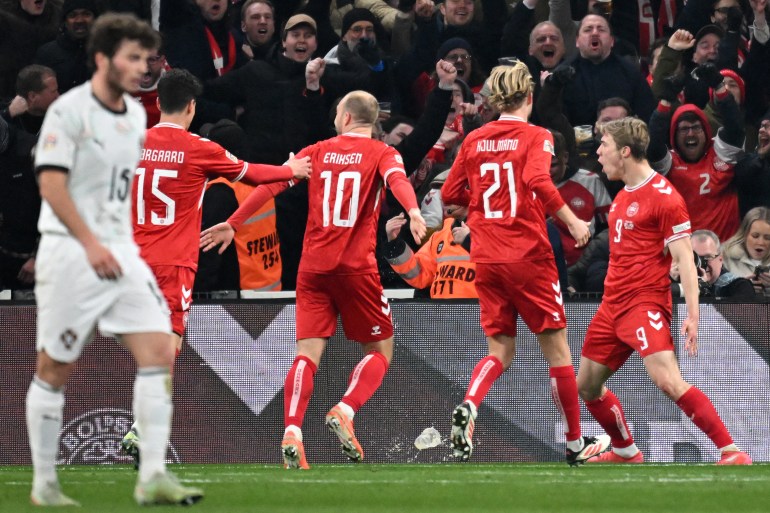
Portugal captain hopes to show Hojlund and Denmark his celebration as both sides meet in the Nations League quarters. Cristiano Ronaldo has responded to Rasmus Hojlund’s imitation of his famous “Siu” celebration, saying it was an honour to see the Denmark striker mimic it during their UEFA Nations League clash. “For me, it was not a problem,” Ronaldo said on Saturday, before the second leg of their quarterfinal. “I knew that this was not because he did not have respect for me. “I’m smart enough to understand that not only him but around the world people from other sports also do my celebration,” the Portuguese star told reporters before the clash on Sunday. “For me, it is an honour. “But [on Sunday] I hope that he can see my celebration. It is OK for me. If I score, it’s good for me, but if I don’t score and someone else scores, that’s fine with me.” Hojlund scored the winning goal against Portugal in the first leg of their quarterfinal on Thursday and leapt up in the air for his own version of the “Siu” celebration but said he was not trying to make fun of his “idol”. The Manchester United forward’s 78th-minute strike earned Denmark a 1-0 first-leg win over Ronaldo’s Portugal, with the 40-year-old veteran striker completely frozen out at the other end on a frustrating night. Advertisement “I’m playing against the world’s best footballer, my idol, and to score and become the [match] winner, it couldn’t be better,” Hojlund told Denmark’s TV2. “It was not to mock him or anything, I’ve always said he has had great importance for me and my football career. “Scoring against him and Portugal is huge, I went to see him in 2009, where he scored from a free kick, and I’ve been a fan ever since.” Rasmus Hojlund, right, celebrates after scoring for Denmark during the first leg of their UEFA Nations League quarterfinal against Portugal at the Parken Stadium in Copenhagen on March 20, 2025 [Jonathan Nackstrand/AFP] ‘No need to be nervous’ Meanwhile, Ronaldo acknowledged the pressure surrounding Portugal as they look to overturn the deficit. The Al-Nassr striker was highly critical of himself and his team’s performance in the first leg in Copenhagen but he is confident the home crowd can play a key role in turning the tie around. “The air is more tense. I’m not hiding it. We’re in a tense moment because we need to win, but that’s the beautiful thing about football,” Ronaldo told reporters on Saturday. “Tomorrow, I’m calling on the fans to be with us. Let them give us their strength, because we’re going to try to do our best. “I’ve lost games in 90 minutes, but I’ve never lost in the first leg. There are games like that, there are bad days. I didn’t play at all the other day, the team didn’t play at all, but it’s part of life. “Tomorrow I want to leave the Alvalade Stadium with my head held high. If I score, I’ll be happy, but if I don’t score, let someone else score, what I want is for Portugal to win.” Advertisement Ronaldo denied any lack of attitude in the team and was confident they could unite and progress to the semifinals. “There’s always attitude in the national team. Technical aspects, of course, but other things were lacking too. That’s football, you can’t always play well,” he said. “There’s no need to be nervous. The past is the past. I know there are a lot of people who want us to lose, but if the few who are there are united and have good energy, I’m sure we’ll get a great result tomorrow. “We lost the game and played badly, but we have the second leg tomorrow. Calm down. Think positive and think that things will go well.” Adblock test (Why?)
Pope Francis leaves hospital after first public appearance in five weeks
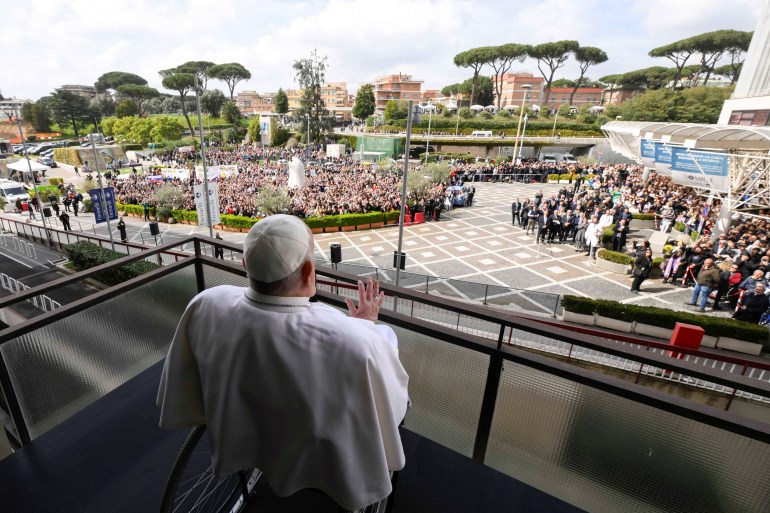
Pope calls for an immediate end to the Israeli bombardment of Gaza as he arrives home at the Vatican. Pope Francis has arrived home at the Vatican after leaving the Gemelli University Hospital in Rome, shortly after making his first public appearance following a five-week long hospitalisation for life-threatening bout of pneumonia. The 88-year-old, who was admitted on February 14 after a bout of bronchitis worsened, greeted his well-wishers on Sunday from a balcony of Gemelli hospital before his discharge. Using a wheelchair, as he has for several years, the pope smiled, waved, and made a sign of a thumbs up at a group of well-wishers gathered outside below. The pope, whose face looked swollen, appeared only for a few moments. Francis spoke briefly, with a feeble voice, to thank one an elderly woman among the crowd below, who had brought yellow flowers. Later, a car carrying Francis left the hospital shortly after noon, and was accompanied through Rome by a convoy of police vehicles. Pope Francis appears in public for the first time in five weeks. [Handout/Vatican Media via Reuters] Call for end to Israeli strikes As he was being discharged, the Vatican released the Pope’s Angelus prayer calling for an “immediate” end to Israeli strikes on the Gaza Strip, and for the resumption of dialogue for the release of captives and a “definitive ceasefire”. Advertisement “I am saddened by the resumption of the intense Israeli bombardment of the Gaza Strip, with so many deaths and injuries”, Francis wrote. “I ask that the weapons be silenced immediately and that the courage be found to resume dialogue so that all the hostages can be freed and a definitive ceasefire reached”, said Francis, who was set to return to the Vatican on Sunday. “The humanitarian situation in the Gaza Strip is once again very serious and requires the urgent commitment of the conflicting parties and the international community,” he said. Francis had only been seen by the public once before during his hospital stay, in a photo the Vatican released last week, showing the pontiff at prayer in a hospital chapel. In the moments before the pontiff’s appearance on Sunday, the crowd of hundreds of well-wishers called out for the pope, chanting “Francis, Francis, Francis”. On Saturday, one of the doctors treating him said the head of the Roman Catholic Church would be discharged from hospital on Sunday and would need two months of rest at the Vatican. Adblock test (Why?)