

Why are there protests in Turkiye? What to know
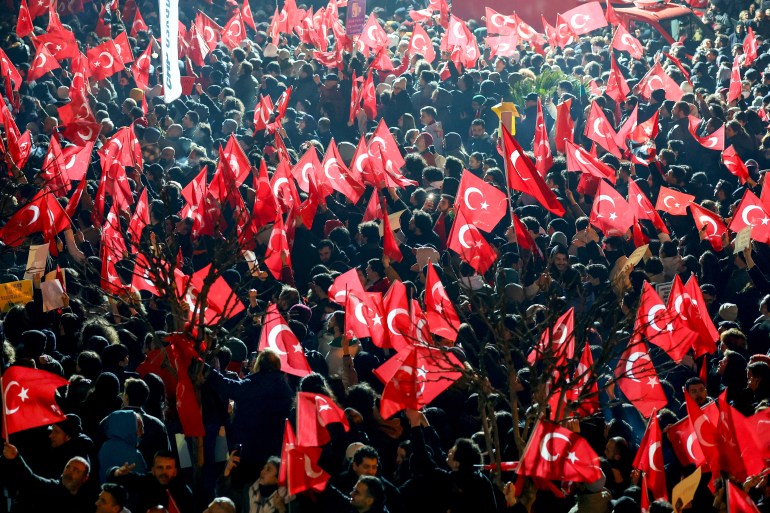
Tens of thousands in cities around Turkiye protested on Saturday against the arrest of a prominent opposition politician. Citizens defied a ban on gathering and took to the streets, with supporters of the opposition politician describing the charges as politicised. These are Turkiye’s largest protests in more than a decade. Here’s what you need to know about the mass protests and what’s happening in Turkiye. Protesters gather outside the Istanbul Metropolitan Municipality building on March 19, 2025 [Murad Sezer/Reuters] Why are there protests in Turkiye? People took to the streets over the arrest of Ekrem Imamoglu, Istanbul’s mayor and a potential opposition candidate in the upcoming Turkish presidential election. His supporters say the charges are politicised and aimed at blocking him from running for president in three years. Some protesters however say this is bigger than Imamoglu and represents wider struggles, including concerns with democracy, the economy, education, and healthcare systems. Advertisement When did the protests start? The protests began on Wednesday, the same day Imamoglu was arrested, with thousands gathering at Istanbul University to decry the arrest. They have continued since, with the largest protest to date on Saturday evening. Who is Ekrem Imamoglu and what happened to him? He is the mayor of Istanbul and a potential candidate in the next presidential election with the Republican People’s Party (CHP). The 53-year-old took office in 2019 and was re-elected in 2024. On March 19, Imamoglu was arrested, with more than 100 other people, by Turkish police on charges of corruption and allegedly aiding an outlawed political group. A day earlier, Istanbul University had revoked his degree, which would make him ineligible for running for president. He had a bachelor’s in business administration and a master’s in human resource management. The university claimed there were irregularities in his diploma after he transferred from a private university in northern Cyprus. The move came just days before the CHP was set to choose its candidate in the 2028 presidential election. Imamoglu has been jailed for corruption charges that supporters dispute [Murad Sezer/Reuters] What has he been charged with? Imamoglu was initially charged with corruption, bribery and “terrorism”. Istanbul prosecutors said Imamoglu led a criminal organisation engaging in systematic fraud, bid-rigging, embezzlement, and bribery, according to Anadolu Agency (AA), the Turkish newswire. He was also accused of aiding the Kurdistan Workers’ Party (PKK), which Turkiye, the United States and the European Union consider a terrorist group. Advertisement “Prosecutors allege that Imamoglu took part in an ‘urban consensus’ initiative tied to the People’s Democratic Congress [HDK], a pro-terrorist PKK entity, before Turkiye’s March 2024 local elections,” AA reported. According to Turkish media, the “urban consensus” was an effort to give Kurdish actors more influence in municipal politics. On Sunday, the court ruled that Imamoglu be jailed without bail pending trial on the corruption charges. The “terrorism” charges, however, were dropped. A Turkish court held up the corruption charges, saying: “Although there is a strong suspicion of aiding an armed terrorist organisation, since it has already been decided that he will be arrested for financial crimes, (his arrest) is not deemed necessary at this stage.” Since Imamoglu was not charged with “terror” charges, the court won’t be able to appoint a government trustee to the municipality of Istanbul, Al Jazeera’s Sinem Koseoglu reported, adding that the mayor will be elected from within the municipal council. A police officer uses crowd control spray to disperse demonstrators during a protest against the detention of Imamoglu, in Istanbul, Turkiye, March 22, 2025 [Murad Sezer/Reuters] What did he say about these charges so far? Imamoglu denied the charges. “I see today during my interrogation that I and my colleagues are faced with unimaginable accusations and slanders,” Imamoglu said Saturday in his defence during a hearing, according to a document seen by the Reuters news agency. “I strongly reject all allegations.” Advertisement He has posted on his page on X, formerly Twitter, thanking international actors for supporting him and the protesters who have taken to the streets. A mother’s heart speaks the deepest truth. For all the mothers and the children of Türkiye and their future, we must persevere. pic.twitter.com/lto9h8TCcd — Ekrem İmamoğlu (International) (@imamoglu_int) March 20, 2025 What did President Erdogan say? On Friday, Turkiye’s President Recep Tayyip Erdogan delivered a public speech where he said the justice system should be allowed to do its job without interference. He denounced the protests, labelling them as “street terror” and saying: “We will not accept the disruption of public order. “Pointing to the streets instead of courtrooms to defend theft, plunder, lawlessness and fraud is a grave irresponsibility,” Erdogan said. “Just as we have not surrendered to street terrorism until now, we will not bow to vandalism in the future, either.” CHP’ye çökmüş bir avuç paragözün asırlık partiyi parmağında oynatması, “Gazi’nin emaneti” diyerek CHP’ye oy veren insanlarımızı da üzüyor. Emin olun, samimi CHP’li vatandaşlarımız da İSKİ skandalından 32 yıl sonra aynı rezilliklere tekrar şahit olmayı içlerine sindiremiyor. pic.twitter.com/1D4UVCWoOe — Recep Tayyip Erdoğan (@RTErdogan) March 22, 2025 Translation: The fact that a handful of greedy people who have become attached to the CHP are manipulating the century-old party is also upsetting our people who voted for the CHP, saying it is “the legacy of the Ghazi”. Be assured, our sincere CHP citizens cannot stomach witnessing the same disgrace again 32 years after the İSKİ scandal. How big are the protests? At least tens of thousands have taken to Istanbul’s streets. Opposition leader Ozgur Ozel said more than 300,000 people had joined the protest, and they had gathered at several places across the country’s largest city due to the road and bridge closures preventing people from all being in one place. Advertisement These are Istanbul’s biggest anti-government protests since the Gezi Park demonstrations in 2013. Protesters threw stones and flares at Turkish police, who responded with pepper spray. In Turkiye’s capital Ankara, protesters were met with police water cannons and tear gas. Ali Yerlikaya, Turkiye’s interior minister, said 323 people had been
US wants to negotiate with Iran on nuclear programme: US envoy
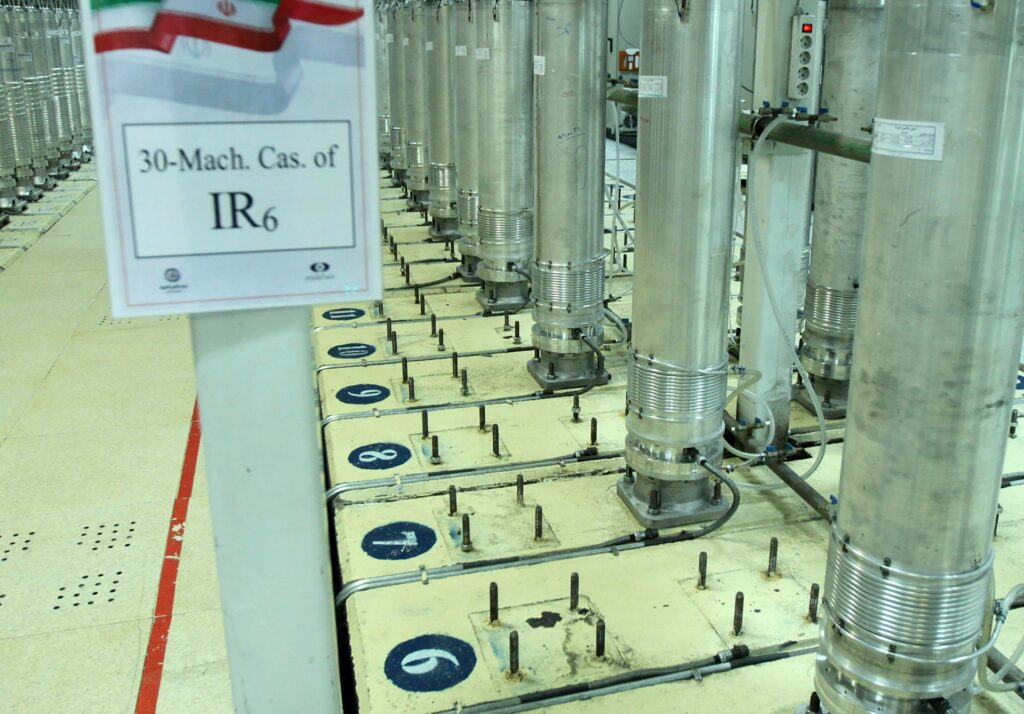
Tehran accuses US of bullying tactics as nuclear deal uncertainty deepens under Trump’s renewed pressure campaign. US President Donald Trump’s outreach to Iran’s Supreme leader, Ayatollah Ali Khamenei, on a possible new nuclear deal is an attempt to avoid direct military action, US special envoy Steve Witkoff has said. “We don’t need to solve everything militarily,” Witkoff told Fox News on Sunday. “Our signal to Iran is ‘Let’s sit down and see if we can, through dialogue, through diplomacy, get to the right place’. If we can, we are prepared to do that. And if we can’t, the alternative is not a great alternative.” Witkoff’s comments come after Trump said on March 7 that he sent a letter to the Iranian leadership seeking to engage in talks over Iran’s nuclear activities and warning of potential military action if it refused. The approach was slammed by Khamenei, who said Iran was not going to engage with a “bully”. Trump has also threatened Tehran over any support for the Iran-aligned Houthis in Yemen, who have resumed their military support for Palestinians by targeting Israel after it blockaded aid and then resumed its war in Gaza. Advertisement Amid intense US air strikes on Yemen last week, Trump said the US will hold Tehran responsible for any attacks by Yemen’s Houthis, dismissing Iran’s insistence that the group operates independently. Talks with the US are impossible unless Washington changes its pressure policy the Iranian Foreign Minister Abbas Araghchi said on Sunday. On Thursday, he said that the letter was “actually more of a threat”, and that Tehran would respond soon. There is little trust in Iran in US negotiation commitments after Trump in 2018 pulled the US out of a landmark nuclear deal – the Joint Comprehensive Plan of Action (JCPOA) – imposing instead additional sanctions on Iran. The JCOPA was signed with world powers in 2015 to curb Iran’s nuclear deal in exchange for sanctions relief. Since Trump’s unilateral withdrawal from the accord, Iran has accelerated its enrichment of uranium to up to 60 percent purity – a step away from the 90 percent level needed for weapons-grade uranium. According to the International Atomic Energy Agency (IAEA), which carries out inspections of Iranian nuclear sites, Iran has amassed enough fissile material for multiple bombs, but has made no effort to build one. While Trump has hinted at the desire to negotiate with Iran since returning to the White House earlier this year, he has reinstated a “maximum pressure” campaign against Tehran. And on Wednesday, senior White House officials again said Iran must do away with its nuclear programme entirely, leaving all uranium enrichment activity, even at low levels. Advertisement That, along with Trump’s threats of military action against Iran, has prompted calls from within Iran to abandon its officially stated policy that it will never pursue nuclear weapons. Adblock test (Why?)
Canada’s PM Carney triggers snap election, vote set for April 28
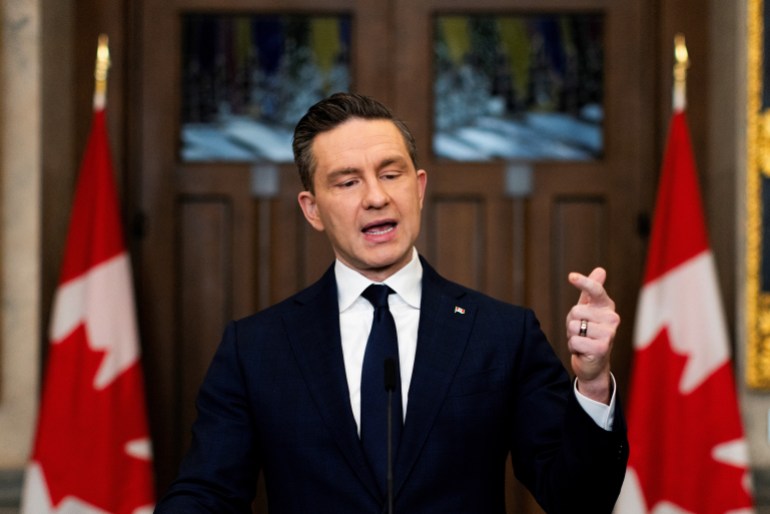
Montreal, Canada – Canada’s new Prime Minister Mark Carney has moved to dissolve Parliament and trigger a snap election on April 28. The widely anticipated decision on Sunday kicks off an election race less than two weeks after Carney took up his post, succeeding Justin Trudeau at a time of soaring tensions with the United States. “We are facing the most significant crisis of our lifetimes because of President [Donald] Trump’s unjustified trade actions and his threats to our sovereignty,” the Liberal Party leader told reporters in Ottawa after he met with the governor general to request parliament’s dissolution. “I’m asking Canadians for a strong, positive mandate to deal with President Trump and to build a new Canadian economy that works for everyone because I know we need change – big change, positive change.” The election had to be held by October 20, but experts say Carney is hoping that an early vote will benefit his Liberal Party, which is riding a wave of momentum. The party, which has been in government since 2015, has seen a surge in support since Trudeau’s January announcement that he planned to step down and amid repeated threats from Trump. Advertisement The US president’s tariffs and calls to annex Canada have fuelled anger and uncertainty, and many Canadians have been supportive of the Liberal government’s firm — and unified — response to Washington. After years of criticism for their handling of soaring housing costs and an affordability crisis, the Liberals are now locked in a neck-and-neck fight with the opposition Conservatives, according to recent polls. As recently as January, the Tories enjoyed a double-digit lead over their rivals and were expected to easily coast to victory in the federal election. “[Carney] wants to call the election while he still has this kind of momentum as a new leader — and while the shock of the Trump administration is still front of mind for Canadians,” Lisa Young, a political science professor at the University of Calgary, told Al Jazeera. The US president has repeatedly said he wants to make Canada into the “51st state”, sparking a surge in Canadian nationalism. He also has imposed steep tariffs on Canadian goods that economists say could plunge the country into a recession. Against that backdrop, several experts told Al Jazeera that the upcoming vote’s central “ballot question” will be which party leader is best equipped to respond to Trump and manage Canada-US ties. “And that’s a ballot question that is much better for Mark Carney,” Young said. Carney — an economist and former central banker — has the highest approval ratings of any federal party leader, according to an Ipsos poll released on Thursday. Canadians also viewed him as the leader best able to deal with Trump’s tariffs and their fallout. Advertisement Carney has promised to continue with Trudeau’s firm response to the levies, including imposing reciprocal countermeasures against the US, Canada’s top global trading partner. The Liberal leader also has rejected Trump’s push to annex Canada, calling the idea “crazy” and saying Canadian sovereignty must be respected before he will hold talks with Washington. Conservative Party leader Pierre Poilievre [Carlos Osorio/Reuters] Meanwhile, the opposition Conservatives are hoping to regain some of the ground they have lost since the start of the year. Experts say Conservative leader Pierre Poilievre, who is known for his incendiary rhetoric and attacks against Trudeau, has struggled to find solid messaging in the face of Trump. Poilievre’s combative political style also has drawn comparisons to the US president, raising questions about how he would handle Trump if the Conservatives win the election and he becomes prime minister. But Poilievre has slammed the Liberals for their record in government over the past decade and said Canadians can count on him to stand up for the country. “I know a lot of people are worried, angry and anxious — and with good reason — as a result of the [US] president’s unacceptable threats against our country,” he said during a news conference to launch his campaign on Sunday morning. “I share your anger and I share the worry for our future. But I also draw great resolve in knowing that we can transform the anxiety and anger into action,” Poilievre said. “I will protect Canada and I will always put our country first.” Advertisement The CBC News Poll Tracker, which aggregates polling data across Canada, had the Liberals with 37.5 percent support compared with 37.1 percent for the Conservatives as of Sunday. The left-leaning New Democratic Party, led by Jagmeet Singh, was in third with 11.6 percent, followed by Yves-Francois Blanchet’s Bloc Quebecois at 6.4 percent. The parties will be vying for 343 seats in the lower house of Canada’s Parliament, known as the House of Commons. Under Canada’s parliamentary system, the party that wins the most seats typically will be asked to form a government. The leader of that party will also become prime minister. Adblock test (Why?)
Turkish court jails Istanbul Mayor pending trial on corruption charges
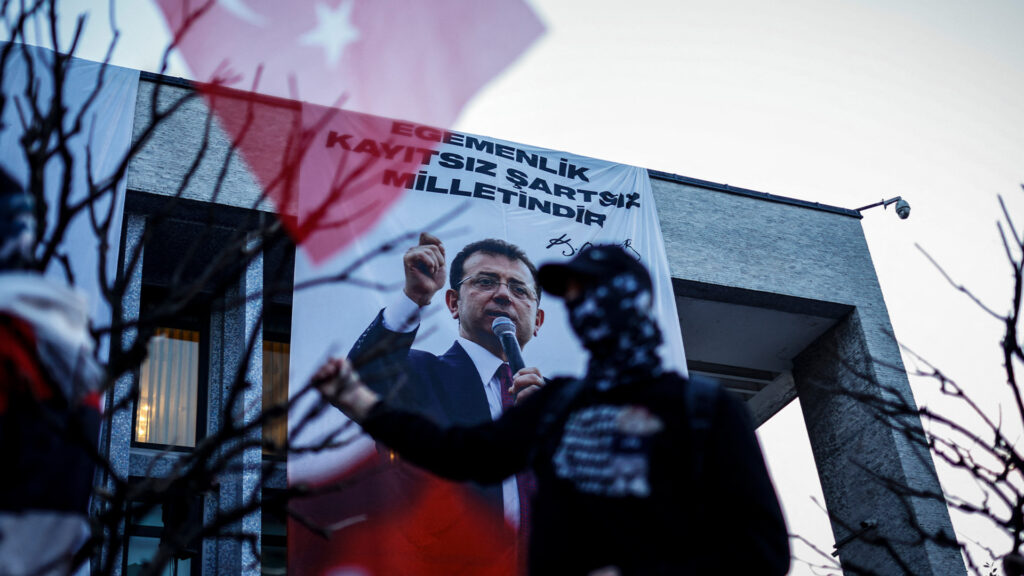
NewsFeed A Turkish court has ordered Istanbul mayor Ekrem Imamoglu to be held in jail ahead of a trial on corruption charges. Imamoglu, who denies the charges, is a key rival to President Erdogan. His arrest sparked mass protests. The government says the courts acted independently. Published On 23 Mar 202523 Mar 2025 Adblock test (Why?)
South African ambassador expelled by Trump receives hero’s welcome at home
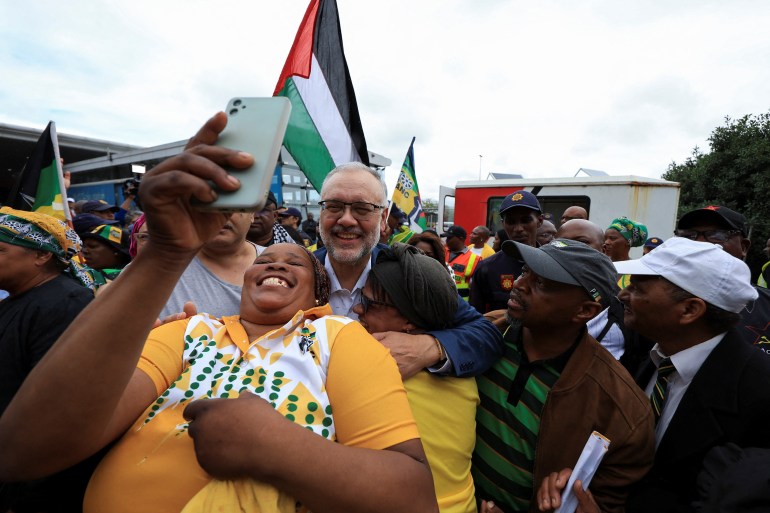
Ebrahim Rasool addresses supporters, calling his persona non grata status a badge of dignity after his US expulsion. The South African ambassador who was expelled from the United States in a row with US President Donald Trump’s administration has arrived home to a raucous welcome and struck a defiant tone over the decision. Crowds at Cape Town International Airport surrounded Ebrahim Rasool and his wife Rosieda on Sunday as they emerged in the arrivals terminal in their hometown. They needed a police escort to help them navigate their way through the building. “A declaration of persona non grata is meant to humiliate you,” Rasool told supporters as he addressed them with a megaphone. “But when you return to crowds like this, and with warmth … like this, then I will wear my persona non grata as a badge of dignity.” “It was not our choice to come home, but we come home with no regrets.” Admirers welcome Ebrahim Rasool at South Africa’s Cape Town International Airport [Esa Alexander/Reuters] Rasool also said it was important for South Africa to fix its relationship with the US after Trump punished the country and accused it of taking an anti-American stance even before the decision to expel Rasool. Advertisement Trump issued an executive order last month cutting all funding to South Africa, alleging its government is supporting the Palestinian group Hamas and Iran, and pursuing anti-white policies at home. South Africa filed a case at the International Court of Justice (ICJ) in December 2023, which accuses Israel of violating its obligations under the Genocide Convention in its war on the Gaza Strip. More than 10 countries have since joined South Africa in the genocide case. “We don’t come here to say we are anti-American,” Rasool said to the crowd. “We are not here to call on you to throw away our interests with the United States.” South Africa’s expelled ambassador to the United States, Ebrahim Rasool, speaks upon his arrival at the airport [Esa Alexander/Reuters] They were the ex-ambassador’s first public comments since the Trump administration declared him persona non grata over a week ago, removed his diplomatic immunities and privileges, and gave him until Friday to leave the country. US Secretary of State Marco Rubio, who issued the declaration on X, said Rasool was a “race-baiting politician” who hates the US and Trump. It is highly unusual for the US to expel a foreign ambassador. Rubio’s post linked to a story by the conservative Breitbart news site that reported on a talk Rasool gave on a webinar organised by a South African think tank. In his talk, Rasool spoke in academic language of the Trump administration’s crackdowns on diversity and equity programmes and immigration and mentioned the possibility of a US where white people soon would no longer be in the majority. Advertisement Adblock test (Why?)
Pakistan kills 16 fighters amid rising Afghanistan border tensions
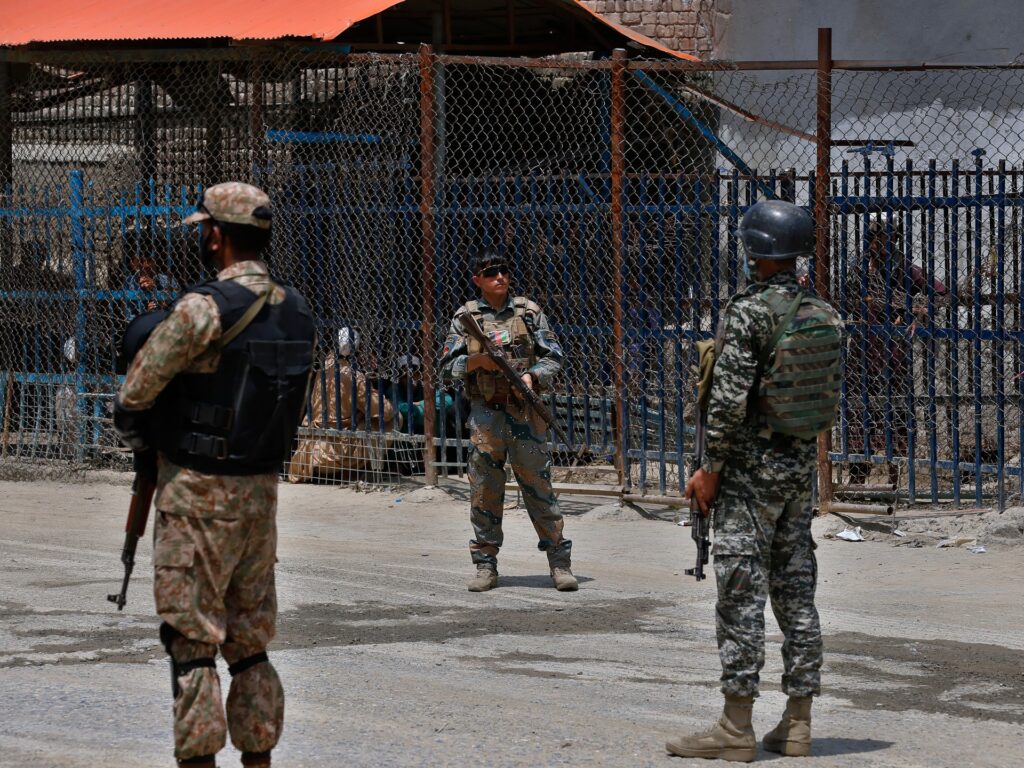
Pakistan says all fighters killed overnight in North Waziristan while urging Afghan government to secure its borders. Pakistan’s army has said its forces killed 16 armed fighters along the country’s western border with Afghanistan. Pakistan has “consistently been asking the Interim Afghan Government to ensure effective border management on their side of the border”, according to an army statement Sunday. Border troops killed all the fighters in an exchange of fire during the night between March 22 and 23 in North Waziristan district in Khyber Pakhtunkhwa province, the army said. “Own troops effectively engaged and thwarted their attempt to infiltrate,” it added. “Security forces of Pakistan are determined and remain committed to secure its borders and eliminate the menace of terrorism from the country.” The incident took place as Pakistan’s Special Representative for Afghanistan Sadiq Khan is on a two-day official visit to Kabul to talk about bilateral and economic issues, a statement from Pakistan’s embassy in Kabul said. Earlier this month, Pakistan’s security forces raided two hideouts used by an armed group in the Mohmand and Dera Ismail Khan districts of Khyber Pakhtunkhwa. Advertisement Once considered one of the Afghan Taliban’s closest allies, Pakistan has seen relations with its neighbour deteriorate over the past three years. Islamabad blames Afghanistan’s Taliban rulers for failing to curb the activities of the Pakistan Taliban, or Tehreek-e-Taliban Pakistan (TTP), a group that emerged in 2007 and has since carried out hundreds of attacks against Pakistani security forces. In 2024 alone, Pakistan has witnessed more than 500 attacks, resulting in more than 1,500 deaths among civilians and law enforcement personnel. The outlawed TTP is a separate group but an ally of the Afghan Taliban, who reseized power in neighbouring Afghanistan in August 2021 as United States and other NATO troops were in the final stages of a withdrawal from the country after 20 years of war. The Pakistani government has frequently accused Afghan citizens of involvement in these attacks and claims Kabul provides shelter to TTP, a charge the Afghan Taliban denies. Adblock test (Why?)
Thousands of Israelis protest Shin Bet chief’s dismissal, for captives

Thousands of people in Israel have gathered in Tel Aviv to protest against the decision by Prime Minister Benjamin Netanyahu’s government to dismiss the head of the Shin Bet domestic intelligence service and resume fighting in Gaza. Netanyahu said this week that he had lost confidence in Ronen Bar, who has led Shin Bet since 2021, and intended to fire him effective April 10, prompting three days of protests. On Saturday, the Israeli leader said the country will remain democratic despite the security chief’s dismissal. In Tel Aviv’s Habima Square, protesters waved blue and white Israeli flags and called for a deal that would see the release of the remaining Israeli captives being held in Gaza. “The most dangerous enemy of Israel is Benjamin Netanyahu,” protester Moshe Haaharony, 63, told the Reuters news agency. “Benjamin Netanyahu for 20 years doesn’t care about the country, doesn’t care about the citizens.” Netanyahu has dismissed accusations the decision was politically motivated, but his critics have accused him of undermining the institutions underpinning Israel’s democracy by seeking Bar’s removal. Advertisement Israel’s Supreme Court issued an injunction on Friday, temporarily freezing the dismissal. Netanyahu and Bar have been at loggerheads for months amid tensions over a bribery investigation focused on the prime minister’s office and recriminations over the failure to prevent the Hamas-led October 7, 2023, attacks on southern Israel. Bar said in a letter that his ouster was motivated by a desire to halt the “pursuit of truth” about the events leading up to October 7. Israeli opposition leader Yair Lapid called for a general strike on Saturday if Netanyahu refuses to heed the Supreme Court’s ruling freezing Bar’s firing. “If the October 7 government decides not to obey the court’s decision, it will become an outlaw government that day,” Lapid told protesters in Tel Aviv. “If this happens, the entire country must shut down,” he said, stressing that “the only system that must not shut down is the security system.” Some Israelis are denouncing what they see as an autocratic shift by Netanyahu, who is convening his cabinet on Sunday to launch impeachment proceedings against Attorney General Gali Baharav-Miara, another critic of the prime minister. Baharav-Miara, who also serves as the government’s legal adviser, warned Netanyahu that the Supreme Court’s decision temporarily “prohibits” him from appointing a new Shin Bet chief. A protest against the attorney general’s dismissal is also planned for Sunday outside the Knesset, Israel’s parliament, and near the prime minister’s private residence in West Jerusalem. Protesters in Tel Aviv call for action to secure the release of Israeli captives held in the Gaza Strip since the October 7, 2023, attacks [Jack Guez/AFP] At Saturday’s rally, protesters held up placards reading, “No more bloodshed,” “How much more blood must be shed?” and “Stop the war, now!” to ensure the return of 59 captives still being held in the Gaza Strip. Advertisement Israel returned to war in Gaza on Tuesday, shattering a ceasefire that saw the exchange of captives being held by Hamas for Palestinian prisoners held in Israeli jails and brought a respite to the battered and besieged enclave. Since the start of the war, there have been regular protests by families and supporters of captives seized by Hamas during the October 7 attacks that have sometimes also criticised the government. “We are a year and a half later after we had very fierce fighting in Gaza, and Hamas is still in power,” protester Erez Berman, 44, told Reuters. “It still has tens of thousands of fighters, so the Israeli government actually failed in getting its own goals out of the war.” With the resumption of Israel’s war in Gaza, the fate of the captives, as many as 24 of whom are still believed to be alive, remains unclear, and protesters said a return to war could see them either killed by their captors or by Israeli bombardments. Ophir Falk, Netanyahu’s foreign policy adviser, said military pressure pushed Hamas to accept the first truce in November 2023, in which about 80 captives were returned. He argued this was also the surest way to force the release of the remaining captives. Adblock test (Why?)
Detained Istanbul Mayor Imamoglu denies ‘terrorism’ charges: Report
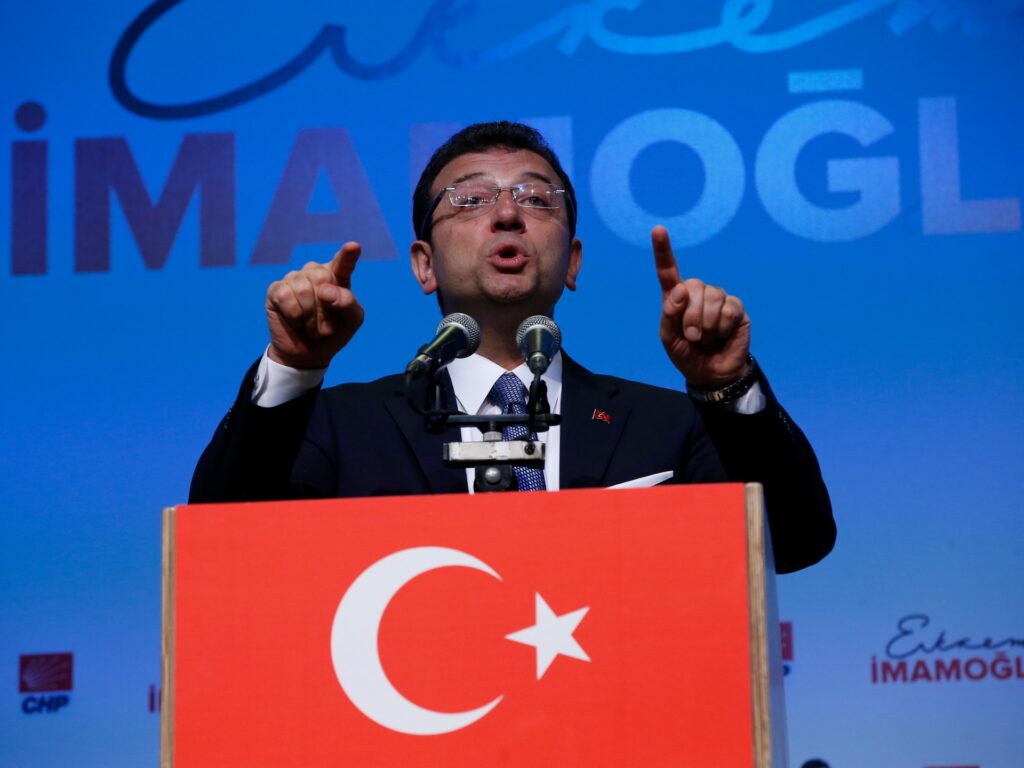
Detained Istanbul Mayor Ekrem Imamoglu has denied “terrorism” charges brought against him, according to a court document seen by the Reuters news agency “I see today during my interrogation that I and my colleagues are faced with unimaginable accusations and slanders,” Imamoglu said Saturday in his defence during a hearing, the document showed. Later on Saturday, Imamoglu arrived at the Caglayan courthouse, where he was to be questioned by prosecutors, a spokesman for city hall said. Imamoglu will appear in court on Sunday as a judge is expected to decide whether to jail or release him. The mayor, a key opposition figure and potential challenger to longtime President Recep Tayyip Erdogan, was detained on Wednesday by the government for alleged corruption and “terrorism”. His detention came four days before his Republican People’s Party (CHP) planned to name him as its 2028 presidential candidate. Erdogan on Saturday accused the CHP’s leadership of turning the party “into an apparatus to absolve a handful of municipal robbers who have become blinded by money.” Advertisement He also accused it of “doing everything to disturb the public peace, to polarize the nation.” Court appearance Reporting from Ankara, Al Jazeera’s Stefanie Dekker said Imamoglu is going to be moved from police custody to judicial custody on Saturday. “We understand he will have a health check along with 100 or so others who are charged too, and then he will be transferred to the courthouse. So he will be questioned by a prosecutor later tonight,” she said. “Then tomorrow morning, he appears before a judge, and the judge will make a ruling on whether … he is released without charge, released pending trial or detained pending trial,” she added. ‘Feeling of being trapped’ Imamoglu’s arrest has sparked a wave of protests that have spread within 48 hours to more than two-thirds of Turkiye’s 81 provinces, even including strongholds of Erdogan’s ruling Justice and Development Party, such as the central area of Konya and Trabzon and Rize on the Black Sea. Justice Minister Yilmaz Tunc told reporters this week that the arrests had nothing to do with the government. “Linking investigations and cases initiated by the judiciary to our President is, at best, presumptuous and inappropriate,” he said. Erdogan’s communications directorate has also said the presidency would continue to defend him against what it called an “irrational smear campaign”. Despite a ban on protests and a heavy police presence, huge crowds of protesters have taken to the streets. Turkiye saw a fourth straight night of protests on Saturday. Advertisement “The feeling of being trapped – economically, socially, politically and even culturally – was already widespread,” Kemal Can, a journalist and author of numerous books on Turkish society, told the AFP news agency. But Erdogan does still retain support in many parts of the country that trusts the government due to the country’s divisive history and current polarized environment. Imamoglu’s arrest, Can said, had sparked a strong reaction, “especially among young people worried about their future in a country where freedoms are increasingly restricted. It’s a reaction that goes well beyond Imamoglu.” Imamoglu commended the protests and said in a post on X on Saturday that they were aimed at protecting “democracy” as an “inspiration” to the world. Protest crackdown Turkish police have cracked down on protesters. Officials said 343 people have been arrested in the demonstrations so far, which have seen hundreds of thousands of people protest in Turkiye’s biggest cities in a massive show of defiance. On Saturday, detention warrants were issued for 94 suspects accused of posting “provocative” calls to protest and create public “panic”, the Turkish news agency Anadolu quoted the Istanbul chief public prosecutor’s office as saying. Police carried out simultaneous raids, detaining 56 of the suspects, and are searching for the 38 others, Anadolu reported, adding that authorities have also seized illegal drugs during searches of the suspects’ homes. The investigation against İmamoglu is part of a sweeping probe involving 106 suspects over corruption and “terror” allegations. Advertisement Adblock test (Why?)
US lifts $10m reward for major Taliban leader Haqqani
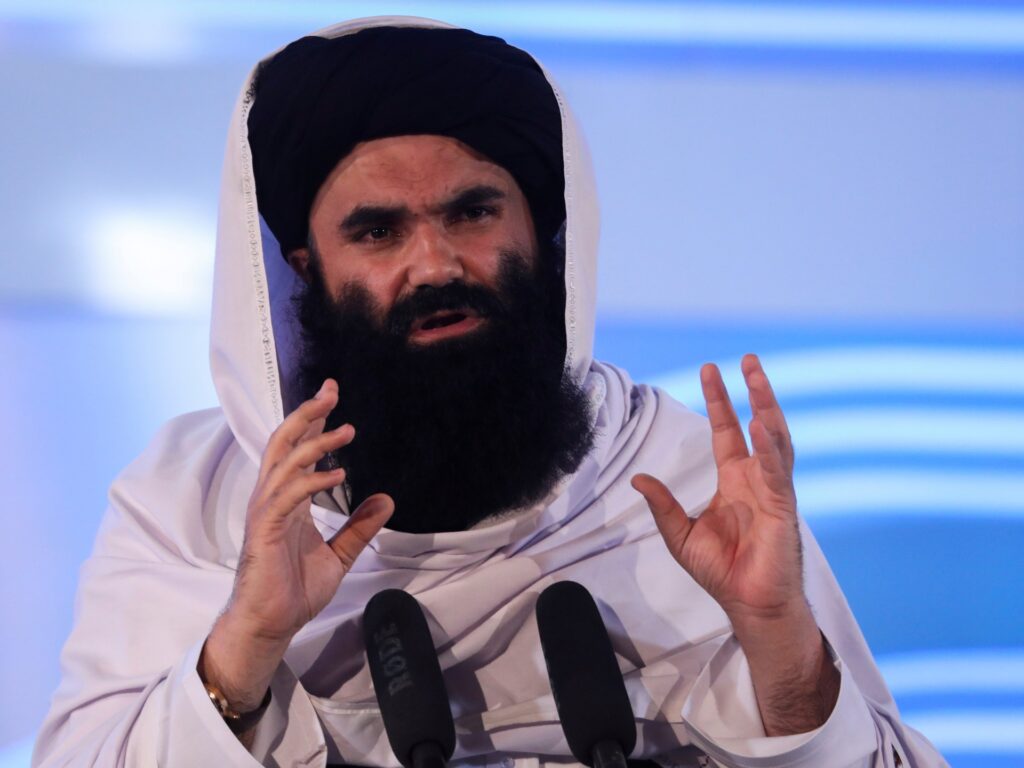
The removal of the bounty comes days after Afghan group releases US citizen. The United States has lifted a $10m reward for information leading to the arrest of a major Taliban leader, Sirajuddin Haqqani, an Afghan Ministry of Interior Affairs spokesperson says. Despite the announcement on Saturday, the FBI still lists the reward on its website, saying Haqqani was “believed to have coordinated and participated in cross-border attacks against United States and coalition forces in Afghanistan”. The move comes after the Taliban on Thursday released a US citizen who had been kept in captivity for two years. The release of George Glezmann, who was abducted while travelling as a tourist in Afghanistan in December 2022, marks the third time a US detainee has been freed by the Taliban since January. In a statement, US Secretary of State Marco Rubio said Glezmann’s release represented a “positive and constructive step”. He also thanked Qatar for its “instrumental” role in securing the release. The Taliban has previously described the release of US detainees as part of its global “normalisation” effort. Advertisement The group remains an international pariah since its lightning takeover of Afghanistan in August 2021. No country has officially recognised the Taliban government although several countries continue to operate diplomatic facilities in the country. The Taliban takeover came as former US President Joe Biden’s administration oversaw a withdrawal outlined by the first administration of President Donald Trump. The US president had negotiated with the Taliban in 2020 to end the war in Afghanistan, and he agreed to a 14-month deadline to withdraw US troops and allied forces. The agreement was contentious for leaving out the Western-backed Afghan government, which was toppled during the chaotic US exit from the country in 2021. Haqqani, the son of a famed commander from the war against the Soviets, was head of the powerful Haqqani Network, a US-designated “terror group” long viewed as one of the most dangerous armed groups in Afghanistan. It is infamous for its use of suicide bombers and is believed to have orchestrated some of the most high-profile attacks in Kabul over the years. The network is also accused of assassinating top Afghan officials and holding kidnapped Western citizens for ransom, including US soldier Bowe Bergdahl, released in 2014. Haqqani had continued to be on the US radar even after the Taliban takeover. In 2022, a US drone strike in Kabul killed then-al-Qaeda leader Ayman al-Zawahiri. The house in which al-Zawahiri was killed was a home for Haqqani, according to US officials. Advertisement Adblock test (Why?)
The livestream from Gaza’s killing fields resumes
The ceasefire brokered by President Donald Trump in January barely lived up to its name. Despite the deal, Israel continued its attacks on Gaza, killing more than 150 Palestinians in just eight weeks. The last remnants of hope were shattered as Prime Minister Benjamin Netanyahu launched one of the deadliest bombing campaigns since the genocide began – followed by a ground invasion. Israeli outlets have largely ignored the human toll while Western journalists, despite mounting criticism, remain stuck in familiar patterns of reporting. Contributors:Dalal Iriqat – Associate professor, Arab American University PalestineHaggai Matar – Executive director, +972 MagazineAssal Rad – Middle East scholar and authorNathan Thrall – Jerusalem-based writer On our radar The arrest of Istanbul’s mayor and President Recep Tayyip Erdogan’s strongest challenger, Ekrem Imamoglu, has set off a political firestorm in Turkiye. As mass demonstrations erupt nationwide and social media platforms are throttled, Meenakshi Ravi reports on one of the biggest protest waves Turkiye has seen in a decade and how it’s testing the limits of the government’s control. Advertisement Israel’s settlers: from margin to mainstream From rampaging through the occupied West Bank to setting their sights on colonising Gaza, Israel’s settlers wield more power now than ever before. Once unthinkable to many Israelis, their calls to re-establish settlements in the Gaza Strip have entered the mainstream media discussion. The Listening Post’s Nic Muirhead reports on how the Israeli media have helped catapult the settlers from the margins to the mainstream. Featuring:Hilla Dayan – Sociologist, University of AmsterdamNimrod Nir – Political psychologist, Hebrew University of JerusalemOren Ziv – Photojournalist, +972 Magazine Adblock test (Why?)