

Donald Trump signs executive order to ‘eliminate’ Department of Education
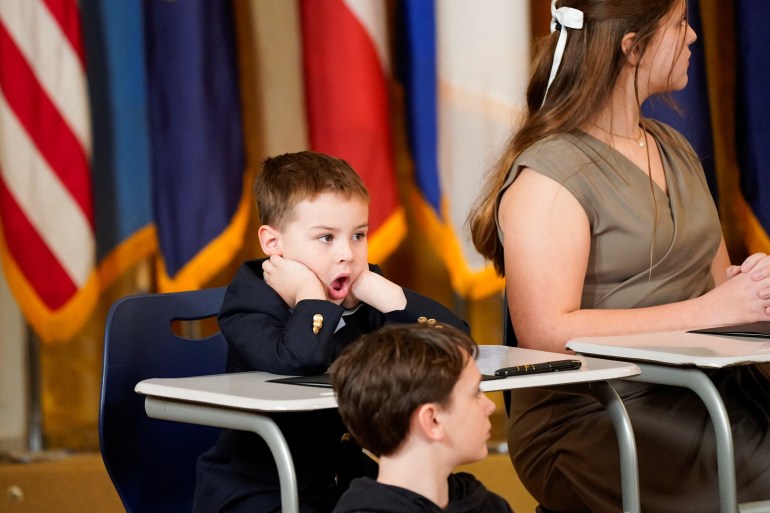
United States President Donald Trump has made good on a campaign promise to begin shuttering the Department of Education, though his efforts are likely to face court challenges and constitutional barriers. On Thursday, the Republican leader held an elaborate ceremony to sign an executive order that would set in motion the department’s demise. A semi-circle of children were arranged in desks around the president, each with their own version of the executive order to sign. When Trump uncapped his marker to sign the order, the children followed suit. When he lifted up the completed order for the cameras, so too did the kids. “I will sign an executive order to begin eliminating the Federal Department of Education once and for all,” Trump said in remarks before the signing ceremony. “And it sounds strange, doesn’t it? Department of Education, we’re going to eliminate it, and everybody knows it’s right, and the Democrats know it’s right.” But Democrats and education advocates quickly denounced the action as not only another example of presidential overreach but as an effort that would harm students across the country. Advertisement “Attempting to dismantle the Department of Education is one of the most destructive and devastating steps Donald Trump has ever taken. This. Will. Hurt. Kids,” Senate Minority Leader Chuck Schumer wrote on social media within minutes of the ceremony. The order called for Secretary of Education Linda McMahon, a longtime Trump ally, to “take all necessary steps” to facilitate the department’s closure, which must be approved by Congress. The Department of Education was founded in 1979 under President Jimmy Carter, as part of an effort to consolidate various education initiatives within the federal government. In doing so, he created a new cabinet-level position, something Republicans even then argued would leach power away from states and local school boards. The department, however, has a limited mandate. It does not set curriculums or school programming but rather focuses on collecting data on education, disseminating research, distributing federal aid and enforcing anti-discrimination measures. A child yawns during the signing of an executive order to shut down the Department of Education [Nathan Howard/Reuters] Trump bemoans test scores Still, Trump has repeatedly held the department responsible for low educational achievement in US schools, an assertion experts say is misleading. “ We’re not doing well with the world of education in this country. And we haven’t for a long time,” Trump said at Thursday’s ceremony. The US does indeed trail other countries in global standardised test scores – but it is by no means last, as Trump has sometimes asserted. Advertisement The Program for International Student Assessment (PISA), an international metric for education standards, has found that American students rank as average in their test scores: above countries like Mexico and Brazil but below places like Singapore, Japan and Canada. Test scores had declined in mathematics from 2018 to 2022, something PISA attributed to the COVID-19 pandemic. But achievements in reading and science remained stable. Trump, meanwhile, also tied the Department of Education to his broader campaign to cut alleged waste and fraud in the federal government, including through widespread layoffs. He explained from the podium on Thursday that he had offered buyout offers to Education Department employees. “ We’ve cut the number of bureaucrats in half. Fifty percent have taken offers,” Trump said to applause. He added that the employees consisted of “ a small handful of Democrats and others that we have employed for a long time – and there are some Republicans, but not too many, I have to be honest with you.” Trump has previously pledged to expel all “Biden bureaucrats” and install loyalists instead. Critics, however, say he has targeted nonpartisan civil service members with his layoffs, many of whom help maintain government stability from administration to administration. One Trump ally who risks losing their position under the department shake-up is McMahon, the former CEO of World Wrestling Entertainment. Trump, however, reassured her from the podium on Thursday that she would remain in his government: “We’re going to find something else for you, Linda.” President Donald Trump holds up a signed executive order alongside Secretary of Education Linda McMahon [Ben Curtis/AP Photo] Does Trump have the authority? Despite his executive order, Trump cannot single-handedly shutter the Department of Education. Advertisement Only Congress can formally shut down a cabinet-level department. But already, Republicans like Senator Bill Cassidy of Louisiana have stepped forward to begin legislative proceedings. “I agree with President Trump that the Department of Education has failed its mission,” Cassidy said in a news release. “Since the Department can only be shut down with congressional approval, I will support the President’s goals by submitting legislation to accomplish this as soon as possible.” But if such legislation is introduced, it would likely not generate enough support to reach the threshold of 60 votes needed to overcome the filibuster in the 100-seat Senate. “The Republicans don’t have that,” said Al Jazeera correspondent Shihab Rattansi, reporting from Washington, DC. The Republicans only have a 53-seat majority. Still, Rattansi predicts the issue will likely end up before the Supreme Court, as education advocates prepare to mount legal challenges. The Education Department, Rattansi explained, “is thought of as relatively low-hanging fruit” as the Trump administration tries to expand its executive reach. “They have a very expansive view of executive power. They want to test that in court,” he said. Part of the reason for its vulnerability is that the department is relatively young: It was founded within the last half-century. But Rattansi warned that critical educational functions could be lost or suspended while legal challenges wind their way through the court system. “What the Department of Education does is ensure equal access to education for minorities, for poor kids, for disabled children, and so on. So there’s that extra level of oversight that will now be – potentially, in the short term – removed as court cases are fought,” he said. Advertisement “In the long term, though, this is all about testing the limits of
Georgetown researcher arrest escalates Trump speech crackdown, scholars say
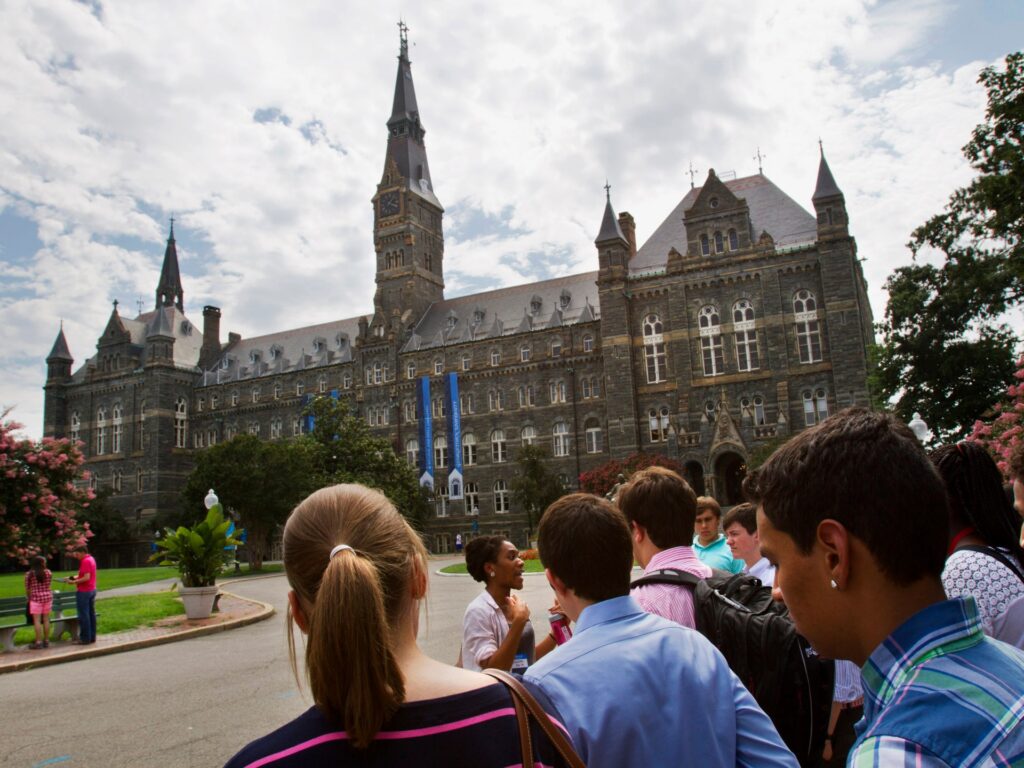
Washington, DC – Nader Hashemi, a professor of Middle East and Islamic politics at Georgetown University, has been a vocal critic of efforts to silence pro-Palestine protesters and academics amid Israel’s war in Gaza. Those efforts reached new heights under the administration of President Donald Trump, which last week took the extraordinary measure of detaining and seeking to deport Columbia University student Mahmoud Khalil, a permanent resident married to a US citizen. Then, immigration authorities came for one of Hashemi’s own students. Earlier this week, agents detained Badar Khan Suri, a postdoctoral fellow at Georgetown’s Prince Alwaleed bin Talal Center for Muslim-Christian Understanding, which Hashemi directs. “It’s shocking, and it sort of confirms our worst fears that authoritarian repression on American universities is expanding under the Trump administration,” said Hashemi. Civil liberties groups and rights observers have decried — and challenged — Khalil’s attempted deportation, which Hashemi and other observers describe as an extension of the anti-Palestinian bias in the US government. Advertisement That has often involved conflating anti-Jewish sentiment and support for Hamas, which the US categorises as a “terrorist organisation”, with statements criticising Israeli military action or support for Palestinians, they say. But Hashemi and his colleagues see the targeting of Suri, who is in the US on a student visa, as going a step further, given that he was detained not for public protests but for his alleged personal views. Khaled Elgindy, a visiting scholar at Georgetown who focuses on Palestinian-Israel affairs, said the Trump administration’s enforcement efforts appear to be entering “a different realm with this case”, extending beyond student visa holders and US residents sanctioned for their protest activity. “This person seems to have been targeted, not for his activism,” he said, “but simply for being suspected of holding certain views.” ‘Adverse foreign policy consequences’ For its part, the US Department of Homeland Security on Wednesday confirmed that Secretary of State Marco Rubio had approved Suri’s deportation. Spokesperson Tricia McLaughlin said Rubio made the determination by citing the same law used to justify the attempted deportation of Khalil. It is a provision of the 1952 Immigration and Nationality Act that gives the secretary of state power to remove any non-citizen whose presence in the US is deemed to have “adverse foreign policy consequences”. McLaughlin accused Suri of “actively spreading Hamas propaganda and promoting antisemitism on social media”, without providing further details. The Department of Homeland Security did not respond to a request for further information from Al Jazeera. Advertisement She also said Suri “has close connections to a known or suspected terrorist, who is a senior adviser to Hamas”. On Wednesday, Suri’s wife, Mapheze Saleh, confirmed to Al Jazeera that she is a US citizen. Meanwhile, Ahmed Yousef, a former adviser to assassinated Hamas political leader Ismail Haniyeh, confirmed to The New York Times that Suri was his son-in-law. Yousef told the newspaper he had left his position in the political wing of Hamas over a decade ago and has publicly criticised the group’s decision to attack Israel on October 7, 2023. He said that Suri was not involved in “political activism”, much less support for Hamas. Suri has roundly rejected the allegations against him, his lawyer, Hassan Ahmad, told US media. His legal team, which includes the Virginia office of the American Civil Liberties Union (ACLU), has filed a petition at the US District Court for the Eastern District of Virginia seeking his release. He remained at a US Immigration and Customs Enforcement detention centre in Louisiana on Thursday. In a statement on Wednesday, Georgetown University also said it supports its community members “rights to free and open deliberation and debate, even if the underlying ideas may be difficult, controversial or objectionable”. Meanwhile, the Alwaleed Center issued a passionate defence of Suri on Thursday, saying he has become the victim of a “campaign by the Trump Administration to destroy higher education in the United States and punish their political opponents”. Advertisement ‘Direct threat to learning’ Both Suri and his wife Saleh had previously been singled out by “Campus Watch”, a project out of the Middle East Forum that says it “reviews and critiques Middle East studies in North American universities”. Critics have accused the project of being a tool to silence criticism of Israel in higher education. Hashemi, meanwhile, described Suri as a “very respected and serious academic”. “In many ways, [Suri] was the exact opposite to Mahmoud Khalil, in the sense that he was not an organiser or a leader. He was simply a researcher and postdoctoral fellow at our centre,” Hashemi said, “who was just working on themes of minority rights, majoritarianism and the problem of authoritarianism.” Elgindy, meanwhile, said the Trump administration continues to embrace a “dangerous conflation” when it comes to complex discussions of Palestinian rights and resistance. “Really any expression of solidarity with Palestinians or criticism of Israel is deemed in and of itself, to be both anti-Semitic and inherently supportive of terrorism and Hamas,” he said. Elgindy described a “genuine atmosphere of fear” when it comes to open academic debate on the complex realities that define the Israel-Palestine conflict. “It really cuts to the heart of academic freedom — if people have to censor themselves, if students are afraid to ask certain questions or raise certain points because maybe someone in the class is recording and is going to share with some of these extremist groups out there that have been doxxing students,” he said. Advertisement “The intent is to chill debate and to make people second guess whether they should express certain views at all.” A ‘blatant attack’ On Thursday, Congressman Don Beyer, who represents northern Virginia, also weighed in on Suri’s detainment, calling it a violation of his right to “due process” and a “blatant attack on the First Amendment”, referring to the US Constitution’s protections for freedom of speech. His statement offered a preview of the principles likely to be raised in federal courts. The Trump administration has taken the broad position that those
Trump orders increased minerals production, says Ukraine deal coming soon
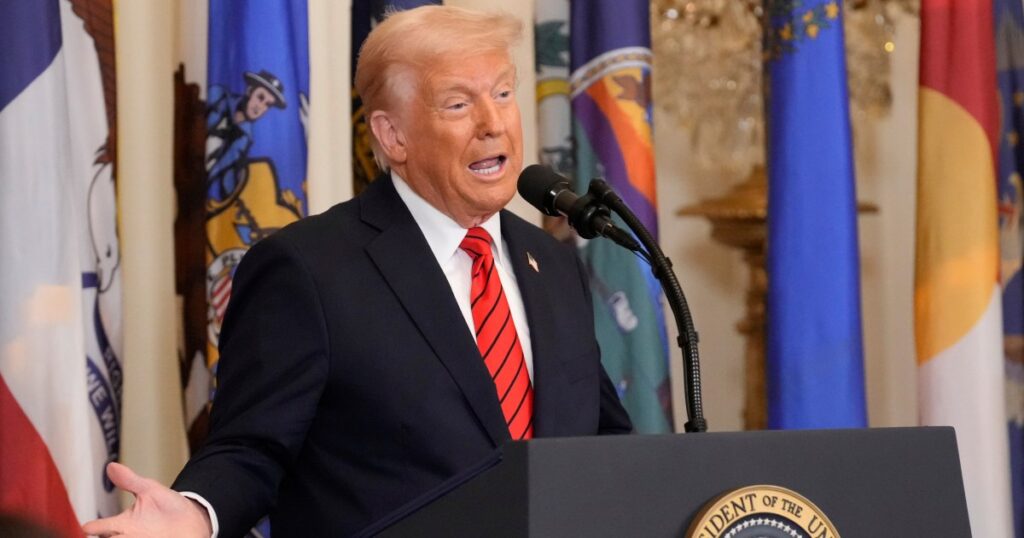
US president invokes wartime powers to boost production of rare earths and other critical minerals. United States President Donald Trump has said his administration will sign a rare earths deal with Ukraine “very shortly,” after invoking wartime powers to boost domestic production of critical minerals. In an address at the White House on Thursday, Trump said his administration was forging agreements in “various locations” to gain access to rare earth minerals, which are used in the manufacturing of electronics, batteries and magnets, among other items. “One of the things we are doing is signing a deal very shortly with respect to rare earths with Ukraine … They have tremendous value in rare earths, and we appreciate that,” Trump said. Trump made the remarks shortly after signing an executive order directing federal agencies to identify mines and government-owned land that could be exploited to boost the production of critical minerals. The order invokes powers contained in the Defense Production Act, a Korean War-era law that grants Washington sweeping authority to mobilise industrial resources in the service of national security. Advertisement The US and Ukraine had been due to sign a deal granting Washington access to Kyiv’s natural resources until a public bust-up between Trump and Ukrainian President Volodymyr Zelenskyy last month derailed the plan. Zelenskyy said earlier this month that his government was “ready to sign” a rare earths deal despite the tense exchange with Trump at the White House, but he wanted the “Ukrainian position to be heard.” Trump has pushed Kyiv to grant Washington access to its natural resources as part of his administration’s efforts to bring a swift end to the war in Ukraine. Zelenskyy on Wednesday said Kyiv had agreed to a US proposal to pause attacks on energy infrastructure, a day after Russian President Vladimir Putin accepted the plan. In his remarks at the White House on Thursday, Trump said his administration’s efforts to reach a peace deal were going “pretty well”. “So hopefully we can save thousands of people a week from dying. That’s what it is all about,” he said. “They’re dying so unnecessarily. Adblock test (Why?)
Japan first team to qualify for 2026 World Cup after victory over Bahrain

Japan ensure a top two finish with 2-0 win against Bahrain in Group C of Asia qualifiers for 2026 World Cup. Japan became the first team to qualify for the 2026 World Cup after beating Bahrain 2-0 at Saitama Stadium. Second-half goals from Daichi Kamada and Takefusa Kubo ensured the Samurai Blue secured a spot in Asia Group C’s top two automatic qualification places. At its eighth straight World Cup, Japan joins co-hosts the United States, Canada and Mexico in the expanded 48-team tournament. “Thanks to the players for their efforts and the fans for their support,” Japan coach Hajime Moriyasu said. “We knew that if we persevered that the goals would come. We will try and win our three remaining games and grow as a team.” Japan players celebrate with coach Hajime Moriyasu after qualifying for the 2026 World Cup [Kim Kyung-Hoon/Reuters] Earlier, second-place Australia took a big step toward a seventh appearance by defeating Indonesia 5-1 in Sydney in the visitors’ first game under new coach Patrick Kluivert. Indonesia’s Kevin Diks missed a penalty in the eighth minute, and 10 minutes later Martin Boyle converted his spot kick to put the Socceroos ahead. Advertisement Nishan Velupillay and Jackson Irvine scored before the break and Lewis Miller made it 4-0 on the hour. Ole Romeny scored for Indonesia before Irvine grabbed his second and the hosts’ fifth. The top two from each of the three six-team groups in the third round of Asian qualifying advance to the World Cup, while the third- and fourth-place teams advance to another stage to compete for two more places. Adblock test (Why?)
Denmark beat sorry Portugal 1-0 in Nations League quarterfinal first-leg
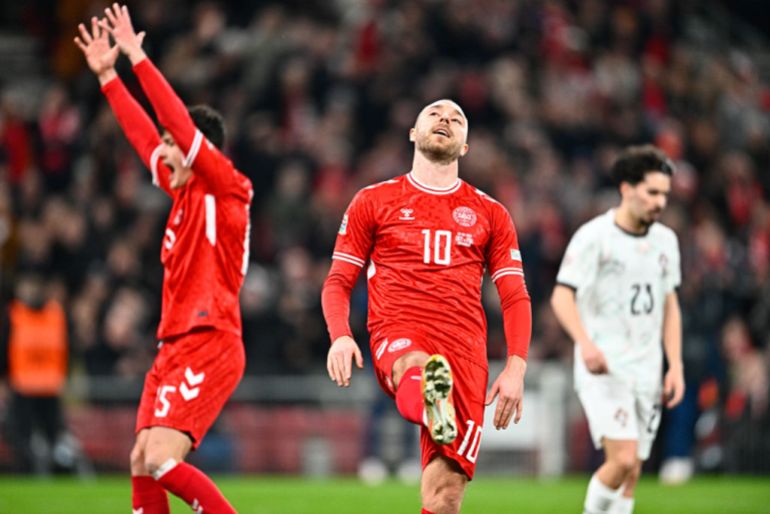
Hojlund came off the bench to net the winner as his side beat Portugal 1-0 in the first leg of their Nations League quarterfinal. Rasmus Hojlund earned Denmark a deserved 1-0 lead over Portugal in their Nations League quarterfinal first-leg clash. The Manchester United forward delivered from the bench to split the teams in Copenhagen on Thursday, providing the finishing touch Denmark previously lacked on a night where they dominated Roberto Martinez’s side. The Spanish coach selected veteran Cristiano Ronaldo, 40, upfront, but the Al Nassr striker was mostly frozen out of the game. Winners of the inaugural tournament in 2019, Portugal are aiming to become the first team to lift the Nations League trophy for a second time. However, they will need to improve swiftly to reach the semifinals as Denmark outclassed them and could have scored more on the night. Looking for their first win under coach Brian Riemer, who was appointed in October, the Danes were without injured captain Pierre-Emile Hojbjerg. Denmark piled on the pressure from the start, with debutant Mika Biereth charging down Diogo Costa’s clearance, but the goalkeeper managed to escape by conceding only a corner. Advertisement Jesper Lindstrom forced Costa into action again with an effort from a distance, while Pedro Neto tested Kasper Schmeichel at the other end. The hosts won a penalty when Portugal defender Renato Veiga handled the ball but Costa produced a superb save to deny Christian Eriksen. The Porto goalkeeper, an expert in saving spot kicks, dived low to his right to thwart the Manchester United midfielder. Eriksen looks dejected after missing a penalty [Michael Barrett Boesen/GocherImagery/Future Publishing via Getty Images] Costa made another stunning save from Biereth to keep his team level, as Denmark turned the screw. When the hosts finally beat Costa, Diogo Dalot was in the right place at the right time to clear Eriksen’s effort off the line just before the break, after good work by Gustav Isaksen. Riemer’s side stayed on top in the second half, with Costa saving an Eriksen free kick, although Vitinha came close for Portugal, who showed occasional flashes of their quality on an otherwise lethargic display. Isaksen, a constant menace for Denmark, had a shot deflected behind as Denmark started to fear their dominance would not translate into a lead. However, Hojlund, on as a substitute, had other ideas. The striker, who ended a long Manchester United drought last weekend by scoring in his team’s win at Leicester City, broke the deadlock by slotting home to cap a fine move. Eriksen spread the ball to another substitute, Andreas Skov Olsen, who picked out Hojlund with a low ball to finish coolly in the 78th minute. Advertisement Portugal’s Bernardo Silva, making his 99th appearance for his country, had a penalty appeal late on waved away after falling under pressure from Patrick Dorgu in the box, and Schmeichel saved from Neto in the final stages. Portugal host Denmark in the second leg in Lisbon on Sunday, with the winner playing either Germany or Italy in the semifinal. Germany came from behind to defeat Italy 2-1 at the San Siro on Thursday in the first leg of their Nations League quarterfinal, with Leon Goretzka heading the winning goal 14 minutes from time. European champions Spain salvaged their two-year unbeaten streak in the dying minutes of their quarterfinal first leg, denying 10-man Netherlands a famous victory with a 2-2 draw. Mikel Merino broke Dutch hearts in the third minute of added time, to maintain an unbeaten run that now stretches to 22 competitive games. Meanwhile, Ivan Perisic scored one goal and made another as Croatia beat France 2-0 on Thursday to seize the upper hand in the first leg of their quarterfinal tie. Adblock test (Why?)
Ukraine, Russia confirm talks with US officials in Saudi Arabia next week
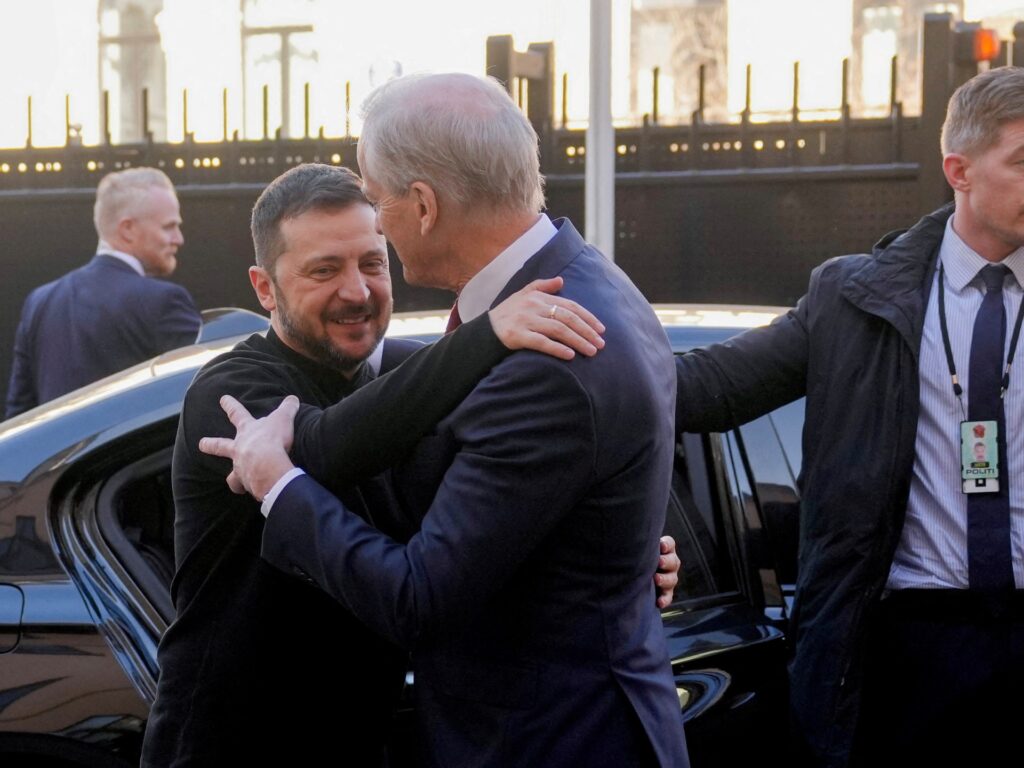
Talks on a United States proposal for a partial ceasefire in Ukraine are set to resume on Monday in Saudi Arabia, Ukrainian and Russian officials have confirmed. Speaking at a news conference in Oslo on Thursday, Ukraine’s President Volodymyr Zelenskyy said the structure of the meetings scheduled for Monday would see US officials meeting with Ukrainian experts and then holding separate talks with Russian representatives. “There will be a meeting of Ukraine and America and then some shuttle diplomacy, as our American colleagues said, America with Russia,” he told reporters after a meeting with Norwegian Prime Minister Jonas Gahr Store. Yuri Ushakov, a top foreign policy aide to President Vladimir Putin, confirmed that bilateral talks between Russian and US officials would be taking place on Monday in Riyadh, adding they would focus on the safety of shipping in the Black Sea. Russia will be represented by Grigory Karasin, a former diplomat who now chairs the Federation Council Committee on Foreign Affairs, and Sergei Beseda, an adviser to the director of the Federal Security Service (FSB). Advertisement Kremlin spokesman Dmitry Peskov said when Putin and US President Donald Trump spoke by telephone on Tuesday, they had discussed the “Black Sea Initiative”. Following the call, the White House had issued a statement saying the leaders agreed to technical negotiations on the implementation of a maritime ceasefire in the Black Sea, a full ceasefire and permanent peace. Limited ceasefire Following separate phone calls with US President Donald Trump this week, the Ukrainian and Russian leaders both agreed in principle to a pause in attacks on energy infrastructure. Zelenskyy said on Thursday that although he originally had sought a broader ceasefire, he was committed to working with the US to stop arms being directed at power production and civilian facilities. The previous day, he had signalled that he intended to include not only energy targets, but also rail and port infrastructure in a list of facilities he would want to see included in the partial ceasefire. On Thursday, he stated he would not discuss potential US ownership of Ukraine’s Russia-occupied Zaporizhzhia nuclear power plant with Trump, after US officials said Washington could take over. The plant, caught in the crossfire since Moscow seized it after invading Ukraine in 2022, is a significant asset, producing nearly a quarter of Ukraine’s electricity in the year before the war. Asked about reports that Trump was considering recognising Russian-occupied Crimea as part of Russia, Zelenskyy said the US president had not raised the issue with him during their call. Advertisement The Kremlin has repeatedly said Crimea, where Russia’s Black Sea Fleet is based, is formally part of Russia. The Black Sea peninsula is internationally recognised as Ukrainian territory by most countries. Peacekeeping talks In London, Prime Minister Keir Starmer hosted a meeting of Western military officials on Thursday to flesh out plans for an international peacekeeping force for Ukraine as details of a partial ceasefire are worked out. Starmer and French President Emmanuel Macron, co-leaders of efforts to form the so-called “coalition of the willing”, have said they are willing to deploy peacekeepers in Ukraine following any full ceasefire between Moscow and Kyiv – an idea Russia has vehemently rejected. Macron has also said he would open a discussion on extending France’s nuclear umbrella to the entire European Union. Russia’s Sergei Shoigu, secretary of the Security Council, said on Thursday that such statements “reflect the anti-Russian sentiment that reigns in Europe today”. Kremlin spokesman Dmitry Peskov accused Europe of turning into a “war party”. “For the most part, the signals from Brussels and European capitals concern plans to militarise Europe,” he said. Moscow also took aim at Berlin, after chancellor-in-waiting Friedrich Merz proposed a huge spending boost on defence and said Moscow was waging a “war of aggression against Europe”. Foreign Ministry spokeswoman Maria Zakharova said the comments were a reflection of the “German political elites’ desire for historical revenge”. Advertisement EU summit While in Oslo, the Ukrainian leader addressed a summit of EU leaders in Brussels, which saw all member nations bar Hungary signing a joint statement backing Ukraine. Speaking by videolink, Zelenskyy said it was “simply anti-European when one person blocks decisions that are important for the entire continent”, referring to Hungarian Prime Minister Victor Orban’s repeated opposition to EU support for Ukraine. Zelenskyy also urged EU leaders to approve a package of at least 5 billion euros ($5.4bn) for artillery purchases for Ukraine and called for continued pressure on Russia. Adblock test (Why?)
Will diplomacy end the conflict in eastern DRC?
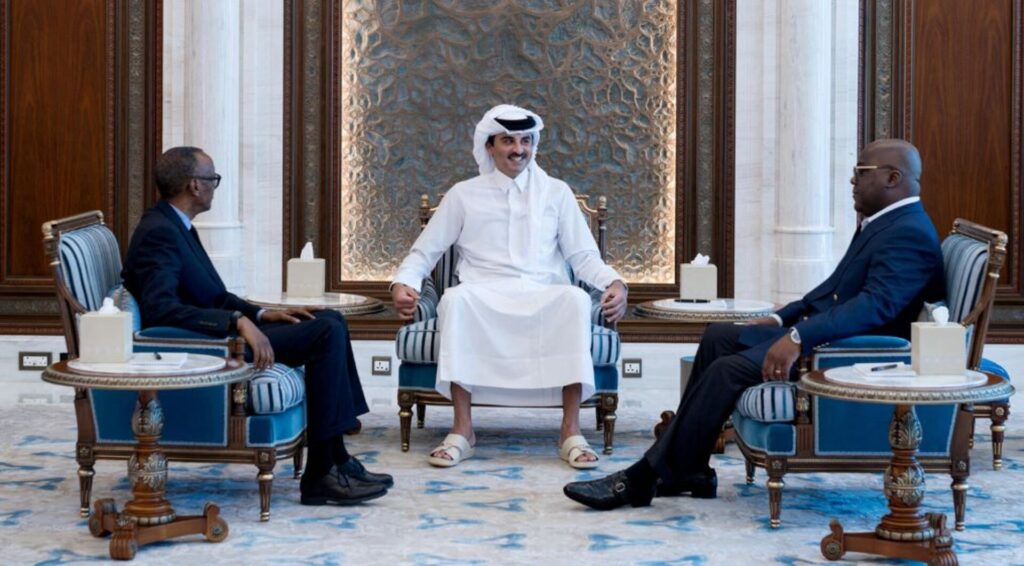
Congolese and Rwandan leaders called for a ceasefire after holding direct talks in Qatar. The eastern Democratic Republic of the Congo (DRC) has been in a state of conflict since the late 1990s. The Rwandan-backed armed group M23 has been making gains this year after taking control of major cities in the east. The rebels were due to meet with DRC government officials in Angola on Tuesday. But M23 rebels withdrew – blaming new European Union sanctions for their decision. On Wednesday, DRC’s President Felix Tshisekedi and Rwanda’s President Paul Kagame held talks in Doha. The leaders called for an immediate ceasefire in eastern DRC. So, what does all this mean for the conflict? Presenter: James Bays Guests: Fidel Amakye Owusu – Chief executive officer for DefSEC Analytics Africa Angela Muvumba Sellstrom – Senior researcher at the Nordic Africa Institute Alex Vines – Director of the Africa Programme at Chatham House Adblock test (Why?)
Missiles from Yemen target Israel despite US threats

NewsFeed At least two missiles launched from Yemen triggered warning sirens in Israel and the occupied West Bank on Thursday. The Israeli military says both were intercepted. The Houthis claimed responsibility for at least one of them and have said they will increase attacks in response to US strikes on Sanaa. Published On 20 Mar 202520 Mar 2025 Adblock test (Why?)
Thousands mourn victims of North Macedonia nightclub fire
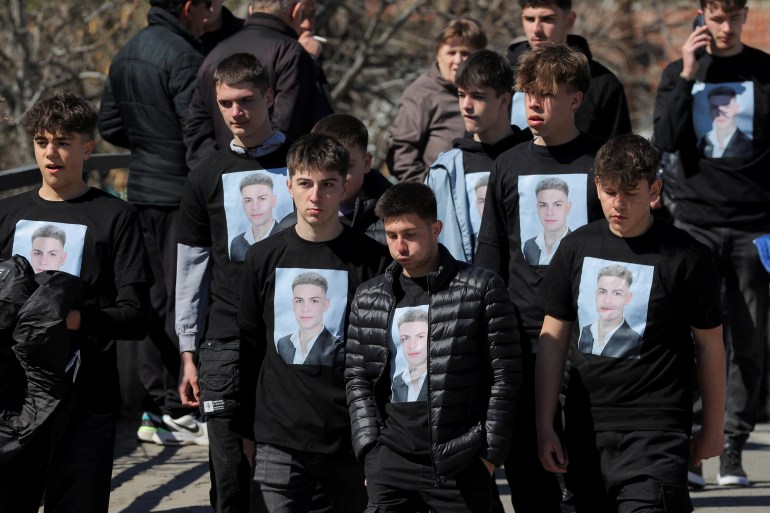
Ceremonies held across the country, but main funeral was in Kocani, where 30 victims were buried. Thousands of mourners have flocked to funerals in North Macedonia for the dozens of victims of last weekend’s devastating nightclub fire. The fire broke out during a concert by the hip-hop duo DNK at the Pulse nightclub in the town of Kocani about 3am (02:00 GMT) on Sunday when sparks from flares set the ceiling alight. At least 59 people were killed and 155 were injured in the fire, triggering an outpouring of grief in the Balkan country. Burials were held in several cities and towns, but the main funeral was in Kocani, a town of about 25,000 people located 100km (62 miles) east of the capital Skopje, where 30 of the victims were buried. Thousands of mourners walked solemnly along dirt paths to newly dug graves marked with paper signs. Many carried baskets of white flowers or clutched photographs of their loved ones. Many wore T-shirts and badges with pictures and names of the deceased. People attend a funeral ceremony for the victims of a fire at the Pulse nightclub, in the town of Kocani, North Macedonia [Valdrin Xhemaj/Reuters] Several people overcome by grief required medical attention. A weeping man rested his head on the edge of one of the coffins. Advertisement Ana Kostadinovska, a backing vocalist for the band DNA, who survived the fire, wrote in an online post: “A part of my second family has left. Along with them, my soul. “All that remains is ashes and emptiness … and who would have thought that emptiness could hurt so much,” she wrote. The fire, and emerging stories of the harrowing scenes at the nightclub, have triggered an outpouring of grief and protests, led mostly by young people. Thursday’s religious service at the cemetery in Kocani was led by clergy from the country’s Orthodox Church, while Red Cross and emergency personnel were present to support grieving families. Workers prepare graves for a funeral ceremony at a cemetery, following a fire at Pulse nightclub that resulted in dozens of deaths, in the town of Kocani, North Macedonia [Valdrin Xhemaj/Reuters] Before the funerals, the country’s spiritual leader, Orthodox Archbishop Stefan, called for national unity in prayer for the victims and their families. “We pray constantly for the salvation of the innocent victims, holding memorial services for the deceased and offering prayers for the healing of the injured, as well as for the comfort of their families and loved ones,” he said. “National solidarity and unity are most needed in such difficult times,” he added. “We call on all the faithful to preserve peace within ourselves and peace among ourselves, and, praying diligently, to mourn with dignity.” Stefan presided over the Kocani funerals. Separate funeral services took place in the capital, Skopje, and five other towns – several neighbouring Kocani – where many businesses closed as a sign of respect. Advertisement Public tributes were also made for Ile Gocevski, a Kocani ambulance driver who died of apparent heart failure after completing 11 hospital runs on the night of the fire. Families and friends attend a joint funeral for the victims of the fire that erupted at the Pulse nightclub in the town of Kocani, North Macedonia [Fatos Bytyci/Reuters] The investigation into the tragedy continues to widen. Seven police officers are among more than 20 people detained as authorities probe the lack of fire safety measures at the Pulse nightclub, as well as allegations that the club’s permits had been obtained illegally. Health Minister Arben Taravari said 72 people remain hospitalised across the country, while 101 patients are receiving treatment abroad. He described the condition of those being treated for burns, smoke inhalation, and trampling injuries as “stable or improved”, easing earlier concerns that the death toll could rise further. The ministry on Thursday released the names of the 59 victims. They included 41 who were in their 20s or younger and three 17-year-olds. Adblock test (Why?)
Netanyahu never planned to “Abandon Gaza Militarily”
[unable to retrieve full-text content] Netanyahu on Gaza