

Israel targeting West Bank refugee camps is ethnic cleansing, analyst
[unable to retrieve full-text content] Israel’s targeting of refugee camps to “end the Palestinian refugee issue” is part of plans to ethnically cleanse.
‘Lunatic’: Trump’s long history of abusing judges who oppose him
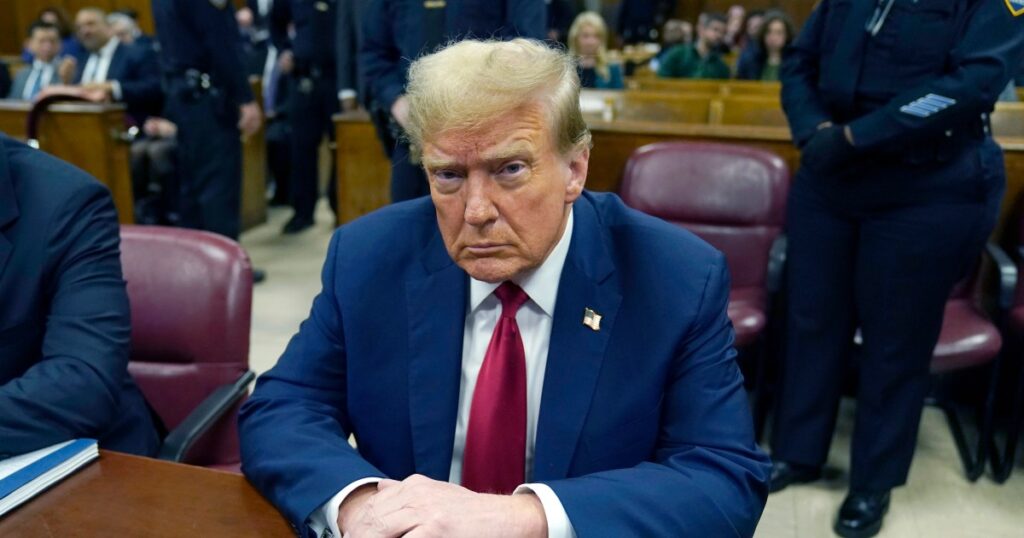
United States President Donald Trump has doubled down on his criticism of a federal judge, calling him “radical left” for blocking the deportation of Venezuelan migrants, as his administration ramps up rhetoric against the courts. Trump on Tuesday called for the impeachment of Judge James Boasberg, accusing him of putting the US at risk. “We don’t want vicious, violent, and demented criminals, many of them deranged murderers, in our country,” Trump posted on Truth Social on Tuesday. Boasberg, who serves in the federal district court in Washington, DC, has come under attack since he issued an order to block deportation flights on Saturday. The Trump administration has been accused of ignoring Boasberg’s orders by sending several planes carrying Venezuelan migrants to El Salvador prisons notorious for rights abuses. Trump has invoked the Alien Enemies Act of 1798, an obscure law meant to target nationals from an enemy nation during wartime. The courts have blocked several of Trump’s executive orders amid little resistance from the Republican-controlled Congress, attracting the wrath of the officials. Advertisement Attorney General Pam Bondi accused the judge of “meddling in our government” while White House Press Secretary Karoline Leavitt believes judges are acting as “judicial activists”. The US president on his part called Boasberg a “radical left lunatic” “appointed by [former president] Barack Hussein Obama”. Supreme Court Chief Justice John Roberts has criticised calls to impeach Judge Boasberg, but that has not stopped Trump from attacking the judge. The US president lashed out at Roberts as well, suggesting the Supreme Court itself was compromised by political bias. The latest rhetoric is just one in a series of attacks Trump has launched against judges and courts who challenge his policies or hold him accountable in cases brought against him. Why have Trump and officials from his administration clashed with the judiciary? There’s a troubling pattern of Trump attacking judges and courts in the past. Let’s take a look. A pattern of attacks? Trump’s contempt for the courts predates his presidency but reached new levels during his time in office. Usually, if a ruling went against him, the judge was deemed by Trump biased, incompetent, or part of a left-wing conspiracy. One of the earliest examples came in 2016 when Trump, then a presidential candidate, attacked US District Judge Gonzalo Curiel, who was overseeing fraud lawsuits against his now-defunct Trump University. Trump suggested Curiel was unfit to preside over the case because of his Mexican heritage, calling him a “hater” and implying he could not be fair due to Trump’s hardline stance on immigration. The attack drew widespread condemnation. Advertisement Once in the White House, Trump continued to fight the judiciary. In 2017, when Judge James Robart issued a temporary block on his travel ban targeting Muslim-majority countries, Trump labelled him a “so-called judge” and accused him of endangering national security. In 2018, Trump dubbed Judge of the US Court of Appeals for the Ninth Circuit Jon Tigar “an Obama judge” after he ruled that an immigrant could claim asylum regardless of where she entered the country. The same year, Trump attacked the judiciary after an appeals court in California blocked his administration from deporting young immigrants shielded under an Obama-era programme. Trump did not hesitate to also target the Supreme Court when it ruled against him. He was incensed when the court rejected his attempts to overturn the 2020 election results. Trump continues to believe that his 2020 presidential election was stolen. In particular, he turned against Chief Justice Roberts, calling him “disgraceful” and “a disappointment”. Did his attacks against the judiciary go up after the end of his first term? As Trump’s legal troubles mounted after his presidency ended in 2020, his attacks on judges became even more personal. Facing multiple indictments ranging from election interference to business fraud, Trump often took to social media to condemn judges overseeing his cases. In his New York civil fraud case, where he was found liable for boosting his net worth, Trump called Judge Arthur Engoron “unhinged” and a “Trump-hating, radical left, Democrat operative”. He mocked his law clerk on social media, saying he was “politically biased and corrupt”, prompting a gag order. Advertisement Despite the restriction, Trump did not hold back. In his federal election interference case, presided over by Judge Tanya Chutkan, Trump labelled her “highly partisan”, “very biased and unfair”, and suggested she was out to get him. His verbal assaults led prosecutors to argue that his rhetoric was endangering the judicial process and potentially inciting threats against judges and court staff. Chutkan had warned Trump against making any “inflammatory statements” before the first hearing. “Your client’s defence is supposed to happen in this courtroom, not on the internet,” Chutkan told Trump’s lawyers, adding that the more anyone made “inflammatory” statements about the case, the greater her urgency would be to quickly move the case to trial. Trump also attacked liberal Supreme Court justices, particularly Sonia Sotomayor and Ruth Bader Ginsburg. In 2020, Trump demanded that both judges “recuse” themselves from cases involving him, accusing them of bias, particularly after Sotomayor criticised the Trump administration’s frequent appeals to the top court to intervene in lower-court decisions. Trump took to Twitter, which later became X, calling remarks by Sotomayor “highly inappropriate”. His animosity towards Justice Ginsburg was even more pronounced. Before her passing in 2020, Ginsburg had publicly criticised Trump during his 2016 campaign, calling him a “faker” and expressing concern over his presidency. Trump fired back, calling her a “disgrace” to the court and demanding she resign. After her death, he faced backlash for quickly nominating a conservative replacement, Amy Coney Barrett. Advertisement In 2020, Trump attacked Judge Amy Berman Jackson over the conviction of his long-term aide Roger Stone in a witness tempering case. He said Stone’s jury was “tainted’ with anti-Trump bias. The case symbolised political meddling in high-profile cases as Trump used social media to question the judiciary’s fairness. Stone was pardoned in December 2020 at the end of Trump’s first term. Trump’s
1-year-old among victims of Israel’s indiscriminate bombing of Gaza
[unable to retrieve full-text content] Video shows a Palestinian father’s last moments with his child after his pregnant wife and 1-year-old son were killed.
In Yemen’s Sanaa, fear and defiance after US bombs
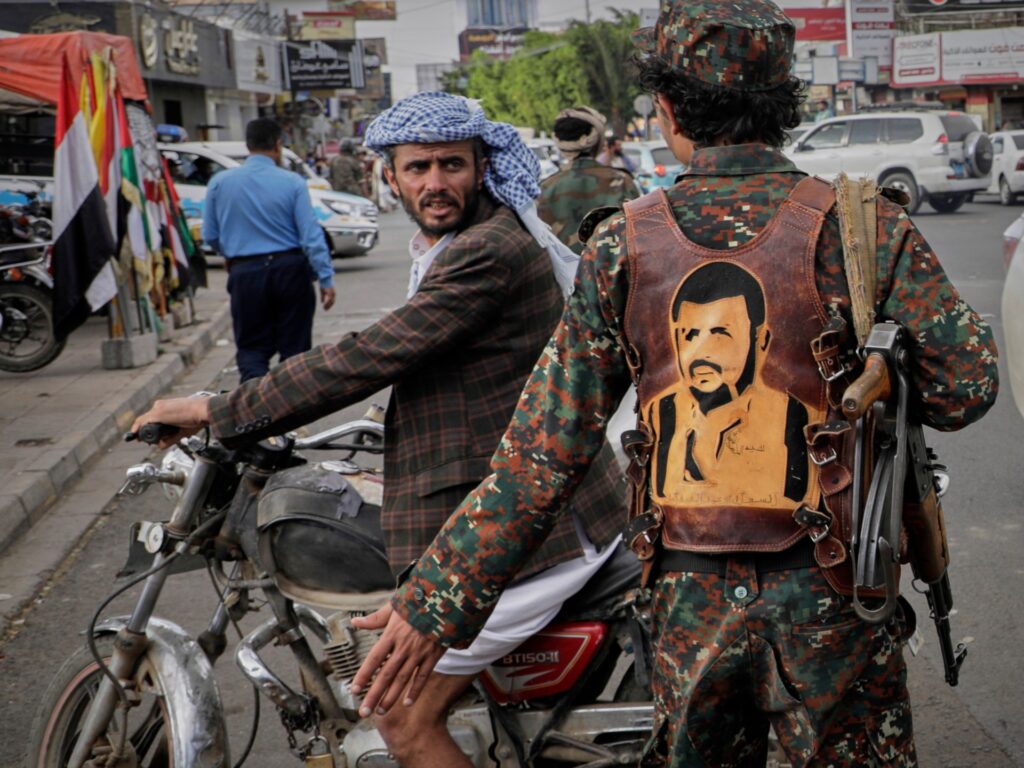
Sanaa, Yemen – Mukhtar Ahmed was riding his bike in northern Sanaa’s al-Jiraf area when the ground trembled beneath him. Thunderous explosions echoed through the air, followed by the sound of terrified screams. It was Saturday just after sunset, a time when people were home for iftar during the holy month of Ramadan “I got off the bike and darted towards an alley. I thought it would be impossible to survive,” the 26-year-old restaurant delivery courier told Al Jazeera. “The sheer terror of those explosions could kill.” Mukhtar had no idea what had caused the deafening roar heard across Yemen’s densely populated capital. But he later came to realise, the United States was bombing Yemen. A wave of American air strikes had killed more than 50 people. The bombs pounded the vicinity of the political office of the Houthi rebel group (officially known as Ansar Allah), the de facto rulers of Yemen’s populous northwest. It marked the beginning of an ongoing US bombing campaign that may usher in a new phase of war and instability for Yemen. Advertisement Who can stop the US? On March 7, a week before the US strikes began, the Houthis gave Israel a four-day deadline to lift its blockade on the entry of humanitarian aid to the Gaza Strip. If it did not, the Yemeni group promised to resume attacking Israel-linked ships in the Red Sea in solidarity with the Palestinians in Gaza. Those attacks had stopped when the now-broken Gaza ceasefire began in January but for the 15 months before that, the Houthis had paralysed shipping in one of the world’s most important waterways and fired projectiles towards Israel. The United Kingdom and the US launched hundreds of air strikes on what were reportedly Houthi targets, including weapons depots, missile launch pads and airports. Israel has also attacked Yemen. The ostensible purpose of these attacks was to “degrade” the military capabilities of the Iran-allied Houthis. But the renewed US air strikes have hit residential areas where senior Houthi members are believed to reside, showing little regard for civilian lives. Second, the Houthis had not carried out any attacks despite their threat. With this shift under US President Donald Trump, fears of war, shortages, and displacement haunt Yemeni civilians, who have endured years of hardship since the beginning of the country’s civil war in 2014 between the Houthis and Yemen’s Saudi-backed, United Nations-recognised government. The conflict on the ground in Yemen has been largely frozen since 2022 with the Houthis and Saudi Arabia involved in negotiations. But those talks have done little to end the humanitarian crisis in the country, where millions of people are hungry. Advertisement Many Yemenis now believe things are going to get worse, a fear strengthened by Trump’s rhetoric. “Hell will rain down upon you like nothing you have ever seen before,” the US president said in a threat to the Houthis. And for Mukhtar, he fears Gaza has set a precedent for how bombing campaigns are conducted in the region. “The US is like Israel, and Hamas is like the Houthis,” Mukhtar said, “so if the US-Houthi war continues, the US will do to Sanaa like what Israel has done to Gaza. Who will stop them?” Fear of chaos In a bustling street in Maeen in western Sanaa, Faisal Mohammed carried a blue bag filled with new clothes for his five children, purchased in preparation for the Eid al-Fitr holiday, which is expected to fall on March 30. But 38-year-old Faisal says Eid will be overshadowed by the US attacks. He is afraid of what is to come. “The Americans aim to kill Houthi officials who run Sanaa and other provinces,” he said. “Killing the [Houthi] leadership will spark chaos, and this will hurt us.” The Houthis took control of Sanaa in September 2014. Since then, the group has firmly embedded itself and proven itself on the battlefield. But as the US intensifies its attacks on Yemen, the Houthis rivals may see the tide turning in their favour – and that worries Faisal. “Pro-government forces could be motivated by the American air strikes and begin pushing towards Houthi-controlled provinces,” Faisal said. “This will mean an all-out civil war and an additional cycle of misery.” Advertisement Faisal has thought about leaving Sanaa and moving to a safer area. “The Houthis will not surrender, and their Yemeni rivals, if supported by America, will not back down,” Faisal said. “It will be disastrous.” Prices and explosions In Bani Hushaish on the northeastern outskirts of Sanaa, Ali Abdullah filled his gas cylinder at a cooking gas station, but he did not plan to use it. He was stocking up in anticipation of a potential price rise. “We fear sudden price hikes. They are an ugly companion of war,” the 48-year-old told Al Jazeera. Even before the renewed US bombing, Washington’s actions have left Yemen – and particularly its Houthi-controlled regions – in a precarious position. In January, Trump redesignated the Houthis as a “foreign terrorist organisation” (FTO) over their attacks on Red Sea shipping and Israel. “The FTO squeezes the larger economy, limiting access to international financing, making it difficult for traders to acquire letters of credit and insurance to import everything from food, fuel to household goods and beyond,” wrote April Longley Alley, a senior expert on the Gulf and Yemen at the US Institute of Peace. Defiant The Houthis, having ridden out a years-long bombing campaign and motivated by belief in their ultimate victory, are unlikely to back down – at least not in the short term. The group’s supporters massed in Sanaa on Monday in defiance of the US, many of them brandishing firearms. Mohammed, a Houthi fighter who only wanted to give his first name, said the US bombing of Yemen was proof the US is “a habitual aggressor”. Advertisement “Americans seek to intimidate and humiliate us. But that won’t happen,” he said, standing with a rifle on his shoulder near a market in central Sanaa. “We were not born to
Mass protests in Turkiye over arrest of Istanbul mayor
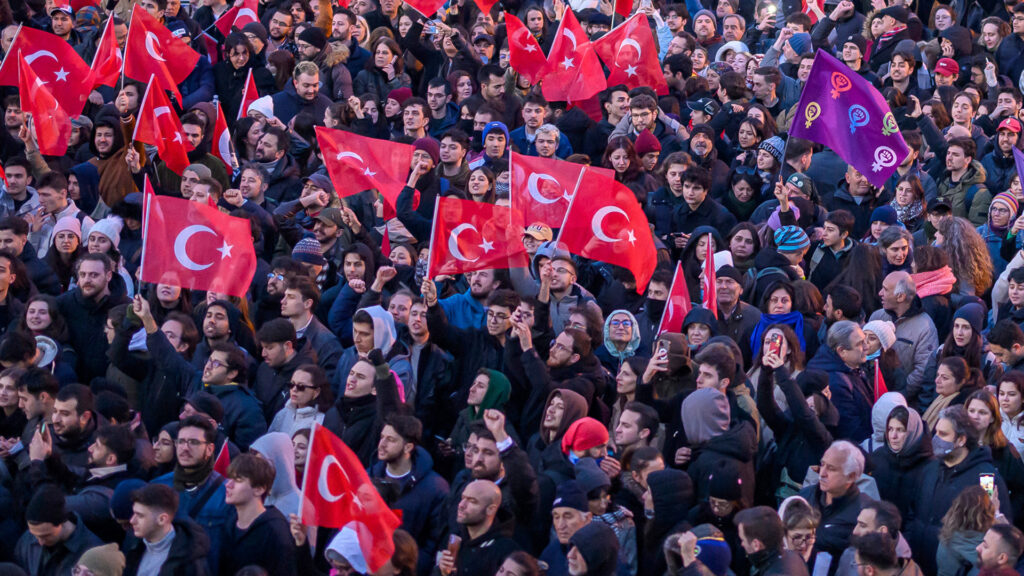
NewsFeed Thousands of people in Turkiye are protesting the arrest of Istanbul’s mayor Ekrem Imamoglu, a key rival to President Erdogan, on corruption and terror charges. The government has denied opposition claims that it’s staging ‘a coup’. Published On 20 Mar 202520 Mar 2025 Adblock test (Why?)
US air strikes hit residential area in Yemen’s capital
[unable to retrieve full-text content] Homes and buildings in a residential area in Yemen’s capital were hit in some of the latest air attacks by the US.
Will Trump’s policies pay off or will the US fall into recession?
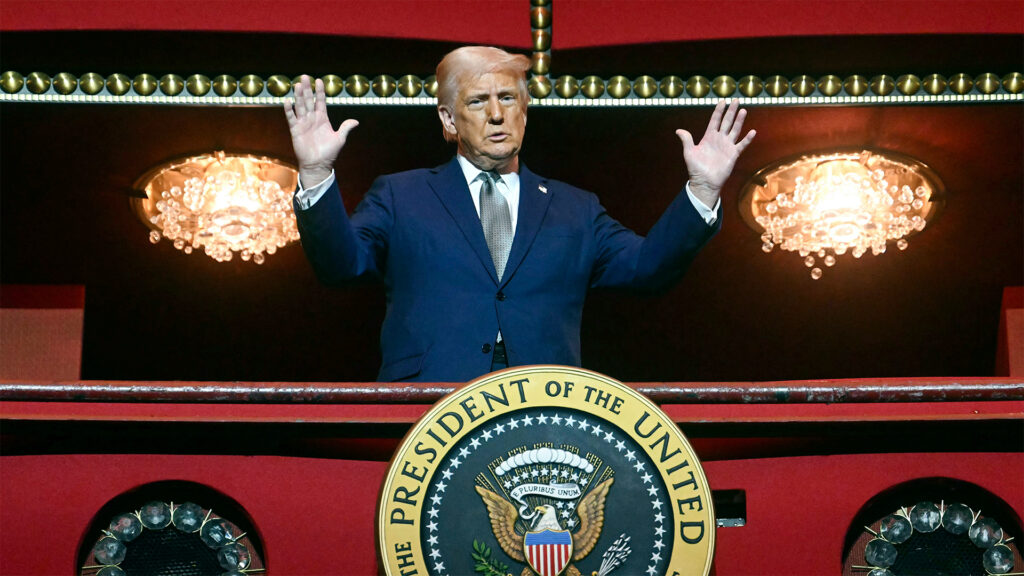
President Donald Trump wants to restructure the US economy. He’s promising Americans a boom in wealth. President Donald Trump wants to transform the United States into a manufacturing powerhouse. His favourite tool to help him achieve that is tariffs. He believes the measures will help bring revenues and relocate factories to the US. The trade-off is many Americans will have to suffer short-term pain for long-term gain. Consumers are now downbeat on the outlook for the economy, and they are buckling down. Stock markets are flashing warning signs. Despite that, Trump seems intent on pressing ahead with his plans. Could the global shipping industry face a major crisis in the Red Sea? Plus, Ghana’s economic reforms. Adblock test (Why?)
Houthis claim missile launch at Israel amid renewed fighting in Gaza
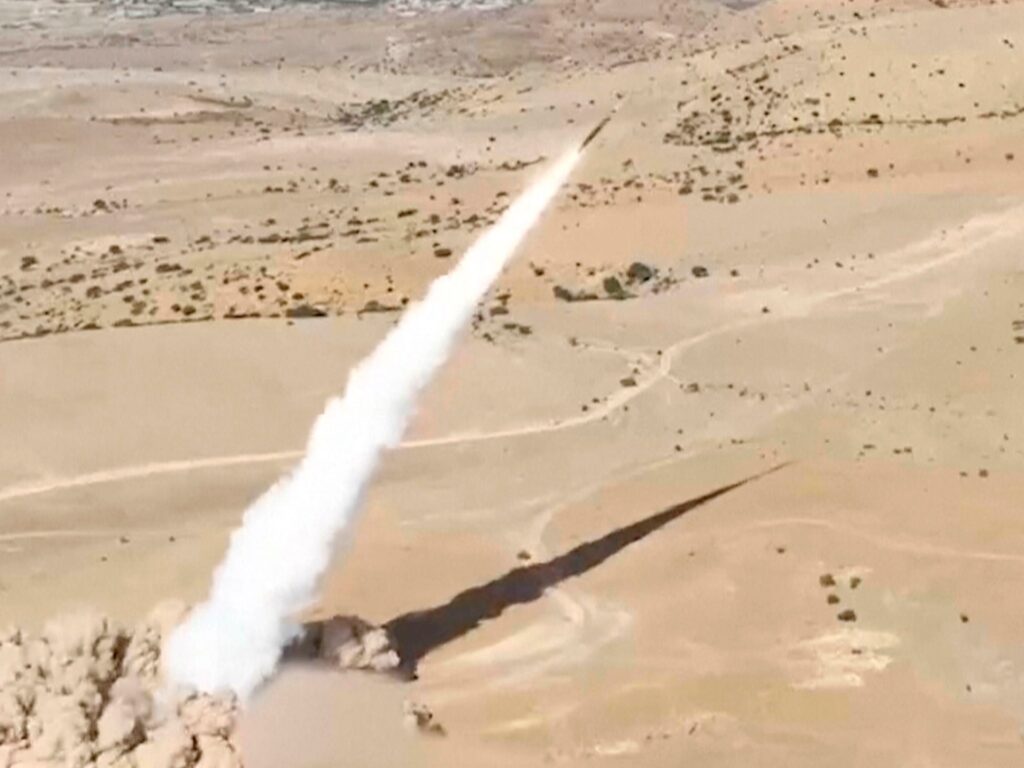
Yemen-based group says hypersonic missile fired on Ben Gurion airport in second attack after Israel breaks Gaza ceasefire. The Houthis have launched a hypersonic missile at Israel’s Ben Gurion airport, days after the Israeli army broke a ceasefire in Gaza, the Yemeni group said. “The Yemeni armed forces carried out a qualitative military operation targeting Ben Gurion airport in the occupied Jaffa region with a Palestine-2 hypersonic ballistic missile,” Houthi spokesman Yahya Saree said on Thursday. He said the operation “successfully achieved its objective”, without elaborating. It was the second such attack since the United States began a new campaign of air raids against the rebels earlier this week. The Israeli military said it intercepted the missile before it entered the country’s territory early on Thursday. Sirens sounded in several areas in Israel after the projectile was fired, the military said in a post on Telegram. The Israeli police said sirens were heard in Tel Aviv and Jerusalem. Israel’s ambulance service said no serious injuries were reported. The US has targeted Yemen with waves of strikes since Saturday, and the Houthis have declared they will escalate their attacks, including on Israel, in response. The US attacks have killed at least 31 people. Advertisement On Tuesday, the Houthis said they had fired a ballistic missile towards Israel and would expand their range of targets in the coming days in retaliation for Israel breaking the ceasefire in Gaza. Israel’s renewed attacks since Tuesday have killed at least 710 Palestinians and injured more than 900 others, according to Gaza’s Ministry of Health. The Houthis have carried out more than 100 attacks on shipping since Israel’s war on Gaza began in late 2023, saying they are acting in solidarity with Gaza’s Palestinians. On Wednesday, US President Donald Trump renewed his call for Iran to end its support for the Houthis, pledging that the Yemeni group will be defeated by Washington. While the Houthis are allied with Iran, it is not clear how much they rely on Iranian support or whether Tehran can order them to stop their attacks. Adblock test (Why?)
All to know about the IPL 2025: Captains, schedule, prize money, venues

EXPLAINER From big-name players to key talking points, Al Jazeera’s lowdown on cricket’s most lucrative franchise T20 league. The Indian Premier League is set to return for its 18th season on Saturday as the Kolkata Knight Riders open their title defence at their home ground, the Eden Gardens. The tournament will see 10 teams vying for the chance to win the world’s most lucrative franchise Twenty20 cricket league. Here’s what you need to know about IPL 2025: What’s the schedule of IPL 2025? The two-month-long tournament will begin on March 22 in Kolkata and conclude on May 25 in the same city. Day matches will begin at 3:30pm (10:00 GMT) and night matches will get under way at 7:30pm (14:00 GMT). Round-robin phase: March 22 to May 18 First qualifier: May 20, 7:30pm (14:00 GMT) at Rajiv Gandhi International Stadium, Hyderabad Eliminator: May 21, 7:30pm (14:00 GMT) at Rajiv Gandhi International Stadium, Hyderabad Second qualifier: May 23, 7:30pm (14:00 GMT) at Eden Gardens, Kolkata Final: May 25, 7:30pm (14:00 GMT) at Eden Gardens, Kolkata Mark your calendars, folks! 🥳🗓#TATAIPL 2025 kicks off on March 2️⃣2️⃣ with a clash between @KKRiders and @RCBTweets 🤜🤛 When is your favourite team’s first match? 🤔 pic.twitter.com/f2tf3YcSyY — IndianPremierLeague (@IPL) February 16, 2025 Advertisement What’s the format of IPL’s 2025 season? The tournament’s schedule has changed on a few occasions. The league started in a round-robin format, but it was changed to a group format and this season all 10 teams will play each other twice with the return of the league-style format. The top two teams at the end of the league games will play the first qualifier while the third- and fourth-placed teams will face off in the eliminator. The winner of the first qualifier will book a place in the final, while the loser will play the winner of the eliminator in the second qualifier. The winner of this match will become the second team to qualify for the final. Who are the team captains for IPL 2025? There has been some chopping and changing ahead of this season, with several new leaders taking charge. Here are the teams and their captains: Chennai Super Kings: Ruturaj Gaikwad Delhi Capitals: Axar Patel Gujarat Titans: Shubman Gill Kolkata Knight Riders: Ajinkya Rahane Lucknow Super Giants: Rishabh Pant Mumbai Indians: Hardik Pandya Punjab Kings: Shreyas Iyer Rajasthan Royals: Sanju Samson Royal Challengers Bengaluru: Rajat Patidar Sunrisers Hyderabad: Pat Cummins “𝘞𝘦’𝘷𝘦 𝘨𝘰𝘵 𝘗𝘢𝘯𝘵, 𝘊𝘢𝘱𝘵𝘢𝘪𝘯 𝘗𝘢𝘯𝘵” 💙 pic.twitter.com/ms7Ij1vWZ5 — Lucknow Super Giants (@LucknowIPL) January 20, 2025 Who are the biggest signings of IPL 2025? Wicketkeeper-batter Pant was the most expensive signing at the IPL 2025 auction held in November. The Lucknow captain was bagged for $3.2m. The $3m threshold was first broken by Punjab, as they bought Iyer for $3.17m, but Pant topped the list by the end of the auction. Advertisement The most expensive foreign player was Jos Buttler. The former England white-ball captain was signed by Gujarat for $1.8m. What are the key talking points ahead of IPL 2025? Jasprit Bumrah’s fitness: The world’s leading pace bowler has been on the sidelines since sustaining a back injury in January, and while India managed to bag the ICC Champions Trophy without him, Mumbai Indians will sorely miss their spearhead. Bumrah is expected to return to the Mumbai side after the first few games, but his absence could deal a substantial blow to the five-time champions, who finished last in the previous season. RCB’s voodoo: The franchise that’s been home to arguably India’s biggest cricket star, Virat Kohli, has failed to pass the final hurdle in 17 years. They have come close on nine occasions and ended up with the wooden spoon twice. Can the well-balanced squad deliver a trophy for its faithful fanbase after nearly two decades? MS Dhoni’s present and future: The former India captain enjoys a legendary status amongst the Chennai fans. Despite having hung up his boots for India six years ago, Dhoni has been going strong for his franchise and has led them in all five of their IPL titles. The wicketkeeper now plays as a specialist batter and while questions may be raised about his future, Dhoni is expected to turn up in the Chennai yellow once again. The Gill-Buttler show: Shubman Gill will lead the 2022 champions for the second season in a row, and after a disappointing season in 2024 that saw Gujarat finish eighth, the world’s leading one-day international batter will rely on a power-packed opening partnership with Jos Buttler will form the base of a strong season for the Titans. The Mumbai Indians had their worst season at the IPL in 2024 as they finished 10th [File: Francis Mascarenhas/Reuters] What are the venues for IPL 2025? As each team will play the other nine teams twice, the tournament will be played in a home-and-away format. In addition to the 10 home grounds, three neutral venues will also host some games. Advertisement Team home grounds: MA Chidambaram Stadium, Chennai – Chennai Super Kings Arun Jaitley Stadium, New Delhi – Delhi Capitals Narendra Modi Stadium, Ahmedabad – Gujarat Titans M Chinnaswamy Stadium, Bengaluru – Royal Challengers Bengaluru Eden Gardens, Kolkata – Kolkata Knight Riders BRSABV Ekana Stadium, Lucknow – Lucknow Super Giants Wankhede Stadium, Mumbai – Mumbai Indians Maharaja Yadavindra Singh International Cricket Stadium, Punjab – Punjab Kings Sawai Mansingh Stadium, Jaipur – Rajasthan Royals Rajiv Gandhi International Stadium, Hyderabad – Sunrisers Hyderabad Neutral venues: Dr YS Rajasekhara Reddy ACA-VDCA Cricket Stadium, Visakhapatnam Barsapara Cricket Stadium, Guwahati HPCA Stadium, Dharamsala, Himachal Pradesh What’s the prize money for IPL 2025? The prize money breakdown for the knockout rounds is: Champion: $2.32m Runners-up: $1.5m Third place: $810,800 Fourth place: $752,894 Who are past IPL champions? Chennai Super Kings: 2010, 2011, 2018, 2021, 2023Mumbai Indians: 2013, 2015, 2017, 2019, 2020Kolkata Knight Riders: 2012, 2014, 2024Rajasthan Royals: 2008Sunrisers Hyderabad: 2016Gujarat Titans: 2022Deccan Chargers: 2009 The Kolkata Knight Riders won their third IPL title in 2024 [File: Mahesh Kumar A/AP] Adblock test (Why?)
Is US support for Israel complicating efforts to reach peace in Gaza?

Emboldened by Donald Trump, Benjamin Netanyahu is intensifying the war. There’s been widespread international condemnation of Israel’s renewed bombing of Gaza, including from the United Nations. But the United States was the only country on the 15-member UN Security Council to back Israel’s air strikes at a meeting on Tuesday. Emboldened by US President Donald Trump’s support, Israeli Prime Minister Benjamin Netanyahu says negotiations with Hamas will only continue “under fire”. After Israel resumed its bombardment of Gaza, Itamar Ben-Gvir was reappointed as Israel’s national security minister – a move likely to strengthen Netanyahu’s coalition government. Where does this leave Hamas and the mediators? Presenter: James Bays Guests: Brian Finucane – Senior adviser to the US Program at the International Crisis Group Danilo Della Valle – Member of the European Parliament for Italy’s Five Star Movement Yousef Munayyer – Head of the Palestine-Israel Program and a senior fellow at the Arab Center Washington DC Adblock test (Why?)