

How Trump took credit for the Gaza ceasefire – and then let it unravel
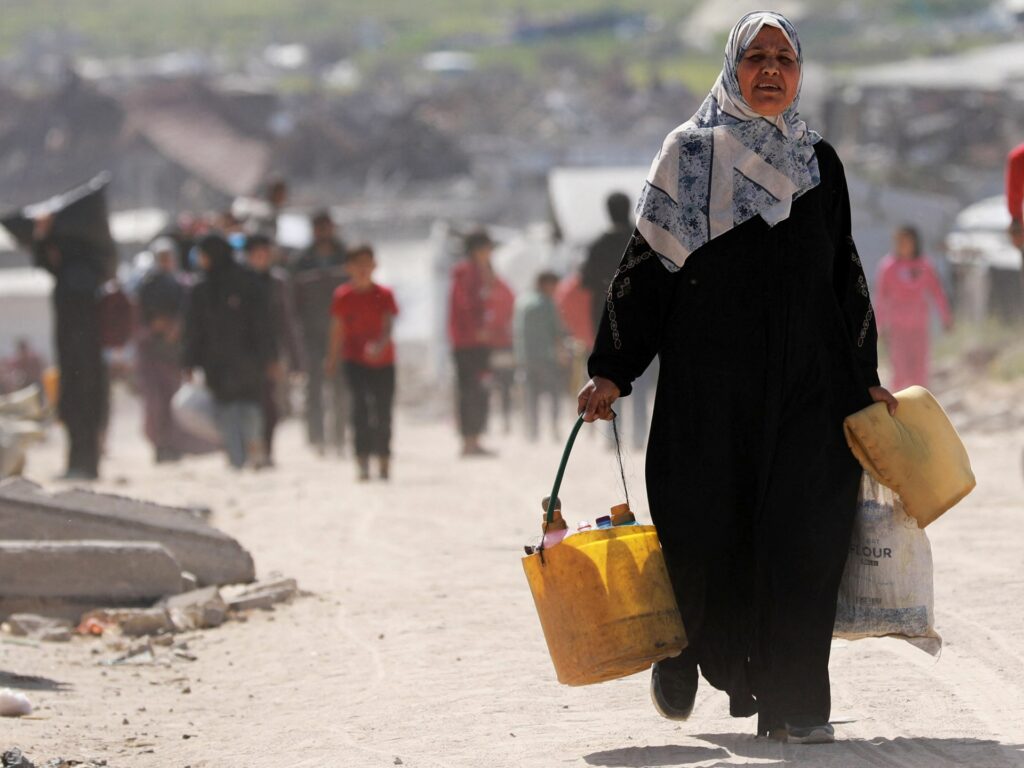
Washington, DC – Images of Palestinian children killed by Israeli bombardment are back in the news after a brief reprieve that only lasted a few weeks. Nearly two months after United States President Donald Trump took office, the ceasefire that had halted Israel’s war in Gaza has shattered, and the region is once again at war. That comes despite Trump’s own pledge to pursue peace in the Middle East and across the world. Trump took credit for the truce earlier this year, but he is now backing Israel’s renewed assaults in a conflict that he once promised to end. Analysts say Trump – a staunch Israel supporter – was more interested in generating headlines about helping to secure the ceasefire than actually ending the war. He also floated plans to ethnically cleanse Gaza, by removing its residents to make way for a riviera-style resort. “We could see evidence of Trump’s insincerity in the ceasefire almost immediately after he took office – when he started calling for the forced displacement and ethnic cleansing of all Palestinians from Gaza on a permanent basis,” said Josh Ruebner, a lecturer at Georgetown University’s Program on Justice and Peace. Advertisement “So, it’s not at all a surprise to see the Trump administration greenlight the resumption of massive Israeli violence against Palestinians in Gaza.” Early signs In the weeks leading up to the latest bombardment, there were signs that Israeli Prime Minister Benjamin Netanyahu never intended on fully honouring the ceasefire – and that Trump was not invested in upholding the deal, either. Early in February, Trump said he has “no guarantees that the peace is going to hold” in Gaza. Even before the ceasefire went into effect in January, Netanyahu claimed that the deal was “temporary” and that both Joe Biden – who was in the final days of his presidency – and Trump have given “their full backing to Israel’s right to return to fighting”. Moreover, Israel has repeatedly violated the deal by firing at Palestinians almost daily and blocking the entry of mobile homes into the territory, where many buildings have been levelled or rendered unsafe. Then, on March 2, Israel imposed a total blockade on humanitarian aid destined for Gaza. The ceasefire agreement was supposed to include three phases. The first stage, which expired early in March, saw the release of about 30 Israeli captives and hundreds of Palestinian prisoners as the guns fell silent. But Israel did not agree to move to the second phase of the deal that would see a permanent end to the war. A third stage would have eventually focused on reconstruction in the territory. Instead, Netanyahu and the Trump administration insisted on extending the first part of the ceasefire deal. But the Palestinian group Hamas has been clear in its position: There is no need for new initiatives because there is an internationally backed pact in place that all the parties have already agreed to. Advertisement Truce ‘served its purpose’ for Trump Ruebner said Trump only wanted a temporary ceasefire to free more Israeli captives without pressuring Israel to commit to ending the war. In a joint appearance with Netanyahu in February, Trump also expressed his desire for the US to “own” Gaza and turn it into a “Riviera of the Middle East”. But since Trump’s proposal was met with overwhelming international rejection, the US president allowed Israel to “resume this frightening scale of violence” against Palestinians, Ruebner said. In the days since Israel renewed its assault on Gaza, hundreds of Palestinian civilians, including children, have been killed with the support of the US president, who had promised in his inauguration speech to leave the legacy of a “peacemaker”. Annelle Sheline, a research fellow at the Quincy Institute for Responsible Statecraft, said she was surprised that the truce lasted for weeks even after it “served its purpose” for Trump. “Trump’s motivation in pushing for the ceasefire was to show that he could achieve what Biden could not, and he did so before even reentering the White House,” said Sheline. “At the time the ceasefire was enacted, there was a lot of scepticism that it would reach phase two, as this would involve negotiations around a more permanent cessation of hostilities, which Israel and specifically Netanyahu had no interest in agreeing to.” The Center for International Policy (CIP), a US-based think tank, also said Trump “bears considerable responsibility” for the collapse of the ceasefire. Advertisement “While Trump’s team had an early success in assisting the administration of former President Joe Biden in negotiating the hostage release and ceasefire, he has since enabled this massive failure in his own diplomacy through a series of brazen missteps,” Dylan Williams, CIP’s vice president for government affairs, said in a statement. A ‘showman’ Williams cited Trump’s “obscene proposal” to force Palestinians out of Gaza, as well as the president’s backing of Netanyahu’s push to re-write the ceasefire deal, as decisions that make him a “full partner in this bloodshed”. Despite the civilian death toll, the Trump administration has voiced unqualified support for Israel and its military campaign in Gaza. YL Al-Sheikh, a Palestinian American writer and organiser for the Democratic Socialists of America, described Trump as a “showman” who wanted a “big thing” to brag about. But Al-Sheikh underscored that the US president has failed to get Netanyahu to permanently end the war and to get Hamas to release the remaining captives. “So he just wants to pummel on somebody,” Al-Sheikh said. Palestinians, he added, are “the natural target”. So, what happens next? Analysts fear that the Israeli offensive will intensify, leading to more death and destruction, in a campaign that leading rights groups and United Nations experts have already described as a genocide. “Trump and Netanyahu are aligned in their desire to remove Palestinians from Gaza, either by killing them or through ethnic cleansing and forced removal,” said Sheline. Advertisement Al-Sheikh also predicts that the violence will persist: “We’re going to go in this merry-go-round until either Netanyahu fails to keep
Advocates decry Trump administration effort to deport immigration activist
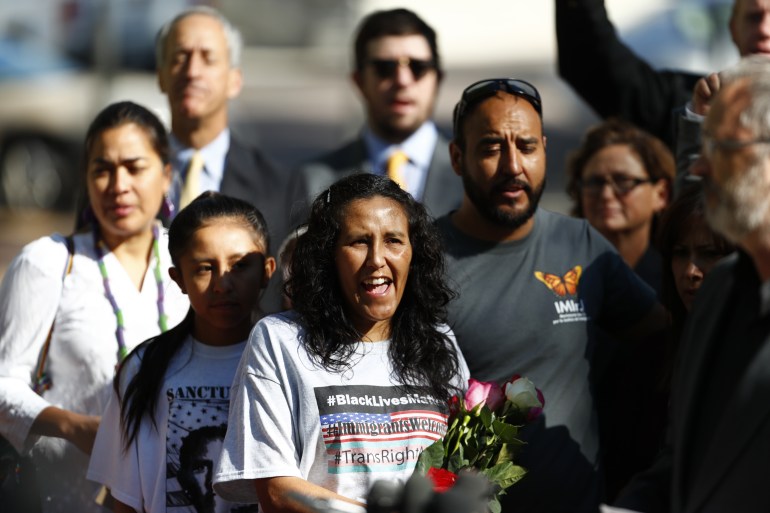
United States Immigration and Customs Enforcement (ICE) has confirmed it detained and plans to deport Jeanette Vizguerra, a prominent immigration activist who has drawn attention to the plight of undocumented people in the country. Immigration advocates, lawmakers and human rights groups have decried the move, pointing to the mother of four’s deep ties to the Colorado community where she has lived for 30 years. The arrest appears to be the first time US authorities have targeted a prominent immigration activist for deportation during President Donald Trump’s second term. Supporters say Vizguerra’s detention is aimed at silencing dissent. It comes amid a wider deportation push by the Trump administration, which has rolled back enforcement protections and invoked an 18th-century law in an effort to eject undocumented people from the US. In a social media post on Wednesday, ICE’s bureau in Denver, Colorado, justified Vizguerra’s arrest by pointing to her past convictions. She has a 2009 misdemeanour for using a forged Social Security number to find work, as well as a second misdemeanour from 2013 when she briefly returned home to Mexico to visit her dying mother. She was convicted at the time of illegal entry. Advertisement “She will remain in ICE custody until her removal from the United States,” ICE said in the post. However, Aaron Reichlin-Melnick, a senior fellow at the American Immigration Council, questions whether Vizguerra’s meagre arrest record warrants such treatment. He acknowledged that she “has a few low-level offenses as a result of her being undocumented”. “But she’s no dangerous radical. That’s just ridiculous,” he wrote on the social media platform X. Instead, he pointed out that she was named one of Time Magazine’s 100 most influential people in 2017. “She is a well-respected advocate in Colorado and nationwide,” Reichlin-Melnick said. “The literal president of the United States has a more serious criminal record.” Jeanette Vizguerra speaks after leaving a church’s sanctuary on May 12, 2017 [David Zalubowski/AP Photo] Who is Jeanette Vizguerra? Vizguerra initially came to the US from Mexico City in the 1990s with her husband, who had faced several kidnappings in Mexico. She settled in Colorado, where she began working as a janitor and became involved in labour organising. Her first brush with US law enforcement came during a traffic stop in 2009, when she was found to be carrying a document with the fake Social Security number. Her conviction kicked off a years-long battle against her deportation – and propelled her to take on more immigration advocacy work, as she endeavoured to protect other undocumented people in Colorado. She became associated with groups like Colorado’s Rights for All People and the Colorado Immigrant Rights Coalition, and she founded the Colorado branch of the organisation Dreamer’s Mothers in Action. Advertisement But in 2017, President Trump took office for the first time, with pledges to implement a sweeping immigration crackdown. Fearing imminent deportation, Vizguerra sought refuge in two Denver-area churches, an act that catapulted her into the national spotlight. A longstanding government policy forbade immigration raids at sensitive locations like churches at the time. “I decided not to hide my battle against deportation but to fight publicly to draw attention to the unfairness of the system,” Vizguerra wrote in a 2017 op-ed published by The New York Times. “I wanted to inspire my community to step out of the shadows and raise its voices.” In May 2017, she received a temporary stay of deportation that allowed her to leave the church’s sanctuary. But she felt forced to return again in 2019 after her visa application was reportedly denied. She eventually moved out of the church in 2020. The administration of US President Joe Biden later granted her a temporary “stay of deportation”. In Time Magazine’s 2017 profile of Vizguerra, actress America Ferrera praised the activist for making the “bold and risky” decision to go public with her struggle. “The current Administration has scapegoated immigrants, scaring Americans into believing that undocumented people like Jeanette are criminals,” Ferrera wrote. “She shed blood, sweat and tears to become a business owner, striving to give her children more opportunities than she had. This is not a crime. This is the American Dream.” Vizguerra was arrested on Monday in the car park of the Target where she worked. Aura Hernandez, centre, holds her one-year-old daughter Camila Sanchez and laughs with Jeanette Vizguerra on March 29, 2018 [Seth Wenig/AP Photo] Deportation push Vizguerra’s arrest comes amid a mass deportation push under Trump, who campaigned on promises to stop undocumented migration and surge the number of removals. Advertisement Since taking office, Trump has swiftly moved away from Biden administration policies that de-prioritised immigration actions against low-level and nonviolent offenders. Recent ICE enforcement sweeps have seen the arrests of thousands of individuals with no criminal record, despite Trump’s claim he would focus on those considered threats to public safety and national security. In January, the Trump administration also rolled back a longstanding policy that prohibited immigration enforcement in sensitive locations, including churches, schools and medical facilities. Earlier this month, it began invoking the Alien Enemies Act of 1798 to increase expulsions, although a federal judge has temporarily paused its use. That act has only been used three times prior, and only in cases of war. Critics have also accused the Trump administration of targeting foreign nationals – including legal permanent residents – for their political views. That includes the attempt to deport Mahmoud Khalil, a green-card holder who led pro-Palestine protests at Columbia University, as well as the expulsion of Brown University professor Rasha Alawieh, who was teaching in the US on a work visa. Jeanette Vizguerra speaks outside the Denver church where she has sought sanctuary on June 19, 2019 [Jim Anderson/AP Photo] What has the response been? Some of the most strident condemnations of Vizguerra’s arrest have come from local elected officials. In a widely shared video statement on Tuesday, Denver Mayor Mike Johnston said her detention was not “intended to keep our country safe”. Advertisement “This is Putin-style persecution
Pakistan’s ‘war on terror’ approach is dangerous
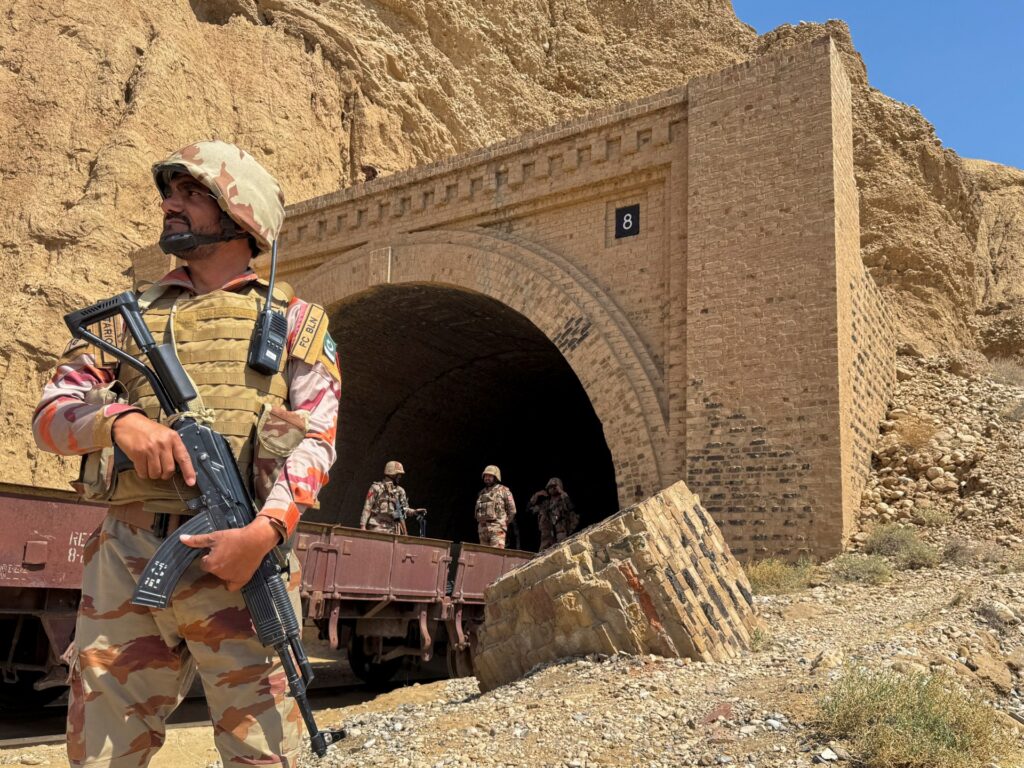
OPINIONOPINION, Refusing to see the roots of insurgencies, using ‘terrorism’ labels, and scapegoating neighbours are not winning strategies. On March 11, fighters from the Balochistan Liberation Army (BLA) hijacked a Jaffar Express train travelling from Quetta to Peshawar. After a 36-hour standoff, the Pakistani security forces were able to kill the BLA operatives and release hundreds of hostages. According to the government, at least eight civilians lost their lives during the operation. Pakistani officials were quick to blame Afghanistan and India for what they called a “terrorist incident”. This is the latest example of how the Pakistani authorities increasingly deflect responsibility and frame Pakistan’s relationship with Afghanistan in the language of “war on terror”. Almost three months before the train hijacking, Pakistani fighter jets bombarded Afghanistan’s Khost and Paktika provinces, killing at least 46 people, including women and children. Many of the casualties were displaced people from Pakistan’s Khyber Pakhtunkhwa region. Pakistan justified its violation of Afghan sovereignty and international law by claiming that it is targeting Tehreek-e-Taliban Pakistan (TTP) fighters hiding on Afghan territory. Over the past two years, Islamabad has been accusing Kabul of harbouring “terrorists” who have carried out attacks on Pakistani territory. Advertisement This is the same logic the United States employed to conduct air raids, kidnappings, targeted killings, etc throughout the Muslim world during its so-called “war on terror”. In doing so, the US trampled over all the conventions the world had endorsed affirming state sovereignty, the distinction between civilians and combatants, proportionate response and the rights of prisoners of war. The US army and intelligence saw civilians as active combatants or “collateral damage” that was inevitable when a “high-value target” was pursued. Whole countries and civilian populations paid the price for “terrorist” strikes conducted by armed groups – and they still do. That is because the US may have withdrawn from Afghanistan and Iraq, but the legacy of its practices remains and is readily embraced by governments in the region. Pakistan’s government is one of them. Throughout the 20-year US occupation of Afghanistan, Pakistan refused to see the Afghan Taliban as “terrorists” and continued sheltering and supporting the group. Yet today, the Pakistani authorities label the TTP and BLA as “terrorist” groups and the Afghan Taliban government as sponsors of “terrorism”. They refuse to see these local insurgencies as politically motivated rational actors who could be reasoned with or whose grievances should be heard. How Pakistan chooses to deal with these groups is an internal matter, but there are a few lessons from the recent American adventurism that ought to be heeded. The US cast a wide definition of “terrorism” in which Muslims at home and abroad became suspect. In Afghanistan, it lumped its enemy al-Qaeda with the Taliban and at times Afghan civilians. Advertisement The imprisonment and torture of alleged Taliban members only fed the fervour of Taliban fighters and led to an escalation in violence. Indiscriminate drone strikes on civilian communities in Afghanistan and Pakistan not only violated sovereignty, but also encouraged young men to join the Afghan Taliban and TTP. Several attempts by the Taliban to negotiate with the US did not bear fruit until 2021, when, exhausted by a two-decade occupation and war, Washington decided to withdraw, basically accepting defeat. It is easy to dismiss movements as “terrorist” and refuse to see any path of reconciliation. But as the American example shows, this approach does not end well. Instead of trying to drag the US into another war on “terror” – as US media outlet Drop Site has reported – the Pakistani authorities should learn from the American experience. They cannot feign ignorance about groups like TTP and BLA; they are dealing with their own citizens, who have clear grievances. The Pakistani government has to hear the demands of these groups and find a way to negotiate with them. It has to recognise the suffering of the civilian populations in the regions where BLA and TTP operate. It also needs to put an end to violating Afghanistan’s sovereignty and scapegoating the Taliban government for their own security failures under the guise of “war on terror”. If the Pakistani military decides not to learn from recent history and follows in the footsteps of the United States, it is quite likely it is to meet its fate. Advertisement The views expressed in this article are the author’s own and do not necessarily reflect Al Jazeera’s editorial stance. Adblock test (Why?)
Trump warns Yemen’s Houthis will be ‘completely annihilated’
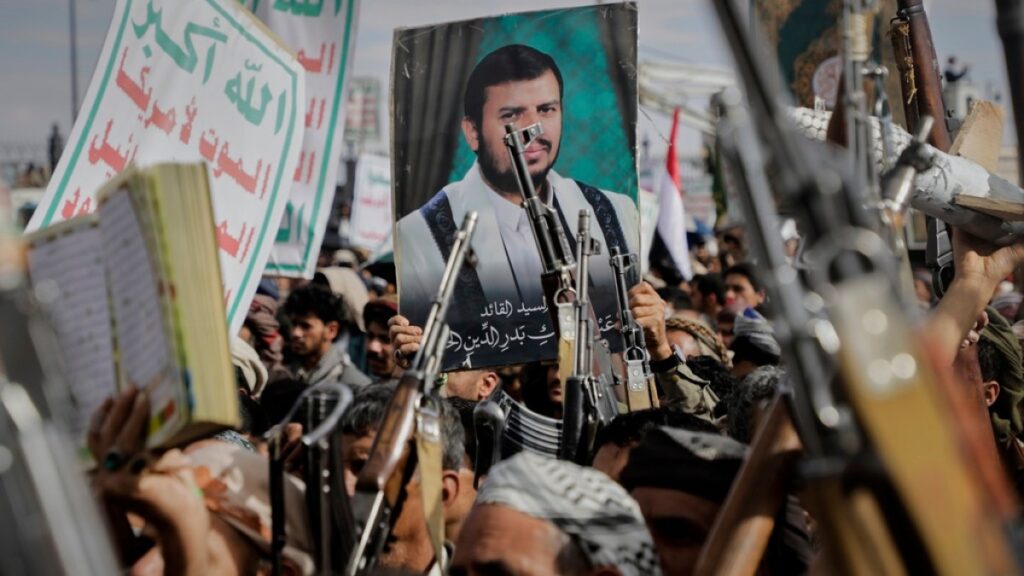
The US president renews his call for Iran to end support for the Yemeni group that has been targeting Israel over its war in Gaza. Washington, DC – Donald Trump has renewed his call for Iran to end its support for the Houthis, pledging that the Yemeni group will be defeated by the United States. The US president’s comments on Wednesday came a day after the Houthis claimed attacks targeting American warships in the Red Sea area, as well as a missile launch against Israel. Overnight, the US also continued strikes on Houthi strongholds in Yemen, including the capital, Sanaa. “Tremendous damage has been inflicted upon the Houthi barbarians, and watch how it will get progressively worse — It’s not even a fair fight, and never will be,” Trump wrote in a social media post. “They will be completely annihilated!” This month, the US has launched several waves of attacks against the Houthis, who control Sanaa and present themselves as the country’s official armed forces. Since 2023, the Houthis have been targeting ships in and around the Red Sea and launching missiles at Israel in an effort, they say, to pressure the Israeli government to end the war on Gaza. Advertisement The group paused its Red Sea attacks during the Gaza truce but restarted them earlier this month, in response to Israel’s blockade on humanitarian aid to the Palestinian territory. The Houthis also resumed their direct military operations against Israel after the Israeli military broke a two-month ceasefire, killing hundreds of Palestinians this week. The administration of former US President Joe Biden also bombed Houthi positions in Yemen, but Washington’s campaign failed to stop the group’s attacks. In his social media post on Wednesday, Trump cited “reports” claiming that Iran is decreasing its support for the Houthis but is still “sending large levels of Supplies”. “Iran must stop the sending of these Supplies IMMEDIATELY,” he wrote. “Let the Houthis fight it out themselves. Either way they lose, but this way they lose quickly.” Trump previously threatened Iran with retaliation if it does not rein in the Houthis. While the Houthis — known formally as Ansar Allah — are allied with Iran, it is not clear how much they rely on Iranian support or whether Tehran can order them to stop their attacks. But Trump has portrayed the Houthis as an arm of the Iranian government. “Every shot fired by the Houthis will be looked upon, from this point forward, as being a shot fired from the weapons and leadership of IRAN, and IRAN will be held responsible, and suffer the consequences, and those consequences will be dire,” Trump wrote on social media on Saturday. For their part, the Houthis have dismissed the US threats and bombing campaign, vowing to continue their attacks until Israel ends its assault on Gaza. Advertisement “The Yemeni Armed Forces affirm that the US aggression will not deter the steadfast and struggling Yemen from fulfilling its religious, moral, and humanitarian duties toward the Palestinian people,” the group said in a statement on Tuesday. “They affirm that they will escalate their military operations against the Zionist enemy unless the brutal aggression on Gaza stops and the blockade is lifted.” Trump blacklisted the Houthis as a “foreign terrorist organisation” in the early days of his presidency this year. The Biden administration had labelled the group as “specially designated global terrorists” — a slightly lower designation that involves fewer restrictions. Adblock test (Why?)
Protesters try to disrupt Gal Gadot’s ‘Walk of Fame’ star ceremony
[unable to retrieve full-text content] Pro-Palestinian protesters attempted to disrupt the Hollywood Walk of Fame star ceremony for Israeli actress Gal Gadot.
Video: Palestinians flee as Israeli attacks resume in Gaza
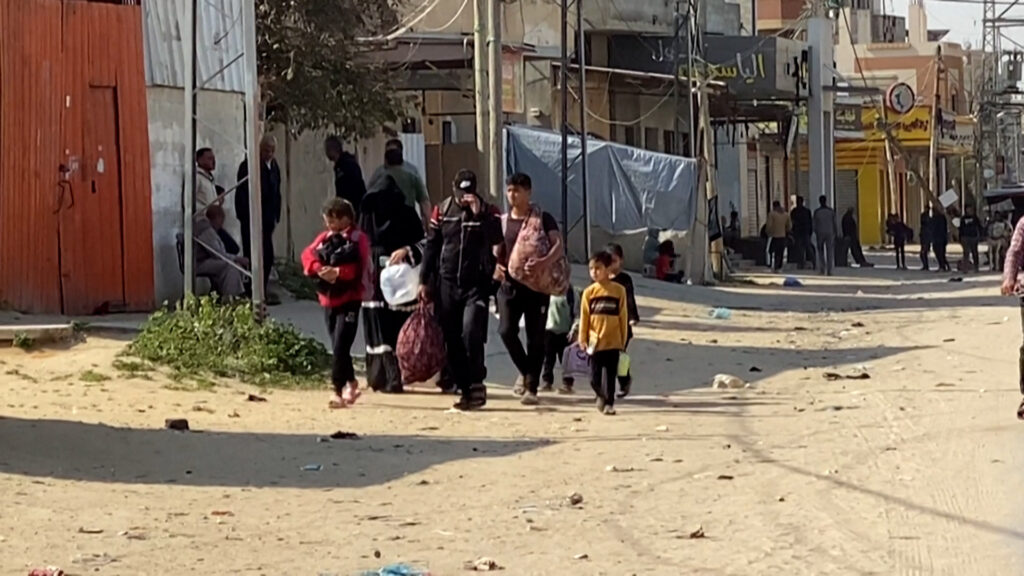
NewsFeed Thousands of Palestinians are once again fleeing towns in northern Gaza. They’re travelling, mostly by foot, to areas in the south like Khan Younis, after deadly Israeli strikes and evacuation warnings spread fears of further attacks. Published On 19 Mar 202519 Mar 2025 Adblock test (Why?)
‘No betrayal’: Ukraine breathes sigh of relief after Trump-Putin talks
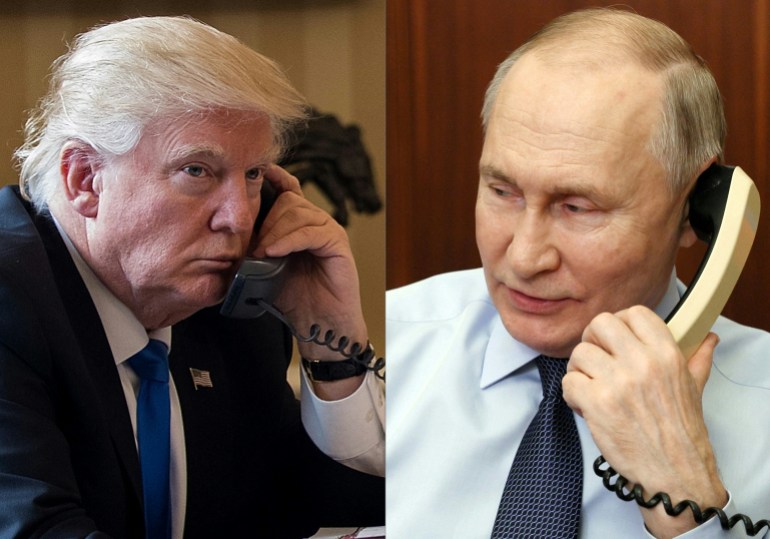
Kyiv, Ukraine – Russia launched 145 drones and six missiles on Ukraine on Tuesday just minutes after US President Donald Trump and his Russian counterpart Vladimir Putin finished their phone conversation. The attacks were launched from six locations in western Russia, and 45 drones targeted the Kyiv region alone, Ukrainian officials said. They said, however, that while the strikes damaged civilian infrastructure, they did not kill or wound anyone. The attacks were a way of rejecting Trump’s 30-day ceasefire proposal, according to Ukrainian President Volodymyr Zelenskyy. “Today, Putin virtually threw away the proposal to fully cease the fire,” he said. Ukrainian citizens were indignant. “Putin shows that Trump is nothing but his lap dog,” said Larysa Kozhedub, a 52-year-old manicurist whose nephew Oleksiy was killed near the eastern city of Pokrovsk last October. “America lost the Cold War, and Ukraine is paying for it,” she told Al Jazeera. But analysts are more calm and cautious. No “betrayal” of Ukraine’s interests resulted from the Trump-Putin conversation that lasted more than two hours, said Volodymyr Fesenko, head of the Penta think tank in Kyiv. Advertisement “Everyone here was very afraid that Putin will yet again zombify Trump,” he told Al Jazeera, referring to Trump’s susceptibility to Putin’s views on the Russia-Ukraine conundrum. Instead, Fesenko noted, Trump did not bend to Russia’s calls to halt Washington’s military aid to Kyiv or force Ukraine to cease mobilisation in return for the full ceasefire. During a draconian mobilisation campaign, Ukraine replenished its decimated front-line forces – and for the first time in more than two years managed to wrestle back several towns in eastern Ukraine. However, Ukrainian troops were kicked out of Russia’s western Kursk region, where they had occupied up to 1,000 square kilometres (385 square miles) since August 2024. After a panicked withdrawal and losses, they currently maintain their hold on several villages and farms near the Russian-Ukrainian border. “However, it’s too early to relax. Russia will continue to present its ultimatums in the next stages of talks,” Fesenko said. United States President Donald Trump (left) and Russia’s President Vladimir Putin (right) discussed Ukraine and the ‘normalisation’ of US-Russian ties by phone [File: Drew Angerer and Gavriil Grigorov/AFP] Ironically, Trump and Putin agreed to implement parts of Kyiv’s peace plan, which was presented at the March 11 talks between US and Ukrainian officials in Saudi Arabia’s Jeddah, Fesenko said. Kyiv proposed to cease air and sea attacks, as well as strikes on energy infrastructure for 30 days. Russia’s pummelling of Ukraine’s power stations has caused blackouts and further hobbled the country’s economy. Advertisement In response, Kyiv doubled down on its drone and missile attacks on Russian oil refineries, fuel depots, military targets and civilian sites. Kyiv is ready to suspend its strikes on the energy infrastructure, Zelenskyy said. “Our side will support it,” Zelenskyy told a news conference held after the Trump-Putin talks. The Trump-Putin conversation may herald the pace of upcoming peace talks and a step-by-step ceasefire that would take weeks if not months to implement, Fesenko said. The next step – a suspension of air attacks – would be beneficial to Ukraine since Russia launches thousands of drones and dozens of ballistic and cruise missiles across the country every month. The effect, however, would be more psychological than practical. Millions of Ukrainians lie awake at night to the howling of air raid sirens and the boom of air defence systems shooting down the drones, while actual casualties and destruction remain minimal. ‘Global security’ talks amid Middle East tensions The Kremlin said that apart from Ukraine, Trump and Putin discussed the situation in the Middle East, the Red Sea region and “interaction in the matters of nuclear non-proliferation and global security”. This way, Putin offered Trump help with Iran’s nuclear programme and Yemen’s Houthis, Kyiv-based analyst Igar Tyshkevych said. Washington started bombing the Houthis on Saturday even though they stopped attacks on ships in the Red Sea after the ceasefire began in Gaza. “Yes, Putin wants to help Trump to kill two birds with one stone,” Tyshkevych told Al Jazeera. However, Putin may be bluffing because Tehran uses its clout among Houthis to up the ante in its own dealings with Washington and does not necessarily want Putin as a middleman, he said. Advertisement But if Russia could indeed help Trump with Iran and Yemen, Putin will ask for concessions in Ukraine, he said. Trump is in a political pickle as he needs a fast peace settlement ahead of his talks with Chinese President Xi Jinping, Putin’s main international backer. “It’s one thing when you come [to negotiations] with a ready algorithm that began to work, and another thing when you start working from scratch,” Tyshkevych said. ‘Ukraine’s biggest loss in the past year’ Meanwhile, Russia is “fragmenting” the Ukrainian problem by offering preconditions such as separate discussions of warfare in the Black Sea, Tyshkevych said. In the past two years, Kyiv succeeded in destroying Russian warships in annexed Crimea. The attacks forced Russia’s entire Black Sea fleet to relocate from its main base in Crimea’s Sevastopol to the Russian port of Novorossiysk. Ukraine’s agreement to stop strikes in the Black Sea will manifest Zelenskyy’s “political and military defeat”, predicted Nikolay Mitrokhin, a researcher with Germany’s University of Bremen. Kyiv already failed to use its dominance in the western part of the Black Sea to retake Ukrainian islands and spits west of annexed Crimea, and lost several islands in the Dnieper delta, he said. “This is Ukraine’s biggest loss in the past year” besides the retreat from around the eastern Ukrainian town of Pokrovsk, Mitrokhin told Al Jazeera. Meanwhile, Putin wants to use a pause in Trump’s push for the peace settlement to occupy more Ukrainian areas with the troops that pushed Ukrainians out of Kursk, said Mitrokhin. Advertisement As a result, there could be more “meat marches”, or devastating frontal assaults on Ukrainian positions in Donetsk, he said. But Ukraine’s attacks on border areas of Russia’s Belgorod region that lie
US court rejects Trump bid to dismiss Mahmoud Khalil deportation challenge
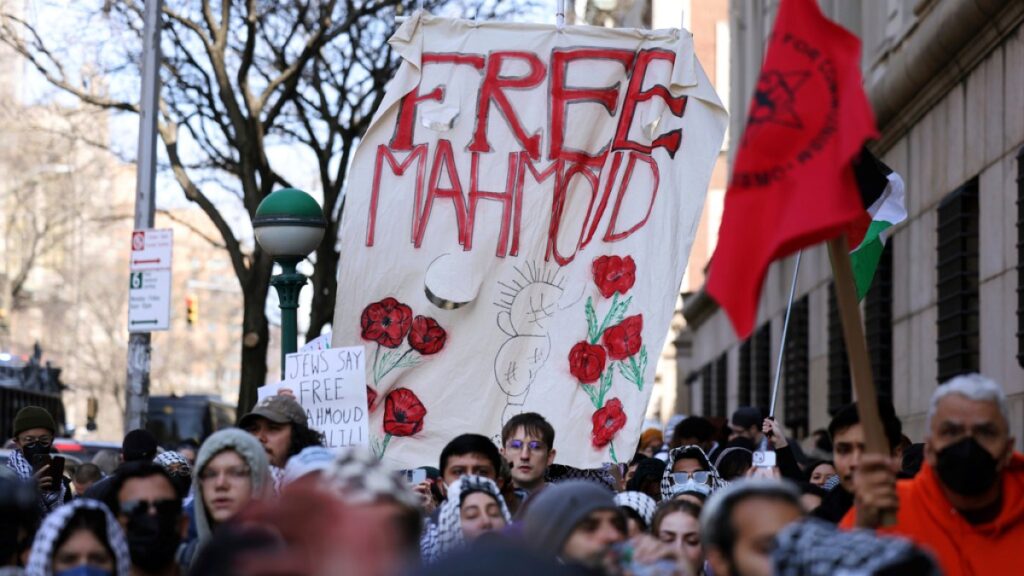
Judge Jesse Furman says effort to deport Palestinian rights advocate is ‘exceptional’ and requires ‘careful’ review. A federal court in the United States has dismissed an effort by President Donald Trump’s administration to dismiss Palestinian rights activist Mahmoud Khalil’s legal challenge against his detention and deportation. Khalil, a Columbia University graduate student and legal permanent resident, has been held by the government since March 8 in a push to deport him over his participation in campus protests for Gaza last year. On Wednesday, Judge Jesse Furman ruled that Khalil’s legal request for a judicial review against his detention, known as a habeas corpus petition, must proceed. The Trump administration had asked the court to reject the challenge. Furman noted that Khalil is arguing that the effort to deport him violates his rights to free speech and due process, which are guaranteed under the US Constitution. “These are serious allegations and arguments that, no doubt, warrant careful review by a court of law; the fundamental constitutional principle that all persons in the United States are entitled to due process of law demands no less,” Fruman wrote in his ruling. Advertisement He described Khalil’s ordeal as an “exceptional case”. However, the judge decided that his New York-based court cannot adjudicate the case, saying that the matter should be transferred to New Jersey, where Khalil was held when the challenge was filed. The government sought to move the case to Louisiana, a Republican-dominated state, where Khalil is currently detained in an immigration enforcement facility. Furman said that his previous order barring the government from deporting Khalil must remain in place while the case is under review. But he did not rule on the activist’s request to be released on bail, leaving the matter to the New Jersey court that will oversee the petition. He ordered the court clerk to transfer the petition “immediately”, but there is no exact date for when the New Jersey Court will rule or schedule hearings on the case. The Trump administration is pushing to deport Khalil under a rarely used provision of an immigration law that gives the secretary of state power to remove any non-citizen whose presence in the US is deemed to have “adverse foreign policy consequences”. The US government has not charged Khalil with a crime. Instead, US officials have accused him of “activities aligned to Hamas”. But Khalil’s supporters say he engaged in peaceful protests against Columbia University’s ties to the Israeli military as part of the wave of campus demonstrations that swept the country last year. Khalil’s detention has raised concerns about Trump’s willingness to scuttle free speech in his crackdown on Palestinian rights advocacy in the US. Advertisement The activist, whose wife is a US citizen and eight months pregnant, was arrested late at night by immigration enforcement agents and transferred to two different facilities without his family or lawyers being notified. Critics have likened his treatment to forced disappearances by authoritarian governments. “The Trump administration is seeking to send a message with the unlawful and deplorable disappearance of Mr Khalil,” Hannah Flamm, acting senior policy director at the International Refugee Assistance Project (IRAP), told Al Jazeera last week. “This is not the first occasion when the US government has weaponised immigration enforcement to separate families and to terrorise communities. But Mr Khalil’s arrest represents a significant departure and profound violation of American free speech rights.” Khalil released a statement from his confinement late on Tuesday, describing himself as a political prisoner. “My arrest was a direct consequence of exercising my right to free speech as I advocated for a free Palestine and an end to the genocide in Gaza, which resumed in full force Monday night,” he wrote. Adblock test (Why?)
How much money is actually lost to fraud, waste in the US?

Billionaire Elon Musk, the driving force behind United States President Donald Trump’s budget-cutting Department of Government Efficiency (DOGE), has broached the sensitive issue of Social Security cost savings on the TV channel Fox Business. Musk told host Larry Kudlow, a former Trump economic adviser, that the Government Accountability Office estimated in 2024 that federal government fraud was “half a trillion dollars”. While referring to waste, Musk said: “Most of the federal spending is entitlements. So that’s like the big one to eliminate. That’s the sort of half-trillion, maybe $600, $700bn a year.” Using the word “eliminate” in the same breath as “entitlements” set off alarms among Trump’s and Musk’s Democratic critics. White House Press Secretary Karoline Leavitt said at the March 11 news briefing that Musk was referring to cutting waste, fraud and abuse in those programmes, and Trump “is going to protect Social Security”, Medicare and Medicaid. At a March 11 event promoting Tesla cars at the White House, a reporter asked Musk if he could guarantee there would be no interruption to Social Security benefits. Advertisement “We are going to be very careful with any benefits,” Musk said. “In fact, only by tackling waste or fraud can we actually preserve those programmes for the future.” “Fraud” and “waste” mean different things. Waste refers to careless use, and fraud includes criminal wrongdoing. Musk referred to a report from the Government Accountability Office (GAO), a nonpartisan auditing arm of Congress that examines federal spending. In 2024, the office estimated there are $233bn to $521bn in fraudulent payments across the government per year. The report went further than Social Security, Medicare and Medicaid, which make up about half of mandatory government spending. It covers the entire government, including pandemic-related relief programmes that resulted in record fraud. Musk said cutting fraud and waste will help his efforts to slash $1 trillion from the federal budget. But his estimates for fraud are at the top end of the GAO’s estimate or exceed it. For Social Security, the inspector general in 2021 found about $300m in payments was made after the deaths of beneficiaries over about two decades – about one-third of which was recovered. Although federal officials have long recognised improper spending as a problem, it is not the main reason for the programme’s dire financial outlook. What does the government know about overall fraud? In April, the Government Accountability Office under President Joe Biden produced what it called a “first-of-its kind, government-wide estimate of federal dollars lost to fraud”. Advertisement The office’s estimate of $233bn to $521bn lost in fraud per year covered 2018-2022 data in reports from agency inspectors general and fraud reports submitted to the Office of Management and Budget. Musk cited the high end of the range when he said “half a trillion”. The White House didn’t respond to our question about the source of his $600bn to $700bn figure. The GAO’s top-line figures included not only official fraud findings from legal proceedings but also estimates from individual agencies’ findings of fraud. The agency also extrapolated figures it believed represented undetected fraud. The estimated losses represent about 3 percent to 7 percent of average federal outlays. The Office of Management and Budget, the agency that assists the president in meeting his budget goals, found a lower figure of federal government fraud, from $4.41bn to $7.31bn annually, based on amounts confirmed through a judicial or adjudication process. Experts on the federal budget said it’s important to pay attention to the full analysis in the government reports. Joshua Sewell, director of research and policy at Taxpayers for Common Sense, said taxpayers should view these numbers with a “massive grain of salt”. The report is filled with caveats and is likely not representative of other years because of the increase in pandemic spending. “It’s a fine report to try to put numbers to an amorphous issue, but you can’t take the high-end numbers as a definitive statement on the dollar amount of fraud that exists in federal spending,” he said. Advertisement It is possible that about 5 percent of the annual federal budget is lost to fraud and some programmes have improper payment rates in excess of 10 percent, said Bob Westbrooks, executive director of the Pandemic Response Accountability Committee, a government committee Congress created five years ago. But the phrase “improper payments” doesn’t necessarily mean fraud; it includes scenarios with insufficient documentation. “Whatever the number, it is huge in absolute terms,” Westbrooks said, referring to all fraud. Westbrooks said Musk was conflating fraud and waste and ignoring that COVID-19-era fraud was likely pushing up the government’s estimated range, as the report itself noted. The Government Accountability Office said the range is a “reflection of both the uncertainty associated with estimating fraud and the diversity in the risk environments that were present in fiscal years 2018 through 2022”. What do we know about Social Security fraud? At the March 11 White House briefing, Leavitt cited an inspector general report from the Social Security Administration that found more than $70bn of fraud in that programme alone. The 2024 report did not conclude there was more than $70bn in Social Security “fraud”. It said the programme sent almost $71.8bn in “improper payments” from 2015 to 2022, a period that includes Trump’s first term. That is less than 1 percent of overall payments in that timeframe. On Fox Business, Musk said “there’s a massive amount of fraud” with people submitting fake Social Security numbers to receive a range of government benefits, including Social Security, healthcare and unemployment assistance. Advertisement Most of the improper payouts revealed by the inspector general were overpayments with some underpayments. This happens, for example, when beneficiaries fail to report necessary information or the administration fails to update records, the 2024 inspector general report said. Neither represents criminal intent necessarily. The Social Security Administration has long struggled to curb improper payments. “Without better access to data, increased automation, systems modernisation, and policy or legislative changes, improper payments will continue to be an issue
‘I nearly died’: Taba, the tobacco drug Gambian women share in secret

Banjul, The Gambia – On a humid March afternoon on the outskirts of Banjul, a woman known only as Saf* carries a basket of plants from her garden. Moving with urgency to avoid prying eyes, she makes her way to a hidden location, where the air is thick with the earthy scent of raw, unprocessed tobacco leaves waiting to be turned into the popular drug taba. Suddenly, her phone rings. A customer. She smiles knowingly. “She’s one of my favourites because she keeps coming back,” says Saf, whose name is a code word that means “sweet” in Wolof. Secrecy is important, says the 68-year-old taba seller, who for decades has made and discretely sold the substance to women. Taba, a local Mandinka word for powdered tobacco, has been consumed in The Gambia for generations, usually through smoking, snuffing and chewing. But in recent years, taba, modified by adding other substances to the tobacco powder, is being used for different purposes. Sellers like Saf take regular taba and mix it with potent chemicals to enhance its intoxicating effect. Many women then use it intravaginally, believing it enhances sexual pleasure. Advertisement Meanwhile, others, including some traditional healers, insist its intravaginal use has medicinal properties – from helping treat genital infections and headaches to conditions like epilepsy, hypertension and infertility – though these remain medically unproven. Though taba is not illegal, health authorities, doctors and activists in The Gambia warn of its dangers and caution against its use. But many women continue to seek it out. For Fatmata*, 36, “taba works wonders.” Married for a decade, Fatmata’s husband left for Europe just three years into their marriage. Struggling with his absence, a close friend introduced her to taba. “I don’t want to have extra-marital affairs for religious reasons, so I resort to taba,” she says, shyly. Due to its taboo nature, intravaginal taba is not sold publicly in The Gambia, but in secret among women [Kaddy Jawo/Al Jazeera] ‘Worst mistake of my life’ For others, the effects have been less favourable. The first time Rose*, 28, used taba after a friend suggested she try it, she felt an overwhelming sense of dizziness and nausea before violently vomiting. She continued trying, but the third time she used it, she says she nearly lost her life. “I remember the burning sensation, the excruciating pain, and how my body reacted as if my insides were on fire,” she says. “I could barely breathe and thought I was going to die.” The pain was intense but brief, she says. Afterwards, she fell asleep, and when she woke up, there was an uncomfortable ache between her legs. But she did not seek medical help, fearing it would expose her as a taba user at a time was the government was warning against it. Advertisement After her ordeal, she pledged never to touch taba again. “It is dangerous, and women need to stop inserting it into their genitals before it’s too late,” she warns. Taraba*, 28, and Isatu*, 42, began using taba to address health concerns. “Taba damaged my system,” says Taraba, who initially took it in an attempt to cure gonorrhoea. “At first, I only used it for that purpose. But a month later, I began inserting it into my vagina for pleasure. That was the worst mistake of my life.” What followed was excruciating. “It felt like fire burning inside me, and my whole body became [temporarily] paralysed.” Unlike Rose, whose pain was brief, hers lasted for an entire week. Isatu also first used it as a supposed remedy for gonorrhoea. “I first heard about this powder three years ago from a colleague. She told me she had used it in her vagina to relieve a bad headache, and it worked.” But when Isatu tried it, “I was bleeding profusely; I nearly died.” Neither Taraba nor Isatu sought medical help, choosing instead to endure their pain in silence. Isatu says she remains traumatised from the experience. Regular user Fatmata, however, insists that taba has no harmful effects on her health and claims most women use it with no complaints. Taba seller Saf agrees, saying most of her customers have been buying from her for years. “If it was harmful, they wouldn’t keep coming back.” Saf, a taba seller, works with freshly processed tobacco powder [Kaddy Jawo/Al Jazeera] ‘Intravaginal taba is harmful’ Little is known about the health consequences of intravaginal taba, according to the peer-reviewed journal, Tobacco Control. But it is “likely to have negative health effects” based on what is known about the use of other smokeless tobacco, said the authors of a 2023 paper on taba. Advertisement “Intravaginal taba is harmful,” insists Dr Karamo Suwareh, a gynaecologist at Kanifing General Hospital, the second largest public hospital in the country. “It causes irritation, infections, burning sensations, itching, foul-smelling discharge, and bleeding during intercourse,” he tells Al Jazeera. Dr Suwareh warns that taba contains carcinogens, and says research is needed to see whether it could lead to cervical and vaginal cancers. During pregnancy, the nicotine and other unknown substances may increase the risks of preterm labour, foetal growth restriction, and stillbirth. “Taba disrupts vaginal pH, making women more vulnerable to STIs like gonorrhoea, syphilis, and HIV. It damages tissue instead of healing it.” Gambia’s Ministry of Health has been vocal about the potential health risks of using taba intravaginally, cautioning that it could pose an increased risk of cancer or life-threatening complications during childbirth. Some women use it in an attempt to ease labour pains, but medical experts warn that it can cause severe harm instead. The ministry has used social media to educate the public on the risks, and in a video that went viral, Minister of Health Lamin Samateh was seen addressing a gathering in a local language to warn about its harmful effects. “Taba is dangerous, and women should reject it,” said Minister Samateh in the video that first emerged online in 2022. Women’s rights organisations have also been raising awareness about the harmful effects of taba. Advertisement “No