

Putin may well get what he wants in Ukraine
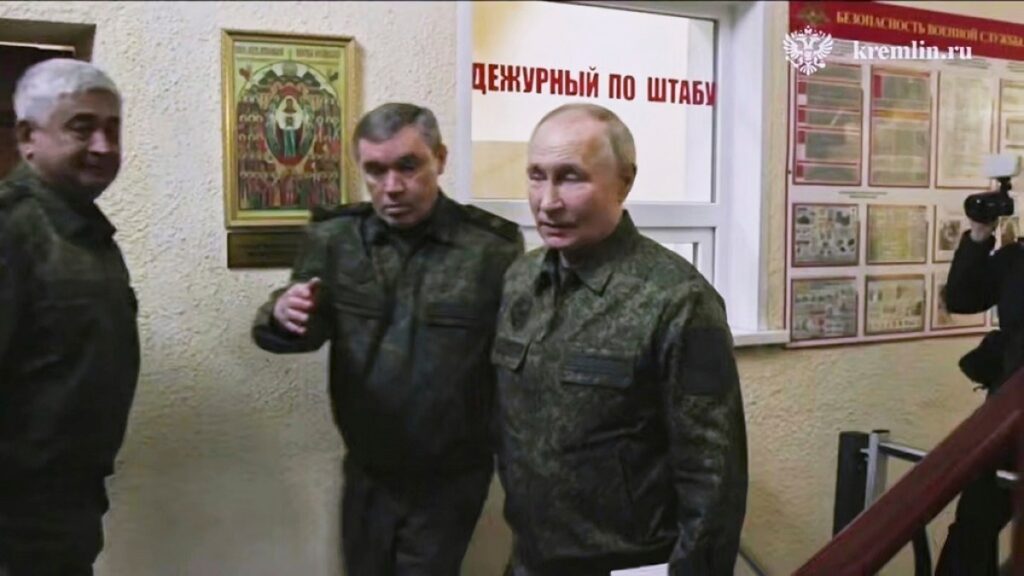
After the long telephone call between Russian President Vladimir Putin and US President Donald Trump, which followed on the heels of US-Ukrainian talks in Jeddah last week, the war in Ukraine seems to be entering its final stages. Both Moscow and Kyiv appear to agree with Trump’s pursuit of a peace settlement, though the details of their positions regarding the specifics remain hazy. Kyiv has agreed to Washington’s proposal for a 30-day unconditional ceasefire followed by peace talks. Freezing the conflict before starting peace talks was not what Ukraine had wanted, but the prospect of losing more territory, infrastructure, human lives, and – very likely – American support, has brought it onboard. Russia, for its part, has agreed to suspend missile attacks on the Ukrainian energy infrastructure for 30 days, while continuing discussions for a full-fledged ceasefire. Earlier, Moscow expressed concern not only about the logistics of implementing the ceasefire and guarantees to prevent violations, but also about what comes after. Advertisement The caution is due to the fact that Russia has an advantage on the battlefield, which it is not very keen to lose before the framework of a settlement is set in stone. In any case, Russian officials sounded very upbeat about the prospects of settlement after the Trump-Putin call. If the ceasefire negotiations move forward, the question that arises is whether Putin is likely to get all that he wanted in February 2022 when he launched the brutal all-out invasion of Ukraine. The rough framework of a realistically attainable peace settlement is clear to all sides by now. Moscow has stated repeatedly that the peace deal is to follow the outline of the Istanbul agreements that were developed by the Russian and Ukrainian delegations in the spring of 2022 but were eventually ditched by Ukraine under British and American pressure. These agreements envisaged Ukraine’s military neutrality, a cap on the size of its army and measures to protect Russian speakers living in Ukraine. After three years of war, Moscow now wants Kyiv to recognise the loss of four Ukrainian regions – Donetsk, Luhansk, Kherson and Zaporizhia – which Russia formally proclaimed its territory although it has not fully occupied any of them yet. It is possible, however, that the Kremlin will walk away from its maximalist demand of Ukraine withdrawing from the unoccupied parts of these regions. US President Donald Trump and Ukrainian President Volodymyr Zelenskyy have signalled that territorial talks will include the fate of the Zaporizhzhia Nuclear Power Station, which is currently occupied by Russia and is quite close to the front line. If Russia becomes a part of that conversation, it will mean that it’s no longer claiming the unoccupied north of Zaporizhia and – by extension – the unoccupied territory of the other three regions. Advertisement The discussions on the nuclear plant are a good sign because they indicate a shift to realistically attainable concessions the West and Ukraine could extract from Russia as opposed to the entirely unrealistic demands of NATO boots on the ground in the guise of “peacekeepers”, which the United Kingdom and France are pushing for. The key to understanding Putin’s logic is accepting that he is not fighting for territory. He sees the all-out invasion, which has now resulted in the occupation of a fifth of Ukrainian territory, as a punishment for Ukraine derailing the 2015-2016 Minsk agreements, which had envisaged the two breakaway regions, Donetsk and Luhansk, remaining under formal Ukrainian control. Russia’s annexation of these two regions, alongside Kherson and Zaporizhia, was punishment for Ukraine walking away from the Istanbul agreements. While the nuclear power plant could be feasibly swapped for some other territory or – more likely – political concessions pertaining to the rights of Russian speakers and the Moscow-affiliated Ukrainian Orthodox Church, what is nonnegotiable for Putin is NATO countries retaining any security infrastructure or influence on Ukrainian security bodies. Rooted in the West’s decision in the 1990s to confront rather than integrate the newly emerged democratic Russia, this conflict is really about drawing a thick red line beyond which the American-led West is not going to expand – at least until the time when the conversation about Russia’s westward integration becomes possible again. Advertisement For now, though, Putin will insist not just on Ukraine’s neutrality but also on the removal of what he describes as “NATO infrastructure”, which includes military training and logistical facilities as well as CIA listening stations along the Russian border. He will also likely demand the de-Westernisation of Ukrainian security structures strongly affiliated with the CIA and MI6, such as the Main Intelligence Directorate (HUR) and some directorates of the Security Service of Ukraine (SBU). Crucially, he will insist on Kyiv and NATO reneging on the 2008 NATO Bucharest summit promise that Ukraine would become a member of the alliance. That commitment, imposed on European allies by US President George W Bush, triggered tectonic changes in Russian foreign policy, leading to conflict with Georgia and subsequently Ukraine. Judging by signals emanating from Trump’s administration, all of these goals are attainable along with the lifting of sanctions against Russia – at least by the US itself. The Kremlin for its part has signalled that it could agree the $300bn in frozen Russian assets in the West could be used for post-war reconstruction in Ukraine. It sees this money as already lost and perhaps considers that a benevolent gesture like that could help it start mending relations with the now very hostile neighbour. If he can get all of that, Putin will see his decision to become a war criminal by launching the brutal aggression against Russia’s closest neighbour in social, ethnic, cultural and economic terms as justified. Advertisement Besides securing the neutrality of Ukraine and pushing NATO further from Russian borders, Putin also appears bound to fulfil another goal: the restoration of Russia’s superpower status in the eyes of the entire world. For Western leaders, the failure to rein in Russia will lead to a belated realisation: that a major nuclear
Turkiye’s Istanbul University annuls Mayor Ekrem Imamoglu’s diploma
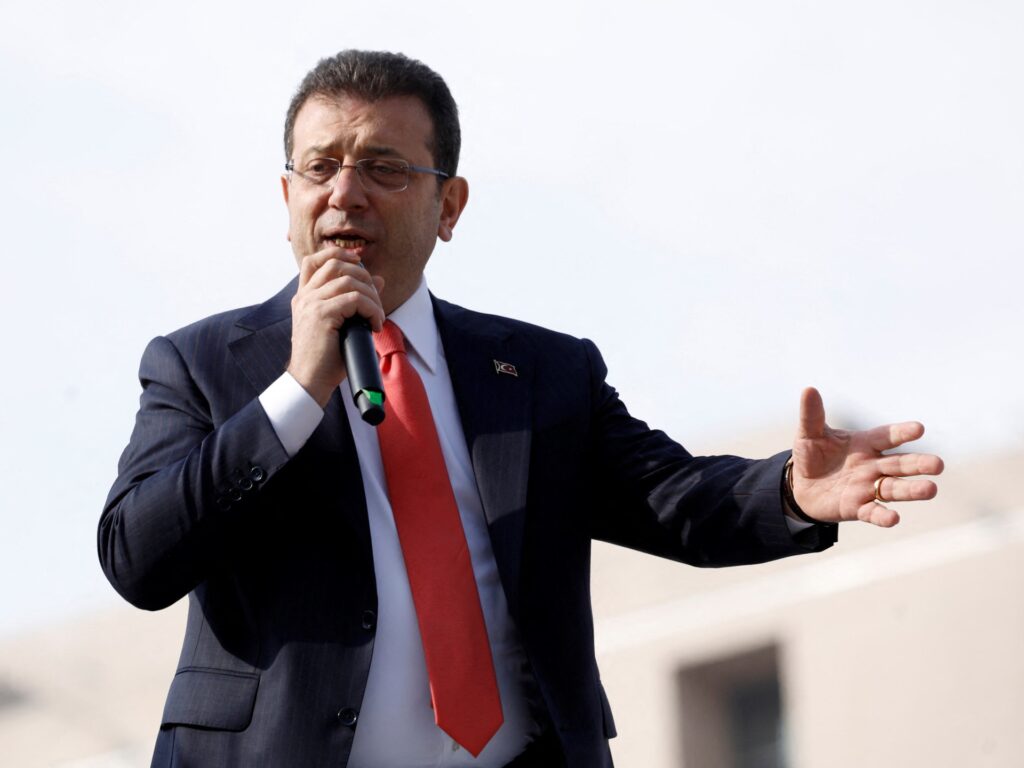
Opposition leader slams the university’s move as ‘unlawful’, saying it does not have the power to make the decision. Turkiye’s Istanbul University has annulled Mayor Ekrem Imamoglu’s diploma, citing irregularities with Council of Higher Education regulations and threatening his chances of running in the 2028 presidential election. The university said on Tuesday that 38 people, including Istanbul’s mayor, had irregularly transferred to its Management Faculty’s English-language programme in 1990. It added that 10 of those with the irregularity had their transfer annulled, and the degrees of 28 graduates, including Imamoglu, “will be withdrawn and cancelled on the grounds of … obvious error”. Imamoglu slammed the move as “unlawful” and promised to fight the decision in court. “They [the university] do not have the authority to make such a decision. The authority lies solely with the Board of Directors of the Faculty of Business Administration. “The days when those who made this decision will be held accountable before history and justice are near. The march of our nation, thirsty for justice, law and democracy, cannot be stopped.” Advertisement Murat Emir, a lawmaker from Imamoglu’s Republican People’s Party, said the decision “dealt a heavy blow to our democracy”. Musavat Dervisoglu, the opposition Good Party chairman, said the annulment was “beyond purging a political rival”. 2028 election The ruling could hurt Imamoglu’s plans to challenge President Recep Tayyip Erdogan in the 2028 election and came days before the opposition was expected to select Imamoglu as its presidential candidate. Under the Turkish Constitution, presidential candidates must have a higher education degree. Imamoglu, currently in his second term as the mayor of Istanbul, is the subject of multiple investigations and cases. The vocal opponent of Erdogan in January slammed what he called “harassment” after leaving an Istanbul court for questioning as part of an open investigation on his criticism of the city’s public prosecutor. In 2022, Imamoglu was sentenced to two years and seven months in jail and banned from political activities for “insulting” members of Turkiye’s High Election Council, a sentence that Imamoglu has appealed. Adblock test (Why?)
Netanyahu: ‘From now on, negotiations will only take place under fire’
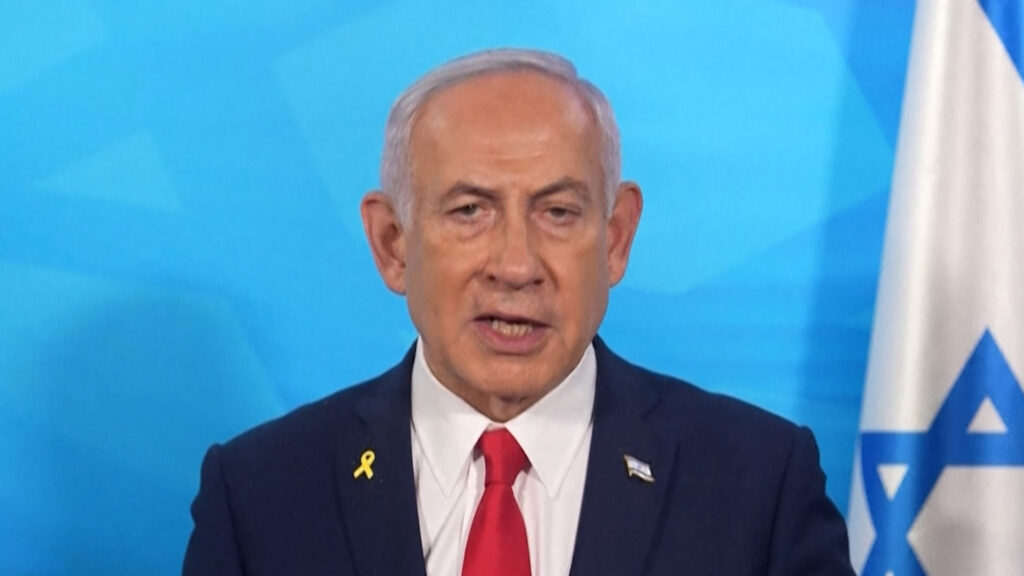
NewsFeed “From now on, negotiations will only take place under fire.” Prime Minister Benjamin Netanyahu has warned Hamas that Israel’s breaking of the Gaza ceasefire with widespread aerial attacks is “only the beginning.” Published On 18 Mar 202518 Mar 2025 Adblock test (Why?)
Children, a doctor: Some of the people killed by Israeli strikes in Gaza
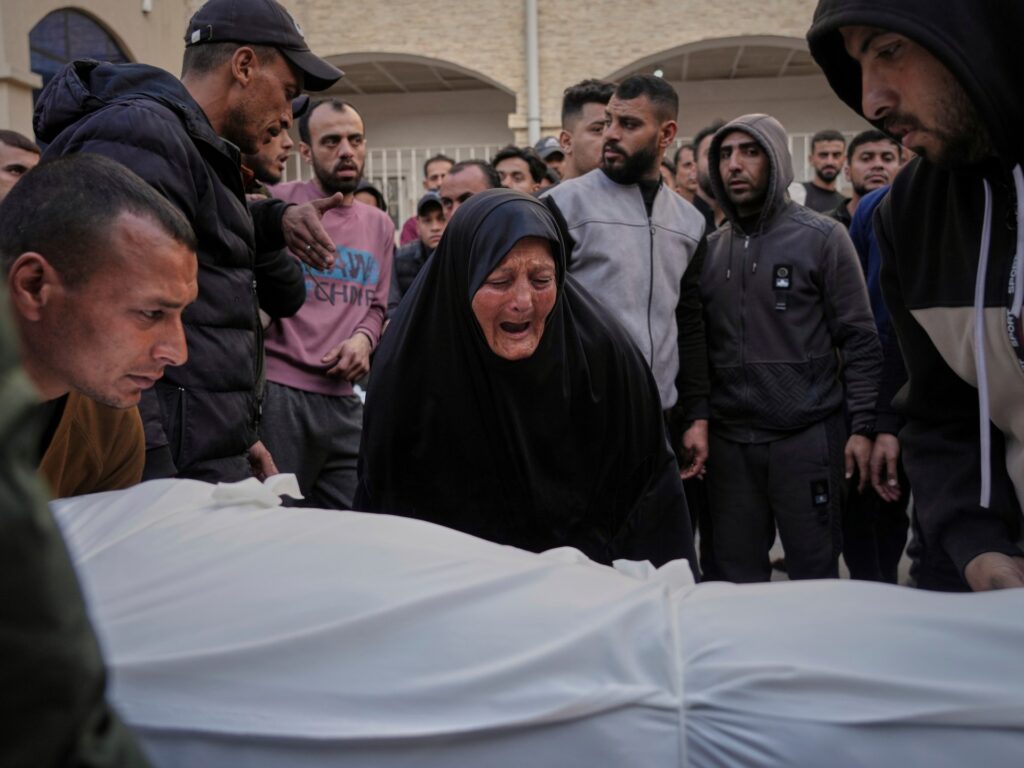
The Israeli military has been bombing across Gaza since the early hours of the morning, killing over 400 Palestinians and wounding more than 500 others. With many children and women among the dead, the casualty figures are only expected to rise. Entire families have once again been wiped out, and local authorities are appealing to the public for blood donations. Israel’s bombing campaign came without warning, countless Palestinians waking up to witness the extension of what the United Nations has called “hell on earth”. Dozens of videos circulating on Tuesday showed civilians searching for loved ones in morgues and under the rubble of destroyed homes. Here are some of the victims of Israel’s latest attacks: Family slaughtered in Gaza City Ramy Abdu, chairman of the Euro-Mediterranean Human Rights Monitor, lost his sister and her entire family after their home was bombed in Gaza City in the northern part of the enclave at around 4:30am (2:30 GMT) He said Nesreen and her son and daughters, Ubaida, Omar and Lian, were all killed, along with Ubaida’s wife, Malak, and their small children, Siwar and Mohammed. Advertisement The family had survived many previous Israeli air strikes over several years and had their home and entire neighbourhood destroyed by Israeli bombs earlier in the war. Israel killed my sister and her children tonight, along with her entire family. Israel may kill us at will, burn us alive, and tear us apart, but it will never succeed in uprooting us from our land. Justice and accountability await—no matter how long it takes.Omer & Layan pic.twitter.com/aINB6AM2td — Ramy Abdu| رامي عبده (@RamAbdu) March 18, 2025 “Israel may kill us at will, burn us alive, and tear us apart, but it will never succeed in uprooting us from our land,” Abdu wrote on his X account, calling for accountability. Also in Gaza City, footage broadcast by Palestinians on Instagram, verified by Al Jazeera, showed scenes of injured people on the ground as a result of an Israeli attack that hit a group of people near al-Rantisi Children’s Hospital. A doctor and her whole family killed Around half an hour after the killing of Abdu’s family in the north, a Gaza physician and her family were wiped out in the south. Dr Majda Abu Aker, who was an obstetrics-gynaecology specialist at an UNRWA clinic in Rafah, and more than a dozen others were massacred by an Israeli air strike on her house in al-Jenaina neighbourhood in Rafah. At least 10 of the killed Palestinians were members of the same family, including several women and their children. The youngest was a three-day-old infant girl. الشـ.. ـهيدة الدكتورة ماجدة أبو عكر https://t.co/A2xkA4w7dU pic.twitter.com/f5Pte7TjAq — ق.ض (@Qadeyah1) March 18, 2025 Advertisement Translation: The martyr, Dr Majda Abu Aker. The following martyrs were identified after the Aker family massacre in Rafah: Khaled Abu Riash (Abu Mohamed), Dr Majda Abu Aker, Kholoud Khaled Abu Riash and her children, Osama Abu Marzouq, Seham Abu Marzouq, Nour Osama Abu Marzouq and her three-day-old daughter, Dina Osama Abu Marzouq, Mohamed Osama Abu Marzouq. More civilians killed in attacks on south Gaza Another 15 people, most of them members of the Barhoum family, were named as being killed in al-Mawasi in southern Gaza’s Khan Younis. The area had been designated a so-called “humanitarian zone” by the Israeli military during the war, but that didn’t stop Israeli warplanes from repeatedly attacking al-Mawasi to deadly effect. Nearby, in the city of Abasan located east of Khan Younis, a family of six was killed as they were fleeing the Israeli bombs. Their vehicle was directly hit and destroyed by an air strike, killing all six people, Al Jazeera correspondents on the ground reported. Also in Khan Younis in the south, another family was left shocked and bereaved after their two young children were killed by Israeli bombs. Heba al-Hindi, the children’s aunt, announced the news on Facebook. “Dear children, may God have mercy on you and give patience to your mother and father,” she wrote, mourning Bisan and her brother Ayman. Translation: Ayman and Bisan are martyrs, with God. Dear God grant us the strength, God grant you strength my sister, Soad, may he give you strength and patience. ‘My children died hungry’ A video from Khan Younis, verified by Al Jazeera’s Sanad fact-checking agency, showed a Palestinian woman collapsing in tears as she bids farewell to her children and husband. “My children died hungry, I swear to God they did not find food for suhoor, my daughter died fasting without suhoor,” the woman said, referring to the meal eaten before dawn during the Muslim holy month of Ramadan. To Israeli Prime Minister Benjamin Netanyahu, she said, “I am a mother with a burning heart, may God burn your heart over your children”. Advertisement Family finds body after hours of searching In Jabalia in the north, families were forced to search for hours to find the remains of a loved one who was brutally killed by the devastating impact of an Israeli bomb. Gruesome footage verified by Al Jazeera showed destroyed buildings a large crater left by the bomb, and parts of a body being found flung onto a tree. Jabalia and its refugee camp have been subjected to some of the most destructive Israeli attacks since the start of the war on Gaza on October 7, 2023. In the weeks before the January 19 implementation of the ceasefire with Hamas that Israel has now shattered again, much of Jabalia was destroyed. The Israeli military has killed at least 48,577 Palestinians and wounded 112,041 others since the start of the war. Thousands more are missing or under the rubble and presumed dead, pushing the total to more than 61,000 dead. Adblock test (Why?)
Children killed in strikes Israel says targeted Hamas ‘terror targets’
[unable to retrieve full-text content] Israeli strikes the military says were aimed at Hamas “terror targets” have killed and injured children across Gaza.
German parliament approves Merz’s spending boost

The legislation still has to go to the upper house of the parliament for approval. Germany’s parliament has approved plans for a massive spending surge, throwing off decades of fiscal conservatism in hopes of reviving economic growth and scaling up military spending for a new era of European collective defence. The approval of the plans in the Bundestag or parliament on Tuesday will hand the chancellor-in-waiting a windfall of hundreds of billions of euros to ramp up investment after two years of contraction in Europe’s largest economy. Germany and other European nations have been under pressure to shore up their defences in the face of a hostile Russia and shifts in US policy under President Donald Trump, which European leaders fear could leave the continent exposed. Merz’s conservatives and the Social Democratic Party (SPD), who are in talks to form a centrist coalition after last month’s election, want to create a 500-billion-euro ($546bn) fund for infrastructure and to ease constitutionally enshrined borrowing rules to allow higher spending on security. “We have for at least a decade felt a false sense of security,” Merz told lawmakers ahead of the vote. Advertisement “The decision we are taking today on defence readiness … can be nothing less than the first major step towards a new European defence community,” he said. The legislation still has to go to the Bundestag upper house, which represents the governments of Germany’s 16 federal states. The main hurdle to passage there appeared to fall on Monday when the Bavarian Free Voters agreed to back the plans. The conservatives and SPD wanted to pass the legislation through the outgoing parliament for fear it could be blocked by an enlarged contingent of far-right and far-left lawmakers in the next Bundestag starting March 25. Merz has justified the tight timetable by citing the rapidly changing geopolitical situation. Europe today faces “an aggressive Russia” as well as “an unpredictable United States of America”, said Merz. “I want to make this clear: I am in favour of us doing everything we can to uphold transatlantic cooperation,” he added. “I consider it indispensable, but we must now do our homework in Europe. “We must become stronger. We must ensure our own security. That is our responsibility. Germany has a leading role to play in this, and I believe we should be prepared to assume this leadership responsibility.” Adblock test (Why?)
Video: Fears of war returning as Israel resumes Gaza airstrikes
[unable to retrieve full-text content] A barrage of Israeli strikes have targeted the Gaza Strip as the ceasefire ends and the war on the enclave resumes.
USAID cuts: Immediate and devastating
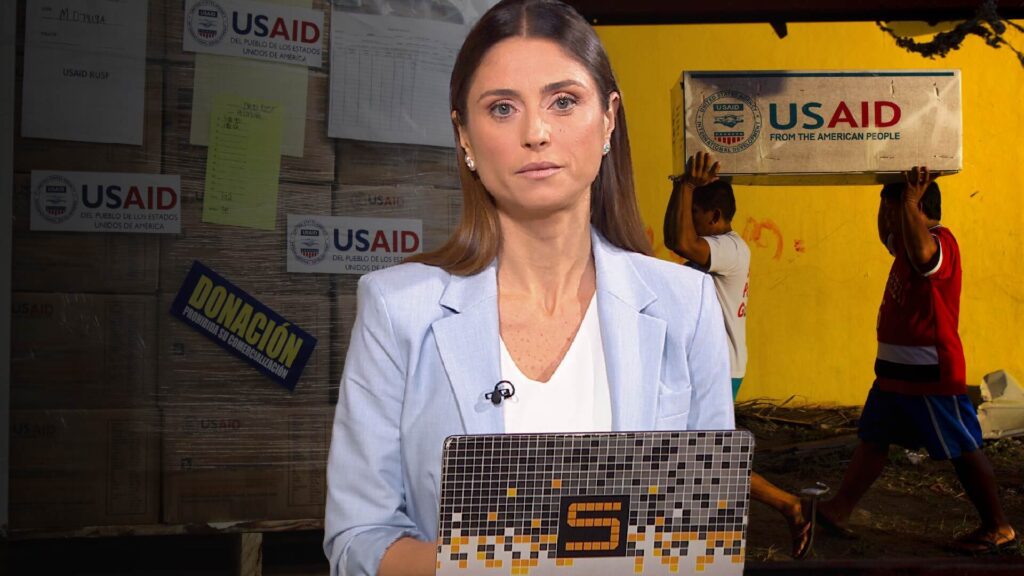
We examine how USAID cuts are affecting millions of people worldwide. United States President Donald Trump has suspended nearly all operations of the US Agency for International Development (USAID) for 90 days, leaving millions of people without critical support. HIV clinics shut down overnight, cutting off life-saving treatment, while diseases like cholera and malaria are set to spread. Food aid programmes from Venezuela to the Democratic Republic of the Congo have halted, and many students can no longer continue their education. USAID’s crucial work in healthcare, human rights and education is now frozen, disrupting thousands of global projects and lives. What will be the long-term impact of this decision? Adblock test (Why?)
Statements of condemnation won’t stop the genocide in Gaza
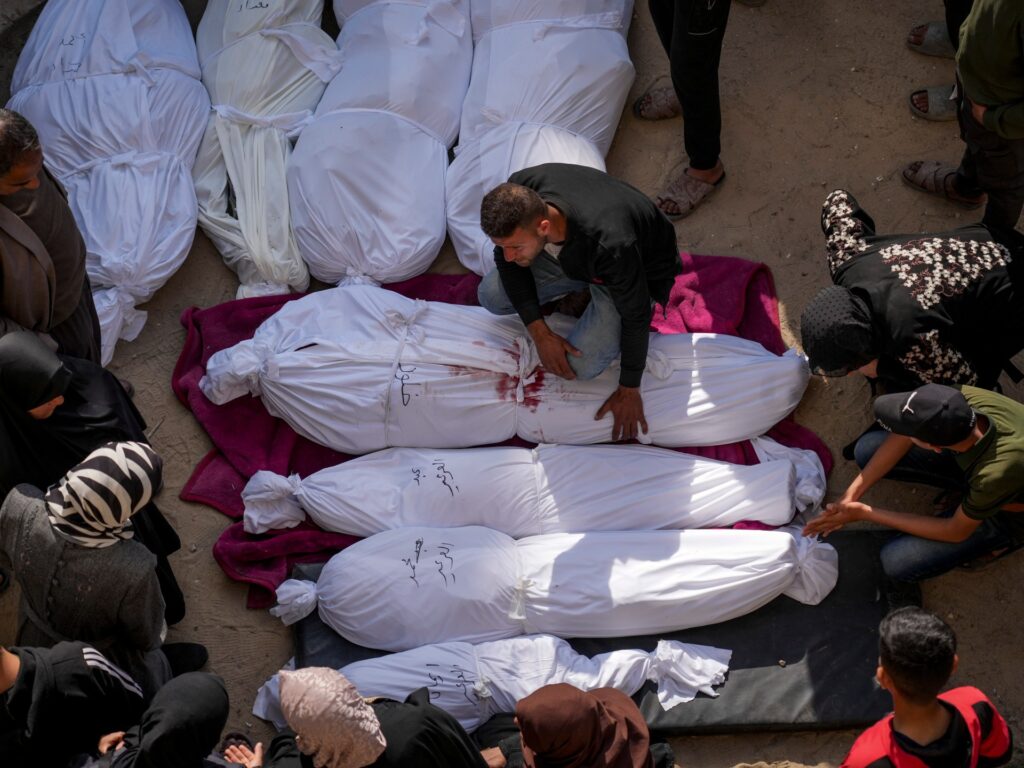
It was only a matter of time before Israel decided to definitively annihilate its ceasefire agreement with Hamas and resume all-out genocide in the Gaza Strip. Overnight, the Israeli army launched a wave of attacks that have thus far killed at least 404 Palestinians and wounded 562. These numbers will no doubt rise as more bodies are recovered from beneath the rubble, and as Israel continues what Maltese Prime Minister Robert Abela has denounced as a “barbarous” assault on the Palestinian enclave. But barbarism, after all, is what Israel does best. And unfortunately, there’s no end in sight to barbarous behaviour – particularly when the most the international community can muster are spineless statements of condemnation. United Nations High Commissioner for Human Rights Volker Turk, for example, declared that the Israeli attacks “will add tragedy onto tragedy”, and that “Israel’s resort to yet more military force will only heap further misery upon a Palestinian population already suffering catastrophic conditions”. Advertisement Norwegian Prime Minister Jonas Gahr Store concurred that the Israeli assault constitutes “a great tragedy” for the population of Gaza, many of whom “live in tents and the ruins of what has been destroyed”. For his part, Dutch Foreign Minister Caspar Veldkamp took to the platform X to opine that “humanitarian aid must reach those in need, and all hostilities must end permanently”. Switzerland called for “an immediate return to the ceasefire”. The United States, of course, found no need to condemn the renewed Israeli attacks on Gaza – an unsurprising reaction from the country that has from the get-go been aiding and abetting genocide, first under the Joe Biden administration and now under Donald Trump’s. In an interview with Fox News, White House press secretary Karoline Leavitt confirmed that the US had been consulted by Israel on the latest assault, adding that Trump had “made it clear” that Hamas and “all those who seek to terrorise not just Israel, but also the United States of America, will see a price to pay”. Paraphrasing a previous threat issued by Trump to Hamas, Leavitt warned that “all hell will break loose”. And yet, by any objective standards, hell has already decisively broken loose in the Gaza Strip. With solid US backing, the Israeli military officially slaughtered at least 48,577 Palestinians between October 2023 and January 2025, when a tenuous ceasefire between Israel and Hamas took hold. In February, Gaza’s Government Media Office updated its death toll to nearly 62,000 to account for thousands of missing Palestinians presumed to be dead under the all-pervasive rubble. Advertisement And while Gaza ostensibly got a break from relentless Israeli bombardment with the implementation of the truce agreement, the Israeli military continued to kill Palestinians and otherwise violate the agreement accordingly. After all, a cessation of hostilities has never been Israel’s modus operandi. When in early March Israel blocked all humanitarian aid deliveries to the Gaza Strip – a manoeuvre amounting to enforced starvation and an obvious war crime – the US predictably blamed the blocking of aid on Hamas rather than on the party actually doing it. The European Union followed suit by condemning Hamas for its alleged “refusal… to accept the extension of the first phase of the ceasefire agreement in Gaza”. Given that Israel had straight-up changed the terms of the agreement, this was in reality not a case of “refusal” by Hamas but rather one of Israel unilaterally moving the goalposts – as it has done time and again. As an afterthought, the EU noted that Israel’s “decision to block the entry of all humanitarian aid into Gaza could potentially result in humanitarian consequences”. But anyway, it was all Hamas’s fault. Now, as condemnations of Israel’s renewed barbarism trickle in, it is not difficult to see why Israel might take international objections as slightly less than serious. At the end of the day, perfunctory slaps on the wrist and appeals for an end to “tragedy” in Gaza do nothing to impede Israel’s free hand as it starts and stops genocide as it pleases. Many children are among today’s casualties of Israeli terror, and Israel has gone about issuing new forced displacement orders for various sectors of the Gaza Strip. The Gaza Health Ministry has issued an urgent appeal for blood donations. All in all, then, it appears a continuation of the ceasefire has been safely averted. Advertisement And there’s an added perk for Israeli Prime Minister Benjamin Netanyahu, who is currently on trial in no fewer than three corruption cases involving fraud, bribery, and breach of trust. As the Times of Israel reported today, Netanyahu’s scheduled testimony has now been “canceled for the day amid [the] shock Gaza offensive”. According to the prime minister, prosecutors approved the cancellation to enable the government to conduct an “urgent security consultation” on renewed operations in Gaza. And as barbarous tragedy unfolds once again in the Gaza Strip, the international refusal to put a stop to it is itself a barbarous tragedy. The views expressed in this article are the author’s own and do not necessarily reflect Al Jazeera’s editorial stance. Adblock test (Why?)
Israel’s Ben-Gvir to rejoin Netanyahu’s government
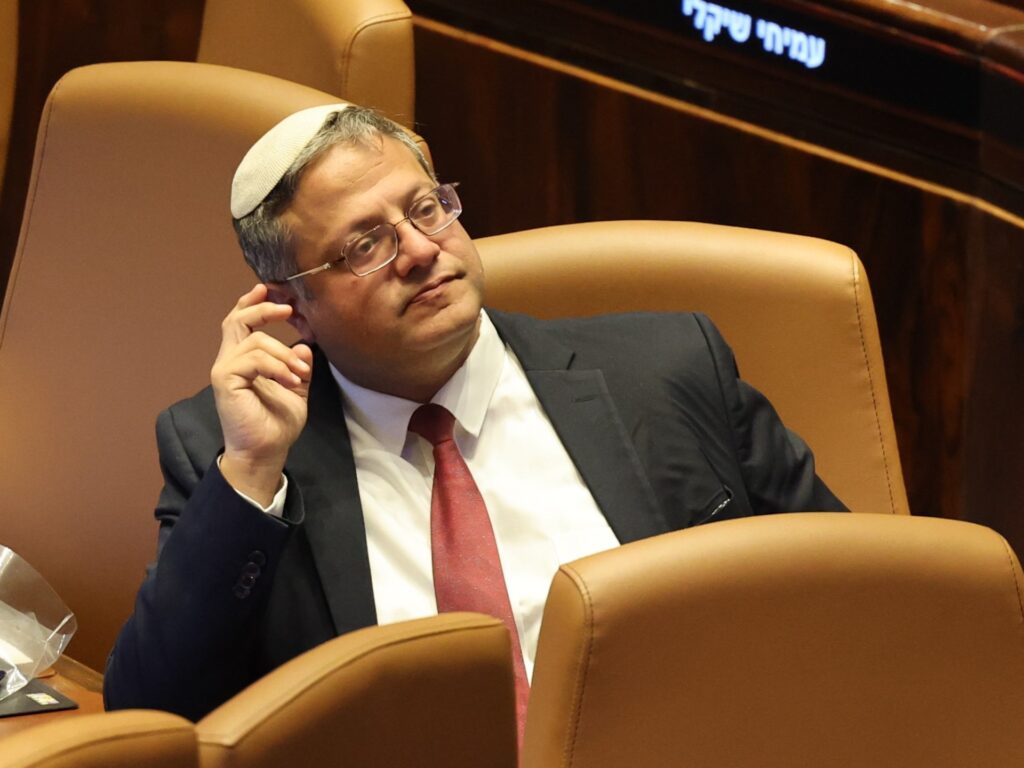
The Israeli hardliner had resigned in January in protest of the Gaza ceasefire deal. Former Israeli National Security Minister Itamar Ben-Gvir, who left the government over disagreements about the ceasefire in Gaza, will rejoin the coalition of Israeli Prime Minister Benjamin Netanyahu. Ben-Gvir’s Otzma Yehudit (Jewish Power) party and Netanyahu’s Likud Party announced the return on Tuesday, hours after Israel launched its deadliest Israeli strikes on Gaza since a January ceasefire. “Likud and Otzma Yehudit have agreed that the Otzma Yehudit faction will return to the Israeli government today, and the ministers of Otzma Yehudit will return to the government,” the parties said in a joint statement. Ben-Gvir’s return will strengthen the coalition government, which was left with only a thin parliamentary majority following his departure in January. The 47-year-old lawyer and politician, who has led the far-right party Otzma Yehudit or Jewish Power since 2019, resigned in January in protest at the truce in Gaza. Ben-Gvir had also said in January that humanitarian aid and fuel, electricity and water must be “completely stopped” from entering the war-torn Palestinian enclave in order to force the release of the captives that remain held by Hamas, the Palestinian group that governs Gaza. Advertisement “Only then will Hamas release our hostages without jeopardising Israel’s security,” he had said. Israel resumed air strikes on Gaza overnight on Monday, shattering the ceasefire agreement with Hamas. Netanyahu said he ordered the military to take “strong action” against Hamas over its refusal to release captives taken from Israel or agree to offers to extend the ceasefire. The Israeli military said on Telegram that it was conducting “extensive strikes on terror targets” belonging to Hamas, and more than 400 Palestinian people were killed. Many of Gaza’s two million-plus residents are also facing food and water shortages after Israel blocked humanitarian aid and other supplies to Gaza in early March. Adblock test (Why?)