

Cyprus recovers at least seven bodies after refugee boat capsizes
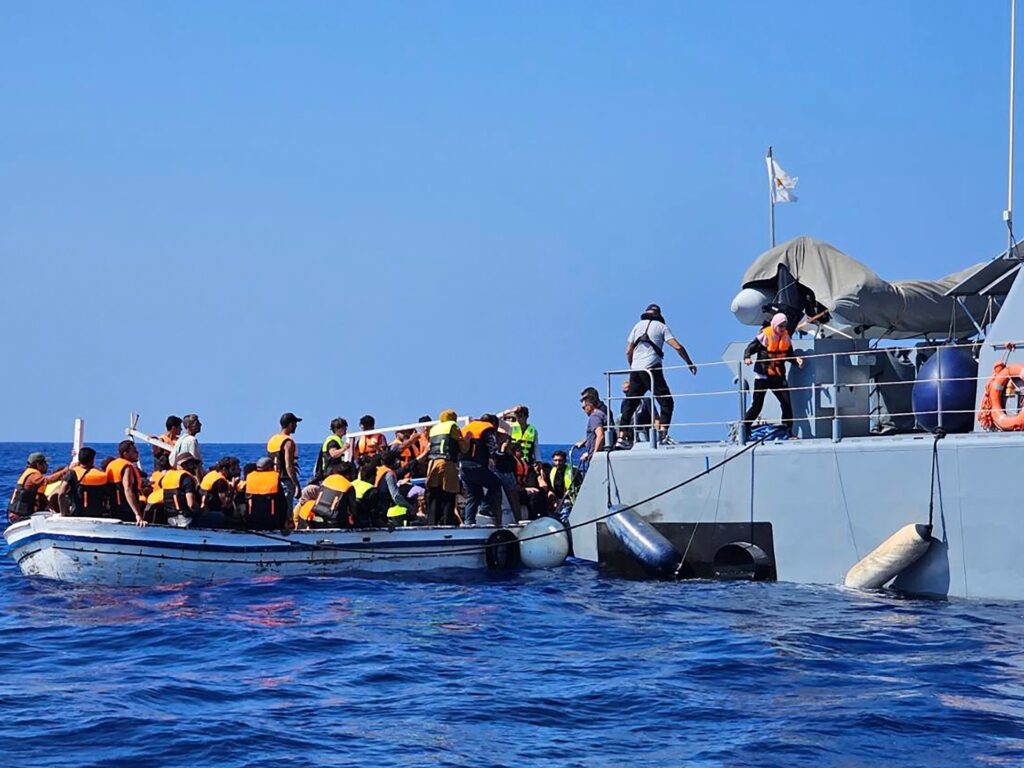
The border protection agency Frontex says irregular crossings into the EU over the Mediterranean rose last year. The bodies of at least seven people have been recovered off Cyprus after authorities mounted a major search and rescue operation following the capsizing of a boat carrying refugees, Cyprus’s state broadcaster says. An unspecified number of people are believed to be missing while two people were rescued on Monday from international waters about 30 nautical miles (55.5km) southeast of the island, the broadcaster said. Cyprus’s search and rescue coordination centre said boats and aircraft were deployed as part of the rescue operation without mentioning casualties. In an official statement, it said a search and rescue operation was “ongoing to locate missing persons after a migrant boat capsized 30 nautical miles (55 kilometres) southeast of Cape Greco”, referring to the southeastern-most point of the Mediterranean island. Several naval helicopters and police patrol boats were involved in the search for survivors, the centre added. According to the Cyprus News Agency, one survivor told authorities that on board were roughly 20 Syrians who had departed from the port of Tartous, the scene of recent bloodshed in Syria. Advertisement The eastern Mediterranean island of Cyprus is less than 200km (125 miles) from the Syrian and Lebanese coasts and has long been a route for refugees seeking a better life in Europe. According to United Nations figures, 125 refugees died in the eastern Mediterranean last year, but the actual figure is likely to be higher. The European Union border protection agency, Frontex, said irregular border crossings into the EU over the eastern Mediterranean rose last year despite a broader decline in the bloc. Nicosia said it has the highest number of new asylum seeker applications in the EU per capita but has managed to significantly reduce the figure. Last month, the Ministry of Interior said asylum applications dropped 69 per cent from 2022 to 2024 while irregular maritime arrivals had stopped since May due to tougher government policies. The overthrow of Syrian President Bashar al-Assad in December has prompted some Syrian refugees to return home. The Republic of Cyprus government reported that an average of 40 Syrians per day have requested to return home since then. The government also said more asylum seekers were leaving Cyprus than arriving for the first time in its independent history. Adblock test (Why?)
How Trump’s US aid freeze has stymied Colombia’s immigration system

Children like Samantha are the core group currently eligible for Colombia’s temporary protection permit (PPT), since eligibility for adults was restricted in 2023. Colombia established the PPT programme in 2021 to encourage Venezuelans to seek legal immigration status. It was hailed as a breakthrough in addressing the migration and refugee crisis: The permits are valid until 2031 and allow Venezuelans to access Colombia’s education system, employment and other services. Andrés Moya, a professor at the Universidad de Los Andes School of Economics, has studied the benefits of the PPT. He found that Venezuelans with regularised immigration status had higher monthly incomes, better health and higher consumer spending. And it costs the Colombian government less to support them, compared with migrants and refugees without documents. The upside is particularly evident with children, Moya added. “If we invest in these children, they’re going to be in a better position later on in life to contribute back, to work, to create their own businesses, to increase consumption,” he said. If not, Moya warned, families are “going to either keep migrating and increasing the crisis throughout the region, or they’re going to become a burden to the system”. But since USAID stopped distributing foreign assistance, the programme that processes the special permits — called the “Visibles” project — has sputtered. Some Visibles offices reopened on February 28 with a skeleton staff. The Colombian government has had to rehire employees with its own funds. There were originally 171 staff processing documents nationwide before the aid freeze, according to a spokesperson for Colombia’s migration agency. Now, the government hopes to keep 92. Adriana Llano Medina works as a volunteer to register Venezuelan children for their migration documents. Faces have been blurred for applicants’ privacy [Austin Landis/Al Jazeera] When the sites shut down around the country last month, Llano Medina said only a single person was left on the Medellín staff — a programme coordinator — to handle high-level complaints. She credited her informal link to that coordinator with helping to save an eight-month-old child’s life. When the Venezuelan infant contracted a high fever in late February, the coordinator managed to arrange an emergency PPT so the baby could receive hospital care. She worried other children without documents might not get the same help in an emergency. From 2021 until the funding freeze, Llano Medina estimated that she registered at least 1,500 kids for their PPTs. She showed Al Jazeera the three notebooks and two tablets where she writes out each child’s information and stores their pictures to fill out their paperwork. Now, she struggles to scrape together bus fare to get to the hospital for her volunteer shift. “It’s a commitment that I make from the heart. I like contributing because, honestly, there aren’t many people who do it for free,” she said. Llano Medina pointed to Samantha as one of the lucky ones. The five-year-old’s fever eventually broke, and within days, she felt well enough to go to school. But her mother, Loaiza, still worries about what may happen next time they face a medical emergency. She plans to restart the PPT registration process for both Samantha and Clarion once her local migration office can rehire staff. “What gives us hope is knowing that once the process opens up, we can finally get rid of this burden,” she said. “They’ll have health insurance… and we won’t be turned away.” Adblock test (Why?)
White House deports alleged ‘gang members’ despite court order

NewsFeed The Trump administration has sparked fury by deporting alleged “Venezuelan gang members” to El Salvador, despite a court order prohibiting their expulsion. Civil rights groups are now asking the court to demand that the White House turn over information on the timing of events. Published On 17 Mar 202517 Mar 2025 Adblock test (Why?)
Putin and Trump to talk with proposed Russia-Ukraine truce in balance
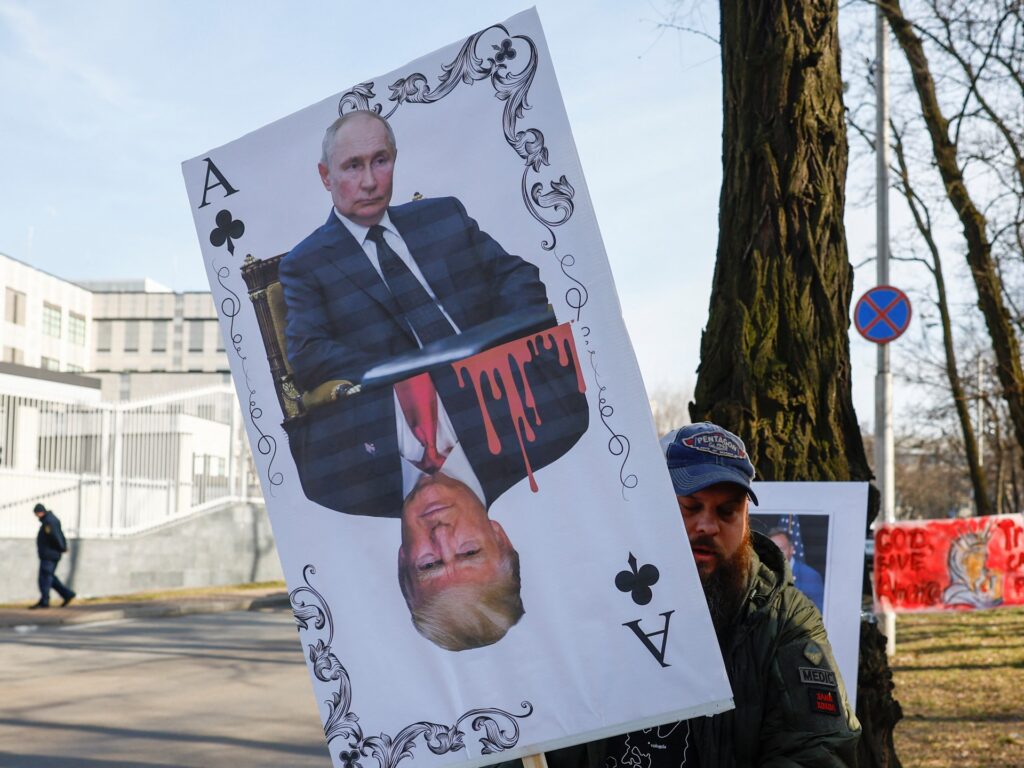
United States President Donald Trump says he will speak to Russian President Vladimir Putin on Tuesday about ending the Ukraine war with territorial concessions by Kyiv and control of the Zaporizhzhia Nuclear Power Plant expected to feature prominently in the talks. “We want to see if we can bring that war to an end,” the US president told reporters on Air Force One during a flight back to the Washington, DC, area from Florida on Sunday. “Maybe we can, maybe we can’t, but I think we have a very good chance. “I’ll be speaking to President Putin on Tuesday. A lot of work’s been done over the weekend.” Kremlin spokesperson Dmitry Peskov confirmed on Monday that Putin would speak with Trump by phone but declined to comment on Trump’s remarks about land concessions and power plants. “Yes, this is indeed the case,” he said during a news briefing. “Such a conversation is being prepared for Tuesday.” Trump is trying to win Putin’s support for a proposed 30-day ceasefire that Ukraine accepted last week as both sides continued trading heavy aerial strikes through the weekend and Russia moved closer to ejecting Ukrainian forces from their months-old foothold in the western Russian border region of Kursk. Advertisement Asked about what concessions were being considered in the ceasefire negotiations, Trump said: “We’ll be talking about land. We’ll be talking about power plants. … We’re already talking about that, dividing up certain assets.” Trump gave no details but was most likely referring to the Russian-occupied Zaporizhzhia nuclear facility in Ukraine, Europe’s largest nuclear plant. Russia and Ukraine have accused each other of attacks that have risked an accident at the plant. Reporting from Moscow, Al Jazeera’s Dorsa Jabbari said one of the main topics of discussion is indeed expected to be the Zaporizhzhia Nuclear Power Plant. “This is the largest nuclear facility in Europe, which came under Russian control early in the conflict in March 2022. Since then, it has been shut down, but it remains under the control of Russian forces and Russia’s state nuclear energy organisation, Rosatom,” she said. “There is also the proposed temporary ceasefire. Russia maintains that any such agreement must include security guarantees for its side, meaning it does not want Ukraine to use the opportunity to rearm, regroup and restart the conflict,” she added. The Kremlin said on Friday that Putin had sent Trump a message about his ceasefire plan via US envoy Steve Witkoff, who held talks in Moscow, expressing “cautious optimism” that a deal could be reached to end the three-year conflict. In separate appearances on Sunday TV shows in the US, Witkoff, Secretary of State Marco Rubio and Trump’s national security adviser, Mike Waltz, emphasised that there were still challenges to be worked out before Russia agrees to a ceasefire, much less a final resolution to the war. Advertisement Ukrainian President Volodymyr Zelenskyy said on Friday that he saw a good chance of ending the Russian war after Kyiv accepted the US proposal for a 30-day interim ceasefire. However, Zelenskyy has consistently said the sovereignty of his country is not negotiable and Russia must surrender the territory it has seized. Russia seized the Crimean Peninsula in 2014 and now controls parts of four eastern and southern Ukrainian regions since it invaded the country in 2022. Putin said his actions in Ukraine are aimed at protecting Russia’s security against what he casts as an aggressive and hostile West, in particular NATO’s eastward expansion. Ukraine and its Western partners said Russia is waging an unprovoked war of aggression and an imperial-style land grab. Moscow has demanded that Ukraine drop its NATO ambitions, that Russia keeps control of all the Ukrainian territory it has seized and that the size of the Ukrainian army be limited. It also wants Western sanctions eased and a presidential election in Ukraine, which Kyiv said is premature while martial law is in force. The European Union’s foreign policy chief, Kaja Kallas, said on Monday that the conditions demanded by Russia to agree to a ceasefire showed that Moscow does not really want peace. British Prime Minister Keir Starmer said on Saturday that Western allies other than the US were stepping up preparations to support Ukraine in the event of a ceasefire with Russia with defence chiefs set to firm up “robust plans” next week. Advertisement Britain and France both have said they are willing to send a peacekeeping force to monitor any ceasefire in Ukraine. New Canadian Prime Minister Mark Carney – who met with his French counterpart, President Emmanuel Macron, on Monday in Paris – also pledged to support Ukraine’s sovereignty. On the front lines, Ukrainian forces launched a drone attack on southern Russia overnight, sparking a fire at an oil refinery, local authorities said on Monday, as Moscow launched a barrage of nearly 200 drones against Ukraine. Astrakhan Governor Igor Babushkin said staff of a “fuel and energy” complex were evacuated before the attack, which sparked a large blaze. “One person was wounded during the attack. The victim has now been taken to the hospital,” Babushkin wrote on social media. The latest bombardment comes as Ukraine criticised Russia for refusing to accept the US-proposed ceasefire without any conditions. Moscow also launched its own barrage of 174 drones on Ukraine, where air defence units shot down 90, including the Iranian-designed Shahed drone, the air force said. About 500 people in the southern Ukrainian region of Odesa lost power because of the attacks and one person was wounded, Governor Oleg Kiper said, adding that several buildings were damaged, including a preschool. Adblock test (Why?)
DR Congo and M23 rebels confirm participation in Angola peace talks
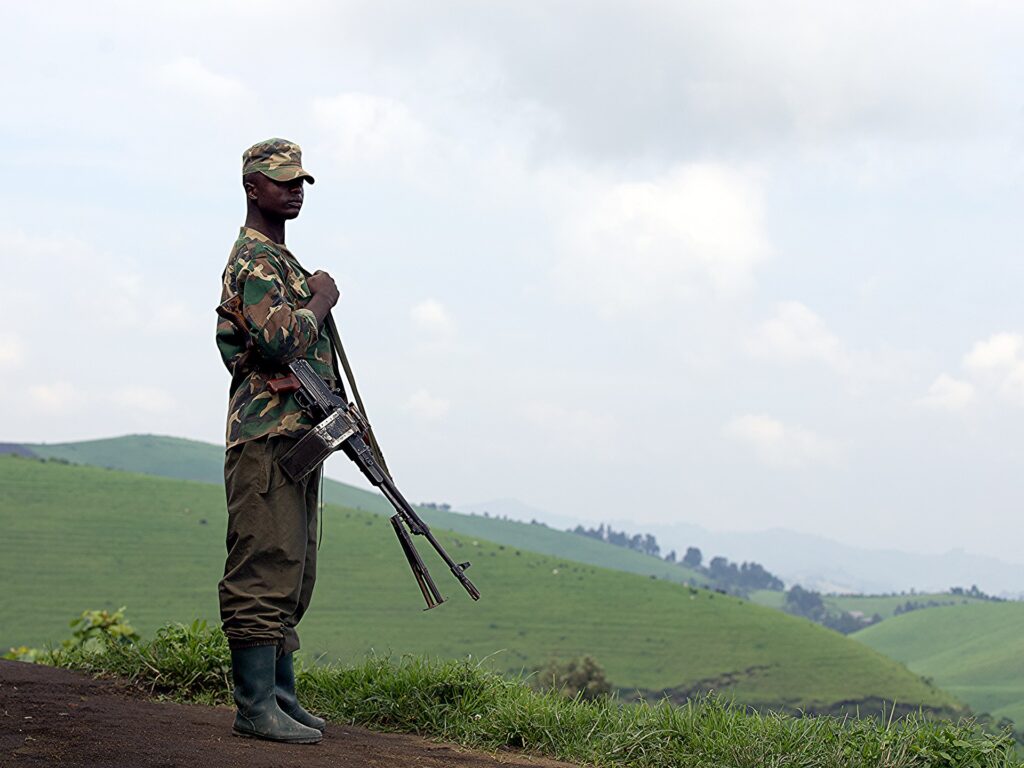
Talks, which DRC previously rejected, will seek to resolve the spiralling conflict in the east of the country. The Rwanda-backed M23 rebel group, as well as the Congolese government, have confirmed that they will participate in peace talks in Angola. A spokesperson for the M23 said on Monday that a delegation has been sent to Angola’s capital, Luanda. The rebel group has captured key areas of the Democratic Republic of the Congo’s (DRC) mineral-rich east since the start of this year in a major offensive that has killed many thousands. A delegation representing the DRC is now in Luanda for Tuesday’s talks, a spokesperson for President Felix Tshisekedi told The Associated Press news agency. Tshisekedi had earlier refused direct negotiations with the rebel group over the conflict, which has longstanding roots. M23 has also sent a delegation to Luanda, spokesperson Lawrence Kanyuka said on X. Angola has been trying to mediate a ceasefire for many months. Peace talks were cancelled late last year after Rwanda insisted on direct dialogue between the DRC and M23, which the Congolese government refused. Advertisement However, Luanda announced last week that it would host direct peace negotiations. M23 leader Bertrand Bisimwa declared last week that the rebels had forced Tshisekedi to the negotiating table, saying “peace begins with dialogue. The sooner we talk, the sooner peace becomes a reality.” Humanitarian crisis The conflict in the eastern DRC escalated early this year when M23 rebels carried out a lightning offensive and seized the strategic cities of Goma and Bukavu. M23 is one of about 100 armed groups that have been vying for a foothold in mineral-rich eastern DRC, near the border with Rwanda. The conflict has created one of the world’s most significant humanitarian crises. More than seven million people have been displaced, while 7,000 people have reportedly died since the start of the year. M23 is supported by about 4,000 soldiers from Rwanda, according to the United Nations, and has previously pledged to march to the DRC capital, Kinshasa. Rwanda says its forces are acting in self-defence against the Congolese army and militias hostile to Kigali. The conflict, which has blighted the eastern DRC for decades, is rooted in the spillover into the country of the 1994 genocide in Rwanda, as well as the struggle for control of its vast mineral resources. The UN Human Rights Council launched a commission in February to investigate atrocities, including allegations of rape and killing akin to “summary executions” by both sides. Adblock test (Why?)
The world must not accept the ‘new normal’ in Palestine
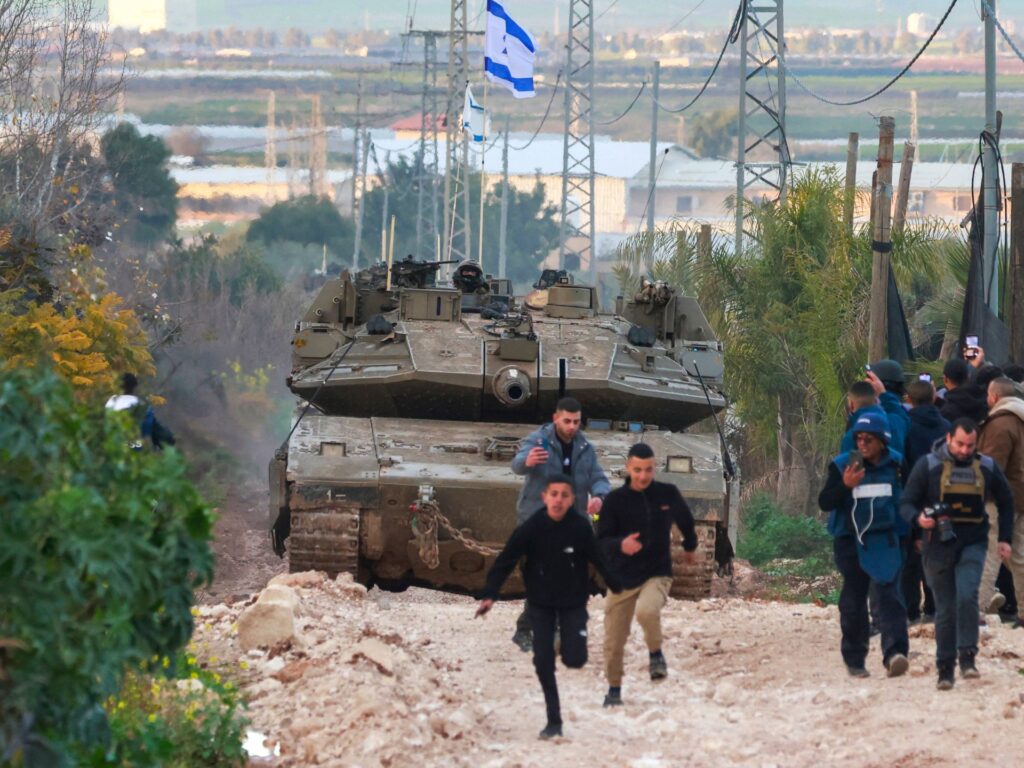
When I returned to my hometown near Ramallah in the occupied West Bank in January, the tension was palpable. It reminded me of the second Intifada, which I witnessed firsthand as a child. There was fear and anxiety and an increased sense of uncertainty due to constant attacks by Israeli settlers. Roads to and from the town were blocked by checkpoints, leading to hours-long waits and humiliation for Palestinians trying to enter or leave. Weeks before I visited, Israeli settlers had set fire to my family’s land during the olive-picking season. This followed a similar attack last summer and two more the year before, which had destroyed property, crops, and ancient olive trees. My father told me he stood powerless, unable to extinguish the fire as the armed settlers were protected by Israeli forces. Even if the soldiers hadn’t been there to prevent any action to save the property, there would not have been enough water available to put out the fire because it is diverted by nearby illegal settlements. Advertisement The situation across the occupied West Bank has been worsening for years, but violence escalated sharply after October 7, 2023. Nearly half of all Palestinian children killed by Israeli forces or settlers since records began were killed in just the past two years. So far this year, that violence has seen a two-year-old shot in the head by an Israeli sniper inside her family home, and a 23-year-old pregnant woman killed by Israeli fire. These are not isolated incidents, but part of a broader pattern where Palestinians are killed in unprecedented ways, at unprecedented rates. Israeli military raids on Palestinian homes and arbitrary detention have become a daily occurrence. Of the 10,000 Palestinians lingering in Israeli prisons, more than 300 are children, most of whom face no charge and have no way of knowing if or when they will see their families again. Villages are attacked, homes are demolished, and property is destroyed at accelerated rates. The architecture of occupation — checkpoints, barriers, and permits — has intensified and made daily life unbearable for Palestinians. Nearly 900 new military checkpoints and barriers have been installed since October 7. This has led to severe movement restrictions and disruptions to essential services, deepening an already dire humanitarian crisis. What was once unprecedented has become “routine” – and the world seems to be getting used to it. Our new reality includes Israeli air strikes on refugee camps, hospitals under siege, children shot in front of their homes. Such incidents of brutal violence have become regular occurrences, just like in Gaza. Advertisement Remember the first hospital attack in Gaza? The first targeting of a school sheltering the displaced? The first fire from an Israeli air strike tearing through tents of the displaced and burning people alive? Now try to remember the last one. Such violent incidents have become so normalised that they are ultimately accepted as a grim reality in a faraway land. The same is now happening in the occupied West Bank. As Save the Children’s representative to the United Nations, I see how this dynamic is reflected on the international stage. The persistent lack of meaningful accountability for Israeli forces has fostered a culture of impunity — allowing acts like bombing schools, burning down homes, and the killing of journalists and humanitarian workers to become perceived as “normal”. And even when the spotlight is cast on Palestine at global events, it seems to make no difference. Earlier this month, the Palestinian-Israeli film No Other Land won the Oscar for best documentary. Accepting the award, Palestinian filmmaker Basel Adra expressed his hope that his infant daughter would not have to live the same life that he was currently living – always fearing settler violence, home demolitions and forced displacement. Despite the film winning the highest accolades (or perhaps because of it), the attacks by Israeli soldiers and settlers on Masafer Yatta, Adra’s community, have only intensified. There has been no meaningful action from the international community about it. People can be forgiven for being overwhelmed in the face of relentless brutality taking place for more than a year and a half now. It’s only human to feel numb. Besides, so many people have been exposed to media coverage that has systematically dehumanised Palestinians and sidelined their voices, severing human connection and empathy. Advertisement But governments cannot be forgiven for taking no action. They have a legal obligation to uphold international law. Its norms are not relative; they are not up for negotiation. The truth is that the shocking violations taking place in Gaza and the West Bank have been normalised because they are being accepted by those entrusted to uphold the norms of international law. We must demand that international bodies and governments take concrete steps to hold perpetrators accountable for their actions. This includes suspending arms transfers and supporting mechanisms that challenge impunity for those who flout international law. The global community must act decisively to restore respect for international law. States that ignore these laws undermine the very foundation of a rules-based global order. While those who violate children’s rights and international law bear ultimate responsibility, all member states of the United Nations have a duty under the Geneva Conventions to ensure adherence to these principles. Weekly massacres are not normal. A population brought to the brink of a man-made famine is not normal. Air strikes on refugee camps are not normal. A two-tier system of rights based on ethnicity is not normal. Detaining, imprisoning and killing children is not normal. The time for passive observation has passed. The world must demand accountability, support humanitarian efforts, and refuse to accept the unacceptable. Every delay costs more lives; every delay weakens the system designed to keep people across the world safe. Only through collective action can we break this cycle of violence and ensure a future where children in Palestine and Israel, regardless of their ethnicity or religion, are protected and valued. Advertisement The views expressed in this article are the author’s own
Will Gen Z ever be able to retire?

We look at how Gen Z is reshaping the very concept of retirement. Millions of young workers are turning away from traditional retirement plans, arguing that the system no longer reflects today’s economic realities. Generation Z isn’t interested in climbing the corporate ladder. Instead, they’re forging their own paths. But will they ever be able to truly retire? With soaring costs, job instability and an uncertain economy, traditional pensions feel like a relic of the past. Does Gen Z need to prepare for a lifetime of work? Presenter: Anelise Borges Guests:Teresa Ghilarducci – Economics professor, The New SchoolJulie Rose – Travel coach and digital nomad blogger Adblock test (Why?)
Military chiefs to thrash out Ukraine peacekeeping proposal amid Russia war
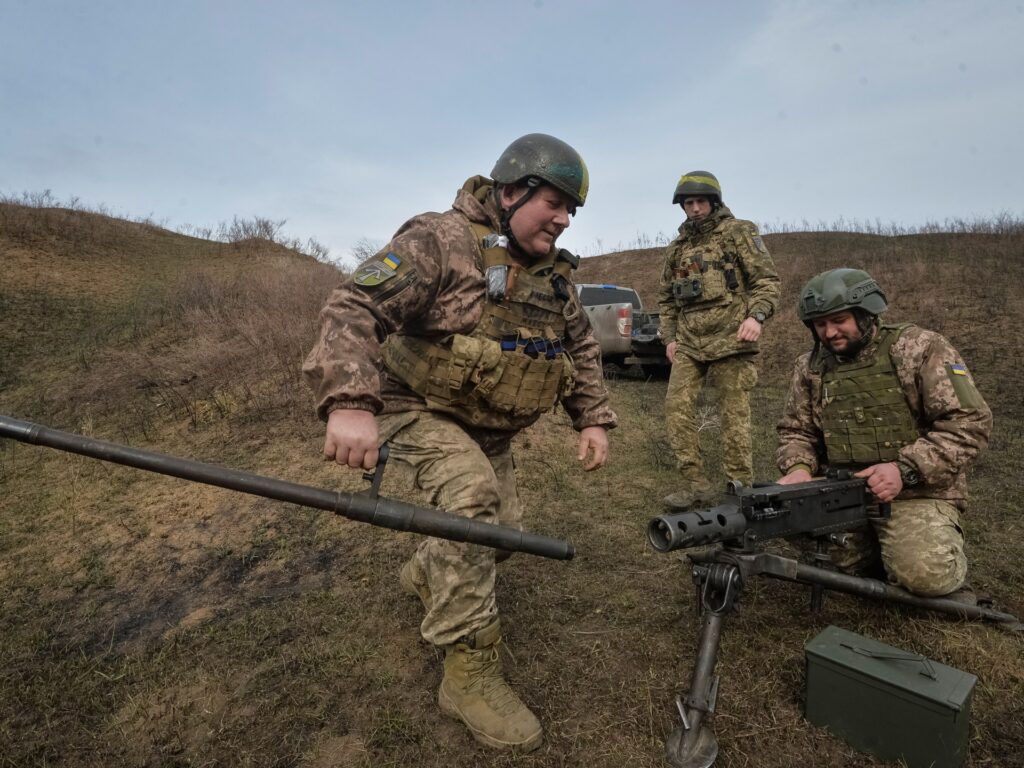
Military personnel from more than 30 countries convening in the United Kingdom this week plan to thrash out the scope and scale of a ceasefire enforcement mission to Ukraine, military sources have told Al Jazeera. The meeting comes two weeks after UK Prime Minister Keir Starmer announced that a “coalition of the willing” would work on a peace plan to present to United States President Donald Trump, who has put Washington’s support of the war-torn country into doubt. “They’re looking very seriously… at what is required, what countries can contribute,” said a senior military source with knowledge of the discussion, insisting on anonymity to speak freely. “It needs to be a maximalist approach, so then we can see whether the US can provide any enablers,” the source said. “This is an opportunity for the Europeans to step up. This is quite exciting… We can still do this quite quickly.” Enablers include air, land and sea transport, long-range fires, drones, counter-drones and air missile defence, where the US excels and Europe still lags behind. Advertisement A Ukraine peacekeeping implementation force would require many “tens of thousands” of troops, military analysts told Al Jazeera, if it is to sit between Ukraine’s standing army, about a million-strong, and Russia’s invading armies, now believed to number about 650,000, backed by a government in Moscow hostile to the idea of multinational peacekeepers. In addition, the US may be there only in a supporting capacity. Trump told reporters last month he expected Europe to take the lead on securing Ukraine. “I’m not going to make security guarantees beyond very much,” he said on February 26. “We’re going to have Europe do that.” That onerous burden seems well beyond the requirements of the so-called “Ceasefire Toolkit” drafted in secret by US, Russian and Ukrainian military experts and published this month. It suggested that 5,000 police and 10,000 supporting military personnel would be enough to monitor a 5km-wide (3-mile) buffer zone along the entire front. However, this was based on Russia consenting to a pullback of heavy military equipment, the creation of humanitarian corridors and joint military coordination. The majority of countries volunteering forces are from the European Union, but non-EU countries, such as Norway and Turkey, as well as countries in the Asia Pacific, have also expressed an interest. “If you fail to get a peace in Europe, elsewhere in the world you could have implications, and there could be repercussions in the Pacific,” said the military source, explaining the interest of non-Europeans. Advertisement One idea does seem to be agreed upon – that a ceasefire has to come first. “I can’t see any circumstances under which a European country would put forces in Ukraine while there’s still a war going on,” said the source. European casualties could trigger NATO’s Article 5 mutual defence clause without Russia having attacked a NATO member, said the source. “Article 5 is sacrosanct. It is the one thing that Putin respects. It is the one thing that deters him from attacking a NATO country. We need to safeguard that.” What would the force do? General Ben Hodges, a former commander of US forces in Europe, said, “With peacekeeping, you think of blue helmets, a UN mandate… which the Russians never respect and will not have a prayer of being successful in this case,” adding that the force has to have “real deterrent capabilities”. Apart from armour, firepower and enablers, the force must have “the authority to use them immediately”, Hodges told Al Jazeera. “If a Russian drone comes flying overhead, then they need to be able to shoot it down immediately, not have to call Brussels or some capital to ask permission,” he said. “The Russians will of course test all this in the first few hours.” Contributing countries have not yet agreed on this authority. “I don’t think there is any consensus yet,” said the military source. Russia has made clear it is hostile to the idea of a multinational force in Ukraine. In an interview last month, Russian Foreign Minister Sergey Lavrov called the initiative an “audacious stance”, amounting to “a continuation of provoking the Kyiv regime into war with us”. Advertisement The positioning of the force is also a key decision. “If it is a force that is intended to be in the zone of separation between the Russians and Ukrainians, that could be a substantially large number,” said Hodges, because the line of contact is currently 1,000km (621 miles) long, and because troops would have to be rotated in and out over a long period – perhaps years. The other possibility would be to install a reaction force stationed behind Ukrainians, “where if Russia did something, these guys would be deployed forward to deal with it”, said Hodges. This would be safer for the troops, he said, but “probably initially less effective, because the Russians would be testing how long it takes them to react”. Can Europe do it? The UK and France are leading the effort to glue this multinational force together. They are old hands at this, having led the formation of victorious coalitions in two world wars. Their more recent history has been patchy. France’s last major overseas operations to push armed groups out of Mali and the Sahel ended in failure. The last time the UK mobilised was for the second Gulf War in 2003 and Afghanistan in 2009. Today, their standing armies are 140,000 (UK) and 202,000 (France) according to the Military Balance published by the International Institute for Strategic Studies in London. French President Emmanuel Macron first raised the possibility of French troops in Ukraine in February last year, but his lieutenants quickly spun that into a peacekeeping force, not a combat force aligned with Ukraine. Advertisement Starmer announced that the UK was willing to send troops to Ukraine as part of a peacekeeping force ahead of a Paris summit on February 17. European purse strings were loosened when Europe’s leaders agreed earlier this month to keep defence spending increases
What’s happening in Yemen? A breakdown of the Houthi-US violence
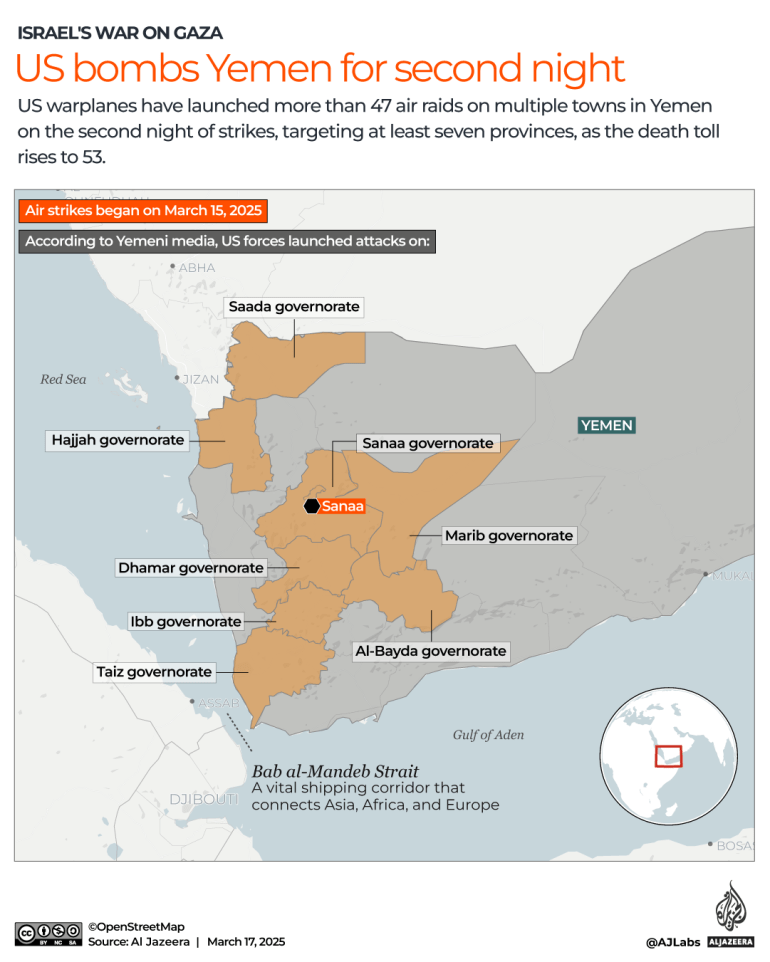
A new crisis is brewing near one of the world’s most crucial shipping lanes as Yemen’s Houthis and the United States square off. The US injured and killed more than 100 people in strikes in Yemen on Saturday night, according to Yemeni media and sources. The Houthis claimed a response on a US warship on Sunday evening, and the US bombed Yemen again after that. What led to this tit-for-tat? Who started it? And what’s the purpose? Here’s what we know. What happened in Yemen? The US has bombed Yemen for two nights in a row now, claiming to be targeting Houthi leaders. The result on the ground has been the death of 53 people so far, including children. Nearly 100 other people have been injured in the attacks. Where were the attacks? US attacks have hit Sanaa – the capital city controlled by the Houthis – and its surrounds, as well as the northern governorate of Saada and the port of Hodeidah. (Al Jazeera) Who’s being targeted? US officials say they are targeting Houthi leaders. The Houthis, however, say children were among the killed and circulated photos of the alleged victims. Advertisement “[Trump’s] strikes were very clearly going after Houthi leadership, and didn’t seem to care if any civilians got in the way,” Nick Brumfield, an independent Yemen analyst, told Al Jazeera. “The strikes in Sanaa targeted a residential neighbourhood known to house a lot of Houthi leaders.” A man gestures as he searches in the rubble of a house hit by a US attack in Saada, Yemen, March 16, 2025 [Naif Rahma/Reuters] What does the US want? The US says it will bomb Yemen until the Houthis stop, with President Donald Trump claiming that the Houthis had “targeted our Troops and Allies”. Trump and his Defense Secretary Pete Hegseth have also claimed that Iran is behind the Houthis’ actions and that it was now “on notice”. US Secretary of State Marco Rubio announced he had coordinated the attacks on Yemen with his Russian counterpart, Sergey Lavrov. Did the Houthis hit back? The Houthis claimed two attacks on the US aircraft carrier USS Harry S Truman and its warships. The US has not commented. The Houthis denounced the attacks by the US and the United Kingdom, which did not partake in the actual bombing but helped with refuelling, according to the BBC. Houthi spokespeople pledged retaliation for the US attacks. Trump administration officials coordinate with Russia and put Iran ‘on notice’ [File: White House/Handout via Reuters] Why is Iran catching heat? US officials claim Iran is heavily backing the Houthi activities in the Red Sea. Some claim the group is an Iranian proxy, though many analysts and think tanks such as Brookings and the Council on Foreign Relations (CFR) instead consider them a willing partner. Advertisement Iran’s Foreign Minister Abbas Araghchi said the US government “has no authority, or business, dictating Iranian foreign policy”. “End support for Israeli genocide and terrorism,” he posted on X, formerly Twitter, on Sunday. “Stop killing of Yemeni people.” What started this? On March 2, Israel blocked all aid from entering Gaza, renewing the starvation of an enclave in desperate need of food and medicine. Five days later, Houthi chief Abdelmalak al-Houthi set a four-day deadline – if Israel did not reopen the crossings and allow aid in, the Houthis would resume attacking Israel-linked ships passing through Bab al-Mandeb Strait on their way to the Suez Canal. On March 11, spokesperson Yahya Saree announced the resumption of the Houthis’ Red Sea operations against Israeli ships in the Red Sea and the Arabian Sea, as well as Bab al-Mandeb. The Houthis have been attacking ships connected to Israel since November 2023 to pressure Israel to end its war on Gaza. The attacks stopped when a ceasefire was declared in Gaza on January 19, and the Houthis complied. “They did shoot at an F-16 a few weeks back after the FTO [designation] and downed an MQ-9 saying it was in Hodeidah airspace; but in terms of shipping, they’ve abided by what they said they were going to do,” Brumfield said. On March 4, the Trump administration reapplied the “foreign terrorist organization” (FTO) designation to the Houthis about four years after his predecessor, Joe Biden, removed it. What effect have the Houthi attacks had to date? The Red Sea receives almost 15 percent of global sea trade. Advertisement The Houthi attacks have forced much of that trade to take a much longer, more expensive route around the southern coast of Africa, raising insurance costs and affecting inflation rates globally. The Houthis’ attacks have reportedly killed eight people and wounded others. Most of their attacks have not resulted in casualties. Will the Houthis be deterred by the US attacks? If their spokesmen are to be believed, probably not. The Houthis’ Supreme Political Council said they would not be deterred but would “escalate the situation to a more severe and dire level”. “Targeting civilians demonstrates America’s inability to confront the situation,” the statement added. In the past, the Houthis’ Red Sea attacks and the subsequent US attacks on Yemen only helped the group’s ability to recruit fighters. While these attacks may be bigger than what the Houthis previously experienced, there is little sign they are willing to give in. Nassrudin Amer, a Houthi spokesman, wrote on X: “Our position is clear and our demand is simple: lifting the siege on Gaza and saving the people of Gaza from starvation.” Adblock test (Why?)
Yemen’s Houthis and US launch new attacks amid Red Sea shipping threat
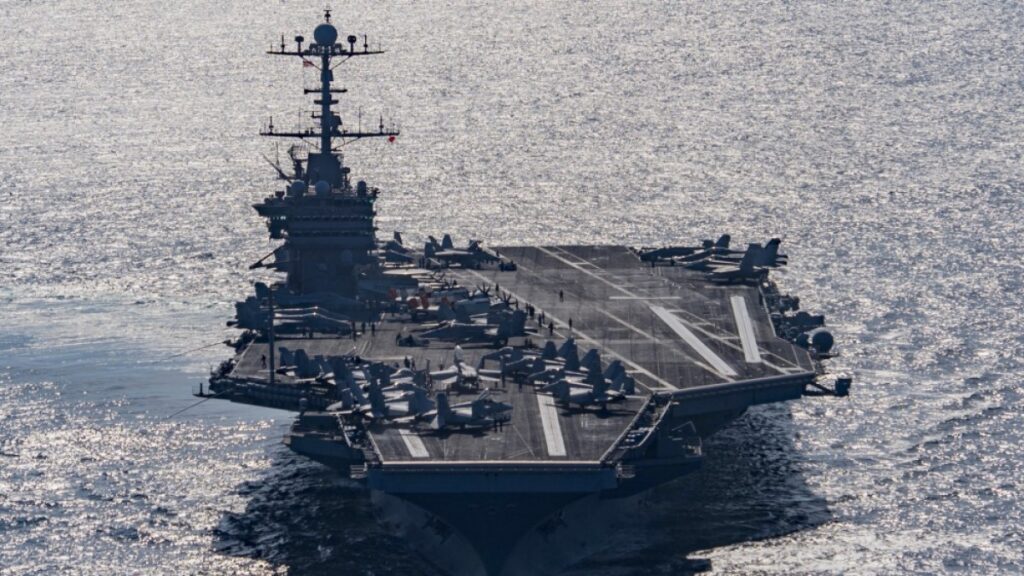
US insists it will target Houthis until Yemeni group withdraws threat to Red Sea shipping. Houthi rebels have claimed another attack on a United States naval vessel, calling it “retaliation” for US strikes on Yemen. A Houthi spokesperson said on Monday that fighters had launched 18 missiles and a drone at the “aircraft carrier USS Harry Truman and its accompanying warships”. The US military said it had continued targeting the group overnight. It was the second strike on the US navy claimed by the Iran-aligned group over the last 24 hours, amid a sudden surge in hostilities. After the Houthis said last week they would resume targeting Israeli-linked shipping in the Red Sea due to Israel’s ongoing blockade of Gaza, the US launched a series of large-scale attacks on Yemen over the weekend, killing dozens of people and wounding many more. In a statement posted on Telegram, the Houthi spokesperson said the attack was “in retaliation to the continued American aggression against our country”. The US has not responded to the claimed strike. However, US Central Command posted a video on X saying its “forces continue operations against Iran-backed Houthi terrorists”. Advertisement The Houthi-backed SABA news agency reported two new air raids early on Monday around the port city of Hodeidah, about 230km (143 miles) from the capital Sanaa. Citing local authorities, SABA also reported that US forces carried out strikes on a cancer facility being built in the city of Saada on Sunday, causing “widespread destruction”. The Houthis, who control much of the Arabian Peninsula’s poorest country, maintained a campaign targeting the busy sea route off the coast of Yemen as Israel bombarded Gaza over the past 18 months. The attacks affected global trade, forcing a significant volume of maritime traffic between Asia and Europe away from the Suez Canal to take the far longer journey around Africa. The group halted its drone and missile attacks, which had targeted vessels with tenuous Israeli links, when the Gaza ceasefire was declared in January. However, the Yemeni group said last week it was “resuming the ban on the passage of all Israeli ships” in the Red Sea due to Israel’s renewed blockade of the Palestinian enclave. On Saturday, President Donald Trump ordered the US military to strike at the Houthis. The attacks killed at least 53 people and injured many more, most of them women and children, according to the Reuters news agency. Most of the 40 raids targeted the Houthi-controlled Saada province, north of Sanaa. Oil prices have been trading higher on news of the Red Sea attacks. Brent futures – the global international benchmark – rose 41 cents or 0.6% on Monday, to $70.99 a barrel. Advertisement Adblock test (Why?)