

Barcelona come back at Atletico Madrid to claim LaLiga top spot
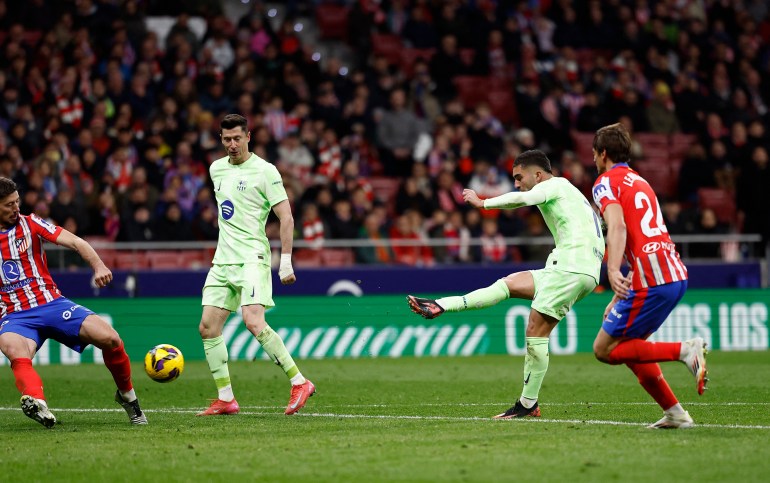
Ferran Torres scores twice as Barcelona come from two down to beat Atletico Madrid and claim top spot in LaLiga. Barcelona battled back from two goals down to beat Atletico Madrid 4-2 and land an important blow in the Spanish title race. Lamine Yamal struck in the 92nd minute and Ferran Torres in the 98th to help take the Catalans back to the top of the table on Sunday, after Real Madrid beat Villarreal on Saturday to briefly claim pole position. Barcelona have a game in hand on the champions, with both sides level on 60 points, while Atletico trail the top two by four after they crumbled at home against Hansi Flick’s side to end a disastrous week following their Champions League elimination. Barcelona’s Ferran Torres scores their fourth goal [Juan Medina/Reuters] Having twice been caught out late by Atletico this season, this time it was Barcelona’s turn to provide the sting in the tail, extending their unbeaten streak to 18 matches across all competitions. Julian Alvarez and Alexander Sorloth put Atletico ahead before Robert Lewandowski and Torres hit back for Barca, who went on to win in stoppage time. Flick selected Marc Casado in midfield, with Frenkie de Jong not fit enough to be included in the match-day squad. Advertisement The German had warned his players to stay focused after they conceded a 96th-minute goal in December to surrender the lead at the top of the table to Atletico in a 2-1 home defeat. Barcelona also conceded two late goals in the Copa del Rey semifinal first leg to draw 4-4 against Diego Simeone’s side in February. They played within themselves in the first half, overly cautious and conserving energy, failing to create many openings. Teenage winger Yamal created one for himself but fired wide with Jan Oblak’s goal gaping, while Lewandowski directed a header at the Slovenian stopper. At the other end, Atletico wanted a penalty when Inigo Martinez pulled back Marcos Llorente in the area, but they were not given it. Barcelona’s best chance of the first half came when Pedri played in Lewandowski, who hit the top of the crossbar with a powerful drive. From the resulting goal kick, Atletico found the opener. Julian Alvarez of Atletico de Madrid scores his team’s first goal past Wojciech Szczesny of Barcelona [Angel Martinez/Getty Images] The hosts worked the ball to Griezmann, who threaded a brilliant pass across the area to Giuliano Simeone, with Alvarez finishing from his cut-back. It provided a moment of joy for the former Manchester City striker who felt deep frustration in midweek when his penalty against Real Madrid was controversially disallowed for a supposed double touch on the ball, as Atletico were eliminated in the Champions League last 16 on Wednesday. Yamal probed after the break as Barca looked for a way back in, and Simeone turned to his bench to freshen up his side who had played 120 draining minutes against Los Blancos. Advertisement The coach introduced Sorloth and Conor Gallagher and they combined for Atletico’s second goal. Atletico put together another fine team move with Griezmann heavily involved, before Gallagher squared to perennial super-sub Sorloth to net his 11th league goal of the season, despite just nine starts. Atletico Madrid’s Alexander Sorloth celebrates scoring their second goal with Antoine Griezmann [Juan Medina/Reuters] Barcelona had complaints about a Rodrigo De Paul handball in the build-up being dismissed and they turned their anger into an instant response. Martinez drove forward with the ball and slung it into the box for Lewandowski, who controlled well and powered a low finish past Oblak to spark the comeback. Substitute Torres netted the equaliser when Raphinha, on an otherwise quiet night in the capital for the Brazilian, crossed from the right. With Atletico shaken, Barcelona took full advantage, with Yamal’s deflected shot from distance sending them ahead in stoppage time. Torres bagged his second late on to round off a win which could prove decisive come the end of the season. Barcelona’s Lamine Yamal celebrates scoring their third goal with teammates [Susana Vera/Reuters] Adblock test (Why?)
First photo of ailing Pope Francis released amid complex health condition
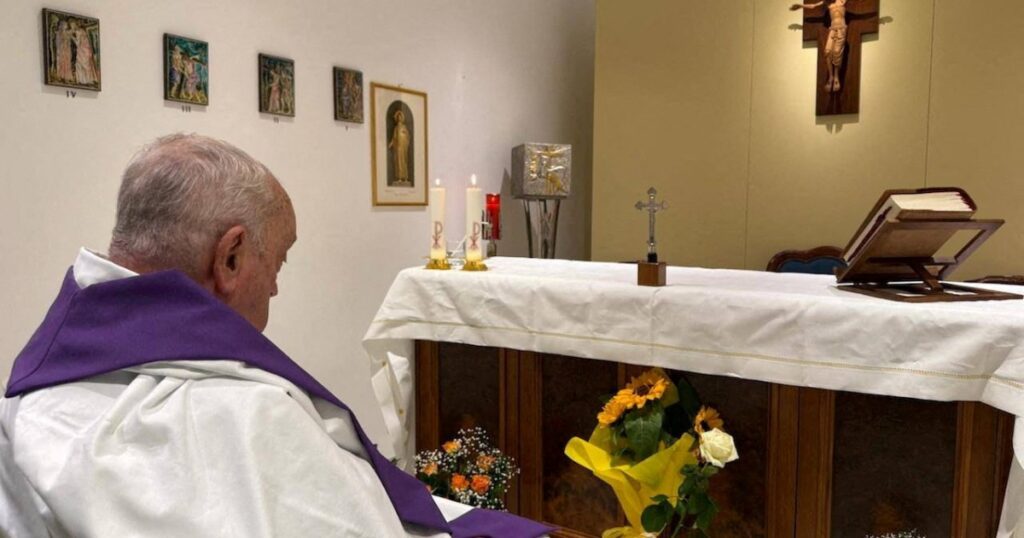
The pontiff, 88, continues papal duties despite ill health, approving long-term church reform from his hospital room. The Vatican has released the first picture of Pope Francis since the 88-year-old was admitted to hospital last month for double pneumonia. The picture, published on Sunday, shows Francis from behind, facing an altar after celebrating mass in a chapel at the hospital. The pope entered Rome’s Gemelli Hospital on February 14 with a severe respiratory infection that has required evolving treatment. He has not been seen in public since. The pontiff, who has been receiving oxygen throughout his treatment, appears to be breathing on his own in the photo. Journalists and the faithful have been asking for images of the pope as the last image of Francis was published more than a month ago, a Vatican News report said. Since being hospitalised, the only other sign of the pope has been audio released on March 6 where a fatigued Francis could be heard thanking all those who have been praying for his recovery. Concerning his health, “the situation remains stable” the report said, but still within a “complex clinical picture”. Advertisement Doctors this week said Francis was no longer in critical, life-threatening condition. But they have continued to emphasise that his condition remained complex due to his age, lack of mobility and the loss of part of a lung as a young man. Still, the pope has continued performing his duties. On Saturday, he approved a three-year implementation and evaluation process for a reform project that aims to make the Roman Catholic Church more welcoming and responsive. The Vatican office for the Synod of Bishops released a timetable through 2028 to implement the reforms and said Francis had approved the calendar last week. Adblock test (Why?)
Netanyahu moves to dismiss head of Shin Bet over lack of ‘trust’
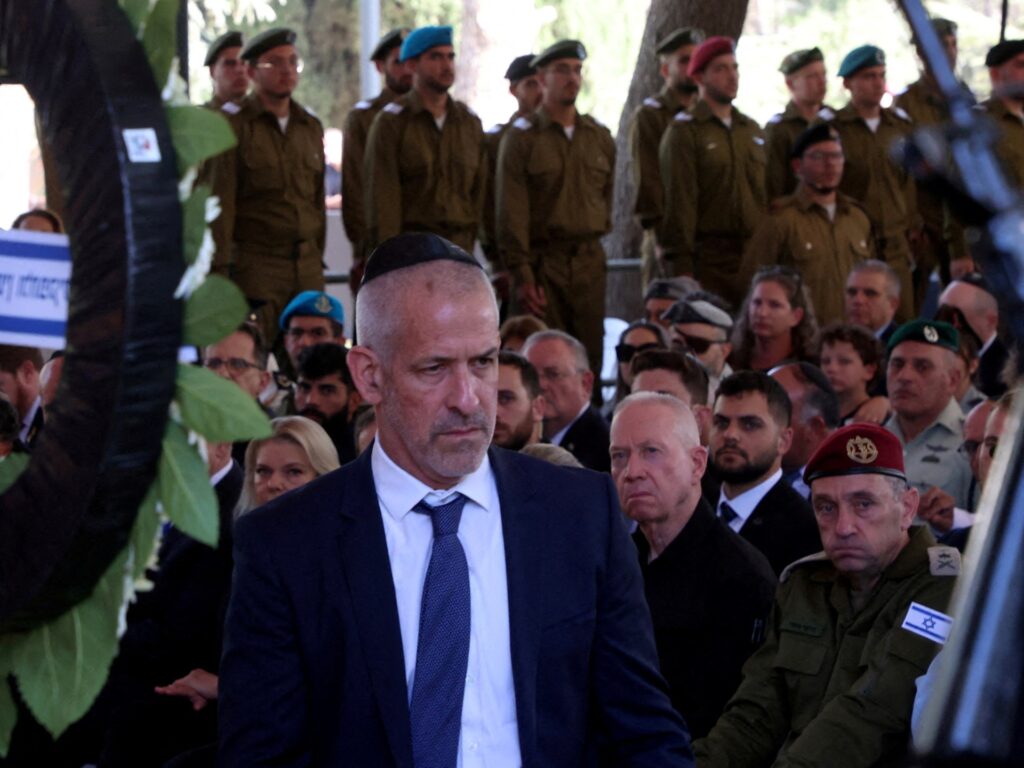
Israeli Prime Minister Netanyahu says he no longer has ‘trust’ in the head of the domestic security agency. Israeli Prime Minister Benjamin Netanyahu will bring a vote to the government to dismiss the director of the Shin Bet domestic security service. In a statement from Netanyahu’s office on Sunday, the prime minister said he has had an “ongoing distrust” for Ronen Bar and that trust in the head of the domestic security service is crucial at a time of war. According to Israeli media, the vote to dismiss the Shin Bet chief is expected to take place in a special cabinet meeting on Wednesday. But in a statement, Bar said while he took “responsibility for the agency’s part” in failing to prevent the October 7 2023, Hamas attack that sparked the war in Gaza, it was “clear that the intent behind my dismissal is not related” to it. “The prime minister’s expectation of a personal loyalty that contradicts the public interest is an entirely improper expectation,” Bar said. Israeli Democrat Party chief Yair Golan also slammed the move to dismiss Bar and wrote on X that “Netanyahu declared war on the State of Israel.” Advertisement “The dismissal of the head of the Shin Bet is a desperate attempt by a criminal defendant to get rid of someone who is loyal to Israel and who is investigating Netanyahu and his close circle for serious and dark offences and is not willing to whitewash them,” Golan said. “The dismissal of the head of the Shin Bet will not pass as if nothing happened. There will be tremendous resistance, we will fight with force and will not allow Netanyahu to turn the State of Israel into a dictatorship of a corrupt man,” he added. The decision to dismiss Bar comes after an angry dispute between the two, which focused on who bears responsibility for October 7. The Shin Bet, which is responsible for monitoring Palestinian armed groups, recently issued a report accepting responsibility for its failures in the attack, which is seen in Israel as the country’s worst security failure that led to its single deadliest day, with 1,200 people killed and 251 taken captive, according to an Israeli tally. However, the organisation also criticised Netanyahu for failed government policies that helped create the moment that led to the attack. Still, the prime minister has also resisted calls for an official state commission inquiry into the events of October 7. Moreover, the decision to dismiss Bar follows several senior Israeli officials who were in charge during the Hamas attack being forced to step down, including former Defence Minister Yoav Gallant and army chief Lieutenant General Herzi Halevi. The tensions boiled over this weekend when Bar’s predecessor, Nadav Argaman, said he would release sensitive information about Netanyahu if it is found that the prime minister had broken the law. Advertisement Netanyahu accused Argaman of blackmail and filed a police complaint. Adblock test (Why?)
Venezuelan immigrants deported to El Salvador despite US court ban
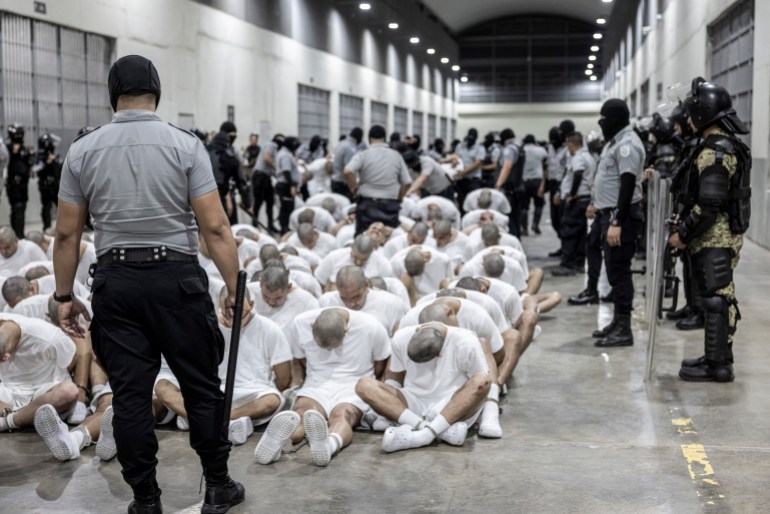
The United States has flown more than 200 immigrants, alleged members of a Venezuelan gang, to be imprisoned in El Salvador, President Nayib Bukele has said, after his US counterpart Donald Trump controversially invoked wartime legislation to expel them. The deportations on Sunday took place despite a US federal judge granting a temporary suspension of the expulsions order, apparently as planes were already headed to El Salvador. In a sharp rebuke Sunday, Venezuela’s government said Trump had “criminalized” Venezuelan migrants, whom it said were “in their immense majority… dignified and honest” workers, not terrorists. It added that the action violated both US and international laws. “Oopsie … Too late,” Bukele posted on social media in response to an article on the judge’s ruling, adding a crying-with-laughter emoji. The Trump administration said it was appealing the court order. White House spokeswoman Karoline Leavitt defended the deportations, saying Trump was “using his core powers as president and commander-in-chief to defend the American people from an urgent threat”. Advertisement Bukele announced the action Sunday on X, saying, “Today, the first 238 members of the Venezuelan criminal organization, Tren de Aragua, arrived in our country.” Today, the first 238 members of the Venezuelan criminal organization, Tren de Aragua, arrived in our country. They were immediately transferred to CECOT, the Terrorism Confinement Center, for a period of one year (renewable). The United States will pay a very low fee for them,… pic.twitter.com/tfsi8cgpD6 — Nayib Bukele (@nayibbukele) March 16, 2025 He shared a video of several men in handcuffs and shackles being transferred from a plane to a heavily guarded convoy, while the presidency shared a series of photos showing prisoners’ heads being shaved, and then hands manacled behind their backs, on their arrival in El Salvador. Bukele said the US would “pay a very low fee” for El Salvador’s custody of the men, but neither he nor American officials specified the amount. Trump on Friday signed an order invoking the Alien Enemies Act of 1798, but it was not publicly announced until Saturday. The contentious wartime authority allows a US president to detain or deport citizens of an enemy nation, and has been invoked only three times before – during major international conflicts, including World War I and II. Bukele, in a meeting last month with US Secretary of State Marco Rubio, offered to house prisoners from the US in his country, including members of Tren de Aragua and Salvador’s own MS-13 gang. Salvadoran prison guards stand watch over deportees from the United States alleged to be Venezuelan gang members, in Tecoluca, El Salvador [El Salvador presidential press office/AP] Mega-jail with windowless cells Iron-fisted Bukele is extremely popular in his Latin American country for a successful crackdown on violent gangs, but has faced criticism from human rights groups. Advertisement His offer to take in foreign convicts for a fee has divided Salvadorans, who fear it could set back the country’s fight against violent crime. Leavitt told the Fox News Sunday Morning Futures programme that Trump “is acting within the bounds of the law”. Bukele said the alleged gang members had been sent to the country’s maximum security Terrorism Confinement Center (CECOT), a mega-prison on the edge of a jungle 75km (47 miles) southeast of San Salvador with a capacity for 40,000 prisoners. Inmates there are packed in windowless cells, sleep on metal beds with no mattresses and are forbidden to have visitors. Rubio said in a statement on Sunday that as part of the transfer of Venezuela’s migrants, the US had deported “top leaders” of MS-13, “plus 21 of its most-wanted to face justice in their homeland”. Wartime legislation Trump, in his order, claimed Tren de Aragua was “conducting irregular warfare against the territory of the United States both directly and at the direction, clandestine or otherwise, of the Maduro regime”. The statement gives Trump’s Attorney General Pam Bondi 60 days to enact the ruling making all Tren de Aragua gang members “subject to immediate apprehension, detention and removal”. The order will apply to all Venezuelan Tren de Aragua members who are over 14 and not naturalized US citizens or lawful permanent residents. The American Civil Liberties Union (ACLU) and an allied group, Democracy Forward, asked the US District Court in Washington to bar the deportations – arguing that the 1798 act was not intended for use in peacetime. Judge James Boasberg on Saturday issued a 14-day halt to any deportation under the new order. Bondi slammed the ruling, saying in a statement that it “puts the public and law enforcement at risk”. Advertisement The El Salvador prison where the alleged gang members were sent already houses some 15,000 members of the MS-13 and rival Salvadoran Barrio 18 gangs. They were rounded up under a state of emergency imposed by Bukele after a surge in gang violence in 2022. Adblock test (Why?)
‘Unimaginable loss’: North Macedonia reels from deadly nightclub fire

A fire tore through a nightclub in the eastern town of Kocani in North Macedonia, killing 59 people, according to the country’s interior minister. More than 100 people were also wounded in the fire early on Sunday in the “Club Pulse”, Interior Minister Pance Toskovsk said. Toskovski said the fire was probably caused by the use of pyrotechnic devices “used for light effect at the concert”. As they were set off, “the sparks caught the ceiling, which was made of easily flammable material, after which the fire rapidly spread across the whole discotheque, creating thick smoke,” he said. The establishment had been packed with more than 1,000 mostly young fans to see a popular hip-hop duo called DNK. Helicopters ferried some of the injured to hospitals in the capital Skopje, some 100km (62 miles) to the west. Twenty-seven of them were admitted to the Naum Ohridski clinic, a doctor at the facility, Nebojsa Nastov, told online media outlet SDK. In September 2021, a major fire killed 14 people at a unit for COVID-19 patients in the northwestern town of Tetovo. Advertisement Adblock test (Why?)
Video: Israeli attacks kill Palestinians in Gaza as ceasefire talks stall
[unable to retrieve full-text content] Aid workers and a journalist were among some of the latest victims of Israeli attacks in Gaza.
Roadside nets aim to thwart Russian drone attacks in Ukraine
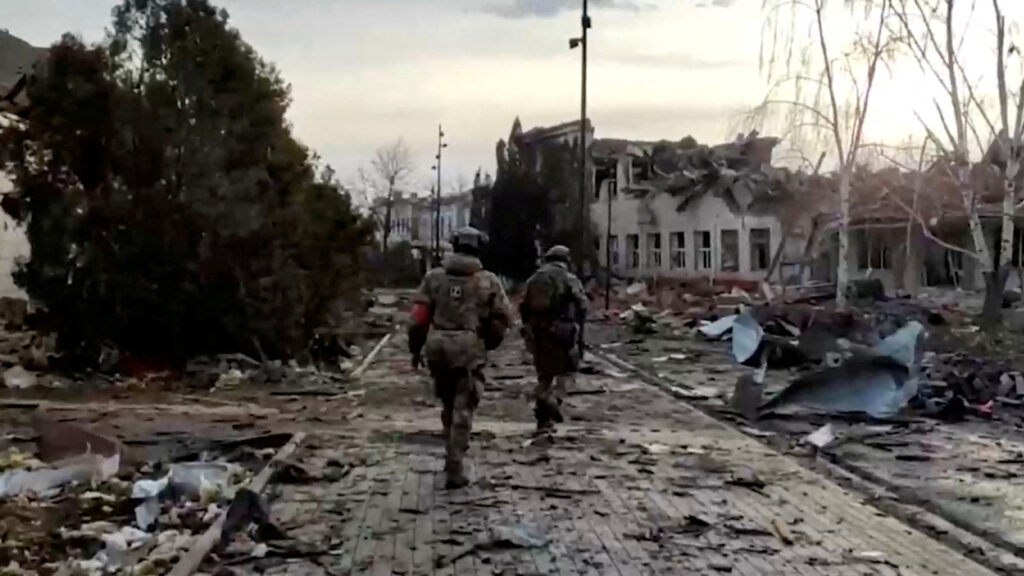
NewsFeed Al Jazeera’s Charles Stratford reports on the method being used to stop Russian drones from attacking Ukrainian vehicles near the border, not far from the Russian region of Kursk where fierce fighting is ongoing. Published On 16 Mar 202516 Mar 2025 Adblock test (Why?)
Norris beats Verstappen at F1 Australian GP in Melbourne

McLaren’s Lando Norris begins the 2025 F1 season with victory ahead of Max Verstappen in an eventful and rain-affected Australian Grand Prix. McLaren’s Lando Norris swept to victory in a wet and wild Australian Grand Prix, holding off defending champion Max Verstappen in a white-knuckle finish to a Formula One season opener littered with crashes and safety cars. George Russell of Mercedes was third on the slippery Albert Park circuit, where only 14 of the 20 cars finished in the treacherous conditions in Sunday’s race. Norris, the preseason favourite for the driver’s title, started the F1 season as he finished the last at Abu Dhabi, with victory from pole. His teammate Oscar Piastri started second on the grid but finished ninth, his dreams of becoming the first home driver to claim victory or a consolation podium were ended with a skid into the grass. Lewis Hamilton’s debut for Ferrari proved a damp squib with the Briton finishing 10th, two places behind teammate Charles Leclerc. Norris, who claimed his first win in Melbourne and the fifth of his career, said it had been a difficult race with Verstappen breathing down his neck. Advertisement “It was amazing. Tough race, especially with Max (Verstappen) behind me,” he said. “I was pushing, especially in the last two laps. It was a little bit stressful, not going to lie. “This time we got it right and ended on top so I’m happy.” Norris now leads the F1 drivers’ championship for the first time in his career. He is the first McLaren driver to lead the championship since Hamilton after the 2012 Canadian Grand Prix. McLaren’s Lando Norris of Great Britain, left, leads Max Verstappen of Red Bull during the Australian Grand Prix on March 16, 2025, in Melbourne, Australia [Clive Rose/Getty Images] Adblock test (Why?)
Mbappe double at Villarreal takes Real Madrid top of LaLiga
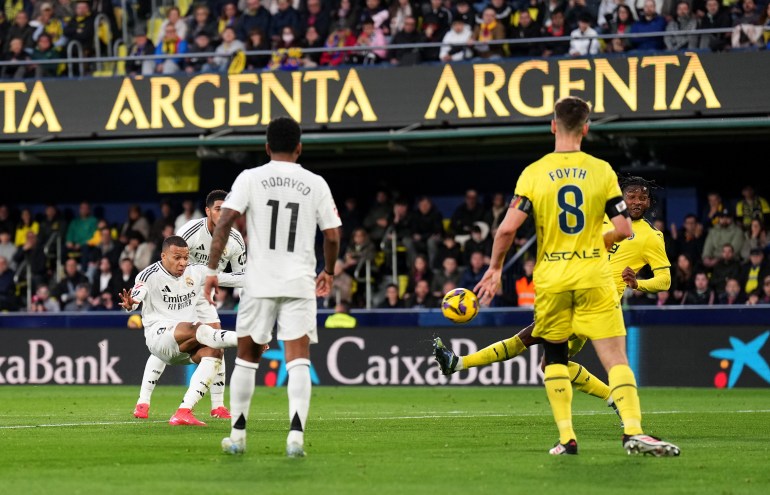
Kylian Mbappe’s first half brace in the 2-1 away win against Villareal moves Madrid three points clear atop the standings. Kylian Mbappe has scored twice to help Real Madrid fight back to beat Villarreal 2-1 and move provisionally top of the LaLiga standings. The hosts opened the scoring in the seventh minute on Saturday when Alex Baena’s corner was deflected by Aurelien Tchouameni, allowing Juan Foyth to score from close range. Real Madrid levelled 10 minutes later when Mbappe pounced on Brahim Diaz’s blocked shot and the ball landed at his feet for a close-range finish. Six minutes later, the French international scored his 20th league goal of the season, latching on to Lucas Vazquez’s through ball and slotting home. Mbappe had a chance to complete his hat-trick in the second half when he latched on to Vinicius Jr’s through ball, but the offside flag was raised. “It’s the last time we’ll play a game with less than 72 hours’ rest,” said coach Carlo Ancelotti, referring to Wednesday’s gruelling Champions League shootout win over city rivals Atletico Madrid. Real top the table on 60 points, three clear of second-placed Barcelona, who have a game in hand after their match with Osasuna was postponed last week, and face third-placed Atletico on Sunday. Real Madrid’s Kylian Mbappe scores his second goal against Villarreal at Estadio de la Ceramica, on March 15, 2025 [Aitor Alcalde/Getty Images] Adblock test (Why?)
Is Trump the end of the international rules-based order?
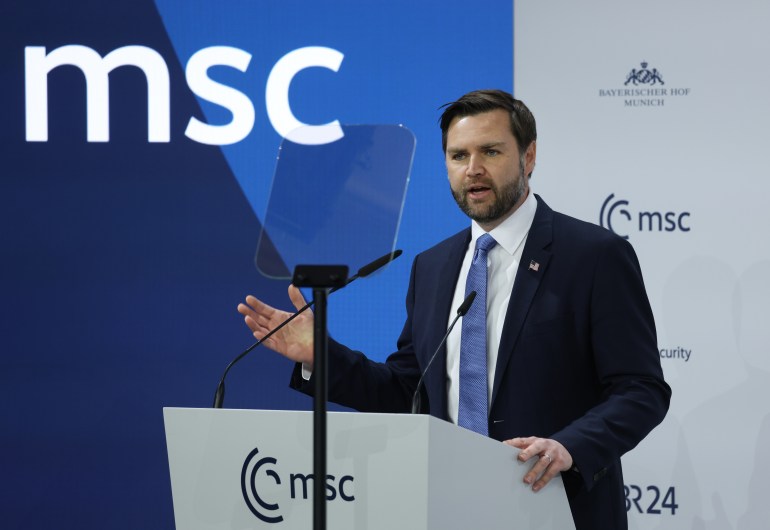
After more than a year of Israeli bombing, tens of thousands of Palestinian deaths, and a humanitarian catastrophe in Gaza, the world was largely united in saying “enough is enough”. United Nations General Assembly (UNGA) resolution 12667 in December was clear in its demand: An immediate ceasefire in Gaza. Countries as diverse as Vietnam, Zimbabwe and Colombia echoed that call. And yet, bucking that consensus were nine “no” votes – chief among them, as is typical when it comes to resolutions calling for Israel to adhere to international law or human rights, was the United States. The US has provided unwavering support to Israel throughout its war on Gaza, even as Israel faces accusations of genocide at the International Court of Justice (ICJ) and its prime minister has an International Criminal Court (ICC) arrest warrant to his name. Gaza had made the US choose openly between adhering to the international “rules-based order” – the system of laws and norms established in the wake of World War II to avoid wars and foster democracy – it claims to uphold, or support Israel. It chose the latter. Advertisement The Democratic administration of former US President Joe Biden, which was in the last days of its tenure when it voted “no” on the UNGA resolution, repeatedly claimed to be acting in defence of the rules-based order – not least in its condemnation of Russia’s invasion of Ukraine – in all matters other than those related to Israel and Palestine. When it came to matters not related to Israel or Palestine, the Democratic administration of former US President Joe Biden – which was in its last days when it voted “no” in the UNGA – claimed to act in defence of the rules-based order, especially in repeatedly condemning Russia’s invasion of Ukraine. The US supported Ukraine as a country defending itself from an unjust invasion by a neighbour. In the Asia Pacific, it strengthened partnerships with allies threatened by potential Chinese expansionism, particularly Taiwan. But the first few weeks of US President Donald Trump’s second term upended all expectations. Now, Ukrainian President Volodymyr Zelenskyy finds himself berated in the Oval Office by Trump and his Vice President JD Vance, who sent out friendly feelers to Russia. US Vice President JD Vance speaks at the 61st Munich Security Conference on February 14, 2025, in Munich, Germany [Sean Gallup/Getty Images] Greenland, Panama and one of the US’s closest allies, Canada, find themselves the subject of Trump’s imperialist rhetoric. Trump has made clear that the old rules are out of the window. His posture towards Ukraine and his push for trade tariffs against allies is part of an isolationist, “America First”, mentality – which sees the world’s issues as not the US’s business, and international cooperation as weak. Advertisement Vance’s words at the Munich Security Conference in February – insinuating that European governments are authoritarian for not working with far-right parties – highlighted that Trump’s Make America Great Again (MAGA) movement doesn’t see Europeans as allies, at least not if European leadership remains liberal and internationalist in nature. Is this a sign of things to come? Is the US moving away from its allies and abandoning the rules-based order? And was the rules-based order ever really international – or merely focused on furthering the interests of the West? The short answer: Trump’s current trajectory could mark the final end to a world order that has long faced accusations of double standards and selective application of international law. European leaders are already saying they need to defend themselves and the US cannot be trusted. Analysts who spoke to Al Jazeera believe that the rules-based order cannot survive this onslaught in its current form – it would have to adapt and change. The rules-based order At its heart, what we call the rules-based order is the bedrock of much of modern international relations. In intention, it is supposed to maintain stability, cooperation and a degree of predictability in the way states deal with each other. Emerging from World War II and the Holocaust, the rules-based order, underpinned by international law and multinational organisations like the UN, was intended to embody shared principles of sovereignty, self-determination, territorial integrity and dispute resolution through diplomacy rather than force. Advertisement Its supporters, such as the US and Europe, argued the system promotes peace, democracy, human rights and economic stability. But it has its critics: Global South countries say its institutions are biased in favour of the West. That may be because the system emerged at a time when the US was able to cement itself as the global hegemon. Throughout its history, the rules-based order has been supported by the US’s economic, diplomatic and military heft. That only increased after the collapse of the Soviet Union and the end of the Cold War in 1991, when the US’s only real challenger for international dominance threw in the towel. Imperial thinking The first few weeks of the second Trump presidency feel far away from that post-Cold War high, when Francis Fukuyama argued, in The End of History and the Last Man, that liberal democracy had won in the battle of global ideologies. Palestinian boys near the destroyed headquarters of the UN agency for Palestinian refugees at Nur Shams refugee camp near Tulkarem in the occupied West Bank on November 2, 2024 [Jaafar Ashtiyeh/AFP] Now, Trump tells Zelenskyy he does not “have the cards right now” in his country’s fight against Russian invasion, and demands a deal for Ukraine’s natural resources in return for support. For Europe, and the US under Biden, Ukraine’s battle was about sovereignty and defending democracy against autocracy. Those arguments do not interest Trump – who portrays himself as a “peacemaker”, but a realist one, who understands that might is right. Advertisement An indifference to the principle of sovereignty can also be seen in Trump’s Gaza “plan”, which would involve the US takeover of the territory – and ethnically cleansing the Palestinians who live there. While he recently appeared to walk back