

Atletico Madrid vs Barcelona – LaLiga: Team news, start time, how to follow

Who: Atletico Madrid vs BarcelonaWhat: Spanish LaLigaWhere: Metropolitano Stadium, Madrid, SpainWhen: Sunday at 9pm (20:00 GMT) Follow Al Jazeera Sport‘s live text and photo commentary stream. Atletico Madrid doesn’t have much time to linger on its painful Champions League exit against Real Madrid. Another crucial game awaits on Sunday, this time against Barcelona in the tight battle for the Spanish league title. Al Jazeera looks ahead to one of the biggest games in the Spanish football calendar: How are Atletico Madrid and Barcelona faring in LaLiga? Atletico are a point behind Barcelona in second and four points behind leaders Madrid in the three-way fight for the trophy. Real have played two more games than Barca and one more than Atletico. So Diego Simeone’s team can hardly afford to lose on Sunday but must quickly get over another excruciating defeat to their fierce crosstown rival in the Champions League on Wednesday. Atletico Madrid’s Julian Alvarez scores a penalty during a penalty shootout that is later disallowed after a VAR review due to a double touch in the Champions League match against Real Madrid on March 12, 2025 [Susana Vera/Reuters] What happened in Atletico’s Champions League Madrid derby? Atletico lost in a penalty shootout to Real after Julian Alvarez’s spot kick was disallowed for a double touch. Only a video review spotted the first contact when Alvarez’s support foot slid and gently nudged the ball before he impacted it with his other foot and sent it into the net. Advertisement “Honestly, it isn’t easy to get over the way we lost this tie. We can’t lie to ourselves,” Simeone said after the match. Where could the match be won on Sunday? Simeone acknowledged that Barcelona could have an advantage both physically and emotionally after Hansi Flick’s side got an extra day’s rest after their victory against Benfica on Tuesday to advance to the Champions League quarterfinals. “We face a great rival on Sunday. I imagine the Barcelona players were wanting our game to go as long as it could, to reach penalties,” Simeone said. “We will arrive tired and beat up after having fought hard in a tie that demanded we give it our all, but we will throw everything we have left” at Barcelona. 🤩 Amazing memories from our last LaLiga game vs FC Barcelona pic.twitter.com/ztLACCN3bL — Atlético de Madrid (@atletienglish) March 15, 2025 How has the rivalry panned out recently? Atletico have confounded Barcelona twice this season. Late goals by Alexander Sorloth snatched a 2-1 win at Barcelona in the league and a 4-4 draw in the opening leg of their Copa del Rey semifinal. But Barcelona have gone unbeaten in 17 straight games across all competitions since that loss to Atletico in late December. Atletico will also host Barcelona next month to decide their Copa del Rey semifinal. What is Barcelona’s take on the match? Flick warned his Barcelona stars they need to focus to avoid crumbling against Atletico Madrid as they have in their previous two meetings this season. “We have had really two great matches, and of course, we have to be focused from the beginning to the end of the match,” Flick told reporters on Saturday. Advertisement “In the first match, at the end of the match, we were not so focused like we can be, and also the second match was [the same] in the beginning and also at the end, so we have to take care about that. “When you make mistakes, Atletico can hurt you, and this is what we have to defend against.” No days off 💪 #AtletiBarça pic.twitter.com/iuQRV2QRWk — FC Barcelona (@FCBarcelona) March 15, 2025 How will Flick solve the Olmo-Gavi headache? Dani Olmo is seemingly ahead of Gavi in the pecking order for the attacking midfield spot for Barca. Gavi and Barca defender Alejandro Balde were not included in the Spain squad that will face the Netherlands in the Nations League quarterfinals next week, but the Barca coach hailed both players. “[Gavi] came from a huge injury, and he’s 20 years old, and now at the moment, he is, I think, not the first [choice] … a more difficult situation, but he’s doing great,” Flick said. “At the moment our midfield is doing really good. I’m happy he’s here, and I think he will play many, many years for this amazing club and be one of the superstars here. “He can improve a lot. He will do this. His attitude is unbelievably good. He’s really focused and really happy he is here. “I think for the World Cup 2026, he will be there and be able to play, 100 percent.” Happy Gavi. 🫶 pic.twitter.com/Eh0tos7Uhi — LALIGA English (@LaLigaEN) March 14, 2025 Flick added that Balde was “one of the best” left backs in the world and also praised veteran centre back Inigo Martinez, who was called up for Spain by national team coach Luis de la Fuente. Advertisement “With his attitude and mentality, he’s unbelievably good for every team,” Flick said. Atletico Madrid form guide: W-D-W-L-L Barcelona form guide: W-D-W-W-W Atletico Madrid team news Angel Correa is suspended for the match after his red card in the 2-1 defeat to Getafe last weekend. Koke remains a doubt with a knock while Rodrigo De Paul is set to miss out. Barcelona team news Marc Bernal and Marc-Andre ter Stegen are still long-term absentees with knee injuries, but Andreas Christensen is back in training with the squad. Atletico Madrid’s probable starting lineup: Jan Oblak; Nahuel Molina, Jose Maria Gimenez, Clement Lenglet, Reinildo; Giuliano Simeone, Rodrigo De Paul, Pablo Barrios, Conor Gallagher; Antoine Griezmann, Julian Alvarez Barcelona’s possible starting lineup: Wojciech Szczesny; Jules Kounde, Ronald Araujo, Pau Cubarsi, Alejandro Balde; Frenkie De Jong, Pedri; Lamine Yamal, Dani Olmo, Raphinha; Robert Lewandowski Adblock test (Why?)
Ailing Pope Francis works on signature reform from hospital as he recovers
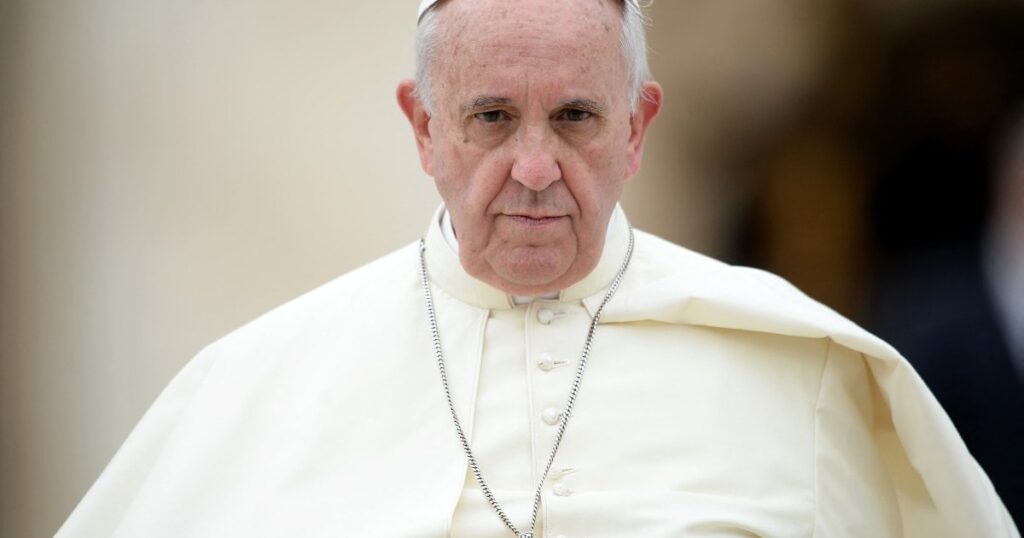
Francis was admitted to Rome’s Gemelli Hospital in February for double pneumonia. Pope Francis has entered his fifth week of hospital treatment for double pneumonia and is continuing the work of his papacy as signs of his recovery remain positive. Francis remains in stable condition, “confirming the progress” the 88-year-old pontiff has made in the past week, the Vatican said on Saturday. The pope, who was admitted to Rome’s Gemelli University Hospital on February 14, is also reducing his use of mechanical ventilation at night to help with his breathing, a statement added. Doctors this week said Francis was no longer in critical, life-threatening condition but have continued to emphasise that his condition remained complex due to his age, lack of mobility and the loss of part of a lung as a young man. The first three weeks of his hospitalisation were marked by a roller-coaster of setbacks, including respiratory crises, mild kidney failure and a severe coughing fit. But Francis has continued his work. He has approved a three-year implementation and evaluation process for a reform project that aims to make the Roman Catholic Church more welcoming and responsive. The Vatican office for the Synod of Bishops released a timetable through 2028 to implement the reforms and said Francis had approved the calendar last week. Advertisement This week, the pope also participated in Lenten spiritual exercises from the hospital, which Vatican officials have said implied a lighter workload. He received a cake and hundreds of messages wishing him well on the 12th anniversary of his papacy on Thursday. The only public sign of life from the pope since his hospitalisation was a recorded audio message thanking people for their prayers for his recovery, which he made in a weak, laboured voice. It was played in St Peter’s Square for the faithful gathered for a nightly recitation of the rosary. For the past four Sundays, the traditional blessing that the pope usually delivers from a window overlooking St Peter’s Square has been released as a text. Adblock test (Why?)
US launches major air strikes on Houthi targets in Yemen; At least 9 killed
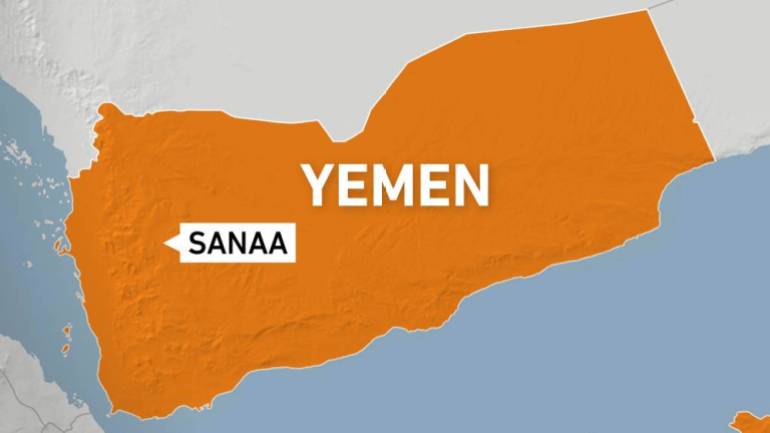
President Trump warns Houthis, promises intensified action as US strikes escalate in Yemen. United States President Donald Trump has announced a series of strikes on Houthi targets in Yemen in the most significant military action of his second term to date. At least nine civilians were killed and nine injured in the strikes in Sanaa on Saturday, according to Yemen’s Houthi-run Health Ministry. “Your time is up, and your attacks must stop, starting today. If they don’t, hell will rain down upon you like nothing you have ever seen before,” Trump said in a statement on Truth Social, his social media site. “I have ordered the US military today to launch a decisive and powerful military operation against the Houthi terrorists in Yemen,” Trump added. “We will use overwhelming lethal force until we have achieved our objective,” he said in the post, accusing the Iran-aligned group of threatening Red Sea shipping. The Houthis, who control much of the Arabian Peninsula country, started a campaign targeting the busy sea route in support of Palestinians in Gaza after Israel began bombing the besieged enclave. Advertisement Trump also told Iran it needed to immediately stop supporting the Houthis. He said if Iran threatens the US, “America will hold you fully accountable and, we won’t be nice about it!” Earlier, Houthi-affiliated Al Masirah TV reported attacks in the Yemeni capital, Sanaa. [Al Jazeera] The strikes take place as the armed group announced this week it would resume attacks on Israeli ships after Israel failed to stop its punishing blockade of the delivery of humanitarian aid into the Gaza Strip. The Yemeni group said it was “resuming the ban on the passage of all Israeli ships” in the Red Sea. “Any Israeli ship attempting to violate this ban shall be targeted in the declared zone of operations,” it said in a statement on Tuesday. The “ban” also covers the Arabian Sea, Bab al-Mandeb Strait, and the Gulf of Aden, the group said. The strikes affected global trade, forcing a significant volume of maritime traffic between Asia and Europe away from the Suez Canal to take the far longer journey around Africa. The group halted its drone and missile attacks, which had targeted vessels with tenuous Israeli links when the Gaza ceasefire was declared in January. But it threatened to resume the attacks when Israel blocked all aid into war-battered Gaza on March 2, in the hope of pressuring Hamas into releasing remaining captives it took in its October 7, 2023 attack. Earlier this month, the US designated the Houthi movement, known formally as Ansar Allah, as a “foreign terrorist” organisation. Adblock test (Why?)
WPL 2025 final: Mumbai Indians claim second title as Delhi Capitals despair

Delhi lose third straight final as Mumbai wins by eight runs. The Mumbai Indians have claimed their second Women’s Premier League (WPL) title with an eight-run win against the Delhi Capitals, who have seen their third straight defeat in the final. Delhi, ever present in the three finals of the fledgling competition, would have felt very much in the game after reducing Mumbai to 149-7 at Brabourne Stadium in Mumbai in the first innings on Saturday. Captain and India international Harmanpreet Kaur’s 66 held together Mumbai’s hopes of keeping at bay the side they overcame in 2023’s inaugural final. It was a miserly bowling performance from Delhi, led by South African Marizanne Kapp’s 2-11. Despite a series of cameos in the chase, including a powerful late-innings blast from Kapp, it was Mumbai’s masterful control – led by 3-30 from England’s Nat Sciver-Brunt – that smothered Delhi’s hopes. Having won the toss, Delhi were instantly vindicated in their decision to field first when West Indies opener Hayley Matthews was bowled for three by Kapp. The right-armed seamer opened and bowled straight through her four overs as she also removed Mumbai’s other opener, Yastika Bhatia, in her third over. Advertisement Sciver-Brunt and Kaur began the fight for the 2023 champions with a partnership of 89, brought up in 10 overs, for the third wicket. The former would have thought she was in for more runs when powerfully sweeping Shree Charani while on 30. However, the sweetly timed stroke perfectly picked out Minnu Mani at square. Mumbai Indians captain Harmanpreet Kaur plays a shot during the WPL Twenty20 final [Indranil Mukherjee/AFP] Kaur’s 66, the top score of the final, held the innings together thereafter, but she was desperate for someone to stay with her. The next biggest partnership of the innings was the unbeaten eighth-wicket stand of 17. Delhi’s reply could not have got off to a worse start with captain Meg Lanning and opening partner Shafali Verma both removed inside the first three overs. Jess Jonassen followed in the first over after the powerplay before Annabel Sutherland followed in the eighth. Another WPL final and another defeat loomed. The captain may have departed, but her deputy, Jemimah Rodrigues, grasped the moment. The Delhi vice captain praised her captain’s leadership in the build-up to the final, but it was her dynamic innings with the highest strike rate in the match of anyone facing more than seven deliveries that gave her side a chance. Back-to-back boundaries to start the 11th propelled the right-hander to 30, but Amelia Kerr struck back before the over was out with a caught-and-bowled to remove the Delhi number four, who was premature in closing her bat face in search of a single. Mumbai Indians’ Amelia Kerr takes the catch to dismiss Delhi Capitals’ Jemimah Rodrigues [Indranil Mukherjee/AFP] Kapp, a leading light with the ball, appeared to be offering one final glimpse of hope for Delhi as she and Sarah Bryce started another partnership before a mix-up and a momentary hesitation by the latter saw her comfortably run out. Advertisement It was the third highest partnership of the innings at 18, but with the best being 22, it was a shallow return in search of a foundation upon which to build a chase. Kapp continued her near one-woman pursuit to try to end Delhi’s losing streak in finals, and when Kerr carried a catch over the boundary in the 16th, it appeared the tide may well be turning. When the powerful all-rounder holed out to long-on and Matthews – the first wicket she claimed in the match – for 40, the game and the final was well and truly up. Sciver-Brunt, who claimed Kapp’s wicket, bowled Shikha Pandey the very next ball, and the chase quickly ended. The celebrations for the hosts in Mumbai will long continue. However, so too will the pain of third time unlucky in a final for Delhi. Adblock test (Why?)
At least 11 people dead in Pakistan after military raids
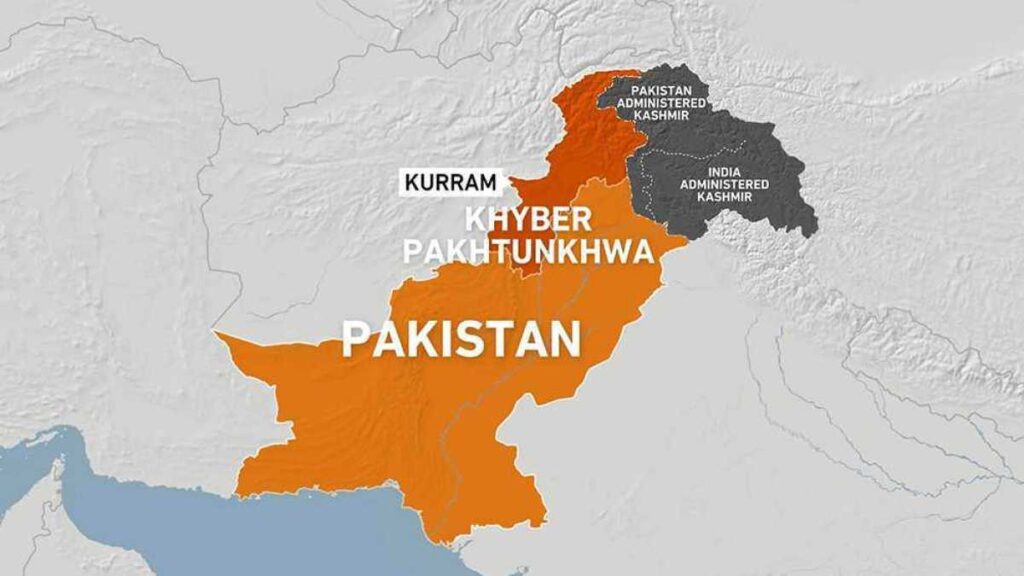
The raids take place in the Mohmand and Dera Ismail Khan districts of Khyber Pakhtunkhwa, bordering Afghanistan. Pakistan’s security forces have raided two hideouts used by an armed group in the restive northwest, triggering gun battles that killed at least two soldiers and nine of the group’s fighters, the military says. The raids were conducted on Saturday in the Mohmand and Dera Ismail Khan districts of Khyber Pakhtunkhwa province, which borders Afghanistan. According to local police, the fighters belonged to Tehreek-e-Taliban Pakistan (TTP), also known as the Pakistani Taliban. The outlawed TTP is a separate group but an ally of the Afghan Taliban, who reseized power in neighbouring Afghanistan in August 2021 as United States and other NATO troops were in the final stages of a withdrawal from the country after 20 years of war. Many TTP leaders and fighters have found sanctuaries and have even been living openly in Afghanistan since the Taliban takeover, which also emboldened the Pakistani Taliban. In a separate incident on Saturday, fighters ambushed security forces in northwestern Pakistan’s Kurram district, bordering Afghanistan, local police said. Authorities have yet to confirm any casualties in that attack. Advertisement Pakistan’s military is engaged in an ongoing operation in Kurram, an area that has witnessed years of violence between Sunni and Shia Muslim communities. Hundreds of people have been killed in fighting between armed groups, exacerbating tensions in the region. Since November, Kurram has remained isolated after authorities blocked key roads following sectarian violence. The closure has led to severe shortages of medicine and food, deepening a humanitarian crisis. Also on Saturday, a bomb exploded outside a mosque in the northwestern city of Peshawar, killing a Muslim leader, local police said. It was unclear who was behind the attack, and an investigation was being conducted. Adblock test (Why?)
UN chief calls for global action against rising ‘anti-Muslim bigotry’
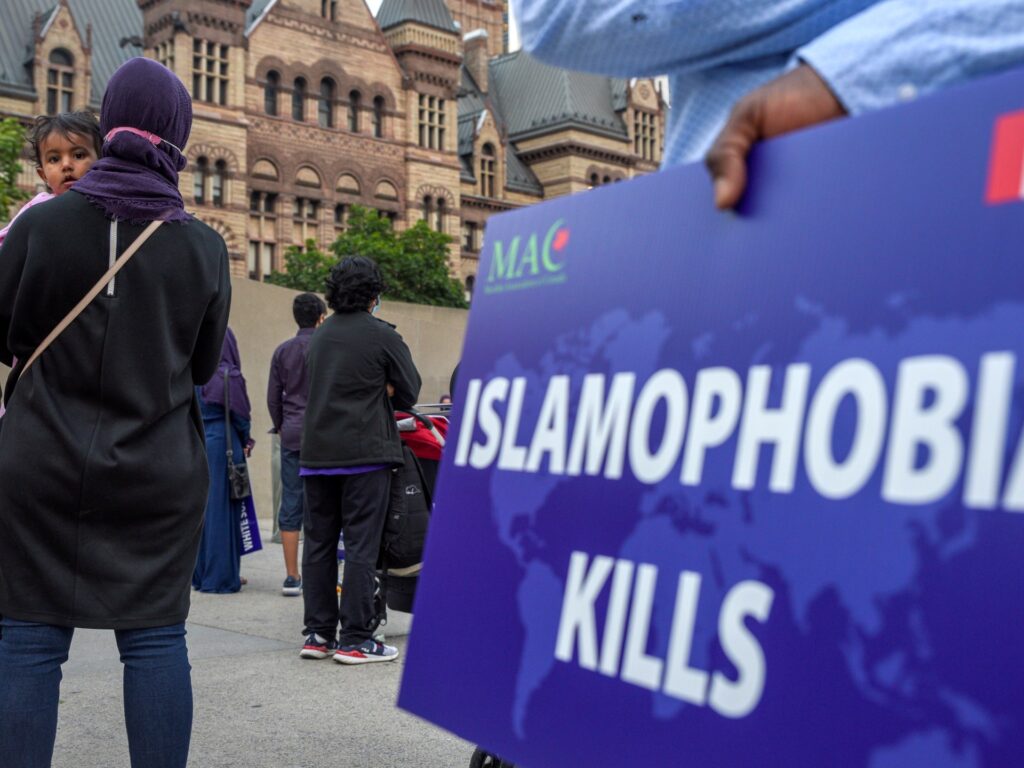
Marking the International Day to Combat Islamophobia, Guterres speaks out against bigotry, xenophobia and discrimination. United Nations Secretary-General Antonio Guterres has expressed concern over “a disturbing rise in anti-Muslim bigotry”, calling on governments to protect religious freedom and for online platforms to curb hate speech. Guterres made the remarks on Saturday to mark the International Day to Combat Islamophobia marked every year on March 15. Rights groups around the world and the UN have noted a rise in Islamophobia, anti-Arab bias and anti-Semitism since the start of Israel’s 17-month war on Gaza. “We are witnessing a disturbing rise in anti-Muslim bigotry. From racial profiling and discriminatory policies that violate human rights and dignity, to outright violence against individuals and places of worship,” the UN chief said in a video post on X. “This is part of a wider scourge of intolerance, extremist ideologies and attacks against religious groups and vulnerable populations.” He called on governments, without specifying any one nation, to “foster social cohesion and protect religious freedom”. Advertisement “Online platforms must curb hate speech and harassment. And we must all speak out against bigotry, xenophobia and discrimination,” he added. We are witnessing a disturbing rise in anti-Muslim bigotry that is part of a wider scourge of intolerance & attacks against religious groups & vulnerable populations. This International Day to Combat Islamophobia, let’s work together to uphold equality, human rights & dignity. pic.twitter.com/QIO1TeWME5 — António Guterres (@antonioguterres) March 15, 2025 Meanwhile, UN Under-Secretary-General Miguel Angel Moratinos said Muslims were facing “institutional discrimination and socioeconomic restrictions”. “Such biases are manifested in the stigmatisation and the unwarranted racial profiling of Muslims and are reinforced by biased media representations, and by the anti-Muslim rhetoric and policies of some political leaders,” he said in a speech to the UN General Assembly. Rights advocates have for years raised concerns about the stigma faced by Muslims and Arabs because of how some people conflate those communities with armed groups. At present, many pro-Palestinian activists, including in Western nations such as the United States, have complained and say that their advocacy for Palestinian rights is wrongly labelled by their critics as support for Hamas in Gaza. In recent weeks, rights watchdogs have published data noting record levels of anti-Muslim hate incidents and hate speeches in countries such as the United Kingdom, the US and India, among others. Advertisement A report released by the Council on American-Islamic Relations (CAIR) on Tuesday said that the 8,658 complaints regarding anti-Muslim and anti-Arab incidents last year – representing a 7.4 percent rise year on year – was the highest number since the group began compiling data in 1996. Adblock test (Why?)
‘Inch by inch’: Myanmar rebels close in on key military base in Chin State
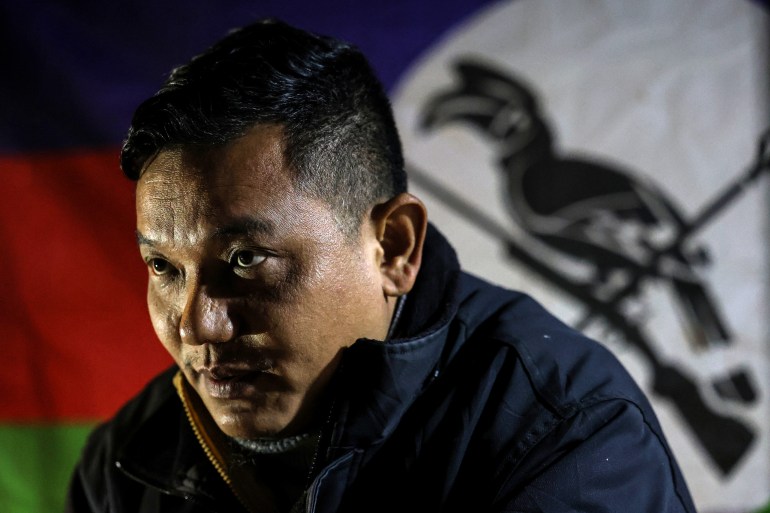
Falam township, Chin State – In the mountains of western Myanmar, photographs of fallen fighters line a wall of a rebel headquarters – an honour roll of some 80 young men, beginning with 28-year-old Salai Cung Naw Piang, who was killed in May 2021. The true toll on the Chin National Defence Force (CNDF) extends beyond this hall and grows as war against Myanmar’s military grinds on in Chin State – a Christian region of the country bordering India where ethnic Chin fighters have expelled the military from most of their territory. “Even if they don’t surrender, we will go till the end, inch by inch,” CNDF Vice President Peter Thang told Al Jazeera in a recent interview. Launched in mid-November, the Chin offensive to capture the town of Falam – codenamed “Mission Jerusalem” – has come at a heavy cost. About 50 CNDF and allied fighters were killed in the first six weeks, some buried alive after direct air strikes by jet fighters of Myanmar’s military regime on earthen bunkers, Thang said. Advertisement Thang estimated similar casualties among Myanmar’s military, and more than 100 government soldiers captured, in the continuing operation. Formed by civilians to fight the military after the 2021 coup in Myanmar, the CNDF has encircled the regime’s last garrison in a hilltop base in Falam. “We are facing a difficult time,” Thang admitted. “If God is willing to hand over the enemy, we will take it,” he said of Mission Jerusalem’s ultimate objective. Taking and holding Falam – Chin State’s former capital – would also mark the first district centre captured by the country’s new rebel forces without support from established ethnic armies, according to Thang, who ran a travel agency in Myanmar’s commercial capital Yangon before the coup. “We have more challenges than others,” he said. “The military has so much technology. We have limited weapons, and even some of them we can’t operate,” he added. Peter Thang, Chin National Defence Force (CNDF) vice president, sits in front of the CNDF flag during an interview in a village at the front line in Falam, Chin State, Myanmar, in January 2025 [Valeria Mongelli/Al Jazeera] Besieged hilltop base With the CNDF supported by fighters from 15 newly formed armed groups, including from Myanmar’s ethnic Bamar majority, about 600 rebels have besieged Falam and the roughly 120 government soldiers who, confined to their hilltop base, depend on supplies dropped by helicopter for their survival. Unlike established ethnic armies who are fighting to gain more territory for themselves, the rebel forces massed in Chin State said they aim to overthrow Myanmar’s military regime entirely. Advertisement While the CNDF and allies in the Chin Brotherhood (CB) coalition scored previous victories against the military with help from the powerful Arakan Army (AA) to the south in Rakhine State, seizing Falam independently would represent a new phase in Myanmar’s revolution. But the biggest challenge in the battle remains aerial attacks by the military. Operations against the hilltop base in Falam trigger bombardments from the military’s Russian and Chinese fighter jets, along with rocket-propelled grenades, artillery, sniper and machinegun fire from troops defending the outpost. A Chin National Defence Force fighter points to the Myanmar military’s hilltop base in Falam, Chin State, Myanmar [Valeria Mongelli/Al Jazeera] CNDF commanders told how the besieged soldiers once chatted freely with locals and some had even married local Chin women. But that all changed when Myanmar’s security forces shot peaceful protesters demonstrating against the military’s ousting of Aung San Suu Kyi’s elected government in 2021. Demonstrators fought back, and an uprising was born that has become steeped in blood and the lore of many martyrs. Mya Thwe Thwe Khaing, a 19-year-old protester, was the first victim – shot in the head by police on February 9, 2021 in the country’s capital, Naypyidaw. In April 2021, armed with hunting rifles, the Chin launched the first significant battle of Myanmar’s uprising in Mindat town, which has since been liberated. Now the rebels are equipped with assault rifles and grenade launchers. They control most of the countryside and several towns, but remain outgunned, as the military entrenches itself in urban centres. Unable to launch ground offensives from their depleted ranks, the regime’s generals have turned to forced conscription and indiscriminate air strikes nationwide. Advertisement According to rights group the Assistance Association for Political Prisoners, the military has killed at least 6,353 civilians since the coup. With at least 3.5 million people displaced inside the country, according to the United Nations, observers predict even fiercer fighting this year. A CNDF fighter stands near the ruins of a Christian church bombed by a Myanmar military jet in Falam township, Chin State, Myanmar [Valeria Mongelli/Al Jazeera] ‘Some died, others ran in all directions’ In Falam, CNDF defence secretary Olivia Thawng Luai said spouses live with some of the soldiers in the surrounded hilltop holdout. “Most soldiers want to leave their base but they are under the commander’s control,” said Olivia Thawng Luai, a former national karate champion. “They aren’t allowed to leave the base or use their phones,” she said. Another senior CNDF figure, Timmy Htut, said the commander in the besieged base still has his own phone – and the rebels call his number regularly. “One day he will pick up,” he said. “When he’s ready.” Attempts by the military to send reinforcements to Falam have failed. Helicopters, facing sheets of gunfire, have dropped conscripted airborne recruits on Falam’s outskirts, ordering them to fight their way into the town. None has succeeded. Olivia Thawng Luai, CNDF defence secretary, at the front line in Falam town [Valeria Mongelli/Al Jazeera] A captured soldier said his unit was dropped in without a plan, and, under heavy fire and pursued by resistance fighters, they scattered in chaos. Advertisement “Some died, others ran in all directions,” the soldier told Al Jazeera. “The headquarters said they couldn’t waste their jet sorties for just a few of us,” he said. The military, he continued, has lost “many skilful,
Can an aspirin a day keep cancer at bay?

For decades, aspirin has been known as a go-to painkiller. New research reveals how it may also help fight cancer. While previous research hinted at a link between aspirin use and improved cancer survival, a study published in Nature last week explains why. However, experts caution that aspirin is not a cure – and it carries risks like increased potential for internal bleeding. So, how might aspirin keep cancer from spreading? And what does this mean for future treatments? What have studies found about aspirin use and cancer? Recent studies have revealed how aspirin, a widely used painkiller, may help prevent the spread of cancer, although it is unclear whether it would work the same for all types of the disease. Researchers have been exploring this link for decades. The first clinical study, published in 1988, showed that regular aspirin use significantly lowered the risk of colorectal cancer, though the underlying reason remained unclear. Now, a new study from the University of Cambridge offers more insight. It found the mechanism by which aspirin may help prevent cancer from spreading, a process known as metastasis. Advertisement Metastasis is responsible for the majority of cancer-related deaths, as cancer cells break away from the original tumour and try to take root elsewhere across the body. As these drifting cancer cells go rogue, aspirin may enhance the body’s natural ability to fight back, keeping the cancer cells from taking hold of more organs. How can aspirin keep cancer from spreading? The key to aspirin’s effect on cancer lies in the body’s immune system, a complex network of cells and proteins that defends against infections, diseases and harmful germs. When cancer cells break away from a tumour, they enter the bloodstream, where the immune system – specifically types of white blood cells known as T-cells – normally hunts them down and destroys them. However, platelets – tiny cell fragments in the blood that help with clotting – can interfere with this process. Cancer takes advantage of platelets by triggering a response similar to an injury. When platelets detect the free-floating cancer cells, they rush to coat them, much like they would cover a wound to stop bleeding. This creates a protective shield, making it harder for the immune system to recognise and attack the cancer cells. Additionally, platelets release signals that suppress T-cells, preventing them from doing their job. Aspirin disrupts cancer’s attempts at trickery by reducing the production of a molecule that platelets use to suppress immune activity. With the platelets weakened, T-cells regain their ability to recognise and destroy cancer cells before they have a chance to form new tumours. Advertisement How could aspirin be used against cancer? The study suggests that aspirin could be used after treatments like surgery where tumours are removed. This is because some cancer cells may have already escaped from the tumour and begun to settle in other parts of the body, a process known as seeding, where tiny cancer cells embed themselves in new areas and may later grow into tumours. However, experts caution against immediately using aspirin as a cancer treatment without further research. The painkiller carries the potential for serious side effects such as internal bleeding because by weakening the platelets, it can weaken their ability to help blood clot. Aspirin blocks a molecule that prods platelets to clump together. This makes the blood thinner and increases the risk of uncontrolled bleeding. This is especially dangerous in the stomach, where aspirin can irritate the lining and cause ulcers, and in the brain, where it raises the risk of a hemorrhagic stroke if a tiny blood vessel bursts. Additionally, the study was carried out on mice, not humans, so its effects on cancer spread still need to be confirmed before it can be recommended for treatment. “Our research provides a molecular explanation for observations from clinical studies, but proper clinical validation is still needed,” Rahul Roychoudhuri, a professor in Cambridge’s Department of Pathology who was part of the Nature study, told Al Jazeera. Several clinical trials, such as the ADD-ASPIRIN trial in the United Kingdom, Ireland and India, are under way to determine which patients are most likely to benefit most from taking aspirin and whether it works for specific types of cancers. Advertisement Roychoudhuri added that he does not anticipate an “immediate fast-tracked translation” of aspirin to cancer treatment. Has aspirin been used against diseases in the past? Some patients with a high genetic risk for cancer, such as those with Lynch syndrome (a condition that increases the likelihood of developing certain cancers), are already recommended aspirin as a preventive measure in countries such as Australia and the UK. Since the 1980s, aspirin has also been prescribed to help prevent heart attacks and strokes in people at high risk of heart disease, by reducing the ability of platelets to form harmful clots that can block blood flow to the heart or brain. This clot-preventing effect helps lower the risk of heart attacks in those with a history of cardiovascular disease. Does this mean we are close to a breakthrough in curing cancer? Not necessarily. While aspirin may help slow or prevent the spread of cancer, it does not eliminate tumours entirely. However, scientists are working to identify biomarkers – measurable signs in the blood – and platelet activity to help detect individuals at risk for cancer early on. “This would allow for timely treatment with aspirin while minimising unnecessary exposure for those who do not require it,” said Paola Patrignani, a professor of pharmacology at Gabriele d‘Annunzio University in Italy. Experts say the findings could also contribute to the development of drugs that inhibit cancer spread. “Our discoveries open possibilities for developing more targeted therapies that could potentially provide the benefits without aspirin’s side effects,” Roychoudhuri said. Advertisement Patrignani, who is involved in research funded by Cancer Research UK to investigate whether other anti-platelet drugs, like clopidogrel, might offer similar benefits, says these studies will require another three to five years to be completed.
Russia-Ukraine war: List of key events, day 1,115
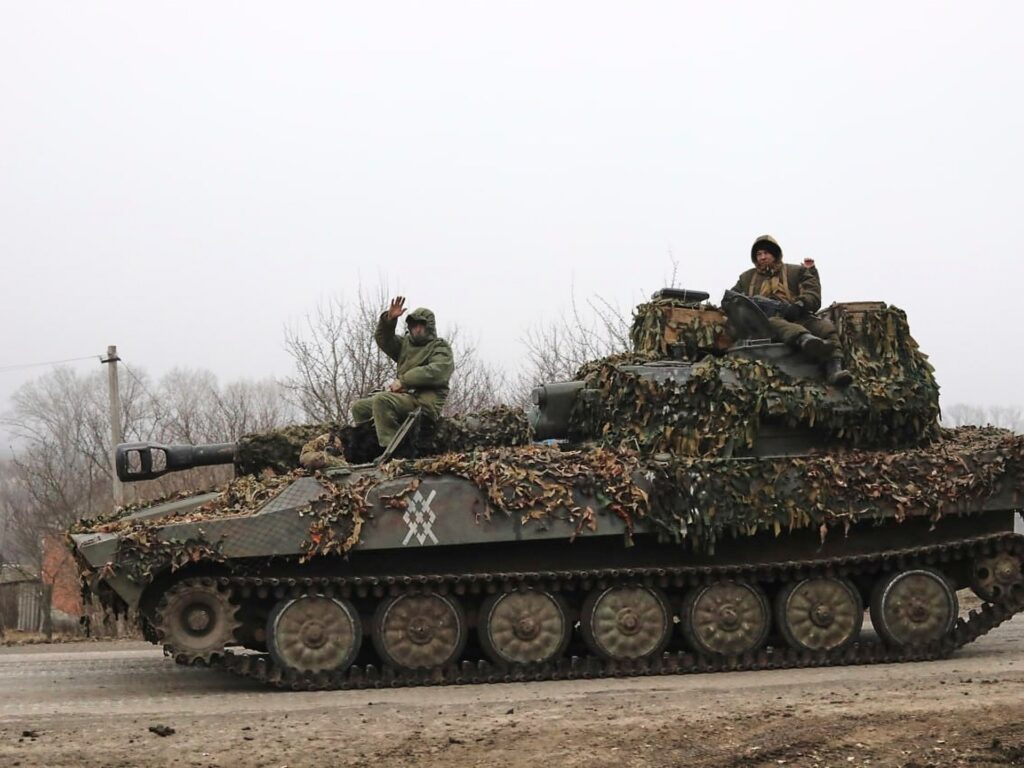
These are the key developments on day 1,115 of Russia’s war on Ukraine. Here is the situation on Saturday, March 15: Fighting Russian President Vladimir Putin called for beleaguered Ukrainian troops in the Russian region of Kursk to “surrender”, saying that “if they lay down their arms and surrender, they will be guaranteed life and dignified treatment”. Putin’s remarks were broadcast on Russian television hours after United States President Donald Trump said that “thousands” of Ukrainian troops were surrounded by the Russian military in Kursk, adding that he has “strongly requested” Putin to spare their lives. Ukraine’s General Staff denied again that its forces in Kursk were encircled by Moscow’s troops and said that any reports to that effect were “fabricated by the Russians for political manipulation and to exert pressure on Ukraine and its partners”. A Russian missile struck a residential area in the central Ukrainian city of Kryvyi Rih, injuring 11 people, including two children, the regional governor said. Kryvyi Rih is Ukrainian President Volodymyr Zelenskyy’s hometown and has been the target of repeated attacks in Russia’s three-year full-scale invasion of its neighbour. Advertisement Russian guided bombs struck a series of targets in Ukraine, including a residential area in the southern Ukrainian city of Kherson, killing one person, the regional governor said on Telegram. Near Ukraine’s Black Sea city of Odesa, Russian drones attacked the port of Chornomorsk, cutting power completely to the area’s residents, the regional governor said. Russian air defences downed four Ukrainian drones attacking the Russian capital, Moscow Mayor Sergei Sobyanin said. One drone damaged the roof of an apartment building a few kilometres from the Kremlin. Several other buildings were lightly damaged by drone fragments, but there were no injuries, according to emergency officials. A far-right anti-Russian activist was shot dead on a street in Odesa and a suspect has been arrested, Zelenskyy said on Telegram. The suspect, a 46-year-old man, was described as a “deserter” from the Ukrainian army. Police said, “We cannot rule out the possibility that this crime was committed on behalf of Russian secret services”. Ceasefire Putin met with US envoy Steve Witkoff to discuss details of the US proposal for a 30-day ceasefire in Moscow’s war on Ukraine, asking him to convey Moscow’s thoughts to Washington, Kremlin spokesman Dmitry Peskov said. Trump said he was “being a little bit sarcastic” when he repeatedly claimed as a presidential candidate that he would have the Russia-Ukraine war solved within 24 hours – and even before he even took office. “Well, I was being a little bit sarcastic when I said that,” Trump said in a clip released in advance of a television interview to be broadcast on Sunday. In a speech at the US Department of Justice, Trump said that ceasefire negotiations with Russia were ongoing and praised his relationship with Putin, saying that the Russian leader “has respect for this country”. He again suggested that Ukraine was to blame for Russia’s 2022 invasion, saying, “You don’t want to pick on somebody that’s a lot larger than you.” Advertisement United Kingdom Prime Minister Keir Starmer accused Putin of not taking US-led attempts to secure a ceasefire in Ukraine seriously. French President Emmanuel Macron in a post on X, also called on Moscow to stop its “acts of violence” in Ukraine. G7 foreign ministers warned Russia of new sanctions unless it accepted a ceasefire “on equal terms”, saying sanctions could include “caps on oil prices, as well as additional support for Ukraine, and other means”. Politics and diplomacy European support for Ukraine will be discussed in a video conference with about 25 European Union and other world leaders, as well as Zelenskyy, on Saturday. Diplomatic sources said EU foreign affairs chief Kaja Kallas is to propose that the 27-country bloc supply up to 40 billion euros ($43.5bn) in new military aid to Ukraine. The UK’s Starmer will urge leaders from the so-called “coalition of the willing”, which includes Europe, Australia, Canada and New Zealand, to make concrete commitments to support Ukraine and increase pressure on Russia to accept a ceasefire during the video conference. Russian Deputy Foreign Minister Andrei Rudenko is visiting North Korea, North Korean state media report. Russia and Venezuela announced plans to increase energy cooperation after Washington ordered US oil giant Chevron to pull out of the Caribbean country. Adblock test (Why?)
US says South African ambassador ‘no longer welcome’

The Trump administration has frequently sparred with South Africa over the legacy of apartheid and criticism of Israel. The administration of President Donald Trump has declared South African Ambassador Ebrahim Rasool a persona non grata in the United States. In a social media post on Friday, US Secretary of State Marco Rubio said that Rasool was “no longer welcome in our great country”. “Ebrahim Rasool is a race-baiting politician who hates America and hates POTUS,” Rubio wrote, using the acronym for President of the United States. “We have nothing to discuss with him and so he is considered PERSONA NON GRATA.” Rubio linked his remarks to an article by the right-wing media outlet Breitbart, wherein Rasool is quoted as saying Trump mobilised a “supremacist instinct” and “white victimhood” as a “dog whistle” during the 2024 elections. Rasool’s expulsion is the latest in a series of moves by the Trump administration castigating South Africa, a country that has supported Palestinian rights and helped spearhead a case at the International Court of Justice (ICJ) accusing Israel, a US ally, of genocidal acts in Gaza. Advertisement Earlier this week, the news outlet Semafor reported that Rasool, a veteran diplomat, has been denied what are typically routine opportunities to speak with officials at the US State Department, as well as with high-level Republicans, since Trump’s inauguration. Rasool returned to his post as South Africa’s ambassador to the US in January. He previously served in the role from 2010 to 2015, during the presidency of Barack Obama. South Africa is governed by the African National Congress (ANC), a party that emerged out of the anti-apartheid struggle that ended white minority rule in that country. But its government has been a target of particular ire for the Trump administration and allies like right-wing billionaire Elon Musk, who is of South African origin. Trump’s government has accused the ANC government of discriminating against its white population. Trump has nixed aid to South Africa and, in February – at a time when the White House had almost entirely shuttered refugee admissions for people fleeing violence and repression around the world – Trump offered expedited citizenship for white Afrikaners “escaping government-sponsored race-based discrimination”. The announcement was a response to a land distribution law meant to address inequalities that have continued since the apartheid era. The South African government says that Trump is misinformed about the law, which has not been used to confiscate any land. Vincent Magwenya, a spokesperson for South African President Cyril Ramaphosa, told the Reuters news agency that his country was “not going to partake in a counterproductive megaphone diplomacy” – referring to Trump’s propensity for issuing missives about South Africa on social media. Advertisement Despite Trump’s portrayal of Afrikaners as a besieged minority, South African authorities say that the economic legacy of apartheid, during which white South Africans exercised near-total control over the economy, persists in continued levels of economic inequality between Black and white residents. A 2017 government audit found that while Black people make up 80 percent of the population of South Africa, they own just 4 percent of privately held farmland. The white Afrikaners who own the vast majority of South Africa’s farmland comprise a mere 8 percent of the population. Rasool and his family were themselves expelled from their home in Cape Town during the apartheid period, when Black people were forcibly relocated to designated non-white areas with almost no resources or economic opportunities. Adblock test (Why?)