

In Justice Department speech, Donald Trump threatens opponents with jail
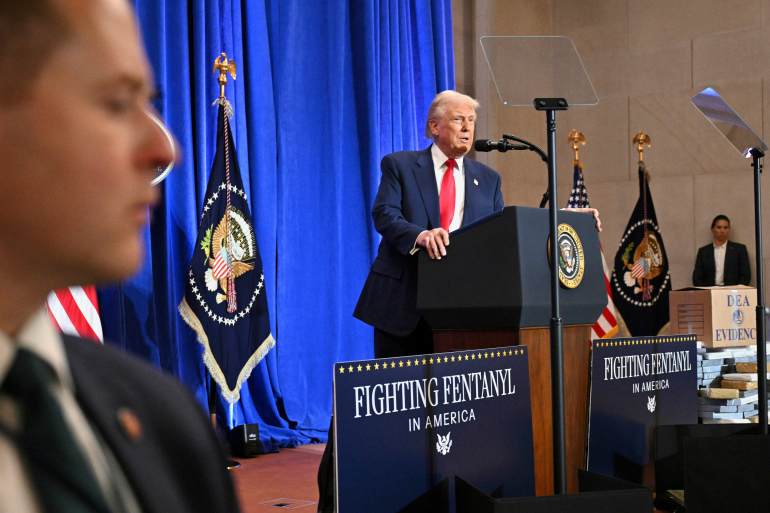
“This is a storied hall, if there ever was one.” That is how President Donald Trump opened his remarks to the United States Department of Justice, before he launched into a speech that denounced judges, prosecutors and members of his predecessor’s government as corrupt. It was an extraordinary moment that hinted at potential legal action against political rivals. Trump went on to argue that the 2024 election had granted him a mandate to investigate those he felt had committed “abuses” under the presidency of former President Joe Biden. “I will insist upon and demand full and complete accountability for the wrongs and abuses that have occurred,” Trump said. “ The American people have given us a mandate, and really, just a far-reaching investigation is what they are demanding into the corruption of our system.” Critics have long feared that Trump would seek retribution against his political rivals if he returned to power. While on the campaign trail in 2024, he repeatedly referred to Democrats as “the enemy from within”, calling them “evil” and more dangerous than the threats posed by China and Russia. He also threatened critics, like Republican Liz Cheney, with jail and said he would appoint a special prosecutor to go after Biden. Advertisement But Friday’s speech to the Justice Department was a platform for Trump to renew those threats — and continue to spread false claims that cast doubt on his defeat to Biden in the 2020 presidential election. “I think it was the most humiliating time in the history of our country,” Trump said of Biden’s term. “What a difference a rigged and crooked election had on our country. When you think about it, the people who did this to us should go to jail. They should go to jail.” President Donald Trump speaks at the Justice Department in Washington, DC, on March 14 [Pool via AP] Trump justifies department firings Trump even took aim at prosecutors who worked in the Justice Department, particularly those who participated in criminal investigations against him. Since taking office for a second term on January 20, the president has led a campaign against what he considers “Biden bureaucrats“, though critics point out that many are nonpartisan civil service members. Among the thousands of federal employees terminated in the last two months were career prosecutors who participated in the two federal probes into Trump’s behaviour: one for alleged mishandling of classified documents, and the other for attempting to subvert the 2020 election. Both cases were ultimately dropped after Trump won re-election on November 5. The Justice Department has a policy of not prosecuting sitting presidents. But while career prosecutors are tasked with serving whichever president is in office, Trump has sought to ensure their removal. Advertisement He has also accused the Biden administration of “weaponising” the Justice Department in an effort to derail his re-election campaign. “As we begin a proud new chapter in the chronicles of American justice, this really is something we’re turning the page on: four long years of corruption, weaponisation and surrender to violent criminals,” Trump said on Friday. “ But first, we must be honest about the lies and abuses that have occurred within these walls. Unfortunately, in recent years, a corrupt group of hacks and radicals within the ranks of the American government obliterated the trust and goodwill built up over generations. They weaponised the vast powers of our intelligence and law enforcement agencies to try and thwart the will of the American people.” Trump touted the firing of Justice Department prosecutors from the stage, describing them as “Marxist”, though he did acknowledge he may have fired some loyal public servants. “Last month, I fired all the radical left pro-crime US attorneys appointed by Joe Biden. There were so many that were bad, and I know there were some that were probably very good. But there were so many that were so bad and so evil, so corrupt,” he said. His speech appeared to signal more firings to come, as Trump continues his campaign against officials associated with Biden. “We will expel the rogue actors and corrupt forces from our government. We will expose and very much expose their egregious crimes and severe misconduct of which was levels — you’ve never seen anything like it,” Trump said. Advertisement “It’s going to be legendary. It’s going to also be legendary for the people that are able to seek it out and bring justice.” Demonstrators protest against the Trump administration near the White House on March 14 [Jacquelyn Martin/AP Photo] Trump calls coverage of court cases ‘illegal’ Before his election, Trump faced a total of four criminal indictments: the two federal cases, plus a state-level case in Georgia about alleged election interference and another in New York for falsifying business records. That case pertained to alleged efforts to cover up a hush-money payment to an adult film actress, Stormy Daniels, who claimed they had an affair. While Trump denied any sexual relationship with Daniels and refuted the allegations of wrongdoing, he was nevertheless found guilty of 34 felony counts in the New York case. In the weeks before his January inauguration, he was sentenced to an unconditional discharge, which did not involve any punishment. “The case against me was bull****,” Trump said bluntly at one point on Friday. He was the first president — past or present — to face criminal charges, much less be convicted. Trump re-litigated those cases, however, in front of the Justice Department audience on Friday and even issued vague threats to journalists for their coverage of the cases. He accused members of the media of attempting to illegally sway the judges presiding over his criminal cases. “They take tremendous abuse in The New York Times and The Washington Post,” Trump said of the judges. Advertisement “They take such abuse. And honestly, very simply, they’re afraid of bad publicity. They don’t want bad publicity, and it’s truly interference in my opinion. And it should be illegal, and it probably is illegal in some form.”
US arrests second student, imposes ‘receivership’ on Columbia University
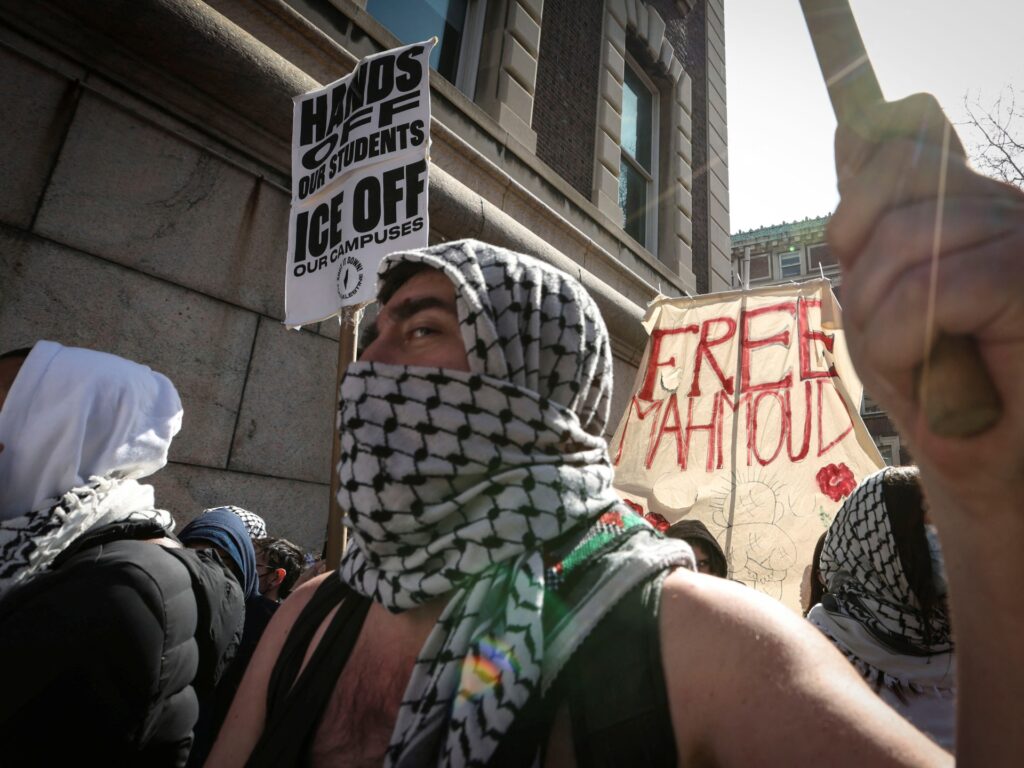
The administration of President Donald Trump has arrested a second student protester and set a deadline for Columbia University, one of the most prestigious campuses in the United States, to cede control of one of its academic departments. In a news release on Friday, the Department of Homeland Security accused Leqaa Kordia, a Palestinian student at Columbia, of overstaying her F-1 student visa. The statement explained that agents from Immigration and Customs Enforcement (ICE) detained her for deportation. Another foreign student, Ranjani Srinivasan of India, had her student visa revoked for participating “in activities supporting Hammas”, a misspelling of the Palestinian armed group Hamas. The Trump administration has repeatedly conflated participation in protests against Israel’s war in Gaza with support for Hamas. It has also accused demonstrators of supporting “terrorists”. Kordia’s arrest marks the second time in less than a week that a Palestinian student at Columbia University has been taken into ICE custody for deportation. On Saturday, protest spokesperson Mahmoud Khalil likewise was arrested and placed in immigration detention, first in New Jersey and later in Louisiana. Advertisement Civil liberty advocates say the arrests are meant to stifle free speech rights, and Khalil’s lawyer this week argued he has not been able to contact his client privately, in violation of his right to legal counsel. Khalil is a permanent resident of the US, with a green card, and his American wife is eight months pregnant. The Trump administration, however, says it plans to strip him of his green card. “It is a privilege to be granted a visa to live and study in the United States of America. When you advocate for violence and terrorism that privilege should be revoked, and you should not be in this country,” Homeland Security Secretary Kristi Noem said in the news release. But the arrests and student visa revocation were not the only strong-armed actions the Trump administration took against Columbia in the last 24 hours. In a letter issued late on Thursday night, the administration demanded that Columbia’s Department of Middle Eastern, South Asian and African Studies (MESAAS) be placed in an “academic receivership” wherein an outside authority takes control, often as punishment for mismanagement. The letter specified that the university must come up with a plan to create the academic receivership role no later than March 20. Failure to comply, the letter warned, would negatively affect “Columbia University’s continued financial relationship with the United States government”. Setting up a receivership was just one in a list of demands, which included abolishing the university’s judicial board for hearing disciplinary matters, banning masks on campus and adopting a controversial definition of anti-Semitism that some fear could limit legitimate criticisms of Israel. Advertisement Columbia University is a private school, one of eight campuses that makes up the much-vaunted Ivy League in the northeast region. But Trump and other Republicans have repeatedly attacked the university since it became the epicentre of pro-Palestinian protests in 2023 and 2024 as students rallied against the devastation wrought by Israel’s war, which United Nations experts compared to a genocide. How did we get here? The protests hit a peak last April, after a contentious hearing on Capitol Hill. The university president at the time, Minouche Shafik, appeared before a congressional panel to face scrutiny over allegations that Columbia and other schools had failed to address anti-Semitism on campus. The very next day, Shafik authorised New York City police to enter an encampment that student protesters had set up on Columbia’s East Lawn, leading to mass arrests. Tensions escalated from there. Student protesters argued that their free speech rights were being curtailed, and that officials were conflating criticisms of Israel’s war with anti-Semitism. Some occupied a school building, Hamilton Hall, to show defiance against attempts to dismantle the protest movement. But what happened at Columbia kicked off a series of similar measures across the country, as police were called onto campuses to arrest peaceful protesters. More than 3,000 protesters are estimated to have been arrested between April and July. Trump campaigned for re-election on the platform that he would seek out and deport foreign students who participated in the protests. Advertisement His allies even codified the threats into last year’s Republican Party platform, making it one of 20 pledges: to “deport pro-Hamas radicals and make our college campuses safe and patriotic again”. Upon taking office for a second term on January 20, Trump immediately issued an executive order calling for the removal of foreigners who bear “hostile attitudes” to US “citizens, culture, government, institutions, or founding principles” or who support “threats to our national security”. The US has long been an ally of Israel and has supported its campaign in Gaza, which has killed at least 48,524 Palestinians. In the months since taking office, Trump has directed the Justice Department to “investigate and punish anti-Jewish racism in leftist, anti-American colleges and universities”. And on social media this month, he warned he would take heavy-handed action against any campus that hosts what he called “illegal protests” — although he failed to define what that category might entail. “All Federal Funding will STOP for any College, School, or University that allows illegal protests,” Trump wrote. “Agitators will be imprisoned/or permanently sent back to the country from which they came. American students will be permanently expelled or, depending on on [sic] the crime, arrested.” Already, on March 7, the Trump administration announced the immediate cancellation of $400m in federal grants and contracts to Columbia University, in what was considered a warning shot against all institutions of higher education to conform with the president’s demands. Advertisement Secretary of Education Linda McMahon pointed to increases in reported acts of anti-Semitism after the Hamas-led attacks on southern Israel in October 2023 as a reason for the cancellation. “Since October 7, Jewish students have faced relentless violence, intimidation, and anti-Semitic harassment on their campuses — only to be ignored by those who are supposed to protect them,” McMahon said in an accompanying news release. “Universities must
Finnish court convicts Russian man for war crimes in Ukraine
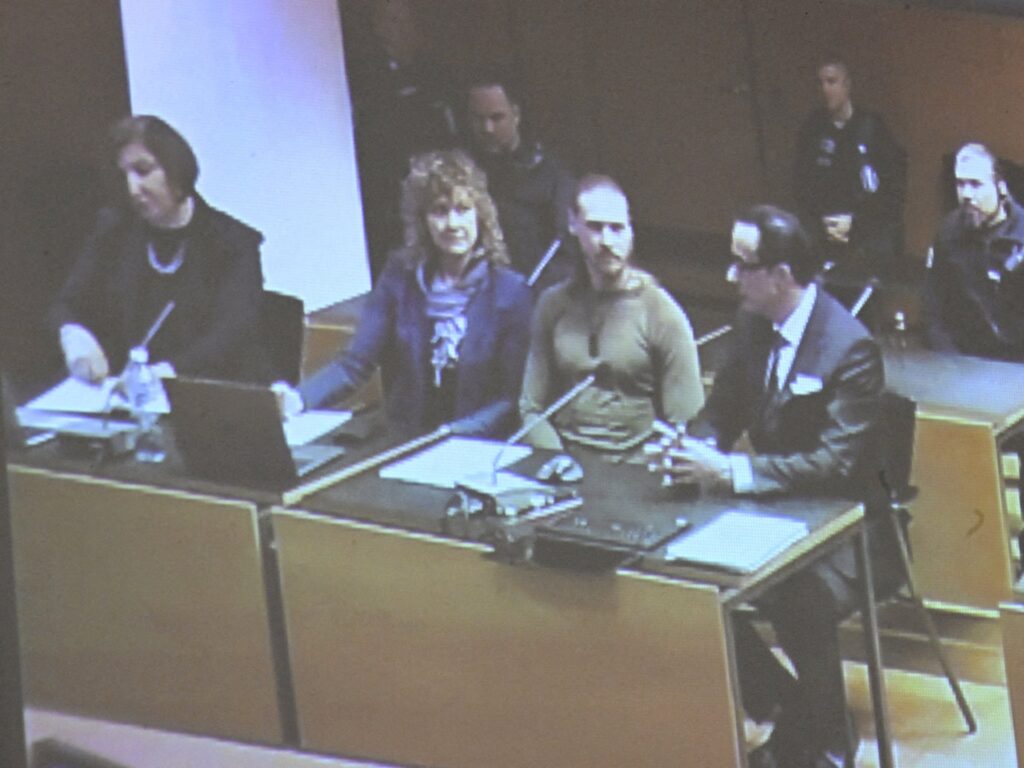
Finnish court sentences Russian fighter to life imprisonment for war crimes against Ukrainian soldiers in 2014. A Russian national has been sentenced to life imprisonment in Finland for war crimes committed in Ukraine. The district court of Finland’s capital, Helsinki, ruled on Friday that Voislav Torden, then a commander of the far-right Russian nationalist paramilitary group Rusich, was involved in four different war crimes against Ukrainian soldiers during battles in eastern Ukraine in 2014. A fifth charge was dismissed. Torden was arrested in the summer of 2023 in Finland, which shares a 1,340-kilometre (832-mile) border with Russia. The case involves an armed attack on soldiers of a Ukrainian battalion in the Luhansk region. According to the court, Torden was involved in the killing of a soldier, among other things. He also reportedly took degrading photos of the deceased, which he later disseminated. Ukraine hails ‘key milestone’ The 38-year-old defendant denied the allegations in court, the Finnish broadcaster Yle reported. His lawyer, Heikki Lampela, told Finnish media that Torden was surprised by the ruling and would appeal it. Advertisement This is the first case in which a Finnish court has convicted someone for war crimes in Ukraine, Yle reported. The office of Ukraine’s prosecutor general hailed the court’s decision as “a key milestone in holding perpetrators of grave violations of international humanitarian law accountable.” “Ukraine remains committed to working with partners worldwide to ensure there is no impunity for war criminals,” it said in a statement posted on social media. Russia slammed the verdict and called the case against its citizen “shameful” and politically motivated. “The verdict of the Finnish judiciary provokes nothing but deep outrage and indignation. The bias of Helsinki district court, which gave an openly politicised sentence to the Russian citizen, is obvious,” the Russian embassy in Finland said in a statement. Adblock test (Why?)
Will Israel be held accountable for genocidal acts in Gaza?

UN report finds systemic sexual and gender-based violence against Palestinians. A United Nations investigation concludes Israel has carried out genocidal acts by destroying Gaza’s main fertility clinic and maternity hospitals. Israel has rejected the report, which also alleges sexual violence. What are the implications? And will there be accountability? Presenter: Folly Bah Thibault Guests: Sari Bashi – programme director at Human Rights Watch Muhammad Dahleh – human rights lawyer Arwa Damon – founder of the International Network for Aid, Relief and Assistance Adblock test (Why?)
Mark Carney sworn in as Canadian PM amid growing tensions with US
[unable to retrieve full-text content] Mark Carney has been sworn in as the prime minister of Canada, assuming office amid threats from the United States.
Fernandes hits back at Ratcliffe over ‘overpaid’ jibe at Manchester United
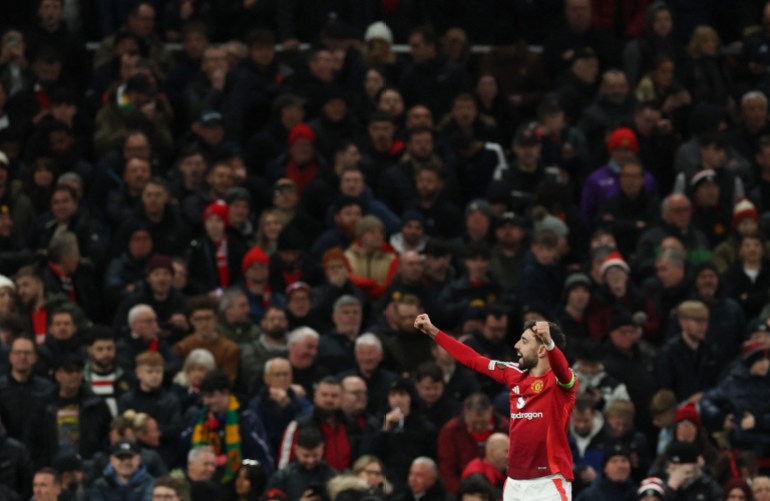
Manchester United co-owner says some players are ‘overpaid’, but club captain defends his teammates. Manchester United captain Bruno Fernandes says it is not the players’ fault for the contracts signed off by the club as he hits back at claims by co-owner Jim Ratcliffe that some are “overpaid”. Fernandes was singled out for praise by Ratcliffe, who also said some of the United squad were “not good enough”, in a range of media interviews this week. The United captain led by example by scoring a hat-trick in Thursday’s 4-1 win over Real Sociedad to book a place in the quarterfinals of the Europa League. And he defended his teammates after Ratcliffe singled out the signings of Casemiro, Rasmus Hojlund and Andre Onana as examples of expensive deals made before he arrived at the club that United are still paying for. “We can’t relax at this club. You know that there’s a big standard, a big attention that you get from the media, from everywhere,” Fernandes said. “It’s not nice to hear certain things, obviously. I don’t think that any player likes to hear criticism or things that are talked about to you, that you’re not good enough or you’re overpaid or whatever. Advertisement “Everyone has their own contract. The club agrees to do the contracts at the time you come here or at the time you do a new contract or whatever, and it’s about yourself, proving that you can be important for the club.” Fernandes celebrates scoring Manchester United’s second goal against Real Sociedad at Old Trafford, where he is regarded as a fan favourite [Phil Noble/Reuters] The Europa League is United’s only hope of salvaging a miserable season so far. Ruben Amorim’s team sit 13th in the Premier League and are out of both domestic cup competitions. Fernandes revealed he had the chance to leave Old Trafford last summer but reiterated his desire to win more trophies as captain. “I sat with the club because I had an offer to leave,” the Portuguese midfielder added. “We talked about the possibility of me leaving the club or staying. “They said what they wanted from me. I just asked if they still see me as part of the future of the club or not. I spoke at the time with [former manager, Erik] ten Hag also. “He was very clear with me, the club was very clear with me, that they thought I would be a big part of this rebuild. I thought that we could be successful.” Manchester United co-owner Jim Ratcliffe, centre left, speaks with former manager Alex Ferguson in the stands of Old Trafford, where both regularly attend games [Carl Recine/Reuters] Despite Fernandes’s return of 15 goals this season as United’s stand-out performer, he has still received criticism from one of his predecessors as the club’s captain. Advertisement Roy Keane claimed the 30-year-old was “not a fighter” and “talent is not enough” in a recent media appearance. Fernandes said the former Irish midfielder, who won 13 major trophies at United, is someone he “massively respects” and is hoping to change Keane’s mind. “What I’m doing on the pitch to try to change his mind or trying to do something that he probably sees as a good thing,” Fernandes added. Amorim has said his side “need more Brunos” if they are to rediscover their former glories. Of Fernandes’s 15 goals this season, six have come in the last six games. “I think he’s so important for this team. You can see it by the numbers, and you can see from these last games. He’s always the guy that scores,” Amorim said. “When you play for this team, you have to be prepared for the critics, and I understand that former players had a lot of success here and the standards for them were so high that they see the things like that sometimes as black and white. “In life sometimes, it’s not just black and white. There is some other colours, and you have to understand the context. “Again, he’s always there, trying his best, so I’m really proud to coach a player like him.” Adblock test (Why?)
WPL 2025 final: Delhi Capitals Women vs Mumbai Indians Women; teams, stream

Who: Delhi Capitals Women vs Mumbai Indians WomenWhat: Women’s Premier League (WPL) final 2025Where: Brabourne Stadium, Mumbai, India.When: Saturday, March 15 at 8pm (14:00 GMT) Follow Al Jazeera Sport‘s live text and photo commentary stream. Delhi Capitals Women will hope to end their woes in the WPL final as they face Mumbai Indians Women for the 2025 crown in Mumbai on Saturday. It’s the third consecutive final that Delhi have reached, but they are yet to lift the trophy, and they now face the team that beat them in the inaugural final in 2023, Mumbai Indians. Al Jazeera takes a look at the final of the third edition of the tournament. How did the teams reach the WPL final? Delhi Capitals topped the group stage from Mumbai Indians, who lost their final match – and with it, the top spot – in an 11-run defeat by Royal Challengers Bengaluru on Monday. The result forced Mumbai into an eliminator with third-placed Gujarat Giants on Thursday. A resounding 47-run victory was recorded as Hayley Matthews smashed 77 in a total of 213-4. Who are the previous WPL winners? Mumbai Indians beat Delhi by seven wickets in the final of the first edition of the WPL in 2023. Advertisement Royal Challengers Bangalore were crowned champions with an eight-wicket win last season. Can Delhi Capitals end their final jinx? Former Australia captain Meg Lanning has led Delhi since the formation of the WPL and vice captain at the Capitals believes her skipper’s winning mentality and unwavering optimism are instrumental “Meg is someone who wants to win every game. But, at the same time, she has the amount of clarity in what she’s looking for. Winning is one thing that she tells us, but she also tells us to focus on what we need to do,” India batter Jemimah Rodrigues said of the seven-time World Cup winner. “She has clarity in what she wants to do and what she wants this team to do and makes sure she takes everyone along in doing that thing. I think that helps us be a successful team. “The thing I love about Meg, and this is something that I would like to add in myself … is that she’s calm but aggressive at the same time. And as a leader, that’s a very crucial quality to have.” 2️⃣ 🔝 Teams2️⃣ Great Captains1️⃣ Trophy 🏆 Who will win the 𝐒𝐮𝐦𝐦𝐢𝐭 𝐂𝐥𝐚𝐬𝐡? 🤔#TATAWPL | #DCvMI | #Final | @DelhiCapitals | @mipaltan pic.twitter.com/OiI9OAt0ge — Women’s Premier League (WPL) (@wplt20) March 14, 2025 Who are the WPL’s leading run scorers? Nat Sciver (Brunt Mumbai Indians) – 416 Ellyse Perry (Royal Challengers Bengaluru) – 372 Shafali Verma (Delhi Capitals) – 300 Meg Lanning (Delhi Capitals) – 263 Who are the WPL’s leading wicket-takers? Amelia Kerr (Mumbai Indians) – 14 Hayley Matthews (Mumbai Indians) – 14 Georgia Wareham (Royal Challengers Bangalore) – 12 Advertisement What is the secret to Delhi Capitals’ consistency? Rodrigues has credited the team’s professionalism and unity for their consistency, especially during the current season which she described as the most challenging ever. “Every player adds so much value to the team that they just know their stuff,” she said. “I think out of all the three seasons, we are most proud of this year, because it wasn’t easy, but we found a way to pick ourselves up and still come at the top.” What are Mumbai’s chances of overcoming Delhi? Delhi may have topped the group this year but Mumbai already have one WPL title under their belt – and Delhi carry their losing streak in the finals with them into Saturday’s game. “We have a really good balance of international players as well as the local Indian players, too,” Matthews said as she analysed the Mumbai squad. “We get contributions from so many different participants in the team like Nat [Sciver-Brunt], Melie [Amelia Kerr], Shab [Shabnim Ismail], myself, being able to step up as internationals. “When you look at a captain like Harmanpreet [Kaur], even the young players, like Sanskriti Gupta that have come in this year, have been able to make massive impacts.” How did the WPL reach its final in Mumbai? The tournament has been on a road trip across India with the opening six games staged in Vadodara, before eight were played in Bengaluru. Lucknow and Mumbai concluded the 20-match group stage. Thursday’s eliminator was also played in Mumbai. Consistency 🤝 Team work 🤝 Performance Our two finalists had that in common on the road to the #Final 🛣 But who will fulfill their quest for glory? 🏆🤔 #TATAWPL | #DCvMI | @DelhiCapitals | @mipaltan pic.twitter.com/MkxmxLcEN9 — Women’s Premier League (WPL) (@wplt20) March 14, 2025 Advertisement Are impact players allowed in the WPL? Unlike the Indian Premier League (IPL), the WPL does not allow for a substitute player to be brought into the team during the match to make an impact. Delhi’s Rodrigues hopes this remains the case. “I am not a massive fan of the impact player [rule] because I am someone who loves the rules we already have,” she said. “It’s unfair to the bowlers also sometimes when they have bowled so well and have done so much and then towards the end, a proper batter is coming in.” Has the WPL been a success? According to West Indies white-ball captain and Mumbai all-rounder Hayley Matthews, Twenty20 leagues have transformed women’s cricket from a sport that once relied on public support for survival into an appealing spectacle. The 26-year-old, who shot to fame in the West Indies’ 2016 T20 World Cup triumph, said T20 leagues like the WPL have fostered global exposure and helped develop the women’s game. “I feel like once upon a time, women’s cricket was probably like, ‘Come and watch the game to support the women,’ whereas now I feel like we have a product that’s entertaining and we have these skills that people want to see us play cricket,” Matthews told Reuters. “Just getting the opportunity to play these
Germany parties agree plan for spending boost, debt brake overhaul
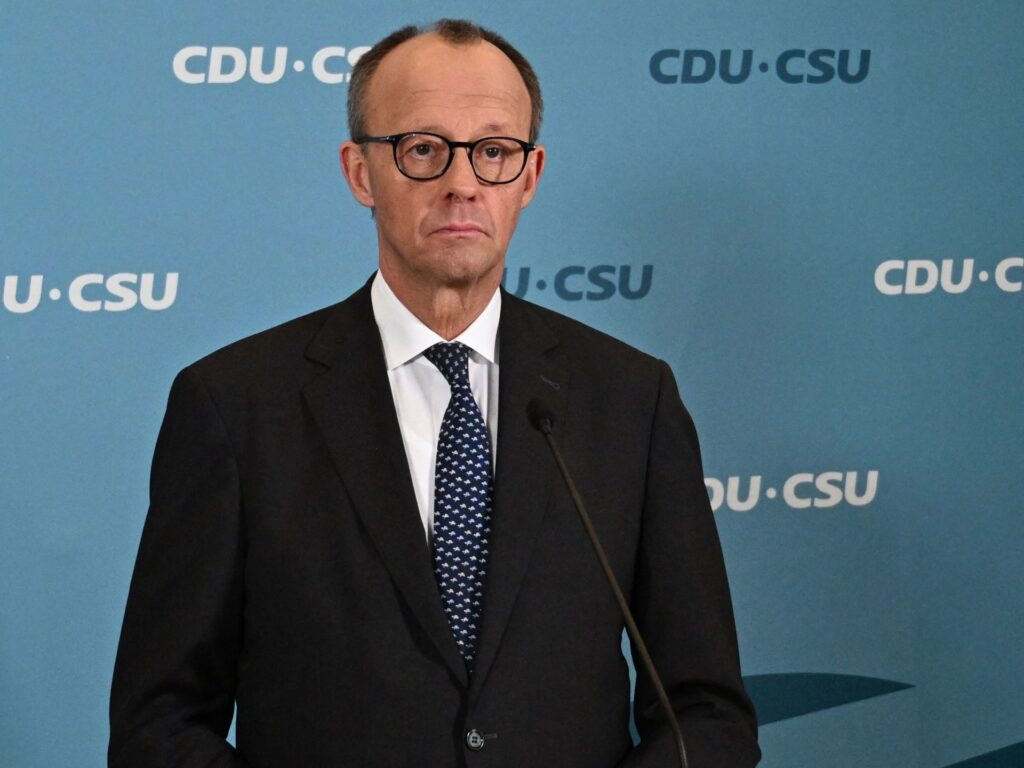
The plan calls for a $545bn fund for infrastructure spending. Germany’s likely next chancellor, Friedrich Merz, has announced a deal to drastically overhaul the country’s debt rules to allow a boom in defence and security spending as well as 500 billion euros ($545bn) in infrastructure investment in the next 12 years. Merz’s conservatives and their prospective Social Democratic coalition partners reached an agreement with the Greens party on Friday to exempt spending above 1 percent of gross domestic product (GDP) on defence and security – including civil protection, intelligence and “aid to countries under illegal attack” – from the nation’s constitutionally enshrined debt brake. “Germany is back,” Merz said, adding that the agreement signalled to partners and adversaries Berlin’s willingness to defend itself. The debt brake has been the hallmark of Berlin’s fiscal policy since it was introduced by former Chancellor Angela Merkel in 2009 and limited new borrowing to 0.35 percent of GDP. Economists and investors have long urged Germany to reform its debt brake to free up investment and support an economy that has contracted for the past two years. Advertisement Friday’s deal was reached as US President Donald Trump pivots away from supporting Ukraine in its fight to repel Russia’s invasion amid strains in ties between Washington and the European Union. Concerns over the future direction of US foreign policy have fuelled calls for Germany, long dependent on the US security umbrella, to quickly ramp up its military funding amid signs of increasing Russian aggression. “Any further delay” in boosting [defence] spending “would be irresponsible”, Merz said during a parliamentary debate on Thursday. “In view of the alarming security situation in Europe in every respect and the growing economic challenges in our country, far-reaching decisions … cannot be postponed any longer,” he told lawmakers. But Friday’s deal follows several days of often acrimonious debate, during which members of the Greens had threatened to withhold their support, citing insufficient action on the environment in the plan. Their votes were necessary to achieve the two-thirds majority in the German parliament needed to modify the debt brake. Merz – whose conservatives finished first in February elections – said that after talks with the Greens, it had been agreed that 100 billion euros ($108bn) of the infrastructure fund would be dedicated to climate protection measures. His incoming government is eager to get the spending plans approved before the newly elected parliament convenes at the end of March. In the new chamber, the far-right Alternative for Germany and the far-left Left party, which oppose the plans, would have the numbers to block the measures. Advertisement Both parties have filed legal challenges against the spending plans at the Federal Constitutional Court, arguing there will be insufficient time for consultations. Adblock test (Why?)
Residents near Ukraine’s frontline sceptical of ceasefire deal
[unable to retrieve full-text content] People in a town near the frontline in Ukraine’s Sumy region have told Al Jazeera they are mistrustful of US peace deal.
Columbia expels, suspends students after government threats: What we know
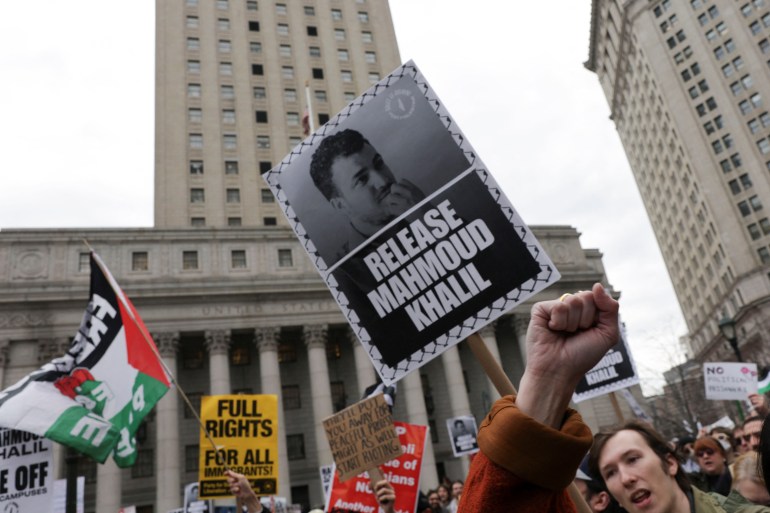
Columbia University has expelled, suspended or revoked degrees of students who occupied a campus hall during pro-Palestinian demonstrations in April 2024, the university said on Thursday. Students were issued with punishments based on the “severity of behaviour at these events” and past infractions, if any, a statement from Columbia read. The move is the university’s response to a crackdown on student activists in the United States who led pro-Palestine demonstrations last year amid Israel’s war on Gaza, and called for their schools to cut financial ties with Israel. It also comes after the government cut $400m in federal funding for Columbia on March 7. The university was one of 60 institutions threatened with further cuts in a letter from US authorities this week. Here’s what we know about the threat to Columbia and how it has responded: What does the US government’s letter to Columbia and other universities say? On March 10, the US Department of Education sent letters to 60 institutions, informing them they were under investigation for “antisemitic harassment and discrimination” and warning them of potential law enforcement actions if they don’t “protect Jewish students”. Advertisement Prominent institutions such as Columbia, Harvard and Princeton were among the schools which received the notice. All 60 schools benefit from US federal funding. The letter cited Title VI of the Civil Rights Act, which the education department said mandates universities to “protect Jewish students on campus, including (by providing) uninterrupted access to campus facilities and educational opportunities”. Secretary of Education Linda McMahon was quoted as saying in the missive: “The Department is deeply disappointed that Jewish students studying on elite US campuses continue to fear for their safety amid the relentless antisemitic eruptions that have severely disrupted campus life for more than a year. University leaders must do better.” SHALOM COLUMBIA: The Trump Admin, led by @USEDgov and the Task Force to Combat Antisemitism (@TheJusticeDept, @HHSGov, & @USGSA), has canceled ~$400M in federal grants to @Columbia over its failure to protect Jewish students from antisemitic harassment. pic.twitter.com/CavoXbhhvx — The White House (@WhiteHouse) March 7, 2025 Earlier, on March 7, the Department of Education announced a $400m funding cut to Columbia specifically, citing a “failure to protect Jewish students from antisemitic harassment”. The school was a major hub during a wave of campus protests that swept the US last year as Israel’s war on Gaza escalated. On April 30, a group of students, staff and alumni occupied Hamilton Hall, an academic building on campus, before being forcibly cleared by New York police on request of the university’s leadership. Advertisement How has Columbia responded? What action has it taken against students? Columbia has not publicly responded to the letter from the education department. However, in a statement to staff and students on March 10, Columbia’s interim president Katrina Armstrong said funding cuts would impact “research and critical functions of the University”, and would affect staff and students. About a quarter of the university’s more than $6bn yearly operation costs are met by federal grants. Then, on Thursday, Columbia announced that students involved in last year’s Hamilton Hall protest have received multiple-year suspensions or outright expulsions following the university’s investigations. The months-long process was carried out by the school’s University Judicial Board, and included hearings for each student involved. “Columbia is committed to enforcing the University’s Rules and Policies and improving our disciplinary processes,” the university said. March 13, 2025 University Statement Regarding UJB Determinations: https://t.co/C8Hn518ZId pic.twitter.com/dgr71AzMeX — Columbia University (@Columbia) March 13, 2025 Others who have since graduated will have their degrees revoked, it added. The names and precise number of students sanctioned by the judicial board were not revealed. According to The Associated Press news agency, several other students have been notified by university officials that they are also under investigation for sharing social media posts in support of Palestinian people or joining “unauthorised” protests. Advertisement ‘Dangerous times’: How have students and others reacted? In an opinion published in the university’s publication Columbia Daily Spectator in February, a body of student workers accused the university’s leadership of not taking a stand. “The Student Workers of Columbia sent you a letter asking for assurance that Columbia would protect noncitizen students, faculty and staff. In response we received a vague reply from your office, which seemed to reference a completely different topic. Rather than standing up for the Columbia community, the University’s leadership has stood by or, worse, accelerated and enabled these threats,” the body wrote. Columbia University authorities this week warned students at the institution’s journalism school about posting on social media, according to reporting by The New York Times. Non-US citizens were especially warned to avoid publishing about Gaza or Ukraine. “If you have a social media page, make sure it is not filled with commentary on the Middle East,” the journalism school’s dean, Jelani Cobb told students. “Nobody can protect you … these are dangerous times,” he added. “History shows that a university that does not advocate for the academic freedom of its own members is opening itself to further attacks on academic freedom in the future,” said historian Eraldo Souza dos Santos, who is currently affiliated with Cornell University. “Columbia seemingly not only ignored Khalil’s calls for protection, but also has been willing to collaborate with the current administration in its efforts to criminalise dissent on campus. Advertisement “It should, instead, be trying, within its own capacities, to offer legal and public-facing support to a generation of students who belong to the same long struggle against segregation and apartheid that took shape between the 1960s and 1980s,” he told Al Jazeera. Demonstrators hold placards as they protest on the day of a hearing on the detention of Palestinian activist and Columbia University graduate student Mahmoud Khalil, in New York City on March 12, 2025 [Jeenah Moon/Reuters] What happened in the lead-up to all this? Authorities have also cracked down directly on students involved in pro-Palestine demonstrations. Mahmoud Khalil, a Columbia student who acted as student negotiator with university authorities