

Three Bulgarians found guilty of spying for Russia from UK base
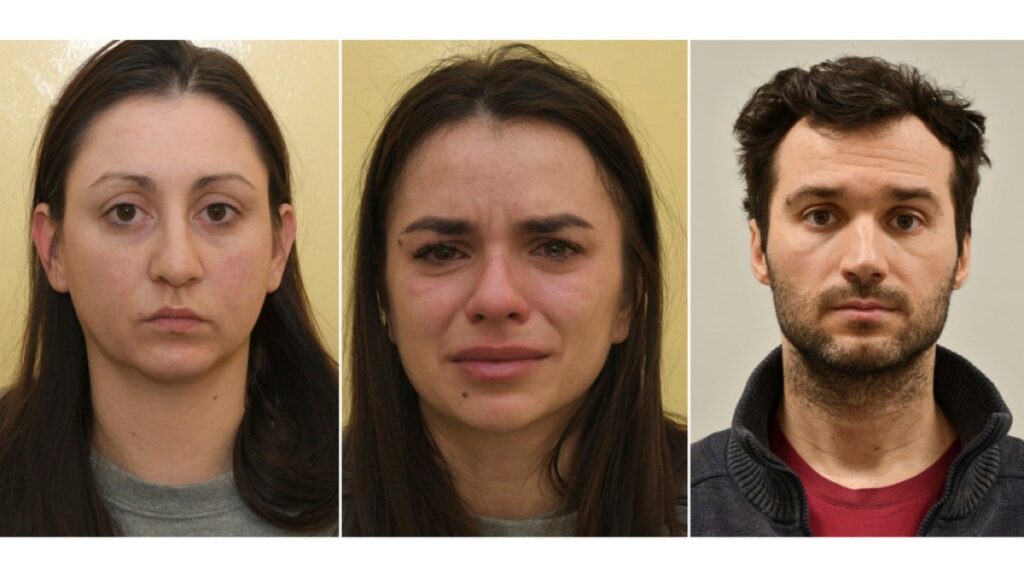
Three Bulgarian nationals based in the United Kingdom have been convicted by a London jury of spying for Russia on what police said was “an industrial scale”. The trio was accused of putting lives in danger as they followed orders on behalf of Russian intelligence to carry out surveillance across Europe on Kremlin opponents, including journalists, diplomats and Ukrainian troops. A jury at London’s Old Bailey court on Friday found Bulgarian nationals Katrin Ivanova, 43, Vanya Gaberova, 30, and Tihomir Ivanchev, 39, guilty of spying for Russia on what police said was “an industrial scale.” The trio engaged in a series of surveillance and intelligence operations over three years during which one of their ringleaders nicknamed them “the Minions”, a reference to the yellow sidekicks in movie, Despicable Me, who work for supervillain Gru. The defendants – who worked for the Russian intelligence service GRU – face up to 14 years in prison when they are sentenced in May along with three other Bulgarian members of the same spy cell. Advertisement The trio’s leader, Orlin Roussev, 47, his deputy Biser Dzhambazov, 43, and co-conspirator Ivan Stoyanov had all pleaded guilty to spying for Russia shortly before the trial. Roussev received more than 200,000 euros ($217,000) to fund the spying activities. The mastermind of the operation was alleged Russian agent Jan Marsalek, 44, an Austrian businessman wanted by Interpol after the collapse of German payment processing firm Wirecard. Marsalek, whose current whereabouts are unknown but is believed to be in Russia, acted as a go-between linking Russian intelligence and the spy ring, instructing them to carry out six serious operations in the UK, Austria, Spain, Germany and Montenegro until their arrest in 2023. “This was spying on an almost industrial scale on behalf of Russia, the Russian state and Russian intelligence services,” said Commander Dominic Murphy, the head of London police’s Counter Terrorism Command. ‘Indiana Jones’ HQ British prosecutors said Marsalek tasked the British-based Bulgarian team with spying on Ukrainian soldiers being trained at a US base in Germany, with a view to tracking their movements on the battlefield after Russia’s 2022 invasion. Another operation involved spying on Christo Grozev, a journalist with investigative website Bellingcat, who led a report on the 2018 poisoning of Russian double agent Sergei Skripal in Salisbury, England, with a view to kidnapping or even killing him. The group also targeted British-based Russian Roman Dobrokhotov, editor-in-chief of The Insider, Bergey Ryskaliyev, a former Kazakh politician granted asylum in the UK, and Russian dissident Kiril Kachur. Advertisement They discussed dropping fake pigs’ blood on the Kazakhstan Embassy in London by drone as part of a fake protest intended to win favour with Kazakh spies. Police found a trove of what they called “really sophisticated” spyware in a raid on Roussev’s operations centre in a former guesthouse in the seaside town of Great Yarmouth, described in text messages as his “Indiana Jones garage”. It included homemade audiovisual spy devices hidden inside everyday objects including a rock, men’s ties, a Coke bottle and a Minions cuddly toy. “Really sophisticated devices – the sort of thing you would really expect to see in a spy novel – were found here, in Great Yarmouth and London,” said Murphy. Love triangle Dzhambazov, who worked for a medical courier company but claimed to be an Interpol police officer, was in a relationship with two other defendants — his laboratory assistant partner Ivanova and beautician Gaberova. Gaberova, in turn, had ditched painter-decorator Ivanchev for Dzhambazov, who took her to Michelin-starred restaurants and stayed with her in a five-star hotel. When police moved in to arrest the suspects in February 2023, they found Dzhambazov in bed with Gaberova rather than at home with Ivanova. Both women claimed during the trial that they had been deceived and manipulated by Dzhambazov. Mr Justice Hilliard KC remanded the defendants into custody until sentencing between May 7 and May 12. Adblock test (Why?)
What’s behind the political crisis in Bosnia Herzegovina?
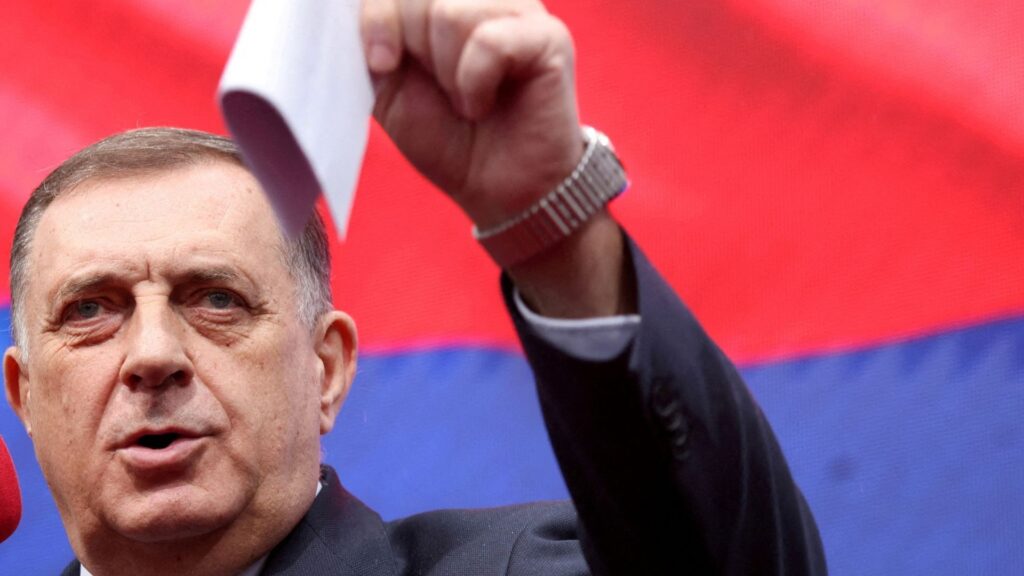
Bosnian Serb leader ignoring conviction, including jail sentence. A deepening political crisis in Bosnia and Herzegovina. Republika Srpska, the autonomous Serb region, bans state police and the judiciary after its leader is convicted of undermining the national constitution. Both the US and EU are condemning the move. So what might happen next? Presenter: Sami Zeidan Guests: Srdan Mazalica – Member of parliament and president of the parliamentary group of the SNSD, the governing party in Republika Srpska Kurt Bassuener – Co-Founder of Democratization Policy Council, a think tank in Sarajevo Jasmin Mujanovic – Senior son-resident fellow at the New Lines Institute’s Western Balkans Center Adblock test (Why?)
Nigerian Senate suspends female senator who made sexual harassment claim

Senator Akpoti-Uduaghan is suspended for six months after she makes an accusation against Senate President Akpabio. The Nigerian Senate has suspended a female senator after she accused its presiding officer of sexual harassment. Senator Natasha Akpoti-Uduaghan was barred from office from Thursday and will have her allowances and security withdrawn for six months after she made an accusation against Senate President Godswill Akpabio, who denied the claims against him. On Wednesday, the Senate ethics committee rejected Akpoti-Uduaghan’s petition about the alleged harassment, citing procedural rule violations. Her subsequent suspension was justified over an earlier argument that erupted in the Senate about a change in her seating arrangement. In a TV interview on February 28, Akpoti-Uduaghan – one of only four women in the 109-seat chamber – alleged that Akpabio made unwanted sexual advances towards her in 2023. “This injustice will not be sustained,” she said on Thursday after she was prevented from speaking in the Senate and escorted out of the chamber by the sergeant-at-arms. Akpabio has publicly denied any wrongdoing. “Since the 20th of February, I have been inundated with phone calls from various Nigerians. I would like to state that at no time did I sexually harass Senator Natasha Akpoti-Uduaghan,” he said, speaking at the start of a plenary session on Wednesday. *Letter to the Nigerian Senate* The Petition of Senator Natasha Akpoti-Uduaghan Must Be Independently Investigated and Openly Discussed in a Public Hearing that the Accused Does Not Preside. Two Demands: 1. Swiftly Appoint an Independent Investigator on the Petition of… pic.twitter.com/rdUkDoR7uU — Oby Ezekwesili (@obyezeks) March 6, 2025 Advertisement Akpoti-Uduaghan, who represents Nigeria’s north-central Kogi Central district, shared a statement on her Facebook page in reaction to the suspension. “Against the culture of silence, intimidation and victim-shaming; my unjust suspension from the Nigerian Senate invalidates the principles of natural justice, fairness and equity,” she said. “The illegal suspension does not withdraw my legitimacy as a senator of the Federal Republic of Nigeria and I will continue to use my duly elected position to serve my constituents and country to the best of my ability till 2027 and beyond.” Ethics committee ‘not fit for purpose’? Senate Majority Leader Opeyemi Bamidele said Akpoti-Uduaghan should use her suspension to “learn the rules of the Senate”. “I asked her what she will gain if she tries to pull the Senate president down,” Bamidele said during the consideration of the petition on the Senate floor. Critics like Chioma Agwuegbo, executive director of the women’s rights organisation TechHerNG, condemned the ethics committee’s handling of the case, alleging bias. “The ethics committee to which her petition was referred has shown that it is not fit for purpose,” Agwuegbo said. Many prominent Nigerian figures and groups have called for a transparent investigation. Many women also expressed their anger over the expulsion on social media with some calling it “oppression”. Two groups of protesters gathered at the National Assembly ground on Wednesday in the capital, Abuja, one in support of Akpabio and the other for Akpoti-Uduaghan, chanting ”Akpabio must go.” Advertisement Akpoti-Uduaghan has filed a lawsuit against the Senate president, seeking 100 billion naira ($64,000) in damages. While rare in Nigeria’s National Assembly, this is not the first time a case involving sexual harassment or assault has emerged. Senator Dino Melaye was accused of threatening to sexually assault Senator Remi Tinubu, the country’s current first lady, but was never charged. Adblock test (Why?)
India vs New Zealand – Champions Trophy final: Match-ups, stream, weather
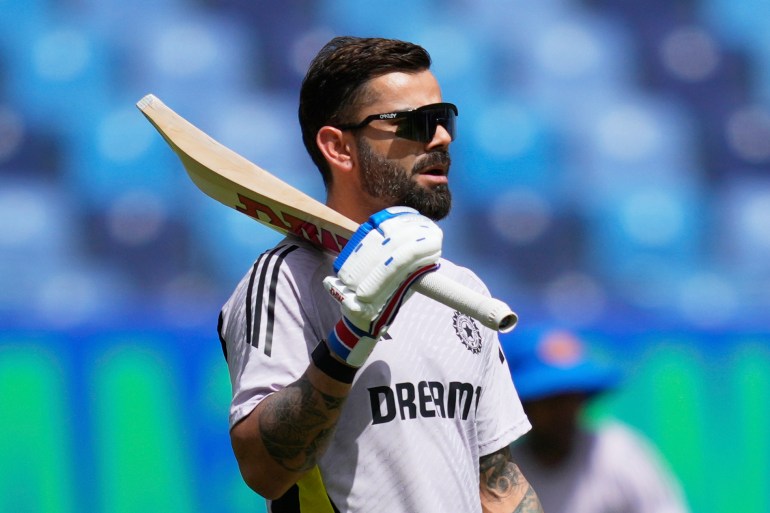
Who: India vs New ZealandWhat: ICC Champions Trophy 2025 finalWhen: Sunday at 1pm (09:00 GMT)Where: Dubai International Cricket Stadium, Dubai, United Arab Emirates After 14 matches and 18 days, the elite one-day international (ODI) men’s competition comprising the world’s top eight teams has whittled down to a battle between the top two contenders. India and New Zealand meet in the final of the ICC Champions Trophy 2025 in Dubai on Sunday. Here’s everything you need to know about the big showdown: Why is Dubai hosting the Champions Trophy final? In the months preceding the Champions Trophy, the ICC found itself in the middle of a deadlock between the Pakistan Cricket Board (PCB) and the Board of Control for Cricket in India (BCCI). The BCCI said it wouldn’t send a team to Pakistan, and while the reasons were never publicly shared, the political tension between both countries was understood to be the cause. Meanwhile, the PCB was adamant about hosting all games in Pakistan. With less than two months to go, both sides met halfway, and it was decided that in all ICC tournaments until 2031 that were hosted by either country, the neighbouring country’s team would play its matches at a neutral venue. Advertisement Pakistan opted to host India’s matches, including the final, in Dubai. What was India’s route to the final? Six-wicket win over Bangladesh in Dubai Six-wicket win over Pakistan in Dubai 44-run win over New Zealand in Dubai Four-wicket win over Australia in Dubai What was New Zealand’s route to the final? 60-run win over Pakistan in Karachi Five-wicket win over Bangladesh in Rawalpindi 44-run loss to India in Dubai 50-run win over South Africa in Lahore 🇮🇳 🆚 🇳🇿#ChampionsTrophy 2025 Final 🤩Dubai 📍 pic.twitter.com/mD112FDOIh — ICC (@ICC) March 5, 2025 Who are the players to watch in the final? Virat Kohli (India): The Indian batting great, arguably the best in ODI history, has rediscovered his run-scoring form in the tournament. In addition to his peerless record in run chases, Kohli has a healthy average when playing against New Zealand in ODIs. His 32 matches against the Blackcaps have yielded him six centuries and nine half-centuries at an average of 57.1. Although Kohli only managed 11 runs in the Group A meeting between the two sides, the 36-year-old is known to save his best for the biggest games. Shubman Gill (India): The world’s top-rated ODI batter began the tournament with a match-winning century over Bangladesh , and although Gill only added 57 runs in the next three games, the opener will be key to India’s innings in the final. His average of 74 and two centuries in 11 games against New Zealand make him a player to watch in the final. Varun Chakravarthy (India): The leg-break bowler’s return to the Indian side has left opposition batters in a fix. Chakravarthy made his Champions Trophy debut in the group game against New Zealand, in which he took five wickets to earn the player of the match award. The spinner’s variation will suit India’s needs perfectly on a relatively slow Dubai pitch. Kane Williamson (New Zealand): Williamson is regarded as one of modern cricket’s batting greats, and his never-diminishing hunger for runs in big tournaments makes him stand out in every competition. The former Kiwi captain was his side’s top scorer in the group match against India, and his teammates will hope that on Sunday he can add to his one century and 11 fifties against India. Matt Henry (New Zealand): The pacer is the tournament’s leading wicket taker, but his participation in the final hangs in the balance after an injury he sustained while fielding in the semifinal. Henry was India’s tormentor-in-chief in the group match, and should he play in the final, he will be the Blackcaps’ main threat with the ball once again. Mitchell Santner (New Zealand): New Zealand’s captain is among the world’s top all-rounders in ODIs, and his left-arm spin will be crucial on the spin-friendly tracks in Dubai. Santner is a capable batter in the lower order and has the ability to hit big shots when the need arises. Virat Kohli is India’s leading run scorer in the Champions Trophy [File: Altaf Qadri/AP] What are the key player match-ups for the final? Advertisement Gill vs Henry: The world’s leading batter vs the tournament’s leading bowler. Henry was responsible for trapping Gill early in the group match with an in-dipping delivery and can cause further problems in the final if he dismisses Gill cheaply once again. Kohli vs Santner: Kohli has rarely thrown his wicket away after settling at the top of the order, but India’s leading century maker in ODIs can be susceptible to left-arm spin bowling. Santner’s wily bowling and Kohli’s patient batting could prove an enthralling battle in the final. Williamson vs Mohammed Shami: The Indian pacer’s return after a prolonged injury layoff has unfolded almost perfectly as he has taken eight wickets in four matches. India will rely on Shami’s experience to undo Williamson, who rarely offers any weaknesses in big games. Rachin Ravindra vs Hardik Pandya: The rising star of world cricket with Indian roots has averaged 75 in the tournament, and although he was dismissed cheaply in the group match, Ravindra continues to pose a threat, one that India will hope Pandya’s experienced pace and bounce will counter – as he did in the group match. Rachin Ravindra has a knack for scoring big runs in ICC events [File: Aamir Qureshi/AFP] What’s the weather forecast for the final in Dubai? The final will be played on a bright and sunny day with no chance of rain and a light breeze forecast in Dubai on Sunday. Temperatures will be the highest when the match gets under way at about 34 degrees Celsius (93.2 degrees Fahrenheit) and are forecast to drop to 28C (82.4F) in the evening. Advertisement How will the Dubai pitch play during the final? The hosting of all India matches in Dubai while the other teams
At least 22 people killed as gang violence erupts in Ecuador
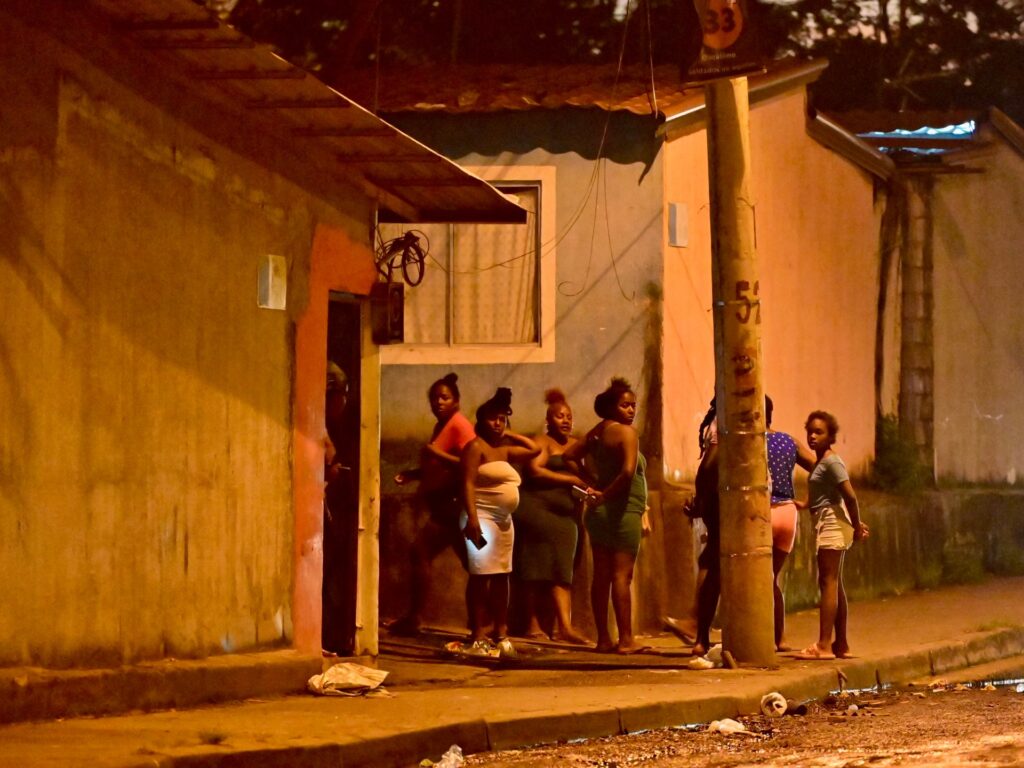
Rival factions of drug trafficking gang fight over territory in port city of Guayaquil before a presidential election. At least 22 people have been killed in Ecuador’s port city of Guayaquil after rival factions of a drug trafficking gang exchanged gunfire, highlighting the worsening law and order situation in the country before a presidential race. Another three people were wounded in the violence, the police said in a statement as the death toll increased from 19 to 22 on Friday. Police said the gunfight erupted on Thursday after opposing factions of a gang called Los Tiguerones, one of the most powerful in this formerly peaceful country, were caught in a dispute. Guayaquil’s El Universo newspaper described the killing as a “massacre”, adding that the gangs were fighting over the territories they control. According to the newspaper, several homes in the Socio Vivienda district of the city were targeted by at least 20 armed gang members, resulting in the multiple deaths. Images and videos posted on X showed several heavily armed men running around the district of Socio Vivienda during the attack. Emergency medical workers were also seen rushing injured people for treatment, as dozens of government security forces were deployed to the area. Advertisement The latest deaths bring to more than 400 the number of people killed in the area in recent months, El Universo reported. Ecuador is home to an estimated 20 criminal gangs involved in drug trafficking, kidnapping and extortion, wreaking havoc in a country of 18 million squeezed between the world’s biggest cocaine producers, Peru and Colombia. In recent years, Ecuador has plunged into violence amid the rapid spread of transnational cartels that use its ports, like Guayaquil, to ship cocaine to the United States and Europe. Homicides, for example, have risen from six per 100,000 inhabitants in 2018 to a record 47 in 2023. Experts say the gangs are constantly mutating and growing stronger with profits from crime. Guayaquil is the capital of Guayas, one of seven provinces where a state of emergency has been in force for the past two months as the government battles the gangsters. Last month, the right-wing President Daniel Noboa, who is seeking re-election, said he would ask unspecified allied countries to send special forces to help him wage this fight. The violence is not letting up as Ecuador gears for a run-off election on April 13 in which Noboa will face leftist Luisa Gonzalez. Noboa had taken an “iron-fisted” approach to crack down on violent crime, including declaring a state of emergency and deploying the army to the streets. Human rights groups claim the aggressive use of armed forces has led to abuse, including the murder of four boys whose charred bodies were recently found near an army base. Advertisement Adblock test (Why?)
Gaza residents react to Trump’s ‘last warning’ to Hamas
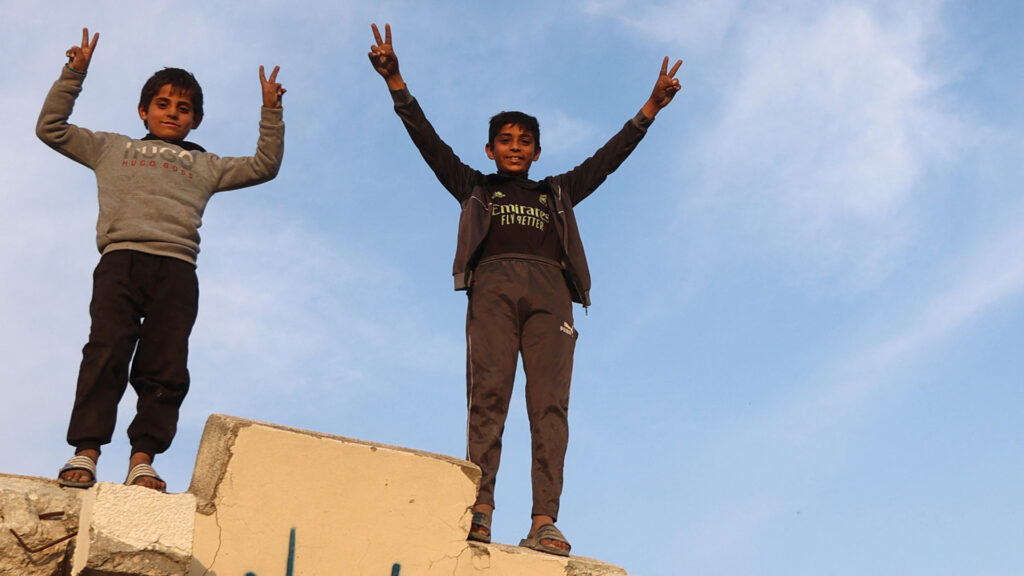
NewsFeed ‘What is there left to destroy?’ Palestinians in Gaza brushed off US President Donald Trump’s warning to Hamas that there will be ‘hell to pay’ if Israeli captives in Gaza are not released immediately, in what he called a ‘last warning’ to the group. Published On 6 Mar 20256 Mar 2025 Adblock test (Why?)
What do President Trump’s tariff plans mean for the US and the world?
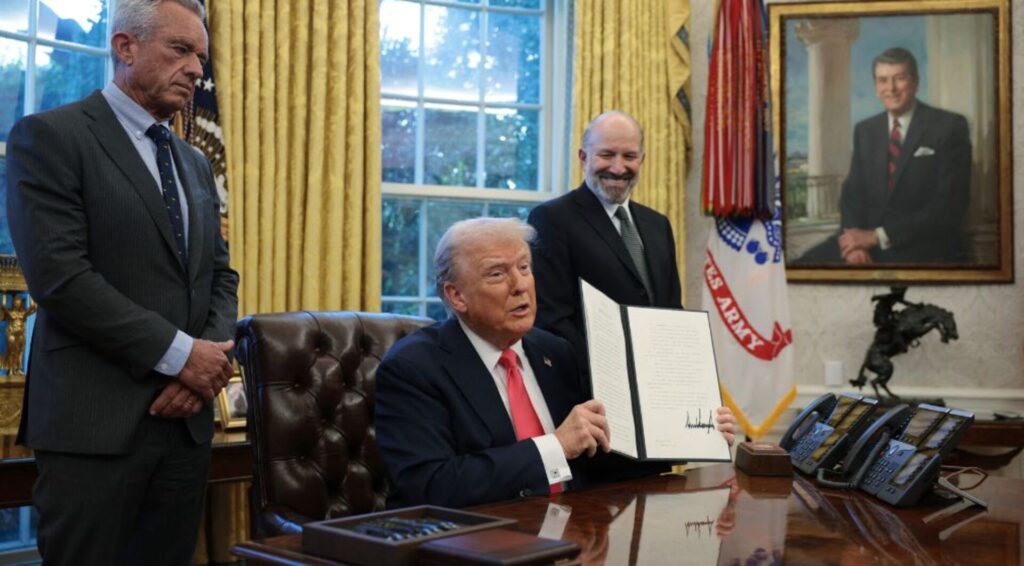
A US trade war has begun with China, Mexico and Canada. Tariffs are central to US economic and foreign policy in the new administration of President Donald Trump. So, what’s in store for the United States and the world? Presenter: Tom McRae Guests: Niall Stanage – White House columnist for The Hill newspaper Dimitris Valatsas – Chief economist and founding partner of Aurora Macro Strategies, an advisory firm that focuses on geopolitics and macroeconomics William Lee – Chief economist at the US nonprofit think tank the Milken Institute Adblock test (Why?)
Syrian forces in deadly clashes with Assad-linked fighters in Latakia
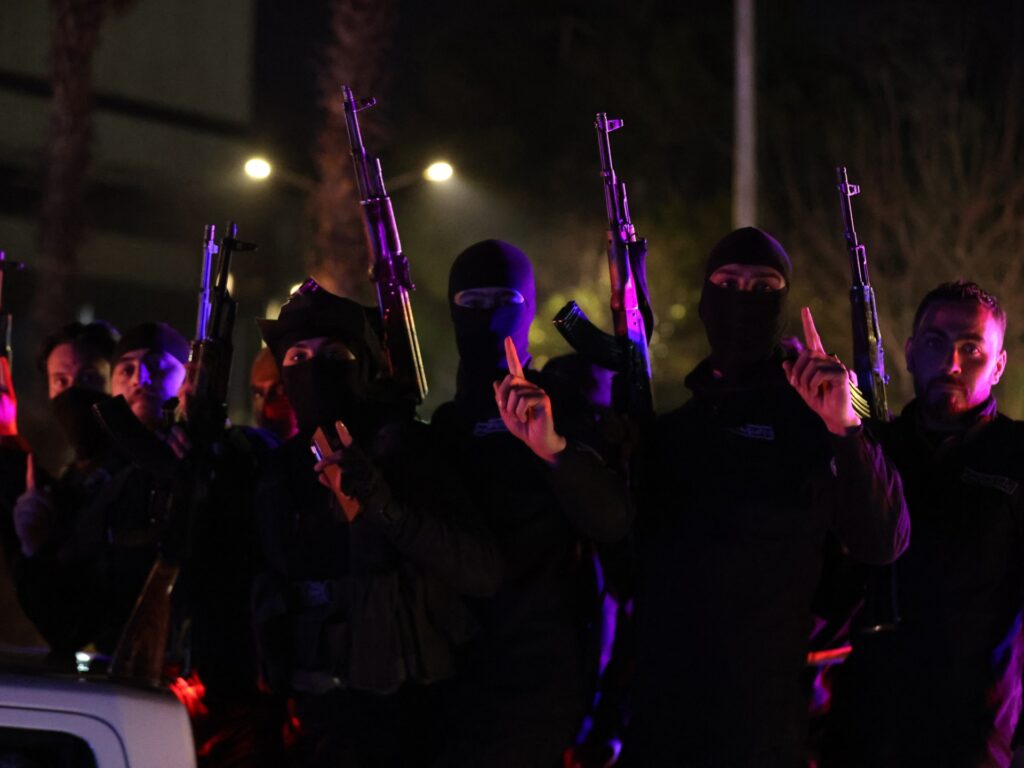
A Syrian security source told Al Jazeera that 15 security personnel were killed in ‘various armed ambushes’. Gunmen loyal to deposed Syrian leader Bashar al-Assad have killed at least 15 security personnel in ambushes in the coastal province of Latakia, a security source told Al Jazeera. The attacks took place on Thursday near the town of Jableh in the Latakia countryside, part of the coastal area which forms the heartland of the Alawite minority sect to which the al-Assad family belongs. A Syrian security source told the Al Jazeera Arabic network that 15 security personnel were killed in “various armed ambushes”. “The Syrian state will impose its authority on all groups outside the law and will not allow security to be threatened,” said the source. Reporting from Damascus, Al Jazeera’s Resul Serdar, said tensions were running high after the attacks. “Since the fall of the Assad regime three months ago, this is perhaps one of the biggest security challenges that the new government is facing,” he said. The central government had sent reinforcements consisting of “dozens and dozens of military vehicles” to the city of Latakia from several governorates, including Hama, Homs and Idlib, he said. Advertisement Soon after the attack, a video was released by an Assad-era commander, saying that a resistance group called the “coastal shield regiment” had been formed against the new government, said Serdar. The security director of Latakia province had earlier told the Syrian state news agency SANA that security forces were clashing in the Latakia countryside with armed groups loyal to Assad-era special forces commander Suhail al-Hassan. Security forces in Latakia announced that the situation was now under control and that several of the attackers had been killed, with “many more captured”, said Serdar. A curfew was also announced in the coastal city of Tartous. Syria’s Mediterranean coastal regions have emerged as one of the main security challenges for interim President Ahmed al-Sharaa as his government works to consolidate control over the country. Adblock test (Why?)
Macron says Russia a threat to Europe as EU leaders hold emergency summit
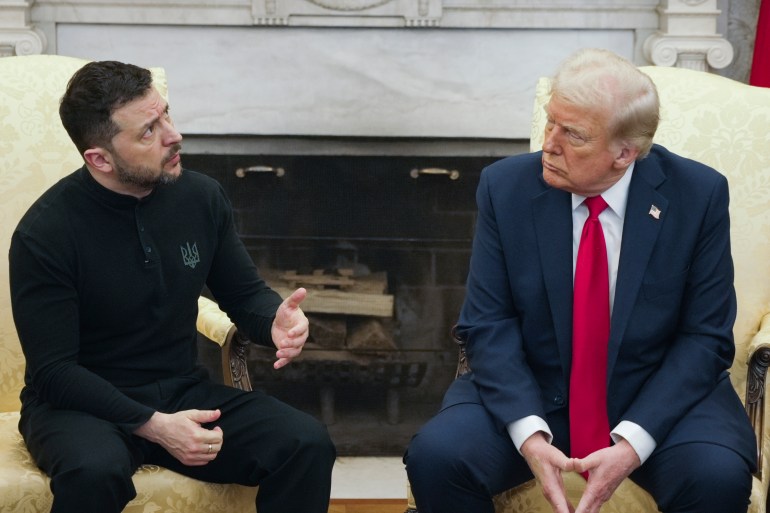
EU leaders gather for an emergency defence summit in Brussels as future partnership with US remains uncertain. French President Emmanuel Macron has said Russian aggression “knows no borders” and is a direct threat to Europe as European Union leaders prepare to hold emergency talks in Brussels in the wake of the Trump administration’s stance on transatlantic ties. “Who can believe that this Russia of today will stop at Ukraine?” Macron said in a televised address late on Wednesday. All 27 EU leaders will gather for Thursday’s defence summit for the first time since the explosive meeting in the Oval Office between US President Donald Trump and Ukrainian President Volodymyr Zelenskyy last week. Trump has since softened his tone on Zelenskyy after the Ukrainian leader’s willingness to sign a controversial mineral deal with the US. Zelenskyy’s insistence that Washington provide a security guarantee in lieu of the deal invited Trump’s wrath. Washington says Ukraine’s entry into the North Atlantic Treaty Organization (NATO) – established in 1949 against the Soviet Union threat – is “unrealistic” and has threatened to withdraw American troops from Europe, asking European allies to step up their defence spending. Advertisement Trump has reached out to Russian President Vladimir Putin without involving his European allies in his push to end the Ukraine war. In his statements, he has blamed Ukraine for the war, which was triggered by Moscow’s 2022 invasion of Ukraine. Washington has since halted military aid as well as intelligence sharing with Ukraine, critical for Kyiv’s defence against Russia. Trump’s Ukraine policy The Ukraine policy shift has sent US allies scrambling, with EU leaders openly questioning Washington’s reliability as a security partner going forward. They also fear that Kyiv and Europe’s interests will be overlooked in any deal to end the biggest conflict on the continent since World War II. Macron warned that Europe must be prepared to stand alone in the face of Russian aggression. “I want to believe the US will stay by our side,” said Macron. “But we have to be ready if that isn’t the case.” “The future of Europe does not have to be decided in Washington or Moscow,” he added. Macron also said he would discuss with his European partners extending French nuclear deterrence to other countries on the continent, but that the decision and control would continue to remain in the French president’s hands. Other European leaders, including British Prime Minister Keir Starmer, have embraced Zelenskyy and reaffirmed their support for Ukraine at weekend talks in London after the White House blowup. President Donald Trump, right, meets with Ukrainian President Volodymyr Zelenskyy in the Oval Office at the White House on Friday, February 28, 2025, in Washington. [Mystyslav Chernov/AP Photo] ‘Europe’s very survival at stake’ At the Brussels meeting, EU leaders will contemplate the ramifications of Trump’s unpredictable and transactional approach to foreign policy. Zelenskyy will also attend the summit. Advertisement While the Brussels meeting will aim to cement European support for Kyiv, it is unlikely to yield any major announcements of aid beyond the 30 billion euros ($32.4bn) the bloc has already committed this year. EU leaders are also expected to discuss a proposal by the European Commission to borrow up to 150 billion euros ($162bn) to lend to member states under a rearmament plan. On Tuesday, European Commission President Ursula von der Leyen laid out an 800-billion-euro ($863bn) plan to “re-arm Europe” and assume responsibility for the continent’s defence. “There’s a real fear that the US could step away and leave Europe vulnerable to Russian aggression, or other aggression. There is a feeling here that Europe’s very survival and future could be at stake,” Al Jazeera’s Natacha Butler, reporting from Brussels, said. She said that EU leaders will be talking about how “to rearm Europe, how to make sure that Europe could become sovereign in terms of defence, to bolster and increase defence spending across the European Union and military coordination.” Butler said a peace plan proposed by France and the United Kingdom will also be discussed. “We know the plan involves sending European peacekeepers to ensure any potential ceasefire in Ukraine in the future.” Macron bringing up the nuclear deterrent has not really been discussed before, but “this shows the sense of urgency that is being felt here in Europe in terms of its own security”, the Al Jazeera correspondent said. Adblock test (Why?)
Will the US make business deals with Russia?
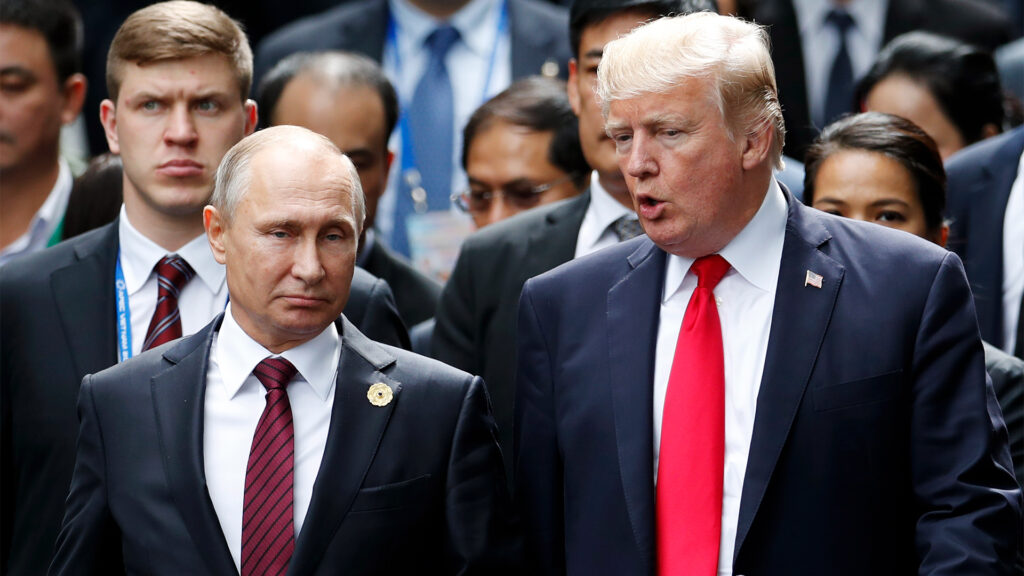
US secretary of state says there are ‘extraordinary’ economic opportunities in Russia. After three years of Western sanctions, Russia could once again be open for American businesses — but only if a deal can be done to end the war in Ukraine. US President Trump says he wants to see major economic deals with Russia, and US Secretary of State Marco Rubio says there are “extraordinary” opportunities there. Moscow says it is open to economic cooperation, but its war-driven economy is overheated, interest rates are high, and the business environment is unpredictable. The European Union and India aim to finalise a free trade deal by 2025. Germany is planning to relax debt rules to boost defence spending. Plus, why are so many Senegalese people unemployed? Adblock test (Why?)