

Israel’s Gaza aid blockade could breach humanitarian law: European nations

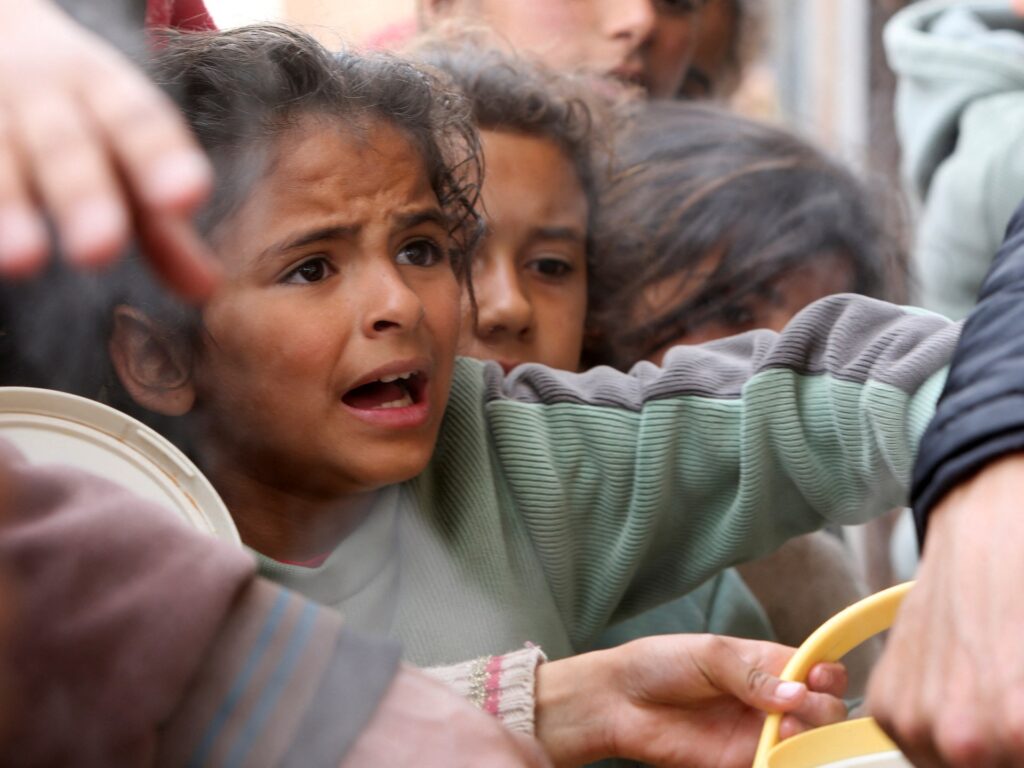
UK, France, and Germany demand Israel uphold ceasefire terms, warning its blockade on aid risk breaching humanitarian law. The blockade of aid to the Gaza Strip announced by Israel last week would risk violating international humanitarian law, three European foreign ministers have said in a statement. In a joint statement published on Wednesday, the foreign ministers of the United Kingdom, France and Germany called on the government of Israel to abide by its international obligations, and “to ensure full, rapid, safe and unhindered provision of humanitarian assistance to the population in Gaza”. Israel blocked the entry of aid shipments to Gaza on Sunday, hours after the first phase of its ceasefire deal with the Palestinian group Hamas expired, raising fears of hunger and more hardships during the holy month of Ramadan that began over the weekend. “A halt on goods and supplies entering Gaza, such as that announced by the Government of Israel would risk violating International Humanitarian Law,” the three ministers said. Displaced Palestinians, living in makeshift tents in the al-Mawasi area of Khan Younis, southern Gaza Strip, receive food aid [File: Ashraf Amra/Anadolu] “Humanitarian aid should never be contingent on a ceasefire or used as a political tool,” the statement added, calling on all parties to uphold the ceasefire. Advertisement Separately, on Wednesday, five European members of the United Nations Security Council, including the UK and France, called on Israel to “immediately let humanitarian aid flow into the Gaza Strip”, urging parties “to find a way forward to the next phases of the ceasefire agreement and hostage release deal”. Rights groups have accused Israel of crimes against humanity and violations of international laws for blocking aid in Gaza. Nearly 50,000 Palestinians have been killed and 70 percent of Gaza’s buildings and roads are damaged after 15 months of nonstop Israeli bombardment. Hamas has accused Israel of reneging on the ceasefire that ended the Gaza war. Israel now wants to extend the first phase of the deal by 50 days instead of entering into the second phase as agreed originally. Israel was supposed to withdraw its forces from the Philadelphi Corridor at the end of the first phase on March 1, but it has refused to do so. Trump’s Middle East envoy Steve Witkoff is reportedly expected to visit the region in the coming days to end the deadlock. Desperate need for aid On Wednesday, the World Food Programme (WFP) said it has food supplies for the Palestinian enclave to keep public kitchens and bakeries open for less than two weeks. Al Jazeera’s Hani Mahmoud, reporting from Gaza, said the blockading of aid was having “a massive negative impact across the Gaza Strip”. “People have been going hungry here … and the market is depleting,” he said. “We see many of the items that used to be available and common, like flour, medicine and other basic necessities, are now either expensive or unavailable.” Advertisement Rosalia Bollen, a spokesperson for the UN’s children’s agency, said the block on humanitarian aid, including vaccines and ventilators for pre-term babies, “will have devastating real-life consequences” for children and their parents. “If we’re unable to bring that in, routine vaccination will come to a standstill,” she said. “Neonatal units won’t be able to care for preterm babies, so this is a real-life consequence that we’ll be dealing with very, very soon if we’re unable to resume the aid supplies coming in.” Bollen, who is in Gaza, said existing supplies have already been largely distributed throughout the enclave. “The first phase of the ceasefire wasn’t just a pause in hostilities … it really was a lifeline for families here,” she added. “The mood here is very depressed; families that I speak with are deeply worried about what the future is going to hold.” Adblock test (Why?)
Raphinha gives 10-man Barcelona 1-0 win over Benfica in Champions League

Barcelona struggle to narrow win despite teenage defender Pau Cubarsi being sent off midway through first half. Raphinha scored the only goal of the game to give Barcelona a 1-0 Champions League last-16 first-leg win at Benfica, despite the Catalan giants playing most the game with 10 men. Eighteen-year-old defender Pau Cubarsi was sent off midway through the first half of the tight clash in Lisbon on Wednesday with the score goalless. Raphinha drilled home after 61 minutes to give five-time winners Barcelona a slim advantage on Bruno Lage’s side ahead of the second leg next Tuesday. Barcelona have not won the competition since 2015 but are expected to go deep this season, after a draw which many consider favourable. Hansi Flick insisted before the game there was no such thing as an “easy” Champions League tie and the coach was proven right on a tense evening in the Portuguese capital. “I’m very proud,” the German coach said after his team emerged with a victory. Goalkeeper Wojciech Szczesny endured two high-profile mistakes against Benfica in the league stage in January but made amends with a string of saves as Barca were pinned back in the final half-hour. Advertisement Szczesny made a smart save to deny Benfica’s Kerem Akturkoglu after just a few seconds, and the opening stages were played in a way that indicated both sides were picking up where they left off in Barcelona’s wild 5-4 win in Lisbon. “The last time, I don’t think [Szczesny] left here very happy,” said Barca midfielder Pedri. “He saved a lot [tonight], one at the start where if they score you start the game on a bad footing – between the sticks he’s a big presence and it’s great to have him.” Dani Olmo fired narrowly wide at the other end as Barca threatened before Benfica goalkeeper Anatoliy Trubin produced a stunning triple save to keep the score level. The Ukrainian first parried Dani Olmo’s prodded effort, then made a brilliant reaction stop to thwart Robert Lewandowski converting from point-blank range and mopped up Lamine Yamal’s attempt from the rebound. Barcelona were dealt a blow when 18-year-old centre-back Cubarsi was sent off after 22 minutes. The Spaniard scythed down Benfica striker Vangelis Pavlidis, who scored a hat-trick in the group match, as he ran through on goal. Cubarsi brings down Pavlidis just outside the box and gets a straight red [Filipe Amorim/AFP] Szczesny saved Orkun Kokcu’s drive from the free-kick, with Flick sacrificing Olmo for defender Ronald Araujo to steady the ship. The Polish goalkeeper, brought out of retirement by Barcelona after Marc-Andre ter Stegen suffered a severe knee injury in September, also made a fine reaction save to keep out Akturkoglu’s header before the break. Advertisement Despite their numerical disadvantage, Flick’s Barca gave as good as they got at the Estadio da Luz. Szczesny made another good intervention to stop Pavlidis and keep Benfica at bay before Raphinha broke the deadlock. On the right flank, after Flick replaced Yamal early in the second half with Ferran Torres, Raphinha stole in to win the ball back high up and wallop a low, deflected effort home from distance. It was his ninth goal in nine Champions League games, with the forward in the form of his career. Barcelona defended frantically in the final stages as Benfica sought to level. The hosts thought they had won a penalty when Szczesny felled Andrea Belotti, but there was an offside in the build-up and Barcelona survived with their lead intact. “Today we knew how to defend,” added Pedri. “After the red, we knew exactly what to do, stay together at the back, defend as a block and take advantage of our chances with the players we have up front.” Elsewhere in the Champions League last 16, Bayern Munich defeated Bundesliga rivals Bayer Leverkusen 3-0, and while Liverpool were second best all night, Harvey Elliott’s late goal secured them a 1-0 win at Paris Saint-Germain. In the early game on Wednesday, Lautaro Martinez scored to become Inter Milan’s all-time leading scorer in the Champions League in a 2-0 win for the Italian giants against Feyenoord. Adblock test (Why?)
Trump threatens Palestinians in Gaza: If you hold captives, ‘you are DEAD’
US president warns Hamas that there would be ‘hell to pay’ if Israeli captives in Gaza are not released immediately. Washington, DC – United States President Donald Trump has issued a threat to Hamas and the people of Gaza as part of a demand to release all Israeli captives in the territory. In a social media post on Wednesday, Trump renewed his warning that there would be “hell to pay” if the captives are not released. “This is your last warning! For the leadership, now is the time to leave Gaza, while you still have a chance,” Trump wrote. “Also, to the People of Gaza: A beautiful Future awaits, but not if you hold Hostages. If you do, you are DEAD! Make a SMART decision.” The president’s comment came hours after the White House confirmed that Washington is engaging in talks with Hamas. Trump has been calling for the forced displacement of Gaza’s entire population and for the US to “own” the Palestinian territory. It is unclear how the “beautiful future” Trump promised residents of Gaza would fit into his ethnic cleansing plan. Trump previously said that, under his proposal, Palestinians would not be able to return to the territory. Advertisement “’Shalom Hamas’ means Hello and Goodbye – You can choose. Release all of the Hostages now, not later, and immediately return all of the dead bodies of the people you murdered, or it is OVER for you,” Trump wrote. “Only sick and twisted people keep bodies, and you are sick and twisted! I am sending Israel everything it needs to finish the job, not a single Hamas member will be safe if you don’t do as I say.” Israel has held onto the bodies of hundreds of Palestinians over the years to use as a bargaining chip, a practice known as necroviolence. Trump has issued similar threats in the past, but Hamas has insisted that the captives will only be released as part of the ceasefire agreement. The first stage of the deal ended last week, but Israel has refused to move forward to the next stage of the ceasefire, which would lead to a permanent end to the war and the release of all captives. Instead, the government of Israeli Prime Minister Benjamin Netanyahu, backed by Trump, has sought to extend the first phase in order to free more captives without committing to a lasting ceasefire. Israel has also sealed off Gaza, preventing the entry of any humanitarian assistance, including food, fuel and medicine – a move that has sparked an outcry from the United Nations and countries around the world. Netanyahu is already facing an arrest warrant issued by the International Criminal Court over alleged war crimes in Gaza, including the use of starvation as a weapon of war. Adblock test (Why?)
Sudanese starve as soup kitchens close down and warring parties block aid
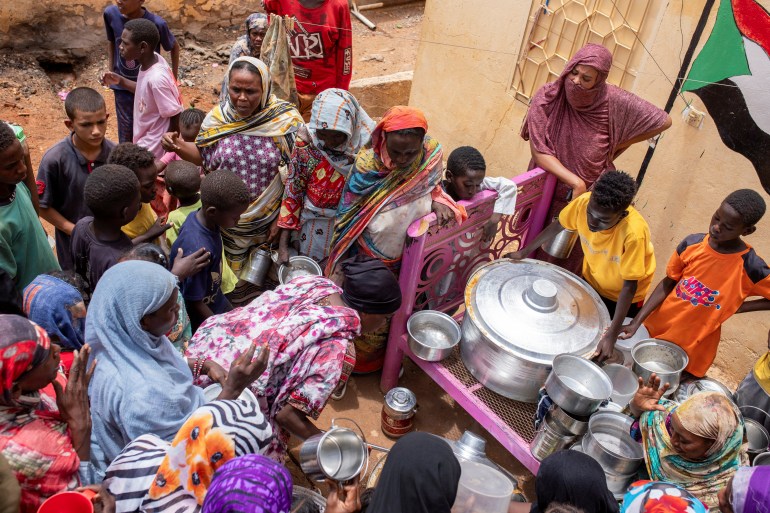
The United States’ decision to suspend foreign aid is exacerbating a catastrophic hunger crisis in Sudan, where millions risk dying from malnutrition-related illnesses. Since assuming office in January, US President Donald Trump’s administration has put on leave or fired the vast majority of employees at the US Agency for International Development (USAID) and paused almost all of the global projects it funds. Last year, USAID contributed 44 percent to Sudan’s $1.8bn humanitarian response, according to the United Nations. A portion of this sum went to supporting Emergency Response Rooms (ERRs), which are neighbourhood relief groups that support hundreds of “community kitchens” across the country. “About 80 percent of the 1,460 community kitchens across Sudan were shut down [when USAID paused all funding],” said Hajooj Kuka, the spokesperson for the ERRs in Khartoum state. Sudanese women from community kitchens run by local volunteers distribute meals for people who are affected by conflict and extreme hunger and are out of reach of international aid efforts, in Omdurman, Sudan, July 27, 2024 [File: Mazin Alrasheed/Reuters] Filling the gap Since a power struggle between the Sudanese Armed Forces (SAF) and paramilitary Rapid Support Forces (RSF) erupted into civil war in April 2023, communal kitchens have kept hundreds of thousands of people alive in regions where UN agencies and global relief organisations are unable to reach due to the wilful obstruction of aid by the warring parties, according to local and foreign relief workers. Advertisement Despite the efforts of ERR volunteers, more than 600,000 people in Sudan are coping with famine levels of hunger and some eight million are on the verge of slipping into famine, according to the global hunger monitor, the UN Integrated Food Security Phase Classification (IPC). The pause in USAID funding now risks compounding the hunger crisis. According to Iyad Agha, the humanitarian coordinator for international nongovernmental organisations in Sudan, some organisations obtained waivers from the US government to continue administering life-saving services. However, many of these services were eventually terminated after a subsequent review by the US determined that they were not necessary to sustain life. Days later, the Trump administration reversed some terminations and permitted some services to resume. Agha said Washington’s decisions appear to be “completely random”. “NGOs are paralysed and don’t know how to proceed amidst the chaos and confusion and the affected people [who need aid in Sudan] are the most impacted by all of this chaos,” he told Al Jazeera. “The problem is that if some other donors want to step in [for the absence of USAID] there is [a large gap] to fulfil,” Agha added. ERRs have taken matters into their own hands to find alternative funding. Kuka said that community kitchens have solicited funding from the Sudanese diaspora and smaller charitable organisations in order to keep providing meals to beleaguered civilians during the holy month of Ramadan, which began earlier in March. Advertisement Their efforts have helped hundreds of community kitchens to reopen across the country, yet 63 percent remain shuttered since the US government paused most foreign aid, said Kuka. “There is only so much we can do. There simply isn’t enough food for people,” he told Al Jazeera. “But we have started an online drive for people to donate and during Ramadan, people tend to donate more during this time,” he added. Impediments and looting Both sides in Sudan’s civil war are responsible for generating the hunger crisis, say local and foreign relief workers. One issue cited by some relief workers is that UN agencies recognise the Sudanese army as the de facto government. This policy has empowered the army to approve or deny aid shipments coming across the borders from neighbouring countries such as Chad and South Sudan, which the army does not control. Critics previously told Al Jazeera that humanitarians should work with the relevant authorities in each area of Sudan in order to reach as many needy people as possible. In addition, UN agencies that treat the army as the de facto government are required to base all humanitarian operations out of Port Sudan, which makes it logistically difficult to reach faraway regions such as the Nuba Mountains in South Kordofan and the sprawling region of Darfur. A banner of General Abdel Fattah al-Burhan, leader of the Sudanese Armed Forces (SAF), stands in Omdurman, Sudan with the words ‘the people are with you’ written beneath his image [Sara Creta/EPA] The army is also accused of imposing bureaucratic impediments to obstruct and delay aid shipments. Advertisement “The army’s procedures are very cumbersome. It’s a mountain of paperwork,” explained Leni Kinzli, the spokesperson for the World Food Programme (WFP). “We have to deal with the different authorities: military intelligence, the Humanitarian Aid Commission, the Ministry of Foreign Affairs, the General Intelligence Services and National Intelligence Services. “Basically, for any [aid truck to move], we need to get a stamp from all of those agencies,” she told Al Jazeera. Analysts and relief workers also accuse the SAF of prohibiting aid to regions under RSF control. But army spokesperson Nabil Abdullah has repeatedly denied this accusation and criticised the RSF for starving civilians. Hind al-Atif, the spokesperson for the ERR in Sharq el-Nile, a sprawling neighbourhood in Khartoum, accused the RSF of exacerbating the hunger crisis. She said that the group looted all the main markets in Khartoum ahead of Ramadan and that many civilians are hesitant to leave their neighbourhoods to look for food out of fear that they could be attacked at RSF checkpoints. “People are scared to flee because the RSF often robs people of their money and phones,” she told Al Jazeera. Al Jazeera contacted the RSF’s press office for comment on allegations that its fighters are robbing civilians at gunpoint and looting markets, but the group did not respond before publication. Insecurity and starvation As fighting escalates between the RSF and Sudanese army, local relief groups and aid agencies are finding it increasingly difficult to reach beleaguered civilians. Advertisement In the Zamzam displacement camp, where more
Can Egypt’s plan for Gaza backed by Arab League become reality?
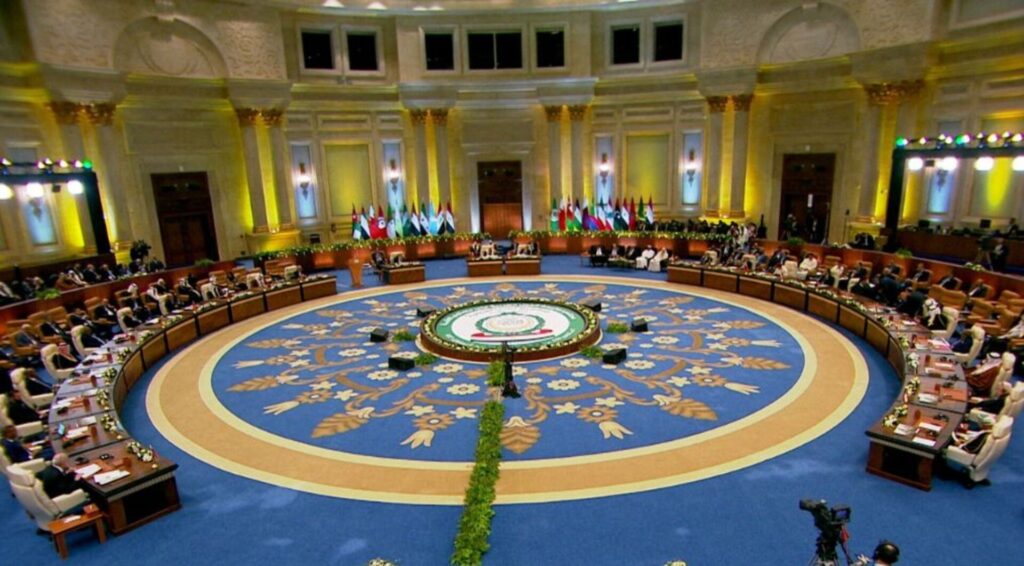
Summit follows US President Donald Trump’s beach resort plan. Arab leaders have approved Egypt’s plan for Gaza’s future – including major reconstruction and elections. This follows US President Donald Trump’s proposal to forcibly expel Palestinians and turn Gaza into a US-controlled beach resort. Can the Arab nations’ plan become reality? Presenter: Sami Zeidan Guests: Ori Goldberg – Political commentator Mansour Shouman – Middle East political analyst Stephen Zunes – Professor of politics and founding chairman of the Middle Eastern Studies programme at the University of San Francisco Adblock test (Why?)
US confirms direct talks with Hamas over Gaza captives
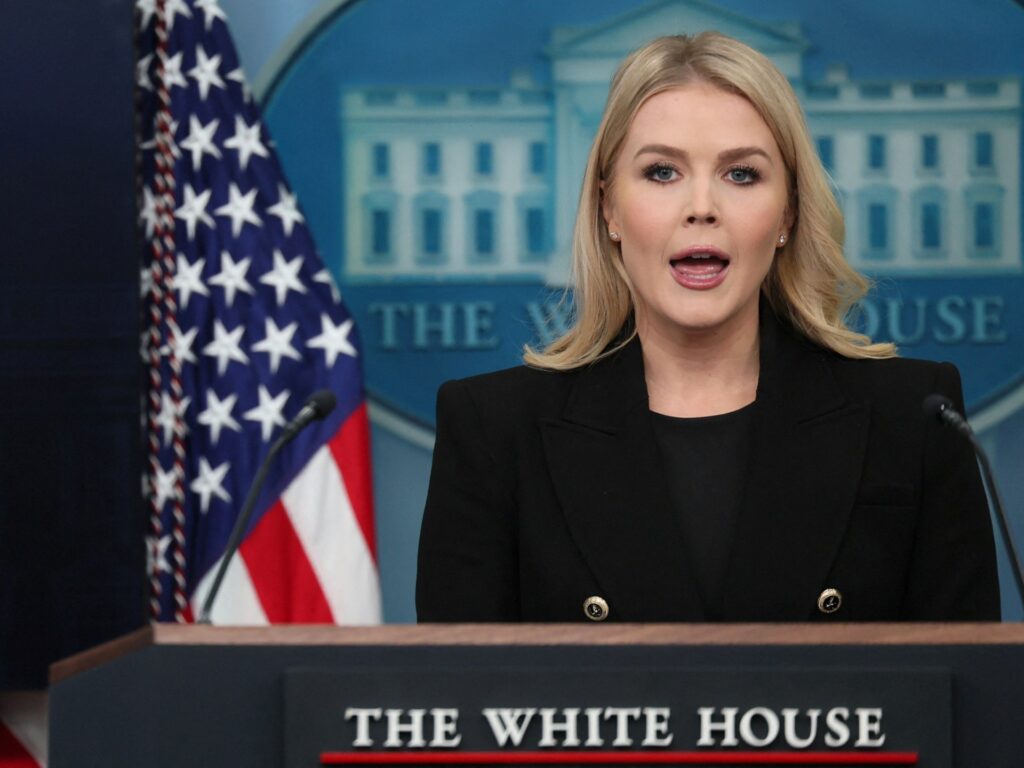
Talks come as Israel continues to block supplies of humanitarian aid into Gaza after first phase of ceasefire expired. The United States is engaging in direct talks with Hamas as negotiations on a ceasefire agreement between the Palestinian armed group and Israel are hanging by a thread. “These are ongoing talks and discussions, I’m not going to detail them here, there are American lives at stake,” White House press secretary Karoline Leavitt said on Wednesday, confirming a report by Axios media outlet that talks between the two sides were taking place. “Look, dialogue and talking to people around the world to do what’s in the best interest of the American people is something that the president has proven is what he believes is [a] good faith, effort to do what’s right for the American people,” Leavitt said. Adam Boehler, Trump’s nominee to be special envoy for hostage affairs, participated in the direct talks with Hamas. A Hamas official cited by the AFP news agency confirmed the negotiations over Israeli-US captives held in Gaza. The US had previously publicly refused direct contact with the Palestinian group since banning them as a “terrorist” organisation in 1997. Advertisement Israel said it had been consulted by the US on the direct talks. Israeli officials say about 24 living captives – including Edan Alexander, an American citizen – as well as the bodies of at least 35 others are believed to still be held in Gaza. Al Jazeera’s Hamdah Salhut, reporting from Jordan, said the two sides discussed captives held in Gaza. “We understand it’s in order to secure the retrieval of the bodies of Israeli-American captives who are still being held in Gaza and one Israeli captive with US citizenship who is believed to be alive. “The Americans are saying that their envoys have the power to negotiate with anyone, and it’s not just over the captives who hold American citizenship, it’s also for an end to the war,” she said. Fragile truce Confirmation of the talks comes days after the first phase of the Israel-Hamas ceasefire expired, with Israel pushing for an extension while Hamas insists on progressing to the second phase of the deal agreed in January. The first phase saw Hamas release 33 hostages in exchange for Israel releasing more than 2,000 Palestinian prisoners and detainees. Israel has said the proposal to extend the first phase of the truce was drafted by the US envoy for the Middle East, Steve Witkoff. The new plan would require Hamas to release half its remaining captives in exchange for a ceasefire extension and a promise to negotiate a lasting truce. Israel made no mention of releasing more Palestinian prisoners – a key component of the first phase. Advertisement Aid blocked After the first phase expired, Israel on Sunday suspended humanitarian aid deliveries, including fuel, aid and medicine, into Gaza, as the government aims to put pressure on Hamas to accept the new terms – a move that the Palestinian group slammed as a violation of the original deal. France, the United Kingdom and Germany on Wednesday warned Israel against using aid as a “political tool”, calling on it to ensure the “unhindered” delivery of humanitarian supplies to the war-ravaged Palestinian enclave. “We call on the government of Israel to abide by its international obligations to ensure full, rapid, safe and unhindered provision of humanitarian assistance to the population in Gaza,” the countries said in a joint statement. “A halt on goods and supplies entering Gaza such as that announced by the government of Israel would risk violating international humanitarian law,” they said. “Humanitarian aid should never be contingent on a ceasefire or used as a political tool.” The three European nations described the humanitarian situation in Gaza as “catastrophic”. Adblock test (Why?)
Oscar win brings hope to Palestinians in Masafer Yatta
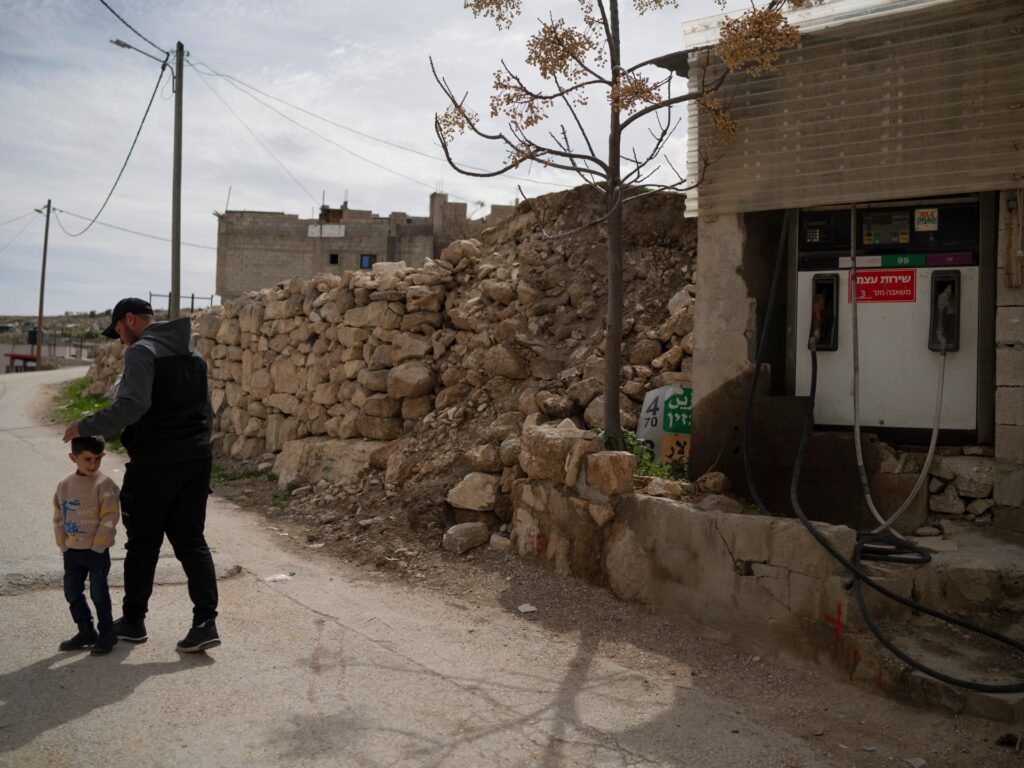
Just last week, Israeli troops tore down a Palestinian family’s shed in Masafer Yatta, a remote, hilly corner at the southern edge of the Israeli-occupied West Bank. It was the latest instance of destruction targeting a collection of hamlets whose population is threatened with expulsion. Over the weekend, Masafer Yatta residents cheered the Oscar win of a documentary, No Other Land, which depicts life in the beleaguered community, and hoped it would bring them some help. No Other Land follows Palestinian activist Basel Adra, as he risks arrest to document the destruction of Masafer Yatta West Bank, joined by his co-director, Israeli journalist and filmmaker Yuval Abraham. The joint Palestinian-Israeli production has won a string of international awards, starting at the Berlin International Film Festival in 2024. Five years in the making, it gained greater resonance amid Israel’s genocide in Gaza, as well as increasing raids in the West Bank that have caused the displacement of tens of thousands of Palestinians. Advertisement In al-Tuwaneh, one of the hamlets that make up Masafer Yatta, Salem Adra said his family stayed up all night for the Oscar ceremony. They watched as his older brother, Basel, the film’s co-director, came on stage to accept the award for the best documentary. “It was such a huge surprise, such joy,” he said. Salem said he hoped the Oscar win “opens the world’s eyes to what’s happening here in Masafer Yatta”. “It’s a win for all of Palestine and for everyone who lives in Masafer Yatta,” he said. Since the film was first released, he said, threats and pressure against his family have increased. Their car has been stoned by the settlers. After the movie won an award at the Berlin International Film Festival a year ago, the military returned over and over to the family, and once detained his father, searching his phone and asking: “Why are you filming?” The Israeli military designated Masafer Yatta as a live-fire training zone in the 1980s and ordered residents, mostly Arab Bedouin, to be expelled. Israel said the Bedouin did not have permanent structures in the area. But families say they have lived and herded their sheep and goats across the area long before Israel captured the West Bank in the 1967 war. After a 20-year legal battle by residents, Israel’s Supreme Court upheld the expulsion order in 2022. But about 1,000 residents have largely remained in place, as Israeli troops regularly demolish homes, tents, water tanks and olive orchards. Palestinians fear outright expulsion could come at any time. Advertisement In his acceptance speech on Sunday night, Basel called on the world “to stop the injustice and to stop the ethnic cleansing of Palestinian people”. He said he hoped his newborn daughter would “not have to live the same life I am living now … Always feeling settler violence, home demolitions and forceful displacement.” Adblock test (Why?)
Zambia government’s neglect exposing more children to lead poison, HRW says
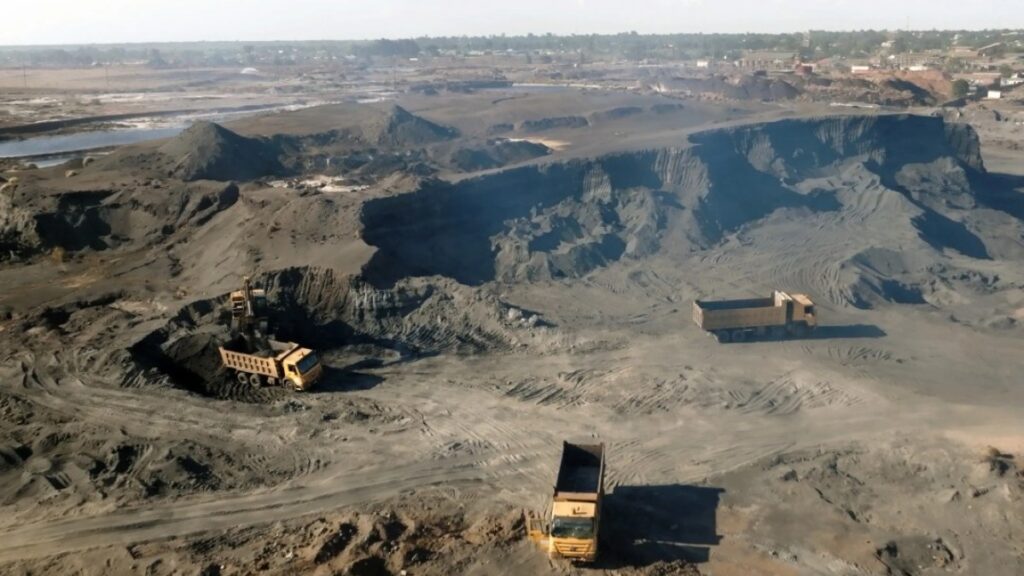
Report says more than 95 percent of children in the central town of Kabwe had elevated levels of lead in their blood. The failure of Zambia’s government to intervene against “blatant violations” of environmental laws is worsening the exposure of a high number of children to severe health risks, mostly lead poisoning, at a shuttered mining site in the country’s central region, warns a new report. The Human Rights Watch report published on Wednesday said Zambia is allowing South African, Chinese and domestic mining companies to continue to operate in the lead-contaminated town of Kabwe, where residents are already reeling from decades of toxic lead exposure. Kabwe, about 150km (95 miles) north of capital Lusaka, is one of the world’s most polluted places after decades of lead and zinc mining. “Companies are profiting in Kabwe from mining, removing, and processing lead waste at the expense of children’s health,” HRW’s children’s rights director Juliane Kippenberg said, adding that more than 95 percent of children in the area had elevated blood lead levels. Kabwe’s mine was shut in 1994, yet the government is still “facilitating hazardous mining and processing” in the area by a subsidiary of the multinational mining company Anglo American, HRW said in its 67-page report, leaving an estimated 6.4 million tonnes of uncovered lead waste in dumps. Advertisement Nearly 200,000 people, many of them women and children, have been exposed to the contamination, the rights group said, urging the government to revoke the permits of mining companies and clean up the pollution hazard. The government of Zambia has yet to respond to the report. Highly sought for industry, lead is nevertheless a particularly toxic metal that can cause severe health problems including brain damage and death, particularly in children, according to the World Health Organization. More than 95 percent of children living near the Kabwe mine had elevated blood lead levels with about half requiring urgent treatment, the HRW report said. The concentration of lead in the soil had reached 60,000mg per kg (0.95oz per lb), according to the report, 300 times the threshold considered a hazard by the United States Environmental Protection Agency. In 2022, a UN expert listed Kabwe as being among so-called “sacrifice zones” where pollution and resultant health issues were the norm for nearby communities. “The Zambian government should be protecting people from highly hazardous activities, not enabling them,” said Kippenberg. Adblock test (Why?)
Can Trump legally force US universities to silence protests?
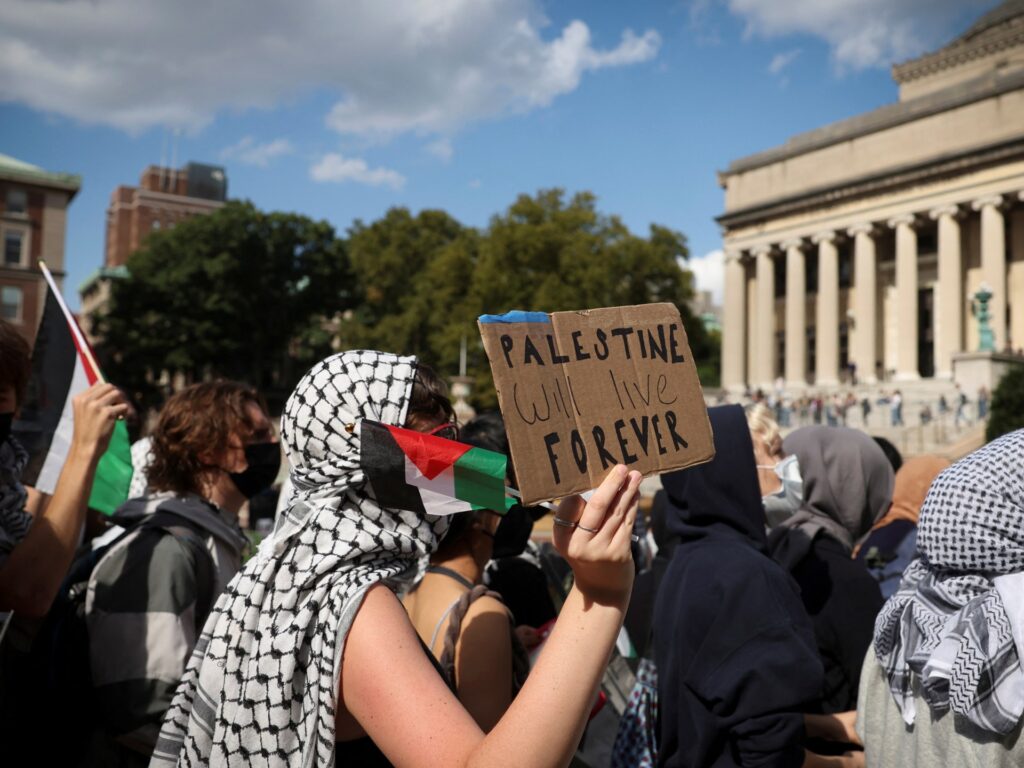
United States President Donald Trump has repeatedly threatened to target US universities that are hubs of student protests, from even before his election in November. Since he was sworn in on January 20, he has taken steps to back his plans, including executive orders. On Monday, he launched a new tirade, threatening to halt federal funding for schools, colleges, and universities if they allow “illegal protests”. Trump took to his Truth Social platform to deliver his newest threat, one that includes a promise to imprison “agitators”. “Agitators will be imprisoned/or permanently sent back to the country from which they came. American students will be permanently expelled or, depending on the crime, arrested,” Trump wrote. But who is he targeting, what has Trump done so far, can he compel universities to act against student protesters, and how might higher education institutions respond? Who are the intended targets? US Ambassador to the UN Elise Stefanik shared Trump’s remarks in a post on X, saying “antisemitism and anti-Israel hate will not be tolerated on American campuses”, confirming that pro-Palestinian protesters and speech critical of Israel are the targets of the president’s threat. Under President @realDonaldTrump, colleges and universities will be held accountable. Antisemitism and anti-Israel hate will not be tolerated on American campuses. Promises made, promises kept. @POTUS @realDonaldTrump @WhiteHouse pic.twitter.com/h9nq1gVJRO — Elise Stefanik (@EliseStefanik) March 4, 2025 Advertisement Trump’s announcement comes after he signed a series of executive orders in January targeting alleged anti-Semitism on campuses. In one directive, he pledged to deport foreign university students and staff involved in pro-Palestinian protests as part of the crackdown. He also created a task force through the Attorney General’s office devoted to combating alleged anti-Semitic speech, investigating universities that do not do enough to crack down on such speech. The orders and threats come months after huge pro-Palestine, student-led protests swept the country last spring as Israel’s genocide raged in Gaza. Students demanded an end to Israel’s military offensive, an end to US support for Israel, and for their universities to divest from companies with ties to Israel. Columbia University was widely seen as the epicentre of the protests, which resulted in mass arrests and student suspensions, ending in the resignation of the university’s president, Minouche Shafik, several months later. The demonstrations also spread to other universities including Harvard, Yale, and the University of California. Can Trump legally compel universities to stop protests? “It’s complicated,” said Jenin Younis, a civil liberties and free speech lawyer. “It’s hard to say that the tweet itself is unlawful, since it alone isn’t enforceable,” Younis told Al Jazeera of Trump’s latest post threatening funding. “So, it depends how the administration executes this particular threat, and it has not yet given details.” Advertisement Radhika Sainath, a senior lawyer at Palestine Legal, a US-based nonprofit, said the executive orders aren’t binding rules for universities to follow. “This executive order sets up a framework to encourage – but not require – schools to spy on and report their non-citizen students and staff,” Sainath told Al Jazeera. “As far as we can tell, these will be non-binding guidelines with no enforcement power or pressure.” Still, Trump’s directives are extremely concerning, experts said. “The strength of these orders lies in their chilling effect,” Younes said, adding they are clearly intended to silence First Amendment-protected speech. Fearing consequences, some universities may voluntarily clamp down on speech they believe will subject them to funding cuts, she said, and pressure students and professors alike into silence. Universities received $60bn in funding for research and development in 2023, constituting 55 percent of their total budget for science and engineering research. According to Sainath, this is the “most significant escalation in McCarthyite tactics from the Executive Branch regarding Palestine since October 7, [2023]”. Michael Schaeffer Omer-Man, director of research for Israel-Palestine at the nonprofit DAWN, says Trump’s threats are a “twisted new form of transnational repression”. “Restricting free speech and expression by cutting state funds, or more accurately, creating a chilling effect by threatening to do so, is a hallmark of autocratic takeovers,” Omer-Man told Al Jazeera, adding that in his view, such tactics can be “as effective as outlawing unpopular political views outright”. Advertisement Were universities targeted under Biden’s administration? Yes. Universities that witnessed pro-Palestine protests across the country were also targeted in multiple ways under former US President Joe Biden, who was critical of the student encampments. University heads had tried, and largely failed, to quell the demonstrations, which often saw the police intervening violently, with videos emerging from different states showing hundreds of students and even faculty members being arrested. In Columbia University, several deans resigned, as well as Shafik, who stepped down as president after she was summoned to a congressional committee over allegations the university had failed to protect students and staff from rising anti-Semitism. After the questioning, Shafik allowed police into campus to arrest the students and was faced with angry calls to resign. Trump now appears to be doubling down on targeting universities and students. He is “escalating the crackdown” on the Palestine movement and attempting to undermine the students’ and staff’s constitutional rights to speak out and organise, Sainath said. Will the threats work? Not on protesters, according to the experts. Omer-Man said the unprecedented support for Palestine on US campuses was “so powerful precisely because students and faculty already faced consequences for speaking out against Israeli apartheid and stood up anyway”. Students have continued to speak up for Palestine ever since Trump unveiled his executive orders. Advertisement Universities, though, are under pressure. This week, Columbia University was forced to reiterate its commitment to “combating antiSemitism” after Trump’s administration said it could pull more than $50m in contracts between the university and the federal government. A statement by federal agencies cited the school’s “ongoing inaction in the face of relentless harassment of Jewish students”. However, Omer-Man said young Americans have “never been dissuaded by violent attempts to bury the nation’s conscience”. Sainath agreed. “Students – and faculty – are
‘Public execution’: The Israeli checkpoint terrorising a Palestinian town
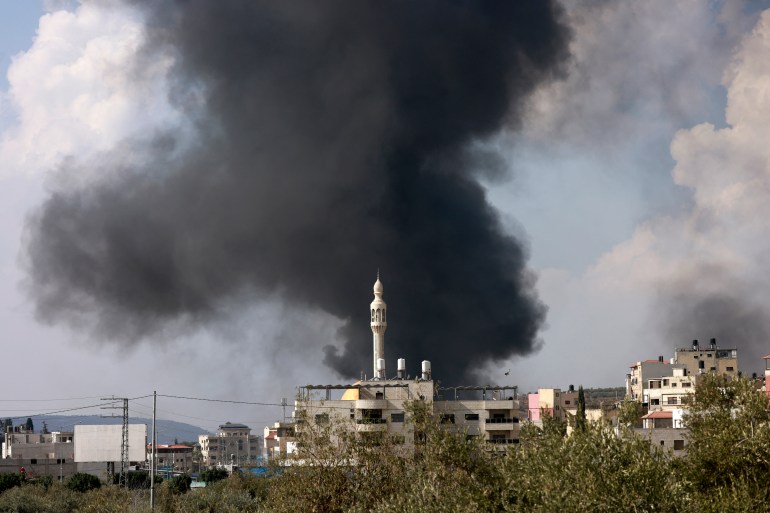
Deir Sharaf, occupied West Bank – An Israeli military checkpoint dominates the lives of the villagers of Deir Sharaf, who already live in the shadow of an illegal Israeli settlement. The permanently crewed metal blockade blights the occupied West Bank village’s main road, which connects six northern West Bank cities and is a major gateway into Nablus. The checkpoint, initially a dirt mound barrier in October 2022, is a chilling reminder of the threat of violence hovering over thousands of Palestinians who are forced to travel through 800 or so West Bank checkpoints and roadblocks every day. “Nowadays, if you make one wrong move when you pass through the checkpoint, you’ll be shot,” said villager Adam Ali, a 55-year-old father of four who has seen this first-hand. He witnessed the November 12 shooting of 18-year-old Walid Hussein by soldiers who then stood by as he bled to death. Hussein was accused of carrying a knife by the military but witnesses tell a different story. “The boy was unarmed and did nothing,” Adam said. “The Israeli soldiers shot him and watched him die.” Plumes of smoke rise above Deir Sharaf after settlers from the illegal Einav settlement stormed the town on November 2, 2023, following the death of an Israeli when his car came under fire [File: Jaafar Ashtiyeh/AFP] A ‘public execution’ Hussein was from the Ein Beit el-Ma refugee camp in Nablus – where memorials to him adorn walls and hang on street corners. Advertisement Multiple witnesses, including Adam and his 15-year-old son Mohammed, said Walid was asked to stop and get out of his car by the soldiers. When he took a step towards them, he was shot several times. They say he did not immediately succumb to the bullets. “The ambulance tried to get to him but they blocked it,” said Mohammed. “His blood was everywhere. It was an execution.” No soldiers were injured. Local and international media reported witnesses saw no weapon and no intent from Walid to harm the soldiers. Those in the neighbourhood Hussein once called home question the Israeli narrative of a knife, saying it isn’t the first time the military has used such an excuse for a public “execution”. “We’re living in hell – the idea of leaving is becoming harder to fight,” Adam said. “Life is so hard – I hope death will be more merciful.” Demonstrators holding Palestinian flags face an Israeli soldier holding a weapon during a protest demanding Israel reopen roads to Nablus, in Deir Sharaf on October 20, 2022 [Raneen Sawafta/Reuters] Villagers describe “a life of terror” dominated by Israeli soldiers and settlers who stream in from the nearby illegal Shavei Shomron settlement, built in 1977 and equipped with air raid sirens, a military perimeter and 24/7 security. The illegal settlement is at the centre of far-right settler politics in the West Bank, and hosts more than 1,000 settlers, including a politician who attended the inauguration of United States President Donald Trump. Mayor Shadi Abu Halaweh says there is almost nowhere else in the occupied West Bank like Deir Sharaf, bisected by a checkpoint separating east from west and transforming the lives of the 3,000 villagers overnight. Advertisement It was first established around the same time as the rise of the Lions’ Den resistance group in Nablus and the subsequent Israeli crackdown on it. Armed soldiers patrol all day, stopping cars and conducting searches – often involving intimidation and violence. Abu Halaweh says two people have been killed and three seriously injured at the checkpoint since it was set up – and violent incidents have increased since Hamas’s October 7, 2023, attack on southern Israel, and Israel’s subsequent war on Gaza. Mayor Shadi Abu Halaweh says life in Deir Sharaf has changed since Israel set up the checkpoint [Al Jazeera] Since October 7, 2023, nearly 100 people have been killed by Israeli forces and settlers in the Nablus governorate, which includes Deir Sharaf, according to United Nations figures. A long-awaited ceasefire agreement in Gaza took hold last month, but killing continues across the West Bank, Israel looking set to expand its attacks, and its officials saying a military deployment could last until next year. Fears of ethnic cleansing have been sparked by the expulsion of 50,000 Palestinians from their homes in refugee camps in besieged Jenin and Tulkarem – an operation threatening to engulf the Nablus region next. ‘I feel I could be killed in my own home’ At times of tension, the last place Palestinians want to be is near a checkpoint. The Israelis say checkpoints are intended to prevent armed resistance activity and monitor suspects. But Palestinians in the West Bank say they are designed to control their movement and instil fear among motorists and nearby residents – while protecting settlers and providing safe entry for Israeli military vehicles. Advertisement Not many homes or businesses remain on the western side of the checkpoint – and those that do are isolated and prone to attacks from settlers. Abu Halaweh said residents on the western side live in constant fear of settlers, who are “always sabotaging”, stealing, and destroying property. Israeli human rights monitor B’Tselem says the barrier prevents about 50 families who live in the western part of the village from accessing the rest of it by car. Basil Wawi, a 40-year-old government employee and father to two-year-old twin girls, described the horror of living on the wrong side of the divide. “Before [the checkpoint], they would stop cars occasionally. Now, they search you, your phone, and sometimes arrest you just for going home.” He recounted a settler assault in November 2023 when settlers broke into his home in broad daylight and set fire to it. The settlers, Wawi added, were protected by the military, who blocked him from returning to his home for three hours – shooting at anyone who tried to help him or oppose the invaders. “Most people don’t know what it’s like to feel like you could be killed in your own