

Ukraine reels as Trump pulls US support while Russia’s war rages on
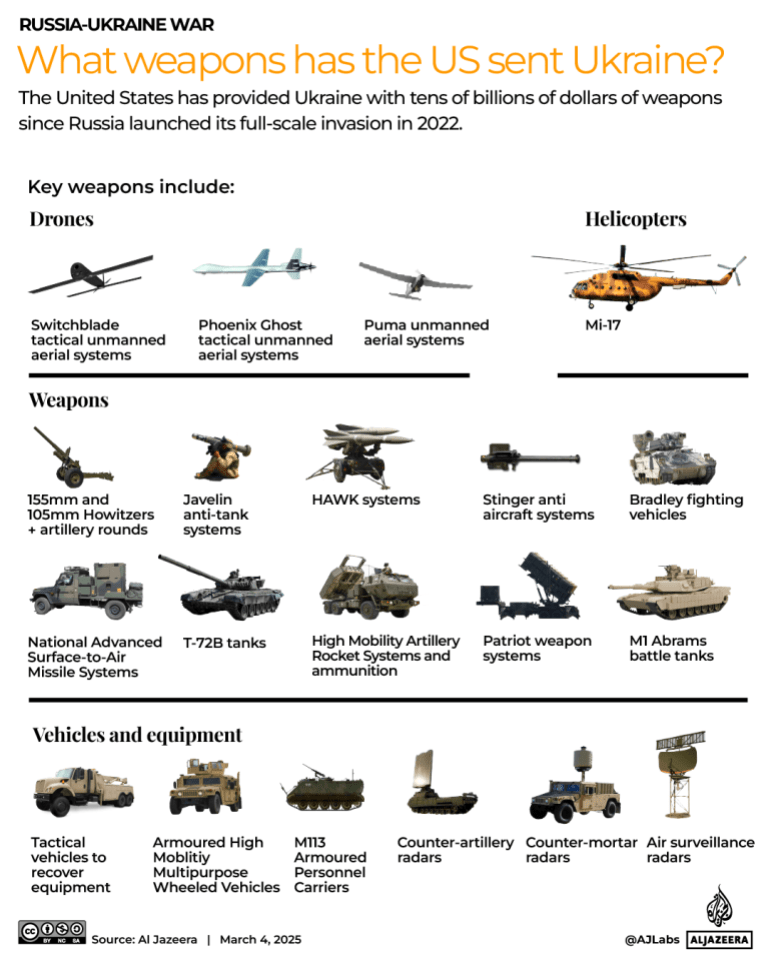
Kyiv, Ukraine – Zynaida Shelepenko is still reeling about what happened in the White House on Friday. “They cornered Zelenskyy like two bandits, like two mafiosi who want your money and your humiliation,” the 52-year-old bank clerk told Al Jazeera, referring to Ukrainian President Volodymyr Zelenskyy’s meeting with United States President Donald Trump and Vice President JD Vance. Therefore, Shelepenko said, she was not surprised with Trump’s Monday night decision to freeze military aid to Ukraine after Zelenskyy refused to apologise for the spat and said his aborted visit to Washington, DC, “didn’t bring anything positive”. The Ukrainian president and his US counterpart have since struck more conciliatory tones, but to Shelepenko, there is a clear winner from these tensions between Washington and Kyiv, which until Trump came to power were close allies. “Guess who’s cheering now? The vampire, the killer of children in the Kremlin,” she said, referring to Russian President Vladimir Putin. “We saw the most shameful moment in American history.” Advertisement If the US aid is stopped altogether, the move will entail “great financial and legal problems” for US arms manufacturers such as Lockheed that have been commissioned to produce weaponry for Kyiv, said military analyst Mykhailo Zhirokhov, who is based in the northern Ukrainian city of Chernihiv. Washington may also stop providing intelligence data to Ukraine, including crucial, real-time information from military satellites, and stop training Ukrainian pilots and other servicemen to operate F-16 fighter jets and advanced weaponry, he said. “This would be the worst-case scenario,” Zhirokhov told Al Jazeera. The best-case scenario would be a diplomatic solution reached within several months before Kyiv runs out of the weapons and ammunition that have already been delivered, he said. The halt will significantly affect Ukraine’s air defence capabilities, especially in large cities such as Kyiv and Odesa, where advanced, US-made Patriot systems are stationed. Even though the systems and missiles have been supplied by Germany and Israel, the missiles are manufactured only in the US and each costs several million dollars. Patriots have proved to be the most effective and far-reaching weapon against most Russian cruise and ballistic missiles – even the ones Putin has termed as indestructible. There will also be a dire shortage of missiles for the HIMARS multiple rocket launchers and Western-supplied F-16 jets, Zhirokhov said. Despite Trump’s reputation for being chaotic and unpredictable, his decision has an underlying geopolitical motive, according to Kyiv-based analyst Igar Tyshkevych. Advertisement Trump sees Ukraine as an obstacle in a brewing confrontation with ascending China over global dominance. By cajoling Moscow and lifting US sanctions imposed on Russia over Ukraine, Trump wants Putin to side with Washington and “drag [Moscow] as far as possible” from China, Tyshkevych said. “Trump thinks he has to do it fast,” he told Al Jazeera. “To him, it’s of paramount importance to finish pressuring Ukraine so that it agrees to concessions to Russia and to a ceasefire.” Zelenskyy, left, meets Trump at the White House in Washington, DC, February 28, 2025 [Brian Snyder/Reuters] Ukraine spent ‘too much time’ on debates To a history teacher-turned-soldier, Trump’s plan resembles the 18th-century partitions of Poland between Russia, Austria and Prussia. At the time, Poland included most of what is now western and central Ukraine and was in an alliance with Lithuania. The partitions were partly caused by the Polish parliament’s cumbersome voting system, where each aristocrat had veto power and could stall decisions on the most problematic issues for months. “Their parliament spent too much time on debates, while Russia and the Germans were improving their armies,” Anatoly, a 37-year-old serviceman recovering from contusions at a hospital in central Kyiv, told Al Jazeera. “Unfortunately, Ukraine too spent too much time on debates, on the destruction of [Soviet-era] weaponry and on the minimisation of armed forces, while [expletive] Putin waged wars in Chechnya and Georgia and restructured his army,” said Anatoly, who withheld his last name in accordance with wartime protocol. Advertisement In the early 1990s, Kyiv gave up its entire Soviet-era nuclear arsenal, the world’s third-largest, in return for security guarantees from four nuclear powers – Russia, the US, France and the United Kingdom. Throughout the 1990s and the early 2000s, the West also funded the destruction of conventional Soviet-era weapons such as tanks, artillery and shells, while Kyiv transferred its heavy bombers to Moscow as payment for natural gas supplies. However, the spat in Washington, DC benefits all sides, according to Nikolay Mitrokhin, a researcher with Germany’s Bremen University. Trump got rid of commitments worth tens of billions of dollars and will potentially help US arms manufacturers earn billions on weapons the European Union will commission for Kyiv, he said. “Trump paid for it by being called names in the Northern Hemisphere. Well, he got used to that,” Mitrokhin told Al Jazeera. Zelenskyy gained the most by reviving his fading image of a tireless, fearless hero, Mitrokhin said. Zelenskyy will get a lot more Western – mostly European – military aid, while what seems like a Gordian knot actually helped shift the EU’s position towards defending Ukraine instead of empty declarations, he said. Rescuers and medical workers evacuate a patient from a hospital hit by a Russian drone strike in Kharkiv, Ukraine, on March 1, 2025 [Sofiia Gatilova/Reuters] “Moreover, Zelenskyy doesn’t have to sign the deal on the real US control over funds for arming and rebuilding Ukraine, and a full lack of external control over his work is what every top Ukrainian official dreams about,” Mitrokhin said. Advertisement Zelenskyy will not have to conduct a presidential vote as his armed forces managed to prevent the fall of the key eastern city of Pokrovsk and even counterattacked on the eastern front, he said. Meanwhile, anti-Trump politicians in the UK, France, Canada and Germany seeking a stronger NATO without Washington feel emboldened. “This scandal is a political gift to them,” Mitrokhin said. Even Putin will reap political gains, as “Trump will be a more active friend without being burdened by Ukraine”, he said. But
‘Will make you rich’: Trump wants to take Greenland ‘one way or the other’

The US president reiterates interest in acquiring the island, painting a picture of prosperity and safety for its ‘incredible people’. United States President Donald Trump has again pledged to take the Danish-ruled island of Greenland “one way or the other”, promising financial gain and security to the “incredible people” of the island if they choose to be a part of the US. “We will keep you safe, we will make you rich, and together, we will take Greenland to heights like you have never thought possible before,” Trump said on Tuesday night during his annual speech to the US Congress. “It’s a very small population, a very, very large piece of land, and very, very important for military security,” he added. Trump has been drumming up his vision to take Greenland, citing its strategic and economic importance. Opinion polls suggest that most Greenlanders oppose joining the US, although a majority favour eventual independence from Denmark. Even before starting his second term as president, Trump said he hoped to make Greenland a part of the US, even though NATO ally Denmark says it is not for sale. Greenland’s strategic location and rich mineral resources could benefit the US. It lies along the shortest route from Europe to North America, vital for the US ballistic missile warning system. Advertisement “We strongly support your right to determine your own future, and if you choose, we welcome you into the United States of America,” Trump said in his speech. But he made clear he would not give up if persuasion fails, saying: “One way or the other we’re going to get it.” Trump’s interest in Greenland has invigorated its independence movement, prompting calls for swift secession discussions with Denmark, its former colonial ruler. But Greenland’s ruling Inuit Ataqatigiit party has said it will not rush an independence vote after a March 11 general election, cautioning of possible economic and welfare implications. “The future of Greenland is really for the people of Greenland to decide,” Denmark’s UN Ambassador Christina Markus Lassen told reporters on Monday. “Independence is possible and they have the right to self-determination.” Adblock test (Why?)
Is Israel using starvation as a weapon of war?
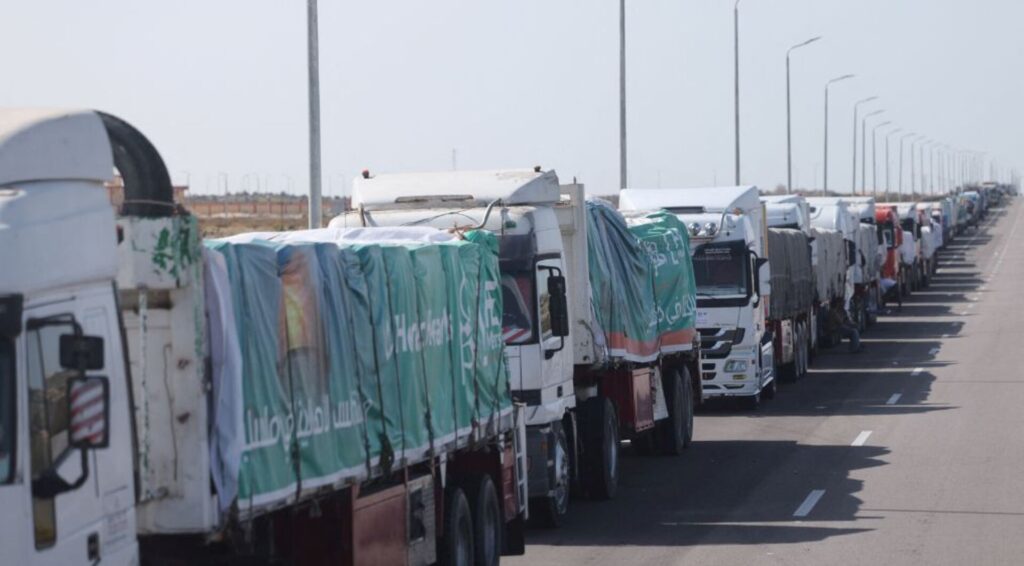
Israel’s government is refusing to allow food, medicine and fuel into the Gaza Strip. On Sunday, Israel once again cut off much-needed food, medicine and fuel supplies into Gaza. Prime Minister Benjamin Netanyahu’s government has been clear: the move is meant to pressure Hamas into accepting a new set of ceasefire terms, contrary to the agreement reached by the two sides last month. But despite Israel’s apparent attempt to use starvation as leverage, the global response has largely been muted. While Arab countries have condemned the blockade, the US and Europe do not appear willing to hold Israel to the terms of the original agreement. So, can Israel be held to account? And if so, how? Presenter: Sami Zeidan Guests Akiva Eldar – Political analyst and contributor to Haaretz Tahani Mustafa – Senior analyst on Palestine at the International Crisis Group Adil Haque – Professor of law and a Judge Jon O Newman Scholar at the Rutgers Law School Adblock test (Why?)
Trump threatens further tariff hikes after Canada retaliates
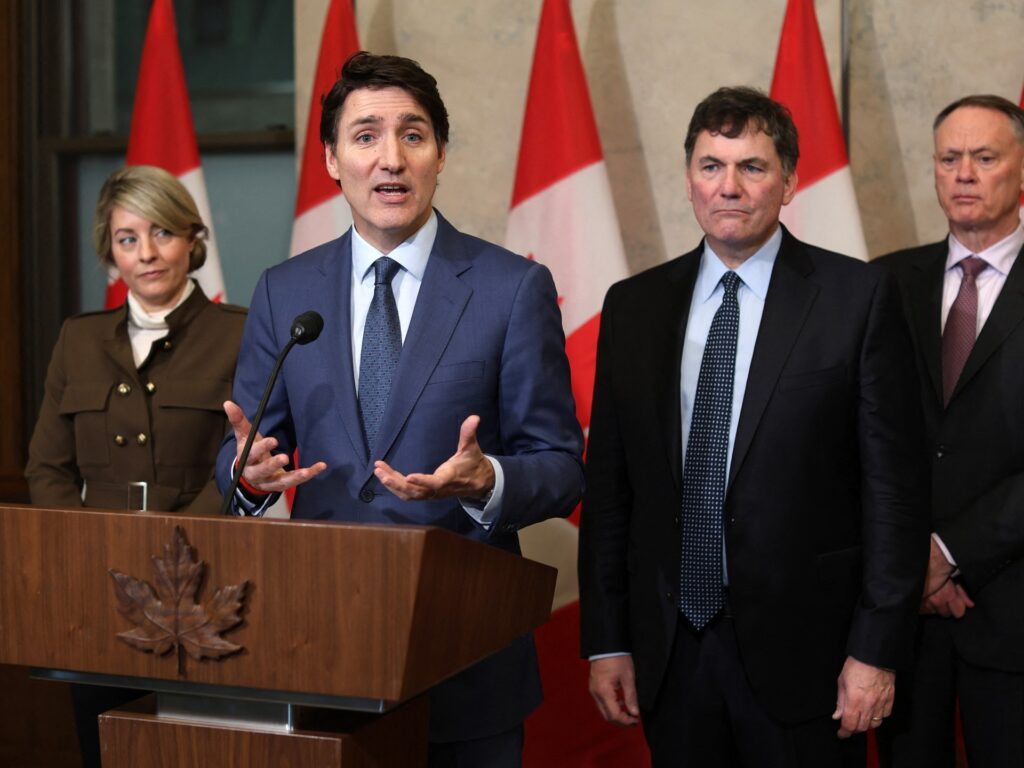
US president posts warning on social media after Canada PM Trudeau slammed ‘dumb’ trade war. US President Donald Trump has warned Canada that he will escalate his trade war after Prime Minister Justin Trudeau announced retaliatory tariffs on US goods. Trump’s 25-percent tariffs on imports from Mexico and Canada took effect on Tuesday, prompting Trudeau to announce retaliatory tariffs on more than $100bn of American goods that will take effect over 21 days. The US president responded on Truth Social, the social media platform he owns, saying: “Please explain to Governor Trudeau, of Canada, that when he puts on a Retaliatory Tariff on the US, our Reciprocal Tariff will immediately increase by a like amount!” Trump has repeatedly referred to the Canadian prime minister as the “governor” of Canada in recent weeks as he called for the country to become the US’s 51st state. Trudeau told reporters in Ottawa on Tuesday that Trump’s “dumb” trade war was motivated by a desire “to see a total collapse of the Canadian economy because that’ll make it easier to annex us”. “Now, first of all, that’s never going to happen,” said the Canadian leader. “But yeah, he can do damage to the Canadian economy … but he is rapidly going to find out, as American families are going to find out, that that’s going to hurt people on both sides of the border.” Advertisement Vina Nadjibulla, vice president of research and strategy at the Asia Pacific Foundation of Canada, told Al Jazeera that the trade war would “hurt consumers and businesses and the economy in Canada and the US” within “a few weeks”. Canada said it will challenge the US measures at the World Trade Organization and through the US-Mexico-Canada trade agreement. “Canadians are reasonable and we are polite, but we will not back down from a fight,” said Trudeau, who will step down as prime minister after the governing Liberal Party chooses a new leader on Sunday. Ontario premier Doug Ford said he would issue a 25-percent export tax on electricity sold to the US and may later cut it off completely if the US tariffs persist. In 2023, Ontario powered 1.5 million homes in Michigan, New York and Minnesota. ‘No justification’ Meanwhile, Mexican President Claudia Sheinbaum joined Canada and China – which was also hit Tuesday with a doubling of duties on goods to 20-percent – in promising to respond to the tariff hikes imposed by the Trump administration. “There is no motive or reason, nor justification that supports this decision that will affect our people and our nations,” she said during a daily news conference in Mexico City, signalling that she would announce US products to be targeted by Mexico on Sunday. Sheinbaum took issue with a White House “fact sheet” published on Monday, which repeated the claim that Mexican drug trafficking continues because of “an intolerable relationship” with the government, slamming the allegations as “offensive, defamatory and without support”. Advertisement Recently Mexico’s government seized more than a tonne of the opioid fentanyl, dismantling 329 methamphetamine labs, and extraditing 29 drug cartel figures to the US last week. Trump has also said he was taking action to combat fentanyl trafficking via the US’s northern border, accusing Ottawa of failing to do enough to stem the flow of the drug and its precursor chemicals into the US. Trudeau said the claim was “completely bogus, completely unjustified, completely false”. Meanwhile Beijing announced it would respond with tariffs of up to 15 percent on a range of US farm exports and expanded the number of US companies subject to export controls and other restrictions. Adblock test (Why?)
UEFA Champions League: Benfica vs Barcelona – team news, kickoff, stream

Who: Benfica vs BarcelonaWhat: UEFA Champions League round of 16 first legWhere: Estadio de Luz, Lisbon, PortugalWhen: Wednesday, March 5 at 8pm (20:00 GMT) Follow Al Jazeera Sport’s live text and photo commentary stream. Five-time winners Barcelona visit Lisbon to face Benfica on Wednesday in the first leg of their Champions League round of 16 tie. Barca have not won the competition since 2015 but finished second in the group stage and are among the favourites to lift the trophy. Benfica have reached the final on seven occasions but have only lifted the trophy twice – in 1961 and 1962. What is Barca’s response to favourable Champions League draw? Barcelona coach Hansi Flick dismissed claims that his team have an “easy” path to the Champions League final, ahead of their last 16 clash against Benfica. Should the Spanish giants progress from the tie, they will face either Borussia Dortmund or Lille in the quarterfinals. Real Madrid, the record 15-time winners, as well as Atletico Madrid, Liverpool, Arsenal and Paris Saint-Germain are in the other half of the draw. Barcelona, who top the Spanish league by a point, could only meet those sides in a potential final. Advertisement “In this phase, there’s no easy game – every team deserves to be here at this stage, and I think Benfica too,” Flick told reporters on Tuesday. “Benfica is a fantastic team [and] we play in a great stadium and it’s really a special atmosphere there. “Their [fans] push the team on a lot, supporting them, and it will be really tough tomorrow – hard work for us.” The road to Munich 🏆#UCL pic.twitter.com/XxOXoJwUAD — UEFA Champions League (@ChampionsLeague) March 4, 2025 Flick would not be drawn on who the tournament favourites are and which side would pose the most threat to Barca’s hopes. “Always the next match. Benfica is for us the next difficult opponent,” the German coach said. “It’s not good to [talk about] these things. We focus on the next match and the next match, and that’s a good way to do this. “It always starts at 0-0, and you have to give everything… the other teams are doing really well and they always want to win against us.” Barcelona’s Raphinha, centre, celebrates scoring his side’s fifth goal during a Champions League opening phase match with Benfica [Armando Franca/AP] What happened the last time Barca met Benfica? Barcelona beat Benfica 5-4 in Lisbon in a thrilling group-stage comeback. Defender Pau Cubarsi said his team had to focus more to stop the Portuguese side, for whom Vangelis Pavlidis scored a 30-minute hat-trick. “It was complicated… we gave up a lot of chances. We have to try not to concede goals,” said Cubarsi, who made his Barcelona debut in January 2024 and has rapidly become a key figure. Advertisement “We have to know how to manage games… this is a two-legged tie and we have to give everything from the start,” continued the 18-year-old. “Each year, Barca should be competing for everything. For me, we are the best club in the world. This year, people say we have the best pathway in the tournament, but I don’t see it like that.” Bruno Lage’s Benfica are three points behind Portuguese league leaders – and cross-city rivals – Sporting Lisbon [Pedro Nunes/Reuters] What is Benfica take on the Barca test? Benfica manager Bruno Lage, whose side are second in the Portuguese league, told fans to brace for more excitement on Wednesday following the nine-goal thriller in the league phase. Lage said Benfica, who lost the last meeting to a stoppage time Raphinha strike, will stay true to their identity of attacking football when they host Barca, and that he expects the Spanish giants to do the same. “I can’t predict how many goals will be scored in the game, but I can predict a great game of football because they’re two teams with an eye for attack,” Lage told a news conference on Tuesday. “I think it’s going to be a tough match and we will go out for the win. Sure, tomorrow’s result will be important, but the result of the second leg will be more decisive. “We’re going up against a great team who score a lot of goals but we’re also looking at the positive things we’ve done against this opponent: the number of chances we’ve had, the number of times we’ve been in front of the goalkeeper… we believe we can get through this tie.” Advertisement Benfica supporters want a different outcome to that late-January rip-roaring encounter at Lisbon’s Estadio da Luz in which Barcelona fought back from two goals down to win. “We will try to find the spaces our rivals offer us because they often do,” Lage added. We have to know how to take advantage of the spaces that Barcelona will give us – that should be the key.” 👥 𝗦𝗤𝗨𝗔𝗗 𝗟𝗜𝗦𝗧! #BenficaBarça pic.twitter.com/RaK1e0Xe8y — FC Barcelona (@FCBarcelona) March 4, 2025 Barcelona team news Barcelona midfielder Gavi is a doubt for Wednesday’s Champions League clash. Gavi, who featured in Barcelona’s thrilling 5-4 win at Benfica, was on the bench in their last two league games and missed a training session due to illness. “We will see. Yesterday, he did not train as he did not feel so good. He will visit the doctor again, we have to wait,” Flick said. The 20-year-old has played 24 games this season, registering two goals and three assists since returning from an anterior cruciate ligament (ACL) injury. Benfica team news Lage confirmed that attacking midfielder Angel Di Maria and midfielder Florentino will miss Wednesday’s game as they recover but sounded optimistic that winger Renato Sanches should be ready. “The most important thing is for the team to function as a team, as a whole, regardless of who plays,” Lage said. Head-to-head The two European giants have surprisingly only met on 10 occasions. Barca have won four of those, including the victory this season, while Benfica have only won twice. Advertisement
Vance denies criticising UK, France over Ukraine peacekeeping proposal

VP says he did not mock allies who fought in US-led wars after UK, France commit to sending peacekeepers to Ukraine. United States Vice President JD Vance has denied that his criticism of a potential European peacekeeping force in Ukraine was aimed at the United Kingdom and France, both of which have supported US-led wars in the past. Vance, in an interview with Fox News Channel’s Sean Hannity aired Monday evening, said the economic pact with Kyiv sought by President Donald Trump “is a way better security guarantee than 20,000 troops from some random country that hasn’t fought a war in 30 or 40 years”. Vance took to X on Tuesday to clarify his remarks, claiming that it was “absurdly dishonest” to suggest he had been referring to the UK and France. The UK and France are the only countries that have publicly committed to a European peacekeeping force in Ukraine as part of broader continental efforts to secure a deal between Moscow and Kyiv. “I don’t even mention the UK or France in the clip, both of whom have fought bravely alongside the US over the last 20 years, and beyond,” Vance posted on X, after his remarks drew an angry response from politicians and veterans in both countries, who said he was dishonouring hundreds of troops killed while fighting alongside US forces in Afghanistan and Iraq. Advertisement However, he went on to question the viability of what British Prime Minister Keir Starmer earlier called “a coalition of the willing” to police any ceasefire in Ukraine. “But let’s be direct: there are many countries who are volunteering (privately or publicly) support who have neither the battlefield experience nor the military equipment to do anything meaningful,” said Vance in the social media thread. Vance’s criticism follows a dramatic row in the Oval Office last week during a visit by Ukrainian President Volodymyr Zelenskyy to sign a minerals deal with Washington. Zelenskyy left the White House without signing the deal. Trump, who has been accused of sidelining both Kyiv and European allies as he moves to negotiate directly with Russia’s President Vladimir Putin, has since cut off military aid to Kyiv. Vance’s latest broadside drew criticism in the UK and France. French President Emmanuel Macron’s Renaissance party said on X, “The French and British soldiers who died fighting terrorism, who fought and sometimes died alongside American soldiers, deserve better than the disdain of the American vice president.” In the UK, Conservative MP Ben Obese-Jecty, who fought in Afghanistan and Iraq, said, “The disrespect shown by the new US vice president to the sacrifices of our service personnel is unacceptable.” Obese-Jecty cited Mr Vance’s description of serving as a Marine Corps journalist in Iraq in his memoir, Hillbilly Elegy. The vice president had said he “was lucky to escape any real fighting”. Advertisement Johnny Mercer, a British veteran and a former junior defence minister, called Vance a “clown”. Adblock test (Why?)
‘Dumb thing to do’ Canada, Mexico, China condemn Trump tariffs
Toggle Play ‘Dumb thing to do’ Canada, Mexico, China condemn Trump tariffs NewsFeed Canada, Mexico and China have condemned US President Donald Trump’s tariffs and retaliated with their own, as Canadian Prime Minister Justin Trudeau labels Trump’s move as “very dumb”. Trump says the tariffs will protect US jobs and prevent trafficking of drugs like fentanyl. Published On 4 Mar 20254 Mar 2025 Adblock test (Why?)
What is Egypt’s plan for the reconstruction of Gaza?
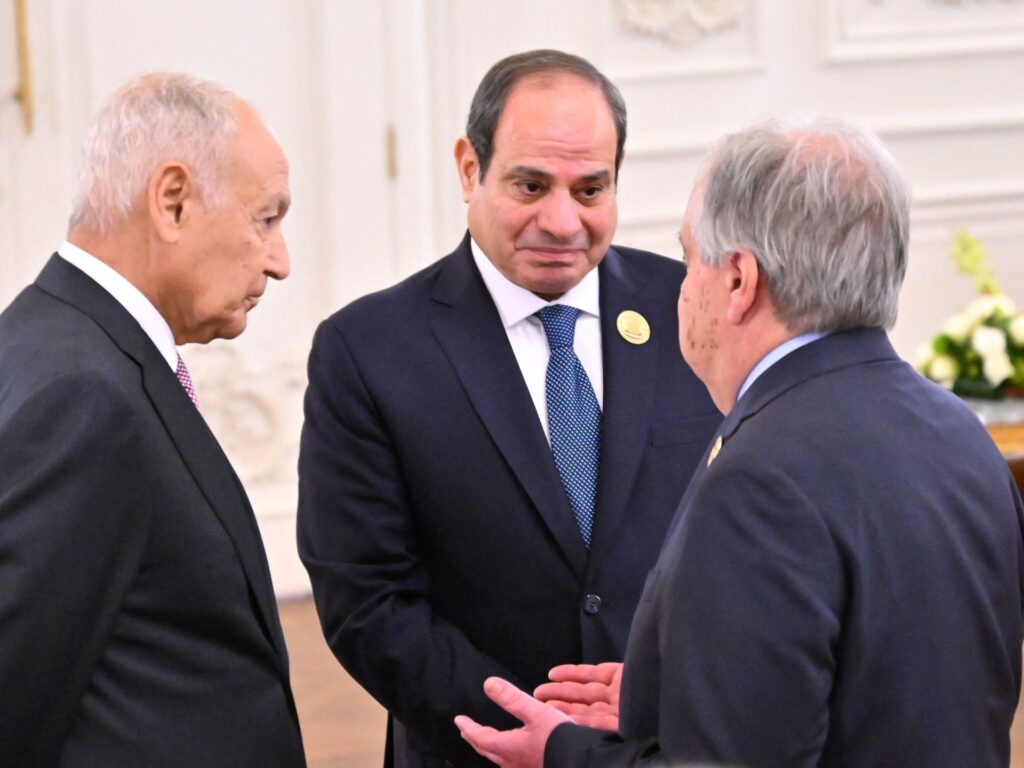
Arab states have adopted Egypt’s Gaza reconstruction plan, providing a potential path forward after Israel’s devastating war on the Palestinian enclave. Egypt unveiled its plan on Tuesday while hosting an Arab League Summit in its capital Cairo. The plan offers an alternative to United States President Donald Trump’s suggestion that the Gaza Strip be depopulated in order to “develop” the enclave, under US control, in what critics have called ethnic cleansing. Under the Egyptian plan, Gaza’s Palestinian population would not be forced to leave the territory. Trump had insisted that Egypt and Jordan take Palestinians forced out of Gaza by his plan, but that was quickly rejected, and the US has signalled that it is open to hearing what an Arab plan for Gaza’s post-war reconstruction would be. Speaking at the start of the summit, Egyptian President Abdel Fattah el-Sisi said that Trump would be able to achieve peace in the Israeli-Palestinian conflict. Here’s everything you need to know about the plan, based on Al Jazeera’s own reporting, as well as drafts of the plan reported on by the Reuters news agency and the Egyptian newspaper Al-Ahram. Advertisement What does the Egyptian plan call for? The plan consists of three major stages: Interim measures, reconstruction and governance. The first stage would last about six months while the next two phases would take place over a combined four to five years. The aim is to reconstruct Gaza – which Israel has almost completely destroyed – maintain peace and security and reassert the governance of the Palestinian Authority (PA) in Gaza, 17 years after it was kicked out following fighting between Fatah, which dominates the PA, and Hamas. How does the plan aim to rebuild Gaza? A six-month interim period would require a committee of Palestinian technocrats – operating under the management of the PA – to clear the rubble from Salah al-Din Street, which is the main north-south highway in the Gaza Strip. Once the roads are clear, 200,000 temporary housing units would be built to accommodate 1.2 million people and about 60,000 damaged buildings restored. According to the blueprint, longer-term reconstruction requires an additional four to five years after the interim measures are completed. Over that span, the plan aims to build at least 400,000 permanent homes, as well as rebuilding Gaza’s seaport and international airport. Gradually, basic provisions such as water, a waste system, telecommunication services and electricity would also be restored. The plan further calls for the establishment of a Steering and Management Council, which would be a financial fund supporting the interim governing body in Gaza. Advertisement In addition, conferences will be held for international donors to provide the necessary funding for reconstruction and long-term development in the Strip. Who would be in charge of Gaza? The plan calls for a group of “independent Palestinian technocrats” to manage affairs in Gaza, in effect replacing Hamas. The technocratic government would be responsible for overseeing humanitarian aid and to pave the way for the PA to administer Gaza, according to el-Sisi. The plan does not mention elections, but, speaking at Tuesday’s summit, PA President Mahmoud Abbas said that an election could take place next year if circumstances allowed. On the security front, Egypt and Jordan have both pledged to train Palestinian police officers and deploy them to Gaza. The two countries have also called on the United Nations Security Council to consider authorising a peacekeeping mission to oversee governance in Gaza until reconstruction is complete. How much is this going to cost? Egypt is calling for $53bn to fund the reconstruction of Gaza, with the money distributed over three phases. In the first six-month phase it would cost $3bn to clear rubble from Salah al-Din Street, construct temporary housing, and restore partially damaged homes. The second phase would take two years and cost $20bn. The work of rubble removal would continue in this phase, as well as the establishment of utility networks and the building of more housing units. Phase three would cost $30bn and take two and a half years. It would include completing housing for Gaza’s whole population, establishing the first phase of an industrial zone, building fishing and commercial ports, and building an airport, among other services. Advertisement According to the plan, the money will be sourced from a variety of international sources including the United Nations and international financial organisations as well as foreign and private sector investments. Is the plan going to work? There are still a number of variables that could complicate the plan. Perhaps most importantly, it’s unclear whether Hamas, Israel or the United States will agree to it. Hamas welcomed the reconstruction plan, and has previously agreed to a technocratic government. But it is less clear if it will accept the return of the PA, which itself would face the perception from its critics that it has returned to Gaza on the back of Israel’s tanks. And Hamas may be willing to discuss its removal from governance, but is adamantly against its disarmament – something that the Egyptian plan adopted by the Arab League did not discuss. Israel has made it clear that is a red line, and that Hamas will not be allowed to keep its weapons. But Israeli Prime Minister Benjamin Netanyahu has also said that he will not allow the PA to return to Gaza. In its response to the adoption of the Egyptian plan, Israel said that Arab states needed to “break free from past constraints and collaborate to create a future of stability and security in the region”. The statement from the Israeli foreign ministry instead backed Trump’s Gaza displacement plan – which echoes a long-standing call from the Israeli far-right to depopulate Gaza. There is also the question of whether US President Trump will abandon his idea of a US-controlled “Middle East Riviera” for the Egyptian plan. It is difficult to predict what Trump’s position will be, particularly if Israel signals its opposition to the Egyptian plan. Advertisement Adblock test (Why?)
More than 200 children, some as young as one, raped in Sudan, UNICEF says
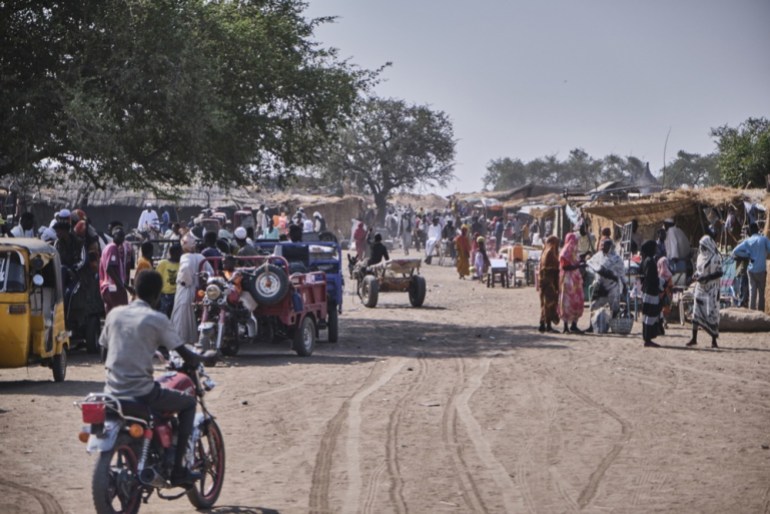
Report says sexual violence, including rape, is ‘being used as a tactic of war’ in violation of international law and laws protecting children. Children in war-ravaged Sudan, some as young as a year old, have been raped since the beginning of 2024, according to the United Nations children’s agency. In a report published on Tuesday, UNICEF said at least 221 children, including boys, were raped by armed men, according to records compiled by gender-based violence service providers in the North African nation. Of those cases, 66 percent of the survivors were girls and the rest were boys. There were 16 survivors below the age of five, including four who were as young as one. UNICEF recorded an additional 77 reported cases of sexual assault against children – primarily attempted rape. The war in Sudan broke out in April 2023 between the military and its rival paramilitary Rapid Support Forces, with battles in capital Khartoum and around the country. Since then, at least 20,000 people have been killed, though the number is likely much higher. The war has also driven more than 14 million people from their homes and pushed parts of the country into famine. Advertisement ‘Rape as war tactic’ According to rights groups, atrocities, including sexual violence and forced child marriages, have been committed by both sides. An estimated 61,800 children have been internally displaced since the war began, according to UNICEF. The agency reported documented cases involving children who were raped during attacks on cities. UNICEF Executive Director Catherine Russell said in the report that sexual violence, including rape, is “being used as a tactic of war” in violation of international law and laws protecting children. Since December 2024, about 110,000 people have arrived in Renk County in neighbouring South Sudan amid continuing violence in Sudan, according to Doctors Without Borders [File: Diego Menjibar/EPA] The cases of rape were reported in the states of Gadarif, Kassala, Gezeira, Khartoum, River Nile, Northern State, South Kordofan, North Darfur and West Darfur. In South Kordofan, a boy was raped at gunpoint and several children, including a six-year-old, were also raped. They were all out picking fruit. “In a culture of really serious social stigma and at a time when access to services has been severely hampered, the fact that this group came forward tells us that it is only a small sample,” UNICEF spokesperson Tess Ingram told The Associated Press news agency. “It is only the tip of the iceberg of what are undoubtedly hundreds more children who have been raped.” Ingram, who was in Sudan in December, said she met with victims who “endured horrors that no person would want to experience in their lifetime, and in the aftermath of those horrors, their suffering doesn’t stop”. Advertisement Many of the victims dealt with physical injuries and “serious psychological scars”, Ingram said, adding that some have attempted suicide. Survivors are often reluctant to report that they were subjected to sexual violence due to social stigma and fear of retribution from armed groups and rejection from family. UNICEF urged the Sudanese government and all parties to the conflict to respect their obligations to protect civilians, especially children, while those providing services to survivors must be protected. “Children as young as one being raped by armed men should shock anyone to their core and compel immediate action,” said Russell. Adblock test (Why?)
How will Trump’s tariffs impact Mexico and Canada’s exports?
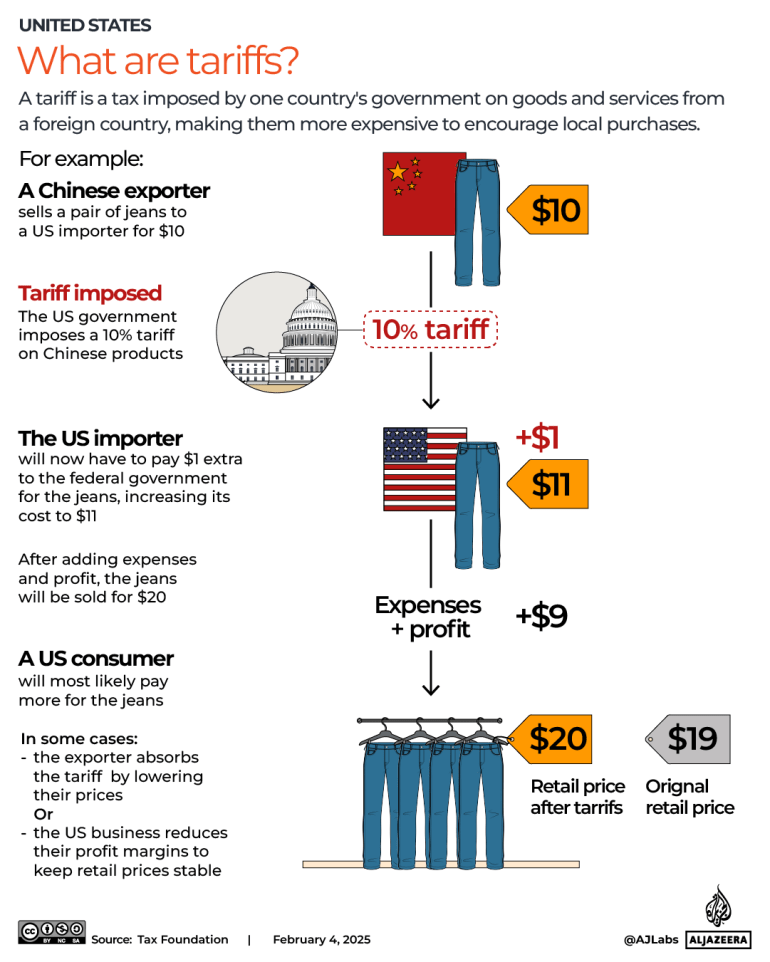
United States President Donald Trump has implemented sweeping 25 percent tariffs on Mexico and Canada. The tariffs on the US’s biggest trading partners took effect at 00:00 Eastern Time (05:00 GMT), causing markets across the globe to tumble. Washington has also imposed an additional 10 percent levy on Chinese imports, adding to the 10 percent imposed last month. Mexico and Canada are the top US trading partners, accounting for more than 30 percent of total goods traded. The value of trade among the three North American countries is more than $1.6 trillion. Tariffs would apply to imports from Mexico and Canada of almost $918bn. How did we get here? The tariffs on Mexico and Canada were among the first floated after Trump’s re-election in November. He said he is imposing them to get Mexico and Canada to curb immigration and drug trafficking into the US and to balance the trade deficit between the US and its biggest trading partners. On February 3, Mexican President Claudia Sheinbaum and Canadian Prime Minister Justin Trudeau agreed to boost border security to prevent the trafficking of drugs and flow of migrants into the US in last-minute deals to postpone tariffs that had been set to come into effect on February 4. Advertisement Last month, Trump also announced 25 percent tariffs on aluminium and steel imports that are to come into effect on March 12, which Mexico and Canada will also be affected by. What are tariffs and how do they work? A tariff is a government-imposed tax on imported goods and services paid by businesses bringing them into the country. Designed to protect domestic industries, tariffs often drive up costs for consumers by making foreign products more expensive, potentially reducing demand. When the first Trump administration introduced tariffs in 2018, the aim was to strengthen US industries and penalise foreign exporters. However, American businesses and consumers bore the greatest burden from these tariffs rather than the foreign exporters. The 25 percent US tariff on Mexican and Canadian exports could raise costs, reduce trade, lead to job losses, create economic uncertainty and trigger retaliatory tariffs, escalating a trade war. (Al Jazeera) What is the US-Canada and US-Mexico trade deficit? The US is at a trade deficit with Canada and Mexico, meaning that it is buying more goods from those countries than it is selling to them. In a statement from the White House on February 1, Trump stated that tariffs are a powerful source of leverage for the US, arguing that while trade accounts for 67 percent of Canada’s gross domestic product (GDP) and 73 percent of Mexico’s, it accounts for only 24 percent of US GDP. The US trade deficit in goods was the world’s largest at more than $1 trillion. Advertisement Mexico is the largest US trading partner. In 2024, the US imported $505.8bn in goods from Mexico and exported $334bn, resulting in a trade deficit of $171.8bn. As the volume of trade has increased over the years, the US has consistently run a deficit with Mexico, which has expanded in the past 10 years. The trade deficit between the two countries has increased by 12.7 percent from 2023 to 2024. Canada is the second largest US trading partner. In 2024, the US imported $412.7bn in goods from Canada and exported $349.4bn, resulting in a trade deficit of $63.3bn. While tariffs may aim to reduce trade deficits by reducing imports, the real impact of tariffs is more complex with the potential for retaliatory tariffs and higher prices for consumers. How will tariffs affect the United States-Mexico-Canada Agreement (USMCA)? In 2018 during his first term, Trump announced the USMCA as a replacement for the North American Free Trade Agreement (NAFTA), which had been signed in 1992 during President George HW Bush’s administration. The USMCA, which came into effect in 2020, aimed to modernise trade between the three countries by strengthening labour and environmental protections, increasing car-manufacturing requirements, expanding digital trade rules and enhancing intellectual property protections. A review of the USMCA is due in 2026, but the potential threat of tariffs could lead to these negotiations happening sooner. US President Donald Trump delivers remarks on the USMCA during a news conference in the Rose Garden of the White House in Washington, DC, on October 1, 2018 [Kevin Lamarque/Reuters] What Mexican products will be affected by tariffs? Mexico is one of the largest foreign suppliers of goods to the US with cars, trucks and auto parts making up the largest share of exports. Machinery and electrical equipment follow as key exports, including industrial machinery, computers and household appliances. Other major exports include petroleum products, farm products, medical devices, plastics and textiles. According to the Observatory of Economic Complexity (OEC), Mexico’s main exports to the US in 2023 were: Advertisement Vehicles and auto parts ($123bn): including cars, trucks and automotive components Electrical machinery and electronics ($86.1bn): including computers, telecommunications equipment and consumer electronics Machinery, mechanical appliances and parts ($78.7bn): including industrial machinery and equipment Mineral fuels and mineral oils ($25.2bn): including petrol and refined petrol Optical, photographic, technical and medical apparatuses ($22.5bn): including instruments and appliances used in medical, surgical and scientific applications Furniture, bedding and lighting ($13.3bn): including household and office furniture, mattresses and lighting fixtures Beverages, spirits and vinegars ($11.6bn): including beer and hard liquor Fruit, nuts and fruit peels ($9.38bn): including tomatoes, avocados and a variety of fruits and vegetables What Canadian products will be affected by tariffs? Canada is the largest foreign supplier of oil to the US with energy products, including crude oil and petroleum products, accounting for about 30 percent of all Canadian exports to the US. Cars, tractors and auto parts are the second-largest export, followed by machinery and mechanical appliances. Other significant exports include medicines, plastics and wood products. According to the OEC, Canada’s main exports to the US in 2023 were: Energy products ($131bn): including crude oil and petroleum products Cars, tractors, trucks and car parts ($56.7bn) Machinery and mechanical appliances ($32.2bn): covering industrial machinery and