

Trump did on live TV what other US presidents would just do in private
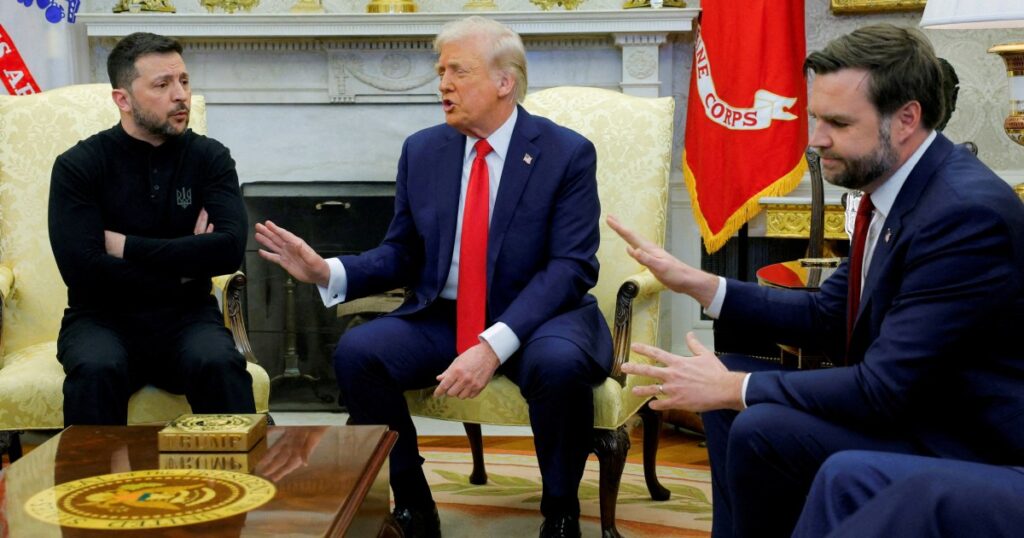
Psst. Over here. Over here. You want to hear a trade secret? The bulk of journalists who cover the so-called “halls of power” in Washington, Ottawa, Canberra, London, Paris and beyond prefer routine over spontaneity. You see, predictability is easy. It’s comforting because most capital cities are mundane places where boring is not only an agreeable fact on the ground, but also a prevailing state of mind. That is why the overwrought reaction to the lively dressing-down US President Donald Trump and Vice President JD Vance gave Ukrainian President Volodymyr Zelenskyy was so in keeping with the White House press corps’ stubborn fondness for the veneer of practised civility over the impulsive truth. Unlike so many other pundits and columnists who rushed instantly and almost universally onto the familiar cable news networks to express their disbelief and shock over the “embarrassing spectacle” of America’s tactless commander-in-chief “humiliating” his “wartime hero” guest, I was mesmerised by the remarkable scenes unfolding live on my computer screen. Advertisement Rather than watching an orchestrated, forgettable set piece featuring smiling foreign dignitaries and heads of state visiting an ever-so-polite president in the Oval Office, it was refreshing to witness a blatant exhibition of the crudeness, rudeness, and brutishness of power politics that usually occurs far, far away from the cameras and, hence, reporters and the public. They will be loath to admit it, but the sea of scribes who stood like mute mannequins while Trump, Vance, and Zelenskyy traded rhetorical blows for several bruising rounds, expected another tame, pedestrian day at work like so many other tame, pedestrian days at work. They know the predictable role they play during these choreographed pantomimes. Step 1: Go to the Oval Office. Step 2: Record the foreign head of state saying nice and sweet stuff about the US president. Step 3: Record the US president saying nice and sweet stuff about the foreign head of state. Step 4: Report that the US president and the foreign head of state said nice and sweet stuff about each other. Step 5: Later, call sources who say that, in private, the US president and the foreign head of state did not say nice and sweet stuff about each other. Step 6: Report, quoting anonymous sources, that despite having said nice and sweet stuff about each other publicly, privately, truth be told, the US president and his grinning guest cannot stand one another. That was, in effect, the formulaic arc of much of the reporting after French President Emmanuel Macron and British Prime Minister Keir Starmer made their pilgrimages to Washington last week to massage and mollify Trump. Advertisement True to his unorthodox nature – to put it charitably – Trump and his clawing vice president – upended that traditional script, either by design or instinctively, with Zelenskyy. Reporters and pundits came away confused and disoriented. This is not supposed to happen the way it has happened, they moaned – disappointed, apparently, at having to act as journalists rather than stenographers. A lot of the hyperbolic outrage being directed at Trump is the product not so much of what he said to Zelenskyy – since his antipathy towards Ukraine and its president has been plain – but how and where he said it: in the Oval Office before TV cameras. That’s what America’s genteel chattering class considers so rank and appalling – Trump did his berating and bullying openly, when more discreet and “diplomatic” presidents do their berating and bullying behind closed doors. The glaring irony is that American networks and the personalities who populate them leverage broadcasting “live” to draw audiences tempted by the urgency of now and the prospect that, at any moment, real, not manufactured, drama and conflict might erupt. Newsworthy drama and conflict did erupt in the Oval Office on Friday, but instead of embracing it, those same networks and personalities recoiled from it and labelled it as unseemly and unbecoming of the office of the presidency and the United States itself. Here’s a bit of news for the yapping ostriches: Aside from lying with a pathological ease and ordering others to kill without a scintilla of regret or remorse, being rude, crude, and a brute is a job prerequisite of any US president – Democrat or Republican. Advertisement Trump is not the exception. He is the rule. The administration of pretty boy, Harvard-trained President John F Kennedy enlisted the Mafia to try to murder Cuba’s young and charismatic leader, Fidel Castro, and gave its tacit approval to a coup in early November 1963 that saw the overthrow of South Vietnam’s government and the assassination of President Ngo Dinh Diem. Kennedy’s successor, Lyndon Johnson, was a six-foot, four-inch boor who physically assaulted much smaller public servants who angered him. In 1965, a livid Johnson summoned Canada’s diminutive prime minister, Lester Pearson, to Camp David for a stiff talking to after the Noble Peace Prize winner denounced the US bombing of North Vietnam. Johnson reportedly grabbed Pearson by the shirt collar, twisted it, and lifted the prime minister by the neck, shouting: “You pissed on my rug.” That same year, an enraged Johnson shoved then-Chairman of the Federal Reserve William Martin against a wall for having raised interest rates against the president’s wishes. “Boys are dying in Vietnam, and Bill Martin doesn’t care,” Johnson thundered. That avatar of presidential probity, Richard Nixon, ordered the CIA to block, thwart, undermine, and destabilise Chile’s democratically elected Socialist president, Salvador Allende. And Nixon’s obscene anti-Semitism makes Trump’s fiery remarks to Zelenskyy seem rather temperate, in comparison. He complained on tape that Washington “is full of Jews” and that “most Jews are disloyal”. Whether the wailing pundits and TV personalities are prepared to acknowledge it or not, Trump was right. The sensational Oval Office fireworks made for great television. Advertisement This time we were privy to the astonishing, history-making words and deeds of another “gangster” president in real-time, as it happened. The views expressed in this article are the author’s own and do
At least 37 people killed and 39 wounded as two buses collide in Bolivia

The crash happened on the route between the cities of Uyuni and Colchani, when one of the vehicles swerved into the oncoming lane. At least 37 people have been killed and dozens more injured in a crash involving two buses in the western Potosi region of Bolivia, police and local authorities have said. The accident happened on Saturday at 7am local time (11:00 GMT) on the route between the cities of Uyuni and Colchani, when one of the vehicles swerved into the oncoming lane. Uyuni is the gateway to the Salar de Uyuni, a major tourist attraction and the world’s largest salt flat at more than 10,000sq km (3,900sq miles). “As a result of this fatal accident we have 39 people injured in four hospitals in the town of Uyuni, and 37 people have lost their lives,” a spokesperson for the Departmental Police Command of Potosi told reporters. Police personnel are working to identify people who were killed and those who were injured and hospitalised, the spokesperson added. People inspect the wreckage of a bus involved in the collision [Bolivian Police/AFP] One of the buses was heading to Oruro, where one of the most important carnival celebrations in Latin America is currently taking place. Advertisement Police officers removed survivors from the steel wreckage, according to images shot by Radio Uyuni, which showed several bodies covered in blankets strewn across the high Andean flatlands. A police spokesperson said one of the two drivers, who both survived the crash, was spotted by passengers consuming alcohol. Bolivia’s mountainous, under-maintained and little-supervised roadways are some of the deadliest in the world, killing an average of 1,400 people every year. Adblock test (Why?)
Will the US withdraw its support for Ukraine?
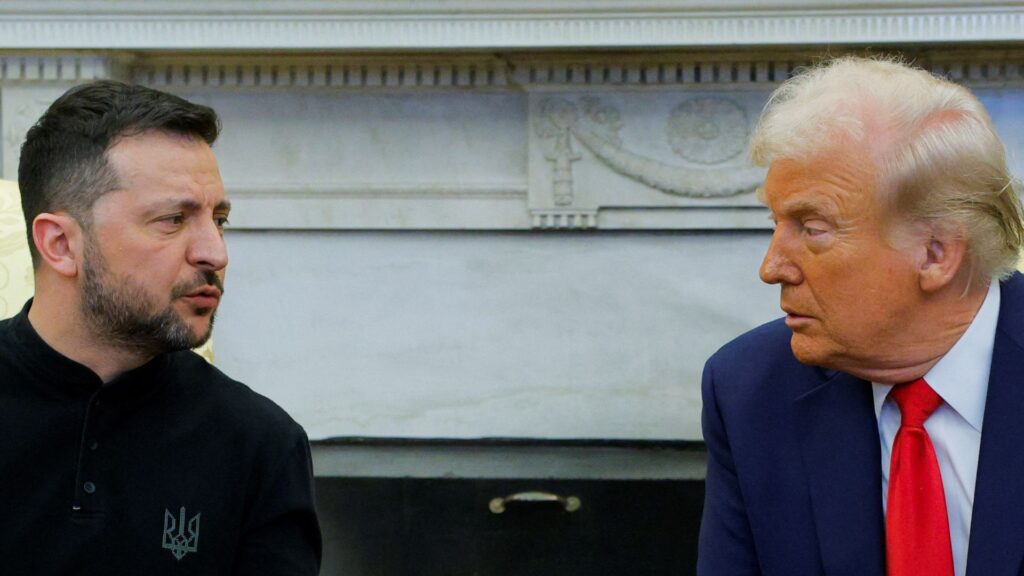
A public meeting between Presidents Donald Trump and Volodymyr Zelenskyy descended into a spat. A visit that Ukraine’s President Volodymr Zelenskyy hoped would secure US support in the face of Russia’s invasion, instead ended in a very public argument. The meeting with President Donald Trump at the White House was supposed to be about signing over rights to some of Ukraine’s rare earth minerals. Kyiv hoped that would keep US assistance coming, despite not containing any guarantees of security against Russian aggression. Instead, President Zelenskyy got a dressing down from Trump and his Vice President JD Vance, who accused the wartime leader of showing disrespect and ingratitude. Now Trump is threatening to pull support from Ukraine. What does this mean for the war in Ukraine? And will Washington force a settlement with Moscow? Presenter: James Bays Guests: Michael Bociurkiw – Global affairs analyst and senior fellow at Atlantic Council’s Eurasia Center Scott Lucas – Professor of US and international politics, Clinton Institute, University College Dublin Glenn Diesen – Professor of international relations at the University of South-East Norway and associate editor of Russia in Global Affairs Advertisement Adblock test (Why?)
ICC Champions Trophy 2025 – India vs New Zealand: Start time, teams, stream
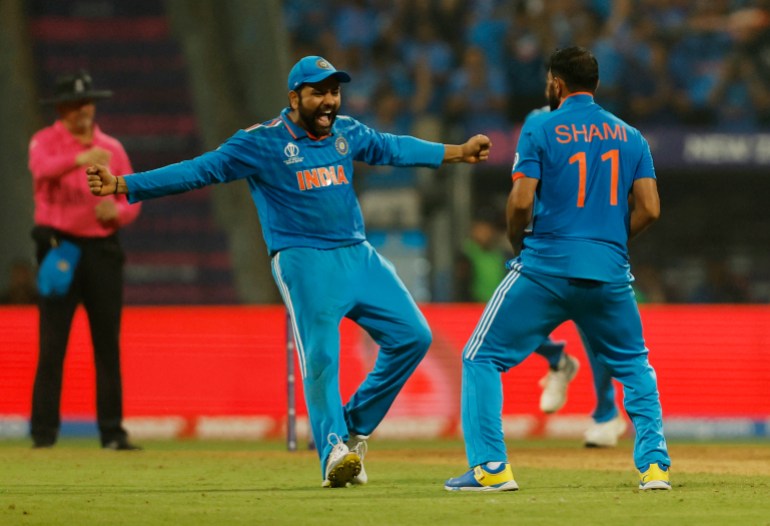
Who: India vs New ZealandWhat: ICC Champions Trophy 2025Where: Dubai International Stadium, Dubai, United Arab EmiratesWhen: Sunday, March 2 at 1pm (09:00 GMT)Follow Al Jazeera’s live coverage. India and New Zealand booked their Champions Trophy semifinal spots early in the 50-over tournament and will clash on Sunday in Dubai, with the winner topping Group A. South Africa topped Group B and will face the loser of Sunday’s match, while Australia finished second in that group and will face the winner of the final match of the group stage. India will come into the match after a six-day game break since their victory against Pakistan. There will be only a day’s recovery between the last group match and the semifinal on Tuesday in Dubai. Indeed, a great deal of the talk heading into the match has been focused on injuries and player workloads. What is the India team news? India skipper Rohit Sharma and Mohammed Shami are fit and raring to go against New Zealand the team have said. In India’s previous win over archrivals Pakistan, Rohit and pace spearhead Shami left the field for a short period, briefly raising doubts about the fitness of the two players. Advertisement “There’s no real concerns about anyone missing games, as far as I know,” wicketkeeper-batsman KL Rahul told reporters before the New Zealand clash. Rahul said all the players have been to the gym and training and even if there were some niggles, there was nothing serious. Shami, 34, recently returned to international cricket from a long injury lay-off and claimed figures of 5-53 in India’s opening win over Bangladesh. But against Pakistan, he seemed to have some trouble with his ankle as he went off for some treatment only to return later and bowl, much to India’s relief. India’s captain Rohit Sharma, left, and Mohammed Shami, right, were the two main injury concerns before the New Zealand match [Francis Mascarenhas/Reuters] Rohit also left the ground with his deputy Shubman Gill leading the team briefly and TV commentators suggested the captain was troubled by a hamstring strain. Rohit returned and also batted in his usual opening slot to hand India a quick start in his 15-ball 20. Indian assistant coach Ryan ten Doeschate dismissed any concerns about Rohit’s fitness. “He’s all right. You can see he’s batting, he did a little bit of fielding earlier,” ten Doeschate said. “It’s an injury he’s had before, so he knows how to manage it really well. And he’s on top of it.” Shami has been India’s go-to bowler in the absence of pace ace Jasprit Bumrah, who failed to recover from a back injury and missed the eight-nation tournament. “I don’t think rest is an issue. It’s how you back the two games. If we bowl second, for Shami bowling 10 overs and to possibly do it again in 36 hours could mean a lot of workload,” said ten Doeschate. Advertisement “Rohit will have to manage that on the field to keep the guys fresh for the first semifinals.” What is the New Zealand team news? Stalwart top-order batsman Daryl Mitchell has declared himself fit to face India after missing the win over Bangladesh on Monday because of illness. “Obviously disappointing to miss the last game with being a bit crook,” Mitchell said. “It’s nice to be back with the group now and get out of the hotel room and to be involved in training and looking forward to the next match. “It’s another game of cricket that I’m just really excited to represent our country in, and it should be good fun come Sunday.” Rachin Ravindra, who was returning from a concussion, replaced Mitchell in the batting order against Bangladesh in Rawalpindi and scored a sparkling 112 as the Black Caps booked their spot in the knockout rounds. It was the opener’s fourth three-figure score at an ICC tournament – more than any other New Zealander. Coach Gary Stead is therefore presented with something of an embarrassment of riches in the batting department, even if he has suggested he might rest players carrying niggles for the India match. Rachin Ravindra, left, has scored more centuries at ICC events than any other New Zealander [Akhtar Soomro/Reuters] Where could the game be won for India or New Zealand? The pitch in Dubai has been sluggish with spinners playing a part. India’s Kuldeep Yadav claimed three wickets in the win over Pakistan. New Zealand’s spin force has also shone and in their previous win over Bangladesh in Rawalpindi, off-spinner Michael Bracewell returned figures of 4-26. Advertisement Ten Doeschate, a former Netherlands and Essex all-rounder, said the Sunday clash could turn out to be a battle of spinners. “Yeah, I think so. And they’ll have four spinners as well. So, it could be a contest of spin,” said ten Doeschate. “I think coming into the competition, we weren’t expecting such an over-reliance in spin, but the guys have bowled nicely and the pitch has helped a little bit.” What chance to New Zealand have of upsetting India in Dubai? Returning New Zealand batter, Mitchell, said the fact that a variety of different batters were making decisive interventions in matches was a definite plus. “Something that we pride ourselves on is that when the situation dictates, you do your job for the team,” he said. “I’m sure another set of hands will stick their hands up over the next few games and hopefully, help us win games.” Why are India not playing their matches in Pakistan? All of India’s matches are being played in UAE instead of Pakistan, the host nation of the 2025 edition, including a potential final. The move came after the Board of Control for Cricket in India (BCCI) reached an agreement with the International Cricket Council (ICC) and Pakistan, that both nations would play all ICC events hosted in either country to be played at neutral venues until 2027. Spirits are high in the New Zealand camp ahead of their #ChampionsTrophy clash against India in
ICC Champions Trophy 2025: South Africa’s win ends Afghanistan hopes
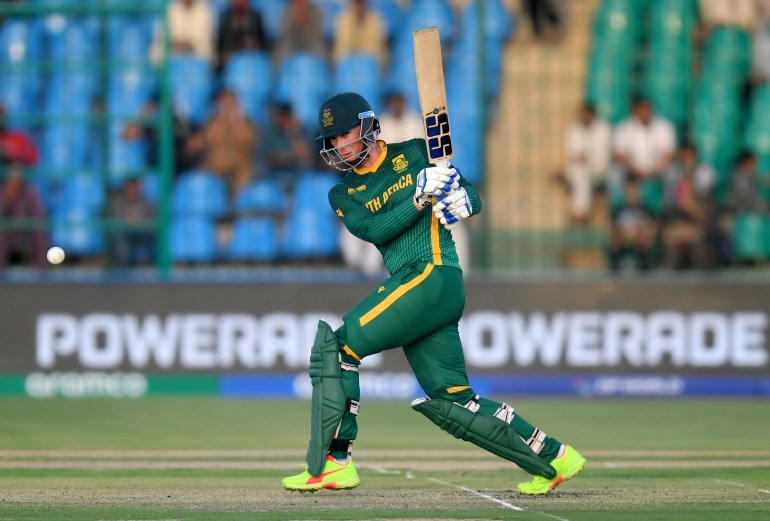
South Africa beat England by seven wickets in Lahore to reach Champions Trophy semifinals while eliminating Afghanistan. Rassie van der Dussen scored 72 not out off 87 balls to lead South Africa into the semifinals of the Champions Trophy by beating bottom-of-the-table England by seven wickets. Van der Dussen’s half-century highlighted South Africa’s clinical performance on Saturday as it finished atop Group B ahead of Australia in second and Afghanistan, who are now eliminated, in third. The Proteas finished with 181-3 in 29.1 overs in reply to England’s hapless effort of 179 all out (38.2 overs). This was after England – already ousted from the tournament after back-to-back losses – had won the toss and opted to bat. Rassie van der Dussen of South Africa bats during the ICC Champions Trophy 2025 match in Karachi [Sameer Ali/Getty Images] Marco Jansen picked 3-39 in seven overs while Wiaan Mulder took 3-25 in 7.2 overs as England’s batting looked disinterested. England had previously lost to Australia and Afghanistan and thus finished winless after three games, marking a dismal end to Jos Buttler’s run as skipper. Buttler announced on Friday that he would step down after England’s surprising exit as well as their past failures in the 2024 T20 World Cup and the 2023 Cricket World Cup. Australia are the second team to qualify from Group B and will face either India or New Zealand after those two Group A teams battle for the top spot in Dubai on Sunday. Advertisement Afghanistan had an outside hope of progressing in second spot with Australia winning the group if England had beaten the Proteas by 200 runs or more. South Africa’s Marco Jansen, centre, claimed the first three England wickets to fall [Akhtar Soomro/Reuters] England’s innings suffered early blows against Jansen. Phil Salt was out caught for eight, and then Jamie Smith was caught for a three-ball duck. It became 37-3 when Ben Duckett returned a catch to Jansen for 24 off 21 balls. “These were good conditions from a batting point of view, and the boys worked very hard,” said Jansen, who was named player of the match. “I used my options well and hit my lengths.” Joe Root top-scored with 37 off 44 balls and made an effort to stabilise the innings. He added 62 off 61 balls with Harry Brook (19). Left-arm spinner Keshav Maharaj (2-35) got the breakthrough with Jansen taking a nice catch at midwicket to dismiss Brook. Thereafter, England collapsed again. Mulder bowled Root in the 18th over, and while Buttler held one end with 21 off 43 balls, regular wickets meant that the English innings never took flight. Jofra Archer scored 25 off 31 balls with four fours. Jos Buttler looks dejected as he leaves the field after batting for the last time as England captain [Sameer Ali/Getty Images] England lost its last seven wickets for 80 runs, finishing with a below-par score. “It was a really disappointing performance, and we were short of our mark today,” Buttler said after England’s seventh straight ODI defeat. “It was a decent surface, and Duckett got us into a nice position, but we couldn’t take advantage of that. As a whole group, we are not getting results, and that takes away the confidence from us.” Chasing a paltry total, South Africa’s start wasn’t too good either. Archer bowled makeshift opener Tristan Stubbs for a five-ball duck and then bowled Ryan Rickelton (27) later on as well. Advertisement It was 47-2 when van der Dussen and Heinrich Klaasen came together, and they put on 127 runs off 122 balls for the third wicket. Van der Dussen reached 50 off 72 balls, and his knock for the day included six fours and three sixes overall. Stand-in skipper Aiden Markram did not bat after he sustained a hamstring injury while fielding. Klaasen finished with 64 off 56 balls with 11 fours before he was out caught off Adil Rashid (1-37) near the finish line. Adblock test (Why?)
Ukrainians fear losing US support as Trump-Zelenskyy clash shocks world
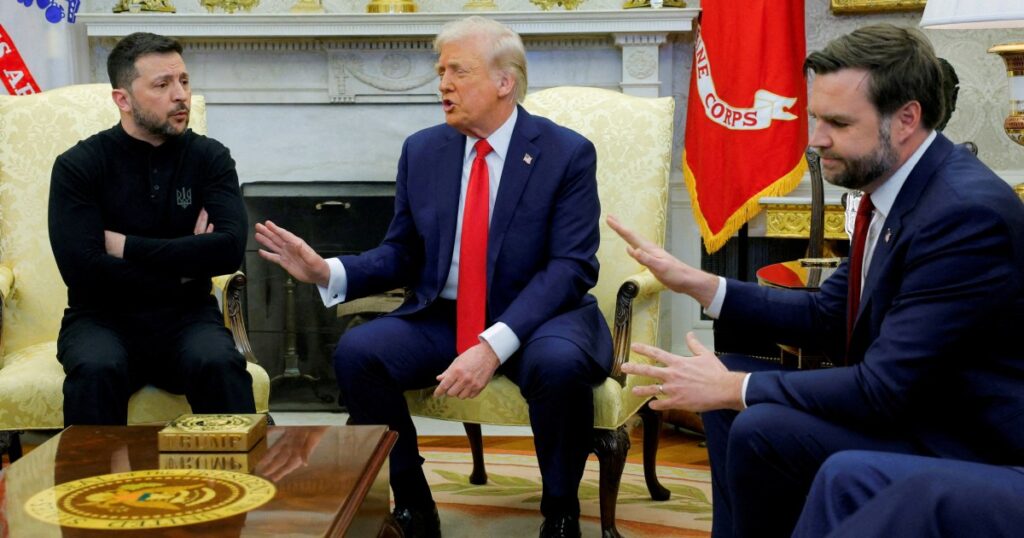
A dramatic spat between the US and Ukrainian leaders raises concerns about continued US aid for Ukraine’s war effort. Uncertain and wary, Ukrainians have voiced their concerns over the possibility of the United States withdrawing its support for the war-torn country following a dramatic shouting match at the Oval Office between the presidents of the US and Ukraine. A global audience watched in shock as a news conference on Friday between Volodymyr Zelenskyy and Donald Trump shattered already fragile US-Ukrainian relationships. The two leaders and US Vice President JD Vance clashed over differing visions on how to end the three-year-old conflict with the Ukrainian president seeking security guarantees from a Trump administration that has made a U-turn in decades-long US foreign policy by aligning with Russian President Vladimir Putin’s perspective. Ukrainians, many of them hardened by three years of war, rallied around Zelenskyy but also expressed dismay about the future of US backing for Kyiv’s war effort as larger and better-equipped Russian forces march across swaths of the east. “I doubt that we could stand without the American help. They have helped us a lot with weapons and money. Maybe Europe will help us,” Kyiv resident Liudmyla Stetsevych, 47, told the Reuters news agency. Advertisement “Trump and Putin are dividing up the world – that’s what I would say. I don’t know what will come of it,” Other Ukrainians also expressed hope that Ukraine’s allies in Europe would boost political and military support if the US dialled back its own. “Many European countries voiced their support for Ukraine, we hope they will step up and increase aid for Ukraine, especially military equipment and ammunition,” Alina Zhaivoronko, from Kyiv, told Reuters. The European Union, the United Kingdom and Norway have overtaken the US in terms of cumulative direct military and non-military aid to Ukraine as they have provided and pledged more than $204bn in aid compared with the US’s $183bn, according to the Institute for the War Study. Still, the US provides key air defence weaponry and much-needed intelligence to Ukrainian troops. Many in Kyiv fear that without Washington’s support, prospects for Ukraine’s war effort are bleak. Zhaivoronko said Ukrainians are “very thankful” to the US “for the help we have received all this time and keep receiving now. But our dignity, our honour, should stand above everything. “It was an unpleasant shock, like we were in a cold shower. It was a very unexpected format of discussion. But there are two sides to this. Diplomatically, President Zelenskyy should have kept to the norms and rules. But on the other side, it was a provocation,” she said. Nataliia Serhiienko, 67, a retiree in Kyiv, said she thinks Ukrainians approve of their president’s performance in Washington, “because Zelenskyy fought like a lion”. Advertisement “They had a heated meeting, a very heated conversation,” she told The Associated Press. But Zelenskyy “was defending Ukraine’s interests”. At his meeting with Trump, Zelenskyy repeatedly demanded that any deal with the US must include concrete security guarantees for Ukraine should Putin breach a ceasefire agreement. In the past, the Ukrainian president said that Moscow violated truce deals 25 times, including during Trump’s first term. But following the spat in front of cameras, Zelenskyy left the White House abruptly without signing a much-touted minerals deal. He later declined to apologise for the blowup, saying he regrets the public spat and wanted Trump to be more on Ukraine’s side. “The Americans don’t know the real situation, what’s going on here,” Ella Kazantseva, 54, told Reuters across from a sea of flags in central Kyiv commemorating Ukraine’s war dead. “They don’t understand. Everything is beautiful for them.” Adblock test (Why?)
What are the implications of the PKK leader’s call to disband?
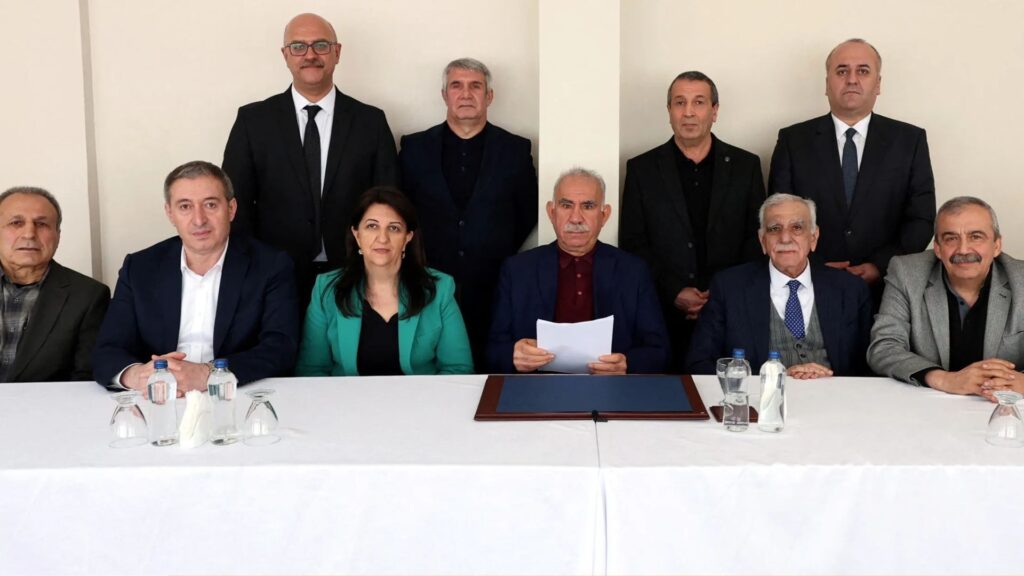
The jailed founder and leader of the Kurdistan Workers’ Party, or PKK, calls on the group to disband. That follows four decades of fighting with Turkiye, costing 40,000 lives. So, why is this coming now and what impact could it have on Turkiye – and the region? Presenter: Nick Clark Guests: Omer Ozkizilcik – Non-resident fellow at the Atlantic Council’s Middle East Program and director of Turkish studies at the Omran Center for Strategic Studies HA Hellyer – Senior fellow in geopolitics, international security and Middle East studies at the Royal United Services Institute, a defence and security think tank Mohammed Salih – Non-resident senior fellow at the Foreign Policy Research Institute and Kurdish affairs specialist Adblock test (Why?)
World reacts after Donald Trump, JD Vance berate Ukraine’s Zelenskyy
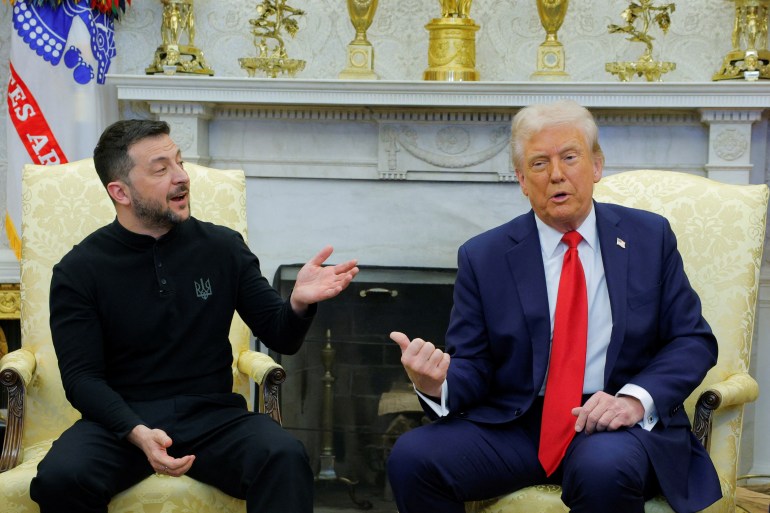
Ukrainian President Volodymyr Zelenskyy’s meeting with United States President Donald Trump in Washington, DC, ended abruptly after the two leaders clashed in a heated exchange over Russia’s war against Kyiv. At the Oval Office on Friday, Trump and his vice president, JD Vance, berated Zelenskyy for being “disrespectful” and not thanking the US enough for its support. “You’re gambling with the lives of millions of people,” Trump shouted. “You’re gambling with World War III, and what you’re doing is very disrespectful to the country – this country.” Zelenskyy, who was meeting with Trump to convince him not to side with Russian President Vladimir Putin and discuss possible US security guarantees for Ukraine in the event of a ceasefire, told Trump that there would be “no compromises with a killer on our territory”. As the Ukrainian leader left the White House shortly after the verbal match, Trump took to the Truth Social social media app, which he owns, to write that Zelenskyy was not “ready for peace if America is involved”. Advertisement “He disrespected the United States of America in its cherished Oval Office. He can come back when he is ready for peace,” he added. Zelenskyy posted on X after the meeting to thank the US for its support. “Thank you POTUS, Congress, and the American people. Ukraine needs just and lasting peace, and we are working exactly for that,” he wrote. US President Donald Trump meets with Ukrainian President Volodymyr Zelenskyy at the White House [Brian Snyder/Reuters] Here is how some world leaders reacted to the heated dispute: Russia Dmitry Medvedev, the deputy head of the Russian Security Council, wrote on Telegram that Trump had given Ukraine a “strong slap on the wrist”. “For the first time, Trump told the cocaine clown the truth to his face: The Kyiv regime is playing with the Third World War. And the ungrateful pig received a strong slap on the wrist from the owners of the pigsty. This is useful. But it’s not enough – we must stop military aid to the Nazi machine,” said Medvedev, who is also a former Russian president. Maria Zakharova, the spokesperson for Russia’s Foreign Ministry, also praised Trump for showing “restraint” with the Ukrainian leader, whom she called a “scumbag”. “I think Zelenskyy’s biggest lie of all his lies was his assertion in the White House that the Kyiv regime in 2022 was alone, without support,” she wrote on Telegram. “How Trump and Vance held back from hitting that scumbag is a miracle of restraint.” European Union EU Commission President Ursula von der Leyen posted a message of solidarity with Zelenskyy, writing on X: “Your dignity honors the bravery of the Ukrainian people. Be strong, be brave, be fearless.” Advertisement The bloc’s foreign policy chief Kaja Kallas, meanwhile, said it was clear that “the free world needs a new leader”. “Ukraine is Europe! We stand by Ukraine,” she said in a social media post. “We will step up our support to Ukraine so that they can continue to fight back [against] the aggressor,” she added. “Today, it became clear that the free world needs a new leader. It’s up to us, Europeans, to take this challenge.” France French President Emmanuel Macron told reporters in Portugal that Russia is the “aggressor” in the Ukraine war and Ukrainians are the “aggressed people”.“I think we were all right to help Ukraine and sanction Russia three years ago, and to continue to do so. We, that is the United States of America, the Europeans, the Canadians, the Japanese and many others,” Macron said. “And we must thank all those who have helped and respect those who have been fighting since the beginning. Because they are fighting for their dignity, their independence, their children and the security of Europe. These are simple things, but they’re good to remember at times like these, that’s all,” he added. Germany Outgoing Chancellor Olaf Scholz said, “Ukraine can rely on Germany and on Europe.” “No one wants peace more than the citizens of Ukraine! That is why we are jointly seeking the path to a lasting and just peace,” he said. Johann Wadephul, a top legislator from incoming German Chancellor Friedrich Merz’s party, also backed Ukraine. “The scenes from the White House are shocking,” he wrote on X. “How can you stab the president of an invaded country in the back like this? Free Europe will not betray Ukraine!” Advertisement United Kingdom Prime Minister Keir Starmer spoke with both Trump and Zelenskyy following their public fallout. According to a Downing Street statement, Starmer said he is looking forward to “hosting international leaders on Sunday, including President Zelenskyy”. “He retains his unwavering support for Ukraine and is playing his part to find a path forward to a lasting peace, based on sovereignty and security for Ukraine,” the statement said. Norway Prime Minister Jonas Gahr Stoere condemned the events in the White House as “serious and disheartening”. “Ukraine still needs the US’s support, and Ukraine’s security and future are also important to the US and to Europe. “President Volodymyr Zelenskyy has strong support in Ukraine, broad support in Europe, and he has led his people through a very demanding and brutal time, under attack from Russia. That Trump accuses Zelenskyy of gambling with World War III is deeply unreasonable and a statement I distance myself from,” he said in a statement to Norwegian TV2. Poland Polish Prime Minister Donald Tusk wrote on X: “Dear Ukrainian friends, you are not alone.” Spain Prime Minister Pedro Sanchez also expressed solidarity with Ukraine. “Ukraine, Spain stands with you,” he wrote on X. Italy Prime Minister Giorgia Meloni proposed a meeting between the US and European leaders to reaffirm their bonds. “A summit without delay is needed between the United States, European states and their allies to talk frankly about how we intend to tackle today’s major challenges, starting with Ukraine, which together we have defended in recent years,” Meloni, a right-wing leader, said in a statement. Advertisement Her deputy meanwhile expressed support for
Trump cuts talks short with Zelenskyy after heated meeting
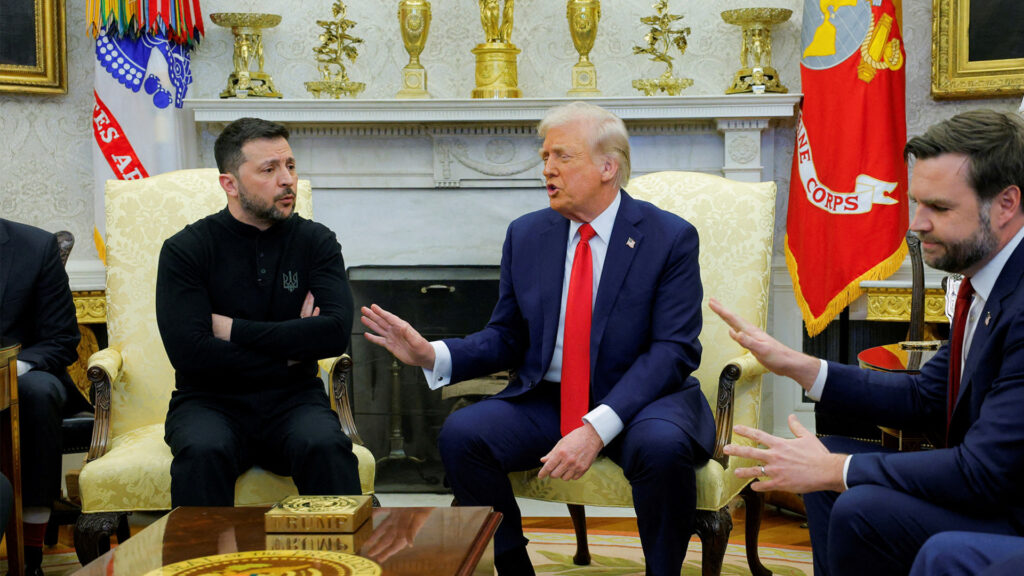
NewsFeed US President Donald Trump cuts talks with Ukrainian President Volodymyr Zelenskyy short after a contentious meeting at the White House. They had been expected to sign a deal for US access to Ukraine’s rare earth minerals. Instead, Zelenskyy left early. Published On 28 Feb 202528 Feb 2025 Adblock test (Why?)
Ramadan Mubarak 2025: Hear greetings in different languages
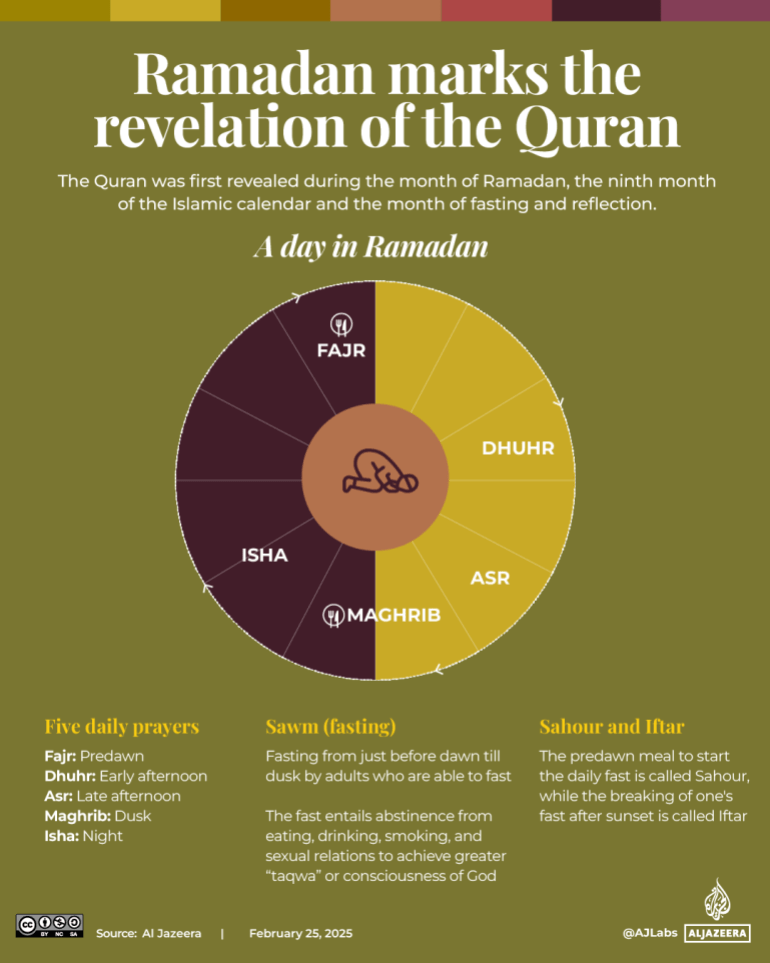
Here is how to wish someone during the holy month of Ramadan in different languages around the world. Following the sighting of the crescent by the moon-sighting committee on Friday, Saudi Arabia has announced that the first day of fasting will be Saturday, March 1. Other countries follow their own moon sightings, and the crescent moon was not sighted in Indonesia, Malaysia, Bangladesh, India, Pakistan and several other countries across Asia making the first day of Ramadan March 2. BREAKING NEWS | The crescent moon has been sighted in Saudi Arabia.Therefore, Ramadhān 1446 will begin tonight. May Allāh ﷻ accept our siyām, qiyām & acts of worship, and may He grant us the ability to utilise the precious moments of this Blessed month to engage in that which… pic.twitter.com/F5HcJou7es — 𝗛𝗮𝗿𝗮𝗺𝗮𝗶𝗻 (@HaramainInfo) February 28, 2025 About 1.9 billion Muslims — almost one-fourth of the world population — observe Ramadan. Indonesia has the largest Muslim population, approximately 240 million, followed by Pakistan (225 million), India (211 million), Bangladesh (155 million), and Nigeria (111 million). Advertisement As the holy month begins, many Muslims are preparing for a period of fasting, reflection, and community. Those observing the fast start their day with a predawn meal, suhoor, and break their fast at sunset with iftar. Why is Ramadan holy? Muslims believe that Ramadan is the month when the first verses of the Quran were revealed to the Prophet Muhammad more than 1,400 years ago. Fasting is one of the five pillars of Islam, along with the Muslim declaration of faith, daily prayers, charity, and performing the Hajj pilgrimage to Mecca if physically and financially capable. Ramadan sayings in different languages The month begins with the sighting of the new moon, often accompanied by an outpouring of greetings to mark the occasion. Many Muslim-majority countries have their own traditional greetings in their native languages. Among the most common sayings are “Ramadan Mubarak” and “Ramadan Kareem”. These are Arabic sayings that translate to “blessed Ramadan” and “generous Ramadan”, respectively. Greetings are not limited to the spoken language. They also extend to sign language and Braille. Some countries have their version of sign language, but placing one hand horizontally across the mouth is common among most to represent fasting. Below is a collection of Ramadan greeting cards that you can download and share. Listen to Ramadan greetings in different languages Adblock test (Why?)