

On a pause from genocide, Israel turns its focus to ethnic cleansing
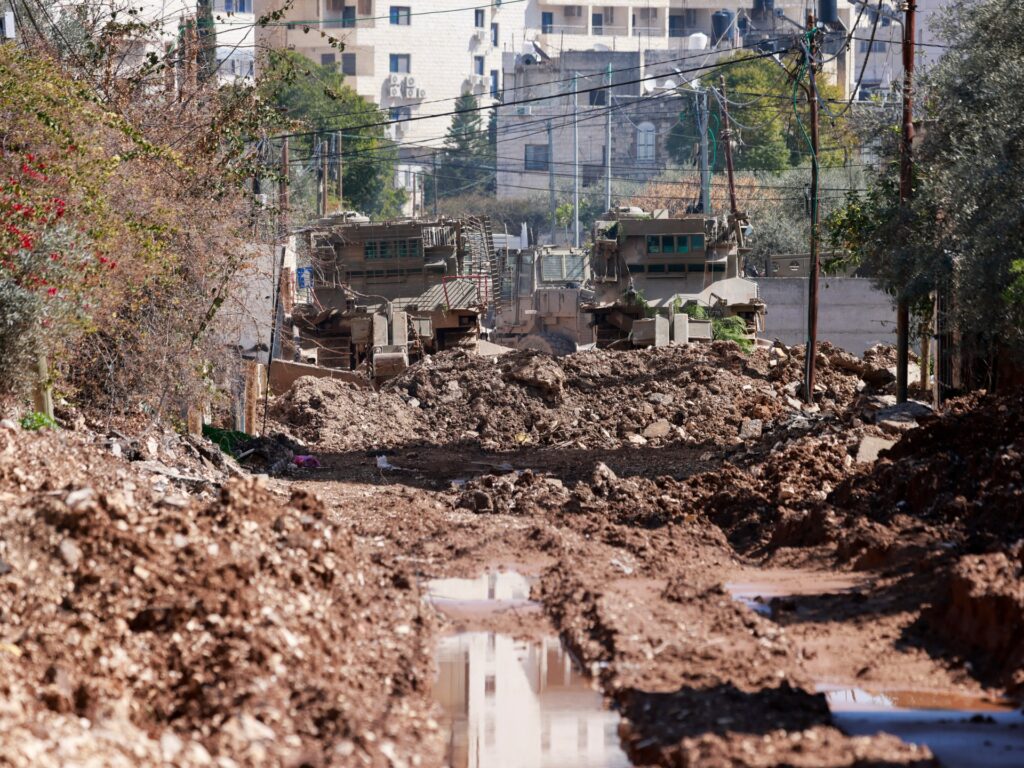
On Sunday, February 23, Israel deployed tanks in the occupied West Bank for the first time in more than two decades. It was the latest in a series of bellicose stunts that escalated in January, in tandem with the implementation of the tenuous ceasefire agreement in the Gaza Strip. Of course, the inherently long-term nature of Israel’s genocidal policy in Gaza means that any ceasefire is inevitably temporary. In the 15-month assault on the Palestinian enclave that began in October 2023, the Israeli military officially killed at least 48,365 Palestinians, the majority of them women and children – although the true death toll is undoubtedly far higher. Most of Gaza’s inhabitants were displaced by the Israeli onslaught, many of them more than once. Now, The Times of Israel reports that more than 40,100 Palestinians in West Bank refugee camps like Jenin have “fled their homes” since January 21, which is “allegedly the largest displacement in the territory since the Six Day War in 1967”. And on Sunday, Israeli Defense Minister Israel Katz instructed the army to prepare for an “extended presence in the cleared camps for the next year, and not to allow the return of residents”. Advertisement Anyway, there’s nothing like ethnic cleansing to pave the way for annexation, the chief fantasy of the Israeli right wing. The thoroughly illegal scheme may also soon be receiving an explicit endorsement from United States President Donald Trump, who remarked in early February: “People do like the idea, but we haven’t taken a position on it yet.” On Monday – one day after Israel’s deployment of tanks in the West Bank and Katz’s de facto ethnic cleansing announcement – the European Union and Israel held the 13th meeting in Brussels of the EU-Israel Association Council, attended by representatives of all 27 EU states and co-chaired by Israeli Foreign Minister Gideon Sa’ar. In theory, the meeting would have been a timely opportunity to call Israel out on mass forced displacement and ongoing slaughter in the West Bank – not to mention, you know, genocide in Gaza. Three days prior to the Brussels rendezvous, Israeli forces fatally shot two Palestinian children in the back near Jenin and Hebron, respectively. Article 2 of the EU-Israel Association Agreement specifies that “relations between the Parties, as well as all the provisions of the Agreement itself, shall be based on respect for human rights and democratic principles.” And it was this article that was invoked in February 2024 by the leaders of Spain and Ireland, who called for a review of whether Israel was violating the agreement’s human rights obligations. But at Monday’s meeting with Sa’ar, it was clear that the EU – Israel’s largest trading partner – was more concerned with preserving its association with a country guilty of all manner of war crimes and crimes against humanity. In the official pre-meeting “note” regarding the EU position, the General Secretariat of the EU-Israel Association Council started by emphasizing that “the EU attaches great significance to its close relations with the State of Israel.” Advertisement A lot more kissing of Israel’s backside ensues throughout the remainder of the 28-page PDF document, with the EU alternately expressing “its full solidarity and support to Israel and its people” and identifying Israel as a “key partner for cooperation” in numerous areas. The note underscores how much the EU “looks forward” to working with Israel to “address global challenges” as well as to “accelerate the world shift to a secure and just food system” – a pretty rich task to assign the folks who were just using starvation as a weapon of war in Gaza. This is not to say that the Europeans have not managed a single critique of Israel in 28 pages. The note takes care to mention that “the EU deeply deplores the unacceptable number of civilians, especially women and children, who have lost their lives” in Gaza; that “the EU recalls that annexation is illegal under international law”; and that “the EU remains gravely concerned about the extensive recourse by Israel to indiscriminate arrests and administrative detention without formal charge.” But any substantive condemnation is ultimately drowned out by the fact that Europe is just so darn excited to cooperate with Israel, now and forevermore. The statement also informs us that “the EU is gravely concerned that the occupation of the Palestinian territory that began in 1967 continues to this day,” and repeatedly reiterates support for a two-state solution. And yet it’s anyone’s guess how, exactly, an end to occupation is supposed to come about, when the state that’s not only doing the occupying but also endeavouring to disappear the Palestinian people is being hailed as an awesome regional partner. Advertisement Speaking to reporters in Brussels, Israeli Foreign Minister Sa’ar defended Israel’s current campaign of forced displacement in the West Bank, which has entailed widespread killing by the army and illegal settlers as well as house demolitions: “It’s military operations taking place there against terrorists, and no other objectives but that.” To be sure, the good old anti-terror excuse never fails to justify Israel’s perpetual terrorisation of Palestinians. At the start of Israel’s West Bank escalation in January, Defense Minister Katz also trotted out the T-word to explain how Israel was now applying “the first lesson from the method of repeated raids in Gaza” by subjecting Jenin to “a powerful operation to eliminate terrorists and terror infrastructure in the camp, ensuring that terrorism does not return to the camp after the operation is over”. Indeed, Israel’s West Bank operations are but an extension of the genocidal approach to Gaza, with mass slaughter and displacement transpiring with full US and European complicity – minus the intermittent lip service paid to Palestinian rights. It remains to be seen whether Trump will now propose a “Dead Sea Riviera” in the West Bank to rival his vision of the “Riviera of the Middle East”, which will supposedly spring forth from the ruins of the Gaza Strip once the US wrests control
How the film I’m Still Here forces Brazil to face a dictatorship’s legacy
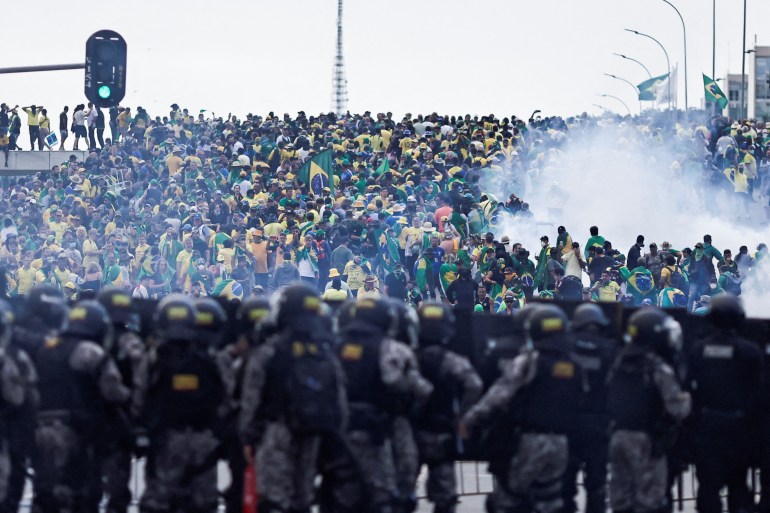
But the film has found resonance in the present as well as the past, as Brazil grapples with the fallout of a modern-day coup attempt. Just last month, President Lula marked the second anniversary of a riot in Brasilia’s Three Powers Plaza, where protesters had hoped to spark another military uprising. Thousands of supporters of former President Jair Bolsonaro descended on the plaza on January 8, 2023, just a week after Lula took office for a third, nonconsecutive term. There, the rioters ransacked the Supreme Court, the National Congress building and the presidential palace in Brasilia, clashing with security officers. Police say the violence was part of a multipronged attempt to oust Lula and return Bolsonaro to power. Security forces stand guard as rioters converge on the presidential palace in Brasilia, Brazil, on January 8, 2023 [Ueslei Marcelino/Reuters] Lucas Figueiredo, a journalist and author of several books about the dictatorship, believes a lack of awareness about the past has allowed many Brazilians to romanticise the era of military rule. “To this day, the military sees itself as having the right to attempt a coup d’etat in the 21st century. This is ample proof that no memory has been built up about those events,” Figueiredo said. A former army captain, Bolsonaro has publicly defended the military dictatorship and expressed nostalgia for that period. During his presidency, from 2019 to 2022, he also gutted the Amnesty Commission and the Special Commission on Political Deaths and Disappearances — two panels designed to document and respond to the human rights abuses of the past. When asked about the film I’m Still Here, Bolsonaro told a Bloomberg reporter, “I’m not even going to waste my time.” Figueiredo believes the fact that no officials were punished for their role in the military dictatorship has helped fuel the present-day turmoil. “This created a dynamic of impunity which favours attitudes like the ones we saw on January 8,” Figueiredo said. A family album picture shows author Marcelo Rubens Paiva during his childhood with his family [Lais Morais/Reuters] But Marcia Carneiro, who teaches history at the Fluminense Federal University, observed that the sense of impunity may be fading, given the push to hold Bolsonaro and his allies accountable. On February 18, Brazil’s top prosecutor, Paulo Gonet, filed charges against Bolsonaro and 33 others, accusing them of plotting to overthrow the government. Bolsonaro could face decades in prison if convicted. “There is a new awareness emerging that those who act against the rule of law can be punished. This is interesting and new in Brazil,” Carneiro said. If Bolsonaro had been in power, Carneiro believes the film I’m Still Here may have been greeted with protests and even attacks. She pointed out that, under Bolsonaro in 2019, protesters launched Molotov cocktails at the headquarters of the comedy group Porta dos Fundos, in the wake of a short Christmas film on Netflix that portrayed Jesus as gay. But even the politics of the film may have blunted some of the right-wing criticisms. I’m Still Here focuses intimately on the power of family, sketching an idyllic home life disrupted by violence. Experts say its emphasis on family dynamics over politics has made it appealing to a wide audience. “Everyone has a family — a mother, a father — and is affected when they see them suffering. Viewers recognise the possibility of something like this happening in their home,” Carneiro explained. Adblock test (Why?)
‘Business is not good’: Vietnam’s floating markets dwindle as economy soars
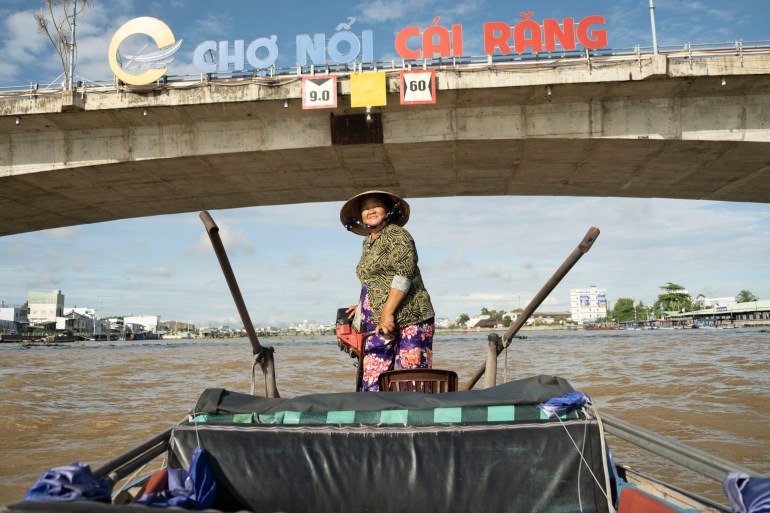
Can Tho, Vietnam – As dawn breaks over Can Tho, the city’s river is filled with the roaring engines of tour boats. In the distance, traditional wooden houseboats emerge through the dim light as the Cai Rang Floating Market comes into view. Cai Rang, and other markets like it, were once among the most recognisable cultural icons of southern Vietnam, with a history dating back to the early 20th Century. Before the development of roads and bridges, the myriad waterways of the delta region were the primary means of trade and transport, leading to the development of floating markets where channels converged. But over the last two decades, the markets have dwindled in size in tandem with Vietnam’s rapid economic development – first gradually, then suddenly – and only two of the region’s 10 major markets retain any significant presence. “When I first visited [Cai Rang] market in 2011, it was much larger,” Linh, a local guide, told Al Jazeera. “Now it’s about a third of that size,” said Linh, who led daily tours to the market up until a few years ago. Advertisement Today, Cai Rang comprises about 200 vessels, fewer than half as many as during its peak in the 1990s. Nearby Phong Dien market has shrunk to fewer than a dozen boats and has largely disappeared from tourist itineraries. Cai Be, a once-thriving market in neighbouring Ben Tre province, is among those that have vanished completely, closing for good in 2021. A tour boat operator navigating the Can Tho River, a tributary of the Hau River, one of the main branches of the Mekong [Oliver Raw/Al Jazeera] Historically the biggest of the delta’s markets, Cai Rang still resembles a decent-sized assembly of boats – at least from afar. On closer inspection, the market looks more sparse. Nowadays, tour boats make up a significant portion of the traffic on the water. Still, the market functions much as it always has, as sampans are loaded up with produce from larger “wholesalers”, which is then brought back to markets on land. For many sellers, the boats double as homes. Daily life is on full display as the boat dwellers wash dishes with water from the river, cook meals over small stoves, or relax in hammocks – often with children and pet dogs in tow. Yet behind the photogenic charm, anxieties linger. “Business is not good,” Phuc, who works at the market selling pineapples to tourists, told Al Jazeera. Sometimes she sells just 10 pineapples a day at 20,000 Vietnamese dong ($0.78) each. “Only in the high season is it possible to make enough money. The rest of the time, we are barely surviving.” Until two years ago, Phuc and her husband worked as wholesalers selling yams. Advertisement Every week for the previous 25 years, they would travel to Long An province, near Ho Chi Minh City, to restock their boat – a process that took several days there and back. But as road infrastructure has improved in the last decade, land-based trade has become faster and more cost-effective, supplanting the need for river-based commerce. “The only people who continue to work here are those who can’t afford to buy a van or a big car [to deliver produce],” her husband, Thanh, told Al Jazeera. A sampan loaded with pineapples, ready for transport to land-based markets [Oliver Raw/Al Jazeera] Tuyen, who works as a wholesaler selling onions, garlic and sweet potatoes, is also downbeat. “Ten years ago, I used to earn good money doing this, but now it’s just enough to get by,” she told Al Jazeera, while preparing a breakfast of fish soup on her boat. “Everything is more difficult now.” Tuyen said the COVID-19 pandemic was a turning point, after which many sellers, unable to make ends meet, switched to working on land. Asked why she did not join them, she pointed to the rental fees for a market spot – about five million Vietnamese dong ($195). On the boat, she has no rent to pay. “I’d prefer to stay on land – it’s more comfortable and convenient – but I don’t have the money,” she said. While improved roads are often cited as the reason for the markets’ decline, other factors have played a part. Many smaller markets have struggled to recover from temporary closures during the pandemic, as health and safety regulations prompted a shift to land-based markets. Advertisement Poor planning has further exacerbated the situation. To address the annual flooding of the Mekong Delta, the authorities have in recent years constructed flood prevention walls along the banks of the Can Tho river, one of its many waterways. While these walls have helped reduce flooding and erosion, the absence of piers has made it harder for river-based trade to continue. Broader cultural shifts also cast a cloud over the future of the floating market. As Vietnam modernises, younger generations are turning their backs on their parents’ trade, seeking better education and career opportunities. “My daughter doesn’t want to work here,” Phuc said. “She prefers to work on her own terms for a company and invest in stocks. She’s not like us – she doesn’t like this life.” A wholesale vendor selling large quantities of yams [Oliver Raw/Al Jazeera] Though vendors may worry about the future, Cai Rang’s survival appears to be of little consequence to the average resident of the nearby city of Can Tho. These days, most people shop in supermarkets and shopping malls and have little reason to visit Cai Rang. “For me, it’s nothing special,” a hotel receptionist, who has visited the market only once, told Al Jazeera, asking not to be named. Yet tourism contributes approximately 6 percent to the city’s economy, with Cai Rang Floating Market the main draw. In 2017, the city welcomed 7.5 million tourists, according to official figures. While arrivals hit 5.9 million in 2023 after dropping off to practically nothing during the pandemic, the numbers remain significantly below their peak. Advertisement Much of this is due to
North Korea says it launched cruise missiles in message to ‘enemies’
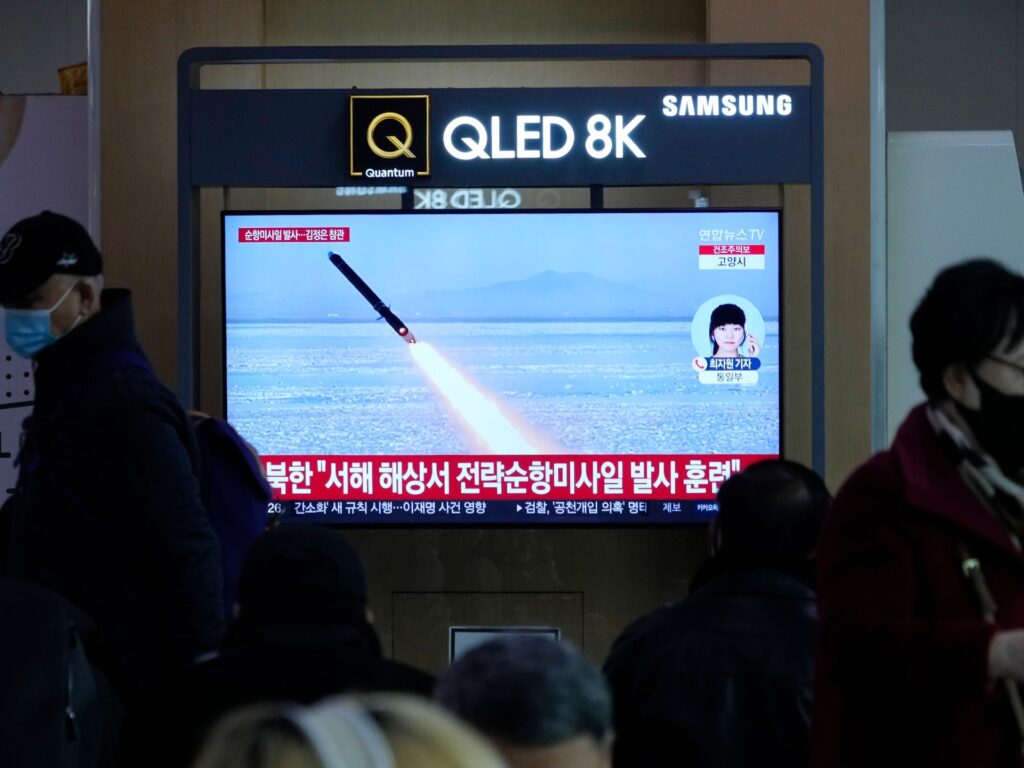
North Korean leader Kim Jong Un oversaw missile drills this week in the Yellow Sea, state media reports. North Korea has carried out test launches of strategic cruise missiles to send a message to “enemies” about its counterattack capabilities, state media has said. North Korean leader Kim Jong Un presided over the missile drills in the Yellow Sea on Wednesday, the Korean Central News Agency (KCNA) said on Friday. South Korea’s Joint Chiefs of Staff confirmed that it had detected and tracked the launches in a statement later in the day. Pyongyang carried out the drills to warn “enemies, who are seriously violating the security environment of the Democratic People’s Republic of Korea and fostering and escalating the confrontation environment”, and to show the “readiness of its various nuke operation means”, KCNA news agency said, using the North Korea’s official name. The missiles precisely “hit the targets” after flying for 130 minutes along a 1,587km-long (986-mile) trajectory, the KCNA said. “Expressing satisfaction over the result of the launching drill, Kim Jong Un said it is a responsible exercise of the DPRK’s war deterrence to continuously test the reliability and operation of the components of its nuclear deterrence and demonstrate their might,” the official mouthpiece said. Advertisement The drills were the fourth such missile launch this year and the second since the inauguration of United States President Donald Trump in January. Trump, who held three summits with Kim during his first administration in an unsuccessful push for Pyongyang’s nuclear disarmament, has expressed his intention to reach out to the North Korean leader during his second term. “I got along with him,” Trump told Fox News host Sean Hannity in an interview in January. “He is not a religious zealot. He happens to be a smart guy.” Adblock test (Why?)
Canada’s Doug Ford wins Ontario election focused on Trump’s tariffs
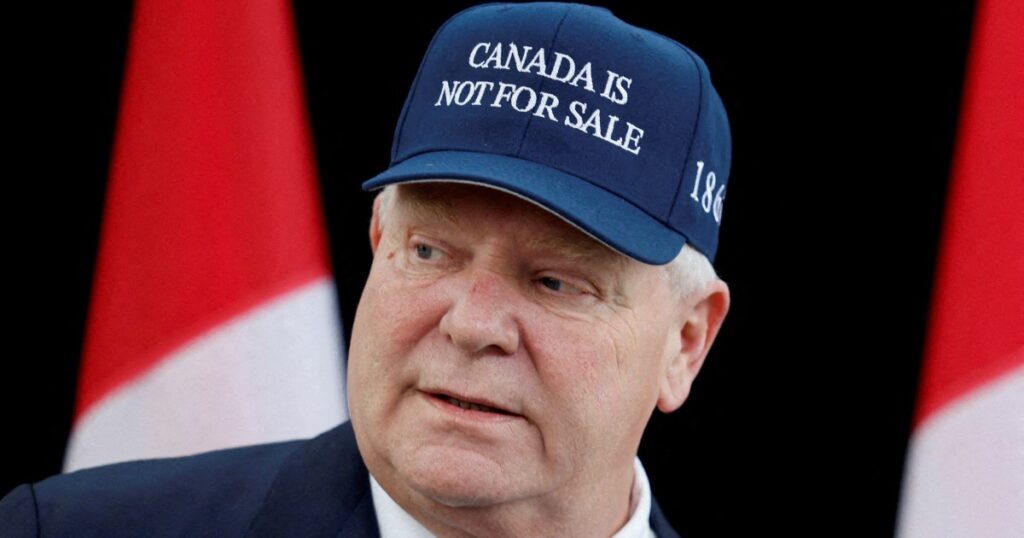
Progressive Conservative Party wins third consecutive majority in vote dominated by trade tensions. Canada’s Ontario province has re-elected Premier Doug Ford’s ruling conservatives in an election heavily focused on trade tensions stoked by United States President Donald Trump. Ford and his Progressive Conservative Party (PC Party) cruised to their third consecutive legislative majority on Thursday after seeking the “largest mandate in Ontario history” to protect the economy of Canada’s most populous province from Trump’s tariffs. The PC Party had won at least 74 seats in the 124-member Legislative Assembly of Ontario and was leading in seven other districts as of Thursday night, according to a tally by the Canadian Broadcasting Corporation. “We’re going to make sure we protect the people of Ontario and protect their families, and their jobs and businesses,” Ford, 60, told CTV News after his win. “I’ll fight tooth and nail against Donald Trump. I’ll promise you that.” Ford, who often sported a “Canada is Not for Sale” hat and styled himself as Captain Canada throughout his election campaign, called the vote more than a year early, arguing that he should have a stronger mandate to navigate years of potential economic chaos under Trump. Advertisement “This is gonna be a battle for the next four years,” Ford said last month as he called the snap election. “I want to make sure I have a strong mandate to outlast President Trump.” During his campaign, Ford twice travelled to Washington, DC, and made numerous appearances on US networks such as Fox News and CNN to lobby against the tariffs and position himself as a spokesman for Canada as a whole. Earlier this week, he said he would impose a tariff on electricity sent from the province to the US if Trump went ahead with his threatened trade measures. Ontario, which surrounds Toronto and is home to about 40 percent of Canada’s population of some 40 million people, is highly dependent on trade with the US. More than 80 percent of Ontario’s exports went to the US in 2023, making it the province most reliant on American consumers after New Brunswick and Alberta, according to an analysis by Scotiabank. Trump, who had agreed to a 30-day pause on his threatened tariffs on Canada and Mexico pending negotiations on border security, said on Thursday that the 25-percent levies would go into effect on March 4. Trump, who has also suggested that the US could absorb Canada as its 51st state, said on Truth Social that he had made his decision as illicit drugs such as fentanyl were continuing to cross the border at “unacceptable levels”. Adblock test (Why?)
Blasts, gunfire kill several at M23 rally in eastern DR Congo

DEVELOPING STORYDEVELOPING STORY, Rebel commander Corneille Nangaa says he is unharmed as video shows dead, wounded people in Bakavu. Explosions have rocked a major city in the eastern Democratic Republic of the Congo (DRC) during a rally for the M23 rebel group and their supporters that one of the armed group’s top commanders attended. The first explosion in Bukavu on Thursday caused panic, sending attendees fleeing from the area before a second explosion rang out, according to the AFP news agency. Residents said the explosions were accompanied by gunfire. People ran through the streets, some bleeding and carrying limp bodies, video showed. Residents said they saw dead people, but there was no immediate information on the number of casualties. The meeting was the first to be attended by M23 commander Corneille Nangaa, leader of the Congo River Alliance, since his forces seized control of the region’s second largest city nearly two weeks ago. Nangaa told the Reuters news agency by phone that neither he nor other senior rebel commanders were wounded in the attack and he blamed DRC President Felix Tshisekedi without providing evidence. There was no immediate comment from the government. Advertisement Bukavu is one of two key cities in the turbulent region seized in recent weeks by antigovernment M23 fighters, who United Nations experts said are backed by Rwanda. The armed group has been trying to demonstrate that it can restore order in the territory it has captured from the DRC’s army and has reopened ports and schools. M23 fighters have swept through the eastern DRC, seizing key cities and killing about 7,000 people. There have also been reports of sexual abuse of children and recruitment of minors as soldiers. The rebel advance has stirred fears of a regional war that could draw in the DRC’s neighbours, including Rwanda. The advance has been described as the gravest escalation in more than a decade of the long-running conflict in the eastern DRC, which is rooted in the spillover of Rwanda’s 1994 genocide into the DRC and the struggle for control of the DRC’s vast mineral resources. Rwanda has said it is defending itself against the threat from a Hutu militia, which it said is fighting with the Congolese military. Adblock test (Why?)
Jailed PKK leader tells group to lay down arms, end conflict with Turkiye
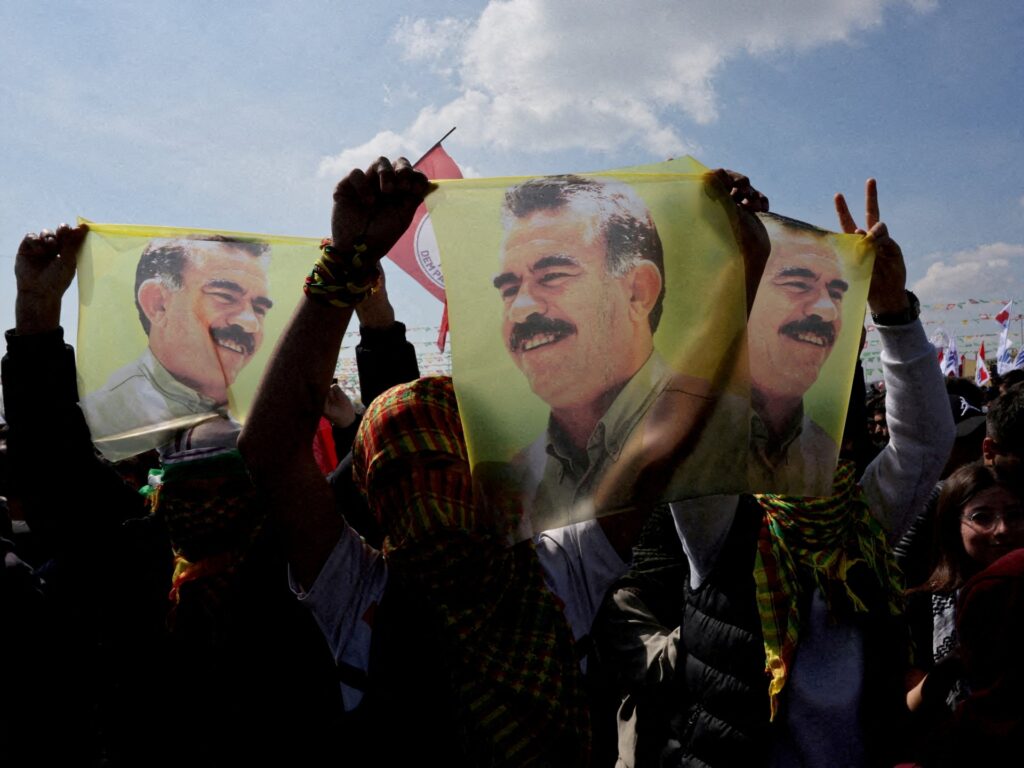
In a historic move, Abdullah Ocalan has asked his party to ‘lay down arms’ and dissolve itself, according to statement. The jailed leader of the Kurdistan Workers’ Party (PKK) Abdullah Ocalan has called on his Kurdistan Workers Party (PKK) to lay down its arms and dissolve itself, a move that could end its 40-year conflict with Turkiye and have an impact on the region. A delegation of Turkiye’s pro-Kurdish DEM Party visited Ocalan on Thursday in his island prison and later delivered his statement in nearby Istanbul. “I am making a call for the laying down of arms, and I take on the historical responsibility of this call,” Ocalan said in a letter made public by DEM party members. Ocalan wants his party to hold a congress and to formally agree to dissolve itself, they quoted him as saying. “Convene your congress and make a decision. All groups must lay their arms and the PKK must dissolve itself,” Ocalan said, according to the statement. The PKK is deemed a terrorist organisation by Turkiye and its Western allies. More than 40,000 people have been killed since the PKK launched its fight in 1984 with the aim of carving out an ethnic homeland for Kurds. It has since moved away from its separatist goals and instead sought more autonomy in southeast Turkiye and greater Kurdish rights, but groups affiliated with the PKK have continued to carry out sporadic attacks in Turkiye. Advertisement The appeal from Ocalan could have implications for the major oil-exporting region of northern Iraq, where the PKK is based, and for neighbouring Syria, which is emerging after 13 years of civil war and the ouster in December of Bashar Al-Assad. A Turkiye-PKK peace process collapsed a decade ago. Ocalan’s momentous announcement is part of a new effort for peace between the group and the Turkish state, which was initiated in October by President Recep Tayyip Erdogan’s coalition partner, Devlet Bahceli. The nationalist politician suggested that Ocalan could be granted parole if his group renounces violence and disbands. Adblock test (Why?)
Longest held Palestinian prisoner released by Israel

NewsFeed Nael Barghouti, the longest held Palestinian prisoner who spent 44 years in an Israeli jail, was released and exiled to Egypt as part of the 7th prisoner-captive exchange between Israel and Hamas. This is his message to Gaza. Published On 27 Feb 202527 Feb 2025 Adblock test (Why?)
Real Madrid win marred by more racism directed towards Vinicius Junior
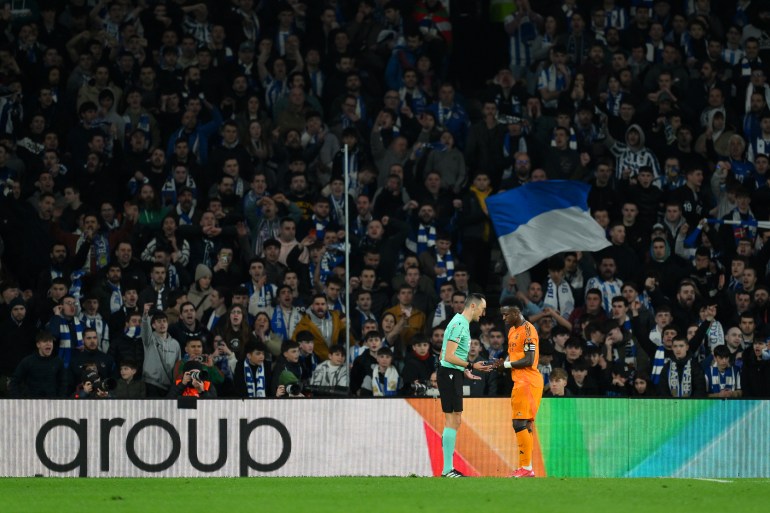
Real Madrid secured a 1-0 win at Real Sociedad in a Copa del Rey semifinal first-leg clash marred by further racist abuse of Brazilian international Vinicius Junior. Fellow Brazil forward Endrick scored the only goal of the game in the first half at Reale Arena in San Sebastian in the north of Spain. However, there was controversy just before half-time when the match was paused because of chants of “Asencio die” being aimed at Real Madrid defender Raul Asencio. A video subsequently emerged on social media of a Real Sociedad fan appearing to make monkey gestures at Vinicius Junior while the game was stopped. Vinicius Junior of Real Madrid spoke to referee, Jose Maria Sanchez Martinez, in front of Real Sociedad fans before the game was temporarily halted [David Ramos/Getty Images] Fans have aimed the chant at 22-year-old centre-back, Asencio, at various stadiums in recent weeks, but this was the first time the match has been stopped. Asencio is alleged to have shared a sexually explicit video of a minor recorded by two former Real Madrid youth players and is under investigation by a Spanish court. The match was stopped just before half-time after Vinicius reported the chants against Asencio to the referee. “Vinicius spoke to the referee, the referee stopped the game, he applied the protocol, that was what had to happen,” Real Madrid coach Ancelotti told reporters. Advertisement The coach substituted the defender at halftime for Lucas Vazquez. “I took him [Vinicius Jr]off because of two things, he was affected, and he had a yellow card, so I preferred to take him off,” explained Ancelotti. “I think nobody likes that a stadium chants for you to die. I think he was affected in that sense. He wasn’t exactly happy, I preferred to take him off in case how he was feeling could affect the game.” Real Sociedad forward Mikel Oyarzabal added: “The insults should be condemned, we don’t like them … there are other ways to condemn the actions that others may have committed. We don’t think this is the right way.” Real Sociedad’s LED board stated, ‘No to racist, xenophobic and intolerant chants. Encourage and support the team while respecting the rival,’ following an incident involving Vinicius Junior [not pictured] and fans in the first half [David Ramos/Getty Images] The images of the racist abuse aimed at Vinicius were quickly recirculated online, while with the match delayed, Sociedad posted a message on the big screen inside the stadium saying: “No to racist, xenophobic and intolerant chants. Encourage and support the team while respecting the rival.” Vinicius has long been a target of racist abuse in Spanish football. In October, four people were arrested and questioned in Spain on suspicion of conducting an online hate campaign against the 24-year-old. In June last year, three Valencia fans were each sentenced to eight months in prison for hate crimes against the forward. It was a landmark case as they were the first convictions for racist insults in a football stadium in Spain. Advertisement Spanish and European champions Madrid will entertain Sociedad in the second leg on April 1 at their Santiago Bernabeu stadium for the right to meet either Barcelona or Atletico Madrid in the final. Endrick’s 19th-minute strike, finishing with the outside of his boot after racing on to Jude Bellingham’s diagonal ball, was enough to claim the first tie. Madrid were without French superstar Kylian Mbappe after a dental problem as well as Fede Valverde and Thibaut Courtois. Ancelotti chose to rotate his side further ahead of the visit to face Real Betis in LaLiga on Saturday – and next week’s Champions League last 16 clash against Atletico Madrid – by making seven changes in total from Sunday’s 2-0 win against Girona. Real Madrid’s Endrick scored the only goal of the game [Vincent West/Reuters] Despite his many replacements, including starts for Arda Guler, Fran Garcia and Eduardo Camavinga, Madrid put on a solid showing. Endrick sent Los Blancos ahead when Bellingham sent the 18-year-old attacker in on goal. After taking one touch to control, with his second Endrick stroked home stylishly at the near post. It was his sixth goal of the campaign, four of those coming in the Copa del Rey, where Ancelotti has given him the most chance to shine. Bellingham, who missed Madrid’s win at the weekend through suspension, looked refreshed and helped his side stay largely on top. Referee Jose Maria Sanchez Martinez, left, Real Madrid’s head coach Carlo Ancelotti, centre, Real Sociedad’s head coach Imanol Alguacil, right, spoke immediately after the incident reported by Vinicius Junior [Miguel Oses/AP] Vinicius came close with a low shot which Alex Remiro tipped to safety. Madrid goalkeeper Andriy Lunin made a fine double save early in the second half to keep Mikel Oyarzabal and Takefusa Kubo at bay. Advertisement Madrid came close to a second at the other end when Endrick crashed a shot against the bar from the edge of the box. Remiro produced a fine save to push away Bellingham’s deflected strike and then another to thwart the same player from long range in the final stages, keeping Real Sociedad’s hopes of a second-leg comeback alive. In the other semifinal first leg on Tuesday Atletico Madrid fought back to draw 4-4 with record 31-time cup winners Barcelona. Adblock test (Why?)
Pakistan vs Bangladesh – Champions Trophy: Match start time, teams, stream
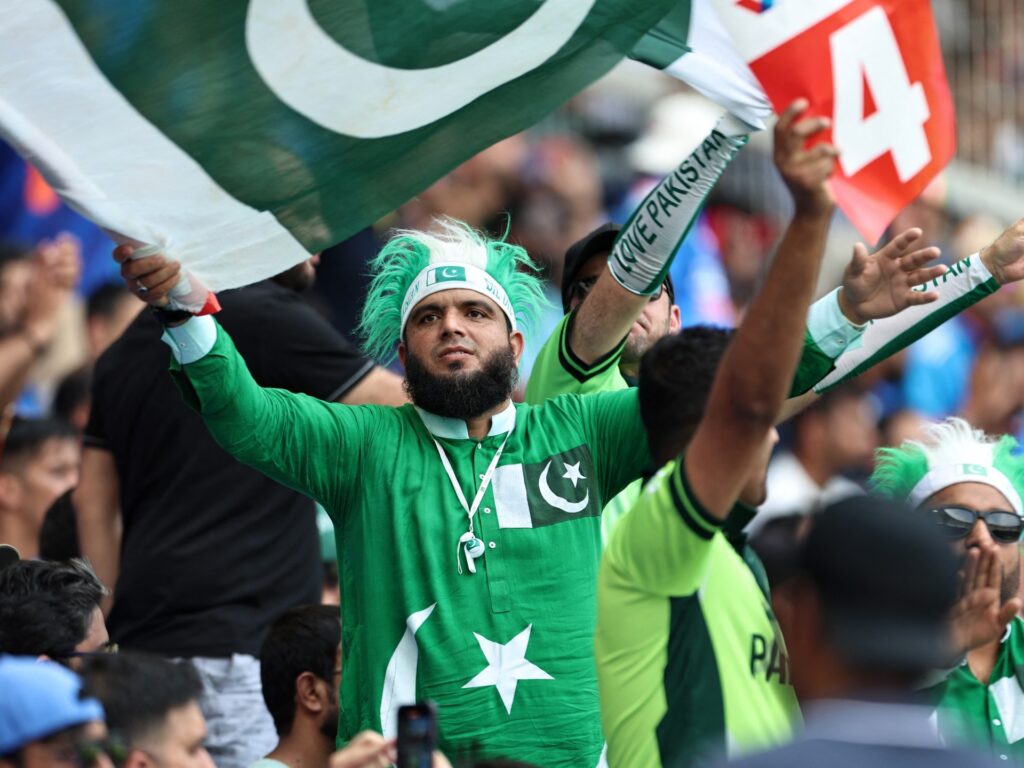
Who: Pakistan vs BangladeshWhat: ICC Champions Trophy Group A matchWhen: Thursday, February 27 at 2pm (09:00 GMT)Where: Rawalpindi Cricket Stadium, Rawalpindi, PakistanFollow Al Jazeera’s live text and photo commentary stream from 05:00 GMT. Pakistan’s hurting players will be motivated by pride in their dead rubber against Bangladesh, head coach Aaqib Javed said, after the hosts were dumped out of the Champions Trophy in the group stage. The defending champions’ hopes of reaching the semifinals were ended after defeats to New Zealand and India, leaving their final Group A game in Rawalpindi inconsequential. Rain washed out the Australia-South Africa Group B match on Tuesday and more is predicted on Thursday, leaving Pakistan in danger of finishing fourth and last on net run-rate. Whatever happens, it will be a disappointing conclusion to Pakistan’s first hosting of a major international cricket competition in three decades. “There are no excuses, there shouldn’t be any in life, but I can assure you that the players are more hurt than the fans and want to leave a mark in the last game,” said Aaqib on Wednesday. Advertisement “The players are not satisfied, no one is satisfied after losing, but everyone tries hard to win, and by doing so, we have recently won a series in Australia and South Africa.” Pakistan beat Australia 2-1 in November – their first ODI series win there for 22 years – before whitewashing South Africa 3-0 in the build-up to the Champions Trophy. “This is the Champions Trophy, where the eight best teams are playing, so after two defeats we have to start from zero,” said Aaqib. “Every game is played for pride, so we want to leave a mark on Thursday,” said Aaqib. Their Champions Trophy flop left former Pakistan players and fans angry over the continuous failure of the team, having also crashed out of the 2023 World Cup and Twenty20 World Cup last year, both in the first round. Aaqib admitted losing to archrivals India left fans emotional. “People are more involved in an India-Pakistan match and they do not accept a defeat against India and that defeat in Dubai has left them more dejected,” said Aaqib. Pakistan were below par against a formidable India in Dubai on Sunday, losing by six wickets. “We managed just 241 in batting and when facing a strong batting line-up, you attack in order to get wickets, and in the process, you bowl on both sides,” said Aaqib. A fast bowler himself, who played 22 Tests and 163 ODIs for Pakistan, Aaqib backed his struggling pace trio. “People blamed two, three players, which is not correct,” said Aaqib. “If you assess Shaheen [Afridi], Naseem [Shah] and Haris [Rauf], they are still the best bowlers in the world.” Advertisement Pakistan vs Bangladesh: Head-to-head record In terms of match results, Pakistan hold an upper hand over their South Asian opponents in all formats of the game. In ODIs, the hosts have beaten Bangladesh in 34 of their 39 encounters with the last one coming at the World Cup 2023 in India. Bangladesh’s first of five wins came at the World Cup 1999 in England, where they famously beat the mighty Pakistan side of the 1990s in the group stage. The teams have never faced each other in the Champions Trophy’s eight previous editions. Form guide: Pakistan The hosts came into the tournament on the back of three ODI series wins but swiftly left the form behind to lose their first two group matches. From their misfiring batting lineup to poor fielding and below-par bowling, not much has gone Pakistan’s way in the tournament. Last five ODIs: L W L L L Forum guide: Bangladesh Bangladesh’s form in ODI cricket has been abysmal of late, with the Tigers losing all three matches away to West Indies in December on the back of a 2-1 series loss against Afghanistan in November. Last five ODIs: L L L L L Team news: Pakistan Pakistan could opt to make a couple of changes in their lineup for their last group match as it is inconsequential to their fate in the tournament. Middle-order batter Tayyab Tahir could lose his spot to Kamran Ghulam, while the hosts may also be tempted to slot in Usman Khan for Imam-ul-Haq. Squad: Mohammad Rizwan (captain, wicketkeeper),Salman Ali Agha (vice captain), Babar Azam, Imam-ul-Haq, Kamran Ghulam, Saud Shakeel, Tayyab Tahir, Faheem Ashraf, Khushdil Shah, Usman Khan, Abrar Ahmed, Haris Rauf, Mohammad Hasnain, Naseem Shah, Shaheen Shah Afridi Advertisement Team news: Bangladesh Bangladesh are expected to field the same XI that faced New Zealand on Monday. Squad: Najmul Hossain Shanto (captain), Mushfiqur Rahim (wicketkeeper), Towhid Hridoy, Soumya Sarkar, Tanzid Hasan, Mahmudullah, Jaker Ali, Mehidy Hasan Miraz, Rishad Hossain, Taskin Ahmed, Mustafizur Rahman, Parvez Hossain, Nasum Ahmed, Tanzim Hasan, Nahid Rana Adblock test (Why?)