

Trump threatens 25% tariffs on EU, claims bloc was formed to ‘screw’ US
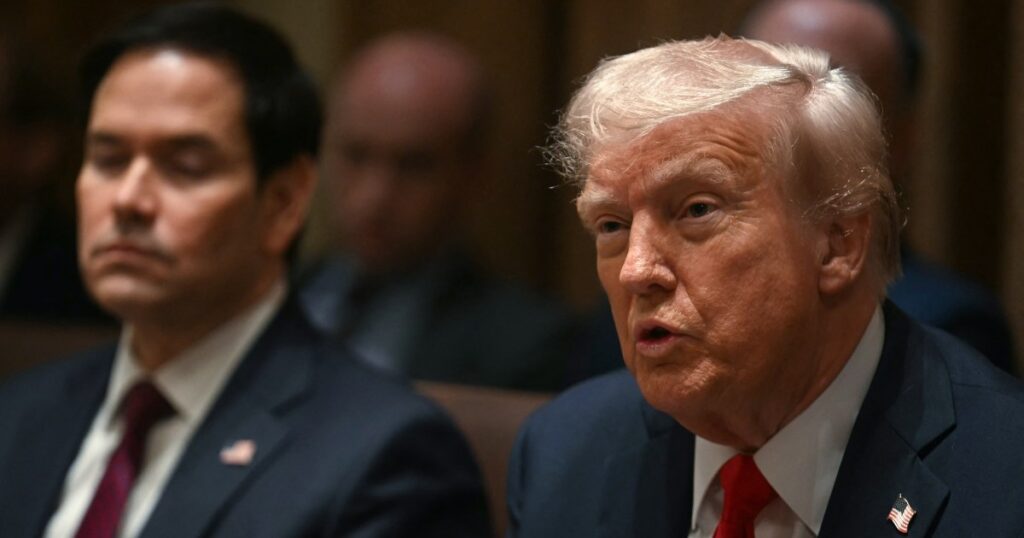
European Commission says it will react ‘firmly and immediately’ against unjustified trade barriers. United States President Donald Trump has said he will impose a 25 percent tariff on imports from the European Union, claiming that the bloc was created to “screw” his country. Speaking at the first meeting of his cabinet on Wednesday, Trump said a decision on tariffs had been made and would be announced “very soon”. “It’ll be 25 percent, generally speaking,” Trump told reporters. “And that’ll be on cars and all other things.” Returning to his regular talking point that the US is treated unfairly in trade, Trump claimed that the 27-member union does not accept US cars and farm products while the US takes “everything from them”. The EU currently imposes a 10 percent tariff on US vehicle imports, which is four times the tariff applied by the US to European passenger car imports. The US, however, applies a 25 percent tariff to imported pick-up trucks. “Look, let’s be honest, the European Union was formed in order to screw the United States,” Trump said. “That’s the purpose of it, and they’ve done a good job of it.” Advertisement Trump’s comments drew a swift response from the European Commission, the bloc’s executive arm, which said the world’s largest single market area had been “a boon” for the US. “The EU will react firmly and immediately against unjustified barriers to free and fair trade, including when tariffs are used to challenge legal and non-discriminatory policies,” a spokesperson said. “The EU will always protect European businesses, workers and consumers from unjustified tariffs.” Carl Bildt, Sweden’s prime minister from 1991 to 1994, said on X that Trump had a “seriously distorted” view of history and that the EU had been actually set up to “prevent war on the European continent”. Trump’s latest trade salvo comes amid heightened tensions between Washington and Brussels over his administration’s “America First” approach to international affairs. On top of stoking trade tensions, Trump has prompted concern about his commitment to Europe’s security and the future of the North Atlantic Treaty Organization (NATO) with his outreach to Russian President Vladimir Putin and verbal attacks on Ukrainian President Volodymyr Zelenskyy. With Trump pledging to bring a swift end to the war in Ukraine, officials in Kyiv and Brussels fear that the US president is inclined towards striking a peace deal that heavily favours Russia, including by letting Moscow keep Ukrainian land it seized during its invasion. On Monday, Germany’s chancellor-in-waiting Friedrich Merz said his country must achieve “independence” from the US because “Americans, or at least this portion of the Americans … care very little about the fate of Europe.” Advertisement Merz, who is seeking to form a coalition government after his Christian Democratic Union-Christian Social Union (CDU/CSU) alliance won the most seats in parliamentary elections on Sunday, said he was not sure that NATO would exist in its current form by the middle of this year, “or whether we will have to establish an independent European defence capability much more quickly”. In an interview with Fox News on Wednesday, US Secretary of State Marco Rubio sought to assuage concerns about NATO’s future while calling on European governments to invest more in their own defence. “My reaction is NATO is not in jeopardy. The only thing that puts NATO in jeopardy is the fact that we have NATO Allies who barely have militaries or whose militaries are not very capable because they’ve spent 40 years not spending any money on it,” Rubio said when asked about Merz’s comments. “These are rich countries, especially in Western Europe,” Rubio added. “They have plenty of money. They should be investing that in their national security, and they’re not.” Adblock test (Why?)
Rwanda slams UK sanctions over DR Congo violence
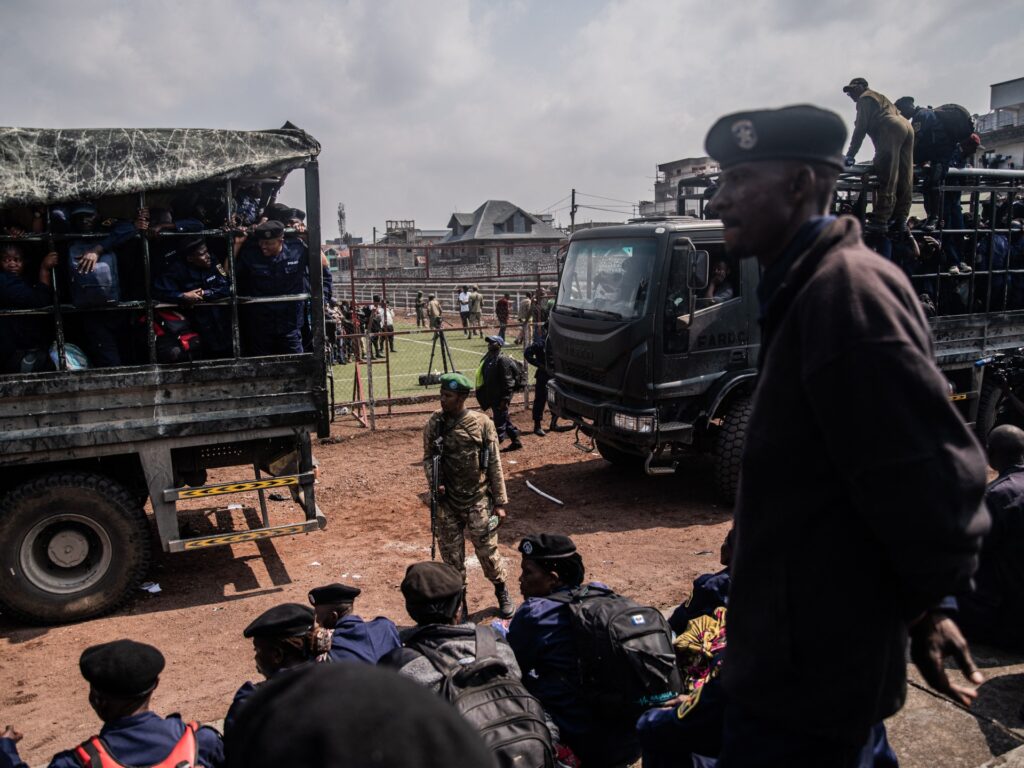
Kigali condemns London’s sanctions over the M23 advance in DR Congo as ‘punitive measures’. Rwanda has said international sanctions will reduce the likelihood of peace with M23 rebels in the Democratic Republic of the Congo (DRC), after the United Kingdom said it would pause some bilateral aid and impose other diplomatic sanctions on Kigali. “The punitive measures announced today by the UK government in response to the conflict in eastern DRC – where the UK has now clearly chosen a side – are regrettable,” Rwanda’s Ministry of Foreign Affairs said in a statement on Tuesday. “The measures do nothing to help the Democratic Republic of Congo, nor do they contribute to achieving a sustainable political solution to the conflict in eastern DRC.” The UK said the measures on Kigali would remain in force until there was significant progress in ending hostilities and a withdrawal of all Rwandan soldiers from Congolese territory, estimated by the United Nations to number several thousand. Rwanda denies providing arms and troops to M23 and says its forces are acting in self-defence against the Congolese army and groups hostile to Kigali. Advertisement M23 has seized large swaths of the mineral-rich eastern DRC, including the main cities of Goma and Bukavu, in a conflict that has displaced about half a million people since January. The diplomatic sanctions undertaken by the UK include ending high-level attendance at events hosted by the government of Rwanda and limiting trade promotion activity. In a statement, it said it would also coordinate with partners on potential new sanctions, suspend future defence training assistance and review export licences for the Rwandan Defence Force. Direct bilateral financial aid would be put on hold, excluding support to the poorest and most vulnerable. “Rwanda may have security concerns but it is unacceptable to resolve these militarily. There can only be a political solution to this conflict,” a UK government spokesperson said. “We encourage DRC to engage with M23 as part of an inclusive dialogue. We will continue to keep our policy under review.” UK Foreign Secretary David Lammy met last week with Rwandan President Paul Kagame in Kigali and DRC President Felix Tshisekedi in Kinshasa. A UK government spokesperson said Lammy had “been clear that there would be a strong response from the international community in response to the escalating conflict”. Similarly, the US Department of the Treasury last week imposed sanctions on a Rwandan government minister and a senior member of an armed group for their alleged role in the conflict. It said Rwanda’s Minister of State for Regional Integration James Kabarebe was being targeted because he is “central to Rwanda’s support” for the M23 armed group. Advertisement The US sanctions also targeted Lawrence Kanyuka Kingston, a senior member and spokesperson for the Congo River Alliance – which includes the M23 – and two companies he controls in the UK and France. Adblock test (Why?)
Echoes of Water: Morocco | Africa’s New Directions

Morocco tackles pressing water scarcity through a blend of ancient and modern solutions. Morocco has always had water supply challenges, and they are becoming more urgent. It has set out to integrate ancient and modern water management techniques to combat water scarcity and ensure sustainability, but there are technical, financial and logistical limitations. Villagers with innovative solutions contrast with the government’s large-scale interventions. Can Morocco reduce its water dependency and become self-sufficient in the face of environmental challenges? Adblock test (Why?)
Were noncitizens on ‘terror’ list ‘let loose’ in the US? It’s complicated
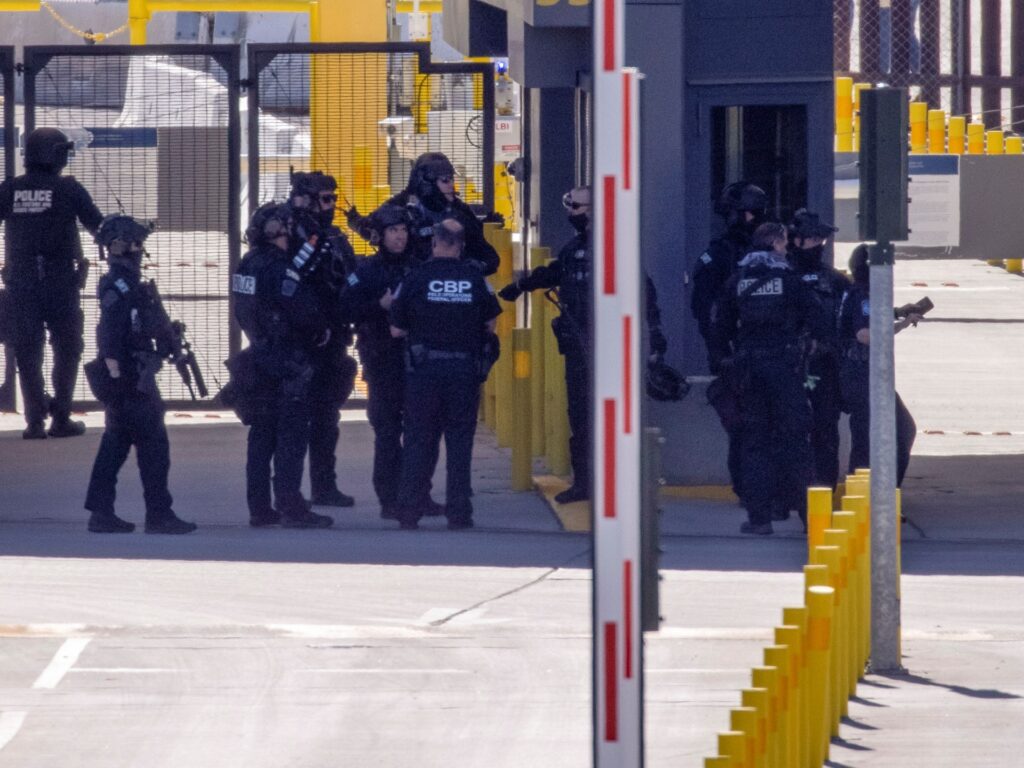
A United States House Judiciary Committee report says 99 noncitizens on the “terrorist watchlist” were released in the country. Is this true? Claudia Tenney, a member of the US House of Representatives, recently claimed that people on the watchlist were “let loose” in the US. The claim came as part of her argument against New York state’s law that grants driver’s licences to New Yorkers regardless of their immigration status. “New York is one of the worst,” the Republican representative said on Fox News. “We had almost 99 people I think, or 100 people, on the terror watchlist just let loose. That’s the ones we know of.” Tenney, whose congressional district includes more than a dozen counties along the shores of Lake Ontario, which shares borders with Canada, also claimed that people who appear on the list can get licences. We will focus on her claim that 99 or 100 immigrants who appear on the “terror watchlist” were “let loose”. What does US CBP data show? US Customs and Border Protection (CBP) officers encounter citizens and noncitizens at the border who have “terrorism-related” records, including those from the government’s Terrorist Screening Dataset. This list contains names of people who are known or suspected to have ties to “terrorism”, though critics say the list is overly broad, containing two million names. It contains not just suspicious people, but also people connected to them. Advertisement Noncitizens who try to cross the border at land ports of entry and match a “terrorism” record “are most commonly found inadmissible to our country and immediately repatriated or removed”, according to CBP. They could also be turned over to another government agency for enforcement action. If CBP officers encounter them after they have entered the country without being screened, “these noncitizens are most commonly detained and removed or turned over to another government agency for subsequent detention and law enforcement action, as appropriate”. Data from fiscal year 2024, which ended on September 30, shows that there were 410 encounters with all people who matched in ‘terrorism’ records, which could include US citizens, at ports of entry. “Encounters” could represent multiple attempts by the same person to cross the border. This represents a small fraction of the 2.9 million total enforcement encounters at the border that year. Since 2022, most of these encounters occurred at the US-Canada border. In 2024, 358 of these encounters occurred at the northern border and 52 at the southwest border. The agency also tracks encounters between ports of entry of noncitizens who match a “terrorism” record. There are far fewer of these, just 106 in the year that ended September 30, with 103 of those at the southwest border, and 13 from October 1 to January, all at the southwest border. We contacted Tenney’s office to get evidence for her claim, but received no response. What’s the basis for Tenney’s claims? It is likely that Tenney’s source is a report released in August from the Republican-led House Judiciary Committee, chaired by Representative Jim Jordan of Ohio. The report cited “information provided” by the US Department of Homeland Security (DHS). However, it did not supply any other corroboration or details. It states at least 99 noncitizens who were matches on the “terrorist watchlist” were released into the US from 2021 to 2023. Advertisement An additional 34 immigrants from the list were in DHS custody. The report uses language to suggest that immigration authorities knew at the time of release that the noncitizens were on the list. The report states the 99 came from a pool of 250 noncitizens who tried to cross at the southern border and who were identified as being on the list. CBP statistics show 250 encounters with people on the watchlist during the years 2021 through 2023 at the southern border. There could be multiple encounters with the same person in those statistics. The report notes other instances in which people on the list crossed undetected and were subsequently arrested, including the case of eight Tajik nationals with potential ties to the ISIL (ISIS) group who entered the country and were arrested in June. Their possible “terror” ties were not known when they crossed the border, according to NBC News. A similar case involved an Uzbek man who stayed for two years without detection. Other examples involve migrants whose place on the watchlist was initially unverified. The report also claims that immigration judges granted bonds to 27 migrants who appeared on a “terrorist watchlist” but came over the border between ports of entry from 2021 to 2023. However, the judges might not have known about the migrants’ status on the list, the report states. Four others on the list were granted asylum. A Venezuelan citizen who was known by authorities to appear on the watchlist was released into the US over concerns about COVID-19 in detention facilities, according to government documents a reporter obtained. Advertisement CBP referred our questions about the report’s veracity to DHS, which did not respond to our inquiries. So what’s the truth behind the claims that people on the ‘terror watchlist’ were released in the US? Migrants with possible “terror” ties have been in the news recently. There have also been at least two other reported cases where migrants should have been detained because they were on the “terrorist watchlist” but were not. NBC News reported in April about an Afghan migrant who was on the watchlist and released. He was arrested a year later in Texas, hours after the NBC report. The man was not held initially because border agents did not have enough information to corroborate his place on the list, the network reported. The Daily Caller reported in 2024 about the release of a migrant whose name did not match a name on the watchlist. He was arrested nearly a year later, two days after authorities confirmed his ties to a Somali “terrorist” group. A counterterrorism expert told PolitiFact that there is no credible reporting that any kind of state, local, or
Counting the climate cost of AI
[unable to retrieve full-text content] What’s the hidden climate cost of AI?
Video: Military plane crashes in Sudan
[unable to retrieve full-text content] Sources in Sudan say several people have been killed after a military plane crashed into a residential area.
Israel bombs ‘military targets’ in southern Syria, outside Damascus
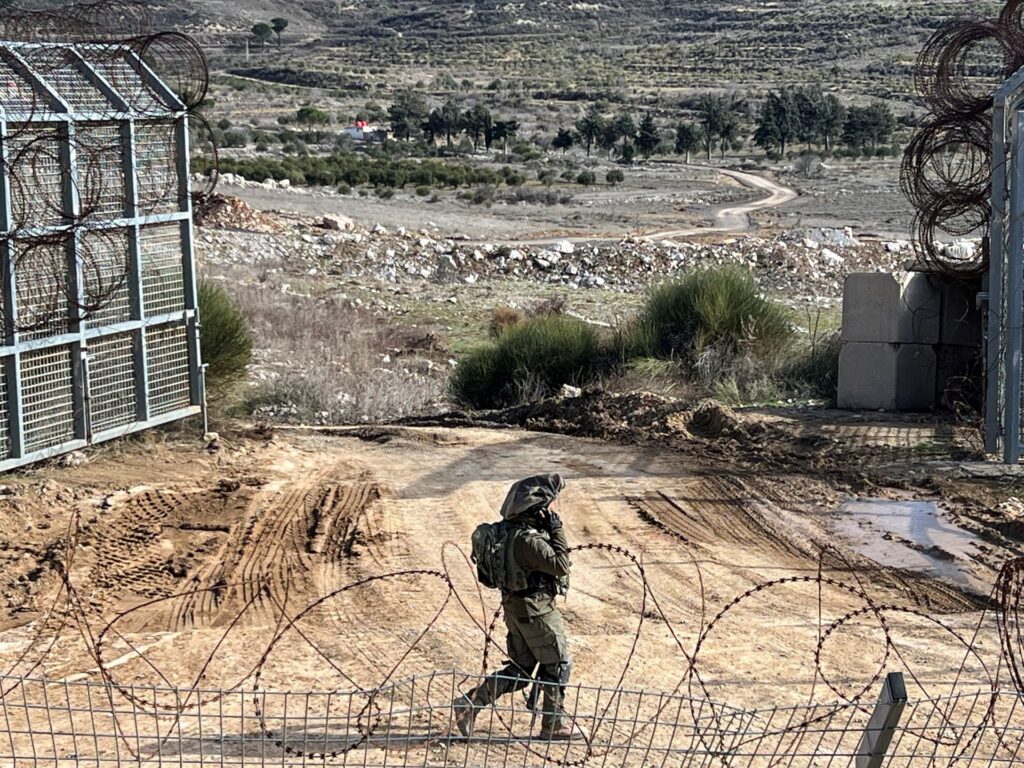
The Israeli military conducts air raids on what it described as military bases and command centres. The Israeli military has conducted air raids targeting what it described as military bases and command centres in southern Syria and outside the capital, Damascus. Israeli warplanes hit the town of Kisweh, approximately 20km (12 miles) south of Damascus, as well as the southern province of Deraa late on Tuesday, residents, security sources and local broadcaster Syria TV said. The Israeli army said it struck “military targets in southern Syria, including command centres and multiple sites containing weapons”, without specifying exact locations. Residents of Damascus reported hearing the sound of planes flying several low passes over the capital and a series of blasts. “The Air Force is attacking strongly in southern Syria as part of the new policy we have defined of pacifying southern Syria – and the message is clear: we will not allow southern Syria to become southern Lebanon,” Defence Minister Israel Katz’s spokesperson said in a statement. “Any attempt by the Syrian regime forces and the country’s terrorist organisations to establish themselves in the security zone in southern Syria will be met with fire,” the statement added. Advertisement The bombardment came hours after Syria condemned Israel’s incursion into the country’s south and demanded it withdraw, according to the closing statement of a national dialogue summit. The summit, organised by Syria’s new government, aimed to outline the country’s political roadmap after the toppling of President Bashar al-Assad in December. Israel moved forces into a United Nations-monitored demilitarised zone within Syria after al-Assad’s removal, a move that violated the 1974 disengagement agreement with Syria. On Sunday, Prime Minister Benjamin Netanyahu called for the “demilitarisation” of southern Syria, saying Israel “will not allow the new Syrian army to move into territory south of Damascus”. Palestinian group Hamas condemned the air strikes in the “strongest terms”, calling them “a blatant attack on Syrian sovereignty” and a continuation of Israel’s aggression against Arab nations. The attacks complicate efforts by Syria’s new administration to reunify the country, said Qutaiba Idlbi, a resident senior fellow for Syria at the Atlantic Council. He said the air raids coincided with the national dialogue summit on Syria’s political transition, which has already faced challenges, particularly in negotiations with the Druze community in the south and the Kurdish-led Syrian Democratic Forces in the northeast. “The strikes on Damascus are only going to serve to delay such agreement, as the powers in northeast and southern Syria will feel more empowered to seek deals and perhaps military support from external actors to increase their leverage in negotiations with Damascus,” Idlbi told Al Jazeera. Advertisement Adblock test (Why?)
US judge issues deadline for Trump administration to pay foreign aid funds
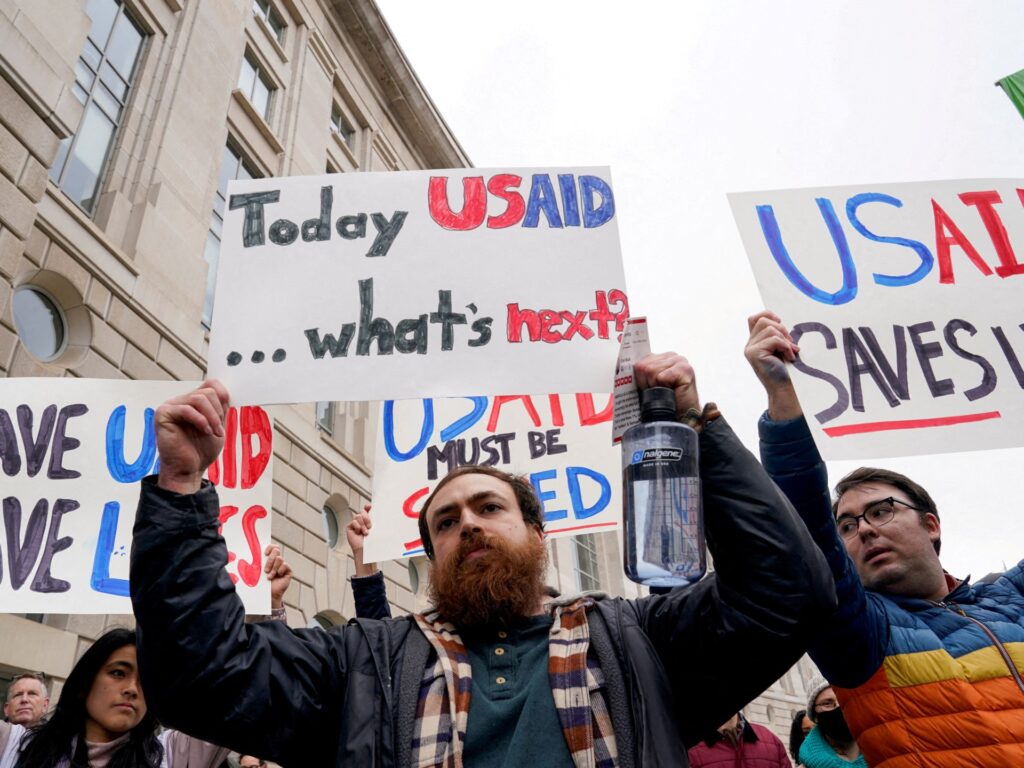
The judge said that the administration had failed to comply with earlier orders that the funds be unfrozen. A federal judge has ordered the administration of US President Donald Trump to pay foreign aid funds to contractors and grant recipients by the end of Wednesday. The order marks the third time the judge in the case, Amir Ali, has ruled that officials must release funds that were frozen after Trump ordered a 90-day pause on all foreign aid. In Tuesday’s ruling, Judge Ali noted there is no indication the administration has taken any steps to comply with his earlier orders. The plaintiffs in the lawsuit — which include nonprofits and businesses with government contracts — have argued they may have to shutter their organisations if the agreed-upon funds are not paid. They also allege that the administration has violated federal law and the United States Constitution by refusing to pay out the funds, which were allocated by Congress. The complaint also points out that the dismantling of the US Agency for International Development (USAID) might run afoul of the constitutional separation of powers, since Congress created the independent agency in 1961. Advertisement The court order applies to payments for work done before February 13, when the judge issued the earlier temporary restraining order. On Sunday, USAID said that all of its staff, except certain essential workers, would be put on paid administrative leave starting on Sunday. In addition, 1,600 positions were eliminated. “Individuals that are impacted will receive specific notifications on February 23, 2025, with further instructions and information about their benefits and rights,” a notice from the Trump administration said the next day. Led by tech billionaire Elon Musk’s Department of Government Efficiency (DOGE), the Trump administration has moved to effectively dismantle the agency. Musk — who has called USAID a “criminal organisation” and a “viper’s nest of radical-left Marxists who hate America” — has claimed the agency is rife with waste and fraud and pursues an ideological agenda. Former USAID officials and humanitarian workers have condemned Trump’s move, warning that the demise of the aid agency will harm millions of vulnerable people worldwide and weaken US soft power. “Eliminating US unique response capacity of crisis experts who help contain disease outbreaks, stabilise displaced populations – a shortsighted, high risk and frankly, stupid act,” Marcia Wong, a former deputy assistant administrator for USAID’s Bureau for Humanitarian Assistance, wrote on the social media platform X. Last week, a judge also cleared the way for the Trump administration to push ahead with its plans to call back thousands of USAID staffers from overseas within 30 days. Advertisement “For overseas personnel, USAID intends a voluntary, Agency-funded return travel program and other benefits,” USAID’s website said in its notice. “USAID is committed to keeping its overseas personnel safe. Until they return home, personnel will retain access to Agency systems and to diplomatic and other resources. In the coming week, we will provide details on how to retrieve personal items from the former USAID workspaces and return government issued devices.” Adblock test (Why?)
Apple shareholders vote against pressure to scrap diversity policies
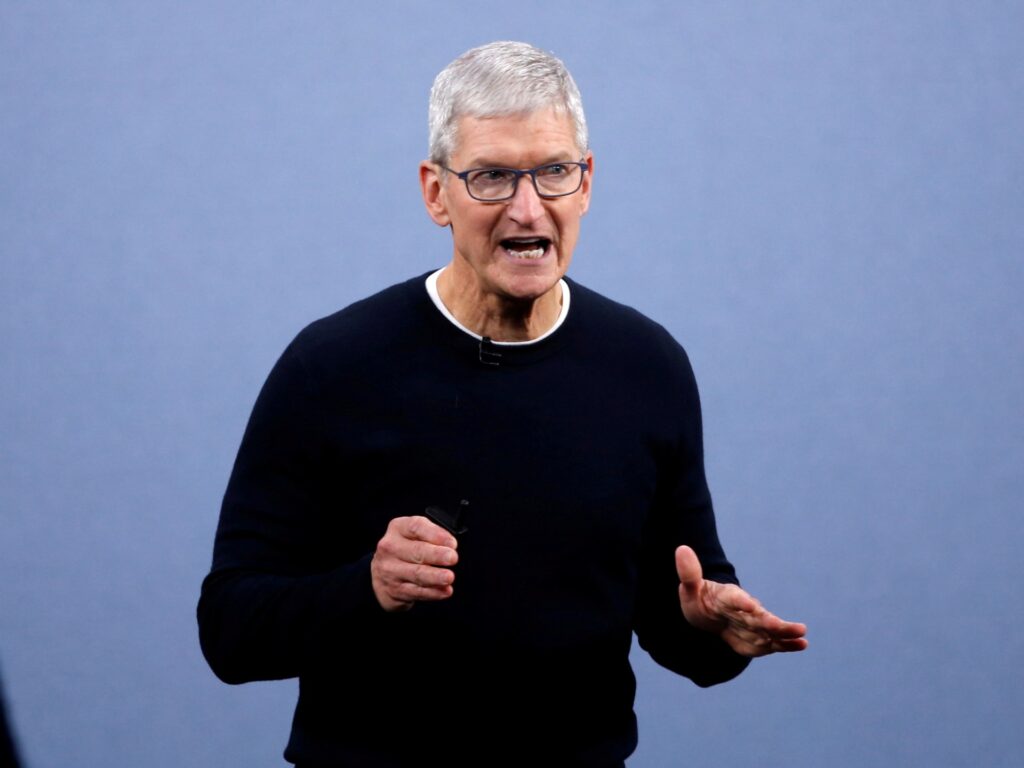
The proposal urged Apple to follow a litany of high-profile companies that have recently rolled back diversity, equity and inclusion (DEI) initiatives. Apple shareholders have rebuffed an attempt to pressure the technology trendsetter into joining President Donald Trump’s push to scrub corporate programmes designed to diversify the workforce. The proposal drafted by the National Center for Public Policy Research — a self-described conservative think tank — urged Apple to follow a litany of high-profile companies that have retreated from diversity, equity and inclusion (DEI) initiatives currently in the Trump administration’s crosshairs. After a brief presentation about the anti-DEI proposal, Apple announced shareholders had rejected it without disclosing the vote tally. The preliminary results will be outlined in a regulatory filing later Tuesday. The outcome vindicated Apple management’s decision to stand behind its diversity commitment even though Trump asked the US Department of Justice to look into whether these types of programmes have discriminated against some employees whose race or gender aren’t aligned with the initiative’s goals. Advertisement But Apple CEO Tim Cook has maintained a cordial relationship with Trump since his first term in office, an alliance that so far has helped the company skirt tariffs on its iPhones made in China. After Cook and Trump met last week, Apple on Monday announced it will invest $500bn in the US and create 20,000 more jobs during the next five years — a commitment applauded by the president. Tuesday’s shareholder vote came a month after the same group presented a similar proposal during Costco’s annual meeting, only to have it overwhelmingly rejected. That snub didn’t discourage the National Center for Public Policy Research from confronting Apple about its DEI programme in a pre-recorded presentation by Stefan Padfield, executive director of the think tank’s Free Enterprise Project, who asserted “forced diversity is bad for business”. In the presentation, Padfield attacked Apple’s diversity commitments for being out of line with recent court rulings and said the programmes expose the Cupertino, California, company to an onslaught of potential lawsuits for alleged discrimination. He cited the Trump administration as one of Apple’s potential legal adversaries. “The vibe shift is clear: DEI is out and merit is in,” Padfield said in the presentation. ‘Culture of belonging’ The spectre of potential legal trouble was magnified last week when Florida Attorney General James Uthmeier filed a federal lawsuit against Target alleging the retailer’s recently scaled-back DEI programme alienated many consumers and undercut sales to the detriment of shareholders. Advertisement Just as Costco does, Apple contends that fostering a diverse workforce makes good business sense. But Cook conceded that Apple may have to make some adjustments to its diversity programme “as the legal landscape changes” while still striving to maintain a culture that has helped elevate the company to its current market value of $3.7 trillion — greater than any other business in the world. “We will continue to create a culture of belonging,” Cook told shareholders during the meeting. In its last diversity and inclusion report issued in 2022, Apple disclosed that nearly three-fourths of its global workforce consisted of white and Asian employees. Nearly two-thirds of its employees were men. Other major technology companies for years have reported employing mostly white and Asian men, especially in high-paid engineering jobs — a tendency that spurred the industry to pursue largely unsuccessful efforts to diversify. Adblock test (Why?)
Barcelona and Atletico Madrid share eight-goal Copa del Rey thriller
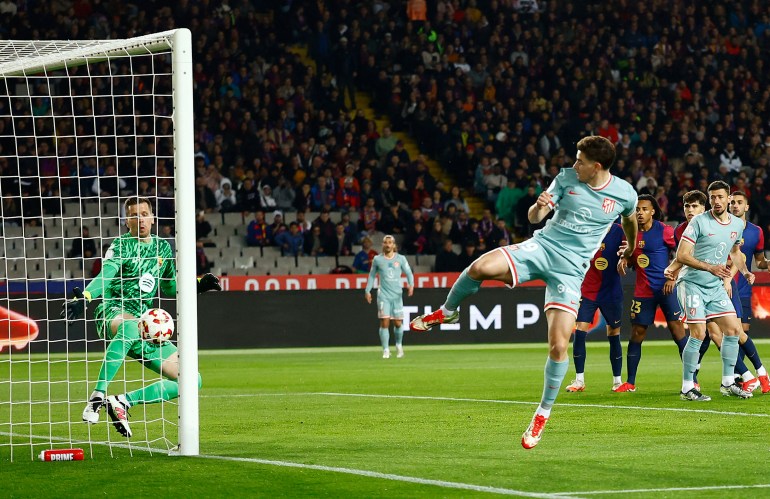
Barcelona and Atletico Madrid draw 4-4 in the first leg of their Copa del Rey semifinal. Barcelona and Atletico Madrid both rallied from two goals down in a frantic 4-4 draw in the first leg of the Copa del Rey semifinal at Estadi Olimpic Lluis Companys in Catalonia, Spain. Atletico scored twice in the first six minutes before conceding four unanswered goals and coming back to even the match with goals in the final 10 minutes, including the equaliser by substitute Alexander Sorloth three minutes into stoppage time on Tuesday. Barcelona saw Atletico jump to an early lead, with goals by Julian Alvarez in the first minute and Antoine Griezmann in the sixth, but the hosts tied the game by the 21st minute thanks to goals two minutes apart by Pedri and Pau Cubarsi. The Catalan club took a 3-2 lead into halftime after Iñigo Martínez scored in the 41st. Robert Lewandowski increased the lead in the 74th. Atletico Madrid’s Julian Alvarez opened the scoring on the night [Albert Gea/Reuters] Atletico pulled closer with Marcos Llorente in the 84th and Sorloth got the equaliser from close range. Advertisement The second leg will be at Atletico’s Metropolitano Stadium in April. The winner will play either Real Madrid or Real Sociedad, which will play their first-leg match on Wednesday in Basque Country. Barcelona last won the competition in 2021, and Atletico in 2013. Atletico had beaten Barcelona 2-1 in the Spanish league when the teams last met in December. Until the semifinal stage, the Copa’s knockout rounds were played in single-elimination games. Barcelona’s Robert Lewandowski looked to have sealed the match with his side’s fourth goal [Joan Monfort/AP] Adblock test (Why?)