

The lived experiences of communism should serve as a cautionary tale
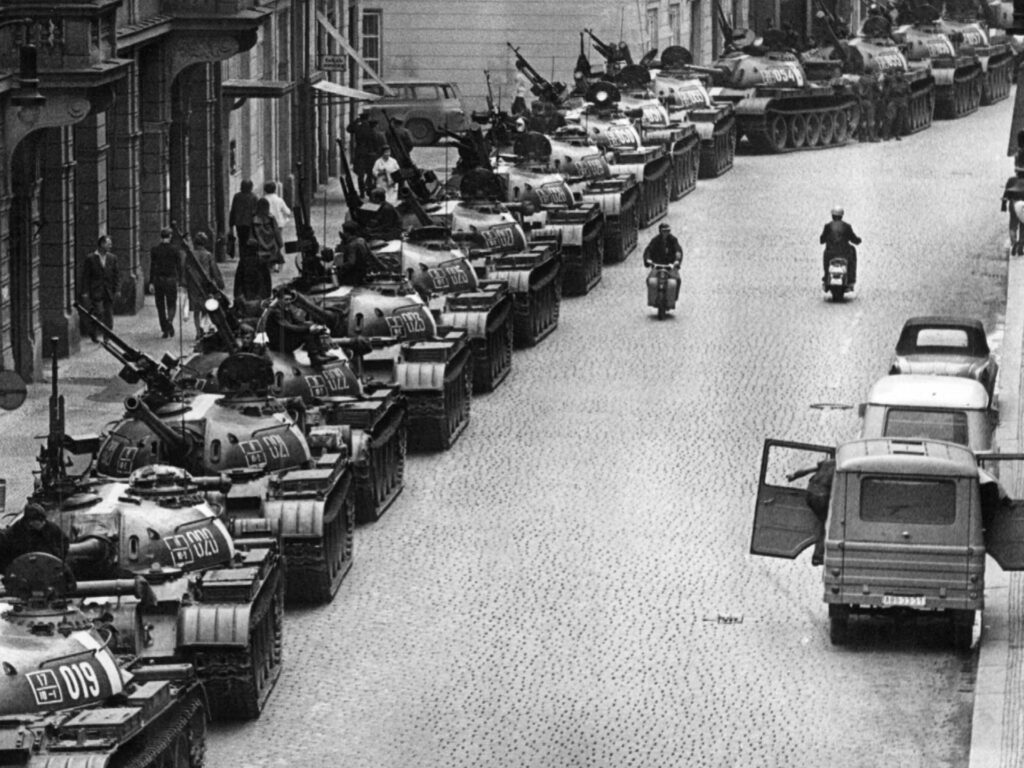
In Sunday’s general elections in Germany, the far-right Alternative for Germany (AfD) came second for the first time since World War II. Its electoral success is part of a Europe-wide trend of far-right resurgence that has worried many. As a university lecturer, I have observed that as a reaction to this phenomenon, many young people are becoming interested in far-left ideologies, such as communism. Students study Karl Marx as a key political thinker and often admire the old ideas of Marxism and the writings of other communist ideologues for their critique of class relations and capitalism. As young people engage with these ideologies, it is important for them to be aware that they did not remain just theories. Communism was applied as a political ideology of the Marxist-Leninist parties in dozens of countries in Europe and Asia, which resulted in repressive totalitarian regimes. The communist regime in my country, Czechia, which in the 1940s was part of an entity called Czechoslovakia, has left a horrific legacy. Today, on the 77th anniversary of the election that brought the communists to power in Prague, I cannot help but think about how the regime scarred the lives of many families, including my own. Advertisement I was born soon after the 1989 Velvet Revolution and grew up hearing about what it was like to live under communism for Czechoslovaks. It was a bleak and oppressive world in which the nationalisation of the means of production in reality meant stealing factories and homes from wealthier citizens so that the state could turn them into farmhouses or residences for top communist state officials. The concepts of fair elections and freedom of speech were mere dreams. In that world, individuals’ opportunities to study, travel, or secure good jobs were often determined by their “unblemished political profile” rather than their abilities. As a result, it was common to find qualified people who disagreed with the regime working in poorly paid and stigmatised jobs, while active members of the Communist Party, despite poor academic performance or lack of experience, occupied top positions. “This all became normal for us. No one believed the totalitarian regime would fall,” my mother told me recently. Those who disagreed with or confronted the regime paid a heavy price. There are many accounts in academia and the media of the brutal practices of the State Security (StB) directed at Czechoslovak citizens deemed “enemies of the state”: mass surveillance, blackmail, arrests, torture, execution, and forced emigration. The stories of high-profile dissidents, such as the executed lawyer Milada Horakova or the imprisoned writer Vaclav Havel, who became the first democratically elected Czech president, are well known. Advertisement But there are many other stories of people who faced repression that remain unknown to the public. The Institute for the Study of Totalitarian Regimes has documented the cases of about 200,000 people arrested in communist Czechoslovakia due to their social class, status, opinions, or religious beliefs. Of these, 4,495 died during their time in prison. My father belongs to this mass of prisoners who are largely unknown. He was labelled “dangerous to communist society” in 1977 and sentenced to 18 months in prison. When I was in my 20s, I found an old, yellowed paper file hidden in a drawer of the living room table, with the title “Verdict in the Name of the Czechoslovak Socialist Republic”. The fading typewritten text revealed that my father, along with his friend, was found guilty of avoiding military service and spreading negative political opinions. My father strongly disagreed with the Communist Party leading the country, and he refused to serve in the army because it had failed in its primary duty to protect the country and its civilians during the Warsaw Pact invasion of Czechoslovakia in 1968. In the summer of that year, 200,000 soldiers from the Soviet Union and other communist European countries invaded to suppress the democratic reform movement that was emerging – what came to be known as the Prague Spring. By the end of the year, 137 Czechs and Slovaks were killed. To maintain control in Prague, the Soviet Union permanently stationed troops as an occupying force in the country. Until they withdrew in 1991, Soviet soldiers killed 400 people and raped hundreds of women. Advertisement Despite the brutal violence and crimes, the Communist Party still considered the Warsaw Pact armies to be Czechoslovakia’s allies. So the court condemned my father for “being against the Communist Party and society, damaging relations between the Czechoslovak Army and the Warsaw Pact forces due to his selfish reasons, and being a huge disappointment, given his promising working-class background”. He was just 22 years old and was about to get married to my mother. When I asked my father about the document and his time in prison, he fell silent. Only my mother shared a few insights: “I was heavily pregnant and lost the baby. Your dad came to see me at the hospital and said he would be leaving for work for some time. Later, I found out he was in prison.” My mother sent my father dozens of letters, but the prison guards did not deliver them. She tried to visit him several times but was not allowed to see him. She would wait outside the prison, hoping to catch a glimpse of him when the prisoners returned from their forced labour. “I saw him once for a few seconds. He was just a thin figure with no hair. He looked exhausted. We waved at each other,” my mother recalled. My father was released after 10 months for good behaviour. Recently, I finally managed to persuade my father to visit, with me, the National Security Archive in Prague. We hoped to find more information about who had led his case and who had spied on him – perhaps a friend or even a family member? To our disappointment, the staff handed us a thin file with a note: “The majority of the documents with your father’s name were destroyed by the State Security.”
Ukraine reconstruction costs cross half-trillion-dollar mark: Report
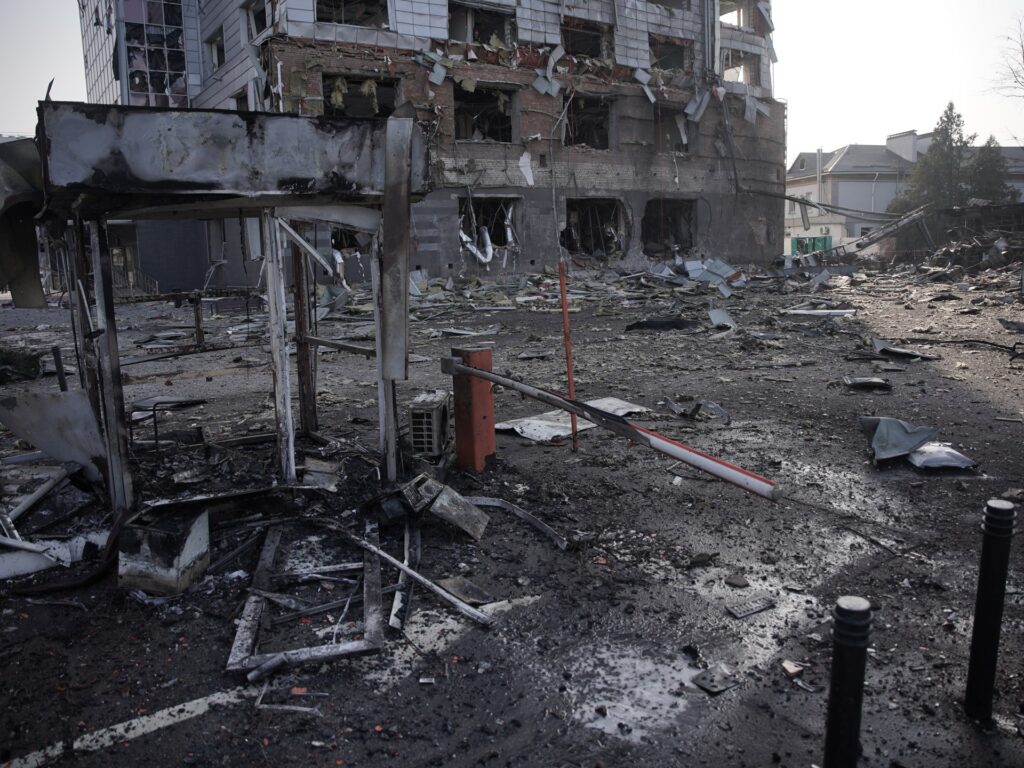
The $524bn estimate marks growing needs provoked by Russia’s bombardment of Ukrainian cities and infrastructure as the war moves into a fourth year. The estimated cost of reconstructing Ukraine has risen to more than half a trillion US dollars, according to a new report. The cost of rebuilding the country and reviving its economy has risen to $524bn currently, predicted a study by the World Bank, United Nations, European Commission (EC) and Ukrainian government that was released on Tuesday. The total is nearly three times Ukraine’s expected 2024 economic output. The estimate marks an increase of more than 7 percent compared with the institutions’ last report, which pitched the cost at $486bn a year ago. The data, which covers damages incurred from the date of Russia’s full-scale invasion on February 24, 2022 to December 31, 2024, quantified the direct physical damage to buildings and other infrastructure, the effect on people’s lives and livelihoods, and the cost to “build back better”, the institutions said in a joint press release. Housing, transport, energy, commerce and education were the most affected sectors. This included a 70 percent increase in damages to Ukraine’s energy infrastructure from Russian attacks. Advertisement About 13 percent of Ukraine’s total housing stock has been damaged or destroyed, affecting more than 2.5 million households. The housing sector accounts for about $84bn of the total long-term needs, followed by transport at almost $78bn, energy and mining at close to $68bn, commerce and industry at more than $64bn, and agriculture, which has needs of $55bn. The cost of debris clearance and management alone is pegged at almost $13bn, the report said. The estimate excluded more than $13bn in needs across eight sectors that have already been met by Ukraine through the state budget and donor funds. EC Commissioner for Enlargement Marta Kos said “the assessment highlights the extraordinary damage Russia has inflicted on Ukraine” and stressed that Ukraine’s economy must be integrated deeper into the EU single market to facilitate recovery. Ukrainian Prime Minister Denys Shmyhal said “recovery needs have continued to grow due to Russia’s ongoing attacks,” adding that his government would prioritise rebuilding and repairing energy infrastructure and housing. Daily air attacks Ukraine marked three years of all-out war with Russia on Monday, with the two countries now swapping almost daily drone and missile attacks, many hitting vital infrastructure. Air alerts were sounded across the whole of Ukraine early on Tuesday, as the air force warned of a huge spate of missile attacks. The Ukrainian military said Russia launched seven missiles and 213 drones overnight. The airforce said it shot down six missiles and 133 drones, while another 79 drones did not reach their targets, likely due to electronic warfare. Advertisement A 44-year-old woman was injured and several houses damaged in the Kyiv region, Governor Mykola Kalashnyk said. Amid the barrage, neighbouring Poland – a NATO member and base for planes belonging to allies in the military alliance – said it had scrambled aircraft to ensure its security. Russia’s Ministry of Defence said air defence units intercepted and destroyed 19 Ukrainian drones overnight. Adblock test (Why?)
Music stars release silent album in protest against UK AI copyright plans

Is This What We Want features recordings of empty studios, performance spaces, highlighting danger to creative trade. More than 1,000 musicians, including Kate Bush, Cat Stevens and Annie Lennox, have released a silent album in protest of the proposed changes to British copyright laws around artificial intelligence (AI), which they warned could lead to legalised music theft. The album, titled Is This What We Want, was launched on Tuesday and features recordings of empty studios and performance spaces, as backlash against the plan grows in the United Kingdom. The proposed changes would allow AI developers to train their models on any material to which they have lawful access, and would require creators to proactively opt out to stop their work from being used. Critics, including the artists participating in the silent album, say it would reverse the principle of copyright law, which grants exclusive control to creators over their work. The emergence of AI has posed a threat to the creative industry, including music, raising legal and ethical questions on a new technological platform that could produce its own output without paying creators of original content. Advertisement Bush and other writers and musicians denounced the proposals in UK law as a “wholesale giveaway” to Silicon Valley in a letter to The Times newspaper. Ed Newton-Rex, organiser of the project, said musicians were “united in their thorough condemnation of this ill-thought-through plan”. In a very rare move, UK newspapers also highlighted their concerns, launching a campaign featuring wrap-around advertisements on the front of almost every national daily, with an inside editorial by the papers’ editors. A public consultation on the legal changes will close later on Tuesday. British Prime Minister Keir Starmer wants to become a superpower in the AI industry. Responding to the album, a government spokesperson said the current copyright and AI regime was holding back the creative industries from “realising their full potential”. Adblock test (Why?)
Pope Francis still critical but shows ‘slight improvement’: Vatican
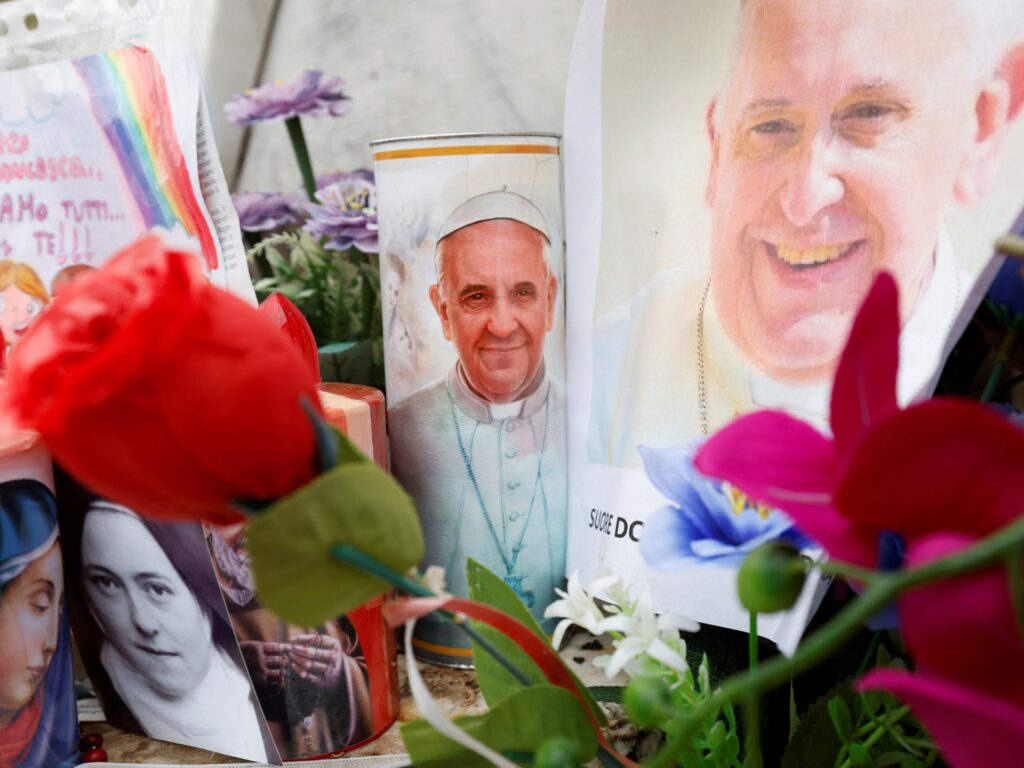
Vatican says pope still receiving oxygen as hospitalisation for double pneumonia nears two-week mark. Pope Francis’s condition remains critical but has shown a “slight improvement”, the Vatican has said in its latest update on the 88-year-old pontiff’s health. In a statement on Monday, the Vatican said “the clinical conditions of the Holy Father, in their critical nature, show a slight improvement”. “Today there were no episodes of asthmatic respiratory attacks; some laboratory tests have improved,” it said, noting that Francis had worked in the afternoon after receiving the Eucharist in the morning. The pope was still receiving oxygen, “although with slightly reduced flow and oxygen percentage”, the statement said. Francis was admitted to Rome’s Gemelli Hospital on February 14 with breathing difficulties and his condition subsequently worsened. He is battling pneumonia in both lungs as well as kidney issues in what has become the longest hospital stay of his nearly 12-year papacy. Double pneumonia is a serious infection that can inflame and scar both lungs, making it difficult to breathe. The Vatican has described the pope’s infection as “complex” and said it was caused by two or more microorganisms. Advertisement The head of the Catholic Church, who has been pope since 2013, has suffered bouts of ill health over the past two years. He is particularly prone to lung infections because he developed pleurisy as a young adult and had part of one lung removed. Francis’s continued hospitalisation has prompted a global outpouring of concern and support, with a special prayer organised for Monday evening in St Peter’s Square in Rome. Tributes also have been left outside the hospital where he is being treated. Maria Vozlv, a Ukrainian who has lived in Rome for 18 years, said many in her home country were praying for Francis. The pontiff has often decried the war in Ukraine, which hit the three-year mark on Monday, and prayed for peace. “We Ukrainians are really praying for him,” Vozlv said. “He needs to get well and come home.” Earlier Monday, the Vatican said the pope had spent a peaceful night, with a Vatican source saying he was “not in pain”, eating “normally” and even “in a good mood”. Adblock test (Why?)
Trump: Putin has ‘no problem’ with European peacekeepers in Ukraine
[unable to retrieve full-text content] Donald Trump told reporters he thinks Vladimir Putin would have “no problem” with European soldiers as peacekeepers.
MSF halts operations in camp in Sudan’s Darfur region as violence rages
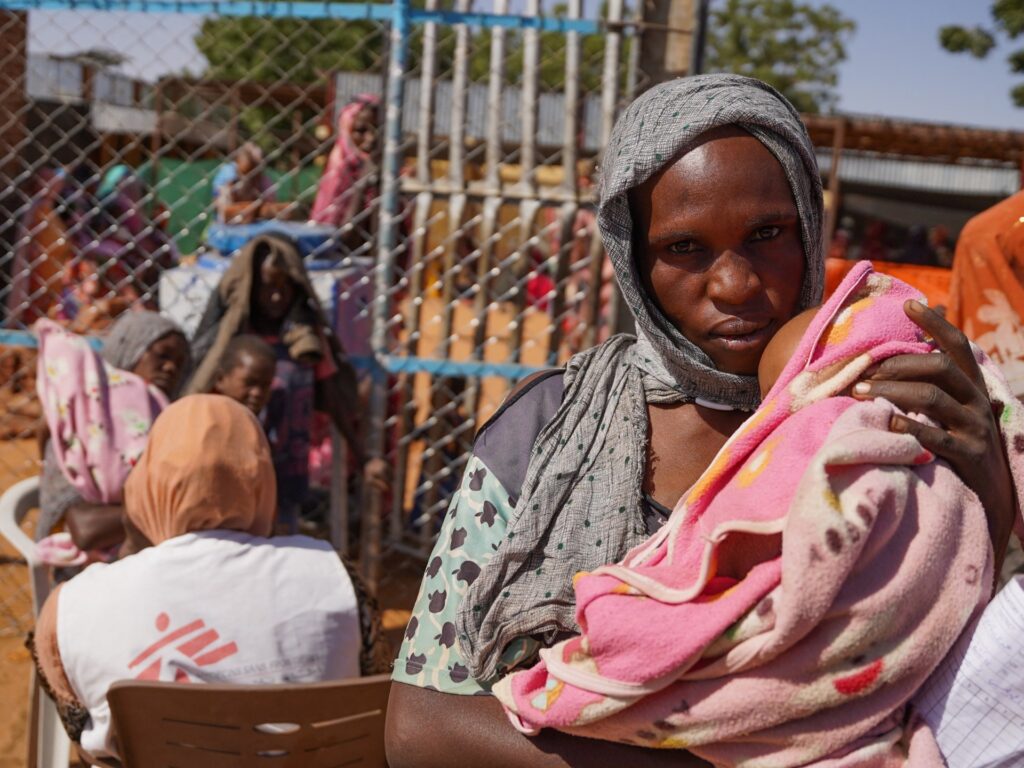
Doctors Without Borders says increased fighting in and around Zamzam camp has made it too dangerous to operate. Doctors Without Borders has said it is suspending its work in a famine-stricken camp for displaced people in Sudan’s North Darfur region, as an increase in violent attacks has made it too dangerous to operate. In a statement on Monday, the medical charity – known by its French-language acronym MSF – said fighting in and around Zamzam camp near the town of el-Fasher had made it “impossible … to continue providing medical assistance”. “Despite widespread starvation and immense humanitarian needs, we have no choice but to take the decision to suspend all our activities in the camp, including the MSF field hospital,” the group said. MSF was one of the few humanitarian groups still working in the camp, which houses about half a million people displaced by Sudan’s devastating 22-month civil war. Health workers at the organisation’s field hospital in Zamzam had helped treat people wounded in attacks by the paramilitary Rapid Support Forces (RSF) this month, as well as provided care to thousands of malnourished children. Advertisement “Halting our project in the midst of a worsening disaster in Zamzam is a heartbreaking decision,” said Yahya Kalilah, MSF’s Sudan country director. “The sheer proximity of the violence, great difficulties in sending supplies, the impossibility to send experienced staff for adequate support, and uncertainty regarding routes out of the camp for our colleagues and civilians leave us with little choice.” We’ve taken the difficult decision to suspend our activities in Zamzam camp, North Darfur, Sudan. Violence has engulfed the camp, which hosts around 500,000 people. We urge all armed actors in the area to protect civilians.. The details: https://t.co/7zb32yoe5d — MSF International (@MSF) February 24, 2025 The war in Sudan broke out between the RSF and the Sudanese military in April 2023. Both parties have been accused of war crimes as the United Nations says the violence has killed tens of thousands of people, forced 14 million to flee their homes and spurred a humanitarian crisis. On February 11, the RSF stormed Zamzam, triggering two days of clashes with the army and allied armed groups and forcing about 10,000 families to flee, according to the United Nation’s International Organization for Migration (IOM). MSF said its teams had treated 139 patients with gunshot and shrapnel wounds in its field hospital so far this month. But 11 people – including five children – died because the facility lacked the necessary equipment. The organisation also said its ambulances were targeted in recent months. Advertisement Meanwhile, UN Secretary-General Antonio Guterres warned on Monday of a “further escalation” after the RSF and its allies agreed to form a parallel government. Guterres’s spokesman, Stephane Dujarric, said the UN chief was “deeply concerned” by Sunday’s announcement. “This further escalation in the conflict… deepens the fragmentation of the country,” Dujarric said. The RSF-led government is not expected to receive widespread recognition, with the group accused of carrying out war crimes, including genocide. But it is a sign that the splintering of Sudan could be cementing as the RSF focuses on the western region of Darfur while it loses ground elsewhere. Adblock test (Why?)
Ukraine marks war’s third anniversary with support mired in uncertainty
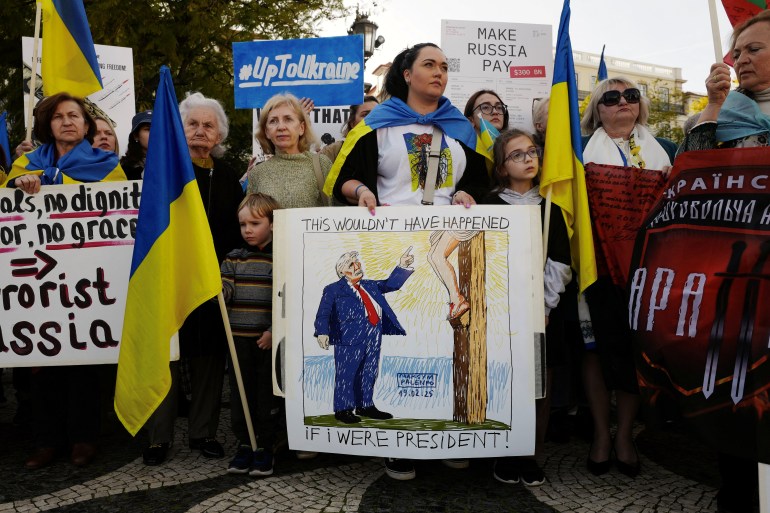
EU leaders in Kyiv, Moscow rejects Trump’s push for swift ceasefire, competing UN votes scheduled. Leaders from the European Union and Canada have gathered in Ukraine in a show of unity as Kyiv marks the third anniversary of Russia’s invasion. Ukrainian President Volodymyr Zelenskyy on Monday hailed the “heroism” of his country as he welcomed European Commission President Ursula von der Leyen and Canadian Prime Minister Justin Trudeau among other senior officials. However, there was no representative from the United States, amid growing uncertainty over Washington’s support. “Three years of resistance. Three years of gratitude. Three years of absolute heroism of Ukrainians,” said Zelenskyy. “I thank everyone who defends and supports it.” European Commission President Ursula von der Leyen reiterated the EU’s support for Ukraine. “In this fight for survival, it is not only the destiny of Ukraine that is at stake. It’s Europe’s destiny,” she wrote in a social media post. On the 3rd anniversary of Russia’s brutal invasion, Europe is in Kyiv.We are in Kyiv today, because Ukraine is Europe.In this fight for survival, it is not only the destiny of Ukraine that is at stake.It’s Europe’s destiny. — Ursula von der Leyen (@vonderleyen.ec.europa.eu) 2025-02-24T05:18:04.584Z Advertisement Amid the threatened vacuum in US military support, the 27-member bloc’s leaders are scheduled to meet on March 6 for a special summit “to take decisions” on Ukraine and European defence. On Monday, a meeting of EU foreign ministers reportedly approved a 16th package of sanctions against Russia. However, Hungary, whose leader Viktor Orban has remained close to Russian President Vladimir Putin and has persistently complicated EU efforts to support Ukraine, said it will not back further sanctions. Foreign Minister Peter Szijjarto also said his country will not agree to a boost in EU military aid. Competing resolutions The new confidence in Budapest is the result of US President Donald Trump’s push to force Ukraine to agree to a peace deal with Russia. US officials met their Russian counterparts last week, while Trump and Zelenskyy have embarked on a bitter spat via the media, with the US leader accusing Kyiv of starting the war and questioning the Ukrainian president’s legitimacy. Another showdown is expected at the United Nations headquarters in New York on Monday, as Washington and Kyiv table competing resolutions before the General Assembly. Ukraine’s resolution, backed by European allies, demands an immediate withdrawal of Russian forces while emphasising Ukrainian sovereignty and territorial integrity. The US proposal aims for a swift end to the war without explicitly mentioning Moscow’s aggression. ‘Unacceptable’ However, Trump’s peace plan, which appears designed to illustrate his self-appointed role as a global dealmaker, faces resistance on both sides. Advertisement Russia said on Monday that the quick end to the war the UK is trying to forge is “unacceptable”. A ceasefire without a long-term settlement “is the path to a swift resumption of fighting and a resumption of the conflict with even more serious consequences, including consequences for Russian-US relations,” Moscow’s Deputy Foreign Minister Sergey Ryabkov said, according to the state-run RIA Novosti news agency. People take part in a march to mark the third anniversary of Russia’s invasion of Ukraine, in downtown Lisbon, Portugal, February 23, 2025 [Pedro Nunes/Reuters] Meanwhile, Ukraine signalled on Sunday that the break with the US might be easing. Kyiv said a contentious proposal that would hand Washington $500bn worth of profits from Ukrainian rare minerals has now been taken off the table, and that talks on a different deal are progressing. Zelenskyy told a forum in Kyiv that he would resign his post if that meant peace was achieved. “If you need me to leave this chair, I am ready to do that, and I also can exchange it for NATO membership for Ukraine,” he said. Adblock test (Why?)
India’s Kohli shuts ‘outside noise’ in landmark century against Pakistan
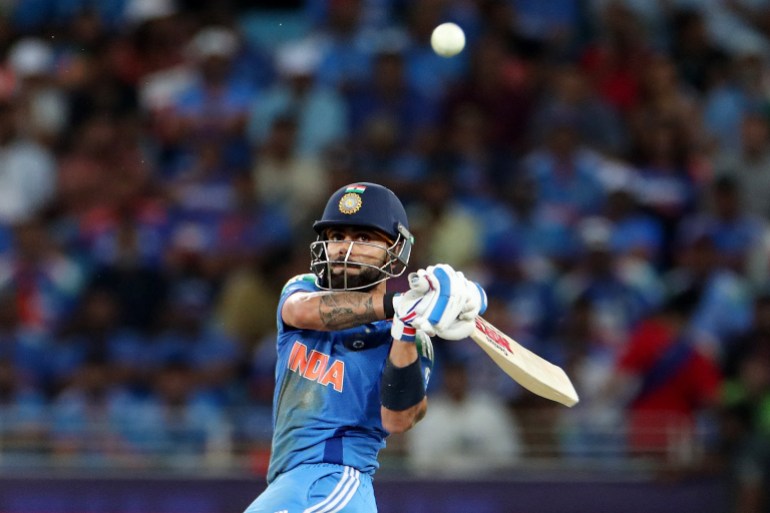
Virat Kohli’s unbeaten century helps him cross 14,000 runs in ODIs and seal India’s place in the Champions Trophy semifinals. All it took for Virat Kohli to prove that he is not a spent force was a classic one-day international (ODI) century as India’s batting stalwart produced a match-winning knock against archrivals Pakistan in the ICC Champions Trophy. Kohli became the fastest batter and third man to reach 14,000 runs in ODIs, before going on to hit a record-extending 51st century in the limited overs format as he led India’s chase in their six-wicket win in Dubai on Sunday. The knock from the 36-year-old stood out in the high-pressure match as the former captain came into the 50-over tournament with speculation over his cricket future. Kohli said he shut down “the noise” to compile his unbeaten 100. “My job was clear – to control in the middle overs, not take risks against spinners and take on the pacers. I was happy with the template, it’s how I play in ODIs,” he said after the match. “I have a decent understanding of my game. It’s about keeping the outside noise away, take care of my energy levels and thoughts. It’s easy for me to get pulled into expectations and frenzy around games like these.” Virat Kohli hit seven fours in his century [Satish Kumar/Reuters] Pakistan skipper Mohammad Rizwan said his respect for Kohli had rocketed. Advertisement “I wonder how hard he would have worked when the whole world was saying he is out of form but coming into a match which is awaited by the world, he scores runs easily,” Rizwan said. “I praise his hard work and fitness.” India’s captain Rohit Sharma said his teammates were not surprised by Kohli’s match-winning performance. “Virat loves representing the country, doing what he does the best, which is what he did today. People sitting inside the dressing room aren’t surprised with what he did.” Kohli entered the match with 13,985 runs in 298 ODIs and went past 14,000 runs with a flowing punch through the covers off pace bowler Haris Rauf. He is just the third man to achieve the feat after India icon Sachin Tendulkar (18,426) and Sri Lankan great Kumar Sangakkara (14,234). Kohli, who was out for 22 in the opening win over Bangladesh, put on 114 runs with Shreyas Iyer as he drove and flicked with aplomb to reach his 82nd century across all formats with a winning boundary. He took off his helmet and raised his bat to a standing ovation from the crowd that chanted his name. “I have never thought of Virat struggling for runs,” said Iyer. “It’s just that the mindset he possesses over the years, he is always hungry for runs and I remember yesterday he came almost an hour before us for the practice session. Looking from outside, he looked as crisp as he looks all the time.” Kohli and Rohit retired from T20 internationals after India’s World Cup triumph last year. But they struggled to find their best form in both Test and 50-over formats due to inconsistent run-scoring, with speculation that they may soon retire. Advertisement Following the bruising 3-1 Test defeat in Australia, the Indian cricket board ordered contracted players to feature in domestic cricket. But both flopped, with Rohit scoring three and 28 in his first and second innings for Mumbai in the Ranji Trophy, and Kohli scoring six off 15 balls for Delhi. Kohli will likely take the field against New Zealand next Sunday in their final group match for his 300th ODI since his debut in 2008. Adblock test (Why?)
Video: Netanyahu heckled while showing photos of Bibas family
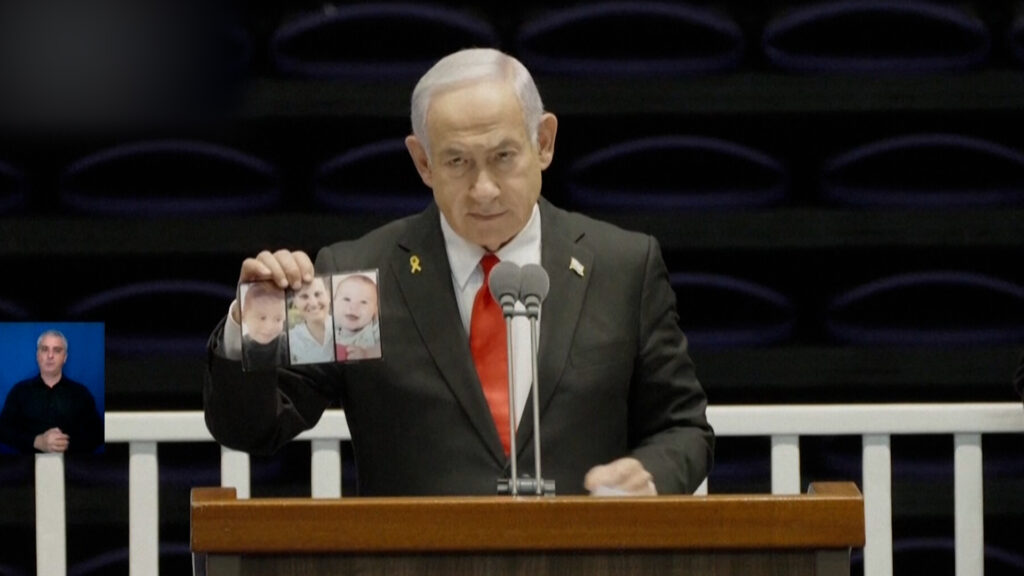
NewsFeed “Shame! Why didn’t you bring them back?” Israeli Prime Minister Benjamin Netanyahu was heckled during a speech as he held up a picture of members of the Bibas family, captives whose bodies were released by Palestinian factions in Gaza. Published On 24 Feb 202524 Feb 2025 Adblock test (Why?)
Germany’s CDU ahead in election exit poll, strong support for far right
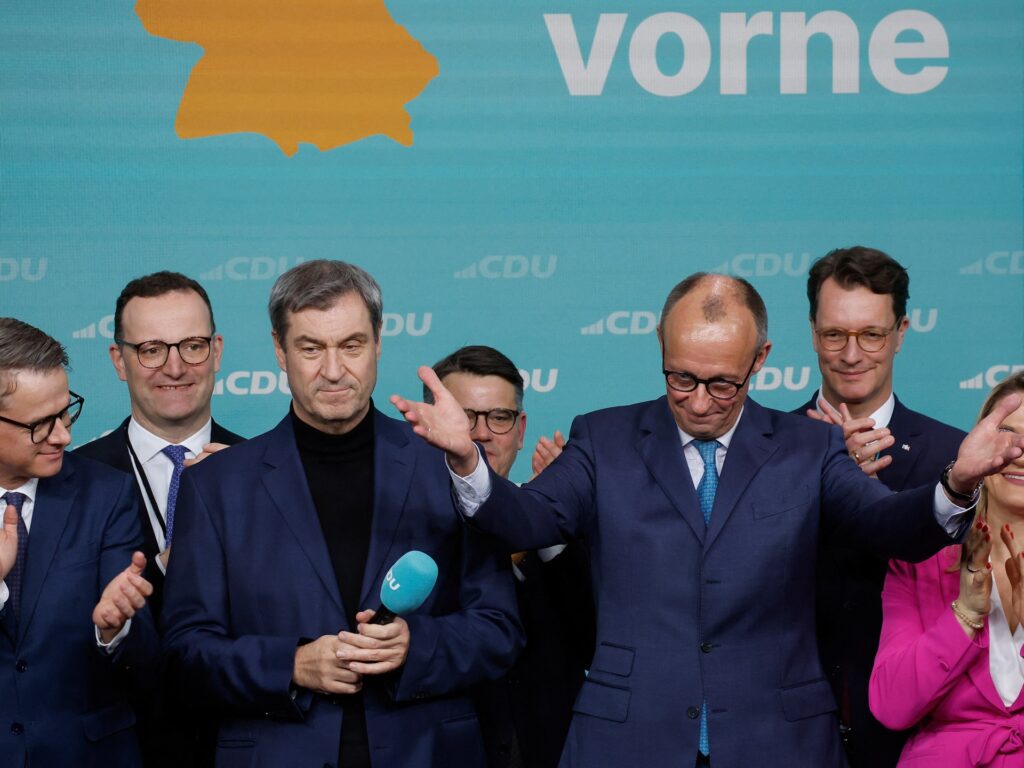
Germany’s opposition conservative Christian Democratic Union (CDU) party has been projected to win the national election, putting leader Friedrich Merz on track to be the next chancellor, exit polls show. On Sunday, the first exit polls said Merz’s CDU/CSU alliance had won at least 28.5 percent of the votes, crushing the centre-left Social Democratic Party (SPD) of the outgoing chancellor, Olaf Scholz, with SPD looking at around 16 percent. Germany’s far-right Alternative for Germany (AfD) also roughly doubled its score to at least 19.5 percent and were in second place, the exit polls said. Germany’s election authority noted that 52 percent of eligible voters cast their ballots four hours before the closure of polling stations in Sunday’s high-stakes snap election, which took place due to Chancellor Olaf Scholz’s three-party coalition government collapsing last November. “Tonight we will celebrate and from tomorrow we start working,” Merz said in a first reaction to the exit polls in Berlin, surrounded by supporters. Advertisement “The world out there is not waiting for us.” Merz – a longtime party rival of ex-Chancellor Angela Merkel – has vowed to crack down on irregular immigration and remedy Germany’s economic policies. Reporting from Berlin, Al Jazeera’s Step Vaessen said that the CDU leader has already delivered a message to Germans, saying it was time for the country to have a “solid government” and show it is “present in Europe”. She noted that “Merz is known to be much more conservative” than Merkel. “He has a very tough stance against immigration, and he has been working together recently with the far-right AfD on anti-migration policies,” Vaessen said, adding that he has been heavily criticised for working together with the far right.” But 69-year-old Merz has reiterated in the past that he is not aligned with the AfD’s anti-migration rhetoric and also hopes to halt its rise, which has stunned many in a country still seeking to atone for its dark Nazi history. For now, the AfD – basking in the vocal support of key allies of US President Donald Trump – is set to stay in opposition. All other parties have vowed to keep it out of power and behind a “firewall” of non-cooperation. On Sunday, AfD’s jubilant leader Alice Weidel hailed the “historic” result and said her party was ready to govern with the CDU and Christian Social Union (CSU). Meanwhile, Scholz has acknowledged his “election defeat”. “This is a bitter election result for the Social Democratic Party,” the incumbent chancellor said in his first remarks after the polls closed. Advertisement “It is also an election defeat, and I think that needs to be made clear at the outset.” Directing his comments towards Merz, the conservative party leader, Scholz added: “Congratulations on the election result.” What next? Before Merz takes over from the now caretaker chancellor Scholz, he will have to forge a new coalition government in Europe’s top economy, an often drawn-out process he has vowed to complete by Easter, April 20. This threatens to leave Berlin paralysed for weeks to come as the Trump administration has forced head-spinning change on the world scene and among European allies, especially over the Ukraine war that has raged for three gruelling years. To build a majority, Merz would be expected to reach out first to the SPD, though without Scholz, who has led Germany’s traditional workers’ party to a historically poor result. To gain enough seats, he may also reach out to the Greens, who scored at least 12 percent in the exit polls, although the CDU’s Bavarian sister party the CSU has so far rejected this. Reporting from the German capital Berlin, Al Jazeera’s Dominic Kane said that Merz will have to make some “compromises and concessions”. “Mr Merz is very clearly saying that there need to be quick negotiations, but with which specific parties? Because, obviously, the Social Democrats have been repudiated, their vote dropping to the sort of level which is one of the worst performances they’ve ever had since the creation of the Federal Republic of Germany,” Kane said. Advertisement “We know that some of Merz’s allies in Bavaria have said they do not want to govern with the Greens,” he added. “So actually, forming a coalition is going to be particularly difficult for Mr Merz, and he is going to have to make compromises, concessions insofar as some key policies are concerned.” Adblock test (Why?)