

Why has Israel suspended the release of Palestinian prisoners?
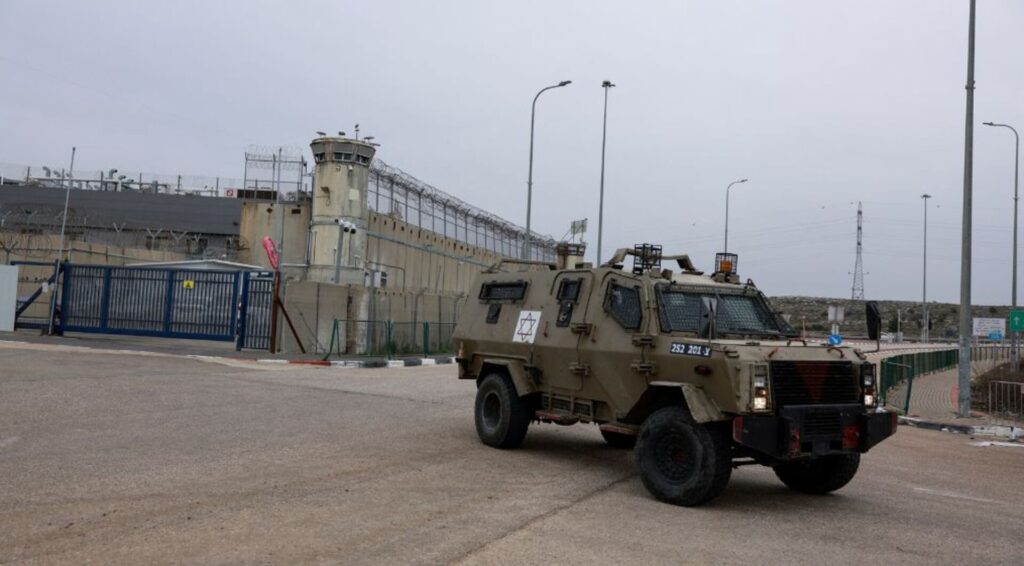
Future of Gaza ceasefire at risk after Israel suspended the release of Palestinian prisoners. Israel has postponed the release of 620 Palestinian prisoners despite Hamas setting free six Israeli captives on Saturday. The group says Israel’s far-right government is “playing dirty games and sabotaging” the agreement. Israeli Prime Minister Benjamin Netanyahu called the captive handover ceremonies in Gaza, “humiliating” and is accusing Hamas of using the captives for “propaganda”. But aid groups are questioning Israel’s unkept promises under the first phase. It has yet to allow delivery of 60,000 mobile homes and 200,000 tents, desperately needed by millions of displaced Palestinians. And Israeli negotiators have not joined discussions for the second phase of the deal. So, what’s behind Netanyahu’s dramatic turnaround? And how will it affect the hard-fought ceasefire agreement? Presenter: Cyril Vanier Guests: Alon Liel – Former director, Israel’s Foreign Ministry Xavier Abu Eid – Political analyst, a former PLO adviser and author of the book Rooted in Palestine Akiva Eldar – Contributor to Haaretz and author of Lords of the Land Advertisement Adblock test (Why?)
German election 2025 live results: By the numbers
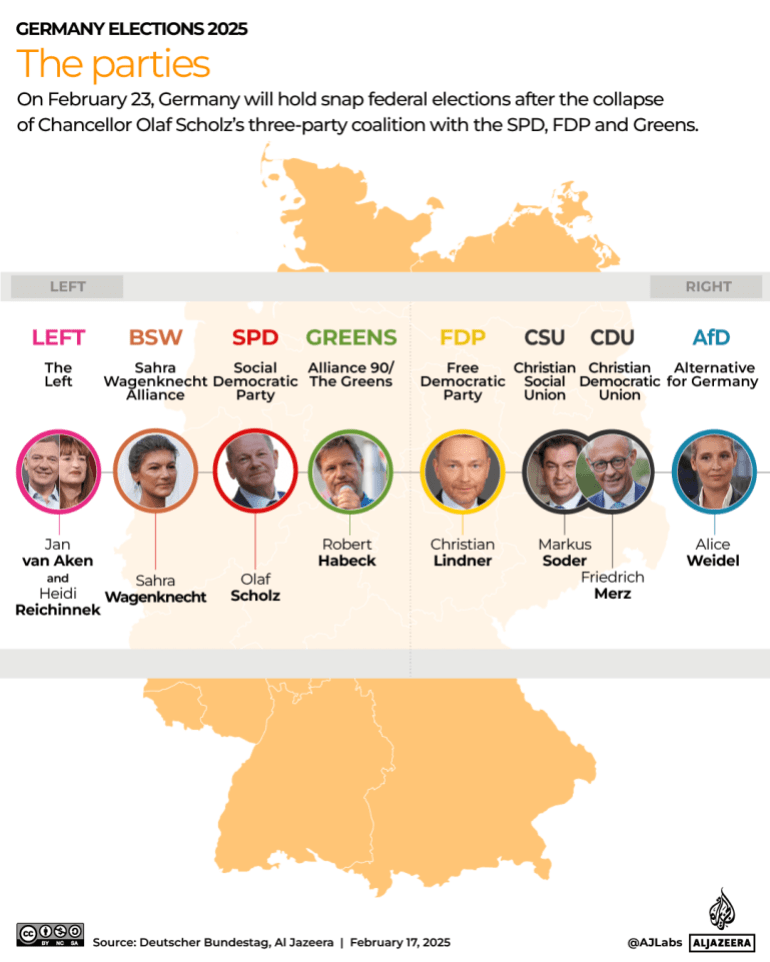
About 59 million Germans were eligible to vote in snap elections to decide who will govern the eurozone’s largest economy. Votes are now being counted across Germany where about 59 million citizens were eligible to vote in snap elections to decide who will govern the eurozone’s largest economy for the next four years. Polls opened at 8am (07:00 GMT) and closed at 6pm (17:00 GMT). Here are the latest results from the federal returning officer, who oversees the elections: Germany’s election authority says 52 percent of eligible voters had cast their ballots four hours before the closure of polling stations. When will we know the final results? The first local constituencies started reporting results at about 9:00pm (20:00 GMT). The overall outcome should become clear quickly with the final official results expected early on Monday. Who are the major candidates and parties? This year, 29 political parties are participating in the elections, a decrease from the 47 that contested in 2021. (Al Jazeera) The main parties are: CDU/CSU – The Christian Democratic Union is led by Friedrich Merz, who is also the bloc’s chancellor candidate. The Christian Social Union, the CDU’s Bavarian sister party, is led by Markus Soder. AfD – The Alternative for Germany is co-led by Alice Weidel and Tino Chrupalla with Weidel as the AfD’s chancellor candidate. SPD – The Social Democratic Party is co-led by Saskia Esken and Lars Klingbeil. Olaf Scholz serves as the party’s chancellor candidate and is the incumbent chancellor. Alliance 90/The Greens – It is co-led by Franziska Brantner and Felix Banaszak, and Robert Habeck is its chancellor candidate and the current vice chancellor. The Left – The party is co-led by Ines Schwerdtner and Jan van Aken with Heidi Reichinnek and van Aken as the chancellor candidates. BSW – The Sahra Wagenknecht Alliance is led by Sahra Wagenknecht, who is also the party’s chancellor candidate. FDP – The Free Democratic Party is led by Christian Lindner, who also serves as the party’s lead candidate. Advertisement What do the latest polls indicate? The conservative CDU tops the polls with 30 percent support. The far-right AfD is predicted to win about 20 percent of the votes while the SPD, which led the previous coalition government, sits in third place with 15 percent support. (Al Jazeera) How does voting work? German citizens will vote twice: once for a local member of parliament and second for a party. A party must receive at least 5 percent of the national vote to enter the Bundestag, the elected chamber of the bicameral parliament. The second vote is considered the most important and is most widely reported on election night because it determines the number of seats a party will receive overall in the Bundestag and a party’s strength within a coalition government it might be part of. Whichever party secures the most seats will nominate a candidate as chancellor, and the new Bundestag will vote. The candidate must secure an absolute majority to be sworn in as the country’s new leader. (Al Jazeera) Germany’s current distribution of seats The Bundestag has a base of 598 seats, but it can expand, reaching 733 seats in 2021, the largest in its history. A 2023 reform now limits it to 630 seats. (Al Jazeera) What are the key issues? A sluggish economy, immigration and the Ukraine war have been the top issues in the campaign. Surveys suggested many voters want to pay less in taxes, but doing that will be hard. Germany has been in recession for the past two years, and its key industries are struggling to remain competitive. Advertisement Unemployment is at more than 6 percent, and the debt brake, which limits government borrowing, is also causing problems. Who could be Germany’s next chancellor? A coalition government will likely be formed because no one party has ever won an absolute majority. The only time a single parliamentary group secured a majority was for the parliamentary term of 1957 to 1961 when the CDU/CSU won elections in West Germany. Whichever party secures the most votes will nominate a candidate as chancellor, and the new Bundestag will vote on the person. The candidate must secure an absolute majority to be sworn in as leader. Here are the chancellor candidates of the top four parties: Merz, 69, is the frontrunner, according to the polls. He became the leader of the CDU after former Chancellor Angela Merkel stepped down in 2021. Weidel, 46, has co-led the anti-immigration AfD since 2017. Scholz, 66, from the SPD has been chancellor since December 2021. Habeck, 55, is the candidate representing the Greens. He is the current vice chancellor as well as economy and climate minister. Adblock test (Why?)
The Dark Side of Conservation | True Crime Reports

In 2015, in the Democratic Republic of the Congo, guards shot and killed an Indigenous boy searching for herbs with his father. This tragedy spotlights the violence faced by Indigenous communities from international conservation efforts. Is human life the cost of wildlife protection? In this episode: Fiore Longo, campaigner at Survival International Members of the Batwa Community Adblock test (Why?)
Thief in UK caught on camera climbing through supermarket roof
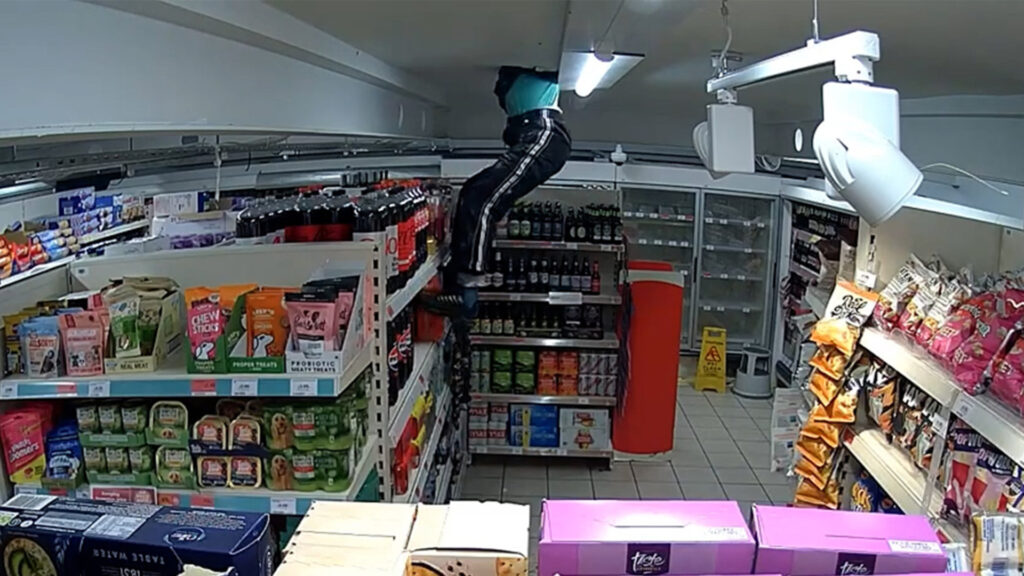
NewsFeed Watch the moment a man drops through a supermarket ceiling to steal lottery scratchcards in Nottingham, UK. Police say the 50-year-old suspect was arrested within minutes on suspicion of burglary and taken into custody Published On 23 Feb 202523 Feb 2025 Adblock test (Why?)
Israel halts Palestinian prisoners’ release demanding guarantee on captives
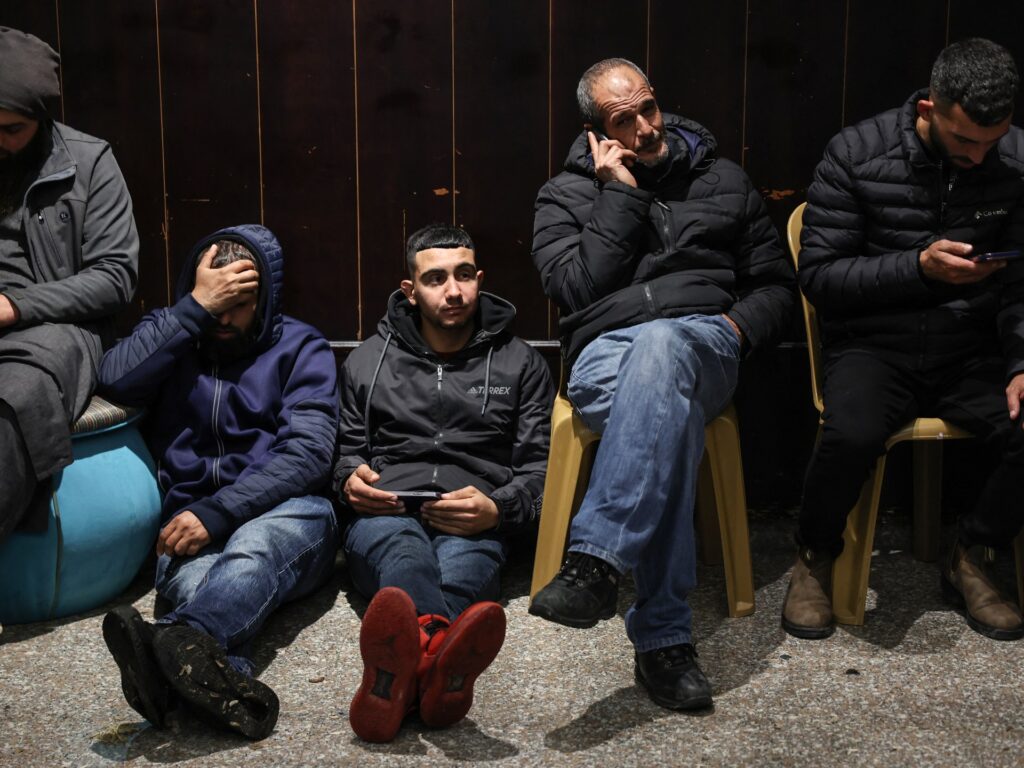
Prime Minister Benjamin Netanyahu delays the release until Hamas ends its ‘humiliating ceremonies’ while freeing Israeli captives. Israel has postponed the release of 620 Palestinian prisoners until the next release of the remaining captives in Gaza is guaranteed, with Hamas denouncing the move as a “blatant violation” of the ceasefire agreement. Israeli Prime Minister Benjamin Netanyahu on Sunday said freeing Palestinians under the deal would be delayed until Hamas ends its “humiliating ceremonies” while releasing Israeli captives, issuing a new demand not spelt out in the ceasefire agreement. “In light of Hamas’ repeated violations – including the disgraceful ceremonies that dishonour our hostages and the cynical use of hostages for propaganda – it has been decided to delay the release of terrorists that was planned for yesterday [Saturday] until the release of the next hostages is ensured, without the humiliating ceremonies,” Netanyahu’s office said in a statement. Hamas on Saturday upheld its side of the deal by releasing six Israeli captives from Gaza, the last group of living captives to be freed under the ceasefire’s first phase. Advertisement Hamas accused Netanyahu of playing “dirty games to sabotage and undermine” the ceasefire. “Over 100 Palestinians have been killed in the first phase [of the ceasefire], much of the agreed humanitarian aid was not allowed into Gaza, and the withdrawal from the Netzarim Corridor was postponed,” Basem Naim, a senior member of the Hamas political bureau, told Al Jazeera on Saturday, referring to the militarised zone that divides Gaza into north and south. “We are committed to the deal, and we have abided by all our obligations,” he said. Since the ceasefire came into effect on January 19, Hamas has released 25 Israeli captives in high-profile handovers, with masked fighters parading the captives on stage. The ceasefire deal does not categorically define how Hamas and Israel should release the Israeli captives and the Palestinian prisoners. Al Jazeera’s Nour Odeh, reporting from Amman, Jordan, said Israel’s decision to delay the release of the Palestinian prisoners was issued by Netanyahu against the recommendation of Israel’s security establishment. “There are a lot of questions and a lot of dashed hopes, as well as a lot of work for the mediators, who have been working for the release of the Palestinian prisoners and Israeli captives,” Odeh said. In Gaza and the occupied West Bank, Palestinian families waited for hours on Saturday for their loved ones to be released from Israeli prisons. The Palestinian Prisoner’s Society advocacy group said Israel would free 620 inmates, most of them from Gaza who were taken into custody during the war. Advertisement “We have been sitting in our chairs waiting for many hours, but after many hours, nothing. But what else can we do?” Khaled Khalil al-Jabarin, uncle of a detainee, told Al Jazeera. Shireen al-Hamamreh, sister of another Palestinian prisoner, told Al Jazeera it was a “very difficult” wait. “We wait for them, to hug them, and see them, but Netanyahu is always stalling,” said Fatiha Abu Abdullah, a mother in the southern Gaza city of Khan Younis. “God willing, they will be released soon.” Adblock test (Why?)
Can Arabs stop Trump’s Gaza displacement proposal?
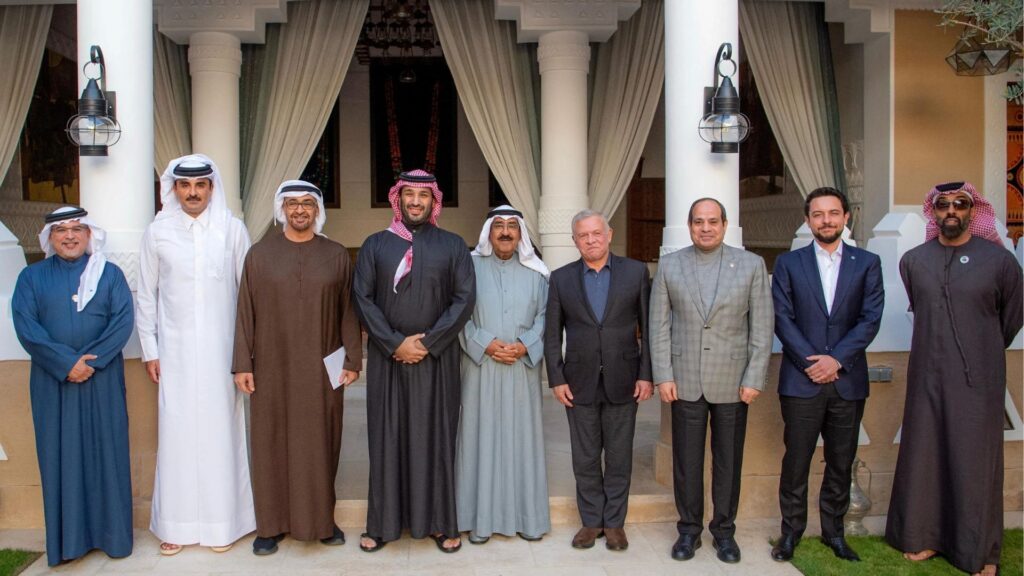
Some Arab leaders have met to discuss an alternative plan for the Strip devastated by 15 months of Israeli war. US President Donald Trump has ruffled many feathers since he announced his proposal to “take over” Gaza. According to him, more than two million Palestinians should leave “to somewhere nice and safe” like Jordan or Egypt – while he builds a new riviera on the Mediterranean in Gaza. This idea has angered the international community, and the Arab world has downright rejected it. But what can they suggest instead? A meeting on Friday of Gulf nations in Riyadh joined by Egypt and Jordan, and ended with no concrete counter-proposals. They will be meeting in Cairo in the coming weeks. But will they be able to make Trump change his mind? Presenter: James Bays Guests: Dania Thafer – Executive director of Gulf International Forum and lecturer at Georgetown University Yossi Mekelberg – Senior consulting fellow at Chatham House Daoud Kuttab – Palestinian journalist and author of, State of Palestine NOW: Practical and Logical Arguments for the Best Way to Bring Peace to the Middle East Adblock test (Why?)
ICC Champions Trophy 2025: Australia beat England in record chase
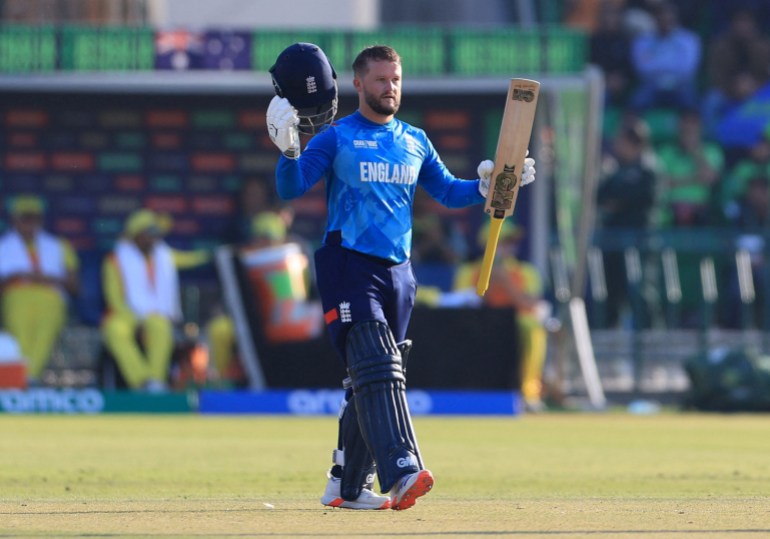
Australia chase 356 to beat England as the Cricket World Cup holders open their Champions Trophy account in Lahore. Josh Inglis marshalled two-time champion Australia’s record-breaking run chase at the Champions Trophy with a 77-ball century to hand England a five-wicket defeat in Lahore. Inglis finished with an unbeaten 120 off 86 balls for a maiden ODI hundred that included eight fours and six sixes as Australia cruised to 356-5 in 47.3 overs on Saturday. It was the highest-ever successful run chase in all ICC ODI tournaments. Inglis’s terrific power-hitting eclipsed Ben Duckett’s 165, which was the highest-ever individual knock in the history of Champions Trophy and had anchored England to a score of 351-8 in their Group B opener. England’s Ben Duckett celebrates after reaching his century in Lahore [Akhtar Soomro/Reuters] Australia’s chase got off to a rocky start as Jofra Archer and Mark Wood removed Travis Head (6) and captain Steven Smith (5) in successive overs before the Australian middle-order batters countercharged the fast bowlers. Matthew Short (63) and Marnus Labuschagne (47) combined in a 95-run stand with fast bowler Brydon Carse going for well over nine runs an over in his four-over spell before England put in spinners in the middle overs. Adil Rashid denied Labuschagne a half-century when Jos Buttler held on to a sharp catch at short covers and then, Liam Livingstone took a smart low return catch to dismiss Short as Australia slipped to 136-4. However, with dew setting in, Inglis and Alex Carey (69) mastermind the run-chase perfectly as it became difficult for the bowlers to handle the wet ball. The two batters shared a 146-run stand off 116 balls, but England missed an opportunity when Australia still needed 104 for victory. Advertisement Archer missed a regulation catch of Carey in the outfield in Rashid’s penultimate over before he completed his half-century and Inglis smashed Archer for two boundaries in the next over. Carey was finally dismissed when he drove to Buttler at mid-off in Carse’s return spell, but Glenn Maxwell finished on 32 not out off 15 balls and Inglis, who raised his century with a pulled six off Archer, sealed the win in similar fashion with another a six off Wood at mid-wicket. Australia’s Glenn Maxwell helped seal the chase with Josh Inglis [Akhtar Soomro/Reuters] Duckett became the first batter in the history of the Champions Trophy to score more than 150 runs after Smith won the toss and elected to field on a flat wicket. Duckett smashed his 165 off 143 balls with 17 fours and three sixes as the Australian second-string pace attack struggled on a wicket devoid of grass at a newly renovated Gaddafi Stadium in Lahore. New Zealand batter Nathan Astle held the previous record after he amassed an unbeaten 145 against the United States at the Oval in 2004. The Black Caps’ 347-4 in the same game was the previous highest team total of the tournament. Duckett laid a solid foundation for England’s strong finish when he combined in a 158-run stand with Joe Root, who made 68 off 78 balls. Duckett was dominant against the pace with his down-the-ground drives and was not afraid to reverse sweep against Australia’s best bowler on show, Adam Zampa (2-64). Labuschagne (2-41) dismissed Duckett in the 48th over when the left-hander missed a straight ball while going for a sweep against the leg-spinner and was out leg before wicket. The crowd in Lahore ensured a full house and an incredible atmosphere for the occasion [Nida Mehboob/Reuters] Australia, which came into the event without Pat Cummins, Josh Hazlewood and Mitchell Starc, did make early inroads. Advertisement Ben Dwarshuis (3-66) struck inside his first three overs when Carey, handing over the wicketkeeping gloves to Inglis, plucked a sensational diving catch on the edge of the 30-yard circle to dismiss Phil Salt (10) and then grabbed a hard drive of newly promoted number three batter Jamie Smith (15). Duckett and Root raised England’s first century stand in ODIs this year with their better than run-a-ball partnership. Duckett raised his century off 95 balls with two straight boundaries against Spencer Johnson, who was taken out of the attack after 0-54 off his seven overs. Zampa broke the threatening stand when he had Root trapped lbw in the 31st over and then Carey picked up another brilliant catch at point to dismiss Harry Brook for 3. But Duckett continued to score at brisk pace despite Buttler (23) and Livingstone (14) falling in quick succession while looking for acceleration. Archer played a little cameo of 21 off 10 balls as he smacked Labuschagne for 12 runs off the final three balls and England made 83 runs off the final 10 overs. Adblock test (Why?)
Pope in critical condition after suffering respiratory crisis: Vatican
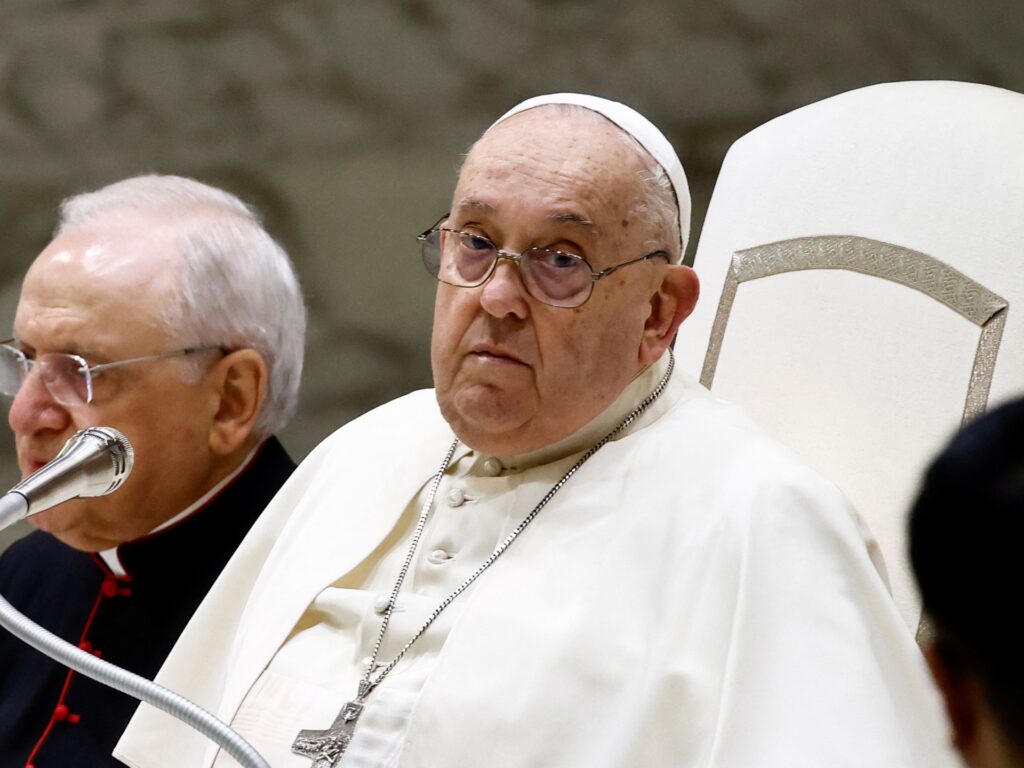
Francis was admitted to Rome’s Gemelli hospital on February 14 after experiencing breathing difficulties. Pope Francis’s health has deteriorated over the past 24 four hours, the Vatican said, adding that the pontiff had suffered a “prolonged asthma-like respiratory crisis” and needed blood transfusions. “This morning Pope Francis presented a prolonged asthmatic respiratory crisis, which also required the application of high-flow oxygen,” the Vatican said on Saturday. “The Holy Father remains alert and has spent the day in a chair, though he is more unwell than yesterday,” it added. Francis was admitted to Rome’s Gemelli Hospital on February 14 after experiencing difficulty breathing for several days. He has since been diagnosed with double pneumonia. The pontiff’s doctors had told a news conference on Friday there was no imminent risk to his life but that he was “not out of danger”. But on Saturday, the Vatican said that “the Holy Father’s condition remains critical” and added that doctors had to administer a “high flow” of oxygen because of his breathing crisis. It also said that the blood transfusions were necessary because tests showed he had a low platelet count, associated with anaemia. Advertisement Double pneumonia is a serious infection that can inflame and scar both lungs, making it difficult to breathe. Francis has continued to work during his hospital stay, including making bishop appointments. Earlier on Saturday however, the Vatican announced that the pope would not appear in public on Sunday to lead prayer with pilgrims, the second consecutive week he will have missed the event. There is no provision in canon law for what to do if a pope becomes incapacitated. Pope Benedict XVI resigned in February 2013 citing declining health, but Francis has shown no signs of stepping down. Adblock test (Why?)
The rise of the far right in Europe
[unable to retrieve full-text content] As AfD is polling second in Germany, we look at how the far-right rose to popularity in Europe over the last 25 years.
Why a news site in Ireland has been drawn into JD Vance’s attacks on Europe
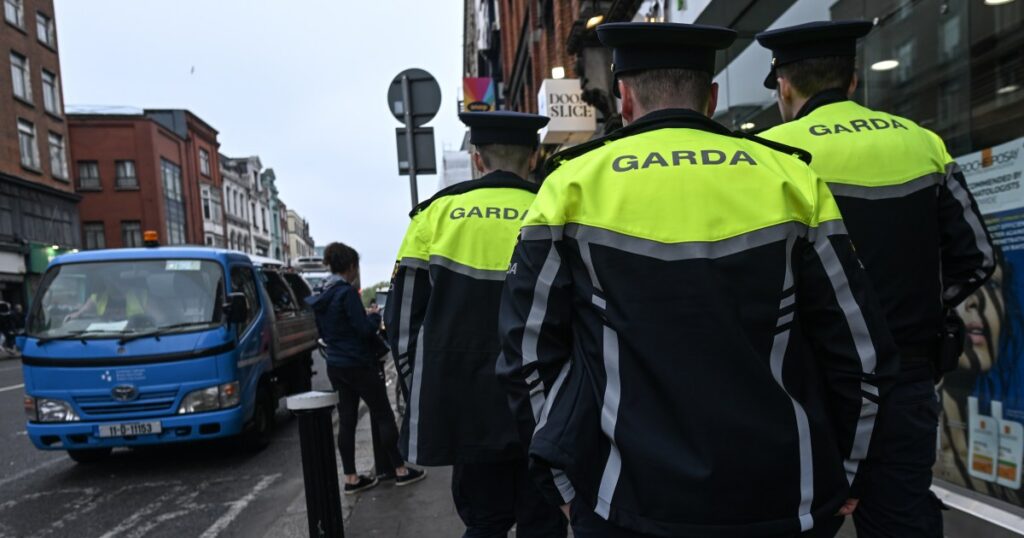
A conservative media outlet in Ireland has become the latest lightning rod for populist concerns about free speech that have exposed stark divisions between Europe and the United States in the era of President Donald Trump. Gript, a news site known for its conservative stances on culture war issues such as mass immigration and political correctness, announced this week that Irish police last year obtained a court order to access private messages and IP addresses associated with its X account. Gript, which purports to cover the news without the “liberal filter”, called the move an “intolerable” and “egregious” attack on privacy and media freedom. Elon Musk’s X, which said it successfully challenged the court order, shared Gript’s statement, which was widely amplified by conservative, populist and far-right accounts on the platform in and outside Ireland. Gript’s announcement came days after US Vice President JD Vance thrust the issues of free speech, censorship and immigration in Europe into the spotlight with a blistering speech that roiled transatlantic relations and energised the political right on the continent and beyond. Advertisement What exactly happened? On Tuesday, Gript released a statement saying that police had sought access to its communications on X as part of investigations into violent protests that took place in April at the site of planned accommodation for asylum seekers. Gript, which also published what it said was a copy of the court order, had published footage of the protests in Newtownmountkennedy, a town about 40km (25 miles) south of Dublin, including scenes of violent clashes between police and demonstrators. Gript’s footage of the protests, during which six people were arrested, included video appearing to show police using pepper spray against one of its journalists among other confrontations between officers and members of the public. Gript said that it was given no opportunity to challenge An Garda Siochana, the name of Ireland’s police force, over its application to access its communications or the resulting court order. The outlet said it only learned that police had sought access to its communications after being informed by X. According to the court order published by Gript, a judge determined there were “reasonable grounds” to believe footage published by the outlet on X contained evidence of criminal offences. In a follow-up video, Gript editor John McGuirk said police had used a law originally introduced to combat drug dealers and “terrorists” to target his outlet on the “very flimsy pretext” that it might have evidence “connecting somebody somewhere” to crimes. “In journalism, it is very important to defend your sources, to defend your readers and to defend the rights of those who work for you, up and until the point of going to prison, which I am prepared to do if necessary,” McGuirk said in his video statement. Advertisement McGuirk said that the police ultimately dropped their bid without gaining access to his outlet’s private messages and other data after X successfully challenged the move in court. Gript did not respond to a request for comment from Al Jazeera. What are the Irish police saying? In a statement to Al Jazeera, An Garda Siochana said it does not comment on the comments of third parties or ongoing investigations but acknowledged the court order. “In order to vindicate the rights of potential victims of crime including Gardai [police officers] who have been verbally and physically assaulted, An Garda Siochana has a positive obligation to obtain all available evidence relating to particular incidents,” a spokesperson said. An Garda Siochana said the decision of whether or not to issue a court order is a matter for the independent judiciary and that it takes the “protection of the right of journalists to report freely and in safety very seriously”. An Garda Siochana did not respond to a question about whether it had sought the communications of other media organisations or journalists. What is the connection with Vance’s claims about free speech in Europe? Conservative and far-right figures in and outside Ireland have highlighted the case as an example of what Vance claimed was Europe’s retreat from its “fundamental values,” including free speech. Gript itself has sought to draw a link, with McGuirk saying his run-in with the authorities fit “very well” into the themes of the US vice president’s speech. Advertisement “I think it was timely that he made it just as the consequences of the very issues he was talking about were coming home for us,” McGuirk said in his video statement. Harry Browne, a journalism lecturer at Technological University Dublin, said that the case involving Gript raises legitimate concerns, but questioned the attempts to link it to Vance’s criticisms of Europe’s speech restrictions. “It is concerning but not surprising that they used this particular ‘back-door’ tool of going through the platform, and it’s likely Twitter [the former name for X] was not alone,” Browne told Al Jazeera, referring to the police’s application to access private messages on X and suggesting other social media platforms may have been similarly targeted. “It bears no relation whatsoever to the European digital censorship regime,” Browne said, arguing that, despite Vance’s complaints, restrictions on speech in Europe are more likely to target figures on the political left, such as pro-Palestinian and antiwar activists, than those on the right. In his withering speech to the Munich Security Conference last Friday, Vance said that Europe faced a greater threat “from within” than from China or Russia. “I look to Brussels, where EU commissars warn citizens that they intend to shut down social media during times of civil unrest the moment they spot what they’ve judged to be, quote, ‘hateful content’,” Vance said. “Or to this very country, where police have carried out raids against citizens suspected of posting anti-feminist comments online as part of, quote, ‘combating misogyny on the internet’.” Advertisement Vance’s speech received a cool response in Europe, whose governments have traditionally taken a more proactive role in cracking down on hate speech than the US. Unlike the US, where the First Amendment of