

Hamas releases remains of captive Shiri Bibas after ‘mix-up of bodies’
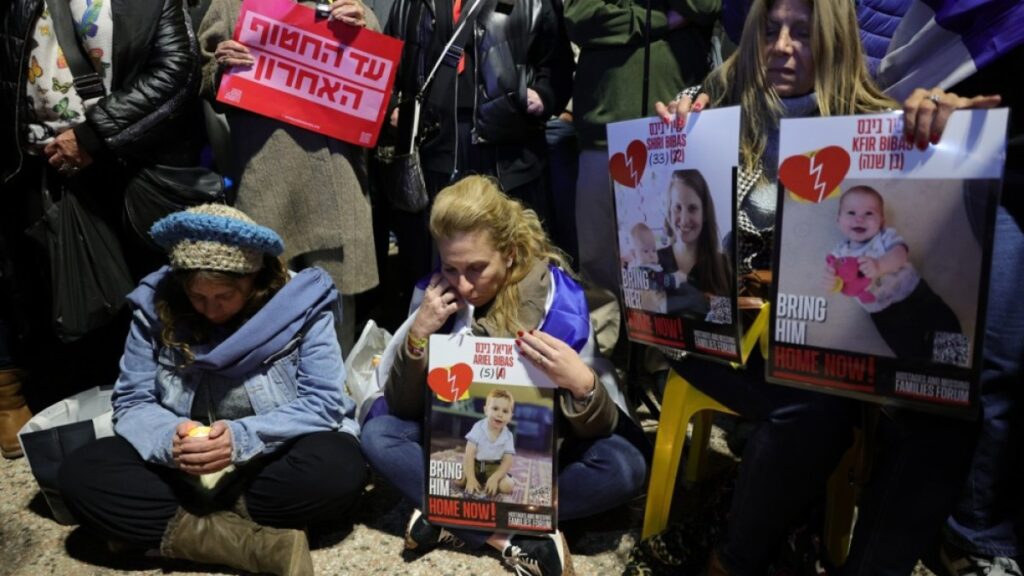
Family members and forensic experts confirm that the new remains turned over by Hamas belong to the deceased Bibas. Israel’s Bibas family has confirmed that the remains of Shiri Bibas have been returned by Hamas, a day after it announced that the Palestinian group had returned an unidentified body. On Friday, Hamas released the remains of Bibas, whose misidentification in a handover earlier prompted anger in the Israeli government and threatened to derail the fragile Gaza ceasefire deal. Bibas’s community, Kibbutz Nir Oz, also confirmed her identity on Saturday, just hours before the seventh captive-prisoner exchange under the ceasefire agreement. “After the identification process at the Institute of Forensic Medicine, this morning we received the news we feared the most. Our Shiri was murdered in captivity and has now returned home to her sons, husband, sister, and all her family to rest,” the Bibas family said in a statement published on Saturday. Hamas had agreed to hand over the bodies of Bibas and her two young sons Kfir and Ariel along with the remains of a fourth captive on Thursday under a ceasefire that has halted fighting in Gaza since last month. Advertisement Hamas said the children and their mother were killed in an Israeli air attack in November 2023. Four bodies were delivered, but Israel later said one of the remains did not belong to the elder Bibas. On Friday, Prime Minister Benjamin Netanyahu pledged to “ensure that Hamas pays the full price” for what he described as a “violation” of the ceasefire deal. Hamas later admitted “the possibility of an error or mix-up of bodies”, which it attributed to Israeli bombing of the area that had killed several people. Basem Naim, a member of the Hamas political bureau, said “unfortunate mistakes” could occur, especially as Israeli bombing had mixed the bodies of Israeli captives and Palestinians, thousands of whom were still buried under the rubble due to relentless Israeli bombardments. “We confirm that it is not in our values or our interest to keep any bodies or not to abide by the covenants and agreements that we sign,” he said in a statement. Ismail al-Thawabta, director of the Hamas-run Gaza Government Media Office, said Netanyahu “bears full responsibility for killing her and her children”. The incident underscored the fragility of the ceasefire deal reached with United States backing and with the help of Qatari and Egyptian mediators last month. Six living captives are due for release on Saturday in exchange for 602 Palestinians in Israeli prison, most of whom have been detained without charge or trial. Negotiations for the second phase of the ceasefire are expected to start in the coming days. Advertisement Adblock test (Why?)
ICC Champions Trophy 2025: Pakistan vs India: Start, team news, preview
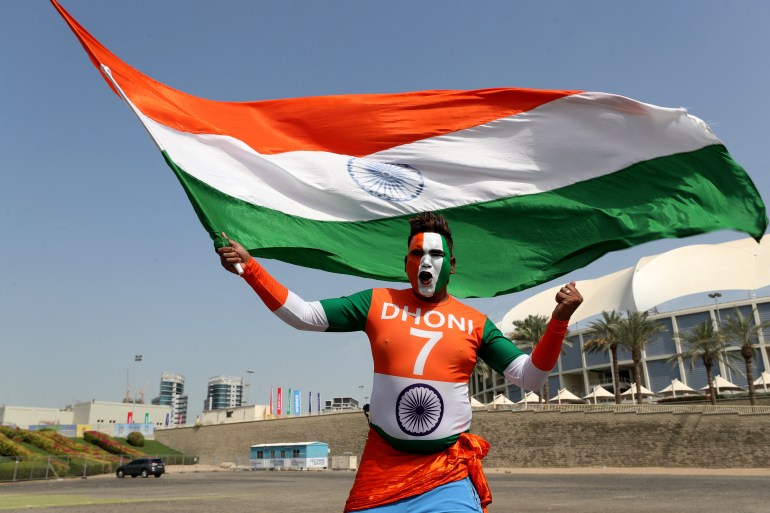
Who: Pakistan vs IndiaWhat: ICC Champions Trophy 2025Where: Dubai International Stadium, Dubai, United Arab EmiratesWhen: Sunday, February 23 at 1pm (09:00 GMT)Follow Al Jazeera‘s live text and photo commentary stream of the match. The host nation – and second favourites – Pakistan face the team tipped to win the tournament, India, at the Champions Trophy on Sunday in Dubai, United Arab Emirates. The match is arguably the biggest fixture in world sport with the two rival nations drawing huge television audiences and general attention from all parts of the globe. As ever, there is plenty at stake, beyond the fierce rivalry between the two cricketing giants and neighbouring countries, with Pakistan defeated by 60 runs in their opening match against New Zealand on Wednesday. India, conversely, opened with a six-wicket win against Bangladesh on Thursday. Why are India not playing their matches in Pakistan? All of India’s matches will be played in UAE instead of Pakistan, the host nation of the 2025 edition. The move came after the Board of Control for Cricket in India (BCCI) reached an agreement with the International Cricket Council (ICC) and Pakistan, that both nations would play all ICC events hosted in either country to be played at neutral venues until 2027. India fans turned out in large numbers for their opening match at Dubai International Stadium [Satish Kumar/Reuters] When was the last time Pakistan hosted a major tournament? International cricket in Pakistan has been heavily restricted in recent years following the attack by gunmen on the Sri Lankan cricket team’s bus in Lahore in 2009, which wounded six players. Advertisement Pakistan was shunned by top teams after the attack, and the Champions Trophy marks the first major global tournament to be hosted in the country in nearly 30 years. The last time Pakistan staged the global game was in 2006 for the Cricket World Cup, which they jointly hosted with India. Why are defending champions Pakistan not the favourites? Pakistan lifted the last edition of the Champions Trophy by beating India in the final in 2017, but the defeated finalists are the favourites for the tournament based on their consistency since then. Pakistan have key match-winning players in the form of Babar Azam and Shaheen Shah Afridi, both former captains, but the nation’s tendency to implode at any stage in any match and any series has led to a reputation that precedes them. Off-field turbulence remains a huge hindrance as well – Gary Kirsten was appointed white-ball coach last year but he quit soon after and was replaced by the then Test-match coach Jason Gillespie. The former Australian bowler soon followed his South African predecessor in standing down – both appeared to be popular figures with the players. The opening defeat by New Zealand, which saw the batting labour through the chase, highlighted how much Pakistan will have to overcome if they are to lift the trophy on home soil. Pakistan’s Hasan Ali celebrates taking the wicket of India’s Ravichandran Ashwin during the 2017 Champions Trophy final [Paul Childs/Reuters] Why are India favourites to win the Champions Trophy? India made harder work of the chase in their opening match against Bangladesh than was expected. Towhid Hridoy’s century should only have delayed the inevitable, but without Shubman Gill’s century in pursuit of 229, India could have been in deep trouble. Advertisement Rohit Sharma’s side reached the final of the last ICC one-day international tournament, where they were defeated by Australia at the 2023 Cricket World Cup. The loss was hard to take for the players and their fans – especially because it came on home soil in Ahmedabad. The 2024 T20 World Cup victory softened the blow to some extent but a victory in the Champions Trophy to deny the host nation and rivals, Pakistan, back-to-back crowns will be a sweet return for Rohit’s men. What are Pakistan and India’s records in the Champions Trophy? Pakistan’s victory in the final against India in 2017 is their only triumph in the competition. India have twice claimed victory in the Champions Trophy, in 2002 and 2013. Form guide – Pakistan The opening defeat by New Zealand marked a third straight loss to the Kiwis, following two defeats in the pre-tournament tri-series with South Africa. Pakistan bring surprisingly good form to the tournament when on the road, however, so perhaps a match in Dubai will help. The men in green secured victory in the last three bilateral ODI series on their travels. A 2-1 triumph over world champions Australia was the highlight, but the 3-0 trouncing of a formidable South Africa side is not to be underestimated. India’s Shubman Gill led the way with a century in India’s run chase against Bangladesh [Altaf Qadri/AP] Form guide – India India’s dominance in ODIs took a recent dip with a 2-0 defeat in the three-match series against Sri Lanka last August. That was their last series prior to England’s tour earlier this month. Advertisement The 3-0 series whitewash was a huge blow to England but a massive confidence boost for the Men in Blue on the eve of the tournament – as was Gill’s moment to shine in the opener against Bangladesh. Last five ODI matches Pakistan: W L W L L India: L W W W W Pakistan team news Pakistan’s Champions Trophy hopes were not only hit by the defeat by New Zealand on Wednesday, but also the tournament-ending injury for Fakhar Zaman. The opening batter valiantly strode to the middle in an attempt to help Virat Kohli and his side in the chase but the chest muscle injury was clearly hampering the 34-year-old, who was ruled out of a return to the team during this edition. Imam-ul-Haq has taken his place in the squad. Pakistan’s Babar Azam, right, could only watch on as Fakhar Zaman struggled with injury in the defeat by New Zealand [Akhtar Soomro/Reuters] India team news India are likely to be unchanged from the side that beat Bangladesh in their opening game. The spin
Pope Francis ‘not out of danger’ as doctors keep him hospitalised
[unable to retrieve full-text content] Doctors for Pope Francis say he is improving but “not out of danger.”
Pope Francis’s condition not life threatening, medical team says
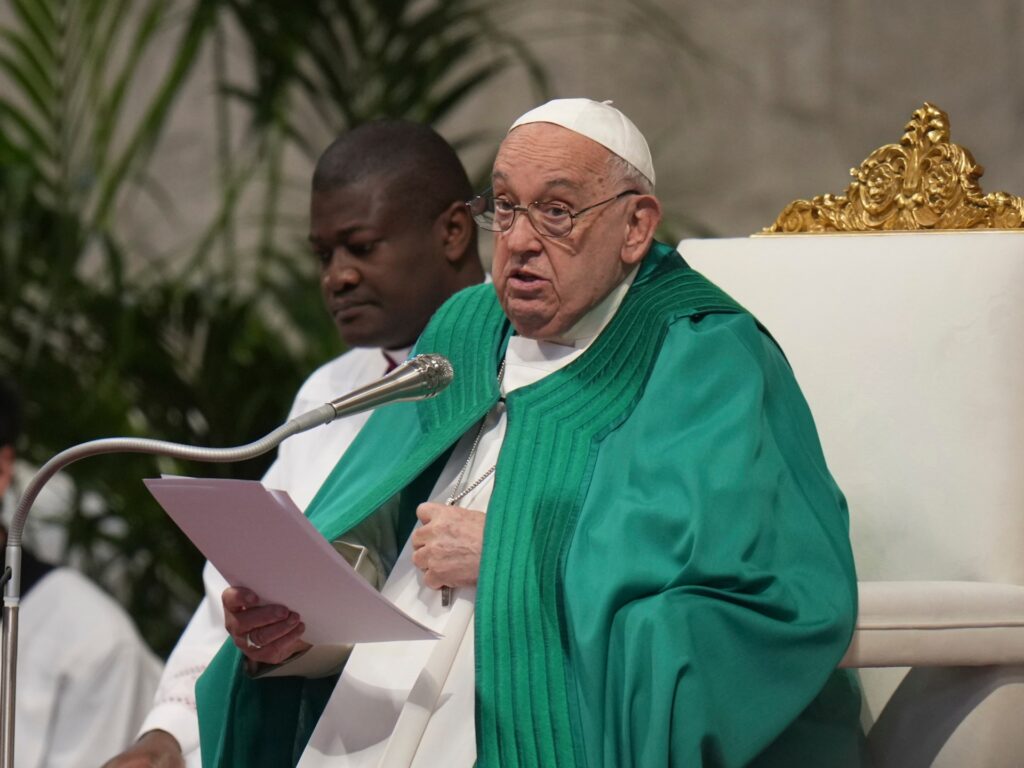
The pontiff is responding to drug therapy and sepsis has not been detected. Pope Francis’s condition is not considered life-threatening, but he is not out of danger, his medical team has said, as the 88-year-old pontiff continued to receive treatment to fight pneumonia and a complex lung infection. On their first in-person update on the pope’s condition, Francis’s personal physician, Luigi Carbone, and surgeon at Rome’s Gemelli Hospital, Sergio Alfieri, sought to reassure the public. Francis was responding to the drug therapy that was “strengthened” after the pneumonia was diagnosed earlier this week, they said. He was also fighting a multipronged infection of bacteria and virus in the respiratory tract. The doctors said there was no evidence the germs had entered his bloodstream, a condition known as sepsis that can lead to organ failure and death. Yet, he was likely to remain in hospital “at least all next week” as there was still a risk that the infection could spread to other parts of the body. Francis was also receiving supplemental oxygen when he needed it through a nasal cannula, a thin, flexible tube that delivers oxygen through the nose. Advertisement The head of the Catholic church was admitted to Rome’s Gemelli hospital on February 14 after a case of bronchitis worsened. Doctors later diagnosed a complex respiratory infection, involving bacteria, virus and other organisms and the onset of pneumonia in both lungs on top of asthmatic bronchitis. There is no provision in canon law for what to do if a pope becomes incapacitated. Pope Benedict XVI “opened the door” to popes retiring, but Francis has shown no signs of stepping down. During his hospital stay, he has continued to work, including making bishop appointments. According to Alfieri, Francis was able to get out of bed and sit at his armchair to work, and maintained “a good appetite”. The medical team also invited the media to avoid reporting unverified news after rumours were circulated that the pope’s health had taken a turn for the worse. Adblock test (Why?)
Musk vows to ‘fix’ X after polls show high support for Ukraine’s Zelenskyy
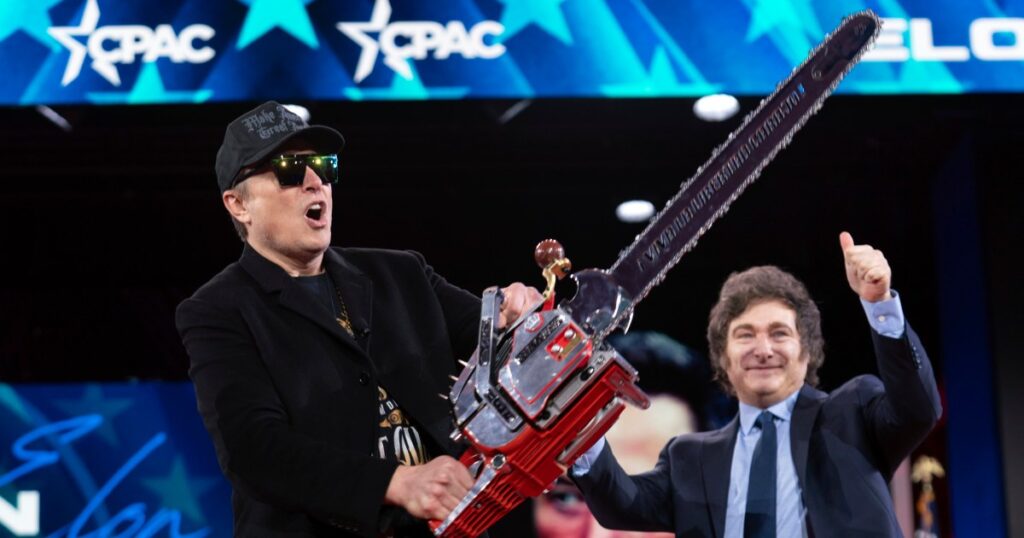
Elon Musk has pledged to “fix” X’s fact-checking tool in response to opinion polling that contradicts United States President Donald Trump’s claim that Ukrainian President Volodymyr Zelenskyy is deeply unpopular in his country. Rowing in behind Trump’s attacks on Zelenskyy on Thursday, Musk claimed that his social media platform’s “community notes” feature was being “gamed” by governments and traditional media. Musk made the claim while reposting an anonymous right-wing X account that cast doubt on the credibility of a Ukrainian polling outfit over its work with the US Agency for International Development (USAID). “If Zelensky was actually loved by the people of Ukraine, he would hold an election. He knows he would lose in a landslide, despite having seized control of ALL Ukrainian media, so he canceled the election,” Musk said on X, while sharing the unsubstantiated claim that US intelligence agencies estimate Zelenskyy’s approval to be just 4 percent. “In reality, he is despised by the people of Ukraine, which is why he has refused to hold an election,” Musk said, referring to Zelenskyy’s decision to suspend elections after declaring martial law in the wake of Moscow’s 2022 invasion. Advertisement “I challenge Zelensky to hold an election and refute this. He will not.” The Tesla and SpaceX CEO, who is one of Trump’s most powerful allies as the head of the Department of Government Efficiency (DOGE), did not provide evidence of manipulation of X’s community notes system, which attaches explanatory notes to contentious posts based on the consensus of users. Musk, who later on Thursday appeared at the Conservative Political Action Conference waving a chainsaw in homage to Argentina’s cost-cutting president Javier Milei, also did not substantiate a claim that widely reported polling by the Kyiv International Institute of Sociology was “Zelensky-controlled” and “not credible.” Lucas Graves, a journalism professor at the University of Wisconsin-Madison who researches misinformation and disinformation, described Musk’s comments as “extremely concerning”. “As is often the case with this kind of rhetoric, the accusations are a guide to what we have to look out for from the accuser – a world where private platforms like X can be systematically gamed to favour the political interests and alliances of their owners,” Graves told Al Jazeera. “A well-designed community notes system can be a useful check on misinformation. But that requires transparent rules that make it easy for users to surface reliable information, and that can’t be tweaked at the whim of one person.” John Wihbey, an associate professor of media innovation and technology at Northeastern University in Canada, said an inescapable feature of crowdsourced fact-checking models is that a platform’s owner or management may not like the results. Advertisement “That is part of the bargain you make when you implement these kinds of mechanisms,” Wihbey told Al Jazeera. “Overall, I think community notes is a good approach, but it should be blended with other tools. X is now relying on it too much, and it is ironic that leadership is now complaining that it isn’t working well.” Musk’s broadside against Zelenskyy comes as the Ukrainian leader and the Trump administration have been engaged in a war of words over Washington’s efforts to reach a deal with Russia to end the war in Ukraine. On Wednesday, Trump accused Zelenskyy of being a “dictator” after the Ukrainian leader rejected his claims that Kyiv was to blame for the war and raised concerns about being sidelined in Washington’s negotiations with Moscow. Trump also claimed that Zelenskyy was “very low” in the polls in his country, echoing an earlier claim that he had an approval rating of just 4 percent. In an opinion poll published by the Kyiv International Institute of Sociology on Wednesday, 57 percent of respondents said they trusted Zelenskyy, up five points from December. The Ukrainian leader’s popularity, however, has waned as the war has gone on, dropping from 90 percent in March 2022 to 64 percent in February last year, according to the institute’s polling. Since taking control of X, formerly known as Twitter, in 2022, Musk has been heavily criticised for allowing, and in some cases promoting, misinformation on the platform. An analysis published by the nonprofit Center for Countering Digital Hate found that nearly three-quarters of a sample of false or misleading posts about the 2024 US elections did not display accurate notes correcting the record. Advertisement “I think there’s a strong chance that X/Twitter becomes a propaganda arm for Musk/Trump – and, in fact, it’s already happening,” Gordon Pennycook, a professor of psychology at Cornell University who studies misinformation, told Al Jazeera. “I think Musk wants to reform community notes because he doesn’t like being corrected, as is typical for authoritarian oligarchs.” Adblock test (Why?)
Russia-Ukraine war: List of key events – day 1,093
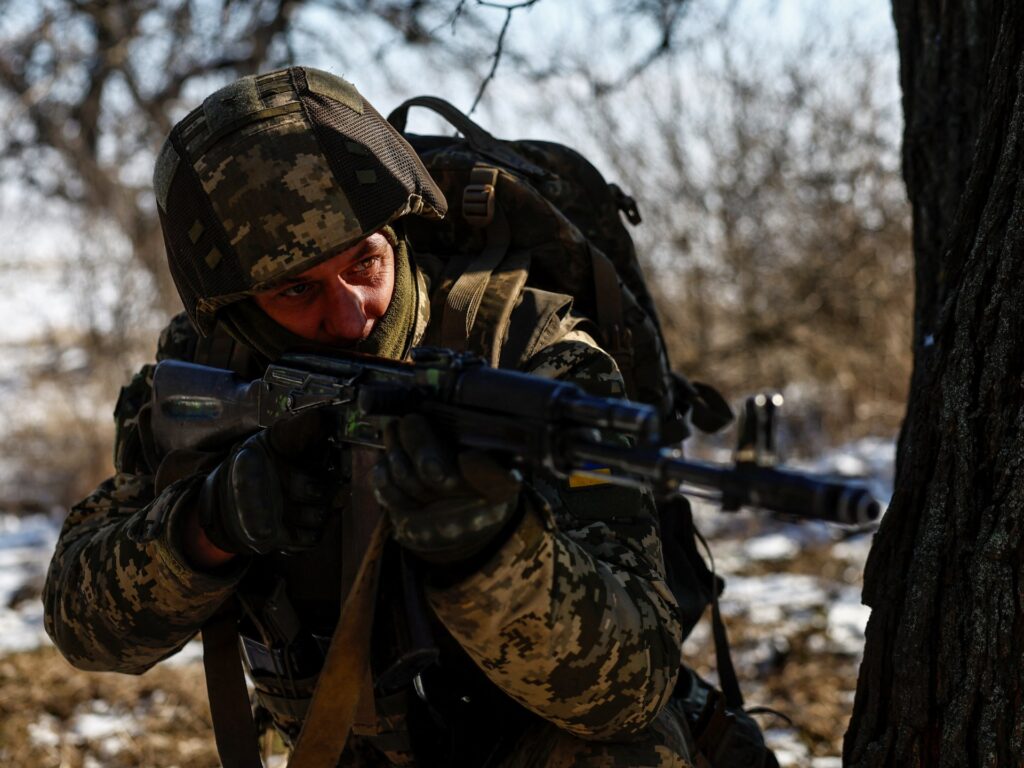
Here are the key developments on the 1,093rd day of Russia’s full-scale invasion of Ukraine. Here is the situation on Friday, February 21: Fighting Ukraine’s air force shot down 87 drones, with 70 more probably lost to electronic countermeasures, the country’s military said, as it responded to an overnight attack in which Russia launched 160 drones. Two ballistic missiles also targeted Odesa. Russian forces took back more than 800 square kilometres (309 square miles) from Ukrainian troops in western Russia’s Kursk region, a Russian general told the Krasnaya Zvezda newspaper. The area is about 64 percent of the land initially seized by Kyiv, the newspaper claimed. Moscow’s forces attacked Ukraine’s energy infrastructure in the southern Odesa region for a second time, Kyiv’s energy firm DTEK said. The first attack left one of Odesa’s districts without heating and power. Ukraine’s military said Russian forces launched 161 drones in an overnight attack on Ukraine, out of which 80 were shot down and 78 were “lost”. Moscow also attacked the northeastern Kharkiv region with 14 missiles. Advertisement Politics & Diplomacy Russian Central Bank’s Governor Elvira Nabiullina said the bank was not involved in the talks with the United States on lifting sanctions or the freeze on Russia’s foreign country reserves. Kremlin Spokesperson Dmitry Peskov said any plans by the United Kingdom to send troops to Ukraine as part of a potential peacekeeping mission would be unacceptable. Such a move would involve forces from a NATO member state, which would have necessary ramifications for Russia’s security, Peskov said. Russia’s foreign minister has branded such plans a “direct threat”. Peskov said that Russia had agreed to resume dialogue with the US on “all parameters” regarding the war on Ukraine, including prisoner exchanges. He also slammed Ukraine’s President Volodymyr Zelenskyy for his “inadmissible” and “unacceptable” remarks about other heads of state, after Zelenskyy accused US President Donald Trump of living in a Russian-fuelled “disinformation bubble” when it came to Ukraine. White House National Security Adviser Mike Waltz also criticised Zelenskyy’s comments, saying Ukraine needs to “tone it down and take a hard look and sign that deal”, referring to the rare earth minerals that the US now wants for helping Kyiv’s war effort. Ukraine began talks with the International Monetary Fund’s team working on the country’s latest loan programme review, which could unlock about $917m in new funds. Kyrylo Budanov, Ukraine’s military intelligence agency chief, said he believes a ceasefire between Moscow and Kyiv could happen this year. “How long it will be, how effective it will be – is another question,” Budanov added. The Associated Press news agency reported that Zelenskyy and Trump’s special envoy to Ukraine and Russia Keith Kellogg had a meeting in Ukraine, but that a joint news conference scheduled for afterwards was cancelled at the US’s request. However, Zelenskyy said the “detailed” meeting with Kellogg was “good” and “restore[d] hope.” NATO chief Mark Rutte said any European security guarantees for Ukraine under a future peace deal would need to be backed by the US, “not with boots on the ground”, but backup to ensure that the deterrence is there, he said. Despite tension with the US, Zelenskyy said Kyiv was ready to work with Washington to produce a “strong, effective investment and security agreement” when dealing with Russia and a peace deal. “We have proposed the fastest and most constructive way to achieve results. Our team is ready to work 24/7,” Zelenskyy said. China’s Foreign Minister Wang Yi has told his G20 counterparts that a “window for peace” is opening for the Ukraine crisis, days after top US and Russian diplomats met in Saudi Arabia. Advertisement Adblock test (Why?)
Are white Afrikaners at risk in South Africa? Not really, most say
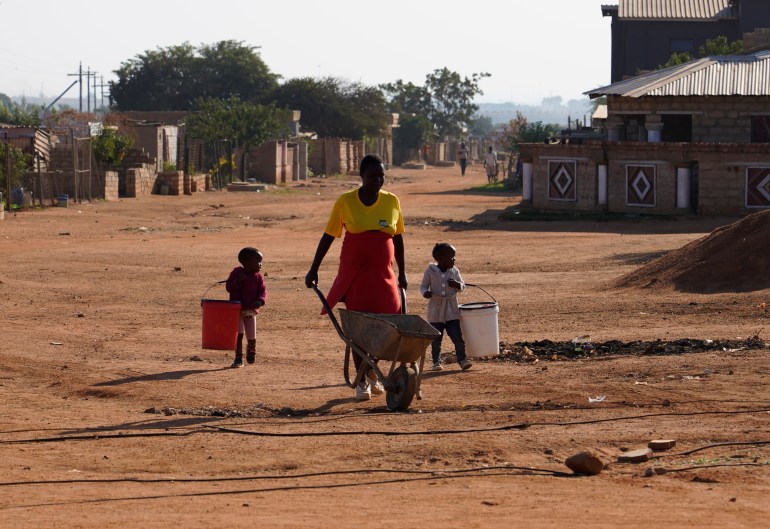
Johannesburg and Pretoria, South Africa – On a rainy Saturday in South Africa’s capital Pretoria, several hundred white Afrikaners gathered outside the embassy of the United States. “President Trump and Elon Musk, please help the farmers chase away the [African National Congress] ANC takeover of South Africa,” read a large banner hoisted above the crowd gathered to “thank” the US president for championing their cause against their government. On February 7, Donald Trump signed an executive order offering asylum to white Afrikaners and cutting aid to South Africa. The US said it made the decision after Pretoria signed a law allowing the government to expropriate land in the public interest under exceptional circumstances and over the genocide case South Africa brought against Israel at the International Court of Justice (ICJ). The minority Afrikaner community are descendants of mainly Dutch colonial settlers who formalised the segregationist system of apartheid in 1948. Under apartheid, whites were legally able to seize land and resources from the majority Black population, who were largely relegated to far-off “Bantustans” (segregated homelands) or overcrowded, ill-equipped townships. Advertisement Although apartheid ended in 1994 when the ANC won the first racially inclusive democratic elections in South Africa, experts said economic apartheid persists with many Black people still cut off from land, resources and opportunities. Data show that 73 percent of privately owned land in South Africa is white-owned despite white people comprising about 7 percent of the population. In corporate South Africa, white individuals occupy 62 percent of top management positions while 17 percent of leadership roles are held by Black managers. Despite this, experts said small groups of white South Africans, emboldened by right-wing lobbying groups, have been championing a narrative in the US in recent years that Afrikaners are the ones under threat. At the rally outside the US embassy, speakers urged attendees to “make South Africa great again,” echoing Trump’s Make America Great Again (MAGA) rhetoric. Other participants spoke of being on an “anti-woke mission”, aligning with broader global narratives surrounding identity and nationalism. Willem Petzer, a well-known Afrikaner commentator and organiser of the event, presented a 26-page memorandum to US officials. It alleged that South African transformation legislation aimed at rectifying the injustices of apartheid is, in fact, discriminatory against the Afrikaner community. The US embassy said it would send the document to Trump. When Petzer took the podium, he was met with enthusiastic applause. He pointed to billionaire Musk’s Starlink satellite network, which provides internet service, alleging that it could not operate in South Africa because “Musk would have to allow the state to expropriate 30 percent of his company in order to do business here”. Advertisement The government has said that is not true and the conflict with Musk’s Starlink is because South African legislation requires companies operating in the country to be 30 percent Black owned to redress past inequalities. Musk has tried to get an exemption from the rule. The South African-born tech billionaire and close Trump adviser is perceived by many as an ally of the Afrikaner cause. He has repeatedly posted his outrage on X against what he claims is unfair treatment of white South Africans – even going as far as claiming a “white genocide” was occurring. President Cyril Ramaphosa cautioned Musk this month against spreading misinformation regarding South Africa in a telephone call. A woman and two children make their way to a water tank to collect water in the Hammanskraal township in Pretoria, South Africa. Decades after the end of apartheid, Black South Africans still have the least access to land and resources [Denis Farrell/AP] ‘I am quite privileged’ For many South Africans, the gathering outside the US embassy evoked memories of apartheid nostalgia as participants sang “Die Stem”, the national anthem used during the years of racist rule. In the crowd, some supporters held placards that read, “Trump, we are coming,” responding to the offer of refugee status for Afrikaners. However, many would not say whether they would actually take Trump up on the offer. Some experts said the threshold for someone to gain refugee status in the US is not met by Afrikaner landowners. The US Immigration and Nationality Act defines a refugee as someone unable or unwilling to return to their home country due to a well-founded fear of persecution based on race, religion, nationality, membership in a particular social group or political opinion. Advertisement Meanwhile, beyond the rally, most white South Africans seem uninterested in seeking asylum. Many acknowledge they experience privilege not persecution in a democratic South Africa. About 2km (1.2 miles) from the US embassy, the University of Pretoria buzzed with students of all races, many born after apartheid ended 31 years ago. During apartheid, Black students were not allowed to study at the institution. Marissa Jacobs, a 22-year-old student hailing from an Afrikaans community in Pretoria, said she has never personally felt threatened as an Afrikaner living in South Africa but she empathises with farmers who do. “They feel like they are being attacked, and while it’s true that crime affects all races, farm murders are happening,” she remarked, referring to rural violence, which is a big problem in South Africa but which experts say affects people from all communities. Jacobs praised South Africa’s fair and progressive constitution but criticised race-based transformation laws, expressing distrust towards the government. “I know the government says it won’t take away people’s land, but didn’t President Ramaphosa sign the Expropriation Act? I don’t trust them,” she said. As a final-year political science student, she has no plans to leave South Africa for the US and doesn’t personally know anyone who does. Nicole du Plessis, who is studying supply chain management, said she has no idea why people would consider leaving South Africa for the US. “I am quite privileged. I never felt any oppression against my culture,” she added as two of her friends nodded in agreement. Advertisement She also emphasised that crime is a universal issue that affects everyone equally. Muimelele Metsiende,
Bulldozers and trucks carrying mobile homes seen entering Gaza
[unable to retrieve full-text content] Bulldozers, building materials and housing units have been seen at the Rafah crossing.
US switches stance on Ukraine war, seeking $500bn in payback
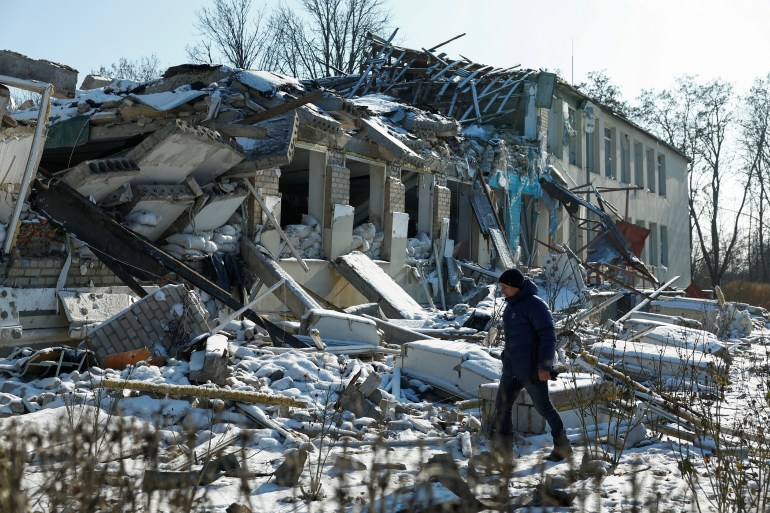
Ukraine’s diplomatic situation was upended during the past week, as its main ally, the United States, reversed several positions. US President Donald Trump announced on February 12 that he was beginning direct talks with Russia to end the war, overturning his predecessor’s promise that there would be “nothing about Ukraine without Ukraine”. On the same day, US Defense Secretary Pete Hegseth echoed Russian diplomatic language invoking “realism”, when he told Ukraine Defence Contact Group partners in Brussels that “returning to Ukraine’s pre-2014 borders is an unrealistic objective,” and that “the United States does not believe that NATO membership for Ukraine is a realistic outcome of a negotiated settlement.” Eventual NATO membership has been a US promise to Ukraine since 2008, and the US has, throughout the war, supported a restoration of the border Russia recognised with Ukraine in 1991. German Defence Minister Boris Pistorius called the one-sided concessions “clumsy” and “a mistake”. Advertisement Worse was to come On Tuesday, as Trump’s negotiating team arrived in Riyadh to begin talks, Trump blamed Ukraine for starting the war and implied it had stolen aid, provoking an angry response from Ukrainian President Volodymyr Zelenskyy. “Today, I heard, ‘Oh, we weren’t invited’ [to talks in Riyadh]. Well, you’ve been there for three years. You should have ended it three years ago. You should have never started it,” Trump told reporters at Mar-a-Lago. The full-scale war started in February 2022, when Russia invaded Ukraine. Trump said Zelenskyy’s approval rating was at 4 percent, and that he’d “never seen an accounting” of what he alleged was $350bn given by the US to Ukraine. The Kyiv International Institute of Sociology, which conducts nationwide surveys in Ukraine, polled Zelenskyy’s approval rating at 57 percent this month. According to the Kiel Institute for the World Economy, which tracks military, financial and humanitarian aid to Ukraine, the United States has donated $114bn and the European Union $132bn over three years. Zelenskyy told reporters in Kyiv the next day that Trump had been caught in “a web of disinformation”. Trump responded with more criticism of Zelenskyy, posting on X that a “modestly successful comedian”, had become “a dictator without elections” who had “done a terrible job”. Europe, too, has been shocked by the US government’s stance. Director of a local lyceum, Yurii Bilyk, walks next to its building destroyed by a recent Russian air strike in the village of Novopavlivka, amid Russia’s attack on Ukraine, in Dnipropetrovsk region, Ukraine on February 18, 2025 [Valentyn Ogirenko/Reuters] US Vice President JD Vance scolded Europeans for restricting free speech and curtailing democracy in an address to the Munich Security Conference on Friday, suggesting that extreme-right parties shunned by mainstream politicians were the true expression of the people’s will. Advertisement “We see in America a president who admires autocratic systems,” said Germany’s next chancellor-presumptive, Friedrich Merz, and a “vice president who tells us how to run our democracy”. “We are no longer sure if the Americans still stand by our side as they did after 1945,” he said. ‘Quick fix is a dirty deal’ Ukrainian politicians have also expressed reservations about NATO’s credibility as an alliance. Other European leaders slammed the Riyadh process as a sham. “Any quick fix is a dirty deal … any deal behind our backs won’t work,” said European Union foreign policy chief Kaja Kallas on X. “Peace will only come through strength,” said German Foreign Minister Annalena Baerbock. “This requires tough and long-term security guarantees for Ukraine, a strong NATO and progress in Ukraine’s accession negotiations with the European Union,” she said. Zelenskyy twice in the past week rejected US proposals to formalise US-Ukrainian economic relations because they lacked security guarantees. Hegseth presented him with a payback plan based on the exploitation of Ukraine’s mineral wealth on February 12, and Vance brought it back to Munich on Friday. That plan appeared to be based on what Trump said in an interview on February 10. “I told [Ukraine] that I want the equivalent of, like, $500bn worth of rare earth, and they’ve essentially agreed to do that,” Trump told Fox reporter Bret Baier. Zelenskyy estimated that Ukraine had received $98.5bn in US military and financial support. Advertisement “But one cannot count up to $500bn and say, ‘Give us back $500bn in minerals.’ That’s not a serious discussion,” Zelenskyy said on Wednesday. No seat for Ukraine Moscow has been bullish since the talks in Riyadh were announced. Deputy chairman of Russia’s National Security Council Dmitry Medvedev on February 12 upheld Moscow’s defiant stance against swapping any of the Russian land Ukraine holds in Kursk with any of the Ukrainian land Russia holds. “The proposals of Ukrainians about the ‘exchange of territories’ are nonsense, the only way to heal is to ‘feel like Russians again’, Dmitry Medvedev wrote in his Telegram channel,” said Foreign Ministry spokesperson Maria Zakharova. Kremlin spokesperson Dmitry Peskov went a step further on Sunday, denying that Ukraine had any seat at the negotiating table because it lacked sovereignty. “That country cannot really answer for its words,” Peskov said in an interview on Russia Today. “Each time it is necessary to make a certain adjustment when negotiating with them, for their deficit of sovereignty and the deficit of trust in them. Which will not go anywhere.” On Monday, Russia’s permanent UN representative, Vasily Nebenzya, insisted on the terms for peace that Russian President Vladimir Putin outlined last June. Ukraine should surrender the parts of Donetsk, Luhansk, Zaporizhia and Kherson that Moscow doesn’t control, he said, because it had “irrevocably lost those regions, abjure NATO membership and remain neutral. Moscow currently controls an estimated two-thirds of Donetsk, three-quarters of Zaporizhia and Kherson, and 99 percent of Luhansk. Advertisement Denmark’s Defence Intelligence Service declassified a report on February 11 saying Russia was rebuilding its military in preparation for a war against NATO, with the backing of China, Iran and North Korea. Estonia’s Ministry of Foreign Affairs published its annual intelligence report the following day, agreeing that Russia was preparing for a
ICC Champions Trophy 2025: India’s Gill steers nervy win against Bangladesh
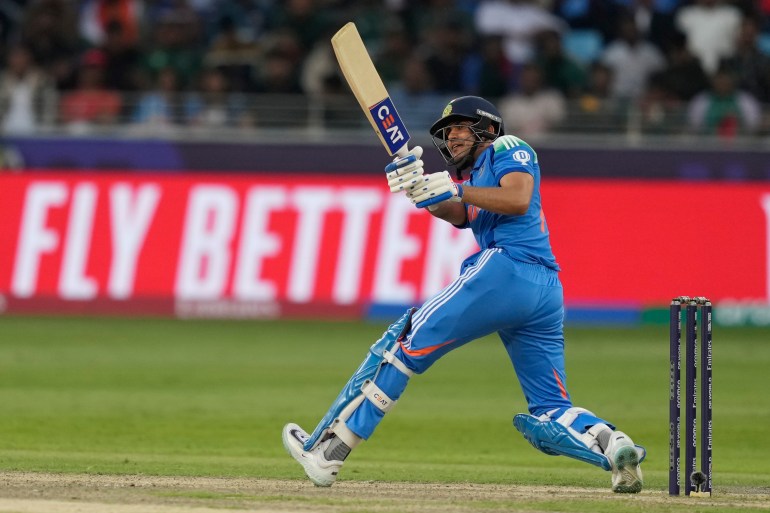
Opener Shubman Gill carries his bat with a century to lead India to victory against spirited Bangladesh in Dubai. In-form Shubman Gill made an unbeaten 101 to anchor India’s nervy chase in a six-wicket win over Bangladesh as the two teams began their Champions Trophy campaign in Dubai. Needing a tricky 229 for victory on a seemingly tough pitch on Thursday, India rode on Gill’s second successive one-day international [ODI] ton to achieve their target with 21 balls to spare. Title favourites India are playing their matches in the 50-over tournament at the Dubai International Cricket Stadium after refusing to tour host nation Pakistan over political tensions. Pace spearhead Mohammed Shami set up victory with figures of 5-53, helping reduce Bangladesh to 35-5 in his opening spell before they recovered to manage 228 all out after electing to bat first. “With the bat, yes we were under pressure a bit,” India captain Rohit Sharma said. “But when you are playing a game like this, you are bound to be under pressure.” India’s Shubman Gill launches a six during his innings [Altaf Qadri/AP] Bangladesh won the toss and opted to bat at Dubai International Cricket Stadium, but was in trouble almost immediately. Advertisement Towhid Hridoy, who made 100 – his first ODI ton, and Jaker Ali (68) put on 154 runs for the sixth wicket to lift the total from the sticky start, albeit with some assistance from sloppy Indian fielding including two dropped catches. In reply, India started strongly as Rohit Sharma and Gill got going with regular boundaries. Rohit became just the 10th batsman – and fourth from India – to surpass 11,000 ODI runs. The India captain made 41 before he was dismissed by fast bowler Taskin Ahmed and Virat Kohli walked in to loud cheers from the crowd at a largely empty stadium. India’s captain Rohit Sharma looks skywards to watch the ball just before he was caught [Altaf Qadri/AP] Kohli took 10 balls to get his first run and made 22 before mistiming a late cut to backward point off leg-spinner Rishad Hossain. India lost two more wickets after Rishad and Mustafizur Rahman removed Axar Patel and Shreyas Iyer to put India in trouble at 144-4. But vice-captain Gill, who was player of the series with 259 runs in India’s 3-0 ODI sweep of England last week, kept calm as he and KL Rahul took the team home in an unbeaten 87-run stand. Rahul finished 41 not out but was dropped early in his innings by Jaker at deep mid-wicket and India never faltered after that with Gill reaching his eighth ODI century. Shami was the bowling hero with his sixth five-wicket haul in 104 ODIs, stepping up in the absence of Jasprit Bumrah, who was ruled out of the tournament due to a back injury. Shami struck in the first over to get left-handed Soumya Sarkar caught behind for a five-ball duck. Advertisement Left-arm spinner Axar struck twice in two balls to send Tanzid Hasan (25) and Mushfiqur Rahim, for a duck, trudging back to the pavilion. It could have been six down had Rohit not dropped a catch at first slip, denying Axar a hat-trick and handing Jaker a reprieve on nought. Jaker, who survived another chance on 24 when wicketkeeper Rahul missed a stumping, and Towhid, dropped on 23 by Hardik Pandya at mid-off, combined to thwart the Indian charge. Bangladesh’s Towhid Hridoy celebrates after scoring a century [Altaf Qadri/AP] Jaker fell to Shami but Towhid kept up the fight until his 118-ball knock ended with six fours and two sixes. “In 10 overs, we lost five wickets,” Bangladesh captain Najmul Hossain Shanto reflected. “It’s very hard to recover and so it cost us the game.” Shanto was also critical of his team’s effort in the field. “We made some mistakes on the field, a couple of dropped catches and a few runouts. If we could take those catches, it could be different,” he said. India next play archrivals Pakistan in a Sunday blockbuster, while Bangladesh face New Zealand – who opened their tournament by beating Pakistan on Wednesday – in Rawalpindi on Monday. Adblock test (Why?)