

Detained Gaza doctor Hussam Abu Safia seen shackled in new video
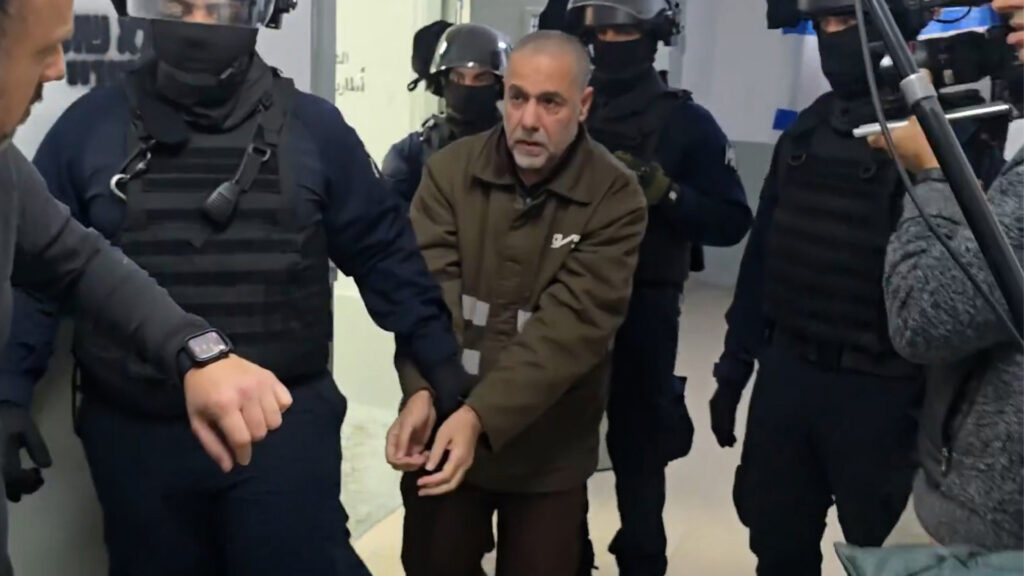
NewsFeed The detained director of Gaza’s Kamal Adwan Hospital has been shown in shackles in a video on Israeli media that has been condemned by his family. It’s the first time Dr Hussam Abu Safia has been seen since his arrest in December. Published On 20 Feb 202520 Feb 2025 Adblock test (Why?)
Trump vs Zelenskyy: What’s behind escalating war of words?
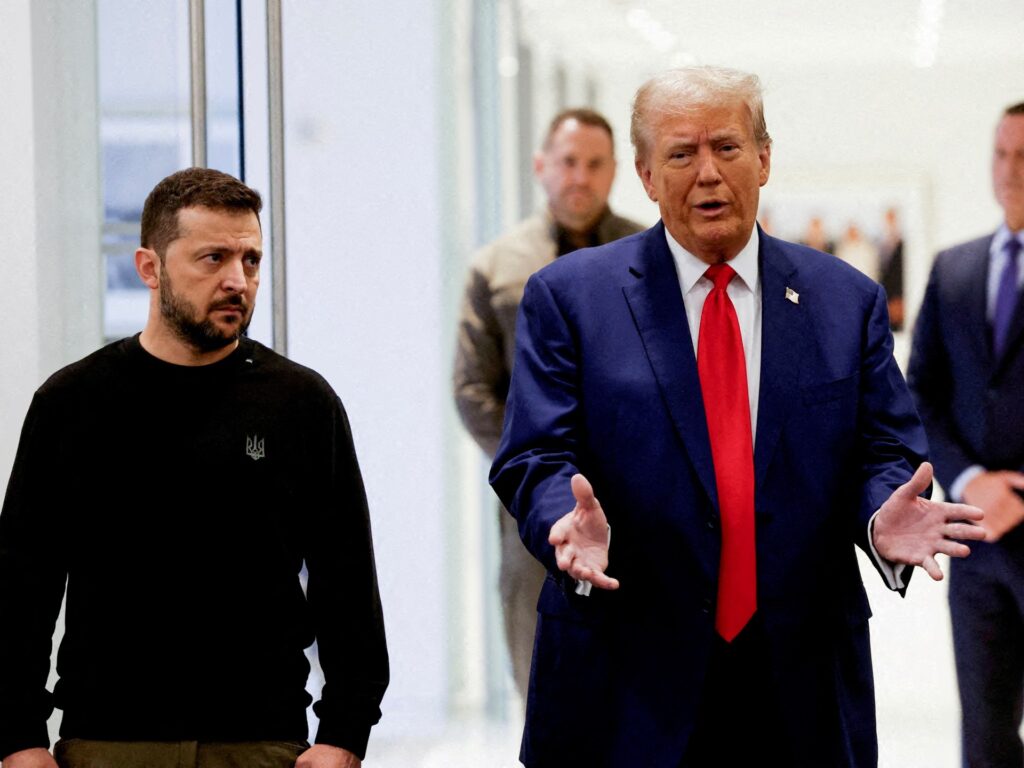
United States President Donald Trump has called his Ukrainian counterpart Volodymyr Zelenskyy a ‘dictator’ as the rift between them has deepened over Ukraine peace negotiations. Trump’s latest broadside against Zelenskyy came after the Ukrainian leader challenged his claims that Ukraine had started the war. Zelenskyy had also spoken against being left out of the Russia-US peace talks held in the Saudi capital Riyadh on Tuesday. In an online post later on Wednesday, and during a speech in Miami on the same day, Trump delivered scathing attacks against the Ukrainian leader, accusing him of taking US money and embroiling the country in an endless conflict. Here’s the war of words between Trump and Zelenskyy and how it may affect the Ukraine peace talks: What did Trump say about Zelenskyy? In a Wednesday post on his social media platform, Truth Social, Trump wrote that Zelenskyy, a “moderately successful comedian” has “talked the United States of America into spending $350 Billion Dollars, to go into a War that couldn’t be won, that never had to start”. Advertisement In terms of funding disbursed to Ukraine, he added: “The United States has spent $200 Billion Dollars more than Europe.” Trump added that Zelenskyy “refuses to have Elections, is very low in Ukrainian Polls, and the only thing he was good at was playing Biden ‘like a fiddle’”. He said Zelenskyy had done a “terrible job” as the leader of Ukraine, deeming him “A Dictator without Elections”. “In the meantime, we are successfully negotiating an end to the War with Russia, something all admit only “TRUMP,” and the Trump Administration, can do. Biden never tried, Europe has failed to bring Peace, and Zelenskyy probably wants to keep the ‘gravy train’ going.” On Wednesday, onstage during the Saudi-backed Future Investment Initiative (FII) Institute summit in Miami, Trump thanked Saudi Arabia for hosting talks about Ukraine which were attended by US and Russian officials. On Tuesday, diplomats from Russia and the US held the first face-to-face talks since Moscow’s invasion of Ukraine three years ago. After four hours of talks, the two sides agreed to form a team to work on ending the war – Europe’s deadliest conflict since World War II. They also agreed to revive diplomatic ties, which had descended to a historic low following the Russian invasion of Ukraine in 2022. Why is Trump saying this and what else has he said? Trump’s comments came a day after Zelenskyy said that Trump was inhabiting a “Russian-made disinformation space” regarding the war in Ukraine. “The reason that Donald Trump is doing this is that he is notoriously thin-skinned. And he is not happy about the comments that Volodymyr Zelenskyy made earlier,” said Al Jazeera’s White House correspondent, Kimberly Halkett. Advertisement On Tuesday, Trump blamed Ukraine for starting the war, saying: “Today I heard, ‘Oh, we weren’t invited.’ Well, you’ve been there for three years, you should have ended it… You should have never started it. You could have made a deal.” He also asserted that Ukraine should conduct elections. He said, without evidence, that Zelenskyy had an approval rating of 4 percent. The pushback from Zelenskyy, some analysts say, came after Trump repeated Russian talking points on the Ukraine war and excluded Kyiv from the Riyadh talks on Tuesday. While the war of words between Trump and Zelenskyy has recently escalated against the backdrop of Ukraine peace talks, hostility has been brewing between the two for years. During Trump’s first term in September 2019, he wanted Zelenskyy to work with US attorney Rudy Giuliani in investigating political rival Democrat Joe Biden and his son, Hunter Biden. Trump alleged that Biden tried to interfere with a Ukrainian prosecutor in relation to his son. This was when it was alleged that Hunter accepted bribes from a Kyiv-based company, Burisma. Hunter pleaded guilty in the tax evasion case but was pardoned by Biden months later in December 2024. Despite criticising the Ukrainian leader on the campaign trail, Trump met Zelenskyy months before the elections at his New York base in Trump Tower to discuss how to end the war. What has Zelenskyy said? “We have evidence that these figures are being discussed between America and Russia. That is, President Trump … unfortunately lives in this disinformation space,” Zelenskyy told Ukrainian television on Tuesday in the context of Trump’s comments about his approval rating. Advertisement The war of words between the two leaders intensified after Trump spoke to Russian President Vladimir Putin last week and agreed to hold talks with Moscow without the involvement of Kyiv and Europe. A miffed Zelenskyy asserted that Ukraine, with European nations, needed to be represented at the peace talks. Trump’s overture to Putin has stunned European leaders who believe the Russian leader cannot be trusted. They fear a Ukraine deal without them would leave Europe vulnerable to Russia aggression. On Wednesday, Zelenskyy accused the Trump administration of bringing Moscow out of isolation. He said Russia could not be trusted. “This isn’t positive for Ukraine. What it does is that they’re bringing Putin out of isolation, and the Russians are happy because the discussion focuses on them.” Are Trump’s claims true? Zelenskyy’s five-year term was due to end in May 2024, but elections have been suspended after martial law was declared following Russia’s full-scale invasion of the East European nation. The numbers cited by Trump in terms of aid to Ukraine contradict the data collected by research institutes. As of December 2024, European countries sent about $138bn to Ukraine, while the US sent about $120bn, according to the Kiel Institute for the World Economy. In terms of Zelenskyy’s approval rating, at the end of 2024, 52 percent of Ukrainians said they trusted him, according to a survey conducted by the Kyiv International Institute of Sociology (KIIS). Trump’s claim that Ukraine started the war is also untrue. Russia sent troops inside Ukraine as part of what it called a “special military operation” and has since captured nearly 20 percent of Ukrainian territory. Advertisement What are
Fake flight tickets target migrants ahead of German election
[unable to retrieve full-text content] Fake tickets for a one-way flight out of Germany for undocumented migrants have been handed out by the far-right AfD.
Australia, New Zealand monitor ‘unusual’ movement of three Chinese warships
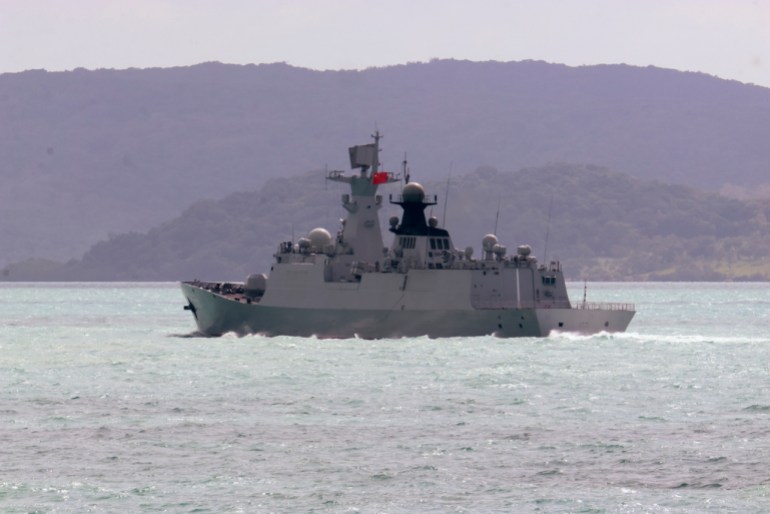
Three Chinese navy ships have charted a course along Australia’s eastern coast in a move described as ‘unusual’ by the country’s defence minister. Australia and New Zealand are monitoring the “unusual” presence of a group of Chinese naval vessels spotted in international waters off the Australian eastern coast, defence ministers of the two countries said. Three Chinese navy vessels – a frigate, a cruiser and a supply tanker – were spotted last week in waters off mainland Australia. The warships have since charted a course taking them down Australia’s eastern coast and were reported to be located 150 nautical miles (278km) east of Sydney. “We are keeping a close watch on them, and we will make sure we are watching every move,” Australia’s Defence Minister Richard Marles said in a television interview. “It’s not unprecedented. But it is an unusual event,” Marles said, stressing the vessels were “not a threat” and that they were “engaging in accordance with international law”. “And just as they have a right to be in international waters, which is what they are doing, we have a right to be prudent and to make sure that we are surveilling them, which is what we are doing,” he added. Advertisement New Zealand’s Defence Minister Judith Collins told Radio New Zealand her country’s defence forces were also monitoring the Chinese ships. “We have not been informed by the Chinese government why this task group has been deployed into our region, and we have not been informed what its future plans are,” Collins said. “We will continue to monitor these vessels,” she said. China’s People’s Liberation Army-Navy’s Jiangkai-class frigate Hengyang travels in the Torres Strait off Australia’s coast, on February 11, 2025 [Australian Defence Force via AP] The appearance of the vessels comes after Australia and China traded barbs over an incident last week between a Chinese fighter jet and an Australian military plane. Canberra rebuked Beijing for “unsafe” military conduct, accusing the Chinese jet of dropping flares near an Australian air force plane patrolling the South China Sea. Beijing swiftly hit back, accusing the Australian plane of “violating Chinese sovereignty and endangering Chinese national security”. The incident was the latest in a string of tense encounters between China and Australia in the increasingly contested airspace and shipping lanes of the Asia Pacific region. A Chinese jet was accused of intercepting an Australian Seahawk helicopter in international airspace in 2024, dropping flares across its flight path. In 2023, a Chinese destroyer was accused of bombarding submerged Australian navy divers with sonar pulses in waters off Japan, causing minor injuries. Advertisement Adblock test (Why?)
Why are Trump supporters claiming Google data is exposing DC corruption?

Supporters of United States President Donald Trump and his “Make America Great Again” movement have latched onto a spike in the popularity of Google searches for “criminal defense lawyer” and other crime-related terms in Washington, DC. MAGA followers have claimed that the Google data shows that a corrupt elite in the US capital are afraid of being arrested and prosecuted under Trump’s new administration. “PANIC IN DC: Google searches explode for: – Criminal defense lawyer – RICO law – Swiss bank – Offshore bank – Wire money – IBAN – Statute of limitations,” the MAGA-linked X account Libs Of TikTok posted to its more than four million followers on Sunday. The post, accompanied by screenshots of search terms on Google Trends, has been shared more than 16,000 times, attracted more than 65,000 “likes”, and received some 1.9 million views on X. PANIC IN DC: Google searches explode for: – Criminal defense lawyer– RICO law– Swiss bank– Offshore bank– Wire money– IBAN– Statute of limitations pic.twitter.com/UYtBiapWDw — Libs of TikTok (@libsoftiktok) February 16, 2025 Advertisement The Google Trends data has been amplified by numerous prominent MAGA figures to promote the narrative that DC elites are fearful of being exposed for their crimes. “The Beltway is in full panic mode,” Matt Gaetz, a close Trump ally and former Florida congressman, said on his show on the right-wing One America News Network on Wednesday, using a common expression for the political and social elite of Washington, DC. “Google search trends prove it, and the guilty are sweating bullets like they are auditioning for a mob flick,” Gaetz said. “Dumb criminals googling their crime,” conservative podcaster Josie Glabach, whose X account “Redheaded Libertarian” has more than 852,000 followers, posted on Sunday. While Google data does show a surge in the relative popularity of particular search terms, the truth is less clear-cut than what is being portrayed in MAGA circles. So what is actually going on in Washington, DC? What do the claims have to do with Trump’s efforts to cut government spending? The claims come as Trump and tech billionaire Elon Musk are undertaking a sweeping review of the federal bureaucracy with the stated mission of rooting out waste, abuse and fraud. Some prominent MAGA figures, including Gaetz, have drawn a direct link between the Google data and Musk’s cost-cutting efforts via his so-called Department of Government Efficiency (DOGE). DOGE has overseen the layoffs or resignations of tens of thousands of government employees and set in motion plans to dismiss potentially hundreds of thousands more. Over the past month, Musk’s task force has cut employees at most government agencies, including the Department of State, Department of Health and Human Services, the Centers for Disease Control and Prevention (CDC), the Environmental Protection Agency (EPA), the Internal Revenue Service (IRS), the US Agency for International Development (USAID), and the Federal Aviation Administration (FAA). Advertisement Some federal employees are now suing the US government through unions like the American Federation of Government Employees. The cuts have reinforced many longstanding MAGA beliefs about corruption in the federal government. Many MAGA supporters subscribe to the idea of a “Deep State”, the conspiracy theory that the US government is run by a secretive cabal of officials that is unaccountable to the US president or Congress. As with other conspiracy theorists, MAGA supporters believe everything is “interconnected”, Mihaela Mihailescu, a PhD researcher at the University of Bath focused on the politics of the internet, told Al Jazeera. They believe that “Washington, DC, is in full-blown panic mode, with corrupt officials desperately searching for offshore bank accounts and legal loopholes as Trump ‘cleans house’”, Mihailescu said. “The claim that a sudden surge in Google searches for terms like ‘RICO law’ and ‘Swiss bank’ indicates a widespread exodus of corrupt bureaucrats is based on little more than speculation – never mind that we have zero evidence that these searches are even coming from DC insiders,” she added. A lack of evidence has been no obstacle to the spread of Deep State-related conspiracy theories in the past, including Q Anon and Pizzagate – which claimed, respectively, that Trump was secretly fighting a cabal of cannibalistic Satan worshippers and high-level members of the Democratic Party operated a child sex-trafficking ring out of a Washington pizzeria. Advertisement What do the Google Trends results actually show? Al Jazeera on Thursday carried out searches of the terms highlighted by “Libs of TikTok” on Google Trends and found a spike in certain phrases in the Washington, DC, area in the weeks surrounding Trump’s inauguration. Searches for “criminal defense lawyer”, “lawyer”, “RICO law”, “Swiss bank”, and “IBAN” all rose in popularity around this time. While these results indicate there was a surge in the relative popularity of certain searches, it is difficult to say much more than that due to the nature of Google Trends. According to Google, Google Trends takes a sample of aggregated search data to show what search terms are rising and falling in popularity during a particular period. Data is presented on a scale of 0-100, which lets users make an “apples to apples” comparison between searches in a certain place over a certain time period. The number 100 indicates a peak in popularity relative to other terms, but 0 does not necessarily mean there were zero searches, according to Google. What are the limitations of Google Trends? Google Trends is not scientific and should not be taken as a “perfect mirror of search activity”, according to the tech giant. “A spike in a particular topic does not reflect that a topic is somehow ‘popular’ or ‘winning,’ only that for some unspecified reason, there appear to be many users performing a search about a topic,” the Google Trends FAQ section states. One of the biggest limitations of Google Trends is that Google does not disclose absolute numbers, Wietze Beukema, a UK-based cyberthreat engineer, told Al Jazeera. Advertisement “Google Trends is a non-scientific tool provided by Google to give some high-level insights into search patterns. As
Russia-Ukraine war: List of key events – day 1,092
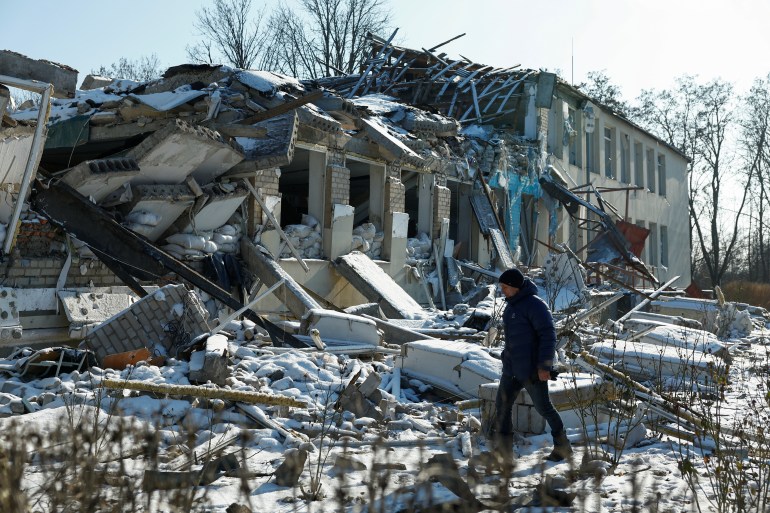
Here are the key developments on the 1,092nd day of Russia’s full-scale invasion of Ukraine. Here is the situation on Thursday, February 20: Fighting A man was killed in a Ukrainian drone attack in Russia’s Belgorod region, regional Governor Vyacheslav Gladkov said. A “massive” Russian attack on the port city of Odesa in southwestern Ukraine left four people hospitalised and a large residential area – covering 14 schools and about 160,000 residents – without heat, water or electricity, Mayor Gennadiy Trukhanov said. A Russian guided bomb killed at least one person in Ukraine’s northeastern city of Kupiansk, according to Kharkiv region’s Governor Oleh Syniehubov. Ukraine said Russia launched 167 drones and two missiles in overnight attacks. Ukrainian forces shot down 106 of those drones, while 56 more failed to reach their targets. They did not specify what happened to the remaining five. Ukraine’s military also said they destroyed a North Korean self-propelled M-1978 Koksan howitzer in the Luhansk region, marking the first time a weapon of this nature has been hit. South Korean newspaper, The Chosun Ilbo, has interviewed two North Korean soldiers detained in Ukraine. The pair revealed they were told they were being sent to Russia for training by the Reconnaissance General Bureau, North Korea’s clandestine operations intelligence agency. A man walks next to a building destroyed by a recent Russian air attack in the village of Novopavlivka, Dnipropetrovsk region, Ukraine, on February 18, 2025 [Valentyn Ogirenko/Reuters] Russian President Vladimir Putin has announced that fighters from the 810th brigade crossed into Ukrainian territory in the Sumy region overnight. Kyiv has denied the claim. Putin also suggested a Ukrainian drone attack on the Caspian Pipeline Consortium in southern Russia may have been coordinated with European powers, saying Kyiv could not have carried out such an attack without Western intelligence. Kremlin forces are a little more than 4 miles (6.4km) from the Shevchenko lithium deposit in Ukraine’s eastern Donetsk region, and are advancing on it from three angles, the Reuters news agency reported, citing open-source data from Ukrainian military blog DeepState. Politics and diplomacy Ukraine’s President Volodymyr Zelenskyy criticised Kyiv’s exclusion from recent talks between Russia and the United States as he spoke to reporters at Esenboga airport in Ankara, Turkiye following his meeting with Turkish leader Recep Tayyip Erdogan. Putin assured Ukraine it would not be left out of ceasefire talks, but said their success would hinge on resetting bilateral relations between Moscow and Washington, which reached “below zero” under the Biden administration. Zelenskyy took to social media to brand Russia’s leaders “pathological liars” and warned that “they cannot be trusted and must be pressured – for the sake of peace”. Trump hit back at Zelenskyy over his complaints about being excluded from peace talks, as he also blamed the Ukrainian leader for Russia’s invasion in 2022. “You’ve been there for three years,” Trump said. “You should have never started it. You could have made a deal.” Zelenskyy has also slammed the rare earth elements deal proposed by Trump, saying he is open to the US investing in Ukraine’s natural resources, but Kyiv should also receive security guarantees. He said Trump’s demand for $500bn of rare earths for previous US aid is “not a serious conversation”, claiming Washington has supplied Ukraine with only $67bn in weapons and $31.5bn in other financial support. Zelenskyy also rejected Trump’s claims about his approval ratings being at 4 percent, dismissing it as Russian disinformation and saying the US president is trapped in a “disinformation bubble”. Trump called Zelenskyy a “dictator without elections” and warned that the Ukrainian leader “better move fast or he is not going to have a country left”. Kremlin spokesperson Dmitry Peskov has confirmed that Putin and Trump could meet in person before the end of February, according to Russian state media. Advertisement After speaking with US Secretary of State Marco Rubio, French Foreign Minister Jean-Noel Barrot told European foreign ministers he believes Washington wants a lasting peace deal for Ukraine. Barrot said the White House’s “objective was not a fragile ceasefire or a transitional pause that would allow Russia to rebuild their forces, but a lasting peace”. Kazakhstan’s first Deputy Foreign Minister Akan Rakhmetullin said Astana has contacted Ukraine after a drone attack in Russia this week which hit a Kazakh oil pipeline. Trump’s special envoy for Ukraine, Keith Kellogg, travelled to Kyiv before planned meetings with Zelenskyy and other Ukrainian officials. “We’re very clear that [security guarantees are] important in the sovereignty of this nation,” Kellogg said, according to Ukrainian outlet Suspilne. The European Union has agreed on a new package of sanctions which would place a ban on importing Russian aluminium, the bloc’s diplomats said. The decision is yet to be formally approved by EU foreign ministers. Adblock test (Why?)
Putin rates US talks ‘highly’, says Russia ready to negotiate over Ukraine
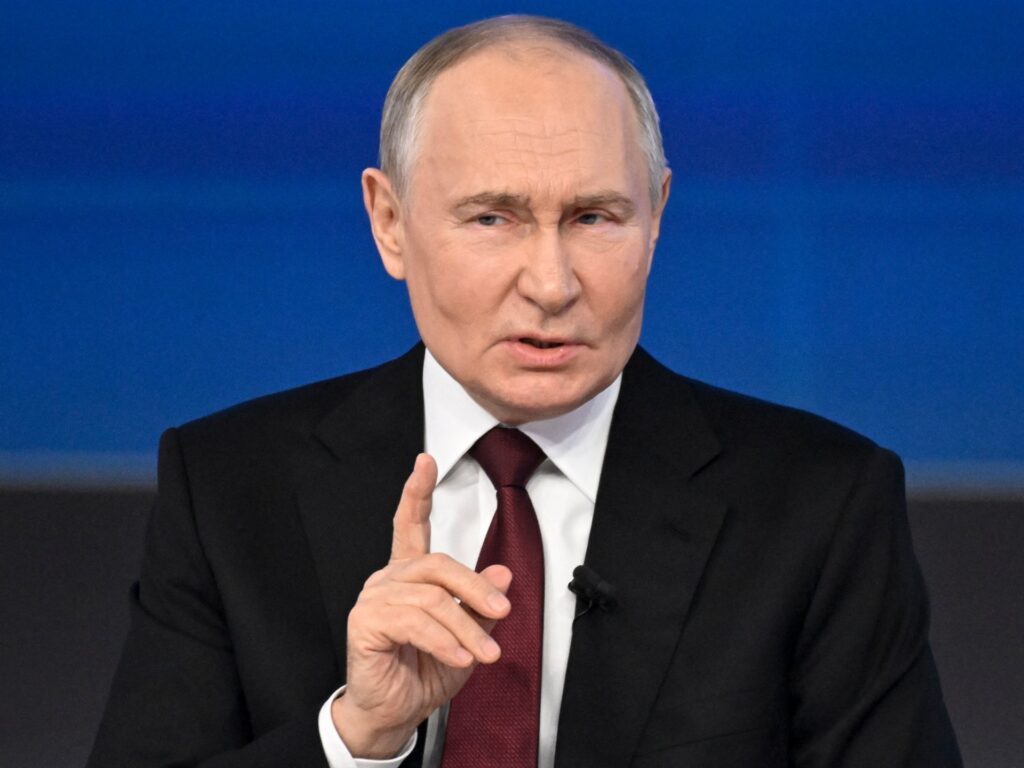
Russian President Vladimir Putin has said he was briefed on the outcome of Russia-US talks in Saudi Arabia and was pleased with the results, according to Russian news agencies, amid soaring tensions between the US and Ukraine. “Yes, I have been informed. I rate them highly, there are results,” he was quoted as saying by the Interfax news agency on Wednesday. “In my opinion, we made the first step to restore work in various areas of mutual interests”. United States and Russian officials met in Saudi Arabia on Tuesday for the first high-level talks between the two countries since the Kremlin’s full-scale invasion of Ukraine nearly three years ago. The meeting signified a dramatic policy shift by Washington, which imposed a raft of sanctions and worked to isolate Moscow on the world stage over the war. Ukraine and European governments were not invited to the talks in Riyadh, heightening their concern that Russia and the US might cut a deal that ignores their vital interests. Russian leader ‘would like to meet Trump’ Putin said that Ukraine was not being excluded from negotiations to end the war, but that his country needed to build trust with the United States in order to resolve the conflict. Advertisement “No one is excluding Ukraine,” Putin said in a televised meeting with journalists in Saint Petersburg, adding that there was no need for a “hysterical” reaction to the US-Russia talks. “It is impossible to solve many issues, including the Ukrainian crisis, without increasing the level of trust between Russia and the United States,” he said. He added that he would like to meet US President Donald Trump in person but that the meeting would need to be prepared. Putin also claimed Russia had never rejected talks with the Europeans, and it was they who had refused to talk to Moscow. “We are not imposing anything on anyone. We are ready, I have already said this a hundred times – if they want, please, let these negotiations take place. And we will be ready to return to the table for negotiations,” he said. While striking a conciliatory tone, Putin also suggested Europe may have coordinated a Ukrainian drone attack on the Caspian Pipeline Consortium (CPC) in southern Russia on Monday. The strike hit a pumping station on the oil pipeline in Russia, reducing flows from Kazakhstan to world markets pumped by Western firms including Chevron and ExxonMobil. The Russian president said that he did not believe Ukraine to have organised such an attack on its own, and claimed it was likely backed by Western intelligence. Zelenskyy a ‘dictator without elections’ As Moscow and Washington reignited diplomatic ties, relations between Trump and Ukrainian President Volodymyr Zelenskyy deteriorated rapidly on Wednesday as the two leaders traded barbs. Advertisement Trump called Zelenskyy “a dictator without elections” in comments posted on the social media app Truth Social. “Zelenskyy better move fast or he is not going to have a Country left,” he added. The US president also accused the Ukrainian leader of wanting “to keep the ‘gravy train’ going” as Ukraine mismanages billions of dollars US funds for the war, half of which he claimed had gone “missing.” The comments came hours after Zelenskyy had said Trump was living in a Russian-made “disinformation space” as a result of the talks in Riyadh. Trump earlier suggested Ukraine was to blame for Russia’s invasion. “You should have never started it. You could have made a deal. I could have made a deal for Ukraine,” the US president said at a news conference at his Mar-a-Lago estate in Palm Beach, Florida. Claims of ground offensive in Kursk rejected In his remarks, Putin also announced that Russian troops crossed into Ukraine from the Kursk region overnight and were advancing along the line of contact, near the border with Ukraine’s Sumy region. The claim was swiftly rejected by Andriy Kovalenko, a Ukrainian official responsible for countering disinformation. “Putin’s information about a large-scale Russian offensive is a lie,” he said, adding that a Russian reconnaissance unit had tried to cross but had been destroyed. A ground attack on Ukraine’s Sumy region would be the first since Russia retreated from there in 2022. Adblock test (Why?)
White House trolls with mocking ‘ASMR’ video of shackled deportees
[unable to retrieve full-text content] Official White House social media accounts posted what it called an ‘ASMR’ video of undocumented immigrant deportation.
Far right set to make strides in a German election dominated by immigration
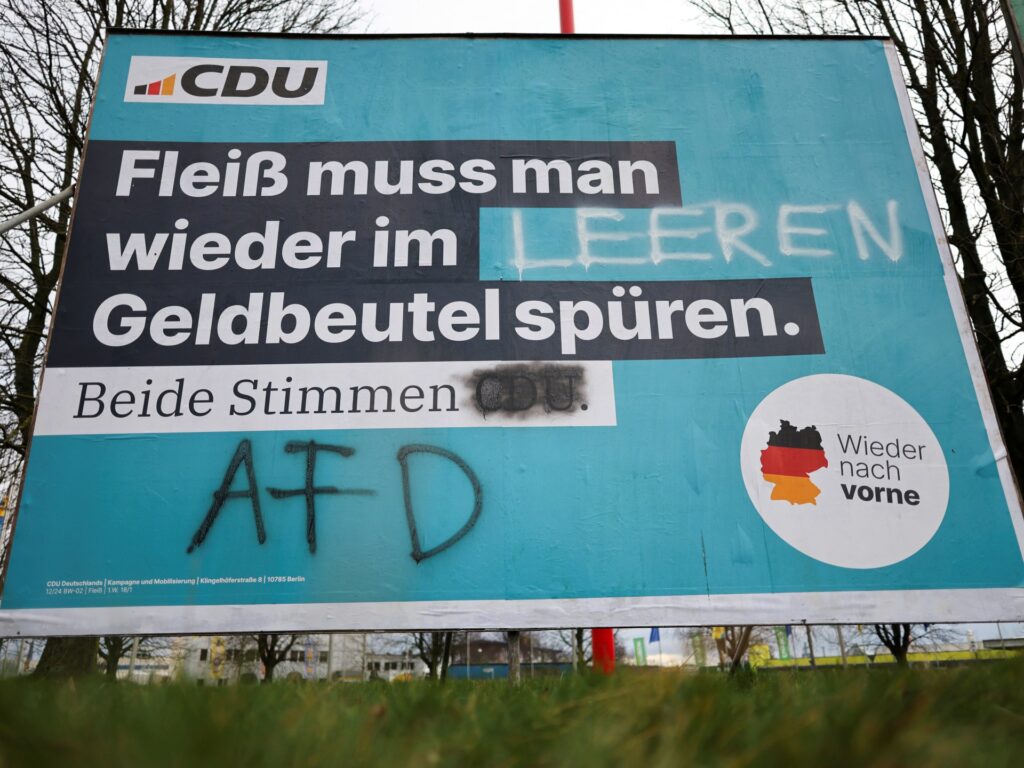
Germans would be hard-pressed to find a time when their political landscape was as fragmented as it is days ahead of Sunday’s federal election. For the first time since World War II, Germany’s two traditional political locomotives are set to garner less than half the national vote. The ruling centre-left Social Democratic Party (SPD), expecting to tumble out of a four-year term in office – their shortest since the war – are polling at an embarrassing 16 percent, a post-war low. The once-dominant, centre-right Christian Democratic Union (CDU), in power for 51 of the past 75 years, is in the lead, but with a diminished majority of about 30 percent, a few points below its weakest win to date in 2017, and a far cry from its Cold War election victories. The rise of smaller parties The ruling Social Democrats called the election after losing a coalition partner last autumn and a confidence vote in parliament last December. But the timing of Germany’s political upheaval could hardly be worse. Advertisement As the administration of US President Donald Trump offers Russia concessions in return for a speedy end to the Ukraine war, many in Europe are calling for a redesign of the continent’s security architecture, requiring strong governments to make momentous decisions on defence and foreign policy. More than half the German vote will go to smaller parties on the left and right. The lion’s share – about 20 percent – is to go to the far-right Alternative for Germany (AfD), a party that promises to banish the euro and bring back the Deutschmark, reverse the transition to clean energy, throw out immigrants, and possibly take Germany out of the European Union altogether. “People are saying, it’s kind of the last chance for liberal democratic parties, and they are saying, make sure the next government is a functional government that produces results,” German retired diplomat Christian Schlaga told Al Jazeera. “The next government will have to prove they can do it, especially on immigration,” Schlaga said. “If they fail, like the last government, then people will say this is a basis to elect the AfD.” The CDU and SPD decline In their heyday, the 1960s and 1970s, the CDU and SPD together took about 90 percent of the popular vote, leaving little room for anyone else. That began to change in the late 1990s, as the German political landscape became more pluralistic. The left-wing Greens were founded in 1993, The Left (Die Linke) in 2007, and the AfD in 2013. All have eaten away at the CDU-SPD voter base. Advertisement “If [the CDU] score below 30 percent, it’s a defeat for the CDU,” Jens Bastian, an economist at the German Institute for International and Security Affairs, told Al Jazeera, adding that the situation is even more dire for the SPD. “We have only one party left that consider 30 percent a success… for the SPD, it’s a success if you get close to 20.” Why is immigration on the ballet? Immigration has rapidly become the number one issue during the election campaign, partly due to a series of deadly attacks perpetrated by foreign nationals in the past few months. A Saudi national killed six people and injured 200 when he ploughed a rented SUV into pedestrians at a Christmas market in the town of Magdeburg last December. Last month, on January 22, a mentally ill Afghan man wielding a knife killed a two-year-old boy and the 41-year-old man who was trying to protect him in a park in Aschaffenburg, near Frankfurt. Last week, on February 13, another Afghan asylum seeker killed a 37-year-old woman and her two-year-old daughter when he ploughed a car into a trade union protest march in Munich. These and earlier attacks have inflamed German indignation against immigrants who are ineligible to stay in Germany but haven’t been deported, or who have not integrated with German society and values. The AfD is openly calling for large numbers of immigrants to be deported, including legal residents and even citizens, much as the Trump administration has said it will do in the US. CDU leader Friedrich Merz has called for a strengthening of border controls, increasing police powers to arrest people and slowing or stopping family reunification for migrants already in the country legally. Advertisement The SPD and Greens have refused to work with Merz on this agenda, saying it plays into the hands of the far right. What about the economy and unemployment? Germans also perceive their infrastructure to be crumbling after years of underinvestment, particularly railways and bridges, but are wary of relaxing their constitutional requirement for a balanced budget, fearing it will lead to uncontrolled spending. Some observers believe German society is unprepared for the difficult economic decisions ahead. “Unions demand an eight percent increase in salaries and three more days of holiday in a country where workers already have six weeks off a year,” said Schlaga. “This does not reflect the realities of the day and people don’t accept that.” Chancellor Olaf Scholz, of SPD, has said he is in favour of relaxing fiscal rules to spend more on stimulating the economy and on defence, but Merz has shown a reluctance to borrow more or to raise taxes. The Ukraine war has raised energy costs and caused inflation in Germany as everywhere else in Europe, but it has hurt the manufacturing and industrial German economic base particularly badly. The German economy is expected to contract by 0.5 percent in 2025, said the German Chamber of Commerce and Industry, marking its third annual shrinkage in a row, its longest postwar recession. “This is a turning point and emphasises the acute need for action,” said Helena Melnikov, the chamber’s managing director. That has had knock-on effects. The VDP banking association this month estimated property prices had fallen by 5.4 percent last year, rounding a four-year ebb. Advertisement A recent survey showed that 70 percent of Germans were worried about the cost of living, and a similar margin
US condemns ‘dangerous’ moves by Chinese navy helicopter in South China Sea

Manila says it will lodge a diplomatic protest after a Chinese helicopter flew deliberately within 3 metres (10 feet) of a Philippine aircraft. The United States ambassador to Manila has condemned “dangerous” manoeuvres by a Chinese navy helicopter that threatened the safety of a Philippine government aircraft patrolling a disputed shoal in the South China Sea. In a post on social media on Wednesday, US Ambassador MaryKay Carlson condemned the actions of the Chinese helicopter and called on Beijing “to refrain from coercive actions and settle its disputes peacefully in accordance with international law”. The Philippines said late on Tuesday that it was “deeply disturbed” by the Chinese navy’s “unprofessional and reckless” flight actions and that it would make a diplomatic protest. The Philippine Coast Guard reported that the Chinese helicopter had flown within 3 metres (10 feet) of a surveillance flight carrying a group of journalists. The plane had been flying about 213 metres (700 feet) above the water on a mission to observe Chinese vessels around the contested Scarborough Shoal when it was intercepted by the naval helicopter. Advertisement Journalists and other invited foreign media onboard the plane witnessed the tense 30-minute standoff as the Philippine aircraft pressed on with its low-altitude patrol around Scarborough, with the Chinese navy helicopter hovering close above it or flying to its left in cloudy weather. The risky moves prompted the Filipino pilot to warn the Chinese pilot by radio: “You are flying too close; you are very dangerous and endangering the lives of our crew and passengers”. “Keep away and distance your aircraft from us. You are violating the safety standard,” the Philippine pilot said. WATCH: A Chinese Navy helicopter came as close as 3 meters to a Philippine fisheries bureau plane over Panatag (Scarborough) Shoal, making dangerous maneuvers and shadowing the Bureau of Fisheries and Aquatic Resources plane for about 40 minutes. The Inquirer was onboard the BFAR… pic.twitter.com/VcVfs8MpTN — Inquirer (@inquirerdotnet) February 18, 2025 Philippine media outlet Inquirer.Net said that during the flight, the pilot of the aircraft operated by the Philippine Bureau of Fisheries and Aquatic Resources issued at least 19 radio challenges to the Chinese helicopter and Chinese ships in the disputed area. The media outlet described a dangerous game of “hide-and-seek in the sky” with the helicopter suddenly emerging and manoeuvring to place itself as close as 3 metres (9.8 feet) above the plane – a 12-seater Cessna Caravan. China has disputed the Philippines’s account, saying on Tuesday that Manila’s aircraft had “illegally intruded” into China’s airspace and accused the Philippines of “spreading false narratives”. Advertisement The Philippine Coast Guard and the Bureau of Fisheries said in a statement that they remain “committed to asserting our sovereignty, sovereign rights and maritime jurisdiction in the West Philippine Sea, despite the aggressive and escalatory actions of China”. Named after a British ship that was grounded on the atoll nearly three centuries ago, the Scarborough Shoal is one of the most contested maritime features in the South China Sea, where Beijing and Manila have clashed repeatedly. China claims sovereignty over almost the entire South China Sea, a vital waterway that puts Beijing at odds with Brunei, Indonesia, Malaysia, the Philippines, and Vietnam who all have maritime claims in the area. A 2016 arbitration ruling invalidated China’s expansive claim but Beijing does not recognise the decision. Adblock test (Why?)