

Two Iranian Supreme Court justices killed in Tehran shooting attack
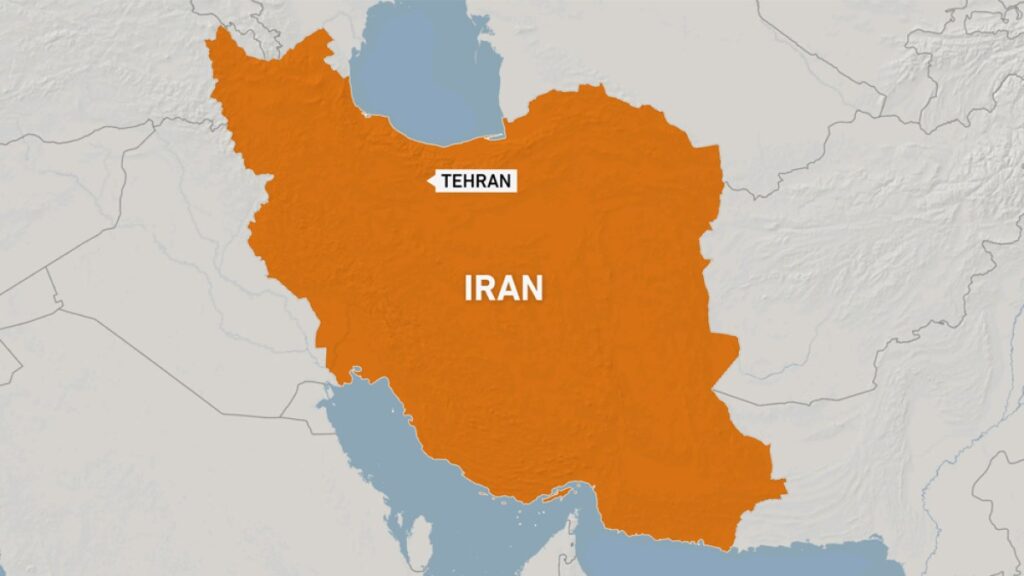
Assailant kills himself after shooting senior justices in the centre of the Iranian capital. Two senior justices in the Iranian Supreme Court have been killed in a shooting attack outside the tribunal building in central Tehran, according to the judiciary and state media. The “assassination” was carried out by an armed person, who killed himself after opening fire early on Saturday outside the court, according to a statement by the media centre of the judiciary. The victims were identified as Hojjat al-Islam Razini and Hojjat al-Islam wal-Muslimeen Moqisseh, each of whom presided over a different branch of the court. “[They] were actively involved in combating crimes against national security, espionage, and terrorism,” the statement added, describing the slain judges as “courageous and experienced”. The identity of the attacker and his motive were not immediately clear. “Preliminary investigations indicate that the perpetrator had no prior cases in the Supreme Court nor was he one of its visitors,” the statement said. According to the state-owned Tehran Times, a bodyguard was also injured in the attack on Saturday, the first working day of the week in the Iranian calendar. Advertisement Iranian media said an investigation was under way to identify and arrest other suspects who may have been involved in the attack. In 1998, Razini was also the subject of an attempted assassination attack while he was serving as head of Tehran’s judiciary. Adblock test (Why?)
Qatari PM details Gaza ceasefire implementation, monitoring
NewsFeed In an exclusive interview with Al Jazeera, Qatar’s prime minister detailed monitoring mechanisms for the Gaza ceasefire. He also defended his country’s role in negotiating the agreement despite “false accusations” from foreign politicians. Published On 17 Jan 202517 Jan 2025 Adblock test (Why?)
Former CIA employee pleads guilty to leaking files on Israel’s Iran strikes
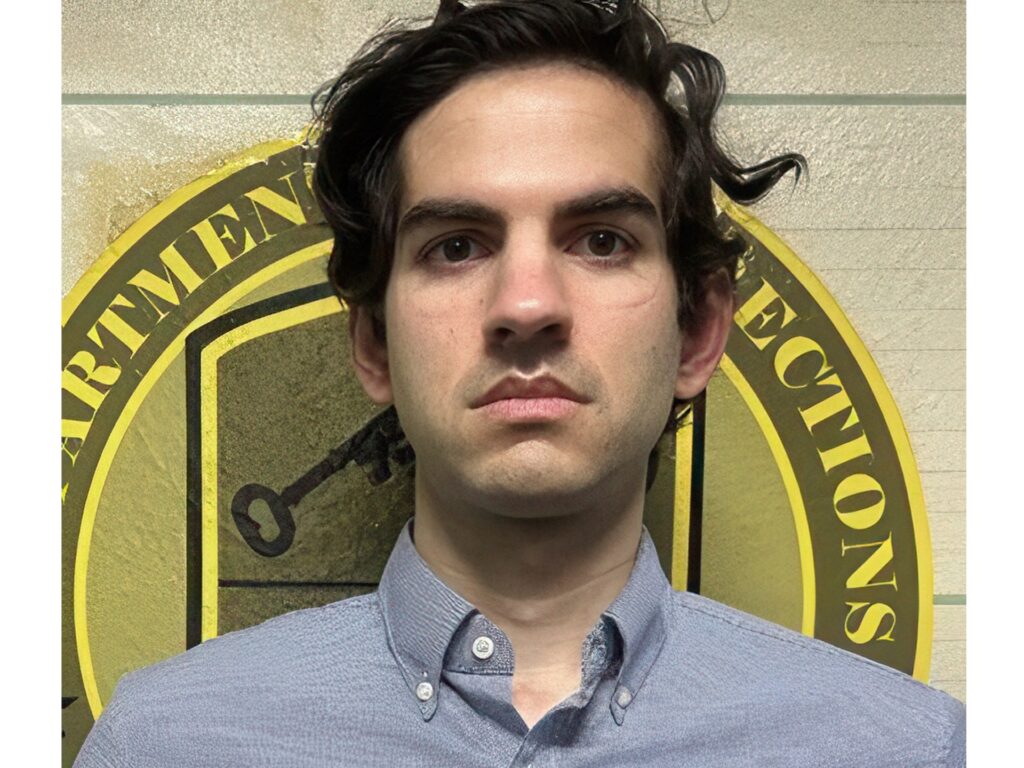
Asif William Rahman has pled guilty to transmitting classified national defence information, the US Justice Department says. A former Central Intelligence Agency (CIA) employee has pleaded guilty to leaking secret documents about Israel’s plans to strike Iran last year during a period of escalating regional tensions linked to Israel’s war on Gaza and Lebanon. In a statement on Friday, the United States Department of Justice said Asif William Rahman, 34, pleaded guilty to two counts of “willful retention and transmission of classified information” related to national defence. He is scheduled to be sentenced on May 15 and faces a maximum penalty of 10 years in prison for both counts, according to a plea agreement. “Mr. Rahman betrayed the trust of the American people by unlawfully sharing classified national defense information he swore an oath to protect,” Assistant Attorney General Matthew G Olsen said in the statement. “Today’s guilty plea demonstrates that the Justice Department will spare no effort to swiftly find and aggressively prosecute those who harm the United States by illegally disclosing our national security secrets.” Advertisement The FBI arrested Rahman — whom the US government said was an employee of the CIA since 2016 and had a Top-Secret security clearance — in Cambodia in November. US media outlets reported at the time that American officials accused him of leaking documents prepared by the National Geospatial-Intelligence Agency (NGA), which analyses images and information collected by US spy satellites. The NGA also conducts work in support of secret US military operations. The documents, which appeared in October on a channel of the Telegram messaging app, had noted that Israel was moving military assets in place to conduct a military strike in response to a ballistic missile attack by Iran on October 1. Iran said those launches were carried out in retaliation for the assassination of Hamas leader Ismail Haniyeh in the Iranian capital, Tehran, as well as the killing of a senior Iranian military official. Israel carried out its own attack on multiple sites in Iran in late October. Citing court documents, the Justice Department said on Friday that Rahman had accessed and printed two documents marked “Top Secret” that contained national defence information “regarding a US foreign ally and its planned actions against a foreign adversary”. “Rahman removed the documents, photographed them, and transmitted them to individuals he knew were not entitled to receive them,” the department said. Adblock test (Why?)
More than 230,000 displaced in DRC since start of the year, UN says
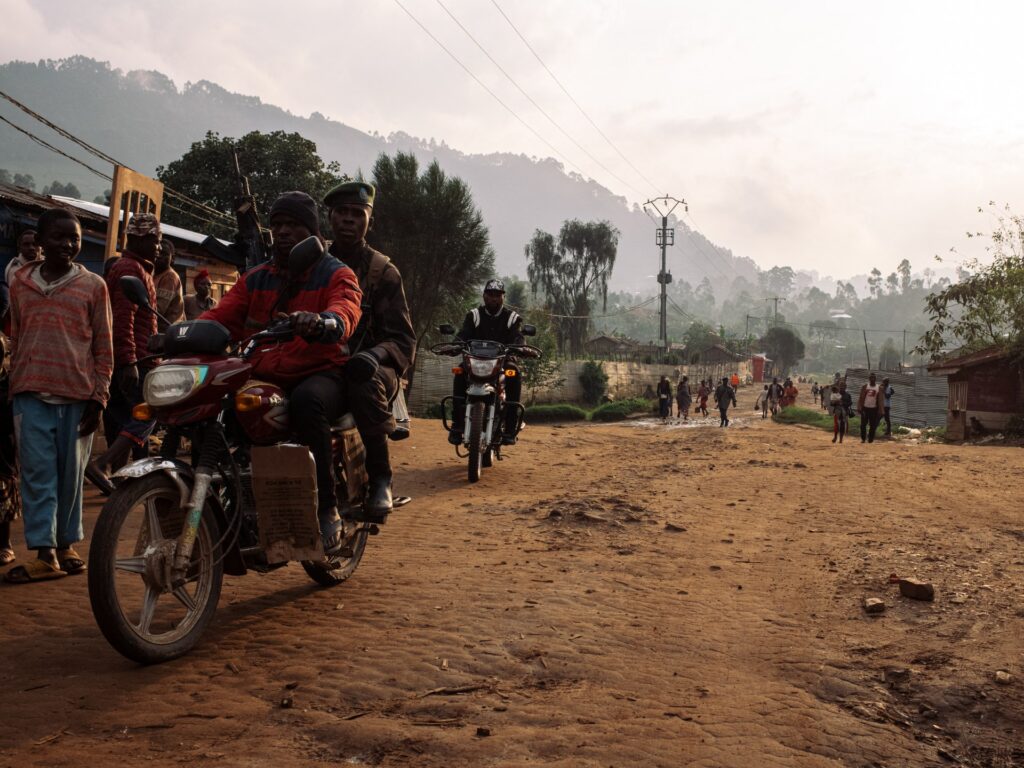
The UN says the forced displacement is one of ‘the most alarming’ humanitarian crises in the world. More than 230,000 people have been displaced since the beginning of the year amid escalating violence in eastern Democratic Republic of Congo (DRC), according to the United Nations. The UN refugee agency UNHCR on Friday described the displacement as “the most alarming” humanitarian crisis in the world. The resource-rich eastern provinces of North and South Kivu – which are home to more than 4.6 million displaced people according to the agency – have been mired in conflict for three decades, with the M23 rebel group becoming one of the most powerful armed groups in recent years. Designated a “terrorist movement” by the DRC government, M23 has seized large areas of eastern DRC since 2021, and earlier this month, took control of the town of Masisi in North Kivu. Earlier this month, Bertrand Bisimwa, the head of the political wing of M23, told Al Jazeera that the group is fighting a “defensive” war. “Escalating clashes between non-state armed groups and the Congolese army in North and South Kivu provinces are intensifying one of the world’s most alarming yet under-reported humanitarian crises,” said Eujin Byun, spokesperson for UNHCR speaking to reporters in Geneva. Advertisement The conflict, Byun warned, is “marked by widespread human rights violations and massive forced displacement”. Byun noted that intense fighting in the Masisi and Lubero territories forced approximately 150,000 people to flee their homes between January 1 and 6 alone. Many returned briefly during a lull in fighting on January 4, but were forced to flee once more as new fighting erupted, according to the UN. In South Kivu’s Fizi territory, the local government has requested international assistance, noting that 84,000 people have sought refuge there. Byun cautioned that civilians are enduring “indiscriminate bombings and sexual violence,” with children also being targeted. “Already, dire humanitarian conditions are worsening rapidly, and access to these vulnerable populations is severely restricted by insecurity, roadblocks and the presence of violent armed actors,” Byun added. UNHCR has stated it is ready to provide assistance as soon as access is restored, but emphasised that more funding is urgently needed. Adblock test (Why?)
Will Pam Bondi, attorney general pick, retract claims of ‘stolen’ election?
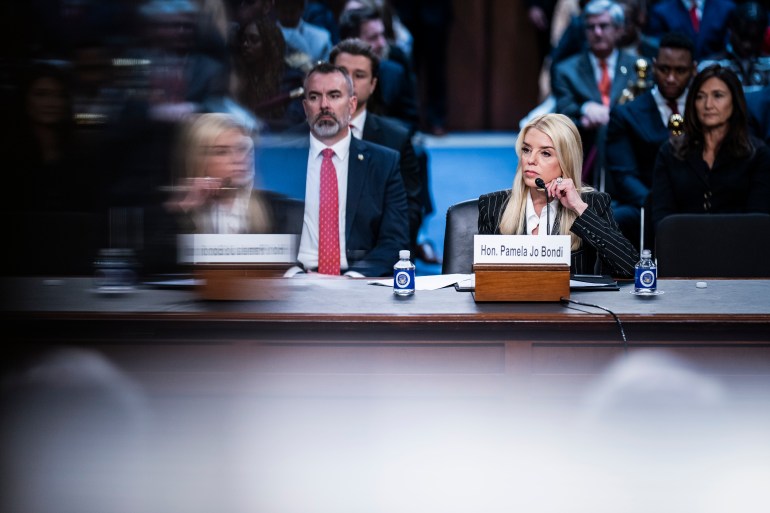
In sometimes fiery exchanges, former Florida Attorney General Pam Bondi fielded questions during a Senate confirmation hearing for her attorney general nomination about whether she would prosecute President-elect Donald Trump’s declared political enemies. Bondi also refused to deny falsehoods about the 2020 presidential election being “stolen”. In the January 15 hearing, Senator Alex Padilla, for California, asked Bondi whether she would retract her previous statements that Trump won Pennsylvania in 2020. The two spoke over each other as Padilla pushed for a “yes or no” response and Bondi tried to answer differently. Eventually, Bondi told the senator she was “not going to be bullied”. Bondi’s hearing came on the second day of high-profile confirmation hearings for Trump’s second-term nominees. Senator Marco Rubio, for Florida, also had a separate hearing the same day. Rubio called on the United States not to rely on China for supply chains, in line with Trump’s campaign promises to get tough on China. Rubio also said he disagreed with President Joe Biden’s January 14 announcement that Cuba would be removed from the state-sponsors-of-terrorism list. Advertisement Here’s a fact-check of Bondi’s statements. Bondi repeats Trump line that Biden’s Justice Department targets political opponents As Bondi responded to questions about whether she would prosecute Trump’s political opponents – which he promised to do during the 2024 campaign – she claimed that Biden’s Justice Department has done the same. “No one will be prosecuted, investigated because they are a political opponent,” Bondi said. “That’s what we’ve seen for the last four years in this administration.” We’ve rated similar Trump claims false. Trump was charged twice in federal court and separately in Manhattan and Fulton County, Georgia. In the Manhattan case, a unanimous jury found Trump guilty in May 2024 of all 34 counts of falsifying business records in an alleged scheme to cover up a hush money payment to adult film actor Stormy Daniels before the 2016 presidential election. The other three cases were dropped or put on hold after Trump won the 2024 election. Legal experts have told us there was no sign Trump was not given due process or that Biden ordered the prosecutions. Bondi said she had ‘not listened’ to Trump’s call with Georgia officials to ‘find’ him votes in 2020 election Senator Dick Durbin, for Illinois, questioned Bondi about Trump’s January 2, 2021, phone call with Georgia Secretary of State Brad Raffensperger. Durbin asked whether Bondi was concerned that Trump called an election official and asked him to find enough votes to change the election results. Advertisement Bondi responded that she has “not listened to the hourlong conversation, but it’s my understanding that is not what he asked him to do”. Except, that is what Trump asked Raffensperger, a Republican, to do, according to the call’s transcript and recording. In the call, Trump asked Georgia officials to investigate his unfounded allegations about 2020 election fraud. Many of his directives involved a quest to “find” enough ballots to put him in the winning column. (President Joe Biden beat Trump in Georgia by 11,779 votes.) Trump framed his requests to state officials as a mission to ferret out criminal wrongdoing. “You can’t let it happen, and you are letting it happen,” Trump said. “You know, I mean, I’m notifying you that you’re letting it happen. So, look. All I want to do is this. I just want to find 11,780 votes, which is one more than we have because we won the state.” Bondi wrongly claims a 2021 peaceful transfer of power Durbin asked Bondi, who has repeatedly bolstered Trump’s false claims that the 2020 election was stolen, whether she was willing to say Trump lost. Bondi first dodged the question then claimed there was a peaceful transfer of power in 2021. “(Biden) was duly sworn in, and he is the president of the United States,” she said. “There was a peaceful transition of power.” Her statement ignores the violent January 6, 2021, attack on the US Capitol that disrupted the election certification. More than 1,500 people have been charged in federal court related to the riot, with charges including obstruction of law enforcement; violence with a deadly weapon; assault; disorderly conduct; and unlawful possession of firearms. Advertisement Rioters forcibly breached and vandalised the Capitol, attacked police officers and chanted “Hang Mike Pence!” Trump has promised to pardon defendants, but it is unclear how many. Pam Bondi listens during her Senate Judiciary Committee confirmation hearing on Capitol Hill on Wednesday, January 15, 2025 in Washington, DC [Jabin Botsford/The Washington Post via Getty Images] Bondi hits Schiff on California’s robbery statistics As Senator Adam Schiff, California, asked Bondi whether she would investigate Trump’s political enemies, Bondi shot back, saying, “You know what we should be worried about? The crime rate in California right now is through the roof. Your robberies are 87 percent higher than the national average, that’s what I want to be focused on, senator.” Bondi is close on her assessment. For the 12 months of 2023, FBI data shows that the average rate of robbery per 100,000 people was about 89 percent higher in California than it was nationwide. However, California had rates lower than the national average for homicide and rape. The state was above the national average for aggravated assault, the fourth type of crime the FBI categorises as violent. PolitiFact Chief Correspondent Louis Jacobson contributed to this report. Adblock test (Why?)
SpaceX Starship explodes, leaving a trail of fiery debris across the sky
[unable to retrieve full-text content] SpaceX’s Starship spacecraft has exploded only minutes after taking off on a test flight, leaving trails of debris.
LA wildfires day 11: What is the latest, and what do investigations show?
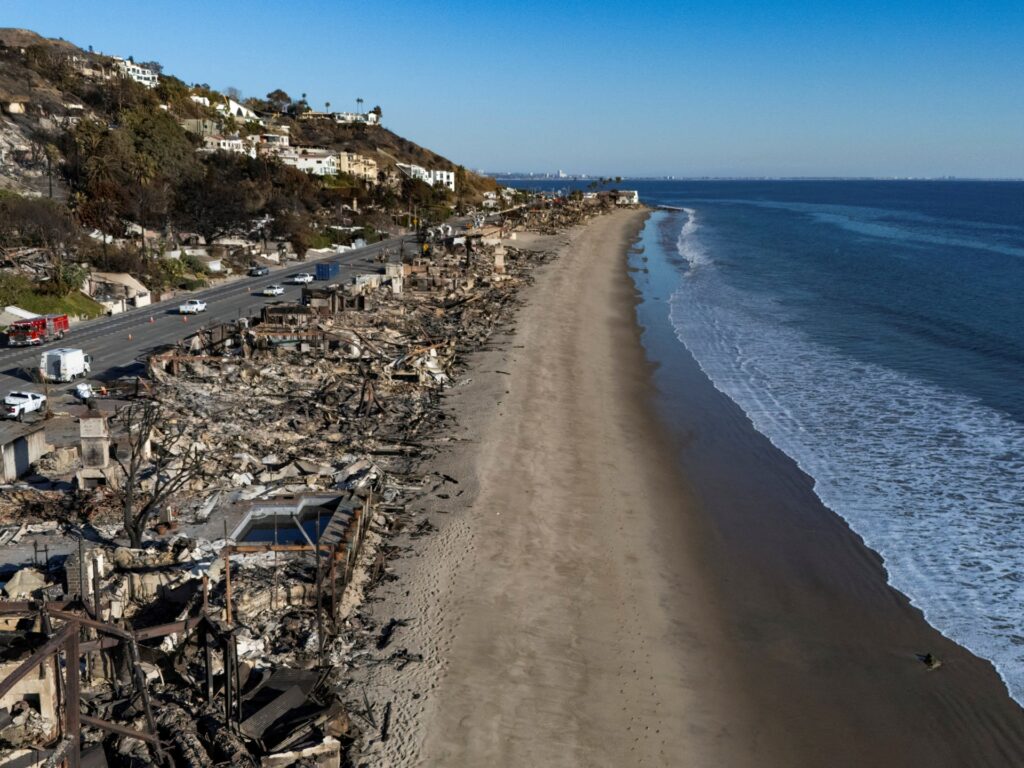
Although the hazardous fire weather conditions that have stoked Los Angeles’s devastating fires have subsided, forecasters caution that another round of Santa Ana Winds is expected early next week. The death toll has risen to 27, the Los Angeles County Medical Examiner said on Thursday evening. Authorities warn that the number could climb further as search and rescue efforts continue. According to local media reports, the Bureau of Alcohol, Tobacco, Firearms and Explosives has received more than 150 tips on what may have started the Palisades Fire. Here is what we know: What’s the latest on the ground? Death toll and missing people The fires have killed at least 27 people, with 31 others still missing. Entire neighbourhoods have been destroyed, and authorities said it would take months to clean them up. Ten of the deaths were related to the Palisades Fire, and 17 deaths to the Eaton Fire. About 82,400 people are still under evacuation orders, with another 90,400 under evacuation warnings. Advertisement Active fires Palisades Fire: It has burned nearly 9,596 hectares (23,713 acres) in and around the Pacific Palisades and is 27 percent contained. No growth has been reported over the last 72 hours. Eaton Fire: This fire has burned more than 5,713 hectares (14,117 acres) and is now 55 percent contained, an increase of 10 percent since yesterday. The city of Pasadena has declared a local public health emergency in response to the ongoing effect of the Eaton Fire. “Ash and debris pose a significant potential current and future risk to health, safety, and the environment,” the Pasadena Public Health Department (PPHD) said in a press release. “PPHD is declaring a local health emergency to ensure residents take appropriate measures to protect themselves from toxic ash and debris.” Auto Fire: This started in Ventura County and is now contained by 85 percent. Firefighters halted its forward progress, limiting the burn area to 25 hectares (61 acres). According to Cal Fire, more than 5,000 firefighters are fighting the fires, including reinforcements from Israel who arrived on Thursday and crews from Canada and Mexico. Recently contained fires Hurst Fire: The fire that scorched 324 hectares (800 acres) in the San Fernando Valley is now fully contained. Little Mountain Fire: San Bernardino police officers investigating the Little Mountain Fire, which scorched 14 hectares (34 acres), reported the arrest of a man on two felony charges, including reckless burning. According to local media reports, the fire has been fully contained. Advertisement What’s expected on Friday? The Los Angeles area is experiencing improved weather conditions, which are aiding firefighting efforts against the ongoing wildfires. The National Weather Service has indicated that the strong Santa Ana winds, which have significantly contributed to the fires’ rapid spread, are expected to subside by the weekend. This shift is anticipated to bring increased moisture from the Pacific Ocean, creating more favourable conditions for containment. Firefighters are using this window of calmer weather to strengthen containment lines around major fires. However, authorities caution that while progress is being made, the situation remains dynamic, and residents should stay alert for any changes. Looking ahead, meteorologists warn of the potential return of strong winds early next week, which could exacerbate fire conditions. “There’s definitely a high likelihood of critical fire conditions developing sometime next week,” Rich Thompson, an incident meteorologist for the Palisades Fire, said at a news conference on Wednesday evening. Good news: We are expecting a much-needed break from the fire weather concerns to close this week. Bad News: Next week is a concern. While confident that we will NOT see a repeat of last week, dangerous fire weather conditions are expected. #cawx #PalisadesFire #EatonFire pic.twitter.com/zhXmHUWtgp — NWS Los Angeles (@NWSLosAngeles) January 15, 2025 What do we know about the investigation of what started the fires? Utility equipment under scrutiny Southern California Edison (SCE), Los Angeles’s electrical utility, is under investigation for its potential role in igniting the Eaton Fire. Advertisement At least four lawsuits have been filed alleging that SCE’s equipment may have sparked the blaze. Among the petitioners is Jeremy Gursey, whose home in Altadena, according to CNN, was destroyed by the Eaton Fire. He filed a lawsuit in Los Angeles County Superior Court on Monday, saying SCE was responsible. Gursey referenced photographs taken by Altadena residents Jennifer Errico and Marcus Errico as evidence. They captured images of a small fire beneath transmission lines in Eaton Canyon. However, Marcus Errico said he wasn’t sure if SCE was responsible for the blaze. “I saw a glow in the hillside right above our house,” Errico told CNN. “And as I got closer, I could see right across from us on the hillside in Eaton Canyon, there are a series of transformer towers with power lines stretching up into the mountains. And at the base of one, there was just a small ring of flames around the whole base,” he added. The company has defended its decision to keep transmission lines operational, stating that wind speeds were just below the threshold required for shutdown. However, safety auditors have raised concerns about SCE’s fire risk modelling, suggesting that their assessments may not adequately account for severe wind events. A fire on New Year’s Day Some Pacific Palisades residents have expressed concerns that the devastating Palisades Fire may be linked to a smaller blaze that occurred on New Year’s Day, potentially ignited by fireworks, in the same area. According to authorities, the earlier fire broke out six days prior in the same vicinity and was reported to have been contained within hours by local firefighters. Advertisement The close timing and location of the two fires have raised questions about whether strong winds could have rekindled smouldering debris from New Year’s Eve fireworks, possibly triggering the Palisades Fire. However, earlier this week, Los Angeles City Fire Chief Kristin Crowley stated there is currently no evidence linking the two incidents. “We do not have any information suggesting there’s a connection, but that’s the benefit of bringing in outside resources to
Who is Steve Witkoff, Trump’s envoy in the Gaza ceasefire talks?
[unable to retrieve full-text content] Steve Witkoff was little known to the public before he turned out to be a key player in Israel-Hamas ceasefire talks.
Palestinian doctors hope ceasefire will revive Gaza’s healthcare sector
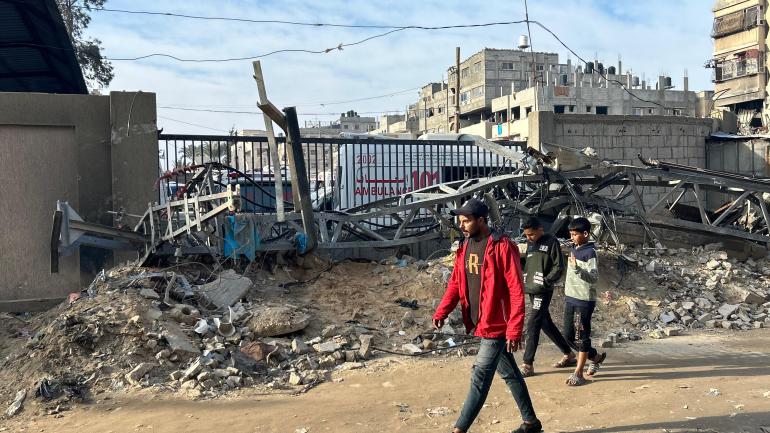
Khan Younis, Gaza Strip, Palestine – In the dimly lit corridors of al-Amal Hospital in western Khan Younis, one of the 17 partially operational healthcare facilities in Gaza, a rare sense of hope grips the staff and patients. Mediators have announced a ceasefire between Hamas and Israel to end the 15-month war on Gaza, and although the Israeli cabinet has yet to approve the deal, optimism is contagious. For the first time in months, orthopaedic consultant Dr Khaled Ayyad speaks with confidence as he reassures patients of soon receiving the medication and procedures they urgently need and hospitals have been unable to provide due to Israeli restrictions on aid deliveries to Gaza. “We’ve done the impossible. We’ve had to improvise ways to handle cases so grave in scope and so large in number and for the longest stretch of time to get this far,” Ayyad explains. Along with other medical staff and patients, he was forced by the Israeli army to leave his post at the Palestinian Red Crescent-run al-Quds Hospital in Gaza City a month after the war began on October 7, 2023. The 53-year-old surgeon had since been operating out of al-Amal, relying on what he describes as “minimal capabilities”. Advertisement Throughout Israel’s war on Gaza, “each medical centre or humanitarian delivery system has been or is being destroyed,” according to a January 7 report by the medical aid group Doctors Without Borders, known by its French acronym, MSF. Ayyad had to endure two Israeli raids on al-Amal Hospital in February and March and had to navigate displacement in the arid area of al-Mawasi in southwestern Gaza along with his family, including his six children. He says he is lucky to have survived: More than 1,000 healthcare workers have been killed, and many have been detained by Israeli forces. “The number of cases I examined shot up to 70 patients and injured people a day in addition to the hospitalised cases in the departments, which are no less than eight cases,” Ayyad tells Al Jazeera. As he speaks, countless patients and visitors crowd the hospital’s wards as external clinics and corridors overflow with those seeking care. Al-Amal Hospital in Khan Younis is still partially operational, but its supplies are severely limited [Mohamed Solaimane/Al Jazeera] Patience Ayyad explains how he often resorted to temporary measures to treat fractures until the fixation plates required for operations became available. “Soon they will be,” he says with a big smile, reassuring Hani al-Shaqra, a patient whose collarbone was fractured on Monday in an Israeli attack near the Deir el-Balah home he had sought refuge in. Unable to return Ayyad’s enthusiasm because of his pain, al-Shaqra says he cannot wait for a ceasefire to come into effect so he can undergo the surgery he needs. Advertisement “Amid this genocide, the care I received is to be expected, especially since everyone faces great difficulties in obtaining treatment or even reaching hospitals. I am optimistic … that treatment is possible after the ceasefire,” he says, speaking cautiously, careful not to move his arm or the sling that is helping lift the weight off his shoulder. “I just hope it happens soon before my condition deteriorates,” he adds. Talks to reach a ceasefire and end a war that has killed more than 46,700 Palestinians had faltered repeatedly over the past year until mediators announced on Wednesday that a deal had been reached. The inauguration of Donald Trump as United States president on Monday served as a de facto deadline, and the ceasefire is due to come into effect the day before. With it, larger supplies of much-needed humanitarian aid are to be allowed to enter the enclave after a massive dearth in aid deliveries, which were exacerbated by the May closure of the Rafah crossing with Egypt, through which most of the supplies came in. ‘A lot more work to be done’ While Ayyad hopes that the influx of humanitarian supplies will lead to some respite for Palestinians in Gaza, he knows he and other medical staff will have a lot of work to do. “Many of the wounded who we sent away with temporary treatment will need to be reoperated on, properly, once supplies are available,” he says. Dr Adnan al-Zatma, a general surgeon working alongside Ayyad, emphasises the enormity of the challenges. Advertisement Putting aside the obvious shortages of medication and supplies, he lists the devastation seen across the hospital: from the X-ray machines and electricity generators destroyed during the Israeli invasion to the burned-down wards, bullet-ridden walls and the bulldozed entrances and roads leading to the hospital. “A ceasefire would be a respite, but it won’t be magical,” al-Zatma says. According to Dr Haidar al-Qudra, executive director of the Palestine Red Crescent Society in Gaza, the healthcare sector is operating at less than 10 percent of its pre-war capacity. The condition of the pre-war healthcare system was already below what was needed, according to MSF, because of Israel’s 17-year blockade on Gaza. It is now in shambles. “Tens of thousands of patients have suffered because of the healthcare collapse,” al-Qudra says. “This includes fatalities, disabilities and severe complications for those unable to access proper care during the war,” he adds, highlighting that facilities like al-Amal Hospital and al-Wafaa Hospital were nonoperational for most of the war. “For many patients, rehabilitation was their only path to regaining mobility or basic functions. The loss of these services has been catastrophic,” he says. Major hospitals like al-Quds and al-Shifa were heavily damaged, and facilities like al-Amal Hospital suffered significant infrastructural damage. Despite these challenges, Red Crescent hospitals treated more than 500,000 cases and received an additional 900,000 patients at their primary care centres during the conflict. Al-Amal Hospital alone has been handling 1,500 cases daily alongside two field hospitals and 10 primary care centres in northern Gaza. Advertisement ‘Gradual recovery’ “A ceasefire would bring a gradual recovery of the healthcare system, supported by international aid,” al-Qudra says. “The Red Crescent plans to establish five field
Romania sets May date for new presidential election
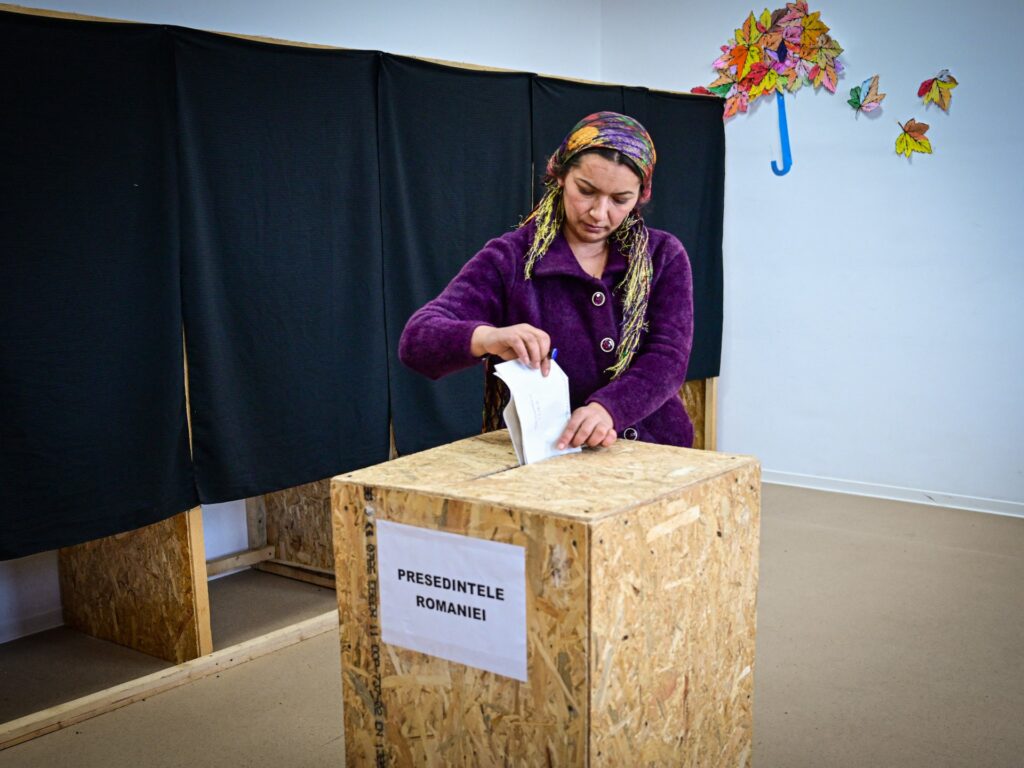
The first round will take place on May 4, with a second on May 18 if no first-round candidate wins more than 50 percent. Romania’s coalition government has announced that it will hold a new presidential election in May, after the shock annulment of the December vote amid claims of Russian interference. A cabinet meeting on Thursday approved the ruling party’s proposal to have a fresh presidential vote. The first round will take place on May 4, with a second on May 18 if no first-round candidate wins more than 50 percent of the vote. The European Union and NATO state, which borders Ukraine, was plunged into institutional chaos last year when Calin Georgescu, a little-known far-right pro-Russian politician, won the first presidential round on November 24. Officials in Romania said Georgescu benefitted from a massive social media campaign spearheaded by TikTok, which gave him preferential treatment, accusations the platform has denied. Amid suspicions of Russian interference – denied by Moscow – Romania’s top court annulled the ballot and ordered the government to rerun it in its entirety. The European Commission last month also opened formal proceedings against TikTok over its suspected failure to limit election interference, notably in the Romanian vote. Advertisement Georgescu has denounced the vote annulment as a “formalised coup d’etat”. Tens of thousands of Romanians took to the streets on Sunday in Bucharest in the second protest last week against the cancellation of the original vote. The far-right Alliance for the Union of Romanians (AUR) party had called the protest. They demanded the resignation of President Klaus Iohannis, a liberal who has remained in office until his successor is elected. On Thursday, the government, headed by incumbent Prime Minister Marcel Ciolacu, issued a decree saying campaign materials ahead of the next presidential vote will need to be clearly marked as election content and their sponsors identified. Social media platforms will also be required to take down content that does not follow the rules within five hours of a request from Romanian election officials or risk fines of between 1 percent and 5 percent of their turnover. Romanian rights groups have, however, criticised the government for failing to consult the public before issuing the decree, warning the new rules did not address real campaign financing issues. Adblock test (Why?)