

US Congress certifies Donald Trump’s victory in 2024 presidential election
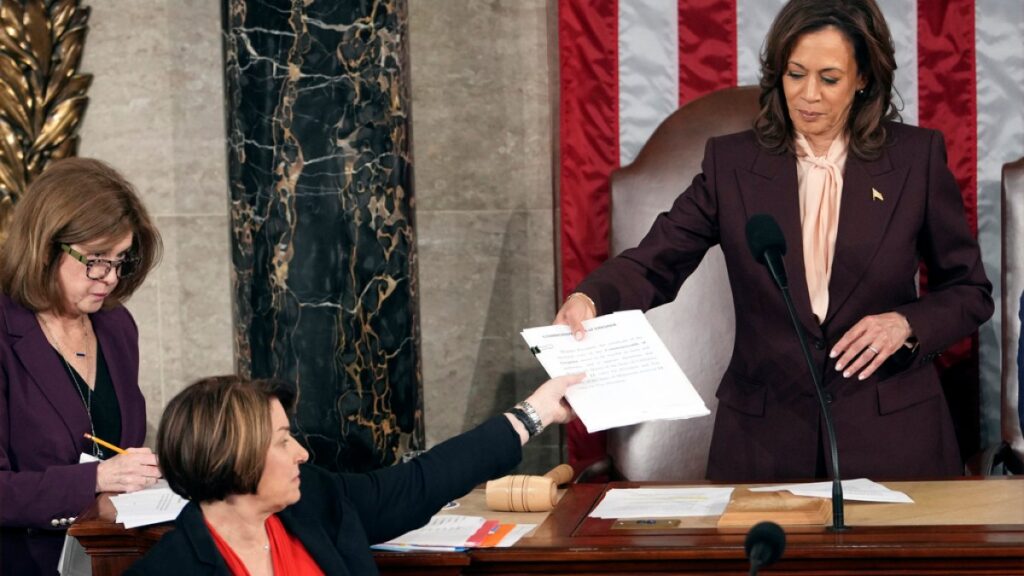
The quiet proceeding contrasts with efforts by Trump’s own supporters to overturn his 2020 loss by storming the US Capitol. The United States Congress has certified Donald Trump’s victory in November’s presidential election, clearing a final hurdle for his return to the White House later this month. Monday’s ceremony in Congress officially validated the 2024 Electoral College results. Overseen by Vice President Kamala Harris, Trump’s main rival in the election, the event passed quickly and with little fanfare. “Today was obviously a very important day,” Harris, who also serves as the president of the Senate, said in remarks afterwards. “It was about what should be the norm and what the American people should be able to take for granted, which is that one of the most important pillars of our democracy is that there will be a peaceful transfer of power.” The largely procedural affair marked a stark contrast with the last time Congress convened to certify Electoral College votes, on January 6, 2021. During that ceremony, thousands of Trump’s supporters stormed the US Capitol in an effort to overturn then-President Trump’s defeat in the 2020 election. Advertisement Lawmakers were forced to evacuate as doors were smashed, police officers were attacked and one protester was shot to death while trying to enter a chamber through a broken window. The attack took place after Trump held a rally nearby on the Ellipse, a park south of the White House, where he reiterated false claims that the election had been stolen through massive fraud. Critics roundly condemned the attack as an assault on democracy, and the US Department of Justice has since charged 1,583 participants with federal crimes. As of Monday, approximately 1,009 have pleaded guilty, with 327 offering guilty pleas to felony charges. Trump himself faced two criminal indictments for his role in trying to overturn the 2020 election results: A federal case in Washington, DC, was recently dismissed, while a state-level case in Georgia is stalled but ongoing. Nevertheless, four years later, Trump is set to return to power on the heels of his most successful presidential campaign to date. In November, Trump won 312 Electoral College votes to Harris’s 226 and became the first Republican candidate to win the popular vote since 2004. Trump’s Republican Party will also take control of Congress after winning majorities in both the House of Representatives and the Senate. Many in the party have since embraced the Republican leader’s false claims about the 2020 election. “Congress certifies our great election victory today – a big moment in history. MAGA!” Trump wrote on his platform Truth Social on Monday, using an acronym for his slogan, “Make America Great Again”. Advertisement Harris, meanwhile, urged respect for the tenets of US democracy. She cited Monday’s peaceful certification as an example of the right way forward. “I do believe very strongly that America’s democracy is only as strong as our willingness to fight for it,” she said. “Otherwise it is very fragile, and it will not be able to withstand moments of crisis.” Adblock test (Why?)
Israeli attacks target Palestinians across Gaza amid ceasefire talks
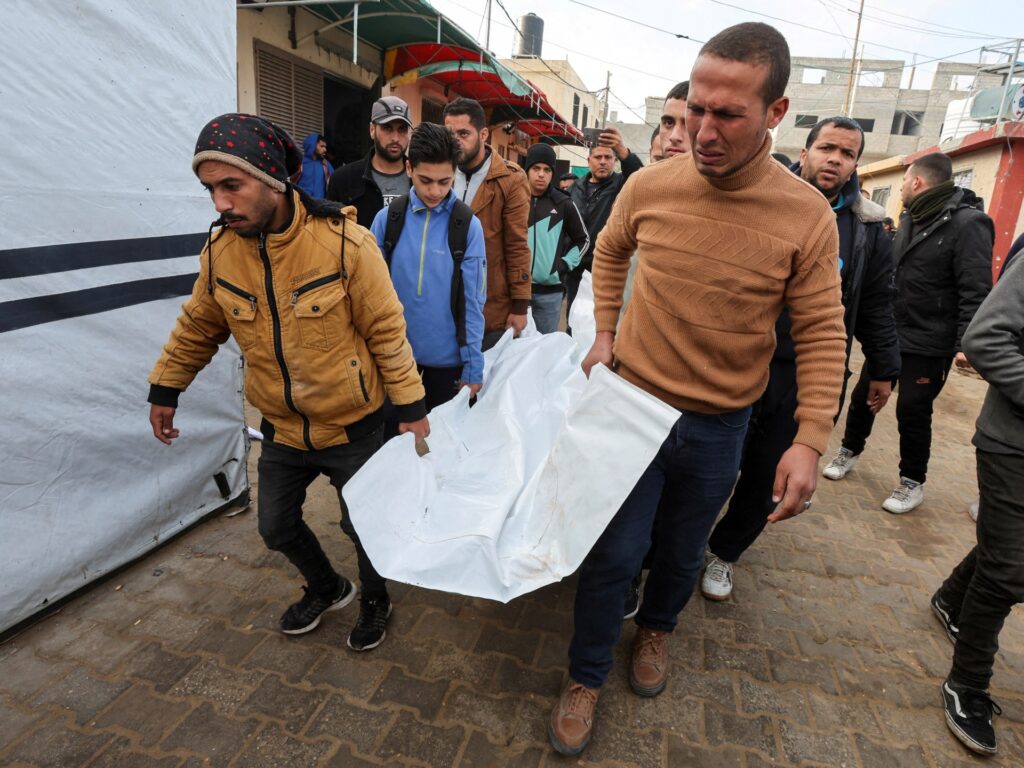
World Food Programme condemns Israeli forces for firing at one of its convoys in Gaza in ‘unacceptable’ incident. Recent Israeli attacks have killed and injured dozens of Palestinians across the Gaza Strip amid ongoing talks to reach a truce deal in the besieged territory. Medical sources told Al Jazeera Arabic that Israeli bombardment injured about 40 people north of the Nuseirat refugee camp in central Gaza on Monday. Casualties, including children, were also reported in the al-Mawasi area near Khan Younis. The Palestinian Civil Defence said that it retrieved the bodies of three people who were killed in Israeli bombing in Nuseirat and another person in Khirbet al-Adas, north of Rafah. The Gaza Health Ministry had said earlier on Monday that at least 49 people were killed over the previous 24 hours, bringing the Palestinian death toll from the war to 45,854. Israel has been killing dozens of Palestinians in Gaza daily since the war broke out in October 2023. It has also imposed a suffocating blockade on the territory and displaced nearly its entire population. Harsh winter conditions have added to the woes of Palestinians sheltering in makeshift tents, already contending with hunger and lack of medical care. Advertisement The Gaza Government Media Office said on Monday that eight displaced Palestinians have died due to severe cold in recent weeks, warning that the number could rise amid dire conditions in the territory. “We hold the Israeli occupation fully responsible for the deterioration of humanitarian conditions in the Gaza Strip as well as the American administration and countries that have supported and participated in the genocide,” the office said in a statement. It called on international organisations and Arab and Muslim countries to urgently intervene to save civilians in Gaza. The World Food Programme (WFP) on Monday accused Israeli forces of firing at one of its convoys a day earlier. It described the shooting, which did not result in casualties, as “unacceptable”. “The World Food Programme strongly condemns the horrifying incident on January 5, when a clearly marked WFP convoy was shot at by Israeli forces near the Wadi Gaza checkpoint, putting the lives of our staff at tremendous risk and leaving the vehicles immobilised,” WFP said in a statement. Israeli Prime Minister Benjamin Netanyahu and his former Defence Minister Yoav Gallant are facing arrest warrants by the International Criminal Court (ICC) over alleged war crimes in Gaza, including using “starvation as a method of warfare”. Against the backdrop of the violence and humanitarian crisis in Gaza, diplomatic efforts have continued to reach a ceasefire deal that would lead to the release of Israeli captives held by Hamas and other Palestinian groups. Advertisement Hamas officials told several media outlets on Monday that the group is willing to free 34 Israeli captives in the first stage of the deal that would also see the release of an unspecified number of Palestinian prisoners held by Israel. It is unclear how many of the Israeli captives on the initial list are still alive. Hamas has said that Israeli bombardment has killed several captives since the start of the war. Israeli media outlets reported on Monday that Mossad chief David Barnea postponed a trip to Doha to finalise the deal while Israel awaits Hamas’s response to a proposal. Incoming United States President Donald Trump reiterated on Monday that “there would be hell to pay” if the captives are not released by the time he returns to the White House for a second term on January 20. Adblock test (Why?)
US envoy says Israeli army will withdraw completely from south Lebanon
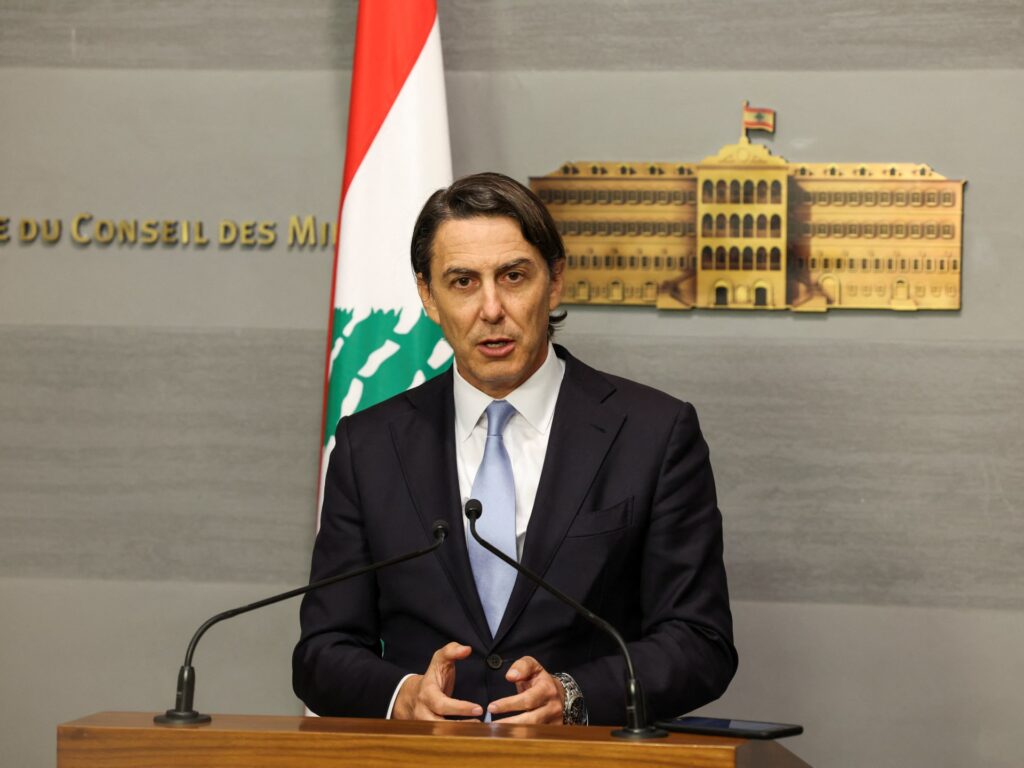
The Israeli military will withdraw completely from south Lebanon, United States envoy Amos Hochstein has said, despite recent reports that Israel is planning to maintain a permanent presence in the country. Hochstein’s statement on Monday came as Israel was withdrawing its forces from Naqoura in the western sector of the border, with the Lebanese army deploying in the area. “The Israeli military started its withdrawal from Naqoura, most of the western sector and back into Israel proper today, south of the Blue Line,” Hochstein told reporters in Beirut, referring to the unofficial border between the two countries. “These withdrawals will continue until all Israeli forces are out of Lebanon completely.” However, the US official did not specify a timetable for the Israeli withdrawal. A ceasefire agreement reached in November between Israel and Hezbollah stipulates that Israeli forces must leave Lebanon within 60 days, by January 26. But media reports from Israel have suggested that the Israeli military does not plan on honouring the deadline. Advertisement Lebanon’s Prime Minister Najib Mikati said in a statement after meeting Hochstein on Monday that delaying the Israeli withdrawal from Lebanon is “strongly rejected”. Last week, the United Nations reiterated its call for a “timely” Israeli withdrawal from Lebanon. The Israeli military has been conducting near-daily attacks in Lebanon in violation of the ceasefire, including air strikes across the country, ground advances and the destruction of homes in areas under its control. Israel argues that it is enforcing the agreement, which says that Hezbollah must withdraw its forces to the north of the Litani River, about 30km (19 miles) from the Israeli border. Despite the Israeli attacks, Hezbollah has held its fire since the agreement came into effect, with the exception of a single “warning attack” against an Israeli base last month. Hezbollah officials have said that they are allowing space for the Lebanese government to address the Israeli violations through diplomatic channels and the US-led “mechanism” to monitor the agreement. But the Hezbollah chief Naim Qassem warned on Saturday that the group’s patience may run out before or after the 60-day period. “When we decide to do something, you will see it directly,” Qassem said in a televised speech. Hezbollah started attacking Israeli military positions after the outbreak of the 15-month war on Gaza in a campaign that it said was meant to pressure Israel to end its offensive against the besieged enclave. After nearly a year of low-level cross-border hostilities, Israel launched an all-out war in Lebanon, killing thousands of people and destroying large parts of the country. Advertisement During its onslaught, Israel dealt heavy blows to Hezbollah, assassinating several of its top military and political officials, including its powerful leader Hassan Nasrallah. The Israeli army also claimed it had wiped out most of the group’s rocket arsenal. However, Hezbollah claimed victory after the war, saying that it halted Israel’s ground advances and inflicted heavy damage on the invading soldiers. The Lebanese group also continued to fire rockets and drones at Israel throughout the conflict. On Sunday, Israeli Defence Minister Israel Katz warned that the country would be “forced to act” if Hezbollah does not pull away from the border. But Hochstein has suggested that the fragile ceasefire is holding. “This process is not smooth, but it is successful,” he said on Monday. The Lebanese army had confirmed its deployment in Naqoura earlier on Monday, but the municipality urged residents against returning to the town before the green light from the authorities after opening the roads and clearing unexploded ordnances. Adblock test (Why?)
Russia-Ukraine war: List of key events, day 1,047
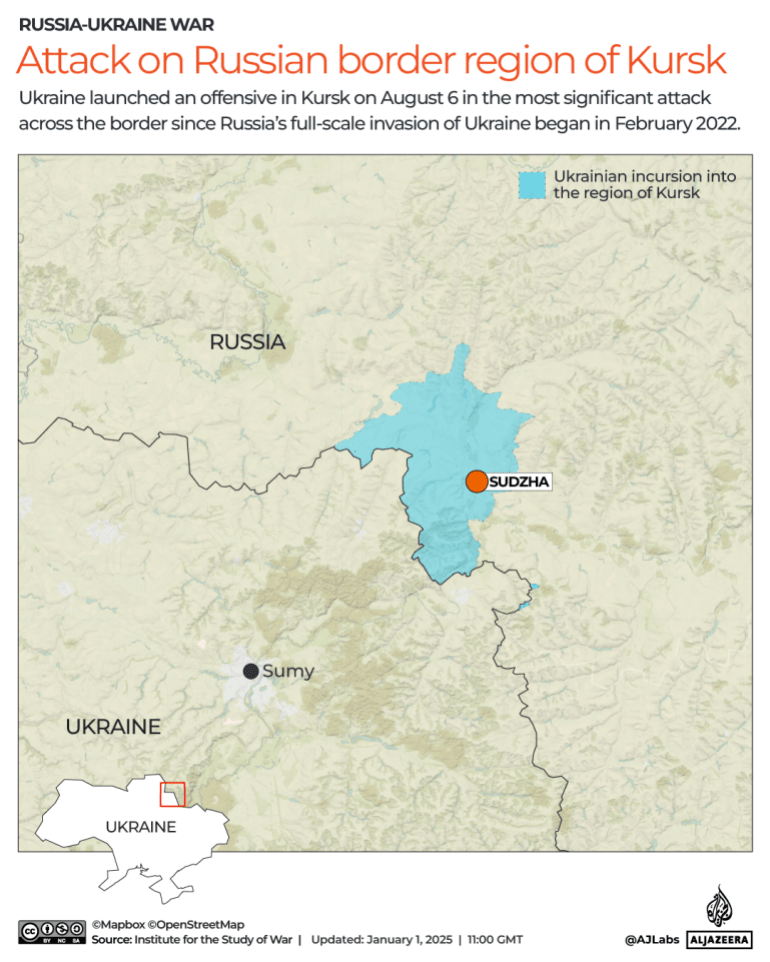
Here are the key developments on the 1,047th day of Russia’s invasion of Ukraine. Here is the situation on Monday, January 6: Fighting Russia says its forces seized control of Kurakhove, a town in Ukraine’s Donetsk region. Gaining control over Kurakhove “has significantly hampered the logistics and technical support” of Ukrainian troops, the Russian Defence Ministry said. Kurakhove lies 32km (20 miles) south of Pokrovsk, an important Ukrainian logistics hub towards which Russia has been advancing for months. The Ukrainian air force said it shot down two Kh-59 cruise missiles launched by Russia overnight. Of 128 drones launched, 79 drones were shot down and 49 “imitator drones” did not reach their targets, it added. The Ukrainian military launched a new offensive in the Kursk region of western Russia on Sunday, where Moscow’s forces have been trying to push back Ukrainian troops for the past five months. Russia’s Defence Ministry said Ukraine lost up to 340 soldiers in the past 24 hours in the Kursk region. It also said it shot down a Ukrainian MiG-29. Ukraine launched a counterattack in Kursk and “Russia is getting what it deserves,” the head of Ukrainian President Volodymyr Zelenskyy’s office, Andriy Yermak, said on Sunday, adding there was “good news” for Ukraine from the region. Serhiy Lysak, the governor of Ukraine’s Dnipropetrovsk region, has said Russia attacked the Nikopol region with artillery fire “half a dozen times” overnight. He said Moscow also launched a “suicide drone over the region”. No casualties were reported. The International Atomic Energy Agency (IAEA) has heard loud blasts near Ukraine’s Zaporizhzhia nuclear power plant, coinciding with reports of a drone attack on the plant’s training centre, it said in a statement. The IAEA has not yet been able to confirm any effect of the attacks. The IAEA team also reported hearing machine-gun fire coming from the site on multiple occasions, it added. Politics and diplomacy Advertisement United States Secretary of State Anthony Blinken, speaking in Seoul, South Korea on Monday, said Ukraine’s position in Kursk is “important” because it would “factor in any negotiation that may come about in the coming year”. Blinken said the US believes Russia is expanding space cooperation with North Korea in exchange for its troop contribution in fighting Ukraine. “The DPRK is already receiving Russian military equipment and training. Now we have reason to believe that Moscow intends to share advanced space and satellite technology with Pyongyang,” he said. Blinken also said the outgoing administration of President Joe Biden, which has given Kyiv billions of dollars in security assistance since Russia’s February 2022 invasion, wants to ensure that “Ukraine has the strongest possible hand to play”. President Zelenskyy said security guarantees for Kyiv to end Russia’s war would only be effective if the US provides them. “Without the United States, security guarantees are not possible. I mean these security guarantees that can prevent Russian aggression,” he said in an interview with US podcaster Lex Fridman published on Sunday. Zelenskyy said Ukrainians were counting on Trump to force Moscow to end its war and that Russia would escalate in Europe if Washington were to quit the North Atlantic Treaty Organization (NATO) military alliance. A Slovak government delegation travels to Brussels to discuss the gas situation after Ukraine ended the deal that allows Russian gas to travel through its territory to some European countries, including Slovakia. Advertisement Adblock test (Why?)
Israeli attack kills 13 members of a family in Gaza City
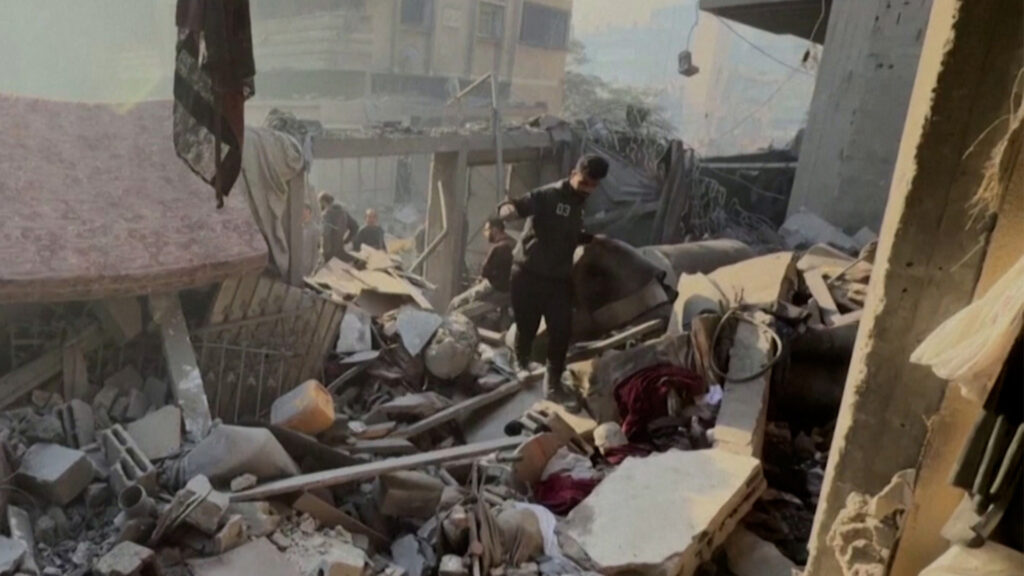
NewsFeed Al Jazeera’s Moath al-Kahlout, one of the few journalists in northern Gaza, has been to the scene of an Israeli attack that killed 13 members of the same family in Gaza City. Published On 6 Jan 20256 Jan 2025 Adblock test (Why?)
Malaysia court grants jailed ex-PM Najib access to house arrest decree
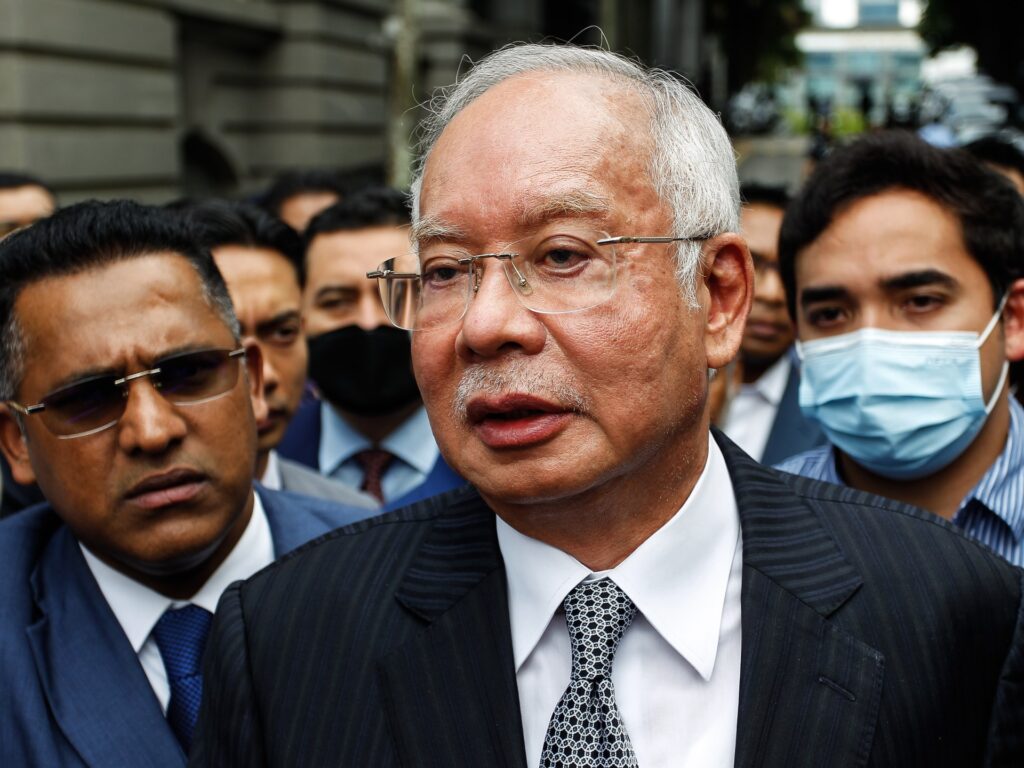
Three-member bench rules 2-1 to grant Najib Razak’s appeal to use the decree to argue his case before the High Court. Malaysia’s appeals court has granted a bid by jailed ex-premier Najib Razak to see a document he said should allow him to serve his sentence at home, in a rare win for a disgraced former leader at the heart of the country’s biggest scandal. A three-member bench ruled 2-1 on Monday to grant Najib’s appeal to use the decree to argue his case before the High Court. “Given the fact that there is no challenge [of the existence of the decree], there is no justification that the order has not been complied with,” said Mohamad Firuz Jaffril, one of the three Court of Appeal judges. The 71-year-old Najib, who was jailed over the multibillion-dollar 1MDB scandal, had appealed a lower court decision last July that dismissed his bid to confirm the existence of and execute a royal order that he said entitled him to house arrest. Malaysia’s pardons board, at the time chaired by then-King Al-Sultan Abdullah Ahmad Shah, agreed in February last year to halve Najib’s jail sentence to six years from 12 and reduce fines imposed on him, prompting public uproar. Advertisement But Najib maintained that an “addendum order” on house arrest was issued by the former king alongside the decision and was never executed by authorities. Following the court ruling on Monday, Malaysia’s home minister said the prisons department had not received any notification about Najib’s possible home detention last year. The home ministry received no communication on the issue from Malaysia’s former king, who chaired the pardons board, minister Saifuddin Nasution Ismail told a press conference. “The government will fully implement royal orders if received,” he said. According to the constitution, the monarch, who changes every five years under Malaysia’s unique system of monarchy, has authority to take decisions on granting pardons, upon the advice of the pardons board. Following Monday’s ruling, “Najib was happy,” his lawyer Muhammad Shafee Abdullah told a news conference. “[He is] very relieved that finally they recognised some element of injustice that has been placed against him.” Najib was found guilty in 2020 of criminal breach of trust and abuse of power for illegally receiving funds misappropriated from a unit of state fund 1Malaysia Development Berhad. Najib remains on trial for corruption in several other 1MDB-linked cases. He has consistently denied wrongdoing. Malaysian and United States investigators estimate $4.5bn was stolen from 1MDB and more than $1bn channelled to accounts linked to Najib. Adblock test (Why?)
Israeli forces kill 200 in three days in Gaza, overwhelming hospitals
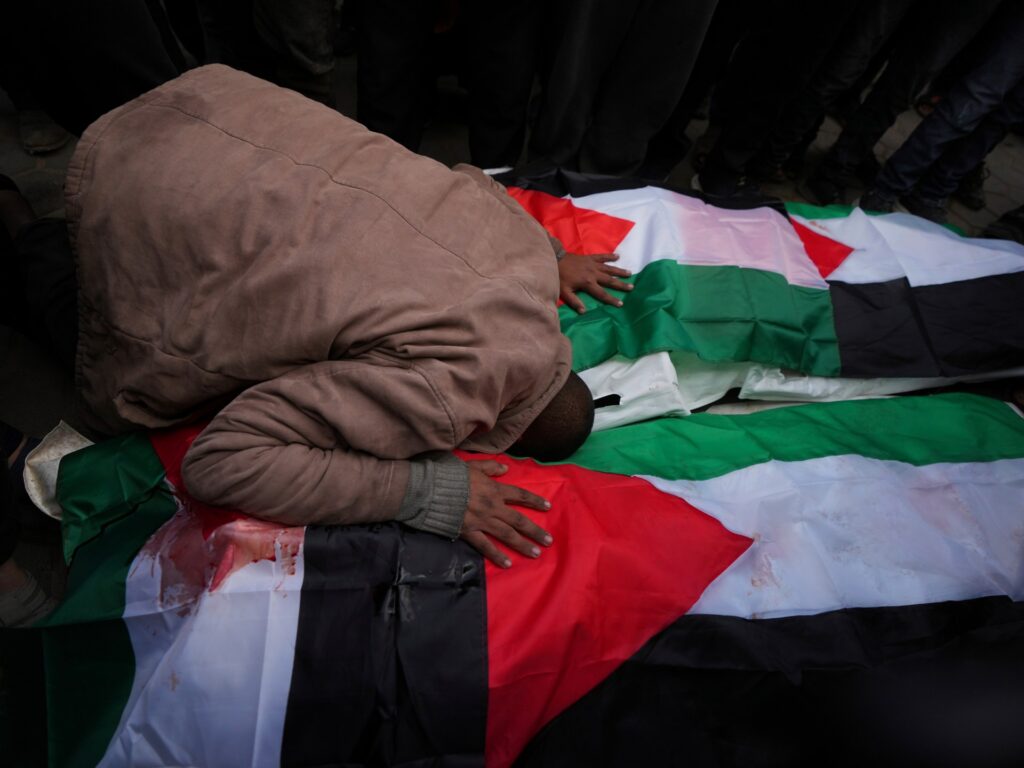
Israeli attacks have killed more than 200 Palestinians across Gaza over the last three days as the military continues to hit residential buildings, people gathering in the streets, marketplaces, and shelters. Al Jazeera’s Hani Mahmoud, reporting from Deir el-Balah, said although Israel claims it is targeting Hamas fighters, most of the victims are innocent people. “We are seeing women and children making up the vast majority of casualties,” he said. Hospitals are overwhelmed by the steady stream of casualties, direct attacks on medical facilities, and severe shortages of supplies as Israel imposes a tight siege on the territory. At the Al-Aqsa Martyrs Hospital in Deir el-Balah, many injured people are dying before they can be treated. Israel’s war on Gaza has now killed at least 45,805 Palestinians and wounded 109,064 since October 7, 2023. At least 1,139 people were killed in Israel during the Hamas-led attacks that day and about 250 were taken captive. Adblock test (Why?)
‘I refuse a cheap death’: Israel kills Palestinian journalist in Gaza
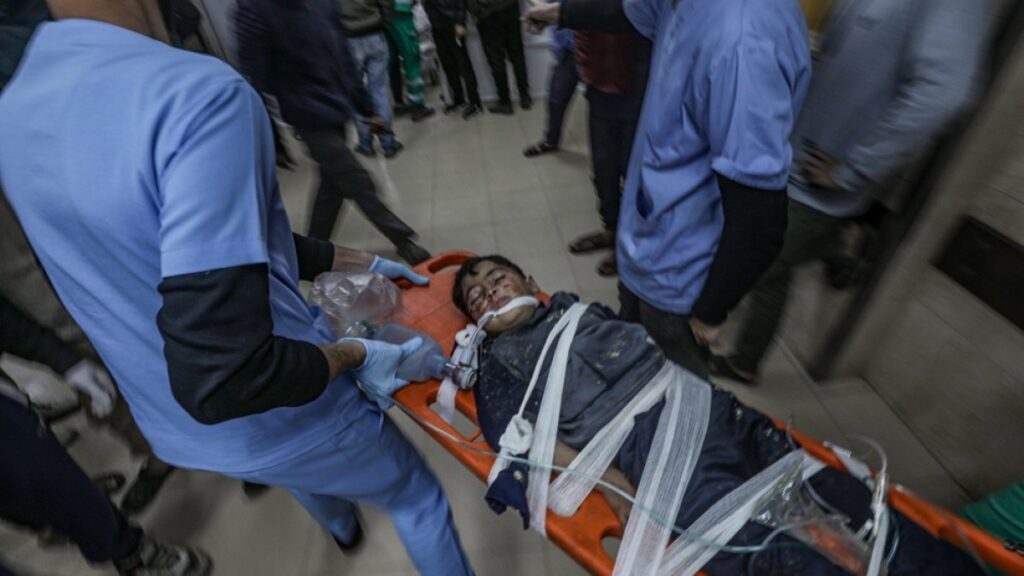
A Palestinian writer, poet and journalist has been killed in an Israeli air attack in northern Gaza’s Jabalia refugee camp, according to his family, taking the total number of journalists killed in the Israel-Palestine conflict since October 7, 2023 to 220. Mohammad Hijazi was among nearly 90 Palestinians slain in Israeli attacks across the besieged territory in the last 24 hours, according to a statement from the Gaza Ministry of Health on Sunday. Hundreds of people have been killed in the Jabalia camp since Israel imposed a military siege of northern Gaza on October 5 and intensified bombardment, forcing thousands to flee. Israel has prevented even aid groups from supplying basic food items to the area. “I don’t know if I will write to you again. I keep what I have written and am writing. Maybe it will come to light one day. I refuse a cheap death. I curse the murderer,” Hijazi wrote on Facebook in August last year. “Let us in this bottom that we have finally reached, arm ourselves with patience and prayer, and count the days we have lived as a historic achievement, while awaiting what is coming with a broken heart, an extinguished eye, a head held high, and a spirit that fights until the end of the road.” Advertisement It was not immediately clear whether Hijazi was working for a specific media organisation when he died. Since the beginning of its war on Gaza on October 7, 2023, Israel has killed at least 220 journalists and media workers, including Hijazi. The Health Ministry reported on Sunday that at least 88 Palestinians had been killed and 208 others injured in Gaza in the past 24 hours. Meanwhile, another baby died from the cold in Gaza, as displaced Palestinians lack warm clothes and are forced to live in tents that provide little protection from the weather. The child’s mother told Al Jazeera that her baby, Yousef, was born healthy, but he became the eighth infant to die in Gaza in recent days due to the cold. “They didn’t give a single moment to feel happy with my baby,” she said. “He slept next to me and in the morning I found him frozen and dead. I don’t know what to say. No one can feel my misery. No one in the world can understand our catastrophic situation.” The latest fatalities bring the death toll of Palestinians killed by Israeli attacks in Gaza to at least 45,805 since October 2023, while an estimated 109,064 have been injured. Among those slain in Israeli strikes across Gaza on Sunday were three Palestinians who were living in a tent in Deir el-Balah, according to Al Jazeera’s Hani Mahmoud, reporting from central Gaza. A family of 15 people was also buried under the rubble in the northwest of Gaza City, following a separate strike, Mahmoud reported. “The Palestinian Civil Defence is doing its best to remove bodies from under the rubble, but has only removed four of the family members,” he said. Advertisement “It’s estimated there are at least 15 family members under the three-storey building that was flattened to the ground. “These repeated attacks – deliberate against families – continue to unfold, causing more tragedies among Palestinians.” “I refuse to die cheaply… I curse the killer.” This morning, writer and journalist Mohamed Hijazi, the author of these words, was killed by the Israeli army in Beit Lahia, northern Gaza. #GazaGenocide pic.twitter.com/LWsCak8IPr — Ramy Abdu| رامي عبده (@RamAbdu) January 5, 2025 In the last three days, Israeli forces have killed more than 200 people in Gaza, Mahmoud noted. The last few remaining hospitals across Gaza are now overwhelmed, he added. At the emergency department at Al-Aqsa Martyrs Hospital in Deir el-Balah, many people were left on the floor and others were waiting to be admitted into the operating theatre, Mahmoud said. “By the time it’s their turn, it’s too late – they have already bled to death. [Many] burns are quite severe, and no pain medication is available at the hospital,” he said. “There’s a silent death going on. In the past weeks, due to the ongoing attacks, people are dying quietly because of the lack of medical supplies.” On Sunday, the Israeli military claimed that it had struck more than 100 “terror targets” in the Gaza Strip over the past two days. Several of the strikes targeted sites from which Palestinian fighters had been firing projectiles into Israel in recent days, the military said. The latest violence in Gaza comes as indirect negotiations for a captive release deal resumed in Qatar. Advertisement Mediators Qatar, Egypt and the United States have been engaged for months in efforts to strike a deal to end the war and secure the release of dozens of captives still held in Gaza. Israel has detained more than 10,000 Palestinians since launching its devastating war, which has brought it global condemnation. Rights groups have termed Israel’s military offensive as a genocide, while the International Court of Justice (ICJ), the top United Nations court, said in March 2024 that the Israeli operation “plausibly” amounted to genocide. Seperately, the International Criminal Court (ICC) has issued arrest warrants against Israeli Prime Minister Benjamin Netanyahu and his former Defence Minister Yoav Gallant. Adblock test (Why?)
Ukraine launches new offensive in Russia’s Kursk as war casualties mount
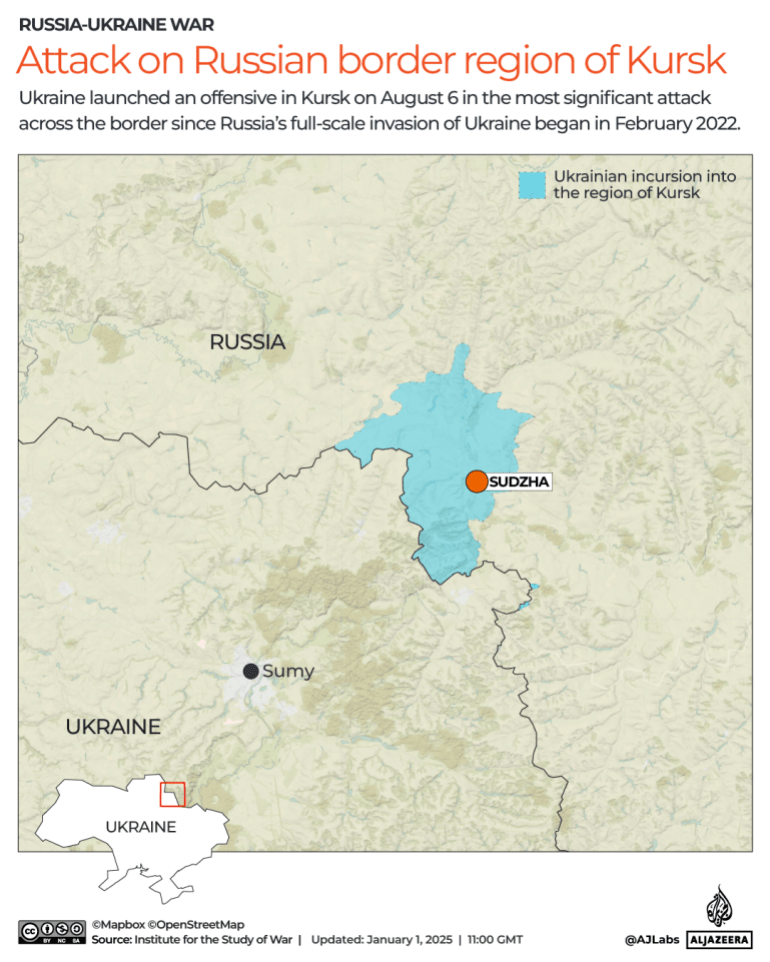
Ukrainian forces have been launching counteroffensives in Kursk in an effort to hold on to seized territory. The Ukrainian military has launched a new offensive in the Kursk region of Russia as Moscow’s forces continue to push deep inside eastern Ukraine. The Russian Ministry of Defence confirmed in a statement on Sunday that Ukrainian forces launched new attacks amid their incursion into Russia that began with a surprise assault in August. Andriy Kovalenko, a senior official with Ukraine’s National Security and Defense Council, appeared to confirm the operation in a Telegram post. “In the Kursk region the Russians are deeply concerned. They were attacked on multiple fronts, which came as a surprise to them,” he said. Andriy Yermak, the head of Ukrainian President Volodymyr Zelenskyy’s office, suggested the attack had been successful. “Kursk region, good news, Russia is getting what it deserves,” he wrote on Sunday. The Russian Defence Ministry said a Ukrainian counterattack began on Sunday morning which included two tanks, a barrier vehicle, and 12 armoured combat vehicles with soldiers who were heading to the Russian settlement of Berdin. Advertisement Most of them were destroyed, according to the ministry, which also released aerial footage of what it said was an explosives-laden drone taking out a self-propelled artillery unit of the Ukrainian armed forces in Kursk. The ministry said its soldiers killed 340 members of the Ukrainian armed forces over the past day. The Russian military claims that Ukraine has lost more than 49,000 servicemen in Kursk since the start of its offensive in August, along with 273 tanks, 44 rocket launch systems, and hundreds of other vehicles and munitions. Ukraine claims Russia lost 430,000 soldiers in 2024, and that North Korean soldiers brought to Kursk have recently taken heavy casualties on the front lines of the Russian territory. Russian forces have been gradually pushing back Ukrainian soldiers out of seized areas in Kursk, but they have not been able to fully repel the offensive. Zelenskyy has said territory held in Kursk could play a considerable role in future “peace” talks. Russian President Vladimir Putin has said he is ready for talks but also remains prepared to carry on with the war for much longer. Russian forces continue to push deep inside Ukrainian territory as well, having gradually taken over significant areas in the eastern part of the country. Advancing at an accelerating rate in recent months, they are continuing with an attempt to take the Ukrainian city of Pokrovsk in the Donetsk oblast. Moscow promised retaliation on Saturday after the Ukrainian military used more ATACMS missiles provided to it by the United States. Advertisement Adblock test (Why?)
How can world powers stop Israel from attacking Gaza’s medical facilities?
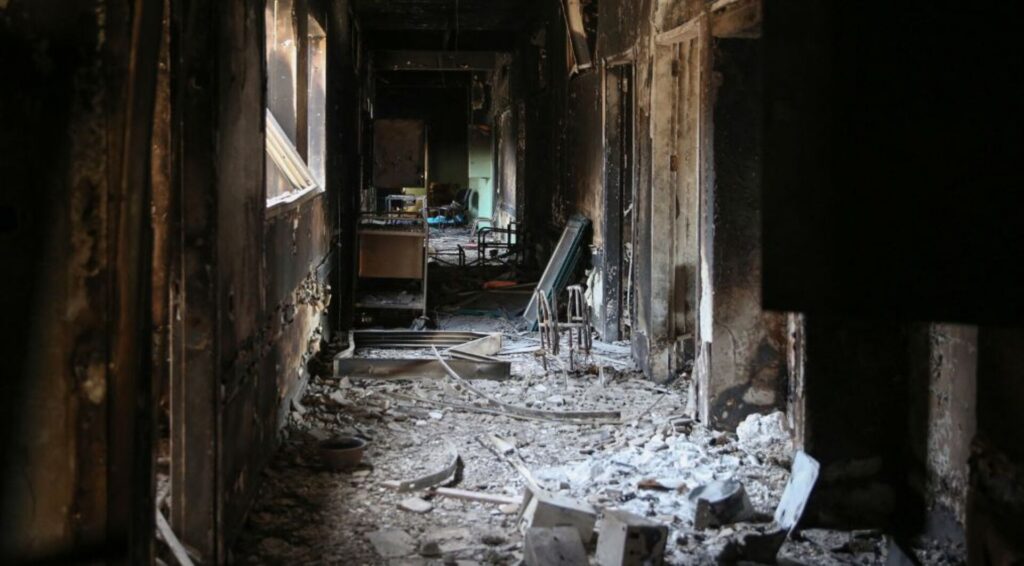
The United Nations says the health system in Gaza is on the verge of total collapse amid relentless Israeli attacks. The United Nations says only 16 of the 36 hospitals in Gaza are functional, and even those are only able to offer partial services. The UN has verified more than 650 Israeli attacks on medical facilities since the Israel-Palestine conflict began in October 2023, and at least 1,054 health workers have been killed. Israel says Hamas fighters are operating from hospitals, but provides little evidence to substantiate its claims. Is it possible to prevent the collapse of Gaza’s health system? Presenter: Imran Khan Guests: Mohammed Abu Mughaisib – Deputy medical coordinator for Gaza for Doctors Without Borders (MSF) Michael Lynk – Human rights lawyer and former UN special rapporteur for human rights in occupied Palestinian territories Mohammed Adeel Khaleel – Orthopaedic surgeon who recently returned from Gaza Adblock test (Why?)