

Syrians return to the homes they fled, only to find them levelled
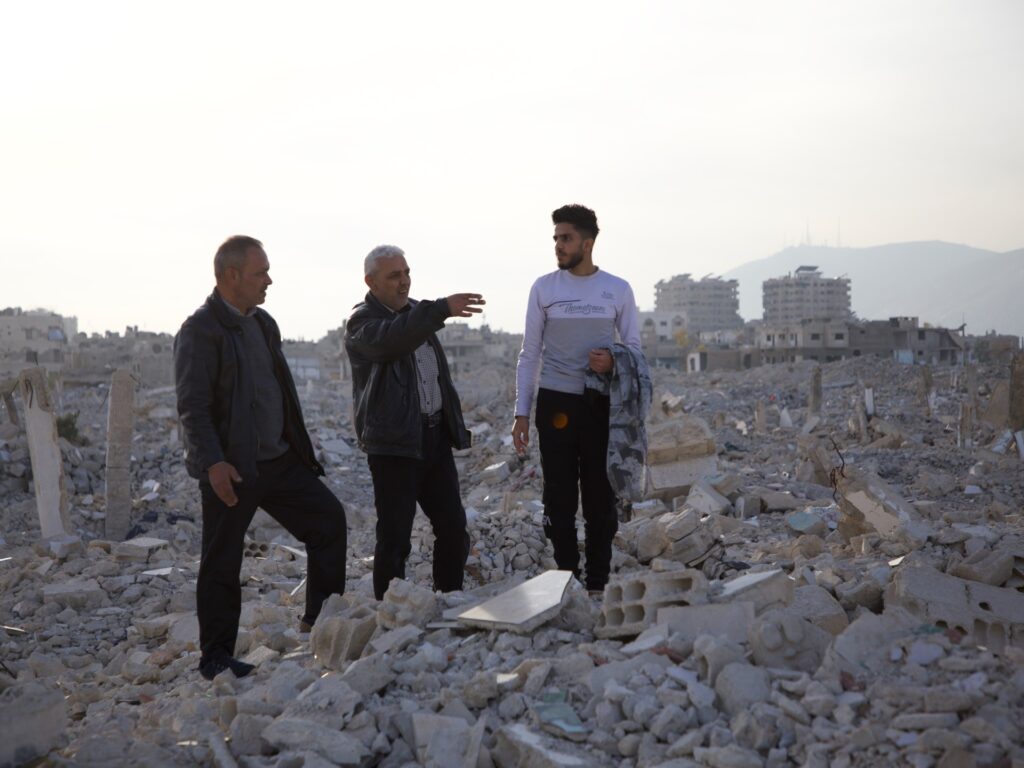
Damascus, Syria – Nizar al-Madani, 34, stood with tears in his eyes as he looked around Qaboun. After seven years of displacement, he returned on Tuesday to his neighbourhood in Syria’s capital, Damascus, only to find it levelled. “We’d heard that the regime demolished the neighbourhood, but seeing it with my own eyes was utterly shocking,” he said. When al-Madani and his family were displaced from Qaboun in 2017, many of the neighbourhood’s buildings were damaged. “But today, there is no trace of these buildings… The regime has obliterated the neighbourhood’s features.” He was not the only one who came out to Qaboun to see what was left after the regime of Bashar al-Assad fell. Several residents of Qaboun who had also fled for their lives are walking around, trying to figure out where their houses could have been. Revenge and destruction The al-Assad regime would deliberately destroy areas that rose against him after regaining control, employing various laws to legitimise that. Chief among these was Law No. 10 of 2018, which authorised the establishment of new urban zones in war-damaged areas and gave Syrian refugees only 30 days to prove ownership of their property. Failure to do so would result in the property being confiscated. Advertisement Many people were too afraid to come back to Syria or to their neighbourhoods, fearing that they would be arrested and charged with opposing al-Assad. Nadeedah Hannawi, 50, told Al Jazeera that her family was unable to prove ownership of their home, having fled to the north where there was no regime-controlled bureaucracy, and because they did not have their ownership documents with them. “The fallen al-Assad regime didn’t just displace us; it sought to steal the homes we had built with our life savings,” said Hannawi. “Identifying where my home and my husband’s shop used to be was no easy task,” she added. “Even the cemetery holding the graves of our loved ones has been destroyed. “The most important thing today is that the criminal Bashar al-Assad has fled, his regime has fallen, and our land has been returned to us. Together, we will rebuild it,” Hannawi said. Mahmoud Jahbar, 53, echoed her sentiments. “Al-Assad’s regime destroyed our homes and memories, but we’re hopeful that we’ll rebuild so our children have a place to call home.” Adblock test (Why?)
What to know about Syria’s new caretaker government
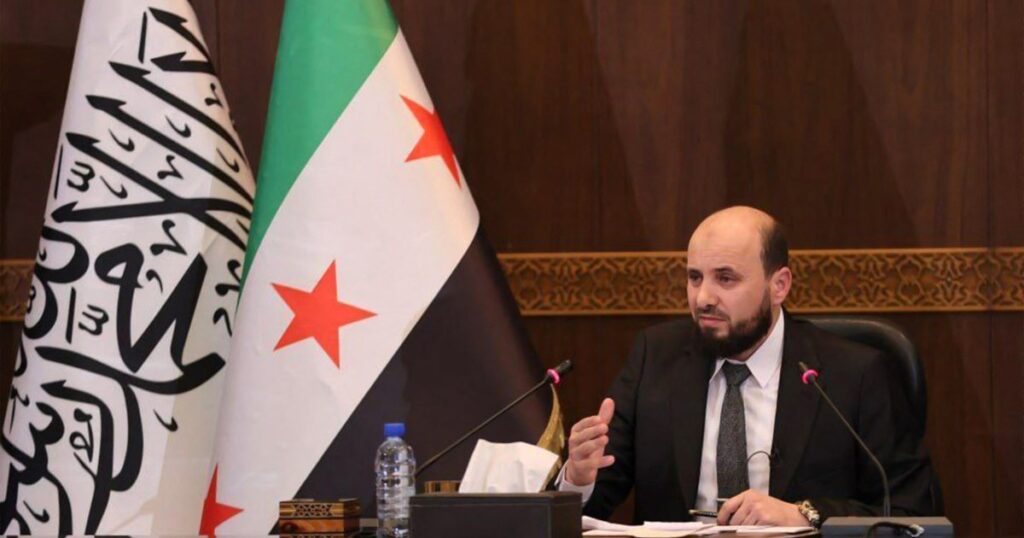
After toppling the regime of Syria’s President Bashar al-Assad, Hayat Tahrir al-Sham (HTS) leader and commander-in-chief of the new administration, Ahmed al-Sharaa, has appointed Mohammed al-Bashir to lead a caretaker government until March 1. The move aims to stabilise the country by providing basic services to civilians and preventing a power struggle between armed groups over state resources and ministries, experts told Al Jazeera. “[A caretaker government is needed] to ensure the state keeps functioning and that people have electricity, water sewage and the internet,” said Thomas Pierret, an expert on Syria for the Institute for Research and Study of the Arab and Muslim World. However, the caretaker government – and HTS – could lose credibility if it refuses to share power after three months, experts have warned. Here’s what we know about the caretaker government and its head: Who is Mohammed al-Bashir? The head of the caretaker government is a technocrat who headed the Syrian Salvation Government (SSG) in Idlib, a province in northwest Syria. Advertisement After the Syrian uprising erupted in March 2011, Idlib became an opposition stronghold. By 2017, HTS consolidated control and created the SSG out of civilian technocrats. “Mohammed al-Bashir … has done a reasonably good job in Idlib,” said Robin Yassin-Kassab, an expert on Syria and the co-author of Burning Country: Syrians in Revolution and in War. “I understand that it makes sense to scale [the Salvation Government] up to the whole of Syria, for now,” he added. Al-Bashir’s background in electrical engineering, project management and administrative planning suggests he has the professional know-how to maintain basic services in the country, analysts said. He first emerged as a minister in the HTS-backed Salvation government in 2021, according to the caretaker government’s official website For two years, he served as the head of development and humanitarian affairs, according to Assaad Al Achi, executive director of Baytna, a non-governmental organisation that supported local civil society groups in Syria throughout the war. “He was definitely interested in humanitarian work because that’s where the money was,” Al Achi said, referencing the SSG’s policy of taxing aid organisations. On January 13, 2024, the Shura Council in Idlib elected al-Bashir as prime minister of the SSG. Who are the other ministers? Al-Bashir has told Al Jazeera Arabic that, for the time being, the ministers from the SSG would take over the national ministerial portfolios. The current ministerial lineup is: Advertisement Minister of Interior Mohammed Abdul Rahman Minister of Economy and Resources Basel Abdul Aziz Minister of Information Muhammad Yaqoub al-Omar Minister of Justice Shadi Muhammad al-Waisi Minister of Agriculture and Irrigation Mohamed Taha al-Ahmad Minister of Health Mazen Dukhan Minister of Development Fadi al-Qassem Minister of Local Administration and Services Mohamed Abdel Rahman Muslim Minister of Endowments Hussam Haj Hussein Minister of Education Nazir al-Qadri Minister of Higher Education and Scientific Research Abdel Moneim Abdel Hafez Is there going to be a transition? Despite al-Bashir’s prominent role, Al Achi does not believe the caretaker prime minister has ambitions to consolidate power over Syria. “What worries me is if [this caretaker government] extends [its term] for more than three months, but if it just for three months … then that’s alright,” he said. Experts are concerned that HTS will try to rule all of Syria with an iron fist. According to a report by the Syrian Network for Human Rights, HTS subjected critics and opponents to enforced disappearances and tortured people to death. Al Jazeera asked the HTS media office to respond to these allegations, but they had not commented by the time of publication. Setting up to succeed The caretaker government and HTS could ease concerns of a power grab by proposing a roadmap detailing when negotiations with other stakeholders would begin ahead of forming a broader coalition, Yassin-Kassab told Al Jazeera. Advertisement He added that a plan should aim to implement UN Security Council Resolution 2254, which calls for a transitional period of 18 months, during which an inclusive coalition will draft a constitution and prepare for elections under United Nations supervision. “[HTS] need to say this is the beginning of a process that will involve every aspect of society and all political leaderships,” said Yassin-Kassab. “That would reassure Syrians and the international community and give the new government much more legitimacy.” Who’s going to pay for the transition? Syria’s economy is in tatters – the World Bank ranks its gross domestic product (GDP) at 129 out of 196 states. HTS managed to raise revenue during its rule in Idlib by taxing residents, as well as goods and relief passing through from the Turkish border. However, it is unclear whether the group has enough finances to bolster the economy and supply basic provisions in the short to medium term. Experts believe HTS can be incentivised to share power by linking sanction relief to political reforms. Syria is on the United States list of “countries that sponsor terrorism” and, on top of that, HTS is considered a “foreign terrorist organisation” by the European Union, Turkiye and the US. The EU and US have also sanctioned much of the Syrian economy, including the energy sector and the trading of goods related to technology or electricity provision, according to Human Rights Watch (HRW). It’s imperative that HTS shares power with other stakeholders and civil society in order to convince Syrians and the international community that the group has changed, argues Yassin-Kassab. Advertisement “[I]t remains to be seen if this is the beginning of a power grab by HTS and HTS-aligned civilian bodies,” he told Al Jazeera. “I certainly hope not.” Adblock test (Why?)
Brazil’s Lula released from hospital after brain bleed surgery
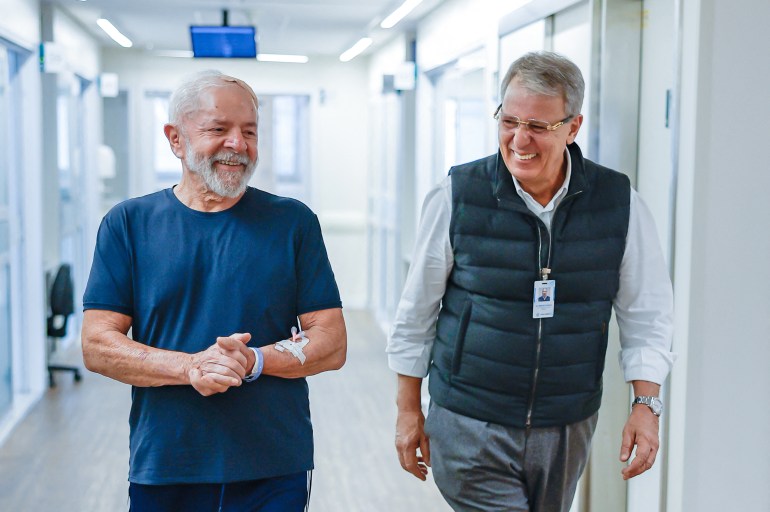
Doctors say leftist leader has been cleared to work while recovering at home after being rushed to hospital last week. Brazilian President Luiz Inacio Lula da Silva has been released from hospital following an emergency surgery to treat bleeding in his brain. The 79-year-old Brazilian leader delivered brief remarks upon his release on Sunday, days after he was rushed to the Syrian-Lebanese Hospital in Sao Paulo after experiencing headaches. “I’m here alive, well, with the urge to work. And I’ll tell you something I used to say during the campaign. I’m 79 years old, I have the energy of a 30-year-old and the enthusiasm of a 20-year-old to build this country,” Lula said. Doctors have said Lula would continue to recover from his home in Sao Paulo. He will be able to walk and hold meetings, but has been advised against international travel for the time being. The medical team said the leftist leader should be able to travel domestically, including to the capital Brasilia, following further assessment. A handout picture released by the Brazilian vice presidency shows President Luiz Inacio Lula da Silva walking with his neurosurgeon in the Syrian-Lebanese Hospital in Sao Paulo, Brazil [AFP] Lula underwent two surgeries while at the hospital, both aimed at blocking blood flow in parts of his brain to prevent haemorrhaging. His personal doctor had described the procedures as “routine” and “minimally invasive”, requiring only sedation as opposed to anaesthesia. Advertisement His neurologist, Rogerio Tuma, reported last week that Lula’s examination results were “normal”. Lula, who was sworn in as president in early 2023, had suffered trauma to the back of his head after falling in his home in October. At the time he received several stitches. He had curtailed travel following the fall. ‘Disrespect of democracy’ Speaking on Sunday, the president also offered his first response to the arrest of General Walter Braga Netto, in connection with investigations into an alleged coup plot. Braga Netto, who was a defence minister in right-wing President Jair Bolsonaro’s government as well as the former leader’s running mate in the 2022 election, was arrested on Saturday after he was formally accused last month with 35 others – including Bolsonaro himself – of allegedly plotting a coup to keep the former president in power following his 2022 re-election loss. “It is not possible for us to accept disrespect for democracy, disrespect for the constitution,” Lula said. “And it is not possible for us to accept that in a generous country like Brazil, we have people of high military rank plotting the death of a president, his vice president and a presiding judge of the Supreme Electoral Court,” said Lula. Prosecutors have not yet filed formal charges against Braga Netto, although authorities have said his arrest was related to allegations that he was obstructing the collection of evidence. Adblock test (Why?)
ICJ weighs legal responsibility for climate change, ‘future of our planet’
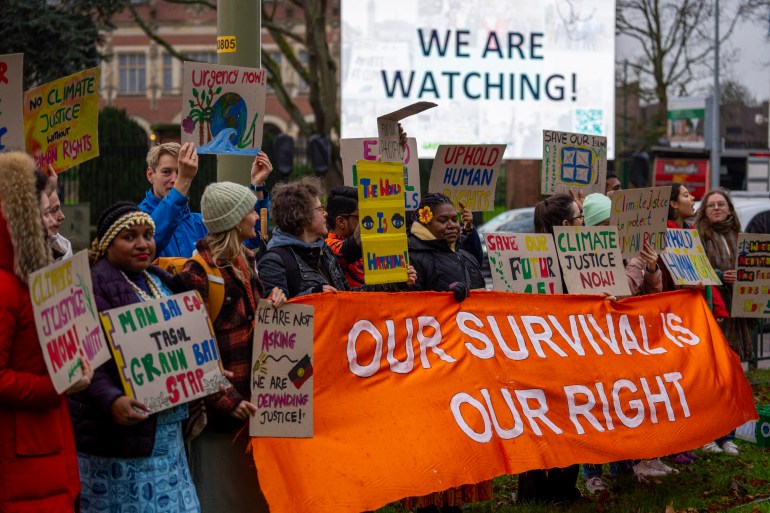
Historic hearings at the International Court of Justice (ICJ) in The Hague have drawn to a close after more than 100 countries and international organisations presented arguments over two weeks on who should bear legal responsibility for the worsening climate crisis. Spearheading the effort was Vanuatu which, alongside other Pacific island nations, says the climate crisis poses a threat to its very existence. “It is with a profound sense of urgency and responsibility that I stand before you today,” Ralph Regenvanu, Vanuatu’s special envoy for climate change and environment, said as he opened the hearings on December 2. “The outcome of these proceedings will reverberate across generations, determining the fate of nations like mine and the future of our planet,” he said. In the two weeks that followed, dozens of countries made similar entreaties, while a handful of major fossil fuel-producing countries argued polluters should not be held responsible. Sebastien Duyck, a senior lawyer with the Center for International Environmental Law (CIEL), which monitored the hearings, said the countries arguing against legal liability were in the minority. Advertisement “Major polluters, including the United States, United Kingdom, Russia, China, Germany, Saudi Arabia, Canada, Australia, Norway, and Kuwait, found themselves isolated in their attempts to play the legal system to serve their self-interests and insulate themselves from accountability,” Duyck said in a statement. “It is time to break this cycle of harm and impunity,” he added. The ICJ’s 15 judges from around the world must now consider two questions: what are countries obliged to do under international law to protect the climate and environment from human-caused greenhouse gas emissions? And what are the legal consequences for governments when their acts, or lack of action, have significantly harmed the climate and environment? Activists protest outside the International Court of Justice, in The Hague, Netherlands, during the hearings which started on December 2, 2024 [Peter Dejong/AP Photo] Among countries that provided oral statements during the hearings was the State of Palestine, which joined other developing nations in calling for international law to “take centre stage in protecting humanity from the dangerous path of human-made destruction resulting from climate change”. The Palestinian statement also offered insights into the ways that Israel’s illegal occupation is both causing climate change and hurting Palestinians’ ability to respond to it. “There can be no doubt that the ongoing illegal Israeli belligerent occupation of Palestine and its discriminatory policies have clear negative climate effects,” Ammar Hijazi, the State of Palestine’s ambassador to the Netherlands, said on Monday. Advertisement East Timor, also known as Timor-Leste, testified in support of Vanuatu’s case. “The climate crisis that we face today is the result of the historical and ongoing actions of industrialised nations, which have reaped the benefits of rapid economic growth, powered by colonial exploitation and carbon-intensive industries and practices,” Elizabeth Exposto, chief of staff to Timor-Leste’s prime minister, said on Thursday. “These nations, representing only a fraction of the global population, are overwhelmingly responsible for the climate crisis,” she added, “and yet, the impacts of climate change do not respect borders.” The hearings come after 132 countries at the United Nations General Assembly voted in March 2023 to support Vanuatu’s push for an opinion from the ICJ on the legal obligations nations are under to protect current and future generations from climate change. The turn to courts to spur action on climate change also reflects a growing degree of dissatisfaction among some governments at the lack of progress in UN climate negotiations, where decisions are based on consensus. The most recent COP29 summit in Baku, Azerbaijan, concluded with rich countries pledging to contribute $300bn a year by 2035 to help poorer nations combat the effects of climate change. But the Climate Action Network International, a network of 1,900 civil society groups in more than 130 countries, described the deal as a “joke”, when compared with the costs developing countries are facing as climate change worsens. Advertisement As Regenvanu noted in his statement for Vanuatu, “it is unconscionable that the COP failed to reach any agreement on cutting emissions”. “There is an urgent need for a collective response to climate change grounded not in political convenience but in international law.” WATCH LIVE: Vanuatu and the Melanesian Spearhead Group (jointly), South Africa, Albania and Germany openthe public hearings in the advisory proceedings on Obligations of States in respect of Climate Changehttps://t.co/qGazks5diA — CIJ_ICJ (@CIJ_ICJ) December 2, 2024 Adblock test (Why?)
Pachuca shock Al Ahly to face Real Madrid in FIFA Intercontinental final

Mexico’s Pachuca defeated Egyptian side Al Ahly on penalties to set up Intercontinental Cup final with Spanish giants Real Madrid in Qatar. Mexican side Pachuca beat Egypt’s Al Ahly on penalties at Stadium 974 in Doha on Saturday to claim the Challenger Cup and seal their place in FIFA’s Intercontinental Cup final. Pachuca will now face Spanish giants Real Madrid, who enter the tournament in the final as European champions, in Wednesday’s showpiece in Qatar. The South American side beat the African outfit 6-5 on penalties following a goalless semi-final, in which Al Ahly edged the possession and tested the keeper five times to Pachuca’s three. Four spot kicks were missed by the sides, including the opening penalty by Pachuca’s Salomon Rondon, before the decisive moment saw right-back Khaled Abdel Fattah hit the bar with his effort. Pachuca’s players rush to celebrate their penalty shootout victory [Hussein Sayed/AP] “It was difficult, very complicated, especially because of the marathon game we played today,” said Pachuca coach Guillermo Almada. “We’ll try to get the players back on their feet and go into the game (final) with all the motivation in the world.” Advertisement Wednesday’s final against Madrid will be played at Lusail Stadium, which hosted the World Cup final between Argentina and France two years ago. A crowd of 38,841 were in attendance at Stadium 974 on Saturday, which was built for the 2022 FIFA World Cup with that number of shipping containers to be a “beacon of sustainability” as part of Qatar’s pledge to deliver the first carbon-neutral tournament. CF Pachuca’s Salomon Rondon receives the trophy from FIFA President Gianni Infantino [Hussein Sayed/AP] Pachuca of Mexico had romped to an upset against Brazilian side Botafogo with a 3-0 win in the last round – the Derby of the Americas – thanks to second-half strikes from Pachuca’s Oussama Idrissi, Nelson Deossa and Rondon. Botafogo had only just completed the domestic double in Brazil. The win for Pachuca continues a remarkable year that has already seen them lift the Concacaf Champions Cup after a 3-0 win in the final against MLS side Columbus Crew in early June. Pachuca coach Guillermo Almada holds the Derby of the Americas and Challenger Cup trophies, which have been secured en route to the Intercontinental Cup final [Ibraheem Al Omari/Reuters] Adblock test (Why?)
Outcry after RFK Jr linked to effort to nix US approval for polio vaccine
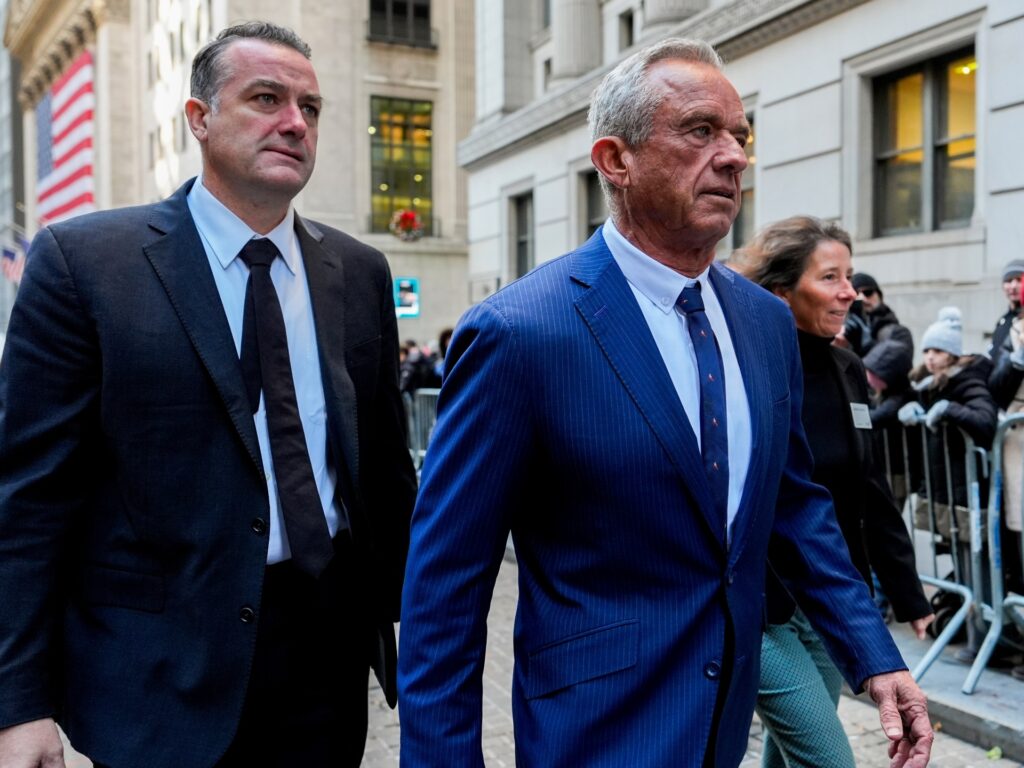
Backlash has been building in the United States following a news report that links one of President-elect Donald Trump’s proposed cabinet members to an effort to revoke approval for the polio vaccine. On Saturday, The Associated Press news agency published a statement from a spokesperson for Robert F Kennedy Jr, whom Trump has nominated to lead the Health and Human Services Department. In the statement, Kennedy’s camp attempted to distance the nominee from a New York Times report that his lawyer Aaron Siri had petitioned to suspend approval for the life-saving vaccine. “Mr Kennedy believes the Polio Vaccine should be available to the public and thoroughly and properly studied,” Katie Miller, Kennedy’s spokesperson, said. But The New York Times article has raised alarm about Kennedy’s nomination to Health and Human Services, a department whose mission is to enhance the “health and well-being of all Americans”. Kennedy, like Siri, is a vocal vaccine sceptic. In 2020, at the height of the COVID-19 pandemic, Kennedy helped spread doubts about vaccines designed to protect against the deadly virus, calling them “shoddily tested” and potentially “deadly”. Advertisement And in 2019, when a measles outbreak killed more than 80 children in Samoa, Kennedy wrote to the Samoan prime minister implying that a “defective vaccine” could be to blame. He has also pushed conspiracy theories that link vaccination to autism, a widely debunked belief. Kennedy has long denied being anti-vaccine, arguing instead that he simply wants to ensure vaccine safety. But members of his own family have spoken out against his track record of spreading vaccine misinformation. A Trump ally In the 2024 presidential race, Kennedy ran on an independent ticket, before suspending his campaign in August and throwing his support behind Trump. Afterwards, he became a prominent Trump surrogate, appearing numerous times on the campaign trail with the Republican leader. Trump, in turn, teased early on that he would nominate Kennedy to his administration. “I’m going to let him go wild on health,” Trump said at an October campaign stop at Madison Square Garden in New York. “I’m going to let him go wild on the medicines.” Trump’s decision to pick Kennedy to head Health and Human Services has raised concern in the medical community about the future of efforts to limit the spread of preventable illness. Those concerns were amplified on Friday, with The New York Times report. The article resurfaced a 2022 petition Siri made to the Food and Drug Administration to rescind the polio vaccine’s approval, along with that of other vaccines. Polio is a highly infectious disease, capable of causing paralysis and death. There is no cure once infected, but vaccines can prevent its spread. Advertisement Siri has enjoyed a close relationship with Kennedy. The two campaigned together during Kennedy’s bid for office, and NBC News reported that Kennedy mulled appointing Siri as his attorney general, had he succeeded in winning the White House. Swift criticism The backlash to Friday’s report was swift, with bipartisan condemnation pouring in. Senate Minority Leader Mitch McConnell, a Republican, issued a statement on Friday warning that any effort to discredit the polio vaccine could threaten the nominee’s Senate confirmation hearing. He did not mention Kennedy by name, but McConnell, 82, is known to be a survivor of childhood polio, which left his left leg briefly paralysed. “Efforts to undermine public confidence in proven cures are not just uninformed — they’re dangerous,” McConnell wrote. “Anyone seeking the Senate’s consent to serve in the incoming administration would do well to steer clear of even the appearance of association with such efforts.” Democrats likewise criticised Kennedy’s association with Siri. “Say goodbye to your smile and say hello to polio,” Senator Elizabeth Warren said in a video posted to social media. “This is a man who wants to stop kids from getting their polio and measles shots.” Another senator, Chuck Schumer, called on Kennedy to make his position on the polio vaccine clear. “It’s outrageous and dangerous for people in the Trump Transition to try and get rid of the polio vaccine that has virtually eradicated polio in America and saved millions of lives,” Schumer, the Senate majority leader, wrote. “RFK Jr. must state his position on this.” Advertisement Hillary Clinton, the 2016 Democratic nominee for the presidency and a longtime rival of Trump’s, posted her own rejoinder, with a screenshot of The New York Times article. “I think Trump voters may be surprised to learn they voted to make polio great again,” she wrote, offering a riff on Trump’s slogan, “Make America Great Again”. Adblock test (Why?)
Images and narratives of Syria’s historic moment
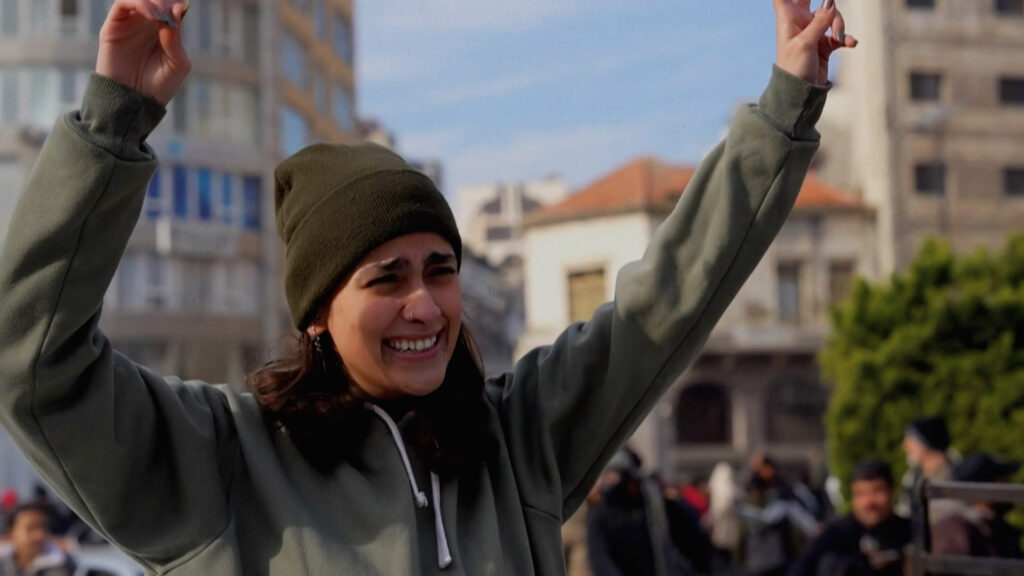
With the end of the al-Assad regime and half a century of dictatorship, Syria’s media space is undergoing tumultuous changes. State TV and social media users are weaving new narratives, while the rebel group Hayat Tahrir al-Sham continues its rebrand. Contributors:Ibrahim Olabi – Lawyer, Guernica 37Kholoud Helmi – Co-founder, Enab Baladi NewspaperRasha Elass – Editorial Director, New Lines MagazineZaina Erhaim – Managing Editor, Jeem On our radar: Israel’s latest land grab and bombing raids in Syria run counter to international law – but you would not guess it from the coverage in Western and Israeli media. Meenakshi Ravi reports. How ‘smart cities’ make us more surveilled than ever before As urban populations soar, surveillance is intensifying in the form of “smart cities” built around the collection of data. But beneath promises to improve services lie serious concerns for residents’ privacy and freedoms. Featuring: Anna Kwok – Executive Director, Hong Kong Democracy CouncilDhaksh Raj Sooriya – Senior Researcher, Surveillance Resistance LabJulia Angwin – Investigative Journalist Advertisement Adblock test (Why?)
‘Until my last breath’: Searching for relatives at Syria’s ‘slaughterhouse’

Sednaya, Syria – For decades, Sednaya prison was only ever mentioned in hushed tones in Syria. Torture and death were known to be routine in this place everyone called the “human slaughterhouse”. But on the evening of December 7, that all ended when Syrian opposition fighters burst through doors and liberated the prisoners. In no time, thousands of Syrians descended on the prison in the mountains north of Damascus, desperately seeking news of the loved ones they believed had disappeared behind the prison’s walls. Standing in front of the prison, Jumaa Jubbu, who is from al-Kafir in Idlib, said: “The liberation [of Syria] is an indescribable joy. “But the joy is incomplete because there are [hundreds of thousands] of missing detainees, and we haven’t heard any news about them at all.” Jumaa Jubbu feels the joy of liberation is incomplete so long as people remain disappeared in Sednaya Prison [Ali Haj Suleiman/Al Jazeera] False hope Sednaya’s two buildings may have been holding as many as 20,000 prisoners, according to Amnesty International. Advertisement Many of the prisoners were freed a week ago – on Saturday evening and Sunday morning. But by Monday, thousands of people were still waiting for news. The scene inside the prison was chaotic. Rumours were circulating that there were hidden underground sections of the prison which they could not access. A former prisoner told Al Jazeera that military police had told him there were three underground floors with thousands of people held there. This week, people were using water conductors in the hopes of finding gaps in the walls or floors. Thousands of people have descended on Sednaya prison in search of missing friends and family [Ali Haj Suleiman/Al Jazeera] At one point, a loud bang rang out from a far wall of the prison and shouts spread through the crowd. Someone had broken through and there were hopes they had found an entry to the rumoured cells. People began running towards the sound, shouting “God is the greatest”. But, seconds later, the shouts died down and people turned away – a false hope. There was no entrance. “We’re waiting, hoping that God will guide us to find the underground prison, because most of the prisoners who were released before, they say the prison has three underground levels,” Jubbu said. “We only saw one floor.” Jubbu said he was searching for 20 people from his village, among them his cousins. All had been taken in the early years of the war, between 2011 and 2013 and were believed to have ended up at the “slaughterhouse”. But just a few hours later, a statement was released by the Association of Detainees and Missing in Sednaya Prison which said the last liberated prisoner had been released at 11am the day before. Advertisement The White Helmets, Syria’s Civil Defence force, continued to search but finally suspended operations on Tuesday after finding no more prisoners. Families seeking loved ones wait hopefully as a member of the civil defence force, the White Helmets, attempts to locate an entrance to rumoured underground cells [Ali Haj Suleiman/Al Jazeera] ‘The smells are indescribable’ Syrian opposition fighters liberated Aleppo, Hama, and Homs on their way to Damascus. In each city, they opened up the prison doors and liberated tens of thousands of people. But more remain missing. On the road to Sednaya, people drove as far as they could before the crush of people forced them to park and continue on foot. Young and old, men and women, some holding children – all climbed up the unpaved incline to the infamous prison. Under the now-defeated regime, Sednaya was a military prison where many were held on charges of “terrorism” which, in reality, meant had been arrested for any number of arbitrary reasons. Many of the people Al Jazeera spoke to there said their relatives had done nothing wrong. Some weren’t even sure their loved ones were here, they had come because they’d heard from someone that their relative “might” be here. Or they had checked other prisons and still hadn’t found any trace. A man looking for relatives at Sednaya prison holds up blood-stained nooses found inside [Ali Haj Suleiman/Al Jazeera] Mohammad al-Bakour, 32, said his brother Abdullah was arrested in 2012 for protesting peacefully in Aleppo. He has not seen him since. Advertisement At 2am the previous morning – around the time al-Assad fled Damascus for Moscow – al-Bakour headed straight from his home town near Aleppo to Sednaya to search for his brother. “His children are now young adults, they don’t remember him and wouldn’t recognise him,” al-Bakour said. Inside, he searched the prison for any sign of Abdullah. “The smells in there are indescribable. The suffering of the prisoners inside is unimaginable,” he said. “Many times, they wished for death but couldn’t find it. Death became one of the prisoners’ dreams.” Mohammad al-Bakour’s brother Abdullah has been missing for 12 years since his arrest while peacefully protesting [Ali Haj Suleiman/Al Jazeera] Life in limbo At Sednaya, many prisoners said they had been tortured and raped. Others were killed so the world won’t know what happened to them. The corpse of prominent activist Mazen al-Hamada was found in a military hospital morgue showing signs of torture. Another former prisoner, Youssef Abu Wadie, described to Al Jazeera how the guards treated inmates: “They would knock on the door, yell, ‘Quiet, you dog!’ and wouldn’t let us speak. The food was scarce. They would take us outside, beat us, break us. “Sometimes two people would hold us down and beat us. They would drag us around and take away our medicine.” ‘They would break us’. Youssef Abu Wadie, a former prisoner at the notorious Sednaya prison, described how prison guards would beat inmates [Ali Haj Suleiman/Al Jazeera] Many inmates told Amnesty International in 2016 that they were not allowed any contact with the outside world or to send anything to family members. Advertisement In many cases, families of prisoners were told incorrectly that a prisoner
India vs Australia: Border-Gavaskar third Test opens with a near washout
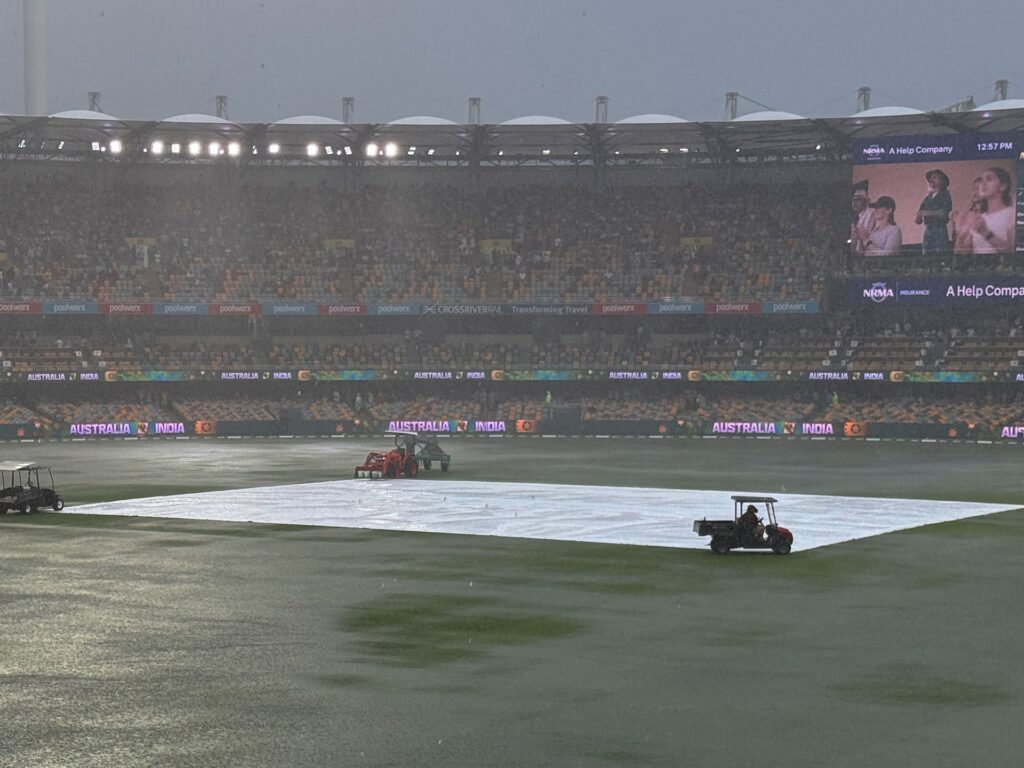
The first day of the third Test is a near washout as Australia and India are left frustrated by rain in Brisbane. India’s bowlers were left frustrated and wicketless as rain wiped out most of the opening day’s play in the third Test against Australia in Brisbane on Saturday. Australia were 28-0 when play was abandoned, with Usman Khawaja unbeaten on 19 and Nathan McSweeney on four after facing only 13.2 overs at a rain-sodden Gabba. India captain Rohit Sharma won the toss and elected to field first but his hope of early wickets proved forlorn, with rain halting play in the sixth over for about 30 minutes and dashing his pace bowlers’ hopes of finding their rhythm. The rain returned to bring an early lunch and persisted until play was abandoned late in the afternoon, short-changing a crowd of 30,145. The Gabba pitch had a green tinge on what had been a steamy, overcast morning, promising a stiff examination for Australia’s top order, but the ball ultimately did little off the spongy pitch. Barring a probing, opening burst by Bumrah, who repeatedly beat Khawaja’s bat, the Indian pacers were culpable of bowling too short. Advertisement Khawaja capitalised, smashing Mohammed Siraj to the fence with a couple of sweetly struck pull shots but the weather denied a healthy crowd more action. With the five-Test series poised at 1-1, India made two changes to the side that lost by 10 wickets in the day-night Test in Adelaide — Ravindra Jadeja replacing spinner Ravichandran Ashwin and Akash Deep coming in for struggling paceman Harshit Rana. Australia made only one change, with quick Josh Hazlewood replacing Scott Boland after recovering from a side injury. Rohit, whose poor form with the bat has heaped pressure on his captaincy, will continue to bat at number six, with KL Rahul and Yashasvi Jaiswal retained as the opening combination. “There’s a lot of grass and it looks a little soft as well so we want to try and make the best use of the conditions and try and see what we can do with the ball up front,” Rohit had said after winning the toss, adding that the mood in the Indian dressing room was “absolutely buzzing”. “The guys are looking forward to the Test match. It’s been always nice to come here and play some really good cricket and yeah, when you talk about how everyone’s feeling, they want to come out here and showcase themselves.” As it was, India will have to wait until day two to show their skills and may need early wickets to force a third consecutive result in the series. Adblock test (Why?)
US citizen imprisoned in Syria has been released and flown to Jordan
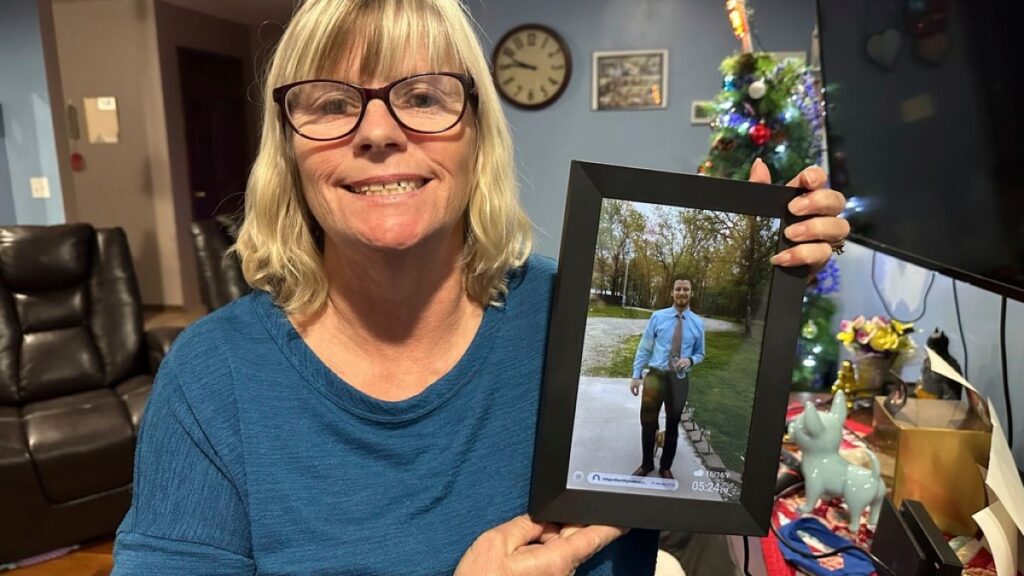
Travis Timmerman, 29, was imprisoned in Syria after crossing into the country on a Christian pilgrimage in June. United States officials have revealed that Travis Timmerman, a 29-year-old US citizen who disappeared into the Syrian prison system seven months ago, has been released and taken out of the country. Citing unnamed government sources, the news agencies Reuters and The Associated Press reported on Friday that Timmerman had been flown to Jordan to meet with US officials. Timmerman had been missing since June, after he crossed into Syria near the eastern Lebanese town of Zahle. Once in the country, he had been imprisoned under the government of Syrian President Bashar al-Assad. But in recent weeks, Syrian opposition forces, led by the Hayat Tahrir al-Sham rebel group, pushed southwards in a lightning offensive, capturing major government strongholds and toppling al-Assad’s administration. On December 8, al-Assad fled to Russia, ending more than a half-century of his family’s rule. Timmerman’s release comes as prisoners throughout the al-Assad government’s notorious prison system are set free. For years, organisations like Human Rights Watch have chronicled reports of widespread torture, starvation and disease inside the detention facilities, leading to deaths in government custody. Advertisement Some Syrians have reportedly spent years, even decades, inside the facilities’ walls, with no contact with the outside world. Timmerman, however, told The Associated Press on Friday that he was not treated poorly in the Syrian prison where he was held, known as the Palestine Branch. He explained he was captured while on a Christian pilgrimage. A US official told Reuters that Timmerman had been transported to the al-Tanf military garrison in Syria, which is located near the border with Jordan and Iraq. From there, he was flown via helicopter to a second US military base in Jordan. While in prison, Timmerman says that he had a mattress, a plastic drinking container and another two containers to dispose of waste. In videos shared shortly after his release, Timmerman indicated that rebels had used a hammer to break down his cell door and free him. It is unclear where he will go next. The AP reported that Timmerman thanked those who released him from prison but told US officials he hopes to remain in the Middle East. The US continues to search for Austin Tice, a former US marine and freelance journalist who was kidnapped while reporting near the capital of Damascus in August 2012. Tice had been among the first US reporters on the ground in Syria, after the pro-democracy “Arab Spring” protests of 2011 sparked a brutal government crackdown and eventually a civil war. In the days since al-Assad’s fall, videos documenting the appalling conditions in the government prison system have been widely shared. Scores of people have also trekked to the facilities, hoping to find friends or loved ones who were detained or disappeared long ago. Advertisement Describing conditions at the Sednaya Prison near Damascus, Raed al-Saleh — the director of Syria’s Civil Defence organisation, known as the White Helmets — called the facility a “hell”. White Helmet rescuers have been combing the facility to document human rights violations and free the people inside. Al-Saleh told Al Jazeera on Monday he believed executions were happening daily within the prison walls. “It is a human slaughterhouse where human beings are being slaughtered and tortured,” al-Saleh said. Adblock test (Why?)